Tag: Inquirer

  • Higher Education Inquirer : Fiction: The Pines Still Whisper

    Higher Education Inquirer : Fiction: The Pines Still Whisper

    Cass McBride pulled into the parking lot of Atlantic Cape Community College just as the morning fog was lifting. The campus was quieter than she remembered—fewer cars, fewer conversations, fewer reasons to linger. The culinary arts building stood at the edge, windows clouded with dust, the café shuttered and dark.

    Javi Sandoval sat beside her, scrolling through an email on his cracked phone screen. The college had just announced what everyone already knew: Atlantic Cape’s culinary program would be consolidated with Rowan College at Burlington County by the fall. The words were clean and administrative—“efficiency,” “realignment,” “cost savings”—but everyone understood the message. This place was being downsized, absorbed, and eventually erased.

    “They’re moving all the classes to Mt. Holly,” Javi said. “That’s over an hour away. No shuttle, no support. Just go if you can. Or don’t.”

    Cass nodded, her hands resting on a worn-out canvas bag filled with cookbooks and a half-used chef’s coat. “They say it’s about opportunity. But it feels like they’re just trimming away everything that made this place ours.”

    Inside the student center, the old café was locked, its chalkboard menu still faintly showing specials from months ago—creamy risotto, grilled seasonal vegetables, apple tart. Meals once made by students, for staff and faculty, as part of their hands-on learning.

    They walked around to the back hallway near the faculty offices, hoping to find someone who could give them real answers. That’s where they found Professor Reilly, sitting on a bench with a cardboard box beside him—books, a stained apron, and a union button that read: EDUCATION IS NOT A BUSINESS.

    Reilly had taught part-time in the culinary program for over a decade—early morning sections, night classes, summer workshops. He was known for lecturing about labor history in the middle of baking demonstrations, quoting Eugene V. Debs while folding dough.

    “They gave me fifteen minutes,” he said when Cass asked what had happened. “No severance. Just a letter. Said my ‘contract wasn’t renewed due to program restructuring.’ They didn’t even spell my name right.”

    Javi sat down next to him. “I thought you were protected. Weren’t you in the union?”

    Reilly chuckled. “We tried. We organized. But it’s hard when most of us are part-time and disposable. Admin smiles during bargaining, then turns around and guts your job through ‘curricular updates.’ They always find a way.”

    Cass asked him if he’d stay in the area.

    “I’ll stay,” he said. “Because this is where the students are. Because someone needs to remind them they’re not crazy for wanting more than just job training and debt. They deserve an education that feeds the soul, not just the economy.”

    That night, Cass and Javi drove out past Pleasantville, where empty storefronts now stood beside a few remaining restaurants, barbershops, and bodegas. They passed through Margate and Ventnor, where beach homes glowed in early evening light, and the golf courses were still lush and quiet. In Somers Point, they saw the “Help Wanted” signs outside the waterfront restaurants—jobs with no benefits and long hours, perfect for students who no longer had classes to attend.

    The casinos in Atlantic City still blinked and buzzed, but the crowds were thinner, and most of the profits came from online betting now—clicks from phones, not chips on tables.

    They camped that evening just off Route 542, in a small clearing where the Pines bent gently in the wind. The stars came out slowly.

    “I miss the kitchen,” Javi said. “The way Reilly used to talk about food—like it was a kind of justice.”

    Cass pulled out her copy of The Grapes of Wrath, the one Reilly had recommended. She turned to a page he had dog-eared for her. “‘And the little screaming fact that sounds through all history: repression works only to strengthen and knit the repressed.’”

    Javi looked up at the trees. “I keep thinking about people like Bernie Sanders and AOC. The way they talk about socialism, unions, public schools—for them, it’s not just politics. It’s survival. Dignity. Like what Reilly was trying to teach.”

    Cass smiled, the firelight flickering on her face. “Yeah. It makes you think maybe this isn’t the end. Maybe it’s the start of something different.”

    The wind moved through the Pines, steady and low, like an old voice telling stories to those who still cared to listen.

    And for now, that was enough.

    Source link

  • Higher Education Inquirer : Labor Notes

    Higher Education Inquirer : Labor Notes

    IN THIS ISSUE:

    • Philadelphia Municipal Workers Strike Before July 4 Celebrations
    • LISTEN: Labor Notes Podcast—How to Win a Strong Contract
    • Social Justice Artists: Apply for an Anne Feeney Hellraiser Grant
    • Reactions to the GOP Budget Legislation

    UPCOMING EVENTS

    • Workshop: Winning a Strong Contract Parts I & II: July 7 & 14
    • Who Has the Power? A Mapping Tool to Build our Movement: July 16
    • Webinar: Building Power Through Coordinated Bargaining and Contract Alignment: July 21
    • Stewards’ Workshop: Build a Steward Network: July 23
    • Secrets of a Successful Organizer: Sept. 8, 15, 22
    • North Carolina Troublemakers School: Sept. 20
    • Milwaukee Troublemakers School: Oct. 4

    by Paul Prescod

    Nine thousand blue-collar workers who make Philadelphia run went on strike July 1.

    After sacrificing through the pandemic and years of bruising inflation, they say they’re on strike so they can afford to live in the city they serve.

    Already, uncollected garbage is piling up as the workers, members of AFSCME District Council 33, defend their strike lines.

    SHOW FULL ARTICLE

    A graphic with a white and blue background image of people demonstrating outside what appears to be the steps and pillars of a courthouse. They are holding up large white signs on wooden posts. The Labor Notes slingshot logo is on the top left hand corner of the image, and the cutout photos of our cohosts Natascha Elena Uhlmann and Danielle Smith are on either side of the image. Between them is the text, "How to win a strong contract," the title of this podcast episode.

    by Labor Notes Staff

    What’s the secret of winning a strong contract? Hint: You won’t find it at the negotiations table!

    In our “Winning a Strong Contract” workshop series, we talk about how we can build power away from the table to win our demands in bargaining.  

    Labor Notes Organizer Lisa Xu joins pod co-hosts Danielle Smith and Natascha Elena Ulhmann for an overview of the workshop, including concepts like the campaign mountain and campaign power spiral.

    SHOW EPISODE

    You can also listen to The Labor Notes Podcast on SpotifyApple Podcasts and on our YouTube channel. Please rate and review our podcast wherever you listen!

    “Winning a Strong Contract Parts I & II” will be running the next two Mondays (July 7 and July 14th), and you can sign up at labornotes.org/events.

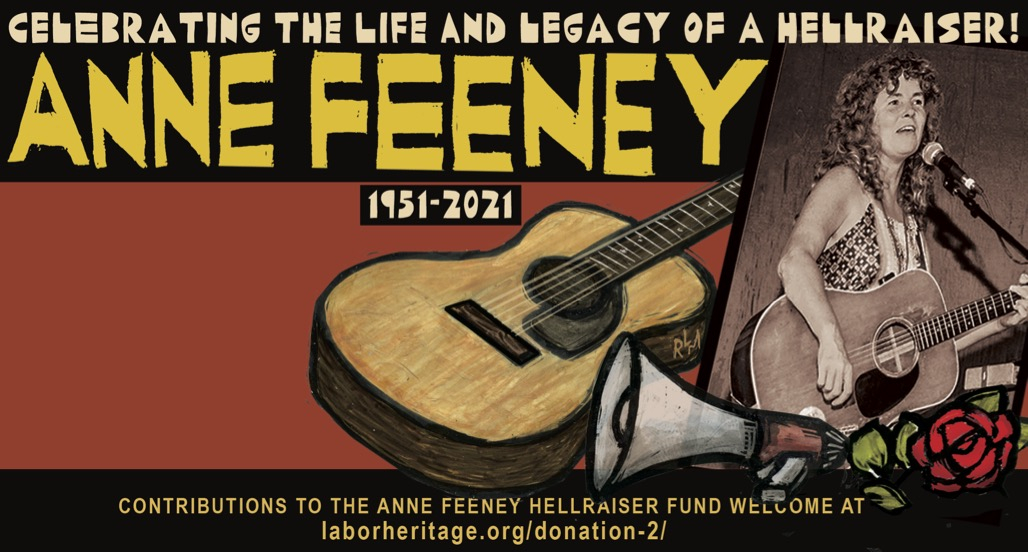
    Graphic shows woman with guitar and says Anne Feeney, 1951-2021.

    by Natascha Elena Uhlmann

    Friends and family of legendary folk musician and “hellraiser” Anne Feeney have come together to announce a new round of grants for artists “on the frontlines of the fight against fascism.”

    The Anne Feeney Hellraiser Memorial Fund will provide three grants of up to $1,000 for emerging artists of any discipline who create art in support of social movements for justice.

    LEARN MORE AND APPLY

    Economic Policy Institute president Heidi Shierholz denounces passage of GOP budget bill: 

    The Republican budget will gut Medicaid, slash food aid for families, and shutter rural hospitals—just to give tax breaks that will go overwhelmingly to the wealthy. It is a staggering upward redistribution of income.

    The bill also turbocharges an authoritarian-style immigration regime—funding internment camps, mass surveillance, and waves of deportations that will kill millions of jobs.

    SHOW FULL EPI STATEMENT

    North America’s Building Trades Unions (NABTU) President Sean McGarvey issued the following statement on the Senate Republican Proposed Budget Bill: 

    If enacted, this stands to be the biggest job-killing bill in the history of this country. Simply put, it is the equivalent of terminating more than 1,000 Keystone XL pipeline projects.

    In some cases, it worsens the already harmful trajectory of the House-passed language, threatening an estimated 1.75 million construction jobs and over 3 billion work hours, which translates to $148 billion in lost annual wages and benefits.

    SHOW FULL NABTU STATEMENT

    Visit labornotes.org/events for updates. Nobody will be turned away from a Labor Notes event, virtual or in-person, for lack of funds—if the registration fee is a barrier, email us.

    We will cover the basics of building a Contract Action Team (CAT), putting together an escalating campaign (potentially culminating in a strike), and dynamics between the bargaining committee, CAT, and the membership.

    When: Mondays, July 7 & 14
    Time: 7 p.m. – 8:30 p.m. ET / 4 p.m. – 5:30 p.m. PT
    Where: This is an online workshop and will be held via Zoom.

    Registration fee
    $15 – Regular Registration

    REGISTER HERE

    Prerequisites for this workshop: We strongly encourage workshop participants to also first attend our upcoming “Secrets of a Successful Organizer” workshop series in June. 

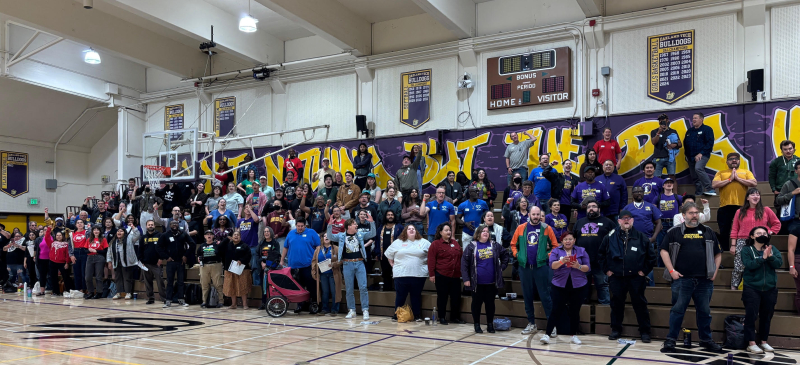
    A large gathering of workers in purple, black, blue and other dark colored shirts. They're standing on the bleachers at a gymnasium.

    This workshop will teach skills to analyze power in the present moment to strategically build the workers movement we need. We’ll be joined by labor educator Stephanie Luce.

    This is an advanced workshop for those organizers who are already part of a union or other worker organizations.

    When: Wednesday, July 16
    Time: 7:30 p.m. to 9:00 p.m. Eastern (4:30 p.m. to 6:00 p.m. Pacific)
    Where: This is an online workshop and will be held via Zoom.

    Registration fee
    $10 – Regular Registration

    REGISTER HERE

    Join us for a discussion about how unions are coordinating bargaining and even aligning their contracts to maximize leverage in negotiations.

    We’ll also discuss takeaways for workers seeking to align contracts leading up to the UAW’s call for unified action on May Day 2028.

    When: Monday July 21
    Time: 7 p.m. to 8:30 pm ET
    Registration: $10

    This panel will feature:
    – Francisco Ortiz, the president of United Teachers Richmond in California

    – Jane Fox, a unit chair in UAW Local 2325, the Association of Legal Aid Attorneys

    – Chris Spurlock, a steward in Teamsters Local 135 at Zenith Logistics, a third-party operator for Kroger

    REGISTER HERE

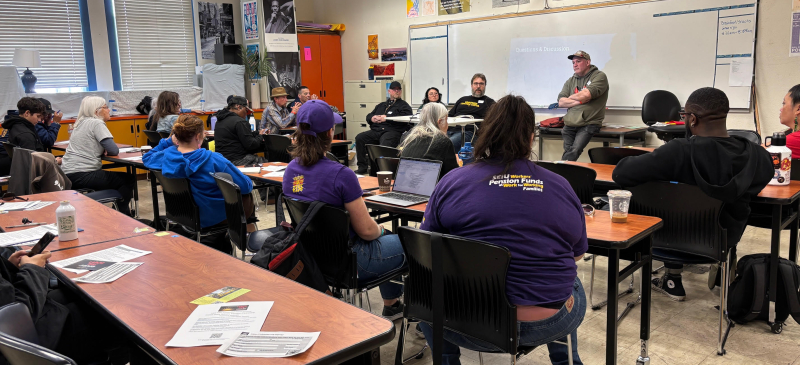
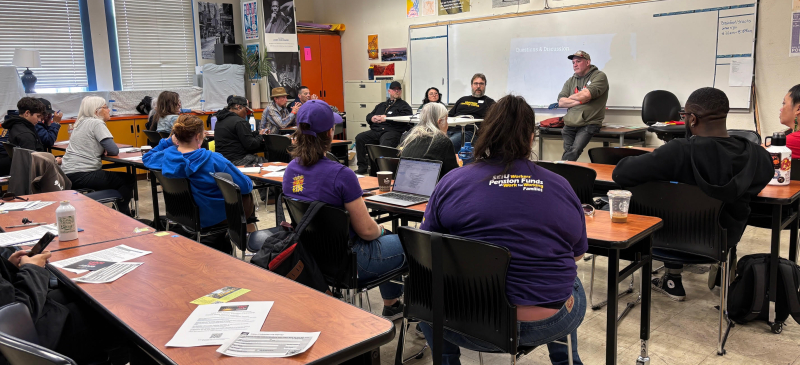
    Workers gathered in a classroom.

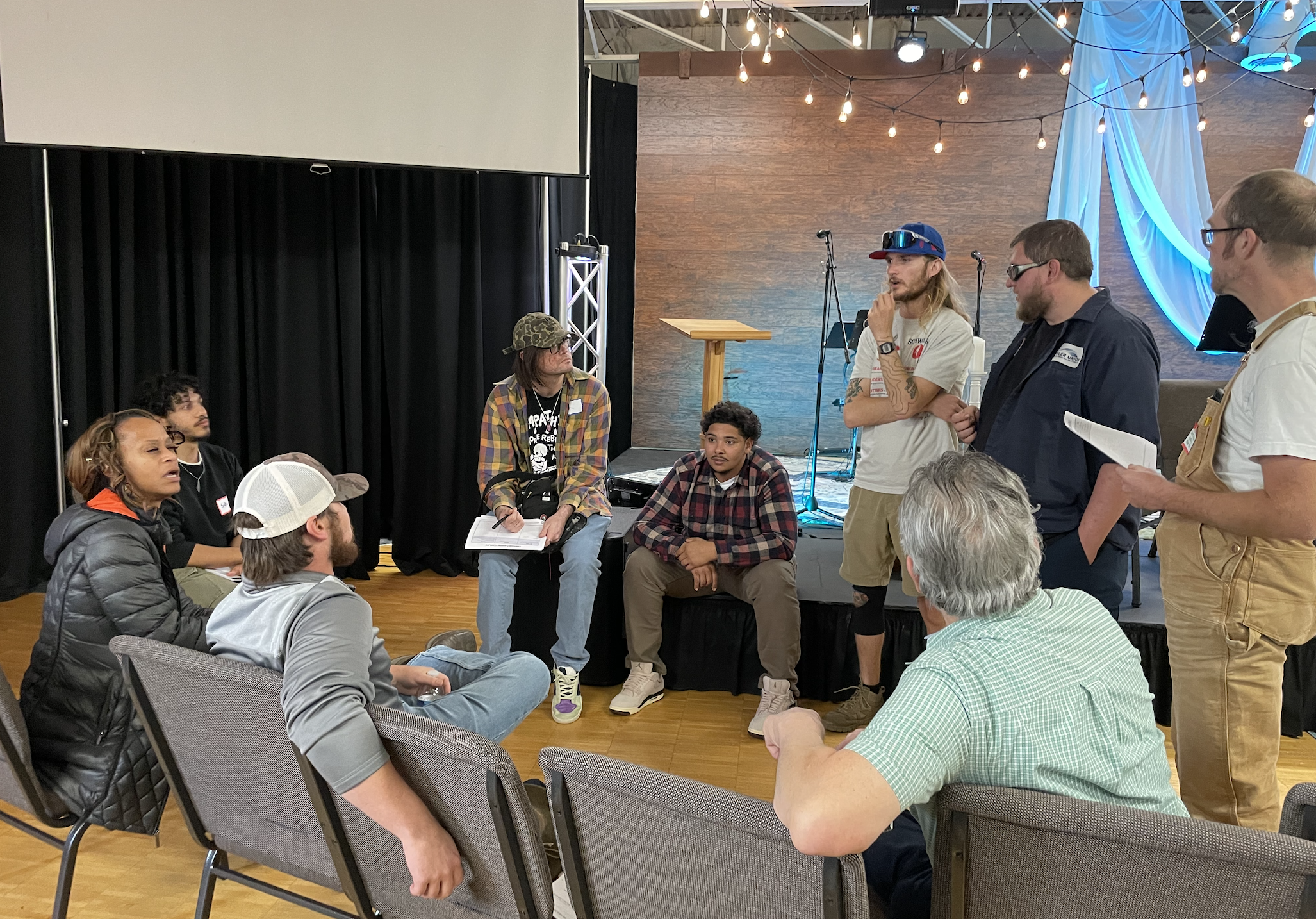
    Stewards are the backbone of the union! Learn how to build a strong stewards structure that helps workers use their power in the workplace to effectively fight the boss.

    When: Wednesday, July 23
    Time: 7:30 p.m. to 9:00 p.m. Eastern (4:30 p.m. to 6:00 p.m. Pacific)
    Where: This is an online workshop and will be held via Zoom.

    Registration fee
    $10 – Regular registration

    REGISTER HERE

    Secrets of a Successful Organizer is Labor Notes’ core organizing training, in three sessions full of lively participatory exercises. We welcome first-timers and repeat attendees looking to sharpen their skills.

    These workshops are based on our widely acclaimed book Secrets of a Successful Organizer. These trainings will be held via Zoom.

    When: Mondays, September 8, 15 and 22
    Time: 7:30 p.m. to 9:30 p.m. Eastern / 4:30 p.m. to 6:30 p.m. Pacific
    Cost: $15 for the whole series. Includes access to all three sessions.

    REGISTER HERE

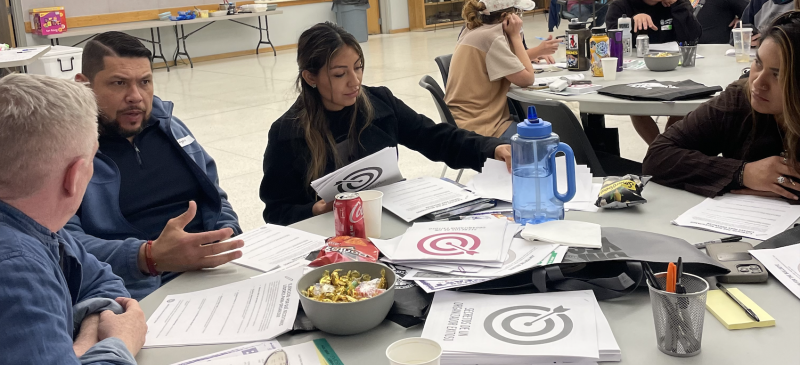
    Workers sit at a table in a lunch discussion. There are "Secrets of a Successful Organizer" handouts with the bulleye logo on the cover, interspersed between a bowl of food, drinks and snacks.

    Join labor activists from around North Carolina—and the whole region—to strategize, share skills, and learn how to organize to win.

    Whether you’re new to unions or are an experienced union activist, there’s something there for you. We encourage local unions to send a group of members.

    Date: September 20
    Time: 10 am – 5 pm
    Location: Jordan High School, 6806 Garrett Rd., Durham, NC

    Registration fee
    $35 – Regular registration
    $15 – Low-income registration 

    REGISTER HERE
     

    Bringing together union members, labor activists, and local officers, a Labor Notes Troublemakers School is a space for building solidarity, and sharing successes, strategy, and inspiration.

    It’s a real shot in the arm for newbies and seasoned activists alike.

    When: 9:30 a.m. – 4 p.m. on Saturday, October 4, 2025
    Where: Steamfitters Local 601
    3300 S 103rd Street
    Milwaukee, WI 53227

    Registration fee
    $30 – Regular registration
    $15 – Low-income registration 

    REGISTER HERE

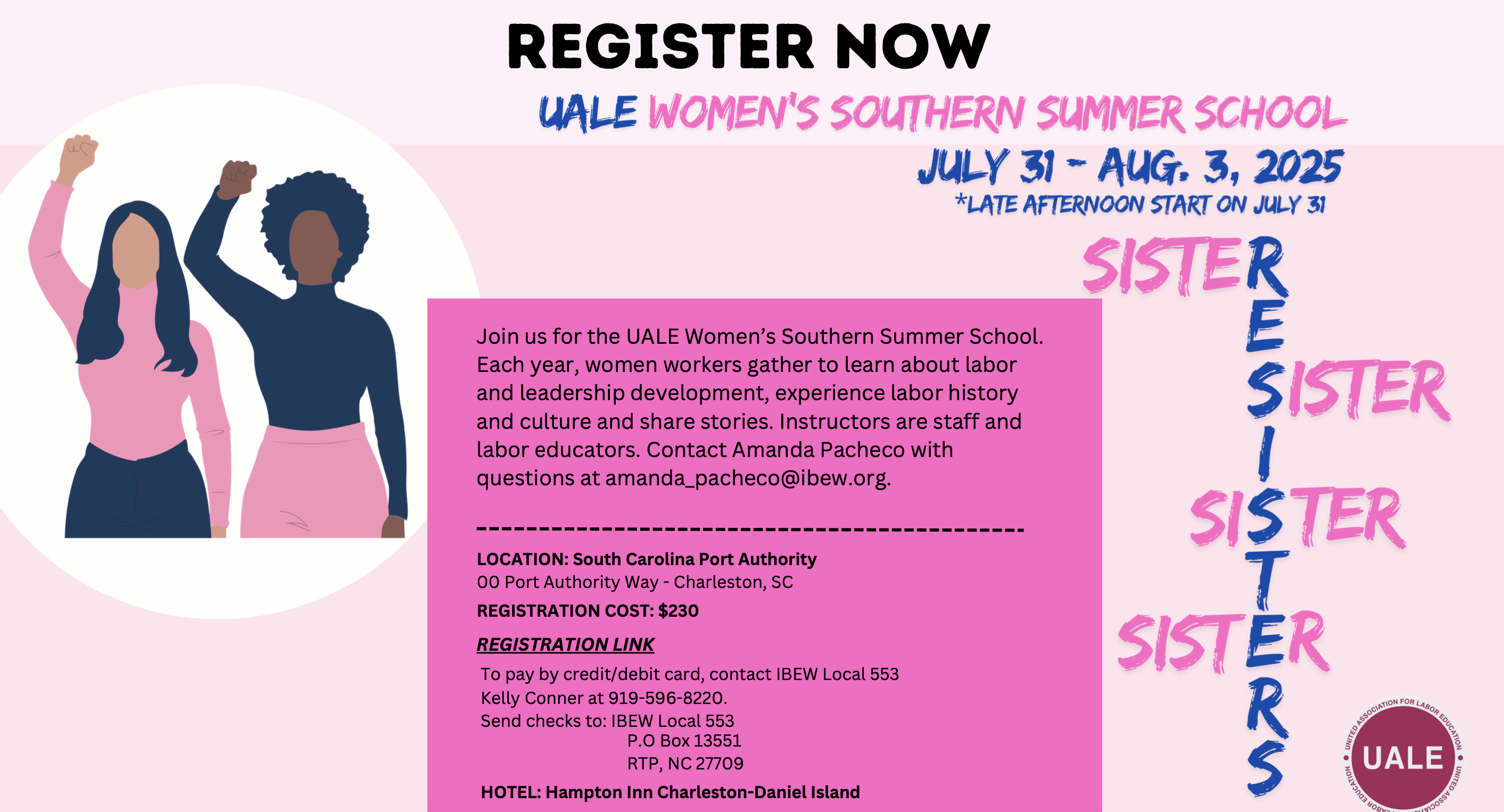
    At the Southern Summer School, women workers come together to learn about labor and leadership development, experience labor history and culture, and share stories.

    Contact Amanda Pacheco with questions at [email protected].

    When: Thursday, July 31 to Sunday, Aug. 3
    Where: Port Authority
    200 Port Authority Way, Charleston, SC
    Registration Price: $230

    REGISTER HERE

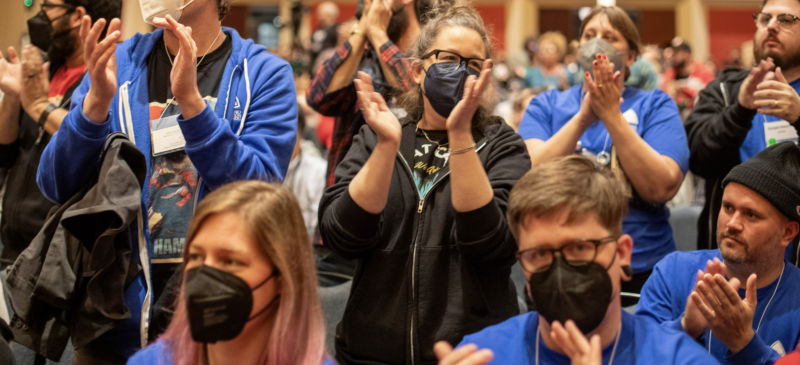
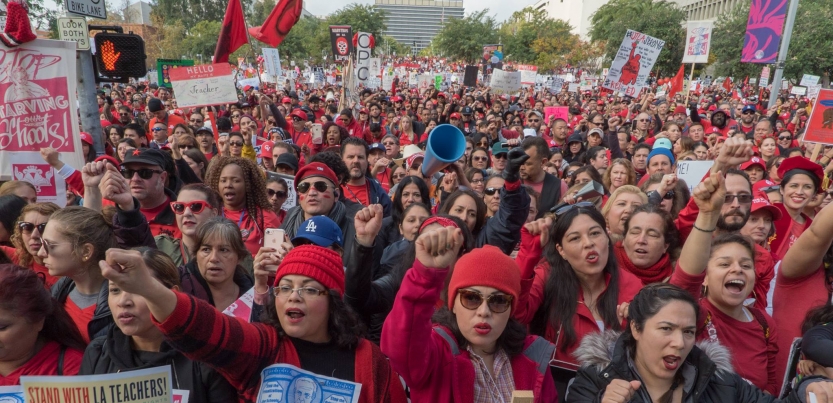
    A massive gathering of workers with their fists up and chanting energetically.
    Write for Labor Notes. When you discover a good tactic, share the news! Thousands of readers in other workplaces can put the information to use. Email [email protected].
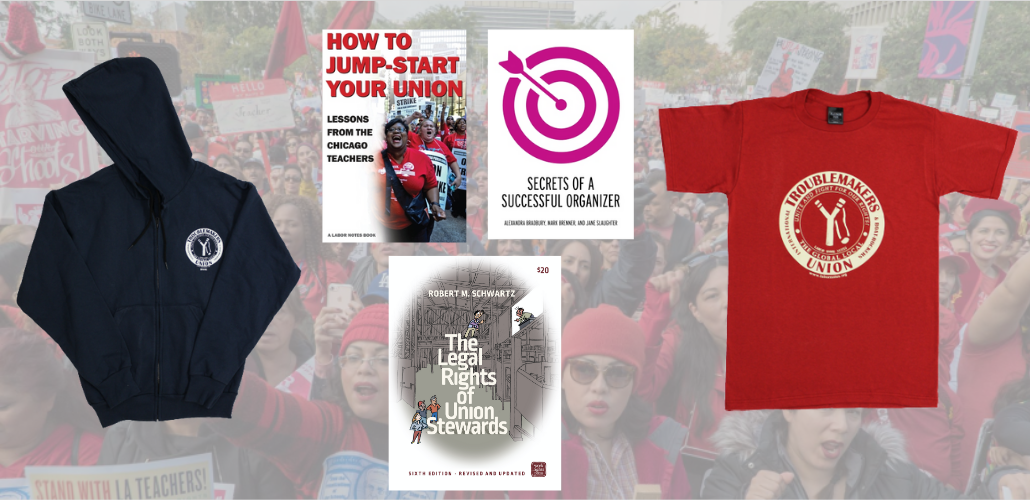
    A composite image of labor notes merch including a black hoodie and red T-shirt with the Labor Notes slingshot logo, and the covers of three Labor Notes books, namely, "How to Jump-Start Your Union," "Secrets of a Successful Organizer," and "The Legal Rights of Union Stewards."
    Visit the Labor Notes Store for books, knit caps, hoodies, T-shirts and more! Check it out at labornotes.org/store.

    Source link

  • Higher Education Inquirer : Caring for the Planet: Walk More, Buy Less

    Higher Education Inquirer : Caring for the Planet: Walk More, Buy Less

    In a world of climate crisis, student debt, and endless consumption, there’s a quiet revolution available to young people: walk more, buy less. It sounds simple—because it is—but the impact can be profound.

    Most college students and recent grads don’t need to be reminded about environmental collapse. You’ve grown up amid wildfires, extreme weather, and warnings about rising seas. But while corporations and billionaires pump out pollution and plastic, you’re often told that the burden to fix things falls on your shoulders. You recycle. You switch off lights. You carry a tote bag. Still, it doesn’t feel like enough.

    That’s because systemic change is slow and hard. But two actions—walking and not shopping—have the power to disrupt entire systems of waste and exploitation.


    Walking Is a Radical Act

    In car-dominated societies like the U.S., walking is often dismissed as inconvenient or inefficient. But for those who can safely walk, it is an act of environmental resistance. Cars consume fossil fuels, require destructive mining for materials, and spew emissions into the air. Even electric vehicles rely on rare earth metals, large batteries, and energy grids that still burn coal and gas.

    Every mile you walk instead of drive avoids carbon pollution. Every pair of shoes worn out instead of tires is a win. Walking also builds local awareness. You notice what’s happening on your streets—who’s struggling, who’s thriving, which spaces are neglected, and where nature is still hanging on. You become part of your community rather than just passing through it.

    Walking saves money, improves health, and takes power away from oil companies and car-dependent infrastructure. That’s not just healthy—it’s revolutionary.


    Buying Less: Anti-Consumerism as Climate Action

    You’ve probably heard the phrase “vote with your wallet.” But what if not spending is the more powerful vote?

    Our entire economy is built around constant consumption. Fast fashion, tech upgrades, cheap furniture, endless online shopping—this isn’t just bad for your bank account. It’s bad for the planet. Every product you buy took raw materials, labor (often exploited), and energy to produce, ship, and store. The less we consume, the less destruction we support.

    Here’s the thing: corporations want you to feel like you’re missing out if you don’t buy the newest thing. Social media and marketing are built to trigger that FOMO. But refusing to participate—living simply, creatively, and consciously—is one of the boldest stands you can take.

    You don’t have to live like a monk. But delaying gratification, fixing what you already own, swapping clothes with friends, using the library, and just sitting with your discomfort instead of numbing it with shopping—these are environmental acts. They’re also acts of freedom.


    Why This Matters for Students and Grads

    As a young person, you’re probably juggling rent, school loans, gig jobs, and anxiety about the future. You may feel powerless. But walking and cutting back on shopping are low-cost, high-impact moves. They don’t require wealth. They don’t require perfection. They’re daily choices that build awareness and build community.

    By walking and refusing overconsumption, you model an alternative future—one not built on endless growth, but on balance, care, and intentional living.

    These small acts won’t fix everything. But they will help you live in closer alignment with your values. And they send a clear message: We’re not buying the lies anymore.


    Final Thought

    Caring for the environment isn’t about being perfect. It’s about shifting culture. It’s about resisting a system that treats the Earth—and our lives—as disposable.

    So walk when you can. Buy less than you think you need. Look around. Notice what matters. And know that in these small acts, you’re part of something bigger.

    Your steps count. Your refusal counts. Your care counts.


    Higher Education Inquirer is committed to radical truth-telling and student advocacy in an era of climate chaos and corporate capture.

    Source link

  • Higher Education Inquirer : Trump’s Neg Reg to Weaponize Debt Is Here

    Higher Education Inquirer : Trump’s Neg Reg to Weaponize Debt Is Here

    Back in March, President Trump announced an executive order to revoke Public Service Loan Forgiveness (PSLF) eligibility from public service workers employed at organizations engaged in work opposed by his administration—a blatantly illegal attempt to use public service workers as pawns in his right-wing political project to destroy civil society.

    Shortly after, the U.S. Department of Education (ED) announced its plans for a Negotiated Rulemaking (Neg Reg) process to put these dangerous policies into the PSLF regulations. Today marked Day 1 of the only 3-day committee session for this Neg Reg—and ED has already doubled down on this campaign to weaponize debt to silence speech that does not align with President Trump’s MAGA playbook:

    • ED’s first draft of regulatory language, to put it bluntly, serves Trump’s fascist agenda. It empowers Secretary McMahon to block all government workers with student debt, including first responders, social workers, and teachers, from receiving PSLF in retaliation if she decides that a local or state government policy conflicts with her extreme, right-wing views on immigration, civil rights, or free speech. More on that here.
    • ED excluded borrowers and key experts from the rulemaking committee.
    • Despite overwhelming public demand for stronger borrower protections, discussions focused on weaponizing and restricting critical relief programs like PSLF.

    Session Summary:

    • The day started off on a bad foot. Abby Shafroth, alternate negotiator for the Consumers, Legal Aid, and Civil Rights seat, requested to add a seat dedicated to civil rights because the proposed changes to PSLF directly affect the ability of marginalized communities to access higher education. Civil rights advocates Chavis Jones and Jaylon Herbin were present and ready to join the table—but ED denied the request.
    • After this inaugural miscarriage of justice, most of the day was spent running through definitions outlined in ED’s proposed language. Does ED actually have the authority to exclude certain groups from PSLF when Congress has already specially outlined some but not others? Hint: they don’t. Who would be excluded from PSLF based on “illegal activities”? Would military members be excluded if the military were found in violation of state tort laws? If a city’s Health Department were specifically found guilty of substantial illegal activity, would all workers employed by that entire city be disqualified?
    • Put plainly: ED did not have sufficient answers for these questions. At times, ED chastised negotiators for asking questions at inappropriate times.” Other times, ED assured folks that everything would become clear once the Notice of Proposed Rulemaking language was issued. ED also refused to provide any examples of application of, or answer any “hypothetical” questions about their proposal. In our opinion, if you’re going to put forth a prospective rulemaking to decide the fate of millions of people, you should at the very least be able to explain how it would work.

    Missing From the Table:

    ED refused to seat Satra D. Taylor, a student loan borrower, Black woman, and SBPC fellow, who wants to know:

    “Why didn’t ED include anyone who would be most affected by these policy changes to negotiate—not a single public service worker, civil rights advocate, first responder, social worker, or teacher? Also, what is ED’s legal authority to propose these regulations in the first place? Congress defined in law that government and 501(c)(3) non-profit employers are categorically eligible for PSLF, and yet ED’s current proposal would exclude government and non-profit employers that it determines no longer engage in public service. This is a foundational issue for the Neg Reg, and ED refused to provide a clear answer.”

    Public Comment Mic  Drops:

    Our legal director, Winston Berkman-Breen (also excluded from the committee), called out ED during the public comment period:

    “Although this is not a serious proposal, it is a dangerous one. If the Administration has true concerns about whether employers across the country are engaged in unlawful activity, its law enforcement offices could conduct thorough investigations and then allow courts to determine the merits of those allegations. Instead, it has proposed letting the Secretary of Education police American society.”

    Source link

  • Higher Education Inquirer : Remembering Bill Moyers (1934-2025)

    Higher Education Inquirer : Remembering Bill Moyers (1934-2025)

    In a media landscape often dominated by soundbites, spin, and sensationalism, Bill Moyers was a rare voice of clarity, compassion, and conscience. With his passing, America has lost not only a gifted journalist and public intellectual but also one of its most courageous truth-tellers.

    For more than half a century, Moyers stood at the intersection of journalism, politics, and public education—unyielding in his pursuit of justice and understanding. From his early days as White House Press Secretary under President Lyndon Johnson to his groundbreaking work with PBS, Moyers embodied the spirit of democratic inquiry: probing deeply, listening intently, and speaking boldly. He held the powerful to account, but always with the dignity and decency that defined his Texan roots and Baptist upbringing.

    Bill Moyers never saw journalism as a career; he saw it as a calling. His programs—Now with Bill Moyers, Bill Moyers Journal, and Moyers & Company—were sanctuaries for critical thought and inconvenient truths. He gave voice to the voiceless: whistleblowers, teachers, laborers, poets, and prophets. In a time when the corporate capture of media narrowed the spectrum of acceptable opinion, Moyers stretched it wide—amplifying progressive theologians, investigative reporters, civil rights leaders, and scholars ignored by commercial networks.

    His love of learning, and his belief in public education as a democratic cornerstone, made him a champion of educators and lifelong learners. He understood that education is not merely about credentials or career preparation, but about cultivating the moral imagination. That insight animated his long relationship with public broadcasting, where he insisted that television could—and should—educate, illuminate, and elevate.

    Bill Moyers also saw through the fog of power. He knew how elite institutions—government, media, universities, and corporations—could align to manufacture consent and mystify the public. And yet he maintained hope. Not a naive optimism, but a deep belief in people’s capacity to awaken, organize, and transform society. As he once said, “Democracy is not a lie, it is a leap of faith. But you need to keep leaping.”

    In a moment when American higher education faces crises of affordability, access, and meaning—when trust in journalism is frayed, and when truth itself feels embattled—Bill Moyers’ legacy reminds us that integrity matters. So does context, complexity, and compassion.

    His loss is personal for those of us at the Higher Education Inquirer. Many of us were shaped by his work, inspired by his commitment to investigative rigor and human dignity. His interviews with thinkers like Howard Zinn, Cornel West, Barbara Ehrenreich, and Joseph Campbell helped expand the public’s moral and intellectual horizons—precisely what higher education should strive to do.

    In remembering Bill Moyers, we are called to do more than mourn. We are called to follow his example: to ask harder questions, to listen more deeply, to speak more clearly, and to stand, always, with the people who are too often ignored or maligned.

    Rest in power, Bill Moyers. Your words lit candles in the darkness. May we carry that light forward.

    Source link

  • Higher Education Inquirer : Liberty University Online: Master’s Degree Debt Factory

    Higher Education Inquirer : Liberty University Online: Master’s Degree Debt Factory

    Liberty University, one of the largest Christian universities in the United States, has built an educational empire by promoting conservative values and offering flexible online degree programs to hundreds of thousands of students. But behind the pious branding and patriotic marketing lies a troubling pattern: Liberty University Online has become a master’s degree debt factory, churning out credentials of questionable value while generating billions in student loan debt.

    From Moral Majority to Mass Marketing

    Founded in 1971 by televangelist Jerry Falwell Sr., Liberty University was created to train “Champions for Christ.” In the 2000s, the school found new life through online education, transforming from a small evangelical college into a mega-university with nearly 95,000 online students, the vast majority of them enrolled in nontraditional and graduate programs.

    By leveraging aggressive digital marketing, religious appeals, and promises of career advancement, Liberty has positioned itself as a go-to destination for working adults and military veterans seeking master’s degrees. But this rapid expansion has not come without costs — especially for the students who enroll.

    A For-Profit Model in Nonprofit Clothing

    Though technically a nonprofit, Liberty University operates with many of the same profit-driven incentives as for-profit colleges. Its online programs generate massive revenues — an estimated $1 billion annually — thanks in large part to federal student aid programs. Students are encouraged to take on loans to pay for master’s degrees in education, counseling, business, and theology, among other fields. Many of these programs are offered in accelerated formats that cater to working adults but often lack the rigor, support, or job placement outcomes associated with traditional graduate schools.

    Federal data shows that many Liberty students, especially graduate students, take on substantial debt. According to the U.S. Department of Education’s College Scorecard, the median graduate student debt at Liberty can range from $40,000 to more than $70,000, depending on the program. Meanwhile, the return on investment is often dubious, with low median earnings and high rates of student loan forbearance or default.

    Exploiting Faith and Patriotism

    Liberty’s marketing strategy is finely tuned to appeal to Christian conservatives, homeschoolers, veterans, and working parents. By framing education as a moral and patriotic duty, Liberty convinces students that enrolling in an online master’s program is both a personal and spiritual investment. Testimonials of “calling” and “purpose” are common, but the financial realities can be harsh.

    Many students report feeling misled by promises of job readiness or licensure, especially in education and counseling fields, where state licensing requirements can differ dramatically from what Liberty prepares students for. Others cite inadequate academic support and difficulties transferring credits.

     The university spends heavily on recruitment and retention, often at the expense of student services and academic quality.

    Lack of Oversight and Accountability

    Liberty University benefits from minimal federal scrutiny compared to for-profit schools, largely because of its nonprofit status and political connections. The institution maintains close ties to conservative lawmakers and was a vocal supporter of the Trump administration, which rolled back regulations on higher education accountability.

    Despite a series of internal scandals — including financial mismanagement, sexual misconduct cover-ups, and leadership instability following the resignation of Jerry Falwell Jr. — Liberty has continued to expand its online presence. Its graduate programs, particularly in education and counseling, remain cash cows that draw in federal loan dollars with few checks on student outcomes.

    A Cautionary Tale in Christian Capitalism

    The story of Liberty University Online is not just about one school. It reflects a broader trend in American higher education: the merging of religion, capitalism, and credential inflation. As more employers demand advanced degrees for mid-level jobs, and as traditional institutions struggle to adapt, schools like Liberty have seized the opportunity to market hope — even if it comes at a high cost.

    For students of faith seeking upward mobility, Liberty promises a path to both spiritual and professional fulfillment. But for many, the result is a diploma accompanied by tens of thousands in debt and limited economic return. The moral reckoning may not be just for Liberty University, but for the policymakers and accreditors who continue to enable this lucrative cycle of debt and disillusionment.


    The Higher Education Inquirer will continue to investigate Liberty University Online and similar institutions as part of our ongoing series on higher education debt, inequality, and regulatory failure.

    Source link

  • Higher Education Inquirer Continues to Grow

    Higher Education Inquirer Continues to Grow

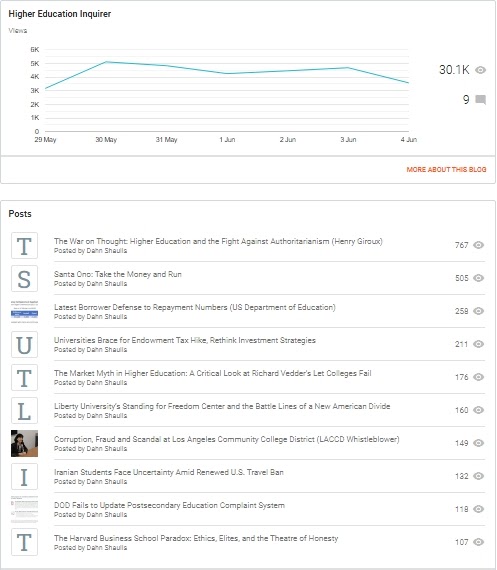
    The Higher Education Inquirer’s viewership continues to grow. In the last week, we have had more than 30,000 views, and that’s without SEO help.  Some of the content in HEI may be found elsewhere, but our in-depth historical and sociological analysis is rare for a blog or any other news source. HEI also relies on scholars and activists for our outstanding content.  Thank you, Henry GirouxGary Roth, and Bryan Alexander for allowing us to post your work.  And thanks to LACCD Whistleblower and Michael S. Hainline for your investigative exposes.  If you missed any of their articles, please click on their links. FYI: The Higher Education Inquirer archive also includes more than 700 articles and videos. Please check them out and let us know what you think. We want to hear from all sides of the College Meltdown.   

    Source link

  • Higher Education Inquirer : HEI Investigation: Campus.edu

    Higher Education Inquirer : HEI Investigation: Campus.edu

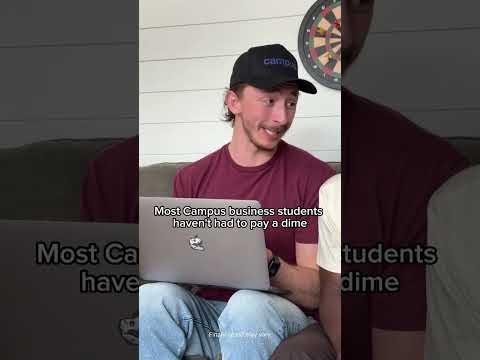
    In a sector under constant strain, Campus.edu is being heralded by some as the future of community college—and by others as a slick repackaging of the troubled for-profit college model. What many don’t realize is that before it became Campus.edu, the company was known as MTI College, a private, for-profit trade school based in Sacramento, California.

    Campus.edu rebranded in 2020 under tech entrepreneur Tade Oyerinde, is backed by nearly $100 million in venture capital. Campus now markets itself as a tech-powered alternative to traditional community colleges—and a lifeline for students underserved by conventional higher ed.

    The rebranding, however, raises red flags. While Campus.edu pitches a student-first mission with attractive promises—zero-cost tuition, free laptops, elite educators—the model has echoes of the troubled for-profit sector, with privatization, outsourcing, and digital-first delivery taking precedence over public accountability and academic governance.

    The Promises: What Campus.edu Offers

    Campus.edu markets itself with a clean, six-step path to success. The pitch is aspirational, accessible, and designed to appeal to working-class students, first-generation college-goers, and those shut out of elite institutions. Here’s what the company promises:

    1. Straightforward Application – A simple application process, followed by matching with an admissions advisor who helps identify a student’s purpose and educational fit.

    2. Tech for Those Who Need It – A free laptop and Wi-Fi access for students who lack them, ensuring digital inclusion.

    3. Personal Success Coach – Each student is assigned a personal success coach, offering free tutoring, career advising, and 24/7 access to wellness services.

    4. Elite Educators – Courses are taught live via Zoom by faculty who also teach at top universities like Stanford and Columbia.

    5. Enduring Support – Whether transferring to a four-year college or entering the workforce, Campus promises help with building skills and networks.

    6. More Learning, Less Debt – For Pell Grant-eligible students, Campus markets its programs as costing nothing out-of-pocket, with some students completing degrees debt-free.

    It’s a compelling narrative—combining social mobility, digital access, and educational prestige into a neat online package.

    Behind the Curtain: MTI College and the For-Profit Legacy

    Campus.edu did not rise out of nowhere. It emerged from the bones of MTI College, a long-running, accredited for-profit vocational school. MTI offered hands-on training in legal, IT, cosmetology, and health fields—typical offerings in the for-profit world. The purchase and transformation of MTI into Campus.edu allowed Oyerinde to retain accreditation, avoiding the long and uncertain process of seeking approval for a brand-new college.

    This kind of maneuver—buying a for-profit and relaunching it under a new brand—is not new. We’ve seen similar strategies with Kaplan (now Purdue Global), Ashford (now the University of Arizona Global Campus), and Grand Canyon University. What makes Campus.edu unique is the degree to which it blends Silicon Valley aesthetics with the structural DNA of a for-profit college.

    Missing Data, Big Promises

    Campus.edu boasts high engagement and satisfaction, but as of now, no independent data on student completion, debt outcomes, or long-term career impact is publicly available. The company remains in its early stages, with aggressive growth goals and millions in investor backing—but little regulatory scrutiny.

    With investors like Sam Altman (OpenAI)Jason Citron (Discord), and Bloomberg Beta, the pressure to scale is intense. But scale can come at the expense of quality, especially when students are promised the moon.

    Marketing Meets Memory

    Campus.edu is savvy. Its marketing strikes all the right notes: digital equity, economic mobility, mental health, and student empowerment. It presents itself as the antidote to everything wrong with higher education.

    But as its past as MTI College shows, branding can obscure history. And as for-profit operators adapt to a new digital age, it’s essential to distinguish innovation from opportunism. Without transparency, regulation, and democratic oversight, models like Campus.edu could replicate the same old exploitation—with better user interfaces.

    The stakes are high. For students already at the margins, a false promise can be more damaging than no promise at all.

    Source link

  • Higher Education Inquirer : Rutger Bregman

    Higher Education Inquirer : Rutger Bregman


    Higher Education Inquirer : Rutger Bregman – “Moral Ambition” (The Daily Show)


    Rutger Bregman – “Moral Ambition” (The Daily Show)

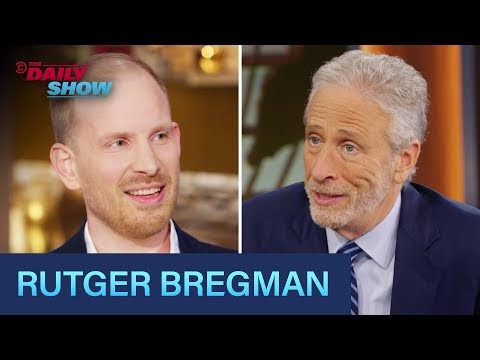
    Historian and best-selling author Rutger Bregman joins Jon Stewart to unpack his latest book, “Moral Ambition,” which is a call to action for people, especially those with education and privilege, to devote their talent and resources to careers and causes that make the world a better place. He describes how the political left has often made the mistake of placing moral purity above political relevance, and what they can learn from conservatives about building small movements into a larger, results-oriented coalition. Bregman also addresses the problem of what he calls our “inverse welfare society,” in which most high-paying, high-status jobs are inessential, and how his organization, The School for Moral Ambition, aims to reverse that structure by helping people quit their corporate jobs and transition into careers of positive impact.


    Source link