Tag: inquiry

  • Four universities being investigated over protests: Governance inquiry

    Four universities being investigated over protests: Governance inquiry

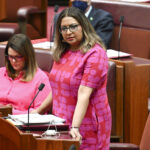
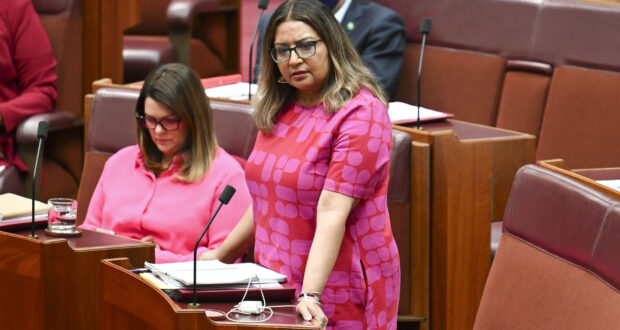
    Committee chair and Labor Senator Tony Sheldon called for the inquiry in January. Picture: Martin Ollman

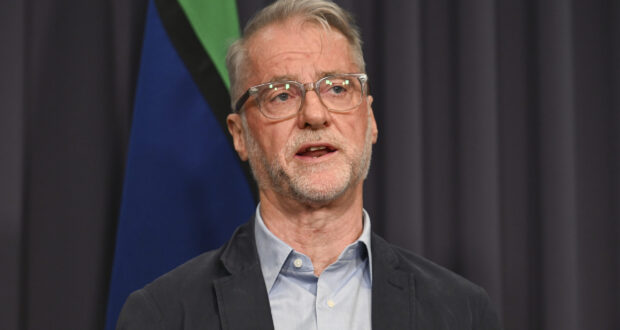
    The Tertiary Education Quality and Standards Authority (TEQSA) revealed four universities are being investigated for their handling of protests and encampments at the first Quality of governance public hearing.

    Please login below to view content or subscribe now.

    Membership Login

    Source link

  • The Coalitions We Need to Defend Open Inquiry (opinion)

    The Coalitions We Need to Defend Open Inquiry (opinion)

    For the last few years, many colleges and universities across the country have experienced firsthand attacks on higher education through state legislation targeting diversity, equity and inclusion initiatives. Since 2023, about 120 anti-DEI bills have been introduced across 29 states, and 15 of them have become law.

    These proposed bills and enacted legislation have largely been met with silence from university leaders. But over the past month, as attacks on diversity, equity and inclusion policies rose to the federal level via multiple executive orders and a Dear Colleague letter from the Department of Education, a broad coalition—professional associations in higher education, labor organizations, civil rights groups and elected officials—has filed numerous federal lawsuits challenging their constitutionality, including at least four suits involving educational organizations as plaintiffs. By taking legal action and securing a preliminary injunction against two of the executive orders, these coalitions are breaking the silence of recent years to send a clear message about the legality and harmful consequences of these policy changes for higher education and society.

    As scholars who examine how the law shapes educational policy and organizations, we have closely studied the consequences of anti-DEI bills on faculty members who engage in the very topics implicated by these laws. We’ve learned that these bills restrict research and teaching protected by academic freedom before they’re even enacted. Unintentionally or not, silence from institutional leaders contributes to the suppression.

    To counter this climate of suppression and protect the robust exchange of ideas and open inquiry, we must embrace coalitions like the ones behind the federal lawsuits and urge higher education leaders to unite and speak out to uphold institutional missions and safeguard our democracy.

    Why Silence Does Not Work—and Makes Matters Worse

    In our recently published study, we interviewed 32 faculty members whose research or teaching focused on race at two public institutions in different Republican-controlled states with proposed anti-DEI, anti–critical race theory and anti-tenure bills. Even before these bills took effect—and despite exemptions for research and teaching—we found that many faculty members pre-emptively altered their work in response to the external interference.

    Some removed diversity-related course readings or avoided certain terms like “intersectionality” in their teaching. Others, like Kourtney, a Black tenured faculty member, hesitated to share their research publicly, fearing harassment if it got into the wrong hands. Kourtney described how previously she would disseminate her research widely to make an impact. But now, out of fear, she was more reserved and cautious when sharing her work as to not get “on the radar [of] anyone that could potentially try to stop” her research.

    We also learned that the actions—or lack thereof—of university leaders shaped faculty members’ responses. University leaders’ silence amplified the pressures proposed legislation created. Danielle, a Black tenured faculty member, explained how silence from institutional leaders made “everything harder” and “sent a really loud and clear message” of “not supporting me.” The “glaring silence,” as participants called it, from senior leaders and college deans heightened uncertainty and anxiety, leaving many faculty members feeling isolated and solely responsible for protecting their rights under academic freedom.

    Yet not all university leaders were silent. Some faculty members in our study had supportive college deans and department chairs who conveyed affirmative internal messages. These participants reported that such messages helped them feel supported, empowered and confident in continuing their teaching and research without compromise. Wilson and Michelle both expressed that messages from their deans, messages that emphasized valuing faculty expertise and a commitment to scholarship addressing inequities, made them “feel at the college level like you’re protected” and reinforced their belief in “having academic freedom to be able to teach.”

    It is understandable that leaders hesitate to speak out, given the risk of losing state funding or their jobs. In fact, many faculty members we spoke to, like Megan, understood the challenging circumstances and empathized with their college deans. Megan recalled her college dean saying, “We don’t agree with [the bill], but let’s wait it out. Trying to … draw attention will be worse. Let’s keep our head down.” However, their silence also created a critical void. Cruz, a Latino tenured faculty member, explained how “not saying anything is just as bad, because then the only conclusion that the faculty take … is ‘we’re on our own out here.’”

    As a result, many faculty members of color undertook additional administrative work and legislative advocacy efforts as private citizens to be able to carry on with their research and teaching, making it increasingly difficult for them to advance their careers. Cruz shared how all this additional work and advocacy was “time that they’re not doing scholarship, that they’re not writing grants, that they’re not updating their classes.” For some, the frustration and exhaustion became so overwhelming that they chose to leave their institutions, or higher education entirely.

    Why Coalitions Are Needed to Break the Silence

    Our findings also revealed that support from coalitions of civil rights groups, advocacy organizations and professional associations like the American Association of University Professors helped some faculty members to resist the pressure to change their teaching or research. These groups organized teach-ins virtually or on campus, provided legislative analysis via one-pagers and facilitated legislative organizing efforts.

    Eliot, a white tenured faculty member, described how these coalitions helped foster “some unity,” making “a real difference psychologically” by ensuring members no longer felt isolated but instead felt that “we’re in this together.” By building collective capacity, these coalitions empowered faculty members to defend academic freedom and push back against a climate of suppression—particularly as most participants in our study received little to no guidance or support from university leaders.

    Now, faculty members across the country—many of whom are only beginning to face these challenges—find themselves overwhelmed with uncertainty and fear, pressured to pre-emptively censor their work. However, we’re starting to see the emergence of the coalitions needed to disrupt this climate of suppression.

    The recent lawsuits mark an important step in the defense of robust expression of ideas and open inquiry, but they are just the beginning. Effectively challenging this suppression requires a united front of policy and advocacy organizations, civil rights groups, unions, professional associations, and institutional leaders. Leaders are better positioned to advocate for higher education and respond to emerging threats when working within a coalition, such as Education for All, which has been providing training sessions and strategic guidance to help institutions safeguard their student success programs.

    These coalitions provide crucial support on the ground to help faculty members, administrators and students continue their work while the legal battles unfold. And they can help break institutional silence by offering timely, research-driven guidance on state legislation, executive orders and other emerging state and federal threats—many of which pressure education professionals to unnecessarily restrict or abandon core principles and programs in higher education.

    Jackie Pedota, Ph.D., is a postdoctoral associate at the University of Texas at Austin. Her research examines topics within higher education at the intersection of race, power and organizational change, revealing how organizational dynamics and sociopolitical contexts perpetuate inequities for minoritized campus communities.

    Liliana M. Garces, J.D., Ed.D., is the Ken McIntyre Professor for Excellence in School Leadership at the University of Texas at Austin. Her research examines how law and education policy interact to shape access and opportunity in higher education.

    Source link

  • QUT anti-semitism review leader announced, responds to parliamentary inquiry

    QUT anti-semitism review leader announced, responds to parliamentary inquiry

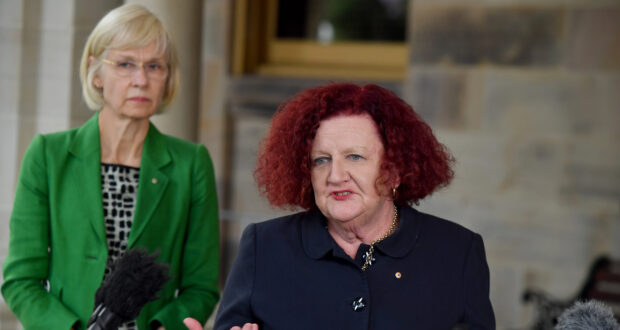
    Professor Margaret Sheil (right) speaks to the press. Picture: John Gass

    The Queensland University of Technology has announced more details about its independent review into last month’s controversial National Symposium on Unifying Anti-Racist Research and Action event.

    Please login below to view content or subscribe now.

    Membership Login

    Source link

  • Vice-chancellor pay and “quality of governance” to be scrutinised by Senate inquiry

    Vice-chancellor pay and “quality of governance” to be scrutinised by Senate inquiry

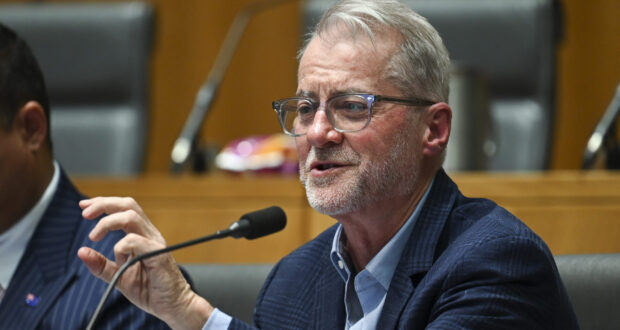
    Labor Senator Tony Sheldon is chair of the Senate Committee on Education and Employment. Picture: Martin Ollman

    Australia’s vice-chancellors will be questioned about their pay packages, instances of wage underpayment, and the use of external consultants in a new parliamentary inquiry into the quality of university governance.

    Please login below to view content or subscribe now.

    Membership Login

    Source link

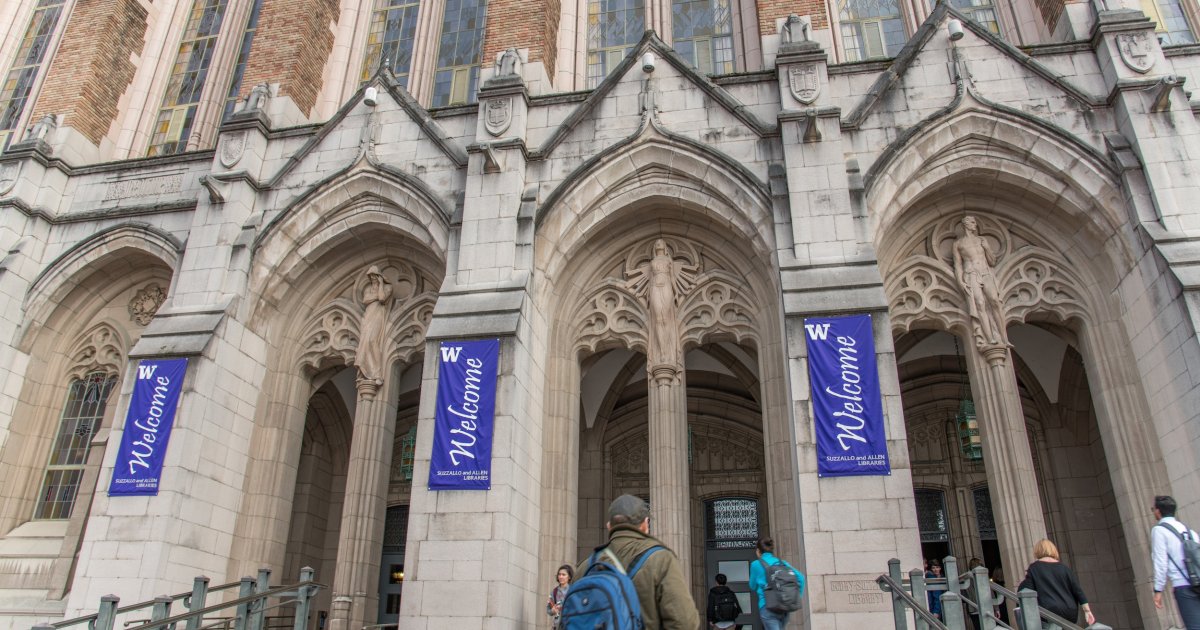
  • University of Washington alumni seek to revive the spirit of free inquiry

    University of Washington alumni seek to revive the spirit of free inquiry

    Amid the urban hum of downtown Seattle and the friendly clatter of a FIRE supporters’ meetup, a consequential alliance was born. 

    Two alumni of the University of Washington, separated by generations but united by a shared purpose, converged in conversation. Cole Daigneault, a freshly minted graduate from the class of 2024, and Bill Severson, a two-time UW graduate who earned his bachelor’s and law degree in the early 1970s, lamented over the encroaching illiberalism at their alma mater. 

    That evening’s conversation, later sustained through an alumni email listserv, soon crystallized into Husky Alumni for Academic Excellence

    This new, independent UW alumni group has articulated a mission that is ambitious yet essential: “To reinvigorate free and open academic inquiry and to foster a campus ethos where civil discourse and intellectual courage flourish.” 

    “My hope with this alumni group,” Daigneault says, “is to rally former UW students, who like me, are concerned about the culture of discourse on campus. The group will also be a place for graduated students to continue the fight long after they leave.” 

    Daigneault’s early activism was catalyzed by the controversy surrounding UW professor Stuart Reges, whose parody land acknowledgment and subsequent legal battles with the university became a major flashpoint in the free speech landscape. Inspired by Reges’ story — and FIRE’s robust defense of him — Daigneault founded Huskies for Liberty in 2022, a UW student organization devoted to “the preservation of free expression and individual liberty on campus and beyond.” 

    The fight for free speech on campus, as history has long demonstrated, is never truly won. It must be waged anew by each generation. 

    Furthermore, through FIRE’s Campus Scholar Program, Daigneault organized “Free Speech Matters,” UW’s first student-led conference devoted to the enduring relevance of free speech, civil discourse, and academic freedom. 

    Alongside Daigneault, Bill Severson brings over a half-century of legal experience and an unabiding love for his alma mater. His concerns over the state of higher education were sparked by the 2017 debacle at Evergreen State College, where an angry mob of students confronted Professor Bret Weinstein for publicly objecting to a proposal that white students and professors leave campus for Evergreen’s annual “Day of Absence.”

    “I was appalled by how that situation was handled,” Severson recounts. “It led me to explore thinkers like Jonathan Haidt and Steven Pinker and organizations like FIRE.” 

    Severson’s recollections of his time in school are colored with a mixture of nostalgia and grave concern. “When I attended UW in the late 1960s and early 1970s, the atmosphere on campus was markedly different than today. Then, as now, students and faculty leaned left, but it was not a monoculture and there was not such a marked intolerance of other viewpoints.” 

    The emergent partnership between Daigneault and Severson is not only remarkable, it highlights an enduring truth: The defense of free speech on campus is not a transient endeavor but a generational relay, requiring both the vigor of youth and wisdom of age. One without the other is as useful as a compass without a needle.

    Daigneault and Severson’s decision to form Husky Alumni for Academic Excellence is timely, to say the least. 

    “Last year, free speech became a major campus issue due to widespread protests over the Israel-Hamas War,” Daigneault recalls. “Unfortunately, alongside many instances of protected expression, we also saw a rise in illiberal behaviors, such as shouting down speakers, preventing students from accessing public areas, and even vandalizing historic buildings on campus.”

    Daigneault’s reflections are not mere anecdotes. They are substantiated by FIRE’s reports. UW has consistently languished near the bottom of FIRE’s College Free Speech Rankings (in 2022, UW was the lowest ranked public university). And 2024 was not much better: UW ranked 226 out of 257 schools. 

    The data is grim:

    • 71% of students believe it is sometimes acceptable to shout down a speaker.
    • 30% think using violence to silence a speaker is sometimes acceptable.
    • 50% admit to self-censoring on campus at least once or twice a month.

    Among the faculty and administration, the picture is scarcely brighter. According to FIRE’s 2024 Faculty Survey Report, over one-third of UW faculty respondents confessed to moderating their writing to avoid controversy, while 40% expressed uncertainty about the administration’s commitment to protecting free speech. 

    FIRE to Congress: More work needed to protect free speech on college campuses

    News

    FIRE joined Rep. Murphy’s annual Campus Free Speech Roundtable to discuss the free speech opportunities and challenges facing colleges.


    Read More

    For Severson, the conclusion is clear.

    “Educational institutions have lost their way,” he says, though he insists there is still hope. “Alumni can be a force to push schools back toward their mission — promoting honest inquiry, academic excellence, the pursuit of truth, and the dissemination of knowledge.”

    In the burgeoning movement of alumni stewardship,  Daigneault and Severson offer a clarion call to UW alumni who not only revere the university’s storied past (UW is one of the oldest universities on the West Coast), but also seek to reclaim it against the present maladies of orthodoxy and intellectual timidity.

    The fight for free speech on campus, as history has long demonstrated, is never truly won. It must be waged anew by each generation. Daigneault and Severson have valiantly taken up the mantle. The question remains, who will join them? 


    If you’re ready to join Husky Alumni for Academic Excellence, or if you’re interested in forming a free speech alumni alliance at your alma mater, contact us at [email protected]. We’ll connect you with like-minded alumni and offer guidance on how to effectively protect free speech and academic freedom for all. 

    Source link