Tag: instate

  • DOJ Sues Minnesota Over In-State Tuition for Noncitizens

    DOJ Sues Minnesota Over In-State Tuition for Noncitizens

    The U.S. Department of Justice sued Minnesota lawmakers Wednesday over the state’s policy allowing in-state tuition benefits for undocumented students.

    The lawsuit names Gov. Tim Walz, Attorney General Keith Ellison and the state’s Office of Higher Education as defendants. It claims Minnesota is violating federal law and discriminating against U.S. citizens by permitting noncitizens who grew up in the state to pay in-state tuition rates. Under the Minnesota Dream Act, signed into law in 2013, undocumented students have to meet various criteria to qualify, including spending three years at and graduating from a Minnesota high school.

    The suit also takes issue with the state’s North Star Promise Program, a free college program launched last year for Minnesotans who meet certain requirements, including undocumented students who live in the state.

    The lawsuit comes after the Justice Department successfully sued Texas over the same issue earlier in June. Texas swiftly sided with the federal government, and within hours, its two-decade-old law allowing in-state tuition for undocumented students became moot. The DOJ also sued Kentucky politicians over its in-state tuition policy last week. The lawsuits cite President Donald Trump’s May executive order that called for a crackdown on cities and states with laws that benefit undocumented immigrants, including those that offer in-state tuition benefits.

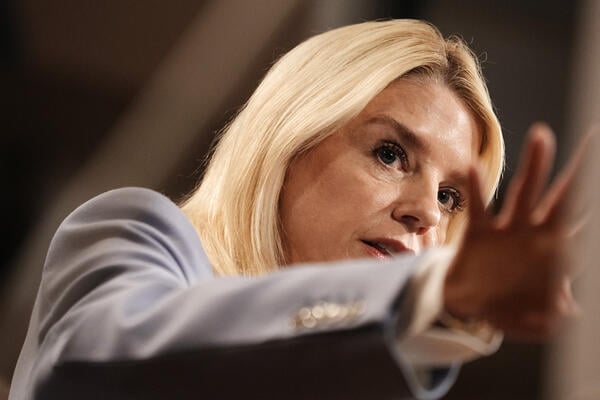
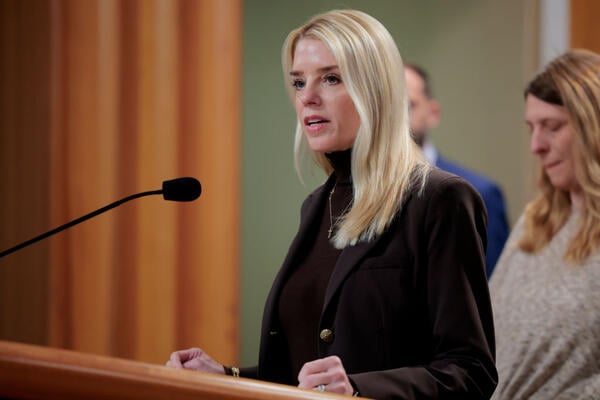
    “No state can be allowed to treat Americans like second-class citizens in their own country by offering financial benefits to illegal aliens,” Attorney General Pamela Bondi said in a news release. “The Department of Justice just won on this exact issue in Texas, and we look forward to taking this fight to Minnesota in order to protect the rights of American citizens first.”

    Source link

  • After Texas, DOJ Targets Kentucky’s In-State Tuition Policy

    After Texas, DOJ Targets Kentucky’s In-State Tuition Policy

    Undocumented students and immigrant advocacy organizations are still reeling after Texas, earlier this month, swiftly sided with a U.S. Department of Justice lawsuit against its policy of permitting in-state tuition for undocumented students. The two-decade-old law, which Republican state lawmakers had recently tried and failed to quash, was dismantled within a matter of hours in a move some critics called collusive.

    Now the DOJ is employing the same strategy all over again—this time in Kentucky. The department filed a complaint in U.S. District Court for the Eastern District of Kentucky on Tuesday challenging the in-state tuition policy for undocumented students. The lawsuit, which names Democratic governor Andy Beshear, Commissioner of Education Robbie Fletcher and the Kentucky Council on Postsecondary Education, takes issue with a policy that allows graduates of Kentucky high schools who live in the state, regardless of citizenship, to access in-state tuition benefits.

    “No state can be allowed to treat Americans like second-class citizens in their own country by offering financial benefits to illegal aliens,” U.S. attorney general Pamela Bondi said in a statement. “The Department of Justice just won on this exact issue in Texas, and we look forward to fighting in Kentucky to protect the rights of American citizens.”

    Beshear is trying to distance himself from the legal battle. Crystal Staley, communications director for the governor’s office, said in a statement that the office hasn’t been served with a lawsuit, nor did it receive advance notice or hold prior conversations with the department about the regulation. She emphasized that the in-state tuition policy was established by the Kentucky Council on Postsecondary Education more than a decade ago.

    “Under Kentucky law, CPE is independent, has sole authority to determine student residency requirements for the purposes of in-state tuition, and controls its own regulations,” Staley wrote. “The Governor has no authority to alter CPE’s regulations and should not be a party to the lawsuit.”

    The Kentucky Council on Postsecondary Education also only became aware of the lawsuit Wednesday morning and reported that afternoon that it had not yet been served legal documents.

    “Our staff General Counsel is reviewing pertinent federal laws and state regulations at this time to determine next steps,” Melissa Young, the council’s communications senior fellow, wrote in an email to Inside Higher Ed.

    As of Wednesday evening, no new developments in the case had taken place, but Kentucky attorney general Russell Coleman, a Republican, indicated in a statement to Inside Higher Ed that his office planned to support the lawsuit.

    “Preserving in-state tuition for our citizens at the commonwealth’s premier public universities is important to fostering Kentuckians’ potential and encouraging a vibrant state economy,” Coleman said in the statement. “Our Office will support the Trump Administration’s efforts to uphold federal law in Kentucky.”

    As in Texas, a group of Republican lawmakers proposed legislation earlier this year to prevent noncitizens in Kentucky from qualifying as residents and accessing in-state tuition benefits. But the bill didn’t proceed further.

    The new lawsuit heightens fears among undocumented students’ advocates that the Trump administration could target in-state tuition policies across the country, which help undocumented students in 23 states and D.C. pay for college when they can’t access federal financial aid. Advocates also worry the Trump administration could continue to sue red states to secure policy wins desired by both Republican state lawmakers and the federal government. (In Kentucky, Republicans control the attorney general’s office and the State Legislature.)

    Monica Andrade, director of state policy and legal strategy at the Presidents’ Alliance on Higher Education, predicted after the Texas lawsuit, “This might only be the beginning, and there might be future actions that extend beyond Texas.”

    Now she worries she’s been proven right.

    Pushback in Texas

    The move in Kentucky comes as undocumented students and civil rights organizations are fighting back in Texas.

    The Mexican American Legal Defense and Educational Fund, a Latino civil rights organization, filed a motion on behalf of undocumented students in Texas to intervene in the DOJ lawsuit. The motion argues that the speed at which Texas and the DOJ came to an agreement and the judge closed the case provided no opportunity for a hearing or for the public to weigh in.

    “Our federal courts are public agencies,” said Thomas A. Saenz, president and general counsel at MALDEF. “They’re supposed to undertake their work in the public eye. The two parties and the court did all of this behind closed doors in one afternoon, without setting a public hearing … That is a complete abuse of the judicial system.”

    “To come up with a consent judgment like that, they had to have been planning this for weeks,” he said. “Every Texan should be offended if something their legislators passed and then never repealed was so easily killed by the attorney general acting in collusion with the Department of Justice.”

    MALDEF is representing unnamed affected students, including three DACA recipients: a third-year biomedical science student at the University of Texas Rio Grande Valley who is planning to pursue medical school, a student earning a master’s in higher education at University of Houston who was planning to apply to Ph.D. programs and a master’s student in clinical mental health counseling at the University of North Texas.

    “She cannot afford to pay out-of-state tuition and will likely be forced to drop out of her program,” the motion says of one student.

    The goal is for the student group to become a party in the lawsuit so that it can appeal the decision. Texas and the federal government have until early July to oppose MALDEF’s motion to intervene, but if the judge denies an intervention, MALDEF could appeal that decision as well.

    Andrade said that what MALDEF is doing could possibly be replicated in other states if the DOJ challenges more in-state tuition laws, though some states might face different challenges that require different approaches. For example, Republican lawmakers in Arizona included a provision in their House budget, approved June 12 by the House Appropriations Committee, that colleges can’t use public money to reduce tuition for noncitizens, The Arizona Capitol Times reported. Some cited the Texas lawsuit.

    The Presidents’ Alliance is in “close coordination with legal, with advocacy and institutional partners to explore—whether it’s immediate or longer-term—actions that we can take” to prepare for different kinds of attacks, Andrade said. “Folks in the states where we’re having conversations, their laws comport with federal law. But given everything that’s been going on, that doesn’t mean that folks should not be preparing for any type of challenge.”

    The organization is also trying to advise Texas undocumented students who are “scrambling,” in the absence of any state guidance to higher ed institutions as to when the tuition rate change goes into effect and to whom the shift applies. It’s unclear, for example, whether students with DACA or Temporary Protected Status are included.

    “We’re telling students to continue to take their classes and do not make any drastic changes based on this,” Andrade said.

    TheDream.US, a scholarship provider for undocumented students, is also gearing up to help Texas students find more affordable programs if they can’t pay their colleges’ out-of-state tuition prices. MALDEF predicted some students’ costs would increase up to 800 percent—in some cases, from $50 to $450 per credit hour.

    Gaby Pacheco, president and CEO of TheDream.US, said the organization is prioritizing helping students connect with online programs, because many live in Texas border towns, where commuting to a more distant college could require having to cross immigration control checkpoints.

    In the meantime, Texas institutions and students are embroiled in “confusion and uncertainty and chaos” as they await more information, she said.

    Daniel I. Morales, an associate professor of law and Dwight Olds Chair at University of Houston Law Center, said what happened in Texas is the latest example of a national trend: the “absolute erasure” of state and local issues in favor of the administration’s priorities.

    Morales said two decades ago, Texas’s in-state tuition policy was born out of Republican governor Rick Perry’s recognition of “the reality locally in Texas, that we have an enormous undocumented population that is enormously productive if given the opportunity to go to college,” which benefits the state economy. But now, state lawmakers fear risking their career trajectories if they don’t prioritize partisan national interests, he said.

    He doesn’t know what’s going to happen in Kentucky. But if it goes the way of Texas and the attorney general files a joint motion with the DOJ, civil rights organizations such as MALDEF would have to be the ones to fight it, with students as the plaintiffs, he said.

    “Students, if they don’t have the resources to pay out-of-state tuition, they don’t have the resources to litigate, either,” at least not on their own, he said. “There’s very little recourse.”

    Source link

  • No more in-state tuition for undocumented students in Texas

    No more in-state tuition for undocumented students in Texas

    This audio is auto-generated. Please let us know if you have feedback.

    Dive Brief:

    • A federal judge on Wednesday signed off on a joint motion from the U.S. Department of Justice and Texas to strike down the state’s 24-year-old law offering in-state tuition rates to undocumented students.
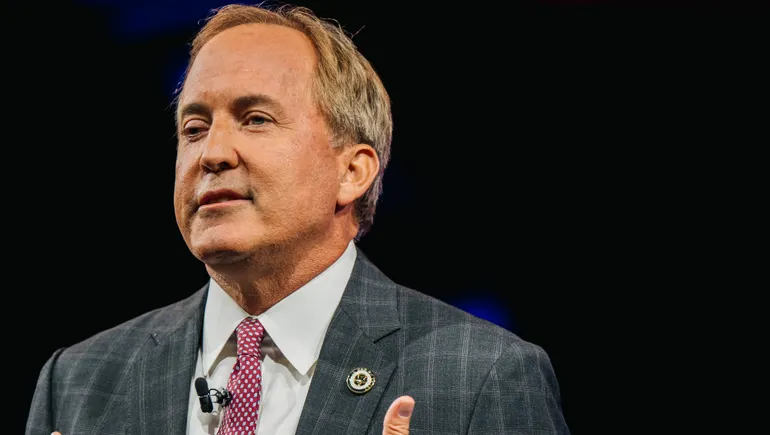
    • Texas Attorney General Ken Paxton called the law a “discriminatory and un-American provision” in a statement and claimed victory for the court order holding it to be unconstitutional.
    • The change, effective immediately, will likely affect tens of thousands of Texas students. One report estimated that 59,000 undocumented students in the U.S. attended Texas colleges in 2021. 

    Dive Insight:

    More than two decades ago, the Texas Legislature passed a bipartisan bill removing immigration status as an eligibility factor for in-state tuition. If an undocumented student attended a Texas high school, graduated or received a GED and met “the minimum residency, academic, and registration criteria,” they could enroll at a public state college at the in-state rate.

    Then-Gov. Rick Perry signed the bill into law, making Texas the first state with such a policy.

    Since then, 24 states and Washington, D.C., have enacted policies that allow undocumented students to attend at least some public colleges at in-state rates. Florida’s law is set to be revoked effective July 1.

    DOJ sued Texas over its policy on Wednesday, with U.S. Attorney General Pam Bondi arguing that it illegally offered undocumented students benefits not provided to all U.S. citizens.

    “The Justice Department will relentlessly fight to vindicate federal law and ensure that U.S. citizens are not treated like second-class citizens anywhere in the country,” she said in a statement.

    Texas voiced support for DOJ’s lawsuit soon after it was filed. But in the short time prior to U.S. District Judge Reed O’Connor’s sign-off, student advocates questioned the legal standing of DOJ’s allegations.

    “To suggest that undocumented students are receiving benefits denied to citizens is false and misleading,” Monica Andrade, director of state policy and legal strategy at The Presidents’ Alliance on Higher Education and Immigration, said in a Wednesday statement.

    “In fact, any U.S. citizen who meets the same criteria — such as attending and graduating from a Texas high school — qualifies for in-state tuition. These requirements apply regardless of immigration status,” she said.

    Gaby Pacheco, president and CEO of the undocumented youth advocacy group TheDream.US, called the lawsuit “harmful and self-defeating for the future of Texas.” 

    Average in-state costs for Texas public colleges are below the national average, $8,195 versus $9,750 in 2022-23, respectively, according to the Education Data Initiative

    But for out-of-state students, tuition is significantly higher. At the University of Texas-Austin, for example, out-of-state students paid $48,712 in 2024-2025, compared to $13,576 for state residents.

    Prior to Bondi’s lawsuit, the Texas Legislature this session had considered a bill to repeal in-state tuition eligibility for undocumented students. The proposal, which did not advance, would have also required such students who had already received in-state tuition to pay the difference within 30 days of being notified or risk having their diplomas withheld. 

    Source link

  • Trump Order Targets Undocumented Students’ In-State Tuition

    Trump Order Targets Undocumented Students’ In-State Tuition

    Immigrant rights advocates are urging state and higher ed leaders not to make any hasty changes to their in-state tuition policies after President Trump issued an executive order on Monday threatening to crack down on sanctuary cities and localities with laws that benefit undocumented immigrants.

    The blow to undocumented students, who in nearly half the country pay in-state tuition, is tucked into an executive order focused mostly on pressuring state and local officials to abandon their cities’ sanctuary status and cooperate with federal immigration authorities. The order demands federal officials make lists of “sanctuary jurisdictions” and the federal funds that could be suspended or cut if they don’t change course. The order also commands them to take “appropriate action” to stop the enforcement of state and local laws and practices “favoring aliens over any groups of American citizens,” including in-state tuition benefits to undocumented students “but not to out-of-state Americans.”

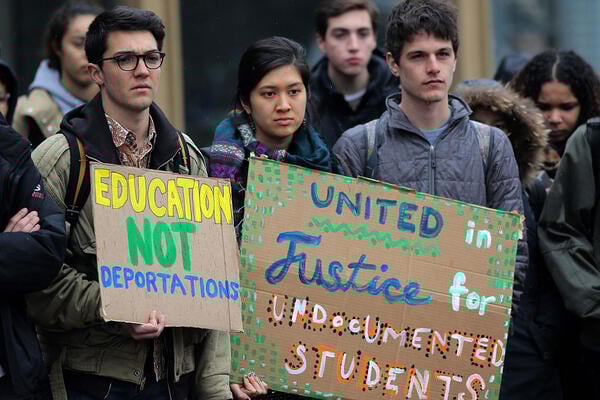
    The move has the potential to affect 24 states and Washington, D.C., which allow in-state tuition for local students with or without citizenship. (Florida previously allowed undocumented students to pay in-state tuition rates but ended its decade-old, historically bipartisan policy in February.) Undocumented students and supporters have long touted these policies as a way to make college more affordable for those who can’t access federal financial aid but who grew up in the states and plan to work in their local communities after they graduate.

    “What immigrant, international and refugee students bring is needed talent, skills and contributions,” said Miriam Feldblum, executive director of the Presidents’ Alliance on Higher Education and Immigration. “In-state tuition increases the number of a state’s residents who are college educated, who are able to contribute far more to the state’s economy and to their communities than if they did not have a college education.”

    Gaby Pacheco, president and CEO of TheDream.US, a scholarship provider for undocumented students, said many of these students come from low-income backgrounds and couldn’t afford college otherwise.

    Her organization is currently scrambling to help undocumented students in Florida pay for the remainder of their credits and graduate before they have to pay much higher out-of-state tuition rates. In some cases, that means helping them transfer to more affordable institutions.

    For many, “it’s just impossible for them to be able to come up with that money,” she said.

    She’s encouraging state and institutional leaders to avoid “panicking” or “making abrupt policy changes” in response to the executive order.

    Other executive orders have “created so much panic and unnecessary movement from colleges, universities, states, that it was more hurtful than anything,” she said. The administration is putting forward a “belief” that charging undocumented students in-state tuition rates is unlawful, but “that belief is legally dubious.”

    Deciphering the Executive Order

    Immigrants’ advocates and legal scholars say the meaning of the executive order is somewhat hazy. For example, it’s unclear what it means for federal officials to “take appropriate action” to prevent in-state tuition policies from being enforced.

    The order also doesn’t directly say states or institutions with such laws will lose any federal funding, noted Ahilan Arulanantham, professor from practice at the UCLA School of Law and co-director of the law school’s Center for Immigration Law and Policy.

    Still, the order’s threatening tone toward sanctuary cities’ federal funds could be “a window into where this fight could go if the federal government wants to expend significant political capital on this issue,” Arulanantham said. Congress, for example, could decide to pass a law to cut federal funds from universities that offer undocumented students in-state tuition—a proposal outlined in Project 2025. But the executive order itself doesn’t explicitly take away federal dollars from anyone or have the power to do so, he said.

    “If I were a local government or state government official, I probably wouldn’t sue tomorrow over this,” Arulanantham said. “I would wait to see if this is actually going to have any teeth, or if it’s just like a press release.”

    Pacheco similarly described the order as “warning” states of the administration’s posture toward these policies. At the same time, she believes it’s important to plan ahead in case Trump takes the issue further.

    “They’re trying to tell states, ‘We believe that you providing certain benefits for undocumented students is against the law,’” she said. “We’ve known this forever—these states are not violating the law.”

    The order suggests that in-state tuition for undocumented students “may violate” a federal statutory provision that says undocumented people can’t receive higher ed benefits unless citizens are also eligible. But in-state tuition policies are designed to serve citizens living in these states, as well. For example, under California’s Assembly Bill 540, any nonresident who spent three years in California high schools is eligible for in-state tuition. That policy also benefits citizens who grew up in the state who may have left for any reason and returned.

    These types of in-state tuition policies, including California’s, have faced legal challenges in the past, “but all the challenges have failed, said Kevin Johnson, dean of the UC Davis School of Law. He described the executive order as “vaguely worded,” while the state laws, by contrast, are “very clear.”

    The legal argument is that undocumented students are “just being treated equally as all other residents of the state,” he said. “The idea is that they’re residents, which means they’re taxpayers—maybe it’s sales tax, maybe state income tax, federal income tax—whatever it is, they should be treated like other residents and not discriminated against because of their immigration status.”

    What Happens Next

    Arulanantham worries that despite their strong legal foundation, states and higher ed institutions may rush to end in-state tuition benefits for undocumented students out of fear.

    “That’s actually almost certainly the primary purpose of this order”: to spur “pre-emptive discrimination because [institutions] think they have to or they think it’s safer to,” he said.

    Feldblum noted that, prior to the executive order, some state lawmakers were already starting to shift on the issue, perhaps “to align themselves with the federal government.”

    While some states have recently doubled down on such policies, proposing new legislation to expand in-state tuition eligibility, others have also moved to curtail them. Following in Florida’s footsteps, lawmakers in other states, including Kansas, Kentucky and Texas, are considering legislation to prohibit in-state tuition for undocumented students. Texas was the first to allow undocumented students to pay in-state tuition rates in 2001, joined by California that same year.

    “This is not coming in a vacuum … We have to take this seriously and substantively, consider the kinds of actions we need to take to defend in-state tuition—including, if needed, legal action,” Feldblum said. “And then also make sure we’re placing equal emphasis on supporting and communicating with potentially impacted students so that they know their education is important and that they’re important.”

    Source link

  • Florida ends in-state tuition for undocumented students

    Florida ends in-state tuition for undocumented students

    Florida state lawmakers have eliminated in-state tuition for undocumented students, reversing a decade-old law that once enjoyed bipartisan support.

    Previously, undocumented students in Florida could apply for waivers to pay in-state tuition rates, if they went to high school in the state for at least three consecutive years and enrolled in college within two years of graduating.

    Under the new policy, included in a sweeping immigration bill signed by Governor Ron DeSantis last week, only “citizens of the United States” or those “lawfully present in the United States” qualify. Students receiving the waivers need to be “reevaluated for eligibility” by July 1.

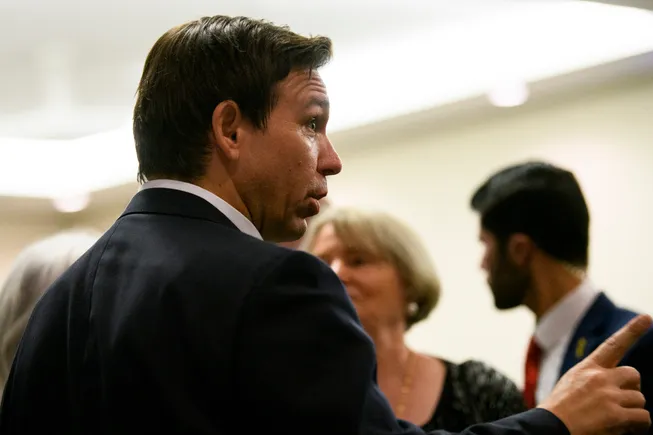
    “I don’t think you should be admitted to college in Florida if you’re here illegally,” DeSantis said in a press conference Friday, “but to give in-state tuition was just a slap in the face to taxpayers.”

    Florida was one of 25 states that offered in-state tuition to undocumented students at public colleges and universities, according to the Higher Ed Immigration Portal, a data hub run by the Presidents’ Alliance on Higher Education and Immigration. These reduced tuition prices came as a relief to undocumented students, who can’t access federal financial aid like their peers and often lack work authorization unless they’re part of the Deferred Action for Childhood Arrivals, or DACA, program. (Of the approximately 400,000 undocumented students enrolled in U.S. colleges and universities, most don’t hold DACA status.)

    Policymakers in other states are considering taking similar steps to curb in-state tuition for these students as they embrace President Donald Trump’s national push against undocumented immigration. Since the presidential election in November, state lawmakers in Massachusetts, Minnesota and Texas have introduced legislation to remove in-state tuition for undocumented students. As the issue becomes a political lightning rod, politicians in other states are doubling down on financial supports for these students, introducing bills that would expand in-state tuition eligibility, including in Indiana, New Mexico, Oregon and Pennsylvania.

    Miriam Feldblum, president and CEO of the Presidents’ Alliance, said advocates “should be prepared and ready” to come out against similar legislation elsewhere in the country.

    A Game of ‘Political Football’

    In-state tuition for undocumented students has become a “political football” in Florida, said Jared Nordlund, Florida state director at UnidosUS, a Latino civil rights organization. But that wasn’t always the case.

    Republican lieutenant governor Jeanette Nuñez—who resigned last week to become interim president of Florida International University—originally advocated for extending in-state tuition to undocumented students, and former Republican governor Rick Scott, now Florida’s senior U.S. senator, signed the bill into law. Nuñez has since pulled back her support for the policy, posting on X in January that the law had “run its course” and needed to be repealed.

    The political winds have shifted on what was once a fairly bipartisan issue, Nordlund said. “Ten years ago, the Republican Party wasn’t the party of Trump.”

    Ira Mehlman, media director at the Federation for American Immigration Reform, an organization that promotes more restrictive immigration policies, applauded Republican state lawmakers for “not rewarding people who are in the country illegally.”

    “The more you reward people for breaking the laws, even if it’s through their kids, the more likely people are to disobey the laws,” Mehlman said. And “you are filling seats that might otherwise have gone to kids who are equally deserving and whose parents have not violated any laws.”

    Now undocumented students are left to pay out-of-state tuition prices, a significant cost difference. During the 2023–24 academic year, average tuition and fees at Florida colleges and universities for out-of-state students was more than triple the cost state residents paid, according to the Florida Policy Institute, an organization that promotes economic mobility in Florida. The state’s in-state tuition waivers benefited an estimated 6,500 undocumented students that year.

    The Ripple Effects

    An undocumented student at University of Central Florida, who requested anonymity, told Inside Higher Ed that she couldn’t have pursued a bachelor’s degree as a full-time student without in-state tuition. She would’ve gone for an associate degree instead, taking one or two classes at a time, to keep costs down.

    Without in-state tuition, “who knows if I’d be graduating right now,” she said.

    The student, who was brought to Florida from Mexico at age 4, is graduating this spring, before the policy change takes effect. But she worries about her peers who won’t have the same resources she did. She previously helped and encouraged other undocumented students to apply for the in-state tuition waiver because of how much it helped her.

    “I gave them that hope,” she said, “and now it’s being snatched away from them.”

    The student argued she and other undocumented students would use their degrees to contribute to the local labor market, a point they’ve made to state lawmakers in the past; her long-term goal is to open a marketing agency and work with small business owners in the state.

    “We studied here our whole life, and our goal is to get our degree and be able to contribute to the economy,” she said.

    Diego Sánchez, director of policy and strategy at the Presidents’ Alliance, said he scrambled to pay for college in Florida before in-state tuition became available to undocumented students like him.

    In 2008, he enrolled at St. Thomas University, a private institution, and joined as many activities as he could that came with university scholarships—student government, choir and cross country, even though he wasn’t a singer or a runner. He couldn’t have afforded college otherwise, which is why he and other activists advocated for in-state tuition for Florida’s undocumented population. He’s “very disappointed” to see that win reversed.

    “It’s about scoring political points,” Sánchez said. “And unfortunately, these students who grew up in Florida, went to our public schools, are going to suffer the consequences … The state has already invested in them, and they’re working their way up to contribute to the community, [to] pay taxes.”

    Undocumented students and their supporters argue Florida is going to lose out on these students as future skilled workers at a time when the state is challenged by workforce shortages and an aging population.

    Feldblum said these students tend to be “tremendously determined” and will likely attend college in other states, taking their talents with them. She also expects some will stop out of higher ed altogether because they can’t afford it or because they don’t know about other resources available to them, like privately funded scholarships.

    “When there are obstacles put in front of students, when students are told, ‘You’re not welcome here’ in different ways, that’s really discouraging,” she said. “That’s disincentivizing,” when Florida has a “need for talent, the need for workforce development.”

    What’s Next

    The fight for in-state tuition in Florida isn’t over, some advocates say.

    “Hopefully we can eventually undo the repeal [of in-state tuition] when the time is right,” Nordlund said. For now, he’s focused on educating state lawmakers and the public about the economic benefits of the repealed policy.

    Sánchez plans to lobby state lawmakers to at least let undocumented students already in college finish their degrees at in-state tuition prices, a proposed amendment to the law that previously failed. He hopes colleges and universities push state lawmakers on the issue as well.

    He continues to worry, however, that these kinds of attacks on students’ in-state tuition “could spread to other parts of the country.”

    Mehlman would like to see other states, and even Congress, look to Florida’s example and work to end in-state tuition for noncitizens nationwide.

    “Florida and Texas have sort of been leaders in this area,” he said, “and they certainly can show the way for other states that might be considering this as well.”

    Source link

  • Florida ends in-state tuition for undocumented students

    Florida ends in-state tuition for undocumented students

    Florida state lawmakers voted on Thursday to get rid of in-state tuition for undocumented students as part of a sweeping immigration bill, The Miami Herald reported.

    Previously, undocumented students who attended high school in the state for at least three consecutive years and enrolled in college within two years of graduating could receive a waiver to pay in-state tuition rates. Now their tuition costs will go up significantly, a particular challenge given that these students can’t receive federal student aid.

    Democratic lawmakers attempted to amend the bill so that undocumented students currently enrolled at public universities could pay in-state rates for the next four years, but the amendment failed in the state Senate.  

    “We wanted to repeal in-state tuition and focus on Floridians,” Governor Ron DeSantis said at a news conference Thursday.

    Source link

  • Florida lawmakers pass bill to roll back in-state tuition for undocumented students

    Florida lawmakers pass bill to roll back in-state tuition for undocumented students

    This audio is auto-generated. Please let us know if you have feedback.

     Dive Brief:

    • Florida lawmakers passed an expansive immigration package this week that would remove undocumented students’ eligibility for in-state tuition rates at public colleges.
    • If signed into law, the reversal would take effect July 1. However, the legislation has intensified a growing rift between the state’s Republican lawmakers and Gov. Ron DeSantis as they compete to show their loyalty to President Donald Trump and his goal of cracking down on immigration.
    • DeSantis heavily criticized the package, saying Wednesday that it “fails to honor our promises to voters, fails to meet the moment, and would actually weaken state immigration enforcement.” The governor said he would veto it unless legislators approved more restrictive immigration measures.

    Dive Insight:

    For a decade, Florida has permitted undocumented students to pay in-state tuition rates at public colleges if they attended their last three years of high school in the state and enrolled in higher education within two years of graduation.

    Republican State Sen. Randy Fine first proposed rolling back the allowance in December as a standalone bill. In January, DeSantis cited the bill as a priority when he abruptly called a special legislative session aimed at helping Trump implement tougher immigration policies.

    Florida has two public higher education systems — the Florida College System and the State University System of Florida, which oversee 28 colleges and a dozen universities, respectively. 

    In the 2023-24 fiscal year, just over 2,000 nonresident students attending one of the university system’s institutions received a waiver to pay in-state tuition, according to an analysis of the bill prepared by the Senate appropriations committee’s staff. In the Florida College System, the number was almost 4,600 that year. The combined discounts were valued at almost $40.7 million, it said. 

    The analysis did not disaggregate the student data by immigration status, and it’s unclear how many undocumented students would be affected by the revocation of the tuition waiver. One report from 2023 estimated about 40,000 undocumented students attended Florida colleges in 2021.

    It’s also unclear if colleges would benefit financially from the end of the waiver, the analysis said.

    “Some students who are undocumented for federal immigration purposes may choose to pay the out-of-state fee while others may choose to withdraw from school,” it said. “Institutions may experience an increase in fee revenue as students pay the out-of-state fees, or experience declines in fee revenue as those students decide to withdraw from school and are not replaced by other students.”

    Republican lawmakers praised the final legislative package — given the backronym title Tackling and Reforming Unlawful Migration Policy, or TRUMP, Act —  and said it would help the state act in partnership with the federal government. 

    The bill’s sponsors in the Florida House and Senate, as well as the top Republicans in both chambers, also repeatedly invoked Trump’s name in prepared statements.

    “Supporting President Trump’s mission to secure our borders, Florida stands ready to act with the most aggressive immigration policy ever introduced,” said House Speaker Daniel Perez. 

    Senate President Ben Albritton touted the state’s previous work on immigration.

    “When it comes to cracking down on illegal immigration, Florida is already so far ahead of most states,” he said.

    But in a press release two days later, DeSantis’ office dismissed the legislators’ work as a half-measure. 

    Republicans hold a veto-proof supermajority in both chambers of the Legislature. Typically, this supercharged influence would be unlikely to matter, as the governor’s mansion is also held by a Republican.

    But DeSantis’ lack of approval adds uncertainty and diminishes the odds of the package becoming law. Without his approval, it is unclear if legislators would return to the drawing board or if enough Republicans would band together to overrule his veto.

    DeSantis’ popularity within his own state party has weakened recently. 

    The governor’s decision to call the special session did not receive unanimous support from his peers. The dissenters criticized the move as inappropriately getting ahead of Trump’s policies.

    Shortly after the session began, Florida lawmakers ended it and called their own as a means of prioritizing their goals over DeSantis’. And both Reps. Perez and Fine have publicly criticized DeSantis.

    Perez suggested to the Tampa Bay Times on Thursday that DeSantis hadn’t sufficiently communicated with legislators ahead of the session. He added that “all options are on the table” to get anti-immigration legislation passed — including overriding a DeSantis veto.

    The $500 million package seeks to enact measures outside of the higher education sector. It would create the position of chief immigration officer to coordinate enforcement actions with the federal government. It would also mandate the death penalty for undocumented immigrants found guilty of capital crimes — a rule that would run contrary to longstanding U.S. Supreme Court precedent and could spur legal challenges.

    Nikki Fried, chair of the Florida Democratic Party, did not mince words in response to the bill’s passage Tuesday.

    “Florida Republicans have lost their damn minds this week,” Fried said in a statement. “Despite attempts from Democrats to protect students, this legislation promises to kick Dreamers out of college before they can finish their degree and gives huge bonuses to local law enforcement for working with ICE to ramp up deportations. It’s an unconscionable abuse of power for a state legislature.” 

    Source link