Tag: instruction

  • How professional learning transformed our teachers

    How professional learning transformed our teachers

    Key points:

    When you walk into a math classroom in Charleston County School District, you can feel the difference. Students aren’t just memorizing steps–they’re reasoning through problems, explaining their thinking, and debating solutions with their peers. Teachers aren’t rushing to cover content, because their clear understanding of students’ natural learning progressions allows them to spend more time exploring the why behind the math.

    This cultural shift didn’t come from adopting a new curriculum or collecting more data. Instead, we transformed math education by investing deeply in our educators through OGAP (The Ongoing Assessment Project) professional learning–an approach that has reshaped not only instruction, but the confidence and professional identity of our teachers.

    Why we needed a change

    Charleston County serves more than 50,000 students across more than 80 schools. For years, math achievement saw small gains, but not the leaps we hoped for. Our teachers were dedicated, and we had high-quality instructional materials, but something was missing.

    The gap wasn’t our teacher’s effort. It was their insight–understanding the content they taught flexibly and deeply.

    Too often, instruction focused on procedures rather than understanding. Teachers could identify whether a student got a problem right or wrong, but not always why they responded the way they did. To truly help students grow, we needed a way to uncover their thinking and guide next steps more intentionally.

    What makes this professional learning different

    Unlike traditional PD that delivers a set of strategies to “try on Monday,” this learning model takes educators deep into how students develop mathematical ideas over time.

    Across four intensive days, teachers explore research-based learning progressions in additive, multiplicative, fractional, and proportional reasoning. They examine real student work to understand how misconceptions form and what those misconceptions reveal about a learner’s thought process. It is also focused on expanding and deepening teachers’ understanding of the content they teach so they are more flexible in their thinking. Teachers appreciate that the training isn’t abstract; it’s rooted in everyday classroom realities, making it immediately meaningful.

    Instead of sorting responses into right and wrong, teachers ask a more powerful question: What does this show me about how the student is reasoning?

    That shift changes everything. Teachers leave with:

    • A stronger grasp of content
    • The ability to recognize error patterns
    • Insight into students’ conceptual gaps
    • Renewed confidence in their instructional decisions

    The power of understanding the “why”

    Our district uses conceptual math curricula, including Eureka Math², Reveal Math, and Math Nation. These “HQIM” programs emphasize reasoning, discourse, and models–exactly the kind of instruction our students need.

    But conceptual materials only work when teachers understand the purpose behind them.

    Before this professional learning, teachers sometimes felt unsure about lesson sequencing and the lesson intent, including cognitive complexity. Now, they understand why lessons appear in a specific order and how models support deeper understanding. It’s common to hear teachers say: “Oh, now I get why it’s written that way!” They are also much more likely to engage deeply with the mathematical models in the programs when they understand the math education research behind the learning progressions that curriculum developers use to design the content.

    That insight helps them stay committed to conceptual instruction even when students struggle, shifting the focus from “Did they get it?” to “How are they thinking about it?”

    Transforming district culture

    The changes go far beyond individual classrooms.

    We run multiple sessions of this professional learning each year, and they fill within days. Teachers return to their PLCs energized, bringing exit tickets, student work, and new questions to analyze together.

    We also invite instructional coaches and principals to attend. This builds a shared professional language and strengthens communication across the system. The consistency it creates is particularly powerful for new teachers who are still building confidence in their instructional decision-making.

    The result?

    • Teachers now invite feedback.
    • Coaches feel like instructional partners, not evaluators.
    • Everyone is rowing in the same direction.

    This shared understanding has become one of the most transformative parts of our district’s math journey.

    Results we can see

    In the past five years, Charleston County’s math scores have climbed roughly 10 percentage points. But the most meaningful growth is happening inside classrooms:

    • Students are reasoning more deeply.
    • Teachers demonstrate stronger content knowledge and efficacy in using math models.
    • PLC conversations focus on evidence of student thinking.
    • Instruction is more intentional and responsive.

    Teachers are also the first to tell you whether PD is worth their time…and our teachers are asking for more. Many return to complete a second or third strand, and sometimes all four. We even have educators take the same strand more than once just to pick up on something they may have missed the first time. The desire to deepen their expertise shows just how impactful this learning has been. Participants also find it powerful to engage in a room where the collective experience spans multiple grade levels. This structure supports our goal of strengthening vertical alignment across the district.

    Prioritizing professional learning that works

    When professional learning builds teacher expertise rather than compliance, everything changes. This approach doesn’t tell teachers what to teach; it helps them understand how students learn.

    And once teachers gain that insight, classrooms shift. Conversations deepen. Confidence grows. Students stop memorizing math and start truly understanding it.

    Latest posts by eSchool Media Contributors (see all)

    Source link

  • Why new math problems won’t solve our nation’s math problem

    Why new math problems won’t solve our nation’s math problem

    eSchool News is counting down the 10 most-read stories of 2025. Story #4 focuses on making math instruction more relevant to students.

    Key points:

    How much longer will we keep trying to solve our nation’s dismal math proficiency problem by writing new math problems? Clearly, if that was the answer, it would have worked by now–but it hasn’t, as evidenced by decades of low proficiencies, historic declines post-COVID, and the widest outcome gaps in the world.

    The real question students are asking is, “When am I ever going to use this?” As a former math teacher, I learned that addressing this question head-on made all the difference. Students’ success in math wasn’t found in a book–it was found in how math applied to them, in its relevance to their future career plans. When math concepts were connected to real-world scenarios, they transformed from distant and abstract ideas into meaningful, tangible skills.

    My first-hand experience proved the premise of education innovator Dr. Bill Daggett’s “rigor-relevance-relationship” framework. If students know what they’re learning has real-life implications, meaning and purpose will ensure that they become more motivated and actively engaged in their learning.

    Years later, I founded the nonprofit Pathway2Careers with a commitment to use education research to inform good policy and effective practice. From that foundation, we set out on a path to develop a first-of-its-kind approach to math instruction that led with relevance through career-connected learning (CCL).

    In our initial pilot study in 2021, students overwhelmingly responded positively to the curriculum. After using our career-connected math lessons, 100 percent of students reported increased interest in learning math this way. Additionally, they expressed heightened curiosity about various career pathways–a significant shift in engagement.

    In a more comprehensive survey of 537 students spanning grades 7–11 (with the majority in grades 8 and 9) in 2023, the results reinforced this transformation. Students reported a measurable increase in motivation, with:

    • 48 percent expressing “much more” or “slightly more” interest in learning math
    • 52 percent showing greater curiosity about how math skills are applied in careers
    • 55 percent indicating newfound interest in specific career fields
    • 60 percent wanting to explore different career options
    • 54 percent expressing a stronger desire to learn how other skills translate to careers

    Educators also noted significant benefits. Teachers using the curriculum regularly–daily or weekly–overwhelmingly rated it as effective. Specifically, 86 percent indicated it was “very effective” or “somewhat effective” in increasing student engagement, and 73 percent highlighted improved understanding of math’s relevance to career applications. Other reported benefits included students’ increased interest in pursuing higher education and gaining awareness of various postsecondary options like certificates, associate degrees, and bachelor’s degrees.

    Building on these promising indicators of engagement, we analyzed students’ growth in learning as measured by Quantile assessments administered at the start and end of the academic year. The results exceeded expectations:

    • In Pre-Algebra, students surpassed the national average gain by 101 Quantiles (141Q vs. 40Q)
    • Algebra I students achieved more than triple the expected gains (110Q vs. 35Q)
    • Geometry learners outpaced the average by 90 Quantiles (125Q vs. 35Q)
    • Algebra II showed the most significant growth, with students outperforming the norm by 168 Quantiles (198Q vs. 30Q)

    These outcomes are a testament to the power of relevance in education. By embedding math concepts within real-world career contexts, we transformed abstract concepts into meaningful, tangible skills. Students not only mastered math content at unprecedented levels but also began to see the subject as a critical tool for their futures.

    What we found astounded even us, though we shouldn’t have been surprised, based on decades of research that indicated what would happen. Once we answered the question of when students would use this, their mastery of the math content took on purpose and meaning. Contextualizing math is the path forward for math instruction across the country.

    And there’s no time to waste. As a recent Urban Institute study indicated, students’ math proficiencies were even more significant than reading in positively impacting their later earning power. If we can change students’ attitudes about math, not just their math problems, the economic benefits to students, families, communities, and states will be profound.

    Latest posts by eSchool Media Contributors (see all)

    Source link

  • DEI in education: Pros and cons

    DEI in education: Pros and cons

    eSchool News is counting down the 10 most-read stories of 2025. Story #6 focuses on DEI in education.

    Key points:

    Diversity, equity, and inclusion (DEI) initiatives have become integral to educational institutions across the United States. DEI aims to foster environments where all students can thrive regardless of their backgrounds. The programs are designed to address systemic inequalities, promote representation, and create inclusive spaces for learning. However, as DEI becomes more prevalent, it also faces scrutiny and debate regarding its effectiveness, implementation, and impact on educational outcomes.

    One of the main advantages of DEI in education is the promotion of a more inclusive and representative curriculum. Students gain a broader understanding of the world by integrating diverse perspectives into course materials. This enhances critical thinking and empathy. Furthermore, the approach prepares students to navigate and contribute to our increasingly globalized society. Moreover, exposure to diverse viewpoints encourages students to challenge their assumptions and develop a more nuanced perspective on complex issues.

    DEI initiatives also contribute to improved academic outcomes by fostering a sense of belongingness amongst students. When students see themselves reflected in their educators and curricula, they are more likely to feel valued and supported. This leads to increased engagement and motivation. This sense of inclusion can result in higher retention and graduation rates (particularly among historically marginalized groups). Furthermore, diverse learning environments encourage collaboration and communication skills because students learn to work effectively with peers from different backgrounds.

    In addition to benefiting students, DEI programs can enhance faculty satisfaction and retention. Institutions that prioritize diversity in hiring and promotion practices create more equitable workplaces. This can lead to increased job satisfaction among faculty members. Mentorship programs and professional development opportunities focused on DEI can also support faculty in creating inclusive classroom environments, which further benefits students.

    Despite these benefits, DEI initiatives are not without challenges. One significant concern is the potential for resistance and backlash from individuals who perceive DEI efforts as a threat to traditional values (in other words, a form of reverse discrimination). This resistance can manifest in various ways (opposition to DEI policies, legal challenges, and political pressure). Such opposition can hinder the implementation and effectiveness of DEI programs, thereby creating a contentious atmosphere within educational institutions.

    Another challenge is the difficulty in measuring the success of DEI initiatives. Without clear metrics, it can be challenging to assess the impact of these programs on student outcomes, faculty satisfaction, or institutional culture. The lack of quantifiable data can lead to skepticism about the efficiency of DEI efforts, thus resulting in reduced support or funding for such programs. Additionally, the absence of standardized definitions and goals for DEI can lead to inconsistent implementation across institutions.

    Resource allocation is also a critical issue in the execution of DEI initiatives. Implementing comprehensive DEI programs often requires significant financial investment (funding for specialized staff, training, and support services). In times of budget constraints, institutions may struggle to prioritize DEI efforts. This may lead to inadequate support for students and faculty. Without sufficient resources, DEI programs may fail to achieve their intended outcomes thus further fueling criticism and skepticism.

    The potential for tokenism is another concern associated with DEI initiatives. When institutions focus on meeting diversity quotas without fostering genuine inclusion, individuals from underrepresented groups may feel marginalized or exploited. Tokenism may undermine the goals of DEI by creating superficial diversity that does not translate into meaningful change or equity. To avoid this, institutions must commit to creating inclusive environments where all individuals feel valued and empowered to contribute fully.

    Furthermore, DEI programs can sometimes inadvertently reinforce stereotypes or create division among student populations. For example, emphasizing differences without promoting commonalities may lead to increased social fragmentation or feelings of isolation among certain groups. Educators must carefully balance the celebration of diversity with the promotion of unity and shared values to foster cohesive learning communities.

    In summary, DEI initiatives in education offer numerous benefits, but these programs also face significant challenges. To maximize the positive impact of DEI efforts, educational institutions must commit to thoughtful, well-resourced, and inclusive implementation strategies that promote genuine equity and inclusion for all members.

    Latest posts by eSchool Media Contributors (see all)

    Source link

  • Lerner Publishing Group Launches Dr. Gholdy Muhammad’s Genius and Joy Curriculum

    Lerner Publishing Group Launches Dr. Gholdy Muhammad’s Genius and Joy Curriculum

    MINNEAPOLIS, MN—Lerner Publishing Group, a leading publisher of K-12 educational materials, is proud to announce the launch of Dr. Gholdy Muhammad’s groundbreaking Genius and Joy curriculum in Summer 2026. This new, all-in-one supplemental curriculum for Grades K–5 is grounded in Dr. Muhammad’s Five Pursuits Framework, a research-based educational model that enhances student engagement and intellectual growth.

    Within her research and scholarship in literacy development, English education and writing instruction, and culturally responsive pedagogies, Dr. Muhammad posed the question, “What if the purpose of schools and curriculum was to recognize and elevate the genius and joy of teachers and students?” The result is the Genius and Joy curriculum. This innovative curriculum prioritizes academic rigor by developing literacy skills, building subject area knowledge and centering students’ learning experience on joy. The curriculum is deep in content and thought while also practical and easy for teachers to use.

    Dr. Gholdy Muhammad’s Five Pursuits framework of Identity, Skills, Intellect, Criticality, and Joy is a research-based instructional approach that enhances student engagement and achievement by focusing on literacy, identity development, and historical awareness. Its impact is evident in the Lemon Grove School District in California, where implementation of the framework has led to measurable gains: Black and African American students have consistently increased their academic achievement, even surpassing the overall student population in English Language Arts proficiency. Additionally, Multilingual Learners (MLLs) in the district have experienced a tripling in reclassification rates, reflecting the effectiveness of equity-centered, data-informed practices that align with the framework’s core tenets. Schools and districts across forty-three states have implemented the Five Pursuits Framework into their instructional practices, and have been clamoring for an official curriculum.

    “I wanted teachers to see curriculum as the stories we teach and tell, as the world around us, and as the legacy that we leave in the lives of our children,” said Dr. Gholdy Muhammad. “It is my hope that this curriculum is a genius and joy experience for youth and teachers alike. We all deserve a comprehensive curricular experience.”

    The Genius and Joy Curriculum

    • Celebrates Joy in Teaching and Learning: The Genius and Joy Curriculum provides easy-to-implement approaches and strategies that include space within the learning experience where students can live out and discover their fullest potential. Joy is a safe and creative space to be free—free to learn, free to dream, and free to be.
    • Recognizes the Genius Within Every Child: Through powerful stories and dynamic activities, every lesson is designed to spark curiosity, encourage inquiry, and build students’ confidence in their own unique brilliance.
    • Elevates Learning Through the Five Pursuits: Through innovative pedagogy, students explore more than simple skill building. The five pursuits—identity, skills, intellect, criticality, and joy—of the HILL model are intended to teach the whole student and honor the goals of genius and joy.

    “We know that true learning happens when students see themselves in the material, feel their voices are valued, and are encouraged to think critically about the world around them,” said Adam Lerner, Publisher and CEO of Lerner Publishing Group. “We are proud to partner with Dr. Gholdy Muhammad on Genius and Joy to create an environment where students can not only excel academically, but also engage with Lerner’s award-winning books in ways that help them grow as whole individuals.”

    Genius and Joy will be available for purchase through Lerner Publishing Group starting Summer 2026. The curriculum will be accompanied by professional development resources to help educators implement the framework effectively, ensuring that the values of joy and academic excellence reach students in classrooms across the country.

    For more information about Genius and Joy visit geniusandjoycurriculum.com.

    Click here to watch Dr. Gholdy Muhammad’s webinar Celebrate the Genius and Joy of Every Student in Your Classroom.

    About Dr. Gholdy Muhammad
    Dr. Gholnecsar (Gholdy) Muhammad is the John Corbally Endowed Professor of Literacy, Language, and Culture at the University of Illinois Chicago. She has previously served as a classroom teacher, literacy specialist, school district administrator, curriculum director, and school board president. She studies Black historical excellence in education, intending to reframe curriculum and instruction today. Dr. Muhammad’s scholarship has appeared in leading academic journals and books. She has also received numerous national awards and is the author of the best-selling books, Cultivating Genius and Unearthing Joy. She also co-authored the book, Black Girls’ Literacies. Her Culturally and Historically Responsive Education Model has been adopted across thousands of U.S. schools and districts across Canada. In 2022, 2023, 2024 and 2025, she was named among the top 1% Edu-Scholar Public Influencers due to her impact on policy and practice. She has led a federal grant with the United States Department of Education to study culturally and historically responsive literacy in STEM classrooms. In the fall of 2026, her first curriculum, entitledGenius and Joy, will be available to schools and educators.

    About Lerner Publishing Group™Lerner Publishing Group creates high-quality fiction and nonfiction for children and young adults. Founded in 1959, Lerner Publishing Group is one of the nation’s largest independent children’s book publishers with seventeen imprints and divisions: Carolrhoda Books®, Carolrhoda Lab®, Darby Creek™, ediciones Lerner, First Avenue Editions™, Gecko Press™, Graphic Universe™, Kar-Ben Publishing®, Lerner Publications, LernerClassroom™, Lerner Digital™, Millbrook Press™, Soaring Kite Books, Sundance Newbridge, Twenty-First Century Books™, Zest Books™, and Lerner Publisher Services™. For more information, visit www.lernerbooks.com or call 800-328-4929.                                  

    eSchool News Staff
    Latest posts by eSchool News Staff (see all)

    Source link

  • Teaching might be synchronous, but learning is always happening asynchronously

    Teaching might be synchronous, but learning is always happening asynchronously

    Key points:

    The bell rings at 10:00 a.m. A teacher begins explaining quadratic equations. Some students lean forward, pencils ready. Others stare at the clock. A few are still turning yesterday’s lesson over in their minds. On the surface, it’s a standard, well‑planned class period. But here’s the catch: Learning doesn’t always happen on schedule.

    Think about your own class last week. Did every student learn exactly what you were teaching? Or did some of them circle back a day or two later with new questions, fresh insights, or sudden understanding?

    Across the country, laws and regulations attempt to define and balance synchronous and asynchronous instruction. Some states fund schools based on seat time, measuring how long students sit in classrooms or log into live online sessions. Here in Indiana, recent legislation even limits the number of e‑learning days that can be asynchronous, as if too many days without live teaching would somehow shortchange students. These rules were written with the best of intentions–ensuring students are engaged, teachers are available, and learning doesn’t slip through the cracks.

    Over time, “asynchronous instruction” has picked up a troubling reputation, often equated with the idea of no teaching at all–just kids simply poking through a computer on their own. But the truth is far more nuanced. The work of teaching is so difficult precisely because all learning is, at its core, asynchronous. The best teachers understand the enormous variance in readiness within any group of students. They know some learners grasp a concept immediately while others need more time, multiple exposures, or a completely different entry point. Giving them space beyond the live moment is often exactly what allows learning to take hold.

    Devoting resources to well-designed asynchronous learning, such as recorded lectures available for rewatch, self-paced learning modules, project-based activities, and educational games, allows students to immerse themselves in instructional materials and gain a better understanding of content on their terms. Instead of helping students catch up during class time, teachers can focus on whole-group instruction and a deeper analysis of curriculum content.

    When we’re measuring butts in seats or time in front of a screen with an instructor on the other end, live, we’re measuring what’s easy to measure, not what’s important. Real student engagement happens in the head of the learner, and that is far harder to quantify.

    That’s why I can’t help but wonder if some of these mandates, while well‑intentioned, actually get in the way of real learning, pushing schools to comply with a regulation rather than focus on the conditions that actually help students grow.

    What if, instead of focusing so much on the ratio of synchronous to asynchronous minutes, we asked a better question: Are students being given the time, space, and support to truly learn? Are we creating systems that allow them to circle back and show growth when they’re ready, not just when the bell rings? As an administrator, I know our district is still figuring out the complexities of putting these goals into practice.

    Instead of tying funding and accountability to time in a seat, imagine tying it to evidence of growth. Imagine policies that encourage schools to document when and how students show understanding, no matter when it happens. Imagine giving educators the freedom to design opportunities for students to revisit, rethink, and re‑engage until the learning truly sticks.

    The teaching might be synchronous. But the learning is always happening asynchronously, and if we can shift our policies, practices, and mindsets to honor that truth, we can move beyond compliance and toward classrooms where students have every chance to succeed.

    Latest posts by eSchool Media Contributors (see all)

    Source link

  • Texas State’s ‘value neutral instruction’ walks a fine (and risky) line

    Texas State’s ‘value neutral instruction’ walks a fine (and risky) line

    Over the past year, many Texas politicians and university leaders have pursued hamfisted and unconstitutional higher education reforms that too often violate the expressive rights of students and faculty. 

    We recently explained how some government officials misread the law and used online outrage to chill controversial speech and punish a Texas A&M professor for protected expression. Other recent highlights from Texas include a campus speech law prohibiting expressive activities after 10:00 p.m. and a systemwide ban on drag shows at Texas A&M schools. In both cases, FIRE filed suit and won preliminary victories ensuring students can continue exercising their expressive rights.

    Recently, FIRE learned that Texas State University is taking its own stab at institutional reform. It is conducting a “curricular review” built around a guide titled “Value Neutral Instruction and the Curriculum,” which encourages faculty to frame their teaching around inquiry and intellectual exploration, rather than beginning from predetermined conclusions.

    This is a sound pedagogical goal. Professors should present competing arguments and perspectives to students, teach them to evaluate the evidence and think critically, and arrive at their own conclusions. And the guidance does much more than most to protect the core of academic freedom and stay within constitutional bounds. However, like many other efforts at curricular reform, it nevertheless risks chilling protected expression and infringing upon academic freedom. The Devil, as they say, is in the details.

    The good

    Much of the guidance is framed as best practices, not mandatory policy. That matters because academic freedom requires giving faculty broad latitude to direct classroom discussion and design syllabi as they see fit. The guidance also focuses more on teaching style than class content, which limits the scope of the risks discussed below.

    It also promises that faculty may “share their own scholarly perspective when relevant,” and that academic freedom includes the right to “pursue truth without political constraints” and reach “controversial scholarly conclusions.” Those provisions are essential because faculty at public colleges have the First Amendment right to teach pedagogically relevant material. And unlike many reform efforts that offer vague nods to academic freedom, this language specifies what faculty can actually do — pursue truth, reach controversial conclusions, and share their views in class.

    Regarding course content, the guidance makes clear that faculty may “cover any topic, including obvious moral wrongs,” and when it comes to “contested questions . . . neutral instruction does not avoid these topics” (more on that later). This is a far cry from the many bills we’ve opposed that identify certain “divisive concepts” and restrict the freedom to discuss them in class. Here again, constitutional considerations demand nothing less. The Supreme Court has explained that the First Amendment “does not tolerate laws that cast a pall of orthodoxy over the classroom.”

    VICTORY: Federal court halts Texas’ ‘no First Amendment after dark’ campus speech ban

    A federal judge issued a preliminary injunction blocking the University of Texas from enforcing a law that bans virtually all free speech on public university campuses after dark


    Read More

    The guidance also protects the right of students to come to their own conclusions, stating that they should not be graded on viewpoint-based criteria, such as “whether [they] agree with [a] particular ideology.” Along the same lines, the guidance warns against class learning objectives that assume students will leave with particular viewpoints, highlighting some examples that it claims are “frequently flagged”: 

    • “Students will value diversity”
    • “Students will demonstrate commitment to social justice”
    • “Students will recognize their privilege”
    • “Students will develop empathy for marginalized groups”
    • “Students will embrace antiracist identity”

    If this type of learning objective is common, as the guidance claims, that’s a real problem for students’ freedom to come to their own well-reasoned conclusions. Such learning outcomes stray from education and veer into indoctrination.

    The guidance instead suggests that students should leave any class with the ability to:

    1. Remember: Retrieve relevant knowledge. 

    2. Understand: Construct meaning from material. 

    3. Apply: Use procedures in given situations. 

    4. Analyze: Break material into parts and determine relationships. 

    5. Evaluate: Make judgments based on criteria. 

    6. Create: Put elements together to form coherent whole.

    In sum: Students should learn the material, understand the material, and be able to apply the material to reach their own well-reasoned conclusions. These are high-level learning objectives, and setting them is well within the purview of university decision-makers.

    The risks

    While the language highlighted above may be unobjectionable, or even desirable on its face, it’s important to remember the context in which it comes: a review of the entire curriculum. This review might fairly aim to target courses with ideologically prescriptive learning outcomes, but it could also be a leverage point for strictly applying the guidelines and targeting disfavored ideas. We have warned schools that curricular reviews targeting certain ideas can violate the First Amendment by creating a chilling effect. 

    And right off the bat, the guidance dips its toe in these waters by advising faculty to avoid using particular words or phrases in course titles and descriptions. For example, the guidance cautions against using the following words in course titles: “Dismantling, Decolonizing, Interrogating, Challenging, Centering, Combating, Liberation, Resistance, Activism, Justice-Oriented, Transformative, Anti-[Group], and Pro-[Political Position].”

    Although public university leaders may give some direction to educational style and goals, the guidance’s focus on particular words suggests a level of pedagogical micromanagement that will chill expression and undermine faculty autonomy.

    If this process results in Texas State censoring professors or banning ideas from the classroom, we urge faculty to reach out to FIRE.

    And its core framing language — “value-neutral instruction” — is itself fraught. Texas State positions this principle as a defining feature of its curriculum going forward, but public university faculty members have a First Amendment right to share their non-neutral views on relevant material. Though despite this framing concern, the guidance explicitly protects that right.

    The guidance also says professors should consider whether a class reading list “represent[s] intellectual pluralism.” But as ever with this type of direction, the question is: how much pluralism is enough?

    The key with these provisions will be how they’re applied, particularly within the context of the curricular review. Are they merely best practices that serve as high-level pedagogical guidance from the university? Or are they policies that will be strictly enforced to target disfavored ideas and micromanage classroom discussion?

    Similarly, although the guidance tells faculty that they should not “avoid [controversial] topics,” it adds that “neutral instruction . . . approaches them differently.” Suggested best practices include avoiding straw-man arguments, focusing on the logical structures of different arguments, modeling intellectual humility, and prioritizing process over outcome. In general, this is legitimate pedagogical guidance. But again, professors must retain wide latitude to apply them in different ways that fit particular classroom environments and pedagogical imperatives. And these standards must never serve as a pretext to punish professors for expressing or defending controversial but relevant ideas.

    In this fraught moment for higher education, we must remember that not every attempt at institutional reform is created equal. Some are good-faith attempts to redirect educational approaches and goals. Others attempt to police ideas and micromanage discussion. In Texas State’s case, there’s both reason for caution and room for optimism. We’ll soon see whether university leaders are serious about academic freedom when the rubber meets the road. 

    If this process results in Texas State censoring professors or banning ideas from the classroom, we urge faculty to reach out to FIRE. Faculty can submit a case online or reach out to us via our 24-hour Faculty Legal Defense Fund hotline at 254-500-FLDF (3533).

    Source link

  • How teachers and administrators can overcome resistance to NGSS

    How teachers and administrators can overcome resistance to NGSS

    Key points:

    Although the Next Generation Science Standards (NGSS) were released more than a decade ago, adoption of them varies widely in California. I have been to districts that have taken the standards and run with them, but others have been slow to get off the ground with NGSS–even 12 years after their release. In some cases, this is due to a lack of funding, a lack of staffing, or even administrators’ lack of understanding of the active, student-driven pedagogies championed by the NGSS.

    Another potential challenge to implementing NGSS with fidelity comes from teachers’ and administrators’ epistemological beliefs–simply put, their beliefs about how people learn. Teachers bring so much of themselves to the classroom, and that means teaching in a way they think is going to help their students learn. So, it’s understandable that teachers who have found success with traditional lecture-based methods may be reluctant to embrace an inquiry-based approach. It also makes sense that administrators who are former teachers will expect classrooms to look the same as when they were teaching, which may mean students sitting in rows, facing the front, writing down notes.

    Based on my experience as both a science educator and an administrator, here are some strategies for encouraging both teachers and administrators to embrace the NGSS.

    For teachers: Shift expectations and embrace ‘organized chaos’

    A helpful first step is to approach the NGSS not as a set of standards, but rather a set of performance expectations. Those expectations include all three dimensions of science learning: disciplinary core ideas (DCIs), science and engineering practices (SEPs), and cross-cutting concepts (CCCs). The DCIs reflect the things that students know, the SEPs reflect what students are doing, and the CCCs reflect how students think. This three-dimensional approach sets the stage for a more active, engaged learning environment where students construct their own understanding of science content knowledge.

    To meet expectations laid out in the NGSS, teachers can start by modifying existing “recipe labs” to a more inquiry-based model that emphasizes student construction of knowledge. Resources like the NGSS-aligned digital curriculum from Kognity can simplify classroom implementation by providing a digital curriculum that empowers teachers with options for personalized instruction. Additionally, the Wonder of Science can help teachers integrate real-life phenomena into their NGSS-aligned labs to help provide students with real-life contexts to help build an understanding of scientific concepts related to. Lastly, Inquiry Hub offers open-source full-year curricula that can also aid teachers with refining their labs, classroom activities, and assessments.  

    For these updated labs to serve their purpose, teachers will need to reframe classroom management expectations to focus on student engagement and discussion. This may mean embracing what I call “organized chaos.” Over time, teachers will build a sense of efficacy through small successes, whether that’s spotting a studentconstructing their own knowledge or documenting an increased depth of knowledge in an entire class. The objective is to build on student understanding across the entire classroom, which teachers can do with much more confidence if they know that their administrators support them.

    For administrators: Rethink evaluations and offer support

    A recent survey found that 59 percent of administrators in California, where I work, understood how to support teachers with implementing the NGSS. Despite this, some administrators may need to recalibrate their expectations of what they’ll see when they observe classrooms. What they might see is organized chaos happening: students out of their seats, students talking, students engaged in all different sorts of activities. This is what NGSS-aligned learning looks like. 

    To provide a clear focus on student-centered learning indicators, they can revise observation rubrics to align with NGSS, or make their lives easier and use this one. As administrators track their teachers’ NGSS implementation, it helps to monitor their confidence levels. There will always be early implementers who take something new and run with it, and these educators can be inspiring models for those who are less eager to change.

    The overall goal for administrators is to make classrooms safe spaces for experimentation and growth. The more administrators understand about the NGSS, the better they can support teachers in implementing it. They may not know all the details of the DCIs, SEPs, and CCCs, but they must accept that the NGSS require students to be more active, with the teacher acting as more of a facilitator and guide, rather than the keeper of all the knowledge.

    Based on my experience in both teaching and administration roles, I can say that constructivist science classrooms may look and sound different–with more student talk, more questioning, and more chaos. By understanding these differences and supporting teachers through this transition, administrators ensure that all California students develop the deeper scientific thinking that NGSS was designed to foster.

    Latest posts by eSchool Media Contributors (see all)

    Source link

  • Trump’s push for ‘patriotic’ education could further chill history instruction

    Trump’s push for ‘patriotic’ education could further chill history instruction

    High school history teacher Antoine Stroman says he wants his students to ask “the hard questions” — about slavery, Jim Crow, the murder of George Floyd and other painful episodes that have shaped the United States. 

    Now, Stroman worries that President Donald Trump’s push for “patriotic education” could complicate the direct, factual way he teaches such events. Last month, the president announced a plan to present American history that emphasizes “a unifying and uplifting portrayal of the nation’s founding ideals,” and inspires “a love of country.” 

    Stroman does not believe students at the magnet high school where he teaches in Philadelphia will buy this version, nor do many of the teachers I’ve spoken with. They say they are committed to honest accounts of the shameful events and painful eras that mark our nation’s history.

    “As a teacher, you have to have some conversations about teaching slavery. It is hard,” Stroman told me. “Teaching the Holocaust is hard. I can’t not teach something because it is hurtful. My students will come in and ask questions, and you really have to make up your mind to say, ‘I can’t rain dance around this.’” 

    Related: Become a lifelong learner. Subscribe to our free weekly newsletter featuring the most important stories in education. 

    These are tense times for educators: In recent weeks, dozens of teachers and college professors have been fired or placed under investigation for social media posts about their views of slain 31-year-old conservative activist Charlie Kirk, ushering in a slew of lawsuits and legal challenges

    In Indiana, a portal called Eyes on Education encourages parents of school children, students and educators to submit “real examples” of objectionable curricula, policies or programs. And nearly 250 state, federal and local entities have introduced bills and other policies that restrict the content of teaching and trainings related to race and sex in public school. Supporters of these laws say discussion of such topics can leave students feeling inferior or superior based on race, gender or ethnicity; they believe parents, not schools, should teach students about political doctrine.

    “It has become very difficult to navigate,” said Jacob Maddaus, who teaches high school and college history in Maine and regularly participates in workshops on civics and the Constitution, including programs funded by the Sandra Day O’Connor Institute. Almost 80 percent of teachers surveyed recently by the institute say they have “self-censored” in class due to fear of pushback or controversy. They also reported feeling underprepared, unsupported and increasingly afraid to teach vital material.

    After Kirk’s death Trump launched a new “civics education coalition,” aimed at “renewing patriotism, strengthening civic knowledge, and advancing a shared understanding of America’s founding principles in schools across the nation.” The coalition is made up made up almost entirely of conservative groups, including Kirk’s Turning Point USA, whose chief education officer, Hutz Hertzberg, said in a statement announcing the effort that he “is more resolved than ever to advance God-centered, virtuous education for students.” 

    So far, no specific guidelines have emerged: Emails to the Department of Education — sent after the government shut down — were not returned. 

    Related: Teaching social studies in a polarized world 

    Some students, concerned about the shifting historical narratives, have taken steps to help preserve and expand their peers’ access to civics instruction. Among them is Mariya Tinch, an 18-year-old high school senior from rural North Carolina. “Trump’s goal of teaching ‘patriotic’ education is actually what made me start developing my app, called Revolve Justice, to help young students who didn’t have access to proper civic education get access to policies and form their own political opinions instead of having them decided for them,” she told me. 

    Growing up in a predominantly white area, Tinch said, “caused civic education to be more polarized in my life than I would like as a young Black girl. A lot of my knowledge in regard to civic education came from outside research after teachers were unable to fully answer my questions about the depth of the issues that we are taught to ignore.”

    Mariya Tinch, a high school senior in North Carolina, at the 2025 Ready, Set, App! competition (second from left). She developed an app to help students get access to policies and form their own political opinions. Credit: Courtesy of Mariya Tinch

    Other students are upset about federal cuts to history education programs, including National History Day, a 50-year-old nonprofit that runs a history competition for some 500,000 students who engage in original historic research and provides teachers with resources and training. Youth groups are now forming as well, including Voters of Tomorrow, which has a goal of building youth political power by “engaging, educating, and empowering our peers.” 

    Related: What National Endowment for the Humanities cuts mean for high schoolers like me

    There will surely be more attention focused on the founders’ original ideals for America as we approach the 250th anniversary of the signing of the Declaration of Independence this July. Some teachers and groups that support civics teachers are creating resources, including the nonprofit iCivics, with its “We can teach hard things — and we should” guidelines.

    How all of these different messages resonate with students remains to be seen. In the meantime, Jessica Ellison, executive director of the nonprofit National Council for History Education is fielding a lot of questions from history teachers and giving them specific advice.

    “They might be anxious about any teaching that could get them on social media or reported by a student or parent,” Ellison told me, noting the strategy she shares with teachers is to focus on “the three S’s –— sources, state standards and student questions.” 

    Ellison also encourages teachers to “lean into the work of historians. Read the original sources, the primary sources, the secession documents from Mississippi and put them in front of students. If it is direct from the source you cannot argue with it.”

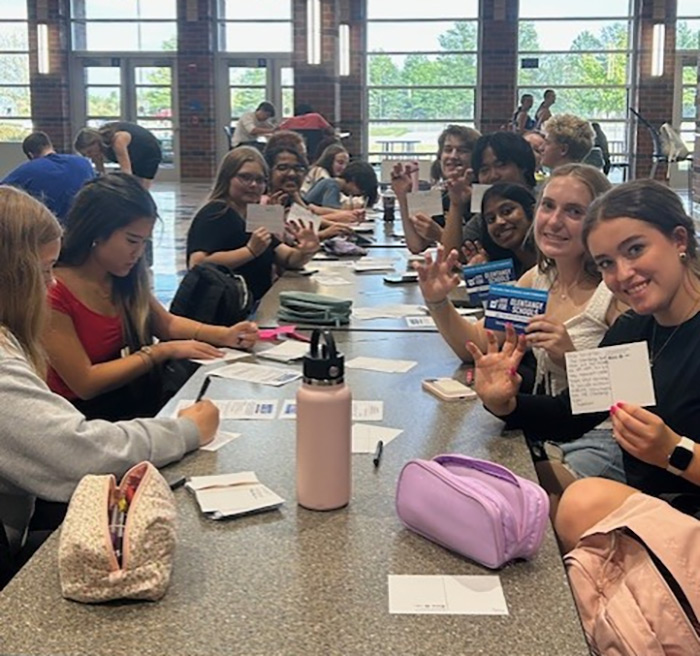
    In September, students at Berlin High School in Delaware, Ohio, participated in a sign creation and postcard campaign for a levy on the ballot. Credit: Courtesy Michael LaFlamme

    Michael LaFlamme has his own methods: He teaches Advanced Placement government and U.S. history at Olentangy Berlin High School outside of Columbus, Ohio, where many of his students work the polls during elections to see up close how voting works. They learn about civics via a participatory political science project that asks students to write a letter to an elected official. He also encourages students to watch debates or political or Sunday morning news shows with a parent or grandparent, and attend a school board meeting.

    “There is so much good learning to be done around current events,” LaFlamme told me, noting that “it becomes more about community and experience. We are looking at all of it as political scientists.”

    For Maddaus, the teacher in Maine, there is yet another obstacle: How his students consume news reinforces the enormous obstacles he and other teachers face to keep them informed and thinking critically. Earlier this fall, he heard some of his students talking about a rumor they’d heard over the weekend. 

    “Mr. Maddaus, is it true? Is President Donald Trump dead?” they asked. 

    Maddaus immediately wanted to know how they got this false news. 

    “We saw it on TikTok,” one of the students replied — not a surprising answer, perhaps, given that 4 out of 10 young adults get their news from the platform.

    Maddaus says he shook his head, corrected the record and then went back to his regularly scheduled history lesson. 

    Contact editor in chief Liz Willen at [email protected].

    This column about patriotism in education was produced by The Hechinger Report, a nonprofit, independent news organization focused on inequality and innovation in education. Sign up for the Hechinger newsletter.

    The Hechinger Report provides in-depth, fact-based, unbiased reporting on education that is free to all readers. But that doesn’t mean it’s free to produce. Our work keeps educators and the public informed about pressing issues at schools and on campuses throughout the country. We tell the whole story, even when the details are inconvenient. Help us keep doing that.

    Join us today.

    Source link

  • The advantages of supplementing curriculum

    The advantages of supplementing curriculum

    Key points:

    Classroom teachers are handed a curriculum they must use when teaching. That specific curriculum is designed to bring uniformity, equity, and accountability into classrooms. It is meant to ensure that every child has access to instruction that is aligned with state standards. The specific curriculum provides a roadmap for instruction, but anyone who has spent time in a classroom knows that no single curriculum can fully meet the needs of every student.

    In other words, even the most carefully designed curriculum cannot anticipate the individual needs of every learner or the nuances of every classroom. This is why supplementing curriculum is a vital action that skilled educators engage in. Supplementing curriculum does not mean that teachers are not teaching the required curriculum. In fact, it means they are doing even more to ensure student success.

    Students arrive with different strengths, challenges, and interests. Supplementing curriculum allows teachers to bridge inevitable gaps within their students.  For example, a math unit may assume fluency with multiplying and dividing fractions, but some students may not recall that skill, while others are ready to compute with mixed numbers. With supplementary resources, a teacher can provide both targeted remediation and enrichment opportunities. Without supplementing the curriculum, one group may fall behind or the other may become disengaged.

    Supplementing curriculum can help make learning relevant. Many curricula are written to be broad and standardized. Students are more likely to connect with lessons when they see themselves reflected in the content, so switching a novel based on the population of students can assist in mastering the standard at hand.   

    Inclusion is another critical reason to supplement. No classroom is made up of one single type of learner. Students with disabilities may need graphic organizers or audio versions of texts. English learners may benefit from bilingual presentations of material or visual aids. A curriculum may hit all the standards of a grade, but cannot anticipate the varying needs of students. When a teacher intentionally supplements the curriculum, every child has a pathway to success.

    Lastly, supplementing empowers teachers. Teaching is not about delivering a script; it is a profession built on expertise and creativity. When teachers supplement the prescribed curriculum, they demonstrate professional judgment and enhance the mandated framework. This leads to a classroom where learning is accessible, engaging, and responsive.

    A provided curriculum is the structure of a car, but supplementary resources are the wheels that let the students move. When done intentionally, supplementing curriculum enables every student to be reached. In the end, the most successful classrooms are not those that follow a book, but those where teachers skillfully use supplementary curriculum to benefit all learners. Supplementing curriculum does not mean that a teacher is not using the curriculum–it simply means they are doing more to benefit their students even more.

    Latest posts by eSchool Media Contributors (see all)

    Source link

  • 4 tips to support the literacy needs of middle and high school students

    4 tips to support the literacy needs of middle and high school students

    Key points:

    Today’s middle schoolers continue to struggle post-pandemic to read and write at the level needed to successfully navigate more complex academic content in the upper grades and beyond, according to a new report from NWEA, a K-12 assessment and research organization.

    Based on NWEA’s research, current 8th graders would need close to a full academic year of additional instruction to catch up to their pre-pandemic peers in reading. This trend was reiterated in recent assessment results from the National Assessment on Educational Progress (NAEP), with only 30 percent of eighth-grade students performing at or above the NAEP proficient level.

    While early literacy initiatives have garnered attention in recent years, the fact remains that many students struggle to read and are not prepared for the rigors of middle school. Students quickly find themselves challenged to keep up as they no longer receive explicit, structured reading instruction, even as they are expected to comprehend increasingly complex materials across subjects, like science, history, or English Language Arts.

    The report, Policy recommendations for addressing the middle school reading crisis, is co-authored by Miah Daughtery, EdD, NWEA VP of Academic Advocacy at HMH (NWEA’s parent company), and Chad Aldeman, founder of Read Not Guess.

    “Our current middle and high schoolers were just starting their literacy journey when the pandemic hit, and we cannot lessen the urgency to support them. But, middle school literacy is complex even for students who are reading on grade level. This demands intentional, well-funded, and focused policy leadership that includes support across the K-12 spectrum,” said Daughtery. “Simply put, learning to read is not done when a student exits elementary school; support cannot stop there either.”

    Policymakers and district leaders must adopt a systems-level approach that supports both early learners and the unique literacy needs of middle and high school students.

    The new report provides four components that can be leveraged to make this happen:

    1. Use high-quality, grade-appropriate assessments that provide specific data on the literacy needs of middle schoolers.
    2. Look at flexible scheduling and policies that promote literacy development throughout the entire school day and help districts more effectively use instructional time.
    3. Understand and support the unique literacy needs of middle schoolers across subjects and disciplines from a systems perspective and invest in teacher professional learning in all disciplines, including at the upper grades, within state and district literacy plans.
    4. Curate relationships with external partners, like community organizations and nonprofits, who share similar goals in improving literacy outcomes, and can both support and reinforce literacy development, stretching beyond the school’s hours and resources.
    eSchool News Staff
    Latest posts by eSchool News Staff (see all)

    Source link