Tag: Instructor

  • Texas A&M Won’t Reinstate Instructor Fired for Gender Lesson

    Texas A&M Won’t Reinstate Instructor Fired for Gender Lesson

    McKenna Baker/iStock/Getty Images

    Texas A&M University will not reinstate Melissa McCoul, the instructor fired in September after a video showing a student confronting her over a gender identity lesson went viral, The New York Times reported

    In a Dec. 19 memo that McCoul’s lawyer Amanda Reichek shared with the Times, the Texas A&M system’s vice chancellor for academic affairs, James Hallmark, wrote that he had “determined that Dr. McCoul’s dismissal was based upon good cause.”

    A faculty panel determined in late September that McCoul’s academic freedom was violated and that former Texas A&M president Mark Welsh flouted proper termination processes when he fired her.

    McCoul was “disappointed by the university’s unexplained decision to uphold her termination but looks forward to pursuing her First Amendment, due process and breach of contract claims in court very soon,” Reichek said in a statement to the Times.

    Source link

  • In Defense of Berkeley Instructor Peyrin Kao

    In Defense of Berkeley Instructor Peyrin Kao

    Peyrin Kao, a University of California, Berkeley, computer science lecturer, was suspended from teaching for a semester after UC Berkeley decreed that Kao’s criticism of Israel had violated campus bans on “political advocacy” in class. There are two significant problems with this action: Kao didn’t engage in advocacy in his class, and Berkeley’s rules don’t restrict political advocacy.

    The suspension of Kao reflects two alarming possibilities: Either Kao is being targeted for his criticism of Israel and there is selective persecution of faculty for leftist political beliefs, or Kao’s suspension shows a new, broader ban on all political speech in the classroom.

    The fact that this repression is happening at UC Berkeley—a top university in a blue state legendary for the Free Speech Movement and liberal politics—indicates how widespread censorship is across the country today.

    As Kao noted, “The university loves to talk about how they are ‘the free speech university,’ ‘the home of the free speech movement’ … but when it comes to Palestine: ‘Sorry, we’re drawing the line, your free speech does not apply.’”

    In October, UC Berkeley executive vice chancellor and provost Benjamin Hermalin wrote a letter determining that Kao was guilty of violating Regents Policy 2301 in two incidents.

    In 2023, Kao, after dismissing class, spoke for four minutes about ethics and technology, and expressed criticism of the Israeli government. In 2024, Kao informed students that he was on a hunger strike (without explaining why).

    It’s shocking that such trivial examples of advocacy could ever justify such a severe punishment. In the first case, Hermalin makes a ridiculous argument that what happens after a class is over is in fact part of the class.

    He writes, “Nothing in Regents Policy 2301 can be read to indicate it doesn’t apply when a course goes into ‘overtime.’” While it’s true that the rules about behavior during classes apply when instructors extend a class beyond the normal time (“overtime”), those limits end when the class is over. The Provost even quotes Kao’s words: “It is 2pm so class is officially over.” Once Kao says that, there is no overtime. There is only after-class time, and that time is not regulated by the Policy 2301 for course content. Of course, Kao’s brief comments on ethics in technology should be fully protected during a computer science class, but the fact that they happened outside of class means they cannot be regulated by these rules about classroom speech.

    The second alleged violation is even more ridiculous. Kao is accused of breaking the rules by uttering 20 words: “I’m currently undergoing a starvation diet for a cause that I believe in. If that sounds interesting, there’s a link.”

    The provost concluded, “I find Mr. Kao to have misused the classroom for the purpose of political advocacy, an action that constitutes a violation of Regents Policy 2301.”

    No, he didn’t, and no, it isn’t. Telling students that you’re on a starvation diet isn’t “political advocacy”; if Kao was ill or dieting for health reasons, he would be fully entitled to warn students of this fact in case it affected him, and nothing about these words is “political advocacy.” The same logic applies to a medical condition induced for political reasons.

    But the provost is also wrong on a much deeper level: There is no prohibition on “political advocacy” in Policy 2301. The word “advocacy” never appears in Policy 2301. Yet the provost proceeds to wonder “whether the instructor’s intent is to advocate” and frequently quotes his interviews rather than focusing on what he said in class and what Policy 2301 says. Political advocacy in the classroom is fundamentally protected by academic freedom.

    Astonishingly, the provost even asked, “To what extent is a hunger strike an in-class advocacy activity precluded by Regents Policy 2301?” In what bizarro world could a hunger strike ever be deemed “in-class advocacy”? Refusing to eat during class is not “advocacy” at all. The suggestion that Regents Policy 2301 could be interpreted to require teachers to eat outside the classroom is insane.

    The provost noted, “His actions are no different from those of an instructor who repeatedly wore a t-shirt when teaching that had on it a very visible political symbol or a picture of a political candidate.” Wait, does the provost actually think that professors are banned from wearing T-shirts with symbols on them? Will a professor with a peace symbol T-shirt be hauled before the provost for dress code violations? Wait until the provost finds out that some professors wear crosses while teaching—I’m sure that will be quickly prohibited by any fair-minded ban on advocacy.

    Perhaps UC Berkeley professors need to start wearing T-shirts with the First Amendment on them to remind the provost why we must not allow political commissars to dictate what teachers wear, say or think.

    Zach Greenberg of the Foundation for Individual Rights and Expression argued, “If you’re going on tangents during class or expressing a political advocacy to students during class as a professor, you’re on company time.” But the whole concept of academic freedom is a rejection of “company time.” Academic freedom in the classroom means that the instructor, not the company, decides what is taught. The classroom is “professional time” where instructors must meet professional standards. But professional standards allow for wide leeway to go on tangents, discuss broader issues and even chat with students about nonprofessional topics. If there is a professor who has never uttered any words in any class unrelated to the course topic, I would love to meet that weirdo.

    If a professor is wasting half of every class on a tangent unrelated to the course, then that professor should be disciplined. But the reason for the discipline must be politically neutral and disconnected from any viewpoint discrimination. A professor who expresses political views in class is no different from a professor who expresses views about the football team or a professor who discusses the weather (in a class unrelated to it). All of them are engaging in speech not germane to the class.

    But no one can seriously argue that a four-minute statement after class about ethics in technology or a 20-word comment about being on a hunger strike could possibly describe an instructor who is failing to teach the content of the class by going on constant tangents.

    The fact that Kao’s words were repeatedly described as “political” is not evidence of Kao’s guilt, but proof of the administration’s guilt. By targeting Kao purely for his political speech, and applying standards that would never be used for similar noncontroversial speech, the Berkeley administration is confessing to its violation of the First Amendment and standards of academic freedom that protect faculty from retaliation for their views.

    Policy 2301 is a terrible policy, enacted in 1970 by the regents to suppress free speech, and it violates standards of academic freedom and the First Amendment by targeting “political indoctrination” (rather than all “indoctrination”) and therefore engages in viewpoint discrimination against disfavored political views.

    But even Policy 2301 does not allow the kind of repression demanded by the provost, which is why he doesn’t quote any of its specific provisions in claiming Kao’s alleged violation of it.

    The provost repeatedly accuses Kao of being “at odds with the spirit of Regents Policy 2301” but fails to quote anything in the policy he actually violated. Suspensions cannot be justified by “spirits”; they can only be legitimate if there is a clear violation of the rule.

    The provost’s report is so grossly incompetent—fabricating clauses about “advocacy” that don’t exist in a policy he apparently hasn’t read—that it shows how arbitrary this act of political retaliation was.

    Writing that the punishment was “up to you,” the provost gave his subordinates an implicit order to suspend Kao with only one other option: “I would have no objection if you wished to impose a more severe disciplinary action than the one I proposed.” Obviously, he would object to anything less than a suspension, and the resulting suspension is not surprising to anyone. It is highly unprofessional for a top administrator to personally intervene in a discipline case in order to manipulate the outcome and decree what punishment must be given.

    The repressive administrative overreaction at Berkeley is precisely why we must give enormous freedom to instructors to do things that we think are wrong. Unless you protect the right of faculty to say dumb and inappropriate things in their classes, people driven mad by the possession of administrative power will seek to fire professors for what they say and do outside of class.

    We should want professors who feel free to express their values and their ideas openly, even when it offends some people. We should reject a world where every professor must fear saying a disapproved word in a classroom where every utterance is monitored for wrongthink.

    I don’t agree with Kao’s goals of campus divestment from Israel. I don’t agree with Kao’s tactics of engaging in a hunger strike. And I don’t agree with Kao’s methods of discussing his views in or after his classes.

    But Kao did not violate any university rules, and it is fundamentally unjust to suspend him for purely political reasons. People are free to criticize him for his ideas, but not to censor him or punish him for expressing them.

    UC Berkeley administrators have violated Kao’s academic freedom and the First Amendment in their shameful punishment of him for his free speech, and they deserve condemnation not only for this unjust act against Kao but also for the much larger chilling effect this repression will cause across the University of California.


    Source link

  • Okla. Instructor Put On Leave for “Viewpoint Discrimination”

    Okla. Instructor Put On Leave for “Viewpoint Discrimination”

    The University of Oklahoma put a lecturer on administrative leave last week for allegedly exercising “viewpoint discrimination” five days after a different instructor was placed on leave for alleged religious discrimination.

    Kelli Alvarez, an assistant teaching professor focused on race and ethnicity in literature and film, allegedly encouraged students to miss her English composition class to attend a protest in support of Mel Curth, a graduate teaching assistant in the psychology department who was removed from teaching after a student filed a religious discrimination complaint against her. Alvarez said she would excuse the absences of students who attended the protest. But according to university officials, she did not extend the same offer to students who intended to miss class that day to “express a counter-viewpoint.”

    “Immediately upon learning of the situation, the Director of First-Year Composition told students in class today and by email that the lecturer’s actions were inappropriate and wrong, and that the university classroom exists to teach students how to think, not what to think. The Director further stated that any student, regardless of viewpoint, would be excused if absent from class today to attend the protest without penalty, and that the lecturer had been replaced, effective immediately, for the remainder of the semester,” officials wrote in a statement Friday. “Classroom instructors have a special obligation to ensure that the classroom is never used to grant preferential treatment based on personal political beliefs, nor to pressure students to adopt particular political or ideological views.”

    Spokespeople for the University of Oklahoma did not respond to Inside Higher Ed’s request for comment. An X post by the University of Oklahoma chapter of Turning Point USA, a conservative student group founded by the late Charlie Kirk, said that the chapter president, a student in Alvarez’s class, had asked to miss class in order to counterprotest.

    “Kalib Magana, student in professor Alavarez’s [sic] class and TPUSA OU president, asking to counter-protest was denied the same option unless a large, documented group could be organized,” the chapter wrote. “Kalib filed a report with The University of Oklahoma’s Equity Office for ‘discrimination of a viewpoint’ and freedom of speech violations Friday morning.”

    Hundreds of students, faculty, staff and community members rallied Friday in support of Curth, who is on leave after giving a junior psychology student, Samantha Fulnecky, a zero on a reaction essay assignment. In her explanation about the grade, Curth said that Fulnecky did not answer the assignment’s questions, that her essay contradicted itself and that it “heavily uses personal ideology over empirical evidence in a scientific class, and is at times offensive.” A second teaching assistant for the course concurred with Curth’s grade.

    Fulnecky fought back, appealing to the president of the university and the governor of Oklahoma, arguing that she was unfairly given a failing grade because her essay cited the Bible and discussed her religious beliefs. Though university officials said the grading dispute was settled last week, Curth was put on leave pending investigation after Fulnecky filed a formal religious discrimination complaint.

    The university’s TPUSA chapter helped whip the story into a social media storm. The news caught fire, offering something for everyone to comment on. Supplied with the full essay, assignment instructions and rubric, academics online debated how they would have scored Fulnecky’s essay. Others blasted her writing skills. Conservatives, including Fulnecky’s mother, used the story to fuel a narrative of persecution against Christian students by “woke” academics. “Individuals who identify as trans should be automatically disqualified from holding any position as teacher or professor,” one X user commented, which Samantha Fulnecky’s mother, lawyer and conservative radio commentator Kristi Fulnecky, reposted.

    Liberal commenters pointed to the incident as another example of genderqueer faculty being unfairly maligned and doxed. “Mel Curth should be reinstated,” a user wrote on Bluesky. “I’m sorry, but religious freedom does not mean you as a student get to write out a genocidal screed wishing for your teachers death & eternal torture.”

    During a meeting Thursday, the University of Oklahoma Graduate Student Senate passed a resolution calling for greater transparency and protection for graduate teaching assistants on leave and under investigation. The resolution also said that Curth was justified in giving Fulnecky a zero on the assignment and called on the university to publicly apologize to the professor for failing to protect her from the bullying and harassment the case has incited.

    The Oklahoma University chapter of the American Association of University Professors made a similar call to administrators, KOKH reported. “Disturbingly, OU has not made a public statement stating that it vigorously defends instructors, including transgender instructors, from harassment, discrimination, and even reported death threats,” the chapter told KOKH in a statement.

    Source link

  • Community College Instructor Quits Over Barring Noncitizens From Adult Ed

    Community College Instructor Quits Over Barring Noncitizens From Adult Ed

    Matthew Fowler/iStock/Getty Images

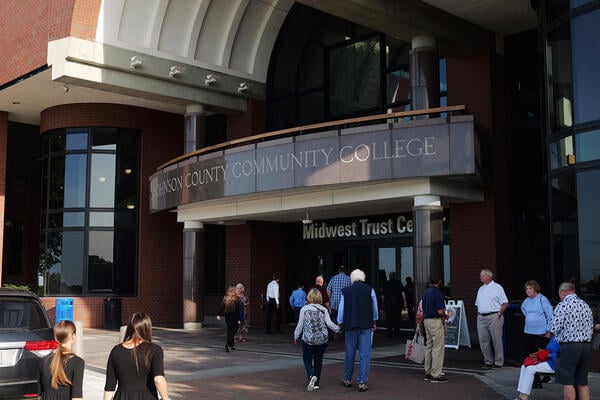
    An adult education instructor at Johnson County Community College in Kansas resigned after finding out the college would require proof of immigration status for adult ed programs in response to federal policy shifts, The Kansas City Star first reported.

    Daniel Tyx, previously a middle school Spanish teacher, started teaching English to adults part-time at the college last year. He told the Inside Higher Ed that he took the job because he has a passion for working with immigrant students, and he planned to stay if not for the new policy. He described the college’s English language learner program as thriving, with over 800 students.

    These students “always come to class. They’re always excited to be there. They’re full of questions. It’s just a dream job,” Tyx said.

    But Tyx quit his job last Friday after he was told that he would have to verify students’ immigration statuses.

    “That was not in alignment with my values,” Tyx said. “And I didn’t feel like, as a matter of conscience, that I was going to be able to continue.”

    The college’s decision came after a February executive order demanded “no taxpayer-funded benefits go to unqualified aliens.” The U.S. Department of Education then announced in July that, to comply with the order, it would end Clinton-era guidance that allowed undocumented students to participate in adult and career and technical education programs. The department insisted that institutions receiving federal funds for these programs begin verifying that students are eligible to benefit from them.

    “Under President Trump’s leadership, hardworking American taxpayers will no longer foot the bill for illegal aliens to participate in our career, technical, or adult education programs or activities,” U.S. Secretary of Education Linda McMahon said in the announcement. “The department will ensure that taxpayer funds are reserved for citizens and individuals who have entered our country through legal means who meet federal eligibility criteria.”

    Checking a student’s immigration status is not a typical practice for community colleges, which are now grappling with how to comply with the federal edicts and continue to serve students, and staffers are uncertain how to move forward. Another complication for community colleges and other public institutions is the Trump administration’s crackdown on policies that allow undocumented students to pay in-state tuition if they meet other requirements. After Texas overturned its policy, state officials asked universities to identify undocumented students. At least one Texas institution, the University of Texas at Austin, now requires students to submit proof of immigration status, as well, KVUE reported.

    The department’s guidance to bar undocumented students was the second blow to adult education programs after the Trump administration held up about $716 million in federal funds to these programs as part of a wider review of education-related grants in early July. The funds have since been released.

    Johnson County Community College now has a message on its website saying that, starting in late July, students are required to show a Real ID, birth certificate, U.S. passport or their most recent immigration documents when they register for adult education classes.

    Chris Gray, vice president of strategic communications and marketing at JCCC, said in an email to Inside Higher Ed that the college’s “compliance with federal requirements in this matter allows us to continue to serve qualified individuals” in adult education programs.

    Tyx said he felt that college administrators were trying to get ahead of the federal guidance, which he considers “cruel and unjust.” He’s worried for his students, who have been peppering him with questions about whether their documents will suffice.

    “My students make such sacrifices to come to class,” he said. “They have so many different reasons to want to learn English, and they’re all good ones. My students want to be able to connect better with their children or their children’s schools. They want to be able to employ the skills that they already have at work and progress in their work lives … It’s very weird that would be something that would be considered to be not desirable by our government.”

    Source link