Oregon’s Higher Education Coordinating Commission is recommending that the state’s public colleges and universities pursue “institutional integration”—everythingfrom sharing services and programs to full mergers. It is also seeking the power to renew, or terminate, academic programs.
The commissioners approved a document Tuesday with five recommendations, and integration and program review were listed first. Ben Cannon, the commission’s executive director, said the vote was 13 to 2.
The report says public universities will run out of money in a few years if they don’t continue to reduce costs. It cites “slowing growth forecasts for state revenue” and insufficient expected enrollment growth, adding that “especially given Oregon universities’ unusually high dependence on tuition for revenue, this creates an unsustainable dynamic.”
“On the current path universities will be forced to continue to make substantial cuts annually or, in aggregate, fund balances will be completely exhausted within an estimated three to five years,” the report says.
While the report doesn’t recommend recreating a statewide university system, it endorses “increasing systemness,” saying, “Only a few high-growth states can still afford a system of higher education built on the ‘every campus for itself’ model.”
The commission’s integration recommendation goes beyond just the universities—it says the State Legislature should direct the commission, “in consultation with all of Oregon’s public higher education institutions, including community colleges,” to come up with one or more proposals for integration by next January. It suggests, in one non–full merger example, “combining services provided to the same region by a community college and a public university.”
The commission also said lawmakers should require it to periodically review and renew universities’ degree programs, adding that the law could require programs to “demonstrate that they produce value for students and communities, don’t unnecessarily duplicate other institutional offerings” and meet “financial sustainability requirements.” It said the review should consider “impacts on underrepresented students” and not “ideological preferences” or “strictly financial returns to the individual.”
Oregon Public Broadcasting previously reported on the recommendations. It wrote that Southern Oregon University president Rick Bailey laid part of the blame for university cutbacks on stagnant state funding.
“In four years, I’ve made decisions that have eliminated 25 percent of our workforce. Imagine that happening at any other state entity,” Bailey said, according to OPB. “Our colleagues are all doing similar painful work, and so we have to ask, how much more efficient should our seven universities be?”
A trending AI song went viral, but in my classroom, it did something even more powerful: it unlocked student voice.
When teachers discuss AI in education, the conversation often focuses on risk: plagiarism, misinformation, or over-reliance on tools. But in my English Language Learners (ELL) classroom, a simple AI-generated song unexpectedly became the catalyst for one of the most joyful, culturally rich, and academically productive lessons of the year.
It began with a trending headline about an AI-created song that topped a music chart metric. The story was interesting, but what truly captured my attention was its potential as a learning moment: music, identity, language, culture, creativity, and critical thinking–all wrapped in one accessible trend.
What followed was a powerful reminder that when we honor students’ voices and languages, motivation flourishes, confidence grows, and even the shyest learners can find their space to shine.
Why music works for ELLs
Music has always been a powerful tool for language development. Research consistently shows that rhythm, repetition, and melody support vocabulary acquisition, pronunciation, and memory (Schön et al., 2008). For multilingual learners, songs are more than entertainment–they are cultural artifacts and linguistic resources.
But AI-generated songs add a new dimension. According to UNESCO’s Guidance for Generative AI in Education and Research (2023), AI trends can serve as “entry points for student-centered learning” when used as prompts for analysis, creativity, and discussion rather than passive consumption.
In this lesson, AI wasn’t the final product; it was the spark. It was neutral, playful, and contemporary–a topic students were naturally curious about. This lowered the affective filter (Krashen, 1982), making students more willing to take risks with language and participate actively.
From AI trend to multilingual dialogue
Phase 1: Listening and critical analysis
We listened to the AI-generated song as a group. Students were immediately intrigued, posing questions such as:
“How does the computer make a song?”
“Does it copy another singer?”
“Why does it sound real?”
These sparked critical thinking naturally aligned with Bloom’s Taxonomy:
Understanding: What is the song about?
Analyzing: How does it compare to a human-written song?
Evaluating: Is AI music truly ‘creative’?
Students analyzed the lyrics, identifying figurative language, tone, and structure. Even lower-proficiency learners contributed by highlighting repeated phrases or simple vocabulary.
Phase 2: The power of translanguaging
The turning point came when I invited students to choose a song from their home language and bring a short excerpt to share. The classroom transformed instantly.
Students became cultural guides and storytellers. They explained why a song mattered, translated its meaning into English, discussed metaphors from their cultures, or described musical traditions from home.
This is translanguaging–using the full linguistic repertoire to make meaning, an approach strongly supported by García & Li (2014) and widely encouraged in TESOL practice.
Phase 3: Shy learners found their voices
What surprised me most was the participation of my shyest learners.
A student who had not spoken aloud all week read translated lyrics from a Kurdish lullaby. Two Yemeni students, usually quiet, collaborated to explain a line of poetry.
This aligns with research showing that culturally familiar content reduces performance anxiety and increases willingness to communicate (MacIntyre, 2007). When students feel emotionally connected to the material, participation becomes safer and joyful.
One student said, “This feels like home.”
By the end of the lesson, every student participated, whether by sharing a song, translating a line, or contributing to analysis.
Embedding digital and ethical literacy
Beyond cultural sharing, students engaged in deeper reflection essential for digital literacy (OECD, 2021):
Who owns creativity if AI can produce songs?
Should AI songs compete with human artists?
Does language lose meaning when generated artificially?
Students debated respectfully, used sentence starters, and justified their opinions, developing both critical reasoning and AI literacy.
Exit tickets: Evidence of deeper learning
Students completed exit tickets:
One thing I learned about AI-generated music
One thing I learned from someone else’s culture
One question I still have
Their responses showed genuine depth:
“AI makes us think about what creativity means.”
“My friend’s song made me understand his country better.”
“I didn’t know Kurdish has words that don’t translate, you need feeling to explain it.”
The research behind the impact
This lesson’s success is grounded in research:
Translanguaging Enhances Cognition (García & Li, 2014): allowing all languages improves comprehension and expression.
Self-Determination Theory (Deci & Ryan, 2000): the lesson fostered autonomy, competence, and relatedness.
Lowering the Affective Filter (Krashen, 1982): familiar music reduced anxiety.
Digital Literacy Matters (UNESCO, 2023; OECD, 2021): students must analyze AI, not just use it.
Conclusion: A small trend with big impact
An AI-generated song might seem trivial, but when transformed thoughtfully, it became a bridge, between languages, cultures, abilities, and levels of confidence.
In a time when schools are still asking how to use AI meaningfully, this lesson showed that the true power of AI lies not in replacing learning, but in opening doors for every learner to express who they are.
I encourage educators to try this activity–not to teach AI, but rather to teach humanity.
Nesreen El-Baz, Bloomsbury Education Author & School Governor
Nesreen El-Baz is an ESL educator with over 20 years of experience, and is a certified bilingual teacher with a Master’s in Curriculum and Instruction. El-Baz is currently based in the UK, holds a Masters degree in Curriculum and Instruction from Houston Christian University, and specializes in developing in innovative strategies for English Learners and Bilingual education.
Latest posts by eSchool Media Contributors (see all)
Between kindergarten and second grade, much of the school day is dedicated to helping our youngest students master phonics, syllabication, and letter-sound correspondence–the essential building blocks to lifelong learning.
Unfortunately, this foundational reading instruction has been stamped with an arbitrary expiration date. Students who miss that critical learning window, including our English Language Learners (ELL), children with learning disabilities, and those who find reading comprehension challenging, are pushed forward through middle and high school without the tools they need. In the race to catch up to classmates, they struggle academically, emotionally, and in extreme cases, eventually disengage or drop out.
Thirteen-year-old Alma, for instance, was still learning the English language during those first three years of school. She grappled with literacy for years, watching her peers breeze through assignments while she stumbled over basic decoding. However, by participating in a phonetics-first foundational literacy program in sixth grade, she is now reading at grade level.
“I am more comfortable when I read,” she shared. “And can I speak more fluently.”
Alma’s words represent a transformation that American education typically says is impossible after second grade–that every child can become a successful reader if given a second chance.
Lifting up the learners left behind
At Southwestern Jefferson County Consolidated School in Hanover, Ind., I teach middle-school students like Alma who are learning English as their second language. Many spent their formative school years building oral language proficiency and, as a result, lost out on systematic instruction grounded in English phonics patterns.
These bright and ambitious students lack basic foundational skills, but are expected to keep up with their classmates. To help ELL students access the same rigorous content as their peers while simultaneously building the decoding skills they missed, we had to give them a do-over without dragging them a step back.
Last year, we introduced our students to Readable English, a research-backed phonetic system that makes English decoding visible and teachable at any age. The platform embeds foundational language instruction into grade-level content, including the textbooks, novels, and worksheets all students are using, but with phonetic scaffolding that makes decoding explicit and systematic.
To help my students unlock the code behind complicated English language rules, we centered our classroom intervention on three core components:
Rhyming: The ability to rhyme, typically mastered by age five, is a key early literacy indicator. However, almost every ELL student in my class was missing this vital skill. Changing even one letter can alter the sound of a word, and homographic words like “tear” have completely different sounds and meanings. By embedding a pronunciation guide into classroom content, glyphs–or visual diacritical marks–indicate irregular sounds in common words and provide key information about the sound a particular letter makes.
Syllabication patterns: Because our ELL students were busy learning conversational English during the critical K-2 years, systematic syllable division, an essential decoding strategy, was never practiced. Through the platform, visual syllable breaks organize words into simple, readable chunks that make patterns explicit and teachable.
Silent letter patterns: With our new phonics platform, students can quickly “hear” different sounds. Unmarked letters make their usual sound while grayed-out letters indicate those with a silent sound. For students frustrated with pronunciation, pulling back the curtain on language rules provided them with that “a-ha” moment.
The impact on our students’ reading proficiency has been immediate and measurable, creating a cognitive energy shift from decoding to comprehension. Eleven-year-old Rodrigo, who has been in the U.S. for only two years, reports he’s “better at my other classes now” and is seeing boosts in his science, social studies, and math grades.
Taking a new step on a nationwide level
The middle-school reading crisis in the U.S. is devastating for our students. One-third of eighth-graders failed to hit the National Assessment of Educational Progress (NAEP) benchmark in reading, the largest percentage ever. In addition, students who fail to build literacy skills exhibit lower levels of achievement and are more likely to drop out of school.
The state of Indiana has recognized the crisis and, this fall, launched a new reading initiative for middle-school students. While this effort is a celebrated first step, every school needs the right tools to make intervention a success, especially for our ELL students.
Educators can no longer expect students to access grade-level content without giving them grade-level decoding skills. Middle-school students need foundational literacy instruction that respects their age, cognitive development, and dignity. Revisiting primary-grade phonics curriculum isn’t the right answer–educators must empower kids with phonetic scaffolding embedded in the same content their classmates are learning.
To help all students excel and embrace a love of reading, it’s time to reject the idea that literacy instruction expires in second grade. Instead, all of us can provide every child, at any age, the chance to become a successful lifelong reader who finds joy in the written word.
Kim Hicks, Southwestern Jefferson County Consolidated School
Kim Hicks is the Director ESL Program at Southwestern Jefferson County Consolidated School in Hanover, Indiana.
Latest posts by eSchool Media Contributors (see all)
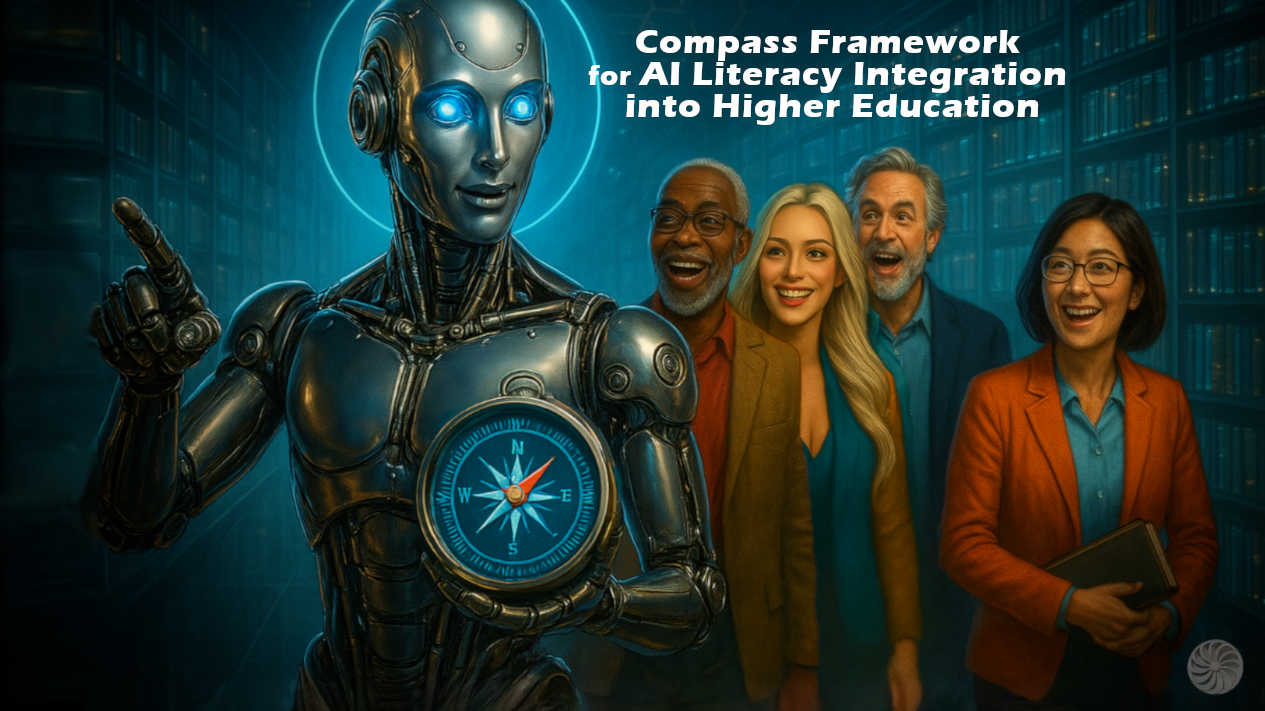
As a way to help all of academia, colleges, universities, and other educational institutions around the world, I introduce the “Compass Framework for AI Literacy Integration into Higher Education.” This is a completely free (Creative Commons 4.0) AI literacy framework for easy and flexible integration of AI literacy into the curriculum. This framework is designed from my experience working with many universities around the world, reviewing other AI frameworks, and from various other research.
The AI literacy components are made up of: Awareness, Capability (including prompt engineering), Knowledge, and Critical Thinking (to include bias, ethics, environmental impacts, and avoiding overreliance.
This AI literacy framework also addresses student learning outcomes and provides specific examples of how this framework can be integrated without necessarily increasing credit requirements. Additional information is also presented dealing with needed subskills, advanced AI skills for degree-specific fields, alternative frameworks, and additional actions needed to ensure overall success with AI literacy integration.
An introductory video on this important and free AI literacy framework is available through the Sovorel Center for Teaching & Learning educational YouTube channel here:
The Compass Framework for AI Literacy Integration into Higher Education has been designed and made available for free by the Sovorel Center for Teaching & Learning. Please let us know you have used it, it has been helpful for your organization, or if you have any other feedback. Thank you very much, and we appreciate everyone’s ongoing support.
In education, we often talk about “meeting the moment.” Our current moment presents us with both a challenge and an opportunity: How can we best prepare and support our teachers as they navigate increasingly complex classrooms while also dealing with unprecedented burnout and shortages within the profession?
One answer could lie in the thoughtful integration of artificial intelligence to help share feedback with educators during training. Timely, actionable feedback can support teacher development and self-efficacy, which is an educator’s belief that they will make a positive impact on student learning. Research shows that self-efficacy, in turn, reduces burnout, increases job satisfaction, and supports student achievement.
As someone who has spent nearly two decades supporting new teachers, I’ve witnessed firsthand how practical feedback delivered quickly and efficiently can transform teaching practice, improve self-efficacy, and support teacher retention and student learning.
AI gives us the chance to deliver this feedback faster and at scale.
A crisis demanding new solutions
Teacher shortages continue to reach critical levels across the country, with burnout cited as a primary factor. A recent University of Missouri study found that 78 percent of public school teachers have considered quitting their profession since the pandemic.
Many educators feel overwhelmed and under-supported, particularly in their formative years. This crisis demands innovative solutions that address both the quality and sustainability of teaching careers.
What’s often missing in teacher development and training programs is the same element that drives improvement in other high-performance fields: immediate, data-driven feedback. While surgeons review recordings of procedures and athletes get to analyze game footage, teachers often receive subjective observations weeks after teaching a lesson, if they receive feedback at all. Giving teachers the ability to efficiently reflect on AI-generated feedback–instead of examining hours of footage–will save time and potentially help reduce burnout.
The transformative potential of AI-enhanced feedback
Recently, Relay Graduate School of Education completed a pilot program with TeachFX using AI-powered feedback tools that showed remarkable promise for our teacher prep work. Our cohort of first- and second-year teachers more than doubled student response opportunities, improved their use of wait time, and asked more open-ended questions. Relay also gained access to objective data on student and teacher talk time, which enhanced our faculty’s coaching sessions.
Program participants described the experience as “transformative,” and most importantly, they found the tools both accessible and effective.
Here are four ways AI can support teacher preparation through effective feedback:
1. Improving student engagement through real-time feedback
Research reveals that teachers typically dominate classroom discourse, speaking for 70-80 percent of class time. This imbalance leaves little room for student voices and engagement. AI tools can track metrics such as student-versus-teacher talk time in real time, helping educators identify patterns and adjust their instruction to create more interactive, student-centered classrooms.
One participant in the TeachFX pilot said, “I was surprised to learn that I engage my students more than I thought. The data helped me build on what was working and identify opportunities for deeper student discourse.”
2. Freeing up faculty to focus on high-impact coaching
AI can generate detailed transcripts and visualize classroom interactions, allowing teachers to reflect independently on their practice. This continuous feedback loop accelerates growth without adding to workloads.
For faculty, the impact is equally powerful. In our recent pilot with TeachFX, grading time on formative observation assignments dropped by 60 percent, saving up to 30 hours per term. This reclaimed time was redirected to what matters most: meaningful mentoring and modeling of best practices with aspiring teachers.
With AI handling routine analysis, faculty could consider full class sessions rather than brief segments, identifying strategic moments throughout lessons for targeted coaching.
The human touch remains essential, but AI amplifies its reach and impact.
3. Scaling high-quality feedback across programs
What began as a small experiment has grown to include nearly 800 aspiring teachers. This scalability can more quickly reduce equity issues in teacher preparation.
Whether a teaching candidate is placed in a rural school or urban district, AI can ensure consistent access to meaningful, personalized feedback. This scalable approach helps reduce the geographic disparities that often plague teacher development programs.
Although AI output must be checked so that any potential biases that come through from the underlying datasets can be removed, AI tools also show promise for reducing bias when used thoughtfully. For example, AI can provide concrete analysis of classroom dynamics based on observable actions such as talk time, wait time, and types of questions asked. While human review and interpretation remains essential–to spot check for AI hallucinations or other inaccuracies and interpret patterns in context–purpose-built tools with appropriate guardrails can help deliver more equitable support.
4. Helping teachers recognize and build on their strengths
Harvard researchers found that while AI tools excel at using supportive language to appreciate classroom projects–and recognize the work that goes into each project–students who self-reported high levels of stress or low levels of enjoyment said the feedback was often unhelpful or insensitive. We must be thoughtful and intentional about the AI-powered feedback we share with students.
AI can also help teachers see what they themselves are doing well, which is something many educators struggle with. This strength-based approach builds confidence and resilience. As one TeachFX pilot participant noted, “I was surprised at the focus on my strengths as well and how to improve on them. I think it did a good job of getting good details on my conversation and the intent behind it. ”
I often tell new teachers: “You’ll never see me teach a perfect lesson because perfect lessons don’t exist. I strive to improve each time I teach, and those incremental gains add up for students.” AI helps teachers embrace this growth mindset by making improvement tangible and achievable.
The moment is now
The current teacher shortage is a crisis, but it’s also an opportunity to reimagine how we support teachers.
Every student deserves a teacher who knows how to meaningfully engage them. And every teacher deserves timely, actionable feedback. The moment to shape AI’s role in teacher preparation is now. Let’s leverage these tools to help develop confident, effective teachers who will inspire the next generation of learners.
Dr. Alice Waldron, Relay Graduate School of Education
Dr. Alice Waldron leads Relay’s collective efforts to accelerate progress toward our mission and vision through meaningful innovation. With a focus on impact, values, and financial sustainability, she creates and leads processes to test and scale innovation initiatives to meet the evolving needs of schools and educators. Prior to this role, Dr. Waldron was the founding Dean of Relay’s Online Campus as well as Relay’s national Dean of Clinical Experience.
Latest posts by eSchool Media Contributors (see all)
This HEPI guest blog was kindly authored by Mary Curnock Cook CBE, who chairs the Dyson Institute and is a Trustee at HEPI, and Bess Brennan, Chief of University Partnerships with Cadmus, which is running a series of collaborative events with UK university leaders about the challenges and opportunities of generative AI in higher education.
Are universities super tankers, drifting slowly through the ocean while students are speedboats, zipping around them? That was one of the most arresting images from the recent Kings x Cadmus Teaching and Learning Forum and captured a central theme running through the Forum: the mismatch between the pace of technological and social change facing universities and the slow speed of institutional adaptation when it comes to AI.
Yet the forum also highlighted a fundamental change in how higher education institutions are approaching AI in assessment – moving from a reactive, punitive stance to one of proactive partnership, a shift from AI prohibition to integration. As speaker after speaker acknowledged, the sector’s initial approach of trying to detect and prevent AI use has been shown to be both futile and counterproductive. As one speaker noted, ‘we cannot stop students using AI. We cannot detect it. So we have to redefine assessment.’
From left to right: Mary Curnock Cook, Professor Andrew Turner, Professor Parama Chaudhury, Professor Timothy Thompson. Source: Cadmus
This reality has forced some institutions to completely reconceptualise their relationship with AI technology in order to work with the tide rather than against it. Where AI was viewed as a threat to academic integrity, educators are beginning to see it as an inevitable part of the learning landscape that calls for thoughtful integration, not least so that students are equipped for change and the AI-driven workplace. For example, Coventry University has responded by moving its assessment entirely to a coursework-based approach, except where there are Professional, Statutory and Regulatory Body (PSRB) requirements, and explicitly allows the use of AI, in most cases, to assist.
Imperial College’s approach exemplifies this new thinking with its principle of using AI “to think with you and not for you.” This approach recognises AI as a thinking partner rather than a replacement for human cognition, fundamentally changing how universities structure learning experiences. The shift requires moving from output-focused assessment to process-based evaluation, where students must demonstrate their thinking journey alongside their final products.
Like many universities, Imperial is also concerned about equity of access to AI. As a baseline it offers enterprise access to a foundational LLM with firewalled data, Copilot, which ringfences the data within the institution. But it also has a multi-LLM portal pilot, which includes ChatGPT, Claude, Copilot, Gemini and DeepSeek, acting as an AI sandpit to help instil a culture of thinking of the LLMs as different tools to be experimented with – users can switch between them and ask them the same question to see the variation in results. Meanwhile, LSE has partnered with Anthropic to offer all students free access to Anthropic’s Claude for Education, which helps students by guiding their reasoning process, rather than simply providing answers.
Practical implementation challenges
This transition to integration requires practical frameworks that many institutions are still developing. A speaker voiced the sector’s uncertainty as: ‘We do not know the next development – we didn’t see this one coming.’ This unpredictability leads to what was termed ‘seeking safety in policy’ – a tendency to over-regulate when the real need is for adaptive frameworks.
The challenge of moving beyond traffic light systems (red/amber/green classifications for AI use) emerged repeatedly. These systems, while intuitive, often leave educators and students in the ambiguous amber zone without clear guidance: ‘everyone falls in the middle. You cannot do the red stuff but how do you enforce that? What do we really mean by the green stuff?’ Instead, some institutions are moving towards assessment-specific guidance that explicitly states when and how AI can be used for each task.
Cultural and systemic transformation
This technological shift demands profound cultural change within institutions. As one participant observed, ‘Culture change is being driven by students. Academics may not want to change but they no longer have a choice if they’re getting assessments written by AI – or they don’t know if the assessments are written by AI’. The pace of student adoption is outstripping institutional adaptation, creating tension between established academic practices and emerging student behaviours – those speedboats and super tankers again.
However, while the magnitude of the challenge calls for institutional-scale change and moving beyond individual innovations to systemic transformation, super tankers don’t turn quickly.
Strategic approaches to change at scale
Several institutions shared their successful strategies for managing large-scale change. The key appears to be starting with early adopters and building momentum through demonstrated success. As Cadmus founder Herk Kailis noted, change champions are: ‘the best people who are keeping the sector evolving and growing – and we need to get behind them as there aren’t that many of them.’ Imperial’s approach of appointing ‘AI futurists’ in each faculty demonstrates how institutions can systematically seed innovation while maintaining a connection to disciplinary expertise.
Another speaker observed that successful change requires ‘recognising the challenges and concerns of academic colleagues, bringing them together, supporting colleagues in making the changes they want.’ At Maynooth University, incentives for staff, such as fellowships and promotion pathway changes, rather than mandates, draws on the notion that ‘you can’t herd cats but you can move their food’.
Cross-institutional collaboration
The forum emphasised that institutional change cannot happen in isolation. The complexity of stakeholder groups – from faculty leads to central teams to students and student-facing services – requires sophisticated engagement strategies. As one participant noted about successful technology implementation: ‘Pilots don’t work if they are isolated with one stakeholder group. You need buy-in from all the groups.’
The call for sector-wide collaboration extends beyond individual institutions to include professional bodies, regulatory frameworks and quality assurance processes – QA must also keep up with the pace of change. PSRBs, in particular, were singled out as a blocker to change.
International networking is also important. For example, UCL is working with Digital Intelligence International Development Education Alliance (DI-IDEA) from Peking University, which is experimenting with AI in education in innovative and accelerated ways.
Building sustainable change
Perhaps most importantly, the forum recognised that sustainable institutional change requires long-term commitment and resource allocation, and this imperative could arguably not have come at a more difficult time for many HE institutions. The observation that ‘There’s never been a greater need and appetite from staff to engage with this at a time when resourcing in the sector is a real problem’ highlights the tension between ambition and capacity that many institutions face.
However, the success stories shared – such as Birmingham City University’s Cadmus implementation saving 735.2 hours of academic staff time while improving student outcomes – demonstrate that institutional change, while challenging, can deliver measurable benefits for both educators and learners when implemented thoughtfully and systematically.
Three recommended actions from the forum
1. Address systemic inequalities, not just assessment design
Research from the University of Manchester shared at the conference showed that 95% of differential attainment stems from factors beyond assessment itself – cultural awareness, digital poverty, caring responsibilities and lack of representation.
Action: Take a holistic approach to student success that addresses the whole student experience, implements universal design principles, and recognises that some students are ‘rolling loaded dice’ in the academic game of privilege. Don’t assume assessment reform alone will solve equity issues.
2. Reduce high-stakes assessment
Traditional exam-heavy models risk perpetuating inequalities and don’t reflect workplace realities. Multiple lower-stakes assessments can support deeper learning and may be more equitable.
Action: Systematically reduce reliance on high-stakes exams in favour of diverse and more authentic assessment methods. This helps to address both AI challenges and equity concerns while better preparing students for their futures.
3.Co-create with students as partners
Students are driving the pace of change – they are already using AI. They need to be partners in designing solutions, not just recipients of policies.
Action: Involve students in co-designing assessments, rubrics and AI policies. Create bi-directional dialogue about learning experiences and empower students to share learning strategies. Build trust through transparency and genuine partnership.
Since the public release of ChatGPT in December 2022, educators have faced the challenge of effectively integrating artificial intelligence (AI) into their teaching. Rather than simply acknowledging that students are using AI, we should create opportunities for them to explore practical strategies. This approach will help students better understand and utilize AI as an educational ally, enabling innovative methods for effective classroom integration. The key question is: how can we transform AI from a potential source of plagiarism into a valuable educational resource?
Let’s confront the reality: students are using AI. According to a recent survey by Anthology (2023), 60% of students in the US have used AI tools, with 10% reporting weekly use 38% using them monthly. Instead of fearing AI, we should actively explore its potential in the classroom, emphasizing how it can enrich the learning experience.
Strategic Approaches to AI Integration
One effective strategy is to intentionally redesign classroom activities and assignments to incorporate AI tools. This allows educators to gain insights from students’ interactions with these technologies, fostering a deeper understanding of their applications and promoting ethical use. Here is one example from an AI reflective assignment that I tried out in my classes, followed by some other actionable strategies you may want to try out.
In a junior-level education course, I assigned students the task of writing a reflective paper on the various uses of AI tools, such as ChatGPT, in the classroom. My intent was to encourage them to connect these technologies to broader ethical concerns within our field, particularly around plagiarism, drawing from their experiences as students and their emerging roles as future educators. The goal was to prompt deep reflection on AI’s implications, not just for themselves but for the future of education across disciplines.
To scaffold their analysis, I provided a couple of foundational readings on AI, alongside an article of their choosing, see Roose, 2023 and Gates, 2023 citations. This approach allowed them to contextualize their insights within the landscape of their respective fields, examining the potential benefits and ethical considerations of AI usage, as well as strategies for monitoring its impact and the implications of banning such technologies in educational settings.
Their reflections revealed several critical themes. Students emphasized the importance of creatively integrating AI into the classroom. As educators, we should consider it an enrichment tool rather than a replacement for traditional learning. This aligns with findings from the literature, which emphasize that by intentionally integrating AI-powered learning tools, we can highlight best practices for student engagement with these technologies (Johnson, Adams Becker, & Cummins, 2022). In this context, AI serves as a companion that guides students in their tasks, enhancing their critical thinking and problem-solving skills.
Some students expressed recognition that AI’s presence in education is inevitable; if they did not leverage these tools, their students would likely use them anyway. One student articulated a proactive stance, stating the importance of “find[ing] clever ways to incorporate technology into [student] work.” This highlights a shift in mindset—moving from fear of AI to embracing its potential to enhance learning experiences.
Another key insight was the broader applicability of AI in future classrooms. One student posited that AI could “extend and enrich student learning by assisting in generating ideas, discussion points, and encouraging critical thinking.” This perspective reflects the notion that when properly integrated, technology can serve as a catalyst for deeper engagement and understanding (Cooper, 2023). Moreover, recent recommendations highlight that AI can help personalize learning experiences, catering to individual student needs, and thereby improving educational outcomes (U.S. Department of Education, 2023).
Additionally, several students emphasized the responsibility of educators to prepare students for real-world applications of AI. One student summarized this sentiment powerfully: “If used properly, AI can elevate the education students receive and prepare them for a world where its use will be commonplace.” This statement underscores the urgency of equipping future educators with the skills to integrate AI thoughtfully and ethically into their teaching practices, transforming their practice by utilizing AI in novel ways (García-Peñalvo & Ramos, 2023).
Implications for Faculty
To implement a similar reflective approach in your own courses, consider the following strategies:
Facilitate Critical Discussions: Begin by assigning readings that frame the conversation around AI and its ethical implications in your particular field. Encourage students to select supplemental articles relevant to their fields to foster interdisciplinary connections, allowing for both autonomy and current insights in the field. AI is so new that the landscape of our knowledge is changing constantly.
Encourage Reflective Writing: Ask students to write reflective papers that analyze the impact of AI tools on their discipline. Prompt them to explore both benefits and ethical considerations, allowing for a nuanced understanding of the topic.
Create Collaborative Learning Opportunities: Consider group projects where students can share their insights and strategies for incorporating AI. This can lead to a richer dialogue and diverse perspectives on AI integration.
Highlight Real-World Applications: Emphasize the relevance of AI skills in their future careers. Discuss potential scenarios where they might utilize AI in the university classroom, preparing them for the challenges and opportunities ahead.
By focusing on these strategies, faculty can engage students in meaningful exploration of AI, ensuring they are not just consumers of technology, but critical thinkers prepared for a rapidly evolving educational landscape. Further, by centering our teaching practices on critical engagement with AI, we can better prepare our students for a future where these tools are integral to learning and teaching.
Final Reflections
A quote by Soren Kierkegaard resonates deeply in the context of adopting AI in education:
“To be a teacher in the right sense is to be a learner. Instruction begins when you, the teacher, learn from the learner, put yourself in their place so that you may understand what they understand and the way they understand it.”
This perspective highlights the reciprocal nature of learning. By embracing AI, educators can better understand and support their students. Understanding how students interact with AI tools allows teachers to guide ethical usage, ensuring that both educators and learners benefit from these technologies. By stepping into our students’ shoes, we can enhance learning, promote critical thinking, and address ethical concerns through thoughtful integration of AI in our classrooms.
Note: this article used collaboration between the human author and the AI program ChatGPT.
Lisa Delgado Brown, PhD, is a current Assistant Professor of Education at The University of Tampa and the former Middle/Secondary Program Administrator at Saint Leo University where she also served on the Academic Standards Committee. Dr. Delgado Brown teaches literacy courses with a focus on differentiation in the general education classroom.
Cooper, G. (2023). Examining science education in ChatGPT: An exploratory study of generative artificial intelligence. Journal of Science Education and Technology, 32(4), 444–452. https://doi.org/10.1007/s10956-023-10039-y
Math isn’t just about numbers. It’s about language, too.
Many math tasks involve reading, writing, speaking, and listening. These language demands can be particularly challenging for students whose primary language is not English.
There are many ways teachers can bridge language barriers for multilingual learners (MLs) while also making math more accessible and engaging for all learners. Here are a few:
1.Introduce and reinforce academic language
Like many disciplines, math has its own language. It has specialized terms–such as numerator, divisor, polynomial, and coefficient–that students may not encounter outside of class. Math also includes everyday words with multiple meanings, such as product, plane, odd, even, square, degree, and mean.
One way to help students build the vocabulary needed for each lesson is to identify and highlight key terms that might be new to them. Write the terms on a whiteboard. Post the terms on math walls. Ask students to record them in math vocabulary notebooks they can reference throughout the year. Conduct a hands-on activity that provides a context for the vocabulary students are learning. Reinforce the terms by asking students to draw pictures of them in their notebooks or use them in conversations during group work.
Helping students learn to speak math proficiently today will pay dividends (another word with multiple meanings!) for years to come.
2. Incorporate visual aids
Visuals and multimedia improve MLs’ English language acquisition and engagement. Picture cards, for example, are a helpful tool for building students’ vocabulary skills in group, paired, or independent work. Many digital platforms include ready-made online cards as well as resources for creating picture cards and worksheets.
Visual aids also help MLs comprehend and remember content. Aids such as photographs, videos, animations, drawings, diagrams, charts, and graphs help make abstract ideas concrete. They connect concepts to the everyday world and students’ experiences and prior knowledge, which helps foster understanding.
Even physical actions such as hand gestures, modeling the use of a tool, or displaying work samples alongside verbal explanations and instructions can give students the clarity needed to tackle math tasks.
3. Utilize digital tools
A key benefit of digital math tools is that they make math feel approachable. Many MLs may feel more comfortable with digital math platforms because they can practice independently without worrying about taking extra time or giving the wrong answer in front of their peers.
Digital platforms also offer embedded language supports and accessibility features for diverse learners. Features like text-to-speech, adjustable speaking rates, digital glossaries, and closed captioning improve math comprehension and strengthen literacy skills.
4. Encourage hands-on learning
Hands-on learning makes math come alive. Math manipulatives allow MLs to “touch” math, deepening their understanding. Both physical and digital manipulatives–such as pattern blocks, dice, spinners, base ten blocks, and algebra tiles–enable students to explore and interact with mathematical ideas and discover the wonders of math in the world around them.
Many lesson models, inquiry-based investigations, hands-on explorations and activities, and simulations also help students connect abstract concepts and real-life scenarios.
PhET sims, for example, create a game-like environment where students learn math through exploration and discovery. In addition to addressing math concepts and applications, these free simulations offer language translations and inclusive features such as voicing and interactive descriptions.
Whether students do math by manipulating materials in their hands or on their devices, hands-on explorations encourage students to experiment, make predictions, and find solutions through trial and error. This not only fosters critical thinking but also helps build confidence and perseverance.
In U.S. public schools, Spanish is the most commonly reported home language of students learning English. More than 75 percent of English learners speak Spanish at home. To help schools incorporate students’ home language in the classroom, some digital platforms offer curriculum content and supports in both English and Spanish. Some even provide the option to toggle from English to Spanish with the click of a button.
In addition, artificial intelligence and online translation tools can translate lesson materials into multiple languages.
6. Create verbal scaffolds
To respond to math questions, MLs have to figure out the answers and how to phrase their responses in English. Verbal scaffolds such as sentence frames and sentence stems can lighten the cognitive load by giving students a starting point for answering questions or expressing their ideas. This way, students can focus on the lesson content rather than having to spend extra mental energy figuring out how to word their answers.
Sentence frames are often helpful for students with a beginning level of English proficiency.
A square has sides.
An isosceles triangle has at least equal angles.
Sentence stems (a.k.a. sentence starters) help students get their thoughts going so they can give an answer or participate in a discussion.
The pattern I noticed was .
My answer is . I figured it out by .
Whether online or on paper, these fill-in-the-blank phrases and sentences help students explain their thinking orally or in writing. These scaffolds also support academic language development by showing key terms in context and providing opportunities to use new vocabulary words.
Making math welcoming for all
All students are math language learners. Regardless of their home language, every student should feel like their math classroom is a place to learn, participate, contribute, and grow. With the right strategies and tools, teachers can effectively support MLs while maintaining the rigor of grade-level content and making math more accessible and engaging for all.
Because of its broad membership, regional breadth, early creation and size, SREB President Stephen L. Pruitt said the commission is poised to produce critical recommendations that will inform not only Southern education decision makers but those throughout the nation.
“AI is fundamentally changing the classroom and workplace,” Pruitt said. “With that in mind, this commission is working to ensure they make recommendations that are strategic, practical and thoughtful.”
The commission is set to meet for another year and plans to release a second set of recommendations soon. Here are the first six:
Policy recommendation #1: Establish state AI networks States should establish statewide artificial intelligence networks so people, groups and agencies can connect, communicate, collaborate and coordinate AI efforts across each state. These statewide networks could eventually form a regional group of statewide AI network representatives who could gather regularly to share challenges and successes.
Policy recommendation #2: Develop targeted AI guidance States should develop and maintain targeted guidance for distinct groups using, integrating or supporting the use of AI in education. States should include, for example, elementary students, middle school students, high school students, postsecondary students, teachers, administrators, postsecondary faculty and administrators and parents.
Policy recommendation #3: Provide high-quality professional development State K-12 and postsecondary agencies should provide leadership by working with local districts and institutions to develop plans to provide and incentivize high-quality professional development for AI. The plans should aim to enhance student learning.
Policy recommendation #5: Assess local capacity and needs States should develop and conduct AI needs assessments across their states to determine the capacity of local districts, schools and postsecondary institutions to integrate AI successfully. These should be designed to help states determine which institution, district or school needs state support, what type of support and at what level.
Policy recommendation #6: Develop resource allocation plans States should develop detailed resource allocation plans for AI implementation in schools, school districts and institutions of postsecondary education to ensure that the implementation of AI is successful and sustainable. These plans should inform state fiscal notes related to education and AI.
The 60-plus member commission was established in February of 2024. Members include policymakers and education and business leaders throughout the 16-state SREB region.
For more information about the commission please see the following links:
SREB Staff
A nonprofit, nonpartisan interstate compact, SREB was created in 1948 by Southern governors and legislators who recognized the link between education and economic vitality. SREB states are Alabama, Arkansas, Delaware, Florida, Georgia, Kentucky, Louisiana, Maryland, Mississippi, North Carolina, Oklahoma, South Carolina, Tennessee, Texas, Virginia and West Virginia. More at SREB.org.
Latest posts by eSchool Media Contributors (see all)
Co-Authored By Aaliyah Lee-Raji, Amadis Canizales, Amaiya Peterson, Andrew Stillwell, Anessa Mayorga, Aniyah Campbell, A’niyah Leather, Anna Fleeman, Brookelyn Vivas, Cassandra Mathieu, Christian Bennett, Clio Chatelain, Daniel Abernethy, Fatoumata Sow, India Davis, Isabella Maiello, Jazmine Collins, Jennifer Sanchez-Martinez, Joseph Stauffer, Karlee Howard, Kaylee Japak, Keanell Tonny, Kristian Isom, Leonardo Pisa, Mackenzie Lemus, Maddox Wreski, Madelyn Beasley, and Saverio Consolazio
In higher education, one of the greatest challenges is getting students not only engaged in learning but also excited about research. An equally pressing issue is navigating the increasing role of artificial intelligence (AI) in the teaching and learning space. This semester, I aimed to tackle both by teaching a psychology of wellness class that integrated the principles of positive psychology with the use of AI tools. During the two-week module on positive psychology, I wanted students to experience research and writing as positive and engaging activities. I floated the idea of co-authoring an article on student wellness from their perspective, incorporating the responsible use of AI, fostering a passion for research, and ensuring that the process was enjoyable.
Here is how the project unfolded:
Day 1: Setting the Stage for Collaborative Writing
The project began by gauging student interest in co-authoring an article on student wellness. I asked those who wanted front-facing credit and authorship acknowledgment to text me their consent and indicate if they would be comfortable with their photo(s) being included. Importantly, students had the option to opt-out at any time if they felt uncomfortable with the direction of the article. I was fortunate because a large majority of the students showed a genuine interest in this assignment.
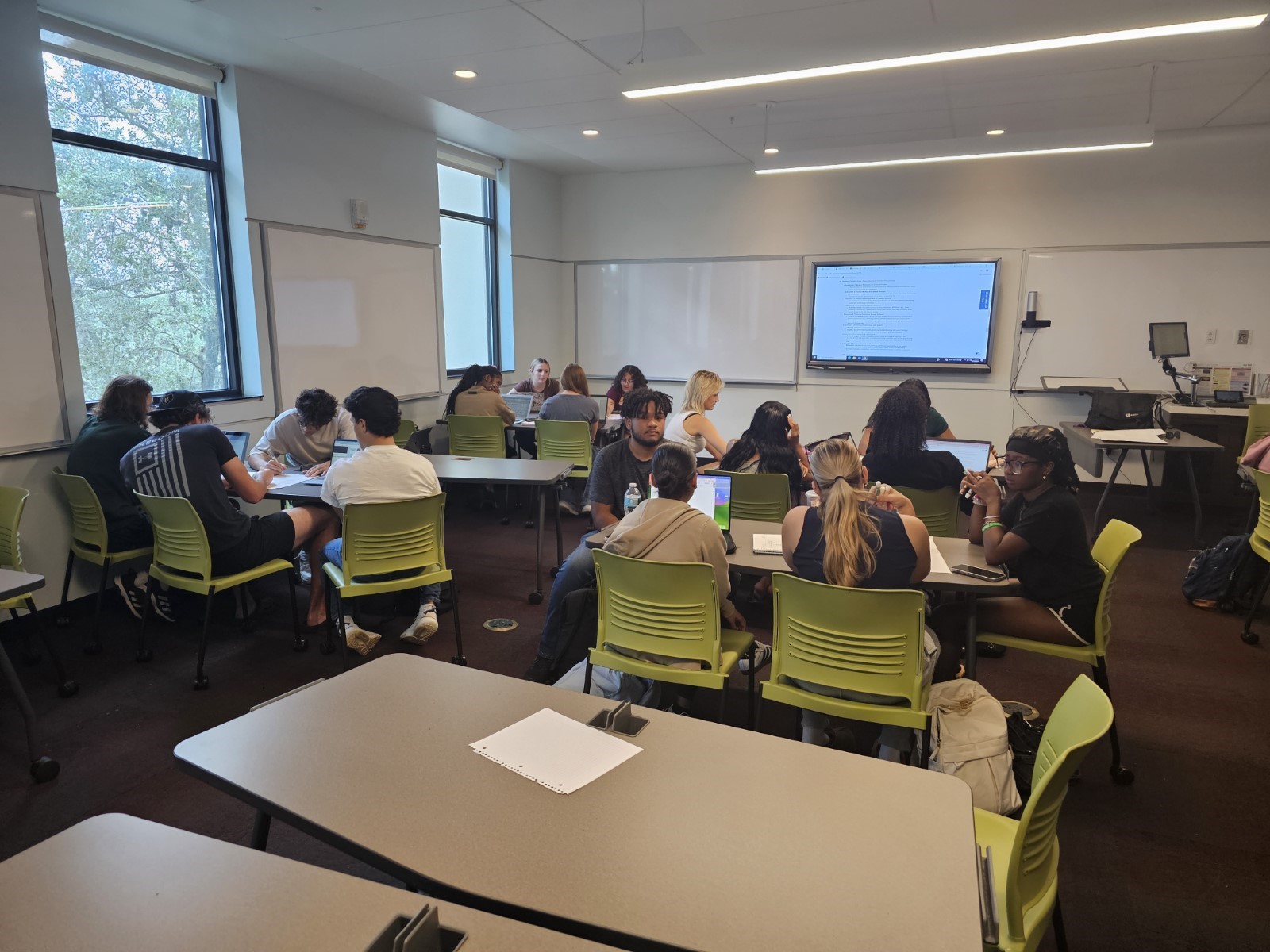
To kick off the project, I used ChatGPT to generate an outline based on positive psychology as aligned with the textbook chapters and student-led ideas and topics. The students were then divided into groups, where each group received a dedicated workspace in our learning management system, D2L. Each group selected a predetermined subtopic to focus on, and I tasked them with using ChatGPT to generate 20 ideas on that subtopic. From those 20 ideas, the groups narrowed it down to three, which they discussed in detail, considering both research-based and personal experiences. Each group member took notes to guide the next stage of the project.
Day 2: Mind Mapping and Cross-Pollination of Ideas
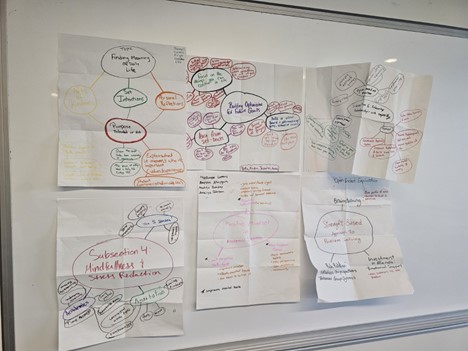
On the second day, students were given poster paper and markers to create mind maps of their ideas and help gain clarity on their discussions from the previous day. Each group placed their chosen topic at the center of the mind map and organized the associated ideas around it. The mind mapping exercise allowed students to visually connect their thoughts and discussions from day one.
One member from each group was nominated to circulate among the other groups, engaging in discussions about each team’s subsection of the article. This not only gave students a broader perspective on how their topics related to the overarching theme of student wellness but also facilitated the flow of information between teams. After gathering input from other teams, the group representative brought the new insights back to their original group, enhancing their understanding of their own topic and how it fit into the larger article. To ensure continuity, students took photos of their mind maps, which would later serve as guides for the writing process.
Day 3: Writing and Research Alignment
On the third day, each group was tasked with creating a document that contained a minimum of five references, with each group member responsible for contributing at least one reference. The document consisted of chunks of article drafts accompanied by their respective references. Students were asked to align these references with the ideas discussed during the earlier sessions and integrate them into their mind maps. Next, students took 15 minutes individually within a shared Google doc to write about their subsection, drawing from their mind maps and class discussions. This individual writing time allowed students to consolidate their thoughts and begin crafting their portion of the collaborative article.
Day 4: Ethical Use of AI in the Writing Process
The fourth day focused on ethical AI usage. We began with a discussion on how students had been using AI tools like ChatGPT and how they envisioned using any type of AI tools in the creation of this article. Together, we created an AI disclosure statement, agreeing on how AI would be used during the editing phase.
We explored specific AI prompts that could enhance their writing, including:
“Rephrase for clarity.”
“Organize this paragraph for the introduction, summary, or conclusion.”
“Give me a starting sentence for this paragraph.”
These prompts were designed to guide students in using AI as a tool to enhance clarity and organization rather than relying on it to write the content.
Day 5: Final Writing and Cohesive Editing
On the final day, students returned to their group documents and spent 15 minutes revising their sections. Afterward, they worked together to co-edit the document without the use of AI, striving to make the article more cohesive and polished. Finally, we revisited the agreed-upon AI prompts, and students were given the option to use AI only when they felt it was necessary for tasks like rephrasing sentences or organizing paragraphs.
The project culminated in a completed article on student wellness, co-authored by students and enhanced by responsible AI usage. The collaborative process not only demystified research and writing but also empowered students to see these activities as positive, engaging, and enjoyable experiences.
Takeaways From This Teaching Experience
The AI writing project was a valuable learning experience for the students, as it incorporated individual and collaborative learning elements alongside technology-based approaches. Reflecting on this experience, I have identified several key takeaways to carry forward into the new semester of teaching and learning.
The Importance of Throwback Learning Experience: Something Familiar Traditional tools like markers and poster boards remain essential in fostering cohesion, socialization, and competence-building. These activities encouraged students to engage in discussions and create visual representations of their ideas, which helped build their confidence and reinforce the collaborative process.
Starting With Original Ideas Matters Students benefited from discussing their ideas within the context of originality before integrating AI-generated content. Generative AI poses a potential threat to originality, emphasizing the need for human thought, discussion, and creativity to provide a benchmark for comparing the quality and intentionality of AI contributions.
Clear Parameters and Prompts Are Essential Defining the role of AI in the writing process was critical for success. Many students initially viewed AI as a tool for producing entire works. By discussing the parameters beforehand, it became clear that AI was to be used to supplement and enhance cohesion rather than replace the creative process.
The Importance of Prompt Development Students gained a growing understanding of the importance of crafting effective prompts for AI. Recognizing how prompts influence AI outputs is a crucial skill that was previously underdeveloped in many students. Moving forward, this skill will be vital as they navigate the intersection of human creativity and AI assistance.
Final Thoughts
Developing effective AI prompts is a pivotal skill that empowers students to use AI intentionally and meaningfully in their learning. A well-crafted prompt acts as the foundation for generating accurate, relevant, and cohesive responses, highlighting the importance of clarity, specificity, and purpose in the initial instructions given to the AI. By understanding how to formulate prompts, students can better harness the potential of AI to support their ideas, enhance their creativity, and improve the quality of their work without relying on AI to replace their original contributions.
This skill also encourages critical thinking, as students must evaluate the type of input needed to achieve a desired outcome, troubleshoot issues in responses, and refine their prompts for better results. Moreover, it aligns with the broader need for digital literacy in education, preparing students to interact responsibly and effectively with technology in academic, professional, and personal contexts.
Lastly, incorporating intentional AI use into teaching strategies ensures that students not only learn how to use these tools but also understand their limitations and ethical considerations. By balancing traditional methods, which foster originality and human connection, with innovative technologies like AI, educators can create a holistic learning environment that values both creativity and technological fluency. This balance will be crucial as AI continues to play an increasingly integral role in education and beyond.
Dr. Courtney Plotts’ students in class.A snapshot of the students’ work.
Special Note of Pride: I would like to note that this group of students worked on this project during class and completed this while two natural disasters accrued, power outages, remote and in person learning and did a great job considering the circumstances. I am so proud of each of them! We originally had bigger visions for the project but due to weather we had to make some changes to the plan!
Freshman College Students’ Advice to Peers for Health & Wellness in 2025
The new year always comes with the possibility of change and growth. As students, much of our growth focus is academics and learning-based. Being academically successful isn’t an easy task. Student wellbeing is an important factor in the learning process (Frazier & Doyle-Fosco, 2024). And for most of us, throwing ourselves into our studies and homework can come with negative side effects like burnout, stress, and decreased mood and motivation. But being successful doesn’t have to come at the risk of your mental health. In our view, academic success means more than good grades and knowledge. Although you may have gone through something last year, or are still going through it now, it doesn’t have to affect you in a negative way. There is so much more that goes into being successful. Success requires dedication, consistency, self-care, and a positive mindset. But for many of us a positive mind set is hard to come by.
The Collective Obstacle
The average age of our class is 19.7 years of age. We have lived with social media all of our lives. A lot of voices have imparted information. Some good, some not so good. The negativity that is readily accessible on social media can lead to negative self-talk. “Negative self-talk refers to your inner voice making critical, negative, or punishing comments. These are the pessimistic, mean-spirited, or unfairly critical thoughts that go through your head when you are making judgements about yourself” (Scott, 2023). Negative self-talk can be detrimental to your psychological well-being. It can really bring you down after you do it for too long. Negative self-talk can also induce stress, depression, and relationship problems. How you can start to believe the negative self-talk: you can start to believe negative self-talk after a while of you doing it. The more you start to tell yourself you can’t do something, the more you’ll start to believe it.
The effects of positive self-talk are the opposite of negative self-talk. It will improve your mental health, can reduce stress, lessen depression, and improve relationships. This not only impacts academics, but other aspects of life. To minimize negative self-talk, you can catch your inner critic when it’s happening and change your thinking to think more positive thoughts, remember that thoughts are not facts, contain your negativity, shift your perspective, think like a friend, or other trusted advisors.
Two Positive Ideas to Embrace in 2025
Two ideas to embrace in the new year that can jumpstart your positivity are evaluating how you think about failure and the control of your future. Failure is an inevitable part of life, but it is through our setbacks that we find opportunities for growth and success. How we respond to failure matters more than the failure itself, and cultivating a mindset of optimism is key to overcoming challenges (Hilppö & Stevens, 2020). Optimism, combined with grit—the perseverance and passion to achieve long-term goals—forms the foundation for a positive and resilient lifestyle. Together, these qualities enable us to turn obstacles into stepping stones and approach life’s difficulties with determination and hope. Think of failures as learning opportunities. Think about the knowledge you gain from hindsight when thinking about failure.
Additionally, understanding the distinction between what we can and cannot control is crucial for maintaining positivity and health (Pourhoseinzadeh, Gheibizadeh,& Moradikalboland, Cheraghian, 2017). Accepting that not everything is within our power allows us to shift our focus to areas where we can make a difference and grow from the experience. Remaining positive during challenging situations and remembering the aspects we can influence help us navigate adversity with a constructive mindset. It’s also important to respect that some factors are beyond our control and may happen for reasons we do not yet understand. By seeking to understand why certain things are outside our control, we can cultivate acceptance and use these moments as opportunities for reflection and personal growth.
The Importance of Health Communication in 2025
Healthy communication is critical to positive personal growth. Asking open-ended questions is important when engaging in meaningful communication because it ensures that there are no assumptions being made. One researcher found that assumptions “lead to consistent and unnecessary community failures” (Macrae, 2018, p.5). Additionally, healthy communication can build true connections among people and better understanding. Also, avoiding assumptions is a way to stay present in the moment allowing you to determine if there is genuine interest in the conversation. Most importantly, health aspects of communication like listening, reflecting, and pausing encourage new thinking and can develop new ideas just about anything.
In addition to healthy communication, think about sharing more of your experiences with peers. Starting from a place of curiosity and health, inquire about someone’s well-being. You can start with a simple phrase like “Are you ok?” Or be ready and willing to share your own personal experience when the time is right. Not only can this help someone else but sharing your story can also help you process what you have been through. Sharing and listening to each other’s experiences can show understanding and help you feel more willing to share now and in the future. Understanding and being present is a power combination for communication.
Lastly, remember that relationships are complex. Whether parental, academic, or personal, everyone has their relationships challenges. One tactic to strengthen relationships is humor. Remember to laugh and enjoy life and the people around you. Most people forget about light heartedness and humor, and how humor can help strengthen and resolve issues within a relationship. Humor can improve the quality of relationships by reducing the stress, tension, and anxiety of the people within the relationship. This effect can only occur if humor is used respectfully in relationships. When used right, humor also can create a more comfortable relationship with less anxiety and sadness for those in it. It’s ok to laugh—even in challenging times.
Summary
A positive mindset is the root of achieving any goal you put your mind to. As a collective voice, we hope the information we shared is valuable information. Our goal was to share meaningful information for your new year and new journey in 2025. As students, we fully understand the importance of mental health, especially because all of us experienced covid at some of the most challenging times of our lives. We hope this information helps you in the new year as much as it helped us learn and grow. Remember to stay happy, healthy, and safe in the new year and think positive!
Dr. Courtney Plotts is a Dynamic Keynote Speaker, Author, and Professor. Dr. Plotts is the National Chair of the Council For At-Risk Student Education and Professional Standards, the country’s only organization that provides standards for working with marginalized and nontraditional students in Kindergarten to College. Her role as National Chair includes training, consulting, and research. Her subject matter expertise has been used in a variety of book publications. Most recently “Small Teaching Online” By Flower Darby with James M. Lang published in June 2019. Dr. Plotts was recognized in 2017 by the California State Legislature for a bold commitment to change in education. She is currently in talks with higher education institutions to launch an institute that focuses on diversity and best practices in online teaching spaces to launch in 2021.
References
Frazier, T., & Doyle Fosco, S. L. (2024). Nurturing positive mental health and wellbeing in educational settings – the PRICES model. Frontiers in public health, 11, 1287532. https://doi.org/10.3389/fpubh.2023.12875
Hilppö, J., & Stevens, R. (2020). “Failure is just another try”: Re-framing failure in school through the FUSE studio approach. International Journal of Educational Research, 99, 101494. https://doi.org/10.1016/j.ijer.2019.101494
Macrae, C. (2018). When no news is bad news: Communication failures and the hidden assumptions that threaten safety. Journal of the Royal Society of Medicine, 111(1), 5–7. https://doi.org/10.1177/0141076817738503
Pourhoseinzadeh, M., Gheibizadeh, M., & Moradikalboland, M., Cheraghian, B. (2017). The Relationship between Health Locus of Control and Health Behaviors in Emergency Medicine Personnel. International journal of community based nursing and midwifery, 5(4), 397–407.