Tag: interest

  • Alabama HBCU Shows Interest in Trump’s Compact

    Alabama HBCU Shows Interest in Trump’s Compact

    Oakwood University supports the Trump administration’s controversial compact for higher education that would require signatories to make changes to their policies in order to receive a potential edge in federal funding, Religion News Service (RNS) reported.

    The historically Black university in Alabama wrote a Nov. 18 letter to the Education Department about its interest in the compact. Oakwood is the second HBCU to show interest in signing on. Like the other HBCU, Saint Augustine’s University, Oakwood officials say the compact needs to change for them to actually sign it. 

    Of concern for the HBCUS are provisions that would cap undergraduate international student enrollment at 15 percent, require a five-year tuition freeze and limit the use of race in admissions and other decisions.

     “While we strongly support the Compact’s overarching goals, several provisions of the draft framework raise important concerns that, if left unaddressed, could unintendedly hinder HBCUs’ ability to participate fully or effectively,” Oakwood President Gina Brown wrote in the letter, according to RNS. “Absent a mission-based exemption, HBCUs would face an untenable choice between compliance and fulfilling their congressionally mandated purpose.”

    Oakwood is affiliated with the Seventh Day Adventist Church, and RNS noted that faith-based institutions would still be able to consider religion in admissions and hiring.

    The Trump administration invited nine universities to give feedback on the proposed compact. Most of that group declined outright to sign it, saying that federal funding should be based on merit, not adherence to a president’s priorities. Since then, New College of Florida, Valley Forge Military College and Saint Augustine’s have indicated interest in joining the compact.

    Source link

  • St. Augustine’s expresses interest in Trump compact — with big caveats

    St. Augustine’s expresses interest in Trump compact — with big caveats

    This audio is auto-generated. Please let us know if you have feedback.

    Dive Brief:

    • Saint Augustine’s University told the U.S. Department of Education that it wants to “participate in and help shape” the Trump administration’s proposed compact that seeks to control a range of academic and operational policies in exchange for preferential access to federal funding.
    • However, leaders from the historically Black institution caveated their support over concerns that aspects of the compact as written “risk unintended consequences that would impede our ability to serve students effectively.”
    • “Despite these concerns, Saint Augustine’s University remains eager to participate as a constructive partner and early-engagement institution,” the leaders of the private North Carolina university said in a letter obtained by Fox News. They requested “a dialogue process” with the Education Department to facilitate “mission-sensitive accommodations” for HBCUs.

    Dive Insight:

    Last month, the Trump administration offered nine high-profile research colleges a deal — priority for federal grants in exchange for enacting a wide range of policies aligning with the president’s higher education goals.

    Some of the compact’s terms, while unprecedented, are straightforward, such as freezing tuition rates for five years, requiring standardized testing for undergraduate applicants, and capping international students’ share of undergraduate enrollment at 15%. 

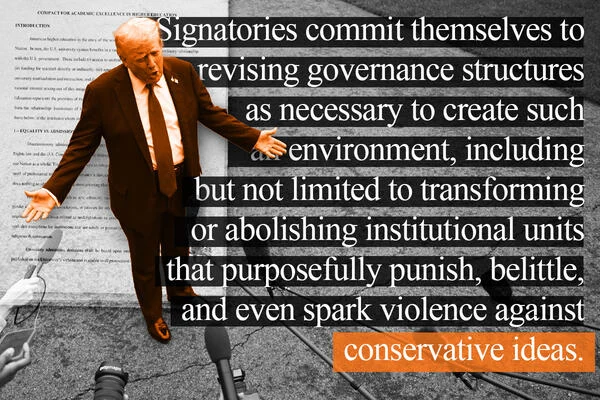
    Others go beyond cut-and-dry policy changes, such as publicly auditing the viewpoints of employees and students and potentially changing or ending campus units that purposefully “punish” or “belittle” conservative ideas.

    Seven of the initially invited colleges rejected the deal, and, as of Thursday afternoon, the remaining two have yet to publicly accept or decline the offer.

    But a few colleges have sought to take their place after President Donald Trump appeared to open the compact offer to all higher ed institutions. 

    Saint Augustine’s letter makes it the third college — and the first HBCU — to publicly express interest in the bargain.

    The New College of Florida — in a move in line with its conservative makeover under Florida Gov. Ron DeSantis — became the first college to publicly volunteer to sign the compact on Oct. 27. The following day, Valley Forge Military College offered to accept the deal as well, according to The Philadelphia Inquirer.

    But unlike New College and the military college, Saint Augustine’s did not give the proposed compact a full-throated endorsement.

    Neither the Education Department nor the university responded to questions Thursday.

    Verjanis Peoples, the university’s newly appointed interim president, and Sophie Gibson, chair of its board of trustees, warned that the compact as written is “not compatible with the statutory mission and federal mandate under which HBCUs operate.”

    “Because our mission is not ornamental but foundational, we cannot implement requirements that would directly conflict with our identity as a Historically Black University or undermine our ability to serve the populations for whom we were created,” they wrote in their letter, which Fox News reported as being sent to the Education Department on Wednesday.

    Peoples and Gibson cited a handful of the compact’s provisions, including one requiring signatories to not consider race, sex, religion and other characteristics “explicitly or implicitly” in admissions or financial aid. 

    The pair said the restriction, “while well intentioned,” conflicts with Title III of the Higher Education Act, which in part provides colleges grant funding and establishes a program meant to strengthen HBCUs. The Trump administration’s proposed deal would also run contrary to “the explicit purpose of HBCUs to expand access for Black students and historically marginalized communities,” they said.

    The compact said it would grant exceptions for religious and single-sex institutions to limit admissions based on religious belief and sex, respectively, but did not address HBCUs.

    Other elements of the Trump administration’s proposal could also hinder HBCUs, Peoples and Gibson said. 

    These colleges typically maintain smaller endowments and would have a difficult time absorbing the costs of a tuition freeze. A cap on international enrollment would disproportionately hit HBCUs, which have “global partnerships across the African diaspora,” they said.

    Saint Augustine’s leaders also flagged a compact provision that would require colleges to adopt definitions of gender and sex in step with Trump’s executive order saying the federal government would only recognize two sexes, male and female, that cannot be changed. These definitions have been rebuked by the scientific and medical communities.

    HBCUs could face operational challenges if they adopt this language given their “inclusive campus policies shaped by both community needs and regulatory frameworks,” the letter said.

    “Such provisions would unintentionally force HBCUs to choose between compliance and survival, a position that is neither feasible nor consistent with congressional intent,” Peoples and Gibson said.

    Should the Trump administration take Saint Augustine’s up on its offer, the embattled university could gain a financial lifeline amidst ongoing operational turmoil.

    In recent years, Saint Augustine’s has had its accreditation revoked, then reinstated, then revoked again. The university is operating as an accredited institution this fall because of a preliminary court injunction temporarily reversing the latest revocation.

    The university’s accreditor, Southern Association of Colleges and Schools Commission on Colleges, has raised concerns over its finances and governance.

    Saint Augustine’s has attempted different tactics to address its ongoing budget issues, including pursuing land lease deals, taking out loans and drastically cutting its workforce.

    Source link

  • Ireland sees 38% surge in Indian student interest: student perception study 2025

    Ireland sees 38% surge in Indian student interest: student perception study 2025

    The study, which surveyed students, parents, and counsellors across India, highlights how Ireland’s mix of academic excellence, affordability, safety, and employability is reshaping perceptions and driving enrolments.

    Ireland’s rise as a destination

    The report shows that while India continues to lead globally in outbound student mobility, sending more than 760,000 students abroad in 2024, Ireland’s growth has been particularly striking. From just 700 Indian students in 2013, enrolments crossed 9,000 in 2023/24 a 120% increase in five years. Even in 2024, when overall outbound mobility dipped by nearly 15%, interest in Ireland grew by 38%.

    What makes this growth significant is that it is not driven by marketing or advertising alone, but by the trust created through authentic student experiences, alumni voices, and counsellor guidance. Families see Ireland as a country that delivers not just degrees, but outcomes.

    Key highlights from the student perception study 2025

    • India leads in global outbound mobility: 7.6 lakh Indian students went abroad in 2024, compared to 2.6 lakh in 2020.
    • Ireland’s rapid growth: Indian enrolments rose from 700 in 2013 to over 9,000 in 2023/24 a 120% jump in five years.
    • Academic excellence: Six Irish universities now rank among the world’s top 500.
    • Affordable pathways: Tuition and living costs are 30-40% lower than in the US or UK; one-year Master’s programs add time and cost efficiency.
    • Employability outcomes: 80% of graduates secure employment within nine months; 1,800+ global companies including Google, Microsoft, Apple, and Pfizer offer strong career pathways.
    • Safety and community: Ireland ranks as the world’s third safest country, with over 60,000 Indians already settled.
    • Tier II/III interest rising: Students from Coimbatore, Guwahati, and Kochi are increasingly choosing Ireland, aided by education loans and growing awareness.

    A new student mindset

    The report underscores a fundamental shift: Indian students are increasingly outcome-oriented. Decisions are now guided by employability, post-study work opportunities, affordability, and return on investment, rather than prestige alone.

    Peer and alumni referrals, counsellor guidance, and authentic word-of-mouth are the strongest drivers of choice. Ireland’s reputation in STEM, AI, sustainability, data science, and cybersecurity is particularly resonant with this new generation of aspirants.

    Decisions are now guided by employability, post-study work opportunities, affordability, and return on investment, rather than prestige alone

    This aligns with India’s own reforms under the National Education Policy (NEP) and UGC guidelines, which are actively encouraging student exchange, internationalisation, and the establishment of foreign campuses within India. Together, they signal a new era where India is not just an outbound source market but also a global partner in talent and education.

    Why Ireland matters

    Ireland’s rise as a destination of choice reflects more than just academic strength. It represents trust – the trust of students who see real employability outcomes, of parents who value safety and affordability, and of institutions worldwide who view India as a critical partner in shaping global education.

    As global higher education undergoes transformation, Ireland’s expanding reputation, student-first approach, and strong industry linkages position it uniquely. It is not a “Plan B” market; it is becoming a first-choice destination for Indian students.

    For families making one of the most important decisions of their lives, the message is clear: Ireland is where ambition meets opportunity.

    About the author: Aritra Ghosal is the Founder & CEO of OneStep Global, a market entry firm specialising in higher education. With deep expertise in student mobility and institutional strategy, he has worked with global universities to expand their presence across Asia. Under his leadership, OneStep Global has partnered with leading institutions to build authentic student connections, support internationalisation, and shape the future of global education.

    Source link

  • Why all the fuss about interest rates?

    Why all the fuss about interest rates?

    For the first time in more than a decade, interest rates across the world are rising from what some say were their lowest levels in 5,000 years.

    You heard that right. The idea of lending money — and charging a fee for doing so — is as old as civilisation. Central banks, the institutions now responsible for guiding a country’s rates, are much more recent. Sweden’s Riksbank, in 1668, was the first, closely followed by the Bank of England in 1694.

    Don’t worry. This spin through history is meant only to show that interest rates have a long, if not always respected, past.

    In our drama-filled present, the world is watching — with interest — where they will go from here.

    So why do interest rates matter? And why now, in particular?

    Why do interest rates matter?

    To vastly oversimplify the argument: lending rates matter because prices matter. And interest rates are the most tried-and-tested tool for keeping prices under control.

    Even those who prefer getting their financial advice from TikTok and YouTube, rather than consulting traditional financial institutions, would be hard-pressed to miss the fact that prices for essentials such as food, fuel and cooking oil are rising faster across the industrialized world than they have in decades.

    This can be particularly hard for those starting their working lives. Nearly half the Generation Zs and Millennials in a 46-country Deloitte poll said they live paycheque to paycheque. Of the thousands surveyed, nearly one-third (29% of Gen Zs and 36% of Millennials) said inflation was their most pressing worry right now.

    The global rise in prices is the result of a perfect storm of factors: among others, a food shortage caused by Russia’s blockade of Ukraine’s ports, soaring energy costs and the effects of droughts, heatwaves and other climate-linked extreme weather on agriculture; a resurgence in consumer buying deferred during COVID-19 lockdowns; and a surge in demand for workers.

    And while wages are also rising after years of near dormancy, they are not increasing fast enough to keep pace with prices. So even the most carefully managed household budget is facing new strains.

    That’s where interest rates come in.

    Slowing inflation without stalling economies

    Central banks hope that by making it more expensive to borrow, they can slow the pace of inflation. That they have been able to keep rates at or near zero for so long is because the world was in an extraordinary period of extended price stability.

    There is little that even the cleverest economic steward can do to fix the external factors affecting inflation — Ukraine, droughts, labour shortages — but they can try to put the brakes on internal drivers such as consumer demand.

    So that’s why rates are increasing in most major economies faster than they have since the latter part of the last century.

    The U.S. Federal Reserve, arguably the world’s most powerful central bank, has raised rates three times this year and is expected to increase them again this week. Peers such as the European Central Bank and the Bank of England are following suit, although some are taking a cautious approach because they want to slow their economies without stalling them completely.

    The question is: How far will rates rise and how will that affect a global economy that has been buffeted in the past few years by a pandemic, geopolitical turmoil and a supply chain crisis?

    Consider hypothetical futures.

    Economists say a few possible paths lie before us.

    The best-case scenario is what they call a “soft landing”: interest-rate rises could put a quick end to the price spiral without causing a halt or, worse, a reversal in economic growth. When prices stop rising, rates do too.

    There are potential pluses for the young in this brightest of hypothetical futures. It could allow wages to catch up with costs, boosting buying power. And if there is a halt or reversal in property prices, they could at last have a chance to buy without having to face cripplingly high mortgage rates.

    The second-best scenario is a brief recession that ends quickly and brings with it tamer prices and stable or lower lending rates. See above for benefits.

    “I am not confident in the soft-landing scenario,” said Greg McBride, Chief Financial Analyst at Bankrate.com. “A recession is very likely the price to be paid for getting inflation under control. And painful as recessions are — even mild recessions are not fun for anybody — that is medicine we are better off taking now in an effort to get back to price stability.”

    If interest rates rise too slowly or not enough, this opens the door to the worst of all possible worlds — a phenomenon known as stagflation.

    Stagflation is an ugly thing. Prices soar, economic growth slows and it becomes harder and harder to make ends meet. The fact is that economic growth will slow as rates rise, even in the best of our possible outcomes. But as long as prices follow, we will escape the economic purgatory that big economies faced in the 1970s.

    Now is the time for smart financial management.

    Whatever future lies ahead, McBride said, the best way to ride it out is to practice sound financial management. That applies whether you are a student, just joining the job market or starting your own business.

    “The fundamentals are critically important,” he said. “That is: invest in yourself and your future earning power; watch your expenses; live beneath your means; save and invest the difference; and don’t rely on debt to support your lifestyle if your income cannot.”

    This last is particularly important in a time of rising rates.

    “There are points in life where you need debt,” he said. “You may need to borrow to get through school. You’re probably going to have to borrow to buy a house.”

    But you must never lose sight of “the end game” of paying that debt off, particularly if, as with most credit cards, it carries high or variable interest rates. And don’t borrow for non-essentials.

    McBride said: “Leaning against debt, like a crutch to support a lifestyle your income cannot, doesn’t lead anywhere good.”


    QUESTIONS TO CONSIDER

    1. What is stagflation and why is it the worst-case scenario?

    2. How can policymakers tame inflation?

    3. How have the prices for food, fuel and other goods changed where you live?


    Source link

  • OfS’ understanding of the student interest requires improvement

    OfS’ understanding of the student interest requires improvement

    When the Office for Students’ (OfS) proposals for a new quality assessment system for England appeared in the inbox, I happened to be on a lunchbreak from delivering training at a students’ union.

    My own jaw had hit the floor several times during my initial skim of its 101 pages – and so to test the validity of my initial reactions, I attempted to explain, in good faith, the emerging system to the student leaders who had reappeared for the afternoon.

    Having explained that the regulator was hoping to provide students with a “clear view of the quality of teaching and learning” at the university, their first confusion was tied up in the idea that this was even possible in a university with 25,000 students and hundreds of degree courses.

    They’d assumed that some sort of dashboard might be produced that would help students differentiate between at least departments if not courses. When I explained that the “view” would largely be in the form of a single “medal” of Gold, Silver, Bronze or Requires improvement for the whole university, I was met with confusion.

    We’d spent some time before the break discussing the postgraduate student experience – including poor induction for international students, the lack of a policy on supervision for PGTs, and the isolation that PGRs had fed into the SU’s strategy exercise.

    When I explained that OfS was planning to introduce a PGT NSS in 2028 and then use that data in the TEF from 2030-31 – such that their university might not have the data taken into account until 2032-33 – I was met with derision. When I explained that PGRs may be incorporated from 2030–31 onwards, I was met with scorn.

    Keen to know how students might feed in, one officer asked how their views would be taken into account. I explained that as well as the NSS, the SU would have the option to create a written submission to provide contextual insight into the numbers. When one of them observed that “being honest in that will be a challenge given student numbers are falling and so is the SU’s funding”, the union’s voice coordinator (who’d been involved in the 2023 exercise) in the corner offered a wry smile.

    One of the officers – who’d had a rewarding time at the university pretty much despite their actual course – wanted to know if the system was going to tackle students like them not really feeling like they’d learned anything during their degree. Given the proposals’ intention to drop educational gain altogether, I moved on at this point. Young people have had enough of being let down.

    I’m not at home in my own home

    Back in February, you might recall that OfS published a summary of a programme of polling and focus groups that it had undertaken to understand what students wanted and needed from their higher education – and the extent to which they were getting it.

    At roughly the same time, it published proposals for a new initial Condition C5: Treating students fairly, to apply initially to newly registered providers, which drew on that research.

    As well as issues it had identified with things like contractual provisions, hidden costs and withdrawn offers, it was particularly concerned with the risk that students may take a decision about what and where to study based on false, misleading or exaggerated information.

    OfS’ own research into the Teaching Excellence Framework 2023 signals one of the culprits for that misleading. Polling by Savanta in April and May 2024, and follow-up focus groups with prospective undergraduates over the summer both showed that applicants consistently described TEF outcomes as too broad to be of real use for their specific course decisions.

    They wanted clarity about employability rates, continuation statistics, and job placements – but what they got instead was a single provider-wide badge. Many struggled to see meaningful differences between Gold and Silver, or to reconcile how radically different providers could both hold Gold.

    The evidence also showed that while a Gold award could reassure applicants, more than one in five students aware of their provider’s TEF rating disagreed that it was a fair reflection of their own experience. That credibility gap matters.

    If the TEF continues to offer a single label for an entire university, with data that are both dated and aggregated, there is a clear danger that students will once again be misled – this time not by hidden costs or unfair contracts, but by the regulatory tool that is supposed to help them make informed choices.

    You don’t know what I’m feeling

    Absolutely central to the TEF will remain results of the National Student Survey (NSS).

    OfS says that’s because “the NSS remains the only consistently collected, UK-wide dataset that directly captures students’ views on their teaching, learning, and academic support,” and because “its long-running use provides reliable benchmarked data which allows for meaningful comparison across providers and trends over time.”

    It stresses that the survey provides an important “direct line to student perceptions,” which balances outcomes data and adds depth to panel judgements. In other words, the NSS is positioned as an indispensable barometer of student experience in a system that otherwise leans heavily on outcomes.

    But set aside the fact that it surveys only those who make it to the final year of a full undergraduate degree. The NSS doesn’t ask whether students felt their course content was up to date with current scholarship and professional practice, or whether learning outcomes were coherent and built systematically across modules and years — both central expectations under B1 (Academic experience).

    It doesn’t check whether students received targeted support to close knowledge or skills gaps, or whether they were given clear help to avoid academic misconduct through essay planning, referencing, and understanding rules – requirements spelled out in the guidance to B2 (Resources, support and engagement). It also misses whether students were confident that staff were able to teach effectively online, and whether the learning environment – including hardware, software, internet reliability, and access to study spaces – actually enabled them to learn. Again, explicit in B2, but invisible in the survey.

    On assessment, the NSS asks about clarity, fairness, and usefulness of feedback, but it doesn’t cover whether assessment methods really tested what students had been taught, whether tasks felt valid for measuring the intended outcomes, or whether students believed their assessments prepared them for professional standards. Yet B4 (Assessment and awards) requires assessments to be valid and reliable, moderated, and robust against misconduct – areas NSS perceptions can’t evidence.

    I could go on. The survey provides snapshots of the learning experience but leaves out important perception checks on the coherence, currency, integrity, and fitness-for-purpose of teaching and learning, which the B conditions (and students) expect providers to secure.

    And crucially, OfS has chosen not to use the NSS questions on organisation and management in the future TEF at all. That’s despite its own 2025 press release highlighting it as one of the weakest-performing themes in the sector – just 78.5 per cent of students responded positively – and pointing out that disabled students in particular reported significantly worse experiences than their peers.

    OfS said then that “institutions across the sector could be doing more to ensure disabled students are getting the high quality higher education experience they are entitled to,” and noted that the gap between disabled and non-disabled students was growing in organisation and management. In other words, not only is the NSS not fit for purpose, OfS’ intended use of it isn’t either.

    I followed the voice, you gave to me

    In the 2023 iteration of the TEF, the independent student submission was supposed to be one of the most exciting innovations. It was billed as a crucial opportunity for providers’ students to tell their own story – not mediated through NSS data or provider spin, but directly and independently. In OfS’ words, the student submission provided “additional insights” that would strengthen the panel’s ability to judge whether teaching and learning really were excellent.

    In this consultation, OfS says it wants to “retain the option of student input,” but with tweaks. The headline change is that the student submission would no longer need to cover “student outcomes” – an area that SUs often struggled with given the technicalities of data and the lack of obvious levers for student involvement.

    On the surface, that looks like a kindness – but scratch beneath the surface, and it’s a red flag. Part of the point of Condition B2.2b is that providers must take all reasonable steps to ensure effective engagement with each cohort of students so that “those students succeed in and beyond higher education.”

    If students’ unions feel unable to comment on how the wider student experience enables (or obstructs) student success and progression, that’s not a reason to delete it from the student submission. It’s a sign that something is wrong with the way providers involve students in what’s done to understand and shape outcomes.

    The trouble is that the light touch response ignores the depth of feedback it has already commissioned and received. Both the IFF evaluation of TEF 2023 and OfS’ own survey of student contacts documented the serious problems that student reps and students’ unions faced.

    They said the submission window was far too short – dropping guidance in October, demanding a January deadline, colliding with elections, holidays, and strikes. They said the guidance was late, vague, inaccessible, and offered no examples. They said the template was too broad to be useful. They said the burden on small and under-resourced SUs was overwhelming, and even large ones had to divert staff time away from core activity.

    They described barriers to data access – patchy dashboards, GDPR excuses, lack of analytical support. They noted that almost a third didn’t feel fully free to say what they wanted, with some monitored by staff while writing. And they told OfS that the short, high-stakes process created self-censorship, strained relationships, and duplication without impact.

    The consultation documents brush most of that aside. Little in the proposals tackles the resourcing, timing, independence, or data access problems that students actually raised.

    I’m not at home in my own home

    OfS also proposes to commission “alternative forms of evidence” – like focus groups or online meetings – where students aren’t able to produce a written submission. The regulator’s claim is that this will reduce burden, increase consistency, and make it easier to secure independent student views.

    The focus group idea is especially odd. Student representatives’ main complaint wasn’t that they couldn’t find the words – it was that they lacked the time, resource, support, and independence to tell the truth. Running a one-off OfS focus group with a handful of students doesn’t solve that. It actively sidesteps the standard in B2 and the DAPs rules on embedding students in governance and representation structures.

    If a student body struggles to marshal the evidence and write the submission, the answer should be to ask whether the provider is genuinely complying with the regulatory conditions on student engagement. Farming the job out to OfS-run focus groups allows providers with weak student partnership arrangements to escape scrutiny – precisely the opposite of what the student submission was designed to do.

    The point is that the quality of a student submission is not just a “nice to have” extra insight for the TEF panel. It is, in itself, evidence of whether a provider is complying with Condition B2. It requires providers to take all reasonable steps to ensure effective engagement with each cohort of students, and says students should make an effective contribution to academic governance.

    If students can’t access data, don’t have the collective capacity to contribute, or are cowed into self-censorship, that is not just a TEF design flaw – it is B2 evidence of non-compliance. The fact that OfS has never linked student submission struggles to B2 is bizarre. Instead of drawing on the submissions as intelligence about engagement, the regulator has treated them as optional extras.

    The refusal to make that link is even stranger when compared to what came before. Under the old QAA Institutional Review process, the student written submission was long-established, resourced, and formative. SUs had months to prepare, could share drafts, and had the time and support to work with managers on solutions before a review team arrived. It meant students could be honest without the immediate risk of reputational harm, and providers had a chance to act before being judged.

    TEF 2023 was summative from the start, rushed and high-stakes, with no requirement on providers to demonstrate they had acted on feedback. The QAA model was designed with SUs and built around partnership – the TEF model was imposed by OfS and designed around panel efficiency. OfS has learned little from the feedback from those who submitted.

    But now I’ve gotta find my own

    While I’m on the subject of learning, we should finally consider how far the proposals have drifted from the lessons of Dame Shirley Pearce’s review. Back in 2019, her panel made a point of recording what students had said loud and clear – the lack of learning gain in TEF was a fundamental flaw.

    In fact, educational gain was the single most commonly requested addition to the framework, championed by students and their representatives who argued that without it, TEF risked reducing success to continuation and jobs.

    Students told the review they wanted a system that showed whether higher education was really developing their knowledge, skills, and personal growth. They wanted recognition of the confidence, resilience, and intellectual development that are as much the point of university as a payslip.

    Pearce’s panel agreed, recommending that Educational Gains should become a fourth formal aspect of TEF, encompassing both academic achievement and personal development. Crucially, the absence of a perfect national measure was not seen as a reason to ignore the issue. Providers, the panel said, should articulate their own ambitions and evidence of gain, in line with their mission, because failing to even try left a gaping hole at the heart of quality assessment.

    Fast forward to now, and OfS is proposing to abandon the concept entirely. To students and SUs who have been told for years that their views shape regulation, the move is a slap in the face. A regulator that once promised to capture the full richness of the student experience is now narrowing the lens to what can be benchmarked in spreadsheets. The result is a framework that tells students almost nothing about what they most want to know – whether their education will help them grow.

    You see the same lack of learning in the handling of extracurricular and co-curricular activity. For students, societies, volunteering, placements, and cocurricular opportunities are not optional extras but integral to how they build belonging, develop skills, and prepare for life beyond university. Access to these opportunities feature heavily in the Access and Participation Risk Register precisely because they matter to student success and because they’re a part of the educational offer in and of themselves.

    But in TEF 2023 OfS tied itself in knots over whether they “count” — at times allowing them in if narrowly framed as “educational”, at other times excluding them altogether. To students who know how much they learn outside of the lecture theatre, the distinction looked absurd. Now the killing off of educational gain excludes them all together.

    You should have listened

    Taken together, OfS has delivered a masterclass in demonstrating how little it has learned from students. As a result, the body that once promised to put student voice at the centre of regulation is in danger of constructing a TEF that is both incomplete and actively misleading.

    It’s a running theme – more evidence that OfS is not interested enough in genuinely empowering students. If students don’t know what they can, should, or could expect from their education – because the standards are vague, the metrics are aggregated, and the judgements are opaque – then their representatives won’t know either. And if their reps don’t know, their students’ union can’t effectively advocate for change.

    When the only judgements against standards that OfS is interested in come from OfS itself, delivered through a very narrow funnel of risk-based regulation, that funnel inevitably gets choked off through appeals to “reduced burden” and aggregated medals that tell students nothing meaningful about their actual course or experience. The result is a system that talks about student voice while systematically disempowering the very students it claims to serve.

    In the consultation, OfS says that it wants its new quality system to be recognised as compliant with the European Standards and Guidelines (ESG), which would in time allow it to seek membership of the European Quality Assurance Register (EQAR). That’s important for providers with international partnerships and recruitment ambitions, and for students given that ESG recognition underpins trust, mobility, and recognition across the European Higher Education Area.

    But OfS’ conditions don’t require co-design of the quality assurance framework itself, nor proof that student views shape outcomes. Its proposals expand student assessor roles in the TEF, but don’t guarantee systematic involvement in all external reviews or transparency of outcomes – both central to ESG. And as the ongoing QA-FIT project and ESU have argued, the next revision of the ESG is likely to push student engagement further, emphasising co-creation, culture, and demonstrable impact.

    If it does apply for EQAR recognition, our European peers will surely notice what English students already know – the gap between OfS’ rhetoric on student partnership and the reality of its actual understanding and actions is becoming impossible to ignore.

    When I told those student officers back on campus that their university would be spending £25,000 of their student fee income every time it has to take part in the exercise, their anger was palpable. When I added that according to the new OfS chair, Silver and Gold might enable higher fees, while Bronze or “Requires Improvement” might cap or further reduce their student numbers, they didn’t actually believe me.

    The student interest? Hardly.

    Source link

  • Virginia Democrats Accuse GMU Rector of Conflict of Interest

    Virginia Democrats Accuse GMU Rector of Conflict of Interest

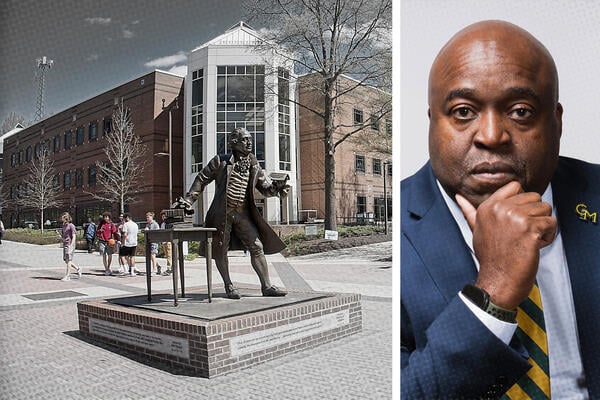
    Photo illustration by Justin Morrison/Inside Higher Ed | Robert Knopes/UCG/Universal Images Group/Getty Images | Maxine Wallace/The Washington Post/Getty Images

    Virginia Democrats want George Mason University board rector Charles Stimson to recuse himself from federal investigations into the university as well as discussions about the university president’s future, saying that his role at the Heritage Foundation, which recently released a report critical of GMU, presents a conflict of interest.

    The letter comes almost two weeks after a state Senate committee blocked 14 gubernatorial appointments to university boards, including six at GMU, which left the Board of Visitors without a quorum. The letter also follows the Heritage report that accused GMU of attempting to hide diversity, equity and inclusion programs. Stimson has had several jobs at Heritage, where he’s currently deputy director of the organization’s legal and judicial studies center.

    The Trump administration has accused GMU of engaging in discriminatory hiring practices and implementing “unlawful DEI policies” and has opened several investigations into the university.

    However, GMU president Gregory Washington has stood his ground, arguing that the federal government rushed the investigation and disputing its findings while rejecting calls to personally apologize. Now, as GMU’s Board of Visitors is stuck without a quorum while a legal challenge over the appointments plays out, state Democrats are seeking to neutralize Stimson in his role as rector.

    A Call for Recusal

    Senate Majority Leader Scott Surovell and other top Democrats in the Senate, L. Louise Lucas and Mamie E. Locke, specifically took issue with the Heritage report’s call to “withhold federal taxpayer funds from universities that violate the Civil Rights Act of 1964,” which the Education Department accused GMU of doing. State Democrats argued that Stimson’s employer is essentially seeking to harm the university.

    “This creates an untenable ethical conflict where your employer’s published position is diametrically opposed to your duties as Rector,” the lawmakers wrote to Stimson.

    (Stimson is one of multiple university board members appointed by Republican governor Glenn Youngkin with distinctly right-wing profiles, including some with ties to conservative think tanks, the Trump administration, GOP megadonors and former Republican politicians, Inside Higher Ed found earlier this year.)

    State Democrats also raised concerns over how he became rector.

    “The appearance of impropriety is compounded by the fact that your selection as Rector reportedly occurred only after direct intervention by Governor Youngkin, raising questions about whether your Heritage Foundation affiliation influenced that appointment,” the Democrats wrote.

    Given what they view as a conflict of interest, the three Democratic leaders called on Stimson to recuse himself “from all Board of Visitors deliberations, discussions, and votes” involving Washington’s employment status or performance evaluations, GMU responses to federal DEI investigations or compliance concerns, GMU funding strategies and university DEI policies.

    “If you cannot commit to this recusal, I believe the appropriate course would be your resignation as Rector to eliminate this conflict entirely,” Surovell and the other Democrats wrote to Stimson while calling on him to respond “outlining the specific steps you will take to address this conflict.”

    Neither GMU officials nor Stimson responded to requests for comment from Inside Higher Ed.

    Youngkin accused Democrats of trying to undermine university boards.

    “Virginia’s progressive left elected officials are trying to paralyze the governing boards of Virginia’s colleges and universities by using despicable bullying and intimidation tactics,” Youngkin wrote in a post on X.

    Faculty Support

    As Washington, GMU’s first Black president, has found himself in the Trump administration’s cross hairs and fighting back, board support has been a constant question. Rumors of Washington’s expected firing swirled in July, but the Board of Visitors kept him on the job.

    George Mason faculty have also rallied around the embattled president, with dozens of professors, students and others protesting outside the July meeting. GMU’s chapter of the American Association of University Professors applauded the senators’ letter on Tuesday.

    “We believe that Mr. Stimson has failed to fulfill his fiduciary duties and has repeatedly exceeded his proper authority as Rector of the Board of Visitors. His conflicting leadership role at the Heritage Foundation and his repeated attempts to overreach his authority threaten the foundation of Virginia’s largest public university, endangering its governance, stability, and future,” the GMU-AAUP Executive Committee wrote in an email to members.

    The local AAUP chapter struck a sharper tone than Virginia’s Senate leadership, alleging that Stimson has “usurped GMU President Gregory Washington’s authority to manage the university’s responses to federal investigations, contrary to the president’s delegated authority established in the [Board of Visitors’] Bylaws.”

    GMU-AAUP also echoed the call for Stimson to recuse himself from certain board duties.

    “If Rector Stimson cannot commit to this recusal, we join Senators Surovell, Lucas, and Locke in calling for his resignation as Rector to eliminate this conflict entirely,” the organization wrote. “The independence, integrity, and future of George Mason University depend on nothing less.”

    The group previously voted no confidence in the Board of Visitors in July.

    Source link

  • UAE leads MENA surge as international study interest soars by 90%

    UAE leads MENA surge as international study interest soars by 90%

    Keystone search data reveals the UAE, along with other MENA destinations, is benefiting from shifts in global international study demand during 2025, with an increase of nearly 90% in search interest in June 2025 compared to last year.

    Although the MENA destination is expecting growth, the UAE’s rise is particularly notable, drawing highly diverse audiences from South Asia (especially India and Pakistan), Southeast Asia (Singapore and Indonesia), East Asia (Hong Kong China), and Europe (France, Germany). There has also been a modest uptick in interest from US students.

    Keystone’s data – which measures relative search interest from millions of monthly searches on Keystone websites – points to subject availability and tuition fees as the two leading factors influencing student decisions to study in the MENA region, as India remains the UAE’s largest source of international interest, with the fastest-growing audiences in 2025 being India, Singapore, France, the US, and Germany.

    Ultimately, Dubai is not just offering education but a launchpad for global careers, with an ecosystem that is becoming increasingly difficult to replicate, given the current policy headwinds.
    Suneet Singh Kochar, CEO of Fateh Education

    “The global landscape of international education is shifting, and traditional destinations like the US, UK, Canada, and Australia (the ‘Big Four’) are facing increasing pressure from visa constraints, immigration policy tightening, and affordability concerns. As global mobility patterns evolve, Indian and South Asian students are actively exploring alternative destinations that offer both quality and pragmatism, and Dubai is emerging as a frontrunner,” Suneet Singh Kochar, CEO of education consultancy, Fateh Education, told The PIE.

    “Another trend that I see, when it comes to Dubai’s growing appeal, is the uptick in interest for undergraduate studies in addition to the students going there to pursue their masters. For Indian families, it provides the perfect balance – global education within a four-hour flight radius, cultural familiarity, and significantly greater parental access and peace of mind. Safety, quality healthcare, and multicultural inclusivity further reinforce Dubai’s appeal for families looking for a secure, supportive environment for these younger students.”

    The Ministry of Higher Education and Scientific Research (MoHESR) has announced that students applying to the higher education institutions based in the UAE for the upcoming Fall 2025-2026 intake must accept or reject their offers by August 11, 2025, via its electronic portal. All program acceptances and related steps must be completed by this deadline to ensure smooth processing.

    With encouragement for students to regularly monitor their applications and promptly fulfil any additional requirements set by institutions, the MoHESR has significantly simplified admissions, reducing document requirements by 86%, cutting the application time and enabling registration at 59 higher education institutions across the country.

    “Ultimately, Dubai is not just offering education but a launchpad for global careers, with an ecosystem that is becoming increasingly difficult to replicate, given the current policy headwinds. Today, over 42% of Dubai’s international student population is Indian – clear evidence of the region’s growing credibility and resonance with India,” Singh Kochar added.

    “Dubai’s high graduate employment rate is backed by a system where universities are closely aligned with national priorities, offering programs in areas like AI, sustainability, logistics, and fintech that are directly connected to the country’s economic vision.”

    Elsewhere, Singh Kochar commended Dubai’s institutions for their strong ties to industry – providing students with access to internships, live projects, and employer networks during their studies.

    Source link

  • Interest charges will restart for borrowers in SAVE forbearance (Student Borrower Protection Center)

    Interest charges will restart for borrowers in SAVE forbearance (Student Borrower Protection Center)

    Dahn,

    The Biden Administration’s Saving on a Valuable Education (SAVE) repayment plan promised to lower monthly student loan payments for millions of Americans. But legal attacks by the same conservative state attorneys general who exploited the courts to block President Biden’s original student debt relief plan resulted in a court injunction that has blocked borrowers from enrolling. Thus, borrowers have been trapped in a year-long, interest-free forbearance while their unprocessed Income-Driven Repayment (IDR) applications wait in limbo.

    But now, Trump and Education Secretary McMahon are saddling these borrowers with interest. Last week, the U.S. Department of Education (ED) announced that it will begin restarting student loan interest charges on August 1, 2025, for the nearly 8 MILLION borrowers stuck in this forbearance.

    McMahon voluntarily chose to do this—there was no state or federal court order forcing her hand. Read our Executive Director Mike Pierce’s statement on this below:

    Source link

  • Are Chinese students losing interest in the ‘big four’?

    Are Chinese students losing interest in the ‘big four’?

    Once the world’s largest source of international students, China is no longer expected to fuel further student growth in the ‘big four’ destinations, according to predictions from Bonard Education shared in a recent webinar. 

    “China is no longer the easy goldmine it once was”, Bonard senior research consultant, Su Su, told attendees, highlighting the “visible trend” of Chinese students choosing alternative options closer to home.  

    The US has seen the most noticeable decline in Chinese enrolments, which broadly started across traditional destinations in 2020/21 and has continued in the US over the past five years, according to Bonard data.  

    Amid the downturn in Chinese mobility to the US, India surpassed China as America’s largest sending country in 2023 and new government data has shown this gap continue to widen.

    Source: BONARD

    The UK, however, is bucking the trend and has witnessed continued modest growth in Chinese students since 2020, though this cohort’s visa approval rate saw a 6% year-on-year decline in 2024. 

    Elsewhere, Canada experienced a 21% drop in Chinese visa approvals last year as the impact of the government’s study permit caps took hold, but university enrolment nevertheless remains stable, signalling the visa decline is concentrated in non-university level students.  

    Meanwhile, Australia and New Zealand saw a modest rebound in Chinese enrolment in 2023/24, with Su maintaining that China was still a “pivotal” source market despite fluctuations.  

    The waning dominance of China as a source market can partly be attributed to the state of the economy, with financial pressure becoming the most cited factor impacting study decisions, according to Bonard’s agent network.

    “Middle class families are experiencing slower financial growth, and, as a result, are more economically conscious,” explained Su, fuelling a rise in shorter term English language courses as well as impacting the post-secondary sector. 

    What’s more, China’s urban unemployment rate among 16-24-year-olds jumped to an all-time high of 19% last year, pushing career outcomes up the priority list for students and their families, said Su.  

    Given the financial context, “families are determined to make every RMB count”, said Su, with more affordable Asian destinations becoming increasingly attractive in China.  

    The PIE News has previously reported on the rise of intra-Asian mobility, with countries in the region increasingly seeing internationalisation as critical to sustaining economic growth, plugging workforce gaps and driving innovation.

    In particular, the National Universities of Singapore and Hong Kong were highlighted as hitting the sweet spot by offering highly regarded international degrees at a lower price than traditional destinations – catering to families who still value prestige and the merits of an international education, but who are shopping “smarter”.  

    Elsewhere, Japan, South Korea and Malaysia are on the rise, with the Japanese government pursuing an ambitious goal of attracting 400,000 international students by 2033 and Malaysia streamlining international admissions through a new centralised system.

    But it’s not just affordability that is changing the landscape: perceived policy volatility “can shape perspective just as much as the price”, said Su, highlighting the damaging impact of Donald Trump’s erratic policy announcements in the US.  

    “Recent headlines in the US are raising serious concerns among families, whether or not the policies are enacted,” Su warned. 

    By comparison, despite some restrictions in the UK: “It feels more stable… agencies are describing the UK as the safest bet due to its clear communication of policies,” attendees heard.  

    That being said, political environments tend to have a temporary impact on student decision-making, with agencies and institutions advised that now is the time to “adapt and rethink” rather than turning away from the Chinese market.  

    Source link

  • Many students decide they’re not a ‘math person’ by the end of elementary school, new study shows

    Many students decide they’re not a ‘math person’ by the end of elementary school, new study shows

    This story was originally published by Chalkbeat. Sign up for their newsletters at ckbe.at/newsletters.

    Roughly half of middle and high schoolers report losing interest in math class at least half the time, and 1 in 10 lack interest nearly all the time during class, a new study shows.

    In addition, the students who felt the most disengaged in math class said they wanted fewer online activities and more real-world applications in their math classes.

    Those and other findings published Tuesday from the research corporation RAND highlight several ongoing challenges for instruction in math, where nationwide student achievement has yet to return to pre-pandemic levels and the gap between the highest and lowest-performing students in math has continued to grow.

    Feeling bored in math class from time to time is not an unusual experience, and feeling “math anxiety” is common. However, the RAND study notes that routine boredom is associated with lower school performance, reduced motivation, reduced effort, and increased rates of dropping out of school.

    Perhaps unsurprisingly, the study found that the students who are the most likely to maintain their interest in math comprehend math, feel supported in math, are confident in their ability to do well in math, enjoy math, believe in the need to learn math, and see themselves as a “math person.”

    Dr. Heather Schwartz, a RAND researcher and the primary investigator of the study, noted that the middle and high school years are when students end up on advanced or regular math tracks. Schwartz said that for young students determining their own sense of math ability, “Tracking programs can be a form of external messaging.”

    Nearly all the students who said they identified as a “math person” came to that conclusion before they reached high school, the RAND survey results show. A majority of those students identified that way as early as elementary school. In contrast, nearly a third of students surveyed said they never identified that way.

    “Math ability is malleable way past middle school,” Schwartz said. Yet, she noted that the survey indicates students’ perception of their own capabilities often remains static.

    The RAND study drew on data from their newly established American Youth Panel, a nationally representative survey of students ages 12-21. It used survey responses of 434 students in grades 5-12. Because this was the first survey sent to members of the panel, there is no comparable data on student math interest prior to the pandemic, so it doesn’t measure any change in student interest.

    The RAND study found that 26% percent of students in middle and high school reported losing interest during a majority of their math lessons. On the other end of the spectrum, a quarter of students said they never or almost never lost interest in math class.

    There weren’t major differences in the findings across key demographic groups: Students in middle and high school, boys and girls, and students of different races and ethnicities reported feeling bored during a majority of math class at similar rates.

    Dr. Janine Remillard, a professor at the University of Pennsylvania Graduate School of Education and expert in mathematics curriculum, said that in many math classes, “It’s usually four or five students answering all the questions, and then the kids who either don’t understand or are less interested or just take a little bit more time — they just zone out.”

    Over 50% of students who lost interest in almost all of their math classes asked for fewer online activities and more real-world problems, the RAND study shows. Schwartz hypothesizes that some online math programs represent a “modern worksheet” and emphasize solo work and repetition. Students who are bored in class instead crave face-to-face activities that focus on application, she said.

    During Remillard’s math teacher training classes, she puts students in her math teacher training class into groups to solve math problems. But she doesn’t tell them what strategy to use.

    The students are forced to work together in order to understand the process of finding an answer rather than simply repeating a given formula. All of her students typically say that if they had learned math this way, they would think of themselves as a math person, according to Remillard, who was not involved in the RAND study.

    Chalkbeat is a nonprofit news site covering educational change in public schools.

    For more news on STEM learning, visit eSN’s STEM & STEAM hub.

    Latest posts by eSchool Media Contributors (see all)

    Source link