Tag: International Students

  • US takes the lead on student satisfaction, survey finds

    US takes the lead on student satisfaction, survey finds

    Global student satisfaction has remained steady in 2025, but pressures on inclusivity, affordability and the quality of student life are beginning to show, according to the Global Student Satisfaction Awards: Summary Report 2025.

    Studyportals’ 2025 Student Satisfaction survey tracked responses from over 102,000 students around the world, with the US, Belgium and Austria leading the charge in overall satisfaction, ranked at 4.32, 4.29 and 4.28 stars out of five respectively.

    The biannual survey looked at reviews from students of 180 nationalities studying at institutions in 124 countries, recording an average satisfaction score of 4.18 out of 5. While stable compared to 2023 (when the last survey was published), this represents a slight dip of 0.71%.

    Meanwhile Pakistan, France, Ireland and Türkiye saw some of the steepest declines in satisfaction. The UK and India bucked the trend with improved scores, both climbing above the global average.

    Pakistan recorded the most significant drop since 2023’s survey (-11.3%), moving significantly further below the global benchmark. France also fell by -3.2%, Ireland by -2.4%, and Türkiye by -1.2%.

    By contrast, Finland (+3.3%) and the Netherlands (+0.2%) registered modest improvements, though both remain below the global average. The report warns that unless these downward trends are addressed, strong challengers like India and the UK could capture greater student interest.

    Students are more confident about career prospects, but increasingly concerned about diversity and their quality of life
    Edwin van Rest, Studyportals

    The report also tracked other factors such as admissions processes, career development, student diversity and student life.

    Winners were honoured across seven categories at an awards ceremony hosted by Studyportals in collaboration with Uni-Life and IELTS at a fringe event during last week’s European Association for International Education (EAIE) conference in Gothenburg.

    Key indicators revealed a mixed picture. Student diversity (-5.03%) and student life (-4.39%) suffered the largest declines, reflecting growing concerns around integration, housing shortages and rising costs in popular destinations. Admissions processes also weakened (-3.85%), with students calling for clearer communication, smoother transitions and more user-friendly digital systems.

    On the positive side, career development (+1.23%) recorded notable gains, with the US, India and Switzerland leading thanks to stronger links with employers, internships and industry engagement. Online classroom experience, long the weakest category, also improved modestly (+1.30%), particularly in the US, India and South Africa.

    Studyportals said the findings underline shifting student priorities. Employability outcomes and structured cross-cultural experiences are increasingly valued, while inclusivity and transparency remain pressing challenges.

    “These results show where universities are winning student trust, and where they risk losing it,” noted Edwin van Rest, CEO & co-founder of Studyportals. “Students are more confident about career prospects, but increasingly concerned about diversity and their quality of life.”

    Source link

  • UK still top choice for pathway students despite policy changes

    UK still top choice for pathway students despite policy changes

    International students are placing getting a quality education over policy developments – with the UK keeping its spot as the preferred desitnation for 80% of nearly 1,000 pathway students surveyed by NCUK.

    A new report covering the survey’s findings analyses data from 921 students across 88 countries studying an international foundation year or Master’s preparatino programs, looking at their motivations for studying in top destinations, as well as other preferences.

    It found that Australia was the second most popular choice, with 4% of students surveyed marking it as their preference, followed by Canada, the US, New Zealand and Ireland at 3%. Meanwhile, the most coveted programs are business and computer science, as the preferred subjects for just under a third (31%) of respondents.

    Students’ continued preference for the UK comes in spite of a slew of policy changes affecting international students. In May, the government unveiled its long-awaited immigration white paper, setting out the way Keir Starmer’s Labour party intends to tackle migration over the coming years.

    It included plans to reduce the Graduate Route by six months to a total of 18 months, as well as new compliance metrics that higher education institutions must in order to continue recrutiing international students. Tougher Basic Compliance Assessment (BCA) requirements are set to take effect this month, meaning that universities will face penalties if more than 5% of their students’ visas are rejected, down from 10%.

    And last September, the UK increased international student maintenance requirements for the first time since 2020. Under the new rules, students coming to London must show evidence of having £1,483 per month, while studying outside of London need proof that they have at least £1,136 per month.  

    But NCUK’s chief marketing officer Andy Howells pointed out that students are looking beyond arbitrary political decision when choosing their preferred study destination, thinking instead about their long-term prospects.

    “This research demonstrates that international students are sophisticated decision-makers who look beyond political headlines to focus on educational quality and career outcomes,” he said. “While policy changes generate significant discussion in our sector, students are primarily motivated by the academic excellence and opportunities that institutions can provide.”

    The survey found that, of a sample size of 646 students, just 12% who said they were considering studying in the UK said that financial requiremwnr increases would stop them from applying to UK instiutuons.

    However, the popularity of other major study destinations were ore impacted by political headwinds, the survey found.

    Over a third (36%) interested in applying the Australian institutions said that proposed international enrolment caps would affect their decision, while 26% of those looking to study in Canada said they would no longer apply to Canadian institutions over policy changes – particularly changes to the country’s postgraduate work permit scheme.

    And almost four in 10 (38%) considering the US said Donald Trump’s second presidency would negatively impact their choice to study in America.

    For the majority of students surveyed (69.9%), education quality is the primary driver leading them to seek study abroad opportunities, closely followed by enhanced career development opportunities (56.4%) and gaining new knowledge (55.2%).

    The survey also shone a light on students’ post-graduation plans. Half of respondents said they wanted to stay in their study destination, with 31% planning to work and 19% looking at further studies.

    This research demonstrates that international students are sophisticated decision-makers who look beyond political headlines to focus on educational quality and career outcomes
    Andy Howells, NCUK

    But a growing number of students plan to return to their hoe country immediately after graduating, with 23% saying they want to do this – up from 18% in last year’s survey.

    Immigration has continued to be a hot topic in the UK as the anti-immigration Reform party grows in popularity.

    Just earlier this week, Home Secretary Yvette Cooper drew ire from the international education sector after announcing that the government will be tougher on overseas students who make asylum claims that “lack merit” as a means to stay in the country after their visa expires.

    Some 10,000 students have already been texted and emailed warning them that they will not be allowed to stay in the UK if they have no legal right to remain and explicitly warning them against making bogus asylum claims.

    Source link

  • the realities of foreign language anxiety

    the realities of foreign language anxiety

    Picture this: you’ve crossed oceans, packed your suitcase, a dictionary (or maybe just Google Translate), your dreams, and a relentless drive to succeed in a US higher education setting. You’ve landed in the United States, ready for college life. But before you can even start worrying about your academic experience or how to navigate campus life and groceries you’re hit with a more personal challenge: “Will I sound awkward if I say this out loud?”

    For many non-native English speakers, this is not just a fleeting thought. It’s a daily reality known as foreign language anxiety – “the feeling of tension and apprehension specifically associated with second language contexts, including speaking, listening, and learning.” It can limit and negatively impact a student’s ability to communicate, threaten self-confidence, and, over time, affect academic performance.

    Why it matters more than we think

    Foreign language anxiety is more than a minor inconvenience. International students must maintain full-time enrolment to keep their visa status. If foreign language anxiety leads to missed classes, delayed assignments, or low grades, the consequences can be severe — including losing that status and returning home without a degree.

    Even though incoming students meet minimum language proficiency requirements, many have had little practice using English in real-life spontaneous situations. Passing a standardised test is one thing; responding to a professor’s question in front of a class of native speakers is another. This gap can lead to self-consciousness, fear, and avoidance behaviours that hinder academic and social success.

    The three faces of language anxiety

    Research shows that foreign language anxiety often takes three forms:

    1. Fear of negative evaluation – Worrying about being judged for language mistakes, whether by professors or peers. Some students are comfortable in class but avoid informal conversations. Others avoid eye contact entirely to escape being called on.
    2. Communication apprehension – Feeling uneasy about speaking in a foreign language, even for students who were confident communicators in their home country. Concerns about sounding less capable than native speakers can lead to silence in classroom discussions.
    3. Test anxiety – Stress about organising and expressing ideas under time pressure in a second language. This is not just about knowing the material; it’s about performing under linguistic and cognitive strain.

    These anxieties can actively block learning. When students focus on how they sound rather than what is being said, their ability to process information suffers.

    The role of faculty and administrators

    Faculty and administrators may underestimate how much their approach affects international students’ confidence. Being corrected for grammar in front of others is one of the most anxiety-provoking experiences students report. In contrast, giving students time to answer, offering feedback privately, and creating an environment where mistakes are treated as part of learning can significantly reduce foreign language anxiety.

    When capable, motivated students are held back by the effects of foreign language anxiety, institutions risk losing both talent and the global perspectives these students offer

    University administrators can also make a difference through peer mentoring programs, conversation workshops, and targeted support services. However, these resources are only effective if students are aware of them and feel comfortable using them.

    Why this isn’t just a student problem

    It’s easy to think of foreign language anxiety as a personal obstacle each student must overcome, but it has larger implications. International students bring global perspectives, enrich classroom discussions, and contribute to campus culture.

    Their success is both a moral responsibility and an investment in the overall quality and strength of higher education. When capable, motivated students are held back by the effects of foreign language anxiety, institutions risk losing both talent and the global perspectives these students offer. Taking steps to reduce its impact benefits the entire academic community.

    Moving forward

    Addressing foreign language anxiety is not about lowering academic standards. It’s about giving students a fair chance to meet them by reducing unnecessary barriers. For students, this means practicing conversation in low anxiety provoking settings, seeking clarification when needed, and accepting that mistakes are a natural part of language learning. For faculty and staff, it means being intentional about communication, offering encouragement, and ensuring that resources are accessible and culturally responsive.

    Foreign language anxiety is a shared challenge that can undermine even the most motivated and capable students. Often, the greatest hurdle of studying abroad is not mastering complex coursework, adjusting to life far from home, or navigating cultural differences – it is the moment a student must raise their hand, speak in a language that is not their own, and hope that their words are understood as intended.

    Beyond academics, foreign language anxiety can affect the kinds of social and academic engagement that are essential for building leadership skills. Group work, class discussions, and participation in student organisations often require students to communicate ideas clearly, respond to feedback, and collaborate across cultures – the same skills needed to lead effectively in professional environments.

    However, literature on foreign language anxiety suggests that students may hesitate to take on visible roles or avoid speaking in group settings altogether, limiting their ability to practice these skills. When students withdraw from such opportunities, they lose more than a chance to participate – they miss experiences that can shape confidence, decision-making, and the ability to work with diverse teams.

    Understanding and addressing the impact of foreign language anxiety, therefore, is not only relevant for academic success but also for preparing graduates to step into leadership roles in a global context.

    Source link

  • What does the K visa mean for China’s search for global talent?

    What does the K visa mean for China’s search for global talent?

    Earlier this month, China’s State Council amended the Regulations on the Administration of the Entry and Exit of Foreigners, highlighting the growing importance of its global talent strategy.

    Effective from October 1, the visa, which will be subject to approval by the authorities of the People’s Republic of China, will be open to international youths who have earned undergraduate or STEM degrees from leading domestic and global research institutions. 

    The visa will also be open to young international professionals engaged in education and research in STEM fields.

    As per reports, compared with ordinary visa categories in China, the K visa is designed to provide greater convenience for holders through multiple entries, longer validity, and extended stay durations.

    We see it as a powerful signal that China is not only open for business but is actively and competitively seeking to attract the world’s best and brightest minds
    Charles Sun, China Education International

    It will also create opportunities for exchanges and collaboration across education, science, technology, culture, business, and entrepreneurship with applications no longer needing sponsorship from a local enterprise, relying instead on the applicant’s age, educational background, and work experience.

    “We see it as a powerful signal that China is not only open for business but is actively and competitively seeking to attract the world’s best and brightest minds,” Charles Sun, founder and managing director of China Education International, told The PIE News.

    “A key attractive feature is the inclusion of provisions for spouses and children. Making it easier for families to relocate together is perhaps one of the most important factors in convincing top-tier talent to make a long-term commitment to a new country.”

    According to data from Studyportals, this move comes at a time when interest in pursuing Artificial Intelligence degrees in the US is declining, while interest in studying the same in China is on the rise.

    “When comparing January to July 2025 to the same period in 2024, relative demand for artificial intelligence degrees (on-campus Bachelor’s and Master’s and PhDs) in the US on Studyportals dropped 25% year-over-year, while interest in AI degrees in China rose 88%,” read a report shared by Studyportals.

    “Both Beijing and Washington are racing to secure technological leadership in the  ‘Race on AI’. According to Harvey Nash “Digital Leadership Report 2025” artificial intelligence has created the world’s biggest and fastest-developing tech skills shortage in over 15 years. This shortage has created a race for talent, with companies like Meta reportedly handing out $100m sign-on bonuses to win top talent.”

    While interest in pursuing such degrees in China is growing amid its global talent push, the US remains a powerhouse in the field.

    International students account for 70% of all full-time graduate enrolments in AI-related programs and make up more than half of all international students in the country enrolled in STEM disciplines.

    “Nations that succeed in drawing the brightest minds and in creating an environment for innovative business to thrive, will not just advance their economies, they will command the future of technology, security, and influence,” stated Edwin Rest, CEO of Studyportals.

    “International students do not only bring revenue to local economies and soft power, they also fuel innovation, startups, and job creation.”  

    Source link

  • British Council undeterred after Russian strike “practically obliterated” Kyiv HQ

    British Council undeterred after Russian strike “practically obliterated” Kyiv HQ

    Speaking on August 29, two days after an attack on the Ukrainian capital in which at least 16 people were killed, the British Council’s director for the country, Colm McGivern, laid bare the impact on the organisation’s offices in Kyiv.

    Standing outside the ravaged offices, which were severely damaged after Russian forces fired two missiles at it, McGivern said that the building had been “absolutely devastated – it’s been practically obliterated”.

    While extending condolences to the families of those who died during the “horrific attack”, McGivern was firm in his resolve that the British Council’s work in Ukraine would continue even as the war with Russia wages on.

    “I’d like to tell everyone that the British Council’s resolve is still there,” he said. “We will be here in Ukraine, we’ve been here 30 years. We’ll continue our work.”

    He pointed out that the organisation did not stop its work in Ukraine following Russia’s invasion in 2022, and that this will not change. “To the contrary, we’re more determined than ever to make sure that cultural and educational links between the UK and Ukraine can thrive, not just survive,” he said.

    He pledged that an upcoming British Council event in Lviv, located in the west of Ukraine, would take place this week as planned, as well as promising young Ukrainians that face-to-face learning would also resume in the coming days.”We will keep those promises. We will start those classes,” he stressed.

    McGivern extended best wishes to a British Council colleague who had been injured on the evening of the attack, who he said was recovering in hospital. And he said his team had been overwhelmed by the support they had received from the international education community, as well as the Ukrainian first responders and emergency services who helped in the immediate aftermath of the attack.

    There has been an outpouring of support for British Council colleagues in Ukraine by the international education community.

    Our work will not stop now because of this horrific attack. To the contrary, we’re more determined than ever
    Colm McGivern, British Council

    Gwen van der Helden, a professor of education reconstruction during/post war, crisis and conflict at the University of Warwick and a visiting professor at V. N. Karazin Kharkiv National University, expressed her shock.

    “The BC is hardly of military interest, not a danger to anyone, and the people working there do nothing than trying to contribute to the future of fellow citizens. It is utter codswallop to think that the BC is in any way a reasonable target. But then, so few of the targets that have been hit in this war have been,” she wrote on LinkedIn.

    “Furious is how we should all feel at this point. Our colleagues in Kyiv (and yes I do think we should regard BC colleagues as exactly that), deserve better.
    Sending courage, strength and a large portion of defiance to our British Council colleagues.”

    The British Council’s mission in Ukraine offers English language programs and other training or educational programs. In June, Russia made accusations that it was being used as a cover for British intelligence operations in Kyiv.

    After the attack, British Council chief executive Scott McDonald confirmed that bombing in the city had damaged its offices.

    “Our guard was injured and is shaken but stable. At the insistence of my amazing colleagues, we will continue operations in Ukraine today wherever possible,” he said.

    Meanwhile, European leaders have condemned the strike, which saw 629 missiles and drones launched at the city.

    President of the European Council, António Costa, confirmed that the British Council’s Ukrainian office “was damaged in this deliberate Russian strike”, while UK Prime Minister Keir Starmer hit out at Vladimir Putin – accusing him of “sabotaging peace”.

    Source link

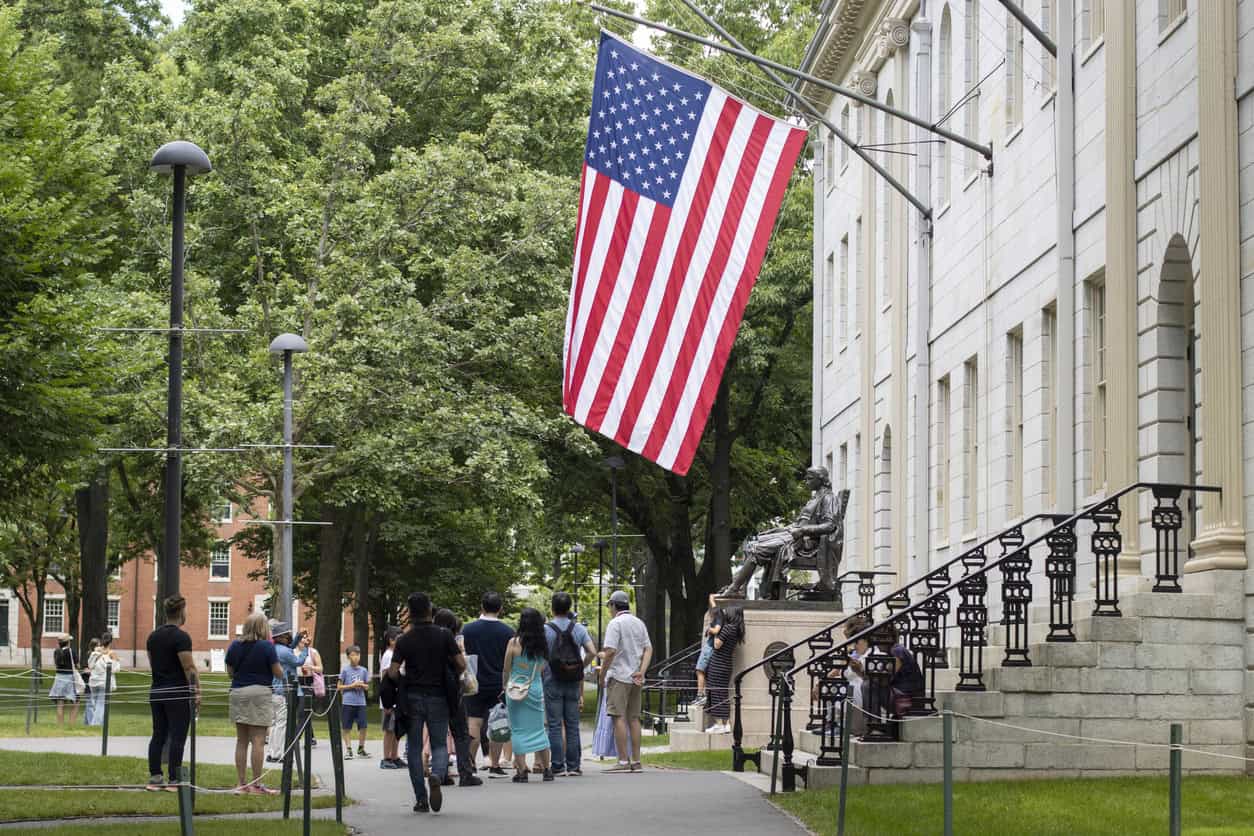
  • Alumni urge Harvard not to “give in” amid settlement rumours

    Alumni urge Harvard not to “give in” amid settlement rumours

    “This is a critical juncture – and it’s essential you live the values Harvard teaches and not make a deal with the Trump administration that cedes the university’s autonomy in unconstitutional or unlawful ways,” states the August 1 letter.  

    Signed by 15,068 alumni, faculty, researchers, staff and other supporters, the letter criticises settlements made by Columbia and Brown, which signatories warn “represent a dangerous capitulation that risks eroding the foundation of American higher education”.  

    “As Harvard rightly argued in court in its lawsuit, the unconstitutional demands being made by this administration represent a blatant encroachment on academic freedom and university autonomy,” it continues.  

    Last month, Columbia became the first institution to settle with Trump over allegations of antisemitism on campus, paying the administration $221m in return for settling various civil rights and employment claims and restoring $400m in terminated funding.  

    Soon after, Brown University followed suit, reaching its own deal with the administration over similar disputes about DEI admissions practices and access to student data.   

    Harvard, having the largest endowment of any global university, has been the only one to challenge the White House in the courts, though recent rumours have suggested a $500m deal between Harvard and the government could be in the making. 

    The letter’s message is clear: “Do not give in.” 

    It calls on university leadership to uphold Harvard’s independence and reject political interference and punitive action, ensuring that admissions hiring, employment and disciplinary processes do not treat student and staff differently based on their political views. 

    The signatories recommend the establishment of a structure for the university to directly engage with the Harvard community about policy changes impacting them, urging Harvard to use its financial resources to “protect and honour” their livelihoods and education.  

    “Protect students, faculty, researchers and staff, especially those with international status, from any intrusions of privacy, unwarranted immigration action, and attacks on their constitutionally protected rights and freedoms,” it continues. 

    At this moment of national reckoning, Harvard must demonstrate that our values, integrity, and freedom are not for sale

    Harvard alumni

    The letter warns of the “chilling effect” that a settlement would have on the Harvard community and beyond.

    Holding the line is critical for campuses across the US, for those that benefit from the research and scholarship of the university, and for the “foundational role that independent higher education plays in our democracy,” it argues.  

    “At this moment of national reckoning, Harvard must demonstrate that our values, integrity, and freedom are not for sale.” 

    Since mid-April, the Trump administration has launched multiple attacks on Harvard for allegedly failing to root out antisemitism on campus and failing to hand over international students’ records, among other accusations.   

    The university is fighting the government on multiple fronts in the courts, including defending its right to enrol international students, which the administration has repeatedly tried to revoke.  

    The university has publicly stood by its 7,000 international students, who make up over 27% of Harvard’s student body and come from nearly 150 different countries.  

    Amid broader attacks on higher education and severe visa challenges, colleges across the country are bracing for a major decline in international students this fall, with “conservative” estimates of a potential 30-40% decline.  

    Source link

  • BPP Education Group expands portfolio with acquisition of Sprott Shaw College

    BPP Education Group expands portfolio with acquisition of Sprott Shaw College

    BPP Education Group’s growth plan has been backed by the private equity firm TDR Capital, with a view to expand geographically into various sites around the world.

    The group, which provides education and training in various fields of work like Law and Finance, hopes to increase the variety of ITS portfolio of courses through the acquisition of dynamic education businesses like Sprott Shaw College.

    Sprott Shaw College (SSC), founded in 1903, is one of the largest regulated career colleges IN Canada and offers students connections with real-word opportunities to ready them for work in positions such as nursing and business.

    Prior to the deal, it was a subsidiary of Global Education Communities Corporation (GECC), which is one of the largest education and student housing investment companies in Canada.

    The college also places a large focus on cultural awareness and inclusivity – and its courses are designed with these in mind.

    According to Graham Gaddes, CEO of BPP, the acquisition marks an “important milestone into BPP’s internationalisation”.

    “The acquisition will support SSC’s plans to continue to be agile in meeting the needs of the domestic and international community, with programmes developed with cultural awareness and inclusivity in mind,” he added. “We admire what Sprott Shaw College has achieved to date and look forward to welcoming the team to the BPP Education Group.”

    The college has grown substantially in size with integrity and has gained respect from the global education community
    Toby Chu, GECC

    This purchase opens doorways for BPP to offer a vast range of professional education programs due to an alignment with other institutions in its portfolio, such as Ascenda School of Management and Arbutus College.

    The programs would range from certificates to degree levels, which would aid both domestic and international students.

    Toby Chu, president and CEO of GECC, said that he is “confident that Sprott Shaw College will continue to flourish under BPP’s ownership”.

    The college had weathered many difficulties in recent years, he said, including the Covid-19 pandemic and more recent study permit caps in Canada.

    “Despite these challenges, the college has grown substantially in size with integrity and has gained respect from the global education community. I am confident that Sprott Shaw College will continue to flourish under BPP’s ownership,” he said.

    Source link

  • Number of Chinese undergrads accepted to UK unis surges by 13%

    Number of Chinese undergrads accepted to UK unis surges by 13%

    According to UCAS data released today to coincide with A-level results day, the number of international students accepted to UK institutions has risen to 52,640 – up 2.9% on 2024 when this figure stood at 51,170.

    In just a year, the number of students from China accepted into university via the UCAS system went up a whopping 13% – with a total of 12,380 acceptances.

    Meanwhile, 2025 has proven to be a year of success for domestic students in the UK – with 28.3% of all grades being A or A* for students across England, Wales and Northern Ireland, according to the BBC.

    Commenting on the numbers, UCAS chief executive Jo Saxton pointed out the huge achievement of this year’s students, whose education was hit hard by the Covid-19 pandemic.

    “This year’s students were just thirteen when the pandemic hit, and their secondary schooling was turned upside down,” she said. “It’s great to see these applicants securing a university place in record numbers, seeking more education and investing in their futures. I am equally delighted to see how universities across the country have responded to their ambition.”

    Undergraduate international students have also found success this year despite some universities prioritising domestic students due to a focus on financial stability.

    According to a recent BBC article, Saxton explained that some UK universities were focussing on enrolling domestic undergraduates because of “uncertainty” around international students.

    She also pointed out that some institutions could accept a greater number of domestic students this year even if they did not meet the exact conditions of their offer because offering places to UK students, as opposed to international students, was more likely to result in financial stability for the institution.

    It’s great to see these applicants securing a university place in record numbers, seeking more education and investing in their futures
    Jo Saxton, UCAS

    It comes amid a turbulent time for the international education sector in the UK – with upcoming compliance changes forcing some universities to stop recruiting for certain courses or from some countries rather than risk falling foul of tightened BCA metrics.

    Many UK universities are currently facing financial difficulties, with around four in 10 universities currently at a deficit, according to a report by the Office for Students.

    Of the courses chosen by students, the most popular in the UK this year were Engineering and Technology, up 12.5% from last year at 30,020 acceptances, Mathematics with 9,220 acceptances and Law with 27,150.

    Source link

  • Harnessing Intercultural Expertise in an International Classroom – Faculty Focus

    Harnessing Intercultural Expertise in an International Classroom – Faculty Focus

    Source link

  • Harnessing Intercultural Expertise in an International Classroom – Faculty Focus

    Harnessing Intercultural Expertise in an International Classroom – Faculty Focus

    Source link