Tag: International Students

  • Number of Chinese undergrads accepted to UK unis surges by 13%

    Number of Chinese undergrads accepted to UK unis surges by 13%

    According to UCAS data released today to coincide with A-level results day, the number of international students accepted to UK institutions has risen to 52,640 – up 2.9% on 2024 when this figure stood at 51,170.

    In just a year, the number of students from China accepted into university via the UCAS system went up a whopping 13% – with a total of 12,380 acceptances.

    Meanwhile, 2025 has proven to be a year of success for domestic students in the UK – with 28.3% of all grades being A or A* for students across England, Wales and Northern Ireland, according to the BBC.

    Commenting on the numbers, UCAS chief executive Jo Saxton pointed out the huge achievement of this year’s students, whose education was hit hard by the Covid-19 pandemic.

    “This year’s students were just thirteen when the pandemic hit, and their secondary schooling was turned upside down,” she said. “It’s great to see these applicants securing a university place in record numbers, seeking more education and investing in their futures. I am equally delighted to see how universities across the country have responded to their ambition.”

    Undergraduate international students have also found success this year despite some universities prioritising domestic students due to a focus on financial stability.

    According to a recent BBC article, Saxton explained that some UK universities were focussing on enrolling domestic undergraduates because of “uncertainty” around international students.

    She also pointed out that some institutions could accept a greater number of domestic students this year even if they did not meet the exact conditions of their offer because offering places to UK students, as opposed to international students, was more likely to result in financial stability for the institution.

    It’s great to see these applicants securing a university place in record numbers, seeking more education and investing in their futures
    Jo Saxton, UCAS

    It comes amid a turbulent time for the international education sector in the UK – with upcoming compliance changes forcing some universities to stop recruiting for certain courses or from some countries rather than risk falling foul of tightened BCA metrics.

    Many UK universities are currently facing financial difficulties, with around four in 10 universities currently at a deficit, according to a report by the Office for Students.

    Of the courses chosen by students, the most popular in the UK this year were Engineering and Technology, up 12.5% from last year at 30,020 acceptances, Mathematics with 9,220 acceptances and Law with 27,150.

    Source link

  • Harnessing Intercultural Expertise in an International Classroom – Faculty Focus

    Harnessing Intercultural Expertise in an International Classroom – Faculty Focus

    Source link

  • Harnessing Intercultural Expertise in an International Classroom – Faculty Focus

    Harnessing Intercultural Expertise in an International Classroom – Faculty Focus

    Source link

  • Malvern International partners with Liverpool Hope University

    Malvern International partners with Liverpool Hope University

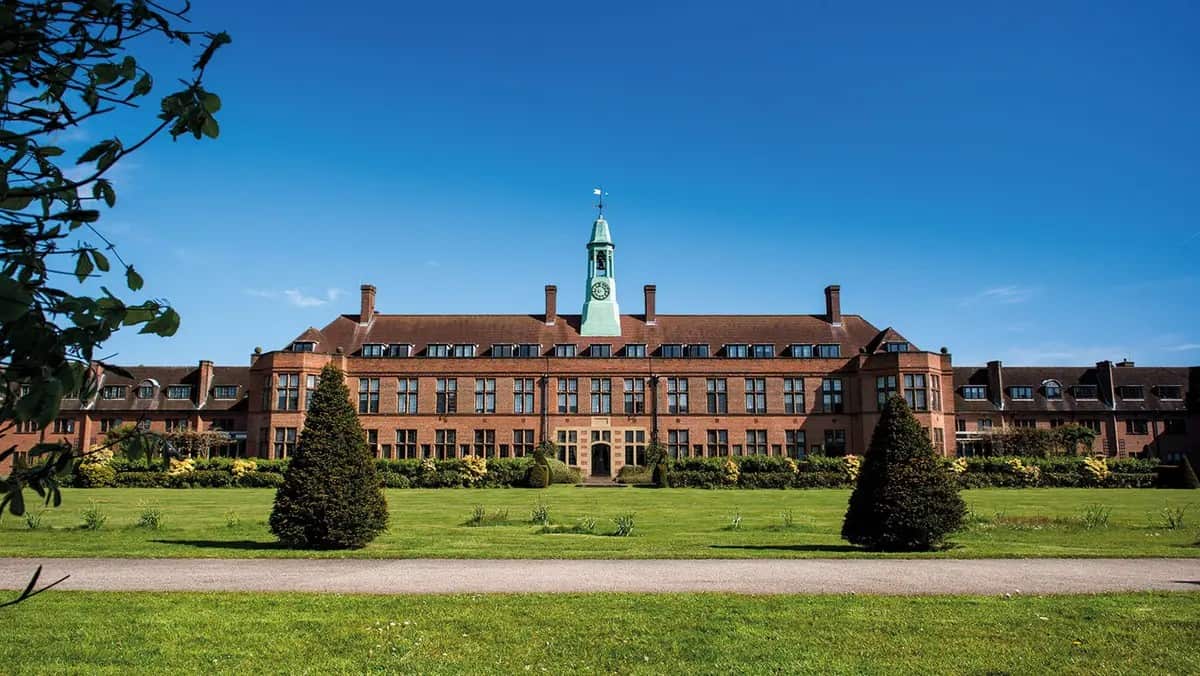
    The deal encompasses pathway and pre-master’s programs from the upcoming Liverpool Hope University International Study Centre, which will be based at the university’s Hope Park Campus.

    Claire Ozanne, vice-chancellor and rector at Liverpool Hope University, said the new study centre will form an “exciting and important part” of the institution’s international strategy – one that would “further enhance our position as a global university and one that has an inclusive approach to education”.

    “International students and the rich diversity of ideas and experiences they bring to our campuses hugely enhance the academic experience for all of our students,” she added.

    Malvern International said that through the partnership, students attending the centre can expect to find a challenging curriculum, set to enhance their English language proficiency and the skills to help them successfully transition into university life.

    International students and the rich diversity of ideas and experiences they bring to our campuses hugely enhance the academic experience for all of our students
    Claire Ozanne, Liverpool Hope University

    Ashleigh Veres, senior director, university recruitment and partnerships at Malvern International, said that the deal marked “an important step forward and a proud moment for Malvern as we continue to grow and diversify our pathways division, scaling up our capabilities to deliver exceptional services that benefit both universities and students”.

    She added: “We are delighted to partner with Liverpool Hope University, an institution renowned for its excellent student satisfaction and commitment to academic excellence. Together, we are dedicated to providing transformative opportunities for students while expanding the University’s global reach and impact.” 

    Source link

  • First look at the University of Southampton’s Delhi campus

    First look at the University of Southampton’s Delhi campus

    TFTDL podcast – David Winstanley (Who’s The Man?)

    Listen to David Winstanley, the man with the weight of expectation on his shoulders as all eyes are on the University of Southampton as they prepare to open their Indian campus in August 2025. The TFTDL crew return to the airwaves on the day of the Air India crash, in a rare, new episode.

    Source link

  • NZ’s new study visa rules strike chord with Australian sector

    NZ’s new study visa rules strike chord with Australian sector

    The New Zealand government announced earlier this week that, from November, Immigration New Zealand (INZ) will increase permitted work hours for study visa holders, extend work rights to all tertiary students on exchange or study abroad programs. It may also introduce a short-term work visa of up to six months for graduates not eligible for a post-study work visa.

    While the relaxations are a key part of New Zealand’s push to boost international student numbers by over 40% by 2034, INZ has also clarified that students who change their education provider or lower their study level will need to apply for a new visa, rather than simply requesting a variation of conditions on their existing one.

    The mandate has struck a chord with Australia’s international education sector, where some individuals and associations have been calling for an overhaul of the study visa system, specifically on linking study visas to the institution of initial enrolment.

    Commenting on New Zealand’s recent changes, Ravi Lochan Singh, managing director, Global Reach, wrote in a LinkedIn post that instead of banning agent commissions for onshore student transfers to address attrition, Australia could “just copy” the neighbouring country’s approach. 

    “Australia is currently facing a significant issue where students use higher ranked or low-risk universities (as categorised by Home Affairs) to secure their student visas easily and then after the first semester of studies, the students get moved to private colleges offering higher education degrees,” Singh told The PIE News. 

    According to Singh, while such moves, often made by Indian or Nepali students with the help of onshore immigration agents, may be genuine, they “waste” the efforts of offshore education agents and universities that initially recruited the students.

    “Some policy makers feel that students have a right to choose the correct education provider and if they feel that what they desire as a customer can be met at private colleges, they should be allowed to move,” stated Singh. 

    “However, we also have the situation where students have demonstrated their available funds through an education loan which is issued in the name of a particular university,” he added. If the student does move institutions, the education loan is not valid as a demonstration of funds and thus the argument that the students should be asked to apply for a fresh student visa.”

    According to Singh, many international students, particularly from South Asia, who arrive in Australia on education loans often find themselves without “available” or “accessible” funds when they switch providers and are required to show new financial evidence.

    It would appear that three modern advanced economies who have championed consumer protections and who have established international study destinations believe this measure is not contrary to ‘consumer choice’
    Gareth Lewis, Western Sydney University

    Moreover, a recent report by Allianz Partners Australia revealed that over 61% of international students found daily life in the country “significantly more expensive than expected”, with more than a quarter considering withdrawing from their studies due to financial woes. 

    “While we are discussing attrition and student movements once the student is onshore, we also need to acknowledge that university fees have been increasing and students are beginning to question ROI. Thus there is an argument for more student visa grants for higher education degrees at TAFE and private providers,” said Singh. 

    “The fees of such programs is much lower to what is charged at the universities. If this happens, the students who are more price sensitive will join the TAFE and private providers right in the beginning and universities will have only those students who can afford the degree and likely to complete them at the university itself.”

    While Australia’s Ministerial Direction 111, which replaced MD 107, provides immigration case officers stricter guidance on assessing the Genuine Student requirement, and introduces a two-tier visa processing system that prioritises institutions with strong compliance records and low visa risks, it influences the decision-making process, not the entire visa mechanism unlike New Zealand’s recent move. 

    However, New Zealand is not the only model Australia could look to, according to stakeholders.

    A recent submission by the Association of Australian Education Representatives in India (AAERI) to the ministers for education and home affairs in Australia pointed to examples from the UK and Canada, where students must obtain a new Confirmation of Acceptance for Studies (CAS) and a new study permit, respectively, if they wish to change institutions.

    “Australia’s recent reforms, such as closing the concurrent CoE loophole and requiring CoEs for onshore visa applications, are steps in a similar direction but do not go far enough to address the core issue of unethical student poaching, misuse of student visa and provider switching,” stated AAERI in its submission in May to the Labor government. 

    After New Zealand’s changes were announced, regional director, Western Sydney University, Gareth Lewis also echoed a similar opinion on Australia’s reluctance to do what New Zealand, the UK, and Canada have done. 

    “It would appear that three modern advanced economies who have championed consumer protections and who have established international study destinations believe this measure is not contrary to ‘consumer choice’,” read Lewis’s LinkedIn post

    “Unfortunately Australia believes it is. This needs to change.” 

    Find out more about how Australia can improve its visa system at The PIE Live Asia Pacific 2025 on July 30, during the session “Visa status: MD111 and MD106 mapping – is the current visa system working?”, which will explore the impact of current visa policies on HE, VET, and ELICOS sectors, covering genuine student assessments, onshore switching, and ways to improve the operating environment. Check out more details here – PLAP 2025 agenda.

    Source link

  • NZ debuts growth plan as it eyes 35k more international students

    NZ debuts growth plan as it eyes 35k more international students

    • New Zealand relaxes some immigration rules – including upping the number of hours overseas students can work outside of their studies – in its bid to attract more international students
    • Immigration New Zealand unveils ambitious plan to tempt 35,000 more international students to the country by 2034
    • Government shines light on economic benefits of international education, but says it will keep an eye on education quality and the impact on local communities as the sector grows

    The New Zealand government has launched the International Education Going for Growth plan, as part of its broader strategy to increase international student enrolments from 83,700 in 2024 to 119,000 by 2034, and double the sector’s value from NZ$3.6 billion ( £1.60 billion) to NZ$7.2 billion (£3.20 billion). 

    On Monday, Immigration New Zealand announced changes to immigration rules to help the country “attract more international students, maintain high education standards, and manage immigration risks”.

    On November 3 this year, INZ will implement changes to increase the permitted work hours for eligible study visa holders from 20 to 25 hours per week, and extend in-study work rights to all tertiary students enrolled in approved exchange or study abroad programs, including those on one-semester courses.

    As per data published by INZ, currently 40,987 study visa holders have in-study work rights with 29,790 set to expire on or before March 31 2026, with the remaining 11,197 visas expected to lapse after that date.

    The new rules on work hours will apply only to students who have been granted a visa from November 3 onward, meaning those with existing visas limited to 20 hours per week will need to reapply to avail the increased allowance.

    On average in 2024, an international student spent NZ$45,000 across the year. That means… ultimately more jobs being created
    Erica Stanford, New Zealand education minister

    “This (increase in work hours) will apply to all new student visas granted from that date, even if the application was submitted earlier,” read a statement by INZ. 

    “If you already have a student visa with a 20-hour work limit and want to work up to 25 hours, you will need to apply for a variation of conditions or a new student visa. The relevant immigration fees will apply.”

    While international students in years 12 and 13 are eligible under the new rules, they will still be required to obtain both parental and school permission to work during the academic year, even with the increased limit of 25 hours per week. 

    Moreover, international graduates who do not qualify for post-study work rights may soon have access to a short-duration work visa of up to six months, giving them time to seek employment in their field under the Accredited Employer Work Visa pathway.

    The government is also investigating how to make it easier for students to apply for multi-year visas.

    “International education is one of our largest exports, injecting NZ$3.6 billion into our economy in 2024. It also provides opportunities for research, strengthening trade and people-to-people connections, which are important to drive investment, productivity and innovation in New Zealand,” read a statement by education minister, Erica Stanford. 

    “On average in 2024, an international student spent NZ$45,000 across the year. That means more visits to our cafes and restaurants, more people visiting our iconic attractions and ultimately more jobs being created.”

    As per data released by Education New Zealand, international enrolments are inching toward pre-Covid levels, with 2024 figures (83,425) now reaching 72% of the 2019 total of 115,705.

    According to ENZ chief executive Amanda Malu, while China and India remain New Zealand’s two largest international student markets, accounting for 34% and 14% of enrolments respectively, they are followed by Japan (9%), South Korea (4%), Thailand (3%), the United States (3%), Germany (3%), the Philippines (3%), and Sri Lanka (3%)

    It’s important to strike the right balance between increasing student numbers, maintaining the quality of education, and managing broader impacts on New Zealanders
    Erica Stanford, New Zealand education minister

    New Zealand wants to “supercharge” this rising momentum and position New Zealand as the destination of choice for international students, according to Stanford. 

    This includes increasing awareness of New Zealand as a study destination from 38% in 2024 to 44% by 2034, and raising the proportion of prospective students who rank the country among their top three study choices from 18% to 22% over the same period.

    “To achieve our ambitious target, we’re taking a considered and strategic approach. It’s important to strike the right balance between increasing student numbers, maintaining the quality of education, and managing broader impacts on New Zealanders. Our plan will deliver that,” stated Stanford. 

    Source link

  • US study visa applicants told to make social media accounts ‘public’ amid vetting crackdown

    US study visa applicants told to make social media accounts ‘public’ amid vetting crackdown

    • New social media privacy requirements come just as US government lifts four week-long study visa interview freeze, leading to fears of a backlog.
    • Concerns of added complications where consular officers responsible for social media vetting do not speak the applicant’s language.
    • Policy extends even to those who have been issued US visas in the past.

    In an update sent to consulates last week, the US government has advised that all those applying for F, M or J nonimmigrant visas are “requested” to make their social media accounts available to view by anybody so that their identity can be verified and they can be thoroughly vetted before entering the country.

    Immigration experts have criticised the move because of the huge additional workload it will place on immigration officers, meaning that visa issuance is likely to slow down considerably.

    US immigration lawyer James Hollis said he “almost [felt] bad” for consular officers.

    “It’s going to grind processing to a halt and will likely result in increased wait times for all nonimmigrant visas, let alone the student and exchange visitor applicants,” the business immigration specialist at the McEntee Law Group warned – noting that there are added complications where applicants were posting on social media in their own local language if officers do not understand what they have written.

    It appears that the new policy will be mandatory from June 25 onwards, and all applicants will be vetted in this way even if they have been issued a US visa in the past.

    It’s going to grind processing to a halt and will likely result in increased wait times for all nonimmigrant visas, let alone the student and exchange visitor applicants
    James Hollis, McEntee Law Group

    Consulates are advised that they should consider whether active social media privacy settings “reflect evasiveness or otherwise call into question the applicant’s credibility”.

    Officers have been told to reject a visa application in cases where the applicant has:

    • expressed “hostile attitudes” toward the US in terms of its citizens, culture, government, institutions, or founding principles;
    • advocated for or supported “designated foreign terrorists and other threats to US national security”;
    • shown or supported anti-semitism;
    • even if they have otherwise proven they are not an immigration risk;
    • and are not already ineligible for a visa (ie does not post a risk to US national security).

    In these cases, the US can deny entry on national security or foreign policy grounds.

    The US has asked visa applicants to provide social media information on their application forms for the past five years – including all social media names or handles of every platform they have used over the past five years. Failing to include this information could lead to an applicant’s visa being denied and being ineligible for future visas.

    It comes after a tumultuous few weeks for prospective international students eyeing a place at US institutions. After stretching a study visa interview freeze into its fourth week – despite assurances that the pause would be quick – officials last week resumed interviews with additional social media vetting for applicants.

    US stakeholders have repeatedly expressed concerns that the Trump administration’s extreme social media crackdown could inflict untold damage upon the country’s international education sector.

    Source link

  • why Nepalese students are choosing the UK

    why Nepalese students are choosing the UK

    • Restrictive immigration policy in Australia has boosted numbers coming to UK.
    • 75% of the market is searching for undergraduate options with affordable fees.
    • Medium-of-instruction (MOI) English language waivers are common, and often linked to TNE college partnerships.

    Nepal has been a key recruitment market for both Australia and the UK for many years – but as the number of students applying to the UK rises, many more universities are starting to explore the market.

    In the year ending March 2024, according to ONS data, 9,003 Nepalese students were issued study visas for the UK, with the number undoubtedly larger for the intakes since.

    According to Enroly, the number of CASs issued for the January 2025 intake was up 200% while CAS issuance for its entire UK portfolio was only up 23%. Overall, the total market share of CAS issuance for Nepal grew from 3% to 7% in 2024.

    This impressive growth has come at a time when some British universities have seen falling demand from other international markets, and the government has announced a student visa clamp-down on Bangladesh, Pakistan, Nigeria and Sri Lanka – linked to asylum claims.

    So why are Nepalese students choosing the UK and will it last?

    Over 60,000 Nepalese students previously chose to study in Australia each year, making it the third biggest source market for the country.

    Recent visa restrictions imposed by the Albanese government, however, are now forcing many students to seek an alternative destination.

    While the Australian visa process requires detailed evidence on income, the UK system allows students to show a mature bank account, often supplemented by private student loans.

    Enroly estimates that 78% of Nepalese students are now funded through education loans, or a combination of an education loan and university discount.

    Affordable fees and scholarships

    Despite economic growth, projected to be 4.61% this fiscal year, Nepal is still a price-senstitive market.

    As a consequence, there are 15-20 British universities from the ‘Million Plus’ and ‘Alliance’ groups attracting a large market share in the country.

    Many of these institutions are the same UK universities that are diversifying income through franchise activity, brand campuses and TNE articulations.

    Offering average annual fees of between £11,500 and £13,500 enables them to attract a large number of predominently undergraduate students to supplement their numbers.

    According to HESA statistics, some of the biggest recruiters are BPP, University of Sunderland and Coventry University.

    The latter have validation partnerships with local providers such as ISMT College and Softwarica College of IT and eCommerce, respectively, creating a pipeline of students that can top-up with a final year in the UK or progress easily on to masters degree.

    The UK universities recruiting the most students from Nepal:

    • University of West Scotland, London
    • BPP
    • Coventry University
    • University of Sunderland
    • University of Roehampton
    • York St John University
    • Ravensbourne University London
    • University of East London (UEL)
    • University of West London
    • University of Wolverhampton
    • University of Central Birmingham (UCB)
    • University of Hertfordshire
    • University of Greenwich
    • Ulster University

    The trend for universities to accept Nepalese students directly has significantly reduced the demand for foundation programmes in the region.

    Accpetance of MOI letters as proof of English

    Another key factor is the widespread acceptance of MOI letters as a waiver of additional English language tests.

    These letters are used as proof that the qualification gained by a prosepctive student was both taught and assessed in English to a level acdepted by a university as having met English language requirements. The UK government is currently consulting with the sector on the way universities make English language self-assessment decisions for admissions purposes.

    Agents and immigration consultants use English language waivers as one of the areas to save prospective students money and support partner universities.

    According to Enroly, 82% of course deposits paid by Nepalese students for the UK, come from applications supported by an education agent.

    The PIE News visited Nepal to better understand the challenges education agents face in a competitive market. Read the full report here.

    Source link

  • the view from NAFSA 2025

    the view from NAFSA 2025

    As 8,000 delegates gathered in San Diego for the opening plenary of NAFSA 2025, the sector was hit with the news that the Trump administration was halting the scheduling of student visa interviews as it prepared to expand its social media vetting of prospective students.  

    Then, on day two of the conference – as friends and colleagues filtered out of the convention centre to drinks receptions across the city – they were rocked by more bad news. This time, that the State Department would “aggressively revoke” visas for Chinese students and enhance scrutiny of future visa applicants.

    The unexpected, inflammatory announcements alarmed delegates and immediately set the agenda for discussions across the four-day event.  

    Concern circulated about the characteristically broad scope and vague language of the announcements – which colleagues have come to expect from the administration. But while all of this could have quite reasonably created panic and confusion, in fact, there was an air of focus and unity.  

    For Brett Blacker, Duolingo’s managing director for Australia and New Zealand, the conference acted “a bit like a group therapy session”. Colleagues from across the globe were simply grateful to be together to process the rapidly changing policy environment and devise strategies for the future.  

    And while the deliberately disorientating barrage of attacks from the Trump administration demand that stakeholders are continuously adapting and reacting, attendees were also urged to take the long view. 

    “When the roots are deep, there is no reason to fear the wind,” said NAFSA CEO Fanta Aw, telling colleagues to pursue partnerships “not for prestige, but for shared progress”. 

    Aw extended a special welcome to NAFSA’s international participants – comprising 45% of attendees – whose very presence she said amounted to “an act of hope”.  

    While xenophobia disguised as nationalism and the politicisation of international students is by no means limited to the US, many of the conference’s most fruitful discussions came from cross-border comparisons.  

    Rather than remain despondent, NAFSA delegates have taken to LinkedIn with realism and pragmatism, laced with just a little bit of hope

    These were most stark when examining student mobility in the ‘big four’ study destinations, with several sessions highlighting the relative attractiveness of the UK amid visa challenges in Canada and Australia, not to mention extreme volatility in the US.  

    Elsewhere, discussions highlighted the rise of the ‘Asian decade’ and the increasing pull of destinations such as Ireland and Germany, with a sense of the sector at a tipping point as the dominance of traditional destinations and models is increasingly questioned.  

    This sense of unity continued as colleagues were united over the frustrating lack of detail about the latest policies from the White House. As the conference continued, attendees received no clarity from government about the length of the visa interview freeze, despite the initial cable indicating it would only last several days.  

    Ten days later, students remain unable to book visa appointments, and the administration has stayed similarly silent on the scope or character of its “aggressive” Chinese visa revocations. It’s a maddening state of affairs, stemming from an increasingly unpredictable administration that seems unable to see that peevish, retaliatory policies made in the spur of the moment are having real-world effects on institutions and students alike.

    Sadly, the onslaught shows no sligns of slowing down. Since the close of NAFSA 2025, the Trump administration has barred prospective international students in 19 countries from studying in the US. 

    And it has also attempted, once again, to strip students around the world of the right to study at America’s oldest institution, signing a proclamation to suspend Harvard’s international enrolments, which has since been temporarily blocked by a federal court.  

    As uncertainty prevails across much of the sector, emotions are understandably high. But rather than remain despondent, NAFSA delegates have taken to LinkedIn with realism and pragmatism, laced with just a little bit of hope.

    As attendees heard from Intead’s Ben Waxman in the final session of the final day in the furthest away room: ““Now is not the time to get angry, now is the time to get focussed”. 

    Source link