Tag: International

  • Adapting to the ever-changing world of international education as a public institution in Quebec, Canada

    Adapting to the ever-changing world of international education as a public institution in Quebec, Canada

    As a bilingual territory, Quebec offers students the chance to learn both English and French, which can be daunting for some. However, this bilingualism also provides a distinctive advantage in the global education market. This article explores how institutions like the Lester B. Pearson School Board are adapting to these changes and highlights key strategies for success.

    Challenges and opportunities in Quebec

    Quebec’s bilingual nature often makes it a secondary choice for international students who may prefer English-only environments. However, the opportunity to learn both languages can be a significant draw for students seeking to enhance their global competencies. Over the past two years, the field of international education has undergone significant changes, requiring institutions to adapt swiftly. Here are some of the changes:

    New IRCC requirements since July 2023:

    • Revised funds requirement for study permit applicants, increasing the financial threshold to ensure students are adequately prepared for the cost of living in Canada.
    • End of the Student Direct Stream (SDS), affecting the expedited processing of study permits for certain countries.
    • Revision of programs eligible for post-graduation work permits (PGWP), limiting eligibility to specific fields of study and designated learning institutions.
    • Introduction of Provincial Attestation Letters (PALs), requiring students to obtain a PAL as part of their study permit application.

    Adapting to new requirements: a strategic advantage

    The introduction of PALs and the revised financial requirements had a minimal impact on the Lester B. Pearson School Board (LBPSB) due to Quebec’s existing Certificat d’acceptation du Québec (CAQ) process. The CAQ process already required higher financial proof than the new federal standards, positioning LBPSB at an advantage. This continuity ensured that our processes and requirements remained stable, providing a smoother transition for international students.

    Shifting the message: beyond PGWP

    Previously, programs eligible for post-graduation work permits (PGWP) were a major selling point, maintaining healthy student intake levels with minimal marketing effort. However, the focus has now shifted. The message is no longer solely about the PGWP; it is about acquiring a skillset that can be exercised globally. Montreal, an amazing student city, continues to be a prime study destination due to its quality of education, accessibility to higher education, cost of living, quality of life, and availability of a wide range of outdoor activities and hobbies. Montreal was always part of our marketing plan, but now it has become the marketing plan.

    Maintaining stability and messaging

    In the face of these changes, it is crucial to keep our messaging and name intact. As a public institution, the Lester B. Pearson School Board emphasizes stability and a long-term commitment to international education. Quebec offers an exceptional option for students to benefit from its established quality education system. Students study in state-of-the-art facilities, interact with local students, and immerse themselves in a new culture. This experience is not only about receiving a quality education but also about personal growth. The education and personal development gained here are invaluable and transferable anywhere in the world.

    Addressing the housing crisis

    While the housing crisis in Quebec is not as severe as in other parts of Canada, it remains a concern. The lack of housing has been cited as a key reason for limiting the number of international students in Canada, yet this approach overlooks a crucial fact: many international students, especially those in vocational programs like Lester B. Pearson’s, are essential to addressing the very housing shortage they’re being blamed for. These students are training to become carpenters, electricians, plumbers, and other skilled tradespeople—professions desperately needed to build more homes across the country.

    To ensure accessibility to safe, secure, and affordable housing for international vocational students, the Lester B. Pearson School Board has partnered with 4Stay to offer a dormitory experience on campus for adult vocational students. This is a one-of-a-kind offering in Canada, with students enjoying turn-key housing, meal plans, and student life programming to ease their transition to life in Montreal.

    About 4Stay

    4Stay was founded by international students who experienced firsthand the challenges of finding student housing when they arrived in the United States for their education. Launched in 2016, 4Stay is driven by the mission to create a world where everyone has a “home away from home.” The company connects students and interns with local hosts, room providers, and roommates near their destinations, offering both short-term and long-term housing solutions.

    4Stay works with educators and administrators to craft bespoke housing programs, tailored to the institution’s unique needs. Recognizing that every institution has their own set of unique interests, challenges, and strategic priorities, 4stay has a suite of services and strategies to source student housing options and manage them.

    By providing affordable homes, 4Stay helps students find a supportive community that eases their transition to life in a foreign country. The company’s vision and values resonate deeply with the Lester B. Pearson School Board, making it an ideal partner to manage our student residence and enhance the student experience.

    Building a supportive community

    The partnership between LBPSB and 4Stay allows students to access residence options either as a short-term landing pad (up to three months) or as a long-term accommodation solution throughout their entire program. This initiative helps build a community of students who can support each other through the challenges of settling in a new country. By offering these housing solutions, the Lester B. Pearson School Board ensures that international students have a safe and welcoming environment, contributing to their overall success and well-being. 

    Conclusion

    Adapting to the ever-changing world of international education requires innovative strategies and a commitment to providing comprehensive support for students. By leveraging Quebec’s bilingual advantage, shifting the focus of marketing messages, and addressing housing needs through partnerships like 4Stay, public institutions in Quebec can continue to thrive in the global education market. These efforts not only attract international students but also ensure they have the resources and community support needed to succeed in their academic and personal endeavors.

    About the author:

    Martine St-Pierre, MBA, is the director of international programs at the Lester B. Pearson School Board (LBPSB). With over two decades of experience in education, she oversees the recruitment and support of international students, ensuring they receive high-quality education and a welcoming environment. Her strategic vision and expertise have positioned LBPSB as a top choice for students worldwide.

    Source link

  • New ICE Policy Puts International Students at Greater Risk

    New ICE Policy Puts International Students at Greater Risk

    The Trump administration issued plans earlier this week for a new policy that vastly expands federal officials’ authority to terminate students’ legal residency status, according to newly released court documents.

    The policy detailed in the filings asserts that immigration officials have the “inherent authority” to terminate students’ legal residency status in the Student Exchange and Visitor Information System “as needed.” It also explicitly lays out two new justifications for SEVIS terminations: the vague “evidence of failure to comply” with nonimmigrant visa terms, and a visa revocation, which can be issued without evidence of a violation by the State Department—and which, crucially, is not subject to court challenges.

    Immigration attorneys told Inside Higher Ed that if implemented, the new policy would enshrine broad permission for ICE to begin deporting students practically at will.

    “This is very bad news for foreign students,” said Charles Kuck, an immigration attorney representing 133 international students in the largest lawsuit challenging recent SEVIS terminations. “Any student who’s arrested, literally for any reason, is probably going to have their status terminated going forward.”

    Last Friday a U.S. attorney promised an official update to ICE policy on SEVIS terminations. On Tuesday, U.S. attorneys presented the document as evidence in a court filing in Arizona, describing it as “recently issued … policy regarding the termination of SEVIS records.”

    It was the first time that details of a new SEVIS termination policy were made public, and it was not at first clear whether it reflected official federal policy. On Tuesday, U.S. attorney Johnny Walker confirmed during another hearing for a SEVIS lawsuit in D.C. that it did, though the policy had yet to be finalized. Spokespeople for ICE did not respond to multiple questions from Inside Higher Ed.

    The plan comes less than a week after the administration began restoring thousands of foreign students’ SEVIS statuses after a series of court decisions overturned hundreds of status terminations. Kuck said the plan seemed to be a way for ICE to get around those rulings.

    “This is basically a cover-your-ass policy,” he said. “The fact that ICE initially reinstated visas was no surprise. They probably had U.S. attorneys screaming at them, ‘What are you doing?’ Now they’re trying to retroactively develop a policy that would allow them to do what they already did.”

    Immigration lawyer and Columbia University Immigrants’ Rights Clinic director Elora Mukherjee has been counseling international students across New York City for the past two months. After the visa-restoration decision last week, some students wanted to know if they were in the clear; she cautioned them against celebrating prematurely.

    “Whiplash is a good way to describe it,” she said. “Students are losing sleep—not just those whose visas have been terminated but those who are worried theirs could be next any day.”

    Fly-by-Night Policymaking

    The updated policy was outlined in an internal Department of Homeland Security memo filed as evidence in an Arizona federal court on Wednesday, where one of more than 100 lawsuits challenging visa revocations is being litigated.

    The unorthodox manner in which it was publicized has left immigration attorneys scratching their heads and international students’ advocates wondering how to respond.

    It also appears to have taken some federal officials by surprise. Kuck said that when he heard about the memo and brought it before the judge in his own case in Georgia, the U.S. attorney defending the government asked if he could send him a copy.

    Fanta Aw, president of NAFSA, an association of international educators, wrote in an email to Inside Higher Ed that the document “should not be relied upon as ICE’s new policy.” She also emphasized that there is no change to ICE’s visa termination policy included in the memo, only SEVIS terminations.

    The document is labeled as a “broadcast message … for internal SEVP use only,” meaning it would have been sent to Designated School Officials working in colleges’ international student offices. But Aw said that’s not accurate, either, because it lacks the customary broadcast message number, and DSOs in her organization said they had not received it.

    Kuck said the lack of a rule-making process for a sweeping policy change like the one outlined in the memo is most likely unlawful, and he was working on filing an amendment to challenge it on Thursday. But that doesn’t mean it should be taken lightly.

    “People should view this as the future,” Kuck said. “This is clearly the power ICE wants to give itself, so they’re going to move ahead with it.”

    ‘A Nightmare Booby Trap’

    Mukherjee said such a broad license to terminate SEVIS status would allow ICE to deport international students far more quickly and with less accountability. The new policy, if implemented and upheld by the courts, wouldn’t just revert to the status quo of the last few months, she said; it would create a landscape in which ICE could begin deportation proceedings with impunity.

    “We’ve already seen many students whose SEVIS terminations led directly to removal proceedings,” Mukherjee said. “It’s terrifying.”

    Kuck said it’s crucial that students understand that they’re still in danger of deportation even if their status was restored last week—and not just because of the new policy plan.

    The few hundred students who won a temporary restraining order in court over the past week have had their statuses reinstated and backfilled to when they were revoked. But the status of thousands more who did not file lawsuits was only reactivated from that point onward. That means they have a gap in status for the days or weeks in between—which, according to ICE policy, is grounds for removal from the country, even if their initial SEVIS termination was accidental.

    “This is a nightmare booby trap for these kids,” Kuck said.

    The only way to protect them, he said, is by filing a class action lawsuit for all affected international student visa holders. Kuck said he’s working on filing an injunction for one right now, and he is acting with urgency.

    In the meantime, Mukherjee said students—both those in the country and those who had planned to come in the fall—are “deeply unsettled.” She’s been asking them questions she’d never been concerned about before: whether they have any social media accounts or even tattoos.

    “I’m talking to international students who are currently in the U.S., to international students who’ve been admitted to study in the U.S. starting in the fall, and they’re asking, ‘Will we be able to complete our degree program?’” she said. “The answer is that it’s unclear.”

    Source link

  • Podcast: Dundee, student health, international

    Podcast: Dundee, student health, international

    This week on the podcast we discuss the financial crisis at the University of Dundee, as a revised recovery plan reduces proposed job cuts while requesting additional funding. Is this a sustainable solution for institutions facing similar challenges?

    Plus we look at concerning new Wonkhe and Cibyl polling on student health, and we examine how international student policies have become political battlegrounds in global elections.

    With Chris Shelley, Director of Student Experience at Queen Mary University of London, Rachel MacSween, Director of Partnerships and Stakeholder Engagement (UK and Europe) at IDP, Michael Salmon, News Editor at Wonkhe and presented by Mark Leach, Editor-in-Chief at Wonkhe.

    Read more

    Dundee: An alternative pathway to financial recovery, Scottish Government statement

    Latest from Belong – students’ health is not OK, and that’s not OK

    Canada: The Deeper Meaning of Election 2025


    Source link

  • ICE Reveals How It Targeted International Students

    ICE Reveals How It Targeted International Students

    Federal immigration officials targeted student visa holders by running their names through a federal database of criminal histories, according to court testimony given by Department of Homeland Security officials on Tuesday and reported by Politico.

    As part of the Student Criminal Alien Initiative, as officials dubbed the effort, 20 ICE agents and several federal contractors ran the names of 1.3 million potential student visa holders through the database, searching for those that were both still enrolled in programs and had had some brush with the criminal justice system. Many of those students had only minor criminal infractions on their record like traffic violations, and they often had never been charged. ICE used that information to terminate students’ SEVIS records.

    Officials testified that ICE ultimately flagged around 6,400 Student Exchange and Visitor Information System records for termination and used the data to revoke more than 3,000 student visas—far more than the 1,800 that Inside Higher Ed tracked over the past month. 

    The officials’ testimony came in a hearing for one of many lawsuits filed by international students and immigration attorneys challenging the sudden and unexplained visa terminations; dozens of the cases have been successful so far. Last week the agency restored international students’ visas amid the flurry of court losses and said it would release an updated policy in the near future. 

    On Monday, the Trump administration released a draft of that policy, which vastly expands the prior one and makes visa revocation legal grounds for a student’s legal residency to be terminated as well.

    Source link

  • Govt. data error sparks doubt over US international enrolments

    Govt. data error sparks doubt over US international enrolments

    The reliability of federal datasets is under scrutiny after an error was identified on the Student and Exchange Visitor Information System (SEVIS) website that appeared to show stagnating international student numbers from August 2024 to the present.  

    The error, brought to The PIE News’s attention by EnglishUSA, casts doubt on recent headlines and media reports about declining international student enrolments in the US, with SEVIS data appearing to show an enrolment decline of 11% between March 2024 and March 2025.  

    “Starting in August 2024, the data appears to be duplicated month after month, with flatlined totals for students on F and M visas. These figures show virtually no fluctuation during a period when natural enrolment shifts would be expected,” explained EnglishUSA executive director, Cheryl Delk-Le Good.  

    “This irregularity comes at a time of heightened concern within the field, particularly as educators and administrators manage the fallout from widespread SEVIS terminations and the resulting confusion around visa status for international students,” added Delk-Le Good.  

    The US Department of Homeland Security (DHS), which runs SEVIS, was alerted to the error on April 14 and said it was “working to resolve the issue”.  

    As of April 25, the dataset has not been updated, and DHS has not responded to The PIE’s request for comment.  

    US International Trade Administration. Market Diversification Tool for International Education. 2023. Retrieved: April 11, 2025.

    Notably, the inaccuracies begin in August 2024 and span both US administrations, suggesting “a computer glitch rather than an intentional act,” said Mark Algren – interim director of the Applied English Center at the University of Kansas and a contributor to EnglishUSA’s data initiatives – who noticed the anomaly.  

    However, Algren added that he had “no idea why someone didn’t catch it,” with the considerable timeframe of the glitch likely to hamper confidence in federal datasets that are relied on by institutions and that ensure transparency in the system.  

    Total F&M visa holders in the US: 

    Month  Total F&M  Change from previous month 
    August 24   1,091,134  -59,822 
    September 24   1,091,137  +3 
    October 24  1,091,141  +4 
    November 24  1,091,144  +3 
    January 25  1,091,142  -2 
    February 25  1,091,155  +13 
    March 25  1,091,161  +11 
    Source: SEVIS

    It is important to note that each monthly dataset recorded by SEVIS is a snapshot of a given day that month, and the drop recorded in August 2024 (which is considered the last accurate figure) could have been taken before many students arrived for the fall academic term.  

    For this reason, “it’s hard to say that an August report is representative of the following fall term,” said Algren, with the true figures yet to be seen.  

    At the start of the 2024/25 academic year, IIE’s fall snapshot reported a 3% rise in international student enrolment, building on sustained growth over the last three years. 

    Despite recent uncertainty in the US caused by the current administration’s recent attacks on higher education, the period of SEVIS’ misreporting represents an earlier timeframe before the impact of Trump’s policies came into effect.  

    Source link

  • This week in 5 numbers: 133 international students have legal status restored

    This week in 5 numbers: 133 international students have legal status restored

    We’re rounding up recent stories, from a legal victory for some noncitizen students to Harvard University's legal fight against the Trump administration.

    Source link

  • Trump Administration Reverses Course on International Student Status Terminations

    Trump Administration Reverses Course on International Student Status Terminations

    In a significant policy reversal, the Trump administration has begun restoring the legal status of international students whose records were terminated in recent weeks, according to statements made by a Justice Department attorney during a federal court hearing in Oakland, California on Friday.

    Elizabeth D. Kurlan, representing the Justice Department, informed the court that Immigration and Customs Enforcement (ICE) is reactivating student records in the Student and Exchange Visitor Program (SEVIS) system while developing “a framework for status record termination” to guide future policies.

    The abrupt reversals began Thursday afternoon when international students and university administrators across the country discovered that many previously terminated records had been unexpectedly restored in the system.

    “It’s like somebody flipped a light switch on,” described Jath Shao, a Cleveland-based immigration attorney representing affected students.

    The policy change follows weeks of controversy after the administration began revoking visas and terminating the legal status of thousands of international students, particularly targeting those who had participated in political activism or had previous legal infractions such as DUIs.

    Higher education institutions have reported varying degrees of reinstatement. At the University of California, Berkeley, 12 of 23 affected international students have had their SEVIS records restored. Similar partial reinstatements have been reported at Rochester Institute of Technology and by attorneys representing students across multiple states.

    Despite this development, significant concerns remain for international student populations. Legal experts also caution that terminated status records, even if reinstated, could potentially jeopardize future applications for permanent residency or other immigration benefits.

    According to the Justice Department, ICE will continue to maintain authority to terminate records for legitimate violations of nonimmigrant status or other unlawful activity under the Immigration and Nationality Act. However, ICE will not terminate statuses solely based on findings in the National Crime Information Center, a computerized criminal history database that had been used to justify many of the recent terminations.

    For higher education institutions, which rely heavily on international student enrollment for both academic diversity and financial stability, the policy reversals offer temporary relief while raising questions about the stability of immigration policies affecting campus communities.

    Shao characterized the development as “a small but positive one” while emphasizing that more comprehensive protections are needed to ensure international students’ security within U.S. higher education institutions.

    Source link

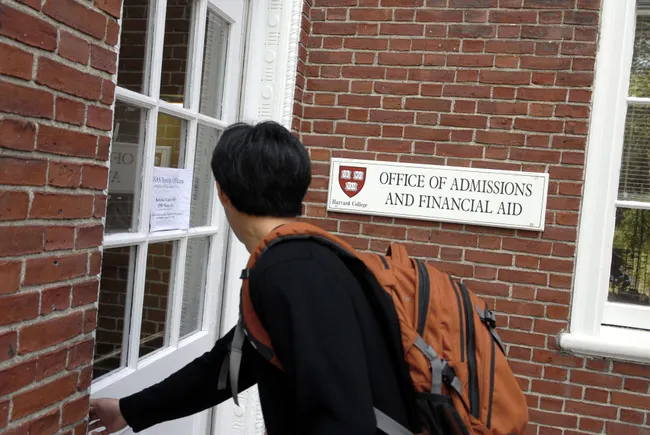
  • DHS Threatens Harvard With Loss of International Students

    DHS Threatens Harvard With Loss of International Students

    The Department of Homeland Security canceled $2.7 million in grants going to Harvard University Wednesday night and threatened to terminate its Student and Visitor Exchange Program certification, which would bar the private Massachusetts institution from enrolling international students.

    DHS’s threats came shortly after Harvard rebuffed the Trump’s administration’s demands to overhaul governance, admissions, hiring processes and more amid allegations of antisemitism and harassment tied to pro-Palestinian protests last spring. Although the Trump administration has opened a civil rights investigation into antisemitism at Harvard, that inquiry remains in process.

    Even so, the federal government has already moved to punish the university.

    The Trump administration froze $2.2 billion in research grants after Harvard rejected its initial demands, and the Internal Revenue Service is reportedly taking aim at its tax-exempt status. Now SEVP certification appears to be in the Trump administration’s crosshairs as well.

    “Harvard bending the knee to antisemitism—driven by its spineless leadership—fuels a cesspool of extremist riots and threatens our national security,” Department of Homeland Security Secretary Kristi Noem said in a Thursday statement. “With anti-American, pro-Hamas ideology poisoning its campus and classrooms, Harvard’s position as a top institution of higher learning is a distant memory. America demands more from universities entrusted with taxpayer dollars.”

    DHS demanded the university provide “detailed records on Harvard’s foreign student visa holders’ illegal and violent activities by April 30” or lose SEVP certification. The demand comes as the federal government has revoked visas for international students across the U.S., in some cases for political speech. (Inside Higher Ed has tracked more than 1,450 visa revocations.)

    Harvard spokesperson Jason Newton emphasized the need for due process in federal actions.

    “Harvard values the rule of law and expects all members of our community to comply with University policies and applicable legal standards,” Newton wrote. “If federal action is taken against a member of our community, we expect it will be based on clear evidence, follow established legal procedures, and respect the constitutional rights afforded to all individuals.”

    Source link

  • International School of Paphos acquired by Globeducate

    International School of Paphos acquired by Globeducate

    Globeducate has officially welcomed the International School of Paphos (ISOP) into its global network.

    With more than 65 bilingual and international schools and online programs across 11 countries, Globeducate serves over 40,000 students worldwide, delivering globally recognised curricula including the National Curriculum for England and the International Baccalaureate.

    Established in 1987 by Theodoros Aristodemo, ISOP – the first private English school in Paphos – recently became the latest addition to Globeducate’s presence in Cyprus, which already includes PASCAL International Education and the Education Group Olympion.

    We are delighted to welcome the International School of Paphos to Globeducate
    Luca Uva, Globeducate

    “We are delighted to welcome the International School of Paphos to Globeducate, further strengthening our presence in Cyprus and our commitment to investment in education on the island,” said Luca Uva, CEO of Globeducate.

    “We are excited to collaborate with the school’s leadership and community to build on its strong foundations. Globeducate is committed to providing students with an outstanding education through a diverse range of national and international curricula, and we look forward to supporting the school in offering even greater opportunities within our global network.”

    The school’s enriched curriculum, based on the National Curriculum for England, incorporates a strong focus on Greek language and cultural studies, providing students with a well-rounded and globally relevant education.

    Along with its diverse student cohort and staff from over 40 nationalities, the school is fostering global awareness and cross-cultural practices through various partnerships with cultural and educational institutions such as the British Council, Goethe-Institut, Confucius Institute, French Institute, and several embassies.

    Students are encouraged to lead and innovate outside of the classroom through initiatives like the Mediterranean Model United Nations (MEDIMUN), the Duke of Edinburgh’s International Award, the European Parliament Ambassador School Programme, and ECO School activities.

    The school promotes a holistic educational philosophy that combines academic excellence with the cultivation of emotional intelligence, social skills, and self-confidence, while fostering respect and empathy.

    Theodoros Aristodemou, the founder and chairman of the International School of Paphos, said that joining the Globeducate network of schools is undoubtedly a milestone in the school’s journey, which will expand its horizons through this collaboration.

    “We are very proud of what we have achieved over the years, creating a model school at a time when the necessary infrastructure did not even exist in Paphos,” he said.

    “Surely this would not have been possible without the excellent cooperation of our dedicated staff and leadership team, the longstanding support of our parents and students, as well as the smooth supervision of the board of directors.

    “Our decision to collaborate with such an established and esteemed education group like Globeducate was made after careful planning, with the aim of better serving the long-term interests of our community, staff, students, and families.”

    Aristi Andriotis, managing director of the International School of Paphos, commented: “As part of the Globeducate family, we will gain access to a wealth of resources, expertise, and support to enhance teaching practices and enrich our students’ learning experiences. Globeducate’s mission, closely aligned with our own, is to prepare each student to become a global citizen who can shape the future.

    “While joining Globeducate offers exciting opportunities, our school’s values and traditions will remain unchanged,” added Andriotis.

    Source link

  • Beyond the Margin: When might low net revenue in international student recruitment be justified?

    Beyond the Margin: When might low net revenue in international student recruitment be justified?

    • Vincenzo Raimo is an independent international higher education consultant and a Visiting Fellow at the University of Reading where he was previously Pro Vice-Chancellor for Global Engagement.

    In my recent article for The PIE News, I argued that the financial sustainability of international student recruitment deserves much closer scrutiny. With commissions, scholarships, marketing costs, and operational overheads taken into account, the margins on international enrolment are often far lower than they appear on paper – sometimes even negative.

    At a time when the financial health of UK higher education is under intense pressure, it is right that we ask whether international recruitment is really worth it. But this doesn’t mean that every low-margin intake is necessarily a poor strategic decision.

    In fact, there are good, sometimes essential, reasons why institutions might pursue or maintain international student recruitment with lower net financial return. But those decisions must be deliberate, transparent, and aligned with broader institutional aims. That’s not always the case.

    So how can we assess whether low-margin recruitment is justified?

    Here are five scenarios where low net revenue per student might make strategic sense:

    1. Filling Capacity or Managing Fixed Costs

    For many universities, fixed costs dominate the cost base. If recruiting a marginal cohort of international students helps fill underutilised teaching space or resources, and the marginal cost of teaching them is low, then even a small surplus can help improve the overall financial picture. This is particularly relevant in the context of declining domestic demand in some areas.

    2. Maintaining Subject Diversity or Cross-Subsidising Departments

    Low-margin international recruitment can sometimes help sustain strategically important but otherwise financially marginal subjects. This may include courses that support the university’s civic role or feed into regional skills needs. Used appropriately, it can help protect the breadth and integrity of an academic offer.

    3. Building a Pipeline for Higher-Value Activities

    In some cases, international student recruitment may have low margins, but it helps establish relationships that lead to high-value postgraduate, PhD, or alumni outcomes. It may also feed research collaborations, business engagement, or future TNE ventures. But such pipeline logic must be based on more than hope – institutions need to measure conversion, retention, and downstream value.

    4. Advancing Strategic Partnerships or Market Development

    An institution might accept lower margins to anchor a presence in a high-potential market or strengthen a bilateral partnership with a key international institution, government, or agency. These efforts can open the door to broader collaborations – but again, they require long-term planning and evidence of value beyond headcount.

    5. Delivering Mission-Aligned Social or Cultural Impact

    Some universities recruit from particular countries or communities not because it delivers high surplus, but because it aligns with their mission: widening access to UK education, supporting development goals, or enhancing campus diversity. These are valid choices – but they must be recognised as such, and the trade-offs clearly understood.

    A Checklist: Is Low-Margin Recruitment Worth It?

    To support institutions in making informed decisions, I’ve developed the following tool – a series of guiding questions to assess whether low-margin recruitment routes or cohorts align with institutional strategy.

    This is not a tick-box exercise. Rather, it’s a framework to prompt a more strategic, evidence-based approach to planning.

    The Danger of Denial

    The real issue isn’t low-margin recruitment as such – it’s unexamined recruitment. Too often, institutions recruit internationally based on historic patterns, copying what others are doing or perceived opportunity, without fully evaluating cost, risk, or alignment with institutional strengths.

    As pressures continue to mount, universities need to treat international recruitment with the same rigour they apply to research, teaching, and estates: as a strategic investment with benefits and risks. That starts with honest internal conversations about why we recruit, who we are recruiting, and what success looks like.

    Conclusion

    Low net revenue doesn’t automatically mean bad recruitment. But it should always prompt a question: Is this worth it – and why?

    By adopting a more mature and transparent approach to international student recruitment strategy, UK universities can balance growth with sustainability, manage risk, and ensure they are maximising both financial and non-financial returns from their global engagement.

    Catch up here on HEPI’s Weekend Reading on ‘Imperfect information in higher education’.

    Source link