Tag: International

  • » The international student’s guide to American holidays and traditions

    » The international student’s guide to American holidays and traditions

    Holidays and traditions vary across the globe, from hemisphere differences to religious, cultural and historical observances.   

    In this article, we look at American holidays and traditions that may impact international students studying in the U.S.  

    The American holidays cycle

    The American holiday system is slightly different from the rest of the world. Most people in the U.S. reserve the term “holidays” for the Christmas period, using terms such as “break” or “vacation” to describe the other days and observances when schools and businesses are closed.

    Many states observe their own special dates, traditions and observances. California, for example, marks César Chávez Day on March 31; Floridians celebrate the state’s 1512 discovery every April 2; and Texas observes its very own April 21 independence day. However, all recognize the U.S. federal holidays. So holidays and observances may vary depending on which state you’re studying in. 

    Not all holidays fall on the same date every year. For example, Independence Day is celebrated annually on July Fourth, the day the U.S. signed the Declaration of Independence in 1776. But Thanksgiving – another important U.S. federal holiday – is observed on the fourth Thursday of November. 

    Federal holidays

    There are 11 recognized federal holidays in the U.S. and a 12th every four years following a presidential election. These cover traditional holidays celebrated across much of the globe, including New Year’s Day and Christmas, as well as unique American observances, such as Memorial Day and Labor Day.

    Here’s a list of federal holidays, along with their dates and a brief description of each.

    1. New Year’s Day – January 1: The first day of the year, celebrated around the world.
    2. Martin Luther King, Jr. Day – The third Monday of January: Celebrates the birthday of the iconic civil rights leader.
    3. Inauguration Day – Once every four years on January 20: Follows the November presidential election to swear in the president of the United States.
    4. Washington’s Birthday – Each third Monday of February: Marks the birthday of the first U.S. president, George Washington.
    5. Memorial Day – The last Monday every May: Commemorates the members of America’s armed forces who have lost their lives in service to their country.
    6. Juneteenth National Independence Day – June 19: A relatively new federal holiday (since 2021) to commemorate the end of slavery in the United States.
    7. Independence Day – July 4: Observes the ratification of the Declaration of Independence in 1776, officially establishing the United States of America. An important date in American culture. 
    8. Labor DayThe first Monday in September: Recognizes the U.S. labor movement and celebrates the achievements and contributions of workers in the United States. 
    9. Columbus Day – The second Monday in October: Marks the anniversary of Christopher Columbus’s arrival in the Americas. Some groups do not recognize this holiday or instead observe the day as Indigenous People’s Day
    10. Veterans Day – November 11: Honors the military veterans of the United States Armed Forces (also observed in most Western countries as Armistice or Remembrance Day).
    11. Thanksgiving Day – The fourth Thursday in November: A U.S. holiday where families and friends come together – usually over a large, home-cooked meal – to give thanks for the good things in life. 
    12. Christmas Day – December 25: Celebrates the birth of Jesus Christ and is widely celebrated.

    Many people don’t have to work on national holidays, and schools are often closed if the holiday falls during the academic term. 

    Unofficial American holidays and observances

    In some states and cities, Americans observe non federal holidays or traditional, religious and even political dates. These can vary significantly from state to state. The government doesn’t officially recognize these as days where businesses and schools are closed.

    Religious observances

    The U.S. values the right to celebrate religious observances without fear or prejudice. It’s not uncommon to see many different religious and cultural activities across the nation. 

    • Eid al-Fitr – Marks the end of the holy Muslim month of Ramadan. Eid, as this day is often called, generally falls on a different date each year.
    • Diwali – Usually falls between October and November and lasts for five days. This Hindu festival of lights is a popular observance among Indian Americans.  
    • Yom Kippur – The Jewish holiday often occurs during September and October and is seen as Judaism’s most important holiday. 
    • Easter – The Christian holy days of Good Friday and Easter Sunday mark the crucifixion and resurrection of Jesus Christ.

    American cultural observances

    While not official holidays, these American cultural observances are widely celebrated across the U.S. and enjoyed by almost everyone. 

    • Halloween – This popular celebration has spread worldwide, but Americans love to take it to another level. Creepy Halloween decorations and spooky events can be seen and enjoyed for days before the October 31 night of trick or treating. 
    • St. Patrick’s Day – Celebrated every March 17, no matter the day of the week. This popular date sees many people heading out to enjoy socializing in pubs and bars. 
    • Flag Day – The June 14 holiday commemorates the 1777 adoption of the American flag, popularly referred to as “Old Glory.” Though not a federal holiday, many American citizens use this day to express their patriotism to the U.S.

    Academic year breaks

    The American academic year for colleges varies widely. Most schools follow the two semester system, though there are many following quarter or trimester systems.  Typically, there are school breaks between academic periods. Here’s a general overview of  academic breaks: 

    • Winter break – Mid-December to early/mid-January | Around two to three weeks

    The winter break usually commences after final exams in December and includes Christmas and New Year’s. Centered around celebrating the Christmas season, this break is often a great opportunity to travel home to spend time with family and loved ones. 

    • Spring break – During March or April | one to two weeks

    The spring break holiday is known for being a time when young people can relax and unwind. Coming just as the weather in most U.S. states is warming up, the spring break often sees crowds heading to sunny spots around the country to enjoy a few days of fun in the sun. 

    • Summer break – Mid-May through late August | 12 to 16 weeks

    Summer break is the longest break of the academic year and runs 12 to 16  weeks. Americans usually head outdoors to enjoy the warm weather, so this is a great opportunity to explore the country. Several national holidays fall during the summer break. 

    • Fall break– Usually at the end of November | About five days

    Also called Thanksgiving break. May include a day or more before Thanksgiving Day and ends the day after the holiday. If time allows, many travel to spend time with their families.  

    American traditions on holidays and during observances

    There are many traditions and practices associated with American holidays. These unofficial activities and exercises celebrate the diversity of American culture and, in some cases, hold special meaning to the people participating in them. 

    Here are a few iconic examples:

    • Independence Day often involves outdoor barbeques or cookouts with friends and family followed by fireworks displays at dark. Some campuses host Independence Day events in the lead-up to the holiday. 
    • Thanksgiving traditions revolve around traveling to visit family to enjoy quality time with loved ones over a large meal. These meals often include staples like mashed potatoes, corn and turkey. Americans have a tradition of inviting people unable to travel over the break to Thanksgiving dinners, so don’t be surprised if you receive an invite or two. 
    • Saint Patrick’s Day is a well-known religious and cultural holiday in the U.S. Celebrated worldwide but especially prominent in the U.S., many love to dress up in green and head out for a drink. Saint Patrick’s Day often coincides with the beginning of spring break and includes large-scale events like parades in cities with a strong Irish heritage such as Boston and Chicago – which even dyes its river green. 
    • Halloween is an unofficial holiday revered in the U.S. Kids look forward to Halloween, excited to go “trick-or-treating” for candy after sunset on the last day of October. Many young people and adults attend costume parties to mark the observance.
    • Christmas is an important day on the traditional calendar. While many families around the world open gifts on Christmas Eve, Americans prefer doing so on Christmas morning. Christmas traditions in the U.S. also include making eggnog, singing Christmas songs and wearing Christmas-themed sweaters. 

    How holidays impact international students in the U.S.

    American holidays, breaks and observances provide a great chance for international students to take some time off from their studies. They’re also perfect opportunities to engage with American culture or travel home to visit friends and family. 

    Whatever you choose to do during these periods, remember to plan well and be safe. 

    Here are some tips and pointers for planning before an American holiday or observance:

    • Travel smart – Americans love to travel over the holidays. Whether hopping onto a flight, hitting the road or taking the bus, the holidays can be a very busy time. Try to avoid traffic and make your plans and reservations well in advance. 
    • Spending – Some popular holiday destinations and cities tend to raise prices during the busy season. From skyrocketing accommodation and travel costs to premium charges for entertainment, holiday activities and even food, draw up a realistic holiday budget and stick to it. 
    • Local customs and laws – Rules and regulations vary from state to state, so be careful not to break local laws or violate customs unintentionally. A quick check online or chatting to a local on arrival at your holiday destination should prepare you adequately to avoid this. 
    • Remember to recharge – While the holidays can be a lot of fun and a great time to socialize and meet new people, remember to rest and recuperate. Returning to class with renewed vigor and energy is always a good idea. 
    • Stay focused – Don’t forget to check in with your teachers and course administrators to ensure you’re not missing out on any important holiday assignments. Also, avoid skipping opportunities to earn extra credit at summer schools or other on-campus holiday events. Review your financial aid or scholarship contracts for any holiday conditions. 

    Enjoying the holidays responsibly

    One of the best things about studying in the U.S. is the opportunity to engage with the rich and vibrant American culture. Holidays are a great way to experience what the U.S. has to offer, and Americans take their national holidays, traditions and observances seriously. 

    Getting familiar with American holidays and traditions before starting your academic journey will help you to optimize your planning and get the most out of your time. Remember to be safe during the holidays and engage with locals for a truly American experience. For more on getting your international student journey started, visit International Student or check out our blog.

    You can skip to the end and leave a response. Pinging is currently not allowed.
    Source link

  • New Donation to Bury Book International Education Library & Archive

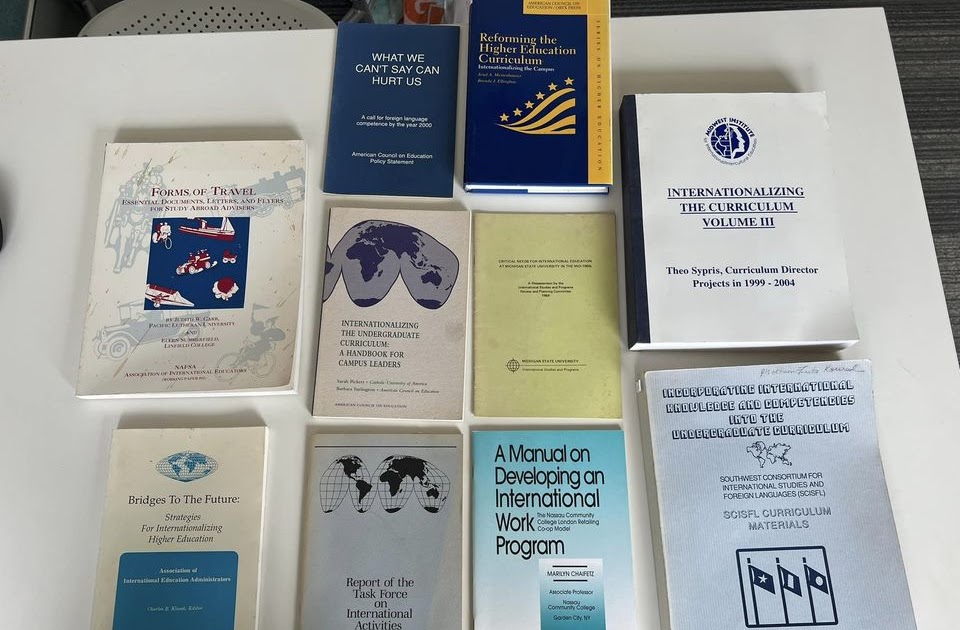
    New Donation to Bury Book International Education Library & Archive

    Since February 2007, International Higher Education Consulting Blog has provided timely news and informational pieces, predominately from a U.S. perspective, that are of interest to both the international education and public diplomacy communities. From time to time, International Higher Education Consulting Blog will post thought provoking pieces to challenge readers and to encourage comment and professional dialogue.

    Source link

  • Attracting International Graduate Students – Edu Alliance Journal

    Attracting International Graduate Students – Edu Alliance Journal

    May 31, 2022, by Don Hossler – Setting a Context for Recruiting International Graduate Students

    There is a dearth of research on the factors that influence international graduate students to select the graduate program in which s/he will enroll. For decades, my advice to enrollment managers has been to look at the research on what influences the enrollment decisions of high ability domestic undergraduates and assume that many of the same factors will be at play. Keep in mind that for these prospective students the decision to enroll out of home country is a risky decision. It is risky because many of these students will have never lived out of their home countries. Students from more affluent families may have traveled abroad, but many  prospective students will not have done so. They are unaccustomed to the cultural norms in other countries.

    Recruiting international graduate students involve different considerations. For example, international students seeking master’s degrees in applied areas such as MBAs, and students looking at Ph.D. programs in STEM fields will have different concerns. Prospective students may have never studied in a setting where the language of the host country was the only language spoken. If a student is from some regions of Africa, Asia, or South America it is possible that the teaching style to which they have been exposed is didactic. But if the student is looking at studying in Western Europe, Canada, the United States the instructional style will be more dialectic, with give and take between students and faculty. All of these factors should be considered when universities/specific graduate programs craft recruitment strategies.

    Female students from Europe or North America, may be reluctant to consider graduate programs in the Middle East or parts of Asia because the roles of women, both inside and outside of the classroom is more constrained. Women from more religiously conservative Islamic countries may not be allowed to travel outside of home country without a male chaperone (Muharem). When graduate programs are considering the applications from students who have not grown-up in western industrialized countries consideration should be given to the fact that GRE score may not accurately reflect the abilities of prospective students. It should be clear by this point those institutions who seek to recruit graduate students from across the globe need to do their homework to be culturally sensitive.

    The Importance of Program Quality

    For graduate programs that seek to attract the best students from around the globe there are some universal truths.

    1. One of the differences between graduate and undergraduate programs is that students are likely to have courses taught by some of the leading scholars in the field. Graduate programs need to capitalize on this when attempting to recruit international students.
    2. The ranking of a graduate program is of great import. The further a graduate program is removed from being ranked among the best programs in the world, the more difficult it becomes to attract top graduate students.
    3. The reputation of individual faculty members also matters. In top ranked MBA programs, or in a STEM field for example, there may be a single professor that is regarded to be amongst the best researchers in the world in his or her field.
    4. For prospective graduate students looking only at elite programs, it is important that they have a chance to interact with faculty members by phone, video conferencing, email, and visits to campus prior to enrollment. There is always the risk that a  world-renowned professors will treat students like they are lucky to be talking to him/her – which is a mistake. Returning to a theme from my last essay on recruiting international undergraduates, graduate programs should court these top students, they will have other choices. Do not treat them like you are their only choice.
    5. Another important consideration for prospective students is the opportunity to participate in internships or to serve as research assistants (and later in post-doc fellowships). For more applied master’s degree programs, the opportunity to be part of consulting efforts can be a consideration. Finally, the longer the time period allowed for time spent in internships or in post-graduate fellowships – the better.
    6. In addition, cost matters. Prospective doctoral students in STEM fields will assume that they will get a research assistantship that will cover all, or most, costs. Most master’s degree programs do not include assistantships, thus tuition and fees, along with the availability of financial aid will influence their decisions.

    In addition to the factors above, there are other considerations for prospective students. In fields and programs, where students hope to become pre-eminent researchers there is often a preference that instruction be in English. There are practical reasons for this preference. For prospective doctoral students, the majority of the top journals in STEM fields are published in English. Often conference papers are presented in English. In the case of business, both spoken and written English is the lingua franca of international business.

    While less important, there are other considerations for prospective students. The permeability of the country culture in which the institution has been admitted can also be a consideration. Can students easily connect with other students and the wider community? Personal safety is also a factor. For example, this is often a concern about studying in the United States. In addition, any recent perceived mistreatment of international students quickly spreads across the globe. The visa process put into place by the Trump administration or China’s decision to expel all international students during the pandemic are examples of government policies that can influence the decisions of future graduate students.

    Many  international students are admitted and enroll in less prestigious graduate programs so high rankings are not always a key factor. Some students coming from Third World Countries may hope to immigrate to the country in which they choose to study. Thus, the probabilities of legal immigration can matter. Proximity to extended family and of course the probability of being admitted can be a factor.

    What Should Graduate Programs Do?

                Graduate programs that seek to enroll international students need to organize themselves to do this effectively. Unlike efforts to enroll undergraduates, where the image of an entire university plays a major role in matriculation decisions, the prestige and structure of an individual graduate program is what matters. The faculty of the program, with the support of the academic unit in which the program is housed, need to be clear eyed about the program’s strength and weaknesses. In addition, graduate programs need  to collect information on all of the students who applied, which ones were admitted, and where they enrolled. The use of data is critical especially for programs that are seeking to move higher in rankings schemes.

                Successful efforts require more organizational structure and focus than is often found at the program level. Any fellowships and scholarships need to be used in a strategic and coordinated manner. Programs need to develop communication strategies and targeted web pages –  this is necessary regardless of how highly ranked a graduate program may be. Both the communication streams and the website need to be customized to reflect the unique interests of international students. The concerns of prospective international doctoral students in Education are different from those of potential master’s students in Bioinformatics, or potential Ph.D., students in Materials Science.

                For universities and for graduate programs that seek to enroll more international graduate students there are a host of factors that influence students’ enrollment decisions. Program leaders need to be thoughtful and strategic in order to achieve their goals. Less prestigious programs may need to consider using recruiting agents, similar to undergraduate recruitment. It is likely to be necessary to assign many of these tasks to a professional staff position who has the time and expertise to create a highly integrated recruitment, admissions, and scholarship function.


    Donald Hossler a member of the Edu Alliance Group Advisory Council is an emeritus professor of educational leadership and policy studies at Indiana University Bloomington (IUB). He currently serves as a Senior Scholar at the Center for Enrollment Research, Policy and Practice in the Rossier School of Education, at the University of Southern California. Hossler has also served as vice chancellor for student enrollment services, executive associate dean of the School of Education, and the executive director of the National Student Clearinghouse Research Center.

    Hossler’s areas of specialization include college choice, student persistence, student financial aid policy, and enrollment management. Hossler has received career achievement awards for his research, scholarship, and service from the American College Personnel Association, the Association for Institutional Research, the College Board, and the National Association of Student Personnel Administrators. He recently received the Sonneborn Award for Outstanding Research and Teaching from IUB and was named a Provost Professor.


    Edu Alliance Group, Inc. (EAG) is an education consulting firm located in Abu Dhabi, the United Arab Emirates, and Bloomington, Indiana, USA. We assist higher education institutions worldwide on a variety of mission-critical projects. Our consultants have accomplished university/college leaders who share the benefit of their experience to diagnose and solve challenges.

    EAG has provided consulting and successful solutions for higher education institutions in Australia, Egypt, Georgia, India, Kazakhstan, Morocco, Nigeria, Uganda,  United Arab Emirates, and the United States.

    Edu Alliance offers higher education institutions consulting services worldwide. If you like to know more about how Edu Alliance can best serve you, please contact Dean Hoke at [email protected] 

    Source link

  • Celebrate International Day of People With Disabilities on December 3 – CUPA-HR

    Celebrate International Day of People With Disabilities on December 3 – CUPA-HR

    by CUPA-HR | November 30, 2021

    In 1992, as part of its focus on promoting the well-being of people with disabilities, the United Nations called for an international day of celebration for people with disabilities. Held on December 3 each year, International Day of People With Disabilities is a day to recognize and learn from the experiences of those with disabilities and for organizations to show support and take action to create more diverse and inclusive communities.

    In recognition of the day, we’re sharing some inspiring articles and blog posts highlighting the work of HR pros to create more inclusive campuses and workplaces.

    Additional resources: 

    CUPA-HR ADA Toolkit
    Creating Inclusive Communities Project


    Source link

  • Joint Statement by the U.S. Department of State & the U.S. Department of Education of Principles in Support of International Education

    Joint Statement by the U.S. Department of State & the U.S. Department of Education of Principles in Support of International Education

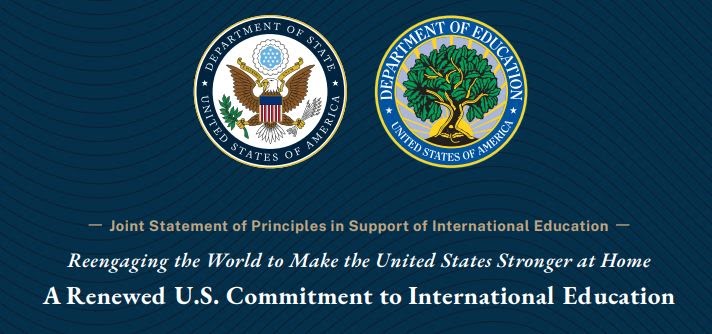
    Joint Statement by the U.S. Department of State & the U.S. Department of Education of Principles in Support of International Education – Reengaging the World to Make the United States Stronger at Home, A Renewed U.S. Commitment to International Education. Issued July 26, 2021 at https://bit.ly/3y8nNmn

    Source link