Tag: International

  • Harvard spars with Trump administration over order protecting its international enrollment

    Harvard spars with Trump administration over order protecting its international enrollment

    This audio is auto-generated. Please let us know if you have feedback.

    Dive Brief:

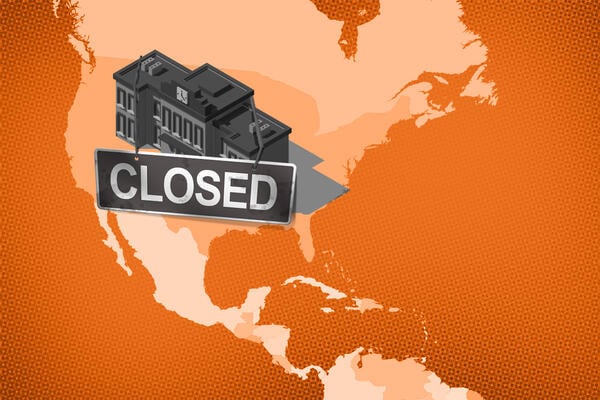
    • Harvard University argued Thursday that the Trump administration may attempt to use “creative relabeling” to circumnavigate a court order blocking its attempt to end the institution’s ability to enroll international students.
    • U.S. District Judge Allison Burroughs has twice blocked attempts by the federal government to halt all international students from attending Harvard through temporary orders. Now, Harvard and the Trump administration are clashing over what a more permanent preliminary injunction should look like.
    • In legal filings, the Ivy League institution called on the court to approve its own proposal, which would place more restrictions on the Trump administration and require it to provide a status report detailing its compliance with the pending preliminary injunction. “Given the government’s pattern of behavior thus far and the chaos it has inflicted, this surety is more than warranted,” it said.

    Dive Insight:

    In late May, the U.S. Department of Homeland Security revoked Harvard’s ability to enroll international students by terminating its Student and Exchange Visitor Program certification. The agency alleged that the university had permitted a “toxic campus climate” to flourish by accommodating “anti-American, pro-terrorist agitators.”

    The loss of SEVP certification — required to host international students — would have devastating impacts on both Harvard and its international students.

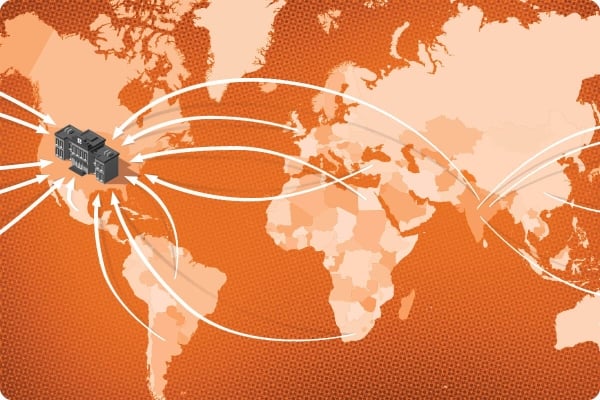
    In the 2024-25 academic year, nearly 6,800 foreign students attended Harvard, according to institutional data. They made up 27.2% of the university’s total student body.

    The day after the SEVP revocation, Harvard sued the federal government, arguing that the Trump administration acted abruptly and without “rational explanation.” 

    Burroughs granted Harvard’s request for a temporary restraining order to block DHS’ decision later that day, ruling the university would undergo “immediate and irreparable injury” if the ban was enforced before she could hear from both parties.

    After the judge issued the order, the federal government formally notified Harvard of its intent to revoke the university’s SEVP certification on May 28, according to court documents. 

    The notification alleged in part that Harvard failed to sufficiently fulfill a federal information request about its international students and gave the university 30 days to rebut the allegations.

    The next day, Burroughs ruled that she would issue a preliminary injunction in the case and directed Harvard and the Trump administration to negotiate the terms of the order. 

    The Trump administration then tried another tactic. President Donald Trump signed a proclamation in early June ordering top federal officials to stop all international students heading to Harvard from entering the country.

    The university updated its lawsuit and asked Burroughs also to block the proclamation, arguing it is tantamount to a “government vendetta against Harvard.” Burroughs issued a temporary restraining order on June 5 against Trump’s proclamation and extended the block on the SEVP revocation.

    Now, Harvard and the Trump administration are fighting out the specifics of that injunction in court.

    In legal filings Thursday, Harvard said its proposed preliminary injunction is “tailored to preserve the status quo” while its lawsuit proceeds.

    But the Trump administration is pushing back on multiple aspects. One disputed passage would prohibit the federal government from restricting Harvard’s ability to sponsor student visas outside of the attempted SEVP revocation, the university said. 

    If DHS again tries to revoke Harvard’s DHS certification, another part of the proposed order would delay the decision by 30 days. The timeframe would give Harvard time to seek another injunction, it argued. 

    “Requiring Harvard to rush to the courthouse for a third time, and requiring the Court to take up these issues on an emergency basis yet again to prevent predictable harms — the inevitable result of the government’s approach — is inefficient, ineffective, and unnecessary,” it said.

    The federal government also pushed back on a proposal that would require it to promptly demonstrate how it intends to comply with the court order once approved.

    Source link

  • International Students by the Numbers

    International Students by the Numbers

    Since taking office in January, President Donald Trump and his administration have acted aggressively against international students, including instituting widespread changes to their legal status and implementing entry bans on nationals of specific countries or for scholars at certain institutions.

    To put into context the role of international students in U.S. higher education and their added value to the U.S. economy, Inside Higher Ed compiled five key statistics about them.

    1. International students are 1.1 million strong, making up 6 percent of U.S. enrollments.

    The U.S. hosts the largest share of international students globally (16 percent), welcoming 1.1 million learners in 2024, according to the Institute of International Education. About 242,700 visitors to the U.S. are on Optional Practical Training, or OPT for short, according to IIE data.

    While the U.S. welcomes the largest number of international students, these students make up a fraction—about 6 percent—of the country’s total enrollment. By comparison, Canada welcomed 840,000 international students in 2024, or 39 percent of the country’s total postsecondary enrollment.

    2. Two percent of international students have been impacted by new travel bans.

    As of Monday, nationals of 12 countries have been barred from entering the United States, and those from seven more countries face significant visa restrictions. The ban, announced in a June 5 executive order from President Trump, will impact students from Afghanistan, Cuba, Haiti, Iran, Turkmenistan and Venezuela, among others.

    About 25,000 students from these countries were studying in the U.S. as of March 2024, according to data from the Department of Homeland Security analyzed by Inside Higher Ed. Approximately one in five of them was participating in a bachelor’s program, and 38 percent were enrolled in a doctoral program.

    If the Trump administration succeeds in reducing the number of Chinese students who can participate in U.S. higher education, the impacts may be more dramatic on enrollment; Chinese international scholars numbered 255,146 in March 2024, according to DHS data.

    3. California is the No. 1 host among states.

    Among the 50 states, California welcomes the greatest share of international students each year—just over 140,800 as of the 2023–24 academic year, according to NAFSA, the national organization for international educators. New York is close behind (135,800 students), followed by Texas (89,500 students) and Massachusetts (82,306 students).

    On the opposite end, Montana and Wyoming hosted fewer than 1,000 international scholars apiece, and fewer than 300 international students made their way to Alaska in 2023–24 (and about 50 of those students were from Canada, according to DHS data).

    4. NYU is the campus with the most global scholars.

    Demonstrating that New York City lives up to its reputation as a melting pot, New York University enrolls the greatest number of international students of any U.S. college or university, totaling 27,247 during the 2023–24 academic year, according to data from IIE. International students make up about 44 percent of NYU’s student population, compared to Northeastern University in Boston, where international students are fewer in number but make up closer to two-thirds of the campus population (21,000 of 31,000 learners).

    Among two-year colleges, Texas community colleges lead the way. Houston Community college enrolls the most international students (3,629), followed by the Lone Star College system (3,196) and Dallas College (2,305), as of 2023–24 figures.

    5. International students added $43.8 billion to the U.S. economy last year.

    According to NAFSA, international students contributed $43.8 billion to the U.S. economy during the 2023–24 academic year. That’s a pretty big number. To put it in perspective:

    Through their tuition, international students support nearly 400,000 jobs at colleges and universities, as well as through spending on housing, food, retail and other living expenses, according to NAFSA.

    More Coverage of International Students in 2025

    Source link

  • That Was the Quarter That Was

    That Was the Quarter That Was

    What’s been going on around the world since the end of March, you ask? 

    Well, unsurprisingly, the biggest stories have come from the United States.  There are in effect four fronts to the Trump administration’s attacks on the world of higher education.  First of all, the government’s new budget is going to reduce student eligibility for student loans and grants, meaning there will be less opportunity available to American students.  Second, the budget also proposes to radically slash the budgets of the National Science Foundation (NSF) and the National Institutes of Health (NIH) (the cuts you heard about in the early months of the Trump administration were cuts to existing and in-progress grants – the new budget is about slashing expenditures going forward).   Third, it had decided to get itself into an enormous spat with Harvard, starting with issuing a bizarre set of demands on April 11th, followed by an admission that the letter had been sent in error, followed by enraged bellicosity that Harvard wasn’t submitting to a letter the administration had not meant to send.  Things escalated: the Trump administration impounded more billions of dollars, Harvard responded by shrugging and raising a few hundred million on the bond market, and Trump escalated by, eventually, banning Harvard from accepting or hosting any international students.  And fourth, shortly after a court granted Harvard an injunction on the international students matter, the Trump administration began delaying all student visas and aggressively cancelling Chinese student visas.

    (Whew.)

    This is of course a massive own goal with dangerous implications, as commentators such as Holden Thorp and William Kirby have pointed out.  But it is not simply about Americans losing scientific/technological supremacy.  As the Economist has pointed out, the entire world has a stake in what happens to American science; its hobbling will have consequences not just for global science but for the global economy as well.

    It has been fascinating over the past few weeks watching how the American debacle had grabbed the attention of the rest of the world as well.  It has been very difficult this past month or so to be somewhere where the papers weren’t obsessing about what was happening to students at Harvard (check out a representative smattering from Ethiopia, Iceland, Vietnam, MalaysiaIndia and Kazakhstan).   At the policy level, almost every OECD government is revving up plans to poach US-based researchers even in places which genuinely don’t have the scientific infrastructure to poach anyone (Ireland?  Czechia?  C’mon).  In other words, you have basically the entire world looking at how the American debacle in a massively self-centred way.  Basically, it’s all: “Yeah, yeah, death of the American research university, how does this affect me/how can I profit?”

    But the world has yet to grapple in any kind of serious way is how to maintain growth and innovation in a world where the largest spender on research is reducing expenditures by 50%.  This has implications for absolutely everybody and at the moment there are no serious discussions about how the world gets by without it.  Obviously, other countries can’t replace what used to come out of NSF and NIH.  But they can, as Billy Beane from Moneyball might say, recreate it “in the aggregate” by working together.  Unfortunately, that’s not quite what they are doing.  That would require Australia, Canada, Japan and Korea to be working actively with the European Union; not only is that not happening, but these days the EU can’t even get it’s own act together on research.

    Meanwhile, in large parts of the world, the main higher education story we hear about is one of “cutbacks”, “austerity” and the like.  But there are, I think, some fundamentally different issues at work in different countries.  In the rich Anglosphere, which happens to be where most of the big producers of higher education are located, mature higher education systems highly reliant on market fees are being forced into big cuts as governments remove their ability to attract funds, usually by changing their student visa regimes.  (An aside here: many people ask: where will international students go if not Canada/US/Australia/wherever?  To which the answer is usually: to a great extent, they will just stay home. But a few countries do seem to be doing better on international students as of late, mostly in Asia.  TurkeyDubai and Uzbekistan in particular seem to be the big winners, though the growth in their intakes is lower than the drop in the intakes of the big anglophone countries).

    But in other countries, the fundamental financial tension is that demand for higher education is far outstripping the ability of either public or private funding to keep the system afloat (government could choose not to meet so much demand, but political needs must).   Kenya, with its widespread university financial problems comes into this category, and Nigeria, where funding new universities seems to come at the expense of funding existing ones clearly come under this category. Intermediate cases here include France (increasing demand, flat funding), Brazil (which has done a series of policy U-turns on transfers to federal universities and whose overall policy might best be described as “confused”), and perhaps Colombia (promises of money co-existing with widespread institutional precarity, even in the public sector).  What is common here is that a lot of countries seem to have built systems which are too big/expensive for what the public – collectively or individually – is willing to pay. 

    A common response to the problem of inadequate public funding is the expansion of private higher education.  Almost unbelievably, private higher education now makes up about 20% of total provision in Spain, France and Germany (in two of those countries, tuition is free, and in the third it is minimal – under 1000 euros per year in most cases).  In many cases, the expansion is in relatively cheap classroom-heavy courses (often in business) but in many cases these universities are moving into other areas such health care provision.  This explosion has led to a significant tightening of regulations on private universities in Spain and a “tri” (meaning triage”) on France’s Parcoursup system, meaning that certain types of private college will have a harder time advertising themselves to prospective students.  This phenomenon is not constrained to Europe: Tunisia is also currently pre-occupied with how to regulate private institutions.  An alternative to letting domestic private universities rip is to invite foreign institutions into the country.  India is the country most in the news for attempting this at the moment but places like Saudi Arabia, Uzbekistan and Vietnam are also eagerly heading down this route.

    Tuition fees are always an issue, and at public universities we see evidence both for and against the idea that fees are rising.  On the one hand, we have Namibia introducing free tuition (though – note – without fully announcing its operational details), and a Labor government in Australian winning on a promise to – in effect – shorten graduate repayment periods by cancelling debt.  On the other hand, Korea and Russia – both countries with abysmal youth demographics – are allowing their institutions to raise fees after years of both falling enrolments and largely frozen tuition.  Finland may be introducing fees for certain forms of continuing education.  But higher tuition isn’t the only way governments deal with crashing demographics; in Pennsylvania, the solution is outright campus closures.

    In terms of student activism, the main story so far this year is Serbia, which is now in the seventh month of student-led anti-government protests. At this point, it’s very hard to see how the students obtain their maximalist demands of regiment change.  After six months of protests, students are starting to go back to school and finish their academic year.  Recent evidence from North America suggests the movement will have trouble maintaining itself over the summer months and into next year.

    War continues to re-shape universities around the world.  Ukraine has announced changes to its system of conscription which will lower its university attendance rate (particularly for graduate studies).  Something similar has happened in Ethiopia, where new rules have been introduced requiring students to do a year of national service before graduation.  Russian universities continue to atrophy in different ways, partly due to government policy but also due to the exodus of many scholars who have fled the regime.

    Among other things from this quarter that bear watching going forward: Greece is continuing the modification of its university system at a furious pace both in terms of altering curricula and in terms of changing the post-dictatorship convention that campuses are police-free zones.  Algeria is moving its entire university system from French to English instruction, which may not have a huge effect in higher education, but certainly tells you which way global linguistic politics are going.  Hong Kong is experimenting with a new institutional type, and a billionaire in China is putting some serious coin behind a new university

    My tip for the story this summer?  Watch graduate unemployment rates around the world, particularly in India and China (where the situation is so bad the government has just announced a kind of emergency blitz on graduate hiring which sure seems like it is set up for failure).  I think the push to align higher education more with the labour market is about to go into overdrive.

    All caught up now!  See you back here in September.

    Source link

  • Judge blocks Trump’s international enrolment ban

    Judge blocks Trump’s international enrolment ban

    The temporary restraining order (TRO) was issued by federal judge Allison Burroughs on June 5, just one day after President Trump’s signing of a proclamation to suspend the issuing of US visas to international students entering Harvard for an initial six months.   

    During the Massachusetts hearing, Burroughs said Trump’s directive would cause “immediate and irreparable injury” to America’s oldest institution, temporarily blocking it “until there is opportunity to hear from all parties”. 

    The judge also extended a 23 May restraining order which prevents DHS’s attempt to strip Harvard of its ability to enrol international students, until June 20 or when a preliminary injunction is issued, with a hearing set for June 16. 

    The June 4 proclamation came in addition to, and aims to circumvent, DHS secretary Kristi Noem’s revocation of Harvard’s SEVP certification, which was also blocked by the courts.  

    Wednesday’s directive – which incorrectly refers to SEVP as the “Student and Exchange Visa Program” – attempts to bar all new international students, scholars and exchange visitors from pursuing any course of study at the university, for a period of six months. 

    With the stroke of a pen, the DHS Secretary and the President have sought to erase a quarter of Harvard’s student body

    Harvard University

    This time, the government framed the ban as a matter of national security, accusing Harvard of collaborating with China. It has repeatedly criticised the institution for failing to root out antisemitism on campus and failing to hand over information on international students.  

    For its part, hours before judge Burroughs’ ruling, Harvard amended a previous lawsuit, alleging both the June 4 proclamation and the DHS revocation were “part of a concerted and escalating campaign of retaliation by the government” in clear retribution for Harvard’s exercising its First Amendment rights to free speech.  

    “With the stroke of a pen, the DHS Secretary and the President have sought to erase a quarter of Harvard’s student body,” it reads, in what the complaint calls a “government vendetta against Harvard”.  

    Last year, Harvard hosted 6,793 international students, totalling over 27% of the entire student body, though Trump has mistakenly called the figure 31%.

    Meanwhile, on June 5, Harvard’s President Garber sent a letter to the Harvard community, informing students that “contingency plans” were being drawn up to allow students to continue their studies during the summer and the upcoming academic year.

    Reaffirming the “outstanding contributions” of international students, Garber vowed to “celebrate them, support them, and defend their interests as we continue to assert our Constitutional rights”.  

    Source link

  • Trump Proclamations Escalate International Student Attacks

    Trump Proclamations Escalate International Student Attacks

    President Trump issued two directives targeting international students just hours apart on Wednesday night. One is a ban on entering the U.S. for citizens from 12 countries and heightened visa restrictions for those from another seven. The other bans all international students, researchers and other “exchange visitors” from Harvard University.

    The orders represent another escalation of the Trump administration’s simultaneous, and sometimes overlapping, campaigns to both punish Harvard and curtail the number of foreign students studying in the U.S.

    Chris Glass, a professor of higher education at Boston College and a member of the college’s Center for International Education, said the combination of the travel ban and the Harvard order are part of the administration’s “flood the zone” strategy for its higher education agenda. He added that the timing of the dual orders, following on the heels of a “seemingly indefinite” pause on student visa interviews and a promise to “aggressively revoke” Chinese students’ visas, seems intended to cause the most chaos possible.

    “The timing couldn’t be worse … this is when 70 percent of international students are getting or renewing their visas,” he said. “It injects catastrophic uncertainty, and the uncertainty is the strategy from my perspective.”

    On Thursday evening, Harvard filed a legal challenge to the proclamation targeting the university and asked a judge to issue a temporary restraining order against the administration. Judge Allison Burroughs from the District of Massachusetts quickly granted that request and extended the current restraining order issued last month. She set a hearing for June 16.

    2017 Again

    The last time Trump instituted a travel ban, in his first term, it threw colleges into chaos and left students and researchers stranded for months in the middle of winter break, sending colleges scrambling to find ways to bring them back. Higher ed has been bracing for a repeat of that travel ban since Trump was elected in November; many institutions told their international students to return to campus before the inauguration to avoid the same fate.

    The new ban is not as drastic as many predicted; when the White House initially proposed another travel ban in March, officials rolled out a list of 43 potential target countries. But it is more expansive than the 2017 ban—it affects 19 countries instead of eight—and, combined with the administration’s barrage of attacks on international students over the past three months, could be even more damaging to international enrollment.

    The full ban applies to Afghanistan, Chad, Republic of the Congo, Eritrea, Equatorial Guinea, Haiti, Iran, Libya, Myanmar, Somalia, Sudan and Yemen—largely Middle Eastern and African countries with substantial Muslim populations. Trump also restricted visas from Burundi, Cuba, Laos, Sierra Leone, Togo, Turkmenistan and Venezuela.

    The travel ban doesn’t immediately affect students currently in the U.S. or who have already been approved for visas. But with many admitted international students still languishing in a visa process that the State Department halted two weeks ago, it will likely prevent thousands of students from attending in the fall and upend institutions’ projected enrollments.

    The countries on the list send a relatively small number of students to U.S. colleges. Of the affected countries, Iran has by far the most students studying in the U.S. It is the 15th most common origin country for international students, with 12,430 studying at American colleges and universities as of fall 2024, according to the latest report from the Institute for International Education.

    Still, the order is likely to compound the uncertainty and fear that has grown among international student populations, leading to signs of a large decline in student visa applications. Glass’s research, along with more recent reports, shows a double-digit decline in student visas from March 2024 to this March alone; the latest moves could double that, he said.

    “[The] COVID [pandemic] was a disruption of 15 percent,” he said. “This looks like it could be more significant than COVID, if the pause is extended and the uncertainty continues.”

    In his proclamation announcing the travel ban, Trump wrote that the targeted countries had “deficient” vetting and screening processes for visa applicants, or had “taken advantage of the United States in their exploitation of our visa system and their historic failure to accept back their removable nationals.”

    Sarah Spreitzer, vice president and chief of staff for government relations at the American Council on Education, said the rationale outlined in the travel ban—that students pose a unique national security threat and have been overstaying their visas—doesn’t align with reality.

    “If this is for national security concerns, our students are some of the most vetted visas out there,” she said. “And I don’t know if our students actually overstay their visas very often.”

    Fanta Aw, the president of NAFSA, an association of international educators, echoed Spreitzer and said that international students are already “among the most tracked individuals entering the United States.”

    “Actions such as halting student visa issuance and implementing nationality-based travel bans do not enhance national security,” she wrote in an email. “Instead, they weaken it—undermining our economy, diminishing our global competitiveness and eroding our country’s ability to effectively engage with the global population.”

    The 2017 travel ban was amended twice after being challenged in the courts and eventually exempted nonimmigrant visas, including student and exchange visas. Spreitzer said the administration’s outsize focus on student visa holders over the last few months makes that outcome less likely, but only time—and the courts—will tell.

    Havoc at Harvard

    The travel ban came on the heels of another White House proclamation Wednesday night, this one banning foreign students and scholars from attending Harvard.

    Trump restricted visa applicants from entering the country “solely or principally to participate in a course of study at Harvard University or in an exchange visitor program hosted by Harvard,” claiming that allowing foreign students on campus would be “detrimental to the interests of the United States because, in my judgment, Harvard’s conduct has rendered it an unsuitable destination for foreign students and researchers.”

    A Harvard spokesperson wrote that the proclamation is “another illegal retaliatory step taken by the administration in violation of Harvard’s first amendment rights” and that the university “will continue to protect its international students.”

    The proclamation is the latest jab in a weeks-long fight over international students on Harvard’s campus. Last month the Trump administration attempted to revoke Harvard’s Student Exchange and Visitor Program certification, which would have banned the university from enrolling international students altogether, affecting not just visa applicants but also foreign students and researchers currently on campus. Harvard challenged the effort in court, and a judge swiftly granted the university an injunction; on Monday, the Trump administration lost its appeal to overturn that decision.

    Harvard amended that lawsuit to include a challenge to the newest proclamation, calling it “an unlawful evasion of the Court’s order.”

    “When the Court enjoined the Secretary [of State’s] efforts to revoke Harvard’s certifications and force its students to transfer or depart the country, the President sought to achieve the same result by refusing to allow Harvard students to enter in the first place,” the amended suit reads.

    Unlike the SEVP decertification attempt, Trump’s executive proclamation doesn’t immediately affect international students currently enrolled at Harvard, only those who have yet to secure visas—though it does instruct the State Department to determine whether current students “should have their visas revoked.”

    The proclamation runs through a gamut of justifications for its international student ban. Trump cites data on increasing campus crime rates in the interest of student safety, alleges discrimination in the admissions process that he claims foreign students exacerbate and points to academic partnerships and financial contributions from countries like China that he says endanger U.S. national security interests.

    Notably, Trump also says Harvard has failed to cooperate with the administration’s demands for student misconduct records; the university has provided data on “only three students,” which Trump wrote was evidence that “it either is not fully reporting its disciplinary records for foreign students or is not seriously policing its foreign students.”

    Glass said the move is almost certainly an attempt to work around the court injunction using executive powers rather than the visa bureaucracy. And making the issue about constitutional authority in the national security realm—rather than whether the proper SEVP decertification process was followed—could change the legal calculus in court.

    “That’s what’s going to set a precedent for generations,” Glass said. “Will the precedent of autonomy and academic freedom at Harvard win in the courts? Or will the precedent of national security powers for the government win the day?”

    (This story has been updated to correct the list of banned countries to include Republic of the Congo.)

    Source link

  • This Thursday on the Future Trends Forum: an international enrollment scenario (Bryan Alexander)

    This Thursday on the Future Trends Forum: an international enrollment scenario (Bryan Alexander)


    How might international student enrollment changes impact colleges and universities? This Thursday, on June 5th, from 2-3 pm ET, the Future Trends Forum is holding an interactive exercise to work through an evidence-based scenario wherein fall 2025 numbers crash. Everyone will participate by representing themselves in the roles they currently have or would like to take up, and in those positions explore the scenario.

    We will develop responses to the situation in real time, which may help us think ahead for whatever form the crisis eventually takes. In this exercise, everyone gets to collaboratively explore how they might respond.   
     

    As with our first election simulation, not to mention our solarpunkgenerative AIblack swan, and digital twin workshops, this one will involve participants as cocreators and investigators, exploring and determining what might come next.  Consider it a trial run for a potential future.

    To RSVP ahead of time, or to jump straight in at 2 pm ET this Thursday, click here:

    To find more information about the Future Trends Forum, including notes and recordings of all previous sessions, click here: http://forum.futureofeducation.us/.

    (chart from Statista

    Source link

  • Judge Keeps Block on Harvard International Student Ban

    Judge Keeps Block on Harvard International Student Ban

    The Trump administration still won’t be able to prevent Harvard University from enrolling international students after a federal judge decided Thursday to keep a temporary restraining order in place.

    The hearing before Judge Allison Burroughs in Massachusetts District Court came a week after the Department of Homeland Security revoked Harvard’s ability to enroll international students and required those currently at the university to transfer. Harvard quickly sued to block that decision, and Burroughs granted a temporary restraining order May 23. 

    Harvard argued in the lawsuit that the administration violated the First Amendment and the university’s due process rights with the abrupt revocation. In an apparent effort to address Harvard’s concerns, the administration said ahead of the hearing that it would go through a more formal administrative process to decertify Harvard from the Student and Exchange Visitor Program. According to the notice filed in court Thursday morning, Harvard has 30 days to respond to the claims that it failed to comply with certain reporting requirements and to maintain a campus free from discrimination as well as “practices with foreign entities raising national security concerns.”

    But while that process continues, Burroughs wants to maintain the status quo for Harvard, which means that international students can remain at the university. She plans to eventually issue a preliminary injunction, the next step after a temporary restraining order.

    Burroughs said an order would give “some protection to international students who might be anxious about coming here or anxious about remaining here once they are here,” The Boston Globe reported.

    The government lawyers argued in the hearing that an order wasn’t necessary because of the new notice. But Harvard’s lawyer Ian Heath Gershengorn countered that “we want to make sure there are no shenanigans” while Harvard challenges the Trump administration’s action.

    And despite Burroughs’s quick restraining order, current and prospective international students at Harvard have faced disruptions.

    Maureen Martin, director of immigration services in the Harvard International Office, wrote in a court filing that students scheduled to travel to the United States in the fall found out by the morning of May 23 that their visa applications were denied. (The administration revoked Harvard’s certification May 22.)

    “I am personally aware of at least ten international students or scholars whose visa applications were refused for ‘administrative processing’ immediately following the Revocation Notice,” Martin wrote, adding that none of the visa applications that were refused or revoked following the revocation have been approved or reinstated. 

    For example, when a visiting research scholar at the Harvard School of Dental Medicine tried to obtain a J-1 visa at the U.S. embassy in Prague on May 23, her visa application was rejected.

    “The officer gave the scholar a slip that stated she had ‘been found ineligible for a nonimmigrant visa based on section 221(g) of the U.S. Immigration and Nationality Act (INA).’ The slip said, ‘In your case the following is required,’ and the consular officer checked the box marked ‘Other’ and handwrote, ‘SEVP Revocation / Harvard,’” Martin wrote.

    Martin wrote that the Trump administration has caused “significant emotional distress” for current international students and raised a number of questions for either incoming or prospective students who are trying to assess their options. At least one student deferred admission for a year for visa-related reasons.

    Source link

  • UK International Education Strategy – how it began and what should come next

    UK International Education Strategy – how it began and what should come next

    • By Ruth Arnold, Executive Director of External Affairs, Study Group and cofounder of the #WeAreInternational campaign

    This weekend, an American president stood on the tarmac by Air Force One and took questions from reporters. One picked on his current legal confrontation with one of the world’s most famous universities and one older than the United States itself, Harvard.

    ‘Part of the problem with Harvard,’ he said, ‘is they are almost 31% of foreigners coming to Harvard… it’s too much, because we have Americans that want to go there. No foreign government contributes money to Harvard. We do.’ Harvard’s single sentence response on X was clear, ‘Without its international students, Harvard is not Harvard.’ Within a day, the State Department had paused all US student visa appointments globally – affected students around the world immediately began rethinking their options.

    Here in Britain, politics around international students has less of the overt drama of the US. Yet even as the Immigration White Paper stepped back at the eleventh hour from the most extreme measures to curtail the Graduate Visa, a link between efforts to reduce immigration statistics and to use student levers to do so is now explicit. British universities’ pride in reaching the government’s own target of 600,000 overseas students is no longer simply applauded as a success for regional economies, research capacity and soft power, but also seen as a contributor to political risk. And if we think political narratives in the US won’t travel across the Atlantic, we’ve not understood the world we now live in.

    ‘The Overseas Student Question’ – taking a long view of UK international education strategy

    A few months ago, a friend gave me a book found in an Oxfam shop. Published in 1981 by the Overseas Student Trust, The Overseas Student Question: Studies for a Policy promised a fresh look at a growing debate – what were the costs and benefits of welcoming international students, the implications for foreign policy, the importance for ‘developing countries’ of study abroad? And what were the requirements of students themselves?

    First, though, I wanted to understand who was behind this book. The Overseas Student Trust was founded in 1961 as an educational charity by a group of leading transnational companies, many of whom sponsored international students to come to the UK – Barclays, BP, ICI, Shell and Blue Circle amongst them. There had also been a companion report, Freedom to Study, and an earlier National Union of Students (NUS) survey called International Community?. I noted the ominous question mark in the title and a link to the founding of the UK Council for Overseas Student Affairs. The author and editor was Lord Carr of Hadley – a Conservative politician, pro-European former Home Secretary and such an able reformer that when Margaret Thatcher became Prime Minister and didn’t offer him a role as Foreign Secretary, she chose not to offer him an alternative to avoid having such a capable opponent in her ranks.

    Lord Carr began with a recognition of policy failure and a need to do better: ‘The overseas student question has generated more heat than light in the recent past and therefore nothing but good can come from a long, cool look at its various aspects.’ Then as now, nobody was clear where in government international student policy should sit. For 30 years it had been led by overseas departments of state, and delegated to the British Council they funded. Yet the policies which actually impacted students were found ‘in the Department of Education and Science in respect of tuition fees, and the Home Office as regards immigration and employment’.

    There was also a shortage of reliable data to inform decisions, and it was nearly impossible to calculate their political or even trading benefits. These were ‘so far off in time that the link between cause and effect can scarcely be recognised, and the case for overseas students is thus the victim, because unfortunately in politics the short-term tends to preempt the long-term, and the urgent usurps the place of the important.’

    So Lord Carr pulled in the heavyweights of his day to make a case for the value of international education to government. In addition to the Department of Trade and CBI, the Chairmen of more than forty of Britain’s largest exporters and firms with interests abroad wrote letters to make plain the importance to their future success of ‘the foreign national who has had some of his education in Britain’. Leading industrialists argued for ‘as large a population of international students as possible in the years ahead.’

    Yet Lord Carr recognised a need for balance between national priorities and the preservation of institutional autonomy in the process of selection and admissions, and he had doubts about the ability of government to make such decisions alone. ‘These are not matters to be laid solely at government’s door. Industry and the educational world should be involved, both in the thinking and the implementation.’

    The Labour beginnings of international cross-subsidy

    The International Student Question was written at a point of inflection. In 1963, the Robbins Committee on Higher Education described subsidies to international students as a form of foreign aid, estimated to be £9 million for 20,000 students. In 1966 it was a Labour government that first announced a differential fee, £250 compared to £70 for home students, and in 1969 Shirley Williams argued for a more restrictive policy on international students.

    All this led to a change in dynamic from self-interested charity to overt trade. So Lord Carr made a new plea for ‘careful thought about how we provide for overseas students once they have arrived in this country,’ noting that students were ‘no longer subsidised objects of charity’ but have become the purchasers of services at £5000 per year. He quoted the Chairman of ICI – ‘caring pays because overseas students will expect value for money.’

    This is not to say international education had lost all ideals. Carr, a post-War Private Secretary to Anthony Eden, saw a greater prize – ‘The British experience must be seen in the wider context of the international mobility of students which is one of the foundation stones of a peaceful, stable and interdependent world.’

    International Education Strategies Globally

    Which brings us back to our own times, where questions of peace and interdependence through international mobility still matter.

    The UK refresh of the International Education Strategy is now overdue, and it will no doubt focus heavily on national priorities, on growth and innovation, inward and outbound mobility, global partnerships, transnational provision and terminology beloved of the FCDO, ‘soft power’. And yet hard forces are at play. It isn’t just a question of global trade and avoiding conflict – we now live in a multipolar era in which former colonies and adversaries are the burgeoning economic powers of the future. Our government does not act in isolation or have the ability to control the choices made by sponsors, families and students a world away. While international education strategy is written in Whitehall, the forces that drive it in actuality are global.

    Home thoughts from abroad

    A few years ago, I gave evidence to a parliamentary committee considering the local economic impact of international students with the then mayor of South Yorkshire and now a Labour government minister, Dan Jarvis. It wasn’t difficult for Dan to say what an influx of cash meant to a region like ours or the importance of cross-subsidy to research collaboration with industry. On his doorstep was a major new research campus on the formerly derelict waste ground of Orgreave. Inspiration had come from a Vietnamese PhD student on placement in a struggling local manufacturing firm. Her insights addressed live problems and the company won multiple orders against global competition, securing jobs. South Yorkshire wanted more of this.

    But what of that student’s home country? If we want our international education policies to reflect our own times rather than the age of Empire, we need take an interest in her side of the story too. Today, Vietnam is transformed from the war-torn nation that the student and her family had left behind. In common with much of ASEAN, it is now going through its own efforts to lift manufacturing capacity and transform its economy through research, education and high-value tech manufacturing. It’s got more in common with post-industrial S Yorkshire than many realise.

    Today’s Vietnamese students travel to traditional study destinations, but global education is changing. Vietnam is keen to emulate the successes of Malaysia and Singapore as a major Asian education hub. The aim is for partnerships and an education system that will lift more of its young population and so transform its prospects. We might take our own lessons from that.

    International education is increasingly seen as a key driver of global development. China and India, the two great source countries for traditional study destinations, are actively building their own domestic capacity. China invests 4% of its GDP in its universities, leading to a significant increase in research output, global rankings, and international collaborations, and it is now actively seeking to attract students and scholars from overseas, including through full and partial funding for undergraduate and postgraduate studies. Meanwhile, India’s growing reputation as a global education hub, coupled with initiatives like the ‘Study in India’ programme, is boosting its appeal. Fifteen foreign universities are opening campuses in India this year, including the Universities of Southampton and Liverpool.

    The so-called Big Four study destinations – the UK, America, Canada and Australia are now increasingly seen as the Big Ten and counting. Korea, Japan, Malaysia and Thailand are seeing the possibilities to lift their own institutions and economies by persuading talent and investment to stay closer to home. The Middle East is pursuing similar aims. For many students, the lure of the West and its freedoms continues, but it is no longer the only aspirational option, whatever those countries’ International Education Strategies say.

    In search of a double win

    One of the great challenges across the world is youth unemployment and underemployment, including among graduates. As nations all compete to move up the value chain and labour markets navigate headwinds of trade restrictions and AI disruption, old certainties about returns on higher education are taking a hit.

    International Education Strategies need to find a sweet spot, and the UK government is aiming for just that. One that meets both national and international needs and desires, which lifts local communities and sustains universities, while equipping intrepid young people across the world with the degrees and cultural agility that comes from living and working overseas, fluent in what is still the dominant language of global commerce and much innovation.

    The challenge for the International Education Strategy and its authors is to speak to more than their own ministers and domestic audiences. We should learn from the US. The news of an immediate threat to revoke international student visas at Harvard made its way around the world within hours. Universities in Hong Kong, China and Malaysia offered unconditional offers to ‘Harvard refugees’, a term worried international students had themselves used on social media. The UK has form here too. Negative rhetoric and the loss of post-study work led to a calamitous fall in international students and a brutal loss of trust. We don’t want to go back to that.

    What we need now is something better. A strategy which acknowledges both sides of an equation, what is right for the home nation, but also improves the lives and opportunities of students from around the world. Lord Carr was right. At a time of global change and complexity, knowledge and those who seek and add to it cannot be contained behind borders. The next British International Education Strategy should honour and do right by all who contribute to global education, our students and our academics. It should enable our universities to play a full part in both the success of their own communities and of the world. This is not a matter of funding alone, but of education and identity. Let’s hope it succeeds. After all, higher education is not an island; we are international.

    Source link

  • Once, international students feared Beijing’s wrath. Now Trump is the threat.

    Once, international students feared Beijing’s wrath. Now Trump is the threat.

    This essay was originally published in The Los Angeles Times on May 28, 2025.


    American universities have long feared that the Chinese government will restrict its country’s students from attending institutions that cross Beijing’s sensitive political lines.

    Universities still fear that consequence today, but the most immediate threat is no longer posed by the Chinese government. Now, as the latest punishment meted out to the Trump administration’s preeminent academic scapegoat shows, it’s our own government posing the threat.

    Harvard stands firm, rejects Trump administration’s unconstitutional demands

    News

    After Trump demanded that Harvard make multiple changes to its leadership, admission, hiring and more, Harvard refused to bend the knee.


    Read More

    In a May 22 letter, Homeland Security Secretary Kristi Noem announced she revoked Harvard University’s Student and Exchange Visitor Program certification, meaning the university’s thousands of international students must transfer immediately or lose their legal status. Harvard can no longer enroll future international students either.

    Noem cited Harvard’s failure to hand over international student disciplinary records in response to a prior letter and, disturbingly, the Trump administration’s desire to “root out the evils of anti-Americanism” on campus. Among the most alarming demands in this latest missive was that Harvard supply all video of “any protest activity” by any international student within the last five years.

    Harvard immediately sued Noem and her department and other agencies, rightfully calling the revocation “a blatant violation of the First Amendment,” and within hours a judge issued a temporary restraining order against the revocation.

    “Let this serve as a warning to all universities and academic institutions across the country,” Noem wrote on X about the punishment. And on Tuesday, the administration halted interviews for all new student visas.

    This is not how a free country treats its schools — or the international visitors who attend them.

    Noem’s warning will, no doubt, be heard loud and clear. That’s because universities — which depend on international students’ tuition dollars — have already had reason to worry that they will lose access to international students for displeasing censorial government officials.

    In 2010, Beijing revoked recognition of the University of Calgary’s accreditation in China, meaning Chinese students at the Canadian school suddenly risked paying for a degree worth little at home. The reason? The university’s granting of an honorary degree to the Dalai Lama the year before. “We have offended our Chinese partners by the very fact of bringing in the Dalai Lama, and we have work to resolve that issue,” a spokesperson said.

    Beijing restored recognition over a year later, but many Chinese students had already left. Damage done.

    Similarly, when UC San Diego hosted the Dalai Lama as commencement speaker in 2017, punishment followed. The China Scholarship Council suspended funding for academics intending to study at UCSD, and an article in the state media outlet Global Times recommended that Chinese authorities “not recognize diplomas or degree certificates issued by the university.”

    This kind of direct punishment doesn’t happen very frequently. But the threat always exists, and it creates fear that administrators take into account when deciding how their universities operate.

    American universities now must fear that they will suffer this penalty too, but at an even greater scale: revocation of access not just to students from China, but all international students. That’s a huge potential loss. At Harvard, for example, international students make up a whopping 27% of total enrollment.

    FAQ: Responding to common questions about the fight between Harvard and the Trump administration

    News

    Harvard vs. Trump isn’t just a headline, but a battle to decide whether the government can use funding to force ideological conformity. In this explainer, FIRE makes clear why not.


    Read More

    Whether they publicly acknowledge it or not, university leaders probably are considering whether they need to adjust their behavior to avoid seeing international student tuition funds dry up.

    Will our colleges and universities increase censorship and surveillance of international students? Avoid inviting commencement speakers disfavored by the Trump administration? Pressure academic departments against hiring any professors whose social media comments or areas of research will catch the eye of mercurial government officials?

    And, equally disturbing, will they be willing to admit that they are now making these calculations at all? Unlike direct punishments by the Trump administration or Beijing, this chilling effect is likely to be largely invisible.

    Harvard might be able to survive without international students’ tuition. But a vast number of other universities could not. The nation as a whole would feel their loss too: In the 2023-24 academic year, international students contributed a record-breaking $43.8 billion to the American economy.

    And these students — who have uprooted their lives for the promise of what American education offers — are the ones who will suffer the most, as they experience weeks or months of panic and upheaval while being used as pawns in this campaign to punish higher ed.

    If the Trump administration is seeking to root out “anti-Americanism,” it can begin by surveying its own behavior in recent months. Freedom of expression is one of our country’s most cherished values. Censorship, surveillance, and punishment of government critics do not belong here.

    Source link

  • 4 essential reads about international students’ broader impact – Campus Review

    4 essential reads about international students’ broader impact – Campus Review

    A federal judge in Boston on May 23, 2025, temporarily blocked a Trump administration order that would have revoked Harvard University’s authorisation to enroll international students.

    Please login below to view content or subscribe now.

    Membership Login

    Source link