Tag: Introduces

  • Sanders Introduces Bill Requiring $60,000 Minimum Salary for All Public School Teachers

    Sanders Introduces Bill Requiring $60,000 Minimum Salary for All Public School Teachers

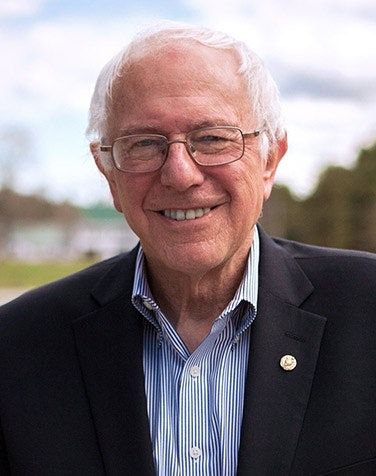
    Senator Bernie SandersSenator Bernie Sanders introduced legislation last Thursday requiring all public school teachers to earn at least $60,000 annually, calling America’s teacher pay crisis a “national emergency” during a Capitol Hill town hall with more than 200 educators.

    The Pay Teachers Act, co-sponsored by eight Democratic senators including Elizabeth Warren and Ed Markey, would establish the first federal mandate for teacher salaries and represents the most ambitious federal intervention in educator compensation in decades.

    “Just four hedge fund managers on Wall Street make more money in a single year than every kindergarten teacher in America combined—over 120,000 teachers,” Sanders said. “No public school teacher in America should make less than $60,000 a year.”

    The legislation comes as schools nationwide face unprecedented staffing shortages, with nearly 200,000 teaching positions either vacant or filled by underqualified educators. According to the bill’s findings, 38% of teachers nationwide earn less than $60,000 annually, with starting teachers averaging $44,530.

    Maria Gonzalez, a third-grade teacher from Arizona who testified at the town hall, said she drives for Uber on weekends and tutors after school to pay rent. 

    “My students ask why I look tired. How do I tell them their teacher can’t afford to live in the community where she teaches?”

    The crisis extends beyond low pay. Twenty-one percent of elementary and middle school teachers’ families rely on public assistance programs including Medicaid, food stamps, and the Earned Income Tax Credit, according to a University of California, Berkeley study cited in the legislation. Additionally, 44% of public school teachers quit within five years, and 17% worked multiple jobs during the 2020-2021 school year.

    The comprehensive bill would cost approximately $400 billion over five years, funded through mandatory appropriations. Beyond the $60,000 minimum salary requirement, the legislation would triple Title I funding, provide teachers with at least $1,000 annually for classroom supplies, and mandate that paraprofessionals and education support staff earn at least $45,000 annually or $30 per hour.

    States would have four years to implement the salary requirements, with extended timelines available for states demonstrating substantial financial need. The bill also includes $50 billion annually for career ladder programs allowing teachers to advance without leaving the classroom.

    The teacher shortage disproportionately affects schools serving students of color and low-income communities, which are four times more likely to employ uncertified teachers than schools with low minority enrollment, according to federal civil rights data cited in the legislation.

    James Williams, a high school mathematics teacher from North Carolina, told the town hall that his salary purchased “a decent life” 15 years ago but now forces him to choose between car repairs and classroom supplies.

    The legislation faces significant political obstacles with Republicans controlling the House. GOP lawmakers have criticized the massive federal spending, while some education policy experts question federal involvement in traditionally state and local compensation decisions.

    Major education unions endorsed the proposal. American Federation of Teachers President Randi Weingarten called it “a crucial federal investment to help sustain the teaching profession,” while National Education Association Vice President Princess Moss praised it as legislation that “invests in our students, educators, and public schools.”

    Sanders criticized recent Republican legislation that he said provides “$900 billion in tax cuts to large, profitable corporations and a $1 trillion tax cut to the top 1%” while cutting over $300 billion in education funding. The Trump administration is also withholding nearly $5.5 billion in congressionally appropriated education funding, according to Sanders and his colleagues.

    “If we can provide over a trillion dollars in tax breaks to the top 1% and large corporations, please don’t tell me that we cannot afford to make sure that every teacher in America is paid at least $60,000 a year,” Sanders said.


    Source link

  • Senate Introduces Legislation to Increase Federal Minimum Wage to $15 per Hour – CUPA-HR

    Senate Introduces Legislation to Increase Federal Minimum Wage to $15 per Hour – CUPA-HR

    by CUPA-HR | June 24, 2025

    On June 10, Senators Josh Hawley (R-MO) and Peter Welch (D-VT) introduced the Higher Wages for American Workers Act (S. 2013). The Higher Wages for American Workers Act would amend the Fair Labor Standards Act (FLSA), raising the federal minimum wage to $15 per hour and directing the secretary of labor to adjust the minimum wage annually based on inflation.

    Higher Wages for American Workers Act

    The bill proposes to increase the federal minimum wage from $7.25 to $15 per hour beginning January 1 of the first year after enactment. Each year after, the secretary of labor is directed to increase the minimum wage annually by “the percentage increase, if any, in the Consumer Price Index for Urban Wage Earners and Clerical Workers.”

    Although the federal minimum wage has not been increased since 2009, several states have increased their state minimum wage above the current $7.25 per hour. As of January 1, 2025, 30 states and the District of Columbia have minimum wage laws set above the federal level, and 10 states and the District of Columbia have a minimum wage of $15 per hour or higher. All other states must follow the minimum wage set by Congress through the FLSA.

    Looking Ahead

    While legislation has been introduced in recent years to increase the federal minimum wage, calls to increase the level to $15 per hour have mostly come from Congressional Democrats. It is therefore notable that Republican Senator Josh Hawley is leading efforts on this issue. It remains to be seen if enough Republicans in the Senate will also support this effort to give the legislation the chance to receive 60 votes to bypass the filibuster and whether House Republicans will take up similar legislation.

    CUPA-HR will keep members apprised of further developments related to federal minimum wage laws.


    Source link

  • House Introduces Bipartisan Paid Leave Legislative Proposal – CUPA-HR

    House Introduces Bipartisan Paid Leave Legislative Proposal – CUPA-HR

    by CUPA-HR | May 13, 2025

    On April 30, Representatives Stephanie Bice (R-OK-5) and Chrissy Houlahan (D-PA-6) introduced the More Paid Leave for More Americans Act, the result of more than two years of work by the House Paid Family Leave Working Group, which Bice and Houlahan co-chair. The package consists of two parts: the Paid Family Leave Public-Private Partnerships Act and the Interstate Paid Leave Action Network (I-PLAN) Act.

    The Legislation

    The first bill of the package — the Interstate Paid Leave Action Network (I-PLAN) Act — would create a national framework “to provide support and incentives for the development and adoption of an interstate agreement that facilitates streamlined benefit delivery, reduced administrative burden, and coordination and harmonization of State paid family and medical leave programs.” It is intended to help resolve the confusion and inconsistencies across the state programs, in particular for the distribution of benefits to workers who work across state lines. The network will also work to identify best practices from existing state paid leave programs, help states harmonize their policies and resolve conflicts with other states’ programs, and help employees access their benefits.

    The second bill — the Paid Family Leave Public-Private Partnerships Act — would establish a three-year pilot program in which the Department of Labor would provide competitive grants to states that establish paid family leave programs that meet certain criteria. To qualify, states would be required to partner with private entities via Public-Private Partnerships (PPP) and participate in I-PLAN. The state programs would be required to offer at least six weeks of paid leave for the birth or adoption of a new child and provide a wage replacement rate between 50% and 67% depending on the income of the individual. Individuals at or below the poverty line for a family of four must receive 67% of their wages, while individuals earning more than double the poverty line for a family of four must receive 50% of their wages. The maximum benefit a worker can receive is 150% of a state’s average weekly wage.

    Looking Ahead

    Bice and Houlahan are optimistic about the package’s prospects, as both bills do maintain bipartisan support and President Trump has indicated an interest in pursuing a federal paid leave program. That said, it is uncertain if and when the House and Senate labor committees would take up these bills for a markup, which is the first step in getting the bill to a floor vote. CUPA-HR will continue to keep members apprised of updates related to this bill and other paid leave proposals that emerge from Congress.


    Source link

  • Congress Introduces Legislation on Employee Classification of Student-Athletes – CUPA-HR

    Congress Introduces Legislation on Employee Classification of Student-Athletes – CUPA-HR

    by CUPA-HR | June 18, 2024

    On June 13, the House Education and Workforce Committee voted to advance H.R. 8534, the Protecting Student Athletes’ Economic Freedom Act. The bill would prohibit student-athletes from being classified as employees under federal and state labor laws and regulations due to their participation in intercollegiate athletics.

    The bill was introduced on May 23 by Rep. Bob Good (R-VA) and 10 House Republicans. If enacted, the bill would prohibit student-athletes from being classified as employees at institutions of higher education, athletic conferences or athletic associations (such as the NCAA). In effect, the legislation would prohibit student-athletes from being classified as employees under federal labor laws, such as the Fair Labor Standards Act (FLSA) and National Labor Relations Act (NLRA), as well as state laws and regulations determining employment classification.

    Throughout the Biden administration’s first term, the National Labor Relations Board (NLRB) has issued significant guidance and decisions with respect to the classification of student-athletes as employees. In September 2021, the NLRB’s general counsel issued a memorandum asserting the agency’s position that student-athletes are considered employees under the NLRA. The memorandum was followed by an NLRB complaint filed against the University of Southern California, the Pac-12 Conference and the NCAA for allegedly misclassifying USC’s men’s football and men’s and women’s basketball players as student-athletes rather than employees. Additionally, in March 2024, the Dartmouth College men’s basketball team voted in favor of joining the Service Employees International Union, after a regional NLRB director determined that players on the team are employees under the NLRA using the board’s general counsel memorandum.

    The bill passed out of committee by a partisan vote of 23-16, only gaining support from Republicans on the committee. The bill now awaits a full House vote, where Republicans can pass the bill with a simple majority. The fate of the bill is more uncertain in the Senate, as it is unlikely that it will gain enough support from Democrats to bypass the 60-vote filibuster. CUPA-HR will keep members apprised of any updates relating to this bill and employee classification of student-athletes generally.


    Source link