Tag: Iowa

  • Hartwick, Duquesne, Iowa State and More

    Hartwick, Duquesne, Iowa State and More

    Laurel Bongiorno, vice president for academic affairs and provost at Hartwick College in New York, has been named president of Hartwick, effective July 1, 2026.

    David Cook, president of North Dakota State University, has been appointed president of Iowa State University, effective March 1, 2026.

    David Dausey, provost of Duquesne University in Pittsburgh, will become president of the institution on July 1, 2026.

    Terence Finley, vice president and chief operating officer at Harris-Stowe State University in St. Louis, has been selected president of Corning Community College, part of the State University of New York system, effective Jan. 2, 2026.

    Jennifer Glowienka, co–interim president of Carroll College in Montana, has been named president of the college, effective July 1, 2026.

    Alan LaFave, president of Valley City State University in North Dakota, has been appointed president of Northern State University in South Dakota, starting in January.

    Carolyn Noll Sorg, vice president for enrollment and marketing at John Carroll University in Ohio, has been appointed president of the university, effective June 1, 2026.

    Jamilyn Penn, vice president of student services at Highline College in Washington, has been named acting president of the institution, effective immediately.

    John Schol, retired bishop of the United Methodists in Greater New Jersey, has been selected as president of Centenary University, effective Dec. 1.

    Michael Spagna, interim president of California State Polytechnic University, Humboldt, has been appointed president of Sonoma State University, also part of the CSU system, effective Jan. 20, 2026.

    Susan Stuebner, interim president of Simpson College in Iowa, has been named the university’s permanent president, effective immediately.

    Gregory Tomso, who most recently served as vice president of academic engagement and student affairs for the University of West Florida, will become president of St. Cloud State University, part of the Minnesota State Colleges and Universities system, effective Jan. 5, 2026.

    Mary Ann Villarreal, vice president for institutional excellence at the American Association of Colleges and Universities, has been appointed interim president of California State University, Dominguez Hills, effective Jan. 1, 2026.

    David Whitlock, interim president of Southeastern Oklahoma State University, has been appointed permanent president of the institution, effective immediately.

    Source link

  • ICE Nabs Iowa School Leader – The 74

    ICE Nabs Iowa School Leader – The 74

    School (in)Security is our biweekly briefing on the latest school safety news, vetted by Mark KeierleberSubscribe here.

    The top campus security story this week is the resignation of Iowa’s largest school district superintendent, who was detained by federal immigration authorities on allegations he was living and working in the U.S. without authorization. 

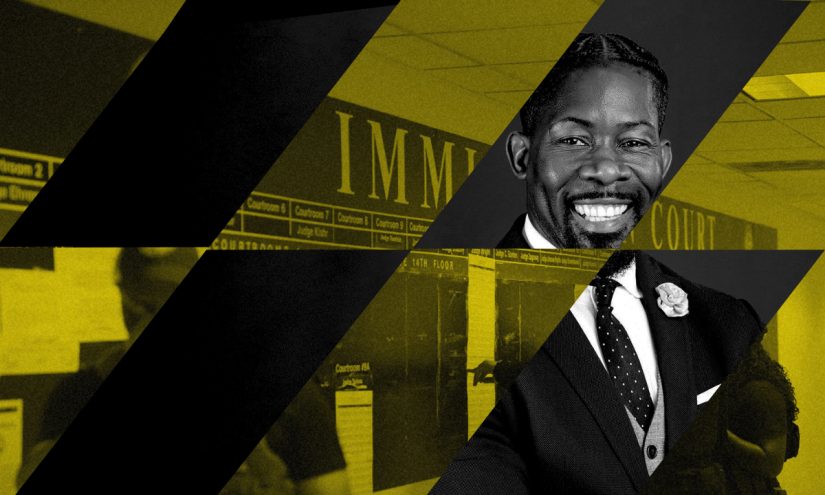
    In a “targeted enforcement operation” a week ago, Immigration and Customs Enforcement agents arrested Ian Roberts, a 54-year-old native of Guyana, who has led Des Moines Public Schools since 2023.

    The fast-moving chain of events raises questions about why ICE agents specifically sought the arrest of the public official and the city’s first Black schools superintendent, whom federal officials said had a previously unreported final order of removal issued by an immigration judge on May 29. Yesterday, he was accused of federal firearm charges for possessing a gun at the time of his arrest.

    The Trump administration has already tied Roberts’ detainment to the president’s broader crackdown on affirmative action. The Justice Department announced Tuesday it would investigate Des Moines Public Schools to determine if it engaged in race-based hiring. 

    In 2021, the district’s former human resources manager said that out of Des Moines Public Schools’ 4,000 staff members, some 400 were Black. His comments were made as the district reflected on hiring Iowa’s first Black teacher 75 years earlier.

    The unraveling of Roberts’ career is also a story of purported deception. The school board, whose vetting practices have come under scrutiny, released a letter this week saying it is “also a victim,” after Roberts was accused of falsifying records about his immigration status and academic credentials.

    Roberts, an Olympic runner for his native Guyana who came to the U.S. in 1999 on a student visa, previously served in leadership roles at school districts in Pennsylvania and Missouri and at a major charter school network. 

    Get up to speed with this step-by-step explainer by the Des Moines Register.


    In the news

    A TikTok post led to the arrest of a Kennewick, Washington, 14-year-old who officials say had guns, a color-coded map of his high school and a manifesto outlining plans to carry out a campus shooting. | Tri-City Herald

    In California, authorities say an anonymous tip thwarted a potential school shooting after a student posted “detailed threats” on social media including a “mapped-out plan.” | NBC News
    The Education Department announced it would withhold more than $65 million in federal grants to the New York City, Chicago and Fairfax, Virginia, school districts for upholding equity policies designed to support transgender and Black youth. | The New York Times

    Campus speech at the forefront: More than 350 complaints have been submitted to the Texas education department against public school employees accused of publishing social media posts that praised the assassination of conservative activist Charlie Kirk. | Fort Worth Report

    • The Los Angeles Unified School District faces accusations that its social media policy, which allows educators to ban parents from campus for making threatening or racist online comments about school officials, violates the First Amendment. | LAist
    • ‘Truly scandalous’: The Trump administration engaged in the “unconstitutional suppression of free speech” when federal immigration enforcement officials arrested and sought to deport international college students for their pro-Palestinian activism. | The Washington Post
    • A new PEN America report warns of a “disturbing normalization of censorship” in public schools where book bans have risen sharply in the last few years. The 1962 novel A Clockwork Orange by Anthony Burgess topped the list. | NPR 
    • Lawrence, Kansas, school officials were accused of censoring high school journalists and intimidating their adviser in violation of state law after current and former students filed a federal lawsuit alleging the district’s use of a digital student surveillance tool violated their privacy and press freedom rights. | Student Press Law Center
      • The student activity monitoring tool Gaggle, which flags keywords like “kill” and “bomb,” “has helped our staff intervene and save lives,” the Lawrence district says. But students say the system subjected them to false allegations. | The Washington Post
      • The 74 throwback: Meet the gatekeepers of students’ private lives. | The 74

    ‘Places of care, not chaos’: California Gov. Gavin Newsom signed into law new rules that require federal immigration enforcement officers to show a warrant or court order before entering a school campus or questioning students. | EdSource

    Minnesota’s red flag gun law, which allows authorities to confiscate firearms from people with violent plans, has been used to prevent school shootings but its use is inconsistent, an investigation found. | The Minnesota Star Tribune

    A middle school boy from New York was arrested on allegations of catfishing classmates by impersonating a girl online, convincing male classmates to send him sexually revealing photographs and extorting them for cash or gift cards. | The New York Times

    Sign-up for the School (in)Security newsletter.

    Get the most critical news and information about students’ rights, safety and well-being delivered straight to your inbox.

    The Trump administration plans to overhaul a student loan forgiveness program for employees at nonprofits that officials claim are engaged in “illegal activities” — a justification that could be used to target organizations that serve immigrants and transgender youth. | The Associated Press

    A Michigan school district, where four elementary school girls said they were groped by a classmate on the playground, is accused of waiting eight days to report the incident to the police. | Lansing State Journal


    ICYMI @The74

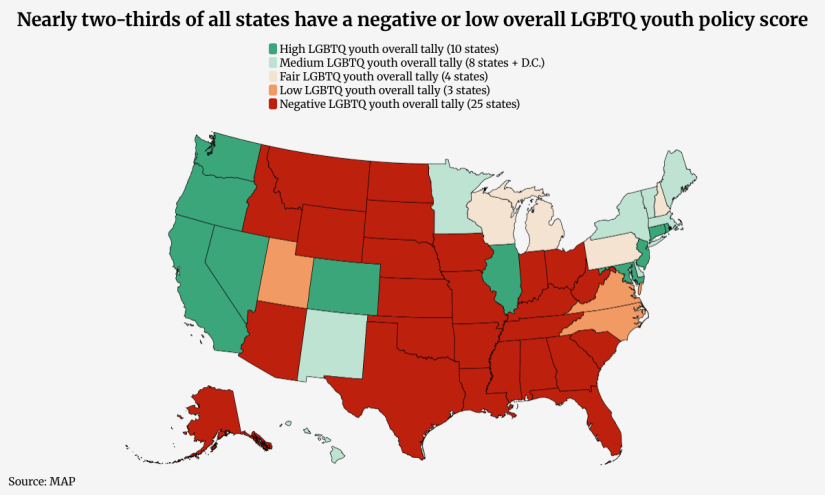
    As the LGBTQ Youth Population Doubles, Number of Bills Targeting Them Triples

    Goblins AI Math Tutoring App Clones Your Teacher’s Looks and Voice

    From Screen Time to ‘Green Time’: Going Outside to Support Student Well-Being


    Emotional Support

    The 74 will meet for a company summit in Minneapolis next week. Matilda wasn’t invited, but she couldn’t care less.


    Get stories like these delivered straight to your inbox. Sign up for The 74 Newsletter

    Source link

  • University of Iowa launches ‘proactive’ committee to hunt for revenue and boost efficiency

    University of Iowa launches ‘proactive’ committee to hunt for revenue and boost efficiency

    This audio is auto-generated. Please let us know if you have feedback.

    Dive Brief:

    • The University of Iowa has assembled a massive universitywide committee to explore new revenue opportunities and ways to boost efficiency, the public institution announced last week. 
    • Dubbed “Resparc” short for Revenue and Efficiencies Strategic Plan Action and Resource Committee — the group includes nearly 100 faculty, staff and officials from 35 units across the institution. 
    • Subcommittees will explore specific areas such as philanthropy, academic programs and financial operations. Those teams will develop proposals for increasing revenue and improving operations for Resparc’s leadership and ultimately for University of Iowa’s president and provost.

    Dive Insight:

    The university framed its new initiative as forward-looking, meant to ensure University of Iowa “maintains its strong financial trajectory for years to come,” rather than having to wrestle reactively with challenges as they happen. 

    “By launching this effort from a position of financial health, the university will be able to build upon its success at a time when higher education is navigating significant disruption, from the anticipated demographic enrollment cliff to a decline in public trust and growing financial constraints,” the university said in its announcement. 

    Iowa’s flagship university is growing. By fall 2024, its total faculty and staff had increased 5.1% year over year to 27,795 employees, while enrollment grew 2.4% to 32,199 students

    The university’s total assets and revenues have also been steadily rising in recent years. In fiscal 2024, its operating income — which does not include state appropriations, certain grants and contacts, investment income or gifts — stood at $36.8 million. The positive operating income stands in contrast to that of the many public universities with operating losses before those sources of revenue are factored in. 

    But University of Iowa officials acknowledged the challenges rippling across the higher ed landscape, including an anticipated decline in the traditional college-age population

    In Iowa specifically, the number of high school graduates is projected to decline by 4% from 2023 to 2041, according to the latest estimates from Western Interstate Commission for Higher Education. 

    University of Iowa has also seen its expenses jump along with the rest of the higher ed world, adding new financial constraints. Between fiscal years 2022 and 2024, its total operating expenses rose 15.7% to $5 billion. 

    The Trump administration’s aggressive moves to limit federal research funding could pose additional pressure. In 2024, University of Iowa brought in $315 million in federal research funding. The Trump administration has now terminated grants to the university worth roughly $14.3 million and having $9.7 million still left to be paid out, according to a Center for American Progress analysis of U.S. Department of the Treasury data. 

    Against that backdrop, many institutions — public and private — are cutting back spending and shrinking their employee base, both through layoffs and attrition. But University of Iowa officials say Resparc is different. 

    In a FAQ page, the university said the efficiency-seeking efforts are “a proactive planning effort, not a response to a budget crisis.” It states that the goal “is to find ways to work smarter, improve processes, reduce administrative burdens, and better leverage our collective resources and technology.”

    Resparc is led by Emily Campbell, associate vice president for operations and decision support, and Sara Sanders, dean of the university’s liberal arts and sciences college. 

    Campbell and engineering dean Ann McKenna oversee the initiative’s revenue teams, while Sanders and Peter Matthes, vice president for external relations and senior advisor to University of Iowa President Barbara Wilson, oversee the efficiency group.

    Source link

  • Iowa board approves course policy change after stripping anti-DEI references

    Iowa board approves course policy change after stripping anti-DEI references

    This audio is auto-generated. Please let us know if you have feedback.

    The Iowa Board of Regents on Tuesday approved a policy change that requires public university faculty to “present coursework in a way that reflects the range of scholarly views and ongoing debate in the field.” 

    Under the change, effective immediately, the board will also audit the three universities it oversees — the University of Iowa, Iowa State University and the University of Northern Iowa — at least every two years for compliance with the new directive.

    The policy change significantly revises the original proposal’s language, which included references to diversity, equity and inclusion and critical race theory. Tuesday’s 7-1 vote came after public pushback over that proposal and two postponements by the board to approve the policy.

    The initial version of the proposal would have barred Iowa university academic programs from requiring courses containing “substantial content that conveys DEI or CRT.” As examples of DEI, it lists systemic oppression, anti-racism, social justice, and unconscious or implicit bias. Universities would have been able to apply to regents for exemptions.

    The wide-reaching language prompted criticism from academic groups, students and those who argued it would undermine free speech.

    In one example, five state educator groups launched a joint petition urging “the Iowa Board of Regents to firmly reject efforts to restrict what students can learn.” The petition, which does not address the updated policy, noted that the original language would have affected at least a dozen academic programs. 

    “Students in certain fields — such as social work and nursing — would have been at a special disadvantage, since those professions’ standards require graduates to show competency in various topics banned under the policy,” it said.

    Board President Sherry Bates said the regents delayed the vote at their July meeting so they could review the policy. The board then set a special August meeting for the vote.

    In the intervening weeks, the board released a new version of the proposal. The updated language — which ultimately passed Tuesday — states that “faculty may teach controversial subjects” when relevant to course content, but they must present such topics from multiple and opposing viewpoints.

    “University teachers shall be entitled to academic freedom in the classroom in discussing the teachers’ course subject, but shall not introduce into the teaching controversial matters that have no relation to the subject,” the updated version says.

    It also states that students’ grades should reflect their “mastery of course content and skills,” not their “agreement or disagreement with particular viewpoints expressed during instruction or in their work.”

    ‘What exactly is controversial, and who will decide?’

    The new policy addresses how topics are taught rather than what is taught, Regent Robert Cramer argued.

    “Personally, I don’t want any of the DEI/CRT woke left stuff being taught in our classes,” he said. “But this policy is not my personal beliefs.

    But Regent Nancy Dunkel, the sole member of the board to vote against the policy, raised concern about the ambiguity of the policy’s language.

    “What exactly is controversial, and who will decide? Can anyone declare something as controversial?” she asked. She also noted that the policy change in and of itself has become controversial among Iowa constituents. 

    Dunkel further raised questions about the requirement for faculty to present a range of viewpoints.

    “If a professor has to present both sides to an issue, does that mean a marketing professor must also include anti-capitalist arguments to students?” she asked. “Do anti-evolution arguments have to be presented in biology classes? How do we present both sides of the Holocaust?”

    The board voted immediately after Dunkel’s comments.

    ‘I will not be passive’ 

    The regents also made clear to Iowa’s three universities — the leaders of which joined Tuesday’s meeting — that they have been put on notice regarding DEI efforts.

    Two of Iowa’s public universities have become a talking point among conservative media outlets. In recent weeks, conservative outlets and anti-DEI watchdog groups published a series of videos — the most recent of which was released Sunday — that appear to show two officials at the University of Iowa and one at Iowa State discussing how they could work around state DEI restrictions.

    Source link

  • Iowa board reworks anti-DEI course policy proposal following pushback

    Iowa board reworks anti-DEI course policy proposal following pushback

    This audio is auto-generated. Please let us know if you have feedback.

    Dive Brief:

    • The Iowa Board of Regents has removed references to “critical race theory” and “diversity, equity and inclusion” from a controversial proposal to limit what courses the state’s three public universities can require. The regents plan to vote on the issue during a special meeting on Tuesday.
    • Under the original proposal, academic programs would not have been able to require students to take classes containing “substantial content that conveys DEI or CRT.” Universities that wanted an exemption would have had to gain board approval every other year.
    • Following public pushback, the board reworked the proposal to state that “faculty may teach controversial subjects” when relevant to course content, but they are expected to “present coursework in a way that reflects the range of scholarly views and ongoing debate in the field.” The revision also leaves the board the option to “periodically” review the universities’ compliance.

    Dive Insight:

    The Iowa Board of Regents — which oversees the University of Iowa, Iowa State University and the University of Northern Iowa — has so far delayed the vote on the proposal twice, last postponing the decision at its July 30 meeting. 

    The original language included extensive examples of DEI topics that would have been restricted, including anti-racism, “transgender ideology,” systemic oppression, and unconscious or implicit bias.

    “One of the primary reasons we are not taking up the DEI/CRT policy is that the discussions on how to best implement the ideas that were brought forward are still ongoing,” Board President Sherry Bates said in prepared remarks, citing responses from the community. “It has become clear that we would be better served by something more comprehensive.”

    Much of the local response has been negative.

    Five Iowa educator advocacy groups joined together to form the Iowa Higher Education Coalition to oppose the policy and launched a petition “to urge the Iowa Board of Regents to firmly reject efforts to restrict what students can learn.” The petition, which does not address the updated policy, had garnered 470 signatures as of Friday afternoon.

    The faculty union at the University of Northern Iowa, one of the members of the coalition, voiced opposition at the board’s June meeting, when it was first scheduled to vote on the proposal.

    “There is no middle position, no position of slight appeasement,” United Faculty President Christopher Martin told board members at the meeting. “Either you stand for free expression at Iowa’s universities or you don’t. And God help Iowa, its public universities and all the citizens of this state if you don’t.”

    Martin said that the proposal came from two out-of-state think tanks’  generic recommendations, and he alleged that it runs contrary to state law.

    Since that meeting, the board has reworked the language significantly.

    “University teachers shall be entitled to academic freedom in the classroom in discussing the teachers’ course subject, but shall not introduce into the teaching controversial matters that have no relation to the subject,” the updated version said.

    Regardless of how the board votes next week, the Iowa Legislature may step in.

    State Rep. Taylor Collins, chair of the Legislature’s newly created Higher Education Committee and an avid opponent of DEI efforts, voiced support for the board’s original policy proposal last month.

    “If this policy is not adopted, the House Committee on Higher Education stands ready to act,” he said on social media after the board delayed a vote on the policy for the second time.

    Iowa Gov. Kim Reynolds signed a bill in May 2024 that prohibits public universities from maintaining or funding DEI offices or from officially weighing in on a wide array of issues. The list includes allyship, cultural appropriation, systemic oppression, social justice, racial privilege or “any related formulation” of the listed topics. 

    The law prompted PEN America, a free expression advocacy group, to include Iowa on its yearly list of states that enacted “educational gag orders.”

    The board of regents has also moved to limit diversity work on campus. In 2023, it ordered the universities under its purview to cut all campuswide DEI efforts not required to comply with the law or accreditation standards.

    Source link

  • Video Allegedly Showing U of Iowa Promoting DEI Sparks Probe

    Video Allegedly Showing U of Iowa Promoting DEI Sparks Probe

    Following a complaint by Iowa governor Kim Reynolds, the state attorney general’s office is investigating a video that allegedly shows a University of Iowa administrator saying the institution is still promoting diversity, equity and inclusion, despite the state’s ban.

    Fox News Digital published a story earlier this week based on what it called an “undercover video,” which shows a woman identified as Drea Tinoco, assistant director for leadership and student organization development at the university, saying, “On behalf of my office, we’re still going to talk about DEI, we’re still going to do all the DEI things.”

    The story doesn’t specify who recorded the video or whether they were working for Fox or another entity. The conservative group Accuracy in Media has released similar videos allegedly revealing employees skirting DEI prohibitions in other states, but AIM president Adam Guillette said the video isn’t from his organization.

    In the video, dated July 2, the woman also says, “DEI and student organizations and all of that, it is real, it still exists, we’re still doing DEI work.” Though it’s not in the clip, Fox also reported that Tinoco called Reynolds, a Republican, “cuckoo bananas.”

    Tinoco didn’t respond to Inside Higher Ed’s requests for comment Thursday. In an email, a university spokesperson didn’t confirm or deny whether the video is real or whether Tinoco is the person shown in it, saying, “Personnel matters are considered confidential.”

    Last year, Reynolds signed legislation banning DEI at public universities. In a statement Tuesday, Reynolds said, “I’m appalled by the remarks made in this video by a University of Iowa employee who blatantly admits to defying DEI restrictions I signed into law on May 9, 2024.”

    She filed a complaint with Attorney General Brenna Bird, another Republican, who announced her office is investigating. University president Barbara Wilson additionally told the Iowa Board of Regents Wednesday that her institution has “launched an immediate and comprehensive investigation.”

    Source link