Tag: Issues

  • TEQSA can’t fix wage underpayment, VC pay issues: Governance inquiry

    TEQSA can’t fix wage underpayment, VC pay issues: Governance inquiry

    The National Tertiary Education Union (NTEU) has told the Education and Employment Senate Committee that the sector regulator doesn’t have the correct functions to address staff underpayments, amid calls it needs more power.

    Union policy and research officer Kieran McCarron said there are two general issues with Tertiary Education Quality and Standards Agency (TEQSA) that impact staff.

    “The threshold standards are too high-level and vague, especially when it comes to governance and staffing,” he told the Committee.

    “The second issue is that either the enforcement powers are too weak, it’s too complicated for TEQSA to access them, or they’re just simply inappropriate. For example, deregistration is just inappropriate overkill to deal with the issues that our members face.

    “Having everyone lose their jobs and the universities shut down doesn’t solve wage theft and it doesn’t help the community, so it’s not an appropriate power.”

    He said there needs to be changes to TEQSA so it can “ensure compliance with appropriate penalties,” and better reflect current staff conditions.

    TEQSA chief executive Mary Russell told the same Committee her body needs more powers to wrangle universities and help it to deal with staff-related issues, giving an example of a teaching issue that can’t currently be resolved by TEQSA under its existing powers.

    “There’s actually already a legislative requirement that any person teaching in higher education needs to be engaged in continuing scholarship and research. That’s your traditional “40:40:20 academic.”

    “How is it that at least half of the teaching performed in our universities is performed by casual staff who are hired on an hourly basis and who are only paid for the hours in which they are directly engaged with students?

    “How is it being ensured that they’re performing scholarship and research – because they’re not paid to do that. There’s an assumption made that they’ll just do that in their own time, and that’s unpaid work. This is an example of an issue that TEQSA is aware of but doesn’t have any appropriate tools to deal with.”

    Wage underpayment and financial management

    Wage underpayments and high vice-chancellor pay are the two biggest money-related issues universities have.

    The Fair Work Ombudsman Anna Booth later told the Committee her office has recovered $180.9m for 99,000 university employees as of February 28, 2025. The NTEU has estimated wage underpayments, paid or unpaid, are set to exceed $400m.

    Fair Work Ombudsman Anna Booth said there are repeating factors as to why universities keep discovering underpaid staff. Picture: Martin Ollman

    Ms Booth said the most common “trends” Fair Work sees when dealing with underpayments include: high numbers of casual staff; poor governance and management oversight practices; a lack of centralised human resources functions; pay related issues commonly dealt with by academic managers who lack appropriate expertise; and lack of investment in payroll and time-recording systems.

    “Our investigations have largely concerned casual professional and academic staff and have largely included unpaid work – unpaid marking activities, lecture and tutorial attendance, and other student interactions – as well as the application of incorrect classifications, unpaid entitlements and the improper use of piece rates,” she told the Committee.

    Universities Australia, which is the vice-chancellor’s membership group, in its submission said debate about VC salaries, which average $1m, are solely political and distract from issues of underfunding degrees and research.

    “Debate over vice-chancellor salaries, for example, distracts from the conversation we need to have about funding our universities properly,” chief executive Luke Sheehy wrote.

    “Their salaries are set by university councils. I don’t believe they should be the sole focus of parliamentarians, certainly not at the expense of the policies and funding needed to keep our universities strong.”

    Related stories: La Trobe most recent uni to reveal it underpaid staff | Monash underpays $7.6m as ‘expert council’ on uni governance members announced

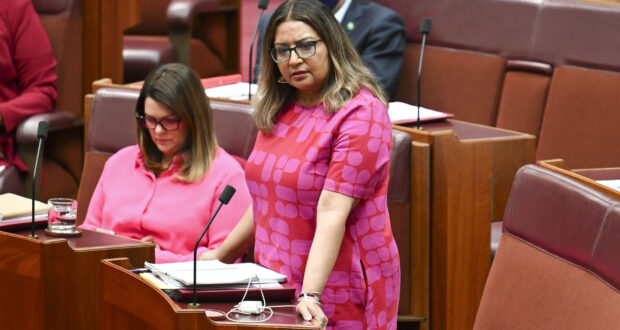
    Greens senator Mehreen Faruqi, who disclosed she is an NTEU member, said she was “pretty outraged” when she read the UA submission.

    “I think this debate is fundamental to how universities operate, especially given the exorbitant pay packets of executive staff and VCs on the one hand and the systemic wage theft, rampant casualisation and insecure work on the other,” she said.

    Fear and secrecy

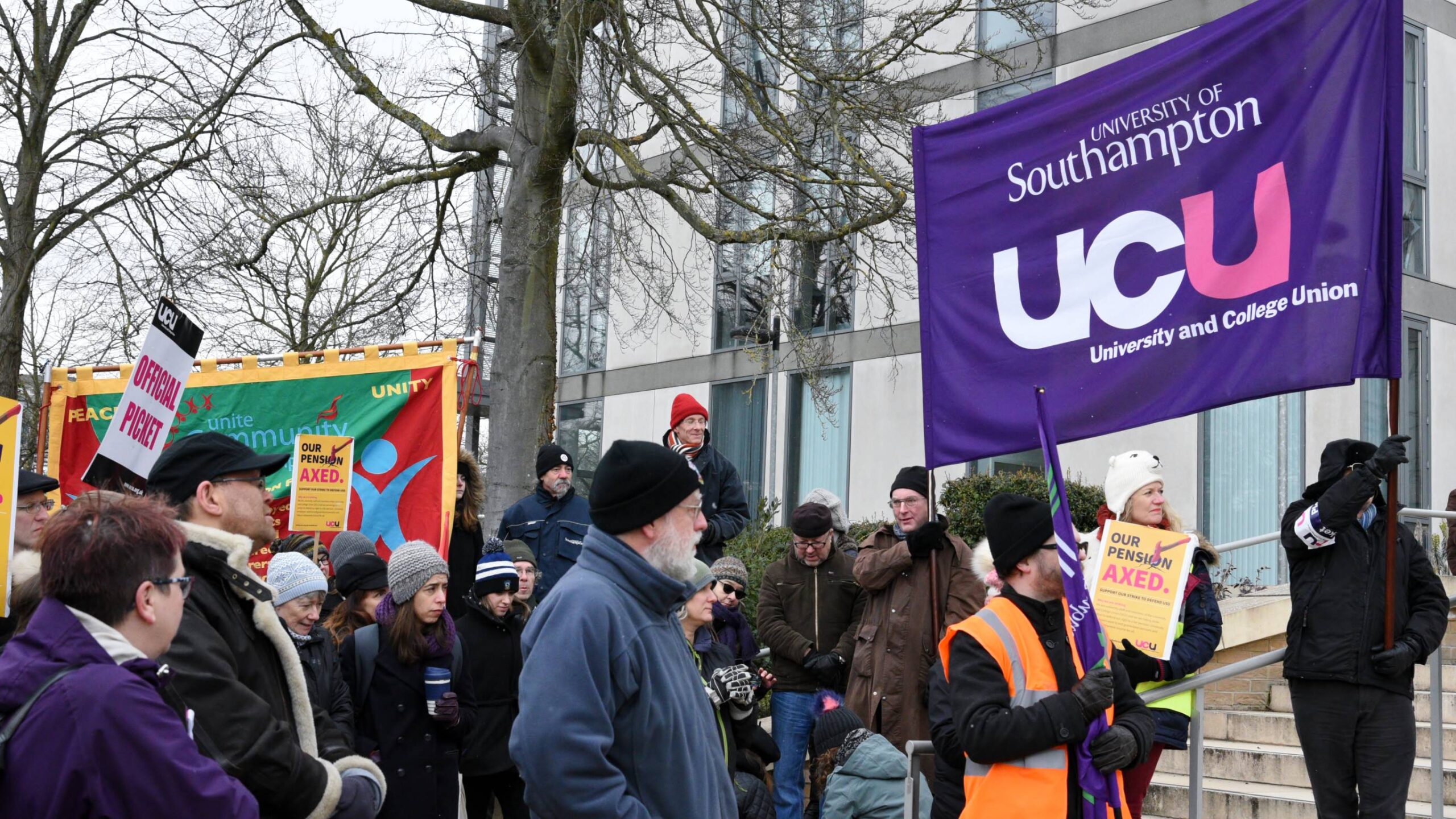
    NTEU branch president at Federation University Dr Mathew Abbott said constant cuts and restructures throughout the sector has created a workplace culture that fears retribution.

    “University staff fear for their livelihoods, and that creates a culture in which staff become more compliant and less likely to speak out,” he said.

    “This is something I’ve tried to raise – the psychological toll it takes, the professional toll, and, of course, the impact of this on students.

    “When staff are placed under this kind of pressure, along with other issues like workloads and so on, it has a flow-on effect to the quality of the education that we provide to our students.”

    He said there is a “culture of secrecy” in university councils and senates, something NTEU member Professor Fiona Probyn-Rapsey from University of Wollongong also said is exacerbated by largely non-staff elected boards.

    There were multiple calls made for university council meeting minutes to be available to all university staff.

    “We have very little access to what university councils are discussing and how decisions are made. We don’t see minutes, and we barely get any interaction with university council members,” Professor Probyn-Rapsey said.

    “They don’t operate in the same way that the rest of the university does – in a collegial manner – or in the way a university should be behaving.”

    Management should also let staff have more say in teaching decisions, Professor Andrea Lamont-Mills, University of Southern Queensland NTEU branch president, added.

    Professor Andrea Lamont-Mills is associate dean of research at UniSQ. Picture: Newswire

    “Staff feel disempowered because they’re not using their expertise – it’s not valued, and their professionalism is not valued,” she said.

    “It’s disempowering when you get excluded from decisions that actually impact you, or you have limited input into decisions that directly impact you.

    “Our staff are highly skilled and highly knowledgeable, and they want to be part of developing decisions and coming up with solutions, yet they’re disempowered – they’re not able to do that.”

    Source link

  • Trump Issues Executive Order to Restrict Gender Ideology in the Federal Government

    Trump Issues Executive Order to Restrict Gender Ideology in the Federal Government

    by CUPA-HR | January 22, 2025

    On January 20, the Trump administration issued an executive order (EO) titled, “Defending Women from Gender Ideology Extremism and Restoring Biological Truth to the Federal Government.” The EO was one of several executive orders and actions published by the Trump administration on its first day in office.

    The EO states that the United States government will recognize only two sexes — male and female — and defines sex as “an individual’s immutable biological classification as either male or female.” The definition continues to say that sex is “not a synonym for and does not include the concept of ‘gender identity.’” The executive order also defines “woman” and “girl” and “man” and “boy” to be adult and juvenile human females and males, respectively.

    The EO orders the secretary of health and human services to provide guidance expanding on the definitions established in the EO. It also directs all federal agencies to use the definitions set forth in the order “when interpreting or applying statutes, regulations, or guidance and in all other official agency business, documents, and communications.” All federal agencies will also be directed to use the term “sex” and not “gender” when administering or enforcing sex-based distinctions in applicable federal policies and documents.

    It also appears that the Trump administration hopes to codify these definitions into law through Congressional action. Specifically, the EO directs the assistant to the president for legislative affairs to provide the president proposed bill text to codify the definitions set in the order within 30 days.

    The EO also discusses the Supreme Court’s decision in Bostock v. Clayton County, which held that Title VII of the Civil Rights Act of 1964 protects employees from discrimination on the basis of sexual orientation or gender identity. The EO states that the Biden administration argued that the Bostock decision “requires gender identity-based access to single-sex spaces under, for example, Title IX of the Educational Amendments Act,” which the Trump administration states is “legally untenable.” As such, the EO directs the U.S. attorney general to issue guidance to federal agencies to “correct the misapplication” of Bostock to “sex-based distinctions in agency activities.” The EO also directs the attorney general to issue guidance and assist federal agencies in protecting sex-based distinctions.

    The EO directs all federal agencies to submit an update to the Trump administration on implementation of this order within 120 days. The update is required to include information on changes to agency documents and agency-imposed requirements on federally funded entities, including federal contractors, that were implemented to comply with the order. The head of each federal agency is also directed to rescind all guidance documents inconsistent with the requirements of the order, and the EO includes a partial list of documents that the administration deems as inconsistent, including several Department of Education guidance documents on Title IX and the Equal Employment Opportunity Commission’s 2024 Enforcement Guidance on Harassment in the Workplace.

    Finally, the EO directs agencies to take “all necessary steps, as permitted by law, to end the federal funding of gender ideology” and to “assess grant conditions and grantee preferences” to “ensure grant funds do not promote gender ideology.”

    Federal agencies will soon begin to take action and announce guidance to comply with the EO requirements. Institutions should therefore be aware of forthcoming guidance from the Department of Education on Title IX as a result of this EO. There could also be future ramifications for institutions that receive federal funds, including grants and contracts. CUPA-HR will continue to monitor for agency actions as well as any additional updates from the Trump administration as it relates to sex and gender-related policy.


    Source link

  • Biden Issues Historic Posthumous Pardon to Civil Rights Leader Marcus Garvey

    Biden Issues Historic Posthumous Pardon to Civil Rights Leader Marcus Garvey

    In one of his final acts as president, Joe Biden granted a posthumous pardon to Marcus Mosiah Garvey Jr., the influential civil rights leader and founder of the UniversalMarcus Garvey Negro Improvement Association (UNIA), clearing his name of a 1923 mail fraud conviction that many have long viewed as unjust.

    The pardon, announced just before the Martin Luther King Jr. holiday, came after years of advocacy from Howard University School of Law professors and students, led by Professor Justin Hansford, who worked closely with Garvey’s son, Dr. Julius Garvey.

    “In the words of Dr. Martin Luther King, Marcus Garvey was ‘the first man of color in the history of the United States to lead and develop a mass movement,’” said Hansford, who published Jailing a Rainbow: The Unjust Trial and Conviction of Marcus Garvey last year. “He was convicted of mail fraud in a trial widely recognized as a miscarriage of justice.”

    The pardon effort gained significant support from 21 members of Congress, primarily from the Congressional Black Caucus, who urged Biden to “honor his work for the Black community, remove the shadow of an unjust conviction, and further your administration’s promise to advance racial justice.” Last year, Diverse featured a podcast on the subject. 

    Garvey, Jamaica’s first national hero, was convicted in 1923 on one count of mail fraud related to his role as president of the Black Star Line shipping company. He received the maximum sentence of five years imprisonment and a $1,000 fine.

    The UNIA founder was a pioneering advocate for human rights and Pan-Africanism, building a movement that reached 6 million members across 40 countries.

    The presidential pardon marks the end of a century-long struggle to clear Garvey’s name. Previous attempts included congressional hearings in 1987 led by Representatives John Conyers and Charlie Rangel, who introduced resolutions to exonerate him.

    The exoneration comes 84 years after Garvey’s death in 1940, affirming his innocence and recognizing his significant contributions to civil rights and human rights advocacy worldwide.

    Source link

  • Indiana governor issues executive order eliminating DEI

    Indiana governor issues executive order eliminating DEI

    Indiana governor Mike Braun signed an executive order Wednesday eliminating diversity, equity and inclusion in all state agencies and replacing it with what he’s calling “MEI”—merit, excellence and innovation.

    The order requires all executive branch state agencies to uphold the Supreme Court’s 2023 decision in Students for Fair Admissions vs. Harvard, which prohibited the consideration of race in college admissions, noting that “eliminating racial discrimination means eliminating all of it” and that equal protection applies “without regard to any differences of race, of color, or of nationality.”

    Under the order, government offices cannot use state funds, property or resources to support DEI initiatives, require job candidates to issue DEI statements or “mandate any person to disclose their pronouns.” State agencies must review their individual programs and policies for compliance by April 30 and provide a written report to the governor by July 1.

    The order also closes the government’s Office of the Chief Equity, Opportunity and Inclusion Officer, which was created in 2020 under Braun’s predecessor, Governor Eric Holcomb.

    This makes Indiana the second state this year to eliminate DEI by executive order, following West Virginia.

    Among the other executive orders Braun signed during his first week as governor was one requiring the state personnel office to review all job postings and eliminate degree requirements for positions where they’re not necessary.

    Source link

  • DHS Issues Final H-1B Modernization Rule

    DHS Issues Final H-1B Modernization Rule

    by CUPA-HR | December 18, 2024

    On December 18, the Department of Homeland Security (DHS) published a final rule to modernize the H-1B visa program, finalizing changes first proposed in October 2023. The rule will take effect on January 17, 2025, introducing significant updates aimed at clarifying the requirements of the H-1B program and improving program efficiency, providing greater benefits and flexibility for petitioners and beneficiaries, and strengthening program integrity measures.

    The final rule responds to comments from a variety of stakeholders, including concerns raised by CUPA-HR and others in a multi-sector joint comment letter signed by 74 organizations and a higher education-focused letter led by the American Council on Education (ACE). Both letters advocated for changes to the definition of a “specialty occupation” and other key areas to ensure the regulations better align with workforce needs. The final rule incorporates feedback from stakeholders and aims to provide clarity while maintaining program integrity.

    Below are highlights of some noteworthy provisions in the final rule and next steps.

    Revised Definition and Criteria for H-1B Specialty Occupations

    The final rule modifies the definition of an H-1B specialty occupation in response to public comments, including those CUPA-HR signed onto in a multi-sector joint comment letter and a higher education-focused letter. DHS clarified that a degree or its equivalent must be “directly related” to the duties of the position, with “directly related” defined as having a logical connection between the degree and the job duties. This change addresses concerns raised in comments that the proposed language could have been misinterpreted to require adjudicators to focus solely on a beneficiary’s specialized studies.

    The rule also permits a range of qualifying degree fields, provided that each field is directly related to the position’s duties. Additionally, DHS removed references to specific degree titles such as “business administration” and “liberal arts” to avoid undue reliance on degree titles. This recognizes that degree titles can vary between institutions and evolve over time, emphasizing the relevance of the degree’s content rather than its name. These changes align with the requests made in the joint comment letter, ensuring that the definition of a specialty occupation is practical and reflective of modern workforce realities.

    Codification of the Deference Policy

    The final rule codifies DHS’s current deference policy, providing greater clarity on how U.S. Citizenship and Immigration Services (USCIS) adjudicators should approach petitions involving the same parties and underlying facts. Under the codified policy, adjudicators are generally required to defer to a prior USCIS determination of eligibility when adjudicating a subsequent Form I-129, Petition for Nonimmigrant Worker. However, deference will not apply if a material error in the prior approval is discovered, or if new material information or a material change impacts the petitioner’s or beneficiary’s eligibility.

    Elimination of the Itinerary Requirement

    The final rule eliminates the itinerary requirement, which previously required petitioners to provide an itinerary detailing the dates and locations of services or training when filing Form I-129. This change addresses concerns that the requirement was largely duplicative of other information already provided in the petition. Eliminating this requirement simplifies the filing process, reducing administrative burdens for petitioners. The change is particularly beneficial for individuals in roles such as medical residencies under H-1B, where work may occur at multiple sites, as it removes unnecessary procedural hurdles without impacting USCIS’s ability to assess eligibility.

    Expanded H-1B Cap Exemptions for Nonprofit and Governmental Research Organizations

    The final rule modestly broadens the scope of H-1B cap exemptions for nonprofit and governmental research organizations, as well as nonprofits affiliated with institutions of higher education. The revised definitions recognize that qualifying organizations may have multiple fundamental activities or missions beyond just research or education. Under the updated regulations, organizations can qualify for a cap exemption if research or education is one of their fundamental activities, even if it is not their primary activity or mission. These changes better align the cap exemption criteria with the diverse roles and structures of modern nonprofit and governmental entities.

    Enhanced Cap-Gap Protections for F-1 Students

    The final rule extends cap-gap protections for F-1 students transitioning to H-1B status. Under the new provision, F-1 students who are beneficiaries of timely filed, nonfrivolous H-1B petitions will receive an automatic extension of their F-1 status and employment authorization through April 1 of the following calendar year. This extension provides up to six additional months of status and work authorization, reducing the risk of lapses in lawful status or employment eligibility while awaiting approval of the change to H-1B status.

    Codification of Site Visit Authority

    The final rule codifies and strengthens the USCIS site visit program, which is administered by the Fraud Detection and National Security (FDNS) unit. DHS clarifies that refusal to comply with a site visit may result in the denial or revocation of a petition. Additionally, the rule explicitly authorizes DHS to conduct site visits at various locations connected to the H-1B employment, including the primary worksite, third-party worksites, and any other locations where the employee works, has worked, or will work. This provision formalizes long-standing practices and enhances USCIS’s ability to monitor compliance with H-1B program requirements.

    Next Steps

    The rule takes effect on January 17, 2025, just days before the next presidential inauguration. While it is unclear if the incoming Trump administration will seek to modify or withdraw the regulation, the codification of key provisions, such as the deference policy, makes them more difficult to rescind without formal rulemaking.

    Employers should also prepare for the required use of a new edition of Form I-129, Petition for a Nonimmigrant Worker, on the rule’s effective date. Because there will be no grace period for accepting prior editions of the form, employers should review the preview version, which will be published soon on uscis.gov, to prepare for the transition.


    Source link

  • DOL Issues Report on Coercive Contractual Provisions

    DOL Issues Report on Coercive Contractual Provisions

    by CUPA-HR | October 22, 2024

    On October 17, the Department of Labor’s (DOL) Office of the Solicitor (SOL) issued a Special Enforcement Report on “coercive contractual provisions.” The report lists several provisions they have seen included in employment contracts that the department believes “may discourage workers from exercising their rights under worker protection laws.” The report demonstrates recent actions taken by SOL to combat such provisions, but it does not include new enforcement actions against employers that use these provisions.

    In the report, SOL claims the provisions discussed are coercive, violate the law and have significant impacts on the most vulnerable workers. The report details seven types of contractual provisions they find especially concerning:

    1. Contractual provisions requiring workers to waive statutory protections, including those requiring workers to waive their rights to bring claims and recover damages under the Fair Labor Standards Act
    2. Contractual provisions that purport to require employees to agree that they are independent contractors
    3. Indemnification-type provisions and related counterclaims purporting to shift liability for legal violations to workers or other entities
    4. “Loser pays” provisions attempting to require employees to pay the employer’s attorney’s fees and costs if the employees do not prevail in litigation or arbitration
    5. “Stay or pay” provisions, including some training repayment assistance provisions, that purport to require workers to pay damages to their employer for leaving a contract early
    6. Confidentiality, non-disclosure and non-disparagement provisions
    7. Company policies that purport to require workers to report safety concerns to their employer before contacting any government agencies

    The report emphasizes that the Department of Labor is “not bound by private contracts or arbitration agreements between workers and employers” and thus “has a unique role to play in fighting the use of these ‘fine print’ or ‘coercive’ contractual provisions.” It provides examples of cases where the courts have found such agreements unenforceable or where DOL has pursued an injunction in federal court seeking an order blocking one or more contract provisions.

    Importantly, the report is largely a restatement of current law and, for the most part, does not outline new enforcement actions against employers for using these provisions. Instead, the report outlines the work SOL has done recently to fight against the coercive contractual provisions, including cases and amicus briefs filed against employers using such business practices.

    CUPA-HR will continue to monitor for additional resources from the Department of Labor that may impact contractual labor provisions.


    Source link

  • NLRB Issues Memo Outlining Higher Ed Institutions’ Disclosure Obligations under NLRA and FERPA – CUPA-HR

    NLRB Issues Memo Outlining Higher Ed Institutions’ Disclosure Obligations under NLRA and FERPA – CUPA-HR

    by CUPA-HR | August 7, 2024

    On August 6, National Labor Relations Board (NLRB) General Counsel Jennifer Abruzzo issued a memo, “Clarifying Universities’ and Colleges’ Disclosure Obligations under the National Labor Relations Act and the Family Educational Rights and Privacy Act.” The memo was issued to all NLRB regional offices and is meant to provide guidance to institutions of higher education clarifying their obligations “in cases involving the duty to furnish information where both statutes may be implicated.”

    The memorandum outlines how institutions can comply with requests by unions representing their student workers for information that may be covered under FERPA, the federal law that protects students’ privacy in relation to their education records and applies to institutions that receive federal education funds. Under the NLRA, employers are required to provide certain information to unions that may be relevant to their representational and collective bargaining obligations, but this requirement can come into conflict with institutions’ obligations under FERPA.

    In situations where the employer believes certain records requested by the union may be confidential and covered under FERPA, the memo outlines the steps institutions must take to comply with their disclosure obligations.

    1. “The institution must determine whether the request seeks education records or personally identifiable information contained therein.”

    Institutions must be prepared to “explain why and substantiate with documentary evidence, if available, that the student-employee is employed as a result of their status as a student to the union,” as opposed to a traditional employee whose records are not protected by FERPA. The memo specifies that, if the union’s request includes some documents not covered by FERPA, the employer must provide those documents to the union “without delay, even if FERPA applies to other parts of the request.”

    1. “If a request seeks information protected by FERPA, the institution must offer a reasonable accommodation in a timely manner and bargain in good faith with the union toward a resolution of the matter.”

    The memo puts the burden to offer an alternative on the employer. The employer cannot “simply refuse to furnish the requested information,” but it must offer a “reasonable accommodation and bargain in good faith toward an agreement that addresses both parties’ interests.”

    1. “If the parties reach an agreement over an accommodation, the institution must abide by that agreement and furnish the records.”

    If an agreement is not reached, the memo specifies that the union can file an unfair labor practice charge against the institution. The memo then gives the NLRB the authority to find an appropriate accommodation “in light of the parties’ bargaining proposals.”

    Abruzzo also provided a “FERPA consent template” that she advocates institutions provide to student-employees during the onboarding process. The template, if signed by the student employee, “would permit an institution covered by FERPA to disclose to a union, consistent with FERPA, any employment-related records of a student that are relevant and reasonably necessary for each stage of the representation process.” Abruzzo argues the template would help “reduce delay and obviate the need to seek students’ consent at the time a union seeks to represent employees or submits an information request to carry out its representative functions.”

    CUPA-HR will keep members apprised of updates following this guidance and other updates from the NLRB.


    Source link

  • Department of Education Issues Guidance on Discrimination Policies Under Title VI – CUPA-HR

    Department of Education Issues Guidance on Discrimination Policies Under Title VI – CUPA-HR

    by CUPA-HR | May 13, 2024

    On May 7, the Department of Education’s Office for Civil Rights (OCR) issued a “Dear Colleague” letter to offer guidance on schools’ responsibilities to prevent and rectify discrimination based on race, color, or national origin, including shared ancestry or ethnic characteristics, under Title VI of the Civil Rights Act of 1964 and its implementing regulations. The guidance aims to provide examples to institutions to help them carry out their Title VI requirements.

    In its letter, OCR explains that it has received an increase in complaints alleging discrimination based on race, color, or national origin at colleges and universities, as well as public reports of such discrimination. While it does not explicitly state that the guidance is in response to reports of antisemitism on campuses and protests regarding the Israel-Hamas war, the department emphasizes in the letter that Title VI’s “protections extend to students and school community members who are or are perceived because of their shared ancestry or ethnic characteristics to be Jewish, Israeli, Muslim, Arab, Sikh, South Asian, Hindu, Palestinian or any other faith or ancestry,” and that “Title VI’s protections against discrimination based on race, color and national origin encompass antisemitism.”

    Additionally, the letter addresses First Amendment considerations, as well as two legal frameworks used by OCR and courts to assess whether schools have violated Title VI through discrimination: hostile environment and different treatment. The guidance illustrates nine examples that may prompt OCR to investigate an institution for possible Title VI violations within these two frameworks. Of particular importance for higher ed HR are the instances outlined in the letter when educators and other faculty members might engage in actions constituting harassment under Title VI, as well as schools’ obligations to address such incidents.

    As OCR notes, the guidance lacks the authority of law and does not impose obligations on the public or establish new legal standards. Instead, its purpose is to provide clarity to institutions receiving federal financial assistance regarding their requirements under Title VI. CUPA-HR will continue to share resources regarding institutions’ obligations to address discrimination under federal law.


    Source link

  • DOL Issues Guidance on AI in the Workplace – CUPA-HR

    DOL Issues Guidance on AI in the Workplace – CUPA-HR

    by CUPA-HR | May 8, 2024

    On April 29, the Department of Labor Wage and Hour Division (WHD) issued a Field Assistance Bulletin on “Artificial Intelligence and Automated Systems in the Workplace Under the Fair Labor Standards Act and Other Federal Labor Standards.” The bulletin provides guidance on the applicability of the FLSA and other federal labor standards as they relate to employers’ increased use of artificial intelligence and automated systems in the workplace.

    Background

    In October 2023, President Biden released an Executive Order on the “Safe, Secure, and Trustworthy Development and Use of Artificial Intelligence” and directed agencies across the federal government to take action to address the increased use of AI in all areas of life. With respect to AI in the workplace, the order directed the U.S. Secretary of Labor to “issue guidance to make clear that employers that deploy AI to monitor or augment employees’ work must continue to comply with protections to ensure that workers are compensated for their hours worked, as defined under the Fair Labor Standards Act (…) and other legal requirements.” The Field Assistance Bulletin is the first response from the DOL to the Executive Order’s directive, though additional guidance may be provided in the future.

    Summary of Guidance

    The bulletin discusses existing employer obligations to comply with and avoid penalties under relevant federal labor laws. It also clarifies that the use of AI and other technologies does not absolve employers of their responsibilities to comply with such laws. CUPA-HR’s government relations team has summarized the key points of the guidance below.

    AI and the FLSA

    The guidance highlights employers’ obligations to pay employees at least the federal minimum wage for all hours worked and at a rate of at least one and one-half times their regular rate of pay for every hour worked in excess of 40 in a single workweek. As such, WHD recognizes that employers have implemented AI and other automated systems to comply with these requirements, including implementing systems to help track work time, monitor break time, assign tasks to available workers, and monitor work locations. Additionally, WHD provides examples of AI and other technologies employers use to help calculate wages owed under the FLSA.

    WHD also recognizes that AI has the potential to undercount hours worked or miscalculate wage rates owed to employees. Regardless of the use of AI, WHD states in its guidance that “employers are responsible for ensuring that they are paying employees for all hours worked” under the FLSA and that “employers are responsible for ensuring that the use of AI or other technologies to calculate and determine workers’ wage rates does not cause workers to be paid in violation of” the FLSA and other applicable federal wage standards. As such, WHD suggests that employers exercise human oversight over the technologies to ensure they are not violating the FLSA.

    AI and the Family and Medical Leave Act

    Similar to WHD’s discussion of employers’ obligations to adhere to the requirements of the FLSA, the bulletin provides guidance on employers’ responsibilities to adhere to the requirements of providing Family and Medical Leave Act leave when using AI and other automated systems. WHD once again recognizes that some employers use AI and other tools to process leave requests, determine whether an employee has provided proper certification that supports the need for FMLA leave, or track the use of FMLA leave. As a result, WHD states that employers should oversee the use of AI or automated systems used to implement FMLA leave “to avoid the risk of widespread violations of FMLA rights when eligibility, certification, and anti-retaliation and anti-interference requirements are not complied with.”

    AI and Nursing Employee Protections

    WHD also provides guidance for employers’ use of AI as it relates to nursing employees’ rights to reasonable break time and space to express breast milk while at work, as protected under the FLSA and the Providing Urgent Maternal Protections for Nursing Mothers Act (PUMP Act). The bulletin states that, though employers may use AI to track employee work hours, set work schedules, and manage break time requests, any instance in which automated systems “limit the length, frequency, or timing of a nursing employee’s breaks to pump would violate the FLSA’s reasonable break time requirement.” The guidance also states that systems that score productivity and/or penalize workers for failing to meet productivity standards due to pump breaks would violate the FLSA. Finally, they clarify that automated systems that require nursing employees to work additional hours to make up for time spent during pump breaks or that reduce the hours scheduled in the future for workers because they took pump breaks would be considered “unlawful retaliation” under the FLSA. WHD therefore provides that “employers are responsible for ensuring that AI or other automated systems do not impose adverse actions on employees for exercising their rights to pump at work.”

    AI and the Employee Polygraph Protection Act

    The bulletin provides an overview of the Employee Polygraph Protection Act (EPPA) and most private employers’ prohibition from using lie detector tests on employees or for pre-employment screenings. In light of this law, WHD recognizes that AI technologies have been developed to “use eye measurements, voice analysis, micro-expressions, or other body movements to suggest if someone is lying or detect deception.” As such, WHD reaffirms that EPPA prohibits covered private employers from using AI technology as a lie detector test.

    AI and Prohibited Retaliation

    Finally, the bulletin covers protections against retaliatory conduct provided under the FLSA and other laws administered by WHD to employees who have filed complaints about potential violations of their rights. As a result of these protections, WHD states that “the use of AI and other technologies by employers to take adverse action against workers for engaging in protected activities under one or more laws enforced by WHD constitutes unlawful retaliation.” Additionally, WHD clarifies that the use of AI to surveil the workforce for protected activity and to take adverse actions could violate anti-retaliation protections under the FLSA and other laws. As such, WHD reminds employers in the guidance that they are responsible for compliance with anti-retaliation provisions regardless of whether they incorporate AI technology into their business practices.

    CUPA-HR will continue to monitor for additional guidance from federal agencies as it relates to the use of AI in the workplace.


    Source link

  • EEOC Issues Long-Awaited Regulations on Implementation of the Pregnant Workers Fairness Act – CUPA-HR

    EEOC Issues Long-Awaited Regulations on Implementation of the Pregnant Workers Fairness Act – CUPA-HR

    by CUPA-HR | April 17, 2024

    On April 15, 2024, the Equal Employment Opportunity Commission issued its long-awaited final regulations and interpretative guidance on the implementation of the Pregnant Workers Fairness Act (PWFA). The EEOC states in its press release that the final rule is intended to offer “important clarity that will allow pregnant workers the ability to work and maintain a healthy pregnancy and help employers understand their duties under the law.” It provides guidance to employers and workers “about who is covered, the types of limitations and medical conditions covered, and how individuals can request reasonable accommodations.” The regulations will be published in the Federal Register on April 19 and go into effect 60 days later.

    The PWFA, which was signed into law in December 2022, requires most employers with 15 or more employees “to provide reasonable accommodations to a qualified employee’s or applicant’s known limitations related to, affected by, or arising out of pregnancy, childbirth, or related medical conditions, absent undue hardship on the operation of the business of the covered entity.” It passed Congress with strong bipartisan support.

    Known Limitations

    Under the regulation, “limitations” include both physical and mental conditions related to, affected by, or arising out of pregnancy, childbirth, or related medical conditions. The regulations specify that the definition of a limitation “shall be construed broadly to the maximum extent permitted by the PWFA.” A limitation “may be a modest, minor, and/or episodic impediment or problem” and can be related to current or past pregnancies, potential or intended pregnancies, and labor and childbirth.

    The examples of limitations provided in the rule include miscarriage or stillbirth, migraines, lactation, postpartum depression, and pregnancy-related episodic conditions, such as morning sickness, but the list is not intended to be exhaustive. The limitation may be “a need or a problem related to maintaining [the worker’s] health or the health of the pregnancy,” and it “need not be caused solely, originally, or substantially by pregnancy or childbirth.” Related medical conditions can include conditions that existed before pregnancy or childbirth but are exacerbated by the pregnancy or childbirth.

    The employee or their representative must communicate the limitation to the employer to receive a reasonable accommodation. The employee and employer should engage in an interactive process to determine if a worker’s limitation qualifies for a reasonable accommodation and the appropriate accommodation.

    Reasonable Accommodations

    Under the final rule, “reasonable accommodations” have the same definition as under the Americans with Disabilities Act. They include modifications or adjustments to the application process, to the work environment or how the work is performed, and that allow the employee to enjoy equal benefits and privileges of employment as are enjoyed by similarly situated employees without known limitations. It also includes modifications or adjustments to allow a covered employee to temporarily suspend one or more essential functions of the job.

    The rule provides several examples of reasonable accommodations that may be appropriate under the act. These include but are not limited to additional breaks, allowing the worker to sit while they work, temporary reassignment or suspension of certain job duties, telework, or time off to recover. Leave can be requested even if the employer does not offer leave as an employee benefit, the employee is not eligible for the employer’s leave policy, or the employee has used up their allotted leave under the employer’s policy.

    Reasonable accommodations are limited to the individual who has a PWFA-covered limitation; it does not extend to an individual who is associated with someone with a qualifying limitation or someone with a limitation related to, affected by, or arising out of someone else’s pregnancy, childbirth, or related medical condition. The regulations specifically clarify that “time for bonding or time for childcare” are not covered by the PWFA.

    Undue Hardship

    The rule explains that an employer does not have to provide a reasonable accommodation if it would cause an “undue hardship,” or a significant difficulty or expense. The rule includes a variety of factors that should be considered when determining if a reasonable accommodation would impose an undue hardship, including the nature and net cost of the accommodation; the overall financial resources of the facility or covered entity; the type of operations of the covered entity; and the impact of the accommodation on operations, including on the ability of other employees to perform their duties or the facility’s ability to conduct business.

    The rule provides several factors to consider when analyzing whether an accommodation involving the temporary suspension of essential functions of the position qualifies as an undue hardship. These include the length of time the employee will not be able to perform the essential function; whether there is work for the employee to accomplish; the nature of the essential function; the employer’s history of providing temporary suspensions to other, similarly situated employees; whether other employees can perform the functions; and whether the essential functions can be postponed.

    Other Provisions

    The rule also encourages “early and frequent communication between employers and workers” in order “to raise and resolve requests for reasonable accommodation in a timely manner.” Employers are also instructed that they are not required to request supporting documentation when an employee asks for a reasonable accommodation; they should only do so when it is reasonable under the circumstances.

    Controversies Surrounding the Regulations

    While the PWFA was passed by Congress with strong bipartisan support, the EEOC has faced significant pushback about the implementing regulations.

    The EEOC’s delay in issuing these regulations caused considerable frustration from employers. The PWFA went into effect in June 2023, which was when employers were required to comply with the law and the EEOC began accepting claims of discrimination under the act. Without the implementing regulations, however, employers had no certainty as to how to comply, leaving them exposed to potential liability.

    The most significant criticism stemmed from the regulation’s implications around abortion. In fact, of the nearly 100,000 comments the EEOC received in response to its notice of proposed rulemaking on the regulations, over 96,000 discussed the regulation’s inclusion of abortion. The final rule clarifies that “having or choosing not to have an abortion” qualifies as a medical condition under the regulations. Several Republican members of Congress accused the EEOC of using the regulations to further the Biden administration’s pro-choice agenda. EEOC Chair Charlotte Burrows, however, defended the language, saying it is consistent with legal precedent and the agency’s interpretations of other civil rights statutes under their jurisdiction. The regulation clarifies that employers will not be required to pay for abortions or travel-related expenses for an employee to obtain an abortion. The EEOC specifies they expect the most likely accommodation related to abortion will be leave to attend a medical appointment or recover from a procedure. Several conservative organizations are threatening legal action against the final rule.

    Litigation Challenging the PWFA

    On February 27, 2024, a federal district court in Texas ruled that the House of Representatives lacked a quorum when it passed the PWFA, because over 200 representatives voted by proxy. The Constitution required that a quorum be present for the House to conduct business, but in response to the COVID-19 pandemic, the House allowed for proxy voting. The court found Congress violated the Constitution when it passed the law and blocked enforcement of the act against the state of Texas and its agencies. The law is in effect elsewhere in the United States, but other legal challenges may follow Texas’s approach.


    Source link