Tag: jail

  • LAWSUIT: Ex-cop sues after spending 37 days in jail for sharing meme following Charlie Kirk murder

    LAWSUIT: Ex-cop sues after spending 37 days in jail for sharing meme following Charlie Kirk murder

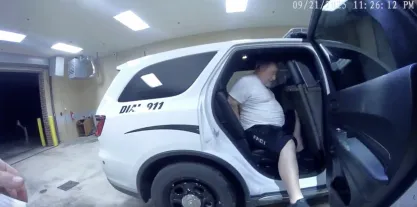
    NASHVILLE, Dec. 17, 2025 — On Sept. 21, the police came for Larry Bushart. They handcuffed him and hauled him away in the dead of night. He spent 37 days in jail while held on a $2 million bond — an amount the retired police officer could not afford.

    It’s the sort of treatment one expects for accused murderers and thieves. But Larry’s only “crime”? In the aftermath of Charlie Kirk’s assassination, he posted a meme on Facebook quoting President Trump’s remarks about a different shooting a year earlier and in a different state.

    “I spent over three decades in law enforcement, and have the utmost respect for the law,” said Larry. “But I also know my rights, and I was arrested for nothing more than refusing to be bullied into censorship.”

    Today, with the help of the Foundation for Individual Rights and Expression, Larry filed a federal civil rights lawsuit against Sheriff Nick Weems and Perry County, Tennessee, for violating his constitutional rights in retaliation for his protected speech. 

    The meme that Larry Bushart shared on Facebook.

    “If police can come to your door in the middle of the night and put you behind bars based on nothing more than an entirely false and contrived interpretation of a Facebook post, no one’s First Amendment rights are safe,” said FIRE senior attorney Adam Steinbaugh.

    Larry’s ordeal began when he commented on a Facebook post for a Kirk vigil in Perry County. The meme — which Larry did not create — used a picture of Donald Trump, quoted him saying “We have to get over it” following the January 2024 school shooting at Perry High School in Iowa, and included the commentary, “This seems relevant today…”

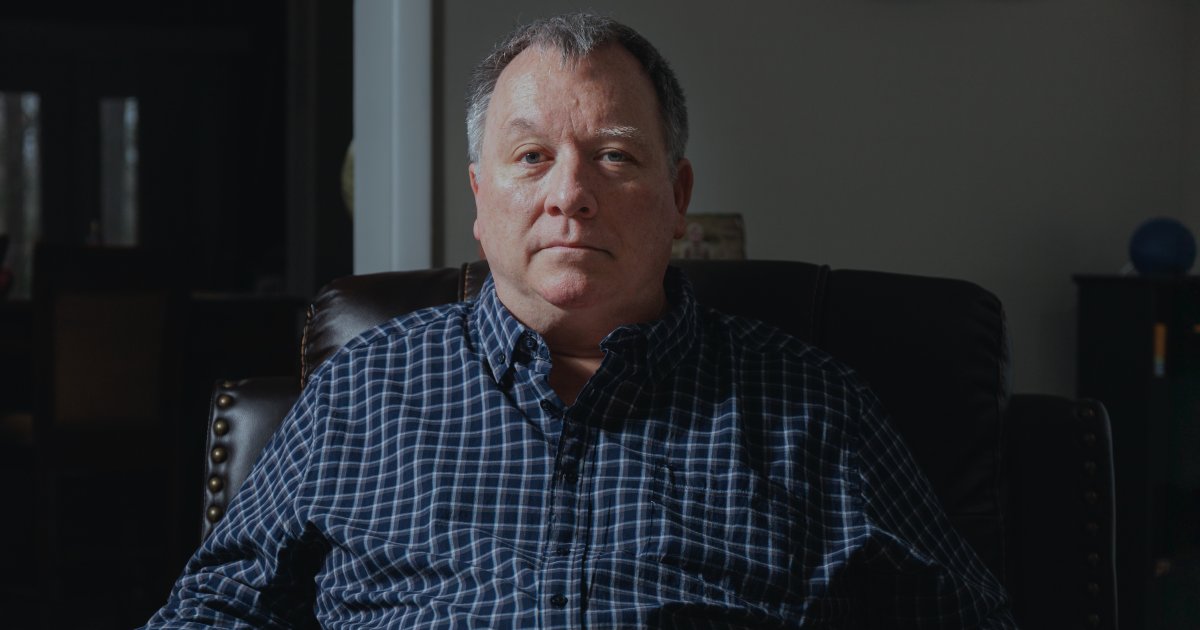
    COURTESY PHOTOS OF LARRY FOR MEDIA USE

    Weems concocted the pretext that because the meme referenced the 2024 shooting at Perry High School in Iowa, it could be interpreted as a threat against Perry County High School in Tennessee. At his request, the local police first visited Larry’s home around 8 p.m. to inform him the sheriff’s office might be in contact with him.

    Bodycam footage indicates the officer was just as confused as Larry was. “So I’m going to be completely honest with you, I have really no idea what they’re talking about,” he said. “He just called me and said there were some concerning posts that were made… I don’t know, I just know they said something was insinuating violence.”

    “No it wasn’t,” Larry responded. “I’m not going to take it down.”

    Hours later, Perry County issued a warrant for his arrest, and local police returned after 11 p.m. to arrest him for “threatening mass violence at a school.” Again, bodycam footage indicates local police were just as perplexed about why they were taking him into custody. “I threatened no one . . .” Larry told them. “I may have been an asshole, but . . .”

    “. . . that’s not illegal,” the officer finished for him.

    Based on Weems’ flimsy justification alone, Larry was locked up for over a month. He lost his job and missed his wedding anniversary as well as the birth of his grandchild. Amazingly, Weems admitted in a later interview that he knew at the time of the arrest that Larry’s post used a pre-existing meme and was not threatening a local high school.  But law enforcement left out that extremely important context from their warrant application

    Larry went free only after a media firestorm and widespread backlash. Weems still insisted he was justified in having Larry arrested because the post caused “mass hysteria” in the community. But none of the Facebook responses to Larry interpreted his post as a threat, the Perry County school district has no records of any complaints about Larry’s post, and Perry County and Weems have refused to respond to multiple public records requests requesting evidence of this “mass hysteria.”

    With FIRE’s help, Larry is suing Perry County and Weems in the U.S. District Court for the Western District of Tennessee for violating his First Amendment right to free speech and his Fourth Amendment right against unlawful seizure. Larry is also suing Investigator Jason Morrow who, on Weems’ orders, helped procure the misleading arrest warrant. And because Weems and Morrow knew their actions were egregiously unconstitutional, FIRE is suing them in their personal capacities, meaning they would be on the hook for monetary damages. Rounding out Larry’s legal team is Phillips and Phillips, PLLC, in Lexington, TN, which also defended Larry in criminal court.  

    “This lawsuit goes beyond Larry,” said FIRE attorney David Rubin. “It’s about making sure police everywhere understand that they cannot punish or intimidate people for sharing controversial opinions online. Law enforcement across the country should be on notice: Respect the First Amendment, or prepare to face the consequences.”


    The Foundation for Individual Rights and Expression (FIRE) is a nonpartisan, nonprofit organization dedicated to defending and sustaining the individual rights of all Americans to free speech and free thought — the most essential qualities of liberty. FIRE educates Americans about the importance of these inalienable rights, promotes a culture of respect for these rights, and provides the means to preserve them. 

    CONTACT:

    Alex Griswold, Communications Campaign Manager, FIRE: 215-717-3473; [email protected]
    Source link

  • He spent 37 days in jail for a Facebook post — now FIRE has his back

    He spent 37 days in jail for a Facebook post — now FIRE has his back

    A 61-year-old Tennessee man is finally free after spending a shocking 37 days in jail — all for posting a meme. 

    Retired police officer Larry Bushart told a local radio station he’s “very happy to be going home” after his nightmarish ordeal. 

    But for Larry and FIRE, the fight isn’t over.

    In September, after Charlie Kirk’s assassination, Larry shared a meme on a Facebook thread about a vigil in Perry County, Tennessee. The meme quoted President Donald Trump saying, “We have to get over it” following a January 2024 school shooting at Perry High School in Iowa. The meme included the commentary, “This seems relevant today …”

    The meme that Larry Bushart shared on Facebook.

    Just after 11 p.m. on Sept. 21, four officers came to Larry’s home, handcuffed him, and took him to jail. He was locked up for “threatening mass violence at a school.” His bond — an astronomical $2 million! 

    Police justified the arrest by saying that people took the meme as a threat to their high school, which has a similar name to the one where the school shooting occurred 20 months earlier. However, police have been unable to produce any evidence that members of the public took the meme as a threat. As The Intercept noted: “There were no public signs of this hysteria. Nor was there much evidence of an investigation—or any efforts to warn county schools.”

    Larry was jailed for more than five weeks. But that wasn’t the only thing he suffered. During that time, he lost his post-retirement job doing medical transportation and missed the birth of his granddaughter.

    Bushart in a police car

    Bushart during his arrest in September, Perry County, Tennessee.

    Prosecutors finally dropped the charges — only after the arrest went viral. Now a newly freed Larry, who spent over three decades with law enforcement and the Tennessee Department of Correction, is preparing to sue.

    “A free country does not dispatch police in the dead of night to pull people from their homes because a sheriff objects to their social media posts,” FIRE’s Adam Steinbaugh told The Washington Post. Now, FIRE is representing Larry to defend his rights — and yours.

    A meme doesn’t become a threat just because a sheriff says it is. In America, there are very few exceptions to the First Amendment, including true threats or incitement of imminent lawless action. 

    Jailing first, justifying later, flips those limits on their head. If officials can arrest you because they dislike your social media posts, then none of us are safe to express ourselves.

    Stay tuned for updates.

    Source link

  • Arkansas wants to jail librarians. The First Amendment won’t allow it.

    Arkansas wants to jail librarians. The First Amendment won’t allow it.

    Arkansas is trying to save one of the most extreme book censorship laws in recent memory, one that would allow jailing librarians and booksellers for keeping materials on their shelves that fall under the statute’s broad definition of “harmful to minors.” 

    The state’s Act 372 not only makes it possible for librarians to be jailed for providing teenagers with Romeo and Juliet, but also allows anyone to “challenge the appropriateness” of any book in a library.

    After the law passed, a coalition of booksellers, librarians, libraries, library patrons, and professional associations persuaded a federal judge to stop the law from taking effect in Fayetteville Public Library v. Crawford County. But the state appealed. FIRE in turn submitted a friend-of-the-court brief urging the U.S. Court of Appeals for the Eighth Circuit to affirm the permanent injunction against Act 372.

    How Act 372 operates

    Arkansas’s law compels public libraries to adopt policies allowing “any person affected” by a book to challenge its “appropriateness,” forcing libraries to remove or sequester the book in an area “not accessible to minors” if the challenge succeeds. The law provides no definitions for crucial terms like “appropriateness” or “accessible,” leaving librarians to guess how to comply and inviting challenges based on personal or political objections. 

    Worse still, the process creates a one-way ratchet in favor of censorship by granting challengers the right to appeal decisions to keep a book in place while having no appeal procedure when a book is removed or segregated. ​​FIRE advocates for a fair system — call it “due process for books” — where libraries use an impartial and objective process for reviewing challenged books’ educational value and age appropriateness. And a system that permits only one side to appeal a ruling while denying appeals by the other is inherently unfair, as we’ve noted in campus Title IX hearings. Act 372’s unbalanced system empowers hecklers to reshape public collections according to their tastes, undermining libraries’ historic role as repositories of diverse ideas and viewpoints.

    These issues are worsened by a broad and unconstitutional definition of “harmful to minors.” That section threatens librarians and booksellers with up to a year in jail if they furnish, present, provide, make available, give, lend, show, advertise, or distribute to a minor any material considered harmful—without distinguishing between materials inappropriate for young children and those suitable for older teens. By grouping all minors into one category and failing to define key terms, Act 372 effectively criminalizes access to classic and educational works that may include mature themes. 

    Why Act 372 is unconstitutional

    FIRE has consistently stated it’s entirely proper for public school libraries to consider whether books are age-appropriate for their collections based on various factors. But Act 372 falls far short of that commonsense standard by employing a broad definition that applies to all public libraries, as well as private bookstores, and by treating all minors the same, from first graders to high school seniors. 

    To understand why Act 372’s “harmful to minors” definition does not meet constitutional standards, one must consider the Supreme Court’s precedents in this area. For decades, the Court has been cautious to ensure that merely labeling sexually suggestive materials as obscene does not give the government blanket authority to censor speech. That’s because works that are obscene are considered unprotected speech—for both adults and minors—and essentially freely regulable or sanctionable. But what about sexually explicit material that is not obscene and thus protected?

    In Ginsberg v. New York, the Court recognized the state’s limited power to restrict minors’ access to sexually explicit content, while emphasizing it remains constitutionally protected for adultsIn Miller v. California, the Court formulated a rigorous test for obscenity that ensured works with serious literary, artistic, political, or scientific value would not meet the test simply because they involve sex. Taken together, GinsbergMiller, and cases flowing from them acknowledge that states may use a variable obscenity test based on the viewer’s age, while ensuring that adults can access non-obscene materials. 

    The Supreme Court further clarified the issue in Virginia v. American Booksellers Association, where it cautioned against laws that aim to protect minors but could potentially limit free speech. The law in question survived only after the Virginia Supreme Court narrowed its definition of “harmful to juveniles” to cover works judged as harmful to older teens, and only when someone knowingly put that material where kids could easily see it. Without this clarification, the law would have been unconstitutionally overbroad and vague.

    The standard for obscene-for-minors or “harmful to minors” material has thus generally coalesced around a version of the Miller obscenity test tailored to the underaged to require that: the material taken as a whole must appeal primarily to a prurient interest in sex as to minors; it must portray hardcore sexual conduct in a manner patently offensive to the average adult under contemporary community standards for minors; and it must lack serious literary, artistic, political or scientific value for minors.

    Unlike the Virginia Supreme Court, the Arkansas Supreme Court adopted a much broader interpretation of “harmful to minors” that treats all minors under 18 the same. As a result, libraries and local bookstores could be penalized simply for providing older minors with access to books that would be objectionable only to the youngest children. In other words, books older minors have a right to read under the First Amendment.

    This would require librarians to put classics like Romeo and Juliet or Catcher in the Rye behind adults-only walls. Further, Act 372’s challenge system also subjects the availability of library books to a “heckler’s veto” by anyone who objects to the material. But the very purpose of public libraries is to provide everyone access to a broad marketplace of ideas. If Act 372 stands, librarians will be forced to choose between their professional duty to provide the community with a wide range of books and the threat of imprisonment if any of those books might be inappropriate for a 5-year-old.

    What’s at stake

    FIRE is asking the Eighth Circuit to affirm the district court’s ruling striking down Arkansas’s Act 372, because if the state can jail librarians for letting kids read books, it won’t stop at Arkansas. The First Amendment doesn’t allow governments to censor ideas under the guise of “protecting children,” and we’re fighting to make sure it never does.

    Source link