Tag: Job

  • Speech is not a crime — even if it complicates ICE’s job

    Speech is not a crime — even if it complicates ICE’s job

    While I was driving down I-95 yesterday, a notification popped up on Google Maps: “Police ahead.” I eased my foot off the gas. Sure enough, a minute later I passed a cruiser parked in the median, radar aimed at oncoming traffic. I paid it forward by tapping “Still there” on Maps.

    Did I commit a crime? Did Google?

    No. Google simply provided a tool for sharing publicly observable information. I used it, just like millions of drivers do every day. That’s speech, and the First Amendment protects it. 

    None of that changes if you swap out highway patrol for Immigration and Customs Enforcement (ICE). But the Trump administration sees it differently.

    A new iPhone app called ICEBlock lets users report sightings of ICE activity and receive alerts about the agency’s presence within a 5-mile radius. The app’s website says:

    ICE has faced criticism for alleged civil rights abuses and failures to adhere to constitutional principles and due process, making it crucial for communities to stay informed about its operations. 

    The app also warns users not to use it “for the purposes of inciting violence or interfering with law enforcement.”

    After CNN reported on ICEBlock Monday, Trump administration officials claimed the app put ICE agents in danger and threatened to prosecute not only the app’s developer, but also … CNN. Border czar Tom Homan called on the Department of Justice to investigate whether the network had “crossed that line of impeding federal law enforcement officers.” 

    The next day, Secretary of Homeland Security Kristi Noem said her agency was “working with the Department of Justice” to see if they could prosecute CNN for its coverage of the app. President Trump went further, adding CNN “may be prosecuted also for having given false reports on the attack in Iran.” He made similar threats to sue The New York Times over its coverage.

    At the risk of stating the obvious, CNN’s routine reporting on ICEBlock is constitutionally protected. Even if the app itself were illegal, which it’s not, the press still has a right to report on it as a matter of public interest.

    Consider the extensive reporting on the notorious “open-air drug market” in Philadelphia’s Kensington neighborhood. That journalism isn’t illegal just because it might tip off someone about where to get fentanyl.

    By the administration’s logic, not just CNN, but anyone who speaks publicly about ICEBlock has committed a crime. Right-leaning outlets have covered the app, too. Prosecuting them for raising public awareness of the app would be just as unconstitutional. Ironically, the administration’s censorial threats are almost certainly doing more to amplify the app than CNN’s initial report did. The president’s team should look up the Streisand effect.

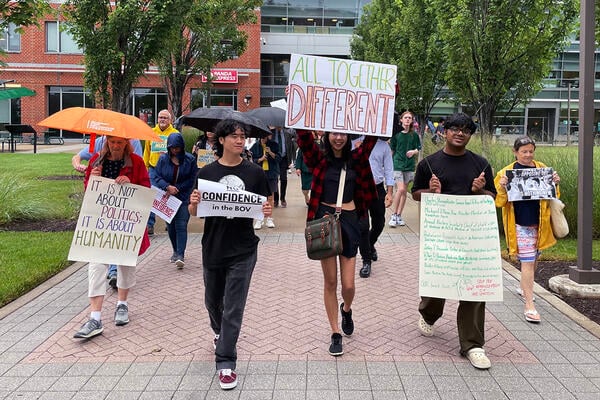
    This episode is just the latest example of the administration trying to stretch the meaning of “obstruction” to cover nearly any speech that might complicate immigration enforcement. Back in February, Homan asked the Department of Justice to investigate Congresswoman Alexandria Ocasio-Cortez for “impeding our law enforcement efforts” by releasing a webinar and flyer that reminded people of their constitutional rights when interacting with ICE. 

    Informing the public that they don’t have to consent to warrantless searches might make ICE’s job more difficult, but that doesn’t strip the speech of constitutional protection. It’s as absurd as claiming a police officer interferes with the district attorney’s job by telling a suspect he has the right to remain silent. 

    As FIRE explained at the time, the First Amendment protects a significant amount of expression, including “providing information about the presence of law enforcement officers.”

    Of course, there are narrow and carefully defined exceptions to the First Amendment. True threats aren’t protected. Nor is incitement. But speech qualifies as incitement only if the speaker intends to provoke immediate unlawful action and their speech is likely to provoke it. That’s a very high bar. Simply noting the presence of law enforcement in a particular location or talking about an app that facilitates that speech doesn’t come close. 

    It’s possible to imagine scenarios where speech might cross that line. If a hostile crowd gathered near ICE agents and someone with a megaphone called on them to attack, that would likely qualify as incitement. But that’s not what we’re dealing with here. 

    There are also circumstances in which helping someone evade law enforcement is a crime. You can’t lawfully harbor a fugitive or physically interfere with officers performing their duties. And the Supreme Court has held the First Amendment does not protect speech “used as an integral part of conduct in violation of a valid criminal statute.” Consider a lookout who warns accomplices during a robbery that police are approaching. That person is intentionally working with specific individuals to carry out a specific unlawful act. The speech isn’t general or political. It’s instrumental to the commission of the crime and is not protected.

    What is protected under the First Amendment is sharing publicly observable information about what government agents are doing in public — or providing the means to do so with a tool like ICEBlock — especially when that speech is tied to political activism. A federal appeals court recently upheld that principle in a case involving a man standing on a sidewalk with a sign that read “Cops Ahead.” The court found his sign, an analog version of the police alerts on Google Maps and Waze, was protected by the First Amendment. 

    It’s absolutely critical to maintain precise, narrow standards that prevent the government from expanding its power to regulate speech and suppress dissent. When officials blur the line between obstructing justice and merely speaking about public law enforcement activity, they put core First Amendment freedoms at risk.

    But let’s step back and remember the administration is not only claiming ICEBlock is illegal, but also suggesting that reporting on it is a criminal offense. Just as baseless is the president’s threat to prosecute and/or sue CNN and The New York Times over their coverage of the bombing of Iran. After the U.S. military struck Iran’s nuclear sites, both outlets reported on a preliminary assessment from the Defense Intelligence Agency (DIA) that contradicted Trump’s claim that the sites were “completely and totally obliterated.” 

    Reporting the government’s own findings about a major military action is not a crime — it’s protected by the First Amendment as well as vital to an informed citizenry. Again, this isn’t a close call.

    In New York Times v. United States, the Supreme Court rejected the government’s attempt to block the press from publishing the Pentagon Papers — a classified history of U.S. involvement in Vietnam — despite the government’s claims that it would harm national security. 

    Trump’s issue with CNN and The New York Times isn’t even about national security. He’s upset that the DIA report undercut his narrative. But if he thinks the report is wrong, his problem is with his own intelligence agency, not the outlets who accurately reported on its assessment. (Notably, both CNN and The New York Times made clear the report was preliminary, the analysis ongoing, and that the administration disputed its conclusions.)

    FIRE has gotten flak over the past few months for focusing so much on President Trump. Believe me, we wish we didn’t have to. 

    But when the most powerful official in the country repeatedly shows contempt for the First Amendment, it’s our job as a free speech organization to call that out. Presidents wield enormous power to stifle dissent. Their rhetoric and actions influence how other government officials interpret the bounds of the First Amendment, and they shape public attitudes about the enduring value of free expression.  

    This isn’t about partisanship. We unequivocally opposed the Biden administration’s efforts to suppress speech and consistently push back against censorship from the left, too. And much of our work doesn’t relate to partisan flashpoints that dominate the news. Every day, we’re defending ordinary Americans facing censorship from state legislaturesuniversitiescity councilsschool boards, and other government actors.

    As FIRE’s Executive Vice President Nico Perrino said yesterday, “The biggest threat to free speech is political power,” and at this moment, the right side of the aisle controls both political branches of the federal government. 

    That balance will shift, as it always does. But FIRE’s mission of holding those in power to the First Amendment will not.

    Source link

  • Temple University eyes job reductions amid $60M deficit for FY26

    Temple University eyes job reductions amid $60M deficit for FY26

    Dive Brief:

    • Temple University President John Fry this week signaled that officials expect to eliminate jobs as the public institution in Philadelphia navigates choppy fiscal waters. 
    • University leaders forecast a $60 million structural deficit for fiscal 2026, Fry said in an announcement to the Temple community. That comes after the university shrank an $85 million projected deficit to $19 million for fiscal 2025. 
    • As the university tries to close the persistent structural deficits, Temple leaders have asked vice presidents and deans to reduce their total compensation spending by 5% across units, Fry said. “Unfortunately, this will result in the elimination of some positions,” he added.

    Dive Insight:

    Over fiscal 2025, Temple shrank its deficit by tightly controlling hiring, travel and other discretionary spending. Nonetheless, long-term enrollment declines have weighed on the budget.

    “For the previous years that we had a structural deficit, university reserves were used to cover expenses, which is not a sustainable practice,” Fry said. “We must work toward achieving a structurally balanced budget where our expenses do not exceed revenues going forward.” 

    Specifically, Fry pointed to a drop of 10,000 students from fall 2017 levels, with much of that dip occurring during the pandemic. As of fall 2023, Temple’s enrollment totaled 30,205 students. 

    The declines, Fry noted, have translated into a roughly $200 million falloff in tuition revenue.

    However, Fry pointed to “positive indicators” for the class of 2029. He said Temple is on track for its second consecutive year of increases in first-year students.

    But while enrollment is still being rebuilt, state appropriations have remained flat and operating costs have increased.   

    “For this reason, fiscal year 2026 — and the next two years — will continue to be challenging until we significantly grow overall enrollment and identify new revenue sources,” Fry said. “In short, we have some difficult but necessary decisions to make over the next three fiscal years.”

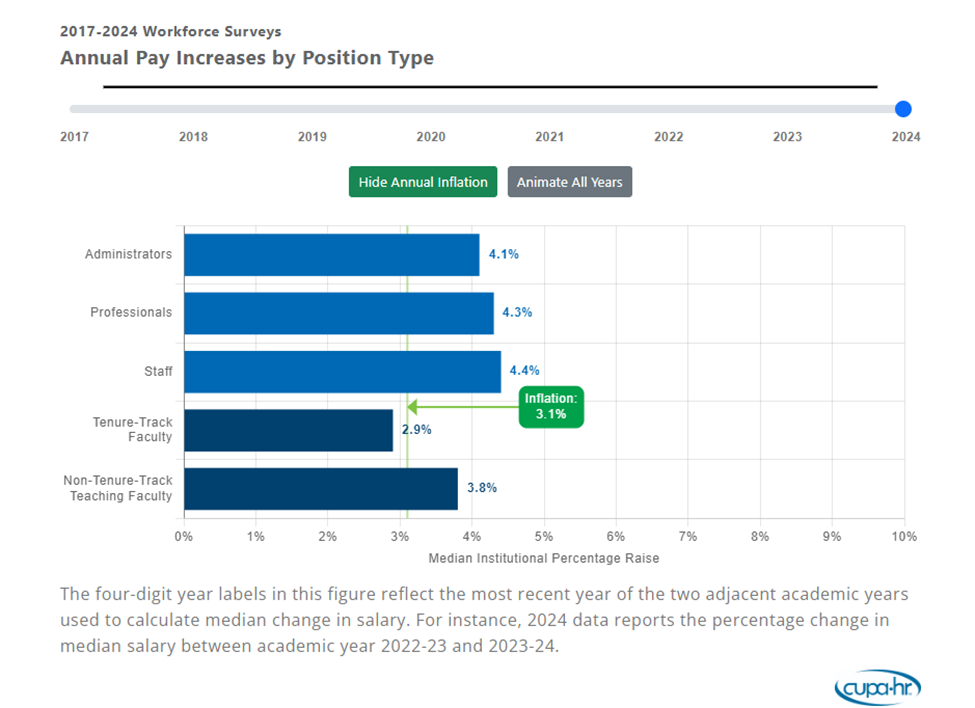
    Employee compensation accounts for 62% of operating expenses, which is why university leaders are homing in on those costs. Even so, the university is planning a 1.5% increase in the budget for merit salary raises. 

    The university is also making capital investments, including building a new home for its public health college and an arts pavilion. Fry noted that these projects are funded with donations and state money. 

    Temple is far from alone in its austerity measures. 

    In recent months, both public and private universities have undertaken some combination of hiring freezes, furloughs, layoffs, tuition hikes and other measures to address funding challenges from both the state and federal level. The Trump administration, for example, has unilaterally slashed grant funding, and congressional Republicans are eyeing policy changes, such as eliminating Grad PLUS loans.

    Source link

  • Florida Board Rejects Ono for UF Job

    Florida Board Rejects Ono for UF Job

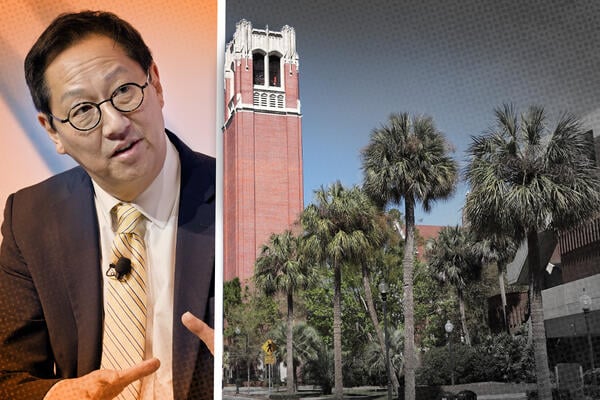
    The Florida Board of Governors voted Tuesday to reject Santa Ono as the next president of the University of Florida, bowing to opposition from conservatives over his past support of diversity, equity and inclusion initiatives.

    Anti-DEI activist Chris Rufo led the conservative backlash, while multiple elected officials in Florida alleged that Ono failed to protect Jewish students during his time as president of the University of Michigan.

    Amid those concerns, the Board of Governors voted 10 to 6 to reject Ono for the UF job.

    That process included a no vote from Paul Renner, a former Republican lawmaker in the state who had previously angled for the UF presidency, as became clear during board discussions. Throughout the meeting Renner grilled Ono on his past support for DEI, prompting fellow board members to push back, accusing him of “interrogating” Ono and questioning the fairness of his inquiries.

    The vote comes after the UF Board of Trustees approved Ono’s hire last week following a public interview that focused largely on DEI. Ono distanced himself from DEI in that interview, arguing that the initiatives began with good intentions but ultimately became divisive. He said they siphoned resources away from student success efforts and stifled dialogue, which he said prompted his decision to close Michigan’s DEI office this spring. (Ono resigned from the Michigan presidency in May to pursue the UF job.)

    “I am here to ensure that DEI never returns to the University of Florida,” Ono said Tuesday.

    In the past, Ono had condemned systemic racism and argued for the necessity of DEI. But Tuesday—as he did in his public interview with UF’s Board of Trustees last week—Ono emphasized his ideological evolution, which ultimately failed to convince the board.

    A Contentious Meeting

    In the public comments portion of the meeting, both Ono’s supporters and detractors made their case.

    Michael Okun, director of the Norman Fixel Institute for Neurological Diseases at UF, disputed claims that Ono failed to protect Jewish students. Okun, who is Jewish, argued Ono is an ally to the Jewish community, “and suggesting otherwise is factually incorrect and deeply harmful.”

    But University of Michigan Medical School professor Joshua Rubin countered that claim, arguing that Ono had failed to stymie a culture in Michigan where antisemitism thrived. Rubin argued that Ono failed to fix problems at UM and “is complicit in that culture.”

    Other speakers included Kent Fuchs, the former UF president called out of retirement to helm the university again when Ben Sasse exited the job abruptly last year. Fuchs, who is currently serving as interim president, supported Ono’s hire, telling the board the candidate was “unmatched nationally in both his credentials and his experience and his track record.”

    UF Board of Trustees chair Mori Hosseini also made an impassioned plea to hire Ono.

    “The bottom line is that Dr. Ono is globally recognized as one of the most respected leaders in higher education, and we are lucky to have him. Outside of Dr. Ono, there are very few people, if any, with a combination of ideological alignment in Florida and the operational experience to run a research powerhouse like you are,” Hosseini said in remarks to the Board of Governors.

    He added that “the UF presidency is not a position where someone can learn on the job.”

    But the Board of Governors bombarded Ono with a series of sharp questions.

    Few had to do with how he would run the University of Florida; student and faculty representatives on the board asked how he would support and include their respective groups in his decision-making process, but most questions focused on DEI.

    Jose Oliva, a former Republican lawmaker, told Ono his ideological shift was “nothing short of incredible.” He also asked Ono, who has a background in ophthalmology, what science his “decades-long, enthusiastic support and advocacy” for DEI initiatives was based on.

    Ono argued that he was “not an expert in that area” and had not created any DEI programs; he said such efforts were already in place when he arrived at UM and his previous institutions, such as the University of British Columbia.

    “Your words simply don’t support that you were just kind of sailing along,” Oliva responded.

    Some trustees also pressed Ono on transgender care at University of Michigan Health, questioning whether the hospital had “cut off” the breasts or genitals of transitioning patients, particularly children.

    As with many other questions, Ono demurred. In that case, he said he didn’t want to misspeak.

    “I’m not an expert,” Ono said, in what became a common refrain throughout the day.

    Hosseini, who was seated next to Ono and involved in the conversation at times—including when he revealed that Renner, who was one of Ono’s fiercest inquisitors of the day, had inquired about the UF job—appeared to bristle at the Board of Governors’ sharp questions for the candidate.

    “You all decided today is the day you’re going to take somebody down,” Hosseini told the board.

    Ono had been set to make up to $3 million a year as UF president. Now it appears Hosseini and the rest of the board will have to restart the search process.

    Ono’s Opponents Celebrate

    As news of Ono’s rejection spread, conservative critics took a victory lap.

    “This is a massive win for conservatives—and an act of courage by the board,” Rufo posted.

    Florida’s elected officials also weighed in.

    “This is the right decision for @UF. UF’s students, faculty, and staff deserve a president who will stand for Florida values and against antisemitism,” Republican senator Rick Scott posted on X. (Scott had previously called for an investigation into the search that yielded Ono.)

    But conservatives weren’t the only ones celebrating.

    Multiple academics on BlueSky also seemed to take satisfaction in the news, with some indicating they thought Ono had done an about-face on DEI, only for the move to backfire.

    “I don’t know how many times this needs to be said: there is no winning with these people. If you’re willing to sell your soul to try and appease them, then I’m sorry but you deserve whatever they do to you,” Neil Lewis Jr., a communication professor at Cornell University, wrote online.

    Outside experts also noted how the Ono vote reflected the influence of state-level politics on decisions.

    James Finkelstein, a professor emeritus of public policy at George Mason University who studies presidential contracts and hiring processes, told Inside Higher Ed by email that the outcome illustrated the growing complexity and politicization of picking a college leader.

    “This episode is a stark reminder of how state-level politics are reshaping the presidential search process. The lesson is clear: until a contract is signed, nothing is guaranteed,” Finkelstein wrote.

    Source link

  • Job Satisfaction and Retention in Higher Education – Faculty Focus

    Job Satisfaction and Retention in Higher Education – Faculty Focus

    Source link

  • Trump Sends Mixed Signals on Apprenticeship and Job Training

    Trump Sends Mixed Signals on Apprenticeship and Job Training

    President Trump issued an executive order last month instructing federal officials to “reach and surpass” a million new active apprenticeships. It was an ambitious target that apprenticeship advocates celebrated, anticipating new federal investments in more paid on-the-job training programs, in new industries and via a more efficient system.

    “After years of shuffling Americans through an economically unproductive postsecondary system, President Trump will refocus young Americans on career preparation,” federal officials wrote in a fact sheet on the order. They also emphasized that the federal government spends billions on the Workforce Investment and Opportunity Act, or WIOA, and Career and Technical Education, but “neither of these programs are structured to promote apprenticeships or have incentives to meet workforce training needs.”

    Ryan Craig, author of the book Apprenticeship Nation, managing director of Achieve Partners, co-founder of Apprenticeships for America and an occasional contributor to Inside Higher Ed, said it was the first time a president set a goal for the number of apprentices in the U.S., as far as he’s aware.

    Apprenticeships are “one of the few, perhaps the only area of education, of workforce development, where this administration has said, ‘We want more of this,’” he said shortly after the executive order dropped.

    But the excitement for an expanded apprenticeship model in the U.S. might be short-lived. Craig and other apprenticeship advocates worry that Trump’s proposed budget for fiscal year 2026 doesn’t reflect the executive order’s vision. The proposal doesn’t promise any significant new investments in apprenticeship and slashes workforce development spending over all.

    “The left hand doesn’t know what the right hand is doing here,” Craig said. “It’s not the sea change that the executive order promised.”

    Mixed Signals

    Among many highlights for advocates, the order also calls for a workforce development strategy with a focus on scrutinizing workforce programs’ outcomes, which currently aren’t carefully tracked.

    Federal officials were given 90 days to review all federal workforce development programs and come out with a report on strategies to improve participants’ experiences, measure performance outcomes, identify valuable alternative credentials and reform or nix ineffective programs. The executive order also generally called for more transparent performance outcomes data, including earning and employment data, for such programs.

    Trump’s skinny budget makes good on his promise to consolidate workforce development spending and cut programs the administration deems ineffective, but it also offers apprenticeships a small slice of that shrinking pie.

    The proposal includes a $1.64 billion cut to workforce development funding under the Department of Labor and eliminates Job Corps, a free career training program for youth, and the Senior Community Service Employment Program, which offers job training and subsidized employment for low-income seniors. The administration also proposed a new program called Make America Skilled Again, or MASA. States would be required to spend 10 percent of their MASA grants on apprenticeships. Almost $3 billion, including WIOA funding, remains to fund the program, down from $4.6 billion, Work Shift reported.

    The budget promises to “give states and localities the flexibility to spend workforce dollars to best support their workers and economies, instead of funneling taxpayer dollars to progressive non-profits finding work for illegal immigrants or focusing on DEI.”

    Craig supports offering states more flexibility and cutting “train-and-pray programs that have little to no connection to employers or employment outcomes”—but he hoped money saved from those cuts would go toward apprenticeships, which are “by definition good jobs with career trajectories and built-in training.”

    He said a mere 10 percent of block grant funding directed to apprenticeships feels “inconsistent” with the bold goals laid out in the executive order. He had high hopes Trump would consider radically changing how apprenticeships are funded, moving away from time-limited, individual grants to a more robust federal funding structure. At the very least, he believes apprenticeships should get the “lion’s share” of workforce development funding.

    “My hope is it’s just the budget proposal and that things get worked out [to be] more consistent with the executive order,” he said, “but it was disappointing to see that.”

    Vinz Koller, vice president of the Center for Apprenticeship and Work-Based Learning at Jobs for the Future, said he similarly felt hopeful about the executive order’s messaging, in particular its commitment to “further protect and strengthen” registered apprenticeships.

    The wording represented a shift in approach.

    During Trump’s previous term, the president sought to create industry-recognized apprenticeships, an entirely separate apprenticeship system to sidestep what he viewed as inefficiencies in the current system and excessive federal regulation. Koller was glad to see Trump interested in reforming and investing in the current system this time rather than making plans to “throw out the rule book.”

    But the proposed budget isn’t “backing it up,” he said.

    His organization recently put out a policy blueprint for expanding and improving apprenticeship—including calling for stronger incentives for employers and more investment in intermediary organizations that offer programs’ support—but those strategies aren’t possible without more federal funding, Koller said. The policy blueprint points out that in fiscal year 2024, the federal government spent at least $184.35 billion on higher education, while the Department of Labor’s apprenticeship budget was just $285 million.

    But Koller also doesn’t believe slashing higher ed spending is the answer, and he’s worried about the proposed cuts to workforce training and to higher ed in the administration’s proposal. He said the goal is to give learners “choice-filled pathways,” including apprenticeships and other forms of work-based learning, not to “rob Peter to pay Paul.”

    Grant consolidation and streamlining can be “positive,” he said, but “we just want to make sure that the support is there to actually do what is needed on the ground,” across program types. “We don’t want to dismantle the other aspects of a healthy educational workforce infrastructure as we build the new parts.”

    Kerry McKittrick, co-director of the Project on Workforce at Harvard University, said the budget poses a double threat to workforce development funding. Not only would the proposal cut more than a billion dollars, but the budget would also dole out the remaining funds in block grants to states, a funding structure that has been shown to lack oversight and generally decrease funding over time.

    The project’s research found “governors do want more flexibility,” she said. “At the same time, we continue to hear from them that the lack of resources is really the biggest problem with the workforce system and meeting workforce needs … There’s no way we’ll see an expansion in apprenticeship with such a massive cut.”

    Lingering Hopes

    Some apprenticeship proponents remain optimistic.

    John Colborn, executive director of Apprenticeships for America, agreed the skinny budget doesn’t seem like “a recipe for substantial growth of apprenticeship,” but he isn’t giving up on the possibility of bold changes just yet.

    He noted that the budget makes no mention of other possible funding sources for apprenticeship mentioned in the executive order fact sheet, such as career and technical education funds, so there may be plans for other funding streams in the works.

    The proposed budget also alludes to a “reallocation” of adult education funding struck from the Education Department to “better support the innovative, workforce-aligned, apprenticeship-focused activities the Department seeks to promote,” though it doesn’t go into further detail.

    He said, based on the executive order, federal officials still have time to draft a plan, and he’s going to wait until they do before arriving at any final conclusions about how apprenticeships will fare under a second Trump term.

    “It’s probably a mistake to look at the skinny budget as a blueprint for the funding of an apprenticeship growth initiative,” he said. He plans “to take it seriously, because it’s a statement of intent from the president, but to not look to it as a constraining document for how we might be thinking about growing apprenticeships going forward.”

    Shalin Jyotishi, managing director of the Future of Work and Innovation Economy Initiative at the left-wing think tank New America, emphasized that “any administration’s policy direction on apprenticeships should be judged on actions, not only words.”

    He pointed out that multiple executive orders, including a recent one on artificial intelligence education, have called for expanding apprenticeships, but some such programs have also undergone cuts under Trump. He wants to instead see renewed investments, like those Trump made in degree-connected apprenticeships during his first term, and argued the field is “ripe” for such efforts.

    “It’s heartening to see the administration emphasize the importance of registered apprenticeships,” Jyotishi wrote to Inside Higher Ed, “and education and workforce leaders will be looking for follow-through through actions, implementation, and resources.”

    Source link

  • Over 5k HE job cuts in Canada since study permit caps

    Over 5k HE job cuts in Canada since study permit caps

    • Over 5,000 higher education jobs in Canada have been cut since the government clamped down on study permit numbers – with Ontario, British Columbia and Quebec the hardest hit.
    • The thousands of job cuts tracked by a higher education expert are just those that have been made public, with the possibility that there have been many more.
    • Institutions are also having to consolidate the programs they offer, as billions of dollars worth of budget cuts make their mark.

    More than 5,000 jobs have been lost in the post-secondary education sector in Canada since the federal government first imposed a study permit cap in January 2024, according to research from higher education consultant Ken Steele. Further restrictions – capping study permits at a scant 473,000 – were introduced in September.

    But the cuts collated by Steele are just the ones that have been made public. A number of institutions are not disclosing their drops in employment in teaching and administration.

    With Liberal Mark Carney triumphing in last month’s election, his new government must address worries about jobs disappearing, such as in the auto manufacturing sector, due to US President Donald Trump’s punishing tariffs.

    Slashing jobs in education – due to the government’s own actions – is a huge mistake, Steele said.

    “The unilateral imposition of extreme, abrupt, student visa caps have thrown Canadian higher education into crisis, decimated our reputation abroad and precipitously destroyed one of our major ‘export’ industries,” he told The PIE News.

    For the past year, Steele has been tracking reported job losses at universities and colleges across the country. As expected, programs that relied heavily on international students were forced to make the biggest cuts.

    According to Steele’s data, Mohawk College in Hamilton, Ontario, has eliminated almost 450 positions. The University of Windsor, also in Ontario, has reduced employment by 157 spots.

    The total of 5,267 cuts across the country almost certainly underreports the actual job losses. “Many institutions are keeping quiet about their cuts, including the Ontario private colleges that were partnering with public colleges,” he noted.

    It’s not just jobs that are being slashed. Post-secondary institutions have been forced to eliminate programs and reduce spending.

    Fanshawe College in London, Ontario, appears to lead the way in getting rid of programs. It has suspended 50 fields of study, including advanced live digital media, construction project management and retirement residence management. In all of Canada, Ontario colleges are the top eight for suspending programs, accounting for two-thirds of the 453 cuts.

    The financial hit is significant. “So far, I have tracked CAD$2.2 billion in budget hits at post-secondary schools across the country,” Steele said. This includes last year’s cuts as well as planned reductions for next year.

    If Canada reopened its doors tomorrow, it would likely take until at least 2030 to recover the international enrolment momentum we had just two years ago
    Ken Steele, education consultant

    Ontario was most reliant on international revenues and has been hardest hit by the study permit cap. Steele’s figures suggest that 70% of the cuts have struck that province, with British Columbia and Quebec also suffering. The remaining seven provinces faced more modest losses.

    In Vancouver last month, dozens of staff and faculty at several post-secondary institutions staged a protest of the study permit cap. Taryn Thompson, vice-president of the Vancouver Community College Faculty Association, said there have been 60 layoffs at her school alone, with more expected in the coming months.

    The big question is: Will the new federal government ease the cap? The issue of post-secondary funding was hardly raised at all during the election campaign, overshadowed by concerns about Trump’s threats to annex Canada.

    There’s also the concern about restoring Canada’s reputation following the study permit debacle.

    “If Canada reopened its doors tomorrow, it would likely take until at least 2030 to recover the international enrolment momentum we had just two years ago,” warned Steele.

    Source link

  • Class of 2025 grads are experiencing disconnect between job expectations and reality, study finds

    Class of 2025 grads are experiencing disconnect between job expectations and reality, study finds

    This audio is auto-generated. Please let us know if you have feedback.

    Class of 2025 graduates’ expectations seem to be clashing with reality during their job search, especially when it comes to pay, job preferences and beliefs about the job market, according to an April report from ZipRecruiter. 

    For instance, some graduates have found that the job search is taking longer than they expected. About 82% of those about to graduate expect to start work within three months of graduation, but only 77% of recent graduates accomplished that, and 5% said they’re still searching for a job.

    “Navigating the transition from campus to career can be a challenge for new grads, especially given the unpredictable market this class is stepping into,” Ian Siegel, co-founder and CEO of ZipRecruiter, said in a statement.

    In a survey, additional disconnects surfaced. About 42% of recent graduates reported they didn’t secure the pay they wanted. Although soon-to-be graduates said they expected to make six figures — $101,500 on average — the average starting salary for recent graduates was $68,400.

    Those about to graduate also said they want flexibility, but recent graduates said that’s harder to achieve than they hoped. About 90% of recent graduates said schedule flexibility is important to them, yet only 29% said they had flexible jobs.

    Amid shifting job market conditions, college graduates feel both confident yet cautious about their job prospects and the economy, according to a Monster report. Employers that offer flexibility, purpose and growth opportunities will attract and retain the next generation of top talent, a CareerBuilder + Monster executive said.

    Compensation conversations could remain a challenge in 2025, especially as pay transparency feels contentious, according to a report from Payscale. To combat this, employers can listen to employees and lead with fairness through pay transparency, a Payscale executive said. 

    Despite the challenges, job seekers entered 2025 with optimism, according to an Indeed report. Job seekers’ interest will likely remain steady but face more competition since job availability has remained stagnant in recent months, an Indeed economist said.

    Source link

  • Australia Institute criticises $390m travel, $410m consultant spending amid job cuts and deficits – Campus Review

    Australia Institute criticises $390m travel, $410m consultant spending amid job cuts and deficits – Campus Review

    Analysis from The Australia Institute said 10 universities together spent more than $390m on travel in 2023 and 27 institutions spent $410m on consultants amid executive pay and wage underpayment scandals.

    Please login below to view content or subscribe now.

    Membership Login

    Source link

  • Whose job is saving the planet anyway?

    Whose job is saving the planet anyway?

    The climate crisis is accelerating uncontrollably with consequences already being seen across the globe, and an increasingly worrying picture emerging for future generations.

    As the professionals of these generations emerge, shouldn’t we equip them with the knowledge and skills to be able to combat the worst of the impacts and steer the planet to a more sustainable future?

    Equipping and empowering these generations is crucial – and so embedding climate and sustainability education into higher education curricula is an urgent priority.

    But who should be taking the lead in this shift – government, PSRBs (Professional Standards and Regulatory Bodies), or providers?

    Each stakeholder has an obvious role to play, yet neither our government, nor regulatory bodies or institutions as collectives, are taking the lead.

    Is the question of responsibility far from straightforward, or simply being shied away from?

    The government?

    All four governments have a vested interest in ensuring that graduates are prepared to address the challenges of climate change. But with a legally binding commitment to Net Zero by 2050, government must diversify its methods in reaching a sustainable future.

    However, current strategies like the Department for Education’s Sustainability and Climate Change Strategy primarily target primary and secondary schools, leaving higher education institutions without clear, enforceable directives.

    A legal requirement for embedding climate and sustainability education would prevent reliance on individual universities’ goodwill. Instead, regardless of discipline or institution, all students would be empowered to face the effects of climate change.

    A mandate should not exist in isolation – it should come with a commitment to increase funding in this area. As universities become poorer, their reliance on tuition fees and high Research Excellence Framework ratings becomes ever more important.

    Through a rollout of funding-linked incentives, such as tying research grants to sustainability criteria, universities would be encouraged further to prioritise meaningful and effective integration.

    If the government is serious about its Net Zero commitments, it must recognise that climate education is not an optional add-on but a fundamental component of teaching and learning across all sectors.

    Without proactive intervention, be that through legislation or financial incentive, the next generation of professionals will be unprepared for the challenges ahead. In its pursuit of carbon neutrality, the government must recognise the requirement to give the UK workforce meaningful education and training. The likelihood of reaching an ambitious goal is dramatically increased if everyone knows just how they can contribute towards it.

    PSRBSs?

    Those that regulate disciplines and the education of professions are well-placed to ensure consistency in sustainability education within professional disciplines and have the knowledge to effectively mandate academics to integrate relevant, employable attributes into programmes.

    Positive examples of progress are already being observed – in February 2024, several key officials from PRSBs attended a consultation with St George’s House focusing on the integration of sustainability into professional education and standards.

    Amongst other points around the importance of youth voice, cocreation, and a need for wider systemic change, it was agreed amongst participants that sustainability and climate education must be integrated into internal policies, training programs, and professional standards.

    The PRSBs committed to engage further with the Professional Bodies Climate Action Charter and utilise review cycles to embed sustainability into benchmark standards.

    But without a legislative mandate the window for a lack of regulatory coherence swings wide open.

    The General Medical Council, for example, began integrating similar initiatives in 2019. They have been at the forefront for a while yet others continue to lag behind. It’s not only our doctors that require this crucial education – everyone has a part to play, and all students deserve parity of education and experience.

    Regardless of industry or interest, every PSRB needs to commit collectively to meaningful integration.

    For bodies whose purpose is to ensure programmes provide the knowledge, skills, and professional standards required for entry into a given profession, it is clear why climate and sustainability education should be a key part of their criteria.

    As industries transform in their response to the climate emergency, they are becoming evermore complex. Soon, environmental challenges, business practise, and regulatory adherence will be so embedded into industries that they will be unavoidable.

    If PSRBs aren’t ensuring programmes cater to this shift, then are they remaining truly fit for purpose?

    Universities?

    Higher education is at the forefront of innovation. Ranks of incredible academic staff give them capacity to integrate cutting-edge research across their curricula.

    These institutions also offer a unique flexibility in that, unlike broad guidelines, they are able to evolve and adapt programmes quickly to reflect the latest developments of sustainability practise and climate change.

    Falmouth University has developed an incredible approach through its Falmouth Curriculum Ladder (FCL). The FCL is an evidence-informed strategy that enables academics to reform their teaching, redesign course handbooks – educating academics; providing a clear and transparent framework; and continuously reviewing practise make the approach’s three key principles.

    Its consultative approach has been central to the initiative’s success and has ensured climate and sustainability education is not only academically rigorous, but also relevant and engaging.

    However, institutional autonomy means that universities can operate in a fragmented landscape whereby some embed climate and sustainability education meaningfully and others see the term as a tick in a box, even if they claim to do otherwise (see term “Greenwashing”).

    Lancaster University recently embarked on a “Curriculum Transformation Programme” whereby innovation and sustainability is one of four foundational principles. This is promising prima facie, but a simple skim through their education framework exposes a tokenistic nature whereby environmental sustainability has been shoehorned into a small corner within a smaller alcove.

    Without expert support, and robust processes for the effective scrutiny of provision, programme teams risk giving little meaningful thought to the evolving climate emergency.

    Without incentives from elsewhere, universities are allowed to do this scot-free. This is wholly unimpactful and further adds to a lack of parity across UK-wide student experience.

    The empowerment of whole generations cannot come from a handful of well-intentioned institutions. So, similar to the landscape for PSRBs, universities must work together to collectively commit to effective, meaningful embedment to ensure widely impactful change.

    A collaborative approach

    Unsurprisingly then, a collaborative approach is key. Government, regulators, and universities all have distinct yet interconnected roles to play in shaping humanity’s next move.

    The government should be moving the climate emergency up its agenda, and in doing so should mandate universities to integrate climate and sustainability education across all disciplines, ensuring at least a consistent standard of meaningful embedment across the sector.

    PRSBs should embed climate competencies into professional standards with the implementation of such measures being adaptable to the unique needs of different industries.

    Greater collaboration and knowledge sharing between regulators and universities would facilitate a more seamless integration of climate and sustainability education into teaching and professional development. This would also allow universities to retain their academic freedom of which often sprites fantastically innovative initiatives.

    Ultimately, it is only ever going to be through a wholly collaborative and coordinated approach that the next generations can be equipped to navigate and tackle climate change.

    Urgency demands action, and a joint commitment to systemic change is key to ensuring the professionals of tomorrow are ready to tackle the challenges that we are already facing today.

    Source link

  • Finding a Rewarding, Remunerative Job in Creative Fields

    Finding a Rewarding, Remunerative Job in Creative Fields

    Daniel Grant, the go-to authority on the business of being an artist, recently published a fascinating essay, “The Art of Usefulness: Inside the Complicated World of Studio Assistants.” This piece is valuable not only for budding artists but for anyone who is interested in the role of internships and assistantships as stepping-stones into careers as creative professionals.

    Grant’s basic point is that these roles vary wildly in quality, compensation and outcomes. Not all assistantships offer mentorship or artistic growth. Many studio assistants do menial labor—cleaning, organizing, packing—without meaningful creative engagement. Some are subject to workplace abuse. It’s been claimed, for example, that the English artist Damien Hirst outsourced entire works to assistants.

    Grant contrasts today’s assistants with their historical counterparts, the apprentices, who were contractually trained and groomed into full-fledged artists. While echoes of mentorship persist, many contemporary assistants are hired more for manual labor or technical skills, with no promise of instruction or career development.

    According to Grant, some artists like Frank Stella, Susan Schwalb and Mark Tribe rely heavily on assistants, but their relationships tend to be professional rather than personal. Grant’s takeaway: Don’t romanticize assistantships. Yes, some provide opportunity, but others are exploitative and many are menial. While a few assistants benefit from proximity to power, most do invisible labor with little recognition.

    Grant also subtly critiques the blurred ethics of large-scale art production, where big-name artists rely on unseen labor to fabricate works they will claim as their own. This raises deeper questions about authorship, originality and fairness—issues not unique to visual art but present across creative industries. The art world, like many other fields, relies on invisible labor, and those who perform it are only rarely recognized.

    Professional success in creative fields is, in the end, a product of chance and connections. The romantic myth of the gifted assistant rising to stardom survives because it occasionally comes true—but for most, the reality is far more utilitarian.

    What the Heck Is a Creative Professional?

    Many college graduates—especially those with degrees in the humanities, arts, media studies or communications—aspire to enter the amorphous world of creative professionals.

    Unlike students in clearly delineated fields like engineering, nursing or accounting, these graduates face a job market where roles are loosely defined, pathways are nonlinear and success depends as much on networking, hustle and timing as on credentials.

    The category of creative professionals encompasses a vast and varied terrain: freelance writers, graphic designers, editors, content creators, social media managers, filmmakers, animators, musicians, photographers, arts administrators, game designers, copywriters, museum workers, marketing associates and more.

    Some roles are embedded in companies (in advertising, branding, media production), while others are entrepreneurial or gig-based.

    But what makes this group amorphous is not just the range of roles. It’s the fact that many of these jobs don’t have clear entry-level positions and rely heavily on connections and portfolios. Nor is it easy to locate job openings. Not only are these jobs precarious, with low pay, limited benefits and few clear growth trajectories, but they require self-branding, freelancing and juggling multiple part-time gigs.

    The Gigification of Creative Labor

    The romantic image of the creative professional—free-spirited, self-directed, thriving on inspiration—has long concealed the economic and structural realities of pursuing a career in the arts and media. For today’s college graduates who aspire to work in film, publishing, design, music, digital media or other creative sectors, the terrain is far less glamorous and far more uncertain.

    Their challenges are not unique but are emblematic of deeper transformations reshaping the 21st-century labor market. In an era marked by gigification, the erosion of stable entry points and the increasing importance of social capital, aspiring creatives are navigating a world of work defined less by ladders than by lattices, portfolios and side hustles.

    Long before Uber drivers and DoorDash couriers came to symbolize the gig economy, creative professionals had already been living in a world of short-term contracts, project-based work and multiple income streams.

    Freelance writing, illustration, video editing and even arts education often follow a feast-or-famine cycle, with creators constantly juggling gigs to make ends meet.

    Platforms like Upwork, Fiverr, Bandcamp and YouTube have made it easier to distribute and monetize creative work, but they’ve also intensified competition and pushed creators to prioritize content volume and algorithmic appeal over depth or development. These platforms demand constant content creation, personal branding and entrepreneurial hustle.

    The Collapse of Clear Entry Points

    In journalism, the collapse of local newsrooms and the shift to digital-first business models have decimated entry-level reporting jobs. Once-traditional pathways—working a beat, rising to editor—have given way to freelance blogging, newsletter writing or content marketing. Writers for outlets like BuzzFeed, Vice and Gawker faced mass layoffs in recent years despite audience growth, illustrating the volatility of media employment.

    In music, artists once relied on record deals for studio time and distribution. Today, they must often self-produce, self-promote and rely on streaming royalties that pay mere fractions of a cent per play. Even high-profile musicians like Taylor Swift have spoken out against exploitative contract terms and the difficulty of maintaining artistic control.

    In publishing, editorial assistantships once served as springboards into long careers. Now, many of those jobs are underpaid or outsourced. Entry into major publishing houses increasingly depends on unpaid internships, elite connections or the ability to work in expensive cities without support. Aspiring editors and writers often cobble together freelance gigs, adjunct teaching and grant-funded residencies.

    Similarly, graphic designers and illustrators face a flooded marketplace where clients can access low-cost design through Canva templates or $5 commissions on Fiverr. While a few designers rise through agencies or cultivate niche followings on Instagram or Behance, many struggle to find full-time employment with benefits.

    In the art world, as Daniel Grant describes in his article on studio assistants, recent graduates often take jobs hoping for mentorship or exposure. Some are fortunate to turn these opportunities into gallery representation. But many more are relegated to menial labor with little visibility, let alone advancement.

    The Power—and Limits—of Connections and Credentialing

    With few formal entry points, connections play an outsize role in the creative industries. Jobs in film, media and publishing are often filled through personal recommendations, referrals and informal networks.

    This favors those with pre-existing access to elite institutions or cultural capital. Graduates of Ivy League programs or specialized M.F.A. programs (e.g., Iowa Writers’ Workshop, RISD or USC School of Cinematic Arts) often find themselves in better positions to land opportunities than those from less connected backgrounds.

    The disparities are also geographic. Being in New York, Los Angeles or London matters. These hubs concentrate industry gatekeepers, networking events and cultural institutions. Aspiring creatives in smaller markets face many hurdles simply to get noticed.

    The Growing Dysfunction of Academic Credentialing

    In a recent Substack post titled “The Professional-Managerial Class Has No Future,” Peter Wei offers a sobering, sharply argued critique of how America’s professional class has become trapped in a self-consuming cycle of institutional dependency.

    Wei begins with the Varsity Blues scandal—the 2019 revelation that wealthy parents had bribed college officials and fabricated athletic credentials to secure their children’s admission to elite universities. The irony, Wei notes, is that these parents weren’t trying to buy businesses or invest in their children’s talent—they were paying enormous sums just for the opportunity to pay even more in tuition.

    Why? Because in the worldview of the professional-managerial class, education is not just a pathway to opportunity—it is the only viable path. Knowledge, credentials and institutional endorsement matter more than social capital, which is why a degree from USC is seen as preferable to one from Arizona State.

    Wei argues that this dependence on elite institutions for status and opportunity has made the professional class uniquely vulnerable. Unlike traditional elites, who can pass down businesses, land or networks, this class has no durable assets to transfer—only a highly contingent form of symbolic capital that must be re-earned with every generation through a costly and competitive credentialing system.

    Wei likens this class to giant pandas—unable to reproduce without intervention.

    From elite preschools to graduate degrees and unpaid internships, Wei sees a system of “institutional parasitism” that extracts time, money and energy from aspirants, with no guarantee of upward mobility. The result is a bloated, extractive pseudomeritocracy that privileges wealth over talent and inertia over innovation.

    Implications for Creative Professions

    Although Wei focuses primarily on conventional high-status fields—law, medicine, finance—his insights carry powerful implications for the creative economy, where credentialism is more ambiguous in its outcomes but no less pervasive.

    Wei critiques the growing trend of formalizing creative careers through graduate and certificate programs. M.F.A.s in writing or fine arts, film schools, design degrees and other academic programs promise legitimacy and access. But more often, they function as status symbols and revenue streams for universities, not as meaningful gateways into sustainable creative work.

    In practice, these programs frequently delay entry into the field, saddle students with debt and shift talent validation from peers and mentors to institutional branding. As Wei might argue, creative credentials offer prestige but little in the way of guaranteed opportunity.

    Mentorship and Networks Matter More Than the Actual Degree

    Creative careers have long depended more on networks and visibility than on diplomas. The most important variables often include whom you know, who advocates for you and how effectively you can showcase your work. Wei’s insight—that social and relational capital are more durable than formal credentials—is especially relevant here.

    Creative professionals frequently get their start through informal pathways: studios, internships, apprenticeships, artist assistantships or digital communities. What these avenues offer is not accreditation, but proximity to opportunity, mentorship and practice.

    Wei’s argument helps explain why so many talented graduates flounder despite having “done everything right.” They’ve invested in institutional validation in a field where validation rarely comes through formal channels.

    As Daniel Grant has documented, art school graduates can accumulate six-figure debt and still find themselves in low-paid assistantships or unpaid labor, hoping for a breakthrough. Many end up subsidizing the very systems that promised to launch their careers.

    Wei’s Call for Alternative Paths

    Wei’s broader point is that real security and sustainability come not from deeper immersion in fancy-pancy credential mills but from building independent capital—whether financial, creative or communal. For creative professionals, this means:

    • Leveraging digital platforms, such as Substack, TikTok, Patreon and Etsy.
    • Developing entrepreneurial skills.
    • Forming collectives or cooperatives with other aspiring creative professionals.
    • Building long-term relationships with peers, patrons and collaborators.

    These forms of capital—unlike credentials—can be scaled, adapted and passed down. They offer autonomy rather than institutional dependence.

    Wei challenges the foundational logic of credential-based class reproduction. He suggests that lasting success, especially in the creative fields, won’t come through elite validation but through independence, adaptability and networked collaboration.

    Toward New Models of Creative Work

    Wei’s essay is more than a critique—it’s a wake-up call. It suggests that many creative professionals have been sold a bill of goods—a narrow vision of success: climb the institutional ladder, get the right degrees, wait for permission. But this path is extractive and increasingly out of reach.

    Instead, creative workers—especially emerging artists, writers and designers—need to forge alternative models: ones rooted in craft, community, ownership and resilience. That doesn’t mean abandoning education, but it does mean resisting the illusion that credentials alone will ensure a viable creative life.

    In a world where institutions increasingly extract more than they offer, the most powerful move may be to step outside their orbit—and build something of your own.

    What Universities Ought to Do

    University programs for aspiring creative professionals—whether in writing, design, media, fine arts, filmmaking or performance—have a responsibility to ensure that their offerings are both educationally meaningful and practically valuable. Too often, these programs are exploitative or misleading, promising more than they can deliver. Here are several concrete steps institutions can take to fulfill their mission with integrity:

    1. Set clear, honest expectations. Avoid inflated rhetoric. Be transparent about what a creative degree can—and cannot—guarantee. These programs should not be marketed as guaranteed pathways to fame, prestige or financial security. Honesty builds credibility.
    2. Publish real outcomes. Share detailed, accurate data on employment rates, average debt, income trajectories and postgraduation paths. Transparency builds trust—and helps students make informed choices.
    3. Integrate career education into the curriculum. Creative students need more than artistic technique—they need tools to build sustainable careers. Programs should teach freelance business basics (contracts, invoicing, taxes) and grant writing, budgeting and pitching projects. They should also educate their students about copyright and intellectual property essentials and about branding, marketing and building an audience. Portfolio development starting early, not just at the end. The job is not just to teach skills—it’s to prepare students for a meaningful, rewarding career.
    4. Provide real-world experience. Bridge the gap between the classroom and the profession. This means partnering with professionals to create paid internships and mentorship opportunities and hosting public showcases, exhibitions and performances. Offer opportunities for leadership through student-run publications and collaborative studios. Assign project work that mimics client briefs and industry expectations. Follow the example of one of my cousins, who teaches in a leading film program: Have the students create pilots, then show the best to industry professionals.
    5. Foster industry connections while students are still in school. Help students begin building a creative network by creating alumni mentorship programs and hosting career fairs and industry mixers. Collaborate with local arts and media organizations. Also, encourage interdisciplinary collaborations—connecting writers with designers and musicians with filmmakers.
    6. Offer affordable and flexible credentials. Not every aspiring creative can afford a traditional two-year M.F.A. Institutions should offer more accessible alternatives, including stackable certificates, short-term residencies and continuing education for different stages of a creative career.
    7. Support the postgraduation transition. The first year out of school is often the hardest. Universities should offer “alumni launch” fellowships or microgrants and provide continued access to key campus resources—equipment, studios, software and advising—for recent graduates.
    8. Prioritize mentorship and community. Creative growth thrives on connection and feedback. To that end, programs should build intentional mentorship structures with faculty, alumni and visiting professionals. They should also support long-term creative communities—like writing circles, critique groups and production collectives—that outlast graduation.
    9. Redefine success. Success shouldn’t be measured solely by commercial visibility or gallery representation. Programs should honor diverse career paths in teaching, community arts, arts administration, arts and music therapy, and independent creative entrepreneurship. Help students see themselves not just as individual artists seeking recognition, but as contributors to a broader creative ecosystem.

    Universities must resist the temptation to sell prestige and focus instead on empowering students with the skills, networks and resilience to live creative lives—not just earn creative degrees. That means reimagining programs not as talent showcases but as launchpads: places where craft is developed, careers are seeded and communities are built.

    The Rise of Precarity and the Myth of Passion

    Creative work has long been framed as a labor of love. But this framing often masks a more exploitative reality. The expectation that young professionals should work for exposure, accept unpaid internships or endure grueling hours in the name of passion has become normalized.

    Hollywood offers one glaring example. Aspiring screenwriters and filmmakers face a labyrinth of assistant jobs, script reading gigs and “general meetings” with no guaranteed outcomes. The 2023 Writers Guild of America strike underscored how even seasoned professionals struggle to earn a living wage in an industry increasingly dominated by streaming algorithms and franchise formulas.

    In digital content creation, influencers and YouTubers appear to bypass traditional gatekeepers—but the reality is a grind of content calendars, brand deals, metric tracking and parasocial labor. Few creators make a sustainable income, and many burn out trying to keep up with algorithmic expectations.

    Toward a More Sustainable Creative Economy

    Creative professionals have always been dreamers, but dreams alone can’t sustain a livelihood. In an era of precarity and gigification, the creative class is emblematic of broader economic shifts that reward flexibility over stability, connections over merit and visibility over depth.

    But this is not a reason for resignation. It is a call to action: to create new structures that honor the value of creative work, to build ecosystems that support risk-taking and reflection, and to ensure that the future of art, storytelling, design and media is not left to those who can afford to wait for luck.

    To do that, we must see the creative economy not as a lottery, but as a system that can be shaped—and improved—by collective effort, institutional vision and public investment.

    Steven Mintz is professor of history at the University of Texas at Austin and recipient of the AAC&U’s 2025 President’s Award for Outstanding Contributions to Liberal Education.

    Source link