Tag: Jobs

  • Officials in Connecticut Propose New Graduate Student Loan

    Officials in Connecticut Propose New Graduate Student Loan

    Photo illustration by Justin Morrison/Inside Higher Ed | Getty Images | Rawpixel

    After President Donald Trump’s One Big Beautiful Bill Act (OBBBA) overhauled federal student loans, college affordability advocates worried that those changes would severely restrict who has access to higher education—especially graduate programs. Now, lawmakers in Connecticut are taking steps to ensure students in the state can continue to afford those degrees.

    Rep. Gregg Haddad, a Democrat who co-chairs the Connecticut legislature’s Higher Education Committee, announced a plan last week to create a new state-level student loan program to fill in the gap left by the elimination of Grad PLUS loans, a 20-year-old loan program that helped expand graduate education for middle- and low-income students. The program will be open to any student studying at a graduate program in the state.

    Josh Hurlock, deputy director of the Connecticut Higher Education Supplemental Loan Authority (CHESLA), a quasi-public body that administers Connecticut’s state-level student loans, said the organization is hoping to launch the new program in time for students to take out loans for the 2026–2027 academic year.

    “The Grad PLUS program historically has had very little credit check, so it’s been accessible to students of all credit qualities,” Hurlock said. “So, with the program going away … we want to make sure that students and schools have financing options available for their graduate students, and students and schools need to know what’s available sooner rather than later as we approach the fall semester.”

    The program would require $30 million in funding for its first year, based on calculations that students in Connecticut take out between $90 million and $100 million in Grad PLUS loans annually. (Those already receiving the loans will be grandfathered in.) Two-thirds of that would come from a bond that CHESLA will issue, while the remaining $10 million would have to come from state allocations. Haddad said he is hoping the funds can be drawn from a $500 million emergency reserve the state created in November specifically to offset federal cuts.

    Interest rates and borrower fees have not yet been determined, “but we think we can come up with an attractive product and solve this problem for Connecticut students,” Haddad said.

    Eliminating Grad PLUS loans is just one of the restrictions on federal student loans included in the OBBBA. The legislation also placed caps on how much borrowers can take out in federal loans for graduate programs and on Parent PLUS loans for dependent undergraduates. Proponents of the limits argued that uncapped federal loans encouraged universities to increase their tuition fees, creating the student debt crisis. But supporters of federal student loan programs argue they opened the door to graduate education and careers in fields like medicine for students who previously would not have had those opportunities.

    Grad PLUS loans will officially end and the caps for other federal loans will go into effect in July. Administrators at several institutions with a large number of graduate students told Inside Higher Ed that they’re still working to figure out how to close funding gaps for their students.

    Filling in the gap left behind by Grad PLUS loans is especially important because Connecticut, like most U.S. states, struggles with a shortage of workers in certain professions, like nurses and teachers, Haddad said.

    “We have a keen interest in making sure that we have a robust pipeline of people who want to enter those professions,” he said. “And we’d like to remove any roadblocks to having them achieve and complete their degrees so that they can get to work providing the services that people need in Connecticut.”

    Peter Granville, a fellow at the Century Foundation who researches college affordability, said that it’s wise for states to consider how they can support students in the absence of Grad PLUS funding.

    “State leaders know that their economies depend on these students being able to attain degrees in fields like education and nursing,” he said. “States will be worse off if [they] completely depend on private lenders filling gaps that they may or may not be inclined to fill.”

    Haddad said that the proposed loan program has been received extremely well by both the public and his fellow lawmakers, whom he is hopeful will support the proposal once their legislative session begins in February.

    “I was struck when we had our press conference the other day—the room was filled with nurses and social workers, physical therapists and educators from across the state,” he said. “I think it’s an indication that there’s a real problem we need to fix.”
    Source link

  • Clemson Settles With Professor Fired for Kirk Comments

    Clemson Settles With Professor Fired for Kirk Comments

    sbrogan/E+/Getty Images

    Clemson University has agreed to rescind the termination of Joshua Bregy, an assistant professor in the department of environmental engineering and earth sciences, nearly four months after dismissing him for resharing a post on his personal Facebook page that criticized the late conservative commentator Charlie Kirk.

    Bregy sued after he was terminated on Sept. 26, claiming that his firing violated his First Amendment rights. As part of the settlement, Bregy will receive pay and benefits “throughout the original term of his employment,” the ACLU of South Carolina, which represented Bregy, said in a news release. In addition, Clemson provost Robert Jones agreed to “provide positive letters of recommendation to potential employers based on Dr. Bregy’s classroom teaching.” For Bregy’s part, he agreed to drop his lawsuit and resign from his position at Clemson effective May 15, 2026. He will not have any teaching, research or other faculty obligations through the spring semester, according to the release.

    Bregy was among the dozens of faculty members targeted by right-wing politicians and online commentators for making or sharing critical posts about Kirk after his death. The post Bregy shared said, in part: “I’ll never advocate for violence in any form, but it sounds to me like karma is sometimes swift and ironic. As Kirk said, ‘play certain games, win certain prizes.’”

    “We were honored to represent Dr. Bregy and to reach an agreement that restores his employment, allows him to continue to pursue research funding, and deters the university from violating the First Amendment rights of its faculty in the future,” Allen Chaney, legal director at the ACLU of South Carolina, said in a statement. “Politicians and university administrators come and go, but years from now we will still be here. So will the U.S. Constitution.”

    Source link

  • Lane Community College Board Approves Budget Reduction

    Lane Community College Board Approves Budget Reduction

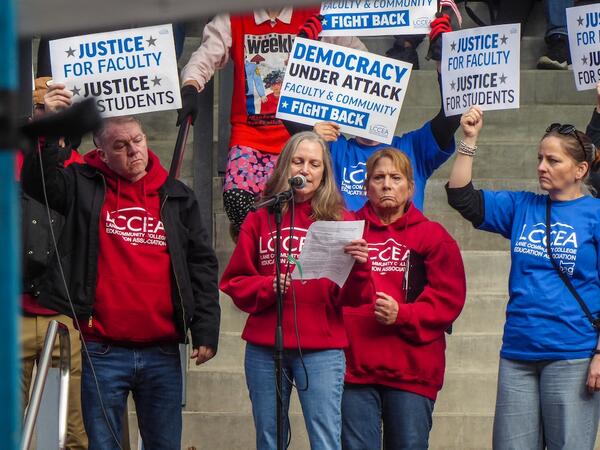
    The Lane Community College Board of Education voted to approve college leaders’ plans for a budget reduction on Jan. 7, despite fierce pushback from the faculty union. The latest controversy comes amid a dramatic year for the Oregon community college, marked by long, fractious board meetings and an ongoing battle between administrators and faculty over stalled labor negotiations and course cuts.

    College administrators argue the approved proposal—cutting spending by $8 million over the next three years—is a financial necessity. They say the college regularly falls short of a board requirement to maintain 10 percent of its balance in reserves. Administrators also conducted a new multiyear forecast that predicted expenses are going to grow.

    The college is expected to be “in a deficit every year … if we continue on the same trends that we have been in the last two or three years,” said Kara Flath, Lane’s vice president of finance and operations. The plan also proposes using some of the freed-up money for deferred maintenance and other projects.

    But faculty union leaders disagree with the administration’s view of the college’s financial present and future. Adrienne Mitchell, president of the faculty union, the Lane Community College Education Association, believes leadership’s projections are pessimistic and that a roughly 8 percent cut to the $104 million operating budget is excessive.

    “We don’t believe any of those cuts are necessary,” Mitchell said. “Currently, all of our funding sources—state funding, property taxes and student tuition revenue—are up.”

    The union came out with an independent report last week suggesting that the college is in a sound financial position and should invest more, not less, in faculty and the campus over all. But faculty and administrators fundamentally disagree on how much spending will rise and what tranches of money the college has at its disposal.

    The union’s perspective that the college can spend less “makes the numbers look better,” Flath said. “But as finance people, we have decades of finance experience” and such cost estimates are “not fiscally viable.”

    Mitchell also argued that Oregon Local Budget Law requires the board to follow a legal process that includes forming a committee of board and nonboard members, presenting the budget and hosting a public hearing, before formally adopting a budget. The union put out a legal memo on the matter in September.

    But administrators say their overarching plan isn’t the final budget—it doesn’t specify where exactly cuts will be made—so it doesn’t need to go through such a process yet. They said they plan to review programs, solicit community feedback and draw up a list of recommended cuts in the spring.

    Board members, initially skeptical of the plan’s lack of specificity, held multiple ad hoc budget committee meetings last week to discuss it ahead of the meeting on Wednesday, which lasted almost five hours.

    Board member Zach Mulholland said at the Wednesday meeting that he still sees “red flags and concerns with regards to unspecified cuts” but concluded, “at this moment in time, this appears to be a balanced proposal.” Mulholland and other board members on the ad hoc committee recommended the board move forward with the plan, as long as it includes annual updates and regular progress reports from administrators.

    “Now maybe as a college we can work together,” Flath said.

    Fraught Faculty Relations

    But the college is also mired in other controversies. The faculty union, which represents about 525 full- and part-time professors, has been without a contract since June as administrators and faculty clash over the details.

    Discussions have soured over disagreements about workloads, class-size limits, cost-of-living adjustments, the timing of layoff notices and the college’s efforts to strike some provisions, which Mitchell says amounts to a “net divestment” of over a million dollars in spending on faculty. The administration argued some of the issues in the proposed contract aren’t directly connected to faculty benefits, including proposals to add immigration status to the college’s nondiscrimination policy and ramp up campus safety measures.

    Grant Matthews, vice president of academic affairs, said significant progress has been made since the summer, but “really, we’re stuck on economics.”

    “We’re trying to really have a fiscally sustainable institution, and the proposals that we’re receiving at the table are not fiscally responsible,” he said. He estimated that the current contract proposal could cost the college up to $61 million.

    Professors aren’t pleased with how the process is going. In a December survey of 271 faculty members, 87 percent reported low morale, 90 percent said they didn’t trust the college’s president and 69 percent reported that they fear retaliation for expressing their views. The union has also raised concerns that faculty of color are leaving the college. On Wednesday, about 75 union members and supporters picketed outside ahead of the board meeting.

    Two more bargaining sessions are planned for this month, and mediation is scheduled after.

    Recent course cuts have also frayed relations between faculty and college leaders. Lane cut about 100 course sections for the winter and spring terms after introducing a new system that allows students to sign up in the fall for courses for the entire year.

    Administrators said this is a typical number of course cuts for the college, on par with past years, to optimize their academic offerings, and advisers are ensuring students still get the classes they need. But Mitchell described the move as a blow to part-time faculty, who lost classes that might have filled up later in the year. The union filed an unfair labor practice complaint with the Oregon Employment Relations Board, arguing the eliminated courses should have been a part of bargaining. Mitchell also worries the cuts are a roadblock for students who need to take certain courses, noting that a popular biology class—a prerequisite for many health professions courses—has a wait list of 168 students.

    Leadership Tensions

    The board, meanwhile, has had its own share of drama over the past year.

    The faculty union has accused administrators of encroaching on board responsibilities and criticized the board for failing to exercise its authority.

    “There’s been a lot of controversy surrounding the administration essentially taking over the role of the Board of Education,” Mitchell said.

    Meanwhile, in August, a third-party report concluded that Mulholland, formerly the board chair, and other board members discriminated against President Stephanie Bulger, a Black woman, on the basis of race and sex. The report described Mulholland and some other board members as displaying a dismissive or hostile attitude toward Bulger, cutting her off in conversations, and deferring questions to male staff. The report also found that Mulholland had intimidated a student. In September, the board censured the former board chair, who apologized, and the full board then came out with a joint apology.

    “We are deeply sorry for the negative impact our behavior has had on you and the college community at large,” said Austin Fölnagy, the current board chair, who was also accused of adopting a dismissive tone toward the president. “President Bulger, please accept the board’s apology for treating you badly.”

    Mitchell said the union is “very concerned about any type of discrimination, and we think it’s really important for everyone on the campus to feel safe.”

    The college’s accreditor, the Northwest Commission on Colleges and Universities, also deemed the college “substantially in compliance” with accreditation standards but “in need of improvement” in a notice last March. The accreditor recommended the college evaluate its internal communication and ensure decision-making processes are “inclusive of all constituents,” among other suggestions.

    Source link

  • Prison Education May Raise Risk of Reincarceration

    Prison Education May Raise Risk of Reincarceration

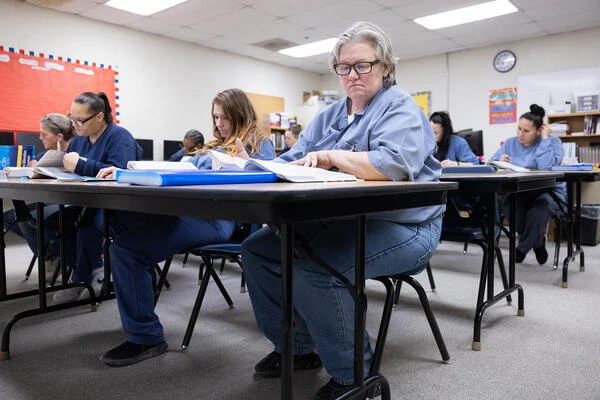
    Prison education programs are designed to help people succeed after release, but new research suggests they may actually increase participants’ chances of reincarceration.

    An analysis from Grinnell College found that participation in prison education increases an individual’s likelihood of returning to prison within three years of release by 3.4 percentage points—a roughly 10 percent increase compared to those who did not participate. That increase is driven largely by revocations, such as technical violations of release conditions, rather than by new crimes.

    “The takeaway from this should not be that prison education is bad,” said Logan Lee, an associate professor of economics at Grinnell and the study’s author. “Instead, what seems to be happening is that there are these unintended consequences.”

    The analysis examined more than 22,000 prisoner stints in Iowa, drawing on data from the Iowa Department of Corrections, the Iowa Department of Education, Iowa Workforce Development and Grinnell College to create a comprehensive, individual-level dataset of people released from Iowa prisons between 2014 and 2018.

    The research found that participation in prison education programs affects how individuals are released. Those who enroll in college courses are less likely to be released free and clear and more likely to be assigned to work release, which allows eligible inmates to leave prison during the day to work in the community and return at night.

    In Iowa, work release often takes place in a halfway house, a structured living environment intended to support people as they transition back into the community. But work release also exposes individuals to more intensive postrelease supervision, which dramatically increases the likelihood of revocation, or being reincarcerated for violating supervision terms, Lee said.

    “Work release programs are quite ineffective at achieving their goals, [and] they’re driving a significant increase in people returning to prison,” Lee said. “It’s being assigned far too often at the margins, and some [incarcerated individuals] would be better off on parole or even released free and clear.”

    Lee said anecdotal evidence suggests that some correctional officers may resent the idea of “free” education for incarcerated people, pointing out that the requirements for their job are a high school diploma and a clean criminal record. As a result, he said, there is “the potential for some animosity,” with research finding “an increase in misconduct for people who are participating in education programs.”

    “Correctional officers are very difficult, high-stress, low-pay jobs,” Lee said. “So you can imagine that that sort of person might go, ‘Look, I kept my nose clean and I didn’t commit any crimes, so why are these people given opportunities that I wasn’t given?’”

    However, Lee said case managers, who often recommend how incarcerated individuals are released, don’t share the same resentment. He noted they are “much more likely to have college degrees and interact with prisoners in a different way.”

    The background: The U.S. has one of the world’s largest incarcerated populations, with nearly two million people in prison in 2024. This population recidivates at high rates: 46 percent of released prisoners are rearrested within five years, research shows.

    U.S. prisons disproportionately house economically vulnerable individuals, many of whom have limited education. Despite historically limited access, prison education programs consistently draw strong interest from incarcerated people. A survey from the National Center for Education Statistics found that 70 percent of incarcerated individuals wanted to enroll in educational programs, and that a majority were academically eligible for college-level courses.

    In Iowa, all prison education is offered through local colleges, primarily community colleges. The state funds all GED preparation courses and some postsecondary and vocational programs. Lee said programs offered through some institutions, including Grinnell College and the University of Iowa, are funded by donations.

    Across the country, nearly all state and federal prisons provide some form of educational programming. The expectation in both Iowa and nationally is that courses offered inside prisons resemble, as closely as prison guidelines allow, their nonprison counterparts.

    “The reality on the ground in most [prisons] is that [incarcerated individuals] only take a couple of courses and then they get released and move on,” Lee said. “You can certainly look at national statistics and see that most people who participate in education in prison are not earning any sort of degree.”

    The implications: In addition to his work at Grinnell College, Lee said he previously taught at a women’s prison in Mitchellville, Iowa. He led a “how-to-do-college course,” where he taught writing, critical reading and academic honesty.

    Lee described the experience as “eye-opening,” adding that the incarcerated women he taught were highly engaged and deeply interested in the material.

    “I saw a real hunger for education, and I do think they got a lot out of the class,” Lee said, noting that he taught 16 students, six of whom were released from prison during the course and 10 of whom eventually completed it.

    Providing education in prisons, however, can be challenging. Limited access to technology and learning materials, restrictions on participation times, and situations like lockdowns can interrupt learning opportunities.

    “There are just some real challenges with balancing the educational mission with the security demands of the setting,” Lee said. “It’s much more difficult to write a research paper if you can’t get on the internet and start googling stuff.”

    Ultimately, Lee emphasized that policymakers, prison administrators and educators need to think “holistically” about the entire system for incarcerated individuals.

    “I thought [prison education] might be positive, I thought it might have no effect, but I really did not expect it to increase reincarceration,” Lee said. “If you’re thinking about offering prison education or expanding it, you need to be really aware of the whole system that’s in place and the implications it’s going to have for the people who are participating.”

    Get more content like this directly to your inbox. Subscribe here.

    Source link

  • For Now, Judge Won’t Restore Prof Calling for War on Israel

    For Now, Judge Won’t Restore Prof Calling for War on Israel

    Gwengoat/iStock/Getty Images Plus

    A federal judge is, for now, declining to return to the classroom a professor whom the University of Kentucky removed from teaching amid his calls for a global war to end Israel’s existence as a country.

    On his website, antizionist.net, law professor Ramsi Woodcock asks fellow legal scholars to sign a “Petition for Military Action Against Israel.” He says Israel is a colony and war is needed to decolonize, and he calls for the war to continue until “Israel has submitted permanently and unconditionally to the government of Palestine.”

    The university removed him from teaching in July. In a message to campus that month, UK president Eli Capilouto wrote, “We have been made aware of allegations of disturbing conduct, including an online petition calling for the destruction of a people based on national origin.” (Woodcock says he’s calling for the end of the state of Israel, not the destruction of Jews.)

    In November, Woodcock sued UK in U.S. District Court for the Eastern District of Kentucky, asking for restoration of his normal teaching duties and other relief. On Thursday, Judge Danny C. Reeves paused the case while the university’s investigation proceeds.

    “As is customary for the University investigating claims that potentially impact the educational environment, Woodcock was removed from teaching and the law building as an interim measure during the investigation,” Reeves said. “Abstention is appropriate because those removals cannot be separated from the investigation and interference clearly would result if the Court were to enjoin any aspect of the investigation.”

    Reeves added that “once the investigation is completed or any subsequent disciplinary procedures have concluded and claims have been exhausted, the stay will be lifted.”

    In a statement, a UK spokesperson said the university “appreciates the Court’s thoughtful and clear ruling.” Woodcock, in his own statement, suggested he may appeal, saying UK officials were “torching the First Amendment and the university’s own regulations in an effort to protect a colonization project that practices apartheid and commits genocide.”

    “There is very strong precedent stretching back to the Civil War that federal courts must intervene when rogue state actors, like university officials in my case, abuse their authority to try to silence speech that they happen to dislike,“ he wrote.

    Source link

  • Texas Drops ABA Oversight of Lawyers Amid Anti-DEI Crusade

    Texas Drops ABA Oversight of Lawyers Amid Anti-DEI Crusade

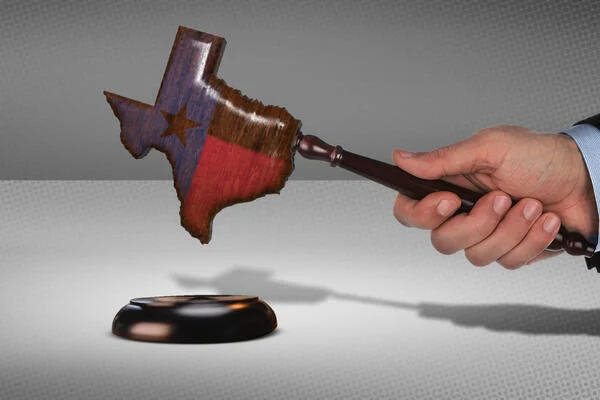
    For the first time in 43 years, lawyers who want to practice in Texas will no longer be required to hold a degree from a law school accredited by the American Bar Association, the Texas Supreme Court decided last week.

    While the ABA is “continuing to work with the Texas Supreme Court—and all other state supreme courts and bar admitting authorities—to help preserve the portability of law school degrees throughout the country,” the policy “reinforces the authority that the Supreme Court of Texas has always had over the licensure of JD graduates,” Jenn Rosato Perea, managing director of the ABA’s accrediting arm, wrote in an email to Inside Higher Ed.

    Since 1983, Texas has ceded some of that authority to the ABA, whose Section of Legal Education and Admissions to the Bar accredits the majority of law schools in the United States. Most other states have similar ABA oversight in place; it became a popular move in the 1980s because law was becoming increasingly national business. Widespread adoption of ABA accreditation as a licensure standard offered more uniformity and has made it easier for lawyers to practice in multiple states.

    The new Texas policy comes amid the broader crackdown on higher education accreditors by the Trump administration and its allies, and specifically on the ABA, which has become a target of the Republican-led anti-DEI crusade in recent years. Indeed, the ABA suspended its diversity, equity and inclusion standards last year. Now Texas has become the first state to say it will no longer rely on the accreditor to help to set law licensure standards.

    “[The Court] intends to provide stability, certainty, and flexibility to currently approved law schools by guaranteeing ongoing approval to schools that satisfy a set of simple, objective, and ideologically neutral criteria (such as bar exam passage rate) using metrics no more onerous than those currently required by the ABA,” read a Jan. 6 order signed by all nine justices of the Texas Supreme Court. “[It] does not intend to impose additional accreditation, compliance, or administrative burdens on currently approved law schools.”

    While the policy likely won’t change much in the short term, critics say it invites the creation of alternative law school accreditors, which could make it harder for lawyers to move their practice across state lines.

    Republican-controlled Florida, Ohio and Tennessee are weighing similar measures.

    “This could be the beginning of the end of the ABA as the accreditor of choice for law schools nationally,” Peter Lake, a law professor at Stetson College of Law’s Center for Excellence in Higher Education Law and Policy, told Inside Higher Ed. “It’s a little too early to call the game, but this is a significant step toward a goal the Trump administration and many states want to see happen.”

    Part of that goal involves asserting more control over higher education accreditors.

    In April, Trump issued an executive order directing the Department of Education to suspend or terminate the federal recognition of accreditors found “to engage in unlawful discrimination in accreditation-related activity under the guise of ‘diversity, equity, and inclusion’ initiatives.” It specifically called for an investigation of the ABA and the Liaison Committee on Medical Education, which accredits medical schools. In June, six states—Florida, Georgia, North Carolina, South Carolina, Tennessee and Texas—announced the launch of a new regional accreditor, the Commission for Public Higher Education; at the time, Florida governor Ron DeSantis described it as part of an effort to root out “woke ideology” in higher education and break up the “accreditation cartel.”

    The federal government made adjacent arguments in supporting the Texas Supreme Court’s plan to minimize the ABA’s oversight of legal education, also announced last April. In December, the Federal Trade Commission submitted a public comment letter in support of the policy, accusing the ABA of having a “monopoly on the accreditation of American law schools” and of imposing “rigid and costly requirements” mandating “every law school follow an expensive, elitist model of legal education.”

    Texas Open to ABA Alternative

    While the Texas court stopped short of establishing a new law school accreditor, it acknowledged that it might in the future consider “returning to greater reliance on a multistate accrediting entity other than the ABA should a suitable entity become available,” according to the final version of the policy.

    Lake said that could happen eventually, especially if other states decide to follow Texas and ditch the ABA’s oversight. “This is an open invitation to form a [new law school–accrediting] organization,” he said. “And I suspect that whatever group forms will probably be a little more aligned with the Trump administration’s goals and ideas.”

    Educators and experts believe such a move will only impede the goals of legal education and practice.

    “ABA accreditation provides a nationally recognized framework for quality assurance and transparency; portability of licensure through recognition of ABA accreditation by all 50 states, which is critical for graduates’ career flexibility; consumer protections and public accountability through disclosure standards; and a baseline of educational quality that correlates with higher bar passage rates and better employment outcomes,” the deans of eight of the state’s 10 ABA-accredited law schools wrote in a letter to the Texas Supreme Court in June.

    The dean of South Texas College of Law Houston was among those that objected to minimizing the ABA’s oversight of law licenses in the state.

    JHVEPhoto/iStock/Getty Images

    A degree from an ABA-accredited law school is generally required to pursue a career as a lawyer, said Oren R. Griffin, a law professor at the University of Tulsa College of Law.

    “ABA accreditation is a national stamp of approval,” he said. “Law schools may differ on what they prioritize, such as curriculum or clinics they offer, but the standards have identified some basic requirements that allow all law schools to operate at an efficient, effective level.”

    And even if a state says it will license lawyers who didn’t graduate from an ABA-accredited law school, graduates from such institutions may still face limited opportunities.

    “Law schools have been very well served by these standards,“ Griffin said. “If other states were to follow suit and begin to not require ABA accreditation as a national standard, you could end up with some real disparities or differences among the 50 states, which could increase the complexities for students who are graduating and want to be able to practice in multiple states.”

    Regardless of the Texas Supreme Court’s new policy, law schools won’t likely abandon ABA accreditation anytime soon, said Austen L. Parrish, dean of the University of California, Irvine, School of Law and president of the Association of American Law Schools.

    “For example, a school like the University of Texas—where about 40 percent of students come from out of state and some 30 percent of graduates are placed out of state—cannot afford to not be ABA accredited. And I suspect that’s true for all of the ABA-accredited schools,” he said, adding that any school that eventually gives up ABA accreditation would be charting “a very dangerous path.”

    Students who are not held to the ABA’s national accreditation standards are less likely to receive a quality legal education, Parrish said—a result long demonstrated by the poor outcomes at California’s handful of non-ABA-accredited law schools, which have high attrition and low bar-passage rates, he added.

    “The unraveling of the national accreditation system would be really harmful to students and law schools,” Parrish said. “We’re in a world where schools need to recruit from all over and students end up practicing all over. To have a school that doesn’t do that makes them less attractive to students and more likely to create some of the problems at some of the unaccredited schools in California.”

    And even if Texas and other states do band together to form their own law school accreditor, rivaling the ABA’s influence would be a challenge.

    First, “it’s very difficult to set up an accrediting body and takes quite a bit of money,” Parrish said. “They could set up a regional accreditor, but it’s not necessarily clear who will see that as sufficient for licensing eligibility, which means the schools in those states will still have to go with ABA accreditation … I’m skeptical that more progressive states are going to buy into something that’s blatantly political.”

    For now, he interprets the Texas order as a placeholder.

    “There probably won’t be many changes right now,” he said, “other than keeping the pressure on the ABA, because [Texas] has signaled a willingness to move to a different approach, though it’s not clear what that is right now.”

    Source link

  • UC Enrollment Reaches Record High

    UC Enrollment Reaches Record High

    Laser1987/iStock/Getty Images

    The University of California system reached record enrollment this fall, surpassing 301,000 students across its 10 campuses. About 200,000 of them come from California; the share of students who come from outside the state has decreased by two percentage points over the past four years.

    University officials said in a news release that the decline represents the system’s commitment to serving California residents.

    “These numbers reflect California’s commitment to academic excellence, access, and innovation, values that have made the University of California the world’s greatest research university,” said UC president James B. Milliken. “The value of a UC degree is abundantly clear. An investment in UC is the best investment in the future of our students, California’s workforce, and the state’s economy.”

    The release noted that this enrollment success comes at a time when UC campuses are facing increased costs, federal funding cuts and other financial hardships. Four hundred federal research grants remain suspended or terminated across the system.

    Source link

  • Apparently, Civil Discourse Requires a Bachelor’s Degree

    Apparently, Civil Discourse Requires a Bachelor’s Degree

    I have to hand it to CC Daily; its article on the recent round of FIPSE grants had a killer closing sentence.

    The recent round of grants from the Fund for the Improvement of Postsecondary Education had focus areas in AI, accreditation and civil discourse. As CC Daily succinctly noted, “No community colleges received awards in the civil discourse category.”

    None. Not one, out of over 1,000 institutions across the country. Zero.

    I know it’s not for lack of applications.

    They were well represented among the awards focused on workforce training but were shut out when it came to addressing larger social issues.

    To be fair, FIPSE wasn’t alone in ignoring community colleges. As Karen Stout pointed out this weekend, The Chronicle’s quarter-century forecast drew on 50 experts from across higher education to talk about emerging trends; only one was from a community college. We have over 40 percent of the students in the country, but received 2 percent of the attention. Two is greater than zero, granted, but come on.

    Who is at the table will affect what gets considered important. From the Chronicle group, for instance, you wouldn’t know that dual enrollment has quietly but steadily redefined the barriers between secondary and postsecondary education around the country and that the funding structures and academic policies in many states (cough Pennsylvania cough) haven’t kept up. That has consequences in myriad ways, ranging from faculty credential requirements to residency-based tuition to the impact on grad school applications for students who got B’s at age 14. Business models based on a previous reality struggle under the emerging one. That’s invisible to people at think tanks who focus on disciplining “the woke left,” but it’s real and it matters.

    The civil discourse piece was just the latest in a long line of reminders that many policymakers see community colleges as workforce training centers and nothing else. Higher education, in their view, belongs to those who can afford it; our job is to produce skilled proles who will produce profit, do what they’re told and stay quiet.

    Well, no. Community colleges are, among other things, colleges; they embody the belief that nothing is too aspirational for anybody, including people from lower-income backgrounds. Workforce training is a key component of the mission, but it isn’t the entire mission—and it shouldn’t be. Our students have just as much dignity, humanity and perspective as anyone else’s.

    Last week I had the opportunity to see a new slate of officers of student government get sworn in. It’s always a happy occasion. Over the course of my career, though, I’ve seen the tone of those events shift. Twenty years ago, I heard students talk about making a difference. Ten years ago, I heard them talk about building their résumés. Now I hear them talk about making friends. That very human need for connection isn’t unique to four-year schools. Community colleges are, among other things, places where people from different backgrounds interact on equal footing, often for the first time. It’s where students learn to practice civil discourse on the ground. Interactions like those are crucial parts of educating a citizenry. That’s part of our mission, and I offer it without apology.

    An old saying suggests that if you aren’t at the table, you’re on the menu. Community colleges deserve to be at the table. When we aren’t, the entire conversation is distorted.

    Source link

  • Lessons on Renee Good’s Death and the Politization of Facts

    Lessons on Renee Good’s Death and the Politization of Facts

    Darnella Frazier received a Pulitzer Prize for capturing Minneapolis police officer Derek Chauvin’s murder of George Floyd in May 2020. The then–17-year-old Black girl was not pursuing journalistic acclaim; instead, she instinctively reached for her cellphone to document unspeakable police misconduct.

    There is a chance that without Frazier’s footage, the facts concerning Floyd’s death might have been disputed. There are many reasons why this tragedy ignited protests around the world—one of them is that we all saw with our own eyes how Chauvin pressed his knee on an unarmed Black man’s neck, ultimately killing him. We saw it. Personally, nearly six years later, I remain incapable of unseeing it.

    A U.S. Immigration and Customs Enforcement agent shot and killed Renee Nicole Good in Minneapolis last week. The tragedy occurred just blocks away from where Floyd died. Like Frazier, several eyewitnesses recorded the incident involving Good; her wife, Becca; and ICE agents. Videos have since emerged capturing the shooting from multiple angles. One seems to potentially show that Good’s vehicle may have struck an ICE officer, a claim that President Donald Trump, Vice President JD Vance and U.S. Secretary of Homeland Security Kristi Noem made just hours after the tragedy occurred. These leaders declared this to justify the killing, absent a formal investigation.

    Millions of people around the world have seen the videos of Good’s killing on television and social media. Doing so compelled thousands across the U.S. to take to streets in protest. Presumably, they decided for themselves that they saw what they saw, that it was real and that an egregious crime had been committed that resulted in the loss of a mother’s life. Despite this, the Trump administration continues to cling to and articulate an alternative set of facts.

    Just as people around the world are listening to dueling interpretations of what happened to Good, so too are students in K–12 schools and on college campuses across America. Those who have scrolled social media platforms or watched news with their families in recent days have likely seen at least one video showing the ICE agent firing his gun into Good’s vehicle. Their government leaders are telling them that they don’t see what they see. This is noteworthy for at least three reasons.

    First, it teaches students how to heartlessly politicize the loss of life. Defending the federal government’s actions is seemingly more important than is empathy for Good, her wife and children, and those in her community who witnessed what happened on a snowy Minnesota street that day. The lesson for students is that partisan loyalty and the advancement of a White House administration’s policy agenda (in this case, the mass deportation of immigrants) justify cruel responses to a citizen’s death. Also, they are learning that just about anything rationalizes the relentless pursuit of a partisan mission, regardless of who gets hurt and what crimes are committed.

    Students also are learning that investigations and rigorous analyses of facts are unimportant. Eyewitnesses who were there saw what they saw. They did not need an investigation. Videos that they subsequently released present their versions of what happened.

    Even still, Good and the ICE officer who killed her deserve a nonpartisan, uncontaminated investigation; that is what our laws and policies have long specified. Notwithstanding, the second terrible lesson from last week is that it is seemingly acceptable for elected officials and other leaders to stand on politics in defense of a crime—in this case, one that resulted in the loss of a citizen’s life.

    In recognition of its one-year anniversary, I published an Education Week article in which I insisted that educators teach facts about the Jan. 6, 2021, insurrection (including the truth about the demographic composition of the rioters who committed crimes that day). I predicted then that in future years, there would be efforts to rewrite history and minimize what happened. Because it was just five years ago, many Americans and people around the world remember what we saw. Notwithstanding, because of politics, we have been repeatedly told that something different happened on Jan. 6 and that it was patriots, not criminals, who stormed the Capitol.

    Similarly, because of politics, students are being taught that it is acceptable to gaslight people who saw what they saw on videos emerging from Minneapolis. They are learning that facts and what will eventually become the historical account of Good’s death matter less than do partisan commitments.

    Some of these students will someday become U.S. presidents, congresspersons, governors and leaders. All of this is dangerous for our democracy because it is guaranteed to exacerbate political polarization and result in additional betrayals of our nation’s justice system.

    Shaun Harper is University Professor and Provost Professor of Education, Business and Public Policy at the University of Southern California, where he holds the Clifford and Betty Allen Chair in Urban Leadership. His most recent book is titled Let’s Talk About DEI: Productive Disagreements About America’s Most Polarizing Topics.

    Source link

  • UVA Board Members Blast Lawmakers, Faculty in Texts

    UVA Board Members Blast Lawmakers, Faculty in Texts

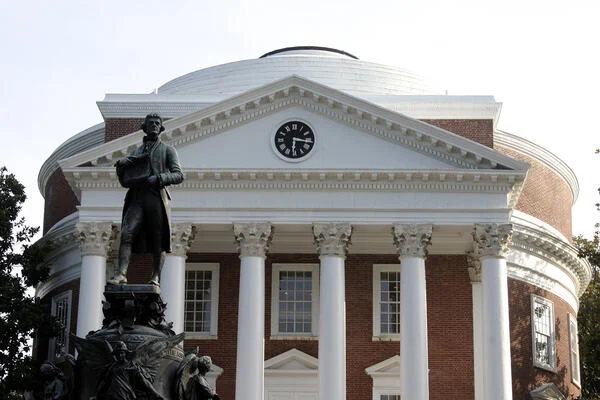
    University of Virginia board members blasted state lawmakers as “extremist” and faculty members as “out of control” in a batch of text messages published by the Washington Post.

    Richmond-based author Jeff Thomas sued the university to force the release of communications between board members and university officials from June 2023 through last month; then he released the 947 pages of messages to the newspaper.

    In recent months, the Board of Visitors—stocked with GOP donors and other political figures—has defied state lawmakers, including Governor-Elect Abigail Spanberger, over calls to pause a presidential search. That search concluded with an internal hire last month, though multiple critics have flagged process concerns and state lawmakers have also voiced displeasure.

    The text messages show that board members reacted sharply last year when a Democrat-controlled board rejected multiple university board picks by Republican Governor Glenn Youngkin. The governor lost a subsequent legal fight to seat the picks and several boards remain hobbled.

    In August text messages to Jim Donovan, one of the rejected picks, UVA Board Rector Rachel Sheridan, called the General Assembly’s refusal to approve Youngkin’s nominees “Very disappointing. Completely unprecedented and destructive.” Sheridan added: “I hope this backfires politically and reveals them to be the extremists they are.”

    Sheridan did not apologize or backtrack after the texts were released. In a statement to the Washington Post and Inside Higher Ed, she wrote: “I respect the General Assembly’s authority on these matters but share the frustration of those four individuals that were summarily rejected without the benefit of consideration of their merit and the value these individuals have given and could have continued to give to the university community.”

    Her remarks highlight tensions between the board and the General Assembly, which have spiked since President Jim Ryan resigned under pressure in June and the university signed an agreement with the Department of Justice in October to close multiple investigations into alleged civil rights violations.

    In other text messages, Vice Rector Porter Wilkinson expressed frustration with the UVA Faculty Senate, which has demanded answers about whether Ryan was pushed out by the board and the DOJ agreement.

    When Board of Visitors Secretary Scott Ballenger texted Wilkinson in October that the Faculty Senate was debating a resolution to demand a meeting with Sheirdan and then-Interim President Paul Mahoney, Wilkinson responded “That is insane.” When he told her the Faculty Senate was weighing a resolution of no-confidence in Mahoney, she wrote: “So embarrassing. For them.” Wilkinson added in response to another text from Ballenger: “This is out of control.”

    The published text messages also expose the board’s dramatic behavior behind the scenes. In a text to Sheridan, former Rector Robert Hardie, a Democratic appointee who has since rotated off the board, made vague references to an “unhinged” board member threatening the university administration.

    Hardie called board members Stephen P. Long and “BE” (presumably Bert Ellis) “assholes.” (Ellis was removed by Youngkin in late March for his combative style on the board.) Hardie referred to board members BE, Long, Douglas Wetmore and Paul Harris as “four horses asses.” Hardie also complained about a member that he did not name trying to stir controversy and a “food fight.”

    The full batch of text messages can be read here.

    The release of the texts—spurred by legal action—comes as UVA has been slow to release information in response to public records requests, prompting criticism from a local lawmaker and others. Citing “a significant backlog,” UVA has not yet fulfilled a public records request regarding communications with federal officials sent by Inside Higher Ed in October.

    Source link