Tag: Jobs

  • At Least 15 Florida Institutions Have ICE Agreements

    At Least 15 Florida Institutions Have ICE Agreements

    At least three members of the Florida College System have signed agreements with the U.S. Immigration and Customs Enforcement to allow their campus police departments to enforce immigration law, bringing the total to 15 institutions across the state.

    Florida SouthWestern State College, Northwest Florida State College and Tallahassee State College have all signed 287(g) agreements with ICE, which allows the agency to delegate immigration enforcement powers to other law enforcement agencies, such as campus police. Those three agreements have been approved by ICE, according to a federal database. Others approved as participating agencies are the police at Florida A&M University, New College of Florida, the University of Central Florida, the University of Florida and the University of West Florida.

    None of the three latest colleges responded to requests for comment from Inside Higher Ed.

    Santa Fe College also has a draft agreement in place that has not yet been signed, a spokesperson said, noting the earliest that would be done is at a May 20 board meeting. A spokesperson for Pensacola State College said its campus police are considering an application to partner with ICE.

    Other institutions that have already signed agreements with ICE are:

    • Florida A&M University
    • Florida Atlantic University
    • Florida Gulf Coast University
    • Florida International University
    • Florida Polytechnic University
    • Florida State University
    • New College of Florida
    • University of Central Florida
    • University of Florida
    • University of North Florida
    • University of South Florida
    • University of West Florida

    While all 12 institutions in the State University System have signed on with ICE, Florida SouthWestern State, Northwest Florida State and Tallahassee State appear to be the first of the 28 members in the Florida College System to enter such arrangements.

    Not all of the state colleges have campus police departments. But of those that do have campus police departments, signing on with ICE isn’t a given. For instance, Florida State College of Jacksonville and Polk State College told Inside Higher Ed that neither have a memorandum of agreement with ICE.

    Leaders Defend Agreements

    The agreements with ICE come amid an immigration crackdown driven by Gov. Ron DeSantis and Florida’s Republican-controlled Legislature. In February, DeSantis directed state law enforcement agencies to sign agreements with ICE “to execute functions of immigration enforcement within the state” to make deportations more efficient, according to a news release.

    Florida colleges and universities soon followed by signing memorandums of understanding with ICE that will deputize campus police officers to carry out immigration duties on campus. Institutions have largely declined to speak publicly about the arrangements. However, a recent Faculty Senate meeting at Florida International University with FIU chief of police Alexander Casas yielded insights into why agreements were signed but left many lingering questions.

    Casas argued at the April 18 meeting that it would be better for university police to carry out immigration enforcement duties on campus than outside agencies.

    “I can’t control what ICE does. I can’t control what a state agency does that has jurisdiction. But if I don’t enter the agreement, I don’t even have the opportunity to say, ‘Call us first, let us deal with our community.’ That’s not even an option,” Casas said. He added he wanted to be “in the driver’s seat” but “without the agreement, I’m not even in the car.”

    FIU interim president Jeanette Nuñez, the former lieutenant governor under DeSantis, also defended the deal, telling the Faculty Senate the ICE agreement follows similar arrangements “at almost all of the state universities and many other universities across the country.”

    Immigration experts have told Inside Higher Ed they are unfamiliar with such agreements at universities in other states. Only Florida institutions appear in an ICE database that tracks active and pending 287(g) agreements. (FIU did not respond to questions about Nuñez’s claims.)

    FIU Faculty Senate members, however, did not seem swayed by Casas or Nuñez. Several professors spoke about their distrust for ICE—some clearly emotional—and referenced recent questionable actions by ICE, such as the widely publicized arrest of Juan Carlos Lopez-Gomez, an American citizen who was detained earlier this month and falsely accused of illegally entering Florida as an “unauthorized alien.” Federal officials later blamed Lopez-Gomez for his arrest.

    Ultimately, the Faculty Senate approved a resolution calling for the university to withdraw from the ICE agreement, which members argued ran counter to the values of the institution.

    Statewide Concerns

    Concerns about such agreements have also emerged at universities across the state.

    Students and faculty have protested such agreements at FIU, FAU and elsewhere. United Faculty of Florida, a union that represents professors across the state, condemned the agreements with ICE as a betrayal of the core values of higher education in a recent statement.

    “Our campuses must be institutions of learning, critical inquiry, and inclusion—not instruments of surveillance and state-sponsored oppression,” United Faculty of Florida officials said in a statement last week. “The presence and involvement of ICE on our campuses sows fear among students, staff, and faculty, particularly those from immigrant, undocumented, or international communities. It undermines the very mission of our higher education system: to foster open dialogue, intellectual freedom, and the free exchange of ideas across borders and identities.”

    The agreements also prompted pushback from the Florida Advisory Council of Faculty Senates, which issued a resolution that urged universities to withdraw from existing agreements with ICE.

    “To effectively protect our universities, campus police cultivate a unique relationship with campus communities,” council members wrote in a recent resolution. “They come to know our students, our educational spaces, and our communities. They are present at peaceful protests, in classrooms, and at student events. Repurposing this unique trust for federal immigration enforcement makes our campuses less safe, puts our officers in an untenable position, and chills students’ access to the support services they critically need to succeed.”

    That resolution has already been endorsed by some faculty senates, including at FAU.

    Source link

  • AAUP Report Backs Tenured Pro-Palestine Prof. Who Was Fired

    AAUP Report Backs Tenured Pro-Palestine Prof. Who Was Fired

    A new American Association of University Professors investigative report concludes that Muhlenberg College violated the academic freedom of a tenured associate professor who said the institution fired her for pro-Palestinian speech.

    Maura Finkelstein’s situation made headlines last year as the first instance that major academic freedom advocacy groups had heard about of a tenured faculty member being fired for pro-Palestine or pro-Israel statements. Complaints against Finkelstein also became the subject of a U.S. Education Department Office for Civil Rights investigation.

    Finkelstein previously said she was fighting her May 2024 termination and was continuing to be paid during the appeals. But a college spokesperson told Inside Higher Ed this week that Finkelstein has now “resigned from the college to pursue other scholarship opportunities.” Finkelstein didn’t respond to Inside Higher Ed’s requests for comment.

    Finkelstein, who is Jewish, had said a panel of faculty and staff recommended axing her over her Instagram repost that told readers not to “normalize Zionists taking up space” and called Zionists “genocide-loving fascists” who shouldn’t be welcome “in your spaces.”

    Members of the college’s Faculty Personnel and Policies Committee later unanimously concluded that Finkelstein shouldn’t be fired, according to the AAUP report released Tuesday. The report is from a Committee of Inquiry composed of three faculty from other higher education institutions, and it’s been approved by the AAUP’s Committee A on Academic Freedom and Tenure.

    The report concludes, among other things, that “by initially dismissing Professor Finkelstein from the faculty solely because of one anti-Zionist repost on Instagram and without demonstrating—in fact, without ever seeking to demonstrate” that she was professionally unfit, “the Muhlenberg administration violated Professor Finkelstein’s academic freedom of extramural speech.” The report says the firing has “severely impaired the climate for academic freedom” at the college.

    A college spokesperson said the institution “has not been afforded the opportunity to review the amended report,” but pointed to the administration’s response to an earlier AAUP draft. That response, included in the final AAUP report, says Finkelstein “was afforded a fair and equitable process” and that “the cumulative effect of Professor Finkelstein’s conduct and post that called for the shaming of Zionists and to ‘not welcome them into your spaces,’ violated College policy.”

    Source link

  • Ex-NIH Director Says Trump Silenced Him, Others

    Ex-NIH Director Says Trump Silenced Him, Others

    A former director of the National Institutes of Health—who resigned in February—told CBS’s 60 Minutes that working at the agency became “untenable” after President Donald Trump started his second term Jan. 20. 

    Like “every other scientist, I was not allowed to speak in any kind of scientific meeting or public setting,” Francis Collins, a geneticist who had worked for the biomedical research agency since the 1990s, said during an episode that aired Sunday. He believed staying at the agency wouldn’t have helped. “I would have been pretty much in the circumstance of not being able to speak about it.”

    Over the past few months, the Trump administration has announced sweeping budget cuts and ideologically driven policy changes at numerous agencies across the federal government, including at the $47 billion NIH. The NIH is the largest funder of biomedical research in the world, sending about 80 percent of its budget to universities, medical colleges and other institutes in the form of extramural grants that support research on fatal diseases, such as cancer, Alzheimer’s and diabetes. 

    But scientists and medical research advocates say the work of the NIH—and the millions of patients it supports—is in jeopardy. 

    In late January, the NIH temporarily froze spending and communication and halted most reviews of grant applications; so far in 2025 it’s awarded about $2.8 billion less than usual at this point over the past five years. It’s also announced a plan to cap indirect research cost rates, which universities say would create gaping budget holes and slow the pace of medical breakthroughs. (A federal judge has since blocked the guidance.)

    The agency has also fired some 1,300 employees and terminated roughly $2 billion in grants—many focused on the health of women, LGBTQ+ people and racial minorities—that no longer effectuate “agency priorities.” (Researchers have since sued over the grant terminations). And earlier this month, The Washington Post reported that an internal White House budget proposal outlined plans to cut $20 billion from NIH’s annual budget and consolidate the NIH’s 27 institutes and centers into eight.

    Although research advocates have protested the cuts, the drastic changes have created an environment of fear and anxiety for both university scientists and the remaining NIH employees who support them and conduct their own medical research. 

    “I’ve never seen the morale of an institution change so abruptly to where we feel fear,” said an NIH researcher who spoke to 60 Minutes on the condition of anonymity. “You can’t run an organization as complicated as NIH without a support system … That has now been decimated … This doesn’t feel like a strategic plan to make the NIH better and more efficient. It feels like a wrecking ball.”

    Source link

  • Beware Illusions of Campus Normalcy This Spring (opinion)

    Beware Illusions of Campus Normalcy This Spring (opinion)

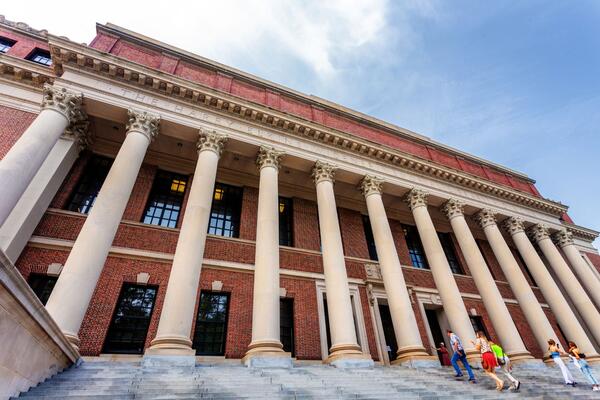
    It’s nearing the end of the academic year at Harvard University, where I teach in the Graduate School of Education. Students are preparing for final exams and finishing up capstone projects. Awards ceremonies are being held and celebrations, formal and informal, have begun. The weather has finally warmed up in Cambridge, and the outdoor tables at restaurants and coffee shops are crowded. The women’s tennis team clinched the Ivy League title.

    It all feels normal. Yet it all feels discordant, like a scene in a M. Night Shyamalan movie that infuses the quotidian with a barely detectable feeling of dread.

    This discordance is of course especially powerful at Harvard, the current epicenter of a ferocious and lawless attack on higher education that might make Viktor Orbán blush. But it is not unique to Harvard. At colleges and universities across the country, classes continue, clubs meet and Frisbees are being tossed even as the government sows fear and confusion by revoking, then restoring, then warning that it might again revoke the visa statuses of more than 1,800 international students.

    Lawyers continue to do what lawyers do, while large firms are essentially signing on to be instruments of the government, individuals are being targeted because the president of the United States holds a grudge, bigly, and court orders are being ignored.

    Doctors continue to treat patients while billions of dollars of funding for medical research and experimental trials are being withheld and the secretary of Health and Human Services is declaring that autism is preventable and the measles vaccine is maybe, sort of OK.

    We get in our cars or on our bicycles and go off to work while the government is pressing before the courts an argument that would allow it to send anyone, citizen or noncitizen, to a foreign prison without cause or legal recourse.

    When many of us think about authoritarian takeovers, we imagine military coups and declarations of martial law. But the truth is that the most powerful tool of the aspiring authoritarian is not shock, but normalcy. How bad can things be if we can still shop at Costco or take our families out for Italian food? How bad can they be if we can still download Maya Angelou onto our Kindles or watch Jimmy Kimmel Live!? How bad can they be if I can still publish a piece like this one, critical of the federal government?

    Look around not only at the campuses, but at the streets and bars and hardware stores in any city or town in America and it appears to be the same as it was last year and the year before. The NBA playoffs have begun and there’s a new film starring Michael B. Jordan. Normal.

    Except it is not, in ways of which we are vaguely aware but unable or unwilling to fully credit.

    For most people—the ones not scooped off the street by men in masks or ousted from their jobs with the federal government without cause or forced to stop their research because of the loss of National Institutes of Health funding—life feels more or less the way it did when we were a reasonably functional democracy. This is the way it works: Keep 99 percent of the lives of 99 percent of the people undisturbed for as long as possible so that they will remain unaware of or indifferent to what is happening at the margins. By the time they recognize that the edges of normalcy have drawn closer, it will be too late to do anything about it because the guardrails will have been destroyed.

    Begin with the least sympathetic targets. Who will shed tears for the fate of Venezuelan gang members (real or imagined)? Does anyone really like Big Law? Government employees are the problem, not the solution. Harvard, with its giant endowment and Ivy League arrogance, is rarely anyone’s idea of an underdog. Why should we concern ourselves with any of this on the way to McDonald’s or Starbucks? I work at Harvard and most of the time I find it difficult to take seriously the reality that the federal government is trying to destroy a private university simply to prove that it can and because its appetite for both control and chaos appears to have no limits.

    Be sure to cite rules and regulations that few people care to understand. What is 501(c)(3) status anyway? “Indirect costs” seem sort of like a scam. The “Alien Enemies Act” sounds like something pulled from the latest Marvel movie. Then cloak it all in the guise of causes to which it seems difficult to object—fighting antisemitism, because Donald Trump and the party of Marjorie Taylor Greene and the Proud Boys are the first things that come to mind when one thinks about protecting Jews. Or perhaps national security, given the threat to the republic posed by international students co-authoring op-eds for the campus newspaper.

    Above all, lie. Constantly, relentlessly, shamelessly lie. Since most people don’t spend a majority of their time lying about a majority of things, they appear to find it difficult to recognize when other people do. It’s hard to question a time-tested strategy.

    The fight against our current level of inertia is painfully difficult because the allure of the normal, the desire to believe that things are just fine, is so powerful. A tank in the street is hard to ignore. A steady eroding of legal and ethical norms just beyond the limits of our daily vision is easy to miss.

    Our greatest hope might be the tendency of authoritarians and those without any moral compass to overreach. If they can change life by 1 percent without much resistance, why not five or 10 or 20? If they can, through executive actions, free hundreds of convicted felons and strip away environmental protections, why not impose arbitrary and irrational tariffs? What made the reaction to tariffs different and what has, at least for the moment, slowed their progress is the fact that they tore a hole in the illusion of normalcy. Plummeting retirement accounts and worries about the cost of groceries will disrupt the normal in a way that canceling student visas or defunding Harvard will not. It was a mistake, and they will, out of arrogance and stupidity, make more.

    The set of demands sent to Harvard, for instance, which Harvard refused to comply with, resulting in headlines around the globe, was apparently sent in error. You could make that up, but no one would believe you.

    Meanwhile, I wonder whether we can afford to wait. Is it sufficient to hope that they will make things abnormal enough for a large enough group of people to provoke resistance, or do we have to do the difficult work of wrenching ourselves, somehow, out of the reassuring comforts of familiar routines? David Brooks, hardly a radical, has called for a “comprehensive national civic uprising” to counter the war being waged on our national civic fabric. Do people, organizations and institutions in the United States, so certain for so long about the permanence of its democracy, even have the energy or the will? Can that happen here or is it something that happens in Seoul or Istanbul and is shown on CNN?

    Meanwhile, I have laundry to do and a class to teach this week. Maybe I’ll catch something on Netflix. Pretty normal stuff.

    Brian Rosenberg is president emeritus of Macalester College, a visiting professor at Harvard Graduate School of Education and author of Whatever It Is, I’m Against It: Resistance to Change in Higher Education (Harvard Education Press, 2023).

    Source link

  • Colleges, Students Prefer Inclusive Access Models for Books

    Colleges, Students Prefer Inclusive Access Models for Books

    College affordability is one of the chief concerns of students, families, taxpayers and lawmakers in the U.S., and it extends beyond tuition prices.

    Costly course materials can impede student access and success in the classroom. Over half of college students say the high price of course materials has pushed them to enroll in fewer classes or opt out of a specific course, according to a 2023 survey.

    A new report from Tyton Partners, published today, finds that affordable-access programs that provide necessary materials can save students money and improve their outcomes. The report pulls data from surveys of students, administrators and faculty, as well as market research on the topic.

    The background: Affordable-access programs, also called inclusive-access programs, bill students directly for their textbooks as part of their tuition and fees. Through negotiations among publishers, institutions and campus bookstores, students pay a below-market rate for their course materials, which are often digital.

    This model ensures all students start the term with access to the required textbooks and course materials, allowing them to apply financial aid to textbook costs, which removes out-of-pocket expenses at the start of the term. A 2023 Student Voice survey by Inside Higher Ed found that over half of respondents have avoided buying or renting a book for class due to costs.

    The first federal regulations for affordable-access programs were set in 2015 to help cap course material costs and spur utilization of inclusive access on campuses. In 2024, the Biden administration sought to redefine inclusive access by making models opt-in to provide students with greater autonomy, but the plan was ultimately paused. Most colleges have an opt-out model of affordable-access programs, requiring students to elect to be removed, according to Tyton’s report.

    Critics of affordable-access programs argue that an across-the-board rate eliminates students’ ability to employ their own cost-saving methods, such as buying books secondhand or using open educational resources. Students often lose access to digital resources at the end of the term, limiting their ability to reuse or reference them.

    Findings from Tyton Partners’ research point to the value of day-one course materials for student success, which can be provided through opt-out inclusive-access models.

    The report: Affordable-access programs are tied to lower costs for participating students, according to the report. The average digital list price for course materials per class was $91, but the average price for course materials for students in an inclusive-access program was $58 per class. (A 2023 survey found the average student spent about $285 on course materials in the 2022–23 academic year, or roughly $33 per item.)

    Opt-out affordable-access models have also placed downward pricing pressure on the market; the compound annual growth rate of course materials declined from 6.1 percent to 0.3 percent since the 2015 ED regulations.

    A student survey by Tyton found that 61 percent of respondents favor affordable-access models compared to buying (13 percent), renting (11 percent) or borrowing (10 percent) course materials.

    Another Angle

    The Tyton Partners report identifies opt-out affordable access as one intervention that can ensure all students have access to course materials on day one, which is tied to better student outcomes.

    Open educational resources, which are not mentioned in the report, are another method of ensuring students have access to digital course materials at the start of the term at no additional cost to the student.

    Among students participating in inclusive access, 84 percent said they felt satisfied or neutral about their user experience, according to a survey by the National Association of College Stores. Students who had a positive view of inclusive access cited the convenience of not shopping for materials (80 percent), day-one access (78 percent) and knowing all their course materials are correct (71 percent) as the top benefits.

    Among colleges that do offer inclusive access, those with opt-out models see higher student participation than those with opt-in models (96 percent versus 36 percent, respectively). Administrators report that some students, especially first-year and first-generation students, are less likely to engage in opt-in models and may then struggle because they lack the required materials, which researchers argue enables gaps to persist in student outcomes.

    Researchers compared two community colleges and found that students who participated in an opt-out equitable-access program had higher course completion and lower withdrawal rates, compared to their peers who opted in. Learners from underrepresented minority backgrounds, including Black and multiracial students, saw greater gains as well.

    While a majority of students indicated a preference for inclusive-access models, it’s still paramount that institutions help students fully understand the benefits of participation and offer them seamless opportunities to opt out, according to Tyton’s report.

    After adopting inclusive access, institutions were likely to increase offerings and expand the number of courses within the model. A majority of surveyed faculty members (75 percent) said their institution should maintain or increase affordable-access model usage.

    Report authors noted a higher administrative burden in an opt-in model, because costs are applied and resources given to each individual student who opts in, rather than simply removing students who opt out. “Since no technology currently automates the opt-in process, most institutions would need to expand their academic affairs, faculty affairs and information technology teams to handle the increased workload under opt-in models,” according to the report.

    Get more content like this directly to your inbox. Subscribe here.

    Source link

  • Higher Ed Wins a SEVIS Battle, Not the Visa War

    Higher Ed Wins a SEVIS Battle, Not the Visa War

    International students, colleges and advocates caught a break Friday after weeks of confusion and disruptions. After thousands of students had learned their Student and Exchange Visitor Program (SEVIS) status was revoked, they were relieved to hear that Immigrations and Customs Enforcement was restoring students’ statuses nationwide.

    “I was in class when the news broke, and there was a sense of relief,” said Chris. R Glass, a professor at Boston University’s Center for International Higher Education. “But it’s not the kind of relief that things are getting better, just that they’re not getting worse.”

    The Trump administration’s reversal was a key win in dozens of lawsuits across the country that argued that eliminating thousands of students’ SEVIS records without notice was unconstitutional. But threats against international students still loom large, experts say. The most pressing question: will this happen again?

    In its notice to a federal judge, the administration did not say that it was finished eliminating students’ SEVIS records, just that “ICE will not modify [a] record solely based on the NCIC [National Crime Information Center] finding that resulted in the recent SEVIS record termination,” according to the court filing. And ICE is working a policy framework for terminating SEVIS records.

    Reactivating students’ records doesn’t erase questions about the genesis of “this unlawful policy,” said Miriam Feldblum, co-founder, president and CEO of the Presidents’ Alliance on Higher Education and Immigration. “We need to understand why it happened and what is the policy structure.”

    The Presidents’ Alliance filed a lawsuit Thursday night, challenging the SEVIS record terminations, arguing that students “were stripped of valid status without warning, individualized explanation, and an opportunity to respond,” and that the government’s actions harmed member institutions’ ability to attract, retain and serve international students. The Presidents’ Alliance asks the court to enjoin DHS from future terminations affecting students at member institutions.

    “We are gratified to see this change of directions to restore records,” Feldblum said. “That does not erase the need for national, systemic litigation.”

    The Trump administration’s decision to reinstate student visas also does not negate the legal grounds for cases to continue, said Elora Mukherjee, Director of the Columbia Law School Immigrant Rights Center. Federal courts have the power to enjoin the executive branch on an issue that’s capable of repetition to stop the harm from occurring in the future, which in this case would be another sweeping removal of students’ legal standings, she added.

    The Presidents’ Alliance hopes to learn more about the administration’s intentions, policy structure and plans through its lawsuit, Feldblum said.

    Advocates for international students emphasized that while students may have regained legal standing to study and work in the U.S., the change in their status can have greater effects on their immigration status.

    The federal government said it would restore terminated SEVIS records, but some students had their visas revoked, said Fanta Aw, CEO and executive director of NAFSA, the association of international educators. Students will have to visit an embassy to receive their visa, facing long wait-times, and there’s no guarantee that they’ll be able to regain it.

    For those who didn’t lose their visas, terminations can have serious implications for students’ continuity of time in the U.S., Aw said. The stated reason for SEVIS termination and notation in their records can similarly have negative long-term consequences, Feldblum said.

    On campuses, administrators and students are still confused about what comes next, but there’s a clear feeling of relief, Feldblum and Aw said.

    As of Friday, Inside Higher Ed identified over 1,840 students and recent graduates from more than 280 colleges and universities who have reported SEVIS record shifts.

    Most institutions didn’t receive notification when students’ records changed initially, and they’re not getting notice when they’re reauthorized, Aw said. Just like with revocations, staff are checking SEVIS regularly to see if there’s been a status change.

    A few colleges—including Harvard University, Rice University, Stanford University, Tufts University, the University of Nebraska-Lincoln and the University of California, Berkeley—reported that some of their impacted students have had visas or SEVIS statuses restored. Some students still have terminated records.

    The slow restoration is possibly tied to the tedious nature of the work, Aw said, as federal workers have to manually restore each student’s status.

    NAFSA is starting to track visa restorations and will report numbers on Monday, Aw said, including the number of restorations and institution type.

    The Presidents’ Alliance will be in touch with member institutions to provide updated guidance on how to proceed, Feldblum said.

    This reversal doesn’t eliminate the harm the policy caused, experts noted. Students who left the country based on communication from the Trump administration or their own colleges and universities will possibly face challenges returning. Others were told to stop attending class, working or conducting research. With restored SEVIS records, students will be able to resume those activities, but it doesn’t fix everything.

    Over the past month, international students have experienced high levels of anxiety and stress and a lack of psychological safety, which can impact their personal well-being and retention in higher education.

    “You can’t get that time back, that lack of sleep back, that anxiety back,” Aw said. “Trust is broken for students that this is a system that is fair and consistent and transparent. I don’t have to tell you how hard it is to rebuild that.”

    Tonight, at least, some students can get a good night’s sleep, Aw said.

    Source link

  • UC Berkeley Faces Foreign Gifts Investigation

    UC Berkeley Faces Foreign Gifts Investigation

    The Education Department is investigating the University of California, Berkeley, regarding compliance with a federal law that requires colleges to disclose certain foreign gifts and contracts.

    It’s the first such review launched since President Trump signed an executive order Wednesday aimed at increasing transparency over the “foreign influence at American universities.”

    A notice of the investigation and corresponding records requests were sent to UC Berkeley on Friday morning after the department found that the university’s disclosures might be incomplete.

    “There have been widespread media reports over the last several years of Berkeley’s very substantial—in the hundreds of millions of dollars—receipt of money from foreign governments, in this case, particularly China,” a senior Education Department official said on a press call Friday. But while the development of “important technologies” has been shared with foreign nations, the funding that made it possible “has not been reported to the department, as it’s required by law,” in Section 117 of the Higher Education Act, the official added.

    Under Section 117, colleges and universities must report twice a year all grants and contracts with foreign entities that are worth more than $250,000. The department opened a similar review into Harvard last week.

    UC Berkeley administrators will have 30 days to respond with the requested records. From there, the Department of Education’s general counsel, in partnership with the Departments of Justice and Treasury, will “verify the degree to which UC Berkeley is or is not compliant.” (Unlike with Harvard, the Department of Education did not disclose the specific records it had requested from Berkeley.)

    “The Biden-Harris Administration turned a blind eye to colleges and universities’ legal obligations by deprioritizing oversight and allowing foreign gifts to pour onto American campuses,” Education Secretary Linda McMahon said in a news release. “I have great confidence in my Office of General Counsel to investigate these matters fully.”

    Trump and congressional Republicans have been trying to crack down on the enforcement of Section 117 since the first Trump administration. Already this year, House Republicans passed a bill, known as the DETERRENT Act, which would lower the general threshold required for reporting foreign donations from $250,000 to $50,000. Gifts from some countries, like China and Russia, would have to be reported no matter the value. The Senate has yet to move forward with the bill. 

    When asked how Trump’s executive order differentiates itself from the DETERRENT Act, the department official said the legislation would be “entirely consistent with the EO’s directives” and that the department is “very supportive” of congressional Republicans’ efforts.

    “The EO basically just says, enforce the law vigorously, return to enforcement of the law, stop the nonsense and work with other agencies to do it,” the official explained. “So whether the reporting requirement is for $250,000 or more per year or the lower threshold, our approach will be the same.”

    Inside Higher Ed asked the department if there would be more investigations but has not yet received a response.

    Source link

  • ICE Reverses Course on SEVIS Terminations

    ICE Reverses Course on SEVIS Terminations

    Photo illustration by Justin Morrison/Inside Higher Ed | aapsky/iStock/Getty Images | Chip Somodevilla/Getty Images

    Over the past three weeks, several thousand international students received notice that their status in the Student and Exchange Visitor Information System was changed, which threatened their legal ability to stay in the country and resulted in some students being detained or self-deporting. But as of late last night, the federal government is reversing course and reinstating students’ SEVIS records.

    Elora Mukherjee, director of the Columbia Law School Immigrant Rights Center, first heard Thursday evening that 50 percent of affected students had had their SEVIS records reinstated. At the time, immigration lawyers didn’t know if it would be a blanket reversal.

    But Friday morning, a lawyer for the government told a federal judge that Immigration and Customs Enforcement was restoring students’ SEVIS statuses nationwide while ICE develops a policy framework for record terminations. In the meantime, “ICE will not modify the record solely based on the NCIC [National Crime Information Center] finding that resulted in the recent SEVIS record termination,” according to the court filing.

    So far, both students who filed lawsuits and those who didn’t have seen records restored, Mukherjee said.

    Federal judges across the country have already ordered the government to restore some students’ records in SEVIS, a key database that tracks international students, after those students sued. The judges, for the most part, have expressed skepticism that the terminations were legal. Of the more than 100 lawsuits, judges have granted temporary restraining orders in at least 50 cases, Politico reported.

    The sudden terminations have led to widespread confusion and fear for international students. Lawyers said in court filings and interviews that students affected are afraid to leave their homes or have lost out on income because of the terminations, among other consequences.

    As of Friday morning, Inside Higher Ed has identified over 1,840 students and recent graduates from more than 280 colleges and universities who have reported SEVIS record shifts. Many institutions didn’t receive clear communication when student records were changed in the first place, making it likely that they won’t receive updates if and when records are restored.

    Two colleges have already seen the changes take place. At the University of California, Berkeley, 23 students had their SEVIS statuses changed since April 4, but overnight a dozen students regained their status without warning or explanation, the university’s student paper, The Daily Californian, reported. Stanford University said late on April 24 that one student whose visa was revoked had their record restored.

    This reversal doesn’t eliminate harm, Mukherjee noted. A few students elected to self-deport based on communication from the Trump administration or their own colleges and universities. Others were told to stop attending class or working. Among those who did continue their daily lives, a lapse in their SEVIS status could potentially cause them harm in the future, Mukherjee said.

    In the policy update shared Friday, government officials provided more clarity about what prompted the sweeping visa revocations: a search in the National Crime Information Center.

    Of students who had their SEVIS status changed, many were classified as “OTHER—Individual identified in criminal records check and/or has had their VISA revoked,” according to court filings. Students who did have criminal records were cited for a variety of reasons ranging from driving without a license and overfishing to underage drinking. Some students didn’t have a criminal record at all.

    Source link

  • Accreditors Sound Off on Executive Order

    Accreditors Sound Off on Executive Order

    President Donald Trump followed through on his campaign trail rhetoric Wednesday, taking aim at accreditors in an executive order that targets diversity, equity and inclusion standards; makes it easier for institutions to switch accrediting agencies; and opens the door for new entrants.

    In May 2023, Trump said in a campaign video that accreditors had failed “to ensure that schools are not ripping off students and taxpayers.” He promised to “fire the radical Left accreditors that have allowed our colleges to become dominated by Marxist Maniacs and lunatics,” adding that his administration would accept applications for new accreditors to “impose real standards.” Nearly two years later, he revealed his plan to “fire” accreditors in the executive order.

    The directive accused accreditors of failing to hold institutions accountable for mediocre graduation rates and for leaving students with “enormous debt.” Trump also charged accreditors with having “unlawfully discriminatory practices” related to DEI standards.

    In response, accrediting bodies have suggested that the executive order’s conclusions about their approach to DEI are sweeping and untrue, and argue that new accreditors should be held to the same standards as existing bodies. They also noted their willingness to work with the Trump administration.

    Higher education experts and support organizations were much sharper in their critiques, save for some conservative commentators who applauded the accreditation reforms as necessary.

    Accreditors Weigh In

    The Council of Regional Accrediting Commissions, which represents all major institutional accreditors, pushed back on Trump’s order in a statement Wednesday.

    “Accrediting agencies are instrumental to promoting quality assurance and protecting student and taxpayer investments in higher education,” C-RAC president Heather Perfetti, who also leads Middle States Commission on Higher Education, wrote in the statement. “While we firmly reject President Trump’s mischaracterization of accreditors’ role in the nation’s postsecondary education system, we stand ready to work with the Secretary of Education on policies that will advance our shared mission of enhancing quality, innovation, integrity, and accountability.”

    In an accompanying fact sheet, C-RAC disputed Trump’s claim that DEI standards conflict with state and federal law and that accreditors had failed to hold institutions accountable, among other allegations.

    Other accreditors released their own individual statements.

    “Contrary to claims of lax oversight, [the Accrediting Commission for Community and Junior Colleges] has taken necessary action against institutions that fail to meet ACCJC Standards and has seen continued improvements across the membership in financial stability, completion rates, and compliance with ACCJC Eligibility,” ACCJC president Mac Powell wrote on Wednesday.

    While the Higher Learning Commission quoted from the C-RAC letter, officials also emphasized in a Thursday statement that HLC’s standards “require compliance with all applicable laws.”

    “HLC’s requirements do not mandate decision making or preferences based on federally protected characteristics; prescribe any specific training or programming involving concepts related to diversity, equity or inclusion; nor require that an institution have elements as part of its curriculum involving concepts related to diversity, equity or inclusion,” agency officials wrote.

    The Northwest Commission on Colleges and Universities also emailed a statement from Interim President Jeff Fox on Thursday in which he emphasized that any changes to accreditation as proposed by the Trump administration must not weaken the core mission of accreditors.

    “Accreditation ensures institutions remain accountable to their missions and the students they serve,” Fox wrote in a statement. “NWCCU strongly supports thoughtful reform in higher education that expands access, improves outcomes, and supports all students. At the same time, such reforms must preserve the foundational safeguards of accreditation, which are critical for upholding academic quality, institutional integrity, and the responsible use of public resources.”

    The Western Association of Schools and Colleges Senior College and University Commission wrote in an emailed statement that it was assessing how the order might affect its standards.

    “WSCUC remains committed to assuring educational quality, institutional effectiveness, and the success of every student. Our Standards emphasize academic excellence and institutional integrity in service of student success and meaningful student outcomes. We are working diligently to provide clear guidance on our Standards for all accredited and candidate institutions, maintaining our focus on student success,” WSCUC officials wrote.

    (In December WSCUC rejected a proposal to drop DEI language from its standards.)

    In Trump’s Crosshairs

    The executive order also called out three organizations by name.

    The Trump administration specifically took aim at the American Bar Association’s Council of the Section of Legal Education and Admissions to the Bar, the Liaison Committee on Medical Education, and the Accreditation Council for Graduate Medical Education, over DEI standards.

    Trump accused the ABA accreditor of violating federal law by asking its members to demonstrate a commitment to diversity and inclusion, which includes efforts to recruit a diverse student body in terms of race, gender and ethnicity. (ABA, as noted in the executive order, suspended enforcement of its DEI standards in February.)

    Contacted by Inside Higher Ed, ABA declined to comment.

    Trump leveled similar criticism at LCME and ACGME, arguing that both maintained an inappropriate focus on diversity and that “standards for training tomorrow’s doctors should focus solely on providing the highest quality care, and certainly not on requiring unlawful discrimination.”

    LCME struck a conciliatory tone in an emailed statement.

    “In agreement with the Executive Order, the LCME shares the Administration’s goal that medical education programs and their graduates be of the highest caliber. In pursuit of this shared goal, the LCME will work with the Administration to provide requested information and to provide evidence of our ongoing commitment to outcomes-based evaluations of medical education program quality with the goal of producing outstanding physicians,” LCME officials wrote.

    An ACGME spokesperson wrote by email that the organization is “currently evaluating the President’s Executive Order and its implications for our accreditation standards.”

    A Range of Reactions

    Trump’s executive order spurred both positive and sharply negative reactions across the higher education sector.

    Andrew Gillen, a research fellow at the conservative Cato Institute, argued that the possible revocation of recognition of “accreditors that require their colleges to discriminate” was “on more solid ground” than “other anti-DEI initiatives from the [Trump] administration.” He also noted that the executive order directs Education Secretary Linda McMahon “to launch an experimental and voluntary quality assurance program,” arguing that “such an experiment could serve as a prototype for a much better accountability system in the future” if properly implemented.

    Career Education Colleges and Universities, a trade association for for-profit institutions, celebrated the executive order on accreditation, as well as another that landed the same day in which Trump promised federal investments in workforce development and to expand apprenticeships.

    “These long-overdue reforms will expedite America’s leadership in manufacturing and the skilled trades, greatly expanding the pipeline of qualified workers for in-demand jobs,” CECU president and CEO Jason Altmire wrote. “With these actions, President Trump has taken a significant step in providing increased opportunity for students to pursue their goals and life passions, while ensuring educational programs are held accountable for student outcomes.”

    Other groups were less sanguine.

    Officials at the Institute for College Access and Success blasted the executive order, arguing that it would open the door to accreditation shopping, allow inappropriate political pressures to seep into college classrooms and undermine data collection to improve student outcomes.

    “The federal government should not dictate what is taught in college classrooms or prevent universities from collecting data that will help them serve their students better,” TICAS president Sameer Gadkaree wrote. “Without data disaggregating performance by race, ethnicity, or sex, accreditors—along with researchers, evaluators, and policymakers—will lack the information they need to truly assess quality.”

    The American Association of University Professors also struck a sharply critical tone, casting the executive order as “yet another attempt to dictate” classroom instruction on college campuses.

    “Threats to remove accreditors from their roles are transparent attempts to consolidate more power in the hands of the Trump administration in order to stifle teaching and research. These attacks are aimed at removing educational decision-making from educators and reshaping higher education to fit an authoritarian political agenda,” AAUP officials wrote in a statement.

    The AAUP also noted the historic role of accreditors in policing predatory institutions, such as the president’s own Trump University, a for-profit institution that shut down in 2010. In 2017, a federal judge approved a $25 million settlement for 6,000-plus students who alleged they were misled by the then–real estate mogul. Trump did not admit to any wrongdoing in the settlement.

    “Accrediting agencies have protected both students and the government from wasting money on scam institutions—like Trump University—that engage in deceit and grift. Trump’s executive order makes both students and the government more vulnerable to such fraud,” AAUP officials wrote.

    Source link

  • “Inside Higher Ed” Co-Founders Win Prestigious CASE Award

    “Inside Higher Ed” Co-Founders Win Prestigious CASE Award

    The Council for Advancement and Support of Education has awarded Inside Higher Ed co-founders Scott Jaschik and Doug Lederman the 2025 James L. Fisher Award for distinguished service to education.

    The award “highlights individuals whose influence on education extends beyond a single institution.”

    Jaschik and Lederman left The Chronicle of Higher Education to launch Inside Higher Ed in 2004, turning it into “a vital resource for higher education leaders, offering insightful analysis and coverage of critical issues affecting the sector,” the award announcement said.

    “Doug and Scott’s work has increased public understanding of higher education and influenced institutional strategy and policy,” it read. “Their thoughtful reporting has made Inside Higher Ed a trusted source for higher education professionals worldwide.”

    Previous winners of the award include former CBS president Fred Friendly and Vartan Gregorian, who led both the New York Public Library and the Carnegie Corporation.

    “Scott Jaschik and Doug Lederman have provided colleges and universities with an accessible form of quality journalism, expected transparency and truth from leaders, and allowed the celebration of the impact education has on the lives of our students,” Teresa Valerio Parrot, principal of TVP Communications (and a frequent contributor to Inside Higher Ed), said in the CASE statement.

    Jaschik retired from Inside Higher Ed in 2023 and Lederman in 2024.

    The award will be presented at the CASE Summit for Leaders in Advancement in New York City in July.

    Source link