Grant House, the plaintiff in a now settled antitrust lawsuit against the NCAA, swam for Arizona State University.
Michael Reaves/Getty Images
Federal district judge Claudia Wilken granted final approval to a multi-billion-dollar settlement in the yearslong House v. NCAA lawsuit late Friday evening, effectively transforming college sports: Starting July 1, institutions will be allowed to pay student athletes directly.
In accordance with the settlement, the National Collegiate Athletic Association and colleges in Division I conferences will distribute nearly $2.8 billion in back damages over the next 10 years to athletes who competed any time since 2016, as well as to their lawyers. The case also allows each college that opted in to pay their athletes collectively up to $20.5 million per year, in addition to scholarships. That figure will increase incrementally over time.
The ruling, which technically resolves three antitrust lawsuits against the NCAA, essentially turns student-athletes from amateurs into professionals. But experts say this isn’t likely to end court battles over athletics. The creation of the revenue-sharing model (where schools distribute money earned from areas such as media rights or merchandise), combined with existing turmoil over the regulation of name, image and likeness (NIL) deals, will only invite more lawsuits, they say.
“The judge said, in essence, this is not a perfect settlement that solves everyone’s concerns, but it makes progress towards ‘righting the wrongs’ of higher education’s desire to maintain amateurism status for the players but no one else,” Karen Weaver, adjunct assistant professor in the graduate school of education at the University of Pennsylvania, wrote in an email to Inside Higher Ed.
Although many colleges began making changes to their programs in anticipation of the settlement’s approval, the timing of the ruling could present logistical challenges as they move to start revenue-sharing with students from the July 1 deadline set out in the suit.
Current and former athletes have celebrated the ruling.
“It’s historic,” former college basketball star Sedona Prince, a co-lead plaintiff in one of the lawsuits, told ESPN. “It seemed like this crazy, outlandish idea at the time of what college athletics could and should be like. It was a difficult process at times … but it’s going to change millions of lives for the better.”
Wild West Yet to be Tamed
Judge Wilken’s ruling comes nearly two months after both parties presented arguments in early April for approving the settlement, and nearly five years after the suit was first filed in 2020. But contentious debates over how to manage paying student athletes really erupted in 2021, when NIL deals were first legalized.
Since then, collectives made up of alumni and boosters have paid athletes millions of dollars to play at schools through unregulated NIL partnerships. Top football and basketball players have earned the most.
College leaders have argued that the collectives could give wealthier institutions an unfair recruiting advantage. The House settlement, which not only allows colleges to pay athletes directly but also gives conferences the power to regulate booster influence, could help solve that problem.
“For several years, Division I members crafted well-intentioned rules and systems to govern financial benefits from schools and name, image and likeness opportunities, but the NCAA could not easily enforce these for several reasons,” NCAA president Charlie Baker wrote in a statement Friday. “The result was a sense of chaos: instability for schools, confusion for student-athletes and too often litigation.”
“The settlement opens a pathway to begin stabilizing college sports,” Baker said. “This new framework that enables schools to provide direct financial benefits to student-athletes and establishes clear and specific rules to regulate third-party NIL agreements marks a huge step forward for college sports.”
The settlement alsoestablishes a new clearinghouse, run by Deloitte, that will vet any endorsement deal between a booster and an athlete worth more than $600, with the goal of ensuring it is for a “valid business purpose.”
Still, doubts remain about how the watchdog will work; one commenter on X noted that all it takes for boosters to create an NIL regulatory loophole is to pay athletes in multiple $599 payments rather than one mass sum
Despite the efforts to regulate NIL payments through the clearinghouse, Weaver said the settlement will create “a feeding frenzy of agents and dealmakers capitalizing on a few athletes wealth while schools scramble to lock down players who could bolt for a better offer at any moment.”
“I expect to see the first Title IX lawsuits, and requests for an immediate stay, filed as soon as this week,” she said. “It’s important for higher education leaders to understand the far-reaching impact on our industry—it’s only just begun.”
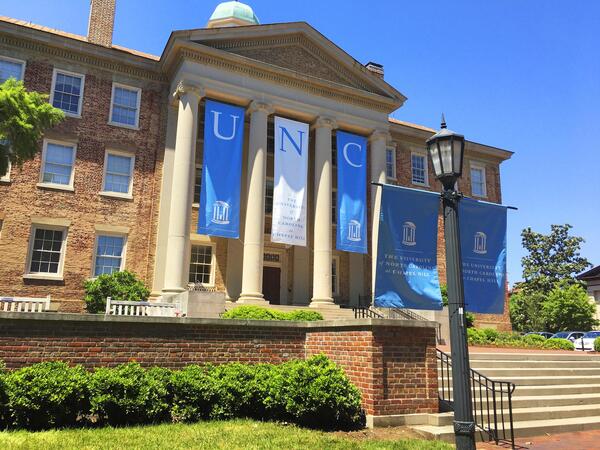
Last month, Peter Hans, president of the University of North Carolina system, casually dropped a bombshell announcement that the system and others were in talks to launch a new accreditor.
“We’ve been having a number of discussions with several other major public university systems, where we’re exploring the idea of creating an accreditor that would offer sound oversight,” Hans said at a UNC system Board of Governors meeting last month, The News & Observer reported.
Since then, no additional details have emerged, though Hans teased an update to come in July.
But public records obtained by Inside Higher Ed show UNC system officials have been quietly engaged in conversations about launching a new accreditor for at least a year, including discussions with unnamed collaborators in Florida, where the effort could be headquartered. UNC officials have also spoken with officials at the U.S. Department of Education, even getting a heads-up on what an April 23 executive order from the Trump administration on accreditation would entail.
Here’s what those documents show.
‘The Florida Project’
In early April, UNC officials appeared ready to tell the world about their plans for a new accreditor that “would be publicly accountable, outcomes-based, and more efficient and effective in its reviews,” according to the draft of a statement that was never publicly released.
“We believe it is past time for the creation of a new accreditor focusedon the unique needs of public colleges and universities,” the statement said. “We have worked collaboratively over the past year to explore and develop such a cross-state partnership.”
Andrew Kelly, a senior adviser to Hans, sent a draft of the statement to other UNC officials. The statement argued that accreditors “wield enormous power, but too often have opaque and counterintuitive governance” and fail to “focus on matters that are significant to students.” He argued in the statement that the current model “creates unnecessary duplication and cost, conflicts with the authority of state governments, and does little to ensure educational quality.”
An unidentified number of state systems of higher education were supposed to sign the statement, according to the draft.
Kelly drafted the statement in response to the Trump administration’s anticipated changes to accreditation, which included streamlining the processes for ED to recognize accreditors and for institutions to switch agencies, among other changes to the system that serves as gatekeeper to federal financial aid.
But the public did not hear about the UNC system’s quiet effort to launch a new accreditor until Hans spoke up at the May board meeting.
Other emails yielded some insights into whom the UNC system might be partnering with.
Daniel Harrison, vice president for academic affairs at the UNC system, sent an email on April 23 to fellow officials recapping a call with the U.S. Department of Education and what could be expected in the coming executive order on accreditation (which was issued shortly after his email).
In that email, Harrison also pointed to potential partners in the accreditation effort.
“An update on the Florida project—we met with the new entities [sic] attorneys and made substantial progress toward determining the legal structure of the new accreditor. It is likely to be a single member Florida nonprofit corp. Florida would be the sole member, but would delegate all delegable powers to a Board of Directors made up of the participating states,” Harrison wrote.
But despite having met with potential partners, UNC considered going its own way.
In a response to Harrison, Hans asked him to convene several system officials involved with the effort to weigh the pros and cons of “joining [a] multi-state coalition” or “forming a NC entity.” Email records obtained by Inside Higher Ed don’t show what the group recommended, but remarks made by Hans at May’s meeting indicate the system opted for the coalition approach.
UNC system officials did not respond to requests for comment from Inside Higher Ed.
System leaders also appear to have discussed the effort with state legislators in private. On May 15, Hans asked senior vice president of government relations Bart Goodson to set up a meeting with Michael Lee, the Senate majority leader in the Republican-dominated Legislature. When Goodson asked about the topic, Hans replied, “accreditation update with good news.”
Lee did not respond to a request for comment from Inside Higher Ed.
Potential Partners?
Like their UNC counterparts, other public systems are staying quiet on the effort.
Inside Higher Ed contacted a dozen public university systems, all in red states, to ask if they are partnering with UNC or others in an effort to launch a new accreditor, or if they participated in such discussions. Only two replied: the Arkansas State University system and the University of Alabama system. Both noted they had not been involved in those accreditation discussions.
The State University System of Florida—which did not reply to media inquiries—is the most likely potential partner, given the details in Harrison’s email and the governor’s recent political fury with accreditors.
In 2022, Florida’s dark-red Legislature passed a law requiring state institutions to switch accreditors regularly. That move came after the Southern Association of Colleges and Schools Commission on Colleges, which accredited all 40 of Florida’s public institutions, inquired about a potential conflict of interest at Florida State University, which was considering Richard Corcoran for its presidency despite his role on the Florida Board of Governors. (He now leads New College of Florida.)
SACS also raised questions about an effort by the University of Florida to prevent professors from testifying against the state in a legal case challenging voting-rights restrictions. (UF later dropped that policy amid a torrent of criticism.) Both incidents occurred in 2021.
Florida governor Ron DeSantis has been a vocal critic of the federal accreditation system.
Joe Raedle/Getty Images
Following the 2022 law, some institutions began the process of switching accreditors,though state officials argued that the Biden administration slowed down that effort and Florida tried unsuccessfully to get a federal judge to rule the current system of accreditation unconstitutional.
Outside of Florida, North Carolina is the only other state with a similar law. In 2023, legislators quietly slipped a provision into a state budget bill that required state institutions to change accreditors every cycle. The law was passed with no debate among North Carolina lawmakers. The change came after UNC clashed with SACS in early 2023 over shared governance.
Florida governor Ron DeSantis did not confirm to Inside Higher Ed whether the state is launching a new accreditor, but recent remarks from the GOP firebrand suggest, albeit vaguely, that something is in the works.
“For too long, academic accreditors have held our colleges and universities hostage,” DeSantis said in an emailed statement. “These accreditation cartels have worked behind the scenes to shape university behavior, embedding ideological concepts like Diversity, Equity, and Exclusion Indoctrination into the accreditation process. If you weren’t meeting politically motivated standards, like enthusiastic participation in DEI, they would hamper your accreditation and access to federal funding. In Florida, we refuse to let academic accreditation cartels hold our colleges and universities hostage to ideology at the expense of academic excellence. Stay tuned.”
Wade Maki, Faculty Assembly chair and a philosophy professor at UNC Greensboro, said he and other faculty members recently met with system officials to share their thoughts on the plan.
“We had a very open conversation with the system office and shared our hopes that we get an accreditor that is independent, that maintains the strong reputation of the UNC system and helps keep the politics out of higher ed and the curriculum, whether that’s from the politicians or the accreditors themselves,” Maki said. “We’ve seen it come from both directions over the years.”
He also thinks the narrow focus of such an accreditor could be a positive.
“My leadership team, the Faculty Assembly Executive Committee and the faculty that we’ve talked to on campuses, we see the potential benefits of trying something like this, of having an accreditor that focuses just on the accrediting of state-supported public institutions,” Maki said.
Outside observers were more critical of the UNC system’s plans.
Accreditation expert Paul Gaston III, an emeritus trustees professor at Kent State University, argued that building an accreditor composed only of public institutions would omit valuable perspectives in review processes. He argued that colleges undergoing accreditation reviews benefit from the diversity of experiences from evaluators working at a broad range of institutions.
“What would be the advantage of, in a sense, separating classes of institutions for accreditation? I think one of the strengths of accreditation has been that it brings a variety of perspectives to the evaluation of a particular institution,” Gaston said.
Then there’s the arduous process of getting a new accrediting agency up and running; gaining federal recognition, which is required, takes years. Although Trump’s executive order on accreditation promised a smoother pathway to recognition for new entrants, it does not supersede federal regulations.
“Becoming federally recognized, typically, is a five-plus-year process,” said Edward Conroy, a senior policy manager at the left-leaning think tank New America. Under current federal regulations, Conroy doesn’t expect the new accreditor to be recognized until 2030 or so.
Conroy also questioned whether the effort to create a new accreditor is about institutional quality assurance or political control.
“Everything Florida has done on accreditation over the past few years appears to be politically and ideologically driven, rather than about what is best for students and ensuring that they go to high-quality institutions and get a good education when they’re paying a lot of money for it and when taxpayers are investing a lot of money in public funding for higher education,” he said.
Conroy worries that state lawmakers in either Florida or North Carolina would require public colleges in their state to be accredited by their new accreditor. That would undermine the current requirement that colleges get to choose their own accreditor.
“It undercuts the principle of the higher education accountability triad, where states, accreditors and the Department of Education are all meant to do different things,” Conroy said. “If you have a state that becomes both, to some degree or another, the accreditor, as well as the state authorizing entity, then we’ve combined two legs of a three-legged stool.”
Purdue University has ended a long-standing partnership with its independent student newspaper, The Purdue Exponent, and will no longer distribute papers, give student journalists free parking passes or allow them to use the word “Purdue” for commercial purposes.
The Purdue Student Publishing Foundation board (PSPF), the nonprofit group that oversees The Exponent—the largest collegiate newspaper in Indiana—said the changes came without warning.
On May 30, PSPF received an email from Purdue’s Office of Legal Counsel notifying the group that their contract had expired more than a decade ago and the university would not participate in newspaper distribution or give the students exclusive access to newspaper racks on campus.
In addition, the message said, the university will not enter into a new contract for facility use with the paper to remain consistent with the administration’s stated policy on institutional neutrality.
According to a statement from the university, it is not consistent “with principles of freedom of expression, institutional neutrality and fairness to provide the services and accommodations described in the letter to one media organization but not others.”
The Exponent is the only student newspaper, though Purdue also has two student news channels, FastTrack News and BoilerTV.
Legal counsel also asked The Exponent to keep “Purdue” off the masthead and out of the paper’s URL because “The Foundation should not associate its own speech with the University.” PSPF says it has a trademark on “The Purdue Exponent” until 2029.
PSPF and Purdue have held distribution agreements since 1975, in which Exponent staff would drop papers off at various locations across campus and staff would then place them on newspaper racks.
In 2014, the Exponent delivered the university a new contract to renew the agreement for the next five years, according to paper staff. The contract was never signed, but the terms of the agreement continued until Monday, June 2.
Now, The Exponent is permitted to distribute papers themselves and have nonexclusive access to newspaper stands on campus, according to the university; students said they don’t have early access to many of the buildings the way staff do.
“Purdue’s moves are unacceptable and represent not only a distortion of trademark law but a betrayal of the university’s First Amendment obligations to uphold free expression,” Dominic Coletti, a student press program officer for the Foundation for Individual Rights and Expression, told The Exponent. “Breaking long-standing practice to hinder student journalism is not a sign of institutional neutrality; it is a sign of institutional cowardice.”
The Trump administration is asking Congress to cut funds for tribal colleges and universities by nearly 90 percent, according to the Department of the Interior’s proposed budget released Monday.
Tribal college advocates told ProPublica, which first reported on the cuts, that tribal colleges could have to shutter if Congress approves the plan, leaving thousands of students without the support they need to complete a degree program. And reports from ProPublicashow that it will only further devastate institutions that were already underfunded.
“The numbers that are being proposed would close the tribal colleges,” Ahniwake Rose, president and CEO of the American Indian Higher Education Consortium, told ProPublica. “They would not be able to sustain.”
The budget request calls for about $860 million to operate Indian Education Programs, which includes two federally controlled tribal colleges—Haskell Indian Nations University and Southwestern Indian Polytechnic Institute. Of that $860 million, about $22 million would go toward postsecondary programs. That’s about a $161 million cut compared to fiscal year 2024.
Tribal colleges argue that their funding is protected by treaties and contend that the institutions up for discussion are critical providers in some of the country’s poorest areas.
“It doesn’t make sense for them to [approve the cuts[ when they’re relying on us to train the workforce,” Dawn Frank, president of Oglala Lakota College in South Dakota, told ProPublica. “We’re really relying on our senators and representatives to live up to their treaty and trust obligation.”
A federal judge ordered the Trump administration to restore funding to AmeriCorps programs in 24 states and Washington, D.C., following a lawsuit that challenged the April cuts to the program, The Hill reported Thursday.
The judge, Obama appointee Deborah Boardman, ruled that the states were likely to succeed in their argument that the agency’s funding could not legally be cut without a notice-and-comment period. The ruling did not reinstate any of the agency’s staff.
AmeriCorps volunteers and grants support at least 100 college-access organizations across the U.S., many of which had to lay off their AmeriCorps members in the wake of the cuts.
It’s the latest court order blocking the administration’s crusade to reduce the size of the federal government; recently, judges reversed layoffs at the Department of Education and ruled that a lawsuit challenging funding cuts at the National Institutes of Health could move forward.
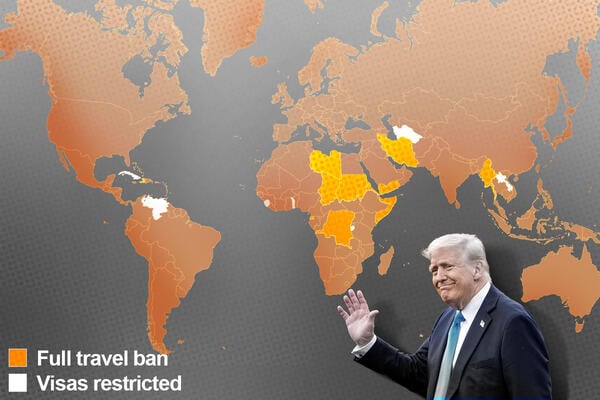
President Trump issued two directives targeting international students just hours apart on Wednesday night. One is a ban on entering the U.S. for citizens from 12 countries and heightened visa restrictions for those from another seven. The other bans all international students, researchers and other “exchange visitors” from Harvard University.
The orders represent another escalation of the Trump administration’s simultaneous, and sometimes overlapping, campaigns to both punish Harvard and curtail the number of foreign students studying in the U.S.
Chris Glass, a professor of higher education at Boston College and a member of the college’s Center for International Education, said the combination of the travel ban and the Harvard order are part of the administration’s “flood the zone” strategy for its higher education agenda. He added that the timing of the dual orders, following on the heels of a “seemingly indefinite” pause on student visa interviews and a promise to “aggressively revoke” Chinese students’ visas, seems intended to cause the most chaos possible.
“The timing couldn’t be worse … this is when 70 percent of international students are getting or renewing their visas,” he said. “It injects catastrophic uncertainty, and the uncertainty is the strategy from my perspective.”
On Thursday evening, Harvard filed a legal challenge to the proclamation targeting the university and asked a judge to issue a temporary restraining order against the administration. Judge Allison Burroughs from the District of Massachusetts quickly granted that request and extended the current restraining order issued last month. She set a hearing for June 16.
2017 Again
The last time Trump instituted a travel ban, in his first term, it threw colleges into chaos and left students and researchers stranded for months in the middle of winter break, sending colleges scrambling to find ways to bring them back. Higher ed has been bracing for a repeat of that travel ban since Trump was elected in November; many institutions told their international students to return to campus before the inauguration to avoid the same fate.
The new ban is not as drastic as many predicted; when the White House initially proposed another travel ban in March, officials rolled out a list of 43 potential target countries. But it is more expansive than the 2017 ban—it affects 19 countries instead of eight—and, combined with the administration’s barrage of attacks on international students over the past three months, could be even more damaging to international enrollment.
The full ban applies to Afghanistan, Chad, Republic of the Congo, Eritrea, Equatorial Guinea, Haiti, Iran, Libya, Myanmar, Somalia, Sudan and Yemen—largely Middle Eastern and African countries with substantial Muslim populations. Trump also restricted visas from Burundi, Cuba, Laos, Sierra Leone, Togo, Turkmenistan and Venezuela.
The travel ban doesn’t immediately affect students currently in the U.S. or who have already been approved for visas. But with many admitted international students still languishing in a visa process that the State Department halted two weeks ago, it will likely prevent thousands of students from attending in the fall and upend institutions’ projected enrollments.
The countries on the list send a relatively small number of students to U.S. colleges. Of the affected countries, Iran has by far the most students studying in the U.S. It is the 15th most common origin country for international students, with 12,430 studying at American colleges and universities as of fall 2024, according to the latest report from the Institute for International Education.
Still, the order is likely to compound the uncertainty and fear that has grown among international student populations, leading to signs of a large decline in student visa applications. Glass’s research, along with more recent reports, shows a double-digit decline in student visas from March 2024 to this March alone; the latest moves could double that, he said.
“[The] COVID [pandemic] was a disruption of 15 percent,” he said. “This looks like it could be more significant than COVID, if the pause is extended and the uncertainty continues.”
In his proclamation announcing the travel ban, Trump wrote that the targeted countries had “deficient” vetting and screening processes for visa applicants, or had “taken advantage of the United States in their exploitation of our visa system and their historic failure to accept back their removable nationals.”
Sarah Spreitzer, vice president and chief of staff for government relations at the American Council on Education, said the rationale outlined in the travel ban—that students pose a unique national security threat and have been overstaying their visas—doesn’t align with reality.
“If this is for national security concerns, our students are some of the most vetted visas out there,” she said. “And I don’t know if our students actually overstay their visas very often.”
Fanta Aw, the president of NAFSA, an association of international educators, echoed Spreitzer and said that international students are already “among the most tracked individuals entering the United States.”
“Actions such as halting student visa issuance and implementing nationality-based travel bans do not enhance national security,” she wrote in an email. “Instead, they weaken it—undermining our economy, diminishing our global competitiveness and eroding our country’s ability to effectively engage with the global population.”
The 2017 travel ban was amended twice after being challenged in the courts and eventually exempted nonimmigrant visas, including student and exchange visas. Spreitzer said the administration’s outsize focus on student visa holders over the last few months makes that outcome less likely, but only time—and the courts—will tell.
Havoc at Harvard
The travel ban came on the heels of another White House proclamation Wednesday night, this one banning foreign students and scholars from attending Harvard.
Trump restricted visa applicants from entering the country “solely or principally to participate in a course of study at Harvard University or in an exchange visitor program hosted by Harvard,” claiming that allowing foreign students on campus would be “detrimental to the interests of the United States because, in my judgment, Harvard’s conduct has rendered it an unsuitable destination for foreign students and researchers.”
A Harvard spokesperson wrote that the proclamation is “another illegal retaliatory step taken by the administration in violation of Harvard’s first amendment rights” and that the university “will continue to protect its international students.”
The proclamation is the latest jab in a weeks-long fight over international students on Harvard’s campus. Last month the Trump administration attempted to revoke Harvard’s Student Exchange and Visitor Program certification, which would have banned the university from enrolling international students altogether, affecting not just visa applicants but also foreign students and researchers currently on campus. Harvard challenged the effort in court, and a judge swiftly granted the university an injunction; on Monday, the Trump administration lost its appeal to overturn that decision.
Harvard amended that lawsuit to include a challenge to the newest proclamation, calling it “an unlawful evasion of the Court’s order.”
“When the Court enjoined the Secretary [of State’s] efforts to revoke Harvard’s certifications and force its students to transfer or depart the country, the President sought to achieve the same result by refusing to allow Harvard students to enter in the first place,” the amended suit reads.
Unlike the SEVP decertification attempt, Trump’s executive proclamation doesn’t immediately affect international students currently enrolled at Harvard, only those who have yet to secure visas—though it does instruct the State Department to determine whether current students “should have their visas revoked.”
The proclamation runs through a gamut of justifications for its international student ban. Trump cites data on increasing campus crime rates in the interest of student safety, alleges discrimination in the admissions process that he claims foreign students exacerbate and points to academic partnerships and financial contributions from countries like China that he says endanger U.S. national security interests.
Notably, Trump also says Harvard has failed to cooperate with the administration’s demands for student misconduct records; the university has provided data on “only three students,” which Trump wrote was evidence that “it either is not fully reporting its disciplinary records for foreign students or is not seriously policing its foreign students.”
Glass said the move is almost certainly an attempt to work around the court injunction using executive powers rather than the visa bureaucracy. And making the issue about constitutional authority in the national security realm—rather than whether the proper SEVP decertification process was followed—could change the legal calculus in court.
“That’s what’s going to set a precedent for generations,” Glass said. “Will the precedent of autonomy and academic freedom at Harvard win in the courts? Or will the precedent of national security powers for the government win the day?”
(This story has been updated to correct the list of banned countries to include Republic of the Congo.)
Earlier this spring, I was one of hundreds of college, university and scholarly society leaders to sign “A Call for Constructive Engagement” published by the American Association of Colleges and Universities. The statement speaks out against “the unprecedented government overreach and political interference now endangering American higher education.” It calls for the freedom to determine, on academic grounds, whom to admit and what is taught, how and by whom, while engaging in constructive reform and openness to legitimate government oversight.
Deciding whether to make such a public statement merits careful consideration. This is because by making the statement, a higher education leader will likely not be reflecting the viewpoints of all of their institution’s constituents.
An email from an alum from the 1970s reminded me of this. The alum chastised me for signing the statement, for overreaching and speaking for some members of our university community such as him, and for banding together with other higher learning institutions that have become “liberal cesspools of propaganda and misinformation … [that] openly permit anti-Israeli protests led by anti-Semitic educators … [and] become another left-wing terrorist organization supporting the likes of Hamas.”
The alum asked me to remove my signature from the AAC&U statement on account of the concerns that he had raised. One higher education leader has so far done so, likely because of receiving input such as that provided by our alum.
I opted to reply to our alum, thereby putting to practice the constructive engagement preached by the AAC&U statement. My reply asked the alum how long it had been since he had last visited campus and whether he knew that, thanks to the philanthropic generosity of some fellow graduates, we renovated our campus’s Hillel House last summer.
I asked the alum whether he had heard of the Common Ground program Alfred instituted in 2018 through the philanthropic support of our trustees. It is a required course for all of our new undergraduate students and consists of small-group dialogue facilitated by a faculty or staff member with two key objectives: 1) to better appreciate the different backgrounds (including geographies, ethnicities and religions), aspirations and interests that our new students bring to Alfred (artists think differently than engineers, liberal arts students think differently than business students), and 2) to arrive at some shared values that our new students will commit to living by as citizens of the Alfred community—such as commitment to constructive dialogue.
By fostering constructive engagement, our Common Ground program likely helped prevent the strife that occurred on many other college campuses in the wake of the Oct. 7 Hamas terrorist attack on Israel and the ensuing war in the Middle East. When members of campus communities have built meaningful relationships with one another, they are less likely to retreat to their ideological corners when a potential conflict arises. Instead, they talk as friends.
I closed my email by asking the alum whether he had any impactful mentors as a student.
To my pleasant surprise, the alum replied by recounting a particularly impactful faculty mentor in the field of astronomy who had given him many applied learning opportunities and inspired a lifelong interest in stargazing, which he continues to do to this day from his home. He also noted how well his college education had positioned him for the professional success that he has enjoyed.
We have since spoken by phone. While there are certain matters upon which we still disagree, we have found some common ground.
We agree that institutions of higher learning are potent engines for promoting the success of graduates as well as the prosperity of our nation and the health and well-being of our broader population. There are nearly 4,000 institutions of higher learning across our nation—spanning public and private and including community colleges, technical training institutions, arts schools, religious institutions and HBCUs. This constellation, in which anyone can find a place, provides powerful opportunities for professional and personal advancement, social mobility, entrepreneurial innovation, access to health care, national defense, social services and cultural offerings.
We agree that the core focus of institutions of higher learning should be on providing an education of enduring value through fostering knowledge and curiosity.
We also agree that universities, like individuals and nations, do not always uniformly arc toward wisdom. They can stumble and thus benefit from constructive reform. Our field of higher education can and should be better listeners to our public, more concerned about the cost of college and more focused on student success and less on prestige.
Notwithstanding the stumbles, however, institutions of higher learning, as noted by Israeli historian Yuval Hariri in his recent book Nexus, have some powerful self-correcting mechanisms such as peer review. Authoritarian regimes, by contrast, lack such self-correcting mechanisms when they suppress inquiry and criticism.
Consider Katalin Karikó, who emigrated from her native Hungary to the United States with $1,200 cash sewn into her daughter’s teddy bear to do research on mRNA. While at the University of Pennsylvania, her hypothesis regarding the potency of mRNA research was derided by most fellow researchers around the globe. She was denied a tenure-track position and demoted. Yet, the research that she kept pursuing was pivotal to the development of COVID vaccines and earned her a Nobel Prize in 2023.
And while our alum and I still disagree on whether my signature should be affixed to the AAC&U statement, we have ended up agreeing both on the value of constructive engagement and the criticality of promoting it as a central value in higher education.
An estimated 20 percent of college students experience housing insecurity and 14 percent experience homelessness, according to fall 2024 data from Trellis Strategies. Yet many colleges are ill-equipped to address student housing concerns, particularly institutions with nonresidential campuses or those that serve adult learners.
The state of California created an initiative in 2020 to provide housing and short-term support to students who were experiencing housing insecurity while enrolled at one of the three public systems—the California State Universities, California Community Colleges or the University of California.
A recently published analysis of the state’s College Focused Rapid Rehousing (CFRR) program identified promising practices and lessons learned from the pilot. The study—authored by the Center for Equitable Higher Education (CEHE) at California State University, Long Beach—found that students who participated were more likely to remain enrolled and graduate compared to their peers, and a majority had established stable housing one year later.
The background: Passed in July 2019, Assembly Bill 74 allocated funding for college-focused rapid rehousing programs, which give students rental subsidies, moving assistance, wraparound supports, case management and emergency grants. The community college system received $9 million, CSU $6.5 million and UC institutions $3.5 million to invest in long- and short-term initiatives, depending on each system’s unique student needs.
According to 2023 data included in the report, over half of CSU students and 65 percent of CCC’s who receive financial aid experience housing insecurity. One-quarter of CCC students and 11 percent of CSU students experienced homelessness during the 2022–23 academic year.
The CEHE study evaluated the program over three years at eight CSU campuses and two community colleges. In total, 639 students participated in CFRR across the 10 institutions, and 3,949 received short-term assistance—often in the form of an emergency grant—from spring 2020 to spring 2024. Approximately 540 students fell into both categories, receiving short-term support before enrolling in CFRR.
Some historically underserved populations were more likely to participate in CFRR: Black students and former foster youth were heavily overrepresented relative to the general population, and first-generation, transfer and returning students were also overrepresented to a smaller degree.
Addressing housing insecurity: The program wassuccessful in its goal of mitigating homelessness for enrolled students. After engaging with CFRR, participants experienced substantial housing stability, with an average of nine consecutive months of housing.
In addition, a majority of students who left the program graduated (27 percent) or reached permanent housing (27 percent), while 15 percent failed to meet academic requirements, which is a common barrier to sustaining housing assistance.
The greatest share of students (37 percent) were placed in stable housing in less than six months, though one-third took over 12 months to get housing from a community partner. The breakdown highlights the challenges in placing students in viable housing options, according to the report. However, two-thirds of surveyed students (n=181) said they believe they had been housed relatively quickly.
One year after exiting the program, a majority of participants indicated that they were residing in an apartment or home that they directly leased or owned. Eighteen percent lived with a family member.
Students credited the program with supporting their long-term success; 71 percent of survey respondents agreed or strongly agreed that their current housing situation was better because of the assistance they received.
However, many still struggled with financial insecurity. Sixty-two percent said it was difficult to pay increased rent in the first year after exiting the program, and 25 percent underpaid or missed at least one rent payment during this period. Three in 10 said they had to move more than twice due to financial difficulties, and one-quarter of program graduates reported at least one episode of homelessness.
Impacting student success: In addition to meeting students’ basic needs, the program had a demonstrated effect on persistence and attainment rates.
Participants were more likely to remain enrolled or graduate (56 percent) compared to students receiving short-term housing assistance (47 percent). At CSU, CFRR students graduated within four years at higher rates than the broader CSU population (43 percent versus 35.5 percent), as well.
Data also pointed to the impact housing crises can have on students’ academic performance, with housing-insecure students reporting their lowest GPA the semester they engaged in support interventions and the semester following.
A graph showing the average GPA of CFRR participants compared to their peers who received short-term assistance from their institution.
Twelve months after receiving assistance, CFRR students were significantly less likely to stop out of school compared to their peers who received just a short-term housing subsidy. Survey data showed students were more likely to engage in school activities, but a majority (70 percent) still held jobs to pay for college, working an average of 25 hours per week. Eighty percent of CFRR participants said they had difficulty balancing school and life responsibilities.
Program participants were also more likely to be employed six months after entering housing (70 percent) versus three months before entering the program (56 percent).
Housing insecurity can damage students’ mental health and in turn affect their persistence in higher education. At intake into CFRR, 76 percent of participants said they felt lonely, but that number dropped to 63 percent in follow-up surveys. Just under half of housing-insecure students experienced serious psychological distress at intake, while closer to one-third indicated distress at follow-up. These numbers remain elevated compared to the total student population at CSU, where 20 percent experienced serious psychological distress.
The program also increased students’ emotional and mental resilience. Students rated their ability to handle personal problems higher after securing housing as well, from 33 percent to 52 percent during follow-up.
If your student success program has a unique feature or twist, we’d like to know about it. Click here to submit.
You, who made the dreams of your immigrant families come true by earning your college degrees, are what America needs right now.
You, who yourselves are immigrants who came to this country with nothing but have earned a degree or certificate that could transport you out of poverty and into the middle class, are what America needs right now.
You, who survived poverty, food insecurity and homelessness to make it here to your college graduation, are what America needs right now.
You, who know firsthand what it is like to be discriminated against because of where you are from, how you talk, how you look and who you love, but yet, refuse to sit idly by while others suffer injustices, are what America needs right now.
Even those of you who have no firsthand experience with discrimination but yet also refuse to sit idly by while others suffer injustices are what America needs right now.
You, who served your time, turned your lives around, were released from jails and prisons, then ultimately inspired others in your communities by earning college degrees, are what America needs right now.
You, who bravely served in our nation’s military, then came to college and are graduating today with the same enduring commitments to freedom—thank you for your service—you are what America needs right now.
You, who are committed to building and protecting a just and equitable nation that none of us have ever seen, are what America needs right now.
Eighteen states are yet to elect a woman governor—she could be you. The United States needs its first woman president—she could be you. Fortune 500 companies need more indisputably qualified CEOs and executives who reflect our nation’s diversity—that could be you. Higher education will soon need a new generation of professors and administrators to educate and ensure the success of future students—that could be you.
Class of 2025, what our nation needs most at this time is you.
You, who made the dreams of your immigrant families come true by earning your college degrees, are what America needs right now.
You, who yourselves are immigrants who came to this country with nothing but have earned a degree or certificate that could transport you out of poverty and into the middle class, are what America needs right now.
You, who survived poverty, food insecurity and homelessness to make it here to your college graduation, are what America needs right now.
You, who know firsthand what it is like to be discriminated against because of where you are from, how you talk, how you look and who you love, but yet, refuse to sit idly by while others suffer injustices, are what America needs right now.
Even those of you who have no firsthand experience with discrimination but yet also refuse to sit idly by while others suffer injustices are what America needs right now.
You, who served your time, turned your lives around, were released from jails and prisons, then ultimately inspired others in your communities by earning college degrees, are what America needs right now.
You, who bravely served in our nation’s military, then came to college and are graduating today with the same enduring commitments to freedom—thank you for your service—you are what America needs right now.
You, who are committed to building and protecting a just and equitable nation that none of us have ever seen, are what America needs right now.
Eighteen states are yet to elect a woman governor—she could be you. The United States needs its first woman president—she could be you. Fortune 500 companies need more indisputably qualified CEOs and executives who reflect our nation’s diversity—that could be you. Higher education will soon need a new generation of professors and administrators to educate and ensure the success of future students—that could be you.
Class of 2025, what our nation needs most at this time is you.