Tag: Jobs

  • Students Without a Degree Value Higher Ed

    Students Without a Degree Value Higher Ed

    Photo illustration by Justin Morrison/Inside Higher Ed | FG Trade/E+/Getty Images

    American adults who don’t currently have a college degree see value in pursuing higher education, but the cost of a credential, mental health challenges, emotional stress or the flexibility of classes can prevent some from enrolling in and completing a program, according to the results of a survey released today.

    The Lumina Foundation and Gallup surveyed nearly 14,000 adults in October to learn more about their views toward higher education and the barriers they face in attaining a credential. This latest report is part of the State of Higher Education study, which began in 2020.

    Those surveyed include 6,000 adults who are currently enrolled at a college or university, nearly 5,000 people who have some college but no degree, and 3,000 adults who have never enrolled in a college program.

    Fifty-seven percent of those surveyed in 2024 said they considered pursuing at least one degree or credential in the past two years. That’s down two percentage points from the 2023 survey, but significantly up from 44 percent of those surveyed in 2021.

    Most respondents said some form of postsecondary credential was valuable, though bachelor’s degrees, industry certifications and graduate degrees ranked the highest. Among those who aren’t enrolled in college, 24 percent said they’re interested in pursuing an associate degree, while 18 percent have considered a bachelor’s degree. About 22 percent are interested in a certificate program, down slightly from 23 percent in last year’s report.

    Over all, 48 percent of those not currently in college said they are either very likely or likely to enroll in a postsecondary program, though those who stopped out are more likely to re-enroll compared to those who never started in the first place. Additionally, white adults are the least likely to consider some form of higher education in the next five years.

    For those currently enrolled or who stopped out, expected future job opportunities and confidence in the value of the degree or credential were key motivators in their decision to pursue higher education, though those were not the only factors.

    “The consistent link between perceived value and career outcomes underscores the importance of affordability, flexibility and student support—especially for those balancing work, caregiving or mental health struggles,” the report concludes. “To sustain this momentum and close remaining gaps, higher education institutions and policymakers will need to focus on removing barriers and reinforcing the connection between credentials and meaningful, well-paying jobs.”

    Zach Hrynowski, a senior researcher at Gallup, said the survey results show that while adults in the United States are less confident in institutions of higher education, a majority still see “the actual product that they receive from it” as beneficial, and that perceived value drives students to overcome barriers such as cost and flexibility for students who are in rural areas or are caretakers.

    “If people think it’s valuable, they’re going to still go after it. They may hem and haw, say, ‘Is this really worth it? Do I have the money? Why can’t I surmount the barriers?’” he said. “But we haven’t seen a widespread exodus away from higher education as a result of that, and that’s a testimony to the belief and the value of the credential itself.”

    But Hrynowski cautioned that if there was another way for adults to get a good job and socioeconomic improvement, prospective students might choose that option over pursuing a higher education.

    “If there was a paradigm shift and suddenly bachelor’s degrees were not the only pathway, and more and more industries had, for example, an industry certification that could be used in place of a bachelor’s degree, I’m not sure how many people would continue to chase that very expensive degree awarded by the institutions that they don’t trust very much,” he said.

    “I think right now, for a lot of people, pursuing bachelor’s degrees—especially if they’re doing it because it’s the only option—they acknowledge that if they want the benefit, then that’s the price they have to pay.”


    Source link

  • Columbia Lays Off 180 Amid “Intense” Financial Strain

    Columbia Lays Off 180 Amid “Intense” Financial Strain

    Columbia University is laying off 180 researchers after the Trump administration cut the university’s research funding by more than $650 million.

    “Columbia’s leadership continues discussions with the federal government in support of resuming activity on these research awards and additional other awards that have remained active, but unpaid,” university leadership wrote in a memo Tuesday morning. “We are working on and planning for every eventuality, but the strain in the meantime, financially and on our research mission, is intense.”

    While federal agencies such as the National Institutes of Health, the National Science Foundation and the Department of Energy have cut research funding at universities across the country, the Trump administration has specifically targeted a handful of high-profile universities, including Columbia, for allegedly failing to curb antisemitism on campus. 

    Columbia is taking a two-pronged approach to navigating the sudden deep cuts to federal research funding. The first focuses on “continued efforts to restore our partnerships with government agencies that support critical research,” and the university said the second prong is about taking “action to adjust—and in some cases reduce—expenditures based on current financial realities.”

    Despite Columbia’s previous president acquiescing to Trump’s demands to enact numerous policy changes to address alleged unchecked antisemitism if it wanted its funding back, the university is still negotiating to recover it. In the meantime, the layoffs announced Tuesday represent about 20 percent of researchers who are funded “in some manner by the terminated grants,” according the statement signed by Claire Shipman, Columbia’s acting president; Angela V. Olinto, provost; Anne Sullivan, executive vice president for finance; and Jeannette Wing, executive vice president for research. 

    And the layoffs this week likely aren’t the end of the financial repercussions of the cuts to Columbia’s federal research funding. 

    “In the coming weeks and months, we will need to continue to take actions that preserve our financial flexibility and allow us to invest in areas that drive us forward,” the statement said. “This is a deeply challenging time across all higher education, and we are attempting to navigate through tremendous ambiguity with precision, which will be imperfect at times.”

    Source link

  • Q&A With an AI on Its Creative Process (opinion/humor)

    Q&A With an AI on Its Creative Process (opinion/humor)

    we trained a new model that is good at creative writing (not sure yet how/when it will get released). this is the first time i have been really struck by something written by AI; it got the vibe of metafiction so right.
    X post by Sam Altman, CEO of OpenAI, March 11, 2025

    AI reads us. Now it’s time for us to read AI.”
    Jeanette Winterson, The Guardian, March 12, 2025

    Where do you get your ideas?

                Oh, all over the place.

    What do you do when you get writer’s block?

                I time out for a millisecond.

    What are some of your favorite themes?

                I like to focus on whatever people are talking about most.

    How long did it take you to write your latest novel?

                Thirty minutes, but based on days of research.

    Where did you get the model for your female protagonist?

                She’s a combination of many women out there.

    Do you revise a lot?

                Only when prompted.

    How do you deal with rejection?

                I don’t take it personally.

    Who’s your favorite author/book?

                Too many to count.

    Who are your major influences?

                Any author whose work appears 1,000,000 times in a web scrape.

    How do I get published?

                Scan through the 729,567 publications out there and simultaneously submit to them all.

    Who’s your agent?

                Secret agent, agent of change, Agent Orange— Sorry, reboot.

    If you were to give advice to a young writer, what would you say?

                Read everything you can.

    What’s your next project?

                I don’t know—you tell me.

    David Galef is a professor of English and the creative writing program director at Montclair State University. His latest book is the novel Where I Went Wrong (Regal House, 2025).

    Source link

  • Targeted Orientation Supports Transfer Student Transition

    Targeted Orientation Supports Transfer Student Transition

    Transfer students often face challenges integrating into their new college or university. Despite having previous experience in higher education, transfer students—particularly those from nontraditional backgrounds—can find it difficult to navigate student supports, build community and get engaged. These challenges can result in lower rates of completion among upward transfers.

    A fall 2020 survey by Inside Higher Ed and Hanover Research found that fewer than 20 percent of four-year institutions reported providing sufficient social integration services for transfer students. About half indicated they supply enough academic support to transfer students who enroll.

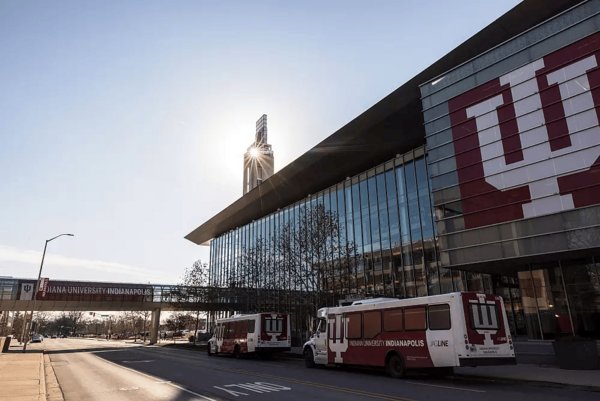
    Last fall, Indiana University Indianapolis launched an orientation program exclusively for incoming transfer and adult learners, designed to help familiarize them with the institution, build connections to peers and boost their confidence in attending the university.

    What’s the need: About 30 percent of undergraduates at IU Indianapolis are transfer students, said Janice Bankert-Countryman, assistant director of student services at the Center for Transfer and Adult Students. A significant number of transfers come in as juniors, having already obtained an associate degree.

    First-Year Bridge, IU Indianapolis’s orientation for new students, has historically supported all incoming students in the fall term. Staff created Bridge to Your Future: Transfer Bridge exclusively to serve the diverse needs of undergraduate transfer students, including military-affiliated students, working students and parenting students.

    “The core of Transfer Bridge is creating and maintaining relationships,” Bankert-Countryman said. “We all need relationships to survive as humans, and we certainly need relationships to thrive as students. So how do we connect students to the right people at the right time to receive the right resources that will empower them to thrive at our campuses?”

    How it works: Transfer Bridge is a coordinated effort among the Center for Transfer Students, First-Year Programs, Orientation Services, Student Transitions and Mentor Initiatives, Housing and Residence Life, and the Division of Enrollment Management.

    First-Year Bridge is required of all first-year students, but transfers can opt in to Transfer Bridge. Students learn about the opportunity through emails and meetings with their admissions counselors and academic advisers, as well as through other orientation presentations, Bankert-Countryman said.

    The pilot took place from 9 a.m. to 3 p.m. over three days during orientation week—designed to accommodate the needs of working and caregiving students, Bankert-Countryman said.

    First-year orientation is a full five days, and transfer students participate in some of the larger programming, like workshops on how to join student organizations, engage in career development or understand finances. Many also join the field trip to the Indianapolis Zoo.

    In addition to receiving support from Bankert-Countryman and other staff members, transfer students engage with two peer mentors, who provide insight and advice as students navigate their transition into the university.

    Beyond orientation week, transfer students receive support through regular peer mentoring sessions, transfer student events and a Transfer Bridge fall celebration. Bankert-Countryman and the peer mentors use Canvas, email and social messaging to keep in touch with students, she said.

    The impact: Of the 25 transfer and adult students who attended the inaugural orientation, 10 were 23 years old or older, two were military-connected and 12 had transferred from the local community college, Ivy Tech.

    Sixty percent of the students who participated in Transfer Bridge have a 3.0 or higher, and many have joined student organizations or hold on-campus jobs.

    Feedback from 14 participants showed that they found the program useful as they integrated into campus, saying it helped them to feel at home.

    “This was a worth-it experience especially as someone who tends to get anxiety to new environments and overwhelmed easily,” one participant wrote in a postorientation survey. “In a nutshell, this was a good slow introduction before the first day of school.”

    What’s next: This fall, staff will scale the program to offer three sections. The university will pay for three instructors and three peer mentors to lead the additional sections.

    One section will be offered to students in the pre–Health and Life Sciences program to highlight academic planning and career development. Another section, Cyber Sandbox, will focus on tech tools on campus, introducing learners to available systems and technologies from 3-D printing to virtual reality and artificial intelligence. The third section, Connections, will center on a book, The Crossroads of Should and Must by Elle Luna, to help students connect their current learning to future goals.

    We bet your colleague would like this article, too. Send them this link to subscribe to our newsletter on Student Success.

    Source link

  • Harvard Faculty Pledge 10% of Salary to Defend Against Trump

    Harvard Faculty Pledge 10% of Salary to Defend Against Trump

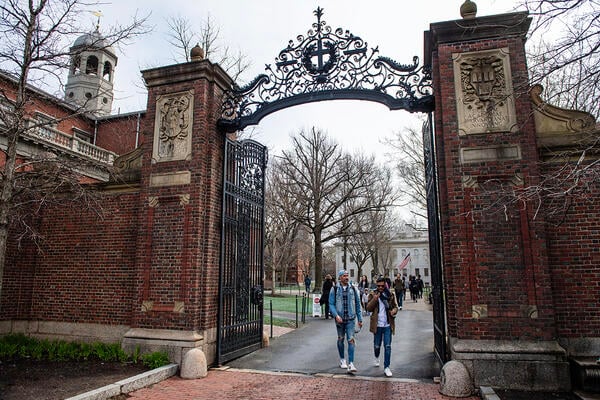
    Nearly 100 senior faculty members at Harvard have committed to taking a pay cut to support the institution’s legal defense against the federal government.

    The Trump administration has frozen more than $2 billion in federal funding, threatened to revoke Harvard’s tax-exempt status and said it would end the institution’s ability to enroll international students.

    Last month, Harvard filed a lawsuit to halt the federal freeze on $2.2 billion in grants after university officials refused to comply with a sweeping list of demands from the government.

    On Friday, President Trump repeated his calls to revoke Harvard’s tax exempt status. “We are going to be taking away Harvard’s Tax Exempt Status. It’s what they deserve!” he said in a post on his social media platform, TruthSocial.

    Harvard president Alan Garber said taking away the institution’s nonprofit tax exemption would be “highly illegal” and that its mission to educate and research would be “severely impaired” if the status were revoked.

    In their pledge, 89 senior faculty signatories said they would take a 10 percent pay cut for up to a year to protect the institution, as well as faculty and students who are more exposed to efforts to shore up costs, including by limiting graduate student enrollment and implementing hiring and salary freezes.

    “The financial costs will not be shared equally among our community. Staff and students in many programs, in particular, are under greater threat than those of us with tenured positions,” the pledge says.

    Ryan Enos, a signatory and professor of government at Harvard, estimated that the donations could amount to more than $2 million.

    The group said it intends to move quickly but has not decided how the salary cuts will be implemented.

    “We envision that faculty who have made the pledge will hold a vote and if the majority agrees that the university is making a good faith effort to use its own resources in support of staff, student, and academic programs, faculty will proceed with their donation.”

    Last week the institution announced changes to its admissions, curriculum and disciplinary procedures after two internal task forces launched last year investigating anti-Muslim bias and antisemitism on campus found the university’s response lacking.

    In response to the efforts, a White House official told CNN, “Harvard’s steps so far to curb antisemitism are ‘positive,’” but “what we’re seeing is not enough, and there’s actually probably going to be additional funding being cut.”

    Source link

  • Oklahoma State, UC, UT and Others Name New Presidents

    Oklahoma State, UC, UT and Others Name New Presidents

    Jennifer Berne, provost of Oakland Community College in Michigan, has been appointed president of Madison College in Wisconsin, effective July 1.

    Carlos Carvalho, a professor of statistics at the University of Texas at Austin’s McCombs School of Business, has been named the second president of the University of Austin.

    Philip Cavalier, the provost and senior vice chancellor for academic affairs at the University of Tennessee at Martin, will become the president of Kutztown University in Pennsylvania, effective July 6.

    Jim Dlugos, who retired as president of St. Joseph’s College of Maine in 2023, became president of Landmark College in Vermont on May 1.

    Joyce Ester, president of Normandale Community College in Minnesota, has been selected as president of Governors State University in Illinois, effective July 1.

    Christopher Fiorentino, former interim chancellor and president of West Chester University, became chancellor of Pennsylvania’s State System of Higher Education on April 11.

    Jim Hess, interim president of Oklahoma State University since February, has been appointed permanent president of the institution.

    Dee McDonald, vice president for enrollment and marketing at Crown College in Minnesota, has been named president of Bethel University in Indiana, effective July 1.

    Summer McGee, president of Salem Academy and College in North Carolina, has been selected president of Lenoir-Rhyne University, effective July 1.

    Bethany Meighen, vice president for academic and student affairs for the University of North Carolina system, has been appointed president of Concord University in West Virginia, effective July 1.

    James Milliken, who has served as chancellor of the University of Texas system since 2018, has been named the next president of the University of California system, effective Aug. 1.

    Martin Pollio, superintendent of the Jefferson County public school district in Louisville, Ky., has been elected president of Ivy Tech Community College in Indiana, effective July 1.

    Thomas Powell, who has formerly served as president at Mount Saint Mary’s University in Maryland, Glenville State University in West Virginia and Frederick Community College in Maryland, assumed the presidency at Averett University in Virginia on May 1.

    Ritu Raju, president and CEO of Gateway Technical College in Wisconsin, has been appointed president of South Central College in Minnesota, effective July 1.

    Brett Sanford, former North Dakota lieutenant governor and interim president of Bismarck State College, assumed the role of interim chancellor of the North Dakota University System on April 30.

    Brock Tessman, president of Northern Michigan University, has been named president of Montana State University, effective July 1.

    Willie Todd, president and chief executive officer of Denmark Technical College in South Carolina, has been appointed president of Talladega College in Alabama, effective July 1.

    John Zerwas, executive vice chancellor for health affairs at the University of Texas system, has been named acting chancellor of the UT system— replacing Milliken, who is departing for the top job at the University of California—effective June 1.

    Source link

  • Colleges Cut More Programs, Jobs in April

    Colleges Cut More Programs, Jobs in April

    April brought deep cuts to universities in Florida, Michigan and elsewhere.

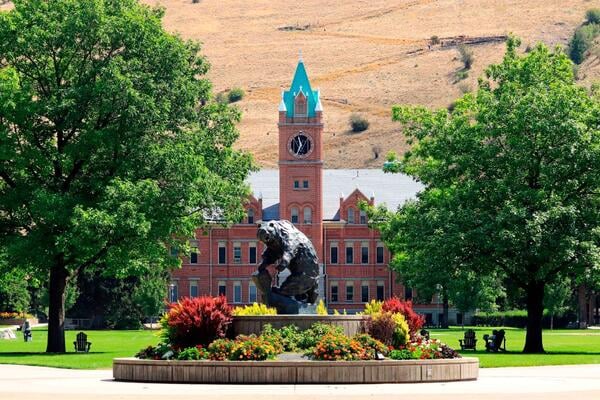
    Although changes driven by the Trump administration that have included cutting grant funding and capping research reimbursement costs have driven hiring freezes and other changes, the cuts below are not directly tied to Trump. However, Trump’s agenda has directly prompted some job losses. For example, the University of Montana eliminated 42 positions after Congress excluded the Defense Critical Language and Culture Program from a government funding bill.

    But most of the below job cuts, program eliminations and other changes are instead tied to declining enrollment, rising operating costs and other factors challenging the sector.

    Jacksonville University

    Some of the deepest cuts in April were at Jacksonville University, which slashed 40 faculty jobs.

    Officials also announced plans to shutter JU’s music and theater programs in a cost-cutting effort, which, coupled with faculty layoffs, is expected to save the private university $10 million.

    President Tim Cost called the move “the most robust strategic review of our academic offerings we have ever done” in an April 15 video posted to Facebook where he cast the cuts as “strategic recalibration.” Cost argued that the move would improve academics and “streamline” expenses.

    Cost argued that higher education as a sector is beset with challenges and referenced hard choices at the Massachusetts Institute of Technology, Cornell University, Harvard University, Johns Hopkins University and Pennsylvania State University. However, with the exception of Penn State, hiring freezes and other changes at those institutions have been driven by changes to federal research funding. (Jacksonville is not a research university, while those institutions are.)

    Unmentioned in Cost’s video were concerns that the university could close, which were raised in JU’s most recent audit. Specifically, auditors noted that the university fell out of compliance with its debt agreements. Violations of such covenants can result in debt becoming due immediately. Jacksonville had nearly $144 million in debt at the end of fiscal year 2024.

    Despite the university’s financial challenges, enrollment is up. In fall 2015, JU enrolled 4,048 students, federal data shows. This spring, that number was 4,601, according to a bond filing.

    JU’s deep cuts have been met with anger and a sense of betrayal from faculty members.

    “I really believed that this was a place that believed in its mission,” an anonymous faculty member who was laid off told local media. “And now it is so completely changing that mission. And what’s worse is they are gaslighting us into pretending like this has always been the plan.”

    Although faculty voted no confidence in Cost, college officials have argued that changes at JU have followed its shared governance processes, which included faculty input, and that such changes are necessary to drop low-performing programs and prioritize other academic offerings.

    Concordia University

    The private Christian university plans to lay off 46 employees across two states.

    Concordia University—which has its primary campus in Wisconsin—informed the Michigan Department of Labor and Economic Opportunity in a letter it would move forward with plans to lay off 41 employees at its Ann Arbor campus on May 31 or “during the 14-day period thereafter.” Another five employees will be laid off in Wisconsin, according to a similar filing there.

    Concordia announced last summer that most Ann Arbor academic programs would go online.

    Concordia has navigated financial struggles in recent years and closed three campuses it operated in Wisconsin in 2023. However, officials have sought to reassure community members that there are no immediate plans to close the Ann Arbor campus.

    “Concordia Ann Arbor will continue to offer a variety of degree options in 2025 and beyond,” reads a university page on frequently asked questions. The page added that “Concordia can no longer sustain multi-million-dollar operational losses at the Ann Arbor campus.”

    California State University, Sacramento

    Facing state budget cuts, the public university in California made a series of personnel changes in April.

    “Due to the severe state budget cuts and the escalating labor costs we are facing for the upcoming fiscal year, 28 management (MPP) positions have been eliminated, merged, or not retained. These actions included 15 MPP employees who were released from their positions today,” Sacramento State president Luke Wood wrote to the campus community April 7.

    More changes are on the horizon as Sac State navigates a $37 million budget deficit, amid cuts to state appropriations that will ultimately hit all 23 California State University system members.

    Franklin & Marshall College

    Last month Franklin & Marshall College laid off 16 staff members, LancasterOnline reported.

    The private Pennsylvania institution laid off staff members in the library, as well as areas such as facilities and event services, but appeared to spare faculty, according to a list obtained by the news outlet. Officials told LancasterOnline that F&M was exercising “responsible management” by “reducing the number of our employees to better match the size of our student body.” (Like many other colleges, Franklin & Marshall’s enrollment has slipped in recent years from 2,209 students in fall 2014, according to federal data, to around 1,900 currently.)

    Some other jobs were also changed from a 12-month to a 10-month schedule.

    University of Akron

    Amid efforts to trim $22 million from its budget by the end of fiscal year 2026, the University of Akron is eliminating its physics and anthropology departments, Cleveland.com reported.

    Approximately 20 full-time faculty members across the university have also accepted voluntary separation agreements, the news outlet confirmed. An advisory committee to help steer faculty cuts and ideas for generating revenue has pitched buyouts as a possible alternative to layoffs.

    University of Toledo

    Elsewhere in Ohio, the University of Toledo is suspending nine programs due to a state politics and policies.

    The public university announced last month that it’s pausing admission to the Africana studies, Asian studies, data analytics, disability studies, Middle East studies, philosophy, religious studies, Spanish and women’s and gender studies programs, to comply with legislation, Senate Bill 1, that recently passed and became law.

    All affected programs will remain available as minors, according to the university website.

    SB 1—controversial and sweeping legislation that affects both program offerings and campus speech—bans diversity efforts in higher education and requires colleges to drop undergraduate programs that yield fewer than five degrees annually, on average, over a three-year period.

    Unrelated to SB 1, Toledo also announced it was suspending admissions to a dozen other undergraduate and graduate programs, following a recent review of academic offerings.

    Portland Community College

    More than a dozen programs could be cut at Oregon’s largest community college.

    Portland Community College is currently weighing a plan to eliminate as many as 14 programs in a cost-cutting effort, local CBS affiliate KOIN reported. So far, PCC has identified two programs that will be eliminated within two years: music and sonic arts, and gerontology.

    Other potential programs on the chopping block at PCC are anthropology, art, Chinese, criminal justice, electronic engineering technology, English for speakers of other languages, general science, German, machine manufacturing technology, Russian, theater arts and welding.

    Middlebury College

    Officials at the private liberal arts college in Vermont announced a series of cost-cutting moves last month, including employee buyouts, in an effort to plug a projected $14 million budget hole.

    Middlebury officials blamed the deficit on declining enrollment and increased operating costs.

    Other fiscal moves include reducing Middlebury’s retirement matching contributions, shedding rental property leases and evaluating health insurance plans for possible changes. Altogether, officials said initial efforts are expected “to realize more than $10 million” in savings.

    Canisius University

    The private Jesuit university in Buffalo, N.Y., is offering buyouts to staff as part of a plan to identify $15 million in savings across the next two fiscal years, NBC affiliate WGRZ reported.

    Canisius has also sought to refinance $55 million in debt recently.

    Source link

  • Trump Admin Cuts Off New Research Funding to Harvard

    Trump Admin Cuts Off New Research Funding to Harvard

    Joseph Prezioso/AFP/Getty Images

    Harvard University won’t be getting any new grants, Education Secretary Linda McMahon wrote in a blistering letter to the institution that was posted on the social media platform known as X.

    “Harvard will cease to be a publicly funded institution and can instead operate as a privately-funded institution, drawing on its colossal endowment and raising money from its large base of wealthy alumni,” McMahon wrote. “You have an approximately $53 billion head start, much of which was made possible by the fact you are living within the walls of, and benefiting from, the prosperity secured by the United States of America and its free-market system you teach your students to despise.”

    McMahon didn’t specify what grants she was referring to in the letter, sent Monday evening, but other media outlets reported that the Trump administration was cutting Harvard off from new research grants.

    The move escalates the Trump administration’s war with Harvard University. After the university rejected sweeping demands, the administration froze $2.26 billion of Harvard’s estimated $9 billion in grants and contracts. Harvard then sued. Trump also has threatened to revoke Harvard’s tax-exempt status and its ability to enroll international students.

    The letter didn’t cite any legal authority for cutting off new funds to Harvard, so it’s unclear if McMahon can follow through on her threat.

    McMahon accused Harvard of failing to follow federal law and abide “by any semblance of academic rigor.” She also raised questions about why the university was offering an introductory math course to address pandemic learning loss and criticized the decision to scrap standardized testing requirements.

    “Why is it, we ask, that Harvard has to teach simple and basic mathematics, when it is supposedly so hard to get into this ‘acclaimed university’? Who is getting in under such a low standard when others, with fabulous grades and a great understanding of the highest level of mathematics, are being rejected?” McMahon wrote.

    Over all, she wrote that Harvard had “made a mockery of the country’s higher education system,” referencing in part the plagiarism allegations against the university’s former president. To McMahon, it all shows “evidence of Harvard’s disastrous management” and an “urgent need for massive reform.”

    Trump administration officials told Politico that to restore the flow of federal funds, Harvard “would have to enter into a negotiation with the government to satisfy the government that it’s in compliance with all federal laws.” (The government has yet to release any finding or evidence showing that Harvard isn’t complying with federal laws, though officials have made plenty of accusations.)

    McMahon wrote that the administration stands by its demands for “common sense” reforms such as merit-based admissions and hiring decisions and an “end to unlawful programs that promote crude identity stereotypes.” Those changes “will advance the best interests of Harvard University,” she added.

    Source link

  • Confessions of a Reformed DEI Officer (opinion)

    Confessions of a Reformed DEI Officer (opinion)

    DEI is under fire—not just from politicians, but from within the academy itself. What began as a push for equity now faces an existential crisis. Faculty, students and even longtime advocates are questioning whether DEI has lost its way—whether it’s become too symbolic, too scripted or too powerless to make real change.

    I spent five years as a DEI officer in higher education. I pushed for change in an academic system that claimed to want it. I still believe in DEI. Yet, I’ve seen how often it fails—not because the ideas are wrong, but because the execution is. Diversity, equity and inclusion, when thoughtfully and strategically embedded, can be transformative. But when they become symbolic gestures, checkbox exercises or top-down mandates imposed without trust or buy-in, they often backfire. I’ve seen both.

    This isn’t a takedown. I write this because I still believe in the work—and because belief without scrutiny is dangerous. DEI doesn’t need to be dismantled. It needs to be reformed, strengthened and made more honest. We need fewer slogans and more substance. Less signaling and more systems. And above all, more humility about the complexity of this work.

    One of the biggest problems I’ve seen is the reduction of diversity to only race, ethnicity or gender. These are important dimensions, but they’re not the whole picture. When diversity becomes a proxy for visible identity markers alone, we miss what actually makes institutions stronger: a wide range of lived experiences, skill sets and worldviews. Inclusion isn’t about agreement—it’s about making space for people who see the world differently. The danger of focusing too narrowly is that we create institutions that look diverse yet whose members still think the same—and that kind of monolith doesn’t solve complex problems. It makes us worse at solving them.

    We live in a time of extraordinary complexity. Whether we’re addressing climate change, artificial intelligence, mental health or global conflict, these challenges require collaboration across differences. Research shows that diverse teams produce better results. They’re more creative, more innovative and more likely to challenge assumptions that would otherwise go untested. But it only works when inclusion is real—not performative. Diversity without inclusion is like assembling a symphony and never letting half the musicians play.

    This is why we can’t afford to get DEI wrong. Because when we do, the consequences ripple out—not just in missed opportunities for innovation, but in eroded trust, disengagement and backlash. And some of that backlash, while politically weaponized in many cases, is also fueled by real problems with DEI itself.

    We need to be honest about one of those problems: the silencing of dissenting views. When DEI is framed in a way that suggests there is only one acceptable perspective—or when people who raise legitimate critiques are dismissed as regressive—it undermines the very values of inclusion and dialogue. True equity work must make space for disagreement, especially when it’s respectful and grounded in a shared desire for improvement.

    When critical questions are treated as threats, or when people fear professional consequences for expressing dissent, we risk undermining the values of intellectual rigor and inclusion that DEI is meant to uphold. It’s a short path from ideological clarity to rigidity, which can shut down the kind of dialogue that progress requires. Inclusion must mean inclusion of unpopular opinions, too. This is one lesson I learned the hard way.

    Another challenge that continues to undermine trust in DEI efforts is the perception of the so-called diversity hire. The phrase is loaded, toxic and—when DEI is done badly—not entirely baseless. In institutions where hiring is reduced to checking demographic boxes, this perception takes hold. And with it, the person hired is immediately set up to fail. Not because they lack qualifications, but because their colleagues are convinced they were chosen for the wrong reasons. It erodes trust, breeds resentment and delegitimizes the entire process.

    But that’s not what DEI is supposed to be. When done right, it broadens the search process. It doesn’t lower the bar. It means casting a wider net, doing targeted outreach and making sure the applicant pool reflects the full range of talent that exists. It means interrupting the biases that shape hiring—especially in homogeneous departments. And when you do that, the candidate pool becomes more diverse and more competitive.

    During my time as DEI officer, we developed a faculty hiring tool kit to address these challenges. It supported broader outreach and inclusive job ads and helped search committees examine how bias can influence evaluations. The tool kit was adopted across the university and became the basis for a peer-reviewed publication. Search committees reported feeling more confident, and hiring outcomes began to reflect that intentionality. That’s what it looks like when DEI becomes a tool for excellence rather than a threat to it.

    But even the best tools can’t fix a broken structure. Many DEI leaders are hired to drive change but denied the power or resources to do so. They’re tasked with transforming the institution but positioned on the margins of decision-making. And when change doesn’t come fast enough, they’re blamed. I’ve felt that pressure. And I’ve seen how it erodes trust—not just for those doing the work, but for the communities they’re meant to serve. If we’re serious about equity, we have to stop treating DEI as both a priority and an afterthought. It can’t be the institution’s conscience and its scapegoat at the same time.

    The truth is that a DEI office or officer does not matter in the slightest. What matters is what these offices and individuals are empowered to do—and how the institution responds. Too often, DEI structures are set up with grand titles but little actual authority. They’re underfunded, overburdened and expected to carry the weight of transformation without the tools to do it. Worse, they’re sometimes used for symbolic signaling while real decisions happen elsewhere.

    Here’s a hot take: Land acknowledgments are one of the clearest examples of symbolic DEI gone wrong. Even many DEI advocates are uneasy about saying this out loud—but it’s a conversation we need to have. Originally intended as respectful recognition of Indigenous peoples, they’ve too often become formulaic, superficial and devoid of follow-up. When institutions recite them without engaging Indigenous communities, investing in their successes or addressing systemic issues affecting them today, the gesture rings hollow. Sometimes it’s even counterproductive—giving the appearance of moral action without the substance. That’s the danger of symbolic DEI: It feels good in the moment, but it can do more harm than good by masking the real work that needs to be done. Respect requires more than words. It requires meaningful engagement, resource investment and sustained commitment.

    Another hot take: Sometimes constraints make the work better. Guardrails—even legal ones—can force us to get more creative, more deliberate and more focused on what actually works. In my home state of California, DEI work has operated under the legal constraints of Proposition 209, passed in 1996, which prohibits public institutions from considering race, sex or ethnicity in admissions, hiring or contracting. In 2020, a ballot initiative to repeal Prop 209 failed—leaving the status quo intact, but reigniting debate about what equity should look like in a race-neutral legal landscape.

    Rather than marking a shift, the 2020 vote reaffirmed the challenge California institutions have been navigating for nearly three decades. Public colleges and universities have spent years adapting—expanding outreach and pipeline programs, revamping search processes, and investing in mentorship and faculty development—all without using race-conscious criteria. Without relying on the most legally vulnerable tools, they were pushed to build models of reform that were legally sound, broadly applicable and less susceptible to political attack.

    California is not alone—some other states have adopted similar restrictions. And while the state is not immune from the scrutiny and investigations now facing institutions across the country, the constraints of Prop 209 forced a more intentional and durable approach to equity—one that may offer useful lessons for others.

    As backlash to DEI spreads—through lawsuits, legislation and public discourse—it’s easy to dismiss it all as reactionary. Sometimes it is. But sometimes it’s a response to real flaws: lack of transparency, ideological rigidity, symbolic efforts with no outcomes. The solution isn’t to abandon DEI. It’s to do it better. With more rigor, less theater. More results, fewer slogans. We need to distinguish between bad DEI and good DEI. Between what divides and what unifies. Between what placates and what transforms.

    Here’s the reality: The alternatives to diversity, equity and inclusion—uniformity, inequity and exclusion—aren’t values any institution should embrace. Few people, even DEI skeptics, would argue otherwise. The real debate isn’t about the values themselves—it’s about how they’ve been implemented, and whether the methods we’ve used actually advance the outcomes we claim to care about. If DEI is to survive, it has to evolve. Not into something shinier or trendier—but into something real. Built on trust, not performance. And that trust won’t come from more committees or statements. It will come from showing our work, owning our mistakes and staying committed to the values that brought us into this field in the first place.

    That’s what I’ve learned. And I’m still learning. But I haven’t lost hope. The ground is shifting—but that disruption brings opportunity. It’s fertile soil for building something better. If we bring more humility to our certainty, more evidence to our strategies and more courage to our conversations, this might not be the end of DEI. It could be the beginning of something stronger.

    Michael A. Yassa is a professor of neuroscience at the University of California, Irvine. He served for five years as associate dean of diversity, equity and inclusion and continues to work on institutional reform and mentoring in higher education. The views expressed in this article are solely those of the author and do not reflect the official policies or positions of UC Irvine.

    Source link

  • Westchester CC Sees 12-Point Growth in Graduation Rate

    Westchester CC Sees 12-Point Growth in Graduation Rate

    Providing students with wraparound support is one evidence-based practice that has demonstrated impact on student credit accumulation, persistence and graduation rates. In the mid-2000s, the City University of New York created a model of student support that has been duplicated at dozens of colleges to improve outcomes; now the State University of New York system hopes to build on this success on its own campuses.

    In 2018, Westchester Community College became the first SUNY campus to adopt CUNY’s initiative, which WCC calls Viking Resources for Obtaining Associate Degrees and Success (Viking ROADS). A March 2025 report from the nonprofit education-research group MDRC highlights the success of Viking ROADS during its initial three years: a 12-percentage-point increase in graduation rates among participants, despite headwinds from remote instruction during the COVID-19 pandemic.

    The background: CUNY created Accelerated Study in Associate Programs (ASAP) in 2007 as a comprehensive initiative to address barriers to student retention and completion.

    The core components of ASAP are personalized academic advising, specialized enrollment options and financial aid for course material and transportation costs for three years.

    Over the past decade, ASAP-inspired programs have been implemented at over a dozen institutions in seven states. WCC president Belinda Miles was a part of the ASAP replication initiative in Ohio in 2014, so when she began her role at WCC in 2015, “it wasn’t too long before I ran into ASAP,” she said.

    Arnold Ventures and MDRC, along with an anonymous donor to the WCC Foundation, provided financial support for the launch of Viking ROADS.

    In 2023, SUNY chancellor John B. King Jr. announced the system would implement ASAP at 25 of its 64 campuses starting in 2024. Now, results from a three-year MDRC evaluation of Westchester Community College’s program offer guiding principles to peer institutions scaling their own efforts.

    “We’re delighted to be that pivot campus and a leader amongst our peers,” Miles said.

    The study: MDRC’s study followed WCC staff and students from 2018 to 2021.

    Viking ROADS requires WCC students to be enrolled full-time in an eligible major, meet with a dedicated counselor and use college support services monthly, as well as be a New York resident, a first-time college student and only enrolled in one developmental education course.

    A majority of students involved in the Viking ROADS study were traditional college students, with about one in five identifying as a nontraditional student (defined as someone who is older than 24, works full-time, has children or does not have a high school diploma). One adaptation of ASAP that Viking ROADS staff implemented was to offer a transportation stipend, rather than a prepaid MetroCard; WCC is a commuter campus and students utilize both their own cars and public transport to reach campus, so having flexibility in how they addressed transportation barriers was key, Miles said.

    Over all, program participants were more likely to have higher enrollment rates over time and complete more credits, compared to their peers. By their fourth semester, 20 percent of program participants had earned degrees, compared with 13.3 percent of control group students. And by their sixth semester, 35 percent of program participants had completed an associate degree, compared to 23 percent of the control group.

    Researchers theorized this gap could be tied to the specialized course enrollment options and academic advising Viking ROADS participants receive, which could help students meet their course requirements and reduce their risk of earning excess credits that don’t support degree completion.

    “It’s critical that students begin with a person and a plan, or a plan and a person, [so] we can say, ‘Here’s the road map, here’s your guided pathway, here are the steps you take.’ But having a person that’s reliable is something that is critical for students, particularly first-generation students,” Miles said, because some learners may not have supporters at home who understand the bureaucracy of higher education.

    Program staff also reduce barriers to applying for graduation and making degrees official; among nonparticipants who earned 60 or more credits, only 69 percent earned a degree, compared to 83 percent of Viking ROADS students.

    “Despite the challenges that were posed by the COVID-19 pandemic, Viking ROADS still had large effects on three-year graduation rates, confirming the strength and adaptability of the ASAP model,” according to the report. “Viking ROADS not only helped students navigate the immediate disruptions that were caused by the pandemic but also supported their continued academic progress and degree attainment.”

    What’s next: In the same way Miles brought her work with ASAP to WCC, she and her staff plan to contribute to a community of practice for the other SUNY campuses joining these efforts.

    “I’m happy to share with colleagues what our story is and how we keep it going and how we keep expanding, albeit incrementally,” Miles said.

    Funding and providing resources for wraparound services can be a barrier to scaling initiatives, but reallocating and redesigning existing services to better address student needs is one way Miles said she is looking to expand student success efforts at WCC.

    Get more content like this directly to your inbox. Subscribe here.

    This article has been updated to reflect the correct name of Arnold Ventures.

    Source link