Tag: Jobs

  • “Inside Higher Ed” Co-Founders Win Prestigious CASE Award

    “Inside Higher Ed” Co-Founders Win Prestigious CASE Award

    The Council for Advancement and Support of Education has awarded Inside Higher Ed co-founders Scott Jaschik and Doug Lederman the 2025 James L. Fisher Award for distinguished service to education.

    The award “highlights individuals whose influence on education extends beyond a single institution.”

    Jaschik and Lederman left The Chronicle of Higher Education to launch Inside Higher Ed in 2004, turning it into “a vital resource for higher education leaders, offering insightful analysis and coverage of critical issues affecting the sector,” the award announcement said.

    “Doug and Scott’s work has increased public understanding of higher education and influenced institutional strategy and policy,” it read. “Their thoughtful reporting has made Inside Higher Ed a trusted source for higher education professionals worldwide.”

    Previous winners of the award include former CBS president Fred Friendly and Vartan Gregorian, who led both the New York Public Library and the Carnegie Corporation.

    “Scott Jaschik and Doug Lederman have provided colleges and universities with an accessible form of quality journalism, expected transparency and truth from leaders, and allowed the celebration of the impact education has on the lives of our students,” Teresa Valerio Parrot, principal of TVP Communications (and a frequent contributor to Inside Higher Ed), said in the CASE statement.

    Jaschik retired from Inside Higher Ed in 2023 and Lederman in 2024.

    The award will be presented at the CASE Summit for Leaders in Advancement in New York City in July.

    Source link

  • Education Department’s Anti-DEI Guidance Blocked

    Education Department’s Anti-DEI Guidance Blocked

    The Education Department won’t be able to enforce its guidance that declared all race-based programming and activities illegal following two court orders Thursday.

    Federal judges in New Hampshire and Maryland handed down the rulings after finding plaintiffs in the two separate lawsuits were likely to succeed in proving that the Feb. 14 Dear Colleague letter violated procedural standards and the First Amendment. Prior to the orders, colleges and K-12 schools that failed to comply with the letter risked their federal funding.

    “Although the 2025 letter does not make clear what exactly it prohibits, it makes at least one thing clear: schools should not come close to anything that could be considered ‘DEI,’ lest they be deemed to have guessed wrong,” the New Hampshire judge wrote. And since loss of federal grants could cripple institutions, “it is predictable—if not obvious—that [they] will eliminate all vestiges of DEI to avoid even the possibility of funding termination,” regardless of whether it is an example of executive overreach.

    The New Hampshire court’s preliminary injunction, which was issued first, was limited to institutions that are members of the plaintiff association, leaving many colleges and universities vulnerable. But just hours later, a Maryland judge filed her opinion that prevented the letter from taking effect until the case is resolved, which essentially serves as a nationwide injunction.

    The injunctions do not, however, block all of Trump’s attacks on DEI. The Dear Colleague letter was just one aspect of the president’s multipronged strategy.

    In a separate lawsuit from the NAACP challenging the department’s guidance and actions related to DEI, a District of Columbia judge blocked the department from requiring that K-12 schools certify that they don’t have any DEI programs. Thursday, April 24, was the deadline to comply. The department threatened to withhold federal funding from K-12 schools that didn’t meet the certification requirement. The judge ruled that “because the certification requirement conditions serious financial and other penalties on insufficiently defined conduct,” the plaintiffs were likely to succeed.

    Since its release, the Dear Colleague letter has sent K-12 and higher education advocates across the country into an uproar as lawyers and others argued that the document was a prime example of Trump abusing presidential power.

    The Education Department said in the guidance that the Supreme Court’s 2023 ruling in Students for Fair Admissions v. Harvard, which banned race-conscious admissions, also made any race-based programming, resources and financial aid illegal. The department gave colleges two weeks to comply. A few weeks after the letter took effect, the Office for Civil Rights opened dozens of investigations into colleges, accusing them of violating the guidance in the letter.

    Some colleges and universities, in an effort to comply with the letter, began to retract, or at least rebrand, their DEI activities, resources and scholarships. Some institutions, including the Universities of Cincinnati, Pittsburgh and Alaska, responded by scrubbing their websites of words like “diversity” and “inclusion.” Others, including Ohio State University, shuttered DEI offices and changed the eligibility requirements for certain programs entirely. (Those changes were made despite the advice of some academic associations to avoid pre-emptive compliance.)

    On March 3, the Education Department released an FAQ that watered down and provided clarity on some of the letter’s bold orders. But still, higher education groups continued to push back, and by the end of the week, both lawsuits had been filed.

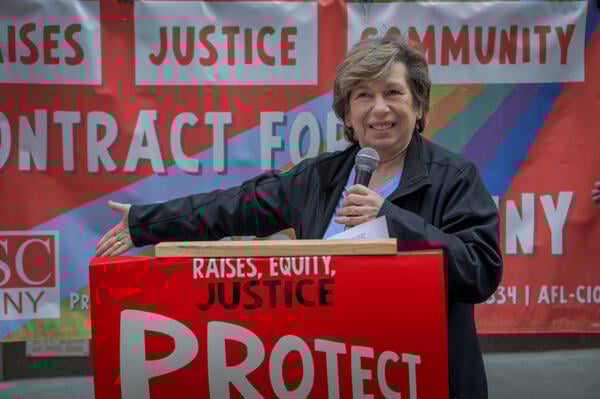
    The one in New Hampshire was led by the National Education Association, the nation’s largest K-12 union, and the other in Maryland was from the American Federation of Teachers, a union that includes many higher education faculty.

    The unions argued that the letter and its threat to cut federal funding violated the First and Fifth Amendments, using vague language that exceeded the Education Department’s statutory authority. They also alleged that the scrubbing of DEI programs as well as the potential funding cuts would weaken schools’ and universities’ ability to act as tools of socioeconomic mobility.

    “This letter is an unlawful attempt by the department to impose this administration’s particular views of how schools should operate as if it were the law. But it is not,” the AFT complaint stated. “Title VI’s requirements have not changed, nor has the meaning of the SFFA decision, despite the Department’s views on the matter.” (Title VI of the Civil Rights Act prohibits discrimination on the basis of race, color or national origin.)

    At a recent hearing in the Maryland case, the Department of Education argued that its letter was merely a reminder that existing civil rights laws protect white children from discrimination just as much as children from a minority group, Maryland Matters reported.

    “It’s highly unlikely that they’re going to go after a school because they taught a certain book,” U.S. attorney Abhishek Kambli said. “All this letter does is just clarify what the existing obligations are under Title VI [of the Civil Rights Act].”

    But the Maryland judge didn’t buy that argument, and she sided with the plaintiffs, as did the New Hampshire judge.

    The New Hampshire judge said the policies outlined in the letter failed to appropriately define DEI and therefore threatened to erode the “foundational principles” of free speech and academic freedom.

    The Maryland judge, on the other hand, approached her case from a perspective of “substantive and procedural legality,” saying the Trump administration’s letter failed to hold its own on that front as well.

    “Plaintiffs have shown that the government likely did not follow the procedures it should have, and those procedural failures have tangibly and concretely harmed the Plaintiffs,” Gallagher wrote. “This case, especially, underscores why following the proper procedures, even when it is burdensome, is so important.”

    And though the orders are just temporary holds and litigation will continue, education stakeholders consider it a win.

    “The nationwide injunction will pause at least part of the chaos the Trump administration is unleashing in classrooms and learning communities throughout the country, and it will provide the time for our clients to demonstrate clearly in court how these attacks on public education are unconstitutional and should be permanently stopped,” said Skye Perryman, president of Democracy Forward, a pro bono legal group that is representing AFT in Maryland.

    AFT president Randi Weingarten added in a statement that “the court agreed that this vague and clearly unconstitutional requirement is a grave attack on students, our profession, honest history, and knowledge itself.”

    For the NEA, the New Hampshire decision was “a victory for students, parents, and educators” that blocked an “unprecedented and unlawful” effort to control American schools.

    “Across the country educators do everything in their power to support every student, ensuring each feels safe, seen, and is prepared for the future,” NEA president Becky Pringle said in a news release. “Today’s ruling allows educators and schools to continue to be guided by what’s best for students, not by the threat of illegal restrictions and punishment.”

    The Department of Education did not respond to Inside Higher Ed’s request for comment prior to the publishing of this story.


    Source link

  • Searches Were About Vandalism of Michigan Leaders’ Homes

    Searches Were About Vandalism of Michigan Leaders’ Homes

    The Michigan attorney general’s office revealed Thursday that the police searches Wednesday in Ann Arbor, Canton and Ypsilanti were part of a yearlong investigation into “evidently coordinated” vandalism, including pro-Palestine graffiti and in some cases shattered glass at the homes of the University of Michigan’s president, provost, chief investment officer and one regent, Jordan Acker.

    In a news release, the office of Attorney General Dana Nessel, a Democrat, said there were many “related criminal acts.” It listed 12 locations where incidents—spanning February 2024 to last month—are under investigation, including the four university leaders’ homes.

    “It is currently estimated that the total damage from these incidents is approximately $100,000,” the release said. “In all cases, the crimes were committed in the middle of the night and in one case upon a residence wherein children were sleeping and awoken. In multiple instances windows were smashed, and twice noxious chemical substances were propelled into homes. At every site, political slogans or messages were left behind.”

    No arrests have been made yet.

    Police—including local, state and the FBI—raided five homes connected to university pro-Palestinian activists Wednesday, according to Lavinia Dunagan, a Ph.D. student who is a co-chair of the university graduate student union’s communications committee. She said at least seven people, including at least one union member, were detained but not arrested. All are students, save for one employee of Michigan Medicine, she said.

    The union—the Graduate Employees’ Organization, or GEO—said in a news release Wednesday that “officers also confiscated personal belongings from multiple residences and at least two cars.”

    The state chapter of the Council on American-Islamic Relations said in a release Wednesday that “property damage at residences took place, and individuals were handcuffed without charges during the aggressive raids.”

    The attorney general’s office did say Thursday that “in one instance, an entryway was forcibly breached following more than an hour of police efforts to negotiate entry to satisfy the court-authorized search warrant.”

    Source link

  • How to Lead Through Uncertainty (opinion)

    How to Lead Through Uncertainty (opinion)

    Uncertainty is unavoidable. Whether it relates to relatively minor topics such as today’s traffic and weather or potentially life-altering issues such as our health and employment, coping with an unknown future is part of our daily lives. At the same time, we are living in a moment of extraordinary uncertainty, with numerous changes to the landscape of higher education and increasing economic instability.

    If you are in a leadership role—whether that means leading an academic unit or leading a research lab or classroom—you may be feeling the weight not only of managing uncertainty for yourself, but also of guiding those you lead through uncertain terrain. In doing so, you are likely to encounter situations where those you lead are looking for definitive information around questions that you are not able to answer.

    How do you lead in these situations? I’m a firm believer that leaders can always do something even when it is not the specific thing that people are hoping for. In this case, I propose that even when we can’t provide answers or predict what the future will hold, we can offer something that might be even more valuable—the skills needed to manage uncertainty.

    Empowering others in the face of uncertainty is a complex and nuanced process, and your approach will differ depending on each individual and context. However, some steps that are likely to be helpful are:

    • Acknowledge the challenge. As a leader, you may feel an urge to avoid talking about issues that you’re not able to solve. However, this does not make those issues any less real for those you lead. Start by validating what is at stake for an individual, whether this is job stability, research funding or admission to graduate school. You can also acknowledge the broader challenge that uncertainty brings and how it taxes us mentally and emotionally. Acknowledging challenges does not mean that you are taking the blame for their existence or that you will not advocate to uphold the rights of individuals and shared values of your institution. However, openly recognizing the reality of a situation can go a long way in building trust with those you lead.
    • Reflect on past resilience. Every person you lead is a unique individual with their own way of managing adversity. You can offer some general strategies, such as focusing on purpose and impact and leaning on community for support. Even more helpful is to empower each person by encouraging them to reflect on challenges they have faced in the past and think about what strategies and supports enabled them to manage those situations. Helping someone remember that they have overcome difficult situations in the past provides guidance as to how they can do so again and builds their self-confidence to do exactly that.
    • Focus on what you can control. One of the many things that uncertainty robs us of is our sense of self-determination. A natural response is to place the greatest focus on the areas where we have the least amount of control. Effectively managing uncertainty or adversity can require that we do the opposite. Importantly, our domain of control includes both what we do and how we do it. You can offer guidance to an individual on how to create a plan and take actions that are within their domain of control, while also reinforcing that they are the one in control of the values and ethics that will guide the choice and implementation of those actions.
    • Create space for self-care. When the challenges we face may stretch over weeks, months or even years, self-care is more critical than ever in sustaining ourselves for what is to come. Just as you can help each person you lead reflect on their unique coping strategies, you can help them make a plan for self-care activities that will provide the greatest benefit to their mental health. This might include time spent doing activities they enjoy alongside people they care about. It can also mean checking out for a set time and playing video games or streaming a show where the only value is entertainment.

    Depending on your leadership role, simply managing your current responsibilities may already feel overwhelming. Adding in the task of helping others manage uncertainty may seem impossible. You may also feel unprepared to navigate a topic for which you haven’t received specific training. Those are very real challenges, but they do not have to prevent you from taking action.

    The principles outlined above can be woven into everyday meetings and email discussions and thus reap benefit without increasing workload. You can also lean on existing resources and expertise to disseminate helpful ideas in a time-efficient manner. For example, consider sharing an article or podcast on resilience, uncertainty or self-care with your team and setting aside 15 to 20 minutes at your next meeting to discuss the advice offered by experts. Or for a deeper dive, you can choose a book and work through each chapter together over a monthly sack lunch.

    As a leader, there is always something that you can do. And even when you don’t have all of the answers, you can have a powerful positive impact by mindfully guiding yourself and others through uncertainty.

    Jen Heemstra is the Charles Allen Thomas Professor of Chemistry and chair of the Department of Chemistry at Washington University in St. Louis. Her research is focused on harnessing biomolecules for applications in medicine and the environment, and she is the author of the forthcoming book Labwork to Leadership (Harvard University Press, August 2025)

    Source link

  • Where Is Higher Ed Now and Where Is It Going? The Key

    Where Is Higher Ed Now and Where Is It Going? The Key

     
    In the latest episode of The Key, Inside Higher Ed’s news and analysis podcast, two economists highlight opportunities that college and universities can grab to improve engagement with their local communities, create greater access for first-generation students and increase transparency around pricing.

    David Hummels, professor of economics and dean emeritus, and Jay Akridge, trustee chair in teaching and learning excellence, professor of agricultural economics and former provost, both at Purdue University, are co-authors of a Substack newsletter on higher education, Finding Equilibrium.

    They join Sara Custer, editor in chief of Inside Higher Ed, and this episode’s host, Colleen Flaherty, Inside Higher Ed’s editor for special content, to analyze the findings from the Inside Higher Ed/Hanover Research 2025 Survey of College and University Presidents.

    In response to two-thirds of presidents having some serious doubts about the value of tenure, Hummels cautions that not offering faculty tenure means institutions are “going to have to pay faculty the way they’re paid in industry or you won’t be able to attract anyone.”

    Tenure is similar to executive stock options in the private sector, he argues: “It causes faculty to invest far more than they otherwise would in critical functions—like developing curriculum, hiring, developing and evaluating other faculty—because their tenure is going to be a lot more valuable if they’re part of a thriving institution,” he says.

    Akridge agrees with the 50 percent of survey respondents who say higher ed has a real affordability problem, even if his research shows that the value of college remains high and the debt students take on is overblown.

    “The sticker price and the debt they take on becomes how they think about cost. And that’s real,” he says. “Part of the fear for us is, who hears that message? Students with means and whose parents went to college are going to go to college. The evidence is quite clear that lifetime earnings, wage premiums, quality of life, even life span are better for those that go to college, and these families know that. Students that are first generation, that are maybe lower income, maybe underserved—I think they’re quite susceptible to that message and may write off college as perhaps their ticket to a better life, and that’s concerning from an equity standpoint.”

    A mere 3 percent of surveyed presidents said that higher ed has been very or extremely effective at responding to the diploma divide that is increasingly predictive of voter behavior. In response, Custer encourages colleges and universities to take accountability for, and be responsive to, valid critiques of higher education as a sector, while building on the confidence that many communities retain in their local institutions. She shared an example of a messaging campaign by one regional college that highlighted how graduates are contributing to the local area in everyday but fundamental ways. “‘We are putting really valuable people back into the community who are supporting you and your families and making it possible for you to live here,’” she summarizes.

    Hummels also stresses the importance of making the case for academic research, currently under threat. “Science broadly is essential to the competitiveness of the economy, to our firms and to the success of our students. It’s not just this cute thing faculty do in their spare time. We do it because it is central to who we want to be as a country and what our firms want to become. And I think we have been neglectful about maintaining awareness of how important this is.”

    Listen to the full episode.

    Source link

  • Demands of Harvard Are Blueprint for Repression (opinion)

    Demands of Harvard Are Blueprint for Repression (opinion)

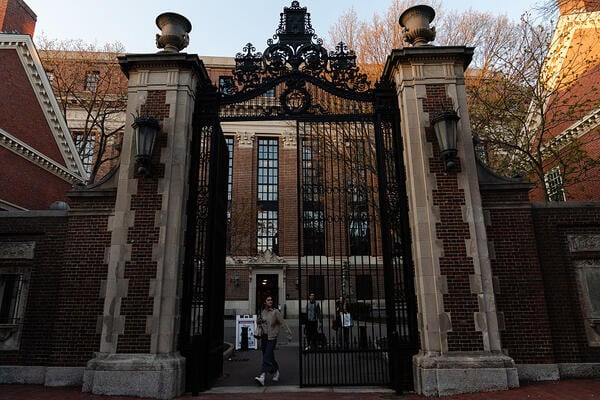
    Harvard University’s courageous refusal to obey the demands of the Trump administration—and its subsequent filing of a lawsuit this week seeking restoration of its federal funding—has inspired praise across academia. But there has been less attention to just how terrible those demands were. No government entity in the United States has ever proposed such repressive measures against a college. By making outrageous demands a condition of federal funding—and freezing $2.2 billion in funds because Harvard refused to obey—the Trump administration is setting a precedent for threatening the same authoritarian measures against every college in America.

    The April 11 letter to Harvard from Trump administration officials proposed a staggering level of control over a private college. Although at least one of the authors reported that the letter was sent in error while negotiations were still ongoing, this mistake didn’t stop the Trump administration from punishing Harvard for refusing to accept its dictates.

    After Harvard rejected the demands, Trump himself posted further threats to Harvard’s tax-exempt status on social media, even though federal law bars presidents from directly or indirectly requesting Internal Revenue Service investigations against specific targets: “Perhaps Harvard should lose its Tax Exempt Status and be Taxed as a Political Entity if it keeps pushing political, ideological, and terrorist inspired/supporting ‘Sickness?’” Of course, if Harvard obeyed the Trump regime’s orders to silence political speech, it would be pushing a right-wing ideological agenda.

    Among the stipulations in the April 11 letter, the Trump administration demanded the power to compel hiring based on political views to, in effect, give almost complete preference to political conservatives: “Every department or field found to lack viewpoint diversity must be reformed by hiring a critical mass of new faculty within that department or field who will provide viewpoint diversity; every teaching unit found to lack viewpoint diversity must be reformed by admitting a critical mass of students who will provide viewpoint diversity.” Since most people who enter academia are liberal, as are most current academics, this demand for ideological balance would effectively ban the hiring of liberal professors in virtually all departments for many years.

    Decisions on how to measure the presence or lack of viewpoint diversity would be made by “an external party” hired by Harvard with the approval of the federal government (meaning Trump). Government-imposed discrimination based on viewpoint would also apply to students, since the letter requires the “external party … to audit the student body, faculty, staff, and leadership for viewpoint diversity, such that each department, field, or teaching unit must be individually viewpoint diverse.” If every department “must be individually viewpoint diverse,” then students with underrepresented viewpoints (Nazis, perhaps?) must receive special preferences in admissions. This concept that every department’s students, faculty and staff must match the distribution of viewpoints of the general population is both repressive and crazy to imagine.

    The Trump administration letter also ordered Harvard to commission a Trump-approved consultant to report on “individual faculty members” who “incited students to violate Harvard’s rules following October 7”—and asserted that Harvard must “cooperate” with the federal government to “determine appropriate sanctions” for these professors. Retroactively punishing professors who violated no rules for allegedly encouraging student protesters is an extraordinary abuse of government power.

    Not to stop there, the Trump administration letter seeks to suppress the right to protest: “Discipline at Harvard must include immediate intervention and stoppage of disruptions … including by the Harvard police when necessary to stop a disruption.” Since the Trump administration seems to regard every protest as a “disruption” (and Harvard itself has wrongly banned silent protests), this could require immediate police intervention to stop a broad range of actions.

    The Trump administration also demanded unprecedented control over Harvard’s disciplinary system to order punishments of student protesters without due process. Among other specific steps, the Trump administration ordered Harvard to ban five specific student groups, including Students for Justice in Palestine and the National Lawyers Guild, and “discipline” all “active members of those student organizations,” including by banning them from serving as officers in any other student groups. And Harvard would be compelled to implement government-imposed punishments by “permanently expelling the students involved in the October 18 assault of an Israeli Harvard Business School student and suspending students involved in occupying university buildings.”

    Shared governance is another target of Trump and his minions. The Trump administration’s demands for Harvard included “reducing the power held by students and untenured faculty” and “reducing the power held by faculty (whether tenured or untenured) and administrators more committed to activism than scholarship.” It’s bizarre to imagine that a university could be forced by the government to determine whether a professor is committed to “activism” before banning them from any position of power such as a department chair or committee member. The letter also demands “removing or reforming institutional bodies and practices that delay and obstruct enforcement [of campus rules governing protests], including the relevant Administrative Boards and FAS Faculty Council.”

    Not surprisingly, the Trump administration’s letter also demands a complete ban on diversity programs: “The University must immediately shutter all diversity, equity, and inclusion (DEI) programs, offices, committees, positions, and initiatives, under whatever name.” This repression not only interferes with the ability of universities to run their own operations, but it is also designed to suppress speech on a massive scale by banning all programs anywhere in the university that address issues of diversity and equity, with no exceptions for academic programs.

    There’s more. Harvard would be forced to share “all hiring and related data” to permit endless ideological “audits.” A requirement that “all existing and prospective faculty shall be reviewed for plagiarism” could be used to purge controversial faculty. Perhaps the most ironic part of the letter to Harvard is its command for ideological control over foreign students: “the University must reform its recruitment, screening, and admissions of international students to prevent admitting students hostile to the American values and institutions inscribed in the U.S. Constitution and Declaration of Independence.” Trump’s regime is undermining the Constitution and shredding the Bill of Rights, while demanding that foreign students prove their devotion to the very documents that the Trump administration is destroying.

    The Trump administration’s letter to Harvard should shock and appall even those conservatives who previously expressed some sympathy with the desire to punish elite universities by any means necessary. This is fascism, pure and simple. It portends an effort to assert total government control over all public and private universities to compel them to obey orders about their hiring, admissions, discipline and other policies. It is an attempt to control virtually every aspect of colleges to suppress free expression, ban protests and impose a far-right agenda.

    It’s tempting to hope that the Trump administration merely wanted to target Harvard alone and freeze its funding by proposing a long series of absurdly evil demands, knowing that no college could possibly agree to obey.

    But the reality is that the letter to Harvard is a fascist blueprint for total control of all colleges in America, public and private. The demand for authoritarian control by the Trump administration is an assault on higher education and free speech in general. If Trump officials can impose repression on any college they target, then private corporations (as the assaults on private law firms have indicated) and state and local governments will soon follow.

    The government repression that began with Columbia University will not end with Harvard or the Ivy League institutions. These are the first volleys in a war against academic freedom, with the clear aim of suppressing free expression on campus or destroying colleges in the battle.

    Source link

  • Trump’s Latest Executive Orders Target Accreditation

    Trump’s Latest Executive Orders Target Accreditation

    President Donald Trump took aim at college accreditors in an executive order signed Wednesday that targets two accrediting agencies for investigation and suggests others could lose federal recognition altogether.

    The order was one of seven issued Wednesday as Trump nears the end of his first 100 days. Others directed the Education Department to enforce the law requiring colleges to disclose some foreign gifts and contracts, aimed to support historically Black colleges and universities, and outlined several policy changes for K-12 schools. With the accreditation order and the others, Trump and White House officials argued they were refocusing the education system on meritocracy.

    Education Secretary Linda McMahon, who was in the Oval Office for the signing, opened her follow-up statement by praising the accreditation order and saying it would “bring long-overdue change” and “create a competitive marketplace.”

    “America’s higher education accreditation system is broken,” she wrote. “Instead of pushing schools to adopt a divisive DEI ideology, accreditors should be focused on helping schools improve graduation rates and graduates’ performance in the labor market.”

    Some of the immediate public reactions from higher ed groups criticized the accreditation order, describing it as yet another attempt to put more power in the hands of the president and threaten academic freedom.

    The Council of Higher Education Accreditation said Trump’s directive would “affect the value and independence of accreditation,” while the American Association of University Professors said it would “remov[e] educational decision making from educators and reshap[e] higher education to fit an authoritarian political agenda.”

    Overhauling Accreditation

    Rumored for weeks, the accreditation order was perhaps the most anticipated one of those signed Wednesday, and it will likely have widespread ramifications as Trump seeks to scrutinize and reform the system.

    Historically, accreditors have operated under the radar with little public attention, but in recent years conservatives have focused on the agencies and their role in holding colleges accountable. (The accreditors do hold a lot of power, because universities must be accredited by a federally recognized agency in order to access federal student aid.)

    During his presidential campaign, Trump himself called accreditation reform his “secret weapon” and accused accreditors of failing “to ensure that schools are not ripping off students and taxpayers.”

    The order calls for McMahon to suspend or terminate an accreditor’s federal recognition in order to hold it accountable if it violates federal civil rights law, according to a White House fact sheet. The executive order specifically says that requiring institutions “to engage in unlawful discrimination in accreditation-related activity under the guise of ‘diversity, equity, and inclusion’ initiatives” would be considered a violation of the law.

    The order also singles out the American Bar Association, which accredits law schools, and the Liaison Committee on Medical Education, which accredits medical schools, and directs cabinet secretaries to investigate them. (The American Bar Association suspended DEI standards for its members in February, as did some other accreditors.)

    Beyond that, McMahon is tasked to “realign accreditation with student-focused principles.” That could include recognizing new accreditors, prioritizing intellectual diversity among faculty and requiring “high-quality, high-value academic programs,” though the fact sheet doesn’t say how that would be measured.

    White House staff secretary Will Scharf said during the event that accreditors have relied on “woke ideology” instead of merit and performance to accredit universities. He didn’t provide evidence for his claims, but the fact sheet cites the national six-year undergraduate graduation rate, which is at 64 percent, as one example of how accreditors have “failed to ensure quality.”

    “The basic idea is to force accreditation to be focused on the merit and the actual results that these universities are providing, as opposed to how woke these universities have gotten,” Scharf said.

    The Trump administration also wants to streamline the process to recognize accreditors and for institutions to change agencies. Some states that have required their public colleges to change accreditors have claimed that the Biden administration made the process too cumbersome.

    Scharf said the order charges the Education Department “to really look holistically at this accreditation mess and hopefully make it much better.”

    Trump didn’t say much about the order or what actions he hopes to see McMahon take next.

    Enforcement of Foreign Gifts

    The president is not the first government official this year who has sought to limit foreign influence on American colleges and universities.

    The House recently passed a bill, known as the DETERRENT ACT, which would amend Section 117 of the Higher Education Act to lower the threshold for what foreign gifts must be reported from $250,000 to $50,000. It also would require the disclosure of all gifts from countries of “concern,” like China and Russia, regardless of amount. The legislation advanced to the Senate in late March following a 241–169 vote.

    Rep. Tim Walberg, a Michigan Republican and chair of the committee that introduced the bill, praised Trump’s action Wednesday, saying it “underscores” a Republican commitment to “promoting transparency.”

    “Foreign entities, like the Chinese Communist Party, anonymously funnel billions of dollars into America’s higher education institutions—exploiting these ties to steal research, indoctrinate students, and transform our schools into beachheads in a new age of information warfare,” Walberg wrote in a statement shortly after Trump’s order was signed. “I am glad the Trump administration understands the grave importance of this threat, and I look forward to working with President Trump to protect our students and safeguard the integrity of America’s higher education system.”

    Colleges’ compliance with Section 117 has been a key issue for Republicans over the years. House lawmakers repeatedly criticized the Biden administration’s efforts to enforce the law, but former education secretary Miguel Cardona defended his agency’s actions. They also tried to pass the DETERRENT Act last session, but it was blocked by Democrats in the Senate.

    The executive order is broader than the DETERRENT Act and does little to distinguish itself aside from directing McMahon to work with the attorney general and heads of other departments where appropriate and to reverse or rescind any of Biden’s actions that “permit higher education institutions to maintain improper secrecy.”

    More Support for HBCUs

    Another order creates within the White House an initiative focused on historically Black colleges and universities and revokes a Biden executive order titled “White House Initiative on Advancing Educational Equity, Excellence, and Economic Opportunity Through Historically Black Colleges and Universities.”

    During his first term, Trump moved an HBCU initiative at the Education Department to the White House as a largely symbolic gesture to show his support for Black colleges. That initiative continued under Joe Biden, though it was returned to the Education Department. Biden also created initiatives focused on Hispanic-serving institutions and tribal colleges. Trump ended those newly created initiatives during his first week in office.

    The executive order also established the President’s Board of Advisors on HBCUs at the Education Department, which appears to already exist. The panel last met in January, according to a Federal Register notice.

    Scharf said the order would ensure that HBCUs are “able to do their job as effectively and as efficiently as possible.”

    Source link

  • Police Raids Targeted Michigan Palestine Activists

    Police Raids Targeted Michigan Palestine Activists

    Nicholas Klein/iStock/Getty Images

    Police raided five homes connected to University of Michigan pro-Palestinian activists on Wednesday, according to the university’s graduate student union. A spokesperson for the state’s attorney general told Inside Higher Ed the investigation is into “multi-jurisdictional acts of vandalism” but didn’t provide many more details.

    Danny Wimmer, press secretary for Michigan attorney general Dana Nessel, a Democrat, said the search warrants were part of an attorney general investigation “against multiple individuals in multiple jurisdictions including Ann Arbor, Canton and Ypsilanti.”

    Wimmer said many agencies were involved Wednesday, including local, state and federal authorities, but he didn’t name specific ones and didn’t say whether personal items had been confiscated. He said the searches weren’t related to campus protest activity.

    In a post on X, the attorney general’s office said the alleged vandalism was “against multiple homes, organizations, and businesses in multiple counties.”

    Lavinia Dunagan, a Ph.D. student who is a co-chair of the union’s communications committee, said at least seven people were detained but none arrested. All are students, save for one employee of Michigan Medicine, she said. She declined to name them, saying she didn’t know all of their identities and citing safety concerns for those who were targeted.

    Brian Taylor, a university spokesperson, deferred questions to the attorney general’s office.

    Dunagan said those detained were taken into officers’ cars and not allowed to leave until they provided information and allowed cheek swabs. She said the FBI, Michigan State Police and local police were involved.

    The union—the Graduate Employees’ Organization, or GEO—said in a news release that “officers detained and questioned two activists, including a member of GEO, and confiscated their electronic devices” in Ann Arbor, home of Michigan’s flagship campus. GEO also said four people were “detained and released” in Ypsilanti, and one home was “raided” in Canton.

    “The officers also confiscated personal belongings from multiple residences and at least two cars,” GEO said, adding that “at this time, all activists are safe.”

    Wimmer did say U.S. Immigration and Customs Enforcement wasn’t involved, and that the attorney general’s office believes all subjects of the search warrants are U.S. citizens. The union also said in its release, “We are not aware of any visa holders being affected by these raids.”

    The state chapter of the Council on American-Islamic Relations said in a news release that homes of “students and former students at the University of Michigan–Ann Arbor who were involved in pro-Palestinian activism were raided.” The organization said, “Property damage at residences took place, and individuals were handcuffed without charges during the aggressive raids.”

    The organization said it had staff “on location at one of the raided residences” and it “continues to offer legal assistance to those impacted and is actively monitoring the situation for potential civil rights violations.”

    Dunagan said, “We are just really concerned about potentially future repression of political activity.”

    Source link

  • Texas State Helps Students Bounce Back From 2.0 GPA

    Texas State Helps Students Bounce Back From 2.0 GPA

    As more colleges and universities consider initiatives, processes and policies to create a more student-focused campus, they are zeroing in on two areas of concern: academic probation and academic recovery.

    A growing body of research highlights the way negative life experiences and competing priorities impact students’ academic achievement, sometimes exerting a stronger influence than prior academic preparation.

    Texas State University has established a new initiative, Bobcats Bounce Back, to help students whose grades have fallen below a 2.0 learn self-efficacy, resiliency and strong study skills.

    The background: The university has a goal of increasing its first-year retention rate from 77 percent in 2012 to 85 percent by 2025, said Cynthia Hernandez, vice president for student success. Early on, officials recognized that the institution lacked a strong academic recovery program, so Hernandez and her team prioritized devising a proactive solution to reduce the number of students who fell into poor academic standing.

    Since 2009, the university’s policy has been that students who fall below a 2.0 cumulative GPA must meet with an academic adviser at least once a semester. The intervention has proven mostly successful, in that some students have moved back into good academic standing—though not everyone has, said Jason O’Brien, assistant director for academic engagement at Texas State.

    An analysis of institutional data revealed that students who improved their academic trajectory used support services at least once a month, or four times per term.

    “If students are [showing up], I know they’ve got the time and they’ve got a goal, they know what they’re working on,” O’Brien said. The challenge is getting each student to be proactive and engage early, not wait until the end of the semester, before finals.

    Using institutional data, Texas State leaders revamped academic probation requirements to encourage students to make at least four connections with support services each semester; those who don’t, receive personalized outreach.

    How it works: In the Bobcats Bounce Back program, students with a 2.0 GPA or lower are asked to participate in at least four support services, which could include success coaching, tutoring or a student success webinar. Students must meet with an academic adviser for at least one of their mandatory check-ins and they receive weekly communication from the office of academic engagement to encourage them to meet their goals.

    A few weeks into the term, O’Brien’s team runs a report that identifies students on academic probation who have yet to engage with a support office. Students who live off-campus receive communication from the academic engagement team and those in the residence halls receive outreach from their residence life director.

    “We’re not asking, ‘How are your classes going?’” O’Brien said. “We’re saying, ‘How are you doing? What’s going on in [your] life right now? Do you feel safe? Are you able to eat? Do you have any needs that aren’t met? Is your family OK?’ We’re trying to make sure that all of those basic needs, all that it takes to be a successful human is on track, and then from there we move on to, ‘OK, talk to me about classes.’”

    The aim is to be human-centered and conversational in order to learn from the student and bridge any gaps in services and resources the university can provide to promote student success.

    Sometimes this means helping students understand ways to correct their academic transcript, such as repeating a course or asking for an administrative withdrawal when relevant.

    “We make a lot of asset-based assumptions,” O’Brien said. “My assumption is that no student is choosing to fail a course; they are choosing to be successful in something else out of necessity,’” which could include prioritizing their health, caring for a family member or working extra hours to make ends meet. “What we want to do is find out about those early enough to prevent it from impacting a transcript.”

    The impact: During the inaugural program term in fall 2024, Bobcats Bounce Back supported 1,706 undergraduates; this term it is assisting 2,579 students. (Most academic recovery programs see higher rates of participation in the spring term because first-year students are most likely to face academic challenges in their first term, which can dramatically impact their GPA, O’Brien said).

    During fall 2024, Bobcats Bounce Back participants engaged, on average, with support resources 3.11 times, up 270 percent compared to students on academic probation in 2023 (who averaged .84 engagements). The university also saw a 3 percent increase in the number of students who regained good academic standing from fall 2023 to fall 2024, and a 7 percent decrease in academic suspensions.

    At the 12-week mark in spring 2025, average engagements among students on academic probation were up 74.8 percent, from 1.31 to 2.29.

    The data illustrates the program’s success so far, and O’Brien believes it’s due in part to their responsiveness to student needs. As the program has grown, more students are willing to seek out the office and engage. “They’re starting to have faith in us and ask for the support they need,” O’Brien said.

    Program participants also have an opportunity to submit a guided reflection, called a B3 Field Note, every four weeks to build their socioemotional skills. Each prompt is rooted in research-backed strategies to improve academic self-efficacy and engagement. O’Brien has been amazed at the thoughtful responses he’s seen thus far and plans to conduct a critical discourse analysis project to identify students who may need additional support based on their field note submissions.

    In the future, college leaders hope to target additional students who may be at-risk, but haven’t quite fallen below the 2.0 cumulative GPA threshold, a group Hernandez called the “murky middle.”

    If your student success program has a unique feature or twist, we’d like to know about it. Click here to submit.

    This article has been updated to clarify average engagement rates for program participants in fall 2024 and how that growth compared to the previous fall.

    Source link

  • McMahon Defends Harvard Cuts, Faces Grilling During CNBC Interview

    McMahon Defends Harvard Cuts, Faces Grilling During CNBC Interview

    Education Secretary Linda McMahon defended the Trump administration’s crackdown on Harvard University and other colleges during a contentious appearance Tuesday on CNBC’s Squawk Box as she faced questions about the government’s decision to freeze universities’ federal funding.

    Andrew Ross Sorkin and Joe Kernen, the morning talk show’s hosts, grilled McMahon during the 12-minute segment about whether freezing billions in grants and contracts was due to valid civil rights concerns or unjustified political and ideological standards; they suggested it was the latter. (Harvard sued Monday over the funding freeze, which followed the university’s decision to reject the Trump administration’s sweeping demands.)

    But McMahon reiterated that, for her, it was a matter of holding colleges accountable for antisemitism on campus—not an alleged liberal bias.

    “I made it very clear these are not First Amendment infractions; this is civil rights,” she said. “This is making sure that students on all campuses can come and learn and be safe.”

    Harvard argued in the lawsuit that some of the demands—like auditing faculty for viewpoint diversity—do not directly address antisemitism and infringe on the private institution’s First Amendment rights.

    Sorkin echoed Harvard’s argument during the interview and questioned McMahon about the lawsuit’s claims.

    “The question is whether viewpoint diversity is really about free speech,” he said. 

    In defense, McMahon said that “this letter [of demands] that was sent to Harvard was a point of negotiation … and it was really not a final offer.” She added that she hoped Harvard would come back to the table. (Trump officials told The New York Times that the April 11 letter was sent by mistake.)

    “We would like to be able to move forward with them and other universities,” she said.

    McMahon later reiterated her argument that this was a civil rights matter and said, “I think we’re on very solid grounds” regarding the lawsuit.

    But Kernen countered that requiring universities to hire conservative faculty members is just as bad as historically maintaining liberal ones, calling the act “thought control.”

    “It’s the other side of the same coin, isn’t it?” he said.

    McMahon said it’s fair to take a look at some faculty members.

    Near the end of the interview, Sorkin asked McMahon about her end goal if universities lose their federal funding and tax-exempt status. (The IRS is reportedly reviewing Harvard’s tax-exemption.)

    “We have not said that the tax exemption should be taken away, but I think it’s worth having a look at,” McMahon said. “I think the president has put all the tools on the table and we should have the ability to utilize all of those particular tools.”

    Source link