The Trump administration plans to block $510 million in federal contracts and grants for Brown University in retaliation for the university’s alleged failure to address antisemitism on campus, The New York Times reported.
The Daily Callerfirst reported the news, writing that “an administration official” said Brown’s grants “would be paused” while the government conducts a review of the university’s response to claims of antisemitism.
Brown provost Frank Doyle sent an email to campus leaders Thursday, acknowledging “troubling rumors emerging about federal action on Brown research grants,” but noting that they had received “no information to substantiate any of these rumors,” the Times reported.
Brown was among the 60 higher ed institutions to receive a letter last month from the Office for Civil Rights warning of “potential enforcement actions” if they failed to comply with federal antidiscrimination law.
After Columbia became the first institution to have its grants frozen, Brown president Christina Paxson issued a statement reiterating the university’s commitment to upholding both federal law and academic freedom. She noted that if Brown were prevented from performing “essential academic and operational functions, we would be compelled to vigorously exercise our legal rights to defend these freedoms, and true to our values, we would do so with integrity and respect.”
On Thursday night, leaders of the Brown Corporation and of Brown’s Jewish community, released a statement praising Brown’s commitment to Jewish students.
“Brown University is home to a vibrant Jewish community that continues to flourish with the steadfast support of the administration,” it read. “Amidst broader concerns about antisemitism on college campuses, Brown stands out as an inclusive environment where Jewish life is deeply integrated into campus culture.”
When he was mayor of Lexington, Ky., Jim Newberry worked closely with the University of Kentucky, Transylvania University and Bluegrass Community Technical College and came to understand how important the institutions were to the city. He built close relationships with the leaders at all three colleges and said he admires the broad mission of higher education institutions: to educate and train the next generation.
“That was the mission to which I wanted to devote the rest of my professional career when I left the mayor’s office,” Newberry said. In 2012, he refocused his law practice on the higher education sector, and he is currently a member of Steptoe and Johnson, where he is co-chair of the firm’s higher education team. He predominantly represents private, nonprofit, independent colleges, but also works with large R-1 institutions.
Inside Higher Ed recently reached out to Newberry over Zoom to hear how he is helping his clients navigate the uncertainty in federal regulations, what advice he’d give to college presidents who might want to speak out and why he took Project 2025 at its word. Excerpts of the conversation follow, edited for space and clarity.
Q: What are the biggest concerns you’re hearing from your clients right now?
A: Confusion, lack of information, uncertainty about what the future may hold, who they will be dealing with. It’s, in short, the fear of the unknown right now.
Project 2025 is this administration’s playbook, Newberry said. “It’s a pretty aggressive agenda.”
Q: Is that mostly fear around new regulations or about how to stay compliant with current regulations amid all the uncertainty?
A: The confusion right now knows no bounds, and a lot of that has to do with the fact that federal offices are being closed. People who were responsible for overseeing projects are no longer there, and so if you’re trying to resolve an issue with the Department of Education, it is very, very challenging.
Q: And so what are you able to tell your clients, if anything?
A: You just kind of throw your hands up. I had one client that wanted me to give them an estimate of the cost for the regulatory compliance component of a project they asked us to assess. I said, “I’ve got no idea what to tell you about that. And I don’t know when I will be in a position to give you an estimate about that.” So we really are looking for answers. Of course, we watch Inside Higher Ed and we watch the evening news reports about what’s going on at the department, and we’re trying to piece together some mosaic that would make some sense when you stand back and look at it. But right now, it’s very sketchy.
Q: Under previous administrations, compliance was incredibly burdensome for institutions. Do you have any sense of there being more, less or similar levels of regulatory obligations under the Trump administration?
A: I do have a sense it’s going to be less. The prior administration took a pretty aggressive approach when complaints were filed with them on some matter over which they had jurisdiction, and, typically, the inquiries that you would get from [the Office for Civil Rights] would go far beyond the one complaint that initiated the whole process.
If I had to bet right now, I would say we’ll see substantially less of those kinds of inquiries, and we may see fewer investigations being initiated with institutions just because the department doesn’t have the personnel to do them. And what investigations are initiated will probably take much longer to complete just because they don’t have the personnel to review the documents necessary to reach a conclusion. I mean, even before the new administration took office, OCR investigations seemingly took forever to resolve. And now, with half as many employees, you gotta think they’re gonna take twice as long in the future as they have in the past, just on the basis of the number of people who are available to do the work.
Q: You were one of the few people I spoke to who were certain the Trump administration was going to follow through on the Project 2025 mission to dismantle the Department of Education. Why were you so confident? And what else do you see in your crystal ball?
A: It just simply appeared to me that Donald Trump had developed a remarkable level of control over the Republicans in Congress, particularly when they went through the confirmation process. And he was able to get virtually everybody he wanted confirmed. It just struck me that if you could get some of those confirmations approved, it was quite likely there would be a fair degree of support within the Republican party to materially diminish the role of the Department of Education, if not abolish it altogether. Now, whether it actually ceases to exist remains to be seen, but it’s certainly going to be in a diminished capacity. I don’t think there’s any question at all about that now, and I suspect many of its functions will be transferred elsewhere.
With respect to the future, I don’t know that I’ve got any clairvoyant ability here, but all you had to do is look at Project 2025. I mean, that’s their playbook. It has been proven repeatedly that’s exactly what they are working from. And therefore, you ought to anticipate that there’s going to be a substantial effort made to materially change the way institutions are accredited. You ought to see a substantially greater role for state regulatory agencies who are involved in higher education. And FERPA is probably going to be on the list of things that get changed. Those are some things that I think one could glean from looking at the section of Project 2025 that deals with education. It’s a pretty aggressive agenda.
Q: I mean, the spectrum of ability and capacity at the state level to take on some of these responsibilities is enormous. Does that fill you with dread as a lawyer, having to get to grips with 50 different ways of doing things in 50 different regulatory environments?
A: Yes, that’s exactly what I anticipate is going to happen. And just as there’s a substantial degree of difference from one state to the next in terms of the existing ability, I suspect, even after we go through some wholesale change that would result in functions moving from the federal level to the state level, you’re still going to see a wide variety of regulatory standards and enforcement of those standards. That’s going to create a challenging new environment for a lot of folks in higher ed. And, you know, higher ed has been very much a national kind of industry, if you will. People could go basically from one state to the next and not notice a huge amount of change in terms of how the institution would operate. That’s going to be different if they follow through with all they’re talking about doing.
Q: We’re seeing this ping-pong effect happening right now where the federal government will say one thing or take an action and then a lawsuit challenging it will follow. It’s incredibly inefficient policymaking to begin with, but how confident are you that we’ll get any sort of resolution to a lot of these extrajudicial actions coming from the administration?
A: That’s a great question, and it is one that is going to require a lot of attention, especially in the next six months, because I would anticipate during that period there will be a few of these cases that will percolate up to the Supreme Court in some fashion or another. And I hope the Supreme Court will be able to provide some clarity that will then drive the decisions that are being made at the district court and in the various courts of appeals, because it’s just going to be all over the place, I’m afraid, with different judges and courts taking different positions. Ultimately, the nine people on the Supreme Court bench are going to have to sort through some of this. They will be very, very influential.
Q: Some legal scholars have declared a constitutional crisis in this country. Would you say that we are in one now?
A: The ultimate constitutional crisis is going to be what happens when the Supreme Court makes a decision in one of these cases. If the administration refuses to abide by a Supreme Court decision, we’ll be in a full-blown constitutional crisis. But we have some limited crises percolating right now. Orders from federal courts have traditionally been honored by whichever administration, whichever party may have been in power, and that does not appear to be the current case, and that’s a real concern.
Q: What’s your take on Columbia’s concession to the department?
A: I have a lot of empathy for the leadership on every campus right now, as they try to discern as best they can what the appropriate course of action is for their institution. There are some incredibly capable people serving these institutions, both on the boards of trustees and in senior administrative levels. There is no way I could understand all of the factors they are considering as they try to chart a course for their individual institutions. And I wouldn’t try to do that, because they’ve got a lot of responsibility. They’ve got a lot of stakeholders, many of whom are taking conflicting positions. And it’s a very challenging time for folks in leadership positions—and for their lawyers, too, I might add.
Q: I appreciate you won’t give an opinion about something you aren’t involved in, but what do you think the decision might mean for institutional autonomy and academic freedom in general?
A: When you have an institution as prominent as Columbia conceding to a lot of the demands that were made, it makes it very, very difficult for lesser institutions to contemplate a fight. That’s not to say they made the wrong decision, but it is to say that their decision will probably lead others to find ways to avoid a fight with the new administration, and that’s understandable. I mean, absent some set of circumstances, this administration is going to be there for almost four years. You gotta live with them, and getting involved in litigation is problematic. It is outrageously expensive for the institutions. And even if you win, you’ve got a regulator sitting there that’s not very happy about the outcome of that litigation who can make your life pretty complicated, if not miserable, for several years to come. So there’s substantial motivation for folks not to fight. And I recognize there are constituencies—students, faculty and others—who vehemently oppose anything less than a battle to the death. But presidents and boards have to consider the overall well-being of their institutions. I don’t envy that task.
Q: We’re hearing lots of calls for leaders to speak out and condemn what’s happening to the sector. What would you tell a client who is thinking about penning an op-ed for The Wall Street Journal defending higher education?
A: I’m generally an advocate of institutional neutrality on matters of public affairs, because I think campuses need to be places where competing ideas can be exchanged without the administration leaning on the scales one way or the other. This is a little different, though, in that these issues are really going to the heart of what our system of higher education is going to be in the future. I happen to think the people that know the most about that are folks that are sitting in administration buildings or in boardrooms these days, and their voices need to be heard in some fashion about what the implications some of the decisions that are being made have.
So there’s certainly an interest in speaking out. I think the art of this, though, is speaking out in such a way that the points are clearly made without there being a lot of vitriol in the op-ed piece. There are a lot of constituencies on campus that want every member of the Board of Trustees and the president to go the White House and spit in the face of everybody coming and going. I understand that. I don’t think that serves their institutional interests well, but I do think a calm and thoughtful, well-reasoned, well-documented argument about some of the policy options that are available and which ones are good and which ones are bad for higher education is an appropriate thing for folks in higher education to be talking about.
Q: Interesting that you bring up institutional neutrality, because that’s part of the reasoning some leaders have given for not speaking publicly about the situation. You’re saying this issue doesn’t fall under institutional neutrality for you.
A: I don’t think this does. If I were in Minnesota, let’s say, and a client had a strongly held point of view about whether or not we need to have Canada as our 51st state, I’d discourage an institution in Minnesota from expressing that. On the other hand, that same institution may well be serving the higher ed industry if it makes some points about why having accreditation done by regional accreditors, as opposed to 50 different state agencies, is better. Then I think that kind of thing would be an appropriate subject for their comments.
From the day he retook office, President Donald Trump’s campaign to disrupt higher education has been unrelenting. He’s targeted diversity, equity and inclusion. His administration slashed more than a billion dollars in federal grants and contracts for universities, and it plans to cut more. It’s also attempted to deport pro-Palestinian international scholars, accusing them of sympathizing with terrorism.
Prominent—or infamous—among the administration’s escalating actions was its decision last month to cut $400 million from Columbia University for allegedly failing to address on-campus antisemitism. Trump officials followed this by demanding that the university, among other things, place its Middle Eastern, South Asian and African Studies Department in academic receivership.
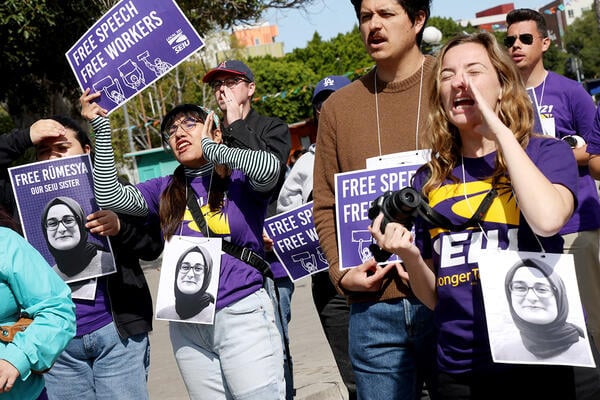
As the disruption has mounted, many college and university presidents have kept silent. But unions representing higher ed employees have stepped up to the plate. They’ve protested in Washington, D.C., and on their campuses, organized open letters and filed a flurry of lawsuits against the Trump administration. Union leaders say they are filling a void in an existential fight for higher ed’s future. They wish others would join their resistance, but their unified strength in numbers may protect their members from federal retaliation in ways that higher ed officials aren’t.
Concerns about higher ed’s future under Trump and calls for a forceful response to his actions pervaded a recent gathering on collective bargaining in higher ed. The conference—held in Manhattan just two days after Columbia announced it would capitulate to multiple demands the administration made—offered a snapshot into a large pocket of resistance.
We couldn’t actually be better positioned to fight back against the kind of authoritarian attacks that we’re seeing.”
—Ian Gavigan, national director of Higher Ed Labor United
William A. Herbert, executive director of the National Center for the Study of Collective Bargaining in Higher Education and the Professions, kicked off the event addressing what he has called the Trump administration’s “assault on higher education.”
“We gather today during a very perilous time. To paraphrase Tom Paine, these are the times that try our souls,” Herbert said, adding that “in this crisis, we must care for ourselves and others—particularly our students, our immigrants and others most vulnerable in this time of danger.”
He spoke to roughly 150 people gathered in the historic home of Franklin Delano Roosevelt. Invoking the wartime president’s Four Freedoms speech, Herbert said FDR’s listed freedoms—of speech and worship, and from want and fear—“are threatened more today than ever before. So it is our obligation to those who came before us to fight for freedom and to fight against tyranny.”
Rejecting nonintervention, Herbert said, “Neutrality in defense of higher education’s mission and the principles of collective bargaining is not an option. We must reject appeasement. We must reject capitulation to the enemies of higher education and collective negotiations.”
As the conference progressed last week, unions showed they weren’t capitulating. The American Association of University Professors, an organization of scholars that also represents many of them as a union, alongside the American Federation of Teachers, with which the AAUP is affiliated, filed together or individually three lawsuits against the Trump administration’s moves. These suits seek to stop the dismantling of the Education Department, end deportations of noncitizen students and faculty who demonstrated for Palestinians, and restore Columbia’s lost $400 million.
Even before last week, the AFT had sued the Education Department to stop it from enforcing a sweeping Dear Colleague letter targeting DEI, and together with the AAUP sued the department and Trump to overturn his anti-DEI executive orders. The AAUP and its partners did secure a temporary injunction blocking parts of the anti-DEI orders—an early victory—but an appeals court overturned that court order. (Other higher ed groups and unions have sued, but the AAUP and AFT are involved in multiple lawsuits that Inside Higher Ed is tracking.)
Atop the litigation, presidents and members of those unions and others—such as the United Autoworkers, a major organizer of graduate student workers—have rallied in Washington, D.C., against cuts to universities and federal research agencies. This week, the UAW joined other, nonunion organizations in suing to overturn the administration’s cancellations of National Institutes of Health grants.
Attempts at more national shows of force are coming. Across dozens of campuses, multiple unions are sponsoring a “Kill the Cuts” day of action on April 8, focused on reversing the NIH cuts and other federal funding reductions, followed by a more general protest April 17. It all adds up to campus unions taking a public stand where administrators largely haven’t.
“I think that labor needs to fill the vacuum of leadership we’re seeing in the sector,” said Todd Wolfson, national president of the AAUP. “I don’t see another way forward.”
A Large Presence
Expecting powerful resistance from labor organizations might seem irrational in the U.S., where union membership among workers over all dropped to 10 percent in 2024—a record low since data collection began in 1983. But the picture is starkly different when you look at faculty and grad student workers alone.
Bucking the national trend, grad workers’ unionized ranks increased 133 percent from 2012 to the start of 2024. Roughly 38 percent of them are now unionized. That’s according to a report released last year by Herbert’s collective bargaining study center at Hunter College; Herbert said the share of unionized grad workers is even greater today, but he didn’t have an updated figure.
The number of unionized faculty also increased over that 12-year period, from roughly 374,000 in 2012 to 402,000 in January 2024. Roughly 27 percent of faculty are now unionized. And the Biden years saw a growing phenomenon of postdoctoral and undergraduate student workers unionizing. Trump has shaken up the National Labor Relations Board and experts predict a rollback in rights for union workers, but higher ed strikes are continuing into his administration in Massachusetts and California.
“We have more power now on our campuses than we’ve had in recent memory,” said Ian Gavigan, national director of Higher Ed Labor United, or HELU, and formerly a unionized grad worker himself. “And we couldn’t actually be better positioned to fight back against the kind of authoritarian attacks that we’re seeing.”
“I’m scared,” Gavigan said, but “that power gives me hope.”
The White House didn’t return Inside Higher Ed’s requests for comment.
HELU seeks to unify all types of higher ed workers—including nonacademic workers, and regardless of whether they’re unionized or not—into a single, national coalition. Gavigan spoke during a late-addition panel to the conference. (The whole conference was renamed, after Trump’s election, “Unity in Defense of Higher Education and Collective Bargaining.”)
Panelists and the audience discussed the Trump administration’s ongoing targeting of higher ed and how to respond.
“We are under absolutely relentless assault,” said Rebecca Givan, general vice president of the Rutgers University AAUP-AFT and a HELU steering committee member. “It’s constant, it’s everywhere, it’s in every direction, but it would be so much worse if we didn’t have our unions. And so we have these structures and we need to use them to fight back.”
Givan said that “none of us have been sleeping,” but “if we can’t organize within our unions to fight back, we have nothing.” She said unions have to work within state and federal politics and agencies, fighting for changes such as higher taxes on the rich to fund higher ed.
“We also have to give our university administrators a strong invitation to do the right thing,” Givan said. “And if they do not, we have to fill that leadership vacuum. We cannot let them back down. We cannot let them do a Columbia and capitulate.”
Some other higher ed groups beyond unions are resisting as well. The American Council on Education, which represents colleges and universities, has sued to stop the NIH from capping reimbursements for costs indirectly related to research. As for why many presidents aren’t publicly speaking up, Jon Fansmith, ACE’s senior vice president for government relations, told Inside Higher Ed that they have an “incredible tightrope to walk.”
“They are responsible for the jobs and livelihood of thousands—tens of thousands—of people in some cases,” Fansmith said.
They’re also responsible for the continuation of university work that includes treating patients and other important concerns. Speaking up could come at a price. Fansmith noted that the Trump administration froze about half of Princeton University’s federal grants after President Christopher Eisgruber wrote in The Atlantic that the “Trump administration’s recent attack on Columbia” represented “the greatest threat to American universities since the Red Scare of the 1950s.”
Wolfson, the AAUP president, told Inside Higher Ed that individual university presidents might not speak out because that puts targets on their backs. But there’s “no reason why we haven’t seen a letter signed by 1,000 presidents” speaking out against what the administration did to Columbia, Wolfson said.
“It’s a real disappointment,” he said, adding that “labor has to step in and be the main focal point of a strong, powerful and vigorous response to the federal government.”
Indeed, I have recently been struck repeatedly by the immediate juxtaposition of the banal, logistical work of being a freelance writer and speaker and the fact that the stuff I write and speak about—teaching, academia, et al.—are under concerted attack as part of a larger assault on democratic institutions, to the point where one wonders if they’re going to collapse entirely.
I’ve accepted speaking invites for six months from now wondering if we will still have operating higher education institutions six months from now. I mean, I think we will, but at this moment I wouldn’t 100 percent guarantee it, which is a strange thing to even consider given that some of these places are literally hundreds of years old.
I even just accepted an invitation to speak at a teachers’ conference in Alberta, Canada, in April 2026, and even as I signed the contract I wondered if we will still be able to travel freely between the U.S. and Canada by then.
It strikes me that part of the strategy of those currently committing these assaults on democracy is to create this kind of cognitive dissonance. Every day brings a new example of something we didn’t think could happen: disappearing people to foreign countries without even a semblance of due process, dismantling the federal infrastructure around cancer research, a president speculating about a third term and it being taken seriously as a question of legality.
That’s just this week, by the way.
The discordancy is probably greater for those working in or adjacent to higher ed, as the sector finds itself so directly in the Trump administration crosshairs. There is more not-normal in education than elsewhere right now, though the recently announced tariffs suggest that not normal is now going to be extended worldwide.
It strikes me that we are on one of two possible trajectories. One is essentially a slide into what scholars call competitive authoritarianism, where there are some external trappings of democratic society like courts and elections still existing, but where the fix is largely in as to who and what maintains power. Hungary and Turkey are the two most obvious examples that experts cite, but we’re seeing plenty of evidence for joining them right here at home.
The so-called Big Law firms that have capitulated to Trump and pledged to do hundreds of millions of dollars of legal work in exchange for being removed from the target list seem like examples of organizations that are making their bet that they can survive in a nondemocracy provided they’re willing to curry favor with power. Republican office holders seeking to carve out exceptions from Trump tariffs for their state’s industries are another example.
So too are the higher ed institutions, such as Columbia, bending the knee to Trump. They apparently view their continued existence—be that in a democratic society or something else—as more important than protecting values like academic freedom or the First Amendment. Noah Feldman, a Harvard Law professor who apparently is an expert on First Amendment law, sees these responses (as characterized by The New York Times) as “rational,” saying, “Sometimes people who are eager for the university to get up and make big statements have a slightly unrealistic conception of what the real-world effect of those statements would be.”
One of the upsides of the present turmoil—and it is a very small upside, I admit—is that folks are showing their true stances when it comes to the occasional fraught intersection of their purported values and material reality. Here is an esteemed First Amendment lawyer who is willing to countenance an unprecedented assault on academic freedom because the “real-world” consequences are apparently too great.
I have often lamented in this space how there has appeared to be a significant disconnect between the lofty ideals attached to higher education and how many higher education institutions act when they have a choice between living their mission or funding their operations. Feldman makes it clear which side of the divide he sits on, and he is not alone.
The other possible trajectory is that the sheer incompetence and erratic nature of Trump and those who surround him will lead to an unraveling of the assault as it implodes under the weight of public disapproval. The recent election results in Wisconsin and Florida, which showed a significant swing toward Democrats, suggest that if the public is activated and motivated, there is sufficient sentiment to defeat Trump and Republicans at the ballot box—provided we still have elections, that is.
Personally, I keep returning to the question I asked back in February: “What’s next for higher ed?” My argument that one era was over and another is to come has only been made stronger over the last month and a half. There is no going back for Columbia University. They have chosen to be something other than what they previously claimed to be. I’m certain Columbia will survive in some form, but we should not be asked to pretend that they are an example of the values we’d like to claim for higher education institutions.
Most days, I am both freaked out and hopeful, which is maybe my answer to Cottom’s musing about how we’re able to act like we’re living in a normal country. Part of the time I’m freaked out, certain that we are decidedly not a normal country and we are hurtling toward disaster.
But other times I am doing work that I think advances the values of free inquiry and personal freedom and development. I imagine going to some college or university six months from now, where we will talk about the importance of human expression through the act of writing, and then after that maybe I sit down to write a blog post, forcing myself to grapple with the world in front of me and make sense of it, even when, or especially when, it appears senseless.
Next thing you know, some thoughts have been gathered and you share them with the world.
When I first read the BlueSky post, I imagined that Cottom was thinking that we’re experiencing a disconnect or disassociation that allows us to deny the weirdness and even terror happening around us, but I think it’s the opposite.
I think it’s a sign that the work matters and that we must throw our continued support behind the leaders and institutions who are pledging to make the work that remains consistent with educational values possible. I don’t know how Feldman’s soft capitulation gets us there.
Florida Atlantic University reportedly has a pending agreement with the federal government to allow its campus police department to question and detain individuals who are suspected of being in the U.S. without legal authorization, The Florida Phoenix reported.
If FAU police acquire immigration enforcement authority, the university would seemingly be the first in the nation to deputize campus cops as federal enforcement agents, the Phoenix noted.
However, it appears that all other Florida institutions with sworn police departments will follow FAU’s lead to comply with a February directive from Gov. Ron DeSantis requiring state law enforcement agencies to enter into an agreement “to execute functions of immigration enforcement within the state” so “deportations can be carried out more efficiently.”
“All state law enforcement agencies are expected to follow the governor’s Feb. 19 directive on working U.S. Immigration and Customs Enforcement,” FAU spokesperson Joshua Glanzer wrote to Inside Higher Ed. “This includes FAUPD and other state university police departments.”
The move comes after Florida Atlantic hired former GOP lawmaker Adam Hasner to be president in February. Hasner, who once boasted of being “the most partisan Republican in Tallahassee,” served in the Florida House of Representatives from 2002 to 2010. Prior to taking the top job at FAU, Hasner was an executive at the GEO Group, a for-profit prison company.
The GEO Group currently runs more than a dozen U.S. Immigration and Customs Enforcement detention centers in California, Florida, Texas and various other states, according to its website.
Hasner’s history with the GEO Group was a matter of contention for students and others during the hiring process; some raised objections during public forums about his for-profit prison past. Other critics expressed concerns about his lack of administrative experience in higher education.
Additionally, the Trump administration has variously moved to cancel or suspend research contracts and grants at Columbia University, the University of Pennsylvania and most recently Princeton University as part of punitive actions tied to investigations of campus antisemitism or, in Penn’s case, the decision to allow a trans woman to compete on the women’s swim team three years ago. The administration also briefly froze (and then unfroze) United States Department of Agriculture funds for the University of Maine system after the state’s governor engaged in a tense exchange with President Trump at the White House.
Below, 16 researchers across nine different research areas who have had their federal grants terminated since the start of the Trump administration share just a few of the thousands of stories behind these cuts.
—Elizabeth Redden, opinion editor
Preventing Intimate Partner Violence
Prostock-Studio/iStock/Getty Images Plus
By Rebecca Fielding-Miller, Nicholas Metheny, Abigail Hatcher and Sarah Peitzmeier
Each year, more than 3,000 American women are murdered by their partners. Pregnancy and the postpartum period are high-risk periods for intimate partner violence (IPV), which is linked to negative maternal outcomes such as miscarriage, hemorrhage and postpartum depression. Perinatal IPV is also linked to worse infant health outcomes, such as preterm birth and low birth weight, and to adverse childhood experiences. This makes prevention of perinatal IPV crucial not just for the survivor but for the entire family.
Perinatal IPV and its cascade of negative outcomes are preventable—but only if we study the epidemiology and prevention of IPV as rigorously as we study hypertension or any other perinatal complication. A grant rescinded last month by the NIH would have trained a cohort of 12 early-career clinicians and researchers to learn how to study IPV as part of their ongoing research on pregnancy, birth and the postpartum period. We proposed training investigators working in diverse communities across the spectrum of America, with a commitment to including communities disproportionately impacted by IPV and maternal mortality, including Black and LGBTQ+ communities. To solve a problem with constrained resources, it is efficient to focus efforts on where the problem is most severe. While the termination letter named this targeting of training resources an “amorphous equity objective,” we call it a data-driven approach to rigorous science.
Training grants like this one help shift an entire field by giving young investigators the skills and knowledge to add a focus on IPV to their research for the next several decades. In addition to training these 12 young researchers, the grant would have also supported turning the mentorship curriculum we developed into an open-access online training for clinicians and researchers to access in perpetuity, multiplying the impact of the work to train even more investigators in the field. As with the approximately 700 other terminated NIH grants, cutting this work before our aims are realized but after significant costs have been incurred to establish the mentorship team and design the curriculum is the definition of government inefficiency and waste.
With this grant rescinded, none of the promised training will occur. Pregnant people and their babies from every community across America will continue to suffer, without the benefit of advances in the science of how we prevent these violence exposures. Our termination notice claims that the proposed trainings are “antithetical to the scientific inquiry, do nothing to expand our knowledge of living systems, provide low returns on investment, and ultimately do not enhance health, lengthen life, or reduce illness.” We could not disagree more. Anyone who has cared for a child or for the person who gave birth to them knows that preventing maternal and infant death and abuse should be a nonpartisan issue. The current administration is intent on making even this issue into “us” versus “them.” When it comes to public health, there is no such thing. American families deserve better.
Rebecca Fielding Miller is an associate professor of public health at the University of California, San Diego. Her research focuses on health disparities in infectious disease and gender-based violence.
Nicholas Metheny is an Atlanta-area scientist and registered nurse with clinical and research experience in the post-violence care of women and sexual and gender minority communities.
Abigail Hatcher is an associate professor at the University of North Carolina and University of the Witwatersrand, where she develops and tests health sector models for preventing violence in pregnancy.
Sarah Peitzmeier is an assistant professor at the University of Maryland School of Public Health who develops and tests interventions to prevent gender-based violence. She is also a practicing birth doula and victim advocate.
Is Work-Study Working?
Okrasyuk/iStock/Getty Images Plus
By Judith Scott-Clayton
On March 7, at 9:49 a.m., I received an email with “GRANT AWARD TERMINATION” in all caps in the subject line. Attached to the email was a letter, addressed to me as project director and referring to our Department of Education grant by its award number. The letter was generic, virtually identical to three other termination letters received that day at the Community College Research Center at Columbia University’s Teachers College, where I am affiliated. It did not mention our project title nor provide any project-specific details to explain why our project, as the email states, “is now inconsistent with, and no longer effectuates, the Department’s priorities.” A few hours later, I received a formal notification that the grant end date was that day: March 7, 2025.
The project—a collaboration with Adela Soliz of Vanderbilt University and Tom Brock of CCRC—was titled “Does Federal Work-Study Work for Students? Evidence From a Randomized Controlled Trial.” The Federal Work-Study (FWS) program was created in 1964 as part of the Economic Opportunity Act and covers up to 75 percent of the wages of college students working part-time in mostly on-campus jobs, with colleges paying the rest. In a typical year, the program provides more than $1 billion in support to more than 450,000 college students with financial need at more than 3,000 institutions all across the country. Several states also have their own similar programs.
Our study would be the first to rigorously evaluate the causal impact of the program on students’ enrollment, employment, persistence and degree completion. We were also conducting interviews, focus groups and surveys to understand how students find FWS jobs, what kinds of work they do, what resources institutions devote to running the program and how much it all costs to operate, all with the goal of ensuring the program is delivering the maximum impact for every single student that participates and for every dollar spent.
At the time of its cancellation, we were about four and a half years into a six-year project. We were right in the middle of randomizing what would be the final cohort of our study sample and fielding the final round of a student survey. This final year is especially important, because the early cohorts were heavily impacted by the pandemic. For the past three weeks, we have been scrambling to pull together any other resources we could find to preserve our options and avoid losing this final cohort of participants. We have also been scrambling to figure out how to continue to pay critical staff and doctoral students involved in the project until we can figure out the next steps.
As for the broader impact of the termination: The Federal Work-Study program itself will keep on going, at least for now; we just won’t know whether it works or not. We hypothesize that it may provide valuable work-based learning opportunities that keep students engaged and give them advantages in the labor market after college, but it’s possible that it distracts students from their studies and hurts their academic performance. We may think that it helps students to afford college, but perhaps the complexity of finding a specific job and navigating all the necessary paperwork reduces its value for the students that need help the most. The next time the program is up for debate, policymakers will be flying blind: Without actual evidence all we can do is speculate.
Since 1964, the FWS program has disbursed more than $95 billion in awards. In comparison, our grant was less than three-thousandths of 1 percent of that amount, and the amount remaining to finish our work and share our findings with the public was just a fraction of that. Our project was motivated by a desire to help policymakers ensure that every dollar invested in financial aid has the maximum possible impact for low-income students. So it is discouraging to learn, so close to the finish line, that this first-of-its-kind evaluation of a major federal program is “now inconsistent with, and no longer effectuates, the Department’s priorities.”
Judith Scott-Clayton is a professor of economics and education at Teachers College, Columbia University, in the Department of Education Policy and Social Analysis, where she directs the Economics and Education Program and teaches courses on the economics of education, labor economics and causal inference.
Democracy Research
AlexeyPushkin/iStock/Getty Images Plus
By Rob Blair, Jessica Gottlieb, Laura Paler and Julie Anne Weaver
We lost funding for the Democratic Erosion Consortium (DEC) as part of the federal government’s recent cancellation of foreign assistance grants. Directed by scholars at Brown University, the University of Houston and American University, DEC works to make academic research on democratic backsliding accessible to policymakers and practitioners seeking evidence-based strategies to defend democracy around the globe.
Originally launched in 2017 on a shoestring budget, DEC began as an effort to improve pedagogy on a troubling trend observable both abroad and at home: the strategic dismantling of democratic norms and institutions by elected leaders with autocratic ambitions. In 2022, in line with the U.S. government’s dual interests in democratic resilience and evidence-based policymaking, we received a grant from the State Department to expand DEC’s work.
The State Department’s investment enabled us to grow our reach beyond the classroom and into the policy arena. We drew on an expanding network of scholars to synthesize evidence on urgent questions—such as how to reduce the spread of misinformation and measure democratic decline. We also built out a novel event data set on democratic erosion and trained partners around the world to use it in their own work.
The immediate consequences are clear: several full- and part-time staff lost funding for their jobs. But the long-term damage is hard to quantify. It’s difficult to argue for the value of evidence-based policymaking in foreign aid when the entire category of foreign assistance has effectively been gutted. More than that, the partnerships we built between academics, practitioners and policymakers were yielding real-time insights and responses—a rare example of successful research-policy collaboration. That infrastructure is now gone.
And at a moment when democratic backsliding is accelerating in many parts of the world, the U.S. government is stepping away from efforts to understand and counter it. Ending this grant not only weakens the ability to monitor democratic erosion globally, it also reduces public awareness and understanding of a phenomenon that is increasingly visible in the U.S. itself.
With the federal policy audience for our work largely gone, we are refocusing our efforts on our other two core constituencies: students and academics. We continue to support instructors engaged in teaching our democratic erosion course and to improve the Democratic Erosion Event Dataset. And in response to growing concern about democratic backsliding in the U.S., we’re developing a more robust domestic data-collection effort, paired with public engagement.
Given intense partisan disagreement around what even constitutes democratic erosion, we are seeking to increase the credibility of new evidence by capturing partisan-diverse perspectives and applying our established comparative framework to U.S. events. We are hoping to continue this work, despite the loss of our federal grant, because the political reality in the U.S. and around the world tells us we need to be worried about democratic erosion now more than ever.
Rob Blair is the Arkadij Eisler Goldman Sachs Associate Professor of Political Science and International and Public Affairs at Brown University.
Jessica Gottlieb is an associate professor at the University of Houston’s Hobby School of Public Affairs.
Laura Paler is an associate professor in the Department of Government in the School of Public Affairs at American University.
Julie Anne Weaver is the research director of the Democratic Erosion Consortium and a lecturer on government at Harvard University.
COVID-19 and Related Immunology Research
peterschreiber.media/iStock/Getty Images Plus
By Matthew Woodruff
On March 24, 2020, I stood in a Biosafety Level 2+ facility at Emory University with six colleagues being taught best practices for working with the largely unknown pathogen, SARS-CoV-2. Other unknowns included where we would get masks (N95s were unavailable), risks of infection to our young kids at home and who would pay for the experiments needed to gain insight into the deadly new virus sweeping across the nation.
That last question was answered relatively quickly. Rapid investment by the first Trump administration’s NIH launched SeroNet, a five-year effort across 25 institutions to “expand the nation’s capacity for SARS-CoV-2 serologic testing on a population-level and advance research on the immune response to SARS-CoV-2 infection and COVID-19 vaccination among diverse and vulnerable populations.” We did just that. Over the coming years, taxpayer dollars funded more than 600 peer-reviewed publications, reflecting significant advances in disease pathology, treatment strategies, disease impact in immunocompromised patients, vaccine testing and more.
Our team at Emory led projects dedicated to understanding the balance between productive and pathogenic immunity in hopes of alleviating disease. We discovered why your immune system sometimes turns on itself in the throes of severe infection, uncovered similarities between the immune responses of chronically autoimmune patients and those who were seriously ill with COVID-19, and documented continued disturbances in patients with long COVID. Importantly, we learned that these responses weren’t unique to COVID-19 and were broadly relevant to human health.
In 2022, I started my own lab founded on those concepts. We have been optimistic that the work we are doing will ultimately serve the American people in our shared desire to live longer, healthier lives.
But over the past months, that optimism has dissipated. Ham-handed targeting of “DEI” awards leaves us unable to understand how diverse human populations might respond differently to infection or develop different kinds of chronic diseases. Mistrust of the same vaccine programs that have halted the spread of measles globally has left us unable to test next-generation vaccines that might provide broad protection against emerging viral strains. And then, on March 24, it was announced that the five-year commitment that the first Trump administration made to our work would no longer be honored. Our COVID-related funding through SeroNet would be halted, effective immediately.
Our fledgling program, a few months ago extremely promising, is now on life support. My lab has invested heavily with our time and limited resources, which are now running thin, into promising new areas of clinically relevant immunology that suddenly look like financial dead ends. The decision to halt entire fields of study in what was previously highly fertile scientific space is as damaging as it is unprecedented, and our lab is left with a business model that is now fundamentally broken.
Matthew Woodruff is an assistant professor of immunology at the Emory University Lowance Center for Human Immunology. His lab studies antibody responses in the context of infection, vaccination and autoimmune disease.
Training Tomorrow’s Biomedical Workforce
Unaihuiziphotography/iStock/Getty Images Plus
By Samantha Meenachand Ryan Poling-Skutvik
On March 21, the NIH terminated our training grant award, which supported the Enhancing Science, Technology, Engineering, and Math Education Diversity (ESTEEMED) program at the University of Rhode Island. The mission of URI ESTEEMED was to increase the preparation of undergraduate students—freshmen and sophomores—to conduct biomedical research, enabling them to succeed in advanced research in preparation to pursue a Ph.D. in STEM. Our ultimate goals were to provide students who were from groups underrepresented in STEM or from disadvantaged economic backgrounds with academic enrichment, research and soft skills development, and a sense of community. NIH claims that our award “no longer effectuates agency priorities” and that it involves “amorphous equity objectives, [that] are antithetical to the scientific inquiry.”
While the language in the termination email itself was derisive and political, the fallout from the loss of this award will be felt for years to come. The state of Rhode Island immediately lost $1.2 million in direct economic activity, and an important workforce development initiative will end, significantly reducing state and regional competitiveness in a growing technological field. Like many other states, Rhode Island has a pressing need for professionals trained in biotechnology, and recruiting people to Rhode Island has often proven to be challenging. This challenge is exemplified by the recent establishment of the Rhode Island Life Sciences Hub with a specific mandate to grow the biotechnology sector in the state.
By contrast, there is a large untapped pool of talent within Rhode Island, who are limited by access to education and training in large part due to the financial pressures families face. Our URI ESTEEMED program recruited talented students who likely would not have had the resources necessary to enter these careers. While NIH would like to argue that ESTEEMED was used to “support unlawful discrimination on the basis of race and other protected characteristics,” ESTEEMED trainees were selected through a rigorous and competitive application process, making these awards merit-based. Without the financial support of this program, many of our trainees would not have been able to attend URI or would not have had the opportunity to focus on research.
URI ESTEEMED in its current form will cease to exist at the end of this semester. We are still figuring out to what capacity we can continue to recruit and train students, but without NIH funds, training programs such as ESTEEMED will not be able to alleviate the many pressures these students face. The political decision to terminate this grant inflicts direct financial pain on some of the most promising students, and these effects will reverberate for years to come.
Samantha Meenach is a professor in the Department of Chemical, Biomolecular, and Materials Engineering at the University of Rhode Island.
Ryan Poling-Skutvik is an assistant professor in the Department of Chemical, Biomolecular, and Materials Engineering and the Department of Physics at the University of Rhode Island.
Alzheimer’s and Dementia Research for Diverse Populations
By Jason D. Flatt
Research funding for diverse populations impacted by Alzheimer’s disease and related dementias (ADRD) is currently being terminated by the U.S. federal government. These terminations are attributed to the premise that the research is incompatible with agency priorities. For instance, funding for studies including older transgender individuals, as well as lesbian, gay, bisexual, queer, intersex and other LGBTQIA+ identities, has been terminated. In addition, funding decisions have been rescinded, and grants have been pulled from scientific review. The National Institutes of Health has stated, “Research programs based on gender identity are often unscientific, have little identifiable return on investment, and do nothing to enhance the health of many Americans. Many such studies ignore, rather than seriously examine, biological realities. It is the policy of NIH not to prioritize these research programs.”
To date, around 700 NIH grants have been terminated, including many important studies on HIV/AIDS, cancer, COVID-19 and ADRD. Of these, about 25 have focused on ADRD. Personally, I have lost nearly $5 million in research funding from the NIH and the Department of Defense because my ADRD research includes transgender people. My research focuses on the needs of LGBTQIA+ and non-LGBTQIA+ older adults, particularly those affected by ADRD and Parkinson’s disease, as well as their caregivers and health-care providers. Some have suggested that we remove or rephrase “forbidden” language in future grants and/or exclude transgender people from our studies, but I will not do that. It is not pro-science and will not ensure that all people benefit from our research. The current and future termination of grants and contracts will have a significant impact on the health of older Americans, slow our innovation, limit our ability to provide care and impede progress in finding a cure.
I am working to raise awareness about these terminations and find ways to either reverse the decisions or secure alternative funding for this vital research. This includes speaking with the press, informing policymakers, generating visibility on social media alongside colleagues and peers, consulting with legal experts, and engaging with community members. I am also deeply concerned about the future of early-career scientists, who are essential in leading efforts to find cures for diseases affecting our communities, especially as the baby boomer generation ages. Many of the grants that have been terminated were early-career awards for newly minted doctoral researchers and faculty, diversity supplements for doctoral students, and competitive NIH predoctoral and postdoctoral fellowships.
In light of today’s sociopolitical climate, it is more important than ever for our civic, academic and research communities to unite in advocating for inclusion, standing up for diverse groups, including LGBTQIA+ communities, and ensuring that early-career scholars and the broader aging population have opportunities for potential cures, treatments and health care.
Jason D. Flatt is an associate professor at the University of Nevada, Las Vegas, School of Public Health, in the Department of Social and Behavioral Health.
I have spent the past year and a half as a postdoc researching the effects of Virginia’s Get a Skill, Get a Job, Get Ahead (G3) initiative, a tuition-free community college program implemented in 2021. Similar to most statewide free college programs, G3 is a last-dollar scholarship program for state residents attending one of Virginia’s 23 community colleges, though students who already receive the maximum Pell Grant and enroll full-time are eligible for an additional living stipend to support the costs of books, transit and other expenses frequently incurred while enrolled. Virginia implemented the program as a bipartisan pandemic-recovery strategy to reverse steep enrollment declines in community colleges and boost credential completion in five high-demand workforce areas: early childhood education, health care, information technology, manufacturing and skilled trades, and public safety.
Like so many other critical research projects in education, our Institute of Education Sciences funding was terminated by the Trump administration’s ongoing efforts to gut the Department of Education and publicly funded research at large. The abrupt termination of the grant, which supports researchers at both the University of Pennsylvania and the Community College Research Center at Columbia University’s Teachers College, is a depressing way to finish out my postdoc. The project is part of a larger IES grant that established the Accelerating Recovery in Community Colleges network, a group of research teams focused on strategies to improve community college enrollment and student success. The loss of funding means canceled conference presentations and convenings; it means planned collaborations with other research teams in the network will not happen. We simply cannot accomplish all the things we set out to do without the resources provided by the grant.
The grant termination is demoralizing on multiple levels. It funded my postdoc, which has been an invaluable experience in developing my skills as an education policy researcher. While my position was nearing its end regardless, the ongoing forced austerity on public-facing research portends a future where these types of opportunities are not available to later generations of scholars. And on a less personal note, canceling education research, especially toward the end of its life cycle, is extremely wasteful and inefficient. It hinders the completion of projects that public money has already been invested in and limits dissemination efforts that help to drive the overwhelmingly positive return on investment from these types of research projects.
This is a real shame in the case of our work on G3. Our findings and planned future research on the policy hold critical implications for policymakers and institutions in Virginia and across the US. States like Arkansas, Indiana and Kentucky have similarly implemented workforce-targeted free college initiatives. And given the heightened attention from policymakers on career and technical education in recent years, it is reasonable to think more states will follow suit. Our work on G3 is in service of improving community college student outcomes so that more students have the resources and opportunities to pursue meaningful careers and life trajectories. Without any federal funding, it will only be more difficult to uncover the best ways to go about achieving these ends.
Daniel Sparks is a postdoctoral researcher in economics and education at the University of Pennsylvania’s Graduate School of Education.
Training Pediatric Physician-Scientists
FluxFactory/e+/Getty Images
By Sallie Permar
The NIH made the abrupt decision last month to terminate the Pediatric Scientist Development Program (PSDP), a long-standing initiative that has trained generations of physician-scientists dedicated to advancing child health. This decision was made without an opportunity for resubmission or revision, and it appears to be linked to diversity, equity and inclusion requirements in our renewal application, components we were previously required to include and encouraged to expand by our reviewers, and that were later weaponized as justification for defunding.
For more than 40 years, the PSDP has served as a critical pipeline for training pediatric physician-scientists. Through rigorous mentorship, research training and career development, the PSDP has trained more than 270 pediatric physician-scientists, helping launch the careers of child health researchers who have made groundbreaking discoveries in areas such as childhood cancer, genetic disorders, autoimmunity and infectious diseases. At a time when pediatric research faces increasing challenges, this decision further weakens an already fragile infrastructure. It is not merely an administrative setback; it has immediate and far-reaching consequences that will be felt across academic institutions and the future of the health of children and the adults they become. Pediatric research is the highest yield of all medical research, providing lifetimes of health.
Without federal funding, our health as Americans faces several dire immediate and long-term impacts:
Loss of training opportunities and career uncertainty for pediatric researchers: The PSDP was on track to expand through deepening of our public-private institutional partnership funding model, due to increasing interest across states and pediatric specialties. We received a record high number of talented applicants this year. Now we are now forced to determine how many, if any, new trainees can be supported. Additionally, the program serves as the critical bridge between physician-scientists’ clinical training and their ability to secure independent research grants. With NIH funding cut, current trainees will face financial instability, and prospective trainees might be forced to abandon their research, and their career aspirations, altogether.
Weakening of the pediatric research pipeline: The PSDP has been a key factor in addressing the national shortage of pediatric physician-scientists. Without it, fewer pediatricians will enter research careers, exacerbating an already urgent pediatric workforce crisis at a time when children are presenting with more complex health needs.
Children’s health in jeopardy: Cutting PSDP funding halts critical research on chronic childhood diseases like genetic conditions, asthma and obesity, leaving millions of children without hope for better treatments or cures, directly reducing their chance for health and quality of life.
The PSDP’s termination is not just a loss for academic medicine, it is a direct threat to the future of pediatric research and children’s health. Pediatricians pursuing research careers already face significant challenges, including limited funding opportunities and lower salaries compared to other medical specialties. By eliminating the PSDP, the NIH has removed one of the most effective mechanisms for supporting these researchers at a critical stage in their careers.
We call on academic leaders, policymakers and child health advocates to take immediate action. The future of children’s health research depends on our ability to reverse this decision and ensure that pediatric physician-scientists continue to receive the training and support they need to advance medical discoveries for the next generation.
Sallie Permar is the Nancy C. Paduano Professor and Chair at Weill Cornell Medicine and pediatrician in chief at New York–Presbyterian/Weill Cornell Medical Center.
Global Development and Women’s Empowerment
By Denise L. Baer
On Monday, Jan. 27, I received an email from local project staff in Guatemala canceling that day’s key informant interview due to the “review of cooperation projects by the United States government” and the request to “suspend activities” until further notice. This was the first notice that the evaluation of the Legal Reform Fund (LRF) project that I was conducting had been paused—and, in effect, permanently canceled. After checking in with the project implementer, the American Bar Association’s Rule of Law Initiative (ABA-ROLI), I received formal notification of the pause later that same day.
LRF provided contextualized expert legal technical assistance and training to partnering government agencies, parliamentarians, judges, court staff and women entrepreneurs to improve women’s access to land, property rights and credit in Guatemala, Indonesia, Mexico and Timor-Leste. I had been working on the evaluation for about two months, with the intent to complete all initial staff interviews before the end of January and then move on to field data collection. The evaluation had been approved last December by the Department of State, with approval of the inception report coming from the department’s Office of Global Women’s Issues just a week earlier. While I’d been tracking the flurry of executive orders, I doubted that this project would violate the new “two-gender” policy—after all, it was funded through the Women’s Global Development and Prosperity (W-GDP) Initiative created by President Trump himself during his first administration in 2019 and championed by his daughter Ivanka with great fanfare. The initiative aimed to help 50 million women in developing countries realize their economic potential by 2025; the LRF project was only one of many funded by W-GDP initially and later continued by the Biden administration.
The LRF project ended December 2024. Was it effective and efficient? Were the planned outcomes achieved? We will never know. Since I was paid by ABA-ROLI for the work conducted to date before the pause, the primary cost of this discontinuance is not to me personally, but to the American people, who funded this project. The call for this evaluation and the approval of my proposal was born of the government’s desire for efficiency and to ensure funded initiatives were going according to plan. Indeed, the Government Accountability Office had identified a less-than-robust implementation framework in many early W-GDP projects, and this evaluation was intended to provide critical evidence of whether processes had improved.
Now we will never know how strong the evidence base is for supporting women entrepreneurs through this initiative. It is profoundly stunning that not only would the Trump administration stop work midstream for so many projects, but they would also stop evaluations of project work already completed—even for programs they themselves created and supported. How does funding a project and then shutting down the work of determining how effective that project was fight waste, fraud and abuse?
Denise L. Baer is a scholar-practitioner fellow at the Graduate School of Political Management at George Washington University.
As a student at Paul Smith’s College in New York, Andrew “AJ” Beaudoin was able to do what he loved: spend time outdoors with his young son.
Beaudoin, a disabled Army veteran who suffered post-traumatic stress disorder after leaving the military, found comfort in the great outdoors and guiding others through adventures in nature. After Beaudoin completed his bachelor’s degree, his passion for serving others and nature compelled him to start his own charter business, which he then transformed into a three-day boot camp for other veterans looking to become outdoor entrepreneurs.
This summer, Beaudoin will teach a longer version of his course to a group of up to 35 veterans on the Paul Smith’s campus. The program, Battlefish Academy, transforms veterans’ learned skills as service members into industry knowledge, giving them the confidence to become entrepreneurs, as well as credentials they can build into degrees.
The inspiration: When Beaudoin left the service, he was suffering from PTSD and recovering from a series of strokes. He couldn’t connect his work as a paratrooper to civilian life and felt overwhelmed by the world around him.
He enrolled in Paul Smith’s in 2014, pursuing a bachelor’s in environmental sciences with a concentration in fish and wildlife management. It was one of Beaudoin’s professors who first asked the veteran to lead an expedition to teach his children how to fish.
“I didn’t anticipate it becoming a financial venture for me,” Beaudoin said. “I just wanted to find peace in my heart.”
Beaudoin started his own business, Battle Fish Charters, as an outdoor guide, leading fishing trips for individuals, families and fellow veterans throughout the Adirondacks in 2017. In summer 2024, Beaudoin launched the boot camp, Battle Fish University (BFU), with a small group of veterans who flew to New York from states including Montana, South Carolina and Wyoming.
During BFU—which was sponsored by the Global Center for Social Entrepreneurship Network, the National Center for Veteran Ventures and Paul Smith’s College—students learned first aid, CPR and other requirements to achieve a guide license.
The longer program, Battlefish Academy, builds on the experience, guiding students through applying for and obtaining a license and a certificate.
How it works: The program is 15 credits, which includes a two-week outdoor guide training led by Beaudoin, the inaugural Battlefish Academy director.
In the classroom, students learn the principles of management, marketing and economics, as well as business systems and managerial accounting. They also gain insight into the recreation market in the U.S. and marketing strategies for how to advertise their business and services.
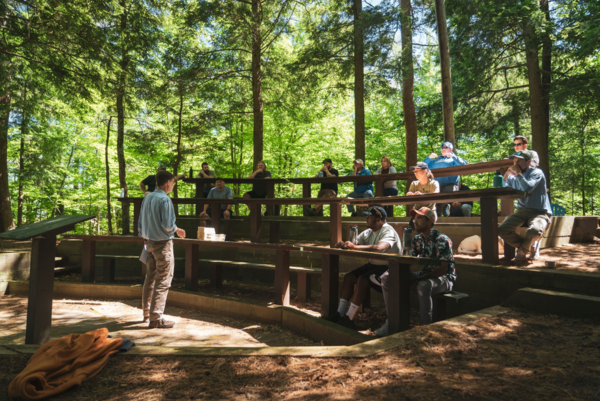
Then academy students spend 14 days learning in an 18-acre lot across the street from Paul Smith’s main campus, where Beaudoin shows them how to tie fishing lines, navigate the wilderness and manage the client experience.
AJ Beaudoin (right), the inaugural director of Battlefish Academy at Paul Smith’s College, leads individuals and groups on ice fishing trips through his business, Battle Fish Charters.
After completing the certificate, students can stack their credits for an associate or bachelor’s degree in relevant programs, including business, outdoor recreation and eco-psychology.
Participants’ tuition is fully covered by GI benefits, and the college is working with nearby bases to create a pipeline for integrating service members into the program upon their departure from the military.
What’s the need: Beaudoin sees an opportunity to connect veterans’ sense of wellness, community, mission and leadership through an outdoor recreation business.
“I feel like veterans lose their sense of purpose after the service, and that’s a big struggle for us,” Beaudoin said. “So maybe becoming a small business owner could help them.”
About 5 percent of all employer businesses in the U.S. are veteran-owned, with the greatest share related to professional, scientific or technical services, according to U.S. Census Bureau data.
Some veterans, like Beaudoin, leave the military feeling as though their skills don’t apply to civilian life, but Battle Fish helps reframe those ideas.
A Network of Support
In addition to the specialized veteran training of Battlefish Academy, Paul Smith’s College offers military-connected students with a physical Veteran Resource Center that can aid learner completion, with services such as mentorship, networking opportunities and other supports.
“I think that the veteran skill set translates so perfectly from leading a mission in Afghanistan to, ‘Now, I’m leading a family down the river,’” Beaudoin said. “I’m trying to keep them safe and I’m utilizing those same skills that I was trying to keep my soldiers safe with.”
Another benefit is the effect on personal wellness. Spending time outdoors is one way that groups support veterans experiencing PTSD, because it instills a sense of calm and peace.
“There’s so many organizations that take veterans fishing. I want to keep the veterans on the water all of the time,” Beaudoin said.
The program also has the power to connect like-minded veterans, building a network of support and community. During his first Battle Fish University experience, Beaudoin found that veterans share a natural affinity, and he hopes the academy will provide nontraditional learners a similar space to engage with peers.
What’s next: Battlefish Academy will launch this summer at Paul Smith’s with a capacity of 36 beds for the intensive experience.
Beaudoin hopes students leave the experience feeling more confident in starting their own business—and maybe interested in franchising his company, Battle Fish Charters, wherever they call home.
If your student success program has a unique feature or twist, we’d like to know about it. Click here to submit.
Two weeks ago Chris Buonocore, Alex Humphreys, Martin Kurzweil and Emily Tichenor (all of the nonprofit organization Ithaka, and part of the Articulation of Credit Transfer Project) posted in this blog the happy news that Transfer Explorer (a website, modeled after CUNY T-Rex, that shows everyone how prior learning experiences will count toward a college’s academic requirements) has been launched containing information from three South Carolina colleges. Information from dozens of additional colleges in Connecticut, New York, South Carolina and Washington will be added in the coming months.
Because this information is now public and usable, students and advisers will be able to make better plans for transfer, students will discover and choose transfer destinations that are a good fit for them, and institutions will be better able to align their programs and equivalencies to facilitate transfer. Transfer Explorer will also reduce the burden on students, advisers and admissions staff to locate and make sense of relevant information across disparate sources, allowing them to focus on higher-value tasks. The evidence from CUNY T-Rex suggests these benefits are already being realized in that context.
The advent of Transfer Explorer and other similar efforts to make transparent the rules on credit transfer and degree applicability raises an important question: Which policies and practices are desirable for institutions to have in place to make their credit mobility information public?
Let’s assume that a public website, such as Transfer Explorer, is available for displaying credit mobility information, and that an institution has the appropriate financial and staff resources to put its information on the website. Now what course credit and program requirement policies and practices must be in place, and which additional ones would be useful to have? This post describes some of these policies and practices.
Necessary Policies and Practices
Absolutely essential is that transfer credit rules stating how an institution will treat all types of prior learning experiences (e.g., course A at Institution X will count as equivalent to course B at Institution Y), as well as the program and degree requirements (for majors, concentrations, general education, etc.), must be systematically and consistently stored, recorded and updated in the institution’s software system(s), with the credit mobility website reflecting any changes in any of these rules and requirements in a timely manner. These practices are essential for the website to function as a trusted source of information.
There should be policies regarding who can change the transfer credit rules and degree requirements recorded in this software and under what conditions. This will reduce the likelihood of erratic, capricious or frequent changes, while ensuring that all students are subject to the same rules and requirements, without prejudice.
Any additional rules, requirements, restrictions or qualifications related to the conditions for granting credit for prior learning (such as a minimum grade in a prior course or a residency requirement at the destination college) should apply equally to all students and be explicitly and publicly stated. This ensures that all students have access to the same information, again promoting equitable treatment.
There should be administrative oversight of the above policies and practices, and that oversight should ideally be provided by people who would be unaffected by the rules’ consequences (i.e., conflicts of interest should be minimized). Oversight by people not acting in their own interest is necessary to ensure that policies and practices are appropriately instituted and maintained.
Additional Desirable Policies and Practices
It will be helpful to have policies regarding how course equivalencies for prior learning are decided in the first place—who decides and based on what information. This will promote efficient and effective decision-making regarding prior learning assessments.
There should also be specific, agreed-upon criteria for giving credit for prior learning. It has been effectively argued that transfer credit should be based entirely on learning outcomes, and not on, e.g., a course’s prerequisites, textbook or modality (in-person, online or hybrid); the degree the student may or may not have; the student’s major; etc. AACRAO’s recommended criterion for course equivalency is 70 percent “matching of content.” Such a policy ensures that credit for prior learning is based on only that—prior learning.
Any characteristics of prior learning, in addition to credits, that would satisfy an institution’s requirements, characteristics such as a course being writing intensive or including material on information literacy, should be recorded and considered for transfer. Students and those who support them need this information to be able to plan students’ complete academic trajectories.
An explicit appeals procedure that allows students to challenge transfer credit decisions can help in identifying errors and inadequacies in what is shown on the website, as well as promoting equitable treatment of all students (an example of the CUNY appeals procedure is here). Students can more effectively use such a procedure if the website keeps a record of when transfer credit rules and program and degree requirements have changed and how.
All courses from institutions accredited by what were formerly referred to as regional accreditors (along with, upon review, some other forms of prior learning) should be given at least elective credit. In addition to providing transfer students with predictable transfer credit, such a policy within the CUNY system greatly facilitated the establishment of CUNY T-Rex. For the courses of the 20 CUNY undergraduate colleges, developers had only to reflect on the website existing transfer credit rules (all 1.6 million of them); they did not have to determine what to do with courses that would receive no transfer credit.
Also highly desirable is that a student should be allowed to use any credit transfer rule in place at College B between when the student first matriculated in College A and subsequently transferred to College B (perhaps within a specified number of years since matriculation at College A). Such a policy is particularly useful for students who first matriculate at a community college and later transfer to a bachelor’s college within the same system. This policy would enable students and those who support them to plan a student’s entire academic trajectory.
Finally, in developing Transfer Explorer as well as CUNY T-Rex, the engineers had to first parse and deconstruct the colleges’ major and other requirements before programming them for the website. Many of the majors’ diagrams look like a tangled ball of yarn or a Super Bowl football play (diagrams that go way beyond just a sequence of major courses). Faculty and others may not realize how complex they are making requirements until they see them diagrammed. Such requirements can be very difficult to program and so should be simplified, if possible, as well as recorded in systematic, consistent ways.
Each of the preceding items is useful for constructing an excellent website that will show how an institution will treat a student’s prior learning. However, there are many additional benefits from these policies and practices. For example, concerning the last bullet, keeping the requirements of majors simple and straightforward will not only help the website’s programmers, but will make it easier for students and those who support them to understand and conform to a major’s requirements.
A basic principle of ACT, Transfer Explorer and CUNY T-Rex is that all of us in higher education benefit by obtaining good information and making it public. We hope that this blog post helps institutions do just that.
We thank the members of AACRAO, ACT, the Beyond Transfer Advisory Group, the Gates Foundation, Ithaka, the LEARN Commission and SOVA for ideas contributing to this blog post.
Alexandra W. Logue is professor emerita at the Center for Advanced Study in Education, Graduate Center, CUNY. From 2008 to 2014 she served as executive vice chancellor and university provost of the CUNY system, and she is a founder of CUNY T-Rex.
Chris Buonocore is the product manager of Transfer Explorer at Ithaka, as well as a founder and the former manager of CUNY T-Rex.
Christopher Vickery is professor emeritus of computer science at Queens College CUNY, as well as a founder and the creator of CUNY T-Rex.
A part-time lecturer allegedly offered students extra credit for attending a Tesla protest.
Jim West/UCG/Universal Images Group/Getty Images
While many professors across the U.S. have protested federal funding cuts and other attacks on higher education by President Donald Trump and his campaign donor and aide Elon Musk without incident, two faculty members are now facing sharp scrutiny for their actions on and off campus.
At the University of Wisconsin–Eau Claire, José Felipe Alvergue, who chairs the English Department, is on leave after he allegedly flipped a table Tuesday set up by the College Republicans to encourage support for Brad Schimel in the Wisconsin Supreme Court race. A video posted by UW–Eau Claire’s College Republicans chapter showed the aftermath of the incident and accused Alvergue (who had not yet been identified when it was uploaded) of being a “violent” supporter of Susan Crawford, the Democratic-backed candidate who later won the race Tuesday.
“I am deeply concerned that our students’ peaceful effort to share information on campus on election day was disrupted,” UW–Eau Claire interim provost Michael Carney wrote in a statement to Inside Higher Ed. “UW–Eau Claire strongly supports every person’s right to free speech and free expression, and the university remains committed to ensuring that campus is a place where a wide variety of opinions and beliefs can be shared and celebrated. Civil dialogue is a critical part of the university experience, and peaceful engagement is fundamental to learning itself.”
Carney added that campus officials are working with the Universities of Wisconsin system and its Office of General Counsel, “which is conducting a comprehensive investigation of this matter.”
The incident prompted broad criticism, particularly from conservatives, many of whom called for the professor to be immediately fired.
“Outrageous. Yet sadly what many conservatives [sic] students deal with every day on so many campuses,” Scott Walker, a former Republican governor of Wisconsin, wrote on social media.
Alvergue did not respond to a request for comment.
On the other side of the country, a part-time lecturer at California State University, Fresno, has prompted outrage in conservative quarters over her social media posts, FOX26NEWS reported. Katherine Shurik, who teaches anthropology, allegedly posted an image of Trump in a casket with the caption “I have a dream for this to happen much sooner rather than later” and another of a gravestone with his name on it and a caption reading, “and take Musk and the rest of the Nazi (Republican) party members with you too!” Additionally, in a video of Shurik circulated by conservative influencers, she said students will “get extra credit for coming to the protest.” Some local news sites reported the extra credit was for protesting Tesla, owned by Musk.
The university was quick to distance itself from Shurik’s posts this week.
“While Fresno State firmly believes in the principles of free speech, we strongly condemn the abhorrent social media posts and comments made by one of our part-time instructors,” Fresno State officials wrote in a Tuesday statement. “As these views were published by the employee as a private citizen, they do not represent our university in any way. Fresno State firmly denounces wishes of death against any elected official, particularly the President of the United States—these go against our core educational values and are not consistent with our Principles of Community. As Americans and educators, we pride ourselves on democratic dialogue, not words of derision and contempt about the most important political figure of our country.”
Shurik did not respond to a request for comment from Inside Higher Ed.
Multiple social media users called for Fresno State to fire Shurik ,and local officials have also weighed in, including Gary Bredefeld, a member of the Fresno County Board of Supervisors.
“This is a professor at Fresno State posting about her longing for the deaths of President Trump, Elon Musk and Republicans. These are the unhinged radicals teaching our young kids at schools and universities across the country,” he wrote in a Sunday post on Facebook. “People like this are hate-filled, radical lunatics and have no business teaching anywhere. I would expect the President of Fresno State to address this immediately and denounce these postings.”
Even Musk himself noticed the uproar.
“Calling for the death of the President is a serious crime,” he wrote in a reply to a post about Shurik.
A new transfer playbook, released by the Aspen Institute and the Community College Research Center, offers strategies for improving outcomes for transfer students by examining higher ed institutions with the best records.
The playbook notes that, for a decade, fewer than a fifth of community college students have successfully transferred and earned bachelor’s degrees, though many aspire to reach that goal. But the playbook stresses that better outcomes are possible. At colleges with the best overall transfer outcomes—those in the top 10 percent for all institutions—at least 52 percent of students transfer and at least 61 percent of transfer students earn bachelor’s degrees, far exceeding national averages. If all community colleges achieved these kinds of results, they could double the bachelor’s degree attainment rates for community college students from 16 percent to 32 percent, the playbook concludes.
Based on interviews with college leaders, students and staff members at campuses with successful transfer pathways and partnerships, the playbook’s authors offer three core strategies for improving transfer, with examples of relevant practices and case studies.
First, they recommend that executive leadership spearhead partnerships between community colleges and universities so improvements to transfer can be made at scale. They also suggest working toward more timely bachelor’s degree completion rates within majors by better aligning curriculum and instruction with transfer pathways. Lastly, they recommend tailoring advising and other supports for transfer students in ways that “foster trust and engagement.” For example, the playbook encourages community colleges to ensure transfer advising is offered to all students and occurs before, during and after the transfer process, with outreach to prospective students about transfer options as early as high school.
“There is immense potential in the dreams and ambitions of bachelor’s-intending community college students—and the many who may have counted themselves out but have the ability to complete a bachelor’s and expand their career horizons,” the foreword to the playbook reads.