Tag: Jobs

  • Bowdoin to Devote $50M Gift to AI Learning, Teaching

    Bowdoin to Devote $50M Gift to AI Learning, Teaching

    Bowdoin College has received a $50 million gift from Reed Hastings, 1983 alumnus, Netflix cofounder and Powder Mountain CEO, to create the Hastings Initiative for AI and Humanity.

    The gift, the largest in the college’s 231-year history, will be used largely to support teaching and research related to artificial intelligence. It will pay for 10 new faculty members, expand faculty-led research and curriculum offerings, and drive campuswide conversations about the benefits and challenges of AI.

    “This donation seeks to advance Bowdoin’s mission of cultivating wisdom for the common good by deepening the College’s engagement with one of humanity’s most transformative developments: artificial intelligence,” Hastings said in a press release. “As AI becomes smarter than humans, we are going to need some deep thinking to keep us flourishing.”

    Hastings credited a late Bowdoin mathematics professor, Steve Fisk, for first encouraging him to study AI. “Steve was about forty years too early, but his perspective was life-changing for me,” Hastings said.

    “We are thrilled and so grateful to receive this remarkable support from Reed, who shares our conviction that the AI revolution makes the liberal arts and a Bowdoin education more essential to society,” Bowdoin president Safa Zaki said in a statement.

    Source link

  • What Happens if Libraries Can’t Buy Ebooks? (opinion)

    What Happens if Libraries Can’t Buy Ebooks? (opinion)

    Clarivate, the company behind ProQuest, dropped a bombshell in the academic publishing world last month when it announced that it will “phase out one-time perpetual purchases of digital collections, print and digital books for libraries.” Instead, institutions will pivot to subscription-based access models. Clarivate justifies this seismic shift by pointing to the need for regular content updates, particularly as AI-enhanced research tools reshape scholarly publishing.

    While perpetual-access options for ebooks won’t vanish entirely—they’ll remain available through certain marketplaces like Clarivate’s Rialto platform—this decision drastically curtails traditional purchasing options. More troubling, it signals an acceleration of a broader industry trend toward subscription-only models, raising profound questions about the future of academic scholarship and underscoring libraries’ critical role in ensuring equitable, continuous access to scholarly resources.

    The Critical Difference Between Books and Journals

    In recent years, some major commercial publishers like Hachette and Penguin Random House have moved from perpetual access to subscription-based access models for ebooks, a shift that to date has primarily impacted public libraries.

    This subscription push mirrors the established practice for scholarly journals but presents unique challenges for academic ebooks. Unlike journals, which primarily deliver new findings, academic books represent enduring intellectual investments. A monograph acquired today often remains essential to scholarship decades later, particularly in humanities disciplines like history, literature, philosophy and sociology, where foundational texts retain their relevance across generations.

    Financial and Academic Risks

    Given academic books’ distinctive value, subscription-only access threatens to undermine teaching and research continuity. Faculty who design courses around specific texts may suddenly find essential works unavailable due to licensing changes. Researchers engaged in long-term projects risk losing access to crucial resources if subscriptions lapse. Though subscription models initially offer lower up-front costs and greater flexibility, the cumulative expenses can become substantial over time, introducing budgetary uncertainty.

    Yet subscription models also offer distinct advantages for certain institutions. Programs with rapidly evolving content, especially in STEM fields requiring frequent updates, may benefit from subscription flexibility. Smaller colleges and institutions experiencing enrollment fluctuations or curricular shifts might find subscriptions economically viable due to lower immediate costs. Subscriptions can help institutions avoid large up-front expenditures, manage predictable annual budgets more effectively and ensure continuous access to current scholarly content.

    Understanding these potential financial implications becomes crucial, especially as other industries have navigated similar challenges when transitioning to subscription-based models.

    Lessons From Other Industries

    Higher education can extract valuable insights from similar transitions in software and media streaming sectors. Traditionally, software represented a one-time transaction granting perpetual access, allowing customers indefinite use after an initial investment. The shift to software as a service (SaaS) fundamentally altered this paradigm, providing continuous access through recurring subscriptions. SaaS models initially attracted organizations due to lower up-front costs and greater flexibility to scale services as needed. However, this transition introduced budgetary uncertainty, as ongoing subscription fees can be unpredictable over time.

    The media industry’s experience with subscription models offers another cautionary tale. Platforms like Netflix and Spotify initially captivated consumers with affordable, convenient access to vast content libraries. Yet over time, numerous competing services entered the market, fragmenting content distribution. Consumers found themselves juggling multiple subscriptions to maintain comprehensive access, resulting in “subscription fatigue” and significantly increased total costs. This fragmentation not only impacted household budgets but also created complexity in managing multiple services, ultimately diminishing the convenience these platforms initially promised.

    Drawing parallels to higher education, subscription-only models could similarly fragment access to academic resources, forcing institutions to maintain multiple subscriptions for comprehensive collections. Over time, this fragmentation could increase administrative complexity and total costs, complicating resource management. Institutions must therefore approach subscription-only models with caution and deliberation.

    Open Access as a Strategic Solution

    One proactive strategy for addressing subscription challenges involves embracing open access (OA), a model providing free, unrestricted online access to scholarly research. Unlike traditional commercial models dependent on paywalls, OA enables anyone to read, download and distribute content without cost barriers. This dramatically increases research visibility and democratizes knowledge by making it accessible regardless of institutional affiliation or financial capacity.

    Institutions can strategically support OA by investing in university presses, institutional repositories and collaborative publishing platforms. Successful examples include the Directory of Open Access Books, Open Book Publishers and the Open Library of Humanities, which have demonstrated sustainable, rigorous academic publishing methods. Redirecting a portion of subscription budgets to these initiatives can build permanent collections while fostering transformative scholarly communication practices.

    However, OA models face their own challenges. Financial sustainability concerns emerge because publication costs often fall on authors or institutions, potentially disadvantaging researchers without institutional backing. Moreover, robust infrastructure, consistent funding and effective policy frameworks remain essential to maintaining quality and longevity of OA content.

    Moving Forward: A Call to Action

    As academic scholarship navigates these transformative currents, institutional leaders must proactively engage with their libraries, publishers and vendors. Delaying action risks fragmented access, escalating costs and compromised academic integrity.

    Leaders should urgently prioritize collaborative actions to:

    • Develop balanced subscription and perpetual-access models in partnership with publishers and vendors.
    • Invest strategically in open-access initiatives while acknowledging and addressing their implementation challenges.
    • Strengthen consortia and partnerships to enhance negotiating power, reduce fragmentation and streamline resource management.
    • Foster structured communication among faculty, libraries, publishers and vendors to align acquisitions with academic priorities.

    The proactive decisions we make today will shape academic scholarship for decades to come, ensuring that vital resources remain accessible, sustainable and equitable for all.

    Leo S. Lo is dean and a professor in the College of University Libraries and Learning Sciences at the University of New Mexico and president of the Association of College and Research Libraries.

    The author serves as a volunteer member of the Clarivate Academic AI Advisory Council. The views expressed in this article are his own and do not necessarily reflect those of Clarivate.

    Source link

  • How Leaders Can Chart a Path Through the Chaos (opinion)

    How Leaders Can Chart a Path Through the Chaos (opinion)

    The pressures on higher education leaders and their institutions have intensified with the new U.S. presidential administration’s agenda. We all became familiar with uncertainty as a result of the pandemic, but this new series of policy mandates and legal challenges creates an even more ambiguous environment. Higher education’s basic foundations, operating systems, cultures, values and structures are being challenged, which implies systemic change may be required.

    Leading systemic change is difficult enough in a less demanding environment. In this one, higher ed leaders will need tools and resources that can help them strategically chart a path through the chaos. They will need advice about how to adapt and continue important work that may be challenged by current executive orders, as well as advice about how to navigate the sheer volume of those orders.

    Leaders can be more successful adapting and strategizing if they do so in ways that honor their unique contexts. Context variously creates opportunities or presents barriers that influence the actions leaders may take. Therefore, it is important for leaders to step back for a few moments and “get on the balcony,” as Ronald A. Heifetz, Marty Linsky and Alexander Grashow put it.

    While many leaders may not think they have the time to do this, it is critically important they take the time to understand the complexities of the current situation so as not to overreact, react too quickly or react incorrectly. For example, a leader responding to a recent executive order may move quickly to announce program and office closures, but without time to consider options and understand context, this quick action may have a greater negative impact than some other, more strategic approach, one that does not compromise institutional integrity.

    Leaders may also find they have levers available to them that are important to identify and use strategically. For example, partnerships with donors or grant opportunities are great levers to not only achieve strategic priorities but also provide relief for shortfalls that may result from the current political climate.

    One way leaders can “get on the balcony” is to dive into their context and ask key questions with their leadership teams. This analysis will illuminate aspects of the leadership landscape that perhaps weren’t fully realized, highlight opportunities and fill in the details of challenges they are facing. Important categories of context to analyze are institutional mission; campus culture; politics, leadership and governance; human capital and capacity; physical, financial and technological resources; and externalities.

    The final category of externalities may be of particular relevance right now. This category refers to anything happening outside the university, from local community issues to state and federal policies. It goes beyond state appropriations and budgets to include social, political and economic factors. As leaders consider their external environment, here are some questions they can use to help them identify opportunities for and barriers to change, as well as levers they can use to inform the actions they can take:

    1. Are there state or federal policies or programs that are related to the change you are trying to achieve?
    2. What initiatives, organizations or businesses in your community might have a stake in this change?
    3. If your campus is public or part of a state system, are there messages, policies and priorities that can be drawn on to support changes?
    4. Is your campus a member of a national association that has initiatives you might participate in that will help you advance your change or gain momentum and support?
    5. Are there state, federal or philanthropic organizations that have grant programs aligned with your change goals? Do you have any major donors that can be engaged in your change project to support your goals?

    Let’s see how this exploration might help leaders chart a strategic path forward through the current climate of chaos and uncertainty. Leaders might identify some challenges with respect to their state or federal policy environment that present barriers. For example, in states that have defunded diversity efforts, universities have less funding to accomplish their goals of creating more inclusive environments to serve all students. However, they may find an opportunity to participate in a national project sponsored by an association that provides them the time and space to reconfigure their structures and programs in ways that would still allow them to reach their goals.

    By thinking through the philanthropic landscape, institutional leaders might find that there are donors who share a passion for inclusivity and thus can be cultivated as supporters of programmatic initiatives. Leaders might also undergo a search to identify possible grants or foundation funders that align with campus goals. These types of funding mechanisms are useful levers for creating a change agenda that allows for continuation of the mission despite the initial challenges.

    Identifying the opportunities and barriers is the first step towards strategic action. Let’s dive into the next step by looking closely at leader “moves.” If we focus on the opportunity of participation in a national project aimed at inclusion, that will involve several moves to ensure success.

    For example, the selection of a team charged with taking on this task is critically important, and getting the right set of individuals may involve thinking differently than usual. Given the current environment, it might make sense to ensure there is legal expertise on the team. It may also be especially important to assure those who are asked to lead that they will have the support of institutional leaders. Sense making and learning is another important area for action: giving people information and helping them know what is possible in the current environment is an essential leadership move at the moment.

    There are likely advocacy and political moves that also need to be made to set the stage on campus or within the state to garner additional support or prepare for potential backlash. Finally, for the team’s work to be sustained in the long term, leaders might think ahead to how they can sustain or scale the programmatic, cultural and/or structural outcomes that are achieved during the initiative at a time when national leaders question the nature of the work. In the current environment, staff and faculty may also have fears that need to be addressed before they commit to this work over the long term.

    More information and examples can be found in our recently published “The Change Leadership Toolkit for Advancing Systemic Change.” Whatever leaders do, they must keep moving forward even though the headwinds might be strong. Delaying action may only create larger problems that are even more intractable or insolvable. Responding too quickly may also result in irreparable and unnecessary damage that may be difficult to recover from down the road. Systemic change takes time and process and most of all requires a thoughtful, strategic and focused approach tailored to the goals and environment in which leaders are operating.

    The process and example provided above just skim the surface of the deliberate kind of work higher education leaders have to do in today’s climate as they assess their contexts, take advantage of levers and opportunities, and identify key moves they will need to make to ensure successful adaptation. We hope that this essay introduces leaders to a process they can use to inform their actions so they can keep calm and carry on.

    Susan Elrod is the former chancellor and professor emeritus of Indiana University South Bend. She studies higher education systemic change and is actively engaged in helping campus leaders build capacity to create more strategic, scalable and sustainable change.

    Adrianna Kezar is the Dean’s Professor of Leadership, Wilbur-Kieffer Professor of Higher Education and director of the Pullias Center for Higher Education at the University of Southern California.

    Source link

  • Understanding Incoming College Student Demographics

    Understanding Incoming College Student Demographics

    Anecdotally, higher education practitioners frequently share challenges and changes with today’s college students, but how unique are the incoming learners of the Class of 2029?

    A February report published by the American Council on Education and the Higher Education Research Institute at the University of California, Los Angeles, found the incoming class of college students is more diverse than past classes in terms of race, sexuality and socioeconomic standing.  

    According to the CIRP Freshman Survey 2024, some demographic groups are less likely to say they’re confident in their academic abilities and that they encounter mental health struggles, highlighting ongoing need to support students with their personal and academic development in higher education.

    “This report gives institutional leaders a clear view of today’s first-year students—their backgrounds, aspirations, and challenges—so they can better support learner success,” said Hironao Okahana, vice president and executive director of ACE’s Education Futures Lab, in a February press release. “Centering student experiences in higher education policy and practice is essential, and these findings help colleges and universities create environments where all students can thrive.”

    Methodology

    The survey, conducted between April 14 and Oct. 10, 2024, includes data from 24,367 incoming students across 55 colleges and universities.

    Demographics: Over half of respondents (50.8 percent) identify as white, but significant portions are students of color, including more than one race (14.8 percent), Asian and Pacific Islander (14.6 percent), Hispanic or Latino (11.0 percent), or Black and African American (7.7 percent). Around 1 percent of respondents are American Indian or Alaska Native.

    Nearly 10 percent of surveyed students reported English was not their primary language, and almost half of those learners are U.S. citizens.

    A majority of respondents indicated they are heterosexual (82.3 percent), but the next-greatest share identify as bisexual (8.5 percent).

    Nineteen percent of respondents were classified as low-income, defined in this study as having a family income of less than $60,000. First-generation students (those whose parents or guardians had no college experience) made up 12.4 percent of all students and one-third of the low-income group.

    Eight percent of respondents were military-affiliated, and these learners made up 3 percent of the low-income group.

    College prep: Nearly all students took three years of math in high school, but those from higher-income backgrounds were more likely to have completed advanced mathematics courses and Advanced Placement courses.

    Women (66.8 percent) were less likely than men to see themselves as having strong academic ability, compared to their male peers (75.8 percent) and those who indicated another gender identity (72.3 percent). Similarly, female students were less likely to say they have above-average intellect, compared to men and others.

    Despite that lack of self-confidence, women were more likely to report earning A’s in high school (78 percent) compared to men (72 percent) and other gender minorities (72 percent). Women and nonbinary students were also more likely to say they felt challenged by their coursework frequently (34.9 percent and 36.2 percent, respectively).

    Over half of students studied at least six hours per week, but first-generation students were less likely to study for six hours per week, compared to their continuing-generation peers. First-generation college students were also slightly more likely to work for pay at least six hours per week at 41.3 percent versus 38.6 percent.

    Around one-third of students socialized with their friends for at least six hours per week, on trend with national data that suggests Gen Z spends less time with friends compared to previous generations.

    Personal struggles: Mental health concerns have risen among young people nationally, and many incoming college students indicate feelings of being overwhelmed or depressed. Nonbinary students were most likely to report feeling anxious, stressed or depressed, and women were slightly more likely than men to share mental health concerns.

    “When asked how they compare with their peers on emotional health, men showed the most confidence; 48.5 percent rated themselves as above average or in the top 10 percent,” according to the report. “By contrast, only 35.2 percent of women and just 16.6 percent of students who identified outside of the gender binary rated themselves as above average or in the top 10 percent.”

    Around half of students indicated they had at least some chance of using mental health services offered at their institution.

    Financial stress continues to weigh on students, with over half (56.4 percent) expressing some or major concern about paying for college. Latino (81.4 percent) and Black students (69.6 percent) were more likely to say this was true. Sixty percent of Latino students, over half of American Indian or Alaska Native, and half of Black students utilize Pell Grants to fund their education, and each of these groups also relied on work-study funding for their education costs at higher rates than their peers.

    However, many students believe in the economic value of a college education, despite the financial barriers to access.

    Politics: For the first time, the survey asked students if they considered state policies and legislation to be important to their college decision. One-third of men and almost 40 percent of women considered politics and legislation to be at least somewhat important of where to go to college, compared to 56 percent of their nonbinary peers. LGBTQ students (48 percent) also weighed this factor as important more than their peers.

    The Class of 2029 is also civically engaged, with one-quarter of respondents indicating that they frequently or occasionally have demonstrated for a cause and one-third of respondents having publicly communicate their opinion about a cause. LGBTQ students were more likely to agree with these statements.

    Military-affiliated students also reported high levels of community engagement, such as volunteering and voting.

    Across the U.S., diversity, equity and inclusion work has become more controversial, but respondents still indicate a care for social equity. A majority of college students believe racial discrimination is still a major problem in the U.S., with students of color more likely than their white peers to share this opinion. Many students expressed an interest in correcting social inequalities and gender equity.

    We bet your colleague would like this article, too. Send them this link to subscribe to our newsletter on Student Success.

    Source link

  • Essay on Immigration Law and Student Activism (Opinion)

    Essay on Immigration Law and Student Activism (Opinion)

    On Sept. 23, 1952, Mugo Gatheru had just finished English class when an American official approached him and flashed a United States Immigration Services badge. Gatheru, a young Kenyan student at Lincoln University, quickly realized that his education was not the officer’s concern. His politics were. The officer interrogated him about his role as an editor of the Kenya African Union’s newspaper, The African Voice, and about whether he had ever engaged in political agitation against government officials in Kenya, India, England or the United States.

    In the 1950s, the Cold War logic of American immigration enforcement sought to place Gatheru into a rigid political binary: communist or anticommunist, agitator or ally. But Gatheru challenged these political borders. When accused of being an agitator, the young Kenyan student reframed the terms of the interrogation. Agitation, he argued, was a matter of perspective. British colonial authorities may have seen him as disruptive, but what he was doing was simply a continuation of the democratic ideals he had learned in America. “After all,” he told the immigration officer, “even George Washington was an agitator here in your country.”

    Seventy-three years later, it’s old wine in a new bottle.

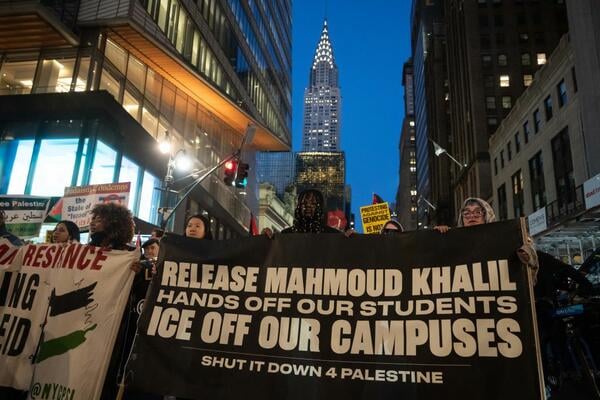
    The same Immigration and Nationality Act that was used to justify deportation proceedings against Mugo Gatheru in the 1950s is now being wielded against Mahmoud Khalil. In Gatheru’s time, the target was anticolonial activists suspected of communist ties; today, it’s Palestinian advocates accused of supporting terrorism. The global politics are different, but the playbook remains the same: Silence dissent, rebrand it as a security threat and use immigration law to make it disappear.

    These cases are not just about two individuals. They are part of a much longer history of using immigration enforcement as a tool of political suppression on college campuses. Gatheru was one of many African, Latin America, Asian and Caribbean students in the mid-20th century whose presence in U.S. universities became politically suspect. Fueled by Cold War anxieties, U.S. authorities from across the political spectrum saw anticolonial activism as inherently subversive to American geopolitical interests. In the late 1970s, the Carter administration, which professed a strong commitment to human rights, employed the same tools of immigration enforcement to investigate and silence Iranian students who denounced U.S. complicity in the shah’s regime. And in the mid-1980s, the Reagan administration also utilized those same tools to prosecute young Palestinian activists in Los Angeles.

    The history of immigration and student activism is thus also a history of global racial politics. White European students were welcomed into American universities while Black and brown international students from the Global South were scrutinized for their political beliefs. In effect, academic freedom was never truly universal for international students. It was selectively granted and shaped by a racialized global hierarchy that mirrored U.S. Cold War priorities. Ultimately, an uncomfortable truth might be this: American universities are deeply entangled in America’s geopolitical agenda, and their commitment to academic freedom rarely extended to those who challenged U.S. hegemony.

    Today, the U.S. government is deploying a similar logic. In addition to Khalil’s arrest, the government has trumpeted the arrest of another international student tied to the Columbia protests, Leqaa Kordia, and the visa revocation and “self-deportation” of Ranjani Srinivasan, who says she got mistakenly swept up in arrests of protesters during the occupation of Columbia’s Hamilton Hall last spring. A Georgetown University postdoctoral scholar from India, Badar Khan Suri, was also arrested last week, targeted, according to his lawyer, for his wife’s “identity as a Palestinian and her constitutionally protected speech.”

    In other words, these are not isolated incidents but part of a deliberate policy effort to criminalize Palestinian advocacy and antiwar protest.

    In the past two years alone, we have seen student groups labeled as extremist, faculty members investigated for their political speech and foreign nationals facing heightened scrutiny for their views on the ongoing war in Israel-Palestine. The arrest of Khalil, even if dropped, has had its intended effect: It sends a chilling message that political dissent, particularly when voiced by students from politically fraught regions, comes at a cost.

    The echoes between these cases should prompt us to reflect on the historical legacies at play. Both Gatheru’s and Khalil’s experiences show how governments, fearing the power of certain ideas, attempt to control the discourse by criminalizing student activists. Both demonstrate how racialized and colonialist logics shape the policing of dissent, whether in the 1950s, under the specter of communism, or in 2025, under the guise of counterterrorism. And, most significantly for those in higher education, both reveal the ways in which universities serve as battlegrounds for global political struggles.

    Yet both cases also highlight the potential role of academic communities and activist networks in resisting such overt suppression of political activism. When Gatheru faced deportation, university allies and civil rights leaders and groups, including Thurgood Marshall and the NAACP, mobilized on his behalf. Faculty and students at Lincoln University established the Friends of Mugo Gatheru Fund. They reframed his case as a fight for both racial justice and academic freedom. Their efforts eventually led to the U.S. government dropping its case.

    Khalil’s arrest has likewise sparked widespread resistance. Student organizations and faculty at Columbia have mobilized swiftly, with Jewish faculty members holding a campus rally under the banner “Jews say no to deportations.” Meanwhile, an online petition demanding Khalil’s release has amassed more than three million signatures. These responses underscore the broader stakes of Khalil’s case: It is not just about one student but about the right to dissent in an era in which protest is again being reframed as a national security threat.

    Gatheru’s case, once seen as a national security risk, is now remembered as an example of state overreach. Will we look back on Khalil’s case the same way? If so, it will be because students, faculty and advocates refused to allow immigration enforcement to dictate the terms of political activism. As Gatheru reminded his interrogator, George Washington was an agitator, too. The question is whether we will continue to punish today’s agitators for following in that tradition.

    David S. Busch is the author of Disciplining Democracy: How the Modern American University Transformed Student Activism (Cornell University Press).

    Source link

  • The Struggling Sanctuary Campus Movement

    The Struggling Sanctuary Campus Movement

    American University’s student government recently passed a referendum calling on the university to designate itself a sanctuary campus and limit its cooperation with federal immigration enforcement. Student protests broke out at the University of North Carolina Asheville, the University of Texas at Austin and elsewhere to push those campuses to embrace sanctuary status. A petition with the same demand from Colorado State University’s chapter of the Young Democratic Socialists of America garnered more than 3,000 signatures.

    “It is of the utmost importance that students, staff, and community members see CSU committing to protect the most threatened students in this community,” read the student petition to Colorado State administrators.

    The petitions and protests have also been fueled by student frustrations with universities’ compliance with other federal immigration actions. The Council on American-Islamic Relations and other groups sued Columbia University on behalf of students after federal immigration agents arrested Mahmoud Khalil, a green card–holding recent Columbia graduate, at his university-owned apartment because of his involvement in pro-Palestinian protests. Shortly afterwards, Department of Homeland Security agents searched two Columbia dorms, though no arrests were made. The CAIR lawsuit, which also targets the House of Representatives’ Committee on Education and the Workforce, led to an injunction that stopped the university from sharing more student records with lawmakers.

    “While I await legal decisions that hold the futures of my wife and child in the balance, those who enabled my targeting remain comfortably at Columbia University,” Khalil said in a statement from an ICE detention center in Louisiana. “Columbia surrendered to federal pressure by disclosing student records to Congress and yielding to the Trump administration’s latest threats.”

    The renewed push for sanctuary campuses harks back to President Donald Trump’s first term, when students at dozens of campuses petitioned their colleges to follow the lead of sanctuary cities and create boundaries for their cooperation with federal immigration officials. At the time, a handful of higher ed institutions agreed to designate themselves sanctuary campuses and protect undocumented students to the fullest extent the law allows. Many more made public declarations of support for undocumented students without actually embracing the title.

    This time around, while some college and university leaders have promised they’ll support students in every way legally possible, few are eager to comment publicly on Trump’s immigration actions or use the sanctuary title, for fear of overpromising the protections they can offer or attracting unwanted attention to their campuses, potentially putting students or federal funds at risk.

    The Trump administration has already gone after sanctuary cities, with Chicago among the first targeted for immigration raids. One of Trump’s early executive orders asserted that “sanctuary jurisdictions” shouldn’t receive federal funding. The Trump administration also sued the city of Chicago, the state of Illinois and New York State over their immigration policies last month. And recently, Republican lawmakers lambasted the mayors of Boston, Chicago, Denver and New York City for their sanctuary statuses at a contentious hearing before the House Committee on Oversight and Government Reform.

    Some college leaders are clearly worried that using the term “sanctuary” could make them a target as well. Even the few colleges and universities that previously designated themselves sanctuary campuses seem hesitant to use, or discuss, the term. Inside Higher Ed reached out to eight higher ed institutions that have called themselves sanctuary campuses in the past. Three institutions declined interviews, and four didn’t respond to email requests for comment.

    A spokesperson for a community college in the Southwest confirmed in an email that the institution “remains committed to serving and supporting all students” but no longer actively uses the term “sanctuary.”

    “Because our top priority is student safety, we prefer not to comment further,” the spokesperson wrote.

    ‘Meaningful,’ ‘Risky’ or Both?

    Current debates over the term “sanctuary” likely reflect some of the ways this political moment differs from Trump’s first term.

    Notably, fears that federal immigration officials could venture onto campuses became a reality after Khalil’s recent arrest, heightening the risks of taking a public stand. Other federal immigration actions affecting students and scholars followed, including the arrest of Badar Khan Suri, an Indian postdoctoral fellow at Georgetown University.

    A professor at an institution that previously declared itself a sanctuary campus emphasized that Khalil’s case made those working with undocumented students “even more alarmed.” During Trump’s first term, campuses ultimately weren’t a target of federal immigration actions, but the events of the past month at Columbia show that may no longer be true, said the professor, who spoke with Inside Higher Ed on condition of anonymity.

    Another key difference between Trump’s first and second terms is that most of today’s undocumented students can’t participate in the Deferred Action for Childhood Arrivals program, which protects those brought to the U.S. as children before 2007 from deportation and allows them to work legally. That means many undocumented students are arguably more vulnerable than they were during Trump’s first term, the professor said. At the same time, campuses have far more infrastructure, resources and legal training to support undocumented students than in the past, they added.

    The professor believes it’s still worthwhile for colleges to call themselves sanctuary campuses—or at least offer undocumented students some kind of public support—because it means a lot to affected students and the faculty and staff supporting them. It helps them feel “braver.”

    “I think it’s both meaningful and risky,” they said. “In fact, I think it might be more meaningful now because it’s so risky.” But “I don’t necessarily think that using the word ‘sanctuary’ is the key. I think the key is saying something.”

    College leaders likely believe “not speaking out is going to give them a layer of safety, because we’re not waving a flag, like, ‘Look over here,’” the professor added. “I get that, but I’m just not sure that it’s right.” They noted that even though Columbia cracked down on pro-Palestinian protesters, the Trump administration has shown no signs of letting up on the institution, vowing to strip it of hundreds of millions of federal dollars.

    Even some college leaders who have long supported undocumented students have always had issues with the sanctuary designation, said Miriam Feldblum, executive director of the Presidents’ Alliance on Higher Education and Immigration. Her organization doesn’t encourage the term because she worries it’s amorphous and sends a confusing message to undocumented students.

    To her, the label evokes the idea of “civil disobedience,” reminiscent of the way churches housed and shielded Central American refugees in the 1980s sanctuary movement. But campuses are still responsible for “complying with the law,” she said. If students interpret the term “sanctuary” to mean otherwise, she fears they might misunderstand what protections they do and don’t have.

    “It’s actually not communicating clearly and transparently what the campus is going to do,” she said.

    Feldblum believes students’ outrage toward Columbia over its handling of federal immigration actions reflects how easy it is to misunderstand campuses’ legal options. From her perspective, Columbia followed best practices by developing policies delineating private and public space on campus—where ICE can and cannot enter without a judicial warrant—and making sure immigration officials had the correct warrants when they came knocking. Feldblum argued a sanctuary campus would have done the same.

    She emphasized that just because campus leaders take extra care with their language doesn’t mean they’re doing any less to support undocumented students. She said many campuses are furiously updating their protocols on how to handle ICE officials on campus and ramping up services and supports for undocumented students without a sanctuary label.

    “The commitment to support students, to use the tools in our toolbox to make sure that we’re protecting students’ right to free speech, that we’re supporting our campuses so they are places for safe and supportive learning is very much at top of mind for campus leaders,” Feldblum said.

    Maryam Ahranjani, professor of law at the University of New Mexico, expressed similar discomfort with the term “sanctuary”; she argued it “may not have the same meaning to everyone” and as a result can be “counterproductive.”

    “There may be people who would actually support the goals of people in favor of a designation, but maybe they just don’t like the term,” Ahranjani said.

    Instead of making a big national push for sanctuary, advocates of undocumented student should “think about how to get the support of highest-level leaders, presidents, provosts” on a set of specific goals informed by the needs and concerns of undocumented students’ on individual campuses, she added.

    Colleges need plans in place for how they’d respond to ICE raids, but undocumented students could also be facing other problems that go unnoticed, like bullying or “how the current climate affects [their] ability to learn,” she said. “I think it’s important to talk to them about what their exact individual needs are.” But some advocates for sanctuary campuses insist the designation is needed now more than ever, with both undocumented populations and campus free speech squarely in the administration’s crosshairs.

    Michelle Ming, political director at United We Dream, an immigrant youth advocacy organization, empathizes with campus leaders who fear for their federal funding but argues that colleges that don’t embrace sanctuary campus status deny undocumented students a sense of security, thus depriving them of the full benefits of the college experience.

    “What is the point of having a school if it’s not going to be safe?” she said. To Ming, sanctuary means students “feel safe to go to class. They feel safe to go and do what they came to do—and paid to do—which is learn, further their education, discover what the next step in life is and form communities that really resonate with who they are and who they want to be. And that includes exercising free speech.”


    Source link

  • Try Reading Job Descriptions With a Growth Mindset (Opinion)

    Try Reading Job Descriptions With a Growth Mindset (Opinion)

    In a résumé workshop with a group of Ph.D. students, I shared a job description for a position for which they were qualified. The students had participated in an advanced pedagogy program at my university’s Center for Teaching and Learning, and the position was an instructional technologist at a small liberal arts college. Immediately, the students searched the job description for qualities and experiences they lacked and reasons why they were unqualified. Many were so turned off by the job title that they likely would not have continued reading had they come across this position on their own.

    Then I encouraged the students to approach the position description with a bias toward “I’m qualified.” In other words, instead of starting with the assumption that they were not qualified for the role, do the opposite. Once they changed their mindset and believed that they were qualified, they were able to see many connections between their skills and experiences and what they read in the job description.

    In my work as a graduate student career adviser, I have found that this tendency for Ph.D. students to approach descriptions for jobs outside their academic field from a deficit perspective is quite common. Graduate students who have trained for years with an eye toward an academic position in their field often see themselves as utterly unqualified when they begin to search for jobs in other sectors. This can even be the case for those who have spent considerable amounts of time on career exploration and self-reflection and feel committed to a career in a field other than academia. Once they get to the job search process, they get hung up on the job descriptions themselves.

    When I told another career adviser about my “bias toward ‘I’m qualified’” approach, she said that this reminded her of the growth mindset concept. Psychologist Carol Dweck came up with the concept of the growth mindset nearly 20 years ago, and it has since been applied to everything from business to professional sports to early childhood education. In short, a growth mindset is, to cite Dweck’s definition, “based on the belief that your basic qualities are things you can cultivate through your efforts, your strategies, and help from others.” In other words, you can change and improve many aspects of yourself through hard work and help from others. This is in contrast to a fixed mindset, which is the belief that your qualities are “carved in stone” and cannot be changed.

    This concept has many applications in work and life, and when we are stressed about a job search it is easy to let a fixed mindset take over. However, adopting a growth mindset in just one context—reading job descriptions—can help you be more positive and open-minded in your job search. Of course, not everyone can do every job, but a growth mindset will help you see and articulate both your qualifications and your potential in a new career field.

    Consider the following ways in which reading job descriptions with a growth mindset can create more opportunities in your career exploration and job search.

    • See and articulate your transferable skills and experiences.

    Talk to a career adviser for five minutes, and they are likely to discuss the importance of transferable skills. Yet it can be tough to conceive of your skills, know which skills are most important, see how they might come in handy in other contexts and then articulate those skills in a way that is appealing to other audiences. Here is an example from my own career about how reading a job description with a growth mindset helped me identify and articulate a skill set I didn’t know I had.

    Shortly after finishing my Ph.D., I came across a job posting for a school relations manager at a nonprofit organization, liaising between high school teachers and the organization. The job fit my interests, but at first glance it didn’t seem to match my skill set. In particular, the job description asked for relationship-building skills, which I had never thought about as a skill set, let alone one that I possessed. As I reflected on my experience throughout my time in graduate school, I thought about a short-term, part-time position I had meeting once a month with high school history teachers to help them design lesson plans. I enjoyed this work and was good at it and, though I had never thought about it before, realized that I could frame this experience as relationship building. In my application materials and job interviews, I emphasized this skill set and expressed confidence in continuing to grow in this area, and I got the job.

    • Open up new career fields.

    Several years ago, I worked with a Ph.D. student in art history who was interested in a career in user experience research. Although she was still two years away from graduation, she started looking at job descriptions to get a better sense of the responsibilities and qualifications for the kinds of roles she desired. In her research, she noticed that many positions asked for evidence of user experience projects, and some even asked for a portfolio. While some students would have seen this as an insurmountable barrier (a fixed mindset), she instead let her growth mindset kick in and got to work building her portfolio through project-based online courses, independent projects and on-campus jobs, and continued to network with practitioners in the field. Her hard work and help from others paid off, and she was able to move into the field after she graduated.

    • Compete for jobs for which you may be somewhat underqualified.

    Students often let the perception of being underqualified for a job prevent them from applying. This is a well-documented tendency among women and underrepresented groups, and, for graduate students, the impostor phenomenon often contributes to reduced confidence in relation to career possibilities. Most graduate students know about this tendency and the advice to apply if you meet 60 to 75 percent of the qualifications, Yet, many still have difficulty getting over the hump to apply when they don’t meet 100 percent of the qualifications in the job description. Or, if they do apply, they undersell their qualifications in their application materials.

    When you approach a position description for a job that interests you but feels like a reach, start with the job responsibilities and imagine yourself performing the tasks listed. If there are things on the list you haven’t done before, imagine how you could build on the skills and capacities you have in a new setting and then improve over time. Next, go through each qualification and look for some connection, however tenuous, to something you have done before and write it down. If you have trouble doing this on your own, work with a career adviser who can help. Usually this process helps you see capacities and qualifications you didn’t know you had and will give you confidence that you can grow into a role that feels like a stretch.

    • Apply for jobs for which you may feel overqualified.

    This next piece of advice addresses the other end of the spectrum—jobs for which you feel overqualified. Ph.D. students who are entering a field other than academia are making a career transition, which often requires spending some time in a role that might feel beneath your qualifications. This is especially true in certain industries like publishing, journalism, marketing and communications, and others. It can feel demoralizing for doctoral students to apply for jobs that only require a bachelor’s degree.

    In this case, use a growth mindset to imagine how you could advance within the organization or how this first position could be a stepping-stone to another opportunity in a couple of years. Keep in mind that people with advanced degrees tend to get promoted to a higher level and more quickly than those with just a bachelor’s. You won’t be stuck in this first role forever, and it will give you a chance to demonstrate your skills in your new field.

    Underlying these tips is a nudge to get online and read some job descriptions, even if you aren’t yet ready to apply. Just make sure that when you do, you suit up with your growth mindset first.

    Rachel Bernard is the GSAS Compass Consultant at Columbia University’s Graduate School of Arts and Sciences, where she focuses on career development for master’s and doctoral students. She is a member of the Graduate Career Consortium—an organization providing a national voice for graduate-level career and professional development leaders.

    Source link

  • Arkansas Passes Higher Ed “Reform” Bill

    Arkansas Passes Higher Ed “Reform” Bill

    Arkansas governor Sarah Huckabee Sanders signed a wide-ranging bill last Tuesday, upending the state’s higher education budget and clamping down on DEI and student protests, according to The Arkansas Democrat-Gazette.

    The Arkansas ACCESS Law includes a number of measures prioritizing funding for trade schools and short-term credential programs, including using the lottery system to fund school scholarships and eliminating support for Advanced Placement accelerated learning tracks in an effort to encourage career readiness over traditional college prep.

    The law also doubles funding for the state’s Academic Challenge Scholarship and expands eligibility to trade school applicants; prohibits colleges from spending on diversity, equity and inclusion initiatives or participating in any external DEI programs; and amends the state’s excused absence policies to prevent students from participating in protests.

    Source link

  • Small Business Administration to Take Over Student Loans

    Small Business Administration to Take Over Student Loans

    A day after White House officials said the Education Department would administer the student loan program, President Donald Trump announced that the Small Business Administration would be taking over the $1.7 trillion portfolio.

    He told White House reporters that the move would happen “immediately,” though he didn’t say how that process would work. Currently, federal law requires the Education Department to manage student loans, so the president doesn’t have the authority for the move, several experts and advocates said Friday.

    Neither the White House nor the Small Business Administration responded to requests for more information or details about the plan.

    In response to questions about how moving loans to SBA would work, the Education Department referred Inside Higher Ed to an interview that Education Secretary Linda McMahon did Friday with Fox News. McMahon said she’s working with the SBA on a strategic plan.

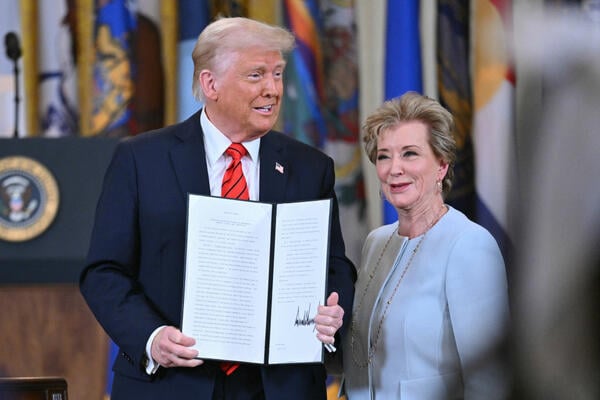
    The announcement follows Trump’s executive order, signed Thursday, directing McMahon to close her department “to the maximum extent of the law.” McMahon and others have said a smaller version of the department would focus on core functions, which many experts presumed to include the student loan program. (Trump also said Friday that the Department of Health and Human Services would take over programs that support students with disabilities.)

    Kelly Loeffler, who leads the SBA, wrote on social media that her agency “stands ready to take the lead on restoring accountability and integrity to America’s student loan portfolio.” Whether the department has the capacity to take on the program is an open question; Loeffler is planning to cut 43 percent of the staff, Politico and other news outlets have reported. The SBA runs several programs to support small businesses, including providing loans and helping with disaster recovery.

    The Education Department issues about $100 billion in student loans each year and disburses $30 billion in Pell Grants. That funding is crucial to students who rely on the government to help pay for college.

    But borrowers have struggled over the years to navigate the cumbersome student loan system and often have faced difficulty in repaying their loans. Meanwhile, the federal government’s growing loan portfolio has become a key issue for lawmakers on both sides of the political aisle. Former president Joe Biden’s fix was in part to make student loan forgiveness more accessible and make loan payments more affordable.

    Trump said Friday that the loan system “will be serviced much better than it has in the past,” adding, “it’s been a mess.”

    Agency Blindsided

    It wasn’t clear Friday afternoon whether SBA would also take over the Pell Grant program and the Free Application for Federal Student Aid—a form that millions of students rely on to access federal, student and institutional aid. Currently, the Office of Federal Student Aid, which is part of the Education Department, administers those programs. That office was hit hard by recent mass layoffs at the department, and experts have questioned whether it will be able to fulfill its many responsibilities, which also include overseeing colleges and rooting out fraud in the federal student aid system.

    Trump’s executive order pointed out that the Education Department manages a portfolio the size of Wells Fargo but with significantly fewer employees. “The Department of Education is not a bank, and it must return bank functions to an entity equipped to serve America’s students,” the order said.

    An official high up at Federal Student Aid said Friday that the office was blindsided by the announcement. Just a day before, the official said, the plan was to move the loans to the Treasury Department. Agency officials have yet to receive any plans or communication about handing over the reins to SBA or what that would entail, the official said.

    ‘Clear Violation’

    The federal statute that created FSA specifically gives that office authority to administer student financial assistance programs. Additionally, laws dictating how federal funding is allocated explicitly send money to the Education Department for the student aid programs. A former department staffer told Inside Higher Ed that the administration is “clearly circumventing the spirit and intent of the law if you were to move to functions.”

    Sen. Patty Murray, a Democrat from Washington State, agreed, writing on social media that the announcement “is a clear violation of education [and] appropriations law.”

    Beth Maglione, interim president of the National Association of Student Financial Aid Administrators, added in a statement that only Congress can move the student loan portfolio to a different agency; if the legislative branch agreed, doing so would take time.

    “The administration would first need to articulate a definitive strategy outlining how the work of administering student aid programs would be allocated within the SBA, determine the necessary staffing and resources, and build the requisite infrastructure to facilitate the transition of these programs to another federal agency,” she said. “In the absence of any comprehensive plan, a serious concern remains: how will this restructuring be executed without disruption to students and institutions?”

    Not a ‘Crazy Idea’

    Some conservative policy experts who support shutting down the department cheered the move. Lindsey Burke, director for the Center for Education Policy at the Heritage Foundation, wrote on social media that “without student loans at ED, there will be little left at the agency. Just a few programs—certainly not enough to justify a cabinet-level agency.”

    Beth Akers, a senior fellow at the American Enterprise Institute, like the Heritage Foundation a conservative think tank, acknowledged in an email to Inside Higher Ed that there are a lot of open questions about how the SBA move would work. But she said the announcement shows that the Trump administration understands that the recent staffing cuts “will likely make it too difficult to keep these programs properly administered otherwise,” she wrote.

    Akers noted that since SBA currently manages its own loans, “it isn’t a crazy idea that they could pull this off.”

    “Frankly, the department has handled student loan administration poorly, so the bar is pretty low on what would constitute an improvement,” she added. “I expect that the existing student loan infrastructure (and remaining staff) will likely move over to SBA, and there won’t be immediate changes in how these programs are run. That’s my hope. Because if things change too quickly, I expect that students will see disruptions that could affect their enrollments and personal finances.”

    Liam Knox contributed to this report.

    Source link

  • Columbia Agrees to Trump’s Demands

    Columbia Agrees to Trump’s Demands

    Acquiescing to demands from the Trump administration to address alleged antisemitism on campus, Columbia University has agreed to overhaul disciplinary processes, ban masks at protests, add 36 officers with the authority to make arrests and appoint a new senior vice provost to oversee academic programs focused on the Middle East, among other changes.

    The decision, announced Friday afternoon, is the latest move in Columbia’s ongoing face-off with the federal government over last year’s pro-Palestinian protests, which spawned the nationwide encampment movement. Columbia yielded despite concerns about the legality of the demands, as well as of an associated effort by the Trump administration to strip the university of $400 million in research funding.

    “We have worked hard to address the legitimate concerns raised both from within and without our Columbia community, including by our regulators, with respect to the discrimination, harassment, and antisemitic acts our Jewish community has faced in the wake of October 7, 2023,” university officials said in a Friday statement.

    The acknowledgment is a rare admission of antisemitism on campus, despite the fact that a Title VI investigation by the Department of Education has not yet been completed.

    Columbia announced additional efforts that the Trump administration didn’t request, including advancing the university’s Tel Aviv Center (though initial details are sparse) and creating a K-12 curriculum “focused on topics such as how to have difficult conversations, create classrooms that foster open inquiry, dialogue across difference and topics related to antisemitism.” That curriculum will be free for schools.

    Columbia did not place the Middle East, South Asian and African Studies Department into “academic receivership” for a minimum of five years, as the Trump administration demanded, but the parties appeared to reach a compromise. A new senior vice provost will review a broader range of programs, expanding beyond the department targeted by Trump to include “the Center for Palestine Studies; the Institute for Israel and Jewish Studies; Middle Eastern, South Asian, and African Studies; the Middle East Institute; the Tel Aviv and Amman global hubs; [and] the School of International and Public Affairs Middle East Policy major,” according to the university.

    The new senior provost, who has not yet been named, will review programs “to ensure the educational offerings are comprehensive and balanced” and evaluate “all aspects of leadership and curriculum” among other changes, which may include academic restructuring.

    The full list of changes can be found here.

    Interim president Katrina Armstrong announced the move in a statement titled “Sharing Progress on Our Priorities,” calling it “a privilege to share our progress and plans” after a difficult year of protests and scrutiny.

    “At all times, we are guided by our values, putting academic freedom, free expression, open inquiry, and respect for all at the fore of every decision we make,” Armstrong wrote in the message posted Friday afternoon, which she signed, “Standing together for Columbia.”

    Critics, however, have argued that yielding to the Trump administration undermines academic freedom and urged Columbia to fight the demands.

    Legal scholars at Columbia and in conservative circles have noted that the Trump administration’s demands were likely unlawful. However, it seemed the university had no desire for a protracted legal fight.

    After the news broke—first reported by The Wall Street Journal—many critics panned the move.

    In a Friday press call, American Association of University Professors President Todd Wolfson blasted Columbia for failing to stand up to Trump.

    “This is not the outcome we wanted to see we wanted to see Columbia stand up for their rights for academic freedom and freedom of speech on their campus and we did not expect for them to not only capitulate to the demands of the federal government but actually go beyond the initial demands as far as we can tell,” Wolfson said.

    “This is an unprecedented intervention into academic freedom—never before in Columbia’s 250+ years has the federal government tried to exert control over a department before. And Trump et al. are only getting started,” Columbia history professor Karl Jacoby wrote on Bluesky.

    Outside experts pointed to the likelihood that more universities will give in to Trump’s threats now that Columbia has yielded.

    “Trump gets exactly what he wants from Columbia. Next up: most of the big-name institutions in American higher education. This is a turning point in the history of our industry,” Robert Kelchen, a professor of education and head of the Department of Educational Leadership and Policy Studies at the University of Tennessee at Knoxville, wrote in a Bluesky post.

    (Ryan Quinn contributed to this report.)

    Source link