Tag: Jobs

  • A Tumultuous Tenure Leading the Nation’s Diversity Officers

    A Tumultuous Tenure Leading the Nation’s Diversity Officers

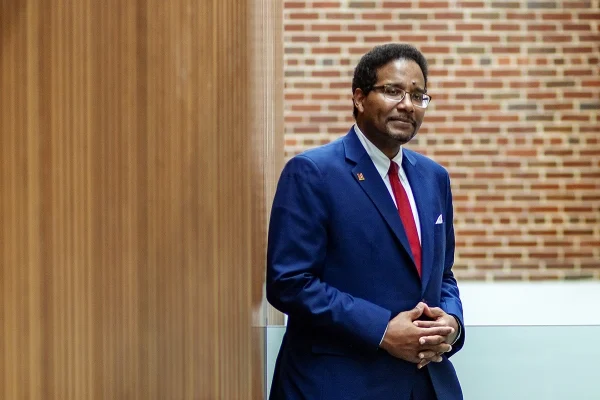
    Paulette Granberry Russell is stepping down as president of the National Association of Diversity Officers in Higher Education after a dramatic and unpredictable five years at the helm.

    She represented campus diversity professionals amid the national racial reckoning that accompanied the Black Lives Matter movement, and then through the dizzying years that followed as anti-DEI laws swept the country. She also spent 22 years as a diversity professional at Michigan State University.

    Granberry Russell told Inside Higher Ed she never planned to stay at NADOHE longer than five years, so she’s ready to move on and facilitate a “smooth transition and handoff.”

    But what a tenure it’s been.

    She spoke with Inside Higher Ed about how she navigated the headwinds facing diversity professionals and the future of diversity, equity and inclusion work on campuses. The conversation has been edited for length and clarity.

    Q: Over the course of your term, from 2020 to 2025, the landscape for diversity professionals in higher education radically shifted. What has it been like for you to represent DEI professionals then and now?

    A: When I came into the role, my goals were to do a few things, which, not only were intended to build on our past successes, but also [to] develop new initiatives that would enhance a few areas, [including] increasing our membership but also providing our support for them. It included, for example, enhancing our industry influence but also sustainability of the organization.

    I came into the role in March of 2020, and what happened in March of 2020? The pandemic, which altered much of what was going on in higher education and how we were doing our work, whether that was remotely, but also with threats in terms of both student experiences but also student support. And then in May of 2020, the murder of George Floyd, and all of the ways in which our institutions were reacting and responding and certain commitments were made to enhance antiracism efforts on our campuses.

    When I think about my first few months, it was something very different than what I anticipated. And I’m certain that’s true for higher education as well. I lived in this state of shifting priorities, having to think about ways to best support members who were having to adjust to significant shifts on their campuses. We were also dealing with significant challenges around freedom of speech and disruption on our campuses prior to these more recent experiences.

    And the politics are very different. When you shift from an environment of enhanced commitment built on an understanding that our campuses had to deal with issues around race and expanding opportunities more broadly across identity to now pushback—it was causing quite a shift in equilibrium. And that’s true for our members as well as the organization. And because of the evolution of diversity, equity and inclusion in higher education historically, as painful as a lot of this was, I believe we were better prepared than we understood ourselves to be.

    Q: You touched on how you started at NADOHE in this moment in 2020, when campuses made commitments and investments in thinking about race and racial inequities, and now campuses are rolling back so much of those efforts in response to anti-DEI legislation. How did these policy shifts change NADOHE’s work and change your work as its leader? How did you have to pivot?

    A: Our successes, I think, resulted in some of the pushback. The pushback was evolving. Expanding on opportunities [created by diversity initiatives] beyond race, so that people understood that diversity was more inclusive than they initially understood it to be—we did not do as good a job as we could have and should have.

    But [we] are beginning to do [it] now, in broadening people’s understanding that diversity is and should be interpreted very broadly. I think that the narrative was hijacked, meaning it was easy to unfortunately define diversity narrowly on the basis of race, gender and sexuality. And others used that narrative to create fear and apprehension that somehow others were being advantaged, versus understanding that we all have benefited from the ways in which we were adjusting our efforts on campus to broaden access, to broaden opportunities, to increase equitable outcomes, understanding that [it’s] not one-size-fits-all, and we had to tailor and adjust our efforts to accommodate the broad range of interests and identities that presented on our campuses and have always presented on our campuses. What we failed to do well was messaging both the communities impacted by our work and the work that was being done to expand opportunities as well.

    Q: How did the backlash shift your priorities, if at all?

    A: When we think about the early challenges, some [opponents] would point to critical race theory. I don’t know that they necessarily understood it very well, and [they] were having a difficult time messaging it. But it was easier to talk about diversity, because for many people, that conjures up issues around race, it harkens back to earlier views of affirmative action and I think it became an easier message to divide higher ed both internally as well as externally.

    It was important for NADOHE to emphasize—whether it was around academic freedom, First Amendment rights and freedom of speech and freedom of expression—that diversity, equity and inclusion are embedded in those. Freedom of expression cannot be sanitized. Our research, for example, or our curriculum is going to touch on issues that may impact communities broadly—and diverse, marginalized, underserved communities. And the work that we do in higher education as diversity leaders requires evidence-based research that informs our work. In the absence of that, you’re guessing at strategies and interventions that will support all students.

    This work is not going to go away. We’re not going to go back to a time when opportunities were constrained, when fairness did not extend to certain communities. That’s unacceptable.”

    —Paulette Granberry Russell

    And so, I don’t know that it was as much a shift in our priorities as much as it was helping higher ed internally, as well as audiences outside of higher ed, to understand that access and opportunity are not limited to any one demographic or a few demographics. If there was a shift in priorities, it was hopefully helping broader audiences understand that there’s nothing to fear, especially in the ways that diversity, equity, inclusion was being demonized. This work is not intended to grant preferential treatment to some and deny others opportunities.

    Q: So, you found yourself having to do a lot of explaining about what’s actually meant when people say “DEI” in a higher ed context.

    A: That’s right. And it’s also saying to folks, don’t use the acronym. Because the acronym, unfortunately, supported a very narrow way of defining efforts.

    Diversity is not defined narrowly. Equity is intended to reduce barriers that may result in differential impact, and those differential impacts are not limited to any one category. Inclusion doesn’t happen just naturally. We know individuals feeling included allows them to be themselves but also allows them to be more successful. If I don’t feel like I belong, what do I do? I tend to retreat, or I don’t access the resources that are there, resources that may benefit me, resources that are accessible to all, with an understanding that, again, we’re not monolithic. It is helping people differently understand, and hopefully better understand, that there are no threats here. Diversity on our campuses is a reality, period. And it’s not going to change, certainly not as long as organizations like NADOHE are here to defend access and opportunities.

    Changes in nomenclature happen. How we define our work, how we label our work, how we tag our work has always changed. If we think historically, going back 20, 30 years, we talked about affirmative action. We talked about multiculturalism. We talked about diversity. We talked about equal opportunity. We talk about fairness. We talk about equity. We talk about belonging. We talk about inclusion. Terminology evolves over time, given how the work itself evolves.

    Q: As campuses close centers associated with DEI and get rid of diversity roles, what do you see as the next phase of the work? How do campus diversity professionals move forward from here? And what does the DEI movement look like now and into the future?

    A: At least for this moment in time, we need to more closely scrutinize the systems that have been designed that have resulted in barriers to success. And how do we redesign, or how do we begin to design systems that differently support our campuses?

    There’s no single office or individual that can do this work alone. Certainly, in my own career at an institution that was a large public land-grant with over 40,000 students at that time and 14,000 faculty and staff, there was no way that a person with two staff was going to be able to dramatically impact change. [Change comes from] working with others and understanding that it’s going to take what I would call a whole institution approach, which means that our leadership, our policies, budget, people, culture have to be aligned. That also means that we have to take a look at the policies, practices, procedures that we have in place that may be having differential impacts, and how do we make adjustments in those? Not to grant preferential treatment, not to discriminate, but to say, can we design systems that work better?

    We’re talking about a systems approach for structural change. When I say a systems approach, this is going to be far more extensive than I think many of us are prepared to do, but I think that it’s the future. [In the past], unfortunately, we didn’t [always] look at connections between the needs of our students, the capacity of faculty to meet those needs, the capacity of staff to meet those needs and connecting our students to potential employers. Things were very siloed. Things are still very siloed. We have to think about the life cycle of a student. And we do that, but it’s not that we are always very deliberate in how we do it.

    When I grew up as a child, the expectation was that I would go to college, but my family by all definitions was very low income. [When] I got to my undergraduate experience, there were no tools in the way that there are now. There were no interventions. There were no programs that I could access that connected me to all of the resources that would allow me to be successful. I was a low-income Black female who arrived on a campus with no prior experience, not knowing how to navigate the space, not knowing where the resources were, not knowing how to fund my education. I was a person with a dream and a family that really wanted me to be successful, but they didn’t have the tools to provide that. It’s a very different world we live in today.

    [The goal is] helping that student understand where the resources are, and then helping faculty understand the differences of those students that come into your classroom, ways that you as faculty can support them, connecting those faculty with the advisory services that those students might need. We have to design [systems] in ways that reduce barriers, that acknowledge the differences that exist and with the goal of those individuals being successful [and] reducing the barriers for faculty to be successful.

    Q: After leaving NADOHE, what’s next for you?

    A: My entire trajectory, my entire life, I have always been this person who believed in fairness. I always believed in opportunities. I’m always that person who fought for not only myself, but for others to be treated fairly, because I grew up in a family where my history included ancestors who were formerly enslaved.

    At 16 years old, I decided I wanted to increase participation in voting. In 12th grade, I remember I had a speech class, and I was that person giving speeches on the slaughtering of baby seals. I was the person who was giving speeches on sexuality and treating people differently based on how they identified. I was that person who gave speeches on the Black Power movement, civil rights, Martin Luther King. And as I reflect now, as I transition, I’m not going to be any different than what I have always been. I will find new ways to [apply] my experiences and my advocacy. Because I have no choice. I realized that about myself.

    My time with NADOHE has been to build on the successes of my predecessors. I believe that I have done that. I achieved the goals that I set out to achieve, both for myself and for the organization, whether that is increasing our membership, our influence within higher ed [and] beyond higher ed. We’ve done that.

    This work is not going to go away. We’re not going to go back to a time when opportunities were constrained, when fairness did not extend to certain communities. We’re not going back to a time when discrimination on the basis of identity was lawful, certainly in the context of race, gender, sexuality, sexual orientation. That’s unacceptable. We’re not going back.

    My next move is, I’m going to breathe. I’m going to take a little bit of time for myself. But I know I will always find my way back to what I have always been committed to, that I want people to be treated fairly. I want people to have opportunities.

    Q: Whoever takes over your position is going to face significant headwinds. What would be your advice to them?

    A: Bring your passion. Bring your commitment. Coming into this role, it’s going to be exhausting, but you have to decide that there’s no other way forward. Too many lives depend on it. This country, our democracy, depends on it.

    Source link

  • Collective Punishment, Early Decision Edition (opinion)

    Collective Punishment, Early Decision Edition (opinion)

    Tulane University’s admissions office has banned students from four high schools from applying to Tulane through early decision this fall, according to reporting from The New York Times. Though three of the schools have not been publicly identified, the one-year ban (or “suspension”) for Colorado Academy comes after a student from that school backed out of the early-decision agreement they signed when they applied to Tulane last year.

    For those who aren’t card-carrying college admission geeks like I am, early decision is an application option and enrollment management strategy in which students apply earlier and promise to enroll if admitted, in exchange for receiving an earlier decision offer. The binding nature of early decision means that a student can apply to only one college through early decision.

    In most cases students applying through early decision are asked, along with a parent and their school counselor, to sign an early-decision agreement attesting to their understanding of the commitment to enroll if admitted. Early decision is in no way legally binding, but colleges take the early-decision commitment seriously and are appalled and disgusted when students back out of the commitment. The one agreed-upon reason for backing out of an early-decision commitment is when an institution can’t meet a student’s financial need (as determined by the college’s financial aid formula, not what a family thinks it can pay).

    I have had admission deans tell me that they would hold it against a school whose students did not follow through on the early-decision commitment, but Tulane is the first college I’ve seen publicly penalize schools. The Tulane ban raises some interesting and thorny ethical questions.

    The most obvious is whether it is permissible to punish students in the Class of 2026 for offenses committed by students in the Class of 2025. Retribution may be fashionable these days, but punishing the innocent because you have no way to punish the guilty is not retribution, just wrong.

    But that may be just me. The National Association for College Admission Counseling has an “Ethical Dilemmas in College Admission” page on its website that includes a hypothetical case study in which a student wants to back out of an early-decision commitment. Among the suggested advice for counselors is to caution the student and parents that withdrawing could have negative consequences for future applicants from the school. Even if that might be the case, that’s terrible advice from NACAC, making it seem like colleges punishing future applicants is acceptable and normal.

    At least Tulane is being transparent with its early-decision ban for the schools. As bad as that is, there is a scenario that would be worse, if Tulane ostensibly welcomed early-decision applications from the four schools when it had no intention of admitting any of them.

    The Times article didn’t provide any details about the circumstances leading up to the ban for the four schools, but Tulane’s position seems to be, as the Times paraphrased it, that the schools “failed to uphold the expectations of the early decision agreement.” Let’s examine that claim a little more closely.

    What is a school’s responsibility in advising students wanting to apply early decision? As a counselor, I always advised students and parents that it was a binding commitment, not to be taken lightly. I don’t remember any of my students backing out of an early-decision commitment, but on several occasions I had students who told me on Friday they planned to apply early decision to one college and then a different college on Monday. My response was that they were not ready to apply early decision at all if their thinking was that fluid.

    It’s hard for me to imagine how the schools would have failed in their responsibilities. The counselor part of the early-decision agreement states, “I have advised the student to abide by the early decision commitment outlined above.” As long as they have done that, are they responsible for policing the student’s actions? The school could withhold sending transcripts to other colleges, but in today’s litigious environment, it could face legal action from parents for doing so. I have learned that parents who are lawyers are especially skeptical of the early-decision commitment. If the student wanted to renege on early decision, I would require the student to inform the college. An applicant owes the college that courtesy. Beyond that, schools can’t be expected to enforce early decision.

    There are several other issues that deserve scrutiny. One is Tulane’s claim in a statement to the Times that “A last-minute withdrawal without explanation unfairly impacts other applicants who may have missed opportunities due to the limited number of early-decision offers a university can make.” Excuse me, my BS detector is going off. Tulane has no restriction that I am aware of in the number of students it can admit through early decision, as suggested by the fact that, in recent years, it’s admitted more than 60 percent of its freshman class using early decision, and it has other opportunities to make up for any loss through early decision 2, early action and regular decision.

    There is also an interesting philosophical question about the nature of the early-decision binding commitment. At what point does the binding commitment kick in? Or, more to the point, when does Tulane believe that the commitment is binding?

    The common understanding across the world of college admission is that students take on the binding commitment either as soon as they sign the early-decision agreement, or at least as soon as they are accepted. Tulane’s application instructions state that early decision is binding and that students are expected to withdraw all other applications once accepted and issued a financial aid offer, but there are two other points in the same instructions that bring into question whether Tulane really believes that students are committed as soon as accepted.

    The first bullet point in Tulane’s instructions for early decision defines it as an “application timeline for students whose first choice is Tulane and who are prepared to enroll soon after (italics mine) being admitted and receiving a financial aid offer.” The use of the phrase “soon after” suggests that there is a period of time after acceptance when the student is not yet committed.

    In addition, Tulane expects accepted early-decision applicants to submit a $1,000 enrollment deposit by Jan. 15. Asking for a deposit is not unique to Tulane, but if the student is committed to attend Tulane as soon as they sign the early-decision agreement or upon acceptance, why require an enrollment deposit? If a student is accepted early decision but doesn’t then make the deposit, have they broken the commitment or does that commitment only kick in with the deposit? Am I the only one who sees a contradiction here? (The answer may well be yes, and it wouldn’t be the first time.)

    The broader issue here has to do with early decision itself. Early decision has been around since the 1950s, and it’s controversial. The early-decision “bargain” can be argued to benefit both colleges and students, but it is far more beneficial to institutions as a way to manage enrollment. It doesn’t work well for students for whom financial aid is essential or those who come from schools without savvy college counselors who understand the early-decision game.

    Tulane is the poster child for how colleges and universities use early decision to manage both enrollment and prestige. Its admit rate has declined precipitously in recent years largely through strategic use of early decision. According to its most recent Common Data Set, about 63 percent of the freshman class was admitted through early decision (that’s assuming a 100 percent yield rate for early-decision admits).

    That may actually understate the impact of early decision. Another 20 percent of the class was admitted off the wait list (the CDS shows the number of students admitted off the wait list but does not break it down in terms of enrollments, but there are universities that only admit students off the wait list if they know they will enroll, almost a form of “early decision 3”).

    The heavy use of early decision means that there is a huge variance in the admit rates for early decision and other admissions plans at Tulane (it also has nonbinding early action). According to the Common Data Set, the admit rate for early decision was 59 percent, compared with 11 percent for all other options. That’s not new. A 2022 Inside Higher Ed article reported that Tulane had admitted only 106 students in regular admission. In any case, the numbers suggest that not applying early decision is hugely disadvantageous at Tulane, which makes the ban even more punitive.

    I am trying to be sympathetic to Tulane’s hurt feelings over being dissed by students they admitted in early decision, but I would hope the university’s admissions office will take to heart the wisdom of Gilbert and Sullivan, as well as the Ramones, and let the punishment fit the crime.

    Jim Jump recently retired after 33 years as the academic dean and director of college counseling at St. Christopher’s School in Richmond, Va. He previously served as an admissions officer, philosophy instructor and women’s basketball coach at the college level and is a past president of the National Association for College Admission Counseling. He is the 2024 recipient of NACAC’s John B. Muir Excellence in Media Award.

    Source link

  • Minor in Holistic Wellness Advances Student Career Wellness

    Minor in Holistic Wellness Advances Student Career Wellness

    Most, if not all, colleges and universities provide mental health support and wellness resources to encourage resiliency and thriving among students, who report high rates of mental health concerns.

    At Rutgers University at New Brunswick, staff are taking health education one step further, offering a new minor in holistic wellness to support students’ personal well-being as well as to provide practical skills so they can share well-being principles in their workplaces.

    The minor, developed by ScarletWell, the university’s well-being division, is open to any student on campus. It is designed to empower a new generation of workers who demonstrate wellness in all dimensions of their lives.

    What’s the need: One of the key features of the holistic wellness minor is that it expands education beyond personal well-being into teaching and creating a culture of wellness, said ScarletWell director Peggy Swarbrick. Included in the learning outcomes are an understanding of policies that foster wellness, wellness communication and program development.

    “These skills will make Rutgers students more attractive for jobs, regardless of their career or discipline of focus, because they will be able to work with leadership to improve sense of community and belonging and overall health of the workforce,” ScarletWell leaders wrote in the minor proposal to administrators.

    Burnout is a frequent concern among American workers and can be a threat to both student and worker retention. One survey published earlier this year found that 66 percent of American employees say they’re experiencing some sort of burnout; young adults (ages 18 to 24) were even more likely to say they’re burned out (81 percent).

    Providing wellness education is one way to support student success and give workers the tools they need to be impactful in their roles, Swarbrick noted.

    In addition, wellness as an industry has grown, meaning more sectors—including schools and police departments—are looking to hire individuals with a focus on organizational wellness, said chief wellness officer Josh Langberg. More employers are also seeking individuals with a background in wellness.

    Data from the U.S. Bureau of Labor Statistics shows wellness-focused jobs are expected to grow at a faster pace over the next decade than the current 5 percent average for all workers.

    What’s involved: Any student in any major at Rutgers’s New Brunswick campus can enroll in the 18-credit minor. Students complete three core courses that provide a foundational understanding of well-being as well as a range of skills and strategies courses, which focus on practical applications of wellness, including exercise, journaling or other self-regulation methods.

    ScarletWell staff helped develop the program, but the minor is housed in the school of environmental and biological sciences. Students complete courses from a variety of disciplines including the arts, nutrition, sociology and horticulture.

    This is the first academic program at Rutgers to have “wellness” in the title. It’s distinct from the offerings of other institutions in the state because of its holistic focus, Langberg noted.

    What’s next: The minor was approved in spring 2025 and soft launched this fall with the course Wellness Learning Community, which enrolled a range of students across disciplines at Rutgers. The course teaches students the eight dimensions of wellness—physical, social, intellectual, spiritual, emotional, financial, environmental and occupational wellness—developed by Swarbrick, as well as how to reflect on their own definitions of wellness and how to apply what they’ve learned to their future occupations.

    Students were also introduced to various resources on campus including Harvest, an on-campus dining option that focuses on sustainability, economic responsibility and reducing food waste.

    Initial feedback from students indicated they valued the course content and wished they had taken it sooner in their academic careers, said Amy Spagnolo, senior program coordinator of ScarletWell. Students also said they appreciated being in classes outside of their disciplines with peers from other majors across campus.

    Swarbrick hopes to enroll between 40 and 60 students in the minor. So far, the program has grown through word of mouth.

    In addition to the minor, students and staff can engage in digital badging to be credentialed as a Wellness Champion or peer support leader. Since the program launched last year, 60 staff and faculty have participated in the peer-support program.

    Do you have a wellness intervention that might help others promote student success? Tell us about it.

    Source link

  • Describing a Social Trend Is Not an Endorsement

    Describing a Social Trend Is Not an Endorsement

    In the essay “Misogyny and ‘Hoeflation’ at the National Association of Scholars” (Oct. 28, 2025) John K. Wilson takes aim at me and Minding the Campus

    He describes me generously as an “idiot,” but an influential one in the conservative movement. He misinterprets nearly every line of my essay “College Students in a Romance Recession, Boys Blame ‘Hoeflation.’”

    His central charge is that I’m a misogynist. His evidence is that I use the word “hoeflation.” Using a term coined by others to describe a social trend does not mean I endorse it. Reporting or analyzing a phenomenon is not the same as condoning it.

    In my essay, I wrote,

    “And, unfortunately for men, dating algorithms concentrate attention on the top 10 percent—those deemed most attractive—rendering the majority effectively unseen. This imbalance has led young men to coin the term ‘hoeflation,’ the grind of chasing women they might barely fancy, but will date just to escape loneliness. (Young American men experience loneliness at rates far exceeding those of their counterparts across other developed countries.)”

    This was an observation on what is being said among some young men. The term reflects a real cultural phenomenon: Many young men feel alienated from modern dating, seeing it as transactional, unequal or algorithmically stacked against them. It expresses their view that women’s expectations have risen out of reach. 

    Jared Gould is managing editor of Minding the Campus.

    Source link

  • TCU Moves Race, Gender Studies Departments to English

    TCU Moves Race, Gender Studies Departments to English

    On June 1, Texas Christian University will close its stand-alone gender studies and race and ethnic studies departments and fold the majors and courses into the English Department, university leaders announced earlier this month.

    The research university in Fort Worth is one of the first private institutions in the state to announce changes to its gender, sexuality and race-related academic programs after firings at Texas A&M University prompted the state’s public institutions to flag, censor and cut classes related to gender, sexuality, race and ethnicity.

    In a meeting with English Department faculty on Oct. 22, TCU provost Floyd Wormley cited financial reasons for the change, asserting that political pressure “had no influence” on the decision to merge the Women and Gender Studies and Comparative Race and Ethnic Studies Departments into the English Department. But some faculty aren’t convinced. They say the move follows a decline in institutional support for the disciplines as the university faces immense pressure to eliminate any and all programming related to gender, race and ethnicity.

    “The explanation from the administration is financial, and that doesn’t necessarily track with earlier correspondence with the department,” said Brandon Manning, an associate professor of gender and sexuality and race and ethnic Studies. The university is expanding its physical footprint and its student body, and “there are new programs and departments popping up daily,” he added. “TCU has been receiving considerable criticism online, and this seems to be a way to placate that criticism.”

    A TCU spokesperson told Inside Higher Ed that conversations about merging the departments started more than two years ago. The two departments already share a leadership structure. The English Department wasn’t mentioned as a partner until the Oct. 17 announcement, said Alexandra Edwards, an English instructor at TCU.

    The merger will affect seven faculty members, five of whom will likely follow the programs into the English Department. Other faculty and support staff will be deployed to other departments, Wormley and Sonja Watson, dean for the AddRan College of Liberal Arts, told faculty at the Oct. 22 meeting. The merger is part of a universitywide restructuring project and is primarily due to low enrollment in the two departments, they said. The Spanish and Modern Languages Departments will also be combined, and so will the Geology and Environmental Sciences Departments.

    “Decisions are not based on academic content but on data,” a TCU spokesperson told Inside Higher Ed. “Students currently majoring in these programs have been notified that there will be no impact to their academic progress, meaning they will be able to complete their degrees as planned. TCU is growing and will need more faculty and staff—not less—to ensure that we meet the academic needs of students and demand for a TCU education.”

    This fall, Critical Race and Ethnic Studies enrolled nine majors and minors, and Women and Gender Studies enrolled just two. The two programs have never been large; since becoming stand-alone departments in 2018, their highest combined enrollment was 31 majors and minors, in fall 2020. But using low enrollments to justify the merger is unfair, Edwards argued. The programs haven’t had a chance to flourish because of constant structural changes, she said.

    “They have been through a ton of turmoil and leadership turnover and reassignment to various different colleges and units across the university, so for a long time they’ve been unable to become stable,” Edwards said. “I don’t see how gender studies or ethnic studies could become a priority in an English department that’s already … juggling a lot of competing interests and varied disciplines.”

    Department chairs weren’t given any warning about the merger with the English department, and faculty were not consulted before the decision was made, according to notes from the Oct. 22 meeting shared with Inside Higher Ed. When faculty asked why, Wormley said it was within “the purview of the institution to make those decisions.”

    A One-Man Campaign?

    While TCU isn’t subject to the same state laws that eliminated diversity, equity and inclusion efforts at Texas’s public institutions, the university is still getting plenty of external pressure to ax its gender and race studies offerings. Faculty say the campaign to abolish related classes, programs and events at the university is led by Bo French, a TCU alum and the son of a sitting TCU board member. French is also chairman of the Tarrant County Republican Party and a conservative politician who was denounced by members of his own party for using slurs for gay people and people with disabilities.

    French has berated the university online for what he described as “LGBTQ” and “radical Marxist” indoctrination. He celebrated on Oct. 10 when the university removed the “LGBTQ+” link from the “community initiatives” dropdown on its website. Three days earlier, he posted a poll on X asking followers if the university should “dismantle its entire racist DEI infrastructure and also stop offering courses in degenerate LGBTQ ideology.”

    French interpreted the merger news as a partial victory. “This is simply hiding what they do in another department. Nothing changes,” he wrote on X on Oct. 22. “However, it does show that the public pressure is working. They are bending, but we have to make them break completely and eliminate these courses altogether.”

    Since then, he has continued to wage a social media campaign against anything related to gender, sexuality or diversity at TCU. On Oct. 22 he also posted on X a photo of a lawn sign advertising campus Pride Month events, alongside the comment “I know a few things are happening behind the scenes at ⁦@TCU⁩ and I am now more hopeful than ever, but they haven’t happened yet and so stuff like this is still polluting the campus.”

    Publicly, university officials have said little in response to criticism by French and others, Edwards said. She noted that she was harassed and doxed by conservatives in August 2024 over posts she made before she worked at TCU, and she was advised by administrators to “lay low” until the firestorm subsided. A former TCU Women and Gender Studies professor who received a threat of violence in response to a 2023 course titled The Queer Art of Drag was asked by police to leave campus for his own safety, Edwards said. More recently, a political science professor was doxed for online comments she made in the wake of conservative firebrand Charlie Kirk’s death.

    Asked how the university has responded to political pressure and harassment of faculty, a spokesperson said, “The university has a thorough process to notify faculty and staff members and provide them with appropriate guidance and support to mitigate potential risks.”

    In conversations with faculty, TCU leaders have acknowledged the pressures of the political landscape on the university, particularly on the gender and race studies departments, Edwards said. At the end of the Oct. 22 meeting, Watson told faculty she had been concerned about the future of the departments since Trump was inaugurated in January. During a March 28 meeting between faculty and Watson about combining the gender and race studies departments, Watson expressed concern about recent executive orders from President Trump.

    “I think that we all know that the executive orders disproportionately affect [Comparative Race and Ethnic Studies], right? … As I said in the beginning, [I am] still very much committed to CRES and very much committed to growing the number of majors, and so I think the biggest challenge … is, how do we increase?” Watson said during the meeting, according to a recording obtained by Inside Higher Ed. “All liberal arts majors’ programs are having this issue for various reasons, but we see these issues manifest in a different way in both CRES and [Women and Gender Studies].”

    In an all-hands meeting on April 4, TCU president Daniel Pullin and general counsel Larry Leroy Tyner explained the difficult bind the current national and state political landscapes have put the university in.

    “If there’s a cliff that if you step off, there’s serious consequences, and [if] you don’t know where the edge of the cliff is, you stay way away from the edge,” Tyner said. “The combination of uncertainty and significant consequences creates the chilling effect.”

    About a minute later, Pullin added that he and his cabinet are “trying to figure out how to stay as far away from that unknown cliff as possible so we can stay on mission and live our values and execute our plan.”

    (This story has been updated to more accurately reflect the chronology of events precipitating the merger.)

    Source link

  • Advice on Building a Strategic Digital Presence (opinion)

    Advice on Building a Strategic Digital Presence (opinion)

    For early-career researchers (ECRs), building a digital research space can feel like another burden piled onto an already demanding schedule. The idea of online professional networking often evokes images of overwhelming social media feeds and self-promoting influencers.

    Yet ECRs face a significant risk by solely relying on institutional platforms for their digital footprint: information portability. While university websites offer high visibility as trusted sources, most ECRs on short-term contracts lose web and email access as soon as their contracts expire. This often forces a hasty rebuild of their online presence precisely when they need to navigate critical career transitions.

    Having worked with doctoral and postdoctoral candidates across Europe, common initial hesitations to establishing a digital research space include: uncertainty about how and where to start, discouragement from senior researchers who dismiss digital networks as not “real” work, fears of appearing boastful and/or the paralyzing grip of impostor syndrome. Understanding these hesitations, I emphasize in my coaching the ways that building a digital research space is a natural extension of ECRs’ professional growth.

    Why a Strategic Digital Research Space Matters

    A proactive, professional digital strategy offers several key advantages.

    • Enhancing visibility and discoverability: A well-curated, current, consistent and coherent digital presence significantly improves discoverability for peers, potential collaborators, future employers, funders, journal editors and the media.
    • Networking: Strategically using digital platforms transcends institutional and geographical boundaries, enabling connections with specific individuals, research groups and relevant industry contacts globally.
    • Showcasing expertise and impact: Your digital space allows you to present a holistic view of your contributions beyond publications, including skills, ongoing projects, presentations, teaching, outreach and broader impacts.
    • Meeting communication expectations: As research advances, particularly with public funding, the demand to communicate findings beyond academic circles increases. Funders, institutions and the public expect researchers to demonstrate broader impact and societal relevance and a strategic digital presence provides effective channels for these crucial communications.
    • Controlling your narrative: Actively shape your professional identity and how your expertise is perceived, rather than relying on fragmented institutional profiles or database entries.
    • Ensuring information portability and longevity: Platforms like LinkedIn, ORCID, Google Scholar or a personal website ensure your professional identity, network and achievements remain consistent, accessible and under your control throughout your career.

    Getting Started: Choosing Your Digital Network Combination

    The goal isn’t to be online everywhere, but to be online strategically. Select a platform combination and engagement style aligned with your specific objectives and target audience, considering the time you have available.

    Different platforms serve distinct strategic aims and audiences at various research stages. Categorizing digital platforms into three subspaces helps map the landscape and can help you develop a more balanced presence across the research cycle.

    First, identify the primary strategic goal(s): public dissemination, professional networking expansion or deeper engagement within your academic niche? Your answer will guide your platform selection, as you aim for eventual presence in each space.

    Figure 1: Align your digital platform choices with your strategic goals and target audience.

    Next, consider your audience spectrum. Effective research communication depends on understanding your target audience and their needs.

    • Scholarly discourse: At the outset of your career, specialized academic platforms like ResearchGate, Academia.edu, institutional repositories and reference managers with social features (e.g., Mendeley) are key for engaging directly with peers. Foundational permanent identifiers like ORCID are crucial for tracking outputs across systems.
    • Professional network: As you seek to develop your career, LinkedIn, Google (including Google Scholar) and X (formerly Twitter) are vital hubs across academia, industry and related sectors.
    • Share for impact: TikTok, Facebook and Instagram excel for broader dissemination. Do adjust style and tone: While academics can process jargon and complex concepts, a broader audience will engage more in plain English.

    A strong, time-efficient and pragmatic starting point is to create a free and unique researcher identifier number like an ORCID, develop a professional LinkedIn profile and engage with a relevant academic platform (this would be in addition to your presence on a university or lab website). Because the ORCID requires no upkeep and a LinkedIn profile can leverage existing institutional and biographical information, with this combination ECRs can quickly establish a solid foundation for gradual digital expansion over the medium term.

    Make It Manageable: Time, Engagement and Content

    Once the platform combination is in place, effective digital management requires balancing three core elements: time, engagement and content.

    This figure displays different opportunities for digital engagement depending on factors including time engagement (with options including daily engagement, platform-specific and project-based campaigns, and regular content creation); engagement (e.g. active participation by commenting, sharing and asking questions or building relationships); and content type (including written, visual and multimedia forms of content).

    Figure 2. Key considerations for a sustainable digital networking strategy: balancing realistic time investment, meaningful engagement and appropriate content types.

    Time Investment

    Key message: Prioritize consistency over quantity.

    • Focused engagement: Allocate short, regular blocks (e.g., 15 to 30 minutes weekly) for specific activities like checking discussions, sharing updates or thoughtful commenting between periods of focused research.
    • Platform nuance: Invest strategically, recognizing that platforms have different tempos and life spans (e.g., a LinkedIn post typically has a longer life span than an X post).
    • Campaign bursts: Plan ahead to strategically increase activity around key events like publications or conferences, utilizing scheduling tools for automated posting.
    • Content cadence: Consistency beats constant noise, so plan a realistic posting schedule such as once a month.

    Engagement

    Key message: Focus on short but regular efforts.

    • Active participation: Move beyond passive consumption by commenting, sharing relevant work and asking insightful questions.
    • Build relationships: Genuine interaction fosters trust and meaningful connections.
    • Monitor your impact (optional): Use platform analytics to understand what resonates and refine your strategy.

    Content Type

    Key message: Your hard work should work hard online.

    • Written: Summaries, insights, blog posts, threads, articles.
    • Visual: Infographics, diagrams, cleared research images, presentation slides.
    • Multimedia: Short explanatory videos, audio clips, recorded talks.
    • Cross-post: Share content across all relevant platforms (e.g., post your YouTube video on LinkedIn and ResearchGate).

    Overcoming Reluctance

    If you’re hesitant, consider these starting points:

    • Start small, stay focused: Choose one or two platforms aligned with your top priority. Master these before expanding.
    • Embrace learning: Your initial digital content may not be perfect, but consistent practice leads to significant improvement. Give yourself permission to progress.
    • Integrate, don’t isolate: Weave digital engagement into your research workflow. Share insights from webinars or interesting papers with your network.
    • Give and take: Focus on offering value by sharing insights, asking stimulating questions and amplifying others’ work. Reciprocity fuels networking.
    • Set boundaries: Protect your deep work time. Schedule dedicated slots for digital engagement during lower-energy periods and manage notifications wisely.
    • Be patient: Recognize that building meaningful networks and visibility is a long-term career investment.

    Your Digital Research Space: A Career Asset

    A strategic digital research space is essential for navigating and succeeding in a modern research career. A thoughtful approach empowers you to control your professional narrative, build lasting networks, meet communication expectations and ensure your valuable contributions are both visible and portable.

    Maura Hannon is based in Switzerland and has more than two decades of expertise in strategic communication and thought leadership positioning. She has worked extensively for the last 10 years with doctoral and postdoctoral candidates across Europe to help them build strategies that harness digital networks to enhance their research visibility and impact.

    Source link

  • Retirees as Instructors

    Retirees as Instructors

    For the last few days, I’ve been in Boone, N.C., for the kickoff conference of the Rural Talent Lab. The conference has been terrific, with thoughtful presentations and a chance to reconnect with some folks I hadn’t seen in a while. I’m still processing much of what I heard, but one line in particular jumped out at me.

    The presentation was about offering programs in the trades for students in rural locations. Addressing the frequent shortage of instructors in high-demand fields, one speaker—my notes betray me, so I don’t know who—mentioned that “we’re in the golden age of retirement, with baby boomers hitting age 65 every day.” He (I think) went on to say that if colleges were to approach companies with the suggestion of having them incorporate some teaching into employees’ final years before retirement, it could act as a combination of a glide path to retirement and a way to get well-qualified and experienced people as instructors.

    I read once that the sign of a great idea is that as soon as you hear it, you wonder why you hadn’t thought of it. This one passes that test.

    The areas in which this would make the most sense in the short term are the trades: HVAC, welding, plumbing and the like. These fields combine technical know-how with the ability to handle real situations in the field. It’s one thing to know how to fix a pipe; it’s another to know how to handle a cantankerous homeowner or business manager who accuses you of ripping them off. That’s where an instructor with long experience in the field can bring an added dimension.

    An arrangement like this could make sense for the instructors, too, given the physical demands of these jobs. As they get older, the prospect of spending less time bending themselves into tight spots or fighting metal and more time teaching might hold some appeal. When I taught at DeVry in the late ’90s, I had a fair number of students in their 40s who were switching careers from construction to computer repair; nearly all of them mentioned back and knee injuries and general physical wear and tear as motivators. It’s not difficult to imagine that someone in a field like these, approaching retirement, might want to give their knees and backs an easier assignment. Teaching isn’t an easy task to do well, but its physical demands tend to be more modest.

    For the employers, I could imagine a couple of upsides. For one, they might be able to hold on to good employees a little longer if those employees could intersperse teaching with their usual work. Secondly, they’d ensure a continued pipeline of new tradespeople coming in. It’s no secret that many skilled trades are facing a retirement cliff, since they largely skipped a generation. They need newbies.

    For colleges, the upside would be having experienced professionals with industry contacts in high-demand fields. Yes, there would have to be some professional development in teaching techniques and dealing with common student issues. But stepping up our mentoring game is a good idea anyway—if this is the motivation to do that, so be it.

    Wise and worldly readers, have you seen this tried at scale? If so, are there any hard-won lessons you could share? As always, I’m at deandad (at) gmail (dot) com.

    Source link

  • GMercyU Unveils Crime Scene House for Student Investigations

    GMercyU Unveils Crime Scene House for Student Investigations

    Inside an unoccupied house, a student gingerly pushes open a creaky door and takes a wary step into a dark room—only to find the walls completely splattered with blood.

    It sounds like the cliché climax in a horror movie, but for students in the criminal justice program at Gwynedd Mercy University, it’s a regular class assignment.

    This fall, Gwynedd Mercy unveiled a new Crime Scene House, a three-story home that features various staged rooms for experiential learning in forensic science. Students now have a space for simulated criminal investigations, with each room configured to resemble a different crime scene they might encounter, including the blood spatter room.

    Gwynedd Mercy is one of a dozen-plus colleges across the country that turn houses into mock crime scenes; West Virginia University claims the title for largest hands-on training complex in the U.S., boasting four crime scene houses, a vehicle processing garage, a ballistics test center and designated grounds for excavation.

    The not-so-haunted houses are designed to give students a safe, supervised space to immerse themselves in a crime scene. Plus, it’s a great enrollment draw for students who get a thrill out of murder mysteries.

    “We’re very excited about the opportunity to have students come into our program and learn the how-to, so then they walk out of here and they say, ‘This is what I want to do,’” said Patrick McGrain, associate professor of criminal justice and the program director at Gwynedd Mercy. “It really is for the benefit of creating a more professional law enforcement community.”

    From convent to crime scene: McGrain and university leaders aspired to open a crime scene house on campus for years. In July, the dream became a reality when the Catholic university’s administrators identified an older building that used to house the Sisters of Mercy. The building was in disarray, and when McGrain was offered the opportunity to revamp it for students, he jumped at the chance.

    The Crime Scene House holds a variety of staged rooms to practice different investigations including a kitchen, a bathroom, two bedrooms and an office. In addition, the house features spaces for other simulated experiences, including an interrogation room, an evidence area to analyze fingerprints and a model “flophouse,” or a low-rent motel room used for drugs. And of course, the blood spatter room.

    “We’re going to teach students how to analyze blood splatter, the analysis of the trajectory,” McGrain said.

    Every element of the house is available for students to manipulate and investigate, even the flooring.

    “We have carpet laid down that they cut out pieces, use luminol and then take it over to the lab, well, what is it that we have?” McGrain explained. “Is it feces, it is urine, is it semen, is it blood? What is it that we’re looking at and what do you think happened in this room?”

    Faculty can track students’ progress solving the investigations through cameras mounted in each of the rooms.

    While the home at times may resemble an escape room, with CCTV cameras and a mystery to solve, “the only person locked in is the one who’s been kidnapped, and that’s been planned, and it’s a dummy,” McGrain said.

    The university allocated a small budget for furniture, but a significant number of items came directly from campus community members, who donated household items or clothing.

    “I even had two students who found a couch on the side of the road, grabbed it, put it in their trunk and brought it in,” McGrain said. “It is now the couch that sits in the living room.”

    Because the house is designed to be ransacked and torn up by “criminals,” the university also keeps backup furniture and wall decor.

    “If we want to break something, if we need to tear something, we do,” McGrain said. “The hands-on learning knows no limits.”

    Experiential learning: Other academic programs, including nursing, psychology and social work, have simulation labs integrated into the curriculum to allow students to practice their skills. In the same way, the house gives criminal justice students a chance to gain career skills.

    Before the Crime Scene House was established, Gwynedd Mercy faculty would set up a classroom to resemble the crime scene.

    “It’s not nearly as detailed,” McGrain said. “You don’t have the furniture. You don’t have the fake drugs or guns.”

    The facility has also served as a resource for law enforcement to train new detectives on how to use tech tools, such as digital photography and indoor drones.

    Jerome Mathew, a junior criminal justice student, said having the Crime Scene House is a game-changer—especially for getting incoming students amped about studying criminal justice.

    “They were really thrilled about seeing all the different fake drugs, money, different rooms, the cameras and how monitored everything was,” Mathew said.

    Gwynedd Mercy has plans to grow the criminal science major and launch a forensic science minor. The Crime Scene House will be an integral piece of that, McGrain said. “We’re expecting to see a spike in applications and a spike in admissions.”

    Source link

  • ED Finalizes PSLF Rule Limiting Who Gets Forgiveness

    ED Finalizes PSLF Rule Limiting Who Gets Forgiveness

    Employees at any company the Trump administration deems as having “a substantial illegal purpose” will no longer qualify for Public Service Loan Forgiveness under a new set of regulations finalized Thursday by the Department of Education.

    The final rule is very similar to the first draft released in August—both of which have been heavily criticized. The policy change, in the works for months, stemmed from an executive order issued in March. Lawsuits challenging the new rule, which takes effect July 1 of next year, are expected as soon as next week.

    “My first reaction when reading the rule was that we will see them in court,” said Brian Galle, a law professor at the University of California, Berkeley, who submitted a comment along with at least a dozen other scholars of tax law.

    Collectively, the commenters called on department officials to conduct an extensive review and study over the rule, none of which were completed. So now, Galle said, the department will face the consequences.

    “I know that firsthand,” he explained. “A rule that I wrote for the Securities and Exchange Commission was sent back by the Fifth Circuit because there was one statistical study that the agency didn’t do.”

    Under the new rule, illegal activities will include: aiding and abetting violations of immigration or civil rights law, supporting terrorism, providing gender-affirming care, or “trafficking” children from one state to another for purposes of emancipation. The education secretary will decide whether an employer violates the rule based on a “preponderance of the evidence.”

    Many Democrats, industry leaders and student borrower advocates who have spoken out against the rule say it is vague and could allow Trump and future presidents to abuse executive power, essentially choosing which organizations qualify based on ideological preferences.

    Rep. Bobby Scott, a Virginia Democrat and ranking member of the House Education and Workforce Committee, told Inside Higher Ed that the rule “opens the door for all kinds of mischief.”

    “If you’re on the Trump side of the partisan political agenda on an issue, you get loan forgiveness. If you’re on the other side of the controversy, you don’t,” he explained. “A group promoting civil rights may be in jeopardy.”

    The National Council of Nonprofits went as far as declaring the new rule “unlawful” and saying it sets “a troubling precedent.”

    “Federal law makes clear that eligibility under PSLF applies to all charitable nonprofit organizations,” the organization wrote. “The Education Department does not have the authority to change eligibility. By unlawfully excluding certain nonprofits, the final rule opens the door to government overreach and abuse.”

    The Trump administration and fellow Republicans, however, say it has nothing to do with partisan politics and instead is focused on terminating unlawful actions that by their “very nature run contrary to the public good.”

    “As the name suggests, Public Service Loan Forgiveness was intended to help meet workforce needs for employers who serve the public good. Unfortunately, the open-ended nature of PSLF has forced taxpayers—many of whom never went to college, to foot the bill for employees at radical organizations that violate state and federal laws,” Rep. Tim Walberg, a Michigan Republican and chair of the Education and Workforce Committee, said in his statement about the rule.

    Education Under Secretary Nicholas Kent also chimed in, saying in a statement that “the Trump Administration is refocusing the PSLF program to ensure federal benefits go to our nation’s teachers, first responders, and civil servants who tirelessly serve their communities.”

    In addition to defining what activities are illegal, the rule outlines types of evidence that the secretary may consider in the decision process, establishes an appeals process and states that the department must provide “prompt notification” to both borrowers and employers when their eligibility is at risk. It also notes that, in general, employers with “minor compliance issues” and “no concerted practice of illegal activity” will be safe.

    The department estimates that fewer than 10 employers will be affected each year. But critics say that estimate is based on little research and worry the effect will be much broader.

    The National Council of Nonprofits said ultimately the rule could harm millions, as countless communities depend on their local nonprofits. By putting the nonprofit workforce at risk, they added, the rule jeopardizes nonprofits’ ability to meet those needs and provide essential services.

    A collection of half a dozen physicians’ groups echoed that point, arguing that if hospitals and the medical professionals they employ lose access to PSLF, it could jeopardize both physicians’ financial stability and patients’ access to care.

    “PSLF is not just a loan program; it is a lifeline that allows medical graduates to choose primary care or psychiatry careers in high-need areas without being weighed down by insurmountable debt,” the group wrote in a news release. “We strongly urge the Department of Education to preserve physicians’ access to the PSLF program and recognize that a healthy America depends on a strong physician workforce.”

    Galle from Berkeley believes that this lack of awareness regarding the scope of impact will become evident in court. He said that such a lack of evaluation, along with what he sees as the department’s executive overreach in issuing the rule, will give any plaintiffs a strong case in court.

    “The Supreme Court in the last eight years has really been at pains to say that Congress doesn’t give agencies … the authority to be way outside their lane,” he said. “And you couldn’t possibly be further outside your lane and your expertise than ED is with this rule.”

    Shortly after the department announced the final rule, multiple legal groups said they intend to sue over it.

    Democracy Forward, which has led a number of lawsuits against the Trump administration this year, and Protect Borrowers, a student loan advocacy group, described the new policy as “a craven attempt to usurp the legislature’s authority in an unconstitutional power grab.”

    Student Defense, a policy, litigation and advocacy organization, accused the president of “playing political football with the financial well-being of people who have dedicated their lives to public service.”

    All three said a lawsuit can be expected in a matter of days.

    “Congress created the Public Service Loan Forgiveness program because it is important for our democracy that we support the people who do the hard work to serve our communities,” Democracy Forward wrote in its release. “In our democracy, the president does not have the authority to overrule Congress.”

    Galle said the key question in the legal fight will be whether the Supreme Court will enforce those checks and balances.

    “Under any judge or justice who was applying the law as it is today, I don’t think this rule would have any hope of being upheld,” he said. “The only room for doubt is that it seems like the Supreme Court is willing to ignore most of what current law is.”

    Source link

  • 21 States, D.C. Ask Court to Reverse TRIO Grant Rejections

    21 States, D.C. Ask Court to Reverse TRIO Grant Rejections

    Linda Johnson/Montgomery County Community College

    Democratic attorneys general from 21 states and Washington, D.C., filed briefs this week asking a court to reverse the Trump administration’s rejection of grants supporting TRIO programs, which help disadvantaged students attend and graduate from colleges and universities.

    The Council for Opportunity in Education, which advocates for TRIO programs such as Upward Bound, said about 100 grants were rejected or canceled last month after the Education Department delayed funding for thousands of grants that were slated to begin Sept. 1. Another 23 programs lost funding earlier in the year.

    Those terminations deprived more than 43,600 students of services such as tutoring and financial aid help. (Trump’s fiscal year 2026 budget request would end TRIO altogether, and all but a handful of staff in the TRIO grants office were fired early in the ongoing government shutdown.)

    On Sept. 30, the Council filed two lawsuits against the department and Education Secretary Linda McMahon in the U.S. District Court for D.C., alleging that the department canceled grants for complying with the General Education Provisions Act Equity Directive—a requirement at the time of the applications. One suit argues the department faulted a University of New Hampshire application for allegedly saying its program would be “identifying and recruiting students of color and non-Caucasians.”

    The Council is requesting preliminary injunctions vacating the department’s denials and ordering reconsideration of the grants. The attorneys general filed amicus briefs supporting this call.

    “TRIO programs serving thousands of high-school and college students have closed, many of which have operated successfully for years with track records of success,” the briefs say. “Students who relied on these programs’ guidance and academic assistance are now being turned away. The result will be fewer students going to college and fewer students graduating college, to the detriment of impacted Amici States, their residents, and their economies.”

    The AGs of Nevada and Massachusetts were the briefs’ lead authors; they were joined by their counterparts in Arizona, California, Colorado, Connecticut, Delaware, D.C., Hawai‘i, Illinois, Maine, Maryland, Michigan, Minnesota, New Jersey, New Mexico, New York, Oregon, Rhode Island, Vermont, Washington and Wisconsin.

    Source link