Tag: Jobs

  • A crisis of trust in the classroom (opinion)

    A crisis of trust in the classroom (opinion)

    It was the day after returning from Thanksgiving break. I’d been stewing that whole time over yet another case of cheating, and I resolved to do something about it. “Folks,” I said, “I just can’t trust you anymore.”

    After a strong start, many of the 160 mostly first-year students in my general education course had become, well, challenging. They’d drift in and out of the classroom. Many just stopped showing up. Those who did were often distracted and unfocused. I had to ask students to stop watching movies and to not play video games. Students demanded time to talk about how they were graded unfairly on one assignment or another but then would not show up for meetings. My beleaguered TAs sifted through endless AI-generated nonsense submitted for assignments that, in some cases, asked only for a sentence or two of wholly unsubstantiated opinion. One student photoshopped himself into a picture of a local museum rather than visiting it, as required by an assignment. I couldn’t even administer a simple low-stakes, in-class pen-and-paper quiz without a third of the students miraculously coming up with the same verbatim answers. Were they cheating? Somehow using AI? Had I simplified the quiz so much that these were the only possible answers? Had I simply become a victim of my own misplaced trust?

    I meant that word, “trust,” to land just so. For several weeks we had been surveying the history of arts and culture in Philadelphia. A key theme emerged concerning whether or not Philadelphians could trust culture leaders to put people before profit. We talked about the postwar expansion of local universities (including our own), the deployment of murals during the 1980s as an antigraffiti strategy and, most recently, the debate over whether or not the Philadelphia 76ers should be allowed to build an arena adjacent to the city’s historic Chinatown. In each case we bumped into hard questions about who really benefits from civic projects that supposedly benefit everyone.

    So, when I told my students that I couldn’t trust them anymore, I wanted them to know that I wasn’t just upset about cheating. What really worried me was the possibility that our ability to trust one another in the classroom had been derailed by the same sort of crass profiteering that explains why, for instance, so many of our neighbors’ homes get bulldozed and replaced with cheap student apartments. That in a class where I’d tried to teach them to be better citizens of our democracy, to discern public good from private profit, to see value in the arts and culture beyond their capacity to generate revenue, so many students kept trying to succeed by deploying the usual strategies of the profiteer—namely cheating and obfuscation.

    But could any of them hear this? Did it even matter? How many of my students, I wondered, would even show up if not for a chance to earn points? Maybe to them class is just another transaction. Like buying fries at the food truck and hoping to get a few extra just for waiting patiently?

    I decided to find out.

    With just a few sessions remaining, I offered everyone a choice: Pick Path A and I’d instantly give you full credit for all of the remaining assignments. All you had to do was join me for a class session’s worth of honest conversation about how to build a better college course. Pick Path B and I’d give you the same points, but you wouldn’t even have to show up! You could just give up, no questions asked, and not even have to come back to class. Just take the fries—er, the points—and go.

    The nervous chatter that followed showed me that, if nothing else, my offer got their attention. Some folks left immediately. Others gathered to ask if I was serious: “I really don’t have to come back, and I’ll still get the points?!” I assured them that there was no catch. When I left the room, I wondered if anyone would choose Path A. Later that day, I checked the results: Nearly 50 students had chosen to return. I was delighted!

    But how to proceed? For this to work I needed them to tell me what they really thought, rather than what they supposed I wanted to hear. My solution was an unconference. When the students returned, I’d ask each of them to take two sticky notes. On one they’d write something they loved about their college courses. On the other, they’d jot down something that frustrated them. The TAs and I would then stand at the whiteboard and arrange the notes into a handful of common themes. We’d ask everyone to gravitate toward whatever theme interested them most, gather with whomever they met there and then chat for a while about ways to augment the good and eliminate the bad. I’d sweep in toward the end to find out what everyone had come up with.

    So, what did I learn? Well, first off, I learned to temper my optimism. Although 50 students selected Path A, only 40 showed up for the discussion. And then about half of those folks opted to leave once they were entirely convinced that they could not earn additional points by remaining. To put it in starker terms, I learned that—in this instance—only about 15 percent of my students were willing to attend a regularly scheduled class if doing so didn’t present some specific opportunity for earning points toward their grades. Which is also to say that more than 85 percent of my students were content to receive points for doing absolutely nothing.

    There are many reasons why students may or may not have chosen to come back. The size of this sample though convinces me that college instructors are contending with dire problems related to how a rising generation of students understands learning. These are not problems that can be beaten back with new educational apps or by bemoaning AI. They are rather problems concerning citizenship, identity and the commodification of everything. They reflect a collapse of trust in institutions, knowledge and the self.

    I don’t fault my students for mistrusting me or the systems that we’ve come to rely on in the university. I too am skeptical about the integrity of our nation’s educational landscape. The real problem, however, is that the impossibility of trusting one another means that I cannot learn in any reliable way what the Path B students need for this situation to change.

    I can, however, learn from the Path A students, and one crucial lesson is that they exist. That is very good news! I learned, too, that the “good” students are not always the good students. The two dozen students who stuck it out were not, by and large, the students I expected to remain. I’d say that just about a third of the traditionally high-performing students came back without incentive. It’s an important reminder to all of us that surviving the classroom by teaching to only those students who appear to care is a surefire way to alienate others who really do.

    Some of what the Path A students taught me I’ve known for a long time. They react very favorably, for instance, to professors who make content immediate, interesting and personal. They feel betrayed by professors who read from years-old PowerPoints and will sit through those courses in silent resentment. Silence, in fact, appeared as a theme throughout our conversation. Many students are terrified to speak aloud in front of people they do not know or trust. They are also unsure about how to meet people or how to know if the people they meet can be trusted. None of us should be surprised that trust and communication are entwined. Thinking more fully about how they get bound up with the classroom will, for me, be a critical task going forward.

    I learned also that students appreciate an aspect of my teaching that I absolutely detest: They love when I publicly call out the disrupters and the rule breakers. They like it, that is, when I police the classroom. From my standpoint, having to be the heavy feels like a pedagogical failure. My sense is that a well-run classroom should prevent most behavior problems from occurring in the first place. Understandably, committed students appreciate when I ensure a fair and safe learning environment. But I have to wonder whether the Path A students’ appetite for schadenfreude reflects deeper problems: an unwillingness to confront difficulty, a disregard for the commonwealth, an immoderate desire for spectacle. Teaching is always a performance. But maybe what meanings our performances convey aren’t always what we think.

    By far, though, the most striking and maybe most troubling lesson I gathered during our unconference was this: Students do not know how to read. Technically they can understand printed text, and surely more than a few can do better than that. But the Path A students confirmed my sense that most if not a majority of my students were unable to reliably discern key concepts and big-picture meaning from, say, a 20-page essay written for an educated though nonspecialist audience. I’ve experienced this problem elsewhere in my teaching, and so I planned for it this time around by starting very slow. Our first reading was a short bit of journalism; the second was an encyclopedia entry. We talked about reading strategy and discussed methods for wrangling with difficult texts. But even so, I pretty quickly hit their limit. Weekly reading quizzes and end-of-week writing assignments called “connect the dots” showed me that most students simply could not.

    Concerns about declining literacy in the classroom are certainly not new. But what struck me in this moment was the extent to which the Path A students were fully aware of their own illiteracy, how troubled they were by it and how betrayed they feel by former teachers who assured them they were ready for college. During our discussion, students expressed how relieved they were when, late in the semester, I relented and substituted audio and video texts for planned readings. They want help learning how to read but are unsure of where or how to get it. There is a lot of embarrassment, shame and fear associated with this issue. Contending with it now must be a top priority for all of us.

    I learned so much more from our Path A unconference. In one of many lighthearted moments, for instance, we all heard from some international students about how “bonkers” they think the American students are. We’ve had a lot of laughs this semester, in fact, and despite the challenges, I’ve really enjoyed the work. But knowing what the work is, or needs to be, has never been harder. I want my students to see their world in new ways. They want highly individualized learning experiences free of confrontation and anxiety. I offer questions; they want answers. I beg for honesty; they demand points.

    Like it or not, cutting deals for points means that I’m stuck in the same structures of profit that they are. But maybe that’s the real lesson. Sharing something in common, after all, is an excellent first step toward building trust. Maybe even the first step down a new path.

    Seth C. Bruggeman is a professor of history and director of the Center for Public History at Temple University.

    Source link

  • What is scholasticide?

    What is scholasticide?

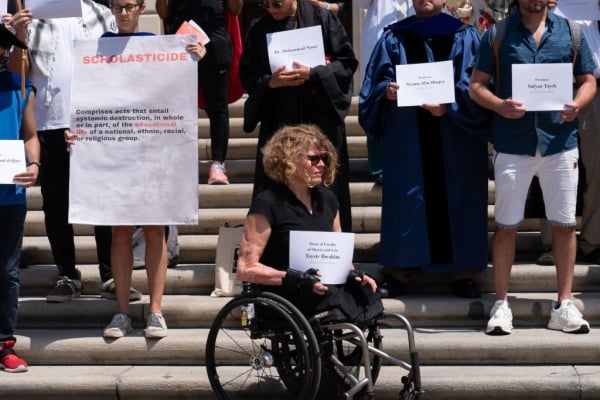
    Faculty at the University of Texas at Austin protested scholasticide last May.

    Suzanne Cordeiro/AFP via Getty Images

    Last week members of the American Historical Association voted overwhelmingly in favor of a resolution condemning scholasticide in Gaza amid the ongoing war between Israel and Hamas.

    The resolution noted that attacks by the Israel Defense Forces have “effectively obliterated Gaza’s education system,” destroying the majority of schools and all 12 university campuses in the territory.

    Now the AHA’s elected council will consider whether or not to accept the resolution.

    The resolution—which passed on a 428-to-88 vote—follows a wave of protests on U.S. college campuses last spring, during which pro-Palestinian demonstrators leveled charges of scholasticide, among other things, at Israel. A group of 1,600 academics also signed on to an open letter in April that accused Israel of scholasticide and “indiscriminate killing of educators and students.” The Israeli government denies the charge, arguing that Gaza’s educational institutions have been taken over by Hamas.

    But what is scholasticide? Here’s a look at the origin of the term and why Israel stands accused of it.

    Scholasticide Defined

    Karma Nabulsi, a Palestinian scholar and an emeritus fellow in politics and international relations at the University of Oxford, is credited with coining the term in 2009. Nabulsi has described scholasticide as the systematic destruction of educational institutions.

    “We knew before, and see more clearly now than ever, that Israel is seeking to annihilate an educated Palestine,” Nabulsi told The Guardian during the 2009 war between Israel and Hamas.

    (Nabulsi did not respond to a request for comment from Inside Higher Ed.)

    While her immediate remarks at the time were in reference to that particular conflict, she argued that Israel had a long pattern of attacking educational institutions dating back to 1948.

    The transnational organization Scholars Against War has since built on Nabulsi’s definition, listing 18 acts as scholasticide. Those actions include killing students, teachers and other school-related personnel; destroying educational institutions; blocking the construction of new schools; and broadly “preventing scholarly exchange in all of its forms.”

    A Revival of the Phrase

    The term “scholasticide” first appeared in Inside Higher Ed in 2009, shortly after Nabulsi coined it, connected to debates over boycotting Israeli institutions during its conflict with Hamas at that time. That boycott effort largely failed and the term “scholasticide” shrank from the academic lexicon before re-emerging in 2024 amid the current war between Israel and Hamas, which is now in its 16th month and has led to the deaths of tens of thousands Palestinian civilians in the Gaza Strip. More than 1,200 civilians, both Israelis and foreign nationals, were killed by Hamas in the October 2023 terror attack that prompted the war; another 254 were taken hostage, many of whom were later killed or still have not returned home.

    Google Scholar indicates the word “scholasticide” appeared in only a few articles before 2024. Now the search engine fetches more than 150 results for the term, many originating last year.

    According to Google Trends, searches for the term “scholasticide” jumped last spring, coinciding with pro-Palestinian student protests that popped up on campuses across the U.S. Protesters at some institutions, including the University of Oregon and the University of Texas, also held scholasticide vigils to remember and mourn the lives of scholars lost in war.

    Some scholars have also used the term “educide” to describe what is happening in Gaza. That phrase emerged from the U.S. invasion of Iraq, which heavily damaged educational infrastructure in the country. However, according to Google Scholar and Google Trends, the term “scholasticide” appears to be used more broadly than “educide” since last year.

    Accusations of Scholasticide

    Beyond the attacks on students and faculty, United Nations experts have also expressed concern about the destruction of educational institutions in Gaza and raised the question of scholasticide last year.

    “With more than 80% of schools in Gaza damaged or destroyed, it may be reasonable to ask if there is an intentional effort to comprehensively destroy the Palestinian education system, an action known as ‘scholasticide,’” a group of more than 20 U.N. experts said in an April news release from the Office of the High Commissioner for Human Rights. The group alleged “a systematic pattern of violence aimed at dismantling the very foundation of Palestinian society.”

    The Israeli military subsequently issued a statement in May emphasizing that the IDF has no “doctrine that aims at causing maximal damage to civilian infrastructure.” Officials accused Hamas of exploiting “civilian structures for terror purposes” by using such spaces to launch rocket attacks, store weapons and carry out various other purposes, according to The New York Times.

    A Failed Resolution

    In addition to the AHA resolution condemning scholasticide, the term also appeared in a proposed Modern Language Association resolution to endorse the boycott, divestment and sanctions movement. The resolution cited the April statement from the U.N. and alleged that “Israel’s campaign of scholasticide has destroyed every university in Gaza and killed at least 5,479 students and 356 educators.”

    However, the MLA’s elected Executive Council refused to let members vote on the resolution, prompting protests at last weekend’s Modern Language Association Annual Convention.

    Source link

  • Five areas of focus for student equity in CTE completion

    Five areas of focus for student equity in CTE completion

    Career and technical education can support students’ socioeconomic mobility, but inequitable completion rates for students of color leave some behind.

    NewSaetiew/iStock/Getty Images Plus

    Career and technical education programs have grown more popular among prospective students as ways to advance socioeconomic mobility, but they can have inequitable outcomes across student demographics.

    A December report from the Urban Institute offers best practices in supporting students of color as they navigate their institution, including in advising, mentoring and orientation programming.

    Researchers identified five key themes in equity-minded navigation strategies that can impact student persistence and social capital building, as well as future areas for consideration at other institutions.

    The background: The Career and Technical Education CoLab (CTE CoLab) Community of Practice is a group led by the Urban Institute to improve education and employment outcomes for students of color.

    In February and May 2024, the Urban Institute invited practitioners from four colleges—Chippewa Valley Technical College in Wisconsin, Diablo Valley College in California, Wake Technical Community College in North Carolina and WSU Tech in Kansas—to virtual roundtables to share ideas and practices. The brief includes insights from the roundtables and related research, as well as an in-person convening in October 2024 with college staff.

    “Practitioners and policymakers can learn from this knowledge and experience from the field to consider potential strategies to address student needs and improve outcomes for students of color and other historically marginalized groups,” according to the brief authors.

    Strategies for equity: The four colleges shared how they target and support learners with navigation including:

    • Using data to identify student needs, whether those be academic, basic needs or job- and career-focused. Data collection includes tracking success metrics such as completion and retention rates, as well as student surveys. Practitioners noted the need to do this early in the student experience—like during orientation—to help connect them directly with resources, particularly for learners in short courses. “Surveying students as part of new student orientation also provides program staff immediate information on the current needs of the student population, which may change semester to semester,” according to the report.
    • Reimagining their orientation processes to acclimate first-year students and ensure students are aware of resources. Chippewa Valley Technical College is creating an online, asynchronous orientation for one program, and Diablo Valley College is leveraging student interns to collect feedback on a new orientation program for art digital media learners. Some future considerations practitioners noted are ways to incentivize participation or attendance in these programs to ensure equity and how to engage faculty to create relationships between learners and instructors.
    • Supporting navigation in advising, mentoring and tutoring to help students build social capital and build connections within the institution. Colleges are considering peer mentoring and tutoring programs that are equity-centered, and one practitioner suggested implementing a checklist for advisers to highlight various resources.
    • Leveraging existing initiatives and institutional capacity to improve navigation and delivery of services to students, such as faculty training. One of the greatest barriers in this work is affecting change across the institution to shift culture, operations, structures and values for student success, particularly when it disrupts existing norms. To confront this, practitioners identify allies and engage partners across campus who are aligned in their work or vision.
    • Equipping faculty members to participate in navigation through professional development support. Community colleges employ many adjunct faculty members who may be less aware of supports available to students but still play a key role in helping students navigate the institution. Adjuncts can also have fewer contract hours available for additional training or development, which presents challenges for campus leaders. Diablo Valley College revised its onboarding process for adjuncts to guarantee they have clear information on college resources available to students and student demographic information to help these instructors feel connected to the college.

    Do you have an academic intervention that might help others improve student success? Tell us about it.

    Source link

  • Freshman enrollment up this fall; data error led to miscount

    Freshman enrollment up this fall; data error led to miscount

    Freshman enrollment did not decline this fall, as previously reported in the National Student Clearinghouse Research Center’s annual enrollment report in October. On Monday, the NSC acknowledged that a methodological error led to a major misrepresentation of first-year enrollment trends, and that first-year enrollment appears to have increased.

    The October report showed first-year enrollments fell by 5 percent, in what would have been the largest decline since the COVID-19 pandemic—and appeared to confirm fears that last year’s bungled rollout of a new federal aid form would curtail college access. Inside Higher Ed reported on that data across multiple articles, and it was featured prominently in major news outlets like The New York Times and The Washington Post.

    According to the clearinghouse, the error was a methodological one, caused by mislabeling many first-year students as dual-enrolled high school students. This also led to artificially inflated numbers on dual enrollment; the October report said the population of dually enrolled students grew by 7.2 percent.

    “The National Student Clearinghouse Research Center acknowledges the importance and significance of its role in providing accurate and reliable research to the higher education community,” Doug Shapiro, the center’s executive director, wrote in a statement. “We deeply regret this error and are conducting a thorough review to understand the root cause and implement measures to prevent such occurrences in the future.”

    On Jan. 23, the clearinghouse will release another annual enrollment report based on current term estimates that use different research methodologies.

    The Education Department had flagged a potential issue in the data this fall when its financial aid data showed a 5 percent increase in students receiving federal aid. In a statement, Under Secretary James Kvaal said the department was “encouraged and relieved” by the clearinghouse’s correction.

    Source link

  • A Response to ‘Online Degrees Out of Reach’

    A Response to ‘Online Degrees Out of Reach’

    A Response to ‘Online Degrees Out of Reach’

    Susan H. Greenberg

    Mon, 01/13/2025 – 03:00 PM

    An ed-tech consultant writes that a recent article about online completion rates “shows a disturbing disregard for the complexities of education outcomes.”

    Byline(s)

    Letters to the Editor

    Source link

  • Career planning advice for grad students/mentors (opinion)

    Career planning advice for grad students/mentors (opinion)

    lvcandy/DigitalVision Vectors/Getty Images

    As a trained scientist, I had a fantastic research mentor. We talked about my research project, which experiments to prioritize and what the data meant, and we even sometimes discussed personal things like family and ties to home. When I joined his lab, I was open with my mentor about my interest in a teaching career and my desire to run a small research program working primarily with undergraduates. However, my career aspirations evolved over the course of my graduate training, and I found myself hesitant to share my new career goals. Though I recognized that my interactions with my mentor were quite positive and supportive, I still feared that sharing my non–academic scientist aspirations would somehow disappoint him, or worse, that I wouldn’t get the fullest support for my research training.

    Now, as a career development professional who advises biomedical Ph.D. students, I see this same pattern often. Students express feeling comfortable discussing their research and academic endeavors with their research mentors but hesitate when it comes to discussing career plans outside academic research. They fear not receiving the same level of support and training, letting their mentor down, or being seen as less committed to their research and academic pursuits.

    While I find these feelings familiar, I now encourage students to push past these fears. Students can receive valuable guidance and access to further opportunities when they engage in career conversations with their mentors. I also advocate for research mentors to be intentional about incorporating career planning into their training and mentoring conversations. What follows is advice for both students and research mentors for having more productive and positive career conversations.

    For Students

    Having career conversations is a professional skill you can learn.

    The first thing you need to know is you are not alone. Feeling apprehensive about talking to your mentor about your career is completely normal, especially if you have not engaged in these conversations before or if you are expressing a desire to explore careers outside academia. Even if your mentor hasn’t followed the career path you’re considering, they can still offer guidance, opportunities to help you develop transferable skills and connections within their network who may offer inroads into other career sectors.

    Start career conversations early. Waiting until you’re rushing to graduate or scrambling for the next step often results in missed opportunities to prepare effectively. Starting these conversations early gives you time to explore different options, take advantage of targeted learning opportunities and make more informed decisions. For example, you could start the conversation with your mentor by saying, “I’ve been learning about careers in science policy and how Ph.D.s can impact policy and regulatory rules in government roles. I’d love to hear your thoughts on this type of career and any advice you might have for exploring it further.” This approach invites your mentor to join the conversation as a collaborator and can set the stage for regular career conversations.

    Engage in reverse mentorship. Instead of assuming your mentor cannot help with careers outside academia, consider this an opportunity to take a proactive approach in researching career options and sharing what you learn with your mentor. This can help educate your mentor and also serve as a springboard to discuss transferable skills and potential opportunities. For example, you might say, “I’ve been learning about career opportunities for Ph.D.s in biotech project management roles. These positions value skills like leadership, data interpretation and cross-functional communication. Could we talk about how I might develop these skills further in my current work?” This approach positions you as an active learner and invites your mentor to help you acquire the skills you need. As your mentor learns about the transferable skills most relevant to your career preparation, it may also lead to opportunities where you and your mentor can align your research endeavors with skills needed for your future.

    Use an individual development plan to guide regular conversations. Having one career conversation is a great start, but ideally you would have these conversations on a more regular basis. An IDP is a great tool for structuring regular career discussions with your mentor and is often used on an annual or semiannual basis. The IDP can guide you to reflect on your career interests, identify skills you want to develop and set clear, actionable goals. You can then share and discuss your IDP with your mentor during regular check-ins to seek their advice on your goals and progress. This provides a collaborative approach to your career planning, keeps your discussions focused and over all helps you both be more transparent with your planning. Many Ph.D. programs provide their own customized IDPs that incorporate research and career planning. Another widely used resource is the myIDP tool from Science Careers, which provides a step-by-step framework for self-assessment, career exploration and goal-setting.

    For Research Mentors

    You can support career discussions, even outside your area of expertise.

    For research mentors, it’s understandable that these conversations can feel daunting when you don’t have experience in the career fields your students are interested in. However, mentors don’t need to be experts in every career to provide students with meaningful support, valuable connections and opportunities for skill enhancement.

    Normalize career discussions. Encourage your student to talk about their career aspirations early in the mentoring relationship and be supportive of careers outside of academia. This signals to your student that their career is just as important as their research, and you’re invested in helping them succeed whether they choose an academic career or not. You can start by simply saying, “I know your interests may change throughout your studies, but what are some career options you are currently considering after graduate school?” Asking your student what they are considering is a much less intimidating question than “What do you want to do or be?” It also invites your student to be more open with what they are thinking and creates space for their choices to evolve as they gain further experiences.

    Ask questions and offer connections. Even if you don’t know much about, say, a career in science communication or technology commercialization, you can still ask reflective questions to help your student clarify their goals. Asking, “What excites you about this path?” or “What skills do you think are important in that field?” shows interest and invites further conversation. If possible, you can then connect them with lab alumni or professionals in your network who may have more expertise in that specific career field. Your institution may also have a career development office that you can refer your student to for further career-readiness support. If you truly don’t know about the career, sharing a willingness to learn can set the stage for productive conversations in the future.

    Recognize the value of transferable skills. Your student is learning a wealth of skills in their academic and research experiences. As their mentor, you can assist your student in understanding how the research skills they’re developing—such as critical thinking, data analysis, grant writing and project management—can apply broadly across many careers. Additionally, as your student identifies skills they will need in the specific career they are targeting, you may be able to help them gain experiences honing those skills. The student interested in scientific writing may become your go-to person for editing, and together you can plan to have the student lead efforts on a comprehensive review and assist more with grant writing. Or you may ask the student aspiring to move into data science to take on a project analyzing large data sets and give them more opportunities to practice their programming skills. When you align transferable skill development with research endeavors, you’re actively supporting your student’s career goals in a way that is productive for both of you.

    Acknowledge that career choices are based on personal and professional goals. Your student’s career decisions are based on both their personal priorities as well as their professional ambitions. Family planning, financial stability, caregiving responsibilities, health needs, visa restrictions or a need for geographic flexibility are just a few of the many factors that influence career decision-making. If you treat these considerations as unimportant or secondary to research, you will not adequately help your student navigate key factors in their long-term career decision-making. However, encouraging your student to integrate both personal and professional priorities into their career planning demonstrates an investment in them as a whole person and supports them in making thoughtful and sustainable career choices aligned with their personal needs.

    Coda

    I still remember my own mentor’s reaction when I finally shared my career goals. He admitted that he didn’t know much about the career I wanted to pursue—academic administration—but he then reassured me of his support. It turned out that I didn’t need to be nervous about this conversation. He was happy to provide supportive recommendation letters, help me make connections, serve as a positive job reference and offer general job-seeking advice. I graduated shortly thereafter, and his support played a critical role in landing positions early in my career. My only regret when I think back to my time as a graduate student is knowing that I could have begun to have these career conversations sooner.

    Raquel Y. Salinas is the director of student affairs and career development at the University of Texas MD Anderson Cancer Center UTHealth Houston Graduate School of Biomedical Sciences. She is a member of the Graduate Career Consortium, an organization providing an international voice for graduate-level career and professional development leaders.

    Source link

  • Denied vote on pro-BDS resolution, MLA members protest

    Denied vote on pro-BDS resolution, MLA members protest

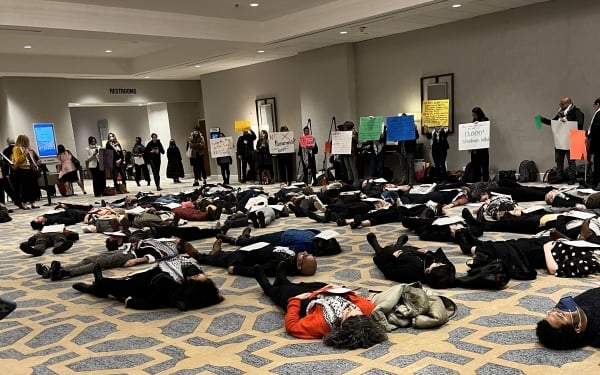
    A “die-in” protest at the MLA annual convention before Saturday’s Delegate Assembly meeting.

    As the Modern Language Association Delegate Assembly was beginning its meeting Saturday in New Orleans, audience members stood inside the hotel ballroom and chanted, “The more they try to silence us the louder we will be!” a video posted online shows. 

    The protesters, who made up a large number of the meeting’s attendees, read out a resolution endorsing the international boycott, divestment and sanctions movement against Israeli policy—the very resolution that the MLA’s elected Executive Council had blocked from going to the Delegate Assembly and the association’s full membership for a vote. Then the demonstrators walked out of the meeting. 

    It was one of multiple protests at this weekend’s annual MLA conference aimed at the Executive Council’s fall decision to reject the resolution without letting members vote on it.

    That resolution—like one that American Historical Association conference attendees overwhelmingly passed Jan. 5—also would have accused Israel of “scholasticide,” or the intentional eradication of an education system. But the AHA resolution didn’t endorse the BDS movement.  

    The demonstrations at the two conventions are the latest examples of scholarly associations and their members debating whether they should say anything as an organization about the ongoing war in Gaza at a time when politicians and people both inside and outside academe are criticizing scholars and institutions for expressing opinions on current events.  

    Anthony Alessandrini, an English professor at the City University of New York’s Kingsborough Community College, said he led a call and response demonstration. A few shouts of “Shame!” rang out.

    “Sometimes, this is what democracy looks like!” the demonstrators chanted in unison during the call and response. They raised hands or fists in the air, and some held signs that Alessandrini said bore the names of Palestinian academics killed in Gaza since October 2023. Protesters held a large banner that read, “MLA is Complicit in Genocide.”

    As they were walking out of the ballroom, protesters chanted “Free free Palestine!” and “You don’t have quorum!”—the minimum required numbers of attendees to conduct official business at a meeting. However, the MLA said quorum was maintained and the meeting continued.  

    The MLA Executive Council, an elected body, released a lengthy statement last month explaining its October decision to shoot down the resolution. The Council said it was concerned about “substantial” revenue loss if members endorsed the BDS movement, saying legal restrictions in many states on partnering with BDS-supporting organizations would end the MLA’s ability to contract with numerous colleges and universities and their libraries. It added that “some private institutions and major library consortia” also have such prohibitions.

    “Fully two-thirds of the operating budget of the MLA comes from sales of resources to universities and libraries, including the MLA International Bibliography,” the Council said.

    Dana Williams, president of the Executive Council and a professor of African-American literature at Howard University, told Inside Higher Ed Saturday that “the primary reason” for the council’s decision “was fiduciary.” But she also mentioned concerns about dividing the membership over endorsing the BDS movement, noting that “collegiality was one of many things that we were considering.”

    The Council’s statement in December suggested MLA members consider something short of endorsing the BDS movement. “Could not a motion calling for a statement protesting scholasticide in Gaza, while not focusing on BDS, be a powerful expression of solidarity?” it said.

    The fallout from the Executive Council’s decision included the resignation of two of its roughly 15 members, who were nearing the end of their terms. One was Esther Allen, a professor at the City University of New York’s Graduate Center and Baruch College.

    “The really don’t feel comfortable with any kind of member activism, they really don’t want it at all on any subject,” Allen told Inside Higher Ed.

    Williams said she supports members’ right to protest. “The association is the membership, we want to reiterate,” she said. What the members who walked out missed “was the one-hour open discussion [during the meeting] that … was really fruitful, thoughtful engagement with those delegates who were present that will inform the actions of the council going forward,” she added. The MLA didn’t provide a remote option for watching the meeting.

    The Council continues to believe that rejecting the resolution “was the right decision that would allow the association to continue to do its really important work to serve the members,” she said. “We had the benefit of a council that is bold enough and courageous enough to make very hard decisions.”

    MLA Members for Justice in Palestine is circulating a pledge for members to promise not to renew their memberships in protest. Alessandrini noted some other scholarly groups have endorsed the BDS movement.

    “My sort of forecast is a lot of people are going to move from organizations like the MLA and, I would add, the AHA [American Historical Association] if they don’t sort of endorse the will of the members—and towards the many organizations that have in fact taken the right stand,” he said. 

    Source link

  • Pro-Palestine Columbia professor departs after investigation

    Pro-Palestine Columbia professor departs after investigation

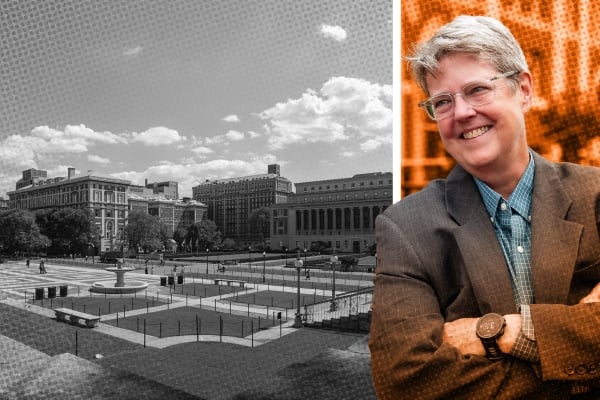
    A longtime tenured Columbia University law professor who faced public criticism from Columbia’s president and congressional Republicans will no longer teach at the institution, after more than 25 years as a faculty member there.

    Katherine Franke said Friday in a letter that she’s effectively been terminated, following a university investigation into a media interview she gave in which she criticized students who formerly served in the Israel Defense Forces for allegedly harming other students at Columbia. The investigation found that her media comments, and her alleged retaliation against a complainant in subsequent comments, had violated Columbia’s Division of Equal Opportunity and Affirmative Action Policies and Procedures. 

    She’s among multiple U.S. faculty members who’ve been investigated or punished in connection to speech that can broadly be considered pro-Palestinian.

    In a statement, Franke said she reached an agreement with Columbia “that relieves me of my obligations to teach or participate in faculty governance after serving on the Columbia law faculty for 25 years.” She added, “While the university may call this change in my status ‘retirement,’ it should be more accurately understood as a termination dressed up in more palatable terms.”

    She did not share a copy of the departure agreement, nor did the university. Columbia didn’t directly respond to her characterization of her departure.

    In a broadcast last January on Democracy Now!, a left-leaning radio and television newscast, Franke talked about an incident on campus in which pro-Palestinian protesters said they had been sprayed with a harmful chemical. Students were hospitalized, and protest organizers accused other students who had served in the Israeli military. The university said in August that the substance sprayed was “a non-toxic, legal, novelty item.”

    Franke told the host that Columbia has a program that connects it with “older students from other countries, including Israel. And it’s something that many of us were concerned about, because so many of those Israeli students, who then come to the Columbia campus, are coming right out of their military service. And they’ve been known to harass Palestinian and other students on our campus. And it’s something the university has not taken seriously in the past.”

    Most Jewish citizens of Israel must serve in the military for at least 32 months for men and 24 for women.

    “We know who they were,” Franke said on the program of the alleged attackers at Columbia. (Franke wrote in her statement Friday that, “I have long had a concern that the transition from the mindset required of a soldier to that of a student could be a difficult one for some people, and that the university needed to do more to protect the safety of all members of our community.”)

    Franke’s Democracy Now! comments became the subject of a university investigation as well as a broader congressional hearing related to campus antisemitism. Representative Elise Stefanik, a New York Republican, asked then–Columbia president Minouche Shafik what disciplinary action had been taken against Franke. She characterized Franke as saying, “Israeli students who have served in the IDF [Israel Defense Forces] are dangerous and shouldn’t be on campus.”

    Shafik didn’t answer Stefanik straightforwardly, but replied, “I agree with you that those comments are completely unacceptable and discriminatory.” Later during the televised hearing, Shafik confirmed that Franke was under investigation.

    That investigation found that in addition to the interview comments, Franke violated campus policy by retaliating against the complainants.

    A November 2024 Columbia EOAA Investigation Determination letter to one of the complainants, which was provided to Inside Higher Ed, says, “You also alleged retaliation on three separate occasions during the course of this investigation when complainant: (i) provided your name to a reporter who publicized your identity as an individual who initiated the complaint; (ii) reposted a tweet referring to you as a ‘genocide advocate’ and ‘McCarthyite bigot’; and (iii) posted a link to a document on social media indicating that you had made additional complaints against respondent.” (Franke had named the complainants—two of her faculty colleagues—to Inside Higher Ed for a July story.)

    The letter says the university concluded that the interview and the first two retaliation allegations violated the policy.

    In her statement Friday, Franke said she did appeal. But “upon reflection, it became clear to me that Columbia had become such a hostile environment that I could no longer serve as an active member of the faculty.”

    Over the last year, people have posed as students to secretly videotape her, and clips have ended up on “right-wing social media sites,” she said. Students have enrolled in her classes to provoke discussions they can record and complain about, she said, adding that law school colleagues have also secretly taped her and yelled “at me in front of students that I am a Hamas supporter.”

    “After President Shafik defamed me in Congress, I received several death threats at my home,” Franke said. “I regularly receive emails that express the hope that I am raped, murdered and otherwise assaulted on account of my support of Palestinian rights.”

    Columbia Law dean Daniel Abebe told colleagues Thursday that Franke “is accelerating her planned retirement and now will retire from Columbia on Friday.” Abebe praised her work.

    But Franke contests the word “retirement.” In an email to Inside Higher Ed on Friday, Franke explained that she signed an agreement with Columbia a year ago “to retire in a few years—phased in.” But she said the university “reneged on” providing routine retirement benefits, such as recommending her for emeritus status with the university’s Board of Trustees, providing her an office for five years and still allowing her to teach some classes.

    “Columbia University’s leadership has demonstrated a willingness to collaborate with the very enemies of our academic mission,” Franke wrote in her statement. “In a time when assaults on higher education are the most acute since the McCarthyite assaults of the 1950s, the university’s leadership and trustees have abandoned any duty to protect the university’s most precious resources: its faculty, students and academic mission.”

    The university didn’t provide an interview Friday. In an emailed statement, a Columbia spokesperson wrote, “Columbia is committed to being a community that is welcoming to all and our policies prohibit discrimination and harassment.”

    “As made public by parties in this matter, a complaint was filed alleging discriminatory harassment in violation of our policies,” the statement continued. “An investigation was conducted, and a finding was issued. As we have consistently stated, the university is committed to addressing all forms of discrimination consistent with our policies.”

    Source link

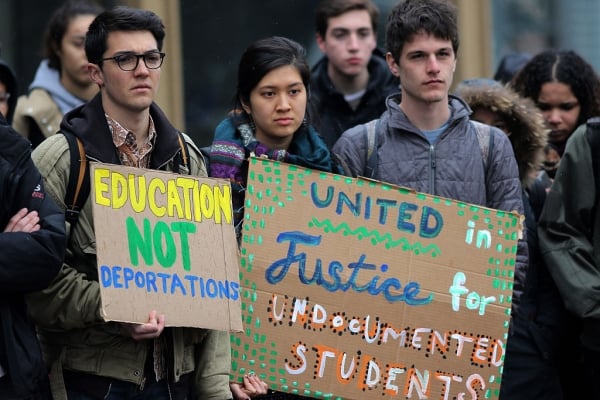
  • Mixed reactions after Biden nixed TRIO for undocumented students

    Mixed reactions after Biden nixed TRIO for undocumented students

    Advocates for undocumented students have their hands full as they prepare for President-elect Donald Trump to take office later this month.

    They’re fielding questions from nervous students fearful of Trump’s promises of mass deportations and advising college staff members seeking to support these students within legal bounds. But then, the Biden administration dropped a fresh disappointment on top of their heaping pile of concerns when it pulled back on a proposal to make undocumented students eligible for some TRIO programs.

    The decision—tucked into a set of finalized rules released at the end of the year—was met with mixed emotions from advocates who have long pushed to give undocumented students access to the federal college prep programs designed to help disadvantaged students enroll and persist in college. Some mourned the chance to secure a win for undocumented students before Trump took office. Others saw the decision as a painful but pragmatic response to the incoming administration, which may have barred undocumented students from these programs anyway or penalized TRIO programs for serving them. Proponents of the dead proposal expect it’ll be years before the opportunity to open up these programs presents itself again.

    Magin Sanchez, higher education policy analyst at UnidosUS, a Latino civil rights organization, said undocumented students would have a lot to gain from TRIO programs, given that they already face major hurdles to enrolling in college, like a lack of access to federal financial aid. He believes the extra academic support and college counseling these programs offer could put these students on a more level playing field with their peers.

    “Higher education is one of the surest pathways to economic mobility and prosperity,” Sanchez said. “There are significant barriers for this population, students that just want to have access to a better life, like any college student.”

    A former board member at the Council for Opportunity in Education told Inside Higher Ed that they didn’t know how to feel about the Biden administration’s decision. The organization, which supports low-income and first-generation students and students with disabilities, was among those that pushed for the change.

    “With the new administration coming in, we want to do everything to protect our students, so in that sense, I kind of understood why,” said the former board member, who asked to remain anonymous in order to avoid speaking for their current employer. “My other reaction was, man, we’re doing this again? We’re bringing up students’ hopes again? We bring up their hopes only to shoot them down again and again.”

    What Happened

    The Education Department initially proposed that noncitizen students be eligible for three TRIO programs—Upward Bound, Talent Search and Educational Opportunity Centers—if students enrolled in or planned to enroll in high schools in the United States, its territories or Freely Associated States and met other eligibility criteria. Those programs were selected because they serve students in public K-12 schools, which are open to all students, regardless of immigration status.

    But in finalized rules released Dec. 30, the department decided against it.

    Department officials wrote that, after reviewing public comment, they believed the proposal was “too narrow,” because it didn’t include the Student Support Services program, which offers academic support to college students, or the McNair Scholars program, which prepares students for graduate education. Officials also concluded that opening only some programs to undocumented students would “cause confusion” and “increase administrative burden.”

    Department officials also argued that the Higher Education Act, the federal law that governs how federal higher ed programs are administered, doesn’t explicitly bar noncitizens from participating in TRIO programs.

    So, the department scrapped the proposal altogether “to reconsider how best to ensure that the TRIO programs are able to reach all populations of disadvantaged students, irrespective of immigration status,” officials wrote.

    Pushback, Parsing and Planning

    Some advocates don’t buy the department’s explanations.

    The former COE board member said TRIO directors already have to parse regulatory differences between different programs, so the idea that opening up only some programs to undocumented students would prove too confusing “didn’t fly too well with me.”

    “I get it, it’s a political explanation, but at the same time, it doesn’t help the community with that messaging,” they said.

    Jon Fansmith, senior vice president for government relations and national engagement at the American Council on Education, said as far as he’s concerned, “This really seems like a classic case of elections have consequences. Had we been talking about an incoming Harris administration, I don’t know that the department would have pulled back the regulation.”

    At the same time, the Biden administration seems to have left the door open a crack. The language of the finalized rules implies TRIO directors could interpret the Higher Education Act as not explicitly forbidding undocumented students from participating in TRIO programs.

    “I think you can certainly read that as offering up an interpretation of existing statute that might provide some flexibility—certainly the idea that if it’s not delineated, that doesn’t necessarily preclude it,” Fansmith said. So, the Biden administration may be “indicating where schools could go, but frankly, stopping short of something they know would be quickly reversed by the incoming administration.” Still, that’s “certainly not as clear as formally regulating on it.”

    Now in a gray area, it remains to be seen whether TRIO directors will use that latitude to serve students regardless of citizenship or if they’ll continue to bar undocumented students, given the Trump administration is unlikely to interpret the law in this way. Their choices could prove risky. A year ago, some school and college administrators were already worried that, if undocumented students were granted access to these programs, TRIO programs could face Republican backlash and funding cuts. This summer, six Republicans in Congress, including former chair of the House education committee Virginia Foxx, opposed the proposal in a letter to Education Secretary Miguel Cardona.

    Education department officials wrote in the finalized rules that the department “may reconsider TRIO student eligibility through future rulemaking efforts.” But the proposal’s proponents believe there’s a slim to none chance of that during Trump’s term, given his rhetoric against undocumented immigrants.

    “We’re going to have to wait at least four years again,” Fansmith said.

    Nonetheless, some remain hopeful that undocumented students will benefit from TRIO programs in the future. Sanchez said he still thinks it’s going to happen, even if this “window of opportunity” has passed.

    “We’ll keep fighting,” Sanchez said. “We’ll keep advocating, because we may not have gotten it right now, but we’ll get it eventually.”

    Source link

  • Education Department names “Postsecondary Success” honorees

    Education Department names “Postsecondary Success” honorees

    The U.S. Department of Education has named the six inaugural winners of its Postsecondary Success Recognition Program, which were selected out of a pool of 200 institutions invited to apply, according to a Thursday news release.

    The program, which was introduced last April, aims to reward institutions that “are enrolling underserved student populations, facilitating successful student transfers and completions, and equipping graduates for careers that lead to economic mobility,” Thursday’s announcement stated.

    The winners include three associate degree–granting institutions—CUNY Hostos Community College, Miami Dade College and Salish Kootenai College—and three bachelor’s degree–granting institutions: San José State University, the University of South Carolina and the University of Texas at Arlington.

    The department also granted a special “trailblazer” award to Georgia State University, for both its internal efforts to improve graduation rates and its National Institute for Student Success, which supports student success efforts at more than 100 campuses across the country.

    The presidents of the winning institutions celebrated the achievement in statements shared by the department.

    “As a community college in the South Bronx, the poorest congressional district in the United States, our mission is to provide social mobility through education and to create lifelong learners who will uplift their communities for generations to come,” said Hostos Community College president Daisy Cocco De Filippis. “We understand that for our students, the stakes are high, and the challenges can seem insurmountable. That is why we dedicate ourselves to relentlessly supporting our students and helping them get their degrees with a manos a la obra (all hands on deck) ethos that informs everything we do. While our students’ success is the highest reward, on behalf of the entire faculty and staff of Hostos Community College, I want to express our most sincere gratitude for this recognition of our efforts. Mil gracias y bendiciones.”

    Source link