Tag: Jobs

  • Reading Between the Lines on Compact Responses

    Reading Between the Lines on Compact Responses

    Multiple universities have rejected President Trump’s proposed Compact for Academic Excellence in Higher Education, but they have taken different approaches to turning down the commander in chief. Some have declined pointedly, while others struck a more delicate balancing act.

    To be sure, leaders of the institutions invited to sign the compact have found themselves squeezed by both internal and external forces, under pressure from the federal government to approve the deal and from faculty and other campus constituents to reject it. Both public and private universities have also faced political pressure from state lawmakers, who in some cases urged them to sign and in others have threatened to strip funding if they do.

    Most of the nine universities originally invited to join the compact rejected it on or before the Oct. 20 deadline to provide feedback—well ahead of Nov. 21, the final date for making a decision. Their responses, released to the public, ranged from pointed to demure; in some cases, institutional leaders emphasized their core values in rebutting the proposal, which promised to grant preferential treatment in exchange for freezing tuition, capping international enrollment and suppressing criticism of conservatives, among other demands from the U.S. Department of Education.

    The Road to ‘No’

    Here are links to each institution’s response, in the order in which they were posted publicly:

    Together these statements offer insights into how institutions are responding to an unprecedented demand from the federal government: that they subscribe to President Trump’s culturally conservative vision of higher education in exchange for financial gain.

    Key Themes

    Experts note that while most institutions declined the deal, some statements stood out more than others.

    Brian Rosenberg, president emeritus of Macalester College, highlighted the Massachusetts Institute of Technology’s statement as the clearest rejection. Unlike some of the other responses, it doesn’t promise future engagement on the federal government’s concerns and is a clear, resounding no based on MIT’s principles, he said.

    The first to reject the compact, MIT president Sally Kornbluth highlighted areas of agreement, such as an emphasis on merit in hiring, admissions and more, but she also argued that the proposal was “inconsistent with our core belief that scientific funding should be based on scientific merit alone.”

    Lisa Corrigan, a communications professor at the University of Arkansas and an expert on rhetoric and political communication, flagged the University of Southern California’s statement as a notable response. She pointed out that while USC highlighted its commitment to promoting civil discourse, as many others did, it also emphasized its “commitment to ROTC and veterans.” (Brown and Arizona were the only other institutions to mention veterans in their responses.)

    “I thought USC really did a strong job in articulating exactly what values they are using to guide their decision-making in rejecting the compact,” Corrigan told Inside Higher Ed.

    Erin Hennessy, vice president at TVP Communications, flagged both the Dartmouth and Penn statements as notable for different reasons. With Dartmouth, Hennessy said she was struck by the brevity of the statement, which clocked in at about 230 words. And for Penn, she pointed out that it was the only university that did not share the rejection letter it sent to Education Secretary Linda McMahon along with its public statement. Every other institution that rejected the deal posted both a statement and the letter.

    (Asked for a copy of its response to the Department of Education, Penn declined to provide it.)

    Experts noted a number of other observations from the collective letters and accompanying statements—including how many presidents emphasized merit, which is mentioned in every response except Dartmouth’s. Altogether the word “merit” appears 15 times in the nine published university responses, and “meritocracy” is cited once.

    Hennessy posited that the focus on that specific word is an attempt to “push back on the perception of certain folks in the MAGA sphere that believe any program, or any consideration of race or class or ethnic background, is diametrically in conflict with the concept of merit.”

    Rosenberg suggested that universities are trying to turn the government’s argument against it. By emphasizing merit, universities are seizing on a “logical inconsistency in the position of the federal government,” he said. While the Trump administration is demanding merit in admissions, hiring and other areas, it also has signaled a willingness to provide preferential treatment on federal research funding based not on merit but a willingness to conform to political priorities.

    Many of the responses also mentioned institutional neutrality policies.

    USC, Virginia, Vanderbilt and WashU all cited the concept, though only USC and Virginia submitted clear rejections; WashU sent a mixed message, and Vanderbilt has committed only to offering feedback on the proposal. Dartmouth, which also has an institutional neutrality policy, did not mention it.

    Both Arizona and Virginia used a similar turn of phrase to reject the compact’s promise of preferential status in exchange for signing, with officials writing, “We seek no special treatment” in connection to advancing their missions.

    One word, however, is notably absent among all the responses: Trump. And only Dartmouth referenced political affiliation in its response to the federal government. President Sian Beilock wrote that she did not believe “the involvement of the government through a compact—whether it is a Republican- or Democratic-led White House—is the right way to focus America’s leading colleges and universities on their teaching and research mission.”

    WashU’s Muddled Messaging

    Though Washington University in St. Louis agreed to provide feedback to the federal government, administrators also appeared to tacitly reject the compact proposal. The university’s initial statement on Monday noted concerns about the compact but stopped short of an outright rejection; Chancellor Andrew Martin wrote that providing feedback does not mean “we have endorsed or signed on” to the proposal.

    But in a Tuesday email to faculty members, Martin wrote he “can confirm that we won’t sign the proposed Compact for Academic Excellence in Higher Education … or any document that undermines our mission or our core values.” Martin added WashU will provide feedback, emphasizing the importance of “having our voice at the table for these potentially consequential conversations.”

    WashU, however, has been reluctant to publicly call that a rejection.

    Asked by Inside Higher Ed about the authenticity of the email, first published by another news outlet, and whether it amounts to a rejection, a university spokesperson only confirmed it was official.

    Corrigan suggested that both WashU and Vanderbilt are trying to buy time “to see which universities are going to be in the next round, if any.” She added, “They want the opportunity to return to the conversation when there’s more political cover for them to potentially say no.”

    Institutional Silence

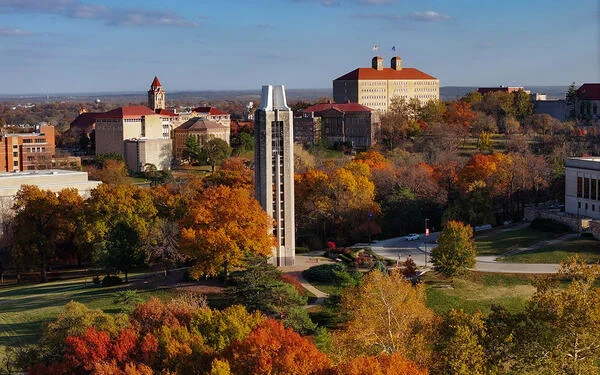
    While most universities invited to join the compact responded publicly by the deadline, both the University of Texas at Austin and the University of Kansas have remained silent on the matter.

    Neither has issued publicly shared feedback or other statements about the compact, though University of Texas system board leadership initially responded positively to the invitation to join.

    “For institutions that haven’t responded publicly yet, the questions I would be asking are, is there division between the president and the board on how to move forward on this? Is there division between the president and the faculty on how to move forward on this?” Hennessy said.

    To her, that silence signals that internal negotiations are likely at play, potentially involving debates over strategy, language and other points. She believes nonresponders are more likely to sign the compact and may be “trying to figure out how to make a yes more palatable” to critics.

    Rosenberg suggests there are likely legal concerns being discussed.

    “Like virtually everything else coming out of the government right now, it’s going to face a legal challenge once someone signs, because the limitations on free speech for members of the community are pretty severe,” he said. “Once someone signs, it’s going to end up in the courts.”

    Source link

  • U of Md. Criticized for Charging Turning Point Security Fee

    U of Md. Criticized for Charging Turning Point Security Fee

    Sarah L. Voisin/The Washington Post via Getty Images

    University of Maryland officials are facing backlash for requiring the campus chapter of a conservative student organization to pay what chapter leaders called a “viewpoint discriminatory” security fee for an event on Wednesday, CBS News reported

    While university police staffed the event free of charge, officials required the chapter to hire its own security to conduct entrance screenings. The event, titled Fighting Like Charlie, featured Daily Wire senior editor Cabot Phillips and was held just over a month after Charlie Kirk, the founder of Turning Point USA, was shot and killed during an event at Utah Valley University. 

    “It’s basically saying anybody, if they want to threaten our chapter or threaten us because of our viewpoints and our speech, then the university, in turn, is going to impose financial burdens on us, or else we can’t have our events,” University of Maryland senior Connor Clayton, communications chair for the campus Turning Point USA chapter, told CBS News. “That is a very dangerous precedent to put on a Turning Point chapter.”

    University officials said the fee is routine and that they have required the same of other student organizations that host similar guest speaker events on campus, regardless of the speaker or message. 

    The Leadership Institute, a Virginia-based nonprofit that trains conservative activists and leaders, ultimately paid the fee—which amounted to $148—on behalf of the chapter. The event proceeded as planned, according to posts on the chapter’s Instagram account. 

    Source link

  • Black, Latino, International Populations Decline at Harvard

    Black, Latino, International Populations Decline at Harvard

    Joseph Prezioso/AFP/Getty Images

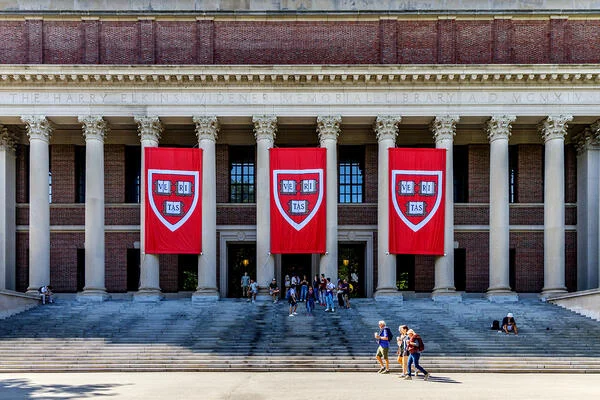
    The share of Black, Latino and international students in this year’s incoming Harvard University class declined from last year’s freshman class, The Washington Post reported.

    Black students made up 12 percent of the Class of 2029, down two percentage points from the previous year; Latino students comprise 11 percent of this year’s incoming class, compared to 16 percent last year. International student enrollment is also down, from 18 percent of last fall’s freshman class to 15 percent this year. Only eight international students deferred their admissions, despite reports that many international students were unable to arrive in the U.S. in time for fall classes due to visa issues.

    Harvard emphasized the incoming class’s geographic diversity, noting that students come from all 50 states and 92 countries. It also said 20 percent of the Class of 2029 are first-generation students.

    The data comes at a time when the Trump administration is attacking colleges for allegedly violating the Supreme Court’s ban on affirmative action by continuing to consider race in admissions—although admissions officials argue this isn’t happening. The administration specifically targeted Harvard earlier this year, ordering the institution to “cease all preferences based on race, color, national origin, or proxies thereof” in favor of “merit-based admissions.”

    Some colleges have stopped publicizing the racial makeup of their incoming classes this year, though it’s unclear if that’s related to the Trump administration’s scrutiny of admissions.

    Source link

  • What Did the University of Virginia Agree To?

    What Did the University of Virginia Agree To?

    In agreeing to follow sweeping guidance from the Department of Justice earlier this week, the University of Virginia committed to eliminating all DEI programming and adhering to the Trump administration’s broad interpretation of the Supreme Court’s 2023 decision banning race-conscious admissions policies.

    The nine-page DOJ memo, released in July, also bans the participation of transgender athletes in sports and the use of “ostensibly neutral proxies” for race, like geographic location. It came just three months after a federal court struck down a similar directive from the Department of Education and was viewed by many policy experts as even more wide-reaching and restrictive. The guidance hasn’t yet faced a legal challenge.

    Attorney General Pam Bondi originally wrote in the memo that the provisions outlined were a list of “non-binding suggestions” designed to “minimize the risk of [legal] violations.” But now, at least for UVA, it has become obligatory “so long as that guidance remains in force and to the extent consistent with relevant judicial decisions.” Failure to comply could risk the university’s federal funding.

    Under the agreement, the DOJ says it will temporarily pause all pending civil rights investigations, but if at any point Trump officials determine the flagship institution is making “insufficient progress toward compliance,” the DOJ reserves the right to resume investigation, pursue enforcement actions or terminate federal funding. In the meantime, UVA will be required to provide “relevant information and data” to the agency on a quarterly basis through 2028.

    “So if [UVA] feels confident that they can comply, then this could be a good outcome for the school. The investigations are closed and they don’t admit liability,” said Scott Goldschmidt, a partner and civil rights specialist at the law firm Thompson Coburn LLP. “But if there is any issue, or the government sees otherwise, then all bets are off, and they could be in a worse position than when they signed the agreement.”

    In Goldschmidt’s view, it’s all a part of the DOJ’s effort to encourage colleges to accept “their interpretation of law” without facing a legal challenge.

    “It was nonbinding,” he said of the guidance, “which is, again, why it’s so interesting that UVA seemed to pre-emptively comply with this over the summer and now has turned it into mandatory guidance by this agreement.”

    Starting in April, the DOJ used a series of letters to accuse UVA officials of actively attempting to “defy and evade federal anti-discrimination laws.” By early June, experts say, the assistant attorney general pressured former UVA president James Ryan to resign. Still, in the wake of the Justice Department’s pressure campaign, the institution’s interim president, Paul Mahoney, rejected the Trump administration’s even more sweeping “Compact for Academic Excellence in Higher Education” last week.

    UVA is just the latest institution to cut a deal with the Trump administration, though unlike those previous agreements, the public university won’t have to pay anything. This is also the first agreement to be made that deals primarily with the Justice Department’s guidance and diversity, equity and inclusion rather than alleged mishandling of antisemitism on campus.

    As other colleges and universities face related investigations, this deal could become a new framework for the administration and how it negotiates to bring higher education to heel.

    So, here’s a look at three key aspects of the agreement.

    1. Ending What Trump Calls Segregation and Preferential Treatment

    The July directive set four core standards for the universities and provided a broad but nonexhaustive list of examples for each.

    First, the DOJ requires the university to eliminate any practices in admissions, hiring or programming that Trump deems “preferential treatment” based on race, sex, religion or “other protected characteristics.” This could include identity-based scholarships, affinity groups or support programs; hiring or promotion practices that prioritize one specific group over another; or designating certain spaces on campus for students of a particular identity.

    Then, officials added in the memo that the use of purportedly neutral characteristics, like geographic location and cultural competency, are also prohibited as they can be used as “substitutes” for protected characteristics and are therefore “unlawful proxies.”

    The department cited essay prompts that suggest applicants write about “overcoming obstacles” as an example, despite the fact that the Supreme Court explicitly said in its ruling on affirmative action that college applicants could still write about their experiences with racism, sexism or religious discrimination so long as universities did not use them to re-establish “the regime we hold unlawful today.”

    The memo also lists segregation and training that officials say promotes discrimination as violations of civil rights law, citing as examples race-based training sessions like “Black caucuses” and “white ally meetings” and measures for selecting contracts that prioritize female-owned businesses.

    But what UVA is required to do under the guidance could change depending on court decisions.

    2. Not Infringing Academic Freedom

    In the text of the agreement and various materials distributed by UVA, university officials appear to intentionally reinforce that these restrictions on admissions, hiring and extracurricular programing will not impede the university’s right to academic freedom.

    “The U.S. does not aim to dictate the content of academic speech or curricula, and no provision of this agreement, individually or taken together, shall be construed as giving the United States the authority to dictate the content of academic speech or curricula,” the sixth point of the agreement reads.

    Mahoney’s statement to the UVA committee, as well as a frequently asked questions page on the UVA website, emphasized similar points, saying that no “external monitor” would be involved and that UVA will address any compliance concerns raised by the DOJ independently.

    “Importantly, [the agreement] preserves the academic freedom of our faculty, students, and staff,” Mahoney wrote. “We will also redouble our commitment to … free expression, and the unyielding pursuit of ‘truth, wherever it may lead,’ as Thomas Jefferson put it.”

    This differs from the more recent Compact for Academic Excellence in Higher Education, which would require an institution to restrict employees from expressing political views on behalf of the institution and shut down departments that “punish, belittle” or “spark violence against conservative ideas.”

    3. Pausing Liability but Keeping the University Vulnerable

    The second line of the agreement makes it clear that the document is not “an admission, in whole or in part” and that UVA “expressly denies liability with respect to the subject matter of the investigations.”

    So, as long as UVA complies with the DOJ memo, the investigations will be closed and the university will no longer be at risk of having to pay a multimillion-dollar settlement fee or losing federal financial aid. But Goldschmidt from Thompson Coburn emphasized that such a scenario is “a big if.”

    “If the DOJ at any point finds that UVA did not comply, then everything gets reopened, and all the potential issues, penalties, etc. that could come from a federal civil rights investigation would fall back down on the institution,” he explained.

    And given that the DOJ’s memo is “the most aggressive document that we’ve seen reinterpreting Title VI civil rights laws,” Goldschmidt said, the risk is even greater. So while UVA has already made its decision, he suggested that other universities think it through before they do the same.

    “Schools would really want to think hard and deep about whether there is any wiggle room,” he said, “because the consequences of violating the DOJ’s memo are so strong.”

    Article was updated to reflect a clause in UVA’s agreement that the university is bound by the guidance so long as it remains and consistent with relevant judicial decisions.

    Source link

  • Oral Exams and “MTV Unplugged”

    Oral Exams and “MTV Unplugged”

    Oral exams are making a comeback, and I’m mostly here for it.

    A few weeks ago, we had a faculty professional development day on campus. One of the sessions was devoted to faculty greatest hits, defined loosely as teaching techniques that people are proud of and were willing to share with their colleagues. The session was terrific over all, but the one I haven’t been able to stop thinking about was from a professor who decided to fight AI-enabled cheating by giving oral exams.

    For context, the class in which he started using oral exams was conducted over Zoom. That made it particularly difficult to prevent students from accessing unauthorized sources during tests. When the apparent cheating hit a level he hadn’t seen before, he resorted to oral exams to force students to rely only on themselves.

    He reported that the exams took about 15 minutes per student, so with a relatively small class, the logistics weren’t prohibitive. As he told it, it became clear quickly which students had mastered the material and which were just lost.

    Oral exams aren’t exactly a new technology, but they have a new appeal. Readers of a certain generation may remember MTV Unplugged. It was a concert show in which performers had to use only nonelectric instruments. Stripped of synthesizers and Auto-Tune, some musicians thrived and some really struggled. (I remember my roommates and I laughing ourselves silly at Duran Duran’s effort on Unplugged. By contrast, Nirvana’s was so good that the performance came out later as an album.)

    Oral exams are similar; when the student doesn’t have any of the usual crutches, you get a cleaner sense of what they actually know. Now that the illicit crutches are ubiquitous, forcing students to unplug is more useful than ever.

    I’ll admit breaking into a cold sweat at the memory of my own oral exams in grad school, but those were long, high-stakes and conducted by a group. In retrospect, though, part of what made that so difficult was that I’d never had an oral exam up to that point. I hadn’t had any practice. And if I’m being honest, the professors hadn’t had much practice, either. That was a hell of a time to start.

    From the administrative side, I can imagine a few potential concerns with oral exams. I’m hoping that my wise and worldly readers can help.

    The first and most basic one is that most of us don’t have much experience designing oral exams. I’ve never seen a workshop on design principles for orals. (They may exist, but I’ve never seen or heard of one.) To be fair, most of us were never taught how to construct written exams, either, but at least most of us have experience there. In the absence of serious attention to ways to construct oral exams, I’d have a concern about validity.

    The second is about grade appeals. If the exam is lost to history, how does a student reasonably contest a grade? I don’t mean to encourage appeals, but there needs to be some way for a student to press a case when they feel wronged. Presumably the exams could be recorded, but there, too, we’d need serious and enforced rules governing access to the recording and when it would need to be deleted.

    Finally, there’s a basic issue of stage fright. A student freezing up could be clueless, or they could be paralyzed with fear. It would be a shame to fail a student who actually knows their stuff because they got nervous and went into vapor lock. Presumably this issue would fade if oral exams became a lot more common, but the first wave is likely to run into this one repeatedly. Test anxiety is bad enough for written exams; combine it with stage fright and some capable students will struggle.

    Still, none of these strike me as dispositive.

    Wise and worldly readers, have you found ways to ensure that oral exams are well designed? How do you handle recording? And what do you do about student stage fright? I’d love to hear at deandad (at) gmail (dot) com. Thanks!

    Source link

  • “The Myth of Political Correctness,” 30 Years Later

    “The Myth of Political Correctness,” 30 Years Later

    On Oct. 24, 1995, Duke University Press published my first book, The Myth of Political Correctness: The Conservative Attack on Higher Education. Looking back 30 years at my book, it can be dispiriting to see how everything today seems the same, only worse. “Political correctness” has been replaced by “woke” as the smear of the moment, but otherwise almost every word of my book could be republished today, with a thousand new examples to buttress every point.

    Sometimes the title of the book confused people who mix up a “myth” with a “lie.” As I noted 10 years ago, “When I called political correctness a ‘myth,’ I was never denying the fact that some leftists are intolerant jerks, and sometimes their appalling calls for censorship are successful. My point was that even though political correctness exists, the ‘myth’ about it was the story that leftists controlled college campuses, imposing their evil whims like a ‘new McCarthyism’ or ‘China during the Cultural Revolution.’ In reality, then and now, the far greater threat to freedom on campus came from those on the right seeking to suppress opposing views.”

    I had been inspired to write the book by Dinesh D’Souza; I reviewed his best-selling 1991 book, Illiberal Education, for my column in the Daily Illini at the University of Illinois at Urbana-Champaign. If D’Souza, a recent college graduate, could publish such a terrible book full of misinformation, then surely I could write a better book. So I did.

    But the publishing market was much more interested in the endless parade of conservatives bemoaning the “PC police” and “tenured radicals” than a refutation of these flawed arguments. My book, which I started to write as a graduate student in the Committee on Social Thought at the University of Chicago (home to Saul Bellow, Allan Bloom and Edward Shils), was rejected by more than 50 publishers before I was able to persuade Stanley Fish (whom I had encountered as the editor of Democratic Culture, the newsletter of Gerald Graff and Gregory Jay’s Teachers for a Democratic Culture) to publish it at Duke. My editor (and now also an Inside Higher Ed columnist) was Rachel Toor, who helped to make some sense of my ideas.

    In the end, my book failed to shift the debate about academic freedom—not because it was wrong or the facts were refuted, but because it was ignored. From my perspective, I was correct about everything and nobody learned anything from me. And I’ve been writing essentially the same thesis, over and over again, in a second book and essays and hundreds of blog posts.

    Looking back at my first book, I think its claims have been proven largely correct over the past three decades (but I might be biased). At the core of the book were the chapters on the “Myth of PC” (examining how many of the leading anecdotes about repression often weren’t accurate) and “Conservative Correctness” (showing the many examples of repression from the right that were ignored by the media and campus critics of PC).

    The remaining chapters also still seem on target: “The Cult of Western Culture” (why multiculturalism isn’t taking over colleges and silencing traditional works, and Shakespeare isn’t being banned); “The Myth of Speech Codes” (colleges have always had speech codes, often worse ones using the arbitrary authority of a dean, and what we need are codes that protect free speech); “The Myth of Sexual Correctness” (sexual assault is a serious problem, and feminists often face suppression); and “The Myth of Reverse Discrimination” (white men are not the victims of campus oppression and the “fairy tale of equal opportunity” is false)

    Michael Hobbes did an excellent episode of You’re Wrong About in 2021 on political correctness that featured some of the ideas from my book. My position, then and now, is more nuanced than Hobbes’s view of PC as a pure right-wing moral panic. The panic was there, but so were real cases of repression—on both the left and the right.

    The cartoonish right-wing belief that colleges had become Maoist institutions of oppression against conservatives prompted too many on the left (and the center) to counter that everything was fine on campus. In truth, free expression has been in serious danger, both against conservatives who were sometimes censored and against leftists who also faced repression. As bad as things seemed in 1995, the repression is far worse today and clearly aimed at the left—and yet the delusions about the PC police on campus are more widespread than ever.

    Even in the face of the worst campus repression in American history, many conservatives continue to recite the old, tired myth of political correctness and leftist control of higher education—a myth repeated so often for so long has become a truth in the minds of many.

    The worst strategic mistake progressives made in the past three decades was to abandon the cause of free speech. Too many leftists believed in the myth of political correctness; they heard the complaints about free speech and accepted the right-wing argument that only conservatives were being silenced and concluded that free speech was a right-wing plot. They imagined that tenured radicals controlled colleges because everybody said so, and so they clung to the delusion that they could support censorship and it wouldn’t be used against them.

    When conservatives demanded free speech on campus, the left should have vigorously agreed and established strong protections for free expression on campus. Instead, they let the right win a propaganda war by pretending to be battling for free speech against the social justice warriors. And they lost the opportunity to make free speech a core principle established in higher education.

    The war on political correctness succeeded because the enemies it targeted were weak, disorganized leftists who were not, in fact, plotting to destroy conservatives. By contrast, today the right wants to demolish higher education like it’s the East Wing of the White House, and it is willing to use its vast power to do that.

    As bad as the skepticism on the left about free speech was, the right’s abandonment of free speech is much worse, both in the degree of rejection and in the impact it has on campuses. It didn’t matter if a leftist argued against free speech because they had essentially no power, on campus or off, to impose their ideas. They had no legislators joining their demands and no donors threatening to turn off the campus money spigot.

    Critics of PC had many advantages on their side: Enormous money poured into building organizations and ideas that built the myth of PC, funding groups like the Federalist Society and the National Association of Scholars, and paying individual authors such as Bloom and D’Souza to write and publicize their books. A new media ecosystem of talk radio and the internet spread the myth of PC. And the war on PC recruited principled liberals and even progressives who objected to the excesses of the left.

    It will be difficult for progressives to build anything similar. Wealthy donors tend to fund conservative groups, or prefer to put their names on fancy campus buildings. Universities are anxious to create free speech centers, but usually only the kind that conservatives support.

    Few conservatives are willing to speak out against the Trump regime. And many centrists and liberals who have spent a generation obsessing about the PC police find it difficult to suddenly turn around and recognize the repression from the right that they’ve been ignoring for decades. A letter condemning the Trump administration’s compact signed by principled conservatives such as Robert George and Keith Whittington is a good start toward building an ideological coalition against right-wing censorship that matches what the right did against the “PC police.”

    Today, we face the worst attack on academic freedom in American history, one that combines the overwhelming external power of state and federal governments, used for the first time to target free speech, and the internal power of a campus bureaucracy devoted to suppressing controversy.

    Unlike political correctness—which often relied upon exaggerated accounts of dubious examples with marginal injustices—there are so many clear-cut cases of terrible repression and extreme violations of due process and academic freedom that it’s difficult for anyone to keep track of them all. The litigation strategy developed by the right of suing every censor is an important step. Telling and retelling the stories of campus censorship today is critical. So is organizing events, on and off campus, about the repression happening today, and challenging those on the right who defend their side’s censorship.

    It’s not easy to find solutions when faced with this extraordinary censorship, with unprecedented dismissals and restrictions on speech. But the right-wing attack on political correctness, now over three decades old, offers liberals and progressives a guidebook for how to do it. Quote their words. Demand their reforms. Agree with them and confront their hypocrisy when they reject every free speech policy they’ve been demanding for the past three decades.

    The myth of political correctness is still alive 30 years later, invoked to deny and justify the repression from the right. Understanding how the culture wars brought us to this point of authoritarianism is essential to leading us toward the goals of academic freedom and free expression on campus.

    John K. Wilson was a 2019–20 fellow with the University of California National Center for Free Speech and Civic Engagement and is the author of eight books, including Patriotic Correctness: Academic Freedom and Its Enemies (Routledge, 2008), and his forthcoming book The Attack on Academia. He can be reached at [email protected], or letters to the editor can be sent to [email protected].

    Source link

  • Most Students Pay Out-of-Pocket For Non-Degree Credentials

    Most Students Pay Out-of-Pocket For Non-Degree Credentials

    As Americans earn non-degree credentials in droves, many are paying for these programs out of pocket, according to a new report from The Pew Charitable Trusts.  

    The report, released Thursday, analyzed 2022 data from a new national survey of over 15,000 American adults fielded by the U.S. Census Bureau, called the National Training, Education, and Workforce Survey. The data included individuals who attained vocational certificates at a higher ed institution, such as a community college or trade school, as well as active industry licenses or personal certifications, like a teaching license.

    Interest in non-degree credential programs has exploded in recent years, the data showed. The rate at which Americans earned non-degree credentials tripled between 2009 and 2021. The annual vocational certificate attainment rate jumped from about 0.4 percent of U.S. adults to about 1.2 percent over that period, while the professional license attainment rate rose from about 0.5 percent to around 1.6 percent. More than a third (34 percent) of adults surveyed held a non-degree credential.

    Meanwhile, enrollment in degree programs has trended downwards. Both bachelor’s degree and associate degree enrollments fell between spring 2020 and spring 2025, by 1.1 percent and 7.8 percent respectively. (However, the analysis also found students often earned non-degree credentials on top of degrees. Slightly over half of adults who hold these credentials earned degrees, as well.)

    But even though non-degree credentials are “skyrocketing” across the country, “we know very little about how students pay for these programs,” said Ama Takyi-Laryea, a senior manager of Pew’s student loan initiative.

    The new data offers some answers. Most non-degree credential earners reported using their own money to pay for programs—51 percent of vocational certificate holders and 71 percent of professional license holders. Roughly a fifth of both groups said they took out government or private loans. Nearly a quarter (24 percent) of professional license holders and 15 percent of vocational certificate holders said they relied on employer financial support, while another 15 percent of vocational certificate earners used other kinds of scholarships. More than 60 percent of respondents used only one form of financial support to pay for their programs.

    Takyi-Laryea said these findings raise concerns, given that such programs can be “quite costly.” An Education Trust brief found that the median monthly cost of attendance for some of these programs ranges between about $2,100 and $2,500, depending on the type of provider. She wants to see further research done on how students afford these programs, including how often they use credit cards to pay program costs.

    “The outcomes for students are mixed when it comes to these programs,” she said. “And so sometimes, despite the hefty costs associated with it, students are left with unsustainable debt or with a credential of little value …More research into how students pay for these programs will protect them from riskier forms of financing.”

    Source link

  • Most Students Pay Out of Pocket for Nondegree Credentials

    Most Students Pay Out of Pocket for Nondegree Credentials

    As Americans earn nondegree credentials in droves, many are paying for these programs out of pocket, according to a new report from the Pew Charitable Trusts.

    The report, released Thursday, analyzed 2022 data from a new national survey of over 15,000 American adults fielded by the U.S. Census Bureau, called the National Training, Education and Workforce Survey. The data included individuals who earned vocational certificates at a higher ed institution, such as a community college or trade school, as well as active industry licenses or personal certifications, like a teaching license.

    Interest in nondegree credential programs has exploded in recent years, the data showed: The rate at which Americans earned nondegree credentials tripled between 2009 and 2021. The annual vocational certificate attainment rate jumped from about 0.4 percent of U.S. adults to about 1.2 percent over that period, while the professional license attainment rate rose from about 0.5 percent to around 1.6 percent. More than a third (34 percent) of adults surveyed held a nondegree credential.

    Meanwhile, enrollment in degree programs has trended downward. Both bachelor’s degree and associate degree enrollments fell between spring 2020 and spring 2025, by 1.1 percent and 7.8 percent respectively. (However, the analysis also found students often earned nondegree credentials on top of degrees. Slightly over half of adults who hold these credentials earned degrees, as well.)

    But even though attainment of nondegree credentials is “skyrocketing” across the country, “we know very little about how students pay for these programs,” said Ama Takyi-Laryea, a senior manager of Pew’s student loan initiative.

    The new data offers some answers. Most nondegree credential earners reported using their own money to pay for programs—51 percent of vocational certificate holders and 71 percent of professional license holders. Roughly a fifth of both groups said they took out government or private loans. Nearly a quarter (24 percent) of professional license holders and 15 percent of vocational certificate holders said they relied on employer financial support, while another 15 percent of vocational certificate earners used other kinds of scholarships. More than 60 percent of respondents used only one form of financial support to pay for their programs.

    Takyi-Laryea said these findings raise concerns, given that such programs can be “quite costly.” An Education Trust brief found that the median monthly cost of attendance for some of these programs ranges between $2,100 and $2,500, depending on the type of provider. She wants to see further research done on how students afford these programs, including how often they use credit cards to pay program costs.

    “The outcomes for students are mixed when it comes to these programs,” she said. “And so sometimes, despite the hefty costs associated with it, students are left with unsustainable debt or with a credential of little value … More research into how students pay for these programs will protect them from riskier forms of financing.”

    Source link

  • Jury Awards $6M in CSU Harassment Case

    Jury Awards $6M in CSU Harassment Case

    The California State University system must pay $6 million to a former official at Cal State San Bernardino who accused administrators of harassment, The San Bernardino Sun reported.

    Anissa Rogers, a former associate dean at CSUSB’s Palm Desert campus from 2019 through 2022, alleged that she and other female employees were subjected to “severe or pervasive” gender-based harassment by system officials. Rogers alleged she observed unequal treatment of female employees by university administrators, which was never investigated when she raised concerns. Instead, Rogers said, she was forced to resign after expressing concerns.

    Rogers and Clare Weber, the former vice provost of the Palm Desert campus, sued the system and two San Bernardino officials in 2023. Weber alleged in the lawsuit that she was fired after expressing concerns about her low pay compared to male counterparts with similar duties.

    That lawsuit was later split, and Weber’s case is reportedly expected to go to trial next year.

    “Dr. Rogers stood up not only for herself, but also the other women who have been subjected to gender-based double standards within the Cal State system,” Courtney Abrams, the plaintiff’s attorney, told The San Bernadino Sun following a three-week trial in Los Angeles Superior Court.

    A Cal State San Bernardino spokesperson told the newspaper that CSUSB was “disappointed by the verdict reached by the jury” and “we will be reviewing our options to assess next steps.”

    Source link

  • Publishing Advice From “Public Scholar,” “L.A. Times” Editor

    Publishing Advice From “Public Scholar,” “L.A. Times” Editor

    In the latest episode of The Key, Inside Higher Ed’s news and analysis podcast, Philip Gray, op-ed editor at the Los Angeles Times, and Susan D’Agostino, mathematician turned writer and columnist behind “The Public Scholar” at Inside Higher Ed, join IHE editor in chief Sara Custer to give insider tips on getting published and advocate for public scholarship—even when it feels risky in a polarized society. 

    Gray shares his top three tips when submitting an op-ed and D’Agostino walks listeners through her journey from tenured math professor to published author and freelance writer—including the humbling moment when her first op-ed landed in the local press instead of The New York Times, and why that was exactly where it needed to be.

    Source link