How does an initiative achieve sustainability beyond the life cycle of the grants that funded its implementation? This is the question that the transfer initiatives team at the New England Board of Higher Education (NEBHE) set out to answer earlier this month during a convening of higher education leaders from across the New England region.
Background
First launched in Connecticut, Massachusetts and Rhode Island in 2021 and scaled to Maine, New Hampshire and Vermont in 2024, the New England Transfer Guarantee is NEBHE’s landmark transfer initiative. Associate degree–holding community college graduates can transfer seamlessly to participating four-year schools in the same state with guaranteed admission, provided they meet a minimum GPA set by the receiving institution. There are no application fees or essay requirements for students transferring through this program. As of October 2025, there are 53 participating four-year institutions across all six New England states.
Planning and implementation of this initiative in the six states mentioned above has been made possible through funding from the Arthur Vining Davis Foundations, the Davis Educational Foundation, the Lloyd G. Balfour Foundation and the Teagle Foundation.
As was highlighted in a previous column and further contextualized in the longer-form “Third Annual Guarantee Enrollment Report,” students who have transferred through this initiative are performing well above the minimum GPA requirements receiving institutions set for their admission.
Beyond that, guarantee students are retained at their transfer destination at an impressive rate of 94 percent. Analyzing this annual data has also revealed that many of the students that transfer through this initiative are from traditionally underserved backgrounds, with over 47 percent of students who have enrolled through the initiative being Pell Grant recipients.
The Future of the New England Transfer Guarantee
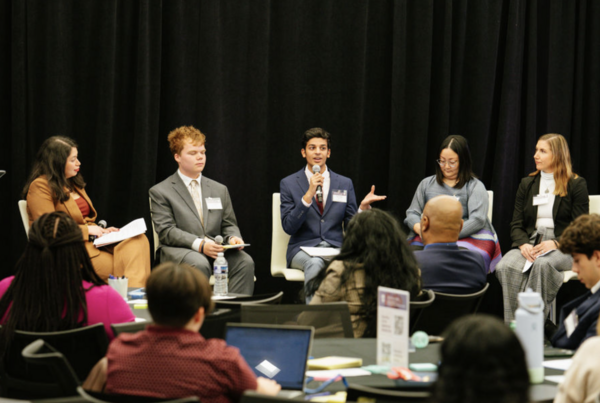
With the grant-funded phase of this work coming to an end in December 2025 (March 2026 for the grant from the Balfour Foundation), the time is ripe for creating a plan to sustain the guarantee for future generations of students. NEBHE gathered state higher education system leaders from across all six New England states for a hybrid meeting at the Eagle Mountain House in Jackson, N.H.
Those who attended included individuals who lead public two- and four-year systems but also those who represent four-year independent colleges. The meeting was focused on determining NEBHE’s ongoing role in administering the guarantee beyond the life of the grant, and attendees discussed what kind of coalition-based governance structure would assure that the program adapted to future trends in the higher education landscape in a way that preserved its longevity for future generations of students.
Attendees described how the initiative has improved transfer pathways and simplified the transfer landscape for students in their respective states. “I just want to say how much we appreciate it,” Nate Mackinnon, executive director of the Massachusetts Association of Community Colleges, told the group. “From the community college perspective, we’re constantly interested in making sure our students lose as few credits as possible on their pathway.”
Other participants suggested incorporating artificial intelligence and credit for prior learning into the structure of the guarantee and offered examples of successful implementations of these ideas at their institutions.
Next, the meeting’s facilitator engaged participants in a conversation regarding the roles required to sustain the initiative in the long term. In addition to collecting and analyzing student-level enrollment data on an annual basis, NEBHE has committed to continue to publish the annual enrollment report for the New England Transfer Guarantee.
NEBHE will also continue to solicit any updates to the eligible programs that each four-year institution opens to guarantee students. Attendees recommended that NEBHE should engage the webmasters to whom they send such updates each year—to see what will be required for them to continue to keep these student portals up-to-date with information that community college students need to evaluate their transfer choices through the guarantee.
Attendees also expressed an interest in NEBHE’s continued involvement in promoting the initiative to community college transfer advisers on a regular basis by integrating the guarantee into existing statewide meetings and events that focus on transfer. Additionally, attendees saw potential in partnering with third-party student success organizations to reach students and ensure that they are aware of all the options available to them when it comes to earning a baccalaureate credential.
Next Steps
While the convening succeeded in outlining system-level stakeholder priorities, there are still details that must be ironed out. Given each state’s unique higher education landscape, a one-size-fits-all model for community college transfer adviser engagement would be ineffective, highlighting the need for more nuanced state-by-state plans. Outreach to student success organizations to explore opportunities for collaboration is another option that the transfer initiatives team at NEBHE must fully explore in the coming months.
There are questions that remain unanswered for the time being; however, this meeting affirmed that the region’s higher education leaders are committed to ensuring that the guarantee can continue to serve students for years to come.
Rob Johnston is the senior program coordinator for transfer initiatives at the New England Board of Higher Education.
By now, it’s obvious that the Trump administration’s efforts to expand Immigration and Customs Enforcement activities go far beyond enforcing federal immigration policy. The near-daily stories of inhumane detainment conditions, open violence against citizens and noncitizens alike, wanton civil rights violations, and purposeful shielding of these abuses from any form of public accountability lay bare that President Trump is now using ICE as a key component for advancing his administration’s hateful agenda.
This context is essential to evaluate why the administration has sung such a different tune with the advertised $60,000 student loan forgiveness offers to new ICE recruits, compared to the normal song and dance about how higher education is evil incarnate. Trump and his political allies didn’t suddenly discover the societal benefits of affordable education, as evidenced by his simultaneous efforts to strip loan forgiveness pathways from those who are deemed obstructors to Trump’s political goals. What’s clear is that federal student loan forgiveness is now a poverty draft, coercing increased ICE and military enlistment from among those experiencing economic desperation.
Weaponizing educational debt to fuel armed forces conscription from lower-income individuals is essentially socioeconomic hostage taking. It deprives people of their agency in choosing whether conscription is truly the career and life pathway they desire by forcing the decision as a survival tactic, especially when nearly half the country is approaching an economic recession deliberately caused by Trump’s policies.
A History of Weaponizing College Affordability
The easiest way for an authoritarian regime to maintain a highly militarized state is to make enlistment the only means of socioeconomic survival for the masses. This is exactly why the Trump administration is promoting student loan forgiveness for ICE recruits while curtailing eligibility for Public Service Loan Forgiveness. By passing the reconciliation bill that nearly tripled ICE’s budget while restricting Pell Grant eligibility for some students and cutting back basic needs programs like food stamps and Medicaid, congressional leaders have identified themselves as active participants in this strategy.
Though Trump’s tactics are an unprecedentedly naked attempt to weaponize student loan relief in the service of authoritarianism, this is a foundational concept in federal higher education policy that he’s taking the opportunity to exploit. The Servicemen’s Readjustment Act of 1944, the first federal educational assistance program for veterans, and most follow-up educational assistance programs were more focused on rewarding military service in already-declared conflicts than using benefits as a recruitment draw.
That shift came with the larger 1960s push to align higher education with the Cold War. California’s Master Plan of 1960 provided an opening for later attacks on college affordability, because it codified into public policy the idea that some types of institutions were worth attending more than others, mainly by segregating various types of educational experiences offered by different institutions. Later in the decade, then–California governor Ronald Reagan slashed public university budgets, in this way punishing students for antiwar protests. Reagan’s camouflaging of draconian education funding cuts as a necessary tool to combat the “filthy speech movement” became the groundwork for today’s deep inequality across all levels of the educational system.
Over the next several decades, federal and state policymakers abandoned their responsibilities to fund public higher education, which has strengthened the ties between college (un)affordability and militarization. In 2022, 20 Republican House members—14 of whom are still in office—wrote a joint letter to then-president Biden expressing concern that his efforts to provide widespread student loan forgiveness would harm the ability of the military to use higher educational benefits as a recruitment tool.
Last fall, 48 percent of 16- to 21-year-olds surveyed by the Department of Defense identified “to pay for future education” as a main reason they would consider joining the armed forces. This was the second-most common reason expressed in the survey, behind only “pay/money.”
Student Loan Forgiveness Is Not Siloed Public Policy
Public policy is rarely siloed into neat categories, and we are now experiencing the widespread consequences of allowing an inequitable and unaffordable higher education system to exist for so long in the United States. Trump isn’t the only federal policymaker endorsing this strategy, but he is the primary beneficiary. The more people willing to join ICE’s march toward martial law or forced to join ICE due to socioeconomic necessity, the easier it is for Trump to fully embrace authoritarianism and stay in power past January 2029.
This is the framing that should be used in every policy conversation about student loan forgiveness moving forward, not just for the offers given to new ICE recruits. These actions are not distinct or separate from the administration’s federalizing of the National Guard, ICE’s vast increase in weapons spending or Trump’s public consideration of invoking the Insurrection Act to deploy more troops to U.S. cities; they’re a vital complement. Ransoming access to an affordable higher education, along with its associated socioeconomic benefits, based on how willing someone is to inflict terror on immigrant communities or any other population that the administration deems undesirable, is a deliberate tactic to build an authoritarian military state.
Ideally, the current scenario facing higher education will end the usual hemming and hawing from policymakers about universal student loan forgiveness or tuition-free higher education being too expensive. Are the cost savings from not offering widespread forgiveness truly worth militarizing the country against the estimated 51.9 million immigrants living in the U.S., including more than 1.9 million immigrant and undocumented higher education students? Is appeasing Trump’s desire to play dictator dress-up so vital that policymakers feel compelled to willingly eradicate recent progress in national college affordability, discourage or outright bar international students from coming to learn in the United States, and shrink the economies of every state and congressional district due to the loss of international students?
State Legislatures Are the Last Line of Defense
The Trump administration is desperate to expand domestic militarization through ICE, as evidenced by advertisements on popular media streaming services and during nationally televised football games, public commitments to keep paying ICE agents as roughly 1.4 million federal workers go without pay during the government shutdown and the elimination or loosening of recruitment and training requirements for new ICE agents in relation to their age, physical fitness and ability to speak Spanish. As the Trump administration through ICE utilizes every available tool to further its authoritarian agenda, policymakers and institutions must use every available tool to combat said authoritarianism.
State legislatures wield vast amounts of legal authority over education policy in comparison to the federal government. However, that authority is useless if states capitulate or are otherwise unwilling to use that authority to protect their education systems and their larger communities.
Efforts like Connecticut’s new statewide student debt forgiveness program, California’s prohibition on campus police departments providing personal student information for immigration enforcement purposes and Colorado’s adoption of a new state law requiring public campuses to limit federal agents’ access to campus buildings are all welcome ways that state policymakers can fight back against ICE.
These efforts must be expanded to more states as ICE continues to ramp up its domestic terrorism and congressional leadership remains content to abandon its constitutional responsibilities to hold the executive branch in check. For institutions, advocates and concerned community members, resources available through the Presidents’ Alliance on Higher Education and Immigration and its Higher Ed Immigration Portal, and from the Immigrant Legal Resource Center, provide essential guidance on how to act in protecting immigrants and their families.
Student loan forgiveness, and the larger concept of an affordable and equitable higher education, could now be a matter of life and death for millions of people. The traditional willingness of policymakers to resist supporting higher education during times of economic surplus, while eagerly cutting educational funding at the first sign of economic distress, has now imperiled American democracy. Every image of ICE committing authoritarian violence is a stark call for policymakers to ask themselves what they value more: the fiscal savings of making no meaningful effort to address the more than $1.6 trillion owed in student debt, or American democracy itself.
Christian Collins is a policy analyst with the education, labor and worker justice team at the Center for Law and Social Policy, a nonprofit organization focused on reducing poverty and advancing racial equity.
The attacks on universities by the Trump administration have proven that higher education has “enemies” among authoritarian populist leaders and left other sectors wondering when they will be next, European leaders warn.
Michael Ignatieff, who was rector of the Central European University between 2016 and 2021, when the institution was expelled from Viktor Orbán’s Hungary, said the Hungarian prime minister had provided enormous inspiration to politicians around the world.
Speaking at the Going Global conference, Ignatieff, also a former opposition leader in Canada, said Orbán was “the master” who had learned that controlling the universities that recruit and train elites means they can eventually control the political system.
“Authoritarian populists have grasped the crucial strategic importance of universities … [which] gives them the possibility of ideological control of a society as a whole.”
As Trump continues to put pressure on U.S. universities, Ignatieff, now professor of historical studies at the CEU, which has relocated to Austria, likened higher education to sitting on a mountaintop “watching a storm forming on the horizon” over a nearby village.
“That village has been hit by lightning and thunder and storm, and our question now is how long will it be before that storm hits us?”
“We’re in a political battle. We cannot assume that the higher education sector in any of our countries is secure going forward. If the higher education sector can be attacked in the United States, let me tell you folks, it can be attacked anywhere,” he added.
“This sector has enemies. The American experience has shattered my confidence that the sector that I’ve spent my entire life in is safe.”
Speaking at the British Council event in London, Ignatieff said the “renationalization” of one of the most outward-looking educational systems in the world had put international education under threat for the first time in his lifetime.
He warned that European universities were also at risk because of how reliant they are on the state for research funding—allowing authoritarian governments to use funding against them to shut down academic freedom.
“I worry going forward that an authoritarian political regime could come to power … and begin to look at the way in which cutting off state funding or using the threat of cutting off state funding becomes an instrument to secure control of the higher education sector.”
Another weakness of the European sector is the lack of statutory protection for academic freedom, which makes universities vulnerable, he added, as do rising tuition fees in many countries.
“The increasing costs of higher education are weakening domestic popular political support for higher education,” he said. “It becomes easier and easier for populist politicians to attack higher education as a kind of elite luxury that the taxpayer pays for.”
Speaking at the same session, Maddalaine Ansell, director of education at the British Council, said the values that underpin higher education are coming under threat because of populism and polarization.
“In some places, academic freedom is challenged from without and highly polarized views amongst students and staff can affect robust debate within institutions,” she said.
“As nations focus on domestic issues, it can be harder to win arguments that internationalization of higher education deserves government support through regulatory support, including an enabling visa system and funding for international collaboration.”
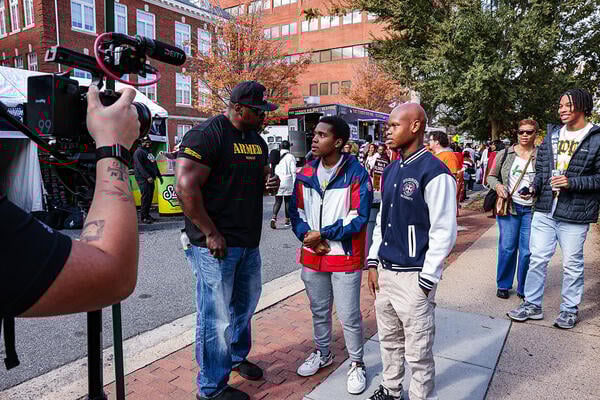
Campus security at Hampton University escorted members of Blexit off the historically Black university’s campus this past weekend after the Black conservative group tried to join homecoming festivities as part of its “Educate to Liberate” HBCU tour. The group claims it was silenced by the university. Hampton leaders say Blexit didn’t follow proper protocols for visiting the campus.
Blexit, which is affiliated with the Charlie Kirk–founded Turning Point USA, planned to visit 10 HBCUs during homecoming events with the goal of “bringing conservative values to life, fostering critical thinking, and sparking powerful conversations on HBCU campuses,” according to Blexit’s website. The group also made stops at Howard University and other campuses, though it canceled a visit to Florida A&M University, promising to announce a new date.
Craig Long, a Blexit member, claimed on Instagram that Hampton University shut down the group’s dialogue with students.
“Instead of celebrating that spirit of open discussion, the university shut it down—claiming we ‘didn’t go through the proper channels,’” Long wrote. “Let’s be honest: this wasn’t about paperwork. It was about politics. We were silenced because we are Blexit—because we stand for Christian values, conservative principles, and independent thought that challenge the mainstream narrative.”
Hampton University leaders pushed back on Long’s description of the incident. They wrote in a statement that Blexit didn’t complete the application to participate in homecoming as a vendor or pay the associated fees. Out of 36 vendor applications submitted, the university approved 18, and Blexit “was among those that did not meet the stated requirements,” according to the statement. Those vendors were notified the week before the event that they would not be allowed on campus. University leaders framed the procedures as a “matter of public safety” to know who’s on campus, with nearly 15,000 people visiting for homecoming.
“Hampton University welcomes organizations and speakers representing a variety of perspectives, provided they follow established protocols,” the statement read. “BLEXIT failed to meet those standards.”
Major accreditors are following through on their plans to bring new quality checks to the short-term credentialing landscape.
After years of preparation, the Higher Learning Commission is launching a new process to evaluate and endorse short-term credential providers this week, according to a Tuesday announcement from the HLC. The accreditor will be accepting applications for its first cohort of endorsed providers through Jan. 23.
Higher Learning Commission president Barbara Gellman-Danley said in the announcement that HLC’s goal is “to expand the nation’s pool of valuable, HLC endorsed providers, thereby increasing pathways for students to gain the qualifications they need to get ahead and succeed.”
The New England Commission of Higher Education also announced its inaugural cohort of eight recognized noncredit program providers last week, including higher ed institutions and external organizations.
“We know that there are increasing numbers of students enrolled in non-credit programs,” Michaele Whelan, chairperson of NECHE, said in a news release. “There has also been a growing need for quality assurance in this space. NECHE has taken the bold step to address this need and we are excited to expand our work into this area.”
Nearly 60 percent of all college students in the U.S. experience at least one form of basic needs insecurity, lacking stable housing and/or consistent access to food, according to national surveys.
The One Big Beautiful Bill Act, which Congress passed in July, creates sweeping changes to higher education—including a new tax rate for university endowments and accountability metrics for student income levels after graduation. It also directly impacts college students, threatening their access to food assistance programs and their ability to pay for college, which experts warn could hamper their persistence and completion.
Policy and higher education leaders convened during an Oct. 28 webinar hosted by the Hope Center for Student Basic Needs at Temple University to discuss how the new legislation threatens student financial wellness and success.
“We are very, very worried that student basic needs insecurity will be increasing dramatically over the next few years,” said Bryce McKibben, senior director of policy and advocacy at the Hope Center.
For current students, experts outlined three major shifts in federal financial supports.
1.Cuts to SNAP Funding
OBBBA includes $186 billion in cuts to the Supplemental Nutrition Assistance Program, which provides support obtaining food for nearly three million young adults, according to U.S. Census data. The bill places more requirements on SNAP recipients; at present, all funding for SNAP is at risk due to the government shutdown. Some states expect to run out of SNAP dollars as early as Nov. 1.
“[SNAP] is our first line of defense against hunger. It reduces health care–related issues and it bolsters local economies,” said Gina Plata-Nino, interim director of the SNAP, Food Research & Action Center. “It also provides jobs; it provides federal income taxes. And all of this is going to be threatened.”
Under the bill, all adults ages 18 to 64 must demonstrate they work at least 20 hours per week to be eligible for SNAP, Plata-Nino said.
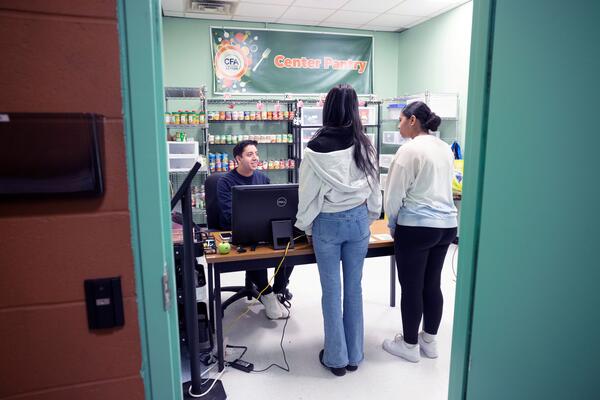
Approximately one in four college students experience food insecurity. SNAP resources are largely underutilized by college students, in part because of complicated enrollment processes. Instead, many rely on campus pantries, which are mostly privately funded by individual donors or campus budgets. Plato-Nino anticipates the changes to SNAP will impact funding and capacity for higher education institutions to provide resources, “because now they have to focus on these issues,” she said.
The federal cuts could cause further damage to an already fragile system.
“We have a threadbare social safety net that really hits students when they can least afford to meet what are pretty acute and deep costs as they’re trying to get through their degree program,” said Mark Huelsman, director of policy and advocacy at the Hope Center.
Many colleges and universities expanded emergency grant funding for students during the COVID-19 pandemic to address sudden expenses that could threaten a student’s ability to remain enrolled. While supplemental funding can help ease this gap, it’s not sufficient, Huelsman said.
“Campuses don’t often have the resources to help students meet what can be an acute financial emergency,” Huelsman said.
An August 2025 Student Voice survey by Inside Higher Ed and Generation Lab found that 64 percent of respondents said they didn’t know whether their college provides emergency financial aid, and an additional 4 percent indicated that resource was not available at their institution. Only 12 percent of respondents said they knew how to apply for emergency aid at their college.
2.Changes to Pell Grants
The reconciliation bill also includes a variety of changes to student eligibility for the federal Pell Grant program, which provides financial aid to low-income students.
Over one-third of Student Voice respondents indicated paying for college was a top source of stress while enrolled, second only to balancing family, academic, work and personal responsibilities.
For the academic year 2026–27, those with a student aid index (SAI) over $14,790, as identified by the FAFSA, are no longer eligible for Pell Grants. Similarly, students who receive scholarships that meet the full cost of attendance (including books, housing, food, tuition and fees) are not eligible for Pell, regardless of their SAI.
“We anticipate that this will affect a very small number of students,” said Jessica Thompson, senior vice president at the Institute for College Access and Success. “But this remains to be seen how this takes effect and what it looks like on the ground.”
3.Limits on Graduate and Parent Borrowing
OBBBA caps loans on professional degree programs (which include medical, law, veterinary and dentistry programs, among others) at $200,000, and other graduate programs at $100,000. It also eliminates Grad PLUS loans, which are unsubsidized federal loans with no borrowing limits. Students currently enrolled can borrow from Grad PLUS for three academic years or the remainder of their credential program, whichever is shorter.
While these limits can be beneficial for keeping student borrowing down, there may be unintended consequences regarding who can access the programs, Thompson said. For example, students who enroll at historically Black colleges and universities or minority-serving institutions are more likely to utilize Parent PLUS loans to pay for college.
“This has been a really big lifeline for accessing credit in order to cover college costs for people’s children, and there will be a disproportionate impact on these new caps on those types of institutions,” Thompson said.
Thompson also noted that a lack of federal loan opportunities for graduate and professional students may cause a rise in private loan borrowing, which often has higher interest rates and fewer protections for borrowers.
“We want to keep a really close eye on what it means for the availability of programs in general … but also access and looking at increasingly less diverse pipelines in terms of historically marginalized populations being able to access graduate and professional programs,” Thompson said.
Similar to SNAP cuts, Thompson anticipates the loan caps will add significant financial pressure on colleges and universities due to loss of revenue and enrollment.
Just 27 percent of undergraduates describe their mental health as above average or excellent, according to new data from Inside Higher Ed’s main annual Student Voice survey of more than 5,000 undergraduates at two- and four-year institutions.
Another 44 percent of students rate their mental health as average on a five-point scale. The remainder, 29 percent, rate it as below average or poor.
In last year’s main Student Voice survey, 42 percent of respondents rated their mental health as good or excellent, suggesting a year-over-year decline in students feeling positive about their mental health. This doesn’t translate to more students rating their mental health negatively this year, however, as this share stayed about the same. Rather, more students in this year’s sample rate their mental health as average (2025’s 44 percent versus 29 percent in 2024).
About the Survey
Student Voice is an ongoing survey and reporting series that seeks to elevate the student perspective in institutional student success efforts and in broader conversations about college.
Some 5,065 students from 260 two- and four-year institutions, public and private nonprofit, responded to this main annual survey about student success, conducted in August. Explore the data captured by our survey partner Generation Lab here and here. The margin of error is plus or minus one percentage point.
The story is similar regarding ratings of overall well-being. In 2024, 52 percent of students described their overall well-being as good or excellent. This year, 33 percent say it’s above average or excellent. Yet because last year’s survey included slightly different categories (excellent, good, average, fair and poor, instead of excellent, above average, average, below average and poor), it’s impossible to make direct comparisons.
How does this relate to other national data? The 2024-2025 Healthy Minds Study found that students self-reported lower rates of moderate to severe depressive symptoms, anxiety and more for the third year in a row—what one co-investigator described as “a promising counter-narrative to what seems like constant headlines around young people’s struggles with mental health.” However, the same study found that students’ sense of “flourishing,” including self-esteem, purpose and optimism, declined slightly from the previous year. So while fewer students may be experiencing serious mental health problems, others may be moving toward the middle from a space of thriving.
Inside Higher Ed’s leadership surveys this year—including the forthcoming Survey of College and University Student Success Administrators—also documented a gap between how well leaders think their institutions have responded to what’s been called the student mental health crisis and whether they think undergraduate mental health is actually improving. In Inside Higher Ed’s annual survey of provosts with Hanover Research, for example, 69 percent said their institution has been effective in responding to student mental health concerns, but only 40 percent said undergraduate health on their campus is on the upswing.
Provosts also ranked mental health as the No. 1 campus threat to student safety and well-being (80 percent said it’s a top risk), followed by personal stress (66 percent), academic stress (51 percent) and food and housing insecurity (42 percent). Those were all far ahead of risks such as physical security threats (2 percent) or alcohol and substance use issues (13 percent).
Among community college provosts, in particular, food and housing insecurity was the leading concern, with 86 percent naming it a top risk.
Financial insecurity can impact mental health, and both factors can affect academic success. Among 2025 Student Voice respondents who have ever seriously considered stopping out of college (n=1,204), for instance, 43 percent describe their mental health as below average or poor. Among those who have never considered stopping out (n=3,304), the rate is just 23 percent. And among the smaller group of students who have stopped out for a semester or more but re-enrolled (n=557), 40 percent say their mental health is below average or poor, underscoring that returnees remain an at-risk group for completion.
Similarly, 43 percent of students who have seriously considered stopping out rate their financial well-being as below average or poor, versus 23 percent among students who’ve never considered stopping out—the same split as the previous finding on mental health.
The association between students’ confidence in their financial literacy and their risk of dropping out is weaker, supporting the case for tangible basic needs support: Some 25 percent of respondents who have considered stopping out rate their financial literacy as below average or poor, compared to 15 percent of those who have not considered stopping out.
Angela K. Johnson, vice president for enrollment management at Cuyahoga Community College in Ohio, said her institution continuously seeks feedback from students about how their financial stability and other aspects of well-being intersect.
“What students are saying by ‘financial’ is very specific around being unhoused, food insecurity,” she said. “And part of the mental health piece is also not having the medical insurance support to cover some of those ongoing services. We do offer some of them in our counseling and psychological services department, but we only offer so many.”
All this bears on enrollment and persistence, Johnson said, “but it really is a student psychological safety problem, a question of how they’re trying to manage their psychological safety without their basic needs being met.”
A ‘Top-of-Mind Issue’
Tri-C, as Johnson’s college is called, takes a multipronged approach to student wellness, including via an app called Help Is Here, resource awareness efforts that target even dual-enrollment students and comprehensive basic needs support: Think food pantries situated near dining services, housing transition coordination, childcare referrals, utility assistance, emergency funds and more.
Faculty training is another focus. “Sometimes you see a student sleeping in your class, but it’s not because the class is boring. They may have been sleeping in their car last night,” Johnson said. “They may not have had a good meal today.”
Political uncertainty may also be impacting student wellness. The American Council on Education hosted a webinar earlier this year addressing what leaders should be thinking about with respect to “these uncertain times around student well-being,” said Hollie Chessman, a director and principal program officer at ACE. “We talked about identity, different identity-based groups and how the safe spaces and places are not as prevalent on campuses anymore, based on current legislation. So some of that is going to be impacting the mental health and well-being of our students with traditionally underrepresented backgrounds.”
Previously released results from this year’s Student Voice survey indicate that most students, 73 percent, still believe that most or nearly all of their peers feel welcomed, valued and supported on campus. That’s up slightly from last year’s 67 percent. But 32 percent of students in 2025 report that recent federal actions to limit diversity, equity and inclusion efforts have negatively impacted their experience at college. This increases to 37 percent among Asian American and Pacific Islander and Hispanic students, 40 percent among Black students and 41 percent among students of other races. It decreases among white students, to 26 percent. Some 65 percent of nonbinary students (n=209) report negative impacts. For international students (n=203), the rate is 34 percent.
The Student Voice survey doesn’t reveal any key differences among students’ self-ratings of mental health by race. Regarding gender, 63 percent of nonbinary students report below average or poor mental health, more than double the overall rate of 29 percent. In last year’s survey, 59 percent of nonbinary students reported fair or poor mental health.
In a recent ACE pulse survey of senior campus leaders, two in three reported moderate or extreme concern about student mental health and well-being. (Other top concerns were the value of college, long-term financial viability and generative artificial intelligence.)
“This is a top-of-mind issue, and it has been a top-of-mind issue for college and university presidents” since even before the pandemic, Chessman said. “And student health and well-being is a systemic issue, right? It’s not just addressed by a singular program or a counseling session. It’s a systemic issue that permeates.”
In Inside Higher Ed’s provosts’ survey, the top actions these leaders reported taking to promote mental health on their campus in the last year are: emphasizing the importance of social connection and/or creating new opportunities for campus involvement (76 percent) and investing in wellness facilities and/or services to promote overall well-being (59 percent).
Despite the complexity of the issue, Chessman said, many campuses are making strides in supporting student well-being—including by identifying students who aren’t thriving “and then working in interventions to help those students.” Gatekeeper training, or baseline training for faculty and staff to recognize signs of student distress, is another strategy, as is making sure faculty and staff members can connect students to support resources, groups and peers.
“One of the big things that we have to emphasize is that it is a campuswide issue,” Chessman reiterated.
More on Health and Wellness
Other findings on student health and wellness from this newest round of Student Voice results show:
Mental health is just one area of wellness in which many students are struggling.
Asked to rate various dimensions of their health and wellness at college, students are most likely to rate their academic fit as above average or excellent, at 38 percent. Sense of social belonging (among other areas) is weaker, with 27 percent of students rating theirs above average or excellent. One clear opportunity area for colleges: promoting healthy sleep habits, since 44 percent of students describe their own as below average or poor. (Another recent study linked poor sleep among students to loneliness.)
Many students report using unhealthy strategies to cope with stress, and students at risk of stopping out may be most vulnerable.
As for how students deal with stress at college, 56 percent report a mix of healthy strategies (such as exercising, talking to family and friends, and prioritizing sleep) and unhealthy ones (such as substance use, avoidance of responsibilities and social withdrawal). But students who have seriously considered stopping out, and those who have stopped out but re-enrolled, are less likely than those who haven’t considered leaving college to rely on mostly healthy and effective strategies.
Most students approve of their institution’s efforts to make key student services available and accessible.
Despite the persistent wellness challenge, most students rate as good or excellent their institution’s efforts to make health, financial aid, student life and other services accessible and convenient. In good news for community colleges’ efforts, two-year students are a bit more likely than their four-year peers to rate these efforts as good or excellent, at 68 percent versus 62 percent.
‘It’s Easy to Feel Isolated’
The Jed Foundation, which promotes emotional health and suicide prevention among teens and young adults, advocates a comprehensive approach to well-being based on seven domains:
Foster life skills
Promote connectedness and positive culture
Recognize and respond to distress
Reduce barriers to help-seeking
Ensure access to effective mental health care
Establish systems of crisis management
Reduce access to lethal means
At JED’s annual policy summit in Washington, D.C., this month, advocates focused on sustaining the progress that has been made on mental health, as well as on the growing influence of artificial intelligence and the role of local, state and federal legislation on mental health in the digital age. Rohan Satija, a 17-year-old first-year student at the University of Texas at Austin who spoke at the event, told Inside Higher Ed in an interview that his mental health journey began in elementary school, when his family emigrated from New Zealand to Texas.
“Just being in a completely new environment and being surrounded by a completely new group of people, I struggled with my mental health, and because of bullying and isolation at school, I struggled with anxiety and panic attacks,” he said.
Satija found comfort in books and storytelling filled with “characters whom I could relate to. I read about them winning in their stories, and it showed me that I could win in my own story.”
Satija eventually realized these stories were teaching lessons about resilience, courage and empathy—lessons he put into action when he founded a nonprofit to address book deserts in low-income and otherwise marginalized communities in Texas. Later, he founded the Vibrant Voices Project for incarcerated youth, “helping them convert their mental health struggles into powerful monologues they can perform for each other.”
Currently a youth advocacy coalition fellow at JED, Satija said that college so far presents a challenge to student mental health in its “constant pressure to perform in all facets, including academically and socially and personally. I’ve seen many of my peers that have entered college with me, and a lot of us expect freedom and growth but get quickly bogged down with how overwhelming it can be to balance coursework, jobs, living away from your family and still achieving.”
Rohan Satija, center, speaks at JED’s annual policy summit in Washington earlier this month.
He added, “This competitive environment can make small setbacks feel like failures, and I’d say perfectionism can often become kind of like a silent standard.”
Another major challenge? Loneliness and disconnection. “Even though campuses are full of people, it’s easy to feel isolated, especially as a new student, and even further, especially as a first-generation student, an immigrant or anyone far from home.”
While many students are of course excited for the transition to adulthood and “finally being free for the first time,” he explained, “it comes with a lot of invisible losses, including losing the comfort of your family and a stable routine … So I think without intentional efforts to build connection in your new college campus, a lot of students feel that their sense of belonging can erode pretty quickly.”
In this light, Satija praised UT Austin’s club culture, noting that some of the extracurricular groups he’s joined assign a “big,” or student mentor, to each new student, or “little,” driving connection and institutional knowledge-sharing. Faculty members are also good at sharing information about mental health resources, he said, including through the learning management system.
And in terms of proactive approaches to overall wellness, the campus’s Longhorn Wellness Center is effective in that it “doesn’t promote itself as this big, like, crisis response space: ‘Oh, we’re here to improve your mental health. We’re here to make your best self,’ or anything like that,” he said. “It literally just promotes itself as a chill space for student wellness. They’re always talking about their massage chairs.”
“That gets students in the door, yeah?” Satija said.
This independent editorial project is produced with the Generation Lab and supported by the Gates Foundation.
Illinois has partnered with ReUp to bring stopped-out students back to college.
Photo illustration by Justin Morrison/Inside Higher Ed | rawpixel | Anand Raj/Pexels
Illinois has launched a statewide effort to re-enroll students who stopped out of college, in partnership with ReUp Education, a company focused on recruiting and supporting adult learners, according to a news release. ReUp has established a re-enrollment marketplace in Illinois that will connect stopped-out learners with 19 participating community colleges and universities and provide them with live coaching and other resources.
The platform will be accessible to 200,000 Illinois residents who have earned some college credits but not completed a degree. Nationwide, about 43 million Americans fall into that category.
Illinois joins several otherstates and institutions that have begun making a concerted effort to bring stopped-out individuals back to college. According to ReUp’s release, the company has supported 40,000 students in re-enrolling in college.
“Building a brighter future requires looking long and hard at the economic realities facing Illinois’ families and work force,” State Rep. Katie Stuart, chair of the Illinois House Higher Education Committee, said in the release. “Partnering with an established name in the adult education space to get more people skilled up for high-paying jobs is a big step in the right direction.”
More universities are signaling opposition to the Trump administration’s compact for higher education, which would require institutions to make changes to their policies and practices in order to receive an unspecified edge in grant funding.
In comments to faculty groups and studentjournalists, a handful of university leaders have made clear that they won’t sign on to the compact in its current form. But those comments don’t amount to a formal rejection of the agreement, several university spokespeople told Inside Higher Ed. Each said that because their institution hasn’t been formally asked to sign, they haven’t officially considered the administration’s proposal.
For instance, at Miami University in Ohio, Provost Chris Makaroff told the University Senate that “right now, there is no appetite to even consider joining it,” according to the Miami Student.
“The administration is totally against it in every way possible, and probably the only way that it would possibly go through is if somehow or another, they threaten to cut off all funding to the university,” Makaroff added.
When asked about those comments and whether that constituted a rejection, Seth Bauguess, the university’s senior director of communications, noted that Miami wasn’t part of the first group of universities asked to sign, so “therefore we have not formally considered it.”
When the administration initially invited nine universities to give feedback on the document, Trump officials sent each institution a signed cover letter and a copy of the agreement. Another three universities were invited to an Oct. 17 White House meeting to discuss the compact.
Beyond those overtures, President Donald Trump wrote on social media platform he owns, Truth Social, that universities that prefer to “return to the pursuit of Truth and Achievement” are “invited to enter into a forward looking Agreement with the Federal Government to help bring about the Golden Age of Academic Excellence in Higher Education.” Officials, speaking on condition of anonymity, told mediaoutlets that the post was an invitation to all colleges to sign on to the compact.
So far, nearly a dozenuniversities have publicly rejected the deal, and White House officials are reportedly planning to update the document in response to the feedback from universities. Only New College of Florida has said that it’s ready to sign, though it hasn’t yet been formally asked. The White House hasn’t said how interested universities can join, but officials have threatened the federal funding of institutions that don’t sign the compact.
Jon Fansmith, senior vice president for government relations and national engagement at the American Council on Education, said the mixed messages from universities likely stem from “the general confusion around how the administration is handling this.”
“Even the statement by New College raises the question of how would anyone actually sign up if they wanted to?” he said, adding that the compact’s terms don’t appear to be final and there’s no form or website where colleges and universities can go to sign it.
Fansmith said he’s not surprised that some campus leaders are seeking to make their concerns clear while not definitively turning down something they haven’t been offered.
“Why pick an unnecessary fight?” he said.
The growing cohort of presidents and leaders speaking out about the compact includes Arizona State University president Michael Crow, who told the State Press on Oct. 24 that the compact is no “longer a viable thing” and that he’s “been trying to guide people in a different direction.”
Crow was invited to the Oct. 17 White House meeting to discuss the compact, which also included representatives from Dartmouth College, the University of Arizona, the University of Kansas, the University of Texas at Austin, the University of Virginia, Vanderbilt University and Washington University in St. Louis. After that meeting, an ASU spokesperson said the university was engaging in dialogue with Trump’s team.
After the State Press published its interview with Crow, Inside Higher Ed followed up to see if “no longer a viable thing” meant “no.”
“It’s important to note that ASU has not been asked to sign the Compact for Academic Excellence in Higher Education,” an ASU spokesperson responded. “So we can’t be ‘reviewing’ or ‘negotiating’ or ‘weighing’ it. ASU has long been a voice for change in higher education, something the university has been pushing for more than 20 years. If the administration looks for new and innovative approaches to serve the needs of the country, ASU is likely one to be consulted. President Crow is happy to share his vision for the future of higher education with anyone, if asked, whether they’re students, parents, alums, members of the public, or the administration.”
But some universities, including Emory and Syracuse, have chosen to reject the compact before receiving a formal ask. And on Thursday, University of Kansas provost Barbara Bichelmeyer told The Kansan, “Fundamentally, there’s no way, with the compact as it is written and sent out to other institutions, that KU could sign that.”
Bichelmeyer also noted that KU wasn’t asked to sign the compact.
Brendan Cantwell, a higher education professor at Michigan State University, said there’s no reason for colleges to say no at this moment.
“The basic tenet of college administration is don’t make a decision until you have to,” he said. “No one is forcing their hand right now … and they don’t want to antagonize the administration, particular donors or state officials. If I wasn’t explicitly invited, I wouldn’t explicitly decline to participate.”
Cantwell added that the president’s social media post and other communications from Trump officials have created a lot of ambiguity, and institutions are using that to their advantage.
“What the president has said, by saying that anyone can apply, but not specifically inviting anyone beyond the 12, has created an opportunity for campuses to message ‘no’ to students and ‘not yes’ to everyone else,” he said.
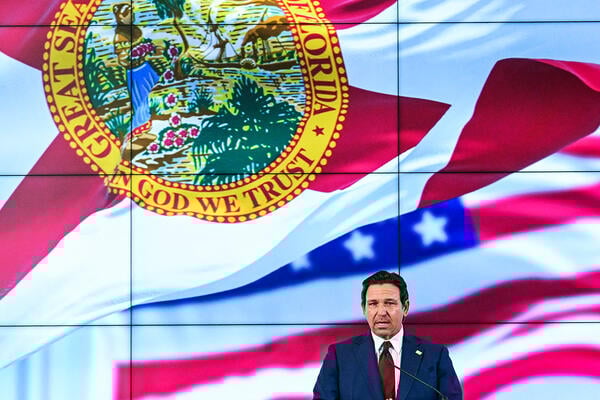
Florida governor Ron DeSantis on Wednesday ordered the state’s public universities “to pull the plug on the use of these H-1B visas in our universities.” In doing so, the Republican appeared to call for his state to go further than President Trump in restricting entry of these foreign employees—an issue that has divided prominent conservatives.
Since fiscal year 2022, Florida public universities have employed nearly 2,000 people via the H-1B program—nearly half at the University of Florida. The program is capped at 85,000 new visas a year, but colleges, universities and some other organizations aren’t subject to that cap. In the first three quarters of 2025, nearly 16,800 visas were approved for employees at colleges and universities; 395 of the visas were for jobs at Florida’s public universities. Universities use the program to hire faculty, doctors and researchers and argue it’s required to meet needs in health care, engineering and other areas.
Last month, Trump announced a $100,000 application fee for H-1B visas. U.S. Citizenship and Immigration Services says the fee will apply to new H-1B petitions filed on or after Sept. 21 and must be paid before the petition is filed. It said there could be exceptions from the fee in an “extraordinarily rare circumstance” in which the Homeland Security secretary determines a foreigner’s presence in the U.S. “is in the national interest.”
Lawsuits have been filed over the fee, and higher ed associations and institutions have spoken out in opposition. The Trump administration says employers are abusing the program to avoid hiring Americans.
In a speech at the University of South Florida on Wednesday, DeSantis called on the state board governing public universities to “pull the plug” on H-1B visa employees. He didn’t mention any exceptions.
If this the ban happens, it would be another example of a red state going further than the Republican-controlled federal government in restricting public higher ed institutions. In states such as Texas and Ohio, GOP politicians have exceeded Trump in regulating curricula and restricting faculty rights. Before Trump retook office, DeSantis put Florida on the leading edge of the conservative overhaul of higher ed, from cracking down on what he called “woke” education to putting allies in charge of universities—a playbook other states have followed.
It’s unclear, however, whether the Florida Board of Governors, which oversees the state’s public universities but not it’s public colleges, will follow DeSantis’s directive. Fourteen of the board’s 17 members are appointed by the governor and confirmed by the state Senate.
It’s also unclear what his directive specifically means; a news release the governor’s office issued Wednesday didn’t, unlike his speech, go as far as suggesting an end to all H-1B visa employees at public universities.
But neither the State University System of Florida nor the governor’s office provided more details in response to Inside Higher Ed’s questions about DeSantis’s intent. A news release from the governor’s office said DeSantis directed the board to “crack down on H-1B Visa abuse in higher education” but didn’t repeat the governor’s apparent call to end H-1B employment completely.
University of Florida interim president Donald Landry spoke at the press conference after DeSantis and mentioned his institution was called out.
“It’s a complex issue, and we can chat,” Landry said, to laughs from the audience. He did list one benefit, saying H-1Bs are mainly used at UF to hire new faculty from the international student population.
“Occasionally, some bright light might be good enough for the faculty, and then we will try and retain the person into whom we have invested so much,” he said.
UF is conducting its own review of the H-1B program, he added. “We know that H-1B is not handled in a pristine fashion, even in academia,” he said.
Robert Cassanello, president of the United Faculty of Florida union and a tenured associate history professor at the University of Central Florida, suggested that banning H-1B visa holders would be illegal.
“You can’t discriminate against someone based on foreign birth,” Cassanello said. “My big question coming away from this is: Where’s the authority?”
‘Do It’ With Florida Residents
In his speech, DeSantis started his criticism of the H-1B program from a national perspective. He said, “Tech companies will fire Americans and hire H-1B at a discount, and they’re basically indentured servants … They’re indentured to the company, so the company can basically pay them low.”
He then turned to Florida universities, appearing to read from a list of positions occupied by H-1B holders at unnamed institutions. (His office didn’t provide the list Wednesday.)
After mentioning a public policy professor from China, DeSantis said, “Why do we need to bring someone from China to talk about public policy?” Later—apparently looking at information on another H-1B holder—he exclaimed, “Wuhan, China!”
Although DeSantis’s complaints focused on supposed international scholars from China, he didn’t spare those from other countries.
“Assistant swim coach from Spain, on an H-1B visa—are you kidding me, we can’t produce an assistant swim coach in this country?” he said. He then turned to the Middle East.
“Clinical assistant professor from the West Bank, clinical assistant professor from supposed Palestine,” he said. “Is that just social justice that they’re doing? And that’s University of Florida.”
“We need to make sure our citizens here in Florida are first in line for job opportunities,” DeSantis said. But he also suggested he doesn’t fully know why universities are hiring H-1B workers.
“I guess there’s probably reasons why it ends up being this way,” DeSantis said. “But I think it’s a poor reflection on some of the decisions that some of these universities have made that they’re trying to say they need an H-1B visa to do some of these jobs … We can do it with our residents in Florida, or with Americans, and if we can’t do it then—man—we need to really look deeply about what is going on.”
Sarah Spreitzer, vice president and chief of staff for government relations at the American Council on Education, said DeSantis’s move would limit universities’ ability to hire the best researchers.
“It’s going to have an enormous impact, obviously, on Florida institutions,” Spreitzer said.
Cassanello, who said his union includes some H-1B holders, called DeSantis’s speech a “xenophobic and nativist diatribe.”
“He’s a nativist, he’s anti-immigrant and so he’s coming to these decisions based on no facts,” Cassanello said. He also said DeSantis opposed diversity, equity and inclusion programs by arguing they were anti-meritocratic, but now, “all of a sudden, he’s willing to throw out meritocracy.”
“He’s using fear of people of color and fear of immigrants to sort of impose his will on the running of our public colleges and universities,” Cassanello said. He said the speech represents “a further attack from DeSantis and our state political leaders on the autonomy of our public colleges and universities.”