Tag: Jobs

  • Therapy Dogs Boost Graduate Student Well-Being

    Therapy Dogs Boost Graduate Student Well-Being

    Laura Fay/iStock/Getty Images Plus

    Therapy dogs are often touted as a way to give students a reprieve from busy academic schedules or remind them of their own pets at home, but a recent study from Chatham University found that engagement with therapy dogs can instill a sense of social connection for students at all levels.

    An occupational therapy student at Chatham who researched how weekly therapy dog interactions could impact graduate students in health science programs found that the encounters produced benefits for students’ social and emotional health.

    The background: Past research shows animal interventions can mitigate homesickness for first-year students who miss their pets and academic stress for nursing students. Students who participate in “dog office hours” also experience increased social connection and comfort. Shelter dogs can also motivate students’ physical well-being, as demonstrated by the University of South Carolina’s canine fitness course.

    Graduate students in health science programs, in particular, report high rates of anxiety, depression and stress, according to the study.

    Regardless of their program of study, graduate students also tend to be removed from general campus services and activities due to physical campus layouts, residing and working off campus, or a misalignment of schedules between resources and their responsibilities. Therefore, identifying services specifically for graduate students can improve their access and uptake.

    How it works: Twenty-five students were recruited to participate in the study, meeting weekly to engage in activities with a group of therapy dogs, including petting, playing with, brushing, holding and walking the animals. Students could interact with the dogs for up to two hours over the course of the seven weeks. Before and after each puppy playdate, participants completed pre- and post-test surveys to gauge their feelings and the effects of the animal intervention.

    Survey results showed students were less likely to report feeling stressed and more likely to say they felt happy after engaging with the dogs.

    “I’ve really enjoyed this experience,” one participant wrote. “I feel like this has positively impacted my mood and well-being overall. I always leave feeling more relaxed and happier.”

    In open-ended questions, students said the dogs made them feel happy, loved, calm, relaxed, motivated and connected. Many said they also appreciated the opportunity to engage with their peers, noting that the regular cadence allowed them to socialize and meet new people, including the therapy dogs’ owners. Students indicated they wanted the visits to continue in some way if possible.

    The average student spent around 30 minutes with the therapy dogs during the trial, and, if they had the opportunity, a majority said they would participate in therapy animal groups on campus three to four times per month.

    Other Comforting Canines

    Chatham University students aren’t the only graduate students learning to destress from dogs. Here are some other examples of animal-assisted interventions across the country:

    • At Virginia Tech, graduate students at the Innovation Campus receive love and cuddles from Allen, a therapy dog who is co-handled by Barbara Hoopes, the graduate school’s associate dean for the region.
    • The City University of New York’s School of Public Health has hosted a therapy dog visit from the Good Dog Foundation to encourage graduate learners to relax and take a break during their week.
    • The University of Cincinnati featured therapy dogs at their Graduate Student Appreciation Week in April, honoring the hard work students do and helping them break their usual routines.

    Source link

  • Instructional Designer at Springfield College

    Instructional Designer at Springfield College

    High-quality educational experiences are best created when professors partner with instructional/learning designers. This is true for in-person, hybrid and fully online courses. If you are searching for an instructional/learning designer, I would like to highlight that opportunity in this Featured Gig series.

    Today, we are talking with Chris Hakala, director of the Center for Excellence in Teaching, Learning, and Scholarship and professor of psychology at Springfield College, about his instructional designer search.

    Q: What is the university’s mandate behind this role? How does it help align with and advance the university’s strategic priorities?

    A: The College is invested in continuing to grow its online presence. We have recently had a number of our instructional designers leave for positions that offered them different flexibility or that allowed them to move into other positions, and this current position is to backfill that space and to support our faculty both in the online space as well as the in-person teaching as faculty continue to learn how to best leverage their LMS to benefit their students.

    It aligns with our strategic priorities with regard to providing faculty with resources to best leverage our digital resources to align with our pedagogy.

    Q: Where does the role sit within the university structure? How will the person in this role engage with other units and leaders across campus?

    A: The instructional design team sits in the Center for Excellence in Teaching, Learning, and Scholarship (our teaching center) and reports to the director. In that capacity, the Center engages with faculty in all formats of pedagogy and supports both the face-to-face and online pedagogy as well as the digital resources that engage learners. The new ID will work with the team in the center to align practices but will also engage extensively with faculty as subject-matter experts to best design digital resources for their particular style of pedagogy.

    Q: What would success look like in one year? Three years? Beyond?

    A: Success would be the continued growth of utilization of digital resources such that there is more consistency in what is available for learners in the digital platform. In three years, we’d like to grow our footprint on campus so that we are working alongside faculty in all areas to maximize learning.

    Q: What kinds of future roles would someone who took this position be prepared for?

    A: As a comprehensive teaching center, we encourage our instructional design team to learn about educational development writ large. Thus, we hope that over time our instructional designers engage in all manner of educational development, leaning into digital resources but also aligning pedagogical practice with creating effective assessments and further ensuring that they are appropriate for the learning outcomes of the courses. We expect our IDs to be well-versed in a variety of areas of educational development, including science of learning, so that our center speaks with a common voice.

    Please get in touch if you are conducting a job search at the intersection of learning, technology and organizational change. If your gig is a good fit, featuring your gig on Featured Gigs is free.

    Source link

  • A Teaching Mantra for the New Year (opinion)

    A Teaching Mantra for the New Year (opinion)

    As professors, we naturally talk a lot about teaching—and I’ve certainly benefited from public discussions at workshops and panel presentations. But we can also have more intimate moments of instructional insight, private moments we may initially keep to ourselves until over time we come to appreciate more fully their value.

    Here’s my hitherto secret bit of pedagogic wisdom.

    It’s my teaching mantra. For many years before teaching each class, I took a moment and silently repeated to myself: Be clear. Be engaging. Be honest. Be kind.

    As a beginning teacher, it was a simple tactic to calm my nervousness before class. But as philosophers since Aristotle have recognized, daily choices become persistent habits that evolve into enduring character. It worked. As I strove to embody these values, they enabled me to bring the self I hoped to become into the classroom.

    Clarity. Engagement. Honesty. Kindness. Simple teaching virtues, yet I’ve come to believe they have a larger salience in the turbulent academic world of today.

    Be Clear

    Students today are coming to college with their own share of inner turmoil. Unsettled by the disruptions of COVID, facing an uncertain job market, and inundated with social media skepticism about the value of college, there’s a vulnerability to them that’s new.

    With their perceptions of a topsy-turvy world, students are understandably looking for clarity, elusive though it may be. Well-designed syllabi and clear directions help, but the clarity they’re looking for is something more than straightforward course formalities. The clarity they’re looking for is a more deeply rooted certainty that they can count on you.

    Thus, providing the clarity students are hoping for today involves the self you bring to the classroom. It is more a matter of character than of course planning. Are you someone they can depend on, confide in and trust? Demonstrating these personal qualities hinges on the kind of outreach you make to students from the start.

    Be Engaging

    Tentative and uncertain as they often are, I can’t expect students to come to me. Personal outreach today means I have to make the first move. It also means doing so by beginning wherever they are. Only by beginning wherever they are can you hope to take them where you might want them to go.

    While I dearly love my students, I don’t expect them to be like me. In my teaching, it has been important to remind myself of this as effective engagement depends on knowing your audience well. Particularly as I’ve gotten older, I’ve had to ensure my cultural references, case choices and even language use have a resonance for students decades younger than I am. I am regularly grateful to my daughter, a recent college graduate, for exposing me to the current lingo of “crashing out,” the delights of matcha and the talents of Billie Eilish.

    Be Honest

    Honesty is hard as a teacher, particularly when reading students’ less-than-laudatory evaluations. I’ve certainly had my share of such evaluations and they can discourage extending yourself in personal outreach. But I’ve taken heart from an entrepreneur friend who has counseled openness on my part. See such student comments simply as information, he said, just as he does in reflecting upon investor critiques after pitching a business plan.

    Honesty is especially hard when enduring criticism of an unfair or even hostile nature, something that in the classroom can be especially painful. But taking criticism as simply information, as a source for developing my own deeper reflection and critical faculties, enables a self-honesty that I’ve come to realize I need not fear. In teaching law, I am regularly reminded of John Stuart Mill’s insight: “He who knows only his own side of the case knows little of that.”

    Be Kind

    Sometimes, the personal outreach you offer matters more than even the latest teaching strategies you might employ. Kindness toward students can make a decisive difference. Once, while suffering from a bad cold and struggling with a lecture, I noticed that a student coughing in the front row was struggling with her own respiratory ailment. While continuing with the lecture, I offered her a few throat lozenges from the packet that was giving me relief. From the thankful look she gave me, I saw that simple unplanned gesture had a greater impact on her than any of the legal theories I espoused that day.


    The turmoil of students’ inner lives mirrors the unsettled state of professors’ professional lives today. Many external forces are currently upending the established norms of academic life. From politicians who act to defund us to AIs that threaten to replace us to a public that increasingly distrusts us, the traditional foundations of academic culture are at risk. With such larger external threats to these traditional foundations, little tips for strengthening our relationships with students may appear to have negligible relevance or sway.

    But such little ideas do matter, even if only because of the way they contribute to the cultural resilience colleges will need in the coming days. In a deeper sense, we as individual professors are the academy’s foundations, the strength in which its future resides. And the future begins with the values embedded in the teaching choices we make each day.

    Jeffrey Nesteruk is an Emeritus Professor of Legal Studies at Franklin & Marshall College. He has published widely in the areas of law, ethics and liberal education and may be reached at [email protected].

    Source link

  • Let’s Talk About Proxies and Admission (opinion)

    Let’s Talk About Proxies and Admission (opinion)

    The Trump administration has stepped up government scrutiny of college admission. Settlements reached with Brown and Columbia Universities each included a requirement that they pursue “merit-based” admission policies. On Aug. 7, President Trump issued a memorandum requiring colleges and universities to submit data to IPEDS (the Integrated Postsecondary Education Data System) demonstrating that they are not considering race in admission decisions. The Department of Education has since published in the Federal Register details about the planned data collection, with the public having 60 days to comment. And Attorney General Pam Bondi has entered into the fray by publishing a memo outlining what constitutes unlawful discrimination.

    I will leave it to others to rail against the unprecedented federal attack on higher education and the incursion into admission policies at individual institutions. I would prefer to examine some of the issues and underlying assumptions suggested by these documents.

    The Aug. 7 Presidential Memorandum

    Trump’s memorandum calls for increased transparency to expose practices that are “unlawful” and to rid society of “shameful, dangerous racial hierarchies.” For some reason, it doesn’t say that all racial hierarchies are shameful and dangerous. Is that an oversight or a meaningful omission? The memorandum also asserts without explanation that race-based admission policies threaten national security.

    The call to get rid of “shameful, dangerous racial hierarchies” is ironic. It is easy to imagine previous administrations using the same phrase to defend the very race-based admission policies that the executive order now seeks to abolish. “Shameful” and “dangerous” are in the eye of the beholder, and may not be color-blind.

    What is not clear is how the administration intends to collect and analyze the data, given its efforts to gut the Department of Education. As Inside Higher Ed has reported, the National Center for Education Statistics had been decimated, with a staff of more than 100 reduced to a skeleton crew of three employees.

    The Bondi Memo

    Attorney General Bondi’s July 29 memorandum offered guidance to federal agencies about practices that may constitute illegal discrimination at colleges and other entities receiving federal funds. A lot of it is rehashed, targeting popular straw men/persons like DEI programs and transgender athletes (and bathrooms).

    What is interesting is Bondi’s take on what she calls “unlawful proxy discrimination,” defined as the use of “facially neutral criteria” that function as “proxies” for race or other protected characteristics. Per the memo, examples in higher education may include things like requiring diversity statements in hiring or essay questions asking applicants to reflect on their unique identity or to write about obstacles they have overcome.

    On a surface level, Bondi is right that those can become back doors to identify an individual’s race. At the same time, knowing the obstacles an individual has overcome is essential to understanding his or her unique story, and race would seem to be one of the factors that can heavily influence that story.

    Where Bondi goes off the rails is in maintaining that what she calls “geographic targeting” may constitute a potentially unlawful proxy. She is suggesting that recruitment or outreach in schools and communities with high levels of racial minorities may be illegal. That is preposterous. Trying to expand access to education through outreach is in no way comparable to reverse engineering an admission process to arrive at a desired class composition.

    Taken to its logical extreme, Bondi’s guidance would prevent colleges from recruiting not only at inner-city schools with a large percentage of Black students, but also at suburban schools with a large percentage of affluent white students. Both could be examples of what she calls “geographic targeting.” For that matter, colleges might be in violation for asking for an applicant’s address, because ZIP code information can be used as a proxy for determining race and socioeconomic status.

    New Data Collection Requirements

    As for data collection for IPEDS, the administration has proposed a new “Admissions and Consumer Transparency Supplement,” or ACTS. ACTS will require targeted colleges and universities to report data in the following categories, disaggregated by race and sex:

    • Admissions test score quintile
    • GPA quintile
    • Family income range
    • Pell Grant eligibility
    • Parental education

    It will also ask for information to be broken down for early decision, early action and regular admission as well as institutional need-based and merit aid. What’s missing? Legacy status and athletic recruits, both categories that benefit white applicants. At some of the Ivies, between 10-20 percent of the undergraduates are athletes, many in “country club” sports where most of the competitors are wealthy and white, and the proportion of athletes is even higher at the highly selective liberal arts colleges that make up the New England Small College Athletic Conference. Discovery in SFFA v. Harvard revealed that recruited athletes had an 86 percent admit rate. You don’t have to have had an uncle who taught at MIT to know that is substantially higher than the overall admit rate.

    ACTS will apparently apply only to “all four-year institutions who utilize selective college admissions,” which the administration maintains “have an elevated risk of noncompliance with the civil rights laws.” That may at first glance seem to be singling out elite, “name” colleges, and that’s probably the intent, but it also reflects a recognition that the vast majority of institutions couldn’t practice race-based admission even if they wanted to because they are too busy filling the class to worry about crafting the class.

    The focus on selective institutions will both make it easy to score political points and hard to derive meaning from the data. Selectivity, especially at the 5-10 percent level, makes it impossible to know why any individual is or isn’t admitted. Admission deans at the highly-selective (or rejective) universities report that they could fill several additional freshman classes from among those applicants who have been waitlisted or denied.

    Merit-Based Admission

    The real target of the push for “merit-based” admission may be holistic review. A holistic admission process allows colleges to take into consideration nuances in an individual’s background and life experiences. It can also be frustrating for applicants, since different individuals are admitted for different reasons. The government may be pushing consciously or unconsciously for a more formulaic selection process.

    But would that be any better? Even if you focus only on grades and test scores, should you put more weight on a three-hour test or on four years of high school? How do you compare applicants from schools with different grading scales and levels of academic rigor? Should a test score obtained after thousands of dollars in test prep count the same as an identical score without coaching?

    How do we distinguish between merit and privilege? Those who have strong test scores may be more likely to believe that test scores are a measure of merit, and yet test scores are strongly correlated with family income. Those who are born into wealth and privilege may come to believe that their good fortune is a proxy for merit, buying into a perverse and self-serving interpretation of John Calvin’s doctrine of the elect. They may see themselves as deserving rather than lucky.

    Proxies in Admission

    We need a larger discussion about proxies in college admission. Advanced Placement courses are a proxy for a rigorous curriculum. GPA is a proxy for academic accomplishment, and yet means little without understanding context. Similarly, SAT scores are often seen as a proxy for ability, despite the fact that the College Board long ago abandoned the pretense that the SAT measures “aptitude.” The U.S. News & World Report college rankings have always relied on proxies, such as alumni giving as a proxy for alumni satisfaction when it may be more a measure of the effectiveness of the development office. Selectivity is a proxy for academic quality—feeding into the belief that the harder a place is to get in, the better it must be. Are proxies for race any more problematic than these other proxies?

    The larger question here is what should the selective college admission process be a proxy for. Should we seek to reward students for past performance? Predict who will earn the best grades in college? Identify those students who will benefit the most from the college experience? Or predict who will make the greatest contribution to society after college?

    I’m waiting for an executive order or memo or even a discussion among college admission professionals about what the selective admission process should represent and what proxies will support those goals.

    Jim Jump recently retired after 33 years as the academic dean and director of college counseling at St. Christopher’s School in Richmond, Va. He previously served as an admissions officer, philosophy instructor and women’s basketball coach at the college level and is a past president of the National Association for College Admission Counseling. He is the 2024 recipient of NACAC’s John B. Muir Excellence in Media Award.

    Source link

  • Chancellors Playing Footsie With Authoritarianism

    Chancellors Playing Footsie With Authoritarianism

    It is hard not to feel at least occasionally helpless these days trying to operate between the twinned pincers of a Trump administration steamrolling our democracy and an AI industry pursuing its goal of automating all means and matter of human expression.

    It seems like, combined, they can take away just about anything: our grants, our international students, our jobs, our freedom.

    Things get worse when those of us toiling away as laborers see those in positions of leadership at the institutions that should be bollards blocking the path of antihuman, antifreedom movements instead lying down so as to be more easily run over.

    (Looking at you, Columbia University.)

    Arguments about how we should consider some measure of accommodation (to fascism, to AI) abound, and some are even reasonable-sounding. These are powerful forces with their hands around the throat of our futures. Certainly no one can be blamed for doing what it takes to nudge those hands back a few millimeters so you can get enough air to breathe.

    Those with the power to do so can seemingly take just about anything they want, except for one thing: your dignity.

    Your dignity must be given away by an act of free will. Maybe I was naïve to think that more people would be protective of their dignity in these times, but I see so many instances of the opposite that I’m frequently stunned by the eagerness with which people are willing to hurl their dignity into the abyss for some perceived benefit.

    The worst examples are found in the members of Donald Trump’s cabinet, who are occasionally tasked with a public performance of sycophantic fealty to their dear leader. It is amazing to see accomplished people treat the president of the United States like a toddler in need of a level of affirmation that would make Stuart Smalley blush. I think I understand the motives of these people: They are wielding power at a level that allows them to literally remake society or even the world.

    If it is your life’s goal to shield chemical companies from the financial responsibility of cleaning up the “forever chemicals” that cause cancer and miscarriages—which The New York Times reports is the apparent mission of some monster named Steven Cook—maybe it’s worth it to slather Trump in praise.

    But the decision to jettison one’s dignity made by the New York Times writer who looked at these displays and decided they are an example of leadership via reality television host rather than aspiring authoritarian is tougher for me to figure. While the article correctly identifies some of the lies conveyed during the spectacle, the overall tone is more of a “can you believe he’s getting away with this shit?” approach, rather than a “shouldn’t we be concerned he’s getting away with this shit?” approach, which would be far more accurate to the occasion.

    I can believe he’s getting away with it when the paper of record continually covers Trump like a novel spectacle practicing unusual politics rather than an authoritarian.

    I don’t know how one maintains their dignity when writing a story about Trump deploying the United States military in the nation’s capital that gives any credence to a “crackdown on crime” given that this is transparently BS, and yet the Times reflexively characterizes what is happening as a “crackdown” (see here, here and here), rather than, I don’t know, an “occupation.”

    In other jettisoning of dignity for strategic gain news, I have been, to a degree, sympathetic to the pre–Trump II stance of Vanderbilt chancellor Daniel Diermeier and WashU chancellor Andrew D. Martin’s views of higher ed reform anchored in institutional neutrality.

    I disagreed with that view as a matter of principle and policy approach, but this is a debate over principles.

    Now that we find ourselves in the midst of the overt Trump II attempts to destroy the independence of higher education institutions, I found their answers to a series of questions from The Chronicle’s Megan Zahneis about an apparent dispute between them and Princeton president Christopher Eisgruber about higher ed’s stance in relationship to Trump astounding as a performance of willed ignorance.

    This debate is taking place at a time when, obviously, the Trump administration has taken aim at higher ed. Are either of you concerned about this debate weakening the sector’s sense of autonomy?

    Martin: I would say the fact there is a public debate about the future of American higher education has no relationship whatsoever to what actions that the administration is taking.

    So you don’t see debate between leaders as detracting from that autonomy?

    Diermeier: I’m not 100 percent sure what we do about that. We have a point of view. We’ve had the point of view for a long time. We’re going to continue to argue for a point of view, because we think it’s essential. Now, if people disagree with that, I think that’s their decision. That’s the nature of civil discourse. We think that it’s important to get this right. We don’t think that the alternative, to hide under the desk, is appropriate.

    These answers would make Hogan’s Heroes’ Sergeant Schultz proud: “I know nothing! I see nothing.”

    Earlier in the interview, both chancellors make it clear that they are seeing a benefit to their institutions in the current climate, potentially enrolling more students who have been turned off by the turbulence being visited on their elite university brethren of the Northeast.

    They have apparently decided that they now have an advantage in the competitive market of higher education by their willingness to wink at an authoritarian push.

    Speaking of their fellow institutional leaders, Diermeier says there that there has been “no despising or disrespect or hatred among the sets of colleagues we’ve been engaged with,” and while I’m not a colleague of these gentlemen, let me publicly register my strong disrespect for their performative cluelessness in the interview.

    Let me also suggest I can’t imagine someone who respects themselves following that path, and I’m grateful to the institutional leaders like Christopher Eisgruber who are willing to express reality.

    I don’t know what the future holds. It’s possible that WashU and Vanderbilt are positioning themselves as the favored elite institutions of the authoritarian regime, ready to hoover up that federal cash that Trump is threatening to withhold from the schools that will not bend to his will.

    I’m genuinely curious if that scenario is worth one’s dignity.

    Source link

  • Later Wake-Up Call for Inside Higher Ed’s Daily News Update

    Later Wake-Up Call for Inside Higher Ed’s Daily News Update

    Loyal Inside Higher Ed readers who wake up to our daily newsletter will soon have an easier time finding each day’s edition in their crowded inboxes. 

    Starting Tuesday, Sept. 2, the Daily News Update will arrive between 5:30 and 6:00 a.m. Eastern, several hours later than the current 3:15 a.m. This may upset the morning routines of the handful of souls on the East Coast who rise before the sun, but for most readers, we hope this change means our newsletter is there at the top of your inbox when you log in, ready to inform your day.  

    Thank you for waking up with Inside Higher Ed

    Source link

  • On Being a Black Anthropologist (opinion)

    On Being a Black Anthropologist (opinion)

    The one week my Yale graduate Anthropology 101 class spent studying Zora Neale Hurston’s Mules and Men felt like a glass of cool water on a hot summer day. Learning about her scholarship and her refusal to accept the way her white colleagues recentered whiteness through their research on nonwhite people reminded me of the anthropologists who first led me to the discipline.

    But the fact that Hurston was the sole Black woman anthropologist whose work we studied suggested that she was the only Black woman anthropologist whose work was worthy of the ivory tower. As if she was the only Black person committed to using the tools of anthropology to create knowledge about the people relegated to the Global South in ways that are mutually beneficial to the researcher and their interlocutors. Hurston’s singular inclusion in my graduate training paired with the general exclusion of Black and brown scholars aimed to pacify the problematics of anthropology without upending the infrastructure of a discipline that is in crisis.

    As my graduate school years continued, I grew increasingly disillusioned by the idea of a career in academia. Even though I had come to terms with a definition and practice of anthropology that felt useful, identifying as an anthropologist myself felt wrong. How could I proudly claim affinity to a discipline that knowingly promulgated the othering of Black and brown people around the world and within the discipline itself? The answer would come through my research on Black Capitalists, and through my own experience beyond grad school as a Black entrepreneur and Wall Street professional.

    My experience as a Ghanaian American on Wall Street at Goldman Sachs and JPMorganChase exposed me to the ways in which Black people use the tools of capitalism to create new outcomes centered on collective thriving. They led me to my definition of what it means to be a Black Capitalist: a Black person who is a strategic participant in capitalism with the intention to benefit from the political economy in order to create social good. What they were doing was complicated, contradictory and, for many, oxymoronic.

    To many, to be a Black Capitalist is to be in an identity crisis. Black studies scholars I’ve spoken to have gone so far as to say, “Black Capitalists don’t exist!” or “It’s impossible for any good to come from capitalism!” I’m usually taken aback by such rebuttals. Because if the Black people I spent hours talking to who identified themselves as Black Capitalists don’t actually exist in real life, are they fictions of my imagination? And is my own experience invalid? Black Capitalists are as real as the version of capitalism we experience today that aims to entrap us all. Black Capitalists are merely trying to get free and help others do the same while facets of society attempt to place limits on how they can narrate, and ultimately live, their own lives.

    Surely, one’s ability to disavow capitalism depends on what continent they are on, or come from. For the Black Capitalists I’ve spoken to who are from Africa, for example, it’s neither a matter of loving capitalism nor wanting to dismantle it. Living in and through capitalism is the reality of trying to build a life in countries that imperialist capitalist forces have already destroyed and continue to exploit. If they are to live their later years comfortably in their homeland, leaving it in the meantime is a requirement. And hustling in the Western world to achieve this dream is so often the method. So for them, much like it was for my mother, who emigrated to America from Ghana with the haunting knowledge that her family was counting on her and that “failure was not an option,” the question becomes: For our own collective thriving, how do we game a system that was founded on us as its pawns?

    So how are Black Capitalists using the tools of capitalism to create new outcomes that allow them to secure the bag and the people they care for? Their methods are as diverse as Black people themselves. But the common denominator between all of their practices is a focus on communal uplift.

    Some are strategizing throughout key industries within corporate America to develop sustainable initiatives that subversively promote diversity, equity and inclusion—especially in the wake of its demise. Some are leveraging grassroots approaches to build community-forward real estate clubs that make the dream of homeownership and passive income possible through the resources—money, credit, knowledge and social connections—that are shared among members.

    Others are teaching aspiring entrepreneurs in their community the fundamentals of effective entrepreneurship and shepherding them through the process of collectively buying successful small businesses formerly owned by white entrepreneurs. Some are using the skills they developed during their tenures on Wall Street to create investment firms on the African continent to help grow pan-African businesses focused on health care, technology and agriculture that generate value for the African consumer. Some of the companies these Black Capitalists are building are worth millions of dollars—even billions. Irrespective of the spaces Black Capitalists occupy, their impact in Black communities globally is invaluable in the fight to close the racial wealth gap that has Black people lagging behind across key wealth indicators including homeownership, small business ownership and financial health.

    But their existence is unnerving to both Black and white people alike, for very different reasons. For many Black people, the very idea of a Black Capitalist makes their toes curl, because when you’ve been on the wrong side of capitalism for so long—as its most valued commodity but never its greatest beneficiary—it’s hard to believe that another relationship to capitalism, or a more equitable version of it on our journey to collective liberation, is even possible.

    And for white people invested in upholding the racial hierarchy that shapes social, political and economic life, they worry and wonder what they are set to lose when Black people are organized and move as one unified body in an economic system that nurtures individualism. Both perspectives reveal the underlying truth that money and our obsession with it is a culture of its own. And this revelation presents a growing problem society has created but has yet to solve: What do we do when money becomes the dominant culture in a society wherein most people don’t have enough of it to live?

    In the face of paralyzing social anxiety about the expansiveness of Black life, anthropology’s superpower lies in its ability to use evidence from the human experience to upend our social scripts and create space for us to dream up new ways of being that are both scalable and sustainable. I realized that being a Black Capitalist and being a Black anthropologist were both seen as oxymorons. I now gravitate toward the spirit of Zora Neale Hurston and other exceptional Black anthropologists. I learned that I can be a different kind of anthropologist who uses the tools of anthropology, like ethnography, oral histories and participant observation, to tell new stories about Black life that are restorative, hopeful and reflective of the power Black people carry.

    But even so, my existence as a Black anthropologist is unnerving to “scholars” who benefit from and are invested in perpetuating the harms of traditional anthropology. To raise the standard of knowledge production to ensure it is created in community with those who play a role in developing it threatens the validity of how scholars have traditionally conducted research and the scholarship that is held in high esteem. It’s damning enough that anthropology is like a snake eating its tail. My presence is the proverbial pain in the discipline’s side—a reminder of the work that is needed to transform the discipline, and realize what anthropology can be, but has yet to become.

    Source link

  • DHS Moves to Restrict How Long Foreign Students Can Stay

    DHS Moves to Restrict How Long Foreign Students Can Stay

    Photo illustration by Justin Morrison/Inside Higher Ed | aapsky/iStock/Getty Images | Chip Somodevilla/Getty Images

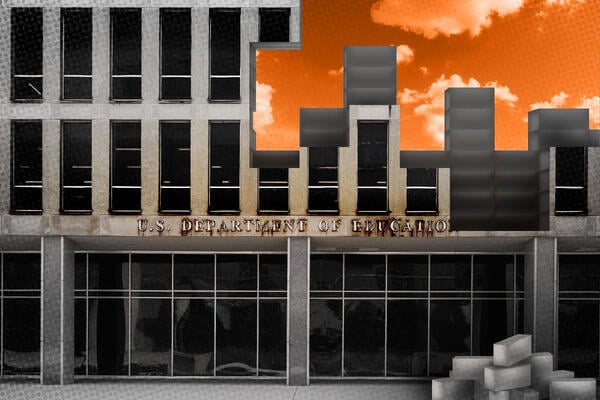
    After months of speculation, the Department of Homeland Security publicly released its plans to limit how long international students can stay in the United States—a proposal that advocates say will only add to uncertainty and chaos that this group is already facing.

    Currently, students can stay in the country as long as they are enrolled at a college or university. But the proposed rule released Wednesday would allow students to stay for the duration of their program, but no longer than four years. That isn’t enough time for students to complete a doctoral program, and it’s less time than the average student takes to complete a bachelor’s degree. Students who want to stay longer would have to seek authorization to extend their visa.

    The first Trump administration tried to make this change, which would roll back at 1991 rule known as duration of status. However, the Biden administration withdrew the proposal. Officials said in a news release that setting a fixed time for students on visas to stay would curb what they call abuses and allow the government to better oversee these individuals. Additionally, officials alleged that the current policy incentivizes international students to “become ‘forever’ students,” who are “perpetually enrolled in higher education courses to remain in the U.S.”

    DHS will take public comments on the proposal until Sept. 29. Before the agency can finalize the rule, it will have to review and respond to those comments.

    Advocates for international students have been sounding the alarm about this plan since DHS first sought approval in June to make the proposal, and those warnings continued this week now that the plan is public. Changing the rule, they say, would be another hurdle for international students who want to come to the United States. These others include vetting students’ social media profiles and more scrutiny on current visa holders. Since President Trump took office, the State Department has revoked 6,000 student visas.

    More than one million students from other countries enrolled in at a U.S. college or university in 2024, making up about 6 percent of the total student population. Experts predict the number of international students to drop off significantly this academic year.

    Fanta Aw, executive director of NAFSA, the association of international educators, said in a statement that the DHS proposal is a “bad idea” and “a dangerous overreach by government into academia.”

    “These changes will only serve to force aspiring students and scholars into a sea of administrative delays at best, and at worst, into unlawful presence status—leaving them vulnerable to punitive actions through no fault of their own,” Aw added.

    Miriam Feldblum, president and CEO of the Presidents’ Alliance on Higher Education and Immigration, described the proposal in a statement as “another unnecessary and counterproductive action aimed against international students and scholars.”

    “This proposed rule sends a message to talented individuals from around the world that their contributions are not valued in the United States,” she said. “This is not only detrimental to international students—it also weakens the ability of U.S. colleges and universities to attract top talent, diminishing our global competitiveness. International students, scholars, and exchange visitors contribute economically, intellectually, and culturally to American society. They drive innovation, create jobs, and advance groundbreaking research.”

    Source link

  • Debating Gaslighting

    Debating Gaslighting

    My column about gaslighting has drawn some criticism that I want to address. Noam Schimmel argues in his letter that “gaslighting” is a correct term to use when people face “hostile claims that their reported experiences are fabricated, exaggerated or made with malicious intent.” But we must always have debates about whether general claims of bigotry are exaggerated or understated, and we shouldn’t presume malicious intent from anyone.

    Schimmel claims that “it is inimical to the respect and fulfillment of civil rights and human rights to focus on debating whether terms such as ‘gaslighting’ or ‘institutional discrimination’ are appropriate to describe real and widespread experiences of exclusion and abuse.” Actually, it’s never inimical to human rights to discuss the extent of forms of discrimination or to debate how we should describe bigotry. Free speech is essential to human rights, and that includes allowing people to deny that human rights are being violated, even if they are wrong.

    In fact, gaslighting and institutional discrimination are radically different concepts. The latter describes an institutional failure to prevent discrimination by a legal standard, but gaslighting describes a kind of conspiracy theory that suggests everyone who questions these demands for censorship is plotting against recognition of an obvious truth about antisemitism.

    Another letter in response to my column comes from William Mills IV, which I will post here in its entirety:

    Gaslighting About Gaslighting

    Yes, gaslighting is real even if it doesn’t involve turning down gas lights to drive someone crazy.

    By William T. Mills IV, Ph.D.

    In his opinion column on Wednesday, author John Wilson derides the author of an email he received accusing him of gaslighting when he referred to antisemitism at Harvard as a “myth.” In his rebuttal to a private email, Mr. Wilson says that he is not gaslighting because he is not literally turning down gas lights to drive his wife crazy, as the husband in the 1944 film Gaslight did. Interestingly, Mr. Wilson defends of his use of the word “myth” to describe antisemitism at Harvard, even though he is not literally referring to antisemitism at Harvard as, for example, a historic tale about a creator sending birds to retrieve mud from the bottom of a primordial ocean to form the earth. Of course, the use of the word “myth” does not denote the literal origin of the word but rather the meaning we all understand today.

    So yes, in fact, claiming that antisemitism at Harvard is a “myth” is gaslighting readers, as it tells them a lie and denies that they are being told one. There is no other reason I can conceive of, at least not a charitable one, to tell people who watched antisemitism—that Harvard admitted to—with their own eyes that antisemitism is a “myth,” than to drive them insane.

    Mr. Wilson says that “universities are not guilty of antisemitic discrimination if they allow free expression of hateful ideas.” And herein lies the problem. Yes, of course, free expression does not equal antisemitism. But having a stated policy against “bullying, harassment, intimidation” and not enforcing that policy when death is openly called for against Jewish students is antisemitism in its truest form. Protecting everyone except Jewish students from “bullying, harassment, intimidation” is the definition of antisemitic discrimination. The entire country watched this fact be highlighted by Rep. Elise Stefanik in her takedown of Harvard president Claudine Gay, but I suppose we are also expected to believe that the thing we watched with our own eyes wasn’t really happening. But it did happen, and Mrs. Gay [sic] is no longer the president because of it.

    In his conclusion, Mr. Wilson laments the negative impact that using the term “gaslight” will have on intellectual discussion. But in reality, nothing could do more harm to “intellectual discussion” than telling people lies, then telling them they are not being lied to, and then telling them that they are not being lied to about not being lied to. The way to protect “intellectual discussion” is not to bar the use of the word “gaslight,” but rather to stop lying. Antisemitism is present at Harvard. Antisemitism is allowed by the administration at Harvard. Antisemitism at Harvard is not a myth.

    William T. Mills IV, Ph.D.

    Assistant Professor of Biology

    Mount St. Mary’s University

    The existence of antisemitism and other forms of bigoted beliefs is deplorable, but it is not evidence of antisemitic discrimination by a college if a college allows hateful beliefs on campus.

    Mills may believe that Harvard is “protecting everyone except Jewish students,” but I see no evidence to support that claim, and a great deal of evidence that contradicts it.

    One reason why we must have free speech in the fight against antisemitism and other isms is that it’s dangerous to allow presumptions of bigotry to dictate repression. Mills claims that “when death is openly called for against Jewish students is antisemitism in its truest form” which I think is true when it happens, but not necessarily true whenever the phrase “from the river to the sea” is uttered. Mills claims that my defense of free speech is gaslighting him, which is precisely my problem with the term.

    Just like Mills and Schimmel, I think my critics are getting the facts wrong and have a false view of the world. I think they are in error, but unlike them, I don’t think they’re gaslighting me. I don’t think they’re intentionally telling lies or downplaying discrimination they know is real against other groups. I like they’re simply making mistakes, in their facts and values, concerning an issue they care about deeply. We can debate ideas and have strongly worded arguments without presuming that the people on the other side are bigoted and evil.

    When people claim that denying bigotry or failing to silence bigotry is itself a form of bigotry, then we run the risk of creating a growing cycle of censorship—first the alleged bigots are to be punished, then anyone who defends the bigots and then any college that fails to silence the bigots. And that’s precisely the crisis of censorship we face in America today, where accusations of bigotry happening on campuses without proof of systematic discrimination are being used to punish colleges and seek suppression of free speech.

    John K. Wilson was a 2019–20 fellow with the University of California National Center for Free Speech and Civic Engagement and is the author of eight books, including Patriotic Correctness: Academic Freedom and Its Enemies (Routledge, 2008), and his forthcoming book The Attack on Academia. He can be reached at [email protected], or letters to the editor can be sent to [email protected].

    Source link

  • Amy Wax’s Case Against Penn Dismissed

    Amy Wax’s Case Against Penn Dismissed

    Jumping Rocks/Universal Images Group/Getty Images

    A Pennsylvania district judge dismissed a lawsuit Thursday against the University of Pennsylvania filed by Amy Wax, a tenured law professor who was suspended for the 2025–26 academic year on half pay as part of a punishment for years of flagrantly racist, sexist, xenophobic and homophobic remarks. 

    University of Pennsylvania

    In the suit filed in January, Wax claimed that the university discriminated against her by punishing her—a white Jewish woman—for speech about Black students but not punishing pro-Palestinian faculty members for speech that allegedly endorsed violence against Jews.

    “As much as Wax would like otherwise, this case is not a First Amendment case. It is a discrimination case brought under federal antidiscrimination laws,” senior U.S. district judge Timothy Savage wrote in a 16-page opinion. “We conclude Wax has failed to allege facts that show that her race was a factor in the disciplinary process and there is no cause of action under federal anti-discrimination statutes based on the content of her speech.”

    Savage also refuted Wax’s argument that the court should view “her comments disparaging Black students as a statement on behalf of a protected class.”

    “Nothing in the disciplinary process or her comments leads to the conclusion that she was penalized for associating with a protected class. Her comments were not advocacy for protected classes,” he wrote. “They were negative and directed at protected classes. Criticizing minorities does not equate to advocacy for them or for white people. Her claim that criticism of minorities was a form of advocating for them is implausible.”

    Wax was sanctioned in September 2024 after a years-long disciplinary battle over a laundry list of offensive statements she made during her tenure at the law school, including that “gay couples are not fit to raise children,” “Mexican men are more likely to assault women” and that it is “rational to be afraid of Black men in elevators.” Wax has worked at the law school since 2001.

    In addition to a one-year suspension on half pay, the school eliminated her summer pay in perpetuity, publicly reprimanded her and took away her named chair. In 2018, she was removed from teaching required courses after commenting on the “academic performance and grade distributions of the Black students in her required first-year courses,” according to former dean of the law school Theodore W. Ruger.

    Source link