Tag: Jobs

  • In Defense of Jonathan Brown

    In Defense of Jonathan Brown

    Jonathan Brown, the Alwaleed bin Talal Chair of Islamic Civilization at Georgetown University, was suspended from his job and is being investigated for posting on X after the US bombing of Iran, “I hope Iran does some symbolic strike on a base, then everyone stops.” Brown’s expressed desire for peace was twisted by conservatives into some kind of anti-American call for violence.

    Rep. Randy Fine, a Florida Republican, noted that the interim president of Georgetown would soon be testifying before Congress and wrote about Brown, “This demon had better be gone by then. We have a Muslim problem in America.” Fine was Gov. Ron DeSantis’s choice to be president of Florida Atlantic University before the board rejected him. But his literal demonization of speech has a powerful impact.

    Georgetown quickly obeyed the commands of anti-Muslim bigots such as Fine. Georgetown interim president Robert M. Groves testified to Congress on July 15, “Within minutes of our learning of that tweet, the dean contacted Professor Brown, the tweet was removed, we issued a statement condemning the tweet, Professor Brown is no longer chair of his department and he’s on leave, and we’re beginning a process of reviewing the case.”

    Groves responded “yes” when asked by Rep. Virginia Foxx, a North Carolina Republican, “You are now investigating and disciplining him?”

    Georgetown’s statement declared, “We are appalled that a faculty member would call for a ‘symbolic strike’ on a military base in a social media post.” But why would this appall anyone? Faculty members routinely support actions that actually kill innocent people—tens of thousands of people, in the case of professors who support Israel’s attack on Gaza, millions of people in the case of professors who supported the fight against the Nazis in World War II. And that’s all perfectly legitimate. So a professor calling for an action against a military target that doesn’t kill anybody should be the most trivial statement in the world.

    There is a good reason why universities shouldn’t take positions on foreign policy—because institutional opinions are often dumb, especially when formulated “within minutes” rather than after serious thought. Georgetown is making the worst kind of violation of institutional neutrality—not merely expressing a dumb opinion, not just denouncing a professor for disagreeing with that dumb opinion, but actually suspending a professor for diverging from Georgetown’s very dumb official opinion on foreign policy.

    Often, defenders of academic freedom have to stand for this principle even when addressing terrible people who say terrible things. But the assault on academic freedom in America has become so awful that even perfectly reasonable comments are now grounds for automatic suspension. Brown’s position on the Iran attacks is very similar to that of Donald Trump, who posted praise for Iran after it did precisely what Brown had urged: “I want to thank Iran for giving us early notice, which made it possible for no lives to be lost, and nobody to be injured.” Unlike Trump, Brown never thanked Iran for attacking a U.S. base. So how could any university even consider punishing a professor for taking a foreign policy stand more moderate than Trump?

    Georgetown’s shocking attacks on academic freedom have garnered little attention or criticism. The Georgetown Hoya reported in a headline, “Groves Appears to Assuage Republicans, Defend Free Speech in Congressional Hearing.”

    The newspaper’s fawning treatment of Groves as a defender of free speech apparently was based on Groves testifying, “We police carefully the behavior of our faculty in the classroom and their research activities,” and adding, “They are free, as all residents of the United States, to have speech in the public domain.” It’s horrifying to have any university president openly confess that they “police carefully” professors’ teaching and research. But for Groves to claim that faculty have free speech “in the public domain” when he proudly suspended Brown for his comments must be some kind of sick joke.

    Another Hoya headline about the controversy declared, “University Review of GU Professor for Controversial Posts Prompts Criticism, Praise.” While the campus Students for Justice in Palestine and the Council on American-Islamic Relations correctly defended Brown, the Anti-Defamation League declared, “We commend Georgetown University for taking swift action following Jonathan Brown’s dangerous remarks about a ‘symbolic strike’ on a U.S. military base.”

    There is nothing “dangerous” about Brown’s remarks calling for an end to war, or any other foreign policy opinions. The only danger here is the threat to academic freedom.

    When Georgetown suspended lecturer Ilya Shapiro in 2022 for his offensive comments on Twitter, I argued that “Shapiro should not be punished before he receives a hearing and fair evaluation” and added, “A suspension, even with pay, is a form of punishment. In fact, it’s a very harsh penalty when most forms of campus misconduct receive a reprimand or a requirement for education or changes in behavior.”

    I called upon all colleges to ban the use of suspensions without due process. Since then, suspensions have become an epidemic of repression on college campuses. An army of advocates once argued in defense of Shapiro’s free speech. Unfortunately, none of Shapiro’s outspoken supporters have spoken out with similar outrage about the even worse treatment of Brown by Georgetown’s censors.

    Georgetown’s administrators must immediately rescind Brown’s ridiculous suspension, restore his position as department chair, end this unjustified investigation of his opinions, apologize for their incompetence at failing to meet their basic responsibilities to protect academic freedom and enact new policies to end the practice of using arbitrary suspensions without due process as a political weapon.

    John K. Wilson was a 2019–20 fellow with the University of California National Center for Free Speech and Civic Engagement and is the author of eight books, including Patriotic Correctness: Academic Freedom and Its Enemies (Routledge, 2008), and his forthcoming book The Attack on Academia. He can be reached at [email protected], or letters to the editor can be sent to [email protected].

    Source link

  • Education Dept. Hears From Public About Higher Ed Overhaul

    Education Dept. Hears From Public About Higher Ed Overhaul

    The Education Department’s yearlong effort to roll out the sweeping higher ed changes signed into law last month kicked off Thursday with a four-hour hearing that highlighted the many tweaks college administrators and others want to see.

    The law, known as the One Big Beautiful Bill Act, capped federal student loans, created new loan-repayment plans, extended the Pell Grant to include short-term workforce programs and instituted a new measure to hold institutions accountable. Now, the department is planning to propose and issue new regulations that spell out how those various changes will work. 

    On nearly all fronts, college administrators, policy experts and students argued that lawmakers left significant gaps in the legislation, and they want a say in how Trump administration officials fill them in. For instance, the legislation doesn’t explain what data will be collected for either workforce Pell or the accountability measure or who will have to take on that task. Some speakers raised concerns about how new reporting requirements could increase administrative burdens for colleges.

    But Nicholas Kent, the department’s newly confirmed under secretary, said at the start of the meeting that he looks forward to clarifying all the details during the lengthy process known as negotiated rule making.

    “Simply put, the current approach to paying for college is unsustainable for both borrowers and for taxpayers,” Kent said. “President Trump has laid out a bold vision, one that aims to disrupt a broken system and return accountability, affordability and quality to postsecondary education that includes reducing the cost of higher education, aligning program offerings with employer needs [and] embracing innovative education models … Today’s public hearing marks a key milestone in our accelerated timeline to implement this sweeping legislative reform.”

    Neither Kent nor other department officials said what specific changes and clarifications are on the table.

    What Is Negotiated Rule Making?

    Negotiated rule making, or “neg-reg,” started in the early 1990s. It entails using an advisory committee to consider and discuss issues with the goal of reaching consensus in developing a proposed rule. Consensus means unanimous agreement among the committee members, unless the group agrees on a different definition. The department must undertake negotiated rule making for any rule related to federal student aid.

    Determining the details of the regulations and policy changes will be left up to two committees of higher education leaders, policy experts and industry representatives that will review and negotiate over the department’s proposals during a series of meetings throughout the fall and into the new year. The first committee is scheduled to begin discussions in September.

    In the meantime, here are three key issues Thursday’s speakers said they hope to see addressed by both the advising panels and department officials before the legislation starts taking effect in July 2026.

    Who’s Making the Decisions?

    Before the public hearing, some higher ed lobbyists and advocates raised concerns about who would be included on the advisory committees. Multiple constituent groups argued they weren’t properly represented on the committees.

    For instance, neither committee includes a representative from the financial aid community, despite the fact that college financial aid administrators will play a key role in implementing the legislation on campuses.

    Multiple groups, including the American Council on Education, drew attention to the absence, but Melanie Storey, president of the National Association of Student Financial Aid Administrators, voiced the most concern.

    Financial aid professionals will “interpret, communicate and operationalize the intricate details of this wide-ranging bill for millions of students and families. To exclude their practical, technical experience from the negotiation table risks developing rules that are difficult to administer, creating unintended negative consequences,” she said. “We have heard the perspective that representatives from each college sector can speak to the needs of their institutions. However, their role is to advocate for the broad interests of that sector. That is fundamentally different from representing the profession responsible for the … mechanics of aid delivery.

    A department official who moderated the hearing, responded, “We expect we will have financial aid administrators at the table,” as the department has in the past, but he did not clarify how that would be done. (This paragraph has been corrected.)

    Other speakers called for better representation of civil rights advocates, apprenticeship program leaders and minority-serving institutions, but none of those requests were directly addressed by government officials.

    What Qualifies as a Professional Program?

    Speakers also raised questions about how the new caps to student loans would work and whom they would affect.

    How to Make a Policy, Neg-Reg Edition

    As part of negotiated rule making, the Education Department must:

    1. Put out a public notice about intent to form a committee and hold a public hearing
    2. Publish notice inviting nominations for negotiators
    3. Hold a public hearing
    4. Pick the negotiators
    5. Hold negotiated rule-making sessions
    6. Write the proposed regulations
    7. Publish those regulations for public comment, which lasts at least 30 days
    8. Read and respond to the comments; revise the regulations as needed
    9. Publish the final rule. Rules need to be published by Nov. 1 in order to take effect July 1 of the following year, but the department can implement rules early.

    Congress’s Big Beautiful Bill caps loans for professional degrees at $200,000 and limits loans for graduate programs to half of that. But lawmakers didn’t specify which degree programs fall in which category. Determining how to sort programs will likely be a key point of debate for the rule-making committee, the comments showed.

    Certain programs, like law and medical school, will almost certainly be considered professional programs, but other programs, like master’s degrees in nursing, education or social work, are not guaranteed. Knowing this, a variety of academic association representatives, workforce advocates and college administrators made their case throughout the hearing for why their own discipline should be a professional program.

    Matt Hooper, vice president of communications for the Council on Social Work Education, said to not include certain programs in the professional bucket would mean ignoring their critical nature as a public service.

    Social work graduates “pursue careers in health care, children and family services, criminal justice, public policy, government, and more,” he said. “An M.S.W. provides full professional preparation, similar to a J.D. in law or an M.D. in medicine, and we think it should be categorized in the same respect.”

    A handful of speakers went so far as to argue that certain bachelor’s programs, like aviation or aeronautical science, that are often paired with certification from the Federal Aviation Administration should be grouped into the professional category, as they come at a cost and time commitment similar to graduate school.

    If those programs don’t get the benefit of a higher loan cap, multiple airline advocates said, America could see a steep shortage of pilots within the next two decades.

    “Over the next 15 years, nearly half of our nation’s airline pilots will retire due to mandatory age limits,” said Sharon DeVivo, president of Vaughn College of Aeronautics and Technology. “The current training pipeline is not equipped to meet that demand, putting at risk the transportation infrastructure, especially the economic health of small and rural communities that depend on reliable air service.”

    Training to become a pilot can cost $80,000 to $100,000 more than a traditional bachelor’s degree, added Carlos Zendejas, vice president of flight operations at the regional airline Horizon Air. So to hold these students to the same loan limit as other undergraduates would deter prospective pilots from pursuing a high-return-on-investment career.

    “The need to stabilize the pilot pipeline is real,” he said. “The One Big Beautiful Bill gives the department the ability to fix this.”

    Should Gainful Go?

    Since the inauguration, Trump officials in all sectors of the federal government have been vocal about combating fraud, waste and abuse. But higher education experts are concerned that one measure in the reconciliation bill could do the opposite.

    The new accountability tool it introduced uses a new earnings test to evaluate colleges’ eligibility for federal student loans. But it does not apply to certificate programs, which some policy and data analysts say are more likely to provide a poor return on investment.

    According to a recent report from the Postsecondary Education and Economics Research Center at American University, only 1 percent of college programs at the associate level and higher will fail the new earnings test, but about 19 percent of certificate programs would do so.

    Representatives from American as well as New America, Third Way and the Century Foundation, all progressive think tanks, sounded the alarm on the matter at Thursday’s hearing. As a solution, they encouraged the administration to keep an existing accountability policy in place that applies to certificate programs and for-profit institutions. That metric, known as the gainful-employment rule, is not codified in law.

    A recent publication from the Senate health committee’s chairman, Bill Cassidy, confirms it was not lawmakers’ intent to exempt such programs from any accountability,” said Clare McCann, the PEER Center’s managing director of policy and operations. “So to carry out that intent, the department should maintain a strong gainful-employment program regulation for those programs that should include maintaining the debt-to-earnings tests under the gainful-employment rules, which are an important check on institutions offering unaffordable degrees.”

    Source link

  • Families Spending More on College

    Families Spending More on College

    Photo illustration by Justin Morrison/Inside Higher Ed | Getty Images | Rawpixel

    Families are spending about 9 percent more on college compared to last year, according to a recently released survey from Sallie Mae and Ipsos.

    The results of the survey, released earlier this week, are part of the annual “How America Pays for College” report. Ipsos surveyed about 1,000 undergraduate students and the same number of parents of undergrads from April 8 to May 8. The online survey delved into a range of topics from how they were paying for college to their views on the federal student loan program.

    On average, families spent $30,837 on college, which is similar to pre-pandemic spending—in the 2019–20 academic year, families spent $30,017 on average. In line with previous years, families are typically using their own money to pay for college, with income and savings adding up to 48 percent of the pie, and scholarships and grants accounted for a 27 percent slice.

    But 40 percent of the families surveyed didn’t seek scholarships to help pay for college because they either didn’t know about the available opportunities or didn’t think they could win one. About three-quarters of respondents who received a scholarship credited that aid with making college possible.

    Similar to other recent surveys, while a majority of families see college as worth the money, cost is still a key factor. About 79 percent reported that they eliminated at least one institution based on the price tag. Still, about 47 percent of respondents said they ended up paying less than the sticker price. That number is higher for families with students at private four-year universities. About 54 percent said they paid less compared to 45 percent of respondents at public four-year institutions.

    Source link

  • Trump Political Appointees in Charge of Grant Decisions

    Trump Political Appointees in Charge of Grant Decisions

    Wesley Lapointe/The Washington Post via Getty Images

    President Donald Trump is now requiring grant-making agencies to appoint senior officials who will review new funding opportunity announcements and grants to ensure that “they are consistent with agency priorities and the national interest,” according to an executive order issued Thursday. And until those political appointees are in place, agencies won’t be able to make announcements about new funding opportunities.

    The changes are aimed at both improving the process of federal grant making and “ending offensive waste of tax dollars,” according to the order, which detailed multiple perceived issues with how grant-making bodies operate. 

    The Trump administration said some of those offenses have included agencies granting funding for the development of “transgender-sexual-education” programs and “free services to illegal immigrants” that it claims worsened the “border crisis.” The order also claimed that the government has “paid insufficient attention” to the efficacy of research projects—noting instances of data falsification—and that a “substantial portion” of grants that fund university-led research “goes not to scientific project applicants or groundbreaking research, but to university facilities and administrative costs,” which are commonly referred to as indirect costs.  

    It’s the latest move by the Trump administration to take control of federally funded research supported by agencies such as the National Science Foundation, the National Institutes of Health and the Department of Energy. Since taking office in January, those and other agencies have terminated thousands of grants that no longer align with their priorities, including projects focused on vaccine hesitancy, combating misinformation, LGBTQ+ health and promoting diversity, equity and inclusion. 

    Federal judges have since ruled some of those terminations unlawful. Despite those rulings, Thursday’s executive order forbids new funding for some of the same research topics the administration has already targeted.  

    It instructs the new political appointees of grant-making agencies to “use their independent judgment” when deciding which projects get funded so long as they “demonstrably advance the president’s policy priorities.” 

    Those priorities include not awarding grants to “fund, promote, encourage, subsidize, or facilitate” the following:

    • “Racial preferences or other forms of racial discrimination by the grant recipient, including activities where race or intentional proxies for race will be used as a selection criterion for employment or program participation;
    • “Denial by the grant recipient of the sex binary in humans or the notion that sex is a chosen or mutable characteristic;
    • “Illegal immigration; or
    • “Any other initiatives that compromise public safety or promote anti-American values.”

    The order also instructs senior appointees to give preference to applications from institutions with lower indirect cost rates. (Numerous agencies have also moved to cap indirect research cost rates for universities at 15 percent, but federal courts have blocked those efforts for now.)

    Source link

  • Teaching About Class in a Post-DEI Era (opinion)

    Teaching About Class in a Post-DEI Era (opinion)

    When I taught about social class in my Intimacy, Marriages and Families course this past semester, I began with reflection and a sticky note, not with a lecture or statistics.

    This wasn’t the first time I used sticky-note prompts in class. Earlier in the semester, I introduced a similar activity during our unit on race, ethnicity and immigration. That experience inspired me: It showed how a simple sentence starter could help students unpack the emotional weight of identity, belonging and difference. It also helped me refine how to frame and facilitate the conversation in a more impactful way.

    So when we arrived at the unit on families and social class, I returned to the sticky notes—this time with more complexity of prompts. And what followed was one of the most meaningful moments of the semester.

    The Sticky Note Activity: A Gentle Way Into a Hard Topic

    I gave students a set of sentence starters and asked them to complete them anonymously on a sticky note. After writing, they placed their notes on the walls, windows, doors and whiteboard—spreading them out wide enough so everyone could read at the same time. Then students walked silently around the room, taking in what their classmates had shared. After the walk, I invited each student to share one or two statements that resonated with them.

    Here are some of the prompts:

    • “I didn’t realize how class shaped me until …”
    • “One thing my family couldn’t afford growing up was …”
    • “I noticed others had more when …”
    • “I felt lucky to have _______ when others didn’t.”
    • “At school, I learned to stay quiet about …”
    • “An opportunity I almost missed because of money was …”
    • “I was taught to always …”

    These prompts are simple but emotionally rich. They allow students to enter the topic from their own lived experience—before theory, before data, before the academic discourse.

    The range of responses students shared was both personal and eye-opening. To the prompt “I didn’t realize how class shaped me until …,” one student reflected on “seeing how much my mother worked just to provide a roof over our heads.” In response to “An opportunity I almost missed because of money was …,” students listed things such as education, rent, bills, Air Jordan shoes, going to college and even a football trip—while one noted simply, “Nothing,” suggesting a contrasting perspective. When asked “I was taught to always …,” many shared values shaped by scarcity and resilience: “be grateful and humble,” “earn money for life by myself after high school” or “bite my tongue to maintain peace.” Responses to “One thing my family couldn’t afford growing up was …” included extracurricular activities, having their own rooms, brand-new items, frequent family time and vacations.

    Furthermore, students noticed class differences with reflections such as “I had to wait for things my friends got in a blink of an eye.” Others shared the silence they learned to carry, responding to “At school, I learned to stay quiet about …” with reflections on their home situations, financial aid or how much their parents made. Some added the inverse: “I learned to stay quiet about other kids’ struggles.”

    A prompt asking students for one moment that made them aware of inequality yielded responses such as “having to work in high school while others went out,” “facing racial discrimination at a young age” and “realizing some classmates couldn’t afford meals.” Finally, to the prompt “I realized not everyone had _______ like I did,” students shared privileges they had come to recognize: “the options to choose,” “the ability to study abroad” or “having parents, food, shelter and protection.” Together, these reflections painted a vivid and humanizing picture of the many ways class difference shapes lived experience—often invisibly.

    After the gallery walk, the room felt palpably different—softer, more thoughtful. While the reflections I’m about to share were originally expressed during a similar activity in our earlier unit on race, ethnicity and immigration, I chose to include them here because they speak to the same core theme. Several students had shared that the activity helped them “see how diverse people in the class are—the values, backgrounds” and one added, “It helped humanize people.”

    This activity then helped me transition smoothly to my key take-home message for students. After the sticky note reflections and class discussion, I prompted them to pause and consider this:

    “Not everyone grows up with the same set of tools. Some of us had parents who could advocate for us, who knew how to navigate systems—others had to figure it all out on their own. Some kids are encouraged to raise their voices; others are expected to stay in line. We’re often told that success is about effort—but what if the race isn’t the same for everyone?”

    I then connected some of the sticky-note reflections back to this statement—helping students draw the line between their lived experiences and structural patterns.

    Why It Matters More Than Ever

    In a political climate in which diversity, equity and inclusion efforts are being rolled back, educators may hesitate to bring up inequality in their classrooms. But this is precisely when it matters most.

    Class disparities are getting wider. Students are balancing coursework while managing food insecurity, housing challenges or caregiving responsibilities. Others arrive with generational wealth, college prep resources and family support networks. If we don’t name these disparities, we risk reinforcing them through silence.

    Teaching about social class isn’t about shame or blame—it’s about giving students the tools to understand their place in the world and the systems that shape it.

    Tips for Teaching Social Class

    There are several strategies educators can use to teach social class in a way that is welcoming and engaging. First, start with stories, not stats—students already live within systems of inequality, so grounding the conversation in their lived experiences builds emotional buy-in before introducing abstract concepts. One effective way to do this is to use low-stakes writing prompts, such as the sticky-note activity, which encourages honest reflection while creating a safe, low-pressure environment.

    It’s also important to create space for silent voices; not all students are comfortable speaking aloud, so alternatives like gallery walks or anonymous digital boards help everyone to feel comfortable participating. After reflection, connect students’ lived experiences with research by introducing concepts such as cultural capital and texts like Unequal Childhoods (University of California Press, second edition, 2011) by Annette Lareau, which explores how social class influences parenting styles and shapes children’s life chances.

    Closing the Loop

    At the end of the unit, I asked students, what can we do?

    I introduced them to the concept of social capital, after earlier discussions on cultural and human capital. I introduced the article “What the Privileged Poor Can Teach Us” by Anthony Abraham Jack, which shows how first-generation and low-income students can build academic support networks—particularly by building relationships with professors.

    Before that, I shared Rita Pierson’s TED Talk “Every Kid Needs a Champion,” a moving reminder that in education, relationships can change lives. Her story exemplifies how connection itself becomes a form of capital, especially for those who grow up without material advantage.

    This pairing helped students see how they could move from understanding class inequality to navigating it—and even challenging it—with critical thinking, empathy and advocacy.

    Teaching about inequality is not partisan—it’s fundamental to education. If we want to graduate students who are not only career-ready but human-ready—who understand structural inequality and social responsibility—then we must create space for conversations about class.

    Sothy Eng is an associate professor of human development and family science at the University of Hawai‘i at Mānoa. He received the 2024 Board of Regents Medal for Excellence in Teaching and is currently contributing to Psychology Today (previously to HuffPost). His work focuses on social capital, family dynamics, parenting and relationship-based education.

    Source link

  • Equity Gaps in Academic Advising

    Equity Gaps in Academic Advising

    Recently published research has found equity gaps in the impact of academic advising support on various student groups. While students from racial minorities are more likely to meet with an adviser compared to their white peers, they’re less likely to see improvements in their GPA or graduate on time.

    The research points to a need for improved advising processes, not just in increasing access to and knowledge of academic advising, but in developing holistic student support programs, said lead author Hua-Yu Sebastian Cherng, vice dean for research and equity at New York University’s Steinhardt School of Culture, Education and Human Development.

    The background: Academic advising is a critical part of student retention and progression, but not every student receives the support. A 2023 survey by Tyton Partners found one-third of student respondents were not aware of academic advising on campus, despite 98 percent of college employees saying the resource was available to their students.

    Similarly, a spring 2023 survey by Inside Higher Ed and College Pulse found, when asked what types of assistance students had received during academic advising, 8 percent of students said they had received no assistance since starting college. Additionally, 5 percent of respondents said they had never met with an academic adviser. Twenty-three percent of respondents said they have to set up meetings with an academic adviser if they’d like to meet, and 10 percent of all respondents said it was difficult to get an appointment with their academic adviser.

    The study: Hua-Yu’s study evaluated data from a large public research institution (total enrollment of 80,000) between 2017 and 2021, considering students’ grades, graduation rates, demographics and the number of appointments made with advisers.

    To ensure relevant comparisons, researchers matched students in the same school or academic program because advising requirements and processes varied by school, Hua-Yu said.

    Across the university, nonwhite and international student groups met with advisers more frequently than white domestic students, disrupting commonly held notions about who is aware of and using services on college campuses, Hua-Yu said.

    But the impact of advising was not affected by the frequency of appointments. Rather, despite meeting with advisers less frequently than minoritized students, white students were more likely to have higher GPAs compared to their white peers who didn’t meet with an adviser. White students’ frequency of meeting with an adviser also correlated with their graduation rates, the only racial or ethnic group that saw benefits in this way.

    “This is really damning evidence that advising is not doing what it’s supposed to be doing,” Hua-Yu said.

    Even among students with undeclared majors, where this institution felt it had a gold standard of advising supports and resources, data showed similar patterns: White students had better outcomes after meeting with advisers, despite their nonwhite peers having more meetings.

    Continuing-generation students were more likely to see benefits from advising appointments, compared to their first-generation peers, and low-income students who met with an adviser had slightly higher graduation rates compared to their higher-income classmates.

    The why: Hua-Yu theorizes that institutional messaging encouraging students to take advantage of advising could have been effective, resulting in more students having appointments with their advisers. But if marginalized students have complex concerns or are looking for advice on which path to choose, they are more likely to walk away from appointments without all the information they need or feeling like they don’t belong.

    A 2024 Student Voice survey by Inside Higher Ed and Generation Lab found 75 percent of students said they had at least some trust in academic advisers on campus; 20 percent said they didn’t have much trust in them.

    First-generation students were 7 percent less likely to meet with an adviser and less likely to graduate, compared to their continuing generation peers, the IHE survey found.

    According to Hua-Yu, continuing-generation students are less likely to seek advice on changing their major when talking to staff, compared to their first-generation peers, because they have other support systems that can offer that insight. Instead, they’re using advising appointments to address logistical and bureaucratic impediments to reaching their goals, he noted.

    Building better: The findings, Hua-Yu emphasized, do not fault advisers but rather underline concerns with academic advising structures and staffing issues at colleges and universities across the country. A 2024 report by Tyton Partners found high caseloads and adviser burnout and turnover are some of the top challenges for the field.

    Advisers have caseloads as high as 400 students, which can limit their ability to engage with students intentionally and address their concerns at a deeper level, Hua-Yu said. Instead, leaders at institutions should recognize that quality advising can make a substantial difference in student outcomes and, in turn, advocate for resources and support to improve advising experiences.

    Hua-Yu called for more training for advisers on how to work with students in a specific program of study, as well as with a variety of student identities. Academic advisers cannot become social workers or mental health professionals, but improving how advisers are onboarded and supported can make substantial differences, Hua-Yu said.

    Advisers can also be given a set of questions to encourage more meaningful relationships with students during advising appointments, such as asking about students’ lives, their goals and their support systems.

    What’s next: Using the same data set, Hua-Yu and his team plan to investigate the use of flags or kudos within the advising system to see how early intervention could affect student success.

    The researchers are also exploring the role of gender on advising supports; initial results show white male students are less likely to engage in advising compared to other student groups.

    Incidentally, the data set covers a period of remote instruction during the COVID-19 pandemic, so Hua-Yu and his team are exploring shocks to advising processes and supports after spring 2020. So far, researchers noted there were more advising meetings taking place, just remotely, and these advising appointment levels remained higher than pre-pandemic.

    Seeking stories from campus leaders, faculty members and staff for our Student Success focus. Share here.

    Source link

  • Reducing Transfer Admissions Time to Decision

    Reducing Transfer Admissions Time to Decision

    In an era when learners move fluidly across institutions, credentials, work-based learning and military education, the path to a degree is rarely linear. One area of the transfer process where improvement is both possible and measurable is the time it takes to render an admissions decision.

    Timely decisions support learners’ ability to register, engage in advising and complete financial aid processes. Faster admissions decisions can help institutions better align with the needs and expectations of today’s mobile learners.

    This is the opportunity the American Association of Collegiate Registrars and Admissions Officers, in collaboration with the National Association of Higher Education Systems, is advancing with its new National Learning Mobility Challenge: Improving Transfer Time to Decision.

    A Call to Action

    While institutions have made significant progress in modernizing admissions operations and technology over the past decade, continued refinement is needed to align those improvements with learner-centered goals.

    AACRAO’s recent report, “A Blueprint Toward a Learner-Centered Credit Mobility Ecosystem,” notes that “the core challenges for credit mobility are not primarily a lack of technology but rather structural and operational issues.” Manual processes persist even when electronic systems are available. Institutional fragmentation, policy complexity and data gaps create barriers that disproportionately affect mobile learners.

    One improvement institutions can pursue today is tracking and improving the time it takes to render an admissions decision for transfer applicants. The assumption that they’ll wait belies the urgent, real-world demands faced by transfer students, many of whom are older, working, supporting families or juggling multiple institutions and life transitions. Delays in admission cut off timely access to advising, registration and financial aid packaging.

    These are not administrative delays; they are missed opportunities for learner-centered service delivery.

    The Challenge is not a competition. Instead, it is a national call for action, experimentation and transparency. Participants commit to measuring their own time to decision, identifying internal or systemic friction points and piloting solutions to reduce them. AACRAO will provide visibility, collaborate with NASH for technical support and showcase progress at the Assembly, its newly reimagined national convening on learning mobility.

    Why Admissions Decision Speed Matters

    In many cases, transfer students apply with urgency. They may be returning after a stop-out, seeking a more affordable or supportive environment, or adapting to major life changes. These students are often older, working, supporting families or managing housing and food insecurity. For them, extended decision timelines may limit access to advising, course registration and timely financial planning. Without an offer of admission, students cannot register, access advising, complete financial aid steps or make informed decisions about their futures.

    Measuring and improving time-to-decision is one way institutions can demonstrate responsiveness. Institutions that prioritize transparency and timeliness in their transfer admissions process send a clear signal to the transfer community: you are welcome and we are ready.

    Building on the Work of Learning Mobility

    This Challenge builds on years of work by AACRAO to advance learning mobility—a learner-centered framework that recognizes the full range of educational experiences.

    In a previous “Beyond Transfer” article, we emphasized that many failures of reform are failures of implementation. Too often, institutions adopt promising ideas—articulation agreements, credit frameworks, technology platforms—without addressing the operational bottlenecks that slow them down or dilute their impact. The admissions decision for transfer learners is one area where aligning process improvement with institutional values can yield measurable progress.

    As the stewards of institutional systems, AACRAO members sit at the intersection of policy, technology, compliance and student support. They know how long decisions take. They know where the bottlenecks are. And they are well positioned to lead the change.

    A Challenge Worth Taking Up

    Addressing transfer admissions timelines is not a silver bullet. But it is a concrete, measurable starting point—one that institutions can act on today. And it may be one of the fastest ways to demonstrate that higher education is not only listening to learners but responding with urgency and care.

    Learn more and express interest in joining the Challenge here.

    Source link

  • Madison College, Brandeis, Murray State

    Madison College, Brandeis, Murray State

    Susan A. Andrzejewski left her role as dean of California State University Channel Islands’ Martin V. Smith School of Business and Economics to be interim president on Aug. 4. 

    Jennifer Berne assumed the role of president at Madison College in Wisconsin on July 1. Previously, Berne was provost at Oakland Community College in Michigan. 

    Jim Burkee has been selected to lead Saint Leo University in Florida. He is stepping down as the president of Avila University in Missouri and will start in his new position on Sept. 1. 

    Frederick Bonato was named the 22nd president of Manhattan University on July 16 after serving as interim since September 2024. 

    Selena Grace is the new president and CEO of the Northwest Commission on Colleges and Universities. She previously served as executive vice president of NWCCU. 

    Andy Jett, currently the executive vice president and chief innovation officer at Avila University, will take up the post of interim president at the Kansas City, Mo., institution on Sept. 1. 

    Arthur Levine was named president of Brandeis University on July 21 after serving as interim president for nine months. Levine previously served as president of the Woodrow Wilson National Fellowship Foundation and as president of Teachers College at Columbia University.

    Ron K. Patterson, the previous president of Chadron State College in Nebraska, assumed the role of president of Murray State University in Kentucky on July 1. 

    Christina Royal was named interim president of Connecticut State Community College. She previously served as president of Holyoke Community College and was selected as a 2024–2025 Judith Block McLaughlin President-in-Residence in the Harvard Graduate School of Education. Her term started on Aug. 1 and will end on June 30, 2026. 

    Alan Smith became Gadsden State Community College’s permanent president on Aug. 1 after serving as interim for two months. Smith has held various positions at the Alabama college, including adjunct instructor, dean of workforce development and most recently vice president of capital projects, community relations and workforce development.

    Susan D. Stuebner began her duties as interim president of Simpson College in Iowa on July 28. Stuebner most recently served as president and professor of business and social sciences at Colby-Sawyer College in New London, N.H., for eight years.

    Sinda K. Vanderpool has been named the 10th president of the University of St. Thomas–Houston. She is also the first female president in the institution’s 77-year history. Most recently, Vanderpool served as president and vice chancellor of St. Mary’s University in Alberta, Canada.

    Source link

  • Trump Orders Colleges to Supply Data on Race in Admissions

    Trump Orders Colleges to Supply Data on Race in Admissions

    Brendan Smialowski/AFP/Getty Images

    President Donald Trump issued an executive action Thursday afternoon mandating colleges and universities submit data to verify that they are not unlawfully considering race in admissions decisions.

    The order also requires the Department of Education to update the Integrated Postsecondary Education Data System to make its data more legible to students and parents and to “increase accuracy checks for data submitted by institutions through IPEDS,” penalizing them for late, incomplete or inaccurate data. 

    Opponents of race-conscious admissions have hailed the mandate as a victory for transparency in college admissions, but others in the sector have criticized its vague language and question who at the department is left to collect and analyze the data.

    “American students and taxpayers deserve confidence in the fairness and integrity of our Nation’s institutions of higher education, including confidence that they are recruiting and training capable future doctors, engineers, scientists, and other critical workers vital to the next generations of American prosperity,” the order reads. “Race-based admissions practices are not only unfair, but also threaten our national security and well-being.”

    It’s now up to the secretary of education, Linda McMahon, to determine what new admissions data institutions will be required to report. The administration’s demands of Columbia and Brown Universities in their negotiations to reinstate federal funding could indicate what the requirements will be. In its agreement with Brown, the government ordered the university to submit annual data “showing applicants, admitted students, and enrolled students broken down by race, color, grade point average, and performance on standardized tests.” Colleges will be expected to submit their admissions data for the 2025–26 academic year, according to the order.

    What resources are in place to enforce the new requirements remains to be seen. Earlier this year the administration razed the staff at the Department of Education who historically collected and analyzed institutional data. Only three staff members remain in the National Center for Education Statistics, which operates IPEDS.

    ‘It’s Not Just as Easy as Collecting Data’

    Since taking office, the Trump administration has launched a crusade against diversity, equity and inclusion in higher education, often using the Supreme Court’s 2023 ruling against race-conscious admissions as a weapon in the attacks.

    Students for Fair Admissions, the anti–affirmative action advocacy group that was the plaintiff in the 2023 cases, called the action a “landmark step” toward transparency and accountability for students, parents and taxpayers.

    “For too long, American colleges and universities have hidden behind opaque admissions practices that often rely on racial preferences to shape their incoming classes,” Edward Blum, SFFA president and longtime opponent of race-conscious admissions, said in a press release.

    But college-equity advocates sounded the alarm, arguing that the order—which also claims that colleges have been using diversity and other “overt and hidden racial proxies” to continue race-conscious admissions post-SFFA—aims to intimidate colleges into recruiting fewer students of color.

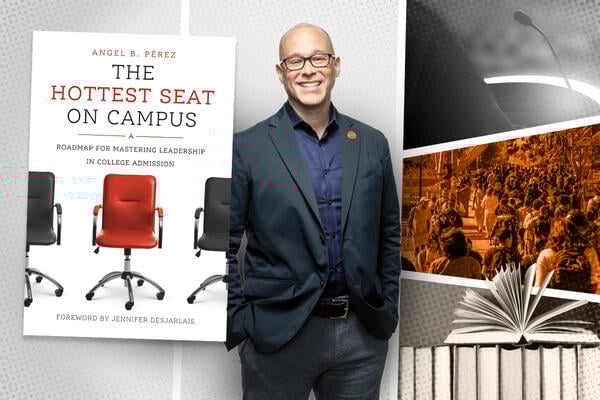
    “I will say something that my members in the higher education community cannot say. What the Trump administration is really saying is that you will be punished if you do not admit enough white students to your institution,” Angel B. Pérez, CEO of the National Association for College Admission Counseling, told Inside Higher Ed.

    Like many of Trump’s other orders targeting DEI, that mandate relies on unclear terms and instructions. It does not define “racial proxies”—although a memo by the Department of Justice released last week provides examples—nor does it outline what data would prove an institution is or is not considering race in its admissions process.

    In an interview with Inside Higher Ed, Paul Schroeder, the executive director of the Council of Professional Associations on Federal Statistics, questioned the government’s capacity to carry out the president’s order.

    “Without NCES, who’s going to actually look at this data? Who’s going to understand this data? Are we going to have uniform reporting or is it going to be just a mess coming in from all these different colleges?” Schroeder said.

    “It’s not just as easy as collecting data. It’s not just asking a couple questions about the race and ethnicity of those who were admitted versus those who applied. It’s a lot of work. It’s a lot of hours. It’s not going to be fast.”

    Source link

  • Antisemitism Is Not a Problem at George Mason (opinion)

    Antisemitism Is Not a Problem at George Mason (opinion)

    Ages ago, in the 1970s Soviet Union, a Jewish stand-up comedian, Mikhail Zhvanetski, remarked in one of his skits that if you want to argue about the taste of coconuts (not available in the Soviet Union at that time), it’s better to talk to those who’ve actually tried them.

    If you want to argue about antisemitism in academia, better ask those who have actually experienced it. Ask me.

    I was 16 years old when I graduated from high school in Moscow in 1971. My ethnic heritage—Jewish—was written on my state ID by the authorities. I couldn’t change it. I applied to the “Moscow MIT”: Moscow Institute of Physics and Technology. I passed the entrance tests with flying colors: 18 points out of 20, higher than 85 percent of those admitted. I was denied entry. I knew why. The unwritten but strict quota was that Jews could make up no more than 2 percent of freshmen.

    I did get my education, at another university less closely observed by the party authority. But six years later, looking for a job, I could not find one. In part, this was because institute directors knew they could be disciplined if they hired Jews who then applied to emigrate to Israel. I later learned that I was hired only when my future boss and close friend gave his word of honor that I would never try to emigrate.

    Two years later, I applied for Ph.D. study at the renowned Lebedev Physical Institute of the Russian Academy of Sciences (home to seven Nobel laureates). It was common knowledge at that time that one of the officials at Lebedev who had to approve admissions was a notorious antisemite. My gentile adviser also knew that, made sure that the official would never see either my characteristically Jewish face or my state ID, and took over all paperwork communications himself under various pretexts. When I was officially admitted and walked into the official’s office, they looked like they were going to have a heart attack. This was antisemitism.

    In 1994, 10 years after graduating, I moved to the United States, where, eventually, I devoted more than 20 years of service to the Naval Research Laboratory. Then, in 2019, I joined the faculty at George Mason University, one of the most ethnically diverse universities in the country. In my time here, I have never seen any sign of antisemitism, not a shred. I graduated a Muslim student, who—in his own words—felt honored to have me as his adviser (he even invited me to his sister’s wedding, which was restricted, due to the pandemic, to just 20 guests). I taught several more Muslim students and did research with some others. We openly discussed our religions, and I found these students to be good and compassionate listeners if I chose to share one or another story from my Jewish experience.

    Now, however, the U.S. Department of Education is taking seriously a charge of “a pervasive hostile environment for Jewish students and faculty” at George Mason. This is as shocking to me (and to many of my Jewish colleagues at GMU) as hearing that I have broken two legs and never noticed it. In fact, during the trying months after Oct. 7 and amid growing pro-Palestinian protests on campuses, I often praised Mason president Gregory Washington’s handing of this sensitive issue. While paying full respect to respectful protests, freedom of speech and the First Amendment, he fully avoided disruption of the educational process and university business.

    To this point, I can again dig into my experience under a totalitarian regime. When I came to America in 1994, I was fascinated by the famous case of Yates v. U.S., in which the Supreme Court issued a decision that offered a powerful contrast to Soviet rule. In that 1957 case, the court reversed the convictions of 14 Communist leaders in California who had been charged with advocating for the overthrow of the U.S. government by force. As Justice Black wrote, they “were tried upon the charge that they believe in and want to foist upon this country a different, and, to us, a despicable, form of authoritarian government in which voices criticizing the existing order are summarily silenced. I fear that the present type of prosecutions are more in line with the philosophy of authoritarian government than with that expressed by our First Amendment.”

    To me, this case reflected a quintessential characteristic of American democracy: rephrasing Voltaire, “We may find your view despicable, but will defend to the death your right to say it.”

    Though the details of the antisemitism complaint against George Mason have not been made public, it appears that Washington’s leadership is coming under attack based on just two cases involving three students; only one of those cases involved an alleged incident (vandalism) that occurred on campus. In both cases, the university administration, in collaboration with law enforcement, took immediate and harsh steps to resolve the situations: As Washington noted in a recent message to campus, the university was applauded by the Jewish Community Relations Council of Greater Washington for “deploying the full weight of the university’s security and disciplinary measures to prevent these students from perpetrating harm on campus.”

    And these incidents are outliers. Just as three thieves who may be GMU students wouldn’t attest to “pervasive thievery” on campus, three students alleged to have violent anti-Israeli agendas do not constitute a “pervasive hostile environment for Jewish students and faculty.” On the contrary, I feel safer and more assured knowing that three miscreants out of a student body of 40,000 were immediately and efficiently dealt with.

    What does make me feel uncomfortable—and what I do find antisemitic— is the implicit suggestion that I, an American Jew who does not have Israeli citizenship, must feel offended and defensive in the face of any criticism of any action of the Israeli government. I find such beliefs reprehensible, and they encroach on my freedom to have my own opinion about international affairs.

    Gregory Washington is my president, and I am confident that he is doing an excellent job protecting all faculty and students, including Jews, from bigotry and harassment. It is false allegations of antisemitism on campus under the pretext of “defending” Jews like myself that really threatens my well-being as a GMU professor.

    Igor Mazin is a professor of physics at George Mason University.

    Source link