Some colleges have changed their standardized test policies in recent years.
The percentage of underrepresented minority students increased in some cases after universities stopped requiring applicants to submit standardized test scores, according to a study published Monday in the American Sociological Review.
The findings come in the aftermath of the COVID-19 pandemic, which prompted many colleges and universities to rethink their testing policies; some went test-optional or test-blind while others doubled down. But starting long before the pandemic, critics have argued that consideration of standardized test scores often advantages white and wealthier applicants.
The study examined admissions patterns at 1,528 colleges between 2003 and 2019. During the 16-year time frame, 217 of those colleges (14.2 percent) eliminated standardized testing requirements. But researchers found that simply eliminating testing requirements didn’t guarantee a more diverse student body.
The institutions that eliminated the requirements but still gave significant weight to test scores during the application process didn’t increase their enrollment of underrepresented students in the three years after the change. However, colleges that reduced the weight of test scores showed a 2 percent increase in underrepresented student enrollment.
Additionally, researchers found that increases in minority student representation were less likely at test-optional colleges that were also dealing with financial or enrollment-related pressures.
Greta Hsu, co-author of the paper and a professor at the University of California, Davis, Graduate School of Management, said in a news release that “although test-optional admissions policies are often adopted with the assumption that they will broaden access to underrepresented minority groups,” their effectiveness depends “on existing admissions values and institutional priorities at the university.”
Baylor University has lodged a legal complaint to lock down its use of interlocking letters.
In its complaint filed in the U.S. District Court for the Western District of Texas Waco Division on Friday, Baylor accused Boston University of unauthorized use of an interlocking “BU” mark in its school merchandise, club sports and branding guidelines.
Baylor owns the right to use the interlocking BU on a variety of items including clothing, tumblers, umbrellas and stationery. It alleges federal trademark infringement, false designation and unfair competition.
Despite contrasting school colors—red and white for Boston University and green and gold for Baylor—Baylor says in the complaint that Boston University’s use of the interlocking BU allows it “to trade on and receive the benefit of goodwill built up at great labor and expense by Baylor,” and to “gain acceptance for its goods and services not solely on his own merits, but on the reputation and goodwill of Baylor, its Interlocking BU, and Baylor’s products and services.”
This is not the first time the institutions have locked horns over the logo. In 1987, Baylor applied to register the use of the interlocking letters, but Boston opposed the effort and the colleges agreed to co-exist under the “BU” mark.
Boston later removed its opposition, and for 30 years Baylor held the key to the interlocking BU until 2018, when it discovered three hats in Boston’s campus spirit store displaying the mark in “identical and/or confusingly similar” ways. Baylor said it communicated its objection in 2021, but Boston did not stop branding with the logo. Instead it has expanded its use, according to Baylor, which included images of a serving tray, blanket and sails for club sports, all bearing the locked-up letters, in the complaint.
Baylor wants Boston to destroy all merchandise, packaging and signage bearing the interlocking BU. It’s seeking to recover its legal costs and any other relief the court deems appropriate.
The past few years have brought a seemingly endless series of existential challenges for colleges and their leaders. Although many of the most recent challenges have been initiated by decision-makers in the nation’s capital, a sense of crisis on college campuses is nothing new. For any number of social, political and economic reasons, leadership in the world of higher education has been hard for some time, and it will probably keep getting harder.
Navigating external crises is especially challenging for midlevel campus leaders, such as department chairs and center directors. Too few of these individuals receive effective leadership training or support. And in moments of crisis, higher education’s collective failure to invest in developing strong leaders is on full display. Beyond the lack of role preparation, the very ambiguity at the heart of midlevel leadership—sandwiched between senior leaders and front-line faculty and students—makes it an inherently tough place to be.
On so many college campuses, department chair service carries limited power, authority, time and resources. As we prepare to begin a new academic year, chairs and directors may already feel exhausted or overwhelmed. In the paragraphs that follow, we offer a few general principles that may help department chairs figure out how to use their often overlooked and undercelebrated positions to support the collective well-being of their faculty, staff and students in what will most certainly be a challenging year ahead.
Accept what you cannot do (legally, morally, procedurally). Serving as a director or chair makes you a campus leader, whether or not you tend to describe yourself in those terms. And as a leader, you bear responsibility for acting in accordance with institutional policies and also for exercising good judgment in your actions and speech.
Chairs should not offer blanket assurances of safety to individuals or guarantees of legal counsel, for example. Instead, the better move might be to connect faculty and staff with identified resources and to let the experts employ their expertise. In moments of budget austerity, midlevel leaders should exercise caution in pledging financial support or informal guarantees of continued employment.
Chairs are empowered to use their full rights as private citizens—to protest, author op-eds and contact their elected representatives—but they should take care not to blur the lines between their personal activism and their official duties and position. You chair a department that includes diverse individuals who likely think and vote differently from one another. And right now, all of them need your full support for both routine and more substantive university matters. Anticipate that faculty, staff and students may look to you to set the ground rules so that all feel welcome, valued and safe in a polarized and scary world.
Exercise creative problem-solving within your domain. In a highly charged moment, chairs should use all the tools in their arsenal, strategically employing action and inaction.
Act by supporting small moments of connection, such as bringing in some baked goods or inviting a colleague who seems particularly overwhelmed to join you on a walk and talk across campus. If a faculty member in your department has lost the support of a federal grant, keep in mind that their entire research program may be in crisis. And if such a colleague is approaching a review for tenure or promotion, you may want to initiate a timely conversation about recalibrating expectations around scholarly productivity.
As for inaction, a crisis is an opportune moment to do no more than is absolutely necessary. Off-campus turmoil demands energy and attention. Do your best to help the department separate things that must be done now from the things that can wait. This may not be the time to request funds for an external speaker. Delay scheduling a faculty retreat to overhaul the long-overdue revision of the capstone class. Use the opening faculty meeting of the year to set some scaled-back, modest goals and enlist your colleagues in a pledge to keep the shared to-do list lean. (We suspect that’ll be an easy sell.)
Prioritize stability management.Ashley Goodall has argued that change, even necessary change, tends to disrupt our ability to find belonging, autonomy and meaning in our professional lives. Goodall offers the term “stability management” to describe what leaders can do for their colleagues on a daily basis, especially when everything is in flux.
Stability management begins by recognizing what works and needs to remain constant, focusing above all on preserving those things. Many faculty members may find comfort in the ordinary work of constructing class schedules, ordering textbooks, applying for travel funds, conducting faculty searches and the like. For some of your colleagues, business as usual may convey the implicit assurance that university life marches ever forward. This doesn’t mean that you should ignore or downplay the severity of a crisis; it just means that you can try to keep it in perspective.
Rituals and relationships also provide stability. If your department has a tradition of festive gatherings to mark the beginning of the academic year, now is the time to approach such gatherings with all the joy you can muster. And if your department is lacking in joyful traditions, well, that might be an opportunity for meaningful and much-needed change.
Defer to campus experts. During the pandemic, campuses mobilized their public health resources in highly visible ways, such as appointing campus physicians and researchers to policymaking task forces. Recent executive orders and policy mandates from the federal government have forced colleges to draw on a new set of experts, including international support personnel, grant managers, lawyers and financial aid counselors.
Rather than chairing high-profile committees, many of these trained professionals may work with impacted individuals in their specific, and often highly technical, unique situations. Many of these sensitive conversations are best conducted away from the limelight.
In other words, if you don’t see these efforts happening in public, extend the charitable assumption that campus resources are being mobilized to support those in need in the ways that make the most sense.
Embrace—don’t fight—the messy in-betweenness of being a department chair. The true art of midlevel leadership hinges on accepting its inherent dualities, limitations and freedoms. Department chairs may not be able to issue broad decrees, but they wield considerable influence over climate and tone. Not all problems are theirs to solve, but they can always offer sympathy and empathy. Instead of issuing top-down edicts, they can provide time and space for others to respectfully think together about hard topics.
In fraught moments, higher ed needs midlevel leaders to lean into their in-betweenness—to serve as translators, mediators and conduits between what on some campuses are warring factions. Send messages up the chain by highlighting the concerns of the most vulnerable members of the department, in case these individuals aren’t already receiving help. Make a point to show up at campus town halls and carefully read emails from central administration so you can keep your faculty informed. When you can, de-escalate hostile exchanges, quash baseless rumors and ensure no one feels overlooked or left out.
Commit to the beauty of your discipline. One of the hardest parts of leading in a crisis is not just navigating external pressures, but withstanding the slow erosion of your own spirit, which can quietly wear down even the most resilient leader. You can’t show up as the best version of your chair self to serve others if you have fallen into despair.
The recent attacks on colleges and universities have cut many of us to the core. There is no point in pretending that most of the work that happens in the academy will solve climate change, save American democracy or right centuries of injustice. Whatever benefits accrue to the world out there as a result of your teaching and scholarship will probably be indirect and difficult to measure.
Nonetheless, an academic leader can gain strength by reflecting on the ways in which their chosen discipline contributes, however indirectly, to the common good. The grunt work you do as department chair also makes it possible for students and faculty to deepen, enrich and expand their understanding of the world. Your work makes it possible for them to come ever closer to fulfilling their dreams.
Their work has meaning and value because, among other things, it embodies curiosity and an openness to new ideas. Your work may sometimes feel like an exercise in keeping the trains running on time, but you might remind yourself that, as long as the academy stays true to its core principles, the trains are heading in a worthwhile direction.
As a new academic year approaches, midlevel leaders are uniquely positioned to be a source of information, prudence, levity, focus and reassurance for the faculty, staff and students in their immediate spheres of influence. There’s plenty that we cannot begin to predict about the year to come, but we are confident that this is a year when students, faculty and staff will look to their most proximate leaders for guidance on how to keep moving forward.
Duane Coltharp is an associate professor of English at Trinity University in San Antonio. He served Trinity for 18 years as an associate vice president for academic affairs.
Lisa Jasinski is president of the Associated Colleges of the Midwest. She is the author of Stepping Away: Returning to the Faculty After Senior Academic Leadership (Rutgers University Press, 2023).
Rumors are swirling about the extent to which Harvard University will acquiesce to the Trump administration’s attempt to crush institutions of higher education. Until very recently Harvard was being publicly lauded for standing up to the government. Reports that Harvard may be willing to pay a sizable financial settlement to resolve legal accusations that it allowed antisemitism and promoted diversity policies were shocking to many. But the university’s purported resistance to government overreach already had a glaring exception—Palestine—and we as scholars who work on the subject have recently experienced it firsthand.
The Harvard Educational Review was set to release a special issue this summer focusing on education and Palestine. The topic, commissioned in early 2024, was timely in the wake of Israel’s onslaught on Gaza, which rights groups and other experts have concluded is a genocide, and aligned with the journal’s commitment to publishing research that tackles the most pressing issues facing education. The articles had been accepted, edited and contracted. The special issue had already been promoted at major education conferences and on the back cover of the spring issue of the HER. But suddenly, Harvard pulled the plug.
As recently reported in The Guardian, the Harvard Education Publishing Group (HEPG), which publishes the Review, abruptly and unilaterally decided to cancel the forthcoming special issue.
We wrote one of the articles that was supposed to be published in the special issue. Our article, one of 10 slated for publication, focused on the experiences of Palestinian teachers during the Lebanese civil war. But in May, as the special issue was nearing publication, we were surprised to find out that HEPG wanted to submit the entire issue to Harvard’s Office of the General Counsel for an exceptional and last-minute “risk” review. Articles had already been through the regular publishing process and were under contract. At no point to our knowledge had any “risk”-related concerns been raised about any of them. An additional review was therefore well outside the realm of routine practice.
Alarmed by this move and the dangerous precedent of subjecting academic scholarship to vetting by university lawyers, all authors in the special issue organized and expressed unequivocal refusal to this additional review in a letter sent to HEPG.
After we expressed our refusal, HEPG went radio silent for almost a month. And then it canceled the whole issue, only then claiming that there were problems with copyediting and its internal process. But procedural claims have often been leveled to silence speech, especially when it comes to Palestine. Whatever concerns about the process, there is no justification for the cancellation of the entire special issue. HEPG’s decision is yet another example of the “Palestine exception” in action: the term used to describe how seemingly liberal institutions restrict freedom of expression when it comes to Palestine.
Given the timing of HEPG’s decision—which aligns with the Trump administration’s weaponizing of Title VI of the Civil Rights Act—this seems to be the logical outcome of a political climate that has promoted sweeping claims of antisemitism to attack student protesters and higher education institutions, including Harvard. In this climate it seems far more likely that HEPG opted for censorship over academic freedom.
Of particular concern is Harvard’s recent adoption of a problematic new definition of antisemitism. That definition, proposed by the International Holocaust Remembrance Alliance (IHRA), has been roundly criticized by experts—and one of the authors of the definition—for equating critiques of the state of Israel with antisemitism. This conflation makes it harder to speak out against Israel’s actions and policies toward Palestinians and easier to victimize Palestinians. Harvard is not alone in this action.
Even before Israel’s latest brutal onslaught of Gaza, scholars writing and advocating for Palestinian rights confronted the limits of liberal empathy for Palestinians in the form of tenure denials, censored freedom of speech, doxing by pro-Israel groups and even death threats. But the repression of knowledge production and freedom of speech on Palestine has escalated since October 2023. U.S. universities and colleges (including Harvard) have canceled events that center Palestinian rights, attempted to censor scholarship, forcibly suppressed student protests against Israel’s actions in Gaza and beyond, and dismissed faculty over Palestine-related programming.
Still, the scrapping of this special issue marks a worrying escalation. It suggests that even those universities that are outspoken about their liberal values are ready to stifle academics’ legitimate criticism of Israeli policies and practices. Make no mistake: Anticipatory censorship of this kind is a hallmark of the governmental overreach that authoritarian regimes around the world are known for. As a growing number of higher education institutions adopt the IHRA definition of antisemitism, we fear we will see more and more examples of the suppression of academic freedom.
The consequences of this extend far beyond the academy. As the death toll in Gaza exceeds 60,000 and young people there face a third year without education amid ongoing bombardment, blockade and starvation, knowledge, debate and democratic action are essential to preventing the kind of horrors that are unfolding in Gaza today.
Thea Renda Abu El-Haj is a professor of education at Barnard College, Columbia University. Jo Kelcey is assistant professor of education in the Department of Psychology and Education at Lebanese American University.
Whenever I write something halfway decent (sometimes) or astoundingly dumb (often), I can count on a thoughtful response from Bob Ubell. Our conversation took place during the period when Bob published two books,Going Online(2017) and Staying Online(2021), as well as numerous articles in EdSurge, IHE, The Evollution and other publications.
Bob’s online education career goes at least back to 1999, where he was the dean of online learning at Stevens Institute of Technology. Subsequent leadership roles include vice dean of online learning at New York University Tandon School of Engineering and vice dean emeritus, online learning, at NYU Tandon.
In a profession where many of us are making things up as we go, Bob stands out for his long-term experience thinking about and leading online learning initiatives. I asked Bob if he would answer my questions about his career and the future of online learning, and he graciously agreed.
Q: According to your Wikipedia page, you have been working at the intersection of higher education, technology and publishing since you graduated from Brooklyn College in 1961. What does the next decade hold for you as you think about your contributions to our online learning community?
A: I’m not optimistic about what’s ahead, not only for digital education, but also for the nation’s wider academic enterprise. It’s impossible to answer your question in isolation without reckoning with the ugly scene now taking place in higher ed. Challenged by the federal government’s attacks, early this spring, 600 higher ed leaders warned about “unprecedented government overreach and political interference now endangering American higher education.” Since then, the present administration has continued to follow a treacherous path, destabilizing campuses across the country, targeting faculty and student academic freedom, and, in a new Supreme Court decision, ultimately dismantling the U.S. Department of Education.
In an opinion column inthis publication earlier this year, I predicted that American colleges and universities faced a terrifying cascade of autocratic moves “set by leaders in Hungary, Turkey and elsewhere … selecting college presidents, controlling faculty hiring and advancement, punishing academic dissent and imposing travel restrictions.” Many of these despotic actions have already been implemented and continue to be imposed on schools in this country.
Last month, to restore about $400 million in federal research funding, Columbia University bowed to tyrannical demands by officials. In an unprecedented agreement, Columbia will pay more than $200 million in fines for dubious accusations of antisemitic student theatrics. It also opened the gates for government intrusion in the school’s academic prerogatives in hiring, admissions and curriculum. Keeping Columbia in academic handcuffs, the deal will be overseen by an outside monitor, reporting to officials every six months.
The midcentury philosopher and cultural critic Hannah Arendt, in her masterful account of totalitarian regimes, revealed that they rely on systematic suppression of individual thought and freedom to maintain control, undermining the very purpose of universities—institutions that encourage critical thinking, open debate and intellectual autonomy, essential in a democracy. Recent power plays against Columbia, Harvard, Brown, Duke—and, just this week, UCLA—show how brutal our government can be in imposing its will.
The noted Columbia genocide scholar Marianne Hirsch, the daughter of Holocaust survivors, who teaches a class on genocide with a book by Arendt, is considering leaving Columbia following its adoption of a new definition of antisemitism, which casts criticism of Israel as hate speech, a provision in the new pact with the federal government. Hirsch fears it may force her to face official sanction for even mentioning Arendt, who criticized Israel’s founding.
“A university that treats criticism of Israel as antisemitic and threatens sanctions for those who disobey is no longer a place of open inquiry,” Hirsch told the Associated Press. “I just don’t see how I can teach about genocide in that environment.” Reactionary governments always find an innocent mark to target. In the 1950s, it was American Communists. Today, it’s pro-Palestinian faculty and students.
The downstream effects on remote learning are already being felt, with the perception overseas—following arrests of foreign students and other threats against students and scholars from abroad—that the U.S. is turning its back on international recruitment, undermining our reputation as a leading destination for higher education and potentially impacting foreign student tuition revenue, face-to-face and online. In the U.S., the demand to shut down DEI programs will surely affect the greatest number of online students—80 percent of whom work and a third [of whom] are first in their families to attend college.
On a personal note, I worry that closing the [Education Department] will cripple and may even end higher ed data collection and reporting, giving us less reliable information on the status of American college students. Over my career in higher ed, I’ve depended on federal government data, especially in supporting findings I’ve disclosed in my writing. “We’ll soon be in the dark,” I warned in a recent IHE column.
Turning to your question, asking what sort of contribution I might make to the remote learning community. Like so many others, I don’t feel my voice possesses much force against what’s happening. Nor do I feel competent to articulate what might make a difference. Academic opposition to what we face has been scattershot and largely ineffective, except for various successful legal maneuvers. More broadly, on a national scale, resistance has been disappointing, with few voices, in and out of electoral politics, with enough momentum to capture our yearning for democratic fresh air. To get us out of this nightmare, I dream that someone will rise in this desperate time to gather all of us together in an inspiring and powerful national movement against tyranny.
Q: There is a growing concern across higher education about the job market for new college graduates, as employers are increasingly utilizing AI to accomplish the work previously done by entry-level workers. What role should online learning leaders be playing at our institutions in evolving and adapting our institutions to the AI revolution?
A: Since the pandemic, it hasn’t been that easy for recent college graduates to find a job in our digital economy–even before the invasion of AI. In March, recent college grad unemployment was at 5.8 percent, the highest in the last decades, excluding the pandemic, and nearly double the rate of all workers with a college degree, now at 2.7 percent, nearly a historic low.
“For the first time in modern history, a bachelor’s degree is failing to deliver on its fundamental promise: access to professional employment,” observes a troubling report from Burning Glass, the big labor market analysis firm. “Young graduates face unemployment rates that are rising faster than any other education or age cohort, while over half of them land into jobs they didn’t need college to get. The traditional pathway from college to career is becoming less reliable.” In addition to other causes, the report singles out AI.
As with all radical technological innovations, the reception of AI is fraught with contradictory predictions on its impact. Touted by champions as an economic miracle, others fear it as a devilish intrusion, disrupting our material well-being, especially for college grads who have historically outpaced the economic success of others. In the postwar years, most American workers found middle-class manufacturing or clerical jobs, but in the last 40 years, new jobs are either in highly paid professional fields or low-wage service industries, a disastrous national calamity that has largely generated our present political trouble.
Sorry, but I don’t have exciting new ways to recommend to recent college grads to extricate themselves from the present dilemma, other than—not a very original idea—encourage them to enhance their knowledge gained in college classrooms with online or in-person nondegree courses in AI and other technical disciplines, giving them a leg up with attractive additional credentials.
Not being knowledgeable about AI, I reached out to Alfred Essa, an insightful colleague and author of the forthcoming Artificial Intelligence: Shaping the Future of Innovation, who advised, “Students must think of themselves as designers, creating AI-powered applications to solve problems, not just in the short-term, but over their careers, positioning themselves in industry, capable of building and changing things with AI.” Essa emphasized that his advice is not only for technically savvy students, but for others who are creative in aesthetics, humanities and other disciplines.
Essa worries that the present higher ed leadership is obsolete. “For colleges to succeed,” he urged, “they must be led by a new generation who will adopt the new AI environment.” In the meantime, for my part, higher ed needs to welcome AI as a technical innovation, in the long tradition of typewriters, calculators, computers and digital education. Once the genie is out of the bottle, you can’t stick it back in. Restrictive, retrograde rules are foolish or punishing—or both.
Q: What advice do you have for folks like me who are thinking about ways to stay active and engaged in online learning and higher education once we retire from our university administrative roles?
A: Cicero found that the way we lived in our youth prepares us for retirement. The choices we made when we were young naturally lead to the life we will live as we age. He argued that preparation for our later years is not a separate phase, but a continuation of the life we led all along. “The harvest of old age is the recollection and abundance of blessings previously secured,” he wrote (Cicero De Senectute, translated with an introduction and notes by Andrew P. Peabody [Boston: Little, Brown, and Co., 1887]).
In the nearly seven months since President Trump took office again, academic associations, faculty unions, researchers and other groups have used the legal system to push back on the administration’s efforts to reshape higher education and the federal government.
The lawsuits challenged bans on diversity, equity and inclusion programs; the administration’s crackdown on international students; the termination of thousands of grants; and the dismantling of the Department of Education.
“What we’re seeing is that when the administration tries to impose a whole new set of rules and regulations based upon their particular ideology … the courts are saying, ‘Wait’ or ‘No,’ until it gets to the Supreme Court,” said Randi Weingarten, president of the American Federation of Teachers, a teachers’ union that has filed multiple lawsuits against Trump and notched a few victories.
An Inside Higher Ed analysis of more than 40 lawsuits against the administration that are related to higher ed found that district judges have ruled against the executive branch in nearly two-thirds of the cases. Almost a quarter have yet to be decided. Of those in which a judge has ruled, 18 have been appealed, and only two were overturned. In bothinstances when the district court was overruled, it had to do with reversing injunctions that prevented the Trump administration from canceling grants based in part on the president’s executive order against DEI. The Supreme Court ruled in favor of the Trump administration in a separate but similar case.
Nine cases have yet to receive a decision from an appeals court.
For more updates on litigation against the administration, go to Inside Higher Edrevamped lawsuit tracker. The searchable database will be updated regularly.
Of the cases Inside Higher Ed analyzed, the most frequent issue at hand was grant cuts, at 14 cases, followed by the Education Department’s reduction in force at eight.
“A lot of the actions the administration is taking are very clearly being defined by the courts as patently illegal. They’re outside of the established law and they exceed executive authority,” said Jon Fansmith, senior vice president for government relations at the American Council on Education, which has sued the administration severaltimes to challenge a proposed cap on reimbursements for indirect research expenses that would cost universities millions.
Some worry that rulings from the conservative majority on the Supreme Court could be driven by party alignment more than the law. Fansmith said he was certainly concerned by the court’s rulings so far but was hesitant to call them an “interjection of partisan politics.”
He noted that the rulings have come from the court’s shadow docket. This means they have made their decisions outside of the traditional case procedures with limited briefings, no oral argument and often no detailed explanations.
For example, when it comes to the case challenging the Education Department’s layoffs, Fansmith said that the lawyers he’s talked to are “sort of confounded by the decision.” The justices didn’t offer an opinion on whether the department can legally fire half its employees, but did allow the administration to proceed with the process while the courts work through the case.
“So it’s sort of a split decision in some ways; the merits haven’t yet been resolved finally,” he said.
But the odds of the court making a final judgment that brings back the employees seems unlikely, some legal experts have said. And Weingarten noted that even if they do hear the cases this fall and make a final decision next spring, the damage will have been done.
“The problem is that when you start talking about medical and scientific research, the moment that those things get stopped, there is irreparable damage and it’s hard to recreate them,” she said. “The Trump administration is really hurting what was an anchoring principle of American enterprise and innovation … that research has really been suffocated and used as leverage for the Trump administration to get its ideological whims adopted.”
Still, many different plaintiffs—including Democratic attorneys general—continue to push back against the Trump administration’s agenda.
Massachusetts AG Andrea Joy Campbell, who has challenged the president in multiple suits, believes that Trump and his cabinet have repeatedly demonstrated a willingness to use “unlawful abuses of power” to limit academic freedom. And as long as they continue to do so, she added, Democratic leaders will keep taking matters to court.
“State attorneys general have the power to fight back to uphold the rule of law and protect our young people—and that’s exactly what we’re doing,” Campbell wrote in an email to Inside Higher Ed. “We’ve achieved significant victories in the vast majority of our cases, and we will continue to hold the line because our children and the future of our democracy depend on it.”
Democracy Forward, a nonprofit legal group that has represented plaintiffs in a number of cases, also chimed in, saying the Trump-Vance “assault” on education will continue to be “met with force.”
“These victories show just how essential higher education is to our democracy and why protecting it from political interference will remain a core part of our work,” said Skye Perryman, the group’s president and CEO.
She added that while the Supreme Court’s decision to overturn some cases was “incredibly disappointing,” it’s not the end.
“We win a lot, but if we’re not experiencing some setbacks, we’re not pushing hard enough,” she said.
However, major concerns still loom among many higher education advocates as Trump officials continue to fight back, pushing for lawsuits to reach the Supreme Court and lambasting the district and appellate judges that rule against the executive branch, calling them “activist[s]” for disagreeing with the president.
“There is a troubling and dangerous trend of unelected judges inserting themselves into the presidential decision-making process,” White House press secretary Karoline Leavitt said during a press conference in May.
Leavitt’s comments were related to court decisions blocking certain immigration policies, but Madi Biedermann, press secretary for the Education Department, has also criticized judges that rule against Trump.
In May, Biedermann called a district court judge who blocked the department’s mass layoffs a “far-left judge,” adding that he “dramatically overstepped his authority” and had “a political ax to grind.”
Weingarten, on the other hand, says it’s Trump and the conservative Supreme Court that are thwarting academic freedom and violating constitutional rights for political power.
What we’ve seen is “more the sign of an autocrat that tries to control as opposed to people who believe in freedom,” she said. “It’s all very, very dangerous for the future of America.”
As a first-year student at Emory University, Leia Marshall walked into the Pathways Center to receive advice on her career goals.
She was a neuroscience and behavioral biology major who thought she might go to medical school. But after meeting with a peer mentor, Marshall realized she was more interested in optometry. “I didn’t really know a lot about the prehealth track. I didn’t really know if I wanted to do medicine at all,” she said. “Getting to speak to a peer mentor really affected the way that I saw my trajectory through my time at Emory and onwards.”
Emory opened the Pathways Center in August 2022, uniting five different student-facing offices: career services, prehealth advising, undergraduate research, national scholarships and fellowships, and experiential learning, said Branden Grimmett, associate dean of the center.
“It brings together what were existing functions but are now streamlined to make it easier for students to access,” Grimmett said.
The pre–health science peer mentor program engages hundreds of students each year through office hours, advising appointments, club events and other engagements, helping undergraduates navigate their time at Emory and beyond in health science programs.
The background: Prehealth advising has been a fixture at Emory for 20 years, led by a team of staff advisers and 30 peer mentors. The office helps students know the options available to them within health professions and that they’re meeting degree requirements to enter these programs. A majority of Emory’s prehealth majors are considering medicine, but others hope to study veterinary medicine, dentistry or optometry, like Marshall.
How it works: The pre–health science mentors are paid student employees, earning approximately $15 an hour. The ideal applicant is a rising junior or senior who has a passion for helping others, Grimmett said.
Mentors also serve on one of four subcommittees—connect, prepare, explore and apply—representing different phases of the graduate school process.
Mentors are recruited for the role in the spring and complete a written application as well as an interview process. Once hired, students participate in a daylong training alongside other student employees in the Pathways Center. Mentors also receive touch-up training in monthly team meetings with their supervisors, Grimmett said.
Peer mentors host office hours in the Pathways Center and advertise their services through digital marketing, including a dedicated Instagram account and weekly newsletter.
Peer-to-peer engagement: Marshall became a peer mentor her junior year and is giving the same advice and support to her classmates that she received. In a typical day, she said she’ll host office hours, meeting with dozens of students and offering insight, resources and advice.
“Sometimes students are coming in looking for general advice on their schedule for the year or what classes to take,” she said. “A lot of the time, we have students come in and ask about how to get involved with research or find clinical opportunities in Atlanta or on campus, so it really ranges and varies.”
Sometimes Marshall’s job is just to be there for the student and listen to their concerns.
“Once I met with a student who came in and she was really nervous about this feeling that she wasn’t doing enough,” Marshall said. “There’s this kind of impostor phenomenon that you’re not involved in enough extracurriculars, you’re not doing enough to set you up for success.”
Marshall is able to relate to these students and help them reflect on their experiences.
“That’s been one of my favorite parts of being a peer mentor: getting to help students recognize their strengths and guide them through things that I’ve been through myself,” she said.
In addition to assisting their classmates, peer mentors walk away with résumé experience and better career discernment, Grimmett said. “Often our students learn a lot about their own path as they’re in dialogue with other students. It’s a full circle for many of our peer mentors.”
“It’s funny to think about the fact that our role is to help others, but it really helps all of us as peer mentors as well,” Marshall said. “We learn to connect with a variety of students, and I think it’s been really valuable for me to connect with the advisers myself and get to know them better.”
If your student success program has a unique feature or twist, we’d like to know about it. Click here to submit.
This article has been updated to correct the spelling of Branden Grimmett’s name.
The accreditor’s new public-facing dashboards will include data on how long it takes for graduates from different programs to recover educational costs.
Nuthawut Somsuk/iStock/Getty Images
The Accrediting Commission for Community and Junior Colleges is launching new tools to give members of the public more insights into student outcomes at the institutions under its purview.
Those tools include dashboards with different student achievement data points as well as a new metric to gauge return on investment. Like the Western Association of Schools and Colleges Senior College and University Commission, ACCJC is planning to measure ROI using price–to–earnings premium. Developed in part by Third Way and the College Futures Foundation, the earnings premium tracks how long it takes for graduates from different programs to recover educational costs.
The accreditor wrote in a white paper on different value metrics that the earnings premium is an “approachable and understandable way for students and their families to discuss the value education adds to earnings potential. It also allows for institutions, reviewers, and policy makers to contemplate a measurable target and drive improvement.”
ACCJC chair Kathleen Burke said in a news release that a key takeaway from developing the white paper and dashboards is that federal policy leaders want institutions to demonstrate their value.
“These efforts by ACCJC help policy makers and the public understand the incredible value proposition offered by ACCJC member institutions,” Burke added.
A recent hack of Columbia University’s computer system compromised the personal information of hundreds of thousands of people, including students and applicants, new documents show. Over all, about 870,000 individuals were affected by the breach.
The university provided draft notices to officials in Maine and California that it intends to send to affected parties in their states, according to the state attorneys general’s websites. Both states require that their residents be swiftly informed of any breach that includes their data, according to Bloomberg, which reported on the notices.
The notices said a technical outage disrupted some of the university’s IT systems in June, which led university leaders to suspect a possible cybersecurity attack. An investigation revealed that a hacker had taken files from Columbia’s system in May.
The stolen data includes any personal information prospective students provided in their applications or current students gave Columbia over the course of their studies, including their contact details, Social Security numbers, birthdays, demographic information, academic history, financial aid information, insurance details and health information. No patient data from the Columbia University Irving Medical Center seems to have been compromised, according to the notices. The university encouraged those affected to monitor account statements and credit reports to keep an eye out for any fraudulent activity. It also offered them two years of free credit monitoring and identity restoration services from a financial and risk advisory firm.
“We have implemented a number of safeguards across our systems to enhance our security,” the letters read. “Moving forward, we will be examining what additional steps we can take and additional safeguards we can implement to prevent something like this from happening again.”
A public statement from the university’s Office of Public Affairs last week said that since June 24, Columbia has seen no evidence of any further unauthorized access to the university’s system. Starting Aug. 7, the university promised to begin notifying affected students, employees and applicants on a rolling basis via mail.
“We recognize the concern this matter may have raised and appreciate your ongoing patience during this challenging time,” the statement read. “Please know we are committed to supporting the University community.”
A Columbia official previously toldBloomberg that the hacker seemed to be trying to further a “political agenda.” The investigation into the matter also found that the hacker was “highly sophisticated” and “very targeted.”
The alleged hacker, who got in contact with Bloomberg, gave the news outlet 1.6 gigabytes of data, claiming it contained decades’ worth of applications to Columbia. That application data included New York City mayoral candidate Zohran Mamdani, who applied to Columbia but didn’t get in.
Bloomberg confirmed with eight Columbia students and alumni, who applied between 2019 and 2024, that the information about them contained in the data was accurate. They verified that details such as their university-issued ID codes, citizenship statuses and admissions decisions were all correct. The data provided to Bloomberg didn’t contain names, Social Security numbers or birth dates.
The person claiming to be the hacker, who didn’t provide their name, texted Bloomberg that the purpose of the stolen data was to prove the university continued affirmative action in admissions after the 2023 Supreme Court ruling against such practices. They claimed to have hacked about 460 gigabytes of data total from the university—including 1.8 million Social Security numbers of employees, students and their family members—after spending more than two months ensuring their access to Columbia’s computer systems.
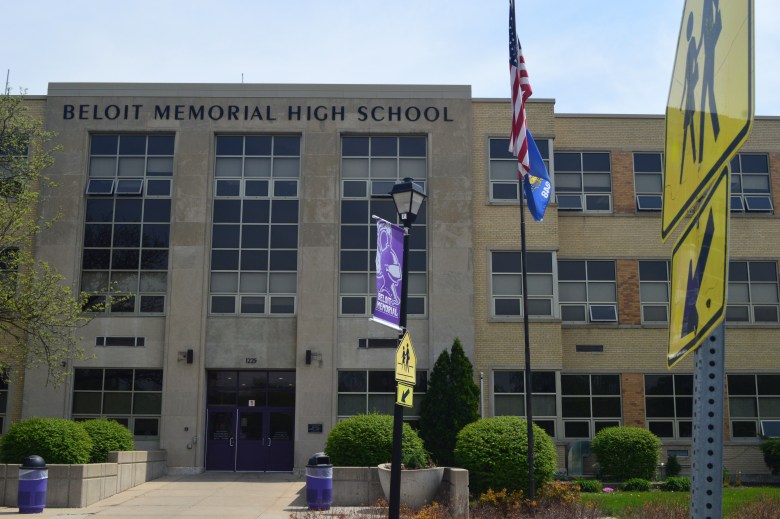
BELOIT, Wis. — As Chris Hooker eyed a newly built piece of ductwork inside Beloit Memorial High School, a wry smile crept over his face. “If you worked for me,” he told a student, considering the obviously crooked vent, “I might ask if your level was broken.”
Hooker, the HVAC manager of Lloyd’s Plumbing and Heating Corp. in nearby Janesville, was standing inside a hangar-sized classroom in the school’s advanced manufacturing academy, where students construct full-size rooms, hang drywall and learn the basics of masonry. His company sends him to the school twice a week for about two months a year to help teach general heating, venting and air conditioning concepts to students.
“I cover the mountaintop stuff,” he said, noting that at a minimum students will understand HVAC when they become homeowners.
But the bigger potential payoff is that these students could wind up working alongside Hooker after they graduate. If his firm has an opening, any student recommended by teacher Mike Wagner would be a “done deal,” Hooker said. “Plus, if they come through this class, I know them.”
Manufacturing and construction dominate the business needs inside Beloit, a small city of 36,000 just minutes from the Illinois border. Sitting at the nexus of two major highways, and within 100 miles of Chicago, Milwaukee and Madison, Beloit is home to a range of businesses that include a Frito-Lay production plant, an Amazon distribution center and a Navy subcontractor. In the next two years, a $500 million casino and hotel complex is scheduled to open.
But staffing these companies into the future is a major concern. Across the country, the average age of manufacturing workers is increasing, and one in four of these workers is age 55 or older, according to U.S. Bureau of Labor Statistics’ 2021 figures, the most recent available. In many other jobs the workforce is aging, too. Wisconsin is one of several states looking to boost career and technical education, or CTE, as a possible solution to the aging and shrinking workforce.
Having industry standard machines is a key part of Beloit Memorial High School’s manufacturing program; here a student uses a JET metalworking machine to create precise cuts for his project. Credit: Wayne D’Orio for The Hechinger Report
While the unemployment rate of Rock County, which includes Beloit, is 3.6 percent, only slightly higher than the state’s 3.2 percent, there’s a worker mismatch in the city, according to Drew Pennington, its economic development director.
Every day, 14,000 city residents travel outside of Beloit to work, while the same number commute into the city to fill mostly higher-paying jobs, said Pennington.
So when Beloit decided to revamp its public high school in 2018, CTE and work-based learning were at the forefront of the transformation.
The 1,225-student school now has three academies that cover 13 different career paths. After ninth grade, students choose to concentrate in an area, which means taking several courses in a specific field. Students also have the option to do work-based learning, which can mean internships, a youth apprenticeship or working at high-end simulated job sites inside the school.
“This creates not just a pipeline to jobs but also to career choices,” said Jeff Stenroos, the district’s director of CTE and alternative education.
“There are a lot of really good-paying jobs in this area. Students don’t need to leave, or go earn a four-year degree,” Stenroos said. An auto mechanic can “earn six figures by the age of 26 and that’s more than an educator with a master’s degree,” he said.
Beloit’s effort is a shift in high school emphasis similar to the extensive CTE programs being run in other places, notably Indiana, Kentucky and Alabama. In 2024, 40 states enacted 152 CTE-related policies, the biggest push in five years, according to Advance CTE, a nonprofit group that represents state CTE officials. Nationwide, about 20 percent of high school students take a concentration of CTE courses, it says, adding that the high school graduation rate for students who concentrate in CTE is 90 percent, 15 percentage points higher than the national average.
Three years ago, Wisconsin called for 7 percent of its high school students to be in workplace learning programs by 2026. Beloit’s progress puts it far ahead of that target. In Beloit Memorial, nearly 1 in 3 students meet this designation today, Stenroos said.
The high school features a cavernous construction area where students build full-scale rooms, learn masonry and complete plumbing and electrical wiring projects. The metal shop offers 16 welding stations and a die-cutter machine that allows students to create customized pieces to fit projects. Down the street, the school runs an eight-bay car repair center, a space it took over when a Sears autobody shop left town.
These spaces are “better than a lot of technical colleges,” Stenroos said.
In addition to their high school courses, Beloit Memorial students pile up industry-recognized certifications, Stenroos said. More than 40 percent of its students graduate with at least one certification, and 1 in 4 of them has multiple certifications.
While some simple certifications, such as OSHA Workplace Safety, can be accomplished in just 10 hours, others, such as those for the American Welding Society, require up to 500 hours of student work, he added. The state has called for 9 percent of graduating high school students to have earned at least one certification by next year. To incentivize schools to offer these opportunities, the state’s Department of Workforce Development pays schools for each student who earns a certification; in 2024, Beloit received $85,000 through this program, Stenroos said.
One of the school’s best automotive students, Geiry Lopez, graduated this year with five Automotive Service Excellence certifications. Standing less than 5 feet tall, Lopez said she is not bothered that she might not look like a typical mechanic. “I know I can do this,” she said, adding that she hopes to work on heavy machinery such as tractor trailers after she graduates.
She’s worked on her own car, with some fellow students, replacing the brakes, a front axle, rotors and wheel bearings at the school’s garage, she said, although she still hasn’t been able to drive it.
“My dad is taking forever to teach me how to drive,” she said.
The garage operates like an actual business, but the only customers are teachers and other Beloit staffers and students. Students estimate work costs, order parts and communicate with customers before any repairs take place. While oil changes and brake replacements are common, some students are totally rebuilding an engine in one car.
Over in the welding room, rising senior Cole Mellom was putting the finishing touches on a smoker he built in less than a month’s time. He said he loved the creativity of finding a plan, cutting the metal and building something that he could sell, all while in school. Plus, he knows that welding is a key skill needed for his dream job, race-car fabrication.
Officials revamped the Beloit Memorial High School in 2018 to funnel students into academies that are connected to jobs in the area and the state. Credit: Wayne D’Orio for The Hechinger Report
In the past, students created a custom-made protective plate that the city’s police use on a bomb squad vehicle.
The welding program has 125 students this year and had to turn away 65 more because of space limitations, Stenroos said; last year, 17 of the school’s welding academy graduates enlisted in the armed forces to specialize in welding.
These programs are designed to help meet the future needs of the state’s workforce. More than one-third of Wisconsin jobs will require education beyond high school but less than a bachelor’s degree by 2031, according to the Association for Career and Technical Education. For the last four years, the state has had more job openings than people on unemployment.
“There’s more jobs than there are people to fill them right now,” said Deb Prowse, a former career academy coach at Beloit Memorial who now works at Craftsman with Character, an area nonprofit that helps train students for careers in skilled trades.
Hooker, the Lloyd’s Plumbing HVAC manager, agreed. “Every project we work on has a delay, from a multimillion-dollar mansion to a three-bedroom spec,” he said. “There aren’t enough workers.”
The main reason Beloit Memorial has been able to zoom past state and national goals for both CTE and work-based learning is the school’s single-minded focus since 2018 on helping to ensure that its graduates will understand what businesses need and giving them a head start toward gaining those skills.
High school officials actually pared back the program from 44 pathways to 13, Stenroos said, part of an effort to tie each pathway to specific jobs. About 75 percent of pathways target area jobs, with the remaining quarter highlighting prominent professions within the state, he added.
Even though three straight budget referendum defeats have left the district with a $6.2 million funding gap, Stenroos said he’s been able to keep the CTE equipment modernized through donations and strategic allocation of the school’s federal Perkins grant and the state reimbursement for student certifications. In one instance, the school recently bought a $20,000 scanner for its automotive program; the machine can not only help diagnose a car problem, but also connect students to garages throughout the country that have successfully fixed the specified problem.
“It’s an expensive piece of equipment,” Stenroos said, “but it’s industry-certified and will give students real-life experience.”
Each of the three academies has an advisory board of teachers and industry professionals who work out how to embed practical lessons in classroom curriculum. “We ask business people, ‘What do you need, and how can we help our kids get there?’” said Stenroos.
“It’s really cool how receptive the school is to feedback,” said Heather Dobson, the business development manager at Corporate Contractors, Inc., a 200-person general contracting firm.
She explained that the district has incorporated small changes over the years, such as having students work in Microsoft programs instead of Google Classroom apps and teaching them how to write a professional email.
“Rarely is there an idea presented that they don’t embrace,” said Celestino Ruffini, the CEO of Visit Beloit, a nonprofit that promotes tourism of the city. The school is expanding its hospitality program because of the expected influx of jobs connected to the new casino and hotel, he said.
All the changes aren’t at the high school, however. In order to employ Beloit Memorial students, Frito-Lay had to alter its corporate policy of not allowing anyone under 18 to work in its plants, according to Angela Slagle, a supply chain manager there. The company now hires Beloit Memorial students for its career exploration youth apprenticeship program, she added.
The connection to area businesses goes beyond the school’s leaders. Each year, about 10 teachers complete an externship in which they spend one week of their summer at a local business. Teachers are paid $1,000 for the 20 hours, and they not only learn about what jobs a company may have but also find ways to incorporate real-world problems into their classroom lessons.
A few summers back, math teacher Michelle Kelly spent a week at Corporate Contractors. She was searching for different ways to use construction-based math problems with her students. In addition to using math to estimate a bid for a project or calculate the surface area of a job, she realized that complex math is needed to build a truss, the framework used to support a roof or bridge.
Because the triangular truss is supported by different lengths of wood inside its structure, Kelly said, building one requires the calculation of angles, total area, how much wood is needed and more. Since all her algebra students were in the school’s construction academy, she partnered with those teachers to go beyond blueprints and have the 10th graders build trusses, a collection of which sit in the back of her classroom.
A student’s detailed outline for creating a truss in Michelle Kelly’s 10th grade algebra class at Beloit Memorial High School, which is embracing career and technical education. Credit: Wayne D’Orio for The Hechinger Report
She sees this work as one way to help counter the chronic absenteeism that has existed since Covid. Teaching with this kind of hands-on work makes students see the relevance of algebra, she said. “Would it be easier to just have them take a test? Yes.”
Beloit Memorial Principal Emily Pelz said the school’s work is paying off. In the last four years, the school’s four-year graduation rate has ticked up slightly, from 83.4 percent in 2021-22 to 85.2 percent in 2024-25, while its attendance went from 78.5 percent to 84.8 percent in the same period, Pelz said.
Rik Thomas, a rising senior who already has his own business repairing and modifying cars, said this work has definitely made him more interested in school. While he thought the academy would merely explain what a construction career might include, “It’s nice to find out how to do the work.” His father works in construction and, Thomas added, “He loves that I take this program.”
Thomas and his classmates built a wooden shed earlier this year and were able to sell it for $2,500, with the money going to pay for more materials. Likewise, the first smoker created in the welding class was bought by Stenroos; the students are looking forward to posting the second one for sale after they determine how much they should charge.
While the school’s construction and other trade-related fields have drawn the most attention, its three academies also offer career paths in healthcare, education, business, the arts, hospitality and more.
For example, rising senior Tayvon Cates said he hopes to study pre-med at a historically Black college or university on his way to becoming a cardiology radiologist. Cates, who is in the school’s health and education academy, said, “If you want to do something, the school can help you do it.”
The Hechinger Report provides in-depth, fact-based, unbiased reporting on education that is free to all readers. But that doesn’t mean it’s free to produce. Our work keeps educators and the public informed about pressing issues at schools and on campuses throughout the country. We tell the whole story, even when the details are inconvenient. Help us keep doing that.