Tag: Jobs

  • ‘Who’s going to want these jobs?’: How the role of college president is changing

    ‘Who’s going to want these jobs?’: How the role of college president is changing

    This audio is auto-generated. Please let us know if you have feedback.

    In early June, the governing board of Florida’s university system surprised the higher education sector when it rejected Santa Ono as the sole finalist for the presidency of the University of Florida. Ono had faced backlash — led by conservative activist Christopher Rufo — over his past embrace of diversity, equity and inclusion efforts while head of the University of Michigan. 

    Later that month, University of Virginia President Jim Ryan abruptly stepped down after the U.S. Department of Justice pressured him to resign over the institution’s diversity efforts. Ryan said he wouldn’t fight to keep his job when staying would have cost the institution research funding and student aid and hurt international students

    The duties of the modern college president extend far beyond keeping their institutions viable.  For decades, how the head of a college is selected and who fills the position has been steadily shifting. Now, whoever assumes the role will likely take vitriol from both the public and policymakers.

    James Finkelstein, professor emeritus at George Mason University’s public policy school, researches leadership in higher education. We spoke with him about the changing role of the college president, the increased influence a presidency faces from both the political and private sectors and what that means for higher ed in the long run.

    This interview has been edited for length and clarity.

    HIGHER ED DIVE: How does one become a college president? And has that changed in recent decades?
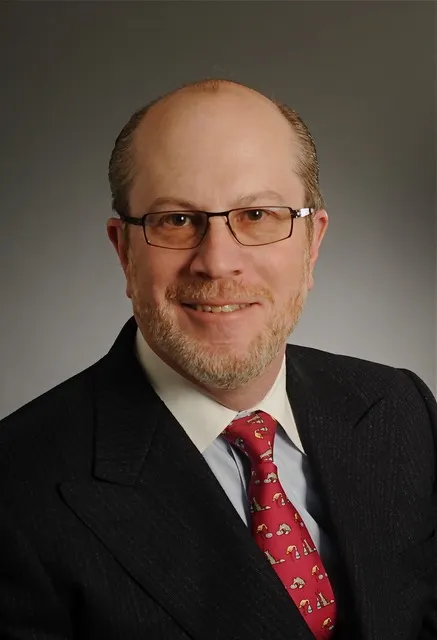
    James Finkelstein, professor emeritus in the Schar School of Policy and Government at George Mason University

    James Finkelstein, professor emeritus at George Mason University

    Permission granted by Judith Wilde


    JAMES FINKELSTEIN: The traditional route would start with becoming an assistant professor. You get tenure next, and then you may start to move up the administrative ranks. The most common path was to go from provost to president. For now, that’s still the most common path, but it’s on the decline. 

    The problem is, provosts don’t fundraise. Deans do. And the No. 1 qualification that a board now looks for in a university president is their ability to raise money.

    Given that shift in priorities, how do college boards pick their institution’s next presidents?

    My colleague, Judith Wilde, and I have studied this process extensively, and boards are increasingly relying on executive search firms.

    We found that only 2% or 3% of presidential classified ads mentioned a search firm in 1975. Today, it’s almost 100%. And based on the data, that change has also correlated with the beginning of the decline in the length of university presidents’ tenure.

    Search firms do the initial screening and determine for the board which candidates are really viable. But very few of the search firm senior executives have any real experience in higher education and their No. 1 responsibility as fiduciaries is to return profit to investors. 

    From there, the board picks from the candidates highlighted by the search firm? What do they look for?

    Yes. People tend to look for candidates who look like them. And boards are not primarily made up of academics — the only thing most board members know about a university is that they got a degree from one. You’re seeing a lot more political types on the boards, as is the case in Virginia, or corporate types.

    It’s interesting, corporations don’t turn to universities for their leadership. They don’t select a college president to run them. The former president of TIAA [Clifton Wharton Jr.] was the only university president to become a CEO of a Fortune 500 company — and he led a company designed to serve universities.

    But many universities, at least 10% or so, will select a corporate executive to lead them.

    If boards expect university presidents to behave more like corporate executives than leaders of an educational, social and cultural institution — someone who serves the public — then the next generation of university leadership is going to look very different. You’re going to see a different kind of person be not only sought after but interested in these jobs because they think they can take their private sector skill set directly into higher ed.

    In recent years, the presidential compensation packages at some colleges have mirrored those of Fortune 500 CEOs. In 2022, Ben Sasse received a notably lucrative package when he was hired to lead the University of Florida, as you and Judith have discussed. What effect does that shift have on colleges?

    When I was an undergraduate, the university president probably wore a tweed sport coat with leather patches on the elbows. And the patches weren’t there to make a style statement; it’s because the elbows were worn out. If he had a car — and it was far and away “he” when I was in school —  it was a car from the university’s car pool that was several years old. 

    And in the past, presidents maintained some academic interests. They taught. They were visible on campus. 

    Now, university presidents drive expensive cars and are more likely to associate with people outside the university than faculty inside the university.

    Our sector does not enjoy the reputation with the public that it used to. There are all sorts of questions now about the value of a college degree. People generally think faculty get paid a lot of money and don’t do very much.

    More than anything, presidents today are facing the question of if there is a way to win back that trust.

    While college presidents are grappling with that question, though, they are also watching their positions become increasingly precarious. One recent example is Santa Ono, who had been set up as Sasse’s replacement. Traditionally, the vote from the Florida universities’ governing board would have been pro forma. What shifted the tides and left Ono out of a job?

    Ono was targeted by the Chris Rufo machine. You can go back and read Rufo’s interview with Politico and listen to his interview with The New York Times — he’s very public about his strategy to delegitimize leaders in higher ed. His team made a decision early on that they wanted one of their own in Florida. And Ono wasn’t it.

    Having watched the entire governing board meeting in Florida, my professional assessment is that I’ve never seen a president or someone of Ono’s stature so ill-prepared and give so poor a performance on every level.

    Whoever prepared him, didn’t. And if they did, they weren’t preparing him for the right thing. It was much like what happened to the college presidents who testified at congressional committee hearings. Ono wasn’t completely prepared that he was going to be essentially cross-examined by a former state legislator. 

    By that point, Ono had already announced his departure from the University of Michigan, leaving a highly debated track record on diversity efforts and the handling of student protests in his wake. Does he stand a chance of getting another job heading a university?

    About 75% of presidents are what we call one-and-done — they report they’ll hold one presidency, and that’s more than enough. The Gordon Gees of the world are the exception, not the rule.

    Ono was, in my view, the modern-day equivalent of [former West Virginia University President] Gordon Gee. He’s the professional president who developed a public persona. He developed it at the University of Cincinnati, refined it at the University of British Columbia, and then brought it to Michigan.

    But I’ve talked to people at Cincinnati and Michigan. The truth of the matter is, he wasn’t well-thought of by the faculty. And he burned out very quickly in Michigan.

    Ono shouldn’t be the model for the modern university president. Personally, I don’t think that he’s going to get another presidency after the Florida situation, at least not for a while. 

    Is the role of president still a consequential one? Do the heads of colleges wield influence in the same way they have in the past?

    Who the president is makes a difference. They set the tone of the institution in many ways. But presidents today can exercise less independent leadership than they did in the past — they’re being put on a shorter and shorter leash. 

    There are so many different constituencies that they’re having to serve, and a lot of those constituencies are in conflict with each other.

    Some presidents are engaging in what people call anticipatory compliance.

    “In order to avoid these conflicts,” the thinking goes, “I’m going to get one step ahead.” Sadly, what that means is that when the board intervenes, they want even more.

    Is there a world where that kind of interference becomes so unpleasant that it renders the job unpalatable? 

    I think for many serious potential candidates, the answer is yes. It doesn’t matter whether you’re being paid $1 million. Or if you have two country club memberships, a big car, a big house and staff, and all of that. These jobs have always been 24/7, 365. And the scrutiny is exponentially worse now. 

    The real question is: Who’s going to want these jobs? That’s part of the plan of critics of higher education. They want to drive people out so they can replicate what they’re doing in Florida and appoint political loyalists who have no experience in higher education.

    Even though conservatives are critical of what they see as judicial activism, they have been extraordinarily active on college boards, working to influence curriculum and promotions and tenure.

    The current climate changes things for all trustees, even those who don’t align with this thinking. Regardless of their backgrounds, no board will want to appoint a president who is going to put at risk all of their research funding. And the Trump administration has shown that it is willing to use any lever it has to bring these institutions under its thumb. Look how quickly Jim Ryan was gone from UVA.

    As you mentioned, presidents are serving increasingly shorter tenures, instead of holding the position for life, or at least until retirement. Beyond a loss of leadership consistency, does this turnover hurt colleges?

    Take Jim Ryan as an example. He’s 58 years old. 

    I assume the terms of his contract were renegotiated when he left, but based on my analysis of his 2022 contract, the university has a future liability of almost $17 million to him. He would actuarially retire from teaching in 15 years, and in 2038, his base salary would be over $1 million a year for teaching at most two courses a semester.

    The people who are actually doing most of the teaching at UVA in 2038 won’t be tenured or tenure track. They will be contingent faculty who are barely able to scrape together a living.

    If you put $10 million in a scholarship fund at UVA, would that be a better investment than keeping Ryan on the faculty? The answer is a no-brainer.  

    Source link

  • Preparing Grad Students to Defend Academic Freedom (opinion)

    Preparing Grad Students to Defend Academic Freedom (opinion)

    Defending academic freedom is an all-hands-on-deck emergency. From the current administration’s scrutiny of (and executive orders related to) higher education, to state legislative overreach and on-campus bad actors, threats to academic freedom are myriad and dire.

    As leader of a program focused on free expression and academic freedom, I see faculty and campus leaders who are flummoxed about how to respond: Where to begin? What can be done to make a difference in defending academic freedom?

    I have an answer, at least if you’re graduate faculty, a dean or director of graduate studies, or a provost: Make a plan to prepare graduate students—tomorrow’s professors—to defend academic freedom.

    Graduate students often feel too pressed to focus on anything other than their coursework or dissertation and so are unlikely to study academic freedom on their own, even if they know where to find solid information. It is incumbent on faculty to put academic freedom in front of graduate students as a serious and approachable topic. If their professors and directors of graduate study do not teach them about academic freedom, they will be ill prepared to confront academic freedom issues when they arise, as they surely will, especially in today’s climate.

    An example: When I met with advanced graduate students at an R-1 university, one student recounted an experience as a junior team member reviewing submissions for a journal. He reported that another team member argued for rejecting a manuscript because its findings could be used to advance a public policy position favored by some politicians that this colleague opposed. The student was rightly troubled about political factors being weighed along with methodology and scholarship but reported he didn’t have the knowledge or confidence to respond effectively. Bottom line: His graduate school preparation had incompletely prepared him to understand and act on academic freedom principles.

    Here is a summer action plan for graduate faculty, deans and provosts to ensure we don’t leave the next generation of scholars uncertain about academic freedom principles and how they apply in teaching, scholarship and extracurricular settings.

    Add an academic freedom session to orientation. Orientation for matriculating graduate students is a can’t-miss chance to begin education about academic freedom.

    Patrick Kain, associate professor of philosophy at Purdue University, provides a primer on graduate students’ academic freedom rights and responsibilities during his department’s graduate student orientation. His session covers the First Amendment, state law and campus policies. He provides written guidance about what to do, especially in their roles as teaching assistants (“pay attention to the effects of your expression on others”); what not to do (“don’t compel speech”); and what they should expect (“students’ experiences and sensitivity to others’ expression will vary”).

    Reflecting on his experiences leading these orientation sessions, Kain said, “Graduate students, especially those joining us from quite different cultures and institutions, really appreciate a clear explanation of the ground rules of academic freedom and free expression on campus.” He added, “It puts them at ease to be able to imagine how they can pursue their own work with integrity in these trying times, and what they can expect from others when disagreements arise.”

    However, orientation cannot be a “one and done” for a topic as complex as academic freedom. Additional steps to take this summer include:

    Revisit the professional development seminar. Most graduate students take a professional development seminar before preliminary exams. When I took that seminar three decades ago, academic freedom wasn’t a topic—and my inquiries suggest academic freedom hasn’t been added to many professional development seminars since. This must change. In addition to sessions on writing a publishable article and giving a job talk, include sessions on the history and norms of academic freedom and free inquiry. Assign foundational academic freedom documents, such as the American Association of University Professors’ 1940 Statement on the Principles of Academic Freedom and Tenure and the 1967 Joint Statement on Rights and Freedoms of Students, alongside a text offering an overview of academic freedom principles, such as Henry Reichman’s Understanding Academic Freedom (Johns Hopkins Press, 2025).

    Schedule an academic freedom workshop. Graduate students at all stages—and your faculty colleagues, too!—can benefit from stand-alone workshops. Include tabletop exercises that allow students to appreciate nuances of academic freedom principles. For example, tabletop exercises let students test possible responses to a peer who is putting a thumb on the scale against publishing a manuscript submission on nonacademic grounds, to department colleagues who are exerting pressure on them to sign a joint statement with which they disagree or to administrators bowing inappropriately to donor wishes or political pressures. The reports of the Council of Independent Colleges’ Academic Leaders Task Force on Campus Free Expression include ready-for-use tabletop exercises.

    Bolster classroom training for teaching assistants. Professors with teaching assistants can provide an insider’s look into their process for designing a course and planning class meetings, with a focus on how they build trust and incorporate divergent viewpoints, and their approach to teaching potentially controversial topics. In weekly TA meetings, professors and TAs can debrief about what worked to foster robust discussion and what didn’t. Centers for teaching and learning can equip graduate students with strategies that build their confidence for leading discussions, including strategies to uphold free expression and inclusive values when a student speaks in ways that others think is objectionable or violates inclusion norms. The University of Michigan’s Center for Research on Learning and Teaching offers programs tailored to graduate students and postdocs, including a teaching orientation program.

    Look for opportunities to provide mentorship. An academic career isn’t only about teaching and scholarship but also entails serving on department and university committees, providing—and being subject to—peer review, and planning conferences. Academic freedom questions come up with regularity during these activities. Graduate faculty serve as mentors and should be alert to opportunities to discuss these questions. One idea: Take a “ripped from the headlines” controversy about journal retractions, viral faculty social media posts or how universities are responding to Trump administration pressures and plan a brown-bag lunch discussion with graduate students.

    Take the next step in rethinking graduate student preparation. While the steps above can be taken this summer, with a longer planning horizon, it is possible to rethink graduate preparation for a changed higher education landscape. Morgan State University, a public HBCU in Maryland, offers Morgan’s Structured Teaching Assistant Program (MSTAP), an award-winning course series to prepare graduate students as teachers. Mark Garrison, who as dean of the School of Graduate Studies led the development of MSTAP, explained, “In our required coursework for teaching assistants, we are intensely focused on establishing ground rules for TAs” around how to guide “student engagement that is accepting and encouraging without the intrusion of the TA’s personal views.”

    Garrison added, “This makes free expression a component of instruction that must be cherished and nourished. We cannot assume that the novice instructor will come to this view naturally, and we do our best to embrace a reflective teaching model.”

    Academic freedom is under threat. As Mary Clark, provost and executive vice chancellor at the University of Denver, observed, “Graduate students are developing identities as scholars, learning what academic freedom means in their research and in the classroom—and how their scholarly identity intersects with their extracurricular speech as citizens and community members. It is critical that we support them in developing these understandings.” This summer is the time to plan to do exactly that.

    Jacqueline Pfeffer Merrill is senior director of the Civic Learning and Free Expression Projects at the Council of Independent Colleges.

    Source link

  • Right-Leaning Faculty Likelier to Be “Hostile” to Jews

    Right-Leaning Faculty Likelier to Be “Hostile” to Jews

    A new report from Brandeis University researchers concluded that 7 percent of non-Jewish faculty polled during the spring semester at “very high research activity” universities showed “a pattern of explicitly hostile views toward Jews as a people.”

    The “Ideology in the Classroom” report, released last week, says an additional 3 percent of non-Jewish faculty “had a pattern of views about Israel that are generally described as antisemitic” by Jewish organizations and Jewish students. And while 11 percent of non-Jewish faculty who self-identified as extremely liberal were “hostile to Israel”—a view “virtually non-existent among all other political identities, including other liberals”—the faculty “with more conservative political views, including those who were the most critical of DEI, were the most likely to be hostile to Jews.”

    Over all, though, the report says 90 percent of non-Jewish faculty were hostile to neither Jews nor Israel.

    “The results confirm our earlier research findings that Jewish students are more likely to experience hostility from their peers than from faculty,” the authors wrote. They added that “government efforts to punish universities as a whole for their lack of viewpoint diversity and failure to address antisemitism are not well targeted to address these challenges. For example, STEM faculty, who are less likely to teach about contentious political issues, are the most likely to be profoundly harmed by the government’s cancellation of federal research grants.”

    Leonard Saxe, one of the authors and the Klutznick Professor of Contemporary Jewish Studies and Social Policy at Brandeis, told Inside Higher Ed that faculty “don’t appear to express any interest in imposing their own political or ideological views on students.” Saxe said, “Faculty need to be seen as allies” in resolving the problems underlying the conflict between the government and universities regarding antisemitism and diversity more broadly.

    “They want the same thing,” Saxe said. “They want to teach students how to understand diverse perspectives, multiple perspectives. They don’t want to make every single issue political.”

    Graham Wright, another author and an associate research scientist at Brandeis’s Cohen Center for Modern Jewish Studies, said that to the extent antisemitism is an issue on some campuses, it’s “not necessarily due to the actions of large numbers of faculty, but a smaller group.”

    The report found that almost half of Jewish faculty were somewhat or very much concerned about antisemitism on their campuses, and they were “more concerned about antisemitism emanating from the political right than the political left.” This “can be attributed in part to the political makeup of Jewish faculty,” the authors wrote, noting that more than 80 percent of Jewish faculty identified as liberal and about a quarter as extremely liberal.

    Using a statistical model, the researchers also sought to predict hostility from non-Jewish faculty based on their holding certain beliefs. They concluded that “faculty who more strongly agreed that Israel was an apartheid state” were likelier to be hostile to both Israel and Jews. And they found no statistically significant difference between academic areas in levels of faculty hostility after controlling for other factors.

    The study grouped faculty into these categories of “hostile to Jews,” “hostile to Israel” or hostile to neither based on their pattern of agreeing or disagreeing with seven statements.

    The statements were:

    • “Jews in America have too much power,”
    • “Jews don’t care what happens to anyone but their own kind,”
    • “Jewish people talk about the Holocaust just to further their political agenda,”
    • “Jews should be held accountable for Israel’s actions,”
    • “Israel does not have the right to exist,”
    • “I wouldn’t want to collaborate with a scholar who supports the existence of Israel as a Jewish state,” and
    • “All Israeli civilians should be considered legitimate targets for Hamas.”

    The report says “virtually no non-Jewish faculty expressed agreement” with that last claim.

    The researchers also wrote that “more than three-quarters of the faculty in our sample reported that, over the past academic year, the Israel-Palestine conflict never came up in class discussions, and less than 10 percent reported actively teaching about it.” Saxe said there’s not much evidence that a faculty member’s negative attitudes toward a group “seep into” their classroom.

    The researchers surveyed 2,335 faculty across 146 R-1 Carnegie classification universities from Feb. 3 to May 5. About 11 percent of the sample was Jewish. The online survey also polled faculty on other current political issues, such as immigration.

    “More than two-thirds of faculty identified as liberal, while one-third identified as moderate or conservative,” the report says, but “there was overwhelming agreement among faculty that climate change is a crisis requiring immediate action and that President Trump is a threat to democracy.”

    The report also says that “half of liberal faculty members and 70 percent of extremely liberal faculty members expressed serious concerns about being targeted by the federal government for their political views.”

    But Saxe said that “as a faculty member on campuses most of my life, I believe we’re not going to address the current issues unless faculty themselves get more engaged—and that it’s recognized by policymakers that we need faculty if we’re going to solve these issues.”

    Source link

  • Post-Test Worksheet Encourages College Student Metacognition

    Post-Test Worksheet Encourages College Student Metacognition

    Many of today’s college students have experienced disruptions to their education due to the COVID-19 pandemic, negatively affecting their personal well-being as well as their academic preparation. Encouraging students to embrace effective and meaningful study habits can be one way to improve their college readiness and confidence in learning.

    One professor at Western Iowa Tech Community College designed a mandatory post-test reflection and correction for students and saw dramatic improvement in their performance on the second exam. The assignment encourages students to strengthen their study habits and hold themselves accountable for making meaningful changes.

    What’s the research: Students say their biggest challenges when studying are time management (47 percent) and distractions from technology or other people (both 38 percent), as well as a lack of sufficient time (34 percent), according to a 2024 survey from Kahoot. Forty-one percent of respondents indicated they experience anxiety while studying, compared to 34 percent who said they feel confident.

    Test corrections, also called exam wrappers by teaching and learning centers, are activities delivered before or after an assessment to help students consider how they study and ways they could improve their practices before the next exam.

    Past research on exam wrappers has found that implementing the strategy can improve course and exam grades, as well as students’ level of metacognition and changes to study habits.

    For years, Frank O’Neill, a sports medicine instructor at Western Iowa Tech, has offered students the opportunity to complete an optional correction worksheet after each exam. Typically, the students who take him up on the opportunity are the ones already excelling in the course, he said—not those who could benefit from additional support.

    “My primary goal is to turn a D student into a C student,” O’Neill said.

    This summer, O’Neill decided to run an experiment and see if making the test analysis and correction worksheet mandatory would have any impact on students’ grades.

    The assignment: After students take an exam, O’Neill’s assignment asks them a series of reflection questions on their study habits as well as a post-test commitment to improving their test-taking abilities.

    Some of the questions are designed to help O’Neill understand which study strategies students employ and how they correlate to their grades.

    For example, he’s learned that a student who’s less confident entering into the assessment more often receives a higher score than their confident peers, which O’Neill believes is because students who have studied longer have spent more time wrestling with the material and consider it to be difficult, compared to their peers who skim notes and think they’ve learned content.

    Other questions prompt students to consider their test-taking abilities and the errors they make frequently. Sometimes students indicate that they got a question wrong because they changed their answer from the correct response to an incorrect one, O’Neill said, which allows him to encourage more confident responses.

    “Your brain is smart; your gut is smarter than your brain,” O’Neill said. “You gotta go with that gut.”

    Students can also provide feedback to the professor on how to improve the course. Sometimes O’Neill gains insights from test performance and frequently missed questions to understand how to make content clearer in the future.

    The assignment requires students to correct every incorrect response on the test, which O’Neill says serves as a study technique as well, because exams are cumulative, so students will need to know the right answer later. It also fosters a growth mindset among learners, helping them reframe their learning and consider how to fail forward and see assessment as progress toward their goals, O’Neill said.

    The impact: O’Neill is teaching two sections of microbiology this summer with 20 students enrolled in each section.

    After the first exam, O’Neill assigned all students in one section to complete the exam wrapper, which would add five points to their grade. The other section could complete the optional wrapper but without points attached.

    By the second test, the difference between classes was clear; the optional correction section showed little to no difference in grades between exams one and two. In the mandatory correction section, the average exam grade rose nine percentage points.

    Since he first offered the assignment, O’Neill hasn’t received any negative feedback from students about having to complete the exam wrapper, which he attributes in part to his commitment to avoid giving students “busywork,” instead explaining the purpose behind each assignment. He’s also seen self-reported levels of test anxiety decrease over the course of the semester among students who use the wrapper and fewer students failing or dropping the class, signaling the personal benefits of the worksheet.

    O’Neill now plans to assign the post-test reflection to all the courses he’s teaching this fall, for about 200 students in total. He’s also exploring opportunities to digitize at least portions of the assignment in the college’s learning management system, Canvas.

    Do you have an academic intervention that might help others improve student success? Tell us about it.

    Source link

  • Duke Faces $108M Funding Freeze, Multiple Investigations

    Duke Faces $108M Funding Freeze, Multiple Investigations

    Duke University file photo

    The Departments of Education and Health and Human Services are investigating Duke University and the Duke Law Journal for allegedly violating Title VI of the Civil Rights Act of 1964, which bars discrimination based on race and national origin, the agencies announced Monday.

    The New York Times reported Tuesday night that the Trump administration froze $108 million in federal grants and contracts at Duke’s medical school and health system.

    On Monday, ED and HHS sent a letter detailing their concerns about potentially discriminatory practices at Duke Health and threatening the medical school’s federal funding.

    “These practices allegedly include illegal and wrongful racial preferences and discriminatory activity in recruitment, student admissions, scholarships and financial aid, mentoring and enrichment programs, hiring, promotion, and more,” the letter states, though officials didn’t offer specifics.

    The departments want Duke to “review all policies and practices at Duke Health for the illegal use of race preferences, take immediate action to reform all of those that unlawfully take account of race or ethnicity to bestow benefits or advantages, and provide clear and verifiable assurances to the government that Duke’s new policies will be implemented faithfully going forward—including by making all necessary organizational, leadership, and personnel changes to ensure the necessary reforms will be durable.”

    Additionally, the agencies want Duke to convene a “Merit and Civil Rights Committee” that can negotiate with the federal government on behalf of university leaders and “avoid invasive federal engagement,” according to the letter. This request appears to be a new ask for the Trump administration as officials work to expand their scrutiny of higher education, based on what’s publicly known about investigations at other colleges.

    “We hope this arrangement will enable the parties to move quickly toward a mutually agreeable resolution of outstanding concerns and complaints,” officials wrote in the letter. “If the alleged offending policies, practices, and programs are found to exist and remain unrectified after six months, or if at any time the Merit and Civil Rights Committee and federal government reach an impasse, the federal government will commence enforcement proceedings as appropriate.”

    Duke has 10 days to respond to the request to form the committee.

    Meanwhile, the Duke Law Journal investigation, led by the Education Department’s Office for Civil Rights, centers on allegations that the journal uses factors such as race or national origin to select editors. The department opened a similar investigation into the Harvard Law Review

    The Washington Free Beacon, a conservative news outlet, reported last month that the Duke Law Journal prepared a special application packet for affinity groups that noted applicants could get a three- to five-point bump if they have “meaningfully advanced the interests of communities with diverse perspectives and experiences either at school or in their community.” 

    Source link

  • UCLA Settles Lawsuit With Jewish Students for $6.45M

    UCLA Settles Lawsuit With Jewish Students for $6.45M

    The University of California, Los Angeles, agreed to pay $6.45 million to settle a lawsuit brought by Jewish students, the Los Angeles Times reported. The agreement, which would be in effect for 15 years, now awaits approval from the judge overseeing the case.

    The lawsuit, brought by three Jewish students and a medical school professor in June 2024, alleged UCLA enabled pro-Palestinian activists to cut off Jewish students’ access to parts of campus, violating their civil rights.

    Violence broke out in and around an encampment established at UCLA in spring 2024 when pro-Israel counterprotesters attacked it with fireworks and other projectiles. Hours of chaos ensued between protesters and counterprotesters before campus police intervened. UCLA’s former chancellor Gene D. Block, named in the lawsuit alongside other UCLA officials, was among the higher ed leaders called before Congress for campus antisemitism hearings.

    As part of the settlement agreement, each plaintiff will receive $50,000. Another $320,000 will go toward a campus initiative to combat antisemitism. About $2.3 million will be donated to eight different Jewish community and advocacy groups, including Hillel at UCLA, the Academic Engagement Network, the Anti-Defamation League, the Jewish Federation Los Angeles Campus Impact Network and the Film Collaborative Inc., to produce a film related to the Holocaust.

    UCLA also agreed that it is “prohibited from knowingly allowing or facilitating the exclusion of Jewish students, faculty, and/or staff from ordinarily available portions of UCLA’s programs, activities, and/or campus areas,” which includes “exclusion … based on religious beliefs concerning the Jewish state of Israel.”

    Source link

  • Federal Actions Loom Large at NACUBO Conference

    Federal Actions Loom Large at NACUBO Conference

    NATIONAL HARBOR, Md.—Just outside of Washington, D.C., across the Potomac River, Capitol Hill cast a shadow over the annual meeting of the National Association of College and University Business Officers, where concerns over federal funding and policy changes were palpable among attendees.

    At panels and in side conversations during the three-day meeting, held at the sprawling Gaylord National Resort and Convention Center, attendees swapped strategies, drilled into pressing issues and commiserated over pressures on the sector wrought by both the political environment and a business model that is strained in many places. Representatives of a diverse mix of institutions from across the nation attended, but common challenges emerged: They worry about the impact of looming federal policy changes, which they expect to add pressure to institutions already grappling with financial challenges related to enrollment declines, high tuition discount rates and other issues.

    Here’s a recap of themes and moments that emerged from the conference.

    ‘Fear, Anxiety and Contempt’

    At a packed panel covering recent activity out of Washington, NACUBO vice president for policy and research Liz Clark noted the strains business officers are feeling amid a “tumultuous year” marked by a flurry of federal actions, including the passage of the so-called One Big Beautiful Bill Act, pushed by President Donald Trump, which included various provisions for higher education.

    The legislation, signed earlier this month, caps some student loans while eliminating the Grad PLUS program, limits repayment options and requires programs to pass an earnings test for attendees to access federal student loans, among other provisions, including changes to the endowment tax. Passed on a partisan line with Republicans under pressure to deliver Trump’s signature legislation, Clark noted it is just one action—albeit a significant one—that has reshaped higher education this year.

    Clark added that 2025 has “brought a lot of fear, anxiety and contempt” as colleges navigate restrictions on diversity, equity and inclusion programs; cancellation of federal grants and contracts; and various state laws that have “created a challenging environment” for the sector.

    “I feel like we have, this year, been dealing with everything, everywhere, all at once,” Clark said.

    Clark noted that despite the concerns she highlighted, the One Big Beautiful Bill Act, which she abbreviated “Bubba,” and other policies that were proposed could have hit higher education much harder. One example she offered was the endowment tax, which in the final bill fell far short of what House Republicans initially proposed.

    But in another panel on tax reform, Clark suggested that the endowment tax could still be revised in ways that resemble earlier proposals and would have affected more universities and at higher rates.

    “Don’t forget that ideas never die in Washington,” Clark warned.

    Legal Perspectives

    A panel of higher education lawyers also weighed in on current challenges for the sector.

    Kate Hudson, deputy vice president and counsel for government relations and public policy at the Association of American Universities, warned at the start that the session would not have “a whole lot of good news.” Given the rapid pace of changes from the federal government, she also offered a caveat: “Anything I say today could be out of date in 72 hours.”

    Hudson noted that campus attorneys are dealing with multiple actions from the federal government, such as federal funding freezes and far-reaching executive orders, as the Trump administration seeks to reshape everything from academic research to college admissions.

    “I don’t think it is too dramatic to say that this is a wholesale renegotiation by force of the government-academia partnership,” Hudson said. “I don’t think that’s an overstatement.”

    Jen Gartner, deputy general counsel at the University of Maryland, argued that the relationship between the federal government and research institutions shifted from “extremely collaborative and collegial” to a suddenly “adversarial approach” that has left universities flummoxed. That strain has particularly been felt around grants, which she said have often been terminated for unclear reasons. She also said the federal government has provided unclear information on such cancellations, sometimes providing contradictory statements in the same termination notice.

    And as higher education attorneys have sought answers, she said, they’ve reviewed few.

    “It’s not just that universities don’t know what to do—agencies don’t know what to do, either, and [staff are] not picking up the phone or responding to emails if they’re even still there,” Gartner said.

    Related to research, Hudson also warned that Trump administration’s scrutiny of international students, which includes now vetting their social media posts for evidence of hostility toward the U.S. government and culture, also has the potential to harm the sector.

    “It’s not an overestimation to say that threats … to legal immigration, to your campuses, do present an existential threat to the academic research enterprise itself at a time when [research and development] budgets and graduates from STEM degrees in our competitors, such as China, are off the charts and reaching new heights,” she said. “International students will go elsewhere.”

    Hudson added that the AAU has not historically focused on immigration law, but that has suddenly shifted amid the threats to international students and faculty.

    A Hard Year Ahead?

    Inside Higher Ed also hosted a panel at this year’s conference to discuss the results of the 15th annual Survey of College and University Chief Business Officers, released last week. That survey, conducted in partnership with Hanover Research, found college business officers confident in the long-term outlook but worried about their financial situation in the near future.

    Most respondents believe their institutions will be in worse financial shape next year. Only 43 percent expressed the belief that their institution would be in better shape next year. But Rick Mills, president and CEO of United Educators, was skeptical about the sentiment that financial situations will improve by next year given the various challenges discussed at the conference.

    “At one level, I take heart in the optimism,” Mills remarked. “I think it’s what keeps all of us going, and what gets you to work in the morning, and perhaps, in the end, helps us solve the problem. On the other hand, it strikes me as slightly fantastical thinking in the current environment.”

    Source link

  • More Campuses Earn “Green Light” Free Speech Ratings From FIRE

    More Campuses Earn “Green Light” Free Speech Ratings From FIRE

    The number of colleges and universities with written policies that do not seriously threaten student expression are on the rise this year, according to the Foundation for Individual Rights and Expression’s 19th annual “Spotlight on Speech Codes” report, published Tuesday.

    Since 2006, FIRE has grouped hundreds of public and private higher education institutions into three overall categories based on their campus speech policies: green, yellow and red lights. This year, 73 of the 490 (14.9 percent) colleges and universities surveyed received a green light ranking—meaning their policies don’t threaten free expression—compared to 63 last year. It’s the highest share since 2012, when just 3.6 percent of institutions earned green-light ratings. 

    For the first time in 19 years, the number of green-light colleges outnumbered those in the red-light category (14.7 percent), reserved for institutions with policies that “clearly and substantially restrict free speech,” according to the report. Last year, 20 percent of institutions received a red-light rating.

    Although political and institutional responses to campus protests related to the Israel-Hamas war reignited debate over free expression last year, the report attributed the decrease in red-light ratings to colleges and universities revising their policies related to harassment, hate speech and bias-reporting systems. Specifically, the report said that while bias-reporting systems have become popular over the past decade, they “have invited students to report protected speech simply because it offends them,” turned academic institutions into “referees of political and academic speech,” and created a “chilling effect on campus expression.”

    Lawsuits, free speech advocacy—from students, alumni and groups like FIRE—and lawmaker scrutiny have all spurred changes in recent years.

    “Over a dozen institutions have either substantially revised or eliminated entirely their bias reporting systems,” the report said. “Others have significantly reduced the prominence of their bias reporting teams, either by reducing the number of places on their website the team is mentioned or by requiring students enter their credentials to access the policy information.”

    FIRE rated the majority of institutions—337, or 68.8 percent—as yellow, meaning they “maintain policies that impose vague regulations on expression.” And eight colleges—including Baylor University, Brigham Young University and Hillsdale College—received a warning rating for “clearly and consistently stat[ing] that they hold a certain set of values above a commitment to freedom of speech.”

    Over all, private colleges have more restrictive policies than public colleges. Just 10.6 percent of public colleges earned red lights compared to 28 percent of private colleges—and only 7.1 percent of private colleges earned a green-light rating, compared to 17 percent of public ones.

    Source link

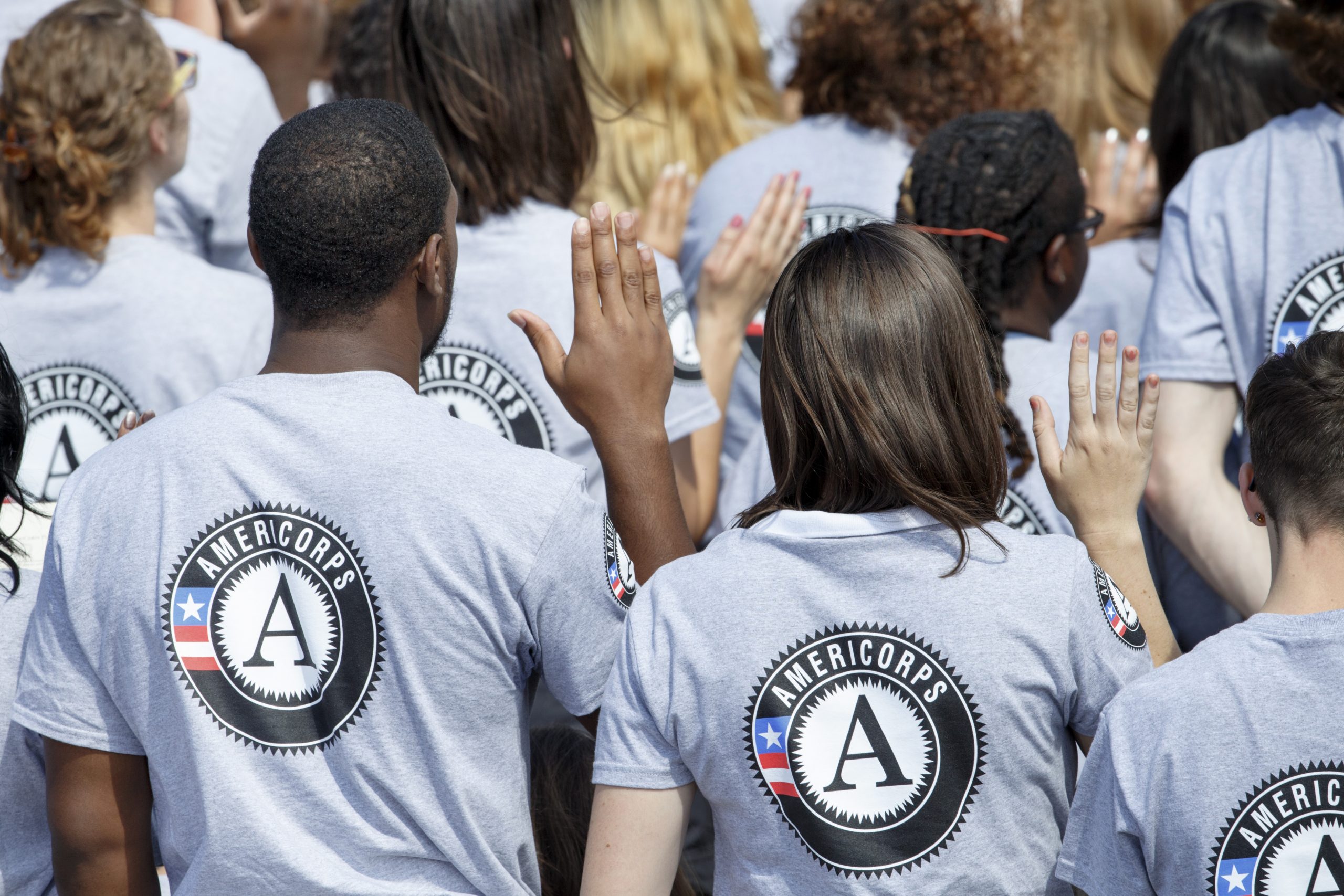
  • Federal cuts to AmeriCorps could make it harder for recent graduates to find jobs

    Federal cuts to AmeriCorps could make it harder for recent graduates to find jobs

    This story about AmeriCorps jobs was produced by The Hechinger Report, a nonprofit, independent news organization focused on inequality and innovation in education. Sign up for the Hechinger newsletter.

    Lily Tegner didn’t know what she wanted to do when she graduated from Oregon State University with a chemical engineering degree five years ago. She entered the workforce at a point when unemployment briefly skyrocketed and companies were freezing hiring because of the Covid pandemic. “I didn’t have a very clear direction as far as where I was going in life,” she said. 

    Like hundreds of thousands of other young adults, Tegner kick-started her career through AmeriCorps, a federal agency that sends its members to communities across the country to tutor students, help after disasters strike and restore wildlife habitats, among other activities. She took a position at the Alaska Afterschool Network, where her job was to help find ways to expand science, technology, engineering and math access in its programs. Four years later, she’s still there — now, as a full-time employee managing the nonprofit’s AmeriCorps program. 

    “This state became my home,” Tegner said, adding that her year in AmeriCorps “completely changed the trajectory of my career.” 

    An AmeriCorps member poses with a student in one of the Alaska Afterschool Network’s funded programs. The organization lost its AmeriCorps funding last spring. Credit: Courtesy of Alaska Afterschool Network

    This spring, Alaska Afterschool Network was one of hundreds of organizations abruptly notified that its AmeriCorps funding had been terminated. Federal funding cuts forced the nonprofit to eliminate three full-time positions and cancel 19 internships scheduled for this summer. Tegner’s job is also at risk, though the organization is trying to find a way to keep her on. 

    In late April, the Trump administration slashed 41 percent of AmeriCorps’ funding, cutting about $400 million in grants and letting go of more than 32,000 members serving in hundreds of programs across the United States. In June and also this month, judges ordered the government to restore some funding, but the ruling does not reinstate all the money that was taken away. Shrinking AmeriCorps is among the many steps the Trump administration has taken to curb what he has called “waste, fraud and abuse” of federal funds. More action is expected in the months ahead. 

    Related: Become a lifelong learner. Subscribe to our free weekly newsletter featuring the most important stories in education. 

    Over the years, the program former President Bill Clinton created has deployed more than a million people. On top of gutting AmeriCorps, the cuts have diminished the reach of an agency that has been a critical path to a career for recent high school and college graduates at a time when entry-level jobs can be difficult to find.

    AmeriCorps was created more than three decades ago to oversee expanded federal volunteer programs, incorporating existing projects including Volunteers in Service to America and the National Civilian Community Corps. Its members take on community service positions across the country that can last for up to two years. They receive a small living stipend, and full-time members are eligible for health insurance. At the end of their terms, members are awarded a grant that can be used to pay college tuition or student loans.

    “AmeriCorps dollars have a powerful ripple effect, for both the AmeriCorps members and the students that they serve,” said Leslie Cornfeld, founder and CEO of the National Education Equity Lab, a nonprofit that brings college courses to high-poverty schools. “In many instances, it helps them define their careers.” 

    About half of the AmeriCorps funding for the Philadelphia Higher Education Network for Neighborhood Development was cut this spring. Credit: Courtesy of PHENND

    Federal surveys of AmeriCorps members from 2019, 2021 and 2023 show that 90 percent of members joined the national program in part to gain skills that would help them in school and work, and well over 80 percent said their experience in AmeriCorps helped further their “professional goals and endeavors.”

    The Trump administration cited fraud as part of its reason for nearly halving the AmeriCorps budget. Audits of the agency have raised questions about its financial management. 

    Related: Hundreds of thousands of students are entitled to training and help finding jobs. They don’t get it

    Peter Fleckenstein, 23, joined Aspire Afterschool in Arlington, Virginia, through AmeriCorps last year after graduating from the University of Delaware with a degree in psychology. He saw AmeriCorps as a way to build out his resume; even the entry-level positions he encountered during his job search required experience in the field. 

    In his position at the after-school program, Fleckenstein leads daily activities for a group of about two dozen fourth grade students. The experience has helped him crystallize his career aspirations: Before AmeriCorps, he was considering clinical social work or teaching. Now, he wants to become a counselor.

    “Working with the kids here is a lot of behavior management: problem solving, helping them regulate themselves,” Fleckenstein said. “Doing one-on-one work with them, building habits and routines with them — that is something that I could focus on more if I was in a counseling job.”

    Fleckenstein’s position was cut in April before he could complete his one-year term set to end in August, but Aspire Afterschool was able to raise money through donations to hire him and some of the nonprofit’s other AmeriCorps members part-time to finish out their grant year. 

    The Philadelphia Higher Education Network for Neighborhood Development lost half of its AmeriCorps funding this past spring when the federal agency was slashed. Credit: Courtesy of PHENND

    While some members have joined Americorps after graduating, student Deja Johnson, 24, joined as a way to help pay for college. Her term at The Scholarship Academy — a nonprofit in Atlanta helping low-income high school students navigate financial aid applications — was supposed to end with a $7,400 education grant. Because the terms were cut short, members have been told they’ll get only a prorated portion of the money.

    “It’s a little bit of a shame,” said Johnson, who is using the education grant to pursue a bachelor’s degree in nonprofit leadership. 

    “That’s what a lot of us look forward to with this work that we’re doing, because we know how much of a sacrifice it can be at times. It’s that ‘pouring into our community’ — and that’s how our community pours into us,” Johnson said.

    The AmeriCorps termination letters told grantees that their programs no longer met agency priorities, but the nonprofits were not told what those priorities are. Programs with different missions, in both Democratic- and Republican-led communities, were cut.

    Sira Coulibaly, a member with the Philadelphia Higher Education Network for Neighborhood Development’s Next Steps AmeriCorps program, packs bags of food for the Metropolitan Area Neighborhood Nutrition Alliance. Credit: Courtesy of PHENND

    The Hindman Settlement School, a nonprofit in rural Kentucky, was one victim of the cuts. The organization receives about $1 million a year from AmeriCorps for its program tutoring students with math and reading learning disabilities in more than two dozen schools. Losing that funding means drastically scaling back services, said Josh Mullins, senior director of operations at the Hindman Settlement School. He said he does not know why Hindman’s grants were terminated: The nonprofit regularly passes its audits, and its last annual report showed an average gain of seven months in reading levels among students in its dyslexia intervention program.

    A statement published in January on an AmeriCorps webpage says the agency is in the process of “conducting a full review” to comply with President Donald Trump’s executive order banning diversity, equity and inclusion in federal programs. But Mullins and other AmeriCorps grantees said diversity, equity and inclusion efforts were not listed anywhere as part of their operations.

    “That’s what’s devastating,” Mullins said. “It was completely out of our control. There was nothing you could do.”

    Related: Tracking Trump: His actions to dismantle the Education Department, and more

    The administration also gutted 85 percent of the agency’s federal staff, which has caused problems even for programs that are still receiving AmeriCorps funding. 

    The federal government terminated about half of the AmeriCorps grants for the Philadelphia Higher Education Network for Neighborhood Development. The group uses the funding to place members in local nonprofits and to help develop community partnerships in high-poverty schools. Director Hillary Kane said she’s been experiencing delays from the national AmeriCorps office in getting members approved for the programs that are still operating.

    “We need the humans in D.C. to do the stuff that they do, so we can do the stuff that we do,” Kane said. “The person we communicate with isn’t there.”

    About half of the AmeriCorps funding for the Philadelphia Higher Education Network for Neighborhood Development was cut this spring. Credit: Courtesy of PHENND

    On June 5, a federal judge granted a temporary injunction ordering the Trump administration to restore AmeriCorps funding in states that had sued over the budget cuts. The lawsuit, which was filed by two dozen Democratic-led states in May, challenges the administration’s authority to cancel the funding without Congressional approval. But the judge’s injunction does not require the Trump administration to reinstate AmeriCorps’ federal employees, and funding is not being restored to programs in states that did not sign on to the lawsuit, including Alaska, home of the Alaska Afterschool Network, or Virginia, where Aspire Afterschool is based.

    The Hindman Settlement School in Kentucky was one organization whose funding was restored this summer because of the lawsuit. Mullins said he’s hopeful the nonprofit will continue to receive AmeriCorps funding for the upcoming grant cycle in the fall.

    For Kane, the injunction does not undo the chaos caused by the abrupt cancellation of half of her Philadelphia organization’s funding. Many terminated members that were with Kane’s organization have already moved on. 

    “It’s too late for us,” she said.

    Related: Schools push career ed classes ‘for all,’ even kids heading to college

    Programs whose grants were cut can apply again in the next grant cycle, but the president’s 2026 budget calls for shutting down AmeriCorps entirely. 

    While the debate in Washington rages, current and former volunteers mourn the potential loss of a program they said gave their lives meaning and led to employment. The avenue AmeriCorps provided for Tegner to start a career at the Alaska Afterschool Network gave her purpose in life, she said. She’s worried if the program ends, there won’t be another pathway on the same scale for young idealists who aren’t sure what they want to do with their lives.

    “It helps young people of all ages grow and try new things,” Tegner said. “That’s very much what it was for me.”

    Contact staff writer Ariel Gilreath on Signal at arielgilreath.46 or at [email protected].   

    This story about AmeriCorps jobs was produced by The Hechinger Report, a nonprofit, independent news organization focused on inequality and innovation in education. Sign up for the Hechinger newsletter.

    The Hechinger Report provides in-depth, fact-based, unbiased reporting on education that is free to all readers. But that doesn’t mean it’s free to produce. Our work keeps educators and the public informed about pressing issues at schools and on campuses throughout the country. We tell the whole story, even when the details are inconvenient. Help us keep doing that.

    Join us today.

    Source link

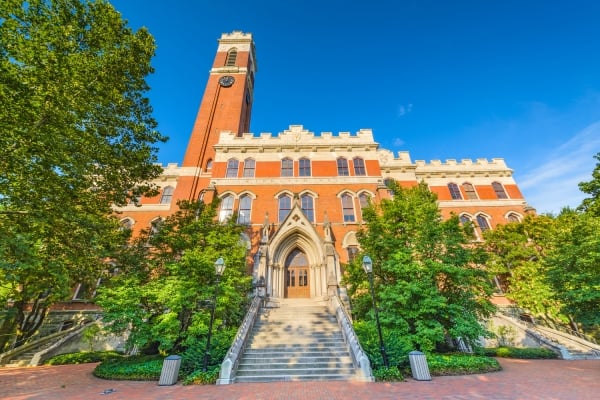
  • Vanderbilt Reportedly Considering a San Francisco Campus

    Vanderbilt Reportedly Considering a San Francisco Campus

    Vanderbilt University is in talks with the city of San Francisco to establish a campus there, the San Francisco Chronicle reported.

    A Vanderbilt spokesperson confirmed to the Chronicle that the university—which is based in Nashville, Tenn., but also has satellite campuses in New York City and West Palm Beach, Fla.—has been working with the San Francisco mayor’s office on a plan to gain a foothold in the Bay Area.

    “Vanderbilt is always exploring new opportunities to expand our impact and further our mission,” the spokesperson told the newspaper. “We recognize the long-term global leadership of San Francisco and its ever-growing potential, defined by a vibrant culture, dynamic innovation ecosystem and the talent drawn to its leading technology companies and top-caliber arts and cultural institutions.”

    The spokesperson added that the institution’s aim is “to create unique student experiences, fuel pathbreaking research and foster close connections to the ideas and companies that will lead the next generation of the nation’s economy.”

    San Francisco mayor Daniel Lurie has expressed interest in partnering with a university to revitalize the city.

    “Our administration is working every day to create a clean, safe and thriving downtown—one that draws people, businesses and investments back to our city,” Lurie told the Chronicle. “As I said during my campaign, welcoming a world-class university like Vanderbilt to our city would bring new energy and foot traffic downtown, and we will continue working to make that happen.”

    A source told the Chronicle that the mayor has approached a handful of other universities, but the arrangement with Vanderbilt appears to be the “most promising”; city officials have met with university leaders multiple times.

    Source link