Tag: Jobs

  • What’s With the Em Dash/AI Anxieties? (opinion)

    What’s With the Em Dash/AI Anxieties? (opinion)

    In recent months, a curious fixation has emerged in corners of academia: the em dash. More specifically, the apparent moral panic around how it is spaced. A dash with no spaces on either side? That must be AI-generated writing. Case closed.

    What might seem like a minor point of style has, in some cases, become a litmus test for authenticity. But authenticity in what sense—and to whom? Because here is the thing: There is no definitive rule about how em dashes should be spaced. Merriam-Webster, for instance, notes that many newspapers and magazines insert a space before and after the em dash, while most books and academic journals don’t. Yet, a certain kind of scholar will see a tightly spaced dash and declare: “AI.”

    This tells us less about punctuation and more about the moment we are in. It reflects a deeper discomfort within academic knowledge production—about writing, authority and who gets to speak in the language of the academy.

    Academic writing has long been a space of exclusion. Mastering its conventions—its structures, tones and unwritten rules—is often as important as the content itself. Those conventions are not neutral. They privilege those fluent in a particular kind of English, in a particular kind of intellectual performance. And while these conventions have sometimes served a purpose—precision, nuance, care—they have also functioned to gatekeep, obscure and signal belonging to a small circle of insiders.

    In that context, generative AI represents a real shift. Not because it replaces thinking—clearly, it does not—but because it lowers the barriers to expressing ideas in the right register. It makes writing less labor-intensive for those who are brilliant thinkers but not naturally fluent in academic prose. It opens possibilities for scholars writing in their second or third languages, for early-career researchers who have not yet mastered the unwritten codes and for anyone who simply wants to get to the point more efficiently. This is not a minor intervention—it is a step toward democratizing academic expression.

    And in that lies both the opportunity and the anxiety.

    I have read academic work recently that likely used AI writing tools—either to help organize thoughts, smooth expression or clarify argument. Some of it has been genuinely excellent: clear, incisive and original. The ideas are coherent and well articulated. The writing does not perform difficulty; it performs clarity. And in doing so, it invites more people in.

    By contrast, a fair portion of traditionally polished academic writing still feels burdened by its own formality—long sentences, theoretical throat-clearing prose that loops and doubles back on itself. It is not that complexity should be avoided, but rather that complexity should not be confused with value. The best writing does not show off; it shows through. It makes ideas visible.

    Needless to say, I am not about to cite examples—whether of the work I suspect was AI-assisted or the work that could have done with a bit of help.

    So why, then, do so many in academic circles focus their attention on supposed telltale signs of AI use—like em dashes—rather than on the substance of the ideas themselves?

    Part of the answer lies in the ethics discourse that continues to swirl around AI. There are real concerns here: about transparency, authorship, citation and the role of human oversight. Guidance from organizations such as the Committee on Publication Ethics, and emerging policies from journals and universities, reflect the need for thoughtful governance. These debates matter. But they should not collapse into suspicion for suspicion’s sake. That’s because the academic world has never been a perfectly level field. Those with access to time, mentorship, editorial support and elite institutions have long benefited from invisible scaffolding.

    AI tools, in some ways, make that scaffolding more widely available.

    Of course, there are risks. Overreliance on AI can lead to formulaic writing or the flattening of style. But these are not new issues—they predate AI and are often baked into the structures of journal publishing itself. The greater risk now is a kind of reactionary gatekeeping: dismissing writing not because of its content, but because of how it looks, mistaking typography for intellectual integrity.

    What is needed, instead, is a mature, open conversation about how AI fits into the evolving ecosystem of scholarly work. We need clear, consistent guidelines that recognize both the benefits and limitations of these tools. Recent statements from major institutions have begun to address this, but more are needed. We need transparency around how AI is used—without attaching shame to its use. And we need to refocus on what matters most: the quality of the thinking, the strength of the contribution and the clarity with which ideas are communicated.

    The em dash is not the problem. Nor is AI. The problem is a scholarly culture still too often wedded to performance over substance—one where form is used to mask or elevate, rather than to express.

    If we are serious about making knowledge more inclusive, more global and more just, then we should embrace tools that help more people take part in its production. Not uncritically, but openly. Not secretly, but responsibly.

    What we should be asking is not “Was this written with AI?” but rather, “Is this work rigorous? Is it generous? Does it help us think differently?”

    That is the kind of scholarship worth paying attention to—em dash or not.

    Joseph Mellors is a research associate for FUTOURWORK at Westminster Business School at the University of Westminster, in the U.K.

    Source link

  • Data Shows Uptake of Statewide Digital Mental Health Support

    Data Shows Uptake of Statewide Digital Mental Health Support

    In 2023, New Jersey’s Office of the Secretary of Higher Education signed a first-of-its-kind agreement with a digital mental health provider, Uwill, to provide free access to virtual mental health services to college students across the state.

    Over the past two years, 18,000-plus students across 45 participating colleges and universities have registered with the service, representing about 6 percent of the eligible postsecondary population. The state considers the partnership a success and hopes to codify the offering to ensure its sustainability beyond the current governor’s term.

    The details: New Jersey’s partnership with Uwill was spurred by a 2021 survey of 15,500 undergraduate and graduate students from 60 institutions in the state, which found that 70 percent of respondents rated their stress and anxiety as higher in fall 2021 than in fall 2020. Forty percent indicated they were concerned about their mental health in light of the pandemic.

    Under the agreement, students can use Uwill’s teletherapy, crisis connection and wellness programming at any time. Like others in the teletherapy space, Uwill offers an array of diverse licensed mental health providers, giving students access to therapists who share their backgrounds or language, or who reside in their state. Over half (55 percent) of the counselors Uwill hires in New Jersey are Black, Indigenous or people of color; among them, they speak 11 languages.

    What makes Uwill distinct from its competitors is that therapy services are on-demand, meaning students are matched with a counselor within minutes of logging on to the platform. Students can request to see the same counselor in the future, but the nearly immediate access ensures they are not caught in long wait or intake times, especially compared to in-person counseling services.

    Under New Jersey’s agreement, colleges and students do not pay for Uwill services, but colleges must receive state aid to be eligible.

    The research: The need for additional counseling capacity on college campuses has grown over the past decade, as an increasing number of students enter higher education with pre-existing mental health conditions. The most recent survey of counseling center staff by the Association for University and College Counseling Center Directors (AUCCCD) found that while demand for services is on the decline compared to recent years, a larger number of students have more serious conditions.

    Over half of four-year institutions and about one-third of community colleges nationwide provide teletherapy to students via third-party vendors, according to AUCCCD data. The average number of students who engaged with services in 2024 was 453, across institution size.

    Online therapy providers tout the benefits of having a service that supplements on-campus, in-person therapists’ services to provide more comprehensive care, including racially and ethnically diverse staff, after-hours support and on-demand resources for students.

    Eric Wood, director of counseling and mental health at Texas Christian University, told Inside Higher Ed that an ideal teletherapy vendor is one that increases capacity for on-campus services, expanding availability for on-campus staff and ensuring that students do not fall through the cracks.

    A 2024 analysis of digital mental health tools from the Hope Center at Temple University—which did not include Uwill—found they can improve student mental health, but there is little direct evidence regarding marginalized student populations’ use of or benefits from them. Instead, the greatest benefit appears to be for students who would not otherwise engage in traditional counseling or who simply seek preventative resources.

    One study featured in the Hope Center’s report noted the average student only used their campus’s wellness app or teletherapy service once; the report calls for more transparency around usage data prior to institutional investment.

    The data: Uwill reported that from April 2023 to May 2025, 18,207 New Jersey students engaged in their services at the 45 participating institutions, which include Princeton, Rutgers, Montclair State and Seton Hall Universities, as well as the New Jersey Institute of Technology and Stevens Institute of Technology. Engaged students were defined as any students who logged in to the app and created an account.

    New Jersey’s total college enrollment in 2022 was 378,819, according to state data. An Inside Higher Ed analysis of publicly available data found total enrollment (including undergraduate and graduate students) among the 45 participating colleges to be 327,353. Uwill participants in New Jersey, therefore, totaled around 4 percent of the state’s postsecondary students or 6 percent of eligible students.

    The state paid $4 million for the first year of the Uwill contract, as reported by Higher Ed Dive, pulling dollars from a $10 million federal grant to support pandemic relief and a $16 million budget allocation for higher education partnerships. That totals about $89,000 per institution for the first year alone, or $12 per eligible student, according to an Inside Higher Ed estimate.

    In a 2020 interview with Inside Higher Ed, Uwill CEO Michael London said the minimum cost to a college for one year of services is about $25,000, or $10 to $20 per student per year.

    New Jersey students met with counselors in more than 78,000 therapy sessions, or about six sessions per student between 2023 and 2025, according to Uwill data. Students also engaged in 548 chat sessions with therapists, sent 6,593 messages and requested 1,216 crisis connections during the first two years of service.

    User engagement has slowly ticked up since the partnership launched. In January 2024, the state said more than 7,600 students registered on the platform, scheduling nearly 20,000 sessions. By September 2024, Uwill reported more than 13,000 registered students on the platform, scheduling more than 49,000 sessions. The most recent data, published June 6, identified 18,000 students engaging in 78,000 sessions.

    Over 1,200 of Montclair State’s 22,000 students have registered with Uwill since June 2023, Jaclyn Friedman-Lombardo, Montclair State’s director of counseling and psychological services, said at a press conference, or approximately 6 percent of the total campus population.

    The state does not require institutions to track student usage data to compare usage to campus counseling center services, but some institutions choose to, according to a spokesperson for both the office of the secretary and Uwill. The secretary’s office can view de-identified campus-level data and institutions can engage with more detailed data, as well.

    Creating access: One of the goals of implementing digital mental health interventions is to expand access beyond traditional counseling centers, such as after hours, on weekends or over academic breaks.

    Roughly 30 percent of participants in the Uwill partnership completed a session between 5 p.m. and 9 a.m. on a weeknight or on the weekends. Over the 2024–25 winter break, students engaged in 3,073 therapy sessions. More than 90 of those took place outside New Jersey. Students also used Uwill services over summer vacation this past year (9,235 sessions from May 20 to Aug. 26, of which 10 percent took place outside New Jersey).

    A majority of users were traditional-aged college students (17 to 24 years old), and 32 percent were white, 25 percent Hispanic and 17 percent Black. The report did not compare participating students’ race to those using on-campus services or general campus populations.

    About 85 percent of New Jersey users were looking for a BIPOC therapist, and 9 percent requested therapists who speak languages other than English, including Hindi and Mandarin.

    Postsession assessment completed by students who do schedule an appointment has returned positive responses, with a feedback score of 9.5 out of 10 in New Jersey, compared to Uwill’s 9.2 rating nationally.

    Unanswered questions: Wood indicated the data leaves some questions left unanswered, such as whether students were also clients at the on-campus counseling center, or if the service had improved students’ mental health over time from a clinical perspective.

    “Just because a student had four sessions with a telehealth provider, if they came right back to the counseling center, did it really make an impact on the center’s capacity to see students?” Wood said.

    The high cost of the service should also give counseling center directors pause, Wood said, because those dollars could be used for a variety of other interventions to create capacity.

    The data indicated some benefits to counseling center capacity, including diverse staff and after-hours support. But to create a true return on investment, counseling centers should calculate how much capacity the tele–mental health service created and its direct impact on student wellness, not just participation in services.

    “It would be ideal to compare the number of students receiving services (not just creating an account) through the platform to the number of students who would likely benefit from receiving treatment, as identified by clinically validated mental health screens on population surveys,” said Sara Abelson, assistant professor at the Hope Center and the report’s lead author.

    What’s next: New Jersey renewed its contract with Uwill first in January 2024 and then again in May, extending through spring 2026. State leaders said the ongoing services are still supported by pandemic relief funds.

    On May 2, New Jersey assemblywoman Andrea Katz from the Eighth District introduced a bill, the Mental Health Early Access on Campus Act, which would require colleges to implement mental health first aid training among campus stakeholders, peer support programs, mental health orientation education and teletherapy services to ensure counseling ratios are one to every 1,250 students per campus. The International Accreditation of Counseling Services recommends universities maintain a ratio of at least one full-time equivalency for every 1,000 to 1,500 students.

    “We know that mental health services that our kids need are not going to end when we change governors,” Katz said at a press conference. “We need to make sure that all of this is codified into law.”

    Source link

  • For Learning, Focus on the Essence and the Experiences

    For Learning, Focus on the Essence and the Experiences

    When I was teaching, I always thought of this time on the calendar as the “postexhale” period.

    The end of the semester is a headlong sprint to the finish, which, unlike a race where you get to break the tape and coast to a stop, is more like hitting a wall and collapsing on the spot. At least that’s how it always felt to me, at least until I started ending the semester at week 13 (of 15) and using the last two weeks for wind-down and reflection on what we’d all learned.

    In the immediate aftermath of the semester, particularly spring semester, I couldn’t be bothered with any thinking or planning for the next semester. The next scheduled activity, usually something I started around the first week of August, would be the specific planning for the forthcoming semester, but there is also this postexhale period where no work needs to be done, conditions that are fertile for thinking and dreaming before the planning.

    The postexhale period is the spot where you’re likely to gestate your best ideas, because at least for the next month or so, you don’t have to do anything with them.

    I want to plant a seed of thought for anyone who is confronting having to or wanting to make changes to their course in order to accommodate the reality of generative AI technology being in the world.

    Here it is: Next semester, do less that means more.

    As I’ve been traveling around talking to people about how we can (and should) adjust how we think about teaching writing, one of the persistent worries is that introducing some AI-related content or experiences around ethics or safe use or whatever requires layering something new on what’s already happening. For many instructors, it’s an uninvited and therefore unwelcome burden.

    I get it. We can never cover everything to begin with. Here’s one more thing to cover.

    But what if we can use this as an opportunity to rethink what learning looks like? As we move through this period where we can reflect and reconsider, we can think about how to boil the experiences in the classroom down to an essence that can be reflected in learning experiences.

    Consider the learning that has proved most enduring from the full trajectory of your education and I think you’ll find that it clusters around essential, deep lessons. What has mattered are the moments where we have learned how to learn and think and act inside a particular domain. It is this learning that allows us to go forth and continue to learn eagerly, ceaselessly.

    Even as a decidedly and well-documented overall mediocre student, there are numerous learning experiences (in and out of class) that I can point to as inflection points that made a significant difference in the overall trajectory of my life because they provided something essential to my journey forward.

    One moment I invoke frequently is when my third-grade teacher asked us to write instructions for making a peanut butter and jelly sandwich and then had us try to make the sandwiches following the instructions to the letter. Because I forgot to say that you should use a knife to spread the peanut butter on the bread, I ended up sticking my hand in the jar of peanut butter to fulfill my own directive. I have a picture memorializing the occasion.

    That moment introduced me to the rhetorical situation and the fact that writing has a purpose and an audience—and careless writing has consequences. I’m sure I learned all kinds of other things in third grade and maybe some of them were important, but only one moment was indelible, and that’s all I needed.

    In high school, excited about the subject matter for my junior-year English term paper (the New Journalism of Tom Wolfe), while being not enthused about the parameters of what I was supposed to do with that subject matter, I decided to write my term paper in the style of Tom Wolfe, earning a not-so-great grade from my teacher, but a meaningful lesson in how to keep myself interested with a task. (I wrote in more detail about this previously.)

    Some reflection unearths other moments. A college nonfiction writing class had us pretending we were writing for specific publications and producing columns that could fit under the editorial banner. I chose Esquire, imagining myself a sophisticated male, I guess. We were required to understand how to write for very specific audiences with very specific aims, excellent practice for all kinds of different futures. At the end of the semester, we had a competition where we voted for the “best” columns across a number of different categories. I was a finalist in several but won zero, losing out to one specific classmate’s work every time.

    In a conference with the instructor, I must’ve expressed some kind of disappointment, and he said something that stuck with me: “X’s stuff sounds like themselves writing for a publication. You sound like someone doing an imitation of someone writing for a publication.” I walked away believing that authenticity was ultimately the differentiator in connecting with readers.

    I could name more moments. My first semester of grad school, my professor, Robert Olen Butler, had us do an in-class writing exercise based in sense memory (which can be found in his book From Where You Dream), and I experienced what it was like to tap into my artistic subconscious for an extended, focused period. Bob was not the most engaged of mentors, but I’m not sure I’d still be writing if I hadn’t had that experience.

    When I started teaching, the indelible lessons delivered by my students came even more often, possibly because I recognized my responsibility over the work in ways I hadn’t achieved as a student.

    All these moments are rooted in very specific and specifically designed experiences. These kinds of experiences are not threatened by the existence of large language models, because it was clear to me that the point of the exercise is to have the experience.

    Of course, generative AI tools could be present as part of an important learning experience, but when generative AI is used by students as a substitute for the experience, the learning is obviously deformed. Injecting LLMs into our courses simply because it seems like something we have to be doing is not a great recipe for learning.

    There are some, perhaps many, places where it is not and should not be welcome because it is not conducive to the experience of learning we’re trying to instantiate.

    As I think about these experiences, what I learned was really contained in a crystallizing moment made possible by the earlier experience of that class, or even before that class. This is not necessarily predicated on the amount of material covered or the volume of what students are exposed to.

    As you enjoy this exhale period, maybe spend some time thinking how little you could do in your course and still have students walk away with something that will be meaningful years down the road. That may be the core of your course when you come back and start thinking about it for real in a month.

    Source link

  • Gaza Encampments “Made University Leaders Lose Their Minds”

    Gaza Encampments “Made University Leaders Lose Their Minds”

    The war in Gaza and the adverse reaction of U.S. colleges to the pro-Palestinian movement have completely changed students’ relationship to higher education, according to the maker of a new film about last year’s protests.

    A new documentary, The Encampments, follows the movement from Columbia University, where the first tents were erected in April 2024, as protests spread to hundreds of campuses worldwide, including the University of Tokyo and Copenhagen University.

    Not just isolated to Ivy League institutions in the U.S., the movement spread to many traditionally Republican-dominated states as well, Michael Workman, co-director of the film, told Times Higher Education.

    “These are not just places where the coastal elite are,” he said. “This movement touched and reached into the middle of America. In places like [Idaho], there were protests every day in solidarity and support.”

    He hopes that the film, which he sees as a “counternarrative” to the media’s negative portrayal of the encampments, will “haunt” higher education leaders for being on the wrong side of history.

    Although the conflict in Gaza continues, the student movement has had a much smaller impact this year, with many students facing severe repercussions from both their universities and the White House.

    “For some reason camping out on the lawn demanding an end to a genocide made all these administrators around the world, and especially in the U.S., lose their minds,” said Workman.

    He said the encampments arrived at a time of “heightened” organization and engagement among the student body. These movements are not sustainable but always “ebb and flow,” he added.

    Along with demanding that universities lend their voices to Gaza, students have called on institutions to divest from companies that they believe are funding a genocide.

    Workman said the “twin demands” of many of the students were to support Palestinians and to take universities, which they were paying lots of money, back to being educational institutions.

    “Students have seen their educations get turned into moneymaking machines, [instead of institutions] that are primarily there to teach students,” he said.

    “This has completely changed this generation’s relationship to higher education, and I think their relationship to the U.S. and U.S. foreign policy.”

    He said the war in Gaza has “woken up this generation,” which is why colleges reacted with such force.

    “It’s why they responded in the way that they did, because they felt they couldn’t do anything else. The cat was out of the bag,” he said.

    “These students are not going to go back to thinking what Israel is doing in Gaza was justified … and they’re going to continue to grow their movement to raise awareness around what’s happening and to fight against it.”

    Workman, who also teaches documentary film production at the University of San Francisco, said the response by faculty in the U.S. is “not a monolith” but that it is becoming increasingly supportive of the students.

    This has been particularly evident since the detention of activist and green card–holder Mahmoud Khalil, who features in the documentary, he said. Khalil, an international student who moved to the U.S. in 2022, was arrested in March following a crackdown on student protesters by President Donald Trump’s administration.

    “The more they repress the movement, in a lot of ways, the stronger it gets, because people aren’t backing down,” Workman said.

    “That doesn’t mean that we have this huge moment like the encampment moment, but we’re building a sustained foundation that is continuing to grow with really committed organizers.”

    Source link

  • State Department Screening Visa Applicants’ Social Media

    State Department Screening Visa Applicants’ Social Media

    John McDonnell/Getty Images

    The U.S. State Department is rolling out sweeping new rules for vetting student visa applicants using their social media presence, according to Politico.

    The new process will include screening for “any indications of hostility towards the citizens, culture, government, institutions or founding principles of the United States,” according to an internal State Department cable. 

    Department officials will also look for posts that signal “advocacy for, aid or support for foreign terrorists and other threats to national security” and “support for antisemitic harassment or violence,” specifically citing support for Hamas—a charge commonly levied against student protesters advocating for Palestinian rights—as grounds for rejection. The cable also directs officials to cull applicants who “demonstrate a history of political activism.”

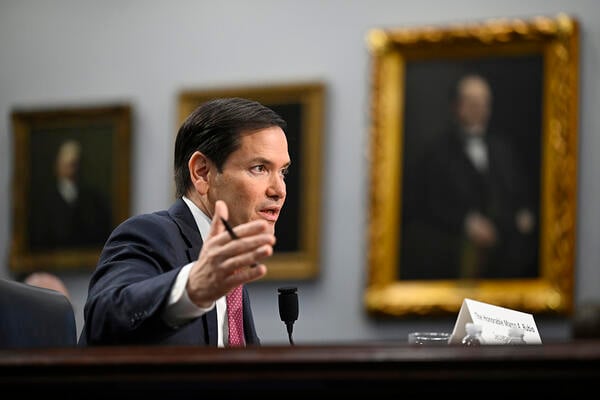
    The news comes a few weeks after Secretary of State Marco Rubio paused all student visa interviews in order to implement a new screening policy focusing on students’ online activity. The Associated Press reported that the department rescinded the pause, but applicants who don’t allow the government to review their social media accounts could be rejected.

    The cable is the Trump administration’s latest effort to curtail the flow of international students to the U.S., as tens of thousands of foreign students await approval of their visas after months of delays and with only weeks until the start of the fall semester. 

    State Department spokespeople did not respond to a list of questions from Inside Higher Ed in time for publication. 

    Source link

  • A Unified System for Student Athlete Supports

    A Unified System for Student Athlete Supports

    A growing number of programs in higher education focus on student athletes’ mental health, recognizing that the pressures of competing in collegiate athletics, combined with academic challenges, financial concerns and team relationships, can negatively impact student well-being.

    At the University of Richmond, the athletics department created a new program to emphasize holistic student well-being, taking into account the different dimensions of a student athlete’s identity and development.

    Spider Performance, named after the university mascot, unites various stakeholders on campus to provide a seamless experience for student athletes, ensuring they’re properly equipped to tackle challenges on the field, in the classroom and out in the world beyond college.

    “The athlete identity is a really special part of [students’ identities], but it’s not the only part, so making sure they are [considered] human beings first—even before they’re students, they’re humans first. Let’s examine and explore that identity,” said Lauren Wicklund, senior associate athletics director for leadership and student-athlete development.

    How it works: The university hosts 17 varsity sports in NCAA Division I, which include approximately 400 student athletes. Richmond has established four pillars of the student athlete experience: athletic, academic, personal and professional achievement.

    “The whole concept is to build champions for life,” said Wicklund, who oversees the program. “It’s not just about winning in sport; it’s about winning in the classroom, winning personally and then getting the skills and tools to win for the rest of your life.”

    These pillars have driven programming in the athletics department for years, but their messaging and implementation created confusion.

    Now, under Spider Performance, the contributions and collaborations of stakeholders who support student athletes are more visible and defined, clarifying the assistance given to the athletes and demonstrating the program’s value to recruits. The offices in Spider Performance include academic support, sports medicine, leadership, strength and conditioning, mental health, and well-being.

    “It’s building a team around them,” Wicklund explained. “Rather than our student athlete thinking, ‘I have to go eat here, I have to do my homework here, I have to do my workout here,’ it’s, ‘No, we want you to win at everything you do, and how you do one thing is how you do everything.’”

    Outside of the specific athletic teams, Wicklund and her staff collaborate with other campus entities including faculty members, career services and co-curricular supports.

    Preparing for launch: Richmond facilitates a four-year development model for student athletes, starting with an orientation experience for first-year students that helps them understand their strengths and temperament, up to more career-focused programming for seniors.

    Recognizing how busy students’ schedules get during their athletic season, the university has also created other high-impact learning experiences that are more flexible and adaptive. Students can engage in a career trek to meet alumni across the country, study abroad for a short period, participate in a service project or take a wellness course, all designed to fit into their already-packed schedules.

    Part of the goal is to help each student feel confident discussing their experience as an athlete and how it contributes to their long-term goals. For instance, students might feel ill-equipped for a full-time job because they never had a 12-week internship, but university staff help them translate their experiences on the field or the court into skills applicable to a workplace environment, Wicklund said.

    The university is also adapting financial literacy programming to include information on name, image and likeness rights for student athletes, covering not just budgeting, investing and financial literacy topics but also more specific information related to their teams.

    Encouraging athletes to attend extra sessions can be a challenge, but the Spider Performance team aims to help students understand the value of the program and how it applies to their daily lives. The program also requires buy-in from other role models in students’ lives, including trainers, coaches and professors.

    “We work really hard to customize fits to different programs so we’re speaking the same language as our coaches,” which helps create a unified message to students, Wicklund said.

    If your student success program has a unique feature or twist, we’d like to know about it. Click here to submit.

    Source link

  • A New Tool to Improve College Cost Transparency

    A New Tool to Improve College Cost Transparency

    Phillip Levine, an economics professor at Wellesley College, has been studying college financial aid and students’ higher ed spending habits for more than a decade. When his children first started applying to college about 15 years ago, he was amazed by how difficult it was to get a clear answer on how much it was really going to cost them—and he was a trained economist.

    Imagine, he thought, how the average family felt reading through interminable webpages and offer letters explaining the detailed price breakdowns, differences in tuition and fees, added expected costs, and loans versus grants. Then he tried to imagine how parents who’d never gone to college might feel.

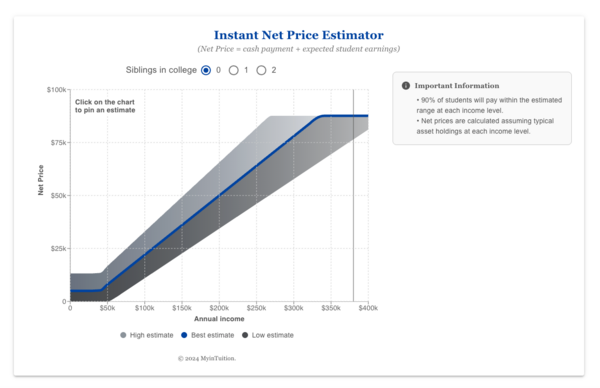
    Since then, Levine has worked on a number of college cost transparency initiatives. His most recent project is the Instant Net Price Estimator, a streamlined digital tool that he hopes will make it easier for colleges to break through the noise and deliver a clear estimate to families.

    As public skepticism about the value of a postsecondary degree grows and $100,000 sticker prices make front-page news, colleges are in the market for a simple way to let families know that their degrees can be affordable. Washington University in St. Louis became the first institution to adopt the tool and served as a kind of pilot program this application cycle. Interest from colleges has grown swiftly: This fall, an additional 19 institutions will introduce Levine’s calculator on their websites, and he anticipates that number will triple next academic year.

    Levine spoke with Inside Higher Ed about his new tool, how low-income students get stuck in the financial aid “funnel” and how colleges can be better communicators in a time of widespread public distrust of higher ed. The conversation has been edited for length and clarity.

    Q: Walk me through the genesis of this idea. What were you hoping to achieve?

    A: I don’t think it’s a state secret that college pricing is complicated. If you go to any college website and look at the financial aid webpage, there’s tons of stuff there trying to explain how much they charge, but they overshoot it in terms of what people are looking for. You’re taking a high school kid and their family and giving them a Ph.D.-level course in financial aid. Not surprisingly, they don’t usually get it.

    I think about the admissions process like a funnel: You give me a little information, I’ll give you a basic answer that’s pretty imprecise. You give me more information, I’ll give you a better answer that’s a little more precise. You can keep going down the process until eventually, you know, ultimately you fill out the FAFSA or the CSS Profile.

    To maximize access, that funnel needs to have a very wide mouth at the top; in financial aid language, what that means is you need to communicate extremely quickly to as wide an audience as possible that college is not $100,000. It doesn’t even matter exactly what it is. But if you can’t get people off of the ledge at the $100,000 number—the mainstream media puts out stories all the time that college costs a million dollars a year, so their perception is that it’s extremely expensive. All you want them to do at the beginning stages is to be like, “Hey, maybe this is something I can afford.” Then you need to lead them through the rest of the funnel.

    Phillip Levine

    Ultimately, the financial aid process really is complicated because we have this concept of what a family can afford to pay, and there’s no right answer to that question, but we have all these complicated formulas that are trying to find it anyway. Over time, colleges have been trying to do a better job of getting past that point, just not very successfully. What I’ve been working on for the last 10 or 15 years is to make an easier entry point, and this tool is even higher up the funnel than what I’ve been working on in the past.

    It takes three seconds to get a sense of what college is going to cost you, and in particular to get you over that hurdle that it’s probably not $100,000. My goal is within a matter of literally a few seconds to give people a sense that college is very unlikely to be as expensive as they fear. And then you can start having a more substantive conversation. Otherwise, you close the door on the poor kids, way before they’re into the process.

    Q: Colleges have been trying to do this kind of thing on their own for a while. What makes your tool an improvement on institutional efforts?

    A: Colleges understand that this is a problem. But to be quite honest, the only people who actually understand the way the financial aid system works are the people in the financial aid office, and they don’t speak English, so to speak. It’s an unbelievably complicated process, very complex, and now they have to explain it to a regular person, and they can’t do that. It’s not their fault; they try, they’re just not successful. There’s a handful of people in the admissions office who understand it, too, but not many. And once you get past those two audiences, nobody else at the college understands it, including the public affairs people.

    I got started on this because when my kids were looking at colleges, I just wanted to know whether I was eligible for any financial aid, yeah. And I realized how unbelievably hard it was to figure it out. Back then [around 2010] it was actually impossible to figure out. Things have evolved a lot since then.

    Q: Like you said, there are other tools out there now. What makes this one different?

    A: I’m just trying to push it to the next stage of development. I’m an economist; I can speak geek as well as anyone. But as I started doing this, I’m learning more and more about how you sell a product, which is basically what you’re doing with college cost. I’m realizing how little time you have to communicate a message.

    I’m in a weird position, because I’m doing the research on the pricing issues, and I’m developing the tools. It was in one of the Brookings [Institution] papers I wrote when these ideas were just kind of coming together and we were thinking about how you do the graphics. And it just kind of came together that we can visually display this information in a simulator, what I really refer to as a simple game. So I thought, if I can do it for a Brookings paper, why can’t I do this for a school or a family? And about that time, Washington University [in St. Louis] came to me looking for assistance on some other issues, and I pitched this to them, and they bought into it. So they paid for the development, and it’s been up and running there since December. If you go to most schools’ webpages, including my own, there’s stuff there, but you gotta read forever. And you know as well as I do that nobody reads that much anymore.

    That’s what I’m trying to accomplish with this: just get the ball rolling with something that speaks to where students are.

    A chart showing price

    A demo version of Levine’s Instant Net Price Estimator, which can be customized to fit colleges’ specific needs and profiles.

    Screenshot from myintuition.org

    Q: I assume the calculator doesn’t factor in things like merit aid?

    A: You want it as simple as possible. So you just slide your input and it essentially just tells you what the average cost is going to be for you based on income, and tells you the range, which may be very broad. At Washington University, they don’t give a lot of merit aid, so, like, it would not be a big deal there, but at schools that do a lot of merit aid, that range could also include merit. They can factor that into the calculator.

    But mainly, you just want the light bulb to go off of, “Oh, maybe I can afford this.” And then maybe they’re willing to go spend some time reading instead of getting scared off right from the start. Their initial instinct is, there’s no way I can afford to go to Washington University. And it’s the school’s job in terms of marketing to communicate to people. The problem, in my mind, is that the door is closed so early for so many people that you need to be able to just let them get through that first door in the process. There’s still a lot of hurdles you have to get through after that, yeah, but if you don’t make it through the first one, you don’t even approach any of the others.

    Q: There’s been legislation introduced at the federal level and passed in many states to mandate that colleges take certain steps toward cost transparency. Do you think there’s a good understanding of what that takes among policymakers?

    A: Clearly, policymakers have figured out that transparency is an issue, and they’re right. But their intentions are often better than their proposals. The net price calculator law [a federal law mandating institutions include a price calculator on their websites by 2011], for instance, was very well intended. But it’s easy to see the big picture problem; to then come up with a solution that actually works, you have to have a little bit more inside baseball. The net price calculator law is a perfect example. It was so well intended, they completely had the right idea, and they blew it. I obviously don’t know all of the details of all the different state laws, but I’ve seen proposals, and generally I look at them and go, right idea, wrong solution.

    Q: Have there been any good policy solutions?

    A: The College Cost Transparency Initiative. It’s much better if the schools can fix this problem on their own, because they know what they’re doing. It’s a tiny step, and you have to already apply and get accepted before you get your letter. And then it tells you, in a more clear way than it used to. It’s lower on the funnel, really at the bottom. But it’s a good step.

    [Levine later clarified that he sat on the technical advisory committee for the CCTI.]

    Q: Has there been a lot of interest in your instant price calculator from other colleges? And what kinds of colleges seem to be most invested in these transparency efforts?

    A: Nineteen more colleges will roll it out in the fall. It’s a small range right now, from relatively wealthy to very wealthy. I think at the very high end of higher ed, the Ivies and such, where they have a lot of money to spend on financial aid, they’re trying to increase access in a very direct way. It is good for them to enroll more lower-income students from a public relations perspective. And I think every school wants to do the right thing. But as you stray from the very top of the spectrum, there’s also an interest in simply increasing enrollment, where they don’t want to be turning away students because they think they can’t afford it when they can. They’re just looking for more students, especially because there’s fewer kids. So the ability to open the door to as many kids as possible at this moment has appeal.

    Source link

  • U.S. Higher Ed’s Investment in Sustainable Development Lags

    U.S. Higher Ed’s Investment in Sustainable Development Lags

    Colleges and universities in the United States lag behind their peers around the globe in working toward the United Nations’ 17 Sustainable Development Goals—including ending poverty and hunger, climate action, and expanding access to education—according to the Times Higher Education Impact Rankings 2025, published today.

    The Trump administration’s financial and political attacks on higher education, as well as more pressing problems across the sector, mean it’s unlikely U.S. colleges will prioritize sustainability work in the near future.

    While seven Canadian universities—including Queen’s University, McMaster University and the University of Alberta—ranked in the global top 50, Arizona State University, ranked joint sixth, is the only U.S.-based institution to crack the top 50. Three highly ranked U.S. colleges fell out of the global top 50 this year: Michigan State University is now at joint 61st, Penn State at joint 64th and Florida International University at joint 71st.

    Western Sydney University in Australia topped the global ranking for the fourth year in a row.

    THEInside Higher Ed’s parent company—ranked the sustainability efforts of 2,526 universities from 130 countries; 52 institutions from across the U.S. participated in the 2025 ranking, down from 58 in 2024.

    Since 2019, THE has evaluated the performance of thousands of higher education institutions across the globe on the U.N.’s 17 Sustainable Development Goals. Universities that want to participate in the rankings are required to submit information for SDG 17, Partnerships and Goals, and at least three other SDGs. How well an institution meets those goals is then evaluated across four broad categories: research, stewardship, outreach and teaching.

    Phil Baty, chief global affairs officer for THE, described American universities’ “general lack of direct engagement with the SDGs” as “disappointing,” especially because the U.S. has some of the world’s strongest research universities. “I’d hope they can turn their greatest minds more overtly towards tackling the world’s most pressing and urgent challenges.”

    Under Trump, SDGs May Be ‘More Risky’

    Although the nation’s lackluster showing in the 2025 Impact Rankings is based on university data that predates the start of President Donald Trump’s second term, the administration’s attacks on the sector and political stances suggest the country’s higher education institutions may only face more barriers to becoming global sustainability leaders.

    In March, the Trump administration denounced the SDGs, which the U.N. created in 2015 during President Barack Obama’s administration with the aim of reaching them by 2030. The second Trump administration has also pulled out of other international sustainability initiatives, including the Paris Agreement on climate change, and moved to cut billions in funding for scientific research and social programs—including many focused on reducing social inequities, addressing climate change and advancing diversity, equity and inclusion efforts.

    Bryan Alexander, a scholar who studies the future of higher education and author of 2023’s Universities on Fire: Higher Education in the Age of Climate Crisis, wrote in an email to Inside Higher Ed that even before the Trump administration’s denouncement of the SDGs, they’d failed to gain much traction among U.S. universities.

    “When I mention SDGs in academic settings, I usually see blank faces and have to explain what they are,” he wrote, attributing the indifference to a stronger focus on other, seemingly more pressing matters plaguing higher education, such as financial instability. “That sense of institutional urgency, heightened by a steady stream of campuses closing, merging, or cutting programs and staff, looms large. In that context, the SDG goals look like noble but not essential, nice-to-haves rather than imperatives.”

    According to Alexander, other deterrents to the sector launching a widespread commitment to sustainable development include faculty burnout, scarce resources, anti-expert animus, doubts from faculty and administrators that their efforts will make a difference, and anxiety about associated political risks.

    And he expects all those problems to persist, if not worsen, in the coming years as Trump continues his assault on universities and pro-sustainability initiatives. “The anti-DEI campaign strikes directly at several SDGs,” Alexander wrote. “It will be harder for academics to win external support for any such work, from doing research to offering new academic programs, overhauling a campus power system to replacing vehicles with electric vehicles. It will appear to be politically even more risky.”

    However, he said there are some less risky actions U.S. institutions can take to be more sustainable.

    “First, renewable energy, especially solar, is simply cheaper than fossil fuels. Switching a campus’ power supply just makes financial sense,” he said. “Second, traditional-age undergraduates are much more interested in climate change and sustainable development than their elders, which means they will tend to be eager to take classes and study in programs along those lines.”

    Walking a Fine Line

    ASU also tops the global ranking for SDG 14: Life Below Water, which means it’s at the forefront of developing strategies that support the health and sustainability of aquatic ecosystems.

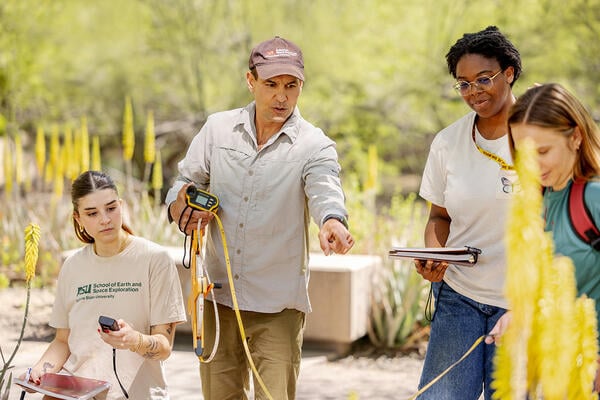
    It launched one of the nation’s first schools of sustainability nearly 20 years ago, and although its main campus is located in the Arizona desert, ASU launched the School of Ocean Futures in 2024. The school connects research and teaching facilities in the Pacific and Atlantic Oceans with research happening on its main campus in Tempe.

    The school is one example of how universities can help to “restore balance within the global environment,” said Marc Campbell, ASU’s assistant vice president of sustainability and deputy chief sustainability officer.

    “Fundamentally, the work of sustainability is about trying to be more efficient in the use of our resources and trying to protect what’s out there,” Campbell said. “A lot of people can support the foundational work of sustainability, but we need to unload some of the baggage that’s associated with the word and the discipline.”

    Doing that, he said, will come from making a case for the economic and social value of investing in sustainable development initiatives.

    “In any organization there are supporters and detractors. You have to figure out how to walk that fine line to get people supporting the greater good and recognizing what that is,” Campbell said.

    “When we can do that more effectively across the board and build broader collaborative partnerships with other organizations that are focused on the same goals, then I think we can get past some of the [political] baggage.”

    Source link

  • Federal Judge Won’t Block Trump’s Cuts to IES

    Federal Judge Won’t Block Trump’s Cuts to IES

    A federal district judge declined to issue an injunction that would block the Trump administration’s recent cuts to staff and contracts at the Institute of Education Sciences—an agency charged with collecting and analyzing data about both K–12 and higher education.

    In an opinion released last week, Maryland judge Stephanie A. Gallagher acknowledged that the new administration has terminated 90 percent of the agency’s staff and therefore IES “is not doing a number of tasks Congress requires of it.” Gallagher, a Trump appointee, also empathized with the two education research associations that filed the lawsuit—the American Educational Research Association and the Society for Research on Educational Effectiveness—saying she trusts that not receiving the data they expected from IES “will harm them.” 

    But that does not mean the plaintiffs have a strong enough case to stop the Trump administration from continuing to dismantle the agency. Gallagher said that the associations’ arguments are at times too broad or too narrow, that they lump together numerous cuts—some of which may be justified—and that they include “factual discrepancies” and improper interpretations of “no fewer than a dozen statutes.” 

    Over all, she said, “They have not shown they are entitled to this sort of extraordinary relief.”

    “These Plaintiffs have alleged, and have provided some evidence to support, a troubling pattern of conduct at IES,” Gallagher wrote. “But because they cannot make the requisite showings on the preliminary injunction factors, and in particular have not shown they have standing to seek the relief they are asking for, their motion for a preliminary injunction must be denied.”

    This ruling is not final, however, and “should not be taken as predictive of this Court’s ultimate decision,” Gallagher added.

    But the Education Department is already walking back some of the IES cuts, according to court filings in the lawsuit that The Hechinger Report first reported on. Department officials disclosed earlier this month that they are reinstating at least 20 out of the 101 contracts that were terminated. The restored contracts include one that requires the National Center for Education Statistics to participate in the Program for International Student Assessment. (According to Hechinger, Congress mandates that the department take part in international assessments.)

    SREE president Elizabeth Tipton told Hechinger that the limited reversal was “upsetting” and not enough to fix the problem.

    “They’re trying to make IES as small as they possibly can,” she said.

    Source link

  • University Leaders Weigh Changes to Research Funding Model

    University Leaders Weigh Changes to Research Funding Model

    After the National Institutes of Health tried earlier this year to cut funding for universities’ costs indirectly related to research and set off alarm bells across higher education, 10 higher education associations decided to come up with their own model for research funding rather than having the government take the lead.

    Now, after just over six weeks of work, that group known as the Joint Associations Group is homing in on a plan to rework how the government funds research, and they want feedback from the university research community before they present a proposal to Congress and the Trump administration at the end of the month.

    “Unfortunately, something is going to change,” said Barbara Snyder, president of the Association of American Universities. “Either we will be part of it or it will be imposed upon us … Significant division in the research community is going to kill us.”

    Snyder and other JAG members said at a virtual town hall Tuesday that the current system for direct and indirect research funding costs has served the community well, but it isn’t transparent and leads to confusion about how the rates are calculated, among other challenges. AAU and other higher ed groups sued the NIH in February after the agency proposed capping indirect expenses for all institutions at 15 percent of the direct research costs—down from the average of 28 percent. (Historically, colleges negotiate their own reimbursement rates directly with the federal government.)

    The White House said the cap would make more money available for “legitimate scientific research,” but universities warned that the change would halt lifesaving research and lead to job losses, among other consequences. The NIH rate cap would mean a cut of $4 billion for university-based research.

    Court challenges have since halted the NIH plan, as well as similar caps proposed by two other federal agencies; meanwhile, the Department of Defense is working on its own plan related to indirect costs. Snyder said the lawsuits are about fiscal year 2025, while the JAG effort looks ahead to fiscal year 2026 and beyond.

    Over the years, Congress and federal agencies have sought to rethink the funding model but didn’t reach an agreement. In fact, after the first Trump administration proposed a 15 percent cap on indirect costs in 2017, Congress specifically prohibited such a move. But now that prohibition doesn’t seem likely to stick as lawmakers consider bills to fund the government for fiscal year 2026, so a new model is necessary. Adding to the pressure on universities, Trump has proposed significant cuts to research funding in his budget.

    JAG’s panel of experts presented two options to the university research community at a webinar last week and then answered questions at the town hall Tuesday. Colleges and universities have until June 22 to test the proposed models and provide feedback before JAG sends its final proposal to the government June 27, though any model will likely need additional work.

    “No one would choose to work at this rapid pace and rethink how to effectively, fairly and transparently cover these real and unavoidable costs,” said Matt Owens, president of the Council of Government Relations, at last week’s webinar. “But we are where we are, and it’s vital that we meet this moment so that we can emerge with an improved and sustainable indirect cost policy that will enable our country to continue leading the world in research and innovation.”

    Proposed Models

    Both versions of what JAG is calling the Fiscal Accountability in Research model, or FAIR, are geared toward offering more accountability and transparency about how federal research dollars are spent. JAG hopes that in the end, the new model will be simpler than the current one. They also want to nix terms like “indirect costs rate” and “overhead” for either essential research support or general research operations in an effort to underscore that the money goes toward the real costs of research.

    “This will require a bit of a culture change in institutions, but we think the benefit of that far outweighs the downsides,” said Kelvin Droegemeier, a professor and special adviser to the chancellor for science and policy at the University of Illinois at Urbana-Champaign, who led the JAG effort, at the webinar.

    One model, which the group calls FAIR No. 1, would include costs related to managing the grant, general research operations and facilities as a fixed percentage of the total budget. The percentage would be based in part on the type of institution and research. This approach is designed to be simple and reasonable, according to the group’s presentation, but it’s more general, which makes it “difficult to account for the wide array of research frameworks that now exist.”

    The other model, FAIR No. 2, would more accurately reflect the actual costs of a project and make the structure for federal grants more like those from private foundations. Under this model, essential research support would be lumped into the project costs while funding for general research operations, such as payroll and procurement, would be a fixed percentage of the total budget. That change would likely increase the direct costs of the project.

    Droegemeier and other members of JAG’s expert panel noted that FAIR No. 2 would be a “significant departure” from the current approach, and universities would likely need more time to overhaul their processes for tracking costs. Still, the group said this model would better show what the money goes toward, addressing a key concern from Congress.

    Droegemeier described the two models as “bookends” and said the group would probably end up somewhere between the two.

    ‘In a Good Spot’

    At Tuesday’s town hall, attendees questioned whether Congress or the Trump administration would even consider JAG’s proposal and why any change was necessary.

    Droegemeier said he’s met with members of Congress who have endorsed their process, and he’s kept in touch with Trump administration officials about the group’s work. So far, he’s seen a positive response to the models, adding that officials at the Office of Management and Budget indicated that they weren’t “oceans apart.”

    “We’ve done everything possible to build goodwill and trust,” he said. “There’s a long road ahead of us, but I think we’re in a good spot.”

    Other speakers echoed that point, noting that Sen. Susan Collins, a Republican from Maine and chair of the powerful Appropriations Committee, publicly supported the models at a recent hearing. And NIH director Jay Bhattacharya called the proposals “quite promising” at the same hearing, STAT News reported.

    Additionally, the House’s appropriations bill for the Department of Defense calls on the agency to “work closely with the extramural research community to develop an optimized Facilities and Administrative cost reimbursement solution for all parties that ensures the nation remains a world leader in innovation.”

    Across the board, speakers at the town hall said they must act to have a say in discussions about the future of research funding.

    “The two models are a significant change,” said Deborah Altenburg, vice president for research policy and advocacy at the Association of Public and Land-grant Universities. “But all of our organizations are responding to a new political situation.”

    Source link