An Idaho judge Wednesday sentenced the murderer of four University of Idaho students to life in prison without possibility of parole, various mediaoutlets reported.
Judge Steven Hippler of the state’s 4th Judicial District sentenced Bryan Kohberger to four consecutive life sentences.
Kohberger pleaded guilty June 30 to the 2022 killings of seniors Kaylee Goncalves and Madison Mogen, both 21; junior Xana Kernodle, 20; and freshman Ethan Chapin, 20. As part of Kohberger’s plea deal, prosecutors agreed to not pursue the death penalty.
Authorities said the four University of Idaho students were sleeping at an off-campus home in Moscow, Idaho, when Kohberger—then a criminology graduate student at nearby Washington State University—stabbed them to death. He declined to speak during his sentencing hearing, and his motive remains unknown.
It is already 93 degrees, but temperatures are rising further outside the Tampa Convention Center—especially for the young man dressed in a dinosaur costume. Also sporting a Tom Brady Tampa Bay Buccaneers jersey, he is loudly debating immigration with another young man in a smart suit on the pavement. Across the street, a handful of protesters face off against a growing number of right-wing influencers with cameras.
Inside the building, political strategist Steve Bannon is denouncing billionaire Elon Musk as “evil” while filming a live TV broadcast. Thousands of young college students cheer when border czar Tom Homan threatens to beat up a heckler in the crowd. And a YouTuber leads the audience in a mass “Trump dance party” to the tune of YMCA.
Welcome to the Student Action Summit 2025. Organized by youth activist organization Turning Point USA (TPUSA), the three-day annual conference is billed as the premier event for conservative college students to debate ideas, network and hear from top Republicans. They include Tucker Carlson, Donald Trump Jr. and, of course, Charlie Kirk, who founded the movement as an 18-year-old college dropout.
More than 5,000 people attended this year’s event in Florida, held July 11–13, and Times Higher Education was there to learn what matters to college conservatives today, what issues are dividing this branch of the MAGA movement, and whether this youthful “red wave” can reshape U.S. electoral politics.
As a countdown clock ticks down to zero, a DJ pumps up the well-dressed young crowd—advised to style themselves after Donald Trump’s permanently besuited youngest son Barron—with Rednex’s Cotton Eye Joe and The Killers’ Mr. Brightside. Along with the big hitters, students also hear from Happy Gilmore actor Rob Schneider, founder of the Dark Web marketplace Silk Road, Ross Ulbricht, and fitness trainer Jillian Michaels across an eclectic and often bizarre three days.
Kirk’s fingerprints are all over the summit. Owing to the slightly chaotic nature of the schedule, he is often timetabled to appear in two places at the same time—particularly tricky given that, as the podcaster Dan Nunn puts it, “Charlie can’t even walk around: he’s like a rock star.”
He kicks off the summit on the vast East Hall stage by hitting some issues that Republicans of all ages can agree on—namely, religion and immigration. The 31-year-old activist and podcaster praises the audience for helping reverse decades of declining church attendance (many of them attend a service in the Convention Center on Sunday morning) and for helping TPUSA fight the “spiritual sickness throughout the West.” Talks are regularly interrupted by football-style chants of “Christ is King” or “God is great.”
Kirk also gets loud acclaim when he says that no foreigner should be allowed to own a home or get a job before a U.S. citizen, and draws an even bigger cheer when he mentions President Trump’s plans for mass deportation of illegal migrants. Even legal migration comes under fire over the convention weekend, and Homan, the former chief of Immigration and Customs Enforcement (ICE), is treated like a rock star, his frequent mentions of buzz phrases such as “send them home” chanted back to him from the floor.
Abortion is mentioned on stage, as one might expect. Riley Gaines, a former college swimmer who became an activist after finishing tied for fifth in a race with a trans woman, praised Trump as the most pro-life president in modern history. And the issue is brought up repeatedly in interviews with THE—often by young men.
Many speakers are also very keen to stress the importance of reproduction and “traditional” families. Michael Knowles, a political commentator and YouTuber, calls falling birth rates in the U.S. an “existential crisis.” He welcomes the “trad wife” trend on social media—right-wing women promoting their role as stay-at-home moms—and praises young women for rejecting the corporate rat race, “to the horror of the feminists.” A middle-aged audience member, who gets a massive round of applause when he reveals he has 12 children, wants to help convince the college generation of the “beauty of big families.”
Kirk also ploughs that furrow. He tells the audience that the real threat to the U.S. is not racism or environmentalism, but low birth rate. And he tells those listening online what they are missing out on by not being there in person. “If you want to find your future husband or wife … you should be here in Tampa, Florida, because there’s a lot of eligible bachelors and bachelorettes here.”
Equally, however, conservative attitudes to dating and sex are evident. Brandon Tatum, a former college football player, police officer and now online activist, advises against “hooking up with people and doing all this crazy stuff.” Brett Cooper, a child actor turned online activist, warns delegates not to party too much or waste time playing video games. And comedian Russell Brand, currently awaiting trial in the U.K. for rape, sexual assault and indecent assault (he has pleaded not guilty), also praises family values and religion while denouncing pornography and claiming that Jesus was opposed to bad government. During his strange 20-minute speech-cum-rap in front of one of the largest audiences of the weekend, Brand explains how he turned to God following a life of crack and heroin addiction, a “pursuit of carnality” and an “all-you-can-eat buffet” of hedonism.
Source: Patrick Jack
Russell Brand (center) at the Turning Point USA Student Action Summit 2025
Away from the main hall lies the exhibition floor. Here, students can take selfies with political consultant Roger Stone—pardoned by Trump in 2020 after being convicted of lying to Congress, obstruction of justice and witness tampering relating to a Congressional inquiry into Russian attempts to boost Trump’s 2016 election campaign. They can also pick up free copies of a book on the “untold story behind the Vatican’s rising influence in America,” challenge their friends to a pull-up contest or play cornhole.
You can also buy just about anything—provided it has some red, white and blue on it. There’s a stall to “Make Coffee Great Again,” “Trump 2028” hats are on sale for $30 (£23), and there are even cool pads to keep your head cool under them—as well as vibration plates for “advanced whole-body vibration therapy.”
Attendees can also hear from a wide range of fringe groups. A “Blexit” stall promotes “free thinking and empowerment” at historically black colleges and universities and is dedicated to bringing “traditional American principles to urban communities.” Wilbur Sims, strategic manager of student movement at Blexit, said, “We’re trying to educate people …and get away from a victimhood mentality within the black community.”
A surprisingly large number of families, many with young children, mingle with the students, as do some retirees. Steve, a 75-year-old lifelong Republican from Florida, hopes that TPUSA can help ensure the Democrats never get back into power. But there are a few signs of a divide between the younger and older generations.
Guns, which receive very few mentions from the stage, are one. Gun ownership has, for generations, been a mainstay of right-wing identity, but two lonely young men at the National Rifle Association stall express concern that their classmates are not interested in the Second Amendment (the right to bear arms).
The other dividing line is Israel. The most prominent stall on the exhibition floor is that of the International Fellowship of Christians and Jews (IFCJ), featuring hundreds of Israeli flags. Some college students nearby pose for pictures with a giant cardboard cut-out of Israeli prime minister Benjamin Netanyahu, but when Michele Bachmann, a former member of Congress and board member of the IFCJ, begins to discuss the “unprecedented” amount of antisemitism on college campuses, the hall empties out. And during a debate on day three, Dave Smith, a comedian and regular guest on the popular Joe Rogan podcast, warns of the “tremendous” influence of Israel in U.S. politics. And in the wake of the U.S. attack on Iran during Israel’s recent 12-day assault on the country, Smith elicits cheers when he criticizes “neoconservatives” for starting foreign wars—in contravention of the isolationism typically adopted by “America First” advocates. One young man and woman express their skepticism of the U.S.–Israel alliance and are convinced that convicted sex offender Jeffrey Epstein was a Mossad agent.
Epstein may have died by suicide in 2019, but his presence is keenly felt at the convention. The event occurs amid the MAGA backlash to attorney general Pam Bondi’s comment that the sex trafficker’s “client list”—which, according to Musk, includes Donald Trump, but which right-wing figures are convinced contains prominent Hollywood stars and Democratic politicians—does not, in fact, exist. Despite saying that homes and jobs are more important, Kirk admits the Epstein issue still matters. And in conversation with him, journalist Megyn Kelly calls it a “scandal of the right’s making.” When she asks the audience how many of them think it is an important story, everyone puts their hand up.
Hours later, media personality Tucker Carlson devotes almost his entire 30-minute speech to the issue, while Bannon sees it as symptomatic of the problems with the “deep state.” Even former college athletes Gaines and Tatum devote considerable time to talking about Epstein—with vocal prompting from the crowd.
The TPUSA president at the University of Alabama believes the issue is so important for this crowd because Bondi’s decision not to publish any of the Justice Department’s files on Epstein fits in with their skeptical worldview and their concern that they are being “lied to,” he said.
That sense also permeates the MAGA view of COVID-19. Bannon is cheered when he claims the pandemic originated from a “Chinese Communist Party bioweapon dropped in Wuhan.” There are frequent references over the weekend to the supposedly nefarious “mask mandates,” cancelled proms and young adults’ lost years—for which Kirk calls for a national apology.
“Nobody likes being lied to, and [young people] lived through COVID in a way that adults did not,” according to Nunn, host of the America First and the constitutionalist Nunn Report podcast. “They got their social lives shut down, they got their schools shut down, and then they found out it was all bullshit.” Since they blamed the Democrats for that, he believes that universities became less efficient “leftist breeding grounds” when that cohort arrived on campus.
Chase, a student from Florida, says COVID was a big factor in pushing his generation to the right. “So many people were lied to during that period of time and it definitely brought to light the corruption in the Democratic Party,” he tells THE. TPUSA is important because it helps students learn that they cannot trust mainstream media and must “seek out your own truth.”
The pandemic is clearly still an issue for Owen, a student in Michigan, where Democratic governor Gretchen Whitmer was caught breaking public health protocols at a restaurant in 2021. “I don’t really think that what the left was pushing made rational sense to the youth vote at the time, and it still doesn’t make sense now,” he said. “It’s just the hypocrisy of it all—you’re telling me not to leave my house, yet you’re going out and having parties without wearing masks closer than six feet.” Source: Patrick Jack
A striking omission from the stages of a conference targeted at students is higher education itself—despite the fact that Trump’s crackdown on prominent universities’ funding and autonomy has previously been cheered by many figures on the right. When prompted, however, delegates express universal scorn for universities.
John Paul Leon, TPUSA chapter president at University of California, Berkeley, tells THE he is becoming increasingly worried by academia’s left-wing consensus and “moral superiority,” particularly around “discriminatory” diversity, equity and inclusion (DEI) measures. David Goodwin, president of the Association of Classical Christian Schools and co-author of Battle for the American Mind with defense secretary Pete Hegseth, says higher education is a “mess”; and while institutions should be free to do whatever they want, he believes that they should expect to forgo government funds if they choose to defy the administration’s policies in areas such as DEI or choice of research topics. And Owen, who attends a private college, welcomes Trump’s attacks on universities because they are “indoctrinating students with wrong ideas.” International students, particularly “military-age males,” should be sent home, he adds.
Carol Swain, a retired professor of political science and law at Vanderbilt University and one of the few academics at the event, also welcomes Trump’s fight with Harvard because universities have “lost sight of the original purpose” of the sector, which was to educate minds by exposing individuals to divergent viewpoints. “Now the Ivy League has lost some of its allure, I believe there’s an opportunity for some state colleges and universities and some universities that were considered less prestigious to rise just by doing what the Ivy League hasn’t done, which is educate and create an environment where you have free speech, are following the Constitution, creating opportunities, [and] not practicing discrimination,” she said.
As for the effects of research funding cuts on the academic strength of the U.S., Swain says most papers in recent decades have been “garbage.” The “people that have pushed the beliefs that minorities have been discriminated against … lowered the standards in certain fields, and the emphasis on lived experience as opposed to research and data … has hurt academic research.”
But Jennifer Burns, director of academics at Turning Point Education, does not believe universities are solely to blame, claiming that grade schools are failing to prepare students properly: “If you’re building a house and your foundation is sinking and cracking, then the frame of the house is going to be cracked. It’s not the fault of the carpenters who put up the beams, it’s the cement layers. [Students] are not trained in how to think, so they’re going into college at the whim of a radical college professor and they’re soaking that up.”
TPUSA advocates for a “classical Christian education,” and some attendees propose private, conservative Christian liberal arts colleges such as Hillsdale in Michigan, or New Saint Andrews in Idaho, as exemplars of what higher education should be. Lennox Kalifungwa, digital engagement officer at New Saint Andrews, expresses the view that “the only true education is a Christian education because Christianity has the exclusive when it comes to truth and freedom.”
“Woke” students and academics, meanwhile, are a reoccurring punching bag on the convention floor—particularly those with a specific hair color. Kirk, who rose to fame through viral videos debating with left-wing students, calls them “purple-haired jihadis,” Homan bemoans “people with purple hair and nose rings,” Tatum deplores “liberal non-binaries” and Trump Jr. condemns “raging libtards.”
Such critiques are also usually tied up with anti-trans and anti-gay language. Trump Jr., a long-time ally of Kirk, whose daughter, Kai, is a college-level golfer at the University of Miami, proudly boasts of having been anti-trans since 2017 and sees it as being a “losing issue” for the Democrats. One student tells THE that drag queens reading children stories cause “horrible developmental issues” and contribute to rising suicide rates. Knowles celebrates the Trump-imposed end of the “preposterous ideology” of trans people, calling it “deader than disco,” the cancellation of LGBTQ+ pride parades due to lack of attendance and pop musician Jojo Siwa’s announcement that she no longer identifies as a lesbian. “Nature is healing,” he says with a laugh.
A lone protester who interrupts Homan is called a “loser,” a “moron,” an “asshole” and someone who “sits down when he pees”—to huge chants of “U-S-A.” Homan, who says he “wake[s] up like a kid in a candy shop every day” as border czar, offers to fight the man before his speech is over.
Outside are a few more dissenters. A handful of middle-aged Floridians, who fear TPUSA is “indoctrinating the youth,” hold a sign that says “MAGA—Movement Against Genuine Academics”—perhaps in reference to Kirk’s creation of the Professor Watchlist, which lists scholars who “discriminate against conservative students and advance leftist propaganda.” They are soon joined by a rag-tag group of a few dozen young students, some dressed as characters from the dystopian TV show TheHandmaid’s Tale and others wearing the Guy Fawkes masks popularized by the hacker collective Anonymous. Vicky Tong, spokesperson for the Tampa Bay Students for a Democratic Society, says they want to show that not everyone in Florida supports the “sexist, homophobic, anti-trans, anti-immigrant” agenda of TPUSA.
Back inside the hall, speakers emphasize that while right-wingers are in the majority here, they are “outnumbered” on campus. Many express fear of being accused of sexual harassment or being cancelled for using the wrong pronoun. Kirk calls them “warriors” and praises them for putting up with threats and intimidation. “What they’re doing is one of the hardest things to do in the United States of America. They are deciding to be less popular on campus,” he says.
Source: Justin Sullivan/Getty Images
Charlie Kirk speaks at Donald Trump’s inauguration on 20 January 2025
Some of the big names can sympathize. Trump Jr. used to attend “every cool person party” in New York before his father became involved in politics and the invites dried up. “These people that I thought were friends for decades, they don’t call any more.” He encourages students to “feed off the hate,” while Kelly urges them not to be “sheep” and follow along with what their left-wing professors say just to get good grades. “Don’t call yourself a feminist because your teacher will give you pats on the head. Stand up for what you really believe in, and that’s how we spread the good word,” she said.
Fox News host Greg Gutfeld, who has come under fire for attempting to “reclaim” the word “Nazi,” complains that “left-wingers were the cool kids” when he was young. And that sense of not fitting in on campus is clearly a big reason that some of the attendees are here—many of them thanks to a TPUSA stipend (the organization is largely funded by donations). Leon, who studies in the “belly of the [progressive] beast” at Berkeley and went viral for a video where he confronts a liberal student, says he is called a fascist daily, but at TPUSA “you can find life-long friends, your forever friends, or maybe you can find your wife too.” Dylan Seiter, president of TPUSA at Texas A&M University, told students during a breakout session that “the libs want to drag us down to their level and make us seem like we’re some nasty, hateful people, but in reality, we’re not. And it’s our duty and our jobs to prove them wrong.”
Indeed, some delegates confess that they are only here to hang out and socialize, and nearby bars such as Harpoon Harry’s Crab House are packed with older students before the day’s events are even over. But this social element is not just for fun, it is also for networking. As Kirk puts it: “Marriages will happen this weekend. Lifetime friendships will happen this weekend. Careers will start this weekend.” And as well as selling “I survived college without becoming a liberal” T-shirts, the TPUSA Alumni Association is consciously attempting to replicate the college networks of Ivy League schools to help get MAGA graduates into top jobs. TPUSA also tries to persuade students to work on the “front lines” of the culture war. One recruitment video urges young people not to become doctors or lawyers, but to get a job with “real impact.”
Many speakers are convinced that they are already having an impact, crediting a “red wave” of students with delivering Trump’s landslide victory in 2024, a “shot heard around the world.” Bannon thanks them for being “the hardest core of the hardcore” and the “tip of the tip of the spear” in “winning” the 2016 and 2020 elections as well.
“This is the greatest generational realignment since Woodstock,” says Kirk. “We have never seen a generation move so quickly and so fast, and you guys are making all the liberals confused.” Accordingly, Republican Party luminaries show up in force. Michael Whatley, chair of the Republican National Committee, shakes hands on the exhibition floor and multiple members of Trump’s top team—including director of national intelligence Tulsi Gabbard and homeland security secretary Kristi Noem—deliver speeches. However, these politicians generate far less buzz than social media stars such as Gaines and Cooper.
Still, Kirk warns that Washington is taking right-wing students for granted and “messing up” a once-in-a-generation opportunity to deliver a “death blow” to the Democratic Party by failing to fully deliver on their promises—such as by publishing the Epstein list. And Swain agreed. “If these [elected] officials compromise and they prove themselves to be no different than the politicians they replaced, it’s going to be harder for [young] people to stay enthusiastic,” he said.
As one attendee puts it, conservative students have been “lurking in the shadows” for decades. Kirk has successfully dragged them out into the sunlight. The challenge he and Trump now face is one that will be familiar to the “radical left”— keeping momentum, holding the various factions together in the face of political realities, and delivering on their promises.
The agency announced Thursday that it will convene two advisory committees to weigh in on changes to the rules and regulations for the federal student loan program, institutional and programmatic accountability, and the Pell Grant program. Officials wrote in the announcement that this round of rule-making was necessary to implement the changes in the One Big Beautiful Bill as well as “other administration priorities.”
Many of the higher ed provisions in the legislation take effect July 1, 2026, and several experts have raised concerns about whether that’s enough time for the department to put in place the necessary regulations and guidance. Among other changes, the law ends the Graduate PLUS loan program, caps loans for graduate and professional students, and expands the Pell Grant to workforce training programs that run between eight and 15 weeks.
To revise the regulations, the department is following its lengthy and complicated process known as negotiated rule making, which involves bringing together stakeholders to review proposed changes and then listening to public comment on the plan.
One group, which the department is calling the Reimagining and Improving Student Education (RISE) Committee, will focus on the student loan regulations, including creating new repayment plans and giving colleges the ability to limit how much students can borrow. The RISE Committee will meet twice in September and November for week-long sessions to negotiate policy revisions. If the committee doesn’t reach a consensus, the department is free to move forward with its own proposal, which would still be subject to public comment.
The other policy changes in the law will fall to the other panel, known as the Accountability in Higher Education and Access through Demand-driven Workforce Pell (AHEAD) Committee. That includes implementing the new earnings test, which requires programs to prove their graduates earn more than an adult with a high school diploma or risk losing their access to student loans, as well as revising the eligibility criteria for Pell grants to exclude students who get a full ride. The AHEAD committee will meet in December and January for week-long sessions.
Both committees will include student borrowers, legal assistance organizations and representatives from various types of institutions, among other stakeholder groups. None specifically include the financial aid administrations who will play a key role in rolling out these changes on college campuses.
To kick off the rule-making process, the department will hold a virtual public hearing from 9 a.m. to 4 p.m. Aug. 7. More information is available on the department’s website.
With a 22-page document and $221 million fine, Columbia University ended its months-long battle with the Trump administration that included accusations of civil rights violations, an accreditation review and a funding freeze that disrupted research and forced layoffs.
The settlement agreement, announced Wednesday night, will force changes to admissions, disciplinary processes and academic programs. In exchange, Columbia should get about $400 million in federal research funding back. The seemingly unprecedented deal will also see the federal government close investigations into alleged failures to police antisemitism on campus. (Despite the settlement, Columbia has not admitted to any allegations of wrongdoing but has acknowledged reforms were needed.)
Critics have decried the agreement as a concession to authoritarian demands imposed for political control, while supporters have argued reforms are necessary at Columbia after a pro-Palestinian encampment in spring 2024 and subsequent protests disrupted campus life.
Although Trump officials purportedly began their crusade against Columbia in an effort to address campus antisemitism, officials’ comments indicate that conservative politics also factored into the settlement.
“This is a monumental victory for conservatives who wanted to do things on these elite campuses for a long time because we had such far left-leaning professors,” Education Secretary Linda McMahon said in a FOX Business interview following the settlement announcement.
The Trump administration has made clear that this agreement will serve as a roadmap for its dealings with other universities, including Harvard. Much of the agreement reflects what the administration had demanded of Columbia in March, but other provisions—such as a requirement to turn over admissions data and scrutinize international student enrollment—are new and reflect demands sent to other universities.
Here’s what is in the agreement and what it means for Columbia.
Funding Streams Restored
Columbia will see at least a partial restoration of federal research funds.
The federal government will restore grants terminated by the Department of Health and Human Services and National Institutes of Health. However, grants terminated by the Department of Education “and other terminated contracts are excluded from this provision,” according to the agreement.
Columbia will be eligible for future grants, contracts, and awards “without disfavored treatment.”
Columbia acting president Claire Shipman emphasized that the agreement was about much more than $400 million, telling CNN on Thursday that federal scrutiny imperiled $1.3 billion a year.
“There are many headlines about $400 million dollars. This is really access to billions of dollars in future funding. And it’s not just money for Columbia. I mean, this is about science. It’s about curing cancer. Cutting edge, boundary breaking science that actually benefits the country and humanity,” she said, emphasizing the deal “reset” Columbia’s relationship with the government.
Closure of Investigations
The agreement will close pending investigations or compliance reviews related to potential violations of Title VI of the Civil Rights Act of 1964, which prohibits discrimination based on race or national origin. That includes a probe by the U.S. Equal Employment Opportunity Commission into the treatment of Jewish employees at Columbia. Of the $221 million settlement, $21 million will go toward the EEOC complaint.
However, the Trump administration noted in the agreement that the deal does not affect “in any way EEOC’s right to bring, process, investigate, litigate, or otherwise seek relief in any charge filed by individual charging parties or third parties that may later be filed against Columbia.”
Protest Restrictions
Columbia will maintain policies announced in March that deem protests inside of academic buildings and related spaces to be a “direct impediment” to the university’s academic mission.
“Such protests in academic buildings, and other places necessary for the conduct of University activities, are not acceptable under the Rules of University Conduct because of the likelihood of disrupting academic activities,” part of Columbia’s settlement with the federal government reads. All protest activity will be subject to university anti-discrimination and anti-harassment policies.
Prohibitions on masks announced in March will also remain in place.
Education Secretary Linda McMahon has said Columbia’s “unlawful encampments and demonstrations” deprived Jewish students of learning opportunities.
Mary Altaffer-Pool/Getty Images
Student Life Changes
The agreement codifies changes to disciplinary processes announced in March, such as placing the University Judicial Board under the Office of the Provost who reports to the president. Students previously served on the board, but now, it will be restricted to faculty and staff members.
The university president will make the final determinations on appeals cases.
Columbia will also add a student liaison “to further support Jewish life and the wellbeing of Jewish students on campus” who will advise administrations on issues such as antisemitism.
DEI Ban
Diversity, equity and inclusion initiatives, a frequent target of the Trump administration, are also included in the agreement. The deal bars Columbia from maintaining “programs that promote unlawful efforts to achieve race-based outcomes, quotas, diversity targets, or similar efforts.”
Per the agreement, Columbia will be required to provide reports “summarizing its compliance with this obligation” and to ensure that university programs do not “promote unlawful DEI goals.”
Changes to Admissions
The agreement emphasizes merit-based admissions and bars Columbia from giving preference to applicants due to “race, color, or national origin.” It also prevents Columbia from using personal statements, diversity narratives or references to race “to introduce or justify discrimination.”
Columbia will also be required to submit admissions data to the federal government on both rejected and admitted students, including demographic details and standardized test scores.
International applicants at Columbia will also be subject to additional scrutiny with the agreement dictating that the university “undertake a comprehensive review of its international admissions processes and policies.” That review is designed to ensure those applicants are “asked questions designed to elicit their reasons for wishing to study in the United States.”
Columbia is also required to provide details of “all disciplinary actions involving student visa-holders resulting in expulsions or suspensions, and arrest records that Columbia is aware of” to the extent that is permissible under the Family Educational Rights and Privacy Act.
Columbia also agreed to examine its business practices and decrease its financial dependence on international students.
CHUYN/iStock Unreleased/Getty
Program Reviews
Maintaining a senior vice provost to provide greater administrative oversight of Middle East studies (and other regional programs), as initially announced in March, is also part of the agreement.
That official will conduct reviews of programs such as the Institute for Israel and Jewish Studies; Middle Eastern, South Asian, and African Studies; the Middle East Institute; and various other programs, according to the agreement. Those reviews are intended to ensure programs are “comprehensive and balanced” and include “all aspects of leadership and curriculum.”
But some faculty members have expressed skepticism about additional administrative scrutiny.
Michael Thaddeus, president of the Columbia chapter of the American Association of University Professors, wrote in an emailed statement that the agreement poses threats to academic freedom at U.S. universities.
“Columbia’s insistence that it will not allow the government to interfere in appointments, admissions, or curriculum is welcome. Yet the creation of a monitor, charged with scrutinizing our admissions data and our Middle Eastern studies department, opens the door to just such interference,” Thaddeus said.
Resolution Monitor
As part of the deal, a third-party resolution monitor will police the agreement.
Bart Schwartz, co-founder of Guidepost Solutions and former Chief of the Criminal Division of the United States Attorney’s Office for the Southern District of New York, will serve in that role.
The agreement will allow the resolution monitor to access campus for assessment purposes.
Asked if Columbia believed the Trump administration would live up to its side of the agreement and if it had obtained any assurances, a university spokesperson did not provide a statement but instead pointed Inside Higher Ed to language in the agreement on dispute resolution.
That section noted opportunities for arbitration “if either party reasonably believes that the other is in violation of the terms of this agreement,” including reporting obligations outlined in the deal.
Hiring Requirements
The deal also places restrictions on university hiring processes.
Columbia’s agreement will bar the use of “personal statements, diversity narratives, or any applicant reference to racial identity as a means to introduce or justify discriminatory practices in hiring or promotion.” Other unspecified “indirect methods or criteria that serve as a substitute for race conscious hiring or promotion practices” are also prohibited per the deal.
Columbia is required to submit data on hiring and promotion practices to the resolution monitor.
Codifying and Introducing Changes
While some elements of the agreement are new, other parts simply codify prior changes. For example, changes to disciplinary processes, and greater administrative oversight of Middle East studies (and other regional programs) already announced in March are now codified in the deal.
David Pozen, a Columbia law professor who has argued that “the agreement gives legal form to an extortion scheme,” noted while some of the deal was foreshadowed, other parts go beyond what was previously announced.
Some provisions “are novel and don’t track what was already said in March,” Pozen said. “There’s language, for example, about all-female locker rooms and sports teams in paragraph 20. I don’t believe that has any antecedent and just seems like a new anti-trans provision. So, it’s a mix of memorialization, extension and innovation in what Columbia has conceded.”
“We pretend to work and they pretend to pay us.” That’s what everyday Soviets said in the 1970s and 1980s, as the Soviet Union teetered toward collapse.
American higher education today is facing a similar crisis of confidence.
Most people within academia seem content to ignore the signs of impending collapse and continue on as if the status quo is inevitable. Sustained increases in tuition, expansion of the administrative bureaucracy, relentless fundraising drives and a preoccupation with buzzwords such as “efficiency” dominate the academic ecosystem. Efficiency in today’s academic parlance seems aligned with how to teach the most students (i.e., maximize revenue) with the least overhead (i.e., by employing the fewest number or lowest-paid faculty). This endless drive for efficiency is the biggest crisis in higher education today.
For at least the last two academic cycles, people have recognized that artificial intelligence (AI) is poised to play a serious role in American higher education. At first, the challenge was how to detect whether students are using AI to complete assignments. Once ChatGPT was released for public consumption, it became clear that the software could do a fair bit of work on behalf of the enterprising student. Simply insert your prompt and input a few parameters, and the chatbot would return a rather cogent piece of writing. The only questions became, 1) how much did students need to alter the chatbot’s output before submission and 2) how could faculty spot such artificial intervention. Faculty debates centered on how to identify AI-generated work and what the appropriate response would be. Do we make the charge of plagiarism? Using a chatbot seems to be a form of academic dishonesty, but from whom is the student copying? Like many faculty, I saw some clear examples of AI in student essay submissions. Thankfully, since I employed a specific rubric in my classes, I was able to disregard whether the student acted alone or not and simply grade the essay based on how well it met each of the expectations. The fact that AI-generated content tended to include a lot of fluff, that it frequently lacked precision and direct quotes, and that it often reflected a hesitancy to take strong positions made it all the easier to detect, and made its use less attractive to my students given the severe grade implications.
If complications around grading AI-enhanced or AI-sourced work represented a challenge to the integrity of the education system, we could rest easy knowing that we would be able to persevere indefinitely and overcome. But alas we cannot. The most severe issue that threatens to upend the system is not the challenge of detecting AI in students’ work, but the fact that universities are now encouraging a wholesale embrace of AI.
Universities across the United States—especially the self-proclaimed cutting-edge or innovative ones—are declaring that AI is the future and that we must teach students how to master AI in order to prepare for their careers. We faculty are urged to leverage AI in the classroom accordingly. What does this look like, you might ask? In part, it means asking faculty to think about how AI can be used to create assignments and lesson-plans, how it can aid in research, and how it might help grade student work.
Using AI as a teaching tool seems innocuous enough—after all, if an instructor uses AI to create questions for a test, prompts for an essay, or a slideshow for student consumption, it would presumably all be based on the material delivered in the course, with the AI using as its source the same corpus of information. Or so it should be.
Using AI to aid in research also seems innocent enough. Before, I had to use keywords to search through databases and catalogues and then read through an enormous amount of material. Taking notes, organizing my thoughts, and developing an argument was an inherently time-consuming and inefficient process. I might read hundreds of pages of material and then realize that the direction I’d taken was in vain, therefore requiring me to start fresh. AI promises to expand my search and deliver summaries that I can more efficiently process as I seek to find a direction for my scholarship. I can now use my time more wisely thanks to AI, so the story goes. All of this efficiency means that I can conduct even more research, or that I can free up my time to teach students more effectively.
And so, we get to the crux of the issue: using AI to grade student work.
Grading represents a significant time allotment for most faculty in higher education. Essays probably take the longest to grade, but multiple-choice tests and discussion posts can similarly require significant outlays of effort to evaluate them fairly. Feedback on assignments represents a pillar of education, an opportunity to guide students and challenge them to think critically. Grading for my discussion seminars, which are based on a participation portion and an argumentative essay portion, is manageable with my courses capped at 21. I can devote the time needed to help students and award them a score for the course commensurate with their displayed abilities (ideally as demonstrated through progress over the course of the semester). But, once the class size grows beyond 21, my ability to grade and use feedback as a learning tool diminishes.
Here we return to the drive for efficiency. Universities have already embraced more part-time faculty, a reliance on grading assistants (usually drawn from the ranks of other students, who work for much less money), and large class sizes to maximize profitability. All institutions need to remain solvent, so this in and of itself is not a sin. Yet, the continued pushing of the boundaries has meant that the actual student experience has been in decline for decades. AI promises to make it worse. One can scale up the number of students in a course and scale down paid facilitators of said class by using AI. The machine can take a rubric and grade thousands of student submissions—no matter how complex—in a miniscule amount of time. It doesn’t take a big imagination to envision the college administrator thinking about how much more profitable a course would be in such a scenario.
Herein lies the trap. If students learn how to use AI to complete assignments and faculty use AI to design courses, assignments, and grade student work, then what is the value of higher education? How long until people dismiss the degree as an absurdly overpriced piece of paper? How long until that trickles down and influences our economic and cultural output? Simply put, can we afford a scenario where students pretend to learn and we pretend to teach them?
Robert Niebuhr is a teaching professor and honors faculty fellow at Arizona State University.
Imagine that you lead a team whose job is to generate qualified applicants for your institution’s online degree programs. Challenges abound. Post-pandemic, the supply of new online degree programs has grown faster than student demand. Inflation and job insecurity have stressed and immobilized the potential online master’s applicant population of working adults. Prospective applicants have low-cost master’s and alternative online credential options. The job of online program recruitment has never been more challenging.
Being the wayward academic you are, you believe that the answer to any question and the solution to any problem can be found in a book. You need the right book for you and your team to read and discuss, out of which a strategy will emerge to engage and inspire online program applicants. What book do you choose? (Any nominations?).
I recommend Chris Hayes’s The Sirens’ Call: How Attention Became the World’s Most Endangered Resource.
As a fan of lateral thinking, the working hypothesis that I’ve been testing over my career is that the best way to understand how to make a positive impact from within colleges and universities on our institutions is to read books that have nothing to do with colleges and universities. (Of course, I also read college- and university-focused books, which is a both/and sort of hypothesis). The effort required to apply books not about universities to universities often yields productive ideas that can be used for non-incremental organizational and institutional change efforts. Of course, it is possible to go horribly wrong with this approach, as with almost every attempted application of Christensen’s The Innovator’s Dilemma to university innovation efforts, but that is another story.
I’m recommending The Sirens’ Call, which has nothing to do with higher education or online program marketing, because this book is about attention. The reality that we live in an attention economy will come as no surprise to anyone even remotely involved in the business of persuasion. What is excellent about Hayes’s book is how he expertly unpacks how we arrived at this place of universal distraction, the impact that divided and fragmented attention has on individuals and society, and how we might extricate ourselves from this (largely self-imposed) mess.
For teams looking to find ways to move prospective students through the admissions funnel (as we say in the biz), The Sirens’ Call provides an attention-centric framework to which to structure our campaigns. As Hayes writes about his world as a cable TV news host, his competition for viewers’ attention is not only the competing news programs but every video, article, post and scrolling feed available on the screen in the smartphone slot machine that never leaves our hands.
Suppose the battle to generate prospective student interest in online programs is part of a larger war for attention. In that case, there are some steps that university marketing teams can take. First, it is essential to understand that deciding to apply to an online program—and even learning about which programs to potentially apply—is part of a much broader set of choices. Working adults thinking about upgrading their credentials and skills are thinking first about their careers. Their focus is not on universities, degrees or programs but on career progression. Getting and keeping the attention of these working adults may be easier if universities focus first on providing practical and actionable information and resources that directly address the career-related challenges and aspirations of workers.
How many online degree program university websites also contain articles, videos and data related to the careers that the master’s program is designed to prepare graduates to enter? We collect much of that data, including employment trends and projections, in the market research that underpins the decisions about which online programs to roll out. But how often do we make all that data available to prospective applicants?
As Hayes describes in The Sirens’ Call, a divided attention landscape changes the metabolism in which we all engage with information. Today, we might take weeks or months to finish a book, as we read in small chunks whenever we can find the time. Movies that once were watched in a single sitting in a theater (or on a Netflix DVD) are now viewed over days or weeks in small chunks across multiple screens.
We must keep the new pace of abundance-driven information consumption and absorption in mind as we communicate our online programs. Today’s full-time working adults thinking about applying to an online master’s degree (the population we are all competing to gain attention from) will likely research schools and programs over many months. They will secretly shop these programs first, not wanting to commit their attention to filling out expression of interest (EOI) online forms embedded on our sites, as they are not ready to receive the outbound admissions counseling calls, emails, and texts they know will be coming.
Understanding that the drawn-out decision-making process of potential online program applicants has everything to do with attention might change how we practice the art of digital marketing. A long game requires providing value at each step of the discovery, research, action and decision process. Anything that feels transactional will be a turn-off when everyone feels so much pressure to transact. Prospective students will not be persuaded to become applicants unless they believe that the online program on offer was designed to meet their needs. This new understanding may require rethinking how much information about our online programs we share pre-EOI, as working adults become ever-more reluctant to give those forms their scarce attention.
How are you thinking about online program marketing in the context of our attention economy?
Minnesota lawmakers managed last month not only to close a $239 million deficit in the state’s largest financial aid grant program, but also to increase its funding by $44.5 million over the next two years. But they did so by changing the funding formula, meaning some students may still find themselves with less aid for college, The Minnesota Star Tribune reported Tuesday.
The Minnesota State Grant program helps middle- and low-income students enrolled at in-state technical schools, colleges or universities pay for educational expenses, such as housing and tuition. While not every student’s financial aid award will decrease this year, many are still waiting to find out how the changes to the formula will change their award.
The amount each student receives is tied to their family size and income, and during the 2025–26 academic year grant values are expected to range from $100 to $17,717. Last year, average grants awards were cut by anywhere from $175 to $730 to offset the program’s then-$40 million deficit.
According to The Star Tribune, changes to the formula include:
Students can receive the grant for four years of full-time attendance, down from the previous six-year cap.
Students who are dependents are responsible for paying an increased total cost of college.
There is an earlier application deadline.
Students will receive less money for living and miscellaneous expenses, such as room, board and transportation.
There is a reduced maximum amount awarded for tuition and fees to match the University of Minnesota’s Twin Cities’s rates, plus a 2 percent reduction for each of the next two years, regardless of how much tuition increases there. If a student attends a school that costs less, they are awarded the average cost of tuition and fees at that institution.
Republican state senator Zach Duckworth said some of the changes are temporary. “I don’t think anybody was entirely happy with the end results, but the fact that we were able to increase some funding [to the State Grant overall] for students and families was a good thing,” he told The Star Tribune.
The changes come as Congress is also weighing President Donald Trump’s proposal to cut TRIO, federal work-study and other federal programs that support college students.
An estimated one in five college students has dependents, and research shows that parenting students are more likely to experience basic needs insecurity in their pursuit of a degree. A 2024 survey by Trellis Strategies found that 6 percent of student parents self-identified as unhoused and 17 percent indicated some level of housing insecurity since they started college or during the 12 months leading up to the survey.
A recent brief from New America and Princeton Eviction Lab tied the threat of eviction to negative student outcomes; student parents who face eviction are 23 percent less likely to complete a bachelor’s degree compared to their housing secure peers, and more likely to have lower quality of life, including higher mortality rates and lower earnings years later.
In the most recent episode of Voices of Student Success, host Ashley Mowreader speaks with Edward Conroy, senior policy manager on higher education policy at New America, and Nick Graetz, assistant professor at the University of Minnesota in the department of sociology and the Institute for Social Research and Data Innovation, about how threats of eviction uniquely impact parents and the implications for generational education goals.
An edited version of the podcast appears below.
Inside Higher Ed: Just to get us started, can we get the 30,000-foot view? What is this brief? What were some of your findings? What did you all learn?
Eddy Conroy, New America’s senior policy manager in the education policy program.
Conroy: The overall goal here was to be able to look at parenting students—of which we know there are about 3 million in the country; it’s one in five undergrad students and another million grad students—if they’re threatened with an eviction, we thought it was pretty likely that’s going to have harmful effects on their chances of completing college. So wanted to see, what does that look like? How does that impact whether they graduate, whether they stay in college? What does it do to their income afterwards? What does it do to a bunch of different things that are pretty important when it comes to success in higher education? We’ll get more into detail, but we learned it was worse than perhaps either Nick or I thought the findings were going to be—and we didn’t think they were going to be great: The threat of eviction has just devastating consequences for parenting students’ chance of success in higher ed.
Nick Graetz, assistant professor at the University of Minnesota in the department of sociology and the Institute for Social Research and Data Innovation.
Graetz: Just a little background on how we got here from the data perspective. This is part of a larger collaboration that began with the U.S. Census Bureau maybe four years ago, with the goal of linking eviction records to other census administrative data to really understand who’s affected by eviction, because the records themselves only include names and addresses, not even things like age, race, sex, in terms of the actual data collected in court.
One of our first big findings from that linkage was just the extent to which households with kids are at higher risk of eviction. Across the board, we find [eviction] filing rates are twice as high for groups that have kids. This work with Eddy and New America was a partnership to try to dig into different groups that have children—so, specifically, parenting students—and see what’s going on there.
Inside Higher Ed: Something that I thought was interesting about this research—and I know this has to do with how evictions are filed, and the actual application of the eviction as well—but even the threat of an eviction had such a detrimental effect on completion rates.
We talk a lot in higher ed about housing insecurity and students’ basic needs, and how, if they don’t have $500, they might not be able to persist, or they are at higher risk of stopping out. I wonder if we can talk about that dynamic of, maybe the student isn’t experiencing literal homelessness, but even the threat of eviction can totally jeopardize or derail their educational pursuit.
Graetz: Part of it is a data consideration; we’re able to assess with a really high degree of accuracy the point at which we see someone in housing court across the country. It really varies how well we think we can capture the actual judgment rendered in housing court, but we use the threat of eviction, because that itself, based on prior work, has all these huge impacts, even if you’re ultimately able to stay in your home.
Starting at the highest level, the constant stress of making rent or facing eviction is traumatic, especially for parents. There’s this expression, “the rent eats first,” and we know that tenants tend to sacrifice on issues like food and health care when they see budgets tighten. We know that rent-burdened households with children spend 57 percent less on health care, 17 percent less on food, and that’s driven by the threat of eviction; if you fall behind on rent, you need to prioritize that above everything else. It’s really easy to snowball into an eviction filing.
The threat of eviction also compounds all sorts of other problems, especially material financial problems in lots of ways. Landlords file against the same tenants over and over again as a means of coercive rent collection, and we know that those fines and fees associated with just the filings can increase monthly housing costs up to 20 percent, and then also just having the mark of an eviction filing on your record, landlords use all sorts of tools to screen for those. It makes it harder to access new stable housing if you move—which can all have downstream impacts on things like finding a new job, finding new childcare, and so these things all kind of compound and accumulate over time.
Inside Higher Ed: I think navigating that system must also be especially challenging for college students because of that time constraint, and again, student parents, even more so, because we know that there’s such a time poverty when it comes to raising children and having dependents.
But we talk a lot about the hidden curriculum in higher education, and how it’s so hard to navigate even your institution and find everything you need. I can only imagine when you’re dealing with your landlord or housing court or all these other bureaucratic systems that are not always designed to be easy and user-friendly, that definitely compounds the stress and puts added pressure on this population.
Conroy: About 90 percent of people who get taken to eviction court end up losing their case. Regardless of whether you can navigate [the system], your chances of winning are pretty low and there’s all kinds of stuff underlying that. Very few people in eviction court end up with representation. You’re generally talking about folks who are lower income, have less social and cultural capital … if you’re in that situation in the first place, the chances that you have a friend or family member you can call up and say, “Hey, who knows a good lawyer?” or even have the money to pay that person, are really low.
Exactly to your point about time poverty, these things are a challenge for all students. But we know from lots of different pieces of research that parenting students’ pressures on their time are enormous. A vast majority are working full-time. They then have childcare and parenting responsibilities on top of that.
That is a lot—as somebody who is a stepparent—that’s a lot to do, to have a full-time job and take care of your kids and occasionally have a little bit of a life yourself. Then, add in going to college at the same time. Everything that we see from other pieces of research on parenting students’ time constraints, they don’t have enough hours in the day when everything’s going reasonably well. You add in the stress of eviction or housing insecurity, and it is really easy to see how that is incredibly destabilizing immediately and very difficult to fight that kind of thing, because it takes a lot of time to deal with all those things. And you have to show up in court; there are all of these knock-on effects too. You’re showing up for court, that means that you have to take the day off work. You’re in a job that you don’t get days off, so you’ve lost a day of income. Like Nick was saying, these things snowball really quickly.
Graetz: On the point about legal counsel and how tenants aren’t guaranteed representation in housing court. I think that’s one really important intervention at the university level: There are a lot of folks doing really incredible work offering free legal services to students. Those programs were one reason I was thinking, when I was trying to think of how big are these disparities we’re going to find, I was thinking of those programs as a place where tenants with kids in the general rental market don’t have access to that kind of thing, and virtually all of them are unrepresented. That’s another interesting intervention point that we could dig into more. It seems like it’s not a protective enough effect to really stop us from seeing such huge disparities here. But if universities could think about funding and investing in those programs more as a parenting student policy, as a retention policy, I think it could possibly have some really big impacts.
Inside Higher Ed: Absolutely. As we’ve been talking about time poverty, one thing that came to mind is just the things that a student has to do during the 9 a.m. to 5 p.m. time period. Housing court isn’t open until 10 p.m., very rarely are institutions providing legal services after hours. And so, I think one intervention that would be interesting to see is just how expanded resources could also benefit student parents who don’t always have that 9-to-5 hour available when they have to take class and get the kids to child care and deal with their eviction notice, and go to the grocery store, whatever else it might be.
I wonder if we can talk about some of the ways that institutions can have a role in supporting them with housing insecurity.
Conroy: This was the first piece that New America had really done, at this intersection of housing issues and higher education. So, we were deliberately a little careful about what the policy solutions discussion looked like, because there are enough people in the world who will wade into new issue areas that they don’t know and make a bunch of suggestions without really understanding whether they’ve been tried before. So, we wanted to be deliberately careful.
But I think one of the things that is really clear is these are not problems that institutions can solve on their own. So there was a big study that just came out, led by Rashida Crutchfield and a few other people in California, about work on California’s rapid rehousing investments.
California at the state level, had invested, I think, over $30 million in that effort, and it showed really good outcomes. But it helped students at a small handful of universities in California. And when you’re talking about over 2 million students just in the California Community College system alone, $31 million seems like a lot of money. But when you start dividing that by, you know, tens of thousands or potentially hundreds of thousands of students, it’s not very much, very quickly.
One of the really good quotes that came out of that was some senior administrator saying, “We simply can’t solve this at an institutional level by ourselves.” And I think it’s very clear from this data that parenting students have some unique vulnerabilities around housing insecurity and eviction—they’re having to pay more for housing, they need more housing than the average single student without kids, all of these things. Our financial aid system wasn’t designed to really support people with children. And so a big piece of this—and we’re starting to think about that now—is going to be institutions partnering and thinking through, how do we come to the table with our local housing authority? How do we come to the table with our city planning department and advocates for housing?
Because everybody in America, unless you’re pretty well off, is experiencing challenges with housing. This is not an issue that’s unique to students. But in this case, parenting students are uniquely vulnerable to some of the challenges created there, so a lot of the solutions are going to be partnerships. There’s a role to play for emergency aid, for using it strategically to avoid students getting to the point of eviction. There’s a role for improved financial aid and doing a better job of communicating with students that they have these resources. I think, like Nick said, legal services, particularly if you’re an institution with a law school, is a great way to help, if you have a Student Legal Clinic. I think that’s actually a really great piece, but it’s going to be, almost certainly, a lot of partnership work with institutions. You run a food pantry, you can connect students to SNAP, you can do those kinds of things. Housing is a much bigger challenge, and it’s going to require working across different areas, for colleges and universities.
Graetz: Ultimately, the universities investing in some of the emergency assistance stuff and legal services is, I think you can get a really big bang for your buck there, but it’s ultimately a band-aid solution to the broader housing crisis we’re all dealing with. And I think universities can be really powerful, important political actors in those conversations that have to be happening with state government and federal government to ease some of the major housing strain that families are facing.
Conroy: One thing that actually just came to mind is the current administration has said it wants to explore the idea of limiting access to public housing, and especially housing choice vouchers —what’s previously been known as Section Eight housing vouchers—to two years. This isn’t official policy yet, but it’s been floated as an idea.
One of the things we know is that, and as we see in this data, for a parenting student who was threatened with eviction five years post-enrollment, their family income was more than cut in half. If they were not threatened with eviction five years post-enrollment, [they had a] family income of $126,000 a year. That’s really good. That’s solidly middle class, like you’re doing pretty well.
If you were threatened with eviction five years later, your family income was $59,000. That is an enormous difference. But it shows that if we help protect students at this really crucial point where they’re trying to get to a place that they no longer need to rely on any kind of public support, they’re probably going to do pretty well.
Those kinds of policy proposals would make this so much worse, when we know that if you help that student get to the finish line, the chances that they ever have to rely on public housing or other public benefits again, become so much lower.
There are these really sort of backward policies that are penny-pinching to save a few cents now, but in the long run harm people and cost more money, or are just really ill-thought out approaches to public policy and housing policy.
Citing Sources
One study by the Lumina Foundation using 2012 data found that college graduates are 3.5 times less likely to be impoverished and five times less likely to be imprisoned or be in jail compared to non–college graduates. Lifetime government expenditures are 39 percent lower—$82,000 less—for college graduates than for Americans with only a high school degree.
The study also found that the average bachelor’s degree recipient contributes $381,000 more in taxes than they use in government services and programs over their lifetime.
Inside Higher Ed: We could definitely spend some time talking about the administration’s push for more children and encouraging family growth and things like that
We see that student parents are so motivated to complete a degree, and we know adult learners are intrinsically motivated. They are much more likely to have strong goals [and] positive academic outcomes compared to their younger peers, but there are all these external factors that continue to hinder their degree progress. We’ve talked about time poverty, housing insecurity, lack of finances, the need to work, caregiving responsibilities for those who are caught in the [Sandwich] Generation between older parents and younger children or siblings as well. It’s such a complex issue , I wonder if we can just talk a little bit about why it’s so essential to do more than just provide academic support and to surround student parents with basic needs, with legal aid, with some of these other essential elements of being a student parent.
Conroy: Like you said, academic outcomes for parenting students are actually pretty good. They, on average, have similar or even slightly better GPAs than their non-parent peers. But even under the best case scenario, taking eviction and everything else out of it, their chances of completing a bachelor’s degree in six years or an associate’s degree in three years are far lower than their non-parent peers.
It is because of all of these other things that we’re talking about. Everything else being equal, if you take a parenting student and a non-parenting student and drop them in the same environment, the chances that the parenting student is going to get to the finish line are already diminished, unless you figure out other ways to support them.
Priority registration is an enormous thing. I actually was just this week having dinner with a friend whose spouse just finished law school, but was at the same time working full-time. They have a young child, and he said the only way we were able to make this work is because Texas passed requirements that parenting students got priority registration, and his wife had first pick of classes, and that’s a family that has good financial resources.
There are simple things like that; even priority registration for parenting students means they can figure out their work schedule. They can figure out childcare. That can be a big deal by itself, but if colleges figure out how to properly support the groups with the largest challenges, then that all trickles down.
Universal design tells you that that will have good impacts for everybody else, but if colleges don’t do that, given demographic change … I’m not like somebody who thinks the world is going to collapse due to changes in the number of high school graduates, but it is going to have an impact. And we have this enormous pool of people in America who have some college but no degree or want to go back to college. New America just released our Varying Degrees report that we’ve done for years, and it shows, and it has shown again and again, Americans really value higher education. Folks who don’t have higher education are thinking about wanting to come back into it. The way that colleges will be able to smooth out some of those demographic change challenges is really thinking through carefully, how do we support groups like parenting students, where there’s also huge potential upside; if you move the needle 10 percent on your graduation rates for parenting students—because there the rates are so low right now—it has a really massive positive impact on your outcomes as an institution. And that’s important for funding, it’s important for recruitment, all of these things.
Graetz: One point you brought up, Ashley, that I just wanted to build on a little bit, is the potential for really multi-generational impacts of investing in student parents.
One thing we did in this work is think about how that goes both up and down the family tree. With the data linkage we’ve done, we’ve also connected the incomes of the parents of parenting students, so we could think of those as the grandparents of the children these folks are having while they’re enrolled.
And we find that lower grandparent income at the time of parenting students enrolling is associated with much higher risk of eviction. I think the threat of eviction in college while you’re caring for your grandchild, you know that grandparent is going to be affected by that too. Because of some of the statistics you mentioned earlier, about how many parenting students can afford a $500 bill, a big part of that depends on familial wealth and where can you go to draw on that kind of emergency assistance?
We know, of course, there are massive racial disparities in family wealth. So at the point of something like an eviction, that’s going to affect both up and down the family tree. It’s going to affect everybody who might be providing emergency support to that family member, potentially their child or who’s caring for their grandchild. But then it’s also going to affect the child; evictions, especially experienced early in life, have really traumatic long-term effects for children.
Inside Higher Ed: That’s something that I wanted to talk about as well—the value of supporting student parents for the dependents’ sake. In higher education, we want all students to succeed and thrive, but we also know that being a continuing generation student, or having a parent who has a college degree or certificate, boosts your chances of completing a degree. And there’s, like you mentioned Nick, wellbeing and personal life experiences too, that are really tied to having basic needs and being supported as a young child. I wonder if we can talk a little bit about why this is important, not only for the student, but also for future generations and their education.
Graetz: It’s hard to overstate the impacts that something like an eviction can have. In our previous work, looking at who’s affected by eviction the most, the rates are extremely high when you’re zero to five. So that’s because evictions target households with kids. Some of the most likely time of your life to be affected by an eviction is when you’re an infant, basically. And there’s a lot of literature on how this affects school outcomes, how this affects sort of regular developmental milestones. And I think it’s for tons of reasons; there’s the acute, traumatic effect of that eviction and this instability it causes, but then there’s just the downstream material consequences of that experience by the family for years and years later that are going to affect that child.
Conroy: One thing to add on there is, we know that wealth and poverty in America are very sticky. Your chances of moving up in terms of income quintiles and things like that are not great, but higher education is one of the things that really makes it more likely that, if you came from a relatively low-income family, that you’re able to move into a higher income bracket and be more economically secure, all of those things and all of that for lots of reasons.
We don’t have to get into every detail of it, but it has really good consequences for kids. It means that they’re more likely to go to a better-resourced school, they’re more likely to have good food on the table every day, all of these things.
Also, Georgetown Center on Education and the Workforce estimates that 70 percent of jobs being created will require some kind of post–high school education moving forward. [It] doesn’t have to be a four-year degree, but there is an ever-decreasing number of jobs that don’t require training of some kind beyond high school. We help parenting students complete college, we know that once you get into a second-generation, third-generation college-going group, you’re not first-gen anymore, your chances of going to and succeeding in college go up because you have a parent to turn to to say, “Hey, you navigated this. How do I do that?”
I see this with people in my family who are one of the only people in their community who went to college and they’re the community resource. It’s mom, dad, uncle, aunt, cousin. “Hey, talk to that person. They went to college; they succeeded. They’ll tell you what to do.” Those are very hard to measure, but the community network effects that happen over time and happen for kids in those families can be enormous.
Inside Higher Ed: We talked a little bit about the lack of policy or practice implications directly named in the research brief that you both wrote. But I wonder if we can talk about the future of this work, or where you hope that the conversation continues to go as we think about supporting student parents in higher education who may be facing eviction or dealing with housing insecurity?
Conroy: A couple of things that we’re working on that I can talk about. Nick and I have also, just in the past two weeks, been sort of figuring out, what can we do now to expand on this?
One is we’re in the middle of trying to develop some work in conjunction with Nick and Eviction Lab, and then New America’s future of Land and Housing Program, to work in a small number of cities, to do some of the things I was talking about earlier in terms of partnerships and what could we do to think really carefully of bringing higher ed experts, institutions, housing advocates, the local public housing authority all together to the table to say, “Housing affordability is a general problem. It’s also a very specific problem for these groups of students. How could we work in collaboration to change some of those things?”
That requires funding and all of those things. But we’re hoping to be able to do that as the “on the ground” piece at the same time as we build greater research evidence. We had seven states in this study, and, I can, Nick can talk better about, what were some of the ideas that we’re now starting to think about for what next stages, in terms of the evidence base, could look like?
Graetz: We’re hoping to expand the coverage across the country of this linkage between all the census administrative records, this and the student records. I think that could give us more scope and general ability to generalize across student parents living in very different housing contexts.
Then there’s just a bunch of other questions opened up by this initial work. Something I’m personally really interested in is the shifting ownership structure of student housing. A lot of times, we focus on trying to learn things by studying tenants, but it’s a lot harder to study landlords and owners and how those shifts can affect those risks being passed on to tenants in terms of things like eviction risk. I think that’s really interesting, especially in the student housing space and just the parts of a city’s housing stock that are primarily serving student populations. And then, we’re also really interested in doing more linkage to understand the relationship between various federal assistance programs and eviction risk among students and parenting students. That’s all, hopefully, stuff we can look forward to over the next year or two.
Conroy: So, if anybody’s listening and have spare million dollars or two …
Inside Higher Ed: I’ll write you a check later this afternoon.
Conroy: I need to look at Inside Higher Ed jobs. I didn’t realize they paid that well.
Inside Higher Ed: Well, you know …
Get more content like this directly to your inbox. Subscribe here.
The Office for Civil Rights is investigating five universities for offering scholarships to undocumented students, the Education Department announced Thursday.
The universities of Louisville, Nebraska Omaha, Miami, Michigan, and Western Michigan University have been accused of violating Title IV of the Civil Rights Act of 1964, which prohibits discrimination against or otherwise excluding individuals on the basis of race, color, or national origin, in offering the scholarships.
“Neither the Trump Administration’s America first policies nor the Civil Right Act of 1964’s prohibition on national origin discrimination permit universities to deny our fellow citizens the opportunity to compete for scholarships because they were born in the United States,” said Acting Assistant Secretary for Civil Rights Craig Trainor in a statement.
Trainor said the department is expanding its enforcement efforts to “protect American students and lawful residents from invidious national origin discrimination.”
The scholarships at issue that allegedly provide exclusionary funding based on national origin include the University of Miami’s U Dreamers Program and University of Michigan’s Dreamer Scholarship.
The investigations are in response to complaints submitted to OCR by the Equal Protection Project (EPP), an initiative from the Legal Insurrection Foundation (LIF), a national free speech advocacy group founded by Cornell law professor William A. Jacobson.
EPP describes itself as “devoted to the fair treatment of all persons without regard to race or ethnicity” and lists as part of its “Vision:2025” “continued OCR complaints” “strategic lawsuits” and “media-narrative setting.”
LIF also runs criticalrace.org, a series of databases cataloguing admissions policies, programming, funding models and other instances of alleged critical race training.
In a statement provided by the department, Jacobson said: “Protecting equal access to education includes protecting the rights of American-born students. At the Equal Protection Project, we are gratified that the Department of Education’s Office for Civil Rights is acting on our complaints regarding scholarships that excluded American-born students.”
The Department of Education also is planning to investigate the colleges for other scholarships detailed in the complaint that provide funding to undergraduate LGBTQ+ students of color, Hispanic students, Native American students, African American students and other underrepresented student groups.
Jim Ryan’s decision last month to step down as president of the University of Virginia in the face of pressure from the Trump administration drew renewed attention to the political appointees steering the public institution who will pick the next campus leader.
Multiple onlookers blamed Ryan’s resignation at least partly on the university’s Board of Visitors, which has been dramatically reshaped over the last three-plus years by Republican governor Glenn Youngkin’s appointments. Since taking office in 2022, Youngkin has stocked the board with former GOP lawmakers, Republican donors and members of the Jefferson Council, a conservative alumni group that called for Ryan’s ouster.
But UVA’s board isn’t the only one that has seen a dramatic overhaul. An Inside Higher Ed analysis shows that boards at public institutions across the state are heavy with GOP donors, former lawmakers and Trump officials, and members with ties to conservative think tanks. Tensions between conservative boards and faculty have prompted two recent no confidence votes and concerns over whether members who are ideologically aligned with Trump will protect universities in the administration’s crosshairs.
Now, a battle is brewing over who gets to serve on Virginia’s governing boards at a pivotal moment for higher education in the commonwealth.
A Battle Over Appointments
When Youngkin took office, he quickly focused on education-related issues, banning so-called “divisive concepts” in K-12 classrooms and purging “equity” from the state education system.
While the Democrat-controlled General Assembly has blocked some of Youngkin’s other efforts to overhaul education, he’s wielded board appointments as a tool to reshape higher education across Virginia, largely bypassing state lawmakers. His appointees have since pushed out university leaders, eliminated diversity, equity and inclusion programs, and taken aim at faculty members for teaching on topics such as race and gender.
Democrats in the General Assembly signed off on most of the appointments, even the controversial ones. But the Democrats started pushing back this year.
In January, the Democrats rejected former Trump officials Kenneth Marcus and Marc Short along with four other appointees—a move Youngkin blasted as “petty.” Later, they turned down former Virginia attorney general Ken Cuccinelli (who Youngkin appointed to the UVA board in March to replace Bert Ellis, who the governor removed due to his volatile conduct) and seven others.
Democrats argued that the appointees were “poor choices.”
“Historically, the governance of higher education in Virginia has not been nearly this political,” State senator and Democratic majority leader Scott Surovell told Inside Higher Ed.
Surovell said Democrats grew concerned by the actions of Youngkin’s appointees as they gained a majority on the university boards. For example, Virginia Military Institute declined to renew the contract of superintendent Cedric Wins, the first Black leader in VMI history. Wins, a VMI graduate, faced frequent criticism from alumni over diversity, equity and inclusion efforts that were introduced following allegations of a racist and sexist environment at the military school.
But when the Democrats on the Senate Privileges and Elections Committee rejected eight nominations for public university boards in a special session last month, the Youngkin administration refused to accept that outcome. The governor’s office has argued that those nominees need to be voted on by the full Senate and can continue to serve in the meanwhile.
Democrats then sued board representatives of George Mason University, Virginia Military Institute and UVA. The nine state senators who brought the lawsuit alleged that Youngkin “refused to recognize the rejection of those appointments by a coequal branch of government, in open defiance of the Constitution of Virginia and 50 years of tradition in the Commonwealth.” Plaintiffs asked the court to block appointees from serving on those boards.
A hearing in the case is scheduled for Friday.
Virginia Education Secretary Aimee Rogstad Guidera accused state Democrats of gamesmanship in a statement shared with Inside Higher Ed and argued that rejecting the recent slate of Youngkin’s board appointees could undermine the governance of public institutions.
“One of the strengths of the Virginia Higher Education system is the quality of citizens who choose to take time away from personal and professional endeavors to serve the Commonwealth as Visitors to our colleges,” she wrote. “The baseless attacks by Senate Democrats on these good peoples’ reputations may deter future leaders’ willingness to serve.”
And Youngkin’s office bristled at the notion that the governor has stocked the board with Republican donors and conservative political figures, arguing all appointees are highly qualified.
“The premise of your question is absurd—to diminish Governor Youngkin’s imminently qualified higher education board appointees as mere partisans is an insult to the citizens who willingly put in the time and effort to voluntarily serve our Commonwealth,” Press Secretary Peter Finocchio wrote in an emailed statement to Inside Higher Ed. “Governor Youngkin is proud to have appointed individuals who are distinguished alumni of our universities, respected business executives, and integral community leaders who have demonstrated experience overseeing complex budgets, running large organizations, and implementing long-term strategies.”
Concerns at GMU
Among Virginia’s public institutions, GMU’s board has likely attracted the most attention for its picks, which includes 10 former Republican officials, current and former Heritage Foundation employees—which had included Project 2025 co-author Lindsey Burke, who recently stepped down to join the Department of Education—and others with ties to conservative groups.
Although Youngkin’s appointees have featured multiple political firebrands, the appointment of donors is common. Ralph Northam, the Democratic governor who preceded Youngkin, appointed multiple Democratic mega donors who contributed to him. Northam’s appointees to the GMU board included six former Democratic officials. Two other Northam appointees served as legislative aides to Republicans earlier in their careers. (Governors, regardless of political affiliation, frequently appoint donors, though political activists are less common. One notable exception is Florida governor Ron DeSantis, a Republican, who has regularly appointed conservative activists and GOP political figures to university boards in recent years.)
Now, many professors question whether the board will meet the moment as GMU faces four investigations from the federal government spanning admissions and scholarship practices, alleged discrimination in hiring decisions, and claims the university has not adequately addressed antisemitism. Given the numerous connections between the Trump administration and George Mason’s Board of Visitors, some faculty members believe that the university is facing a series of coordinated attacks designed to oust GMU President Gregory Washington.
George Mason University President Gregory Washington.
Bill O’Leary/The Washington Post via Getty Images
“I think when you peel back the connections of all of these individuals, it’s hard to imagine that this is not orchestrated or coordinated,” said Bethany Letiecq, chair of GMU’s chapter of the American Association of University Professors, which passed a no confidence vote in the board Monday.
The AAUP chapter expressed support for Washington and condemned the board for “fail[ing] to support President Washington and George Mason University during this period of unprecedented and increasing federal scrutiny and political targeting,” according to a copy of the resolution.
GMU faculty senate chair Solon Simmons, who also serves as the faculty representative on the Board of Visitors, believes “this is a coercive action by the federal government” and that Mason is caught up “in a larger ideological agenda.” But Simmons is less critical of his fellow members.
Simmons said he hasn’t seen “bad faith actions from the board members,” in that they haven’t tried to micromanage faculty tenure cases or dictate what should be in the university curriculum, though he added they have raised concerns about what they believe shouldn’t be included. He also suggested that “they’re enacting their values and sometimes they’re enacting their biases.”
But he added that, in a purple state that has long been trending blue, the board seems politicized.
“They’ve been professional, but they bring a much more conservative point of view than you’d think would be typical of a swing state where you’re appealing to the median taxpayer,” Simmons said.
Letiecq, however, argues the board is packed with extremists who have targeted faculty members. One member, Sarah Parshall Perry, works for the conservative group Defending Education, which posted the syllabus for one of her classes online last year as an example of “indoctrination.” The organization took aim at the graduate level course titled “Critical Praxis in Education” because it included topics such as “white supremacy, family privilege, intersectionality, and gender affirming policies.” Following that post and coverage from conservative media about her research, Letiecq said she has received two death threats.
“Tell me how faculty can feel safe, not just to exercise their academic freedom, but safe in their personhood, when you have extremist board members siccing their organizations on us,” Letiecq said.
George Mason officials did not respond to a request for comment from Inside Higher Ed. However, the board has offered some limited statements about the federal investigations, committing to respond to the government’s request and noting its fiduciary obligation to ensure the university continues to thrive.
Fallout at UVA
Meanwhile, at UVA, questions are swirling in the aftermath of Ryan’s resignation, including what the board knew and what role it played. Answers, however, are in short supply.
Former University of Virginia President Jim Ryan.
Mike Kropf-Pool/Getty Images
After Ryan said he would resign, UVA’s faculty senate voted no confidence in the Board of Visitors, alleging they failed to protect “the university and its president from outside interference.” Faculty also accused the BOV of failing to engage the faculty senate in a “time of crisis” and demanded “a full accounting of the specific series of events, and actions taken by the board” that led to Ryan’s resignation.
Initially, the faculty senate intended just to censure the board. That escalated when board members refused to commit to “protecting the selection of the interim president and the [next] president of the university from outside influence,” said faculty senate chair Jeri Seidman. They also declined to share additional details with faculty about Ryan’s resignation.
Of the 17 appointed board members listed on UVA’s website, all have donated to Republican candidates and causes. Of those members, 11 have donated to Youngkin, including several who contributed hundreds of thousands of dollars to his gubernatorial campaign and associated political action committee. Other members also have Republican ties, such as Cuccinelli.
(Northam appointed multiple Democratic mega donors who contributed to him. He also appointed three former Democratic lawmakers to UVA’s board.)
And it’s not just faculty members pressing the board for more transparency. UVA’s board also reportedly ignored requests from 12 deans who asked to meet, noting the palpable concerns of students, faculty and staff, alumni, and other community members. The deans wrote that some donors are withholding pledges and new hires are reconsidering plans to work at UVA.
Seidman said the board has “not been terribly responsive to us,” though she noted legal issues have hampered its ability to meet. Given the legal question over whether Cuccinneli is a board member or not, she said the board could risk lawsuits by including or excluding him from meetings.
UVA officials did not respond to a request for comment.
Vacancy at VMI
At VMI, the Board of Visitors that declined to renew Wins’s contract includes major GOP donors.
Former board president Thomas Gottwald, whose term ended in June, donated $130,000 to Youngkin’s Spirit of Virginia PAC and $77,500 to his gubernatorial campaign. Other members include former Trump official, Kate Todd; former Youngkin adviser, Meaghan Mobbs; two former lawmakers—William Janis and Scott Lingamfelter, both Republicans–and failed GOP political candidate Ernesto Sampson.
(Northam, a VMI graduate, also appointed multiple members who contributed to his campaign.)
Former Virginia Military Institute Superintendent Cedric Wins.
Justin Ide/for The Washington Post via Getty Images
Although the rejection of Wins came immediately after a new swath of appointments, Board President James Inman (a minor Youngkin donor) denied they were given direction by the governor and emphasized members are committed to acting in the best interest of VMI.
“Members of the board recognize their responsibility to work across party lines with the governor, the administration, and the General Assembly to advance the critical mission and vision of the Institute. The VMI BOV has received no directives—binding or otherwise—from Governor Youngkin,” Inman wrote in an emailed statement shared by the university.
Other Appointments
Youngkin has made notable appointments at university boards across Virginia.
Some are national conservative figures such as Carly Fiorina who ran for president as a Republican in 2016 and was appointed to the James Madison University Board by Youngkin in 2023. Fiorina is joined on the JMU board by former Heritage Foundation and Trump Administration staffer Kay Coles James; David Rexrode, former executive director of the Republican Party of Virginia; and other appointees with direct ties to Youngkin or the GOP.
At Old Dominion University, Youngkin appointed Susan Allen, the wife of former Republican senator and Virginia governor George Allen. He also named Stanley Goldfarb to the board, a former University of Pennsylvania medical school dean and national advocate against gender-affirming care. However, Goldfarb was one of the rare Democratic rejections before this summer, which he claimed was because he had questions about the medical school curriculum.
Similar appointments dot multiple boards across the state.
Surovell said now that the partisan composition of Virginia boards has become clear, Democrats are vowing to take up reforms in the next legislative session. Likely reforms include changing the terms of board members so that no one governor can reshape an institution through such appointments over one term. He would also like to see board members wait to take their seats until they’ve been confirmed by the General Assembly. Currently, appointees may join boards after being named by the governor and while awaiting confirmation.
Surovell also thinks Democrats need to hold off on appointments until such reforms are in place.
“The governor has exposed some real weaknesses in our current system of higher educational governance, and we’re going to come back in January, and we’re going to reform the process,” Surovell said.


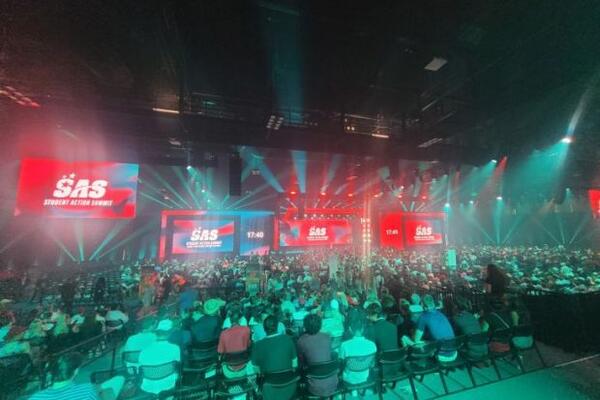
 Source: Patrick Jack
 Source: Patrick Jack
 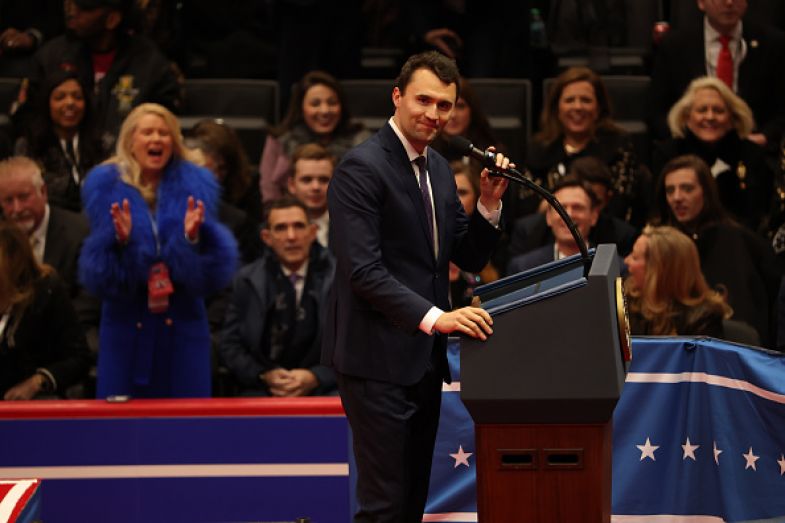 Source: Justin Sullivan/Getty Images