Tag: Jobs

  • Hope for DEI Amid Its Muddiest, Most Catastrophic Moment

    Hope for DEI Amid Its Muddiest, Most Catastrophic Moment

    Many people are losing hope because of the anti-DEI policies that state legislators and governors have enacted over the past four years, as well as the Trump administration’s brutal attacks via executive orders and the U.S. Department of Education’s now-infamous Valentine’s Day Dear Colleague letter. Hopelessness also has ensued following the swift renaming and discontinuation of offices, centers and institutes, programs and professional positions on campuses. It all happened so fast—in some contexts, over four years; everywhere else, in a matter of months. A significant experience I had three decades ago gives me hope in the possibility of eventual recovery from these politicized storms that have produced such extraordinary damage to DEI initiatives in higher education.

    I was born and spent the first 22 years of my life in South Georgia, a place that frequently experiences violent hurricanes and tornadoes. I have seen entire communities wiped out within minutes. In July 1994, just six weeks before the start of my freshman year in college, Tropical Storm Alberto brought torrential rains to Albany, Ga. The National Weather Service reports that more than 30 people died, nearly 50,000 residents were forced to evacuate their homes and over 18,000 structures were completely lost. Many of those buildings were at Albany State, a historically Black university located along the Flint River, which flooded during the storm. Nineteen of its 34 buildings were destroyed beyond repair and ultimately demolished.

    Somehow, our fall quarter miraculously started on time. Instead of residence halls, most students in my first-year class moved into mobile homes on campus; dump trucks were scooping massive quantities of mud and recovery crews were still assembling modular units where we would sleep on the day I arrived. There was so much mud. The mess was widespread—everywhere, in fact.

    For years, many classrooms and offices were located in trailers. Despite the chaos and abundance of annoying mud everywhere at Albany State, there was hope. As my family and I drove into campus for move-in day, I remember seeing a huge banner on one of the few surviving buildings that simply read, “Unsinkable.” That one word became an inspirational chant and declaration that still pervades the institution, now more than 30 years later.

    The flood took so much from my beloved alma mater, but recovery efforts, which required tremendous reliance on the federal government, resulted in a more modernized campus with attractive new facilities that are atypical for most HBCUs due to state and federal funding inequities. Because of what I witnessed firsthand during my four undergraduate years, as well as in the aftermath of numerous other calamitous weather crises that occurred throughout my youth, I know that communities can rebuild homes and structures that are more solid, attractive and high-tech than what previously existed. Even still, a sense of community, family heirlooms and, in some instances, the lives of people and pets are lost. No amount of federal aid can restore those things.

    While the context and circumstances are different, living through this disastrous moment in American higher education because of, but not limited to, the politicized teardown of DEI is familiar to me. Put differently, I have lived through and witnessed recovery from many tragic storms.

    That does not make it any less distressing. But my four-year undergraduate experience taught me how to envision possibilities beyond the daily inescapability of mud, debris and devastation. When I arrived at Albany State as an 18-year-old freshman, rebuilding had not yet started. The institution instead was working as hard as it could with the resources it had at the time to educate, house and serve us. That is where many contemporary college and university campuses are at this very moment as it pertains to DEI.

    Understandably, many students and employees who are most affected by the abandonment of institutional commitments to DEI only have the capacity to survive this catastrophic moment; they are not yet able to begin recovery work. The unavailability of federal, state and institutional resources makes it even less possible for most people to think about the next iteration of DEI efforts on campuses.

    Notwithstanding, hope for something better—even if we do not know when that something better will become available—could be the one and only thing that sustains those of us who are truly committed to DEI. To be sure, I do not believe that hope alone will be enough—coalitions, elections, stock taking and documentation of harm, fundraising, activism, institutional and governmental accountability, and sophisticated strategizing are also required.

    Right now, there is so much mud. The mess is widespread—everywhere, in fact. Like Albany State, the beautiful HBCU that still stands strong more than 30 years after its neighboring Flint River flooded, DEI in higher education is unsinkable. I have no choice but to believe this, and I will continue doing all I can to achieve this outcome for colleges, universities and our democracy.

    Shaun Harper is University Professor and Provost Professor of Education, Business and Public Policy at the University of Southern California, where he holds the Clifford and Betty Allen Chair in Urban Leadership.

    Source link

  • Reducing Barriers to STEM Majors With Precalc Course

    Reducing Barriers to STEM Majors With Precalc Course

    Math courses are often a barrier for students seeking to pursue a college credential, and for some, a lack of math curriculum during high school can make a STEM career seem out of reach.

    A new course at Wentworth Institute of Technology in Boston serves as a stepping-stone for students who may not have had access to precalculus or calculus courses but are still interested in calculus-based learning. The university hopes the program will boost student enrollment and eliminate barriers to access for disadvantaged students.

    What’s the need: The conversation about offering precalculus at Wentworth began in 2019, after university leaders saw that some students, despite having the same GPAs and high school transcripts as their peers, were less mathematically prepared, said Deirdre Donovan, Wentworth’s director of first-year math and interim associate dean of the School of Computing and Data Science.

    At that time, Wentworth did not offer a math placement course, so all enrolled students launched at the calculus level.

    Only four in 10 high school graduates have completed precalculus coursework, according to 2022 data. That number has grown from 36 percent in 2009, but the statistic reveals gaps in availability of the coursework for some high school students.

    Wentworth, like many colleges and universities, requires students to have already completed calculus coursework to enroll in specific major programs, which is “a barrier that can prevent otherwise qualified students from pursuing engineering and computing degrees,” Donovan said.

    To complete calculus by the end of high school, students had to complete Algebra I in eighth grade, and not every student was ready, aware of or offered that course at their school, Donovan said.

    Some high schools also push students to complete AP Statistics in lieu of calculus, and Donovan said this shift “can actually close more doors at STEM schools than it might open, because those AP credits can’t replace the calculus-based statistics required for engineering degrees.”

    Campus leaders at Wentworth opted to review policies that were barring students from participating in STEM programs, starting with creating a math placement process and then developing a precalculus course.

    How it works: In 2024, Wentworth removed precalculus as an admissions requirement for students, paving the way for the college to admit about 10 percent more students who might have previously received a conditional acceptance, Donovan said.

    New students without calculus credit are now enrolled in a four-credit, first-semester course called Foundations of Calculus that helps them get up to speed. The investment in additional content hours is an indication of the university’s commitment to opportunities for students who may not have been able to enroll and succeed previously, Donovan said.

    In addition to two hours of lectures each week, students also participate in two hours of labs that focus on engineering problem-solving skills, using real-world problems that are tied directly to a student’s major.

    The course is also supported by embedded peer tutors who can address student questions, clarify confusing content and facilitate study groups outside of class time.

    It was important to Donovan and her faculty team not to work from a deficit-minded perspective about students’ knowledge gaps. Language regarding the course and its content hours was specifically crafted to help students feel like they’re being guided onto an on-ramp, not held back or punished for not having precalculus experience.

    The results: After the first semester, staff have seen promising results, Donovan said. “We are pinching ourselves that it went exactly how we had hoped it would go.”

    In fall 2024, about 200 students participated in precalculus either because they lacked the course in high school or their placement exam results indicated it would benefit them.

    Approximately 75 percent of precalc students passed their course in the first term, on par with national averages. When they attempted calculus in their second semester, students had similar passing rates to their peers who completed calculus in the first term.

    University faculty and staff were encouraged to see that engineering programs received 20 percent more applications this year, signaling an increased level of interest in rigorous programs, Donovan said.

    Fall-to-spring retention rates were slightly lower for precalc students, but that could be due to other factors, including students re-evaluating their chosen major or deciding whether they want to be at a STEM-focused institution.

    The course has also expanded enrollment opportunities for students who otherwise might not have considered Wentworth. Overall applications were up 25 percent year over year this past application cycle, and deposits were up 30 percent, Donovan said.

    What’s next: Student feedback from the first term has indicated a need for an additional credit hour of in-person, interactive lab work, which will be implemented this fall. The hour, which the university is calling a companion class, will function similarly to a first-year seminar, teaching students study skills and metacognition, as well as connecting back math concepts.

    None of the downstream courses such as physics have undergone a curriculum change, requiring students to get up to speed in their first term to be successful over all in college. Students who complete precalc also may need to take summer classes to ensure they graduate in four years, but the university is looking to offer affordable online courses to accommodate learners, Donovan said.

    Do you have an academic intervention that might help others improve student success? Tell us about it.

    Source link

  • Future of STEM Workforce in Jeopardy Amid NSF Overhaul

    Future of STEM Workforce in Jeopardy Amid NSF Overhaul

    Erik Jacobsen, an associate professor of mathematics education at Indiana University, was nearing the end of a years-long project designed to address teacher biases with the goal of helping more students excel in math and pursue STEM careers. But that all stopped several weeks ago, when the National Science Foundation notified him that it had terminated the grant because it was “not in alignment with current agency priorities.”

    Jacobsen’s grant, which was funding multiple graduate students and a postdoc, who are all now in limbo, is far from the only STEM education–focused grant the NSF recently canceled.

    Of the approximately 1,500 grants the agency recently terminated, at least 750 came from the NSF’s education directorate, according to Grant Watch, an independent website that tracks terminated NSF grants. And that’s not the only shake-up happening at the NSF, which Congress created in 1950 to “promote the progress of science; advance the national health, prosperity and welfare; and secure the national defense.” The Trump administration has also laid off staff and proposed slashing the agency’s budget.

    Additionally, NSF announced new priorities that include not funding projects aimed at recruiting more Americans from underrepresented backgrounds to the STEM workforce—a key focus for the agency historically.

    The Trump administration says all these changes are part of its plan to reform the NSF, correct an alleged “scientific slowdown,” build a “a robust domestic STEM workforce” and “rapidly accelerate its investment in critical and advanced technologies such as artificial intelligence, quantum computing and biotechnology.” The NSF sends billions to colleges and universities to support STEM education and nonmedical scientific research.

    Researchers and policy experts are worried that the major cuts to STEM education programs will jeopardize the long-term future of the STEM workforce and leave the nation with a deficit of scientists and other skilled workers who are capable of carrying out Trump’s vision of winning “the technological race with our geopolitical adversaries.”

    “There may be enough scientists to do the projects that are left. But for how long? They’re eventually going to retire and there won’t be this robust pipeline,” Jacobsen said. “There’s so many kids in our country that learn math and science every day. And the reason they learn it as well as they do is because of NSF’s historic investment in education.”

    ‘Nearsighted’ Changes

    Since Trump started his second term in January, the NSF has upended its operations and spurred chaos and uncertainty within the research community. In February, the agency fired 10 percent of its staff—many who help university researchers navigate the grant application and funding process—though a federal judge later ordered the NSF to reinstate some of those employees.

    “Their absence means that even if the budget is sufficient to fund new projects, distributing that money fairly and appropriately is going to be delayed if not made impossible,” Suzanne Ortega, president of the Council of Graduate Schools, said. While those and other changes are already “having immediate effects on graduate students, postdocs and early-career scientists,” she said there will also be “major downstream consequences” that won’t come home to roost for at least five years.

    According to the Bureau of Labor Statistics, employment in STEM occupations is expected to grow 10.4 percent between 2023 and 2033, more than double the projections for non-STEM careers. But decimating the NSF’s education directorate—which funds many projects focused on researching how to improve STEM education outcomes starting in K-12—will make it harder to cultivate the robust STEM workforce Trump says he wants, Ortega said.

    “This kind of research tells us how we can develop curricula that makes the pathway from a Ph.D. program into industry more seamless. Or how we can create mentoring networks or other kinds of connections that foster more rapid degree completion,” she said. “To forget that education research itself is vital to improving the system that our research enterprise depends on is very nearsighted.”

    Adding to the challenges is the Trump administration’s crackdown on international student visa holders—who make up a sizable portion of STEM graduate students—which could make strengthening the STEM career pipeline increasingly difficult, said Holden Thorp, editor in chief of the Science family of journals.

    “We desperately need more effort to produce scientists who are U.S. citizens,” he said. “Regardless of whether those programs are devoted to marginalized groups or anyone else, there’s people we need to encourage to go into science. Even if you don’t accept the reason why some of these programs were set up. It’s a disastrous economic strategy to get rid of programs—especially when they were in midstream—that would be growing the supply of scientists in the American workforce.”

    As these changes keep coming, the NSF remains without permanent leadership. Sethuraman Panchanathan—the Trump appointee who had run the agency since 2020—resigned in late April, stating that he’d done all he could “to advance the critical mission of the agency.”

    Earlier this month, the NSF announced a plan to cap indirect cost rates—which fund laboratory space and other research supports that can be used for multiple projects—for universities at 15 percent. At the same time, Trump’s budget bill proposed cutting the NSF’s 2026 budget by 55 percent, which includes cutting $3.5 billion from the agency’s general education and research budget, $1.1 billion from the Broadening Participation programs and $93 million for agency operations and awards management.

    A coalition of former NSF directors and National Science Board chairs blasted the proposal, saying it “would thwart scientific progress, decimate the research workforce and take a decade or more to recover” and “fast-track China’s plans for technological dominance.”

    Although Congress will have to approve Trump’s budget proposal later this year for it to become law, the NSF is already preparing for a future with less funding.

    According to Science, NSF has eliminated 37 divisions across its eight directorates and is also creating a new oversight body of unknown membership that will have the final say in reviewing a proposal to ensure it doesn’t violate the agency’s new anti-DEI priorities. Additionally, the NSF announced earlier this month that it plans to cut more than half of its senior administrations and slash the number of “rotators”—academic scientists who serve two- to four-year terms to help the NSF choose which research to fund—as part of its cost-saving strategies.

    That has big implications for NSF-funded initiatives like the Advanced Technological Education (ATE), which is a congressionally mandated effort led by community colleges designed to improve and expand educational programs for technicians to work in high-tech STEM fields that drive the U.S. economy.

    “ATE is heavily influenced by rotators from community colleges,” said Ellen Hause, associate vice president for academic and student affairs at American Association of Community Colleges. “With the rotators on the chopping block, we would lose some of this expertise not only in STEM technician education, but in the community college space, which is a unique piece of the STEM workforce and STEM education.”

    Many of the future community college students who may want to participate in a program like ATE in the coming years are just now getting exposure to STEM fields in their K-12 classrooms. And projects like Jacobsen’s (the math education researcher at IU) were supposed to help more of those students get comfortable with the academic material required to pursue such careers. But canceling his and other STEM education research grants midstream is already undermining decades of federal investment in STEM education, he and others said.

    “We’d already done most of the work and spent most of the money,” he said. “By not having the final amount, we can’t complete our work, which means the public doesn’t get the benefit of the knowledge we would have learned. We still don’t know if the tool we were developing works. And now we’ll never know. It’s just wasting that investment.”

    Source link

  • Highlights From 2025 Commencement Speeches

    Highlights From 2025 Commencement Speeches

    Commencement this year comes at a time of uncertainty for graduates, who find themselves entering a polarized country steeped in political and economic tumult. It’s a scenario many graduation speakers confronted head-on; actress Jane Fonda told the Class of 2025 that “the world has never faced anything like the challenges we face today.”

    Much like 2024, this year’s commencement season has been marked by controversy, including at least two instances where student speakers were penalized for talking about the war in Gaza. Graduates also protested right-wing commencement speakers, including President Donald Trump himself, who spoke at the University of Alabama—which doesn’t traditionally invite guest speakers to commencement—and at the U.S. Military Academy at West Point, where his hourlong, meandering speech went viral.

    But for many graduates, commencement went on as expected, with speakers doling out advice about how to survive—and even thrive—in these difficult times. Here’s what they had to say.

    On the Current Political Climate

    “Ignorance works for power. First, make the truth seekers live in fear. Sue the journalists and their companies for nothing, then send masked agents to abduct a college student who wrote an editorial in her college paper defending Palestinian rights and send her to a prison in Louisiana, charged with nothing. Then, move to destroy the law firms that stand up for the rights of others. With that done, power can rewrite history with grotesque false narratives. They can make criminals heroes and heroes criminals. Power can change the definition of the words we use to describe reality. ‘Diversity’ is now described as illegal. ‘Equity’ is to be shunned. ‘Inclusion’ is a dirty word. This is an old playbook, my friends. There’s nothing new in this. George Orwell, who we met on the street in London, 1949, he warned us about what he called ‘newspeak.’ He understood that ignorance works for power. But then it is ignorance, isn’t it, that you have repudiated every single day here at Wake Forest University? … Can the truth win? My friends, nothing else does.”

    —Scott Pelley, veteran CBS reporter, May 19 at Wake Forest University

    “I could never have imagined 55 years [after I graduated college] that a young woman would write her truth in your paper and find herself kidnapped and arrested for speaking her truth, somehow. And be put in jail. I could not have imagined that, 55 years later. But let me tell you that all of America salutes your president and Tufts University for supporting that student, Ms. Öztürk. It’s so important, and there’s the point when you think about Rümeysa. She said something recently. She said, ‘I still believe in this country and the right to free speech and to due process.’ … And so I can tell you when you say, ‘Oh, we’re going down the tubes.’ No, we are not. I believe in this country. As Rümeysa said, ‘We believe in the people.’ In you. This country will be OK.”

    —Freeman Hrabowski III, education advocate and former president of the University of Maryland Baltimore County, May 18 at Tufts University

    On Persistence

    Maggie Rogers, pictured here in 2024, spoke at her alma mater, NYU, this month.

    “My career arrived overnight. It’s this Cinderella story of a video—maybe you’ve seen it, maybe it was force-fed to you. If you haven’t seen it, I play a song for Pharrell Williams, he really likes it, his reaction goes on YouTube—ta-da, I’m famous. What people saw in that video was this moment of alignment; they saw a past life or the universe or whatever you want to call it come along and hold my hand to the flame. But no one saw all the hard work or all the times I almost quit. They never heard the songs that didn’t work or the shows that were just bad … I don’t know any artist that hasn’t considered quitting. But you didn’t get here because you wanted to do something easy; you got here because you wanted to do something great.”

    —Maggie Rogers, singer-songwriter, May 16 at New York University’s Tisch School of the Arts

    “There’s a saying from one of America’s most practical minds, Benjamin Franklin, that I’ve used almost every day of my life: ‘Little strokes fell great oaks.’ It’s simple, it’s old, it’s absolutely true … I did run for governor in 1994 and lost, and one of the reasons I lost, I think, is I didn’t show my heart. I had five-point plans to cure every ailment in the state, but I didn’t really connect at a human level with people.

    “So, in 1998, when I ran again, I vowed to campaign differently. For example, I went to visit 260 schools in a matter of a year. Back then, my views on education were considered pretty radical, so in essence I went into the lion’s den over and over and over again, trying to dehorn myself, I guess, with people that were skeptical of the ideas that I was advocating. I listened and learned, I shared my passion, I told stories of the challenges that teachers had. And I believe I became governor in 1998 because I was doggedly determined to show my heart. It’s easy to look at the world and believe that success happens overnight. We live in a world of immediate gratification, don’t we? Social media, movies, headlines often highlight the moments of triumph without showing the years of work, sacrifice and persistence that came before.”

    —Jeb Bush, former governor of Florida, May 6 at Nova Southeastern University

    On the Value of Community

    “Don’t let anxiety or depression or hopelessness cause you to isolate. On the contrary, grow yourself a deep, solid community of people who share your values, have each other’s backs, check up on each other regularly, and be intentional about this. You know, in these uncertain times, we need to strengthen our ties to community, to our colleagues, our friends and family, because, more and more, we’re going to need this support for safety, for love, for help, for fun—let’s not forget fun—and for survival. You may not be aware of this, but since the 1980s, there’s been a concerted effort to promote individualism. You know, ‘I’m here for me and mine.’ And this shift to individualism is no accident; it’s being driven by people who want us disempowered. The myth of the rugged individual who needs no one is just that: It’s a myth created by stories through culture, told through culture, and the kinds of things that you all are going to be doing. So graduate students working with words and images—do the reverse. Encourage community versus individualism.”

    —Jane Fonda, actress and activist, May 16 at the University of Southern California Annenberg School for Communication and Journalism

    On Overcoming a Negative Mindset

    Henry Winkler, an older man with white hair, smiles at the camera. He is wearing a white button-up shirt and a brown jacket.

    Henry Winkler, pictured here in 2024, gave the commencement address at Georgetown University.

    Harmony Gerber/Getty Images

    “I was a negative thinker. I wanted to beat the system. ‘I can’t, I won’t, I’ll never, oh, she won’t go out with me.’ So, I tried to find the answer to negative thinking. I found Gurdjieff. He’s an Armenian philosopher who wrote a gigantic book. But he doesn’t want you to finish the book unless you understand him—so I didn’t. ’Cause I didn’t know what the hell he was talking about. And I found a disciple of his, Ouspensky—also a big book. I got one sentence. OK, so, you’re walking to your dream. Never let your dream out of your brain. And when you decide what it is you want to do, just know it without a doubt, know it without ambivalence. So you’re walking to your dream, and you have your dream in your brain, and all of a sudden a negative thought comes in. Your shoulders drop, your head drops and then that negative thought, it blooms into a thesis of negativity. A negative thought comes into your mind—you say out loud, you say out loud, ‘I am sorry, I have no time for you now.’

    “Yes, people will look at you very strangely, but it doesn’t matter, because it becomes your habit. A negative thought comes into your mind, you move it out, you move a positive in. For me, it is a Bundt cake with melty chocolate chips—no icing—and all of a sudden your shoulders fly back, your head flies up and you continue your dream. And then you get to stand here and talk to you.”

    —Henry Winkler, actor, May 17 at Georgetown University

    “[I was] sitting in a doctor’s office, facing one of the most difficult decisions I’ve ever had: continue living my life in pain, or consider having my leg amputated. In that moment, something clicked. I stopped letting the reality of my present circumstances dictate the potential of my future. I stopped coming from a place of victim mentality and realizing that everything happens for a reason and something bigger was going on. That shift in perspective gave me the courage to move forward, to make the decision to have my leg amputated and hope of a better future.

    “Since then, I’ve come to realize something. Experiencing pain doesn’t disqualify you from discovering your purpose. It prepares you for it. The reality is, every single person here has lost something at some point, a dream, a loved one, a friend. You see, the promise in [James 1:2–3] wasn’t that trials would go away; it was that endurance would grow. That’s what trials do. They forge something in us that comfort never could. They teach us to keep going when nothing makes sense to believe, when hope feels distant, to see ourselves, not by what we’ve lost, but by who we’re becoming. That’s the hidden gift in pain, because it’s the journey, not the destination that shapes us the most. So if you’re in the middle of something broken, don’t run from it. Embrace it. Life is hard, but the journey is worth it.”

    —Jarryd Wallace, four-time Paralympian, May 9 at the University of Georgia

    On the Importance of HBCUs

    Jasmine Crocket, a Black woman with long black hair, is seen here wearing thick black glasses and a bright yellow-green suit.

    Rep. Jasmine Crockett spoke at the Southern University of New Orleans, an HBCU in Louisiana.

    “I will start by saying your existence as a graduate of this HBCU alone is and will be seen as a resistance. Let me break it down this way: They never wanted us to be educated. This isn’t false. It is absolutely a fact. I know y’all know the history, but there is something special in this moment in time to be allowed to tell the story in the midst of the many haters and agitators being elevated to the highest positions of power and trying to use an old-school eraser—emphasis on old-school. You know, the old pink one? They want to use that old-school eraser to erase us. They have no idea that this big pink eraser can’t erase what was written in blood. Blood that was shed by the many who bled so that brighter days like this could come.

    “Much like the creation of this school, nothing in this life will be given to you. You will always walk into spaces due to your meritocracy. And even the spaces they seek to disallow you from, just know that they fear your greatness. You see, in 1956, Act 28 of the Louisiana Legislature established SUNO, but only after local African American leaders in the ’40s pushed for public college for Black students during segregation. Turn to your neighbor and say, ‘SUNO wasn’t created out of generosity.’ [graduates repeat] ‘It was created out of segregation.’ [graduates repeat] You see, they sought to build barriers. But SUNO built beginnings.”

    —Jasmine Crockett, U.S. representative from Texas’s 30th congressional district, May 10 at Southern University at New Orleans

    On Finding Who You Are in College

    “So, you might wonder why I’m speaking here instead of at the business school. Well, it’s because the business school got Snoop Dogg. Hard to compete with Snoop. Even though I did later go to business school, I could not have navigated the business world the way I did without the liberal arts education I earned right here. USC is where I discovered what I liked and what I didn’t. I did not, for example, like writing. That’s ironic for the CEO of a publishing company, I know. Eventually I came around.

    “Physics, though, that hooked me right away … Physics instilled something in me that was more valuable than equations and theories. It gave me confidence. It became second nature to think, ‘I don’t know how to solve this problem, but I do know that I will figure out how to solve it.’ And that, Trojans, is what your USC education is giving you. More than a degree, more than a line on a résumé. It’s equipped you with a way of thinking. You now know how to distinguish between fact and fiction, how to analyze and approach problems, how to craft arguments, and how to lead. And whether you know it or not, whether you study law or literature, physics, philosophy, political science or the lab-based kind of science, and whether it took you, like me, an extra year to finish quantum mechanics—that’s a true story—you now have the confidence to navigate the unknowns of life.”

    —Roger Lynch, CEO of Condé Nast, May 16 at the University of Southern California Dornsife College of Letters, Arts and Sciences

    “The artist de Kooning said, ‘The problem with being poor is that it takes up all your time.’ I came here as a scholarship kid, first-gen, loaded up with Pell Grants, work-study, which is actually quite isolating. I never went on a spring break. I never studied abroad. I never had an unpaid internship. I needed all my time to be billable. I was privileged to look like a rich girl, a city girl, a girl who had ridden in a yellow taxi and should rush Tabard. But no, I had, in fact, never ridden in a yellow taxi and should be a Tri Delt. I found a rusted 10-speed bike in the basement of a frat house, tuned it up, rode it around for three years, and left it unlocked on 40th and Irving the day I graduated. Why was I in the basement of a frat house? You know why.

    “The point is, I didn’t come to Penn to pursue a career in the arts. I came here to use the best tool for class migration that’s ever existed: higher education. And that was it. It was a low bar: be employable, hopefully well-paid. When people ask me when I knew I wanted to be an actor, my answer is, when I got paid for it. Was I passionate about it? Sure. Did it bring me self-esteem and joy? It did. But I was practical, pragmatic. But during my time here, I began to think differently. I was in control of my life, and I was working hard to build the confidence, the life skills, the connections and the grit to believe success at anything I devoted myself to was possible.”

    —Elizabeth Banks, actress, May 19 at the University of Pennsylvania

    Source link

  • Judge Keeps Block on Harvard International Student Ban

    Judge Keeps Block on Harvard International Student Ban

    The Trump administration still won’t be able to prevent Harvard University from enrolling international students after a federal judge decided Thursday to keep a temporary restraining order in place.

    The hearing before Judge Allison Burroughs in Massachusetts District Court came a week after the Department of Homeland Security revoked Harvard’s ability to enroll international students and required those currently at the university to transfer. Harvard quickly sued to block that decision, and Burroughs granted a temporary restraining order May 23. 

    Harvard argued in the lawsuit that the administration violated the First Amendment and the university’s due process rights with the abrupt revocation. In an apparent effort to address Harvard’s concerns, the administration said ahead of the hearing that it would go through a more formal administrative process to decertify Harvard from the Student and Exchange Visitor Program. According to the notice filed in court Thursday morning, Harvard has 30 days to respond to the claims that it failed to comply with certain reporting requirements and to maintain a campus free from discrimination as well as “practices with foreign entities raising national security concerns.”

    But while that process continues, Burroughs wants to maintain the status quo for Harvard, which means that international students can remain at the university. She plans to eventually issue a preliminary injunction, the next step after a temporary restraining order.

    Burroughs said an order would give “some protection to international students who might be anxious about coming here or anxious about remaining here once they are here,” The Boston Globe reported.

    The government lawyers argued in the hearing that an order wasn’t necessary because of the new notice. But Harvard’s lawyer Ian Heath Gershengorn countered that “we want to make sure there are no shenanigans” while Harvard challenges the Trump administration’s action.

    And despite Burroughs’s quick restraining order, current and prospective international students at Harvard have faced disruptions.

    Maureen Martin, director of immigration services in the Harvard International Office, wrote in a court filing that students scheduled to travel to the United States in the fall found out by the morning of May 23 that their visa applications were denied. (The administration revoked Harvard’s certification May 22.)

    “I am personally aware of at least ten international students or scholars whose visa applications were refused for ‘administrative processing’ immediately following the Revocation Notice,” Martin wrote, adding that none of the visa applications that were refused or revoked following the revocation have been approved or reinstated. 

    For example, when a visiting research scholar at the Harvard School of Dental Medicine tried to obtain a J-1 visa at the U.S. embassy in Prague on May 23, her visa application was rejected.

    “The officer gave the scholar a slip that stated she had ‘been found ineligible for a nonimmigrant visa based on section 221(g) of the U.S. Immigration and Nationality Act (INA).’ The slip said, ‘In your case the following is required,’ and the consular officer checked the box marked ‘Other’ and handwrote, ‘SEVP Revocation / Harvard,’” Martin wrote.

    Martin wrote that the Trump administration has caused “significant emotional distress” for current international students and raised a number of questions for either incoming or prospective students who are trying to assess their options. At least one student deferred admission for a year for visa-related reasons.

    Source link

  • Trump Targets Chinese Students, a Harsh Blow to Higher Ed

    Trump Targets Chinese Students, a Harsh Blow to Higher Ed

    Secretary of State Marco Rubio announced on Wednesday night that the Trump administration will “aggressively revoke” Chinese college students’ visas and heighten scrutiny of visa applicants from China. The new policy specifically targets “those with connections to the Chinese Communist Party or studying in critical fields.”

    It’s the administration’s latest move in what has been a sudden resurgence in its attacks on international students, which it seemed to suspend in April after legal efforts led to the restoration of the legal status of thousands of students.

    The news sent shock waves through higher education and could lead to a major reduction in foreign students at American universities, especially public research institutions. China contributes the largest number of international students to the U.S., with nearly 280,000 enrolled in 2023–24, according to data from the Institute of International Education—about a quarter of the total international student population in the country. 

    That share, however, has been shrinking since the COVID-19 pandemic; last year, India overtook China as the No. 1 source country of international students. But Chinese students are far more likely to enroll in undergraduate programs and pay more in tuition. They also make up a significant slice of STEM researchers: 16 percent of all U.S. graduate students in STEM fields and 2 percent of undergraduates are Chinese nationals, according to a 2020 report from the Center for Security and Emerging Technology at Georgetown University.

    It’s not clear whether the visa revocations would be accompanied by legal status terminations in the Student Exchange and Visitor Information System or prompt deportation proceedings, as they did for thousands of international students in March and April. Those steps would be the purview of the Department of Homeland Security.

    The targeting of students in “critical fields” in particular could devastate STEM programs and research labs at smaller universities across the country, where Chinese international students are heavily represented. Rubio did not clarify what fields could be considered critical, potentially setting the stage for a sweeping focus on areas where GOP lawmakers have raised concerns about sensitive national security research being shared with the Chinese government.

    A spokesperson for the State Department did not respond to a list of questions, including requests to clarify the scope of the new policy’s target and the timeline for visa revocations, in time for publication. At a press conference yesterday, department spokesperson Tammy Bruce declined to “get into the details” of how the new visa scrutiny would be applied or what “critical fields” the department was referring to, because it “might give up our hand and make certain things less effective.”

    “When we think of critical fields, we think of national security, the nature of how we keep America safe and secure and more prosperous,” she said. “It is important to keep a broad base, because that could mean many things.”

    The new policy’s focus on students with ties to the Chinese Communist Party has also raised concerns about academic freedom and free speech violations. Jonathan Friedman, managing director of U.S. free expression at PEN America, said the new policy targeting Chinese students would “hold student visas hostage to an ideological litmus test and disrupt the open exchange of ideas across cultures and borders.”

    “‘Aggressively revoking’ visas based on political ideology is a gross violation of basic free expression principles that anchor the academy,” he wrote to Inside Higher Ed.

    William Brustein, a retired longtime international student administrator, said the vague nature of Rubio’s directive could enable a sweeping dragnet that catches the majority of Chinese students—especially since association with the ruling Communist Party is difficult to avoid in China.

    “How will they know who’s a member? Maybe they’ll say if you were in a Chinese-sponsored youth group as a child, that could prevent you,” Brustein said. “Right now that policy is so vague that it could cover all Chinese students who want to study in the U.S.”

    Revocation Resurgence

    The administration briefly retreated from its persecution of international students late last month, after targeting pro-Palestine student protesters and expanding its scope to terminate the legal residency of thousands of students at institutions across the country. But a spate of successful court challenges halted the campaign in April, spurring the Trump administration restore more than 5,000 students’ SEVIS statuses.

    A lull followed the restoration as students, advisers and lawyers waited for the administration’s next move. It came two weeks ago, when the Department of Homeland Security released a new Immigration and Customs Enforcement policy granting the agency more leeway to revoke students’ SEVIS status with little justification.

    The Trump administration’s new strategy seems to target specific international student populations. So far, those have been recent graduates on Optional Practical Training visa extensions, students at Harvard University and potentially other institutions in their crosshairs, and now students from China, who Rubio claims are more likely to be national security threats.

    The State Department has also begun to tighten visa restrictions for applicants and incoming students. On Tuesday, Rubio announced a pause on all new student and exchange visa interviews while the administration implements an intensive new social media screening policy. The latest announcement on China also said the State Department would review application criteria to “enhance scrutiny of all future visa applications” from China and Hong Kong.

    Marjorie Hass, president of the Council of Independent Colleges, said there’s already a process for vetting international students, and that the administration’s new policy seems more aimed at scoring political points and justifying deportations than enhancing national security.

    “Institutions have their own admissions standards and the embassies do vet students who come into the country,” she said. “It’s not currently the Wild West.”

    Brustein said that if international students from China weren’t already moving away from American colleges en masse due to this spring’s targeting of foreign students, the latest move is sure to discourage future applicants.

    “We’re shooting ourselves in the foot,” he said. “Even if some of these decisions are reversed, we’re undoing the progress we’ve made over so many years in being this welcoming environment for the best and brightest in the world.”

    “That harm I don’t think can be undone.”

    A Blow for Research Universities

    Brustein has led international student offices at West Virginia University, the University of Illinois at Urbana-Champaign and Ohio State University, where he said there were “thousands” of Chinese students who often paid three times as much as their domestic peers.

    He said the colleges likely to be hit hardest by a major reduction in current and future Chinese students are public ones, especially regional institutions in areas with shifting demographics and declining college-going rates.

    “There are regional public universities and flagships across the Midwest, in the South, that have a large contingent of Chinese students who are coming particularly for STEM education,” Brustein said. “It’s those ones that survive on a thin revenue stream who are going to suffer the most.”

    He added that a sizable reduction in Chinese international students would likely hit scientific research hardest.

    “Many Chinese students get degrees in computer science, engineering, and go on to go to grad school or do an OPT,” he said. “They stay in the country, work in our labs, contribute significantly to innovation in this country, not China. To lose that is going to be a very big blow to our capacity for innovation.”

    Hass said that Chinese students have been both a financial lifeline and a source of cross-cultural exchange between the two countries for more than a decade. She said the benefits for higher education and for American diplomacy have been overwhelmingly positive, and a large-scale rollback of that relationship would be destructive for both.

    “This is a place where the balance of trade is very much in favor of the U.S.,” she said. “It’s mystifying why we would be undermining that.”

    She added that for many colleges, international students—and the volume of full-paying Chinese students in particular—help institutions improve access for local students.

    “Colleges will miss out on a lot of revenue,” she said. “That means the burden has to be borne by domestic students.”

    Source link

  • Ono’s UF Contract Valued at Roughly $3M a Year

    Ono’s UF Contract Valued at Roughly $3M a Year

    University of Florida presidential pick Santa Ono could earn nearly $3 million a year if confirmed by the Florida Board of Governors next week, according to a copy of the contract proposal.

    Ono’s proposed base salary for the presidential role is $1.5 million, an increase from the $1.3 million he earned at the University of Michigan before stepping down to pursue the Florida job. He could also earn 20 percent annual performance bonuses and a yearly raise of 3 percent.

    In addition, the proposal includes a role for Ono at UF Health, where he will chair the board and serve as a principal investigator, overseeing a lab, which comes with a $500,000 annual salary. That role also earns a 3 percent annual raise and performance and retention bonuses.

    Other elements of the contract, such as benefits and deferred compensation, bring its total value to more than $3 million a year if Ono is approved by the Board of Governors, which has called a special meeting for Tuesday to decide.

    Ono, an ophthalmologist by training, would also receive a tenured faculty role in the UF College of Medicine.

    The contract includes some unusual provisions. It requires Ono to work with the Florida Department of Government Efficiency “to evaluate and reduce administrative overhead, ensuring that University resources are directed to teaching, research, and student success while safeguarding taxpayer and donor investments.” In addition, he would be prohibited from spending “any public or private funds” on “DEI or political or social activism.”

    Though the University of Florida Board of Trustees unanimously approved Ono as president earlier this week, he has faced opposition from conservative critics over past support of diversity, equity and inclusion efforts. Ono spent much of his public interview with the board this week articulating how he changed his mind on DEI. He argued that while he was initially supportive of DEI, he now believes such initiatives are costly, divisive and counterproductive.

    Ono’s public about-face comes amid a campaign from anti-DEI activist Chris Rufo, who circulated numerous videos on social media ahead of the UF Board of Trustees meeting that showed Ono supporting DEI and speaking against systemic racism, which Rufo argued was disqualifying because it ran counter to the goals of Republican governor Ron DeSantis.

    Other conservative figures have since leveled additional criticism at Ono, including state officials and Donald Trump Jr., who wrote online, “This woke psycho might be a perfect fit for a Communist school in California, but how is he even being considered for this role in Florida?” Trump Jr. also encouraged the Florida Board of Governors to vote against confirming Ono.

    While DeSantis, who has wielded considerable influence over university hiring decisions, told local media that Ono’s past comments on DEI have made him “cringe,” he has not joined the chorus of conservatives calling to block Ono and has expressed confidence in the search.

    Source link

  • Art Activities Help Med Students Unwind

    Art Activities Help Med Students Unwind

    Administrators at Duke University have devised a creative program to encourage medical students to practice mindfulness and take time for themselves during a rigorous and demanding course of study.

    A partnership between the Office of Learning Environment and Well-Being and Duke Arts Create established a free workshop that takes place twice a month to provide students the chance to unwind using various artistic media. The events help students engage in new art forms, connect with their peers and learn skills they can apply to their careers and beyond.

    In the Literature

    A 2018 research study found that medical students who had greater exposure to arts and humanities had better empathy, emotional intelligence and wisdom than those who didn’t. They were also less likely to develop burnout. Another study showed that art courses reduced stress for students enrolled in medical school.

    Crafting opportunities: Duke’s School of Medicine enrolls over 1,400 students in a variety of health-profession programs, including doctor of medicine, physician assistant, master of biomedical sciences and doctor of physical therapy programs, each with its own goals and accrediting body. Students represent a variety of backgrounds and experiences, so “there is no one-size-fits-all strategy for well-being,” said Jane Gagliardi, associate dean for learning environment and well-being for the medical school.

    Medical school students are able to participate in wider campus events, but the programs often feel siloed or off-limits to them, Gagliardi explained.

    Gagliardi first met Anna Wallace, who is the student engagement coordinator for Duke Arts, the university’s school of arts, at a student resource fair where they both had tables. Wallace had decorated hers with brown paper and crayons, allowing visitors to stop by and color.

    Gagliardi realized how much something as simple as coloring could be a pick-me-up for students, and she created a partnership with Wallace to provide art workshops for those in the medical school.

    Getting artsy: The free workshops, part of Duke Arts Create Workshops, take place twice monthly throughout the academic year on Duke Medicine’s Wellness Wednesdays.

    Activities include watercolor painting, needle felting, poetry through text deconstruction, zine making and singing workshops. One notable art project focused on the Duke chapel; students used watercolors to decorate a freely drawn image of the chapel.

    Students bring a variety of skills and talent levels to the workshops, sometimes surprising the staff.

    “It’s the students you think are the most clearly science-focused who are also just brilliant at expressing themselves creatively and supporting their classmates and colleagues at doing those things,” Gagliardi said.

    Some of the events are cohosted by affinity organizations on campus; for instance, the Lunar New Year celebration was conducted in partnership with the Duke Med Chinese Association, which taught students paper cutting and shared treats like boba tea.

    Events have been well received by everyone who’s participated, Gagliardi said, but having high attendance isn’t a goal. Rather, Gagliardi hopes such efforts show students that the school cares about their mental health and well-being.

    “I wanted an outlet to be free and let my creativity flow,” said Carly Williams, a Ph.D. student in the department of biochemistry, according to a Duke Arts press release. “I remembered doing watercolors as a kid and loving it, so this seemed like the perfect art session for me. And it turned out to be a relaxing two hours of painting and good company.”

    One of the benefits of the program is that it’s fairly low budget and easy to implement, Gagliardi said, allowing the school to pivot and be responsive to student interests as they arise.

    Holistic support: In addition to art workshops, Gagliardi heads various well-being initiatives across the medical school to support students and staff.

    “Finding ways to maintain your humanity while pursuing your rigorous study is important,” she said, particularly in a field like medicine, in which students learn about illness, recovery and death. “Equipping people with skills and strategies to deal with distress is important to maintain a functional ability to learn.”

    Each week, she hosts Granola With Gagliardi, open hours for anyone to stop by, pick up a KIND bar and talk with her.

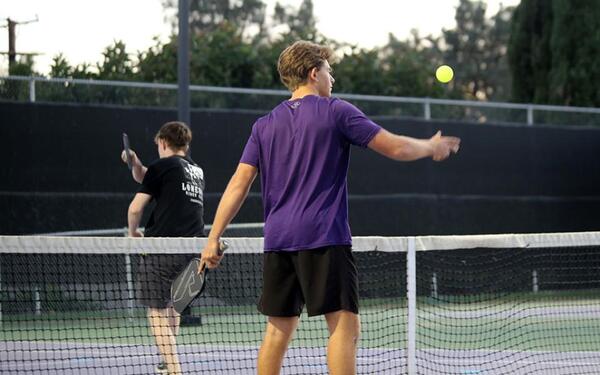
    Duke Medicine also regularly collaborates with Medicine in Motion, hosting events like power yoga, running or pickleball tournaments to promote physical activity and well-being.

    In the future, Gagliardi hopes to connect additional student groups with Wellness Wednesday events.

    Do you have a wellness intervention that might help others promote student success? Tell us about it.

    Source link

  • Distorted Views of Higher Ed Lead to Wrong Remedy (opinion)

    Distorted Views of Higher Ed Lead to Wrong Remedy (opinion)

    Every day, in articles, podcasts and social media, I learn about American higher education.

    I learn that it aggressively stifles ideas that deviate from a narrow leftist orthodoxy. I learn that it privileges identity and politics over merit and knowledge.

    I learn that it is rife with antisemitism while serving as a safe harbor for people of color and LGBTQ+ people. I learn that Harvard, Columbia and other Ivy League universities are the prominent tip of a higher education iceberg that threatens to destroy our culture and country.

    If that is all I knew about American higher education, I would support tearing it down.

    I would think that American higher education, in anything resembling its current form, cannot and should not be saved.

    However, because I am a college president and have the opportunity to engage with students, faculty, staff and other college leaders every day, I think otherwise.

    Every day, I see students from myriad backgrounds and with disparate beliefs flourishing because they interact with one another in class, in the dining hall, in student residences, on athletic teams and in clubs. I hear about students whose understanding of the world is being pushed and transformed by faculty who expose them to new perspectives and new information.

    Every day I interact with students and alumni who are achieving their full potential because our college and our donors provide financial aid that caps student loans at $27,000 over four years, which is less than the average new car loan. Every day I am reminded that racism, sexism and transphobia have not been eliminated from our classrooms or our campuses—despite seeing daily evidence of our efforts to ensure that neither race, religion, nor any other identity confers advantages or disadvantages on our students, faculty and staff.

    It is because I see what college is every day, and not just what occurs on rare days on some campuses, that I know that ongoing efforts to tear down higher education are a travesty for our children and our country.

    It is why I know that the actions of those who are rarely on campus, and those who are focused on scoring political points, represent existential threats to America in what will continue to be a world in which knowledge and technology dominate.

    Much of the past 80 years shows what happens when the United States chooses knowledge over ignorance and decides to invest in its young people. After World War II, the U.S. made it possible for veterans, and then women, people of color and lower-income students, to attend college, raising the quality of life for millions.

    Our government partnered with universities to develop a research infrastructure that became the envy of the world. Innovations transformed lives and society. Diseases were cured. People lived longer and healthier lives.

    So, what confronts us now is a decision that will determine what kind of lives our children and grandchildren have.

    Are there too many colleges and universities at current prices? Are there some faculty who are intolerant of views that are inconsistent with their own? Would some college curricula benefit from more engagement with the real world?

    Yes, yes and yes.

    But will future generations thank us if we destroy the higher education system that took generations to build? Will they be better off if we judge every faculty member, administrator and student by the actions of those on the fringe, or by what we observe at a small number of colleges? Will they be better off if we shift control of scientific and intellectual innovations, course content and pedagogy from scholars to bureaucrats and politicians?

    For the sake of future generations and our country, we must find ways to convene a national discussion on the future of higher education. What are we trying to accomplish as a country, what part does each college play in that collective goal and how can we ensure the system is effective? What is right for the country is not the sum of the paths colleges set for themselves. It is not what colleges individually decide while trying to avoid existential threats from protesters, activist donors or state and federal governments.

    We must continue constructive engagement involving representatives from government, boards of trustees, college leadership, think tanks, student groups, the American Association of University Professors and other critical constituencies. The result must be a plan and action.

    As a soon-to-be former college president and the father of a future college student, I look forward to continuing to be part of this fight in the years to come. Those who sacrificed to create our great country, and those who will be impacted by our actions in the future, deserve nothing less.

    David R. Harris will step down in June after seven years as president of Union College in Schenectady, N.Y. He will join Harvard Graduate School of Education in the fall as a president in residence.

    Source link

  • Teaching Students Practical Life Skills

    Teaching Students Practical Life Skills

    Higher education is designed to prepare students for their future lives and careers by imparting technical and soft skills, but what about practical, hands-on tasks, like managing a home or vehicle?

    A 2023 survey found that young adults lack practical life skills, with two-thirds (68 percent) of millennials and Gen Z unable to change their car oil, nearly half (48 percent) unable to change a tire and 46 percent unable to tie a tie. Eighty percent of Gen Z respondents said they do not feel like they have figured out adulting.

    A workshop series at George Mason University in Virginia, titled Now What?, helps build students’ practical knowledge and well-being by giving them life advice and skills, such as how to change a tire.

    In this episode of Voices of Student Success, host Ashley Mowreader spoke with Ethan Carter, associate director of programs, well-being and assessment, and graduate student assistant Dianna Philipps, to learn more about the program offerings and how it supports student success.

    An edited version of the podcast appears below.

    Inside Higher Ed: I wonder if we can just start by talking about the inspiration for this program. Where did the idea come from?

    Ethan Carter: I came up with the idea, because as a [student activities] programmer, it is difficult to replicate things. When I thought a lot about being a college student—which was several years ago—I was like, “Man, what were the things that I wish I had known back then?” And so I kind of tried to think about something catchy, and I said, “Well, there were lots of things— I would do something, and then I’d be like, ‘So now what?’’ And so I was like, “Oh, that would be a really good little catchy phrase.”

    Also, from a programming standpoint, it is very adaptable to what we want to do. I don’t have to replicate my programs, but we can have the theme of Now What?, and seeking what students would want to know more about in their lives. Not that what I wanted to learn was bad. It was just, things change.

    Inside Higher Ed: When you address that question of Now What?, what are some of the themes you all have talked about? What has programming looked like practically?

    Dianna Philipps: One of our main ones would be the “how to change a tire” one. I feel like most people on campus have a car, [but] they don’t really think of the things that come with having a car.

    So when you see the tire-changing [workshop], you’re like, “Oh, what if I do get a flat tire? Like, maybe I should learn how to handle that if I’m on my own on the road or something.” I feel like things like that really stand out to students when they see it.

    Inside Higher Ed: Something I thought was cool is that your roles focus on well-being and recreation and this program is an interesting intersection of those two ideas. I wonder if you can talk about how this contributes to students’ well-being and thriving on campus.

    Carter: When you work on a college campus, and the big theme behind the campus is about well-being, you try and find out, where do you fit? And for us, it wasn’t just in the fitness realm. We wanted to think about something that was what we would consider our niche.

    I settled on practical well-being because it is adaptable and relatable. Recreation is usually seen as something that does provide movement, but I wanted to capitalize on that and build off of the aspect of, just, living in general can be tough. It also opens the door for us to be able to partner, because a lot of our programs within themselves are not things that we run, and it’s not our expertise, but it is a place where we can be a hub and connect individuals, which kind of ties in with the well-being aspect, like, you need to find your own well-being.

    Inside Higher Ed: Who are those partners across campus, and how do they participate in this?

    Carter: Anyone and everyone is actually who we get to partner with. The [change a] tire one is done with our facilities group and specifically the auto shop—they help us with any vehicle-based activities that we have going on.

    We’ve also connected with Student Health Services for ones that are related to health insurance, with anything about self-care. And then we did another [event] with academics for a little bit, talking about preparing for exams and test-taking and things like that.

    One of my other favorite [events] is intercollaboration within a department. So like, how to do a hike, how to change a flat tire on a bike.

    I think we had one more connection, oh, with dining. Dining teaches us how to cook, and so we’ve done a Super Bowl one where we made a special dip and some other little fun delicacies.

    Inside Higher Ed: What have you learned from students and their feedback as you’ve done the events over the past year or so? What did they enjoy about it?

    Philipps: I would say the main feedback is that it was very helpful for them. I think most of the people who have come to one event, they’re the ones who continue going to each of the events. I think it just helps them learn the things that they don’t know, because they’re like, you don’t know what you don’t know until you, I guess, go to the event. So that kind of helps them a lot.

    Inside Higher Ed: There are knowledge gaps for all students as they come on college campuses—whether that’s academic preparedness or just life skills that you might not know. If you’ve never owned a car before, you might not know how to jump your car or change a tire, or if you’ve never had a full-size kitchen before, you might not know how to cook a Super Bowl dish. So I think it’s really cool that you all give them the opportunity to identify what they don’t know, but then also just close those gaps and help them feel like they’re not left behind or unsure of what they do next.

    Carter: I would also add that they’ve enjoyed putting their hands on the tools that help them.

    We do one [workshop] on how to use hand tools, and sometimes the power drill is the [tool] that we get to play around with. Other times it’s a hammer and nail. Sometimes we play around with a tape measure. And I’ve appreciated the vulnerability of the students and admitting like, “Hey, this is what I don’t know,” and it provides an opportunity for me to talk more about like, “Hey, this is what I was feeling when I was a college student.”

    When you are thinking about all the resources that are available to you on campus, it’s important that you’re able to admit that you don’t know how to do something, and then go out and ask someone, because most of the time, most of those tools are readily available for you on campus. You just have to be pointed in the right direction, and people can’t give you what they don’t know you need. So that would be something else that I would say has been a great benefit for me in connecting with other campus partners and connecting with those students.

    Inside Higher Ed: I remember when I was a college student, I was really afraid of the makers’ studio, where the VR lab and the 3-D printing are. It just felt so intimidating to go in and actually try things out. But once you have an experience like this, where it’s a little more hands-on and assisted, you feel like you have the skills to do it.

    I bet there’s also an element of introduction to staff on campus. Maybe students have never met a facilities manager before, and now, after changing a tire with them, they can ask for help in other ways. Or if you’ve never talked to the Student Health Center, now you feel more comfortable talking about health insurance or other things like that.

    If you had to give advice or insight to another college or university that was looking to replicate your idea, what would you say you’ve learned? Or what are some best practices for people to know?

    Carter: First one is, what I actually tell the students all the time, is to be yourself within your organization. You maybe have a limited budget, and you only have certain resources available to you, so it’s important for you to not try and go and do what everybody else is doing. It’s important for you to do what you’re able to do, and then to connect with your students and allow them to be part of the construction of what your program is going to be.

    It may start out as just being something where you’re looking at budgets, and then another student comes in—because you are making this for the students. So if you don’t have the student audience that is available for what you’re providing, like, it isn’t super helpful.

    So do that, and then the adaptability aspect: Be OK with something not working. Because when you hear “no” or no one comes, that is good information; you know not to do that anymore. A lot of people get offended by that and are like, “Oh, I’m a horrible programmer” or whatnot.

    It could be that you’re doing it at the wrong time, or it’s just that students are not available for that. Why would we do something that’s related to budget and all the students that need to do the budget stuff are in class in the a.m., so maybe I should try it in the evening. Things of that nature. So be OK not always having everything get hit out of the ballpark. And then if you do find something, you try and make it better as you go.

    Inside Higher Ed: You mentioned that this is a different sort of programming and something that you all can adapt to reflect student needs. I’ve heard a lot from people who work on college campuses that post-COVID, it’s just been harder to get students to show up for things or feel like you’re being responsive to their needs. Have you felt like this has accomplished that goal in being adaptable, but also engaging students?

    Carter: I would say it depends, and it really depends on what’s going on and what the particular group you’re working with is all about. So, Dianna, if you don’t mind sharing some of your ideas to try and help us get some people coming.

    Philipps: One of the main ones would be changing locations. Especially if you’re on a bigger campus, trying to make it more central so it can target different types of people, either coming from class or coming from the dining hall or things like that.

    Just back to what Ethan had said about being creative with it, and if something doesn’t work, look at what did work, keep that and then change what didn’t work. You can learn from that. See what things people are actually going to, what they actually need help with. So, again, being adaptable to things.

    Inside Higher Ed: You mentioned earlier that students who come to one event might come to multiple—like, they really appreciate the skills that they’re building. Have you seen that that’s true of a handful of students or more?

    Carter: It makes you feel good when you see somebody that you’ve seen before; it kind of increases your self-esteem. You’re like, “Oh, I did something, right?”

    I think the bonus is that they invite their friends and they make them aware. I think that a lot of times, even as an adjunct professor, I’ve had to change my perspective of it isn’t what the student looks like, because most of the time when I’ve talked to my students, they look like they don’t care about my class. But then I mentioned that to them, and they’re like, “No, you’re one of the coolest professors that I’ve ever had.” I’m like, “I can’t tell from looking at your face.”

    So when we’re doing our programming, it may not be that the students don’t like it, they just may not be aware, which is why we’ve tried really, really hard to go to the students to make the things available—not just putting a flier in front of their face, but providing them an opportunity where they can go and do something.

    I would say we’ve gotten the greatest number of students coming to things when we went to another class with content that was in line with what we were doing; we were complimenting what an instructor was teaching. And then the students are like, “We had no idea that this was going on; what other programming do you have available?”

    So I would say that that has been super, super helpful, going to the students and just becoming more and more visible, shaking hands and getting to know people, which, again, it seems like it’s common sense, but you do have to become visible in a way that is helpful and not harmful.

    Inside Higher Ed: You mentioned working with other staff on campus; have faculty been a partner in this work as well?

    Carter: We have gotten to work with them. And like I said, when we invite ourselves to their class, it doesn’t work out so well. When we are paying attention to what it is that they’re teaching and ask them, “Hey, this is something that we’re offering. Is there, maybe, 15 or 20 minutes that we can come and complement some of the stuff that you’re teaching?” That actually ends up being a two-way thing, because usually that instructor is willing to come over to our workshops and provide some informational knowledge, and so that has been super, super helpful with that. So having a crossover is good.

    Inside Higher Ed: This series is all about helping Gen Z prepare for unknown futures and navigate their world after college. When we talk about the role of higher education, I think we talk a lot about careers, about students building life skills like critical thinking and things like that. But there’s also this idea of helping students just be people, having that practical wellness. I wonder if you can tie this all together—why this is important for colleges and universities to do, and how this is foundational to not only the students’ success, but also just being responsive to their needs?

    Carter: We have a saying in our well-being practices—our goal is to help students to live just as they breathe.

    When you think about well-being and the holistic aspect of it, it’s important that people realize that eating well can be tied into you, just coming and sitting in a facility, being around people. It can also be exercise. It can also be yoga. It can also be about you being able to get the job done, or even going through a bout of anxiety and finding out you know how to be resilient in that space, or how to ask for help.

    When it comes to our programming, we want to do what’s going to help people to be the best version of themselves. And that’s a journey that students have to take, and we’re on that journey with them.

    We want to walk alongside the student and provide the things that they need, to help them to feel like, “Hey, you know, I feel like I’m a better adult,” and at the end of the day, want to come back and give to other students. So being a human being is what we’re all about, and we want to support that in the best way possible, through our programming. And if we don’t have the programming, we can point them to other services and other individuals on a college campus, because that’s what universities are here for.

    In higher education, the more that we acknowledge the humanity of others, I think the better off that we’ll be, as opposed to trying to figure out things in a box. We’re not people built in boxes; we’re people with unique qualities and differences.

    Philipps: I would add that these events also teach us how to ask for help. Because I feel like that’s a big thing, especially when we’ll have actual careers and stuff, you don’t know everything as much as you may think you do. So just having that skill of asking for help, or just even getting assistance collaborating with others, is really important, and I think we get that from these events.

    Get more content like this directly to your inbox. Subscribe here.

    Source link