Tag: Join

  • Join Robert Reich for a free live watchalong of The Last Class (Elliot Kirschner and Heather Lofthouse)

    Join Robert Reich for a free live watchalong of The Last Class (Elliot Kirschner and Heather Lofthouse)

    Dear friends,

    The Last Class continues to be shown across the country with people watching it in person, in community, and in theaters. It’s being shown on screens in 47 states and in Canada! By January we will be in all 50 states, thanks to you!

    So, we’re excited to offer a one-time-only live online watchalong of the film — Monday, December 8 at 5:30 pm PT / 8:30 pm ET — with Prof. Reich joining us to speak before and after the film, and provide some commentary while it plays.

    If you haven’t already seen The Last Class, the illuminating film about Robert Reich’s final semester of teaching (or even if you have), gather with friends for this special one-of-a-kind event!

    Sign up for the watchalong now here, or by clicking this orange button:

    Sign Up For The Watchalong Here

    We continue to prioritize in-person screenings, thrilled that the film is bringing people together. Later next year, we plan to offer the film online via “video on demand” and hopefully a streaming service.

    Here’s what you need to know:

    • The watchalong is Monday, December 8 at 5:30 pm PT / 8:30 pm ET.

    • When you sign up you will be added to a special watchalong email list.

    • The morning of Monday, December 8, you will receive an email with a YouTube link.

    • At 5:30 pm PT/ 8:30 pm ET this link will go live with Prof. Reich, Heather, and Elliot.

    • Bob, Heather, and Elliot will offer some live commentary during the film (71 mins).

    • short Q&A will follow.

    • When the event ends, the link for the film will no longer be watchable.

    • Signing up for the watchalong is FREE. But for those that can afford it, we will offer the opportunity to donate so that the film can be shared more widely.

    Additional information: This is a LIVE event, so there will be no ability to pause or rewind the film while watching, sort of like television was in the olden days. If you sign up within an hour of the start time, your confirmation email will redirect you to the live YouTube link. The RSVP page will close 15 minutes after the film starts (5:45 pm PT), but the YouTube link will be live and accessible the whole time.

    Please share this email or the signup link with others. There is no cap on total viewers and we hope to see as many of you as possible.

    If you want us to answer a specific question about the film during the watchalong, you can start by adding your thoughts to the comments section below.

    Sign Up For The Watchalong Here

    Hope to see you on December 8th,
    Elliot and Heather

    Source link

  • ACE’s Ted Mitchell to Join ACUE-Led Fireside Chat

    ACE’s Ted Mitchell to Join ACUE-Led Fireside Chat

    ACE President Ted Mitchell will join Andrew Hermalyn, Association of College and University Educators (ACUE) CEO, for a fireside chat on evidence-based strategies that help higher education leaders navigate disruption and safeguard student success.

    , to be held Oct. 29 at 3pm ET, will highlight approaches that build institutional resilience, advance student outcomes, and reinforce the value of higher education.

    Earlier this month, ACE and ACUE reaffirmed their to drive transformative change in faculty development and elevate teaching excellence across higher education.

    Register for the event , and learn more about ACE and ACUE’s collaboration .


    If you have any questions or comments about this blog post, please contact us.

    Source link

  • Re: University | Join the Conversation Before It’s Too Late

    Re: University | Join the Conversation Before It’s Too Late

    Hello Everyone,

    The Re: University team here! I know you didn’t expect to hear from us this week, but we just passed the 100-day mark until the Re: University conference and the excitement is getting real. For those of you who don’t know, we are hosting the conference in the Marriott Ottawa on January 28th and 29th

    Our full agenda will be released soon but we have begun announcing our speakers and themes. Our two-day agenda is focused on exploration and action.

    •  Day One looks outward and forward. Through provocative plenaries, global case spotlights, and rapid-fire exchanges, participants will examine how universities are adapting to shifting financial realities, emerging technologies, and new models of teaching and learning. The focus is on ideas: what’s possible, what’s working elsewhere, and what change might look like in practice. 
    • Day Two turns those ideas into strategy. Sessions will focus on the “how” of transformation, think: governance, funding models, partnerships, and culture change. Participants will dig into what it takes to move from experimentation to execution and build institutions that are both resilient and ready for the future. While we may be biased, it is an incredible lineup so far. 

    So if you haven’t already, you should check out who is on the agenda so far here.

    We also wanted to give you a heads up that we are 90% sold out of tickets so if you are planning to come, please make sure to get your ticket soon.

    The university is the focal point of this conference, although we have others attending from the college sector,  and we are so happy to say we have representatives from nearly 50 Canadian universities. If your institution isn’t on this list, we would love you to be part of the conversation:

    Algoma University

    Ambrose University

    Brock University

    Capilano University

    Carleton University

    Concordia University

    Dalhousie University

    Emily Carr University of Art and Design

    Kwantlen Polytechnic university

    Lakehead University

    McMaster University

    Memorial University of Newfoundland

    Mount Allison University

    Mount Royal University

    Mount Saint Vincent University

    Nipissing University

    Northeastern University

    Ontario College of Art & Design University

    Ontario Tech University

    Pacific Coast University for Workplace Health Sciences

    Queen’s University

    Saint Mary’s University

    Simon Fraser University

    St. Francis Xavier University

    St. Jerome’s University

    Thompson Rivers University

    Toronto Metropolitan University

    Trent University

    Université de l’Ontario français

    Université de Moncton

    Université de Montréal

    University College of the North

    University of Alberta

    University of British Columbia

    University of Calgary

    University of Guelph

    University of Guelph-Humber

    University of Manitoba

    University of Northern British Columbia

    University of Ottawa

    University of Regina

    University of Saskatchewan

    University of Toronto

    University of Victoria

    University of Waterloo

    Western University

    Wilfrid Laurier University

    York University

    Yorkville University

    We have been asked who should attend this conference and although it is open to anyone with an interest in the future of postsecondary education, we wanted to give you an idea of who will be joining these conversations. 

    40% of these attendees come from the President, Vice-President and Associate Vice-President portfolios, another 40% are Deans and Deputy Deans. The remaining 20% come from a wide range of roles such as CAOs, Special Advisors, Managers, Directors, Professors and many other important roles. We have attendees from institutions coast to coast with representatives also from colleges and polytechnics along with government, associations and various industry stakeholders. And not to forget our partners who we know are looking forward to meeting you all. Check them out here.

    Whoever you are, if you are passionate about the future of the university in Canada then now is the time to get involved in the conversation. 

    We hope to see you there,

    The Re: University Team

    Thank you to our partners:

    Source link

  • Green skills, graduate competencies, and championing subject diversity – it’s time to join up some agendas 

    Green skills, graduate competencies, and championing subject diversity – it’s time to join up some agendas 

    Author:
    Rebecca Collins and Santiago Poeira Ribeiro

    Published:

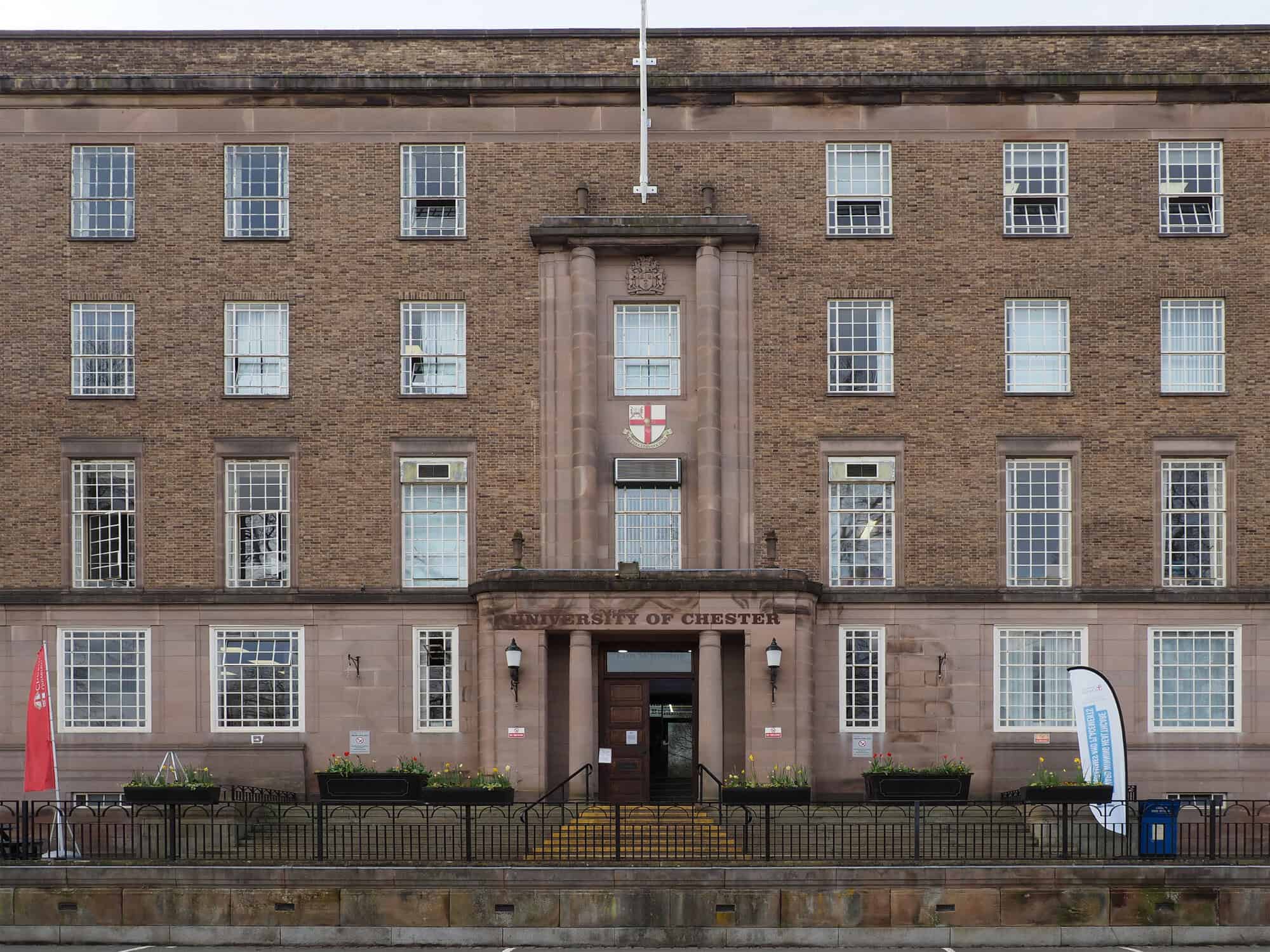
    This HEPI blog was kindly authored by Rebecca Collins, Director, Sustainability and Environment Research and Knowledge Exchange Institute, University of Chester and Santiago Poeira Ribeiro, student in Natural Sciences (Physics), University of Chester. 

    UK universities are currently grappling with a perfect storm of disruptors: financial challenges, ambivalence from national policymakers, and, increasingly, from prospective students as they question what a university education really offers them. At the same time, the employment landscape is weathering its own storms, including those driven by accelerating technological change (particularly AI), concerns about skills deficits, geopolitical turbulence, and equivocation about whether or not this net zero business is here to stay.  UK Government response to these challenges has most recently taken the form of Skills England’s analysis of the skills requirement across ten priority sectors and the promise of a new industrial strategy from 2026-27 that connects these requirements to reforms of the higher education system.  

    It is in this context that a strangely paradoxical scenario is playing out.  On the one hand are claims that the UK does not have the necessary skills for a ‘green transition’ to net zero – what are increasingly being described as ‘green skills’.  (Notwithstanding the current national political ambivalence about net zero, most sectors of the UK economy have long since recognised the necessary direction of travel and know they need an appropriately knowledgeable and skilled workforce to accelerate action.) On the other is a higher education sector beset by the contraction or closure of subject areas perceived by some political and industrial leaders as insufficiently relevant to our collective economic future, ‘green’ or otherwise. However, for many years now, UK higher education has cultivated students’ green skills through its commitment to education for sustainable development (EfSD), widely recognised as essential knowledge for graduates entering the workforce. Indeed, climate literacy training is now often embedded in university curricula, as well as becoming increasingly normalised as a core, if not mandatory, training requirement across a range of industry sectors. Whilst what EfSD looks like at different universities varies, the majority of institutions demonstrate some degree of engagement with this agenda across all subject areas, with some making it a flagship institutional policy.   

    UK higher education thus seems to be quite good already at cultivating green skills for graduates, and across a wide range of subject areas. How, then, does this map onto the very varied definitions of green skills that have emerged from different sectors? The proliferation of reports concerned with this topic has not (yet) resulted in a clear, unified definition. Rather, this tends to be determined by who is doing the defining. Considering the different definitions and concepts prioritised by different institutions, we propose that these intersecting concerns can ultimately be distilled into three main types of green skill: 

    1. Technical skills: particularly those needed to accelerate decarbonisation; concentration of this need in industries such as manufacturing, transportation, utilities and infrastructure.  
    1. Green-enabling skills: otherwise known as soft or transferable skills, including systems thinking, communication, collaboration, critical thinking, adaptability. 
    1. Values-based skills: such as environmental awareness, climate justice, democratic engagement, cultural sensitivity. 

    Whilst definition 1 skews towards STEM subjects (as well as forms of technical expertise developed through other forms of learning, such as apprenticeships or vocational training), definitions 2 and 3 are within the purview of many other subjects commonly studied at undergraduate level, particularly within the arts, humanities and social sciences.   

    It is a timely moment to be reflecting on the relationship between how skills deficit narratives are framed by some corners of industry and government, and how universities position their offer in response. It feels like every academic in UK higher education has a story about recent, current or imminent institution-wide curriculum transformation. Whilst the rationales presented for these varies, one of the stronger narratives concerns ensuring students develop competencies that are fit for the future, respond directly to regional, national or global skills needs, and give students the vocabulary to articulate how the former meets the latter. As such, curriculum transformation presents an opportunity to think about how universities frame their offer, not just to prospective students but equally to the sectors those students might move into as skilled graduates.   

    Further, whilst driven by a range of factors, curriculum transformation presents the opportunity to articulate the role of all subjects studied in higher education, and all types of higher education providers, to contribute to the skills needed for an economy resilient to the socio-political shocks that will inevitably be invoked by environmental crises. There is a role for university leaders to be much bolder in articulating the value of all subjects – STEM and the arts, humanities, social sciences, and everything in between – and the green skills they cultivate. Now is the moment to consider how the promise of higher education might speak to or work with other agendas concerned with ensuring environmentally and socially sustainable and inclusive economies, regionally, nationally and globally. University leaders have a central role to play in advocating for a national higher education system where diversity – of student, skill and subject area – is not just celebrated as a buzzword but is demonstrated to be an essential part of a thriving, resilient and sustainable society.  

    Source link

  • Higher Ed Join March on Wall Street to Defend DEI Programs

    Higher Ed Join March on Wall Street to Defend DEI Programs

    NEW YORK — The early morning mist hung over Lower Manhattan as buses began arriving from campuses across America. From Historically Black Colleges and Universities in the South to state flagships in the Midwest, from community colleges in New Jersey to Ivy League institutions in New England, students and faculty poured into New York City with a singular purpose: to stand with the Rev. Al Sharpton in defending diversity, equity and inclusion programs under siege.

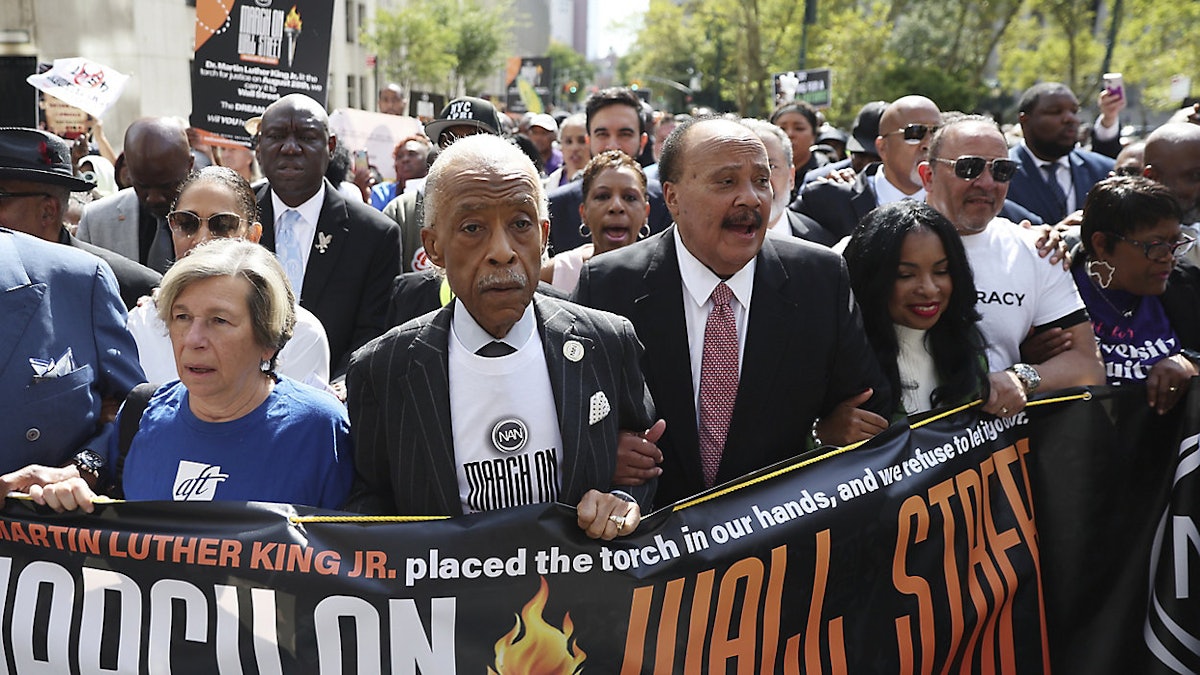
    Thursday’s “March on Wall Street” drew thousands to Manhattan’s Financial District, but among the clergy, labor and community leaders were hundreds of higher education advocates who had traveled from every corner of the nation, transforming the demonstration into an unlikely convergence of campus and community activism.

    The 45-minute march through downtown Manhattan carried special significance, timed to coincide with the anniversary of the Civil Rights-era March on Washington in 1963. But this time, the target wasn’t the nation’s capital—it was corporate America’s headquarters.

    “We come to Wall Street rather than Washington this year to let them know, you can try to turn back the clock, but you can’t turn back time,” Sharpton said as the demonstration began at New York’s popular Foley Square. 

    For the academics who joined the march, Sharpton’s words resonated with particular urgency. Since returning to the White House in January, President Donald J. Trump has successfully moved to end DEI programs within the federal government and warned schools to do the same or risk losing federal money.

    Dr. Harold Williams, an adjunct sociology professor from Philadelphia who had driven three hours with a van full of colleagues, clutched a handmade sign reading “Education is Democracy.”  

    “We’re watching the systematic destruction of everything we’ve worked to build,” said the 63-year-old educator, who was just one when his mother brought him to Washington, D.C. on August 28, 1963  to hear Dr. Martin Luther King, Jr., deliver his famous “I Have a Dream” speech.  “They’re not just cutting programs, they’re cutting the pathways that opened higher education to an entire generation of students.”

    Among the crowd that gathered near the African Burial Ground—the largest known resting place of enslaved and freed Africans in the country—Dr. Michael Eric Dyson’s voice carried the weight of history and the urgency of the present moment.

    The prominent Vanderbilt University professor and public intellectual delivered a rousing address along with a litany of other activists including Marc H. Morial of the National Urban League, Maya Wiley of the Leadership Conference on Civil and Human Rights, and Randi Weingarten of the American Federation of Teachers. 

    “Well, you know, people often ask, what was it like? They look at the grainy black and white photos of Martin Luther King Jr. and Ralph Abernathy and Rosa Parks and Ella Baker and Diane Nash and John Lewis. What was it like to be with them?” Dyson said in an interview with Diverse.  

    “Well, you know right now, these are the times that define us. These times to future generations will be remarkable. What did you do with the fascist presidency, with an authoritarian man, with an autocrat who was attempting to absorb for himself all the power that was not due him? Well, this is what it looks like.”

    Dyson’s words particularly resonated among the young activists in the crowd—students who had grown up during an era of increasing attacks on institutional knowledge and educational access.

    The logistics of moving academics from campuses nationwide told its own story of commitment. Many had used personal funds or organized fundraisers to join what some called an “academic pilgrimage” to stand with Sharpton and the broader civil rights community.  Howard University organized a busload from the nation’s capital.

    Jonah Cohen, 18, a freshman at City College of New York, said that he was energized by the public demonstration of activism.

    “This is our moment,” he said of the student turnout. “We are no longer accepting these attacks without a fight. We are fighting back against those who want to take us back to an uglier America. We see a better country.” 

    State Assembly Member Zohran Mamdani, the Democratic candidate in the upcoming New York City mayoral race, marched alongside some of the professors and students, embodying the coalition between academic and political leadership that advocates say is necessary to resist the rollbacks.

    The National Action Network’s strategy of encouraging consumer boycotts of retailers that have scaled back DEI policies resonated with many academics who said that they understood the connection between corporate and educational equity initiatives.

    “Corporate America wants to walk away from Black communities, so we are marching to them to bring this fight to their doorstep,” Sharpton said.


    Source link

  • Louisiana Seeks to Join Florida’s New Accreditor

    Louisiana Seeks to Join Florida’s New Accreditor

    Louisiana will join the new accrediting body Florida established earlier this month in conjunction with five other states, according to an executive order Gov. Jeff Landry signed Tuesday.

    Florida governor Ron DeSantis announced the formation of the new accreditor, the Commission for Public Higher Education (CHPE), last month, decrying higher education’s “woke ideology” and vowing to take down the “accreditation cartel.” CPHE’s business plan said the idea arose from “growing dissatisfaction with current practices among the existing institutional accreditors and the desire for a true system of peer review among public institutions.”

    In addition to the state university system of Florida, Louisiana now aims to join public university systems in Georgia, North Carolina, South Carolina, Tennessee and Texas in switching to the new accreditor.

    “Louisiana stands to benefit from early engagement with CPHE, both by diversifying accreditation options and by shaping the standards and procedures that align with the public mission of its institutions,” Landry’s executive order said. “CPHE will focus on student outcomes, streamline accreditation standards, focus on emerging educational models, modernize the accreditation process, maximize efficiency, and ensure no imposition of divisive ideological content on institutions.”

    The order establishes a task force “to lead statewide engagement on accreditation reform aligned with institutional autonomy, academic excellence, and federal requirements.”

    Landry will appoint the 13 members of the task force, which is required to reports its findings and recommendations no later than January 30, 2026.

    CPHE still needs to secure recognition from the Department of Education, a process that could take years. In the meantime, higher ed institutions can retain their current accreditors, according to the CPHE business plan.

    Louisiana’s public institutions are currently accredited by the Southern Association of Colleges and Schools Commission on Colleges (SACSCOC).

    Source link

  • Join Us on April 17, 2025 to Fight For Higher Education (Coalition for Action in Higher Education)

    Join Us on April 17, 2025 to Fight For Higher Education (Coalition for Action in Higher Education)

    As campus workers and citizens, educators and researchers, staff, students, and university community members, we exercise a powerful collective voice in advancing the democratic mission of our colleges and universities. It is our labor and our ideas which sustain higher education as a project that preserves and extends social equality and the common good—as a project of social emancipation.

    On
    April 17, 2025, we will hold a one-day action on and around our
    campuses to renew this vision of higher education as an autonomous
    public good, and university workers as its most important resource.   

    Free Higher Ed Now! will
    demand FIRST that public higher education in the U.S. be fully funded,
    politically independent, and FREE to all students and SECOND that higher
    ed be FREE of political interference that reduces the rights and
    autonomy of campus workers and students to teach, study, learn, speak,
    organize, and dissent. Read and endorse our agenda here. 


    Source link