Tag: Jonathan

  • In Defense of Jonathan Brown

    In Defense of Jonathan Brown

    Jonathan Brown, the Alwaleed bin Talal Chair of Islamic Civilization at Georgetown University, was suspended from his job and is being investigated for posting on X after the US bombing of Iran, “I hope Iran does some symbolic strike on a base, then everyone stops.” Brown’s expressed desire for peace was twisted by conservatives into some kind of anti-American call for violence.

    Rep. Randy Fine, a Florida Republican, noted that the interim president of Georgetown would soon be testifying before Congress and wrote about Brown, “This demon had better be gone by then. We have a Muslim problem in America.” Fine was Gov. Ron DeSantis’s choice to be president of Florida Atlantic University before the board rejected him. But his literal demonization of speech has a powerful impact.

    Georgetown quickly obeyed the commands of anti-Muslim bigots such as Fine. Georgetown interim president Robert M. Groves testified to Congress on July 15, “Within minutes of our learning of that tweet, the dean contacted Professor Brown, the tweet was removed, we issued a statement condemning the tweet, Professor Brown is no longer chair of his department and he’s on leave, and we’re beginning a process of reviewing the case.”

    Groves responded “yes” when asked by Rep. Virginia Foxx, a North Carolina Republican, “You are now investigating and disciplining him?”

    Georgetown’s statement declared, “We are appalled that a faculty member would call for a ‘symbolic strike’ on a military base in a social media post.” But why would this appall anyone? Faculty members routinely support actions that actually kill innocent people—tens of thousands of people, in the case of professors who support Israel’s attack on Gaza, millions of people in the case of professors who supported the fight against the Nazis in World War II. And that’s all perfectly legitimate. So a professor calling for an action against a military target that doesn’t kill anybody should be the most trivial statement in the world.

    There is a good reason why universities shouldn’t take positions on foreign policy—because institutional opinions are often dumb, especially when formulated “within minutes” rather than after serious thought. Georgetown is making the worst kind of violation of institutional neutrality—not merely expressing a dumb opinion, not just denouncing a professor for disagreeing with that dumb opinion, but actually suspending a professor for diverging from Georgetown’s very dumb official opinion on foreign policy.

    Often, defenders of academic freedom have to stand for this principle even when addressing terrible people who say terrible things. But the assault on academic freedom in America has become so awful that even perfectly reasonable comments are now grounds for automatic suspension. Brown’s position on the Iran attacks is very similar to that of Donald Trump, who posted praise for Iran after it did precisely what Brown had urged: “I want to thank Iran for giving us early notice, which made it possible for no lives to be lost, and nobody to be injured.” Unlike Trump, Brown never thanked Iran for attacking a U.S. base. So how could any university even consider punishing a professor for taking a foreign policy stand more moderate than Trump?

    Georgetown’s shocking attacks on academic freedom have garnered little attention or criticism. The Georgetown Hoya reported in a headline, “Groves Appears to Assuage Republicans, Defend Free Speech in Congressional Hearing.”

    The newspaper’s fawning treatment of Groves as a defender of free speech apparently was based on Groves testifying, “We police carefully the behavior of our faculty in the classroom and their research activities,” and adding, “They are free, as all residents of the United States, to have speech in the public domain.” It’s horrifying to have any university president openly confess that they “police carefully” professors’ teaching and research. But for Groves to claim that faculty have free speech “in the public domain” when he proudly suspended Brown for his comments must be some kind of sick joke.

    Another Hoya headline about the controversy declared, “University Review of GU Professor for Controversial Posts Prompts Criticism, Praise.” While the campus Students for Justice in Palestine and the Council on American-Islamic Relations correctly defended Brown, the Anti-Defamation League declared, “We commend Georgetown University for taking swift action following Jonathan Brown’s dangerous remarks about a ‘symbolic strike’ on a U.S. military base.”

    There is nothing “dangerous” about Brown’s remarks calling for an end to war, or any other foreign policy opinions. The only danger here is the threat to academic freedom.

    When Georgetown suspended lecturer Ilya Shapiro in 2022 for his offensive comments on Twitter, I argued that “Shapiro should not be punished before he receives a hearing and fair evaluation” and added, “A suspension, even with pay, is a form of punishment. In fact, it’s a very harsh penalty when most forms of campus misconduct receive a reprimand or a requirement for education or changes in behavior.”

    I called upon all colleges to ban the use of suspensions without due process. Since then, suspensions have become an epidemic of repression on college campuses. An army of advocates once argued in defense of Shapiro’s free speech. Unfortunately, none of Shapiro’s outspoken supporters have spoken out with similar outrage about the even worse treatment of Brown by Georgetown’s censors.

    Georgetown’s administrators must immediately rescind Brown’s ridiculous suspension, restore his position as department chair, end this unjustified investigation of his opinions, apologize for their incompetence at failing to meet their basic responsibilities to protect academic freedom and enact new policies to end the practice of using arbitrary suspensions without due process as a political weapon.
    John K. Wilson was a 2019–20 fellow with the University of California National Center for Free Speech and Civic Engagement and is the author of eight books, including Patriotic Correctness: Academic Freedom and Its Enemies (Routledge, 2008), and his forthcoming book The Attack on Academia. He can be reached at [email protected], or letters to the editor can be sent to [email protected].

    Source link

  • Moral resources for Americans who know we’ve been betrayed (William Barber & Jonathan Wilson-Hartgrove)

    Moral resources for Americans who know we’ve been betrayed (William Barber & Jonathan Wilson-Hartgrove)

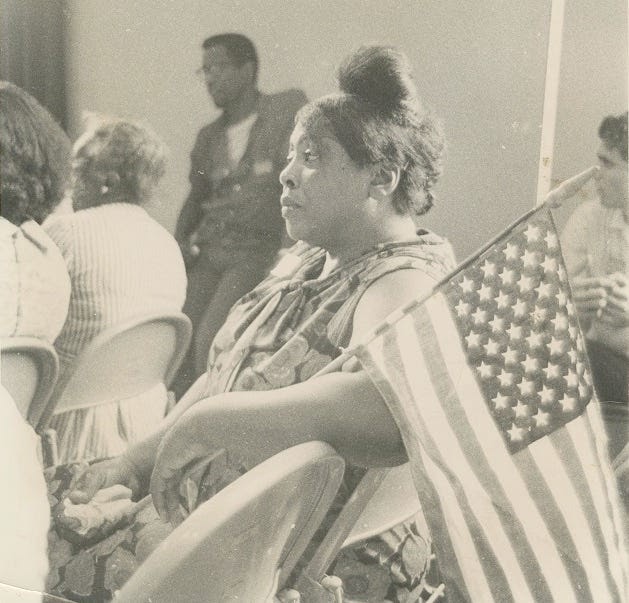
    Civil Rights Movement and Wayside Theatre photographs, Student Nonviolent Coordinating Committee (SNCC).

    On America’s 249th anniversary of declaring freedom from tyranny, a would-be king will celebrate Independence Day by signing a budget bill that Americans oppose 2 to 1.

    This Big Ugly Bill that was passed by Republicans in Congress this week will make the largest cuts to healthcare and nutrition assistance in our nation’s history to pay for tax cuts for people who do not need them and an assault on our communities by masked men who are disappearing our neighbors to concentration camps. The dystopian scene is enough to make any true believer in liberty and equality question whether they can celebrate Independence Day at all. But it would be a betrayal of our moral inheritance to not remember the true champions of American freedom on this day. Indeed, to forget them would mean losing the moral resources we need to revive American democracy.

    As bad as things are, we cannot forget that others faced worse with less resources than we have. We are not the first Americans to face a power-drunk minority in public office, determined to hold onto power at any cost. This was the everyday reality of Black Americans in the Mississippi Delta for nearly a century after the Klan and white conservatives carried out the Mississippi Plan in the 1870s, erasing the gains of Reconstruction and enshrining white supremacy in law.

    When Ms. Fannie Lou Hamer decided to join the freedom movement in Sunflower County, Mississippi, she knew two things: the majority of people in Sunflower County despised the policies of Senator James O. Eastland and Eastland’s party had the votes to get whatever they wanted written into law. The day she dared attempt to register to vote, Ms. Hamer lost her home. When she attended a training to learn how to build a movement that could vote, she was thrown into the Winona Jail and nearly beaten to death. Still, Ms. Hamer did not bow.

    Instead, she leaned into the gospel blues tradition that had grown out of the Delta, spreading the good news that God is on the side of those who do not look away from this world’s troubles but trust that a force more powerful than tyrants is on the side of the oppressed and can make a way out of no way to redeem the soul of America. “This little light of mine, I’m gonna let it shine,” she sang, and a generation of college student volunteers came to sing with her during Freedom Summer. Their mission was to register voters and teach the promises of democracy to Mississippi’s Black children in Freedom Schools.

    On July 4, 1964, Ms. Hamer hosted a picnic for Black and white volunteers who’d dedicated their summer to nonviolently facing down fascism on American soil. They celebrated the promise that all are created equal even as they faced death for living as if it were true. Those same young people who were at Hamer’s July 4th picnic went on to launch the Mississippi Freedom Democratic Party and take their challenge all the way to the Democratic National Convention in Atlantic City that August. “I question America,” Ms. Hamer said in her testimony that aired on the national news during coverage of the convention. “Is this America, the land of the free and the home of the brave where we have to sleep with our telephones off of the hooks because our lives be threatened daily because we want to live as decent human beings, in America?”

    Hamer and the MFDP didn’t win the seats they demanded at the 1964 convention, but Atlantic City would be the last convention to seat an all-white delegation from Mississippi. Just a year later, as part of the War on Poverty, Congress passed the Medicare and Medicaid Act, expanding access to healthcare to elderly and low-income Americans – an expansion that Trump is rolling back half a century later in an immoral betrayal of the very people he promised to champion in his fake populist appeal to poor and working people.

    There’s nothing un-American about questioning a fascism that defies the will of the people to terrorize American communities and assert total control. It has been the moral responsibility of moral leaders from Frederick Douglass, who asked, “what to the slave is the 4th of July?” to those who are asking today how Americans are supposed to celebrate when their elected leaders sell them out to billionaires and send masked men to assault their communities. Ms. Hamer is a vivid reminder of the moral wisdom that grows out of the Mississippi Delta. It teaches us that those who question America when we allow fascists to rule are not un-American. They are, in fact, the people who have helped America become more of what she claims to be.

    So this 4th of July, may we all gather with Fannie Lou Hamer and the moral fusion family closest to us – both the living and the dead – to recommit ourselves to a government of the people, by the people, and for the people. Yes, America’s fascists have the power today. They will throw a party at our House and desecrate the memory of so many who’ve worked to push us toward a more perfect union. But they will not own our Independence Day. As long as we remember the moral tradition that allowed Fannie Lou Hamer to host a July 4th picnic while she battled the fascism of Jim Crow, we have access to the moral resources we need to reconstruct American democracy today.

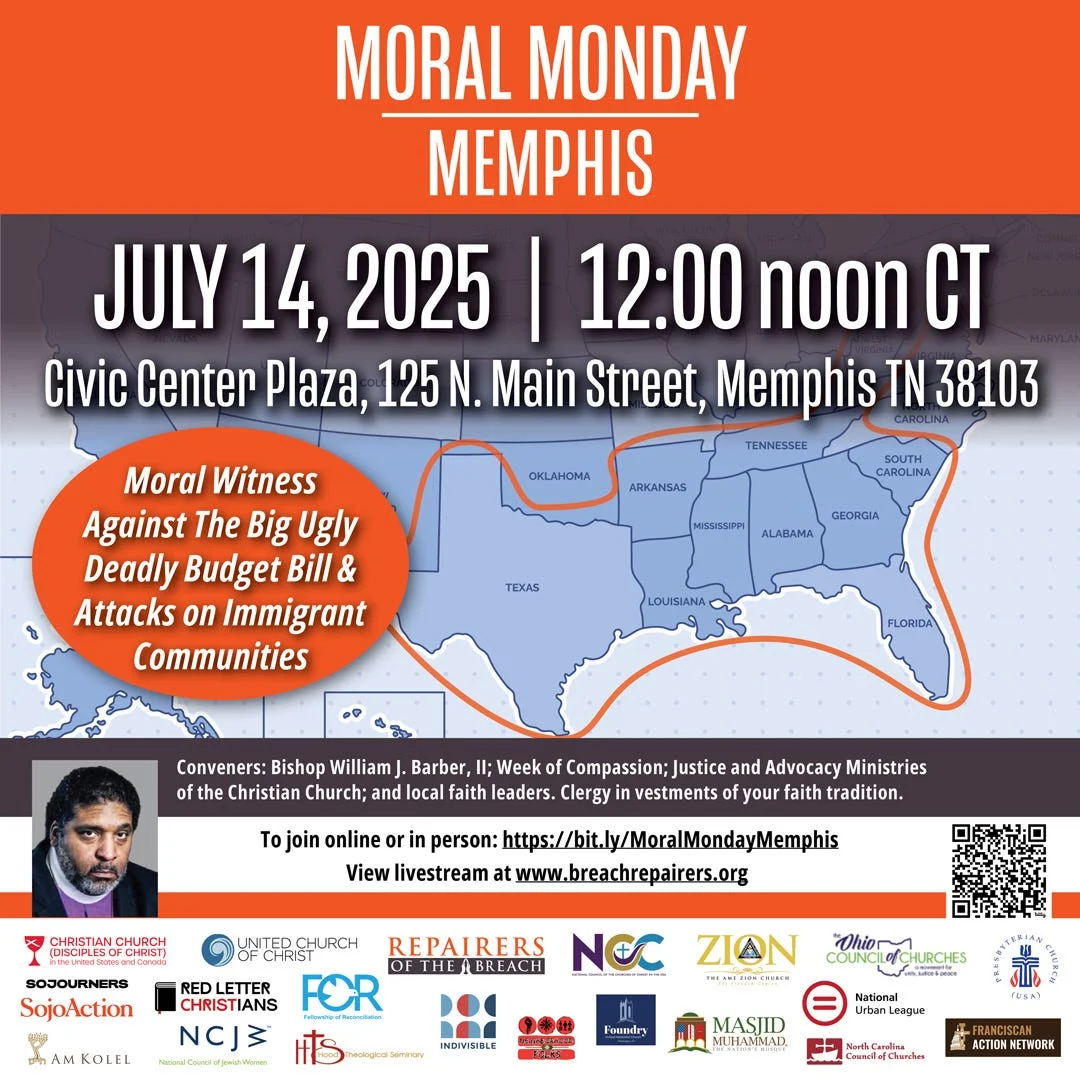
    This is why today, as all American’s celebrate our nation’s declaration of liberty and equality, we are announcing that the Moral Monday campaign we’ve been organizing in Washington, DC, to challenge the policy violence of this Big Ugly Bill is going to the Delta July 14th for Moral Monday in Memphis. As we rally moral witnesses in the city of Graceland and the Delta blues – the place where Dr. King insisted in 1968 that the movement “begins and ends” – delegations of moral leaders and directly impacted people will visit Congressional offices across the South to tell the stories of the people who will be harmed by the Big, Ugly, and Deadly bill that Donald Trump is signing today.

    Yes, this bill will kill. But we are determined to organize a resurrection of people from every race, religion, and region of this country who know that, when we come together in the power of our best moral traditions, we can reconstruct American democracy and become the nation we’ve never yet been.

    Today’s neo-fascists have passed their Big Ugly Bill, but they have also sparked a new Freedom Summer. We will organize those this bill harms. We will mobilize a new coalition of Americans who see beyond the narrow divisions of left and right. We will lean into the wisdom of Ms. Hamer and Delta’s freedom struggle, and we will build a moral fusion movement to save America from this madness.

    Source link

  • Historian Dr. Jonathan Holloway to Lead Henry Luce Foundation Following Rutgers Presidency

    Historian Dr. Jonathan Holloway to Lead Henry Luce Foundation Following Rutgers Presidency

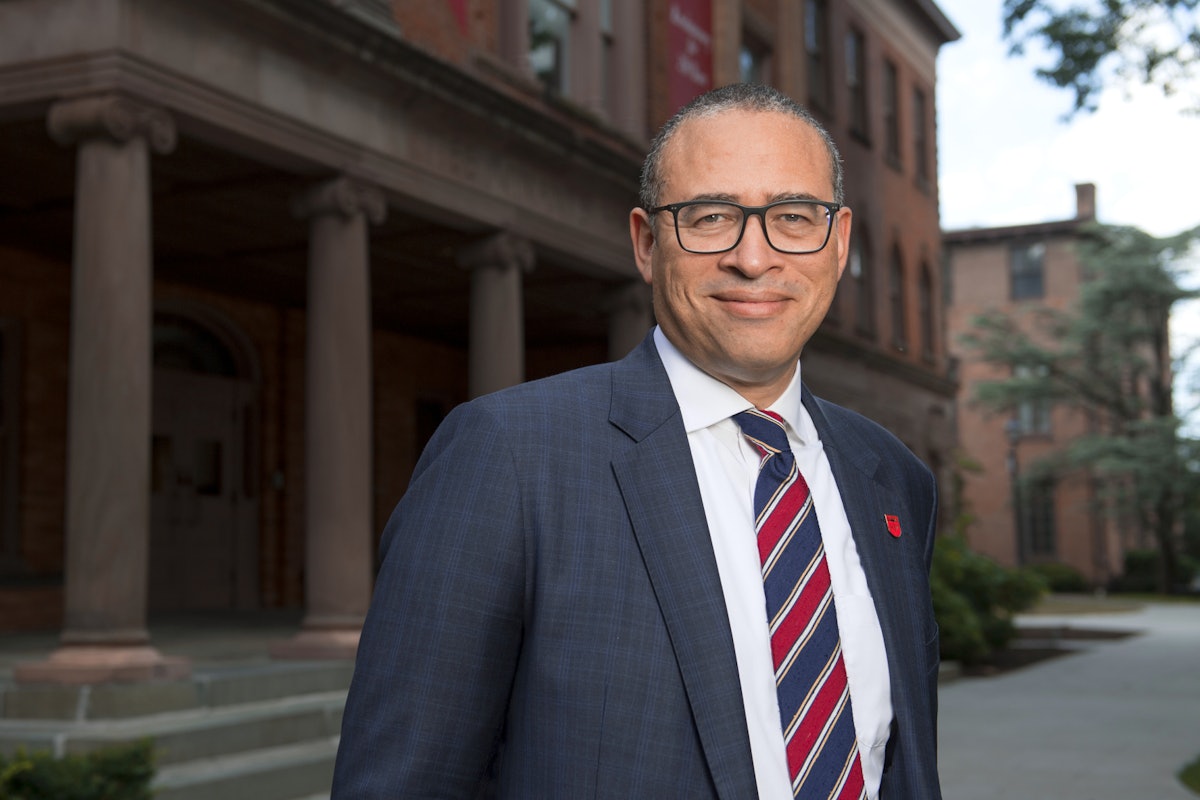
    Dr. Jonathan HollowayDr. Jonathan Holloway has been named the new President and CEO of the Henry Luce Foundation, following his five-year presidency at Rutgers University.

    The Henry Luce Foundation announced on Friday, that Holloway will become its seventh President and CEO in the organization’s 89-year history. The Foundation’s Board Co-Chairs, Debra Knopman and Terry Adamson, praised Holloway as “an eminent historian, a respected scholar of the humanities, a public intellectual, and an influential leader in higher education,” highlighting his “thoughtful approach to collaboration” and “firm commitment to the Foundation’s long-term view.”

    Holloway, who will succeed Dr. Mariko Silver (who departed in October 2024 to lead the Lincoln Center for the Performing Arts), expressed his enthusiasm for the new role.

    “I am honored to join the Henry Luce Foundation after I complete my tenure at Rutgers and to build upon its decades of remarkable work to foster discussion across differences, improve public discourse, and nurture ideas that will strengthen communities.”

    Holloway’s appointment comes after his term as Rutgers’ 21st president and first Black president in the university’s 250-year history. His tenure saw both accomplishments and challenges. In September 2023, the Rutgers University Senate passed a no-confidence vote (89-47) citing concerns about shared governance following decisions including the merger of medical schools and his handling of a faculty strike.

    Despite these challenges, Holloway championed several initiatives during his Rutgers presidency. He established the Rutgers Scarlet Service program, providing students with paid internships at nonprofit and government organizations. He also launched the Rutgers Democracy Lab at the Eagleton Institute of Politics in November 2024, focusing on democratic engagement and civil discourse. Under his leadership, the university saw record-breaking freshman enrollment with increased diversity and research grants reaching an unprecedented $970 million.

    Like many university presidents nationwide, Holloway navigated the complex landscape of campus protests, testifying before Congress about his administration’s response to demonstrations.

    Prior to Rutgers, Holloway served as provost at Northwestern University and held faculty roles at Yale University, where he was also Dean of Yale College. His scholarly work focuses on post-emancipation U.S. history, particularly social and intellectual history. He has authored several notable publications, including African American History: A Very Short Introduction and Jim Crow Wisdom: Memory & Identity in Black America Since 1940.

    The Luce Foundation Board expressed confidence that Holloway’s “exceptional listening skills, patience, and transparency will be instrumental in addressing the complex challenges that lie ahead” as the organization continues its work fostering discourse and strengthening communities.

    Source link