Tag: Journal

  • Shocking Cancellation of a Special Journal Issue (opinion)

    Shocking Cancellation of a Special Journal Issue (opinion)

    Rumors are swirling about the extent to which Harvard University will acquiesce to the Trump administration’s attempt to crush institutions of higher education. Until very recently Harvard was being publicly lauded for standing up to the government. Reports that Harvard may be willing to pay a sizable financial settlement to resolve legal accusations that it allowed antisemitism and promoted diversity policies were shocking to many. But the university’s purported resistance to government overreach already had a glaring exception—Palestine—and we as scholars who work on the subject have recently experienced it firsthand.

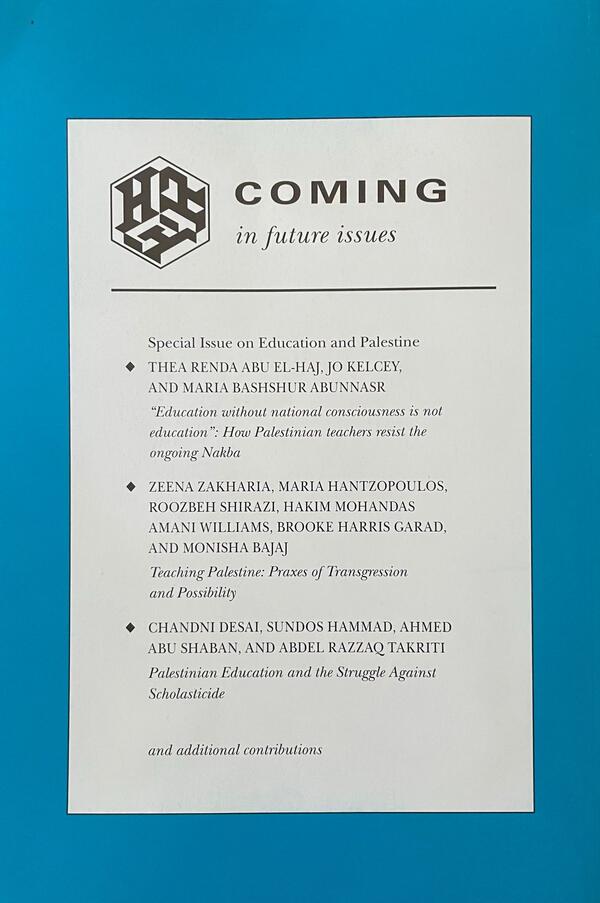
    The Harvard Educational Review was set to release a special issue this summer focusing on education and Palestine. The topic, commissioned in early 2024, was timely in the wake of Israel’s onslaught on Gaza, which rights groups and other experts have concluded is a genocide, and aligned with the journal’s commitment to publishing research that tackles the most pressing issues facing education. The articles had been accepted, edited and contracted. The special issue had already been promoted at major education conferences and on the back cover of the spring issue of the HER. But suddenly, Harvard pulled the plug.

    As recently reported in The Guardian, the Harvard Education Publishing Group (HEPG), which publishes the Review, abruptly and unilaterally decided to cancel the forthcoming special issue.

    We wrote one of the articles that was supposed to be published in the special issue. Our article, one of 10 slated for publication, focused on the experiences of Palestinian teachers during the Lebanese civil war. But in May, as the special issue was nearing publication, we were surprised to find out that HEPG wanted to submit the entire issue to Harvard’s Office of the General Counsel for an exceptional and last-minute “risk” review. Articles had already been through the regular publishing process and were under contract. At no point to our knowledge had any “risk”-related concerns been raised about any of them. An additional review was therefore well outside the realm of routine practice.

    Alarmed by this move and the dangerous precedent of subjecting academic scholarship to vetting by university lawyers, all authors in the special issue organized and expressed unequivocal refusal to this additional review in a letter sent to HEPG.

    After we expressed our refusal, HEPG went radio silent for almost a month. And then it canceled the whole issue, only then claiming that there were problems with copyediting and its internal process. But procedural claims have often been leveled to silence speech, especially when it comes to Palestine. Whatever concerns about the process, there is no justification for the cancellation of the entire special issue. HEPG’s decision is yet another example of the “Palestine exception” in action: the term used to describe how seemingly liberal institutions restrict freedom of expression when it comes to Palestine.

    Given the timing of HEPG’s decision—which aligns with the Trump administration’s weaponizing of Title VI of the Civil Rights Act—this seems to be the logical outcome of a political climate that has promoted sweeping claims of antisemitism to attack student protesters and higher education institutions, including Harvard. In this climate it seems far more likely that HEPG opted for censorship over academic freedom.

    Of particular concern is Harvard’s recent adoption of a problematic new definition of antisemitism. That definition, proposed by the International Holocaust Remembrance Alliance (IHRA), has been roundly criticized by experts—and one of the authors of the definition—for equating critiques of the state of Israel with antisemitism. This conflation makes it harder to speak out against Israel’s actions and policies toward Palestinians and easier to victimize Palestinians. Harvard is not alone in this action.

    Even before Israel’s latest brutal onslaught of Gaza, scholars writing and advocating for Palestinian rights confronted the limits of liberal empathy for Palestinians in the form of tenure denials, censored freedom of speech, doxing by pro-Israel groups and even death threats. But the repression of knowledge production and freedom of speech on Palestine has escalated since October 2023. U.S. universities and colleges (including Harvard) have canceled events that center Palestinian rights, attempted to censor scholarship, forcibly suppressed student protests against Israel’s actions in Gaza and beyond, and dismissed faculty over Palestine-related programming.

    Still, the scrapping of this special issue marks a worrying escalation. It suggests that even those universities that are outspoken about their liberal values are ready to stifle academics’ legitimate criticism of Israeli policies and practices. Make no mistake: Anticipatory censorship of this kind is a hallmark of the governmental overreach that authoritarian regimes around the world are known for. As a growing number of higher education institutions adopt the IHRA definition of antisemitism, we fear we will see more and more examples of the suppression of academic freedom.

    The consequences of this extend far beyond the academy. As the death toll in Gaza exceeds 60,000 and young people there face a third year without education amid ongoing bombardment, blockade and starvation, knowledge, debate and democratic action are essential to preventing the kind of horrors that are unfolding in Gaza today.

    Thea Renda Abu El-Haj is a professor of education at Barnard College, Columbia University. Jo Kelcey is assistant professor of education in the Department of Psychology and Education at Lebanese American University.

    Source link

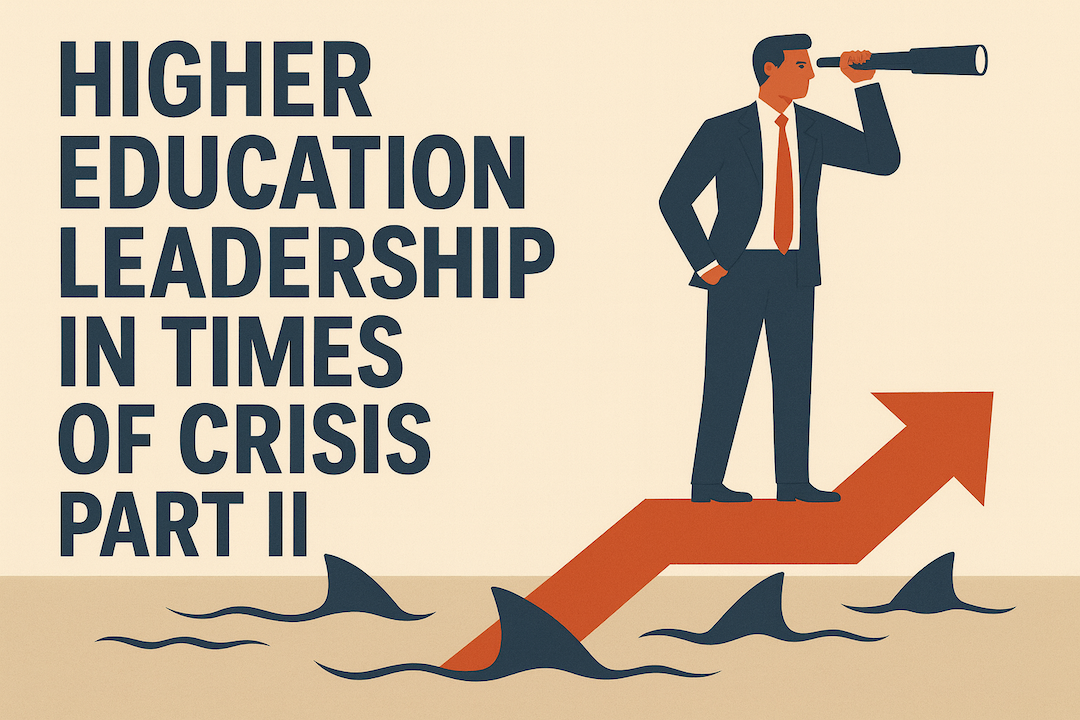
  • Higher Education Leadership in Times of Crisis – Edu Alliance Journal

    Higher Education Leadership in Times of Crisis – Edu Alliance Journal

    First in Leadership Series by Barry Ryan, PhD, JD August 11, 2025

    It is hard to think of a time when higher education was swimming in a pool filled with a greater number of shark-like threats than at present.

    Some of these were predictable (in hindsight), some not so much. Let’s set aside blame, however, on either an institutional level or on a more global basis. The vital thing now is for genuine leaders to help chart courses that will lead higher education, not just to mere survival, but to new and meaningful purposes that will benefit this generation and the next.

    When situations are “normal,” we may be tempted to imagine that we need leadership that can keep the legacy intact, turn the crank, not rock the boat. But normal no longer exists, does it?

    I remember a senior university leader, who admonished me, as I began a new presidency: “everything’s going great—just don’t mess it up” (using slightly more colorful language). One year later, seismic changes in higher ed created an unexpected crisis and necessitated major changes in the institution. Almost everything that had contributed to its prior success turned, overnight, into a liability.

    There is, of course, more than one crisis in which higher ed is being buffeted. The sheer number of colleges and universities that have ceased to exist at all, or have been merged to various extents with others, or are currently teetering on the brink, appears in news stories almost every day. The root causes are legion and often woven together: financial shortfalls, a shrinking number of students, reductions in state and federal support, the disappearance of many international students, families, and prospective students increasingly unable to justify the cost of a degree, the “value” of which is seriously questioned. The list goes on.

    Of the three large “types” of higher education in the United States—public (state) colleges and universities, private not-for-profit colleges and universities, and for-profit entities—the vast majority are struggling in meaningful ways.

    If you find yourself in a leadership role in this age of crisis, what are some key things you can do to keep becoming a better leader and more effectively serve your institution and your colleagues? Here are three suggestions that you may find helpful.

    First, don’t panic.

    And even if you do feel panic welling up inside you, do your best to keep it from becoming obvious. Phil Slott, who was involved in the Dry Idea marketing campaign in the 1980s, seems to have coined a relevant phrase: “Never let them see you sweat.” It just stresses you out more and does little to inspire confidence in those who are looking to you for leadership.

    Once you’ve steadied yourself, the next critical realization is that leadership in crisis cannot be solitary work.

    Second, remember every day, you can’t do this alone.

    A 19th-century lawyer by the name of Abe Lincoln is credited with the adage: “A person who represents himself in court has a fool for a client.” That rings true for any leader who tries to do everything and assumes they have sufficient knowledge (or wisdom or experience or insight) to solve every problem on their own. No one does—no matter how experienced.

    So where do you turn for help? The answer is two-fold: internally and externally. You need to draw on both circles and find confidential, experienced, and reliable counsel.

    Choose very carefully with whom you share the issues internally. Depending on the nature of the problem you’re trying to address, success might well be thwarted if there is a lapse of absolute confidentiality. At the starting point of the process, you need to be able to rely on one other person, or perhaps a very small circle, with which you will be able to expand bit by bit as the timeline moves along.

    There are difficult audiences and stakeholders in the life of an academic institution, and ultimately, all must be included in the process of working through a crisis. The sequencing of sharing information and inviting input, though, must be very carefully structured. If you’re a president, oftentimes the first person you seek is a senior member of the administration—a provost, vice president, or someone in a similar position. At times, it could be the chair of the board or a wise and thoughtful alum. But whoever the person(s) may be, the timing of sharing the situation and seeking input for solutions is everything.

    It’s very important not to neglect external assistance as well. It is all but impossible to generate a sufficient perspective on a crisis from only one (your) vantage point, or even from that of your small, trustworthy group. You’re very likely not the first institution to face these problems, and consulting with trusted external leaders can provide not only perspective but also ideas you may not have thought of on your own.

    Some of these leaders may be in academic institutions, but not necessarily. It is always helpful to have relationships with leaders in other professional fields as well, who may be particularly helpful in providing fresh perspectives and ideas. For example, in my own experience, I’ve found such people in leadership of non-profit organizations or boards, key corporate positions, government at various levels, and experienced friends with whom I served long ago, and could provide input on both my institution’s situation and also my own strengths and weaknesses. In addition, external folks don’t have the same emotional investment as someone internal, so the chances of a more neutral observation point are increased significantly.

    There is a temptation—and often a prudent one—to seek external input from lawyers. There are, of course, a fair number of attorneys and firms with expertise in higher education, which can be a plus. Higher education is a very specialized field, and, frankly, most lawyers have a huge knowledge deficit in terms of the operational realities of a college or university. Their tendency is to think, “Well, I know higher ed—after all, I went to college and law school” (or maybe even taught a course or two). Beware the well-intentioned lawyer who does not have directly relevant practice experience.

    This, of course, does not at all preclude seeking competent legal advice for certain aspects of the problems you may be facing. For example, most institutions have or will need counsel in employment matters. Even if not the center of your challenge, these issues will likely arise as part of the need for a solution to your challenges. If it appears you will have to make difficult financial decisions that might impact faculty or staff, you should seek excellent employment counsel much sooner rather than later. With students, Title IX requirements, for example, may dictate the need for specialized counsel, as might certain types of accreditation issues.

    Third, leadership is not “one size fits all.”

    Every leader has different abilities and personalities. Even though many institutions experience similar types of crises, the circumstances of each call for a bespoke solution.

    However, some very important leadership characteristics can increase the probability of success in these situations. In part two, we’ll examine these and how to cultivate them.


    Dr. Barry Ryan invested the first half of his career in higher education in teaching and the second half in administration. During that same timeframe, he pursued a parallel career in law and legal education. He​ served as the Supreme Court Fellow in the chambers of Chief Justice William H. Rehnquist and is a​ member of numerous federal and state bars. He has been appointed as the president of five universities and provost and chief of staff at three others. Among the institutions he served have been state, private non-profit, and private for-profit universities. Included in his academic experience were two terms as a Commissioner of the regional accreditor WASC​ (WSCUC).

    He has been appointed as the president of five universities and provost and chief of staff at three others. Among the institutions he served have been state, private non-profit, and private for-profit universities. Included in his academic experience were two terms as a Commissioner of the regional accreditor WASC​ (WSCUC). Dr. Ryan has led institutions through mergers, acquisitions, and affiliations that have preserved academic​ quality, expanded access, and strengthened long-term viability. His leadership has been marked by​ transparency, shared governance, and a commitment to stakeholder engagement at every stage of these processes.

    He earned his Ph.D. from the University of California, Santa Barbara, his J.D. from the University of​ California, Berkeley, and his Dipl.GB in international business from the University of Oxford.

    Edu Alliance Journal provides expert commentary and practical insights on U.S. and international higher education, focusing on innovation, policy, and institutional growth. Published by Edu Alliance, a consulting firm with offices in the United States and the United Arab Emirates, the Journal reflects the organization’s mission to help colleges, universities, and educational organizations achieve sustainable success through strategic partnerships, market intelligence, and program development.

    Source link

  • Announcing a Special Small College America Webinar – Edu Alliance Journal

    Announcing a Special Small College America Webinar – Edu Alliance Journal

    “Guiding Through Change: How Small Colleges Are Responding to New Realities”: A Live Conversation with Three Small College Presidents

    August 2, 2025, by Dean Hoke: Over the past several months, higher education has experienced an unprecedented wave of transformation. The elimination or curtailment of Diversity, Equity, and Inclusion (DEI) initiatives, shifting federal financial aid policies, declining enrollment in traditional undergraduate programs, and heightened visa scrutiny and geopolitical tensions pose potential risks to international student enrollment, an area of growing importance for many small colleges.

    Dr. Chet Haskell, in a recent piece for the Edu Alliance Journal, captured the mood succinctly: “The headlines are full of uncertainty for American higher education. ‘Crisis’ is a common descriptor. Federal investigations of major institutions are underway. Severe cuts to university research funding have been announced. The elimination of the Department of Education is moving ahead. Revisions to accreditation processes are being floated. Reductions in student support for educational grants and loans are now law. International students are being restricted. These uncertainties and pressures affect all higher education, not just targeted elite institutions. In particular, they are likely to exacerbate the fragility of smaller, independent non-profit institutions already under enormous stress.”

    Small colleges—often mission-driven, community-centered, and tuition-dependent—are feeling these disruptions acutely.

    As we enter the third season of Small College America, a podcast series that spotlights the powerful impact of small colleges across the nation, my co-host Kent Barnds and I wanted to mark the moment with something special. Rather than recording a typical podcast episode, we’re hosting a live webinar to engage in a timely and candid discussion with three dynamic presidents of small colleges.

    Join us for a special Small College America webinar:

    “Guiding Through Change: How Small Colleges Are Responding to New Realities”

    Wednesday, August 27, 1:00 PM – 2:00 PM Eastern

    Our panelists bring deep experience, insight, and a strong commitment to the mission of small colleges:

    • Dr. Andrea Talentino is the president of Augustana College in Rock Island, Illinois. She previously served as provost at Nazareth College in Rochester, N.Y., and Dean of the College of Liberal Arts at Norwich University in Northfield, Vermont. In her administrative work, she has focused on building strong teams and developing a positive organizational culture.
    • Dr. Tarek Sobh is the President of Lawrence Technological University. A distinguished academic leader, he previously served as Provost at LTU and as Executive VP at the University of Bridgeport. An expert in robotics, AI, and STEM education, Dr. Sobh has published extensively and presented internationally. He is passionate about aligning academic programs with workforce needs.
    • Dr. Anita Gustafson, President of Presbyterian College, is a historian and long-time faculty leader who assumed the presidency in 2023. She has been a strong advocate for the value of the liberal arts and the importance of community engagement. Dr. Gustafson returned to PC after seven years as the dean of the College of Liberal Arts and Sciences and a professor of history at Mercer University in Macon, Ga.

    This one-hour webinar will explore how small private colleges are navigating today’s evolving environment and planning strategically for the future.

    Who Should Attend:

    • Institutional Leaders and Academic Faculty
    • Trustees and Advisory Members
    • Donors and Corporate Supporters
    • Alumni of Small Colleges
    • Community Leaders and Advocates

    👉 Click Here to Register

    There is no charge to attend—secure your spot today!

    We hope you’ll join us for this thoughtful and timely conversation.

    Source link

  • Federal officials open probes into Duke University’s law journal, medical school

    Federal officials open probes into Duke University’s law journal, medical school

    Dive Brief: 

    • The U.S. Department of Education announced Monday that it has opened a civil rights investigation into Duke University and its law journal, based on allegations that the institution racially discriminates to select the publication’s editors. 
    • Separately, the Education Department and the U.S. Department of Health and Human Services also sent a letter Monday to university officials saying they’re reviewing allegations that Duke’s medical school and Duke Health racially discriminate in their hiring, admissions, financial aid and recruitment practices. 
    • The probes come less than a week after U.S. Education Secretary Linda McMahon said officials hoped that Columbia University’s $221 million settlement with the federal government would be a “template for other universities around the country.”

    Dive Insight: 

    Like with the federal government’s previous Columbia probes, the Education Department has opened an investigation into Duke University to determine whether it has violated Title VI, which prohibits federally funded institutions from discriminating based on race, color or national origin. 

    The department said its probe is based on recent reporting that Duke Law Journal racially discriminates against students applying to be editors. It comes one month after The Washington Free Beacon, a conservative publication, alleged that Duke Law Journal potentially gave students applying to be editors an edge if they held leadership positions in affinity groups or if they explained how their “membership in an underrepresented group” would help them promote diverse voices. 

    Duke Law Journal shared this information only with the law school’s affinity groups, according to the Beacon. 

    The letter from HHS and the Education Department doesn’t provide the source of the allegations of racial discrimination against Duke’s medical school and Duke Health. However, it says Duke Health would be “unfit for any further financial relationship with the federal government” if the federal government determines they are true. 

    In their letter, officials suggested they want to cut a deal with the university.

    “Our Departments have historically recognized Duke’s commitment to medical excellence and would prefer to partner with Duke to uncover and repair these problems, rather than terminate this relationship,” McMahon and HHS Secretary Robert F. Kennedy Jr. wrote. 

    The two Cabinet secretaries demanded that the university review and reform policies at Duke Health to ensure they don’t include illegal racial preferences, including by making “necessary organizational, leadership, and personnel changes.”

    They also asked Duke to establish a Merit and Civil Rights Committee, which would be delegated authority from the university’s board, to conduct the review. 

    “The Committee must be made up of those members of Duke’s leadership and medical faculty most distinguished in and devoted to genuine excellence in the field of medicine, and the members chosen must satisfy the federal government as to their competence and good faith,” McMahon and Kennedy said in their letter. 

    McMahon and Kennedy threatened Duke with enforcement actions if the federal government and the Merit and Civil Rights Committee reach an impasse — or if they don’t change the “alleged offending policies” within six months. 

    Following Columbia’s controversial agreement with the federal government — which also included vast policy changes — law and free speech scholars warned that the Trump administration may attempt to increase their pressure campaigns against other universities to cut deals. 

    “The Trump administration has made clear that while Columbia is first in line, it intends to reach comparable agreements with other schools — to scale the Columbia shakedown into a broader model of managing universities deemed too woke,” David Pozen, a Columbia law professor, wrote in a blog post. As has already occurred with law firms, tariffs, and trade policy, regulation by deal is coming to higher education.

    Source link

  • How the House Budget Threatens Student-Athletes – Edu Alliance Journal

    How the House Budget Threatens Student-Athletes – Edu Alliance Journal

    A Uniquely American Model Under Threat

    June 8, 2025, by Dean Hoke: Intercollegiate athletics occupy a powerful and unique place in American higher education—something unmatched in any other country. From the massive media contracts of Division I football to the community pride surrounding NAIA and NJCAA basketball, college sports are a defining feature of the American academic landscape. Unlike most nations, where elite athletic development happens in clubs or academies, the U.S. integrates competitive sports directly into its college campuses.

    This model is more than tradition; it’s an engine of opportunity. For many high school students—especially those from underserved backgrounds—the chance to play college sports shapes where they apply, enroll, and succeed. According to the NCAA, 35% of high school athletes say the ability to participate in athletics is a key factor in their college decision [1]. It’s not just about scholarships; it’s about identity, community, and believing their talents matter.

    At smaller colleges and two-year institutions, athletics often serves as a key enrollment driver and differentiator in a crowded marketplace. International students, too, are drawn to the American system for its academic-athletic fusion, contributing tuition revenue and global prestige. Undermining this model through sweeping changes to federal financial aid, without considering the downstream effects, risks more than athletic participation. It threatens a distinctively American approach to education, access, and aspiration.

    A New Threshold with Big Impacts

    Currently, students taking 12 credit hours per semester are considered full-time and eligible for the maximum Pell Grant, which stands at $7,395 for 2024-25 [2]. The proposed House budget raises this threshold to 15 credit hours per semester. For student-athletes, whose schedules are already packed with training, competition, and travel, this shift could be devastating.

    NCAA academic standards require student-athletes to maintain full-time enrollment (typically 12 hours) and make satisfactory academic progress [3]. Adding another three credit hours per term may force many to choose between academic integrity, athletic eligibility, and physical well-being. In sports like basketball, where teams frequently travel for games, or in demanding STEM majors, completing 15 credit hours consistently can be a formidable challenge.

    Financial Impact on Student-Athletes

    Key Proposed Changes Affecting Student-Athletes:

    • Pell Grant Reductions: The proposed budget aims to cut the maximum Pell Grant by $1,685, reducing it to $5,710 for the 2026–27 academic year. Additionally, eligibility criteria would become more stringent, requiring students to enroll in at least 15 credit hours per semester to qualify for full-time awards. These changes could result in approximately 700,000 students losing Pell Grant eligibility [4].
    • Elimination of Subsidized Loans: The budget proposes eliminating subsidized federal student loans, which currently do not accrue interest while a student is in school. This change would force students to rely more on unsubsidized loans or private lending options, potentially increasing their debt burden [5].
    • Cuts to Work-Study and SEOG Programs: The Federal Work-Study program and Supplemental Educational Opportunity Grants (SEOG) are slated for significant reductions or elimination. These programs provide essential financial support to low-income students, and their removal could affect over 1.6 million students [6].
    • Institutional Risk-Sharing: A new provision would require colleges to repay a portion of defaulted student loans, introducing a financial penalty for institutions with high default rates. This could strain budgets, especially at smaller colleges with limited resources [7].

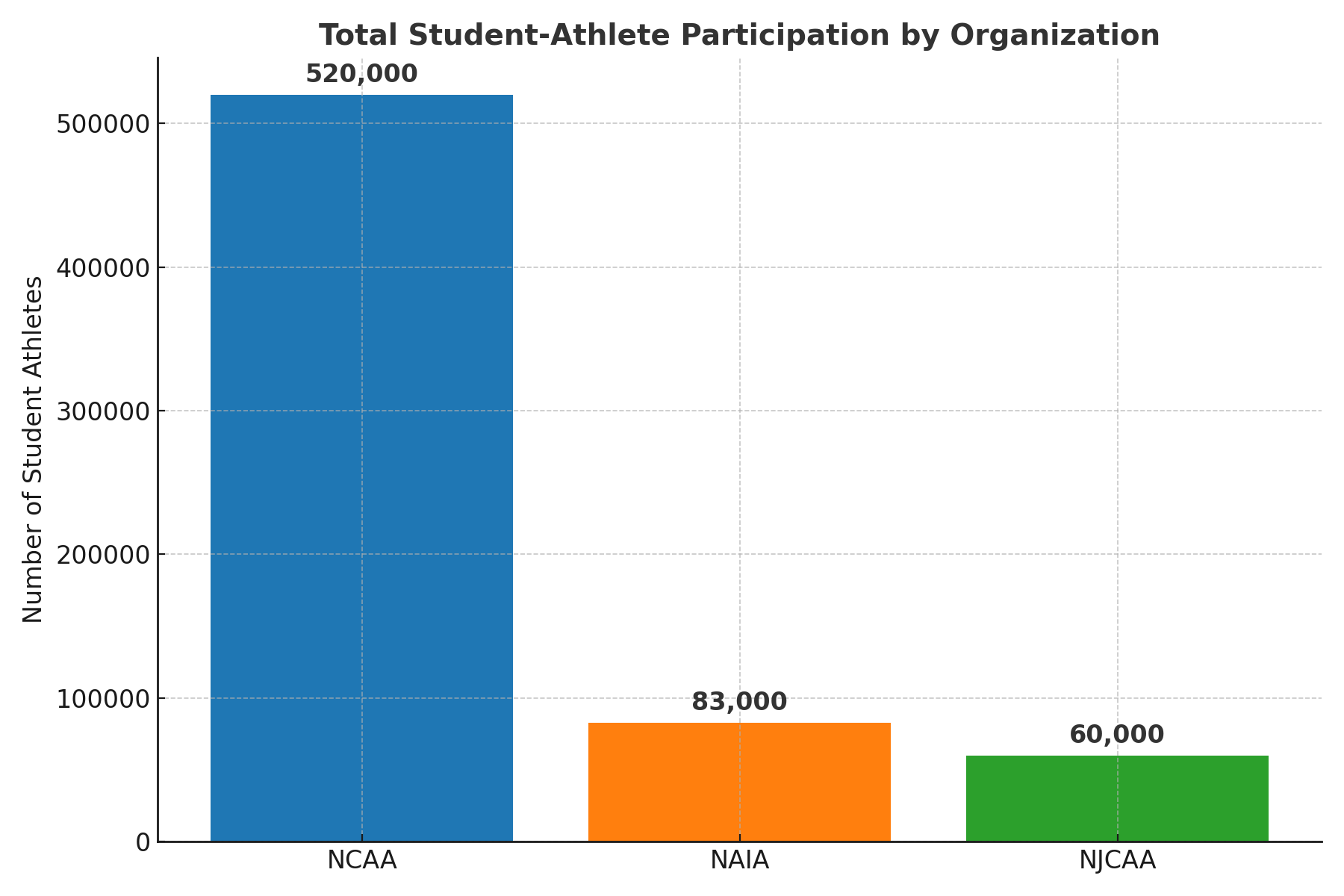
    Figure 1: Total student-athletes by national athletic organization (NCAA, NAIA, NJCAA).

    While Figure 1 highlights the total number of student-athletes in each organization, Figure 2 illustrates how deeply athletics is embedded in different types of institutions. NAIA colleges have the highest ratio, with student-athletes comprising 39% of undergraduate enrollment. Division III institutions follow at approximately 8.42%, and the NJCAA—serving mostly commuter and low-income students—relies on athletics for 8.58% of its total student base [8].

    Even Division I, with its large student populations, includes a meaningful share (2.49%) of student-athletes. These proportions underscore how vital athletics are to institutional identity, especially in small colleges and two-year schools where athletes often make up a significant portion of campus life, retention strategy, and tuition revenue.

    Figure 2: Percentage of student-athletes among total undergraduate enrollment by organization (NCAA Divisions I–III, NAIA, NJCAA).

    The Pell Grant Profile: Who’s Affected

    Pell Grants support students with the greatest financial need. According to a 2018 report, approximately 31.3% of Division I scholarship athletes receive Pell Grants. At individual institutions like Ohio State, the share is even higher: 47% of football players and over 50% of women’s basketball players. In the broader NCAA system, over 48% of athletes received some form of federal need-based aid in recent years [9].

    There are approximately 665,000 student-athletes attending college. The NCAA reports that more than 520,000 student-athletes currently participate in championship-level intercollegiate athletics across Divisions I, II, and III [10]. The National Association of Intercollegiate Athletics (NAIA) oversees approximately 83,000 student-athletes [11], while the National Junior College Athletic Association (NJCAA) supports around 60,000 student-athletes at two-year colleges [12].

    The NAIA and NJCAA systems, which serve many first-generation, low-income, and minority students, also have a high reliance on Pell Grant support. However, exact figures are less widely published.

    The proposed redefinition of “full-time” means many of these students could lose up to $1,479 per year in aid, based on projections from policy experts [13]. For low-income students, this gap often determines whether they can afford to continue their education.

    Fewer Credits, Fewer Dollars: Academic and Athletic Risks

    Another major concern is how aid calculations based on “completed” credit hours will penalize students who drop a class mid-semester or fail a course. Even if a student-athlete enrolls in 15 credits, failing or withdrawing from a single 3-credit course could drop their award amount [14]. This adds pressure to persist in academically unsuitable courses, potentially hurting long-term academic outcomes.

    Athletic departments, already burdened by compliance and recruitment pressures, may face added strain. Advisors will need to help students navigate increasingly complex eligibility and aid requirements, shifting focus from performance and development to credit-hour management.

    Disproportionate Effects on Small Colleges and Non-Revenue Sports

    The brunt of these changes will fall hardest on small, tuition-dependent institutions in the NCAA Division II, Division III, NAIA, and NJCAA. These colleges often use intercollegiate athletics as a strategic enrollment tool. At some NAIA schools, student-athletes comprise 40% to 60% of the undergraduate population [8].

    Unlike large Division I schools that benefit from lucrative media contracts and booster networks, these institutions rely on a patchwork of tuition, modest athletic scholarships, and federal aid to keep programs running. A reduction in Pell eligibility could drive enrollment declines, lead to cuts in athletic offerings, and even force some colleges to close sports programs or entire campuses.

    Already, schools like San Francisco State University, Cleveland State, and Mississippi College have recently announced program eliminations, citing budgetary constraints [15]. NJCAA institutions—the two-year colleges serving over 85,000 student-athletes—also face a precarious future under this proposed budget.

    Economic Importance by Division

    Division I: Athletics departments generated nearly $17.5 billion in total revenue in 2022, with $11.2 billion self-generated and $6.3 billion subsidized by institutional/government support or student fees [16]. Many Power Five schools are financially resilient, with revenue from TV contracts, merchandise, and ticket sales.

    Division II: Median revenue for schools with football was around $6.9 million, but generated athletic revenue averaged only $528,000, leading to significant deficits subsidized by institutional funds [17].

    Division III: Division III schools operate on leaner budgets, with no athletic scholarships and total athletics budgets often under $3 million per school. These programs are typically funded like other academic departments [18].

    NAIA and NJCAA: These schools rely heavily on student-athlete enrollment to sustain their institutions. Athletics are not profit centers but recruitment and retention tools. Without Pell Grants, many of these athletes cannot afford to enroll [11][12].

    Figure 3: Estimated number of NAIA, Division III, and NJCAA programs by state.

    Unintended Tradeoffs: Equity and Resource Redistribution

    Attempting to offset lost federal aid by reallocating institutional grants could result in aid being shifted away from non-athletes. This risks eroding equity goals, as well as provoking internal tension on campuses where athletes are perceived to receive preferential treatment.

    Without new revenue sources, institutions may also raise tuition or increase tuition discounting, potentially compromising their financial stability. In essence, colleges may be forced to choose who gets to stay in school.

    The High-Stakes Gamble for Student-Athletes

    Figure 4: Estimated impact of Pell Grant changes on student-athletes, including projected dropouts and loan default rates.

    For many student-athletes, especially those from low-income backgrounds, the Pell Grant is not just helpful—it’s essential. It makes the dream of attending college, competing in athletics, and earning a degree financially feasible. If the proposed changes to Pell eligibility become law, an estimated 50,000 student-athletes could be forced to drop out, unable to meet the new credit-hour requirements or fill the funding gap [19]. Those who remain may have no choice but to take on additional loans, risking long-term debt for a degree they may never complete. The reality is sobering: Pell recipients already face long-term student loan default rates as high as 27%, and for those who drop out, that figure climbs above 40% [20]. Stripping away vital support will almost certainly drive those numbers higher. The consequences won’t stop with individual students. Colleges—particularly smaller, tuition-dependent institutions where athletes make up a significant share of enrollment—stand to lose not just revenue, but the very programs and communities that give purpose to their campuses.

    Colleges, athletic associations, policymakers, and communities must work together to safeguard opportunity. Student-athletes should never be forced to choose between academic success and financial survival. Preserving access to both education and athletics isn’t just about individual futures—it’s about upholding a uniquely American pathway to achievement and equity.


    Dean Hoke is Managing Partner of Edu Alliance Group, a higher education consultancy. He formerly served as President/CEO of the American Association of University Administrators (AAUA). With decades of experience in higher education leadership, consulting, and institutional strategy, he brings a wealth of knowledge on small colleges’ challenges and opportunities. Dean is the Executive Producer and co-host for the podcast series Small College America. 

    References

    1. NCAA. (n.d.). Estimated probability of competing in college athletics. Retrieved from https://www.ncaa.org/sports/2021/11/4/estimated-probability-of-competing-in-college-athletics.aspx
    2. Federal Student Aid. (2024). Federal Pell Grants. Retrieved from https://studentaid.gov/understand-aid/types/grants/pell
    3. NCAA. (n.d.). Academic Standards and Eligibility. Retrieved from https://www.ncaa.org/sports/2021/6/17/academic-eligibility.aspx
    4. Washington Post. (2025, May 17). Most Pell Grant recipients to get less money under Trump budget bill, CBO finds. Retrieved from https://www.washingtonpost.com/education/2025/05/17/pell-grants-cbo-analysis/
    5. NASFAA. (2024). Reconciliation Deep Dive: House Committee Proposes Major Overhaul of Federal Student Loans, Repayment, and PSLF. Retrieved from https://www.nasfaa.org/news-item/36202/Reconciliation_Deep_Dive_House_Committee_Proposes_Major_Overhaul_of_Federal_Student_Loans_Repayment_and_PSLF?utm
    6. U.S. Department of Education, FY2025 Budget Summary. (2024). Proposed Cuts to Campus-Based Aid Programs. Retrieved from https://www2.ed.gov/about/overview/budget/index.html
    7. Congressional Budget Office. (2025). Reconciliation Recommendations of the House Committee on Education and the Workforce. Retrieved from https://www.cbo.gov/publication/61412
    8. NJCAA, NAIA, and NCAA. (2023). Student-Athlete Participation Reports.
    9. NCAA. (2018). Pell Grant data and athlete demographics. Retrieved from https://www.ncaa.org/news/2018/4/24/research-pell-grant-data-shows-diversity-in-division-i.aspx
    10. NCAA. (2023). 2022–23 Sports Sponsorship and Participation Rates Report. Retrieved from https://www.ncaa.org/research
    11. NAIA. (2023). NAIA Facts and Figures. Retrieved from https://www.naia.org
    12. NJCAA. (2023). About the NJCAA. Retrieved from https://www.njcaa.org
    13. The Institute for College Access & Success (TICAS). (2024). Analysis of Proposed Pell Grant Reductions. Retrieved from https://ticas.org
    14. Education Trust. (2024). Consequences of Redefining Full-Time Status for Financial Aid. Retrieved from https://edtrust.org
    15. ESPN. (2024, March); AP News. (2024, November). Athletic program eliminations at Cleveland State and Mississippi College.
    16. Knight Commission on Intercollegiate Athletics. (2023). College Athletics Financial Information (CAFI). Retrieved from https://knightnewhousedata.org
    17. NCAA. (2022). Division II Finances: Revenues and Expenses Report. Retrieved from https://www.ncaa.org/sports/2022/6/17/finances.aspx
    18. NCAA. (2023). Division III Budget Reports and Trends. Retrieved from https://www.ncaa.org
    19. Internal projection based on available data from NCAA, NAIA, NJCAA, and CBO Pell Grant impact estimates.
    20. Brookings Institution. (2018). The looming student loan default crisis is worse than we thought. Retrieved from https://www.brookings.edu/articles/the-looming-student-loan-default-crisis-is-worse-than-we-thought

    Source link

  • Why Small Colleges Matter—Now More Than Ever – Edu Alliance Journal

    Why Small Colleges Matter—Now More Than Ever – Edu Alliance Journal

    June 2, 2025, by Dean Hoke: In the ongoing debate about the future of higher education, small colleges are often overlooked—yet they are indispensable. On May 21st, Higher Education Digest published my article, Small Colleges Are Essential to American Higher Education,” in which I make the case for why these institutions remain vital to our national educational fabric.

    Small colleges may not grab headlines, but they provide transformative experiences, especially for first-generation students, rural communities, and those seeking a deeply personal education. As financial pressures mount and demographic shifts continue, it’s easy to underestimate the impact of these campuses—but doing so comes at a cost. These schools are not only educators; they are regional economic engines, community partners, and laboratories for innovation.

    In the article, I outline key reasons why we need to support and strengthen small colleges, including their unique role in economic development, workforce provider, and civic engagement. I also explore the consequences of neglecting this sector and what we can do about it.

    I hope you’ll take a few minutes to read the whole piece and share it with your colleagues and networks. Read the article here.

    As always, I welcome your thoughts and reflections.


    Dean Hoke is Managing Partner of Edu Alliance Group, a higher education consultancy. He formerly served as President/CEO of the American Association of University Administrators (AAUA). With decades of experience in higher education leadership, consulting, and institutional strategy, he brings a wealth of knowledge on small colleges’ challenges and opportunities. Dean is the Executive Producer and co-host for the podcast series Small College America. 

    Source link

  • Why Global Talent is Turning Away from U.S. Higher Education—and What We’re Losing – Edu Alliance Journal

    Why Global Talent is Turning Away from U.S. Higher Education—and What We’re Losing – Edu Alliance Journal

    In 2025, much of my professional focus has been on small colleges in the United States. But as many of you know, my colleague and Edu Alliance co-founder, Dr. Senthil Nathan, and I also consult extensively in the international higher education space. Senthil, based in Abu Dhabi, UAE—where Edu Alliance was founded was asked by a close friend of ours, Chet Haskell, about how the Middle East and its students are reacting to the recent moves by the Trump Administration. Dr. Nathan shared a troubling May 29th article from The National, a UAE English language paper titled, It’s not worth the risk”: Middle East students put US dreams on hold amid Trump visa crackdown.

    The article begins with this chilling line:

    “Young people in the Middle East have spoken of their fears after the US government decided to freeze overseas student interviews and plan to begin vetting their social media accounts. The directive signed by Secretary of State Marco Rubio and sent to diplomatic and consular posts halts interview appointments at US universities.”

    The UAE, home to nearly 10 million people—90% of whom are expatriates—is a global crossroads. Many of their children attend top-tier international high schools and are academically prepared to study anywhere in the world. Historically, the United States has been a top choice for both undergraduate and graduate education.

    But that is changing.

    This new wave of student hesitation, and in many cases fear, represents a broader global shift. Today, even the most qualified international students are asking whether the United States is still a safe, welcoming, or stable destination for higher education. And their concerns are justified.

    At a time when U.S. institutions are grappling with enrollment challenges—including a shrinking pool of domestic high school graduates—we are simultaneously sending signals that dissuade international students from coming. That’s not just bad policy. It’s bad economics.

    According to NAFSA: Association of International Educators, international students contributed $43.8 billion to the U.S. economy during the 2023–2024 academic year and supported 378,175 jobs across the country. These students fill key seats in STEM programs, support local economies, and enrich our campuses in ways that go far beyond tuition payments.

    And the stakes go beyond higher education.

    A 2024 study found that 101 companies in the S&P 500 are led by foreign-born CEOs. Many of these executives earned their degrees at U.S. universities, underscoring how American higher education is not just a national asset but a global talent incubator that fuels our economy and leadership.

    Here are just a few examples:

    • Jensen Huang: Born in Taiwan (NVIDIA) – B.S. from Oregon State, M.S. from Stanford
    • Elon Musk: Born in South Africa (Tesla, SpaceX) – B.A. from the University of Pennsylvania
    • Sundar Pichai: Born in India (Alphabet/Google) – M.S. from Stanford, MBA from Wharton
    • Mike Krieger: Born in Brazil (Co-founder of Instagram) B.S. and M.S. Symbolic Systems and Human-Computer Interaction, Stanford University
    • Satya Nadella: Born in India (Microsoft) – M.S. from the University of Wisconsin–Milwaukee, MBA from the University of Chicago
    • Max Levchin: Born in Ukraine (Co-founder of PayPal, Affirm), Bachelor’s in Computer Science, University of Illinois at Urbana-Champaign
    • Arvind Krishna: Born in India (IBM) – Ph.D. from the University of Illinois, Urbana-Champaign
    • Safra Catz: Born in Israel (Oracle) – Undergraduate & J.D. from University of Pennsylvania
    • Jane Fraser: Born in the United Kingdom (Citigroup) – MBA from Harvard Business School
    • Nikesh Arora: Born in India  (Palo Alto Networks) – MBA from Northeastern
    • Jan Koum: Born in Ukraine (Co-founder of WhatsApp), Studied Computer Science (did not complete degree) at San Jose State University

    These leaders represent just a fraction of the talent pipeline shaped by U.S. universities.

    According to a 2023 American Immigration Council report, 44.8% of Fortune 500 companies were founded by immigrants or their children, including iconic firms like Apple, Google, and Tesla. Together, these companies generate $8.1 trillion in annual revenue and employ over 14.8 million people globally.

    The Bottom Line

    The American higher education brand still carries immense prestige. But prestige alone won’t carry us forward. If we continue to restrict and politicize student visas, we will lose not only potential students but also future scientists, entrepreneurs, job creators, and community leaders.

    We must ask: Are our current policies serving national interests, or undermining them?

    Our classrooms, campuses, corporations, and communities are stronger when they include the world’s brightest minds. Let’s not close the door on a future we have long helped build.


    Dean Hoke is Managing Partner of Edu Alliance Group, a higher education consultancy. He formerly served as President/CEO of the American Association of University Administrators (AAUA). With decades of experience in higher education leadership, consulting, and institutional strategy, he brings a wealth of knowledge on international partnerships and market evaluations.

    Source link

  • How Federal Budget Cuts Threaten Small Colleges—and the Towns That Depend on Them – Edu Alliance Journal

    How Federal Budget Cuts Threaten Small Colleges—and the Towns That Depend on Them – Edu Alliance Journal

    May 19, 2025, by Dean Hoke: In my recent blog series and podcast, Small College America, I’ve highlighted the essential role small colleges play in the fabric of U.S. higher education. These institutions serve as academic homes to students who often desire alternatives to larger universities, and as cultural and economic anchors, especially in rural and small-town America, where, according to IPEDS, 324 private nonprofit colleges operate. Many are deeply embedded in the towns they serve, providing jobs, educational access, cultural life, and long-term economic opportunity.

    Unfortunately, a wave of proposed federal budget cuts may further severely compromise these institutions’ ability to function—and in some cases, survive. Without intervention, the ripple effects could devastate entire communities.

    Understanding the DOE and USDA Budget Cuts

    The proposed reductions to the U.S. Department of Education (DOE) and U.S. Department of Agriculture (USDA) budgets present a two-pronged threat to small colleges, particularly those in rural areas or serving low-income student populations.

    Department of Education (DOE)

    The most significant concerns center on proposed changes to Pell Grants, a vital financial resource for low-income students. One House proposal would redefine full-time enrollment from 12 to 15 credit hours per semester. If enacted, this change would reduce the average Pell Grant by approximately $1,479 for students taking 12 credits. Students enrolled less than half-time could become ineligible entirely.

    Additionally, the Federal Work-Study (FWS) and Supplemental Educational Opportunity Grants (SEOG) programs face serious threats. The House Appropriations Subcommittee has proposed eliminating both programs, which together provide over $2 billion annually in aid to low-income students.

    Programs like TRIO and GEAR UP, which support first-generation, low-income, and underrepresented students, have been targeted in previous proposals; however, current budget drafts maintain level funding. Nonetheless, their future remains uncertain as negotiations continue.

    The Title III Strengthening Institutions Program, which funds academic support services, infrastructure, and student retention efforts at under-resourced colleges, received a proposed funding increase in the FY 2024 President’s Budget, though congressional appropriations may differ.

    Department of Agriculture (USDA)

    The USDA’s impact on small colleges, while less direct, is nonetheless critical. Discretionary funding was reduced by more than $380 million in FY 2024, reflecting a general pullback in rural investment.

    Programs like the Community Facilities Direct Loan & Grant Program, which supports broadband access, healthcare facilities, and community infrastructure, were level-funded at $2.8 billion. These investments often benefit rural colleges directly or indirectly by enhancing the communities in which they operate.

    While some funding has been maintained, the broader trend suggests tighter resources for rural development in the years ahead. For small colleges embedded in these communities, the consequences could be substantial: delayed infrastructure upgrades, reduced student access to services, and weakened town-gown partnerships.

    Why Small Colleges Are Particularly Vulnerable

    Small private nonprofit colleges—typically enrolling fewer than 3,000 students—operate on thin margins. Many are tuition-dependent, with over 80% of their operating revenue derived from tuition and fees. They lack the substantial endowments or large alumni donor bases that buoy more prominent institutions during hard times.

    What exacerbates their vulnerability is the student profile they serve. Small colleges disproportionately enroll Pell-eligible, first-generation, and minority students. Reductions in federal financial aid and student support programs have a direct impact on student enrollment and retention. If students can’t afford to enroll—or stay enrolled—colleges see revenue declines, leading to cuts in academic offerings, faculty, and student services.

    Additionally, small colleges are often located in areas experiencing population decline. The so-called “demographic cliff”—a projected 13% drop in the number of high school graduates from 2025 to 2041 will affect 38 states and is expected to hit rural and non-urban regions the hardest. This compounds the enrollment challenges many small colleges are already facing.

    Economic and Social Impact on Rural Towns

    The closure of a small college doesn’t just mean the loss of a school; it signifies a seismic shift in a community’s economic and social structure. Colleges often rank among the top employers in their towns. When a college closes, hundreds of jobs disappear—faculty, staff, groundskeepers, maintenance, food services, IT professionals, and more.

    Consider Mount Pleasant, Iowa, where the closure of Iowa Wesleyan University in 2023 cost the local economy an estimated $55 million annually. Businesses that relied on student and faculty patronage—restaurants, barbershops, bookstores, and even landlords—felt the immediate impact. Community organizations lost vital volunteers. Town officials were left scrambling to figure out what to do with a sprawling, empty campus in the heart of their city.

    Colleges also provide cultural enrichment that is often otherwise absent in small towns. Lectures, concerts, art exhibitions, and sporting events bring together diverse groups and add vibrancy to the local culture. Many offer healthcare clinics, counseling centers, or continuing education for adults—services that disappear with a campus closure.

    USDA investments in these communities are often tied to colleges, whether in the form of shared infrastructure, grant-funded development projects, or broadband expansions to support online learning. As these federal investments diminish, so too does a town’s ability to attract and retain both residents and employers.

    Real-Life Implications and Stories

    The headlines tell one story, but the real impact is felt in the lives of students, faculty, and the surrounding communities.

    Presentation College in Aberdeen, South Dakota, ceased operations on October 31, 2023, after citing unsustainable financial and enrollment challenges. Hundreds of students, many drawn to its affordability, rural location, and nursing programs, were forced to reconsider their futures. The college quickly arranged teach-out agreements with over 30 institutions, including Northern State University and St. Ambrose University, which offered pathways for students to complete their degrees. The Presentation Sisters, the founding order, are now seeking a buyer for the campus aligned with their values, while local officials explore transforming the site into a technical education hub to continue serving the community.

    Birmingham-Southern College in Alabama, a 168-year-old institution, closed its doors on May 31, 2024, after a $30 million state-backed loan request was ultimately rejected despite initial legislative support. The college had a $128 million annual economic impact on Birmingham and maintained partnerships with K–12 schools, correctional institutions, and nonprofits. The closure triggered the transfer of over 150 students to nearby colleges like Samford University, but left faculty, staff, and the broader community facing economic and cultural losses. A proposed sale of the campus to Miles College fell through, leaving the site’s future in limbo.

    Even college leaders who have weathered the past decade worry they’re nearing a breaking point. Rachel Burns of the State Higher Education Executive Officers Association (SHEEO) has tracked dozens of recent closures and warns that many institutions remain at serious risk, despite their best efforts. “They just can’t rebound enrollment,” she says, noting that pandemic aid only temporarily masked deeper structural vulnerabilities.

    Potential Closures and Projections

    College closures are accelerating across the United States. According to the State Higher Education Executive Officers Association (SHEEO), 467 institutions closed between 2004 and 2020—over 20% of them private, nonprofit four-year colleges. Since 2020, at least 75 more nonprofit colleges have shut down, and many experts believe this pace is quickening.

    A 2023 analysis by EY-Parthenon warned that 1 in 10 four-year institutions—roughly 200 to 230 colleges—are currently in financial jeopardy. These schools are often small, private, rural, and tuition-dependent, serving large numbers of first-generation and Pell-eligible students. Even a modest drop of 5–10% in tuition revenue can be catastrophic for colleges already operating on razor-thin margins.

    Compounding the challenge, the Federal Reserve Bank of Philadelphia released a 2024 predictive model forecasting that as many as 80 additional colleges could close by 2034 under sustained enrollment decline driven by demographic shifts. This figure accounts for closures only—not mergers—and spans public, private nonprofit, and for-profit sectors.

    Layered onto these economic and demographic vulnerabilities are the potential impacts of proposed federal education funding cuts. The Trump administration’s FY 2026 budget blueprint once again targets student aid programs, proposing the elimination or severe reduction of subsidized student loans, TRIO, GEAR UP, Federal Work-Study, and the Supplemental Educational Opportunity Grant (SEOG). Although similar proposals from Trump’s first term (FY 2018–2021) were rejected by Congress, the renewed push signals ongoing political pressure to curtail support for low-income and first-generation students.

    To assess the potential impact of these policy shifts, a policy stress test was applied to both the Philadelphia Fed model and the historical closure trend. The analysis suggests that if these cuts were enacted, an additional 50 to 70 closures could occur by 2034.

    • Philadelphia Fed model baseline: 80 projected closures
    • With policy cuts: Up to 130 closures
    • Historical average trend (2020–2024): ~14 closures/year
    • 10-year projection (status quo): ~140 closures
    • With policy cuts: Up to 210 closures

    In short, depending on the scenario, anywhere from 130 to 210 additional college closures may occur by 2034. Institutions most at risk are those that serve the very populations these federal programs are designed to support. Without intervention—through policy, partnerships, or funding—the number of closures could rise sharply in the years ahead.

    These scenario-based projections are summarized in the chart below.

    Why Should Congress Care

    According to the National Association of Independent Colleges and Universities (NAICU), a private, nonprofit college or university is located in 395 of the 435 congressional districts. These institutions are not only centers of learning but also powerful economic engines that generate:

    1. $591.5 billion in national economic impact
    2. $77.6 billion in combined local, state, and federal tax revenue
    3. 3.4 million jobs supported or sustained
    4. 1.1 million people are directly employed in private nonprofit higher education
    5. 1.1 million graduates are entering the workforce each year

    As such, the fate of small private colleges is not just a higher education issue—it is a national economic and workforce development issue that should command bipartisan attention.

    Strategies for Resilience and Policy Recommendations

    There are clear, actionable strategies to reduce the risk of widespread college closures:

    • Consortium and shared governance models: Small colleges can boost efficiency and sustainability by sharing administrative functions, faculty, academic programs, technology infrastructure, and enrollment services. This allows institutions to reduce operational costs while maintaining their distinct missions and brands. In some cases, these arrangements evolve into formal mergers. An emerging example is the Coalition for the Common Good, a new model of mission-aligned institutions that maintain individual identities but operate under shared governance. This structure offers long-term financial stability without sacrificing institutional purpose or community impact.
    • Strategic partnerships: Collaborations with community colleges, online education providers, regional employers, and nonprofit organizations can expand reach, enhance curricular offerings, and improve student outcomes. These partnerships can support 2+2 transfer pipelines, workforce-aligned certificate programs, and hybrid learning models that meet the needs of adult learners and working professionals, often underserved by traditional residential colleges.
    • State action: States should establish stabilization grant programs and offer targeted incentive funding to support mergers, consortium participation, and regional collaboration. Policies that protect institutional access in rural and underserved areas are especially urgent, as closures can leave entire regions without viable higher education options. States can also play a role in convening institutions to plan for shared services and long-term viability.
    • Federal investment: Continued and expanded funding for Pell Grants, TRIO, SEOG, Title III and V, and USDA rural development programs is essential to sustaining the institutions that serve low-income, first-generation, and rural students. These investments should be treated as critical infrastructure, not discretionary spending, given their role in expanding educational equity, enhancing workforce readiness, and promoting rural economic development. Consistent federal support can help stabilize small colleges and enable long-term planning.

    College leaders, local governments, and community groups must advocate in unison. The conversation should move beyond institutional survival to one of community survival. As the saying goes, when a college dies, the town begins to die with it.

    Conclusion

    Small colleges are not expendable. They are vital threads in the educational, economic, and cultural fabric of America, especially in rural and underserved communities. The proposed federal budget cuts across the Departments of Education and Agriculture represent a direct threat not only to these institutions but to the communities that depend on them.

    If policymakers fail to act, the consequences will be widespread and enduring. The domino effect is real: reduced funding leads to fewer students, tighter budgets, staff layoffs, program cuts, and eventually, campus closures. And when those campuses close, entire towns are left to absorb the fallout—economically, socially, and spiritually.

    We have a choice. We can invest in the future of small colleges and the communities they anchor, or we can stand by as they vanish—along with the promise they hold for millions of students and the towns they call home.

    References

    • U.S. Department of Education, FY 2025 Budget Summary and Justifications
    • National Association of Student Financial Aid Administrators (NASFAA), Analysis of Proposed Pell Grant and Campus-Based Aid Reductions
    • State Higher Education Executive Officers Association (SHEEO) and Higher Ed Dive, Data on College Closures and Institutional Viability Trends
    • Fitch Ratings, Reports on Financial Pressures in U.S. Higher Education Institutions
    • Iowa Public Radio and The Hechinger Report, Case Studies on Rural College Closures and Community Impact
    • Council for Opportunity in Education (COE), Statements and Data on TRIO Program Reach and Effectiveness
    • Federal Reserve Bank of Philadelphia, Predictive Modeling of U.S. College Closures (2024)
    • EY-Parthenon, 2023 Report on Financial Vulnerability Among Four-Year Institutions
    • U.S. Department of Agriculture (USDA), Rural Development and Community Facilities Loan & Grant Program Summaries
    • Interviews and commentary from institutional leaders, TRIO program directors, and SHEEO policy staff
    • Integrated Postsecondary Education Data System (IPEDS), Data on Enrollment, Institution Type, and Geographic Distribution

    Dean Hoke is Managing Partner of Edu Alliance Group, a higher education consultancy. He formerly served as President/CEO of the American Association of University Administrators (AAUA). With decades of experience in higher education leadership, consulting, and institutional strategy, he brings a wealth of knowledge on small colleges’ challenges and opportunities. Dean is the Executive Producer and co-host for the podcast series Small College America. 

    Source link

  • The Nation’s First Conference for Higher Education Podcasters – Edu Alliance Journal

    The Nation’s First Conference for Higher Education Podcasters – Edu Alliance Journal

    May 5, 2025, by Dean Hoke: For years, there have been conversations among many higher education podcasters asking: Why isn’t there a podcasting conference just for us? This question lingered, raised in passing at virtual meetups, in DM threads, and on campuses where faculty and staff were creating podcasts with little external support or collaboration.

    Last winter, a group of us decided it was time to do something about it.

    Joe Sallustio and Elvin Freytes of The EdUp Experience, Dean Hoke of Small College America, and Gregg Oldring and Neil McPhedran of Higher Ed Pods took a leap of faith and began planning a first-time national gathering. We believed there was a clear void. Podcasting in higher education was growing rapidly, but most lacked a community outside of their home institution to network with, share ideas, and be inspired.

    That leap of faith is now a reality. On Saturday, July 12, 2025, we will convene in Chicago for the inaugural HigherEd PodCon—the first conference built by and for higher education podcasters and digital media creators.

    Hosted at the University of Illinois, Chicago

    This one-day event will bring together over 40 presenters, 15 sessions, and 25+ institutions and organizations from across North America. Whether you’re a faculty innovator, student producer, tech strategist, or communications pro, HigherEd PodCon offers an immersive, hands-on experience designed to elevate the impact of campus-based podcasting.

    Sessions run from 8:30 a.m. to 6:00 p.m., which includes networking opportunities and a reception closing out the day. The program is structured across three practical and dynamic tracks:

    • Strategy, Growth & Discovery
    • Content & Production
    • Tech, Tools & Analytics

    The keynote speaker is Matt Abrahams, lecturer in Strategic Communication at Stanford Graduate School of Business and host of Think Fast, Talk Smart. His insights on clarity, message delivery, and audience engagement will set the tone for a day of meaningful exploration.

    A National Cross-Section of Institutions

    HigherEd PodCon showcases participation from institutions of all sizes and types, including:

    • Purdue University
    • Stanford University
    • University of South Carolina Beaufort
    • Lansing Community College
    • Brigham Young University
    • Penn State University

    Whether it’s a faculty-led series, a student-led network, or an advancement-focused production, you’ll hear how campuses are using podcasts to educate, engage, and amplify their stories.

    Session Spotlights

    Here are three sessions you won’t want to miss:

    1. Podcasting, Social Media, and Video: Oh My!
    Kate Young and Maria Welch, Purdue University
    With more than 130 episodes and thousands of monthly downloads, This Is Purdue is among the country’s top university podcasts. In this session, Kate and Maria walk through their formula for success, including social media workflows, video strategy, and content optimization.

    2. Why Podcasts Fail (And How to Make Sure Yours Doesn’t)
    Dave Jackson, Podpage; Podcast Hall of Fame Inductee
    Dave Jackson has helped hundreds of shows succeed—and watched others fall flat. This session offers practical guidance for anyone launching or relaunching a podcast with purpose. Topics include budget-friendly production, YouTube distribution, and sustainable growth.

    3. From 5 to 30: Growing a Podcast Network That Speaks Higher Ed
    Daedalian Lowry and Layne Ingram, Lansing Community College
    What started as five faculty shows grew into a 30+ program podcast network that engages the entire campus and community. Learn how Lansing Community College scaled LCC Connect with collaboration, creativity, and cross-departmental buy-in.

    Why Attend HigherEd PodCon?

    Whether you’re just starting out or looking to take your podcast to the next level, this is the community you’ve been waiting for. Here are three reasons not to miss it:

    • Network with your peers: Build meaningful relationships with fellow higher ed podcasters and digital media innovators.
    • Gain tools and templates you can use immediately: From show planning to promotion, walk away with actionable strategies you can implement on Monday.
    • Stay ahead of the curve: Learn how leading institutions are using podcasts to engage students, alumni, donors, and the public.

    Save the Date

    HigherEd PodCon 2025 is your opportunity to help shape the future of podcasting in higher education—and to find your people in the process.

    Learn more and register at www.higheredpodcon.com. We have room for only 200 attendees in this inaugural event.
    Early bird rate of $249 available until the end of May


    Dean Hoke is Managing Partner of Edu Alliance Group, a higher education consultancy, and a Senior Fellow with the Sagamore Institute. He formerly served as President/CEO of the American Association of University Administrators (AAUA). With decades of experience in higher education leadership, consulting, and institutional strategy, he brings a wealth of knowledge on small colleges’ challenges and opportunities. Dean, along with Kent Barnds, is a co-host for the podcast series Small College America. 

    Source link

  • Davidson College – Edu Alliance Journal

    Davidson College – Edu Alliance Journal

    April 21, 2025, by Dean Hoke:  With this profile of Davidson College, I complete the tenth and final entry in my series exploring small colleges across the United States. This journey has deepened my appreciation for the distinct contributions and lasting impact of these diverse institutions. Collectively, these colleges have further strengthened my belief in the diversity, resilience, and enduring importance of American higher education — and reaffirmed the vital role that small colleges continue to play in communities across the country.

    Background

    Founded in 1837 by Presbyterian leaders, Davidson College is a private liberal arts college located in Davidson, North Carolina, just north of Charlotte. Named after Revolutionary War hero General William Lee Davidson, the college embraces a strong tradition of academic excellence and service. Although it maintains historical ties to the Presbyterian Church (USA), Davidson welcomes students of all faiths and backgrounds. A hallmark of Davidson’s culture is its student-run Honor Code, fostering a climate of trust and integrity. With about 2,000 undergraduates, Davidson remains committed to developing “humane instincts and disciplined, creative minds” through a personalized liberal arts education steeped in tradition, yet responsive to the challenges of a changing world.

    Curricula

    Davidson College offers a broad and rigorous liberal arts education, exclusively focused on undergraduate learning. Students choose from 37 majors and 39 minors, ranging from traditional fields like English, History, and Biology to interdisciplinary studies like Data Science and Environmental Studies. Through the Center for Interdisciplinary Studies, students can even create personalized majors. All students must complete a comprehensive general education program, emphasizing writing, critical thinking, and exposure to diverse disciplines.

     Davidson has an 8:1 student-faculty ratio, which promotes mentorship and in-depth discussion. Faculty, all holding terminal degrees, foster an environment that encourages original research and creative work. Davidson emphasizes experiential learning, with over 70% of students studying abroad and many engaging in faculty-mentored research or community-based projects.  Signature programs include the Center for Civic Engagement and Humanities Seminars. The college’s academic culture, shaped by its Honor Code, blends classic liberal arts education with forward-looking innovation, producing graduates who are both intellectually agile and socially responsible.

    Strengths

    • Academic Achievements: Davidson students and alumni excel in prestigious awards. The college has produced 23 Rhodes Scholars (one of the highest totals per capita for an undergraduate institution) and is a top producer of Fulbright Scholars​. Students are also competitive for Goldwater, Watson, and Marshall scholarships, reflecting the quality of preparation.
    • Employment and graduate school placement rates: In the class of 2024, 92% were employed or enrolled in postgraduate education 6 months after graduation. This has been consistent for a number of years.
    • Selective Admissions: Admission to Davidson is highly competitive (“most selective” according to Princeton Review and U.S. News). For the Class of 2027 entering fall 2023, Davidson’s acceptance rate was ~14.5% (1,068 accepted out of 7,363 applicants) ​and has a yield rate of nearly 50%​. Davidson practices need-blind admissions for U.S. students and meets 100% of demonstrated financial need.
    • Notable Faculty and Resources: Davidson’s faculty are dedicated teachers and active scholars. Small class sizes and an emphasis on undergraduate research allow students to work closely with faculty on original research or creative works. The college has modern facilities for science and art. Davidson’s NCAA Division I athletics (unusual for a school of its size) also provides school spirit and national visibility, particularly the men’s basketball program.
    • Financial Strength and Aid: Davidson’s financial position is robust, with an endowment of approximately $1.3 billion as of 2023​. This substantial endowment (which has more than doubled in the past decade) underwrites the college’s Davidson Trust, a landmark financial aid program.

    Weaknesses

    • High Cost and Financial Accessibility:
      The high sticker price of attending Davidson—now over $80,000 annually and rising—remains a barrier for many middle-income families. Students without demonstrated financial need receive little or no merit aid, limiting socioeconomic diversity compared to peer institutions with larger endowments.
    • Student Diversity Challenges:
      Davidson College has made significant efforts to diversify its student body, but challenges remain. Black and Hispanic/Latino enrollment continues to lag behind national averages for selective liberal arts colleges. Although Davidson has invested in scholarships, outreach programs, and DEI initiatives, progress has been gradual. Some students and alumni express concern that the pace of change has not fully kept up with the college’s aspirations for a more inclusive campus community.
    • Faculty Retention Challenges Among Early-Career and Diverse Faculty:
      While Davidson College enjoys strong overall faculty stability, recent strategic plan updates and DEI committee reports acknowledge challenges in retaining early-career and underrepresented faculty members. Factors such as limited research resources, heavier service burdens for faculty of color, and opportunities at larger institutions have contributed to higher attrition rates within these groups.

    Economic Impact

    According to the Davidson College Economic Impact Report 2023, produced by Appleseed Inc. (an economic consulting firm specializing in higher education and nonprofit sectors), Davidson College generates nearly $500 million annually for the North Carolina economy, including $430 million for the Charlotte metro region. The college supports approximately 2,300 jobs statewide and contributes around $22 million in annual state tax revenue. Student and visitor spending adds another $18 million annually to local businesses. Beyond economics, Davidson students contribute over 73,000 hours of community service each year, benefiting local schools, nonprofits, and civic organizations. The town-gown relationship is exemplary, with Davidson serving as a cultural, social, and educational hub for the region. Davidson’s strategic proximity to Charlotte opens further opportunities for collaboration, internships, and regional engagement, ensuring that its impact extends well beyond its picturesque campus.

    Enrollment Trends

    According to the Davidson College FactFile, enrollment has remained steady with a gender balance and a national/international student body.

    The college student body represents all states and 57 nations. The domestic student of color population is 28%, and  53% of the students are women.

    Degrees Awarded by Major

    In the 2023–24 academic year, Davidson College conferred degrees to 504 graduates, of whom 108 had double majors.

    Alumni

    Davidson College’s alumni impact spans politics, literature, sports, and public service:

    • Dean Rusk (1931): U.S. Secretary of State under Presidents Kennedy and Johnson; Davidson’s international studies program honors his legacy.
    • Tony Snow (1977): Former White House Press Secretary and noted journalist; exemplified public communication skills rooted in his Davidson education.
    • Patricia Cornwell (1979:) Best-Selling crime novelist whose forensic thrillers have sold over 100 million copies worldwide.
    • Elizabeth Kiss (1983): Global educational leader and Warden of Rhodes House at Oxford University; a trailblazer in ethics and leadership education.
    • Anthony Foxx (1993): U.S. Secretary of Transportation and former Mayor of Charlotte; actively supports Davidson’s civic engagement initiatives.
    • Stephen Curry (2010, completed 2022): NBA MVP and four-time champion; his legendary NCAA tournament run put Davidson basketball on the national map, and he returned to complete his sociology degree.

    Endowment and Financial Standing

    Davidson’s endowment has grown significantly, reaching approximately $1.375 billion in 2023. This growth supports its generous need-blind, no-loan financial aid policies and academic initiatives.

    The college’s financial management has earned high marks. The 2023 Forbes Financial Grades give Davison a 3.9 GPA and an A letter grade.

    Return on Investment (ROI)

    According to Georgetown University’s Center on Education and the Workforce, Davidson’s 40-year ROI for bachelor’s degrees is $2,689,000—well above the national average of $1,744,000 for private institutions. This places Davidson in the top 75 private college institutions.

    Why is Davidson Important?

    • Davidson College embodies the best traditions of academic rigor, ethical leadership, and service.
    Founded in 1837, Davidson forged a powerful model of liberal arts education rooted in critical thinking, moral inquiry, and civic responsibility. The college’s honor code—one of the earliest in the South—still defines campus culture today, emphasizing personal integrity and a community of trust.

    • Davidson’s regional and national influence extends far beyond its campus.
    The college plays a growing role in the economic and civic life of the Charlotte metro area, leveraging partnerships that connect students to real-world opportunities in business, public service, and innovation. Nationally, Davidson alumni have made transformative contributions in government, global affairs, literature, education, and athletics, demonstrating that small colleges can have broad and lasting societal impact.

    • Davidson remains a vital force for leadership, diversity, and opportunity.
    Initiatives like the Davidson Trust, which eliminates student loans from financial aid packages, alongside robust global learning and community engagement programs, show Davidson’s commitment to access and excellence. The college continuously prepares students not only for professional success but for principled leadership in a rapidly changing world.

    Summary

    Davidson College remains one of America’s premier liberal arts institutions, blending historic tradition with forward-looking innovation. The college exemplifies the transformative power of the liberal arts, producing leaders of conscience and influence. It has long combined academic excellence with ethical leadership and a global perspective, demonstrating that a small college can have a profound national and international impact. Davidson’s commitment to trust, service, and innovation ensures that it continues to shape lives and society for the better.


    Dean Hoke is Managing Partner of Edu Alliance Group, a higher education consultancy, and a Senior Fellow with the Sagamore Institute. He formerly served as President/CEO of the American Association of University Administrators (AAUA). With decades of experience in higher education leadership, consulting, and institutional strategy, he brings a wealth of knowledge on small colleges’ challenges and opportunities. Dean, along with Kent Barnds, is a co-host for the podcast series Small College America. 

    Source link