Tag: Judge

  • Federal Judge Won’t Block Trump’s Cuts to IES

    Federal Judge Won’t Block Trump’s Cuts to IES

    A federal district judge declined to issue an injunction that would block the Trump administration’s recent cuts to staff and contracts at the Institute of Education Sciences—an agency charged with collecting and analyzing data about both K–12 and higher education.

    In an opinion released last week, Maryland judge Stephanie A. Gallagher acknowledged that the new administration has terminated 90 percent of the agency’s staff and therefore IES “is not doing a number of tasks Congress requires of it.” Gallagher, a Trump appointee, also empathized with the two education research associations that filed the lawsuit—the American Educational Research Association and the Society for Research on Educational Effectiveness—saying she trusts that not receiving the data they expected from IES “will harm them.” 

    But that does not mean the plaintiffs have a strong enough case to stop the Trump administration from continuing to dismantle the agency. Gallagher said that the associations’ arguments are at times too broad or too narrow, that they lump together numerous cuts—some of which may be justified—and that they include “factual discrepancies” and improper interpretations of “no fewer than a dozen statutes.” 

    Over all, she said, “They have not shown they are entitled to this sort of extraordinary relief.”

    “These Plaintiffs have alleged, and have provided some evidence to support, a troubling pattern of conduct at IES,” Gallagher wrote. “But because they cannot make the requisite showings on the preliminary injunction factors, and in particular have not shown they have standing to seek the relief they are asking for, their motion for a preliminary injunction must be denied.”

    This ruling is not final, however, and “should not be taken as predictive of this Court’s ultimate decision,” Gallagher added.

    But the Education Department is already walking back some of the IES cuts, according to court filings in the lawsuit that The Hechinger Report first reported on. Department officials disclosed earlier this month that they are reinstating at least 20 out of the 101 contracts that were terminated. The restored contracts include one that requires the National Center for Education Statistics to participate in the Program for International Student Assessment. (According to Hechinger, Congress mandates that the department take part in international assessments.)

    SREE president Elizabeth Tipton told Hechinger that the limited reversal was “upsetting” and not enough to fix the problem.

    “They’re trying to make IES as small as they possibly can,” she said.

    Source link

  • Judge Releases Harvard Researcher After Four-Month Detention

    Judge Releases Harvard Researcher After Four-Month Detention

    A judge released a Harvard Medical School research associate and Russian native Thursday. She had been held in federal detention for nearly four months after she tried to re-enter the U.S.

    Kseniia Petrova still faces a criminal charge for allegedly trying to smuggle frog embryos into the country through Boston’s Logan International Airport, where Customs and Border Protection detained her, but she’s been freed for now.

    “I hear it’s sunny. Goodbye,” U.S. magistrate judge Judith G. Dein said after approving Petrova’s release, the Associated Press reported.

    The AP wrote that Petrova, standing outside the John Joseph Moakley U.S. Courthouse in Boston, thanked her supporters, saying, “I never really felt alone any minute when I was in custody, and it’s really helped me very much.”

    The court set a probable cause hearing in the case for next Wednesday.

    Despite being detained Feb. 16 and transferred to Immigration and Customs Enforcement custody in Louisiana, it wasn’t until mid-May that prosecutors announced the smuggling charge. One of her lawyers, Gregory Romanovsky, has said that Petrova “was suddenly transferred from ICE to criminal custody” less than two hours after a judge set a hearing on her release.

    On May 28, a U.S. District Court of Vermont judge said that Petrova’s immigration detention was unjustified and granted bail, but that didn’t immediately lead to her release, NBC News reported.

    “It’s difficult to understand why someone like Kseniia needed to be jailed for four months,” Romanovsky said. “She poses no danger and has deep ties to her community. Her case is a reminder that immigration enforcement should be guided by law and common sense—and not deportation quotas.”

    Source link

  • U.S. Judge Rules Colleges Can Directly Pay Student Athletes

    U.S. Judge Rules Colleges Can Directly Pay Student Athletes

    Michael Reaves/Getty Images 

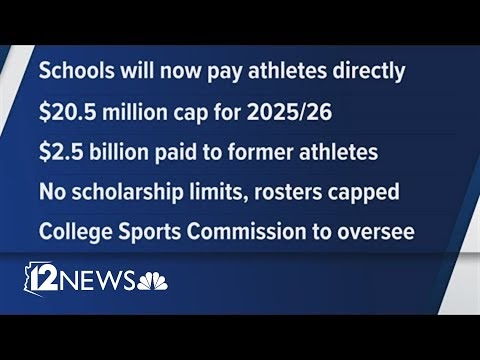
    Federal district judge Claudia Wilken granted final approval to a multi-billion-dollar settlement in the yearslong House v. NCAA lawsuit late Friday evening, effectively transforming college sports: Starting July 1, institutions will be allowed to pay student athletes directly.

    In accordance with the settlement, the National Collegiate Athletic Association and colleges in Division I conferences will distribute nearly $2.8 billion in back damages over the next 10 years to athletes who competed any time since 2016, as well as to their lawyers. The case also allows each college that opted in to pay their athletes collectively up to $20.5 million per year, in addition to scholarships. That figure will increase incrementally over time.

    The ruling, which technically resolves three antitrust lawsuits against the NCAA, essentially turns student-athletes from amateurs into professionals. But experts say this isn’t likely to end court battles over athletics. The creation of the revenue-sharing model (where schools distribute money earned from areas such as media rights or merchandise), combined with existing turmoil over the regulation of name, image and likeness (NIL) deals, will only invite more lawsuits, they say. 

    “The judge said, in essence, this is not a perfect settlement that solves everyone’s concerns, but it makes progress towards ‘righting the wrongs’ of higher education’s desire to maintain amateurism status for the players but no one else,” Karen Weaver, adjunct assistant professor in the graduate school of education at the University of Pennsylvania, wrote in an email to Inside Higher Ed.

    Although many colleges began making changes to their programs in anticipation of the settlement’s approval, the timing of the ruling could present logistical challenges as they move to start revenue-sharing with students from the July 1 deadline set out in the suit. 

    Current and former athletes have celebrated the ruling. 

    “It’s historic,” former college basketball star Sedona Prince, a co-lead plaintiff in one of the lawsuits, told ESPN. “It seemed like this crazy, outlandish idea at the time of what college athletics could and should be like. It was a difficult process at times … but it’s going to change millions of lives for the better.”

    Wild West Yet to be Tamed

    Judge Wilken’s ruling comes nearly two months after both parties presented arguments in early April for approving the settlement, and nearly five years after the suit was first filed in 2020. But contentious debates over how to manage paying student athletes really erupted in 2021, when NIL deals were first legalized. 

    Since then, collectives made up of alumni and boosters have paid athletes millions of dollars to play at schools through unregulated NIL partnerships. Top football and basketball players have earned the most.

    College leaders have argued that the collectives could give wealthier institutions an unfair recruiting advantage. The House settlement, which not only allows colleges to pay athletes directly but also gives conferences the power to regulate booster influence, could help solve that problem.

    “For several years, Division I members crafted well-intentioned rules and systems to govern financial benefits from schools and name, image and likeness opportunities, but the NCAA could not easily enforce these for several reasons,” NCAA president Charlie Baker wrote in a statement Friday. “The result was a sense of chaos: instability for schools, confusion for student-athletes and too often litigation.”

    “The settlement opens a pathway to begin stabilizing college sports,” Baker said. “This new framework that enables schools to provide direct financial benefits to student-athletes and establishes clear and specific rules to regulate third-party NIL agreements marks a huge step forward for college sports.”

    The settlement also establishes a new clearinghouse, run by Deloitte, that will vet any endorsement deal between a booster and an athlete worth more than $600, with the goal of ensuring it is for a “valid business purpose.”  

    Still, doubts remain about how the watchdog will work; one commenter on X noted that all it takes for boosters to create an NIL regulatory loophole is to pay athletes in multiple $599 payments rather than one mass sum

    Despite the efforts to regulate NIL payments through the clearinghouse, Weaver said the settlement will create “a feeding frenzy of agents and dealmakers capitalizing on a few athletes wealth while schools scramble to lock down players who could bolt for a better offer at any moment.”

    “I expect to see the first Title IX lawsuits, and requests for an immediate stay, filed as soon as this week,” she said. “It’s important for higher education leaders to understand the far-reaching impact on our industry—it’s only just begun.”

    Source link

  • Judge blocks Trump’s international enrolment ban

    Judge blocks Trump’s international enrolment ban

    The temporary restraining order (TRO) was issued by federal judge Allison Burroughs on June 5, just one day after President Trump’s signing of a proclamation to suspend the issuing of US visas to international students entering Harvard for an initial six months.   

    During the Massachusetts hearing, Burroughs said Trump’s directive would cause “immediate and irreparable injury” to America’s oldest institution, temporarily blocking it “until there is opportunity to hear from all parties”. 

    The judge also extended a 23 May restraining order which prevents DHS’s attempt to strip Harvard of its ability to enrol international students, until June 20 or when a preliminary injunction is issued, with a hearing set for June 16. 

    The June 4 proclamation came in addition to, and aims to circumvent, DHS secretary Kristi Noem’s revocation of Harvard’s SEVP certification, which was also blocked by the courts.  

    Wednesday’s directive – which incorrectly refers to SEVP as the “Student and Exchange Visa Program” – attempts to bar all new international students, scholars and exchange visitors from pursuing any course of study at the university, for a period of six months. 

    With the stroke of a pen, the DHS Secretary and the President have sought to erase a quarter of Harvard’s student body

    Harvard University

    This time, the government framed the ban as a matter of national security, accusing Harvard of collaborating with China. It has repeatedly criticised the institution for failing to root out antisemitism on campus and failing to hand over information on international students.  

    For its part, hours before judge Burroughs’ ruling, Harvard amended a previous lawsuit, alleging both the June 4 proclamation and the DHS revocation were “part of a concerted and escalating campaign of retaliation by the government” in clear retribution for Harvard’s exercising its First Amendment rights to free speech.  

    “With the stroke of a pen, the DHS Secretary and the President have sought to erase a quarter of Harvard’s student body,” it reads, in what the complaint calls a “government vendetta against Harvard”.  

    Last year, Harvard hosted 6,793 international students, totalling over 27% of the entire student body, though Trump has mistakenly called the figure 31%.

    Meanwhile, on June 5, Harvard’s President Garber sent a letter to the Harvard community, informing students that “contingency plans” were being drawn up to allow students to continue their studies during the summer and the upcoming academic year.

    Reaffirming the “outstanding contributions” of international students, Garber vowed to “celebrate them, support them, and defend their interests as we continue to assert our Constitutional rights”.  

    Source link

  • Judge Restores AmeriCorps Funding in 24 States, D.C.

    Judge Restores AmeriCorps Funding in 24 States, D.C.

    A federal judge ordered the Trump administration to restore funding to AmeriCorps programs in 24 states and Washington, D.C., following a lawsuit that challenged the April cuts to the program, The Hill reported Thursday.

    The judge, Obama appointee Deborah Boardman, ruled that the states were likely to succeed in their argument that the agency’s funding could not legally be cut without a notice-and-comment period. The ruling did not reinstate any of the agency’s staff.

    AmeriCorps volunteers and grants support at least 100 college-access organizations across the U.S., many of which had to lay off their AmeriCorps members in the wake of the cuts.

    It’s the latest court order blocking the administration’s crusade to reduce the size of the federal government; recently, judges reversed layoffs at the Department of Education and ruled that a lawsuit challenging funding cuts at the National Institutes of Health could move forward.

    Source link

  • Lawmakers and judge push back on Education Department’s gutting, citing inefficiency

    Lawmakers and judge push back on Education Department’s gutting, citing inefficiency

    This audio is auto-generated. Please let us know if you have feedback.

    The Trump administration’s decision to gut federal programs administered by the U.S. Department of Education and lay off half of the agency’s staff in an attempt to increase its efficiency has been met with resistance from lawmakers and, most recently, a federal judge whose court order brought efforts to close the department to an abrupt halt. 

    In an update required by a May 22 court order, the Education Department posted on its website that it has notified its employees of the court-ordered reversal of the reduction in force that left the agency with only about 2,183 out of 4,133 employees. The department on May 27 acknowledged its being compelled by the order in State of New York v. McMahon “to restore the Department to the status quo such that it is able to carry out its statutory functions.” 

    U.S. District Judge Myong Joun, in temporarily reversing the reduction in force, said gutting the department would lead to “irreparable harm that will result from financial uncertainty and delay, impeded access to vital knowledge on which students and educators rely, and loss of essential services for America’s most vulnerable student populations.” 

    “This court cannot be asked to cover its eyes while the Department’s employees are continuously fired and units are transferred out until the Department becomes a shell of itself,” Joun said in his decision.

    The Education Department appealed Joun’s ruling the same day it was issued. The agency did not respond to K-12 Dive’s request for comment. 

    Delays in distributing grant funds

    The decision came on the heels of a May 16 letter sent by Democratic lawmakers to U.S. Education Secretary Linda McMahon. They claimed the Education Department was delayed in distributing grant funding for the 2025-26 school year. The delay gives states and districts less time to allocate funds meant to help students experiencing homelessness and other underserved students the grants are meant to help, they said.

    “States and school districts are best able to plan to most effectively use federal funds with advance knowledge of expected funding, as Congress intends by providing funds on a forward-funded basis,” said Sen. Patty Murray of Washington, Sen. Tammy Baldwin of Wisconsin, and Rep. Rosa DeLauro of Connecticut in the letter. 

    Murray is vice chair of the Senate Committee on Appropriations, of which Baldwin is also a member. DeLauro is ranking member of the House Appropriations Committee. 

    “We believe you need to immediately change course and work in partnership with states and school districts to help them effectively use federal funds,” the lawmakers wrote in their reprimand of the department’s delay.

    By the lawmakers’ count, the department took three times as long under this administration to distribute Title I-A grants than under the Biden administration. Whereas the former administration took two weeks to distribute the funds after the appropriate law was signed in 2024, the current administration took more than 50 days after the enactment of the 2025 appropriations law to distribute Title I-A funds. The program provides $18.4 billion by formula to more than 80% of the nation’s school districts. 

    The department also delayed applications for the Rural Education Achievement Program, which funds more than 6,000 rural school districts. It opened applications to REAP’s Small, Rural Schools Assistance program nearly two months later than the Biden administration, and gave districts half the time to apply — just 30 days compared to 60 in FY 2024.  

    AASA, The School Superintendents Association, said it was aware of this delay. “We understand this release date is significantly later than usual coupled with a shortened application window, so it is important to ensure all eligible districts are aware of this change,” the association said in a May 7 post, prior to the application’s release on May 14. The deadline for program applications is June 13. 

    These delays in funding distribution and last week’s letter from Democrats come as the department bumped funding for charter schools by $60 million this month. 

    Source link

  • Judge Keeps Block on Harvard International Student Ban

    Judge Keeps Block on Harvard International Student Ban

    The Trump administration still won’t be able to prevent Harvard University from enrolling international students after a federal judge decided Thursday to keep a temporary restraining order in place.

    The hearing before Judge Allison Burroughs in Massachusetts District Court came a week after the Department of Homeland Security revoked Harvard’s ability to enroll international students and required those currently at the university to transfer. Harvard quickly sued to block that decision, and Burroughs granted a temporary restraining order May 23. 

    Harvard argued in the lawsuit that the administration violated the First Amendment and the university’s due process rights with the abrupt revocation. In an apparent effort to address Harvard’s concerns, the administration said ahead of the hearing that it would go through a more formal administrative process to decertify Harvard from the Student and Exchange Visitor Program. According to the notice filed in court Thursday morning, Harvard has 30 days to respond to the claims that it failed to comply with certain reporting requirements and to maintain a campus free from discrimination as well as “practices with foreign entities raising national security concerns.”

    But while that process continues, Burroughs wants to maintain the status quo for Harvard, which means that international students can remain at the university. She plans to eventually issue a preliminary injunction, the next step after a temporary restraining order.

    Burroughs said an order would give “some protection to international students who might be anxious about coming here or anxious about remaining here once they are here,” The Boston Globe reported.

    The government lawyers argued in the hearing that an order wasn’t necessary because of the new notice. But Harvard’s lawyer Ian Heath Gershengorn countered that “we want to make sure there are no shenanigans” while Harvard challenges the Trump administration’s action.

    And despite Burroughs’s quick restraining order, current and prospective international students at Harvard have faced disruptions.

    Maureen Martin, director of immigration services in the Harvard International Office, wrote in a court filing that students scheduled to travel to the United States in the fall found out by the morning of May 23 that their visa applications were denied. (The administration revoked Harvard’s certification May 22.)

    “I am personally aware of at least ten international students or scholars whose visa applications were refused for ‘administrative processing’ immediately following the Revocation Notice,” Martin wrote, adding that none of the visa applications that were refused or revoked following the revocation have been approved or reinstated. 

    For example, when a visiting research scholar at the Harvard School of Dental Medicine tried to obtain a J-1 visa at the U.S. embassy in Prague on May 23, her visa application was rejected.

    “The officer gave the scholar a slip that stated she had ‘been found ineligible for a nonimmigrant visa based on section 221(g) of the U.S. Immigration and Nationality Act (INA).’ The slip said, ‘In your case the following is required,’ and the consular officer checked the box marked ‘Other’ and handwrote, ‘SEVP Revocation / Harvard,’” Martin wrote.

    Martin wrote that the Trump administration has caused “significant emotional distress” for current international students and raised a number of questions for either incoming or prospective students who are trying to assess their options. At least one student deferred admission for a year for visa-related reasons.

    Source link

  • Federal Judge Blocks Trump Administration’s Actions to Dismantle Department of Education – CUPA-HR

    Federal Judge Blocks Trump Administration’s Actions to Dismantle Department of Education – CUPA-HR

    by CUPA-HR | May 29, 2025

    On May 22, a federal judge in the U.S. District Court of Massachusetts issued a preliminary injunction to block the Trump administration from taking action to close the Department of Education (ED). Specifically, the court order blocks the Trump administration from “carrying out the reduction-in-force” at ED previously announced and from implementing the executive order directing the secretary of education to “take all necessary steps to facilitate the closure of the Department of Education.”

    Several Democrat-led states, school districts and teachers unions filed lawsuits challenging the Trump administration’s reduction in force (RIF) at the department, arguing that the RIF would prohibit ED from carrying out its statutory functions. In the order enjoining the Trump administration from enforcing its RIF, the federal judge sided with the plaintiffs, granting the preliminary injunction because the plaintiffs “have shown that they are likely to suffer irreparable harm in the form of financial uncertainty and delay damaging student education … impeded access to vital knowledge upon which students, districts, and educators rely, and … loss of essential services provided by the office of Federal Student Aid and the Office for Civil Rights.”

    As a result of the preliminary injunction, the Trump administration and ED are blocked from carrying out the reduction in force and implementing the order to close the department. The administration is also blocked from reinstating the reduction in force and executive order under a different name. ED is also directed to reinstate federal employees who were terminated or eliminated on or after January 20, 2025, as part of the RIF, and the Department of Education and the administration are required to file a status report describing the steps they have taken to comply with the order.

    Soon after the preliminary injunction was issued, the Trump administration filed an appeal to the 1st U.S. Circuit Court of Appeals. Further decisions are pending, and CUPA-HR will continue to monitor for updates from the appeals court.


    Source link

  • Federal judge blocks Trump’s Education Dept. shutdown, orders reinstatement of laid off staff

    Federal judge blocks Trump’s Education Dept. shutdown, orders reinstatement of laid off staff

    This story was originally published by Chalkbeat. Sign up for their newsletters at ckbe.at/newsletters.

    A federal judge on May 22 issued a preliminary injunction blocking President Donald Trump’s executive order to shut down the U.S. Department of Education and said the agency must reinstate the employees who were fired as part of mass layoffs.

    After U.S. Education Secretary Linda McMahon announced the agency’s plans in March to slash its workforce by roughly half, she called it a first step in getting rid of the agency. Trump followed days later with his executive order aiming to eliminate the department, a move he has long wanted.

    But only Congress can actually eliminate the department, and the administration’s attempt at getting around that influenced U.S. District Judge Myong Joun’s Thursday ruling.

    The Trump administration argued that they implemented agency layoffs to improve “efficiency” and “accountability,” the Massachusetts judge wrote, but then said: “The record abundantly reveals that [the administration’s] true intention is to effectively dismantle the Department without an authorizing statute.”

    Joun added: “A department without enough employees to perform statutorily mandated functions is not a department at all. This court cannot be asked to cover its eyes while the Department’s employees are continuously fired and units are transferred out until the Department becomes a shell of itself.”

    Within hours of the Joun’s ruling, the Trump administration filed an appeal.

    “This ruling is not in the best interest of American students or families,” Madi Biedermann, Deputy Assistant Secretary for Communications, wrote in a statement.

    Calls for the injunction came from lawsuits filed by the Somerville and Easthampton schools districts in Massachusetts along with the American Federation of Teachers, other education groups, and 21 Democratic attorneys general.

    They argued that the gutting of the department rendered the agency incapable of performing many of its core functions required by Congress.

    For example, all of the attorneys from the agency’s general counsel office who handle grants for K-12 schools and grants under the Individuals with Disabilities Education Act, or IDEA, had been fired. The dismantling of the Office for Civil Rights made it difficult to enforce civil rights protections. The department’s Financial Student Aid programs, which provide financial assistance to almost 12.9 million students across approximately 6,100 postsecondary educational institutions, were also hampered.

    Trump’s executive order instructed McMahon to “take all necessary steps to facilitate the closure of the Department of Education and return authority over education to the States and local communities” to the “maximum extent appropriate and permitted by law.”

    At the same time, the order said McMahon should ensure “the effective and uninterrupted delivery of services, programs, and benefits on which Americans rely.”

    Trump said he would move the agency’s student loan portfolio to the Small Business Administration, and the Department of Health and Human Services would replace the Education Department’s role in “handling special needs.”

    Before the layoffs, the Education Department was the smallest of the 15 cabinet-level departments in terms of staffing, according to the judge, with around 4,100 employees. And the plaintiffs said the agency was strained meeting its obligations even then.

    The ruling was not based on the employees’ job rights, but rather how the agency was able to fulfill its obligations.

    “It’s not about whether employees have a right to a job,” said Derek Black, a University of South Carolina law professor. “It’s about whether the department can fulfill its statutory obligations to the states and to students.”

    The case made by former department employees, educational institutions, unions, and educators, Joun wrote, paints “stark picture of the irreparable harm that will result from financial uncertainty and delay, impeded access to vital knowledge on which students and educators rely, and loss of essential services for America’s most vulnerable student populations.”

    American Federation of Teachers President Randi Weingarten heralded the judge’s ruling, calling it “a first step to reverse this war on knowledge and the undermining of broad-based opportunity.”

    But Biedermann, from the Education Department, said the ruling was unfair to the Trump administration.

    “Once again, a far-left Judge has dramatically overstepped his authority, based on a complaint from biased plaintiffs, and issued an injunction against the obviously lawful efforts to make the Department of Education more efficient and functional for the American people,” she said in a statement.

    Chalkbeat national editor Erica Meltzer contributed reporting.

    Chalkbeat is a nonprofit news site covering educational change in public schools.

    For more news on federal policy, visit eSN’s Educational Leadership hub.

    Latest posts by eSchool Media Contributors (see all)

    Source link