Tag: Justice

  • Virginia lawmakers call for audit of UVA’s Justice Department deal

    Virginia lawmakers call for audit of UVA’s Justice Department deal

    This audio is auto-generated. Please let us know if you have feedback.

    Dive Brief:

    • Two Democratic leaders in the Virginia Legislature are questioning the legality of the University of Virginia’s recent deal with the U.S. Department of Justice and calling for an independent review of its constitutionality.
    • In an eight-page letter this week, state Sens. Scott Surovell and L. Louise Lucas said the agreement “directly conflicts with state law, commits the University to eliminate legislatively mandated programs, subjects the University President to personal certification requirements and potentially places UVA in violation of its statutory obligations.”
    • The pair requested UVA Interim President Paul Mahoney and Rachel Sheridan, the head of UVA’s board, to formally respond by Nov. 7. UVA did not immediately respond to questions Thursday.

    Dive Insight:

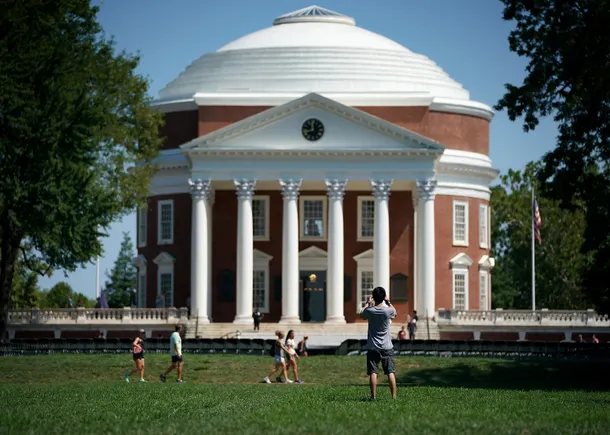
    On Oct. 22, Mahoney signed a four-page agreement with the DOJ to eventually close five investigations into UVA. In exchange, the public university agreed to adhere to the DOJ’s sweeping July guidance against diversity, equity and inclusion efforts and provide the agency with quarterly compliance reports.

    In their letter, Surovell and Lucas lambasted Mahoney and Sheridan for “a fundamental breach of the governance relationship” between the university and the state.

    “This agreement was disturbingly executed with zero consultation with the General Assembly, despite the fact that the General Assembly controls the University and provides the bulk of its government funding,” they said, arguing the lack of legislative involvement could violate state statute.

    When announcing the deal, UVA said Mahoney struck the deal with input from the university’s governing board, whose members were “kept apprised of the negotiations and briefed on the final terms before signature.” Since the agreement doesn’t include a financial penalty, it did not require a formal vote from the board, the university said in an FAQ.

    Along with the board, Mahoney has said he struck the deal with input from the university’s leadership and internal and external legal counsel.

    Surovell and Lucas questioned if Jason Miyares, Virginia’s Republican Attorney General and an ally of President Donald Trump, had counseled the university about the deal. 

    Miyares — who fired UVA’s longtime legal counsel upon taking office in 2022 — is up for reelection in November with Trump’s endorsement, a backing Lucas and Surovell cast as an “inherent conflict of interest.” 

    It is unclear, they said, if Virginia’s top lawyer is “competent and capable of providing truly independent legal advice to Virginia’s public universities in this area of the law.”

    Virginia public colleges “need legal counsel who will zealously defend state sovereignty and institutional autonomy — not counsel whose political fortunes are tied to the very administration applying the pressure,” they said.

    The two lawmakers, along with Democratic state Sen. Mamie Locke, previously threatened UVA’s state funding if the university agreed to the Trump administration’s separate higher education compact, which offered preferential access to grant funding in exchange for unprecedented federal oversight. UVA turned it down five days before announcing its deal with the DOJ.

    Lucas and Surovell aren’t the only Virginia legislators to question the integrity of the UVA-DOJ deal. State Del. Katrina Callsen and Sen. R. Creigh Deeds, Democrats who represent UVA’s district, condemned it as subjecting the university “to unprecedented federal control.”

    In an Oct. 23 letter, the pair told Mahoney and the board that their approval of the agreement calls “into grave question your ability to adequately protect the interests and resources entrusted to you by the Virginia General Assembly.”

    “Your actions fail to leave the University free and unafraid to combat that which is untrue or in error,” they said. “By agreeing to these terms, UVA risks betraying the very principles you espouse in your letter: academic freedom, ideological diversity, and free expression.”

    Callsen and Deeds called on UVA leadership to reverse the deal and “reject further federal interference.”

    When asked on Thursday if Mahoney or the board had responded, Deed’s office referred to a story published by The Cavalier Daily, the university’s independent student newspaper.

    In a letter shared with The Daily, Mahoney and Sheridan said that they “respectfully disagree” with Deeds and Callsen’s assessment, adding that the deal is the “culmination of months of engagement” with the DOJ and other federal agencies over multiple civil rights investigations.

    They also said the institution’s deal with the federal government differs significantly from the “lengthy lists of specific obligations” agreed to by Columbia and Brown universities.

    “Our agreement is different — if the United States believes we are not in compliance, its only remedy is to terminate the agreement,” they said.

    Source link

  • UVA Settles With Justice Department

    UVA Settles With Justice Department

    Jabin Botsford/The Washington Post via Getty Images

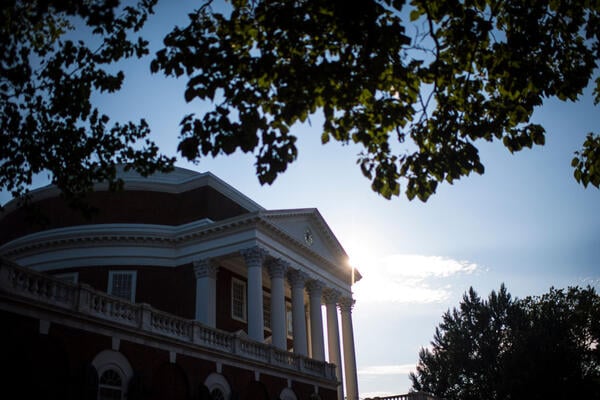
    The University of Virginia has reached a settlement agreement with the Department of Justice that will pause pending investigations in exchange for assurances from the public flagship that it will not engage in unlawful practices around admissions, hiring, programming and more.

    The DOJ announced the settlement in a Wednesday afternoon news release.

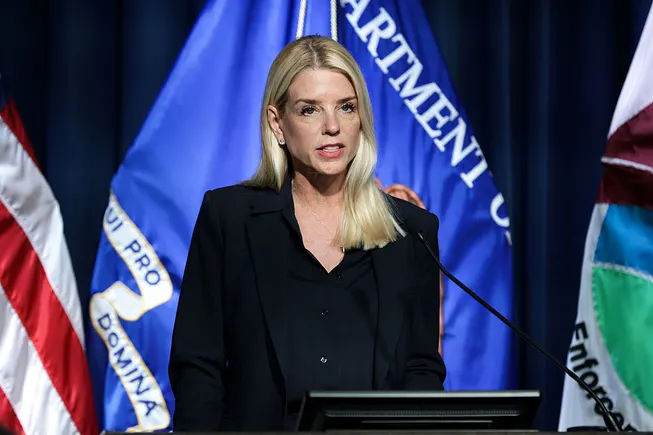
    As part of the deal, UVA agreed to follow a July memo from U.S. Attorney General Pam Bondi that bars the use of race in hiring and admissions practices as well as scholarship programs. UVA will be required to provide “relevant information and data” to the DOJ, according to the news release.

    While the recent investigations into allegedly illegal diversity, equity and inclusion programs have been paused, that doesn’t mean those probes have been altogether closed. However, the DOJ will close the investigation “if UVA completes its planned reforms prohibiting DEI,” officials said.

    “This notable agreement with the University of Virginia will protect students and faculty from unlawful discrimination, ensuring that equal opportunity and fairness are restored,” Assistant Attorney General Harmeet K. Dhillon of the DOJ’s Civil Rights Division, and a UVA alum, said in a statement. “We appreciate the progress that the university has made in combatting antisemitism and racial bias, and other American universities should be on alert that the Justice Department will ensure that our federal civil rights laws are enforced for every American, without exception.”

    The settlement comes nearly four months after former UVA president James Ryan stepped down abruptly, reportedly under DOJ pressure to resign as part of an effort to resolve investigations.

    UVA officials released a statement as well as the text of the agreement on Wednesday.

    “We intend to continue our thorough review of our practices and policies to ensure that we are complying with all federal laws,” Interim President Paul Mahoney wrote. “We will also redouble our commitment to the principles of academic freedom, ideological diversity, free expression, and the unyielding pursuit of ‘truth, wherever it may lead,’ as Thomas Jefferson put it. Through this process, we will do everything we can to assure our community, our partners in state and federal government, and the public that we are worthy of the trust they place in us and the resources they provide us to advance our education, research, and patient care mission.”

    Education Secretary Linda McMahon called the deal “transformative” in a post on X.

    “The Trump Administration is not backing down in our efforts to root out DEI and illegal race preferencing on our nation’s campuses,” McMahon wrote. “A renewed commitment to merit is a critical step for our institutions to once again become beacons of truth-seeking and excellence.”

    UVA is one of several institutions to reach an agreement with the Trump administration in recent months, but the first public university to do so. Previously Columbia University, the University of Pennsylvania and Brown University all agreed to deals with the federal government after the Trump administration froze federal research funding over alleged civil rights violations.

    While UVA reached a settlement with the federal government, it has rejected other proposals such as the “Compact for Academic Excellence in Higher Education,” which would have required institutions to agree to tuition freezes, caps on international students and campuswide assessments of viewpoint diversity, among other demands, in order to receive preferential treatment for federal research funding. UVA was one of nine institutions originally asked to join the compact, though none of the original group, nor others invited later, have announced they will sign the proposal.

    Source link

  • Rule 56: An Appeal for Justice from the Margins

    Rule 56: An Appeal for Justice from the Margins

    A Personal Victory, A Larger Signal

    Dr. Martin Luther King Jr. often reminded us that ‘the arc of the moral universe is long, but it bends toward justice.’ Yet arcs do not bend on their own; people must pull them. For Black women in higher education, that bending is not a metaphor but a lived, exhausting struggle. Justice is not just a concept but a long, arduous climb. We teach. We research. We lead. And sometimes, we must also stand against the very institutions that hired us.

    Dr. Leah P. Hollis By a unanimous 3-0 decision, I recently won a federal appeal in a complex unequal pay case, Hollis v. Morgan State University (No. 24-1476, 4th Cir. 2025), after close to a decade of retaliation and erasure from a prior employer. The Fourth Circuit ruled that the district court wrongly applied Title VII’s timing/exhaustion rules to the Title IX, § 1983 Equal Protection, and Maryland law claims and reversed that mistake.

    More importantly, the panel rejected the lower court’s cramped reliance on the McDonnell-Douglas burden-shifting framework. Since 1973, the Supreme Court’s McDonnell-Douglas case has forced discrimination plaintiffs through a rigid three-step burden-shifting test—one that too often shuts cases down before a jury can ever weigh the evidence.  However, the Fourth Circuit emphasized instead Rule 56’s simple question: could a reasonable jury find discrimination?

    As the court put it, the record contained “circumstantial evidence—including evidence of pretext—that would allow a jury to infer” bias. Judge Quattlebaum went further in a separate concurrence, praising the majority for skipping the rigid McDonnell Douglas steps and instead “pointing out the evidence that creates a genuine dispute of material fact.” He urged the Supreme Court to scrap McDonnell Douglas altogether, calling it “unnecessarily complex” and “more restrictive than Title VII itself.” This appeal and decision chips away at rigid judge-made hurdles that for decades have silenced plaintiffs before a jury could ever hear their stories.

    Why Procedure Matters in Civil Rights

    For discrimination litigants, this decision is more than technical. The old McDonnell-Douglas test forced plaintiffs to meet rigid “prima facie” boxes and disprove every employer excuse, often leading to dismissal at summary judgment. By centering Rule 56, the Fourth Circuit made clear that all the evidence, biased remarks, shifting justifications, policy deviations, comparators, and suspicious timing, belongs in one evidentiary bundle. In turn, this lowers the procedural bar, makes it harder for employers to paper over bias, and gives plaintiffs a fairer chance to be heard.

    My own scars tell the story. I was paid tens of thousands less than men doing the same job, called names behind closed doors, had dossiers suppressed, gaslighted for leadership errors, and was unjustly demoted to “at-will.” Like many women in my department, I scraped for resources while being told to stay quiet, told I was nothing. Silence, they said, was the price of survival. I refused. And when the Fourth Circuit reversed, it was more than a personal win—it was a civil rights intervention that affirmed the importance of truth, insisting that such truths be considered as a whole, the way we live them, not dissected into sterile sound bites.

    The 300,000 Who Couldn’t Stay

    Between April and June 2025 alone, nearly 300,000 Black women exited the U.S. labor force because they felt unsafe, not by choice but by structural neglect. As of September, unemployment for Black women hovers near 6 percent—twice that of their white counterparts. These departures are not accidents; they are ruptures in equity and dignity, the consequence of harassment, unequal pay, bullying, and institutional betrayal.

    Each exit letter echoes the same civil rights path: Harriet Tubman walking 4,500 miles to free enslaved people, Dr. Martin Luther King Jr. jailed 29 times, Colin Kaepernick forfeiting his NFL career. Several times on my journey, I was told, “you’re ruining your life” or “ be grateful to have a job.”  But what if Harriet turned back? What if Martin stopped dreaming? What if Colin stood up and stayed quiet? Their resistance was costly; so too is the exodus of Black women from today’s workplaces. Justice does not bloom in surrender.

    Intersectional Betrayal in the Academy

    In higher education, Black women are showcased on websites and brochures yet undermined in daily practice. Research confirms we are disproportionately bullied, mobbed, and harassed. We remain the only group that required the Crown Act to affirm that our natural hair is lawful. Too often, the hostility comes not only from men but also from women—including women of color—who proclaim solidarity in public but dismantle it in private. These wounds, born of silence and duplicity, are institutional betrayals as old as the academy itself. That is why social justice must be more than a logo or slogan. When institutions use taglines as a façade, people make life-changing decisions based on those promises—only to discover too late that the commitments were hollow, leaving their careers and families in jeopardy. Zora Neale Hurston said it plainly: “The Black woman is the mule of the world.” That weight remains. And yet, even when battered, we persist. Because if we do not disrupt silence, the record calcifies into precedent.

    Truth Telling as a Contact Sport

    Writing in my personal capacity and researcher in this area, I still serve as a professor, still honor my students, and still respect the office I hold. This appeal shows that justice doesn’t clock out, the fight for equality yawns on despite the fatigue of its warriors; yet we walk on, dream on of a day when  one should not have to fight for the dignity they were born with. Whistleblowers and resisters are often isolated, mischaracterized, and told to take the “high road.” Yet if we as educators do not teach justice by living it, the next generation inherits our silence as permission.

    I prevailed because the record mattered, and because the Georgetown Civil Rights and  Appellate Courts Immersion Clinic believed in my case and had the determination to fight for justice. What we do not correct becomes precedent. The appellate court saw what those in power at my prior institution chose to ignore—the pretext, the contradictions, the lies. With support from family, counsel, and ancestors, I stood. And now, with Hollis v. Morgan State joining Ames v. Ohio in questioning the stranglehold of McDonnell-Douglas, the judiciary too has taken a step toward clearing the road.

    The Unending Path Forward

    This is not the end. My case now returns to the district court where it will either go to trial or may yet be resolved through mediation. My forthcoming book, Disrupt the Not Telling, by Oxford University Press, will continue excavating the silences and erasures imposed on Black women scholars. As Audre Lorde reminds us: “Your silence will not protect you.” Some of us cannot speak loudly, constrained by family, caregiving, or survival—but presence, prayer, and quiet resistance are also forms of disruption.

    The fight for equity is cyclical, echoing Reconstruction, the Red Summer of 1920s, and the civil rights movement 1960s. Each time, the nation tries to turn us back. Yet like Harriet, Martin, and Colin, those of us who set out on the trail of justice cannot turn back.

    The exodus of 300,000 Black women from the workforce is not just a labor statistic—it is the latest reminder that civil rights remain unfinished, and that silence cannot be its price.

    _______

    Dr. Leah P. Hollis is Associate Dean and Professor at Penn State University. 

    Source link

  • The urgent need to facilitate environmental justice learning in HE institutions

    The urgent need to facilitate environmental justice learning in HE institutions

    by Sally Beckenham

    The crises we are facing globally, from climate change and climate change dispossession to drought and food insecurity, are intersecting social and environmental issues, which need to be recognized and addressed accordingly through integrated and holistic measures. This can only be achieved by eschewing the tendency of existing governance and economic systems to silo social and environmental problems, as if they are separate concerns that can be managed – and prioritised – hierarchically. Much of this requires a better understanding of environmental injustice – the ways in which poor, racialised, indigenous and other marginalized communities are overlooked and/or othered in this power hierarchy, such that they must face a disproportionate burden of environmental harm.

    This is happening with disconcerting regularity around the world, often going under the radar but sometimes making headlines, as for example in May this year, when institutionalised environmental racism in the U.S. manifested in the placement of a copper mine on land inhabited by and sacred to the Apache indigenous group (Sherman, 2025). With limited political power to challenge it they are left to face dispossession, loss of livelihood and physical and mental health ill-effects (Morton-Ninomiya et al, 2023). We have seen this making headlines closer to home recently too, with evidence suggesting that toxic air in the UK is killing 500 people a week and most affecting those in socioeconomically disadvantaged areas (Gregory, 2025). An environmental problem (such as air pollution) cannot be disentangled from its social causes and effects. Or to put it another way, violence done to the environment is violence done to a particular group of people.

    A transformative response to our global challenges that re-centres environmental justice will require a paradigm shift in the ways that we govern, construct our societies, build our communities, run our economies, design our technologies and engage with the non-human world. The role of higher education will be critical to even a modest move in this direction. This is because, as they are probably tired of hearing, this generation of students will shape our collective futures, so it matters that they are literate in the deep entanglement of environmental and social justice challenges. Moreover, as Stickney and Skilbeck caution, “it is inconceivable that we will meet drastic carbon reduction targets without massive coordinated efforts, involving policymakers and educators working in concert at all levels of our governments and education systems (Stickney and Skilbeck, 2020).

    In Ruth Irwin’s article ‘Climate Change and Education’ she alerts us to Heidegger’s treatise in Being and Time (1962) that the effectiveness of a tool’s readiness is ‘hidden’ – only revealed when it ceases to function. Climate might be viewed as a heretofore ‘hidden’ tool, in that it affords opportunities for human action; it has “smoothly enabled our existence without conscious consideration” (Irwin, 2019). Yet its dynamic quality is now an overt, striking, looming spectre threatening the existence of all life on earth; the ‘environment’ writ large is revealing itself through ecological and social breakdown, surfacing our essential reliance upon it as natural beings. Thus unless higher education is competent in dealing with the issues of environmental crisis at all of its registers – social, environmental, political and ecological – the institution of education will be unable to fulfil its fundamental task of knowledge transfer for what is a clear public good (Irwin, 2019). Put another way, “HEIs have a responsibility to develop their educational provision in ways that will support the social transformation needed to mitigate the worst effects of the environmental crisis.” (Owens et al, 2023).

    Indeed, HE requires a paradigm shift in itself given that these realities are unfolding alongside widespread scrutiny of higher education institutions; including about decolonising the academy (Jivraj, 2020; Mintz, 2021), free speech on university campuses and how they are preparing students to meet these pressing issues (Woodgates, 2025). To keep pace with these changes and meet such challenges, educators from across disciplines will need to commit to embedding environmental justice education more widely across programme curricula, session design and teaching practices. It must be recognised as a vital – rather than token – component of environmental education. Doing so fully and effectively also requires us to recognise that environmental justice education encompasses not only subject matter but pedagogical practice. This is the case for all academic disciplines – including those that might seem peripheral to the teaching of environmental issues.

    EJE in HE is a developing area of scholarship and field of study that has gathered pace only over the last decade. Much of the research to date has been focused on the US, where studies have shown that environmental justice remains marginal to or excluded from the curricular offerings of most environmental studies programmes – let alone those not directly related to environmental education (Garibay et al, 2016). A report by the North American Association for Environmental Education (NAAEE), which studied the policies of 230 public U.S. HE institutions and 36 state boards of higher education, found that only 6% of institutions with climate change content in their policies referred to climate justice issues and indigenous knowledge practices (MECCE Project & NAAEE, 2023). Other work has shown that STEM education has tended to frame questions around exploitation of natural resources or technological development as disconnected from social and economic inequalities, though this is starting to be challenged (Greenberg et al, 2024).

    Emerging research into EJ in HE encompasses pedagogical approaches (Rabe, 2024; Moore, 2024); classroom and teaching practices (Walsh et al, 2022; Cachelin & Nicolosi, 2022; D’Arcangelis & Sarathy, 2015), the relationship between sustainability and climate justice education (Haluza-DeLay, 2013; Kinol et al, 2023) and curriculum development (Garibay et al, 2016). In identifying what EJE looks like these studies foreground the importance of community-engaged learning (CEL), providing students with the opportunity to learn about a socio-environmental problem from those with lived experience; critical thinking with regards to positionality, power structures and (especially indigenous) knowledge systems, and a deep concern with place. These critical components are crucial because tackling an act or acts of environmental injustice against marginalised populations often cannot be achieved without addressing systemic power imbalances.

    What also links these studies is an acknowledgement of the complexity of EJE. It is a difficult subject and practice to grapple with for several reasons. Firstly, it means exposing students (and educators) to “an onslaught of bad news,” (Cachelin & Nicolosi, 2022) which can elicit feelings of hopelessness and helplessness, so it is little wonder that expressions of anxiety and alarm are growing within these cohorts (Wallace, Greenburg & Clark, 2020) and that needs to be borne in mind. Secondly EJE requires us to find a way to meaningfully connect with philosophical, discursive, historical and practical questions about power, ethics and the relationship between human beings and the natural environment, within the disciplinary parameters of a specific curricula. This means doing difficult work not only to change current systems and processes (Forsythe et al, 2023) but also to make transformative rather than piecemeal efforts. For example, this might mean actively absorbing students into a community partner’s work in an engaged rather than service-learning model, or moving beyond a simple ‘guest lecture’ format to invite more in-depth input into modules or programmes from a community partner.

    This is a challenge that we shouldn’t understate for many academics and institutions already coping with high workloads (Smith, 2023), stress (Kinman et al, 2019) and job insecurity across a beleaguered sector (The Independent, 2024; The Guardian, 2025). Through this emerging EJE scholarship literature, we are starting to see that, “promoting opportunities for HE educators to develop and enact critical and transformative environmental pedagogy… is a complex business mediated by a variety of (personal, material and social) factors. It involves negotiating conflict, and understanding and confronting entrenched structures of power, from the local and institutional to the national and global.” (Owens et al, 2023). 

    A third (though by no means final) challenge in teaching and learning EJ in higher education is in finding and making space for it in a landscape that is strongly oriented towards sustainability education. Although there is certainly overlap – for example to the extent that the liberal logic underpinning the latter also informs distributive justice – sustainability education has different intellectual and ideological origins to EJ scholarship. Both are valuable, but we should be questioning whether we can justify a lack of explicit EJ practice and framing simply because we are already having sustainability conversations, and instead find space for both. It can be easy to (inadvertently) depoliticise environmental education by avoiding the perceived messiness and complexity of justice in favour of the more technocratic and measurable ‘sustainability’ (Haluza-DeLay, 2013).

    My research seeks to develop a better understanding of the state of environmental justice education in the HE landscape, beginning by mapping its development in the UK. This will reveal the extent and means by which EJE is being incorporated across programme curricula, session design and teaching practices in the UK HE context. In doing so we can identify the intersections of EJE with other dominant pedagogies, including sustainability education and solutions-focused approaches. To pursue a provincialising agenda and avoid the parochial perspective that EJE is the preserve of HEIs in the global North, there is also much value in exploring what EJE looks like in HEIs in the global South, and where cross-cultural lessons can be shared. The questions we need to be asking are:

    • How is environmental justice being taught and learnt and where do we go from here?
    • How are educators overcoming the challenges involved in engaging with EJE?
    • What best practices could we champion?

    Sharing methods, strategies and pedagogical approaches for EJE cross-institutionally and cross-culturally will be a step towards helping us build a better collective, collaborative response to the urgency of our intersecting socio-environmental crises.

    Dr Sally Beckenham is Lecturer in Human Geography and Programme Lead and Admissions Tutor for the BA Human Geography & Environment in the Department of Environment & Geography, University of York. She is also Chair of the Teaching Development Pool and member of the Interdisciplinary Global Development Centre (IGDC). She is an interdisciplinary political geographer with degrees in Modern History, International Politics and International Relations, and welcomes collaboration. Email: [email protected] Bluesky: @sallybeckenham.bsky.social.

    Author: SRHE News Blog

    An international learned society, concerned with supporting research and researchers into Higher Education

    Source link

  • Justice Department targets ‘unlawful’ DEI in hiring, training

    Justice Department targets ‘unlawful’ DEI in hiring, training

    This audio is auto-generated. Please let us know if you have feedback.

    The U.S. Department of Justice on Wednesday released a sweeping guidance document that could impact school district hiring and training practices, as well as the programming available to students. 

    In some situations, districts could be exposed to legal liability by asking job applicants how their “cultural background informs their teaching,” using recruitment strategies targeting candidates from specific geographic areas or racial backgrounds, and asking job candidates to describe how they overcame obstacles, according to the memo from U.S. Attorney General Pamela Bondi. 

    Such diversity, equity and inclusion practices could amount to “illegal discrimination,” said Bondi in a statement on Wednesday. “This guidance will ensure we are serving the American people and not ideological agendas.” 

    The DOJ memo contains examples of practices it lists as “unlawful” and says could lead to federal funding being revoked, as well as a list of recommendations, which it says are not mandatory, to avoid “legal pitfalls.”

    The guidance issued to all federal agencies also says the following actions could expose federally funded institutions, including school districts,to legal liability based on race, ethnicity or sex-based discrimination: 

    • Providing teacher training that “all white people are inherently privileged” or training on “toxic masculinity.” 
    • Providing areas, such as lounges, that are primarily meant to provide “safe spaces” for traditionally underserved groups. 
    • Using demographically driven criteria “to increase participation by specific racial or sex-based groups” in programs and opportunities. 
    • Asking employees, including teachers, during training sessions to “confess” to personal biases or privileges based on a protected characteristic.

    Instead, school districts and other federally funded institutions should provide opportunities to all races and sex-based groups without regard to their protected characteristics or demographic goals, instead focusing on “universally applicable criteria” such as academic merit or financial hardship, the Justice Department memo said. 

    The guidance could impact districts’ efforts to make education more equitable, such as by diversifying the teacher pool through Black educator pipelines, training teachers on implicit and explicit biases, and creating academic or enrichment programs to increase engagement from minority student groups. 

    The directive is in line with the Trump administration’s push to pare back diversity, equity and inclusion efforts, including through the U.S. Department of Education. In recent months, the Education Department has increasingly collaborated with the Department of Justice to enforce civil rights laws, often seeking to protect Asian and White students. 

    The guidance from the Justice Department illustrates the major shift in how both agencies under President Donald Trump approach enforcement of civil rights laws, with officials now targeting programs that were often launched to fight systemic discrimination.

    In April, the Education Department announced a Title VI investigation into Chicago Public Schools over allegations from the conservative group Defending Education that the district’s “Black Students Success Plan” implemented in 2023-24 discriminated against students based on race. 

    In May, the department announced another Title VI investigation into Fairfax County Public Schools over a 2020 revision to the admissions policy at Thomas Jefferson High School for Science and Technology. That policy dropped standardized testing requirements and instead used a holistic review process, which the Education Department said harms Asian American students. 

    In 2024-25, the highly selective magnet school was 61% Asian and 21% White, with Black and Hispanic students making up less than 10% of the student population each.

    The guidance from the Trump administration and the Education Department investigations come after concerns from civil rights groups that recent federal policy changes, along with the U.S. Supreme Court’s 2023 decision in Students for Fair Admissions v. Harvard, would set back educational equity efforts even outside of race-conscious admissions. 

    Scholarship availability, teacher pipelines and student affinity groups were among the top areas beyond college access that advocates were concerned could be impacted in the wake of that ruling.

    Source link

  • Justice Department threatens federal funding for colleges over DEI policies

    Justice Department threatens federal funding for colleges over DEI policies

    This audio is auto-generated. Please let us know if you have feedback.

    Dive Brief: 

    • The U.S. Department of Justice released guidance Wednesday that threatens to strip grant funding from colleges and other federally funded institutions over what the agency deems unlawful diversity, equity and inclusion practices. 
    • The agency’s memo targets a sweeping set of practices, including offering race-based scholarship programs, allowing transgender women to access bathrooms that correspond with their gender identity and having identity-based lounges or study spaces on campus — even if they are open to all. 
    • But the nine-page memo goes a step further, saying even neutral criteria — such as recruitment strategies targeting certain regions — could be deemed unlawful if the Justice Department determines they are chosen because of their demographic composition.

    Dive Insight: 

    The Justice Department’s memo comes after a federal judge temporarily blocked similar guidance from the U.S. Department of Education that broadly targeted diversity, equity and inclusion programs at federally funded colleges and K-12 schools. The order came in response to a lawsuit that alleged the guidance “radically upends” federal antidiscrimination laws. 

    The guidance from the Justice Department illustrates the major shift in how the agency under President Donald Trump approaches enforcement of civil rights laws, with officials now targeting programs that were often actually launched to fight systemic discrimination. 

    Earlier this month, the National Urban League declared a “state of emergency” for antidiscrimination policies, calling the Trump administration’s overhaul of the Justice Department’s enforcement priorities “an existential threat” to civil rights laws, according to The Associated Press. 

    Like the Education Department’s blocked guidance, the Justice Department’s new memo warns that government officials could pull federal funding from institutions that don’t comply. That threat comes at the same time the agency has ramped up investigations into colleges over their diversity initiatives and their responses to antisemitism on campus. 

    The DOJ memo contains examples of practices it lists as “unlawful” and says could lead to federal funding being revoked, as well as a list of recommendations, which it says are not mandatory, to avoid “legal pitfalls.”

    “This Department of Justice will not stand by while recipients of federal funds engage in illegal discrimination,” U.S. Attorney General Pamela Bondi said in a Wednesday statement. “This guidance will ensure we are serving the American people and not ideological agendas.”

    As examples of unlawful practices, the agency highlighted race-based scholarships or programs, including mentorship programs or leadership initiatives reserved for members of certain racial groups. 

    The memo could upend admissions. It recommends colleges end programs “designed to achieve discriminatory outcomes” even if they have “facially neutral” criteria, such as targeting scholarships to certain regions to increase enrollment or participation among certain racial groups. 

    “Instead, use universally applicable criteria, such as academic merit or financial hardship, applied without regard to protected characteristics or demographic goals,” the memo said. 

    The memo also takes aim at what it describes as “unlawful proxies” for race and sex. As an example, the memo calls out universities that ask job applicants “to demonstrate ‘cultural competence,’ ‘lived experience,’ or ‘cross-cultural skills’ in ways that effectively evaluate candidates’ racial or ethnic backgrounds rather than objective qualifications.”

    The Justice Department also flagged diversity statements — which typically ask job or graduate student candidates to explain their experience and commitment to diversity and inclusion initiatives — as potentially unlawful if they advantage “those who discuss experiences intrinsically tied to protected characteristics.” The memo said the same of asking for statements from applicants about “obstacles they have overcome,” a common essay prompt for college applications. 

    State lawmakers have likewise targeted diversity statements, with many outlawing public colleges from requiring them in job or admission applications. 

    The memo also said failing to “maintain sex-separated athletic competitions and intimate spaces” could violate federal law. The Justice Department’s examples of those violations include allowing transgender women to use bathrooms, showers, locker rooms and dormitories designated for women, as well as allowing them to compete in women’s athletic events. 

    And it mentions college lounges or other spaces designated for specific groups, such as a “BIPOC-only study lounge.” 

    “Even if access is technically open to all, the identity-based focus creates a perception of segregation and may foster a hostile environment,” the memo stated. “This extends to any resource allocation — such as study spaces, computer labs, or event venues — that segregates access based on protected characteristics, even if intended to create ‘safe spaces.’”

    It also takes aim at diversity training, giving the example of requiring teachers at K-12 schools to complete a DEI training that includes statements such as “all white people are inherently privileged” or touching on “toxic masculinity.” 

    The memo says such trainings could violate civil rights laws “if they create a hostile environment or impose penalties for dissent in ways that result in discriminatory treatment.”

    Source link

  • UCLA violated civil rights law, Justice Department alleges

    UCLA violated civil rights law, Justice Department alleges

    Dive Brief: 

    • The U.S. Department of Justice alleged Tuesday that the University of California, Los Angeles violated civil rights law by failing to do enough to protect Jewish and Israeli students from harassment. 
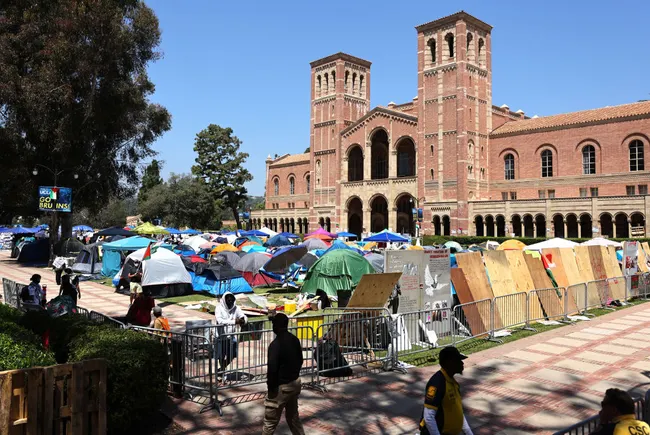
    • The findings stem from UCLA’s approach to a pro-Palestinian encampment that students erected on the university’s campus in the spring 2024 term. UCLA officials declined to disband the encampment for nearly a week, citing the need to balance free speech protections with student and employee safety. 
    • In a letter to Michael Drake, president of the University of California system, Justice Department officials said they would seek to enter a voluntary resolution with UCLA to “ensure that the hostile environment is eliminated.”

    Dive Insight: 

    The Justice Department is also investigating the entire University of California system over similar allegations. That systemwide probe found “concerning evidence of systemic anti-Semitism at UCLA that demands severe accountability,” U.S. Attorney General Pamela Bondi said in a Tuesday statement. 

    “DOJ will force UCLA to pay a heavy price for putting Jewish Americans at risk and continue our ongoing investigations into other campuses in the UC system,” Bondi said. 

    Justice Department officials gave UCLA leaders until Aug. 5 to reach out about entering a voluntary resolution. They threatened the university with a lawsuit by Sept. 2 if they don’t believe they can strike an agreement with the institution. 

    The Justice Department investigation focused on the pro-Palestinian encampment erected on UCLA’s campus on April 25, 2024. Encampment demonstrators demanded that the university divest from companies with ties to Israel’s military. 

    On the same day it was erected, a university spokesperson told the campus community that officials were monitoring the situation to balance the “right to free expression while minimizing disruption” to the institution’s teaching and learning mission. 

    However, several days into the protest, some demonstrators formed human blockades to prevent some people on campus from moving freely throughout Royce Quad, including students wearing a Star of David or those who refused to denounce Zionism, according to an internal report from a university task force released last October. 

    The task force also found the encampment violated university rules and that the blockades disparately impacted Jewish people. 

    The Justice Department’s letter to UCLA heavily cited the university’s own task force report, as well as 11 complaints the university received alleging that encampment protesters discriminated against them based on their race, religion or national origin. 

    “UCLA’s documentation established that it did not outright ignore these complaints; however, the University took no meaningful action to eliminate the hostile environment for Jewish and Israeli students caused by the encampment until it was disbanded,” the letter states. 

    Violence broke out at the site on the night of April 30, 2024, when counterprotesters attempted to dismantle the encampment’s barricade, The New York Times reported

    The counterprotesters attacked those within the encampment, including by launching fireworks into the encampment and hitting the pro-Palestinian protesters with sticks, according to the publication. Some of the pro-Palestinian protesters also fought back.

    Police arrived hours later, though they did not immediately break up the violence. The next day, UCLA officials made the call to have police break up the encampment, resulting in over 200 arrests. 

    “In the end, the encampment on Royce Quad was both unlawful and a breach of policy,” then-UC Chancellor Gene Block said in a statement. “It led to unsafe conditions on our campus and it damaged our ability to carry out our mission. It needed to come to an end.”

    In their letter, Justice Department officials criticized university leaders, alleging they knew that protesters were “engaging in non-expressive conduct unprotected by the First Amendment” and were denying “Jewish and Israeli students access to campus resources” days before they moved to disband the encampment. 

    UCLA did not immediately respond to a request for comment. 

    The Justice Department findings come the same day the university settled a lawsuit from Jewish students and a Jewish professor, who alleged their civil rights were violated because UCLA allowed protesters to block their campus access. 

    The agency’s letter mentioned the lawsuit’s filings, though it did not refer to the settlement. 

    As part of that agreement, UCLA agreed to pay about $6 million, with the funds going directly toward the plaintiffs and their legal fees, as well as to Jewish groups and a campus initiative to combat antisemitism.

    Source link

  • McDonald’s Faces National Boycott as Economic Justice Movement Builds Momentum

    McDonald’s Faces National Boycott as Economic Justice Movement Builds Momentum

    McDonald’s, the fast-food titan with global reach and billion-dollar profits, is the latest corporate target in an escalating campaign of economic resistance. Starting June 24, grassroots advocacy organization The People’s Union USA has called for a weeklong boycott of the chain, citing the need for “corporate accountability, real justice for the working class, and economic fairness.”

    Branded the Economic Blackout Tour, the campaign seeks to channel consumer power into political and structural change. According to The People’s Union USA, Americans are urged to avoid not only McDonald’s restaurants but also fast food in general during the June 24–30 protest window. Previous actions have focused on companies like Walmart, Amazon, and Target—corporate behemoths long criticized for their low wages, union-busting tactics, and monopolistic behavior.

    John Schwarz, founder of The People’s Union USA, has emerged as a vocal critic of corporate greed. In a recent video statement, Schwarz accused McDonald’s and its peers of dodging taxes and lobbying against wage increases. “Economic resistance is working,” he declared. “They’re feeling it. They’re talking about it.”

    The movement is tapping into deep and widespread frustration—fueled by stagnant wages, rising living costs, and mounting corporate profits. While many Americans struggle with student loan debt, inadequate healthcare, and job insecurity, companies like McDonald’s have been accused of shielding their profits offshore and benefiting from political influence in Washington.

    This is not the first time McDonald’s has come under fire. The company has faced criticism from labor rights groups for paying low wages, offering unpredictable schedules, and relying heavily on part-time or precarious employment. More recently, pro-Palestinian activists have also launched boycotts, citing alleged ties between McDonald’s franchises and Israeli military actions in Gaza.

    As part of the current boycott, The People’s Union USA is pushing for a broader shift in spending—away from multinational corporations and toward local businesses and cooperatives. In line with previous actions, the group is also encouraging Americans to cut back on streaming, online shopping, and all fast-food purchases during the boycott period.

    With Independence Day on the horizon, Schwarz and his allies are framing the protest as not just economic, but patriotic. “It’s time to demand fairness,” Schwarz said, “and to use our economic power as leverage to fight for real freedom—the kind that includes fair wages, democratic workplaces, and tax justice.”

    While McDonald’s has not released an official response to the boycott, a 2019 letter from company lobbyist Genna Gent suggested the chain would not actively oppose federal minimum wage increases. For Schwarz and his supporters, such declarations ring hollow without meaningful action.

    The July target for The People’s Union USA? Starbucks, Amazon, and Home Depot—three more corporate giants with long histories of labor disputes and political entanglements. The next wave of boycotts will extend throughout the entire month, further testing the staying power and impact of this new consumer-led resistance.

    At a time when higher education, particularly the for-profit and online sectors, often channels students into low-wage service jobs with crushing debt, these campaigns raise larger questions about the role of universities in perpetuating corporate power and economic inequality.

    The Higher Education Inquirer will continue to follow these developments, especially as they intersect with issues of labor, student debt, corporate influence, and the broader fight for economic justice in the United States.

    Source link

  • Empowering Mature Students through Inclusive AI Literacy: Advancing Digital Equity and Social Justice in Higher Education

    Empowering Mature Students through Inclusive AI Literacy: Advancing Digital Equity and Social Justice in Higher Education

    • By Assoc. Prof. Dr. Eleni Meletiadou, Guildhall School of Business and Law, London Metropolitan University, PFHEA, NTF, UTF, MCIPD, MIIE.

    As higher education embraces artificial intelligence (AI) to drive digital transformation, there is a growing risk that older, non-traditional, or mature students will be left behind. This blog post draws on insights from the QAA-funded “Using AI to promote education for sustainable development and widen access to digital skills” project I have been leading alongside findings from the EU COST Action DigiNet (WG5), where I co-lead research into media portrayals and digital inequalities impacting mature learning workers.

    Through this work, and in collaboration with international partners, we have identified what genuinely supports inclusion and what simply pays lip service to it. While AI is often heralded as a tool for levelling the educational playing field, our research shows that without intentional support structures and inclusive design, it can reinforce and even widen existing disparities.

    Supporting mature students’ AI literacy is, therefore, not just a pedagogical responsibility; it is an ethical imperative. It intersects with wider goals of equity, social justice, and sustainable digital inclusion. If higher education is to fulfil its mission in an age of intelligent technologies, it must ensure that no learner is left behind, especially those whose voices have long been marginalised.

    Why Mature Students Matter in the AI Conversation

    Mature students are one of the fastest-growing and most diverse populations in higher education. They bring a wealth of life and work experience, resilience, and motivation. Yet, they are often excluded from AI-related initiatives that presume a level of digital fluency not all possess. However, they are often left out of AI-related initiatives, which too frequently assume a baseline level of digital fluency that many do not possess. Media portrayals tend to depict older learners as technologically resistant or digitally inept, reinforcing deficit narratives that erode confidence, undermine self-efficacy, and reduce participation.

    As a result, mature students face a dual barrier: the second-order digital divide—inequity in digital skills rather than access—and the social stigma of digital incompetence. Both obstruct their academic progress and diminish their employability in a rapidly evolving, AI-driven labour market.

    Principles that Support Mature Learners

    The QAA-funded project, developed in partnership with five universities across the UK and Europe, embedded AI literacy through three key principles—each critical for mature learners:

    1. Accessibility

    Learning activities were designed for varying levels of digital experience. Resources were provided in multiple formats (text, video, audio), and sessions used plain language and culturally inclusive examples. Mature students often benefited from slower-paced, repeatable guidance and multilingual scaffolding.

    1. Collaboration

    Peer mentoring was a powerful tool for mature students, who often expressed apprehension toward younger, digitally native peers. By fostering intergenerational support networks and collaborative projects, we helped reduce isolation and build mutual respect.

    1. Personalised Learning

    Mature students frequently cited the need for AI integration that respected their goals, schedules, and learning styles. Our approach allowed learners to set their own pace, choose relevant tools, and receive tailored feedback, building ownership and confidence in their digital journeys.

    Inclusive AI Strategies That Work – Based on What Mature Learners Told Us

    Here are four practical strategies that emerged from our multi-site studies and international collaborations:

    1. Start with Purpose: Show AI’s Relevance to Career and Life

    Mature learners engage best when AI tools solve problems that matter to them. In our QAA project, students used ChatGPT to refine job applications, generate reflective statements, and translate workplace policies into plain English. These tools became career companions—not just academic add-ons.

    ‘When I saw what it could do for my CV, I felt I could finally compete again,’ shared a 58-year-old participant.

    2. Design Age-Safe Learning Spaces

    Many mature students fear embarrassment in digital settings. We created small, trust-based peer groups, offered print-friendly guides, and used asynchronous recordings to accommodate different learning paces. These scaffolds helped dismantle the shame often attached to asking for help.

    3. Make Reflection Central to AI Literacy

    AI use can be empowering or alienating. We asked students to record short video reflections on how AI shaped their thinking. This helped them develop critical awareness of what the tool does, how it aligns with academic integrity, and what learning still needs to happen beyond automation.

    4. Use Media Critique to Break Stereotypes

    Drawing on my research into late-life workers and digital media, we used ageist headlines, adverts, and memes as classroom material. Mature learners engaged critically with how society depicts them, transforming deficit narratives into dialogue, and boosting confidence through awareness.

    How We Measured Impact (and Why It Mattered)

    We evaluated these strategies using mixed methods informed by both academic and lived-experience perspectives:

    • Self-reflective journals and confidence scales tracked growth in AI confidence and self-efficacy
    • Survey data from mature students (aged 55+) in the UK and Albania (from my older learners study) revealed the key role of peer support, professional experience, and family encouragement in shaping digital resilience
    • Narrative mapping, developed with COST DigiNet partners, was used to document shifts in learners’ digital identity—from anxious adopter to confident contributor
    • Follow-up interviews three months post-intervention showed sustained engagement with AI tools in personal and professional contexts (e.g., CPD portfolios, policy briefs)

    Policy and Practice: Repositioning Mature Learners in AI Strategy

    As highlighted in our Tirana Policy Workshop (2024), national and institutional policy often fails to differentiate between age-based needs when deploying AI in education. Mature students frequently face a “second-order digital divide,” not just in access, but in relevance, scaffolding, and self-belief.

    If UK higher education is serious about digital equity, it must:

    • Recognise mature learners as a distinct group in AI strategy and training
    • Fund co-designed AI literacy programmes that reflect lived experience
    • Embed inclusive, intergenerational pedagogy in curriculum development
    • Disrupt media and policy narratives that equate older age with technological incompetence

    Conclusion: Inclusion in AI Isn’t Optional – It’s Foundational

    Mature learners are not a marginal group to be retrofitted into digital learning. They are core to what a sustainable, equitable, and ethical higher education system should look like in an AI-driven future. Designing for them is not just good inclusion practice—it’s sound educational leadership. If we want AI to serve all learners, we must design with all learners in mind, from the very start.

    Source link

  • Title IX Case Against Maine Schools Headed to U.S. Department of Justice – The 74

    Title IX Case Against Maine Schools Headed to U.S. Department of Justice – The 74


    Get stories like this delivered straight to your inbox. Sign up for The 74 Newsletter

    The conflict between the state of Maine and the Trump administration over transgender student athletes reached a new pivot point on Monday. As the first of several deadlines set by the federal government has now expired, whether Maine can continue to allow trans athletes to participate in school sports appears likely to be decided by the courts.

    Two separate federal agencies determined that Maine is in violation of Title IX based on the Trump administration’s interpretation of the anti-sex discrimination protection.

    The U.S. Department of Education’s Office for Civil Rights issued a final warning Monday to the Maine Department of Education regarding its noncompliance with a federal directive for allowing trans girls to participate in girls’ sports.

    If the state does not propose an agreement that’s acceptable to the office by April 11, the case will be referred to the Department of Justice, the letter said.

    Meanwhile, a separate investigation by the U.S. Department of Health and Human Services’ civil rights office that found Maine in violation of Title IX for “continuing to unlawfully allow” trans girls to compete in girl’s sports has been referred to the U.S. Department of Justice, according to a Monday social media post from the agency.

    In a letter dated March 17, HHS had given Maine a deadline of 10 days to comply with federal guidance. Monday marked ten business days from that warning.

    Both agencies determined that Maine had violated federal law after dayslong investigations that included no interviews, while typical investigations take months and are eventually settled with resolution agreements. The probes were launched after Gov. Janet Mills and President Donald Trump had a heated exchange over the state’s trans athlete policy. Millions of dollars in federal funding might be at risk, depending on how the cases proceed.

    “We just need an answer at this point as to, ‘Does the Trump administration have the authority to do what it’s doing when it comes to fast tracking the removal of federal funds?’” said Jackie Wernz, a former OCR lawyer for the Education Department who now represents school districts nationwide in these types of cases.

    “This is just unprecedented, and we’re not following the process that we’re used to. So I think it’s going to be really helpful for courts to start weighing in on whether or not they have the authority to do this.”

    Meanwhile, Republican state lawmakers said in a news conference on Tuesday that they want the state to repeal trans students’ rights to athletics, locker rooms and bathrooms, and to roll back inclusion of gender as a protected class in the Maine Human Rights Act.

    “The problem is that the term gender identity and the Human Rights Act is being interpreted way too broadly by the left,” said Senate Minority Leader Trey Stewart (R-Aroostook). “And what it’s saying is there’s no boundary between men’s and women’s spaces.”

    Rep. Michael Soboleski (R- Phillips) said he is introducing a bill to remove consideration of gender identity from the act, and asked Democrats and Mills to support the legislation in order to avoid the risk of losing federal funding.

    Earlier this year, Iowa became the first state in the nation to remove civil rights from a state law when its Legislature voted to remove gender identity from its civil rights act.

    “This is not sustainable,” Stewart said. “We’re a poor state. We are heavily reliant on federal money. The governor needs to move on this.”

    On March 19, the Department of Education’s civil rights office notified Maine of its noncompliance and proposed a resolution agreement that would require the state to rescind its support of trans athletes, which is currently required by the Maine Human Rights Act. A Cumberland-area school district and the Maine Principals Association, which runs student athletics, that were also found in violation have already refused to sign the agreement.

    This development is part of a broader effort by the Trump administration to enforce Title IX provisions concerning gender and athletics. Earlier this year, the administration launched investigations in several other states for similar policies allowing trans athletes to compete in alignment with their gender identity.

    Title IX, the federal law banning sex-based discrimination, does not reference trans people directly, but the Trump administration has interpreted Maine’s policy as discrimination against cisgender girls.

    Rachel Perera, a fellow in the governance studies program for the Brown Center on Education Policy at national think tank The Brookings Institution, said the Trump administration’s interpretation of Title IX leaves room for questioning. If the policy goes to trial, she said federal courts may come up with a clearer interpretation.

    “It’s going to be really important to see how Maine proceeds, because they’re sort of setting the tone in terms of these other states and other localities who are going to be trying to navigate these very same dynamics,” she said.

    Maine Morning Star is part of States Newsroom, a nonprofit news network supported by grants and a coalition of donors as a 501c(3) public charity. Maine Morning Star maintains editorial independence. Contact Editor Lauren McCauley for questions: [email protected].


    Get stories like these delivered straight to your inbox. Sign up for The 74 Newsletter

    Source link