Tag: K-12

  • What Education Leaders Can Learn from the AI Gold Rush – The 74

    What Education Leaders Can Learn from the AI Gold Rush – The 74


    Get stories like this delivered straight to your inbox. Sign up for The 74 Newsletter

    Every week, my 7-year-old brings home worksheets with math problems and writing assignments. But what captivates me is what he creates on the back once the assigned work is done: power-ups for imaginary games, superheroes with elaborate backstories, landscapes that evolve weekly. He exists in a beautiful state of discovery and joy, in the chrysalis before transformation.

    My son shows me it’s possible to discover something remarkable when we expand what we consider possible. Yet in education, a system with 73% public dissatisfaction and just 35% satisfied with K-12 quality, we hit walls repeatedly.

    This inertia contributes to our current moment: steep declines in reading and math proficiency since 2019, one in eight teaching positions unfilled or filled by uncertified teachers, and growing numbers abandoning public education.

    Contrast this with artificial intelligence’s current trajectory.

    AI faces massive uncertainty. Nobody knows where it leads or which approaches will prove most valuable. Ethical questions around bias, privacy and accountability remain unresolved.

    Yet despite uncertainty — or because of it — nearly every industry is doubling down. Four major tech firms planned $315 billion in AI spending for 2025 alone. AI adoption surged from 55% to 78% of organizations in one year, with 86% of employers expecting AI to transform their businesses by 2030.

    This is a gold rush. Entire ecosystems are seeing transformational potential and refusing to be left behind. Organizations invest not despite uncertainty, but because standing still carries greater risk.

    There’s much we can learn from the AI-fueled momentum.

    To be clear, this isn’t an argument about AI’s merits. This is a conversation about what becomes possible when people come together around shared aspirations to restore hope, agency and possibility to education. AI’s approach reveals five guiding principles that education leaders should follow:

    1. Set a Bold Vision: AI leaders speak in radical terms. Education needs such bold aspirations, not five percent improvements. Talk about 100% access, 100% thriving, 100% success. Young people are leading by demanding approaches that honoring their agency, desire for belonging, and broad aspirations. We need to follow their lead.

    2. Play the Long Game: Companies make massive investments for transformation they may not see for years. Education must embrace the same long-term thinking: investing in teacher development programs that mature over years, reimagining curricula for students’ distant futures, building systems that support sustainable excellence over immediate political wins.

    3. Don’t Fear Mistakes: AI adoption is rife with failure and course corrections. Despite rapid belief and investment, over 80% of AI projects fail. Yet companies continue experimenting, learning, adjusting and trying again because they understand that innovation requires iteration. Education must take bold swings, have honest debriefs when things fall flat, adjust and move forward.

    4. Democratize Access: AI reached 1.7 to 1.8 billion users globally in 2025. While quality varies and significant disparities exist, fundamental access has been opened up in ways that seemed impossible just years ago. When it comes to transformative change in education, every child deserves high-quality teachers, engaging curriculum and flourishing environments.

    5. Own the Story, and Pass the Mic: Every day, AI gains new ambassadors among everyday people, inspiring others to jump in. The most powerful education stories come from young people discovering breakthroughs during light bulb moments, from parents seeing children thrive, from teachers witnessing walls coming down and possibilities surpassing imagination. We need to pass the mic, creating platforms for students to share what meaningful learning looks like, which will unlock aspirational stories that shift the system.

    None of this is possible without student engagement. When students have voice and agency, believe in learning’s relevance and feel supported, transformative outcomes follow. As CEO of Our Turn, I was privileged to be part of efforts that inspired leaders and institutions across the country to invest in student engagement as a core strategy. We’re now seeing progress: all eight measures of school engagement tracked by Gallup reached their highest levels in 2025. This is an opportunity to build positive momentum; research consistently demonstrates engagement relates to academic achievement, post-secondary readiness, critical thinking, persistence and enhanced mental health.

    Student engagement is the foundation from which all other educational outcomes flow. When we center student voice, we go from improving schools to galvanizing the next generation of engaged citizens and leaders our democracy desperately needs.

    High-quality teachers are also essential. Over 365,000 positions are filled by uncertified teachers, with 45,500 unfilled. Teachers earn 26.4% less than similarly educated professionals. About 90% of vacancies result from teachers leaving due to low salaries, difficult conditions or inadequate support.

    Programs like Philadelphia’s City Teaching Alliance prove what’s possible: over 90% of new teachers returned after 2023-24, versus just under 80% citywide. We must create conditions where teaching is sustainable and honored through higher salaries, better working conditions, meaningful professional development and cultures that value educators as professionals.

    Investing in teacher quality is fundamental to workforce development, economic competitiveness and ensuring every child has access to excellent instruction. When we frame this as both a moral imperative and an economic necessity, we create the coalition necessary for lasting change.

    Finally, transformation must focus on skill development. The workforce young people are entering demands more than technical knowledge; it requires integrated capabilities for navigating complexity, building authentic relationships and creating meaningful change.

    At Harmonious Leadership, we’ve worked with foundations and organizations to develop leadership skills that result in greater innovation and impact. Our goals: young people more engaged in school and communities, and companies reporting greater levels of innovation, impact and financial sustainability.

    The appeal here is undeniable. Workforce development consistently ranks among the top priorities across political divides. Given the rapid rate of change in our culture and economy, we need to develop skills for careers that don’t yet exist, for challenges we can’t yet imagine, for a world that demands creativity, adaptability and resilience.

    The AI gold rush shows what’s possible when we set bold visions, invest for the long term, embrace learning from failure, democratize access and amplify voices closest to transformation.Our children, like my son drawing superheroes on worksheet backs, are in chrysalis moments. The choice is ours: remain paralyzed by complexity or channel the same urgency, investment and unity of purpose driving the AI revolution. We know what works: student engagement, quality teachers and future-ready skills. The question isn’t whether we have solutions. It’s whether we have courage to pursue them.


    Did you use this article in your work?

    We’d love to hear how The 74’s reporting is helping educators, researchers, and policymakers. Tell us how


    Source link

  • Why K-12 educators need data literacy, not just data

    Why K-12 educators need data literacy, not just data

    Key points:

    Walk into any data meeting at a K-12 school today, and you’ll likely see a familiar scene: educators huddled around printed reports, highlighters in hand, trying to make sense of student data spread across multiple dashboards. If you’ve ever left one of these meetings feeling mentally exhausted without clear next steps, you’re not alone. The problem isn’t that we lack data in education, but rather that most dashboards show us the past–not the path ahead. It’s like trying to drive while only looking in the rearview mirror.

    The education sector sits on massive amounts of student data, yet most schools lack data maturity. They’ve committed to using data and may even have systems that centralize records. But they haven’t embraced what’s possible when we move from having data to using it well; from describing what happened to predicting what’s likely to happen if nothing changes.

    We have dashboards–now what?

    Every district has dashboards. We can see attendance rates, assessment scores, and demographic breakdowns. These tools tell us what happened, which is useful–but increasingly insufficient for the challenges facing K-12 schools. By the time we’re reacting to chronic absenteeism or declining grades, we’re already behind. And, when does an educator have time to sit down, pull up multiple dashboards, and interpret what they say about each student?

    The power of any data dashboard isn’t in the dashboard itself. It’s in the conversations that happen around it. This is where data literacy becomes essential, and it goes far beyond simply reading a chart or calculating an average.

    Data literacy means asking better questions and approaching data with curiosity. It requires recognizing that the answers we get are entirely driven by the questions we ask. A teacher who asks, “Which students failed the last assessment?” will get very different insights than one who asks, “Which students showed growth but still haven’t reached proficiency, and what patterns exist among them?”

    We must also acknowledge the emotional dimension of data in schools. Some educators have been burned when data was used punitively instead of for improvement. That resistance is understandable, but not sustainable. The solution isn’t to check professional expertise at the door. It’s to approach data with both curiosity and courage, questioning it in healthy ways while embracing it as a tool for problem-solving.

    From descriptive to predictive: What’s possible

    Let’s distinguish between types of analytics. Descriptive analytics tell us what happened: Jorge was absent 15 days last semester. Diagnostic analytics tell us why: Jorge lives in a household without reliable transportation, and his absences cluster on Mondays and Fridays.

    Now we get to the game-changers: predictive and prescriptive analytics. Predictive analytics use historical patterns to forecast what’s likely to happen: Based on current trends, Jorge is at 80 percent risk of chronic absenteeism by year’s end. Prescriptive analytics go further by helping the educator understand what they should do to intervene. If we connect Jorge’s family with transportation support and assign a mentor for weekly check-ins, we can likely reduce his absence risk by 60 percent.

    The technology to do this already exists. Machine learning can identify patterns across thousands of student records that would take humans months to discern. AI can surface early warning signs before problems become crises. These tools amplify teacher judgment, serving up insights and allowing educators to focus their expertise where it matters most.

    The cultural shift required

    Before any school rushes to adopt the next analytics tool, it’s worth pausing to ask: What actually happens when someone uses data in their daily work?

    Data use is deeply human. It’s about noticing patterns, interpreting meaning, and deciding what to do next. That process looks different for every educator, and it’s shaped by the environment in which they work: how much time they have to meet with colleagues, how easily they can access the right data, and whether the culture encourages curiosity or compliance.

    Technology can surface patterns, but culture determines whether those patterns lead to action. The same dashboard can spark collaboration in one school and defensiveness in another. That’s why new tools require attention to governance, trust, and professional learning–not just software configuration.

    At the end of the day, the goal isn’t simply to use data more often, but to use it more effectively.

    Moving toward this future requires a fundamental shift in how we think about data: from a compliance exercise to a strategic asset. The most resilient schools in the coming years will have cultures where data is pervasive, shared transparently, and accessible in near real-time to the people who need it. Think of it as an instructional co-pilot rather than a monkey on the back.

    This means moving away from data locked in the central office, requiring a 10-step approval process to access. Instead, imagine a decentralized approach where a fifth-grade team can instantly generate insights about their students’ reading growth, or where a high school counselor can identify seniors at risk of not graduating with enough time to intervene.

    This kind of data democratization requires significant change management. It demands training, clear protocols, and trust. But the payoff is educators empowered to make daily decisions grounded in timely, relevant information.

    Turning data into wisdom

    Data has been part of education from the very beginning. Attendance records, report cards, and gradebooks have always informed teaching. What’s different now is the volume of data available and the sophistication of tools to analyze it. K-12 educators don’t need to become data scientists, but they do need to become data literate: curious, critical consumers of information who can ask powerful questions and interpret results within the rich context of their professional expertise.

    The schools that harness their data effectively will be able to identify struggling students earlier, personalize interventions more effectively, and use educator time more strategically. But this future requires us to move beyond the dashboard and invest in the human capacity to transform data into wisdom. That transformation starts with data literacy, and it starts now.

    Latest posts by eSchool Media Contributors (see all)

    Source link

  • Basing K-12 Funding on California School Enrollment Could Bring Problems – The 74

    Basing K-12 Funding on California School Enrollment Could Bring Problems – The 74


    Get stories like this delivered straight to your inbox. Sign up for The 74 Newsletter

    This story was originally published by CalMatters. Sign up for their newsletters.

    For years, California schools have pushed to change the way the state pays for K-12 education: by basing funding on enrollment, instead of attendance. That’s the way 45 other states do it, and it would mean an extra $6 billion annually in school coffers.

    But such a move might cause more harm than good in the long run, because linking funding to enrollment means schools have little incentive to lure students to class every day, according to a report released Tuesday by the nonpartisan Legislative Analyst’s Office. Without that incentive, attendance would drop, and students would suffer.

    If the Legislature wants to boost school funding, analysts argued, it should use the existing attendance-based model and funnel more money to schools with high numbers of low-income students, students in foster care and English learners.

    When it comes to attendance, money talks, the report noted. For more than a century, California has funded schools based on average daily attendance – how many students show up every day. In the 1980s and ’90s, the state started to look at alternatives. A pilot study from that time period showed that attendance at high schools rose 5.4% and attendance at elementary schools rose 3.1% when those schools had a financial incentive to boost attendance.

    This is not the time to ease up on attendance matters, the report said. Although attendance has improved somewhat since campuses closed during the pandemic, it remains well below pre-COVID-19 levels. In 2019, nearly 96% of students showed up to school every day. The number dropped to about 90% during COVID-19, when most schools switched to remote learning, but still remains about 2 percentage points below its previous high.

    Attendance is tied to a host of student success measurements. Students with strong attendance tend to have higher test scores, higher levels of reading proficiency and higher graduation rates.

    “It’s a thoughtful analysis that weighs the pros and cons,” said Hedy Chang, president of the nonprofit research and advocacy organization Attendance Works. “For some districts there might be benefits to a funding switch, but it also helps when districts have a concrete incentive for encouraging kids to show up.”

    True cost of educating kids

    Schools have long asked the Legislature to change the funding formula, which they say doesn’t cover the actual costs of educating students, especially those with high needs. The issue came up repeatedly at a recent conference of the California School Boards Association, and there’s been at least one recent bill that addressed the issue.

    The bill, by former Sen. Anthony Portantino, a Democrat from the La Cañada Flintridge area, initially called for a change to the funding formula, but the final version merely asked the Legislative Analyst’s Office to study the issue. The bill passed in 2024.

    A 2022 report by Policy Analysis for California Education also noted the risks of removing schools’ financial incentive to prioritize attendance. But it also said that increasing school funding overall would give districts more stability.

    Enrollment is a better funding metric because schools have to plan for the number of students who sign up, not the number who show up, said Troy Flint, spokesman for the California School Boards Association.

    He also noted that schools with higher rates of absenteeism also tend to have higher numbers of students who need extra help, such as English learners, migrant students and low-income students. Tying funding to daily attendance — which in some districts is as low as 60% — brings less money to those schools, ultimately hurting the students who need the most assistance, he said.

    “It just compounds the problem, creating a vicious cycle,” Flint said.

    To really boost attendance, schools need extra funding to serve those students.

    Switching to an enrollment-based funding model would increase K-12 funding by more than $6 billion, according to the Legislative Analyst’s Office. Currently, schools receive about $15,000 annually per student through the state’s main funding mechanism, the Local Control Funding Formula, with an additional $7,000 coming from the federal government, block grants, lottery money, special education funds and other sources. Overall, California spent more than $100 billion on schools last year, according to the Legislative Analyst.

    Motivated by money?

    Flint’s group also questioned whether schools are solely motivated by money to entice students to class.

    “Most people in education desperately want kids in class every day,” Flint said. “These are some of the most dedicated, motivated people I’ve met, and they care greatly about students’ welfare.”

    Josh Schultz, superintendent of the Napa County Office of Education, agreed. Napa schools that are funded through attendance actually have lower attendance than schools that are considered “basic aid,” and funded through local property taxes. Both types of schools have high numbers of English learners and migrant students.

    “I can understand the logic (of the LAO’s assertion) but I don’t know if it bears out in reality, at least here,” Schultz said. “Both kinds of schools see great value in having kids show up to school every day.”

    This article was originally published on CalMatters and was republished under the Creative Commons Attribution-NonCommercial-NoDerivatives license.


    Did you use this article in your work?

    We’d love to hear how The 74’s reporting is helping educators, researchers, and policymakers. Tell us how

    Source link

  • A Practical Guide – The 74

    A Practical Guide – The 74

    Republish This Article

    We want our stories to be shared as widely as possible — for free.

    Please view The 74’s republishing terms.


    Source link

  • Why new math problems won’t solve our nation’s math problem

    Why new math problems won’t solve our nation’s math problem

    eSchool News is counting down the 10 most-read stories of 2025. Story #4 focuses on making math instruction more relevant to students.

    Key points:

    How much longer will we keep trying to solve our nation’s dismal math proficiency problem by writing new math problems? Clearly, if that was the answer, it would have worked by now–but it hasn’t, as evidenced by decades of low proficiencies, historic declines post-COVID, and the widest outcome gaps in the world.

    The real question students are asking is, “When am I ever going to use this?” As a former math teacher, I learned that addressing this question head-on made all the difference. Students’ success in math wasn’t found in a book–it was found in how math applied to them, in its relevance to their future career plans. When math concepts were connected to real-world scenarios, they transformed from distant and abstract ideas into meaningful, tangible skills.

    My first-hand experience proved the premise of education innovator Dr. Bill Daggett’s “rigor-relevance-relationship” framework. If students know what they’re learning has real-life implications, meaning and purpose will ensure that they become more motivated and actively engaged in their learning.

    Years later, I founded the nonprofit Pathway2Careers with a commitment to use education research to inform good policy and effective practice. From that foundation, we set out on a path to develop a first-of-its-kind approach to math instruction that led with relevance through career-connected learning (CCL).

    In our initial pilot study in 2021, students overwhelmingly responded positively to the curriculum. After using our career-connected math lessons, 100 percent of students reported increased interest in learning math this way. Additionally, they expressed heightened curiosity about various career pathways–a significant shift in engagement.

    In a more comprehensive survey of 537 students spanning grades 7–11 (with the majority in grades 8 and 9) in 2023, the results reinforced this transformation. Students reported a measurable increase in motivation, with:

    • 48 percent expressing “much more” or “slightly more” interest in learning math
    • 52 percent showing greater curiosity about how math skills are applied in careers
    • 55 percent indicating newfound interest in specific career fields
    • 60 percent wanting to explore different career options
    • 54 percent expressing a stronger desire to learn how other skills translate to careers

    Educators also noted significant benefits. Teachers using the curriculum regularly–daily or weekly–overwhelmingly rated it as effective. Specifically, 86 percent indicated it was “very effective” or “somewhat effective” in increasing student engagement, and 73 percent highlighted improved understanding of math’s relevance to career applications. Other reported benefits included students’ increased interest in pursuing higher education and gaining awareness of various postsecondary options like certificates, associate degrees, and bachelor’s degrees.

    Building on these promising indicators of engagement, we analyzed students’ growth in learning as measured by Quantile assessments administered at the start and end of the academic year. The results exceeded expectations:

    • In Pre-Algebra, students surpassed the national average gain by 101 Quantiles (141Q vs. 40Q)
    • Algebra I students achieved more than triple the expected gains (110Q vs. 35Q)
    • Geometry learners outpaced the average by 90 Quantiles (125Q vs. 35Q)
    • Algebra II showed the most significant growth, with students outperforming the norm by 168 Quantiles (198Q vs. 30Q)

    These outcomes are a testament to the power of relevance in education. By embedding math concepts within real-world career contexts, we transformed abstract concepts into meaningful, tangible skills. Students not only mastered math content at unprecedented levels but also began to see the subject as a critical tool for their futures.

    What we found astounded even us, though we shouldn’t have been surprised, based on decades of research that indicated what would happen. Once we answered the question of when students would use this, their mastery of the math content took on purpose and meaning. Contextualizing math is the path forward for math instruction across the country.

    And there’s no time to waste. As a recent Urban Institute study indicated, students’ math proficiencies were even more significant than reading in positively impacting their later earning power. If we can change students’ attitudes about math, not just their math problems, the economic benefits to students, families, communities, and states will be profound.

    Latest posts by eSchool Media Contributors (see all)

    Source link

  • This math platform leverages AI coaching to help students tackle tough concepts

    This math platform leverages AI coaching to help students tackle tough concepts

    eSchool News is counting down the 10 most-read stories of 2025. Story #5 focuses on a math platform that offers AI coaching for maximum impact.

    Math is a fundamental part of K-12 education, but students often face significant challenges in mastering increasingly challenging math concepts.

    Many students suffer from math anxiety, which can lead to a lack of confidence and motivation. Gaps in foundational knowledge, especially in early grades and exacerbated by continued pandemic-related learning loss, can make advanced topics more difficult to grasp later on. Some students may feel disengaged if the curriculum does not connect to their interests or learning styles.

    Teachers, on the other hand, face challenges in addressing diverse student needs within a single classroom. Differentiated instruction is essential, but time constraints, large class sizes, and varying skill levels make personalized learning difficult.

    To overcome these challenges, schools must emphasize early intervention, interactive teaching strategies, and the use of engaging digital tools.

    Last year in New York City Public Schools, Franklin Delano Roosevelt High School (FDR) teachers started using a real-time AI math coaching platform from Edia to give students instant access to math support.

    Edia aligns with Illustrative Mathematics’ IM Math, which New York City Public Schools adopted in 2024 as part of its “NYC Solves” initiative–a program aiming to help students develop the problem-solving, critical thinking, and math skills necessary for lifetime success. Because Edia has the same lessons and activities built into its system, learning concepts are reinforced for students.

    FDR started using Edia in September of 2024, first as a teacher-facing tool until all data protection measures were in place, and now as an instructional tool for students in the classroom and at home.

    The math platform’s AI coaching helps motivate students to persevere through tough-to-learn topics, particularly when they’re completing work at home.

    “I was looking for something to have a back-and-forth for students, so that when they need help, they’d be able to ask for it, at any time of the day,” said Salvatore Catalano, assistant principal of math and technology at FDR.

    On Edia’s platform, an AI coach reads students’ work and gives them personalized feedback based on their mistakes so they can think about their answers, try again, and master concepts.

    Some FDR classes use Edia several days a week for specific math supports, while others use it for homework assignments. As students work through assignments on the platform, they must answer all questions in a given problem set correctly before proceeding.

    Jeff Carney, a math teacher at FDR, primarily uses the Edia platform for homework assignments, and said it helps students with academic discovery.

    “With the shift toward more constructivist modes of teaching, we can build really strong conceptual knowledge, but students need time to build out procedural fluency,” he said. “That’s hard to do in one class session, and hard to do when students are on their own. Edia supports the constructivist model of discovery, which at times can be slower, but leads to deeper conceptual understanding–it lets us have that class time, and students can build up procedural fluency at home with Edia.”

    On Edia, teachers can see every question a student asks the AI coach as they try to complete a problem set.

    “It’s a nice interface–I can see if a student made multiple attempts on a problem and finally got the correct answer, but I also can see all the different questions they’re asking,” Carney said. “That gives me a better understanding of what they’re thinking as they try to solve the problem. It’s hugely helpful to see how they’re processing the information piece by piece and where their misconceptions might be.”

    As students ask questions, they also build independent research skills as they learn to identify where they struggle and, in turn, ask the AI coach the right questions to target areas where they need to improve.

    “We can’t have 30 kids saying, ‘I don’t get it’–there has to be a self-sufficient aspect to this, and I believe students can figure out what they’re trying to do,” Carney said.

    “I think having this platform as our main homework tool has allowed students to build up that self-efficacy more, which has been great–that’s been a huge help in enabling the constructivist model and building up those self-efficacy skills students need,” he added.

    Because FDR has a large ELL population, the platform’s language translation feature is particularly helpful.

    “We set up students with an Illustrative Math-aligned activity on Edia and let them engage with that AI coaching tool,” Carney said. “Kids who have just arrived or who are just learning their first English words can use their home languages, and that’s helpful.”

    Edia’s platform also serves as a self-reflection tool of sorts for students.

    “If you’re able to keep track of the questions you’re asking, you know for yourself where you need improvement. You only learn when you’re asking the good questions,” Catalano noted.

    The results? Sixty-five percent of students using Edia improved their scores on the state’s Regents exam in algebra, with some demonstrating as much as a 40-point increase, Catalano said, noting that while increased scores don’t necessarily mean students earned passing grades, they do demonstrate growth.

    “Of the students in a class using it regularly with fidelity, about 80 percent improved,” he said.

    For more spotlights on innovative edtech, visit eSN’s Profiles in Innovation hub.

    Laura Ascione
    Latest posts by Laura Ascione (see all)

    Source link

  • Chronic absenteeism could derail K-12 education

    Chronic absenteeism could derail K-12 education

    eSchool News is counting down the 10 most-read stories of 2025. Story #9 focuses on chronic absenteeism.

    Key points:

    The biggest problem in education is that kids aren’t showing up to school. Last year, 26 percent of students missed a month of class or more, leading to dramatic declines in academic performance. Chronic absenteeism accounted for 27 percent of the drop in math scores and 45 percent of the decline in reading scores from 2019 to 2022. Students who are chronically absent are 7x more likely to drop out before graduating, and while state and district leaders are scrambling for solutions, kids are falling further behind.

    Why chronic absenteeism is hard to solve

    In 2019, only 13 percent of students in the U.S. were chronically absent. Typically, these students missed school because of significant personal reasons–long-term illness, gang involvement, clinical depression, working jobs to support their families, lacking transportation, drug use, unplanned pregnancy, etc.–that aren’t easily fixed.

    However, since the pandemic, the rate of chronic absenteeism has doubled from 13 percent to 26 percent.

    The change is cultural. For the last hundred years, it was drilled into the American psyche that “school is important.” A great effort was made to provide bussing to any child who lived too far to walk, and the expectation was that every child should come to school every day. Cutting class was sure to land you in the principal’s office or potentially even lead to police showing up at your door.

    During the Covid-19 pandemic, this narrative flipped. As parents began working from home, their kids sat beside them. With lectures recorded and assignments posted online, attending class began to feel optional. When school doors reopened, many families didn’t fully come back. Common excuses like being tired, missing the bus, or simply not feeling like going were validated and excused rather than admonished. While students who skip school were once seen as delinquent, for many families it has become culturally acceptable–almost even expected–for kids to stay home whenever they or their parents want.

    Overwhelmed by the drastic rise in absenteeism, school staff are unable to revert cultural norms about attendance. And it’s not their fault.

    The root of the problem

    Each student’s situation is unique. Some students may struggle with reliable transportation, while others skip certain classes they don’t like, and others still are disengaged with school entirely. Without knowing why students are missing school, staff cannot make progress addressing the root cause of chronic absenteeism.

    Today, nearly 75 percent of student absences are “unexplained,” meaning that no authorized parent called or emailed the school to say where their children are and why they aren’t in class. This lack of clarity makes it impossible for schools to offer personalized solutions and keep students engaged. Unexplained absences only deepen the disconnect and limit schools’ ability to tackle absenteeism effectively.

    Knowing why students are missing school is critical, but also very difficult to uncover. At a high school of 2,000 students with 85 percent average daily attendance, 225 students will be absent each day without providing any explanation. In an ideal world, schools would speak with every parent to find out the reason their child wasn’t in class–but schools can’t possibly make 225 additional phone calls without 3-5 additional staff. Instead, they rely on robocalls and absence letters, and those methods don’t work nearly well enough.

    Normalize attendance again: It takes a village

    Improving attendance is about more than just allocating additional resources. It’s about shifting the mindset and fostering a culture that prioritizes presence. This starts with schools and communities making attendance a shared responsibility, not just a policy.

    First, schools must take the initiative to understand why students are missing school. Whether through modern AI-driven attendance systems or with more traditional methods like phone calls, understanding the root causes is critical to addressing the issue.

    Next, categorize and recognize patterns. Small adjustments can have big impacts. One district noticed that students who were 0.9 miles away from school were much more likely to not show up because their bussing policy was for families living 1 mile away from school or further. By changing their policy, they saw a surge in attendance. Similarly, pinpointing specific classes that students are skipping can help tailor interventions, whether through teacher engagement or offering additional support.

    Lastly, schools should focus resources on students facing the most severe challenges. These students often require personalized solutions, such as home visits for unresponsive parents or help with transportation. Targeted efforts like these create a direct impact on reducing absenteeism and improving overall attendance.

    When communities unite to make school attendance a priority, students receive the support they need to succeed. Tackling chronic absenteeism is not an easy task, but with focused effort and a culture of engagement, we can reverse this troubling trend and give students the foundation they deserve for future success.

    Latest posts by eSchool Media Contributors (see all)

    Source link

  • 3 threats putting student safety at risk

    3 threats putting student safety at risk

    Key points:

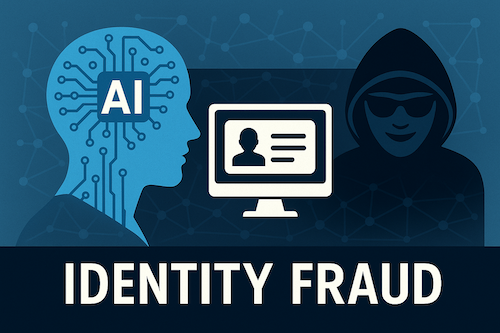
    In today’s schools, whether K-12 or higher education, AI is powering smarter classrooms. There’s more personalized learning and faster administrative tasks. And students themselves are engaging with AI more than ever before, as 70 percent say they’ve used an AI tool to alter or create completely new images. But while educators and students are embracing the promise of AI, cybercriminals are exploiting it.

    In 2025, the U.S. Department of Education reported that nearly 150,000 suspect identities were flagged in recent federal student-aid forms, contributing to $90 million in financial aid losses tied to ineligible applicants. From deepfakes in admissions to synthetic students infiltrating online portals and threatening high-value research information, AI-powered identity fraud is rising fast, and our educational institutions are alarmingly underprepared.

    As identity fraud tactics become more scalable and convincing, districts are now racing to deploy modern tools to catch fake students before they slip through the cracks. Three fraud trends keep IT and security leaders in education up at night–and AI is supercharging their impact.

    1. Fraud rings targeting education

    Here’s the hard truth: Fraudsters operate in networks, but most schools fight fraud alone.

    Coordinated rings can deploy hundreds of synthetic identities across schools or districts. These groups recycle biometric data, reuse fake documents, and share attack methods on dark web forums.

    To stand a fair chance in the fight, educational institutions must work with identity verification experts that enable a holistic view of the threat landscape through cross-transactional risk assessments. These assessments spot risk patterns across devices, IP addresses, and user behavior, helping institutions uncover fraud clusters that would be invisible in isolation.

    2. Deepfakes and injected selfies in remote enrollment

    Facial recognition was once a trusted line of defense for remote learning and test proctoring. But fraudsters can now use emulators and virtual cameras to bypass those checks, inserting AI-generated faces into the stream to impersonate students. In education, where student data is a goldmine and systems are increasingly remote, the risk is even more pronounced.

    In virtual work environments, for example, enterprises are already seeing an uptick in the use of deepfakes during job interviews. By 2028, Gartner predicts 1 in 4 job candidates worldwide will be fake. The same applies to the education sector. We’re now seeing fake students, complete with forged government IDs and a convincing selfie, slide past systems and into financial aid pipelines.

    So, what’s the fix? Biometric identity intelligence, trusted by a growing number of students, can verify micro-movements, lighting, and facial depth, and confirm whether a real human is behind the screen. Multimodal checks (combining visual, motion, and even audio data) are critical for stopping AI-powered identity fraud.

    3. Synthetic students in your systems

    Unlike stolen identities, synthetic identities are crafted from real–and fake–fragments, such as a legit SSN combined with a fake name. These “students” can pass enrollment checks, get campus credentials, and even apply for financial aid.

    Traditional document checks aren’t enough to catch them. Today’s identity verification tools must use AI to detect missing elements, like holograms or watermarks, and flag patterns including identical document backgrounds, which is a key sign of industrial-scale fraud.

     AI-powered identity intelligence for education

    As digital learning becomes the norm and AI accelerates, identity fraud will only get more sophisticated. However, AI also offers educators a solution.

    By layering biometrics, behavioral analytics, and cross-platform data, schools can verify student identities at scale and in real time, keeping pace with advancing threats, and even staying one step ahead.

    Latest posts by eSchool Media Contributors (see all)

    Source link

  • Lerner Publishing Group Launches Dr. Gholdy Muhammad’s Genius and Joy Curriculum

    Lerner Publishing Group Launches Dr. Gholdy Muhammad’s Genius and Joy Curriculum

    MINNEAPOLIS, MN—Lerner Publishing Group, a leading publisher of K-12 educational materials, is proud to announce the launch of Dr. Gholdy Muhammad’s groundbreaking Genius and Joy curriculum in Summer 2026. This new, all-in-one supplemental curriculum for Grades K–5 is grounded in Dr. Muhammad’s Five Pursuits Framework, a research-based educational model that enhances student engagement and intellectual growth.

    Within her research and scholarship in literacy development, English education and writing instruction, and culturally responsive pedagogies, Dr. Muhammad posed the question, “What if the purpose of schools and curriculum was to recognize and elevate the genius and joy of teachers and students?” The result is the Genius and Joy curriculum. This innovative curriculum prioritizes academic rigor by developing literacy skills, building subject area knowledge and centering students’ learning experience on joy. The curriculum is deep in content and thought while also practical and easy for teachers to use.

    Dr. Gholdy Muhammad’s Five Pursuits framework of Identity, Skills, Intellect, Criticality, and Joy is a research-based instructional approach that enhances student engagement and achievement by focusing on literacy, identity development, and historical awareness. Its impact is evident in the Lemon Grove School District in California, where implementation of the framework has led to measurable gains: Black and African American students have consistently increased their academic achievement, even surpassing the overall student population in English Language Arts proficiency. Additionally, Multilingual Learners (MLLs) in the district have experienced a tripling in reclassification rates, reflecting the effectiveness of equity-centered, data-informed practices that align with the framework’s core tenets. Schools and districts across forty-three states have implemented the Five Pursuits Framework into their instructional practices, and have been clamoring for an official curriculum.

    “I wanted teachers to see curriculum as the stories we teach and tell, as the world around us, and as the legacy that we leave in the lives of our children,” said Dr. Gholdy Muhammad. “It is my hope that this curriculum is a genius and joy experience for youth and teachers alike. We all deserve a comprehensive curricular experience.”

    The Genius and Joy Curriculum

    • Celebrates Joy in Teaching and Learning: The Genius and Joy Curriculum provides easy-to-implement approaches and strategies that include space within the learning experience where students can live out and discover their fullest potential. Joy is a safe and creative space to be free—free to learn, free to dream, and free to be.
    • Recognizes the Genius Within Every Child: Through powerful stories and dynamic activities, every lesson is designed to spark curiosity, encourage inquiry, and build students’ confidence in their own unique brilliance.
    • Elevates Learning Through the Five Pursuits: Through innovative pedagogy, students explore more than simple skill building. The five pursuits—identity, skills, intellect, criticality, and joy—of the HILL model are intended to teach the whole student and honor the goals of genius and joy.

    “We know that true learning happens when students see themselves in the material, feel their voices are valued, and are encouraged to think critically about the world around them,” said Adam Lerner, Publisher and CEO of Lerner Publishing Group. “We are proud to partner with Dr. Gholdy Muhammad on Genius and Joy to create an environment where students can not only excel academically, but also engage with Lerner’s award-winning books in ways that help them grow as whole individuals.”

    Genius and Joy will be available for purchase through Lerner Publishing Group starting Summer 2026. The curriculum will be accompanied by professional development resources to help educators implement the framework effectively, ensuring that the values of joy and academic excellence reach students in classrooms across the country.

    For more information about Genius and Joy visit geniusandjoycurriculum.com.

    Click here to watch Dr. Gholdy Muhammad’s webinar Celebrate the Genius and Joy of Every Student in Your Classroom.

    About Dr. Gholdy Muhammad
    Dr. Gholnecsar (Gholdy) Muhammad is the John Corbally Endowed Professor of Literacy, Language, and Culture at the University of Illinois Chicago. She has previously served as a classroom teacher, literacy specialist, school district administrator, curriculum director, and school board president. She studies Black historical excellence in education, intending to reframe curriculum and instruction today. Dr. Muhammad’s scholarship has appeared in leading academic journals and books. She has also received numerous national awards and is the author of the best-selling books, Cultivating Genius and Unearthing Joy. She also co-authored the book, Black Girls’ Literacies. Her Culturally and Historically Responsive Education Model has been adopted across thousands of U.S. schools and districts across Canada. In 2022, 2023, 2024 and 2025, she was named among the top 1% Edu-Scholar Public Influencers due to her impact on policy and practice. She has led a federal grant with the United States Department of Education to study culturally and historically responsive literacy in STEM classrooms. In the fall of 2026, her first curriculum, entitledGenius and Joy, will be available to schools and educators.

    About Lerner Publishing Group™Lerner Publishing Group creates high-quality fiction and nonfiction for children and young adults. Founded in 1959, Lerner Publishing Group is one of the nation’s largest independent children’s book publishers with seventeen imprints and divisions: Carolrhoda Books®, Carolrhoda Lab®, Darby Creek™, ediciones Lerner, First Avenue Editions™, Gecko Press™, Graphic Universe™, Kar-Ben Publishing®, Lerner Publications, LernerClassroom™, Lerner Digital™, Millbrook Press™, Soaring Kite Books, Sundance Newbridge, Twenty-First Century Books™, Zest Books™, and Lerner Publisher Services™. For more information, visit www.lernerbooks.com or call 800-328-4929.                                  

    eSchool News Staff
    Latest posts by eSchool News Staff (see all)

    Source link