Tag: K-12

  • Arizona Republicans Want Chaplains to be in Public Schools – The 74

    Arizona Republicans Want Chaplains to be in Public Schools – The 74


    Get stories like this delivered straight to your inbox. Sign up for The 74 Newsletter
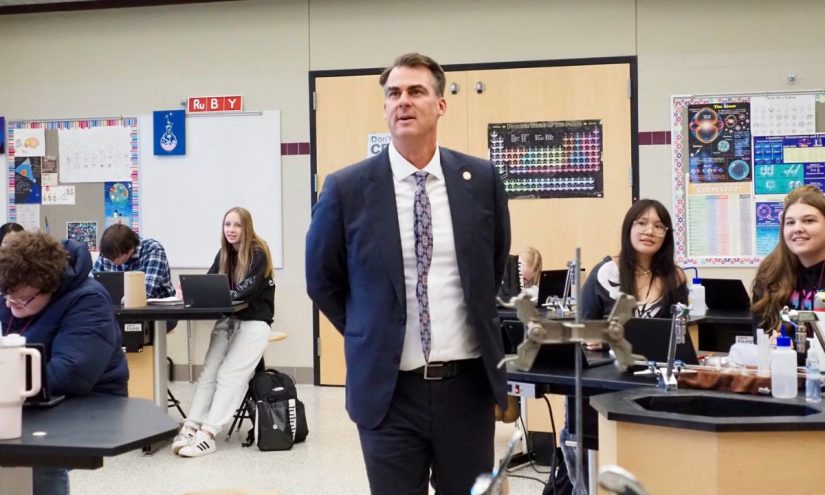
    Republican politicians who accuse public school teachers of indoctrinating students with a “woke agenda” are pushing to bring religious chaplains into the same schools to provide counseling to students.

    “I think Jesus is a lot better than a psychologist,” Rep. David Marshall, R-Snowflake, said during a March 11 meeting of the Arizona House of Representatives’ Education Committee.

    Marshall said that he’s been a chaplain who provides counseling for 26 years.

    Senate Bill 1269, sponsored by Flagstaff Republican Sen. Wendy Rogers, was modeled after similar legislation passed in recent years in Texas and Florida.

    The proposal would give school districts the option of allowing volunteer religious chaplains to provide counseling and programs to public school students. Districts that decide to allow chaplains would be required to provide to parents a list of the volunteer chaplains at each school and their religious affiliation, and parents would be required to give permission for their child to receive support from a chaplain.

    Despite ample concerns that the proposal violates the First Amendment’s Establishment Clause and that it would open up schools to legal liability for any bad mental health advice a chaplain might provide, the bill has already passed through the Senate on a party-line vote. The House Education Committee also approved it along party lines.

    Rogers told the Education Committee that the existence of any requirement for the separation of church and state in U.S. law “was a myth,” adding that she sees no harm in bringing religion into public schools.

    Rogers, a far-right extremist, has embraced white nationalism, and in 2022 spoke at a white nationalist conference, calling the attendees “patriots” and advocating for the murder of her political enemies.

    She has also said she is “honored” to be endorsed by a prominent antisemitic Christian nationalist and regularly trafficks in antisemitic tropes. And Rogers has advocated racist theories, appeared on antisemitic news programs and aligned herself with violent anti-government extremists.

    Democrats on the committee raised the alarm that Rogers’ bill would violate the Establishment Clause by allowing chaplains with religious affiliations to counsel students, while not providing the same kinds of services to students who don’t follow a religion or who follow a less-common religion with no chaplains available to the school.

    An amendment to the bill, proposed by committee Chairman Matt Gress, a Phoenix Republican, requires that the chaplains be authorized to conduct religious activities by a religious group that believes in a supernatural being. The amendment would also allow a volunteer chaplain to be denied from the list if the school’s principal believes their counsel would be contrary to the school’s teachings.

    Both of these changes would allow districts to exclude chaplains from The Satanic Temple of Arizona, a group that doesn’t believe in a higher power but promotes empathy and has chapters across the country that challenge the intertwining of Christianity and government.

    Oliver Spires, a minister with The Satanic Temple of Arizona, voiced his opposition to Rogers’ bill during a Feb. 5 Senate Education Committee meeting.

    The legislation, Spires said, would disproportionately impact students from minority religions who see Christian chaplains providing support to their peers while no chaplains representing their religion are available.

    “If a district listed a Satanist on their chaplain list, would they have your support?” he asked the committee members.

    Gress’s amendment would preclude that.

    Gaelle Esposito, a lobbyist for the American Civil Liberties Union of Arizona, told committee members on Tuesday that school counselors are required to undergo specialized training to prepare them to help students — requirements that religious chaplains wouldn’t have to meet, even though they’d be providing similar services.

    “They will simply not be equipped to support students dealing with serious matters like anxiety, depression, eating disorders, self harm or suicidal ideation,” Esposito said. “Religious training is not a substitute for academic and professional training in counseling, health care or mental health… Even with the best intentions, chaplains may provide inappropriate responses or interventions that could harm students.”

    But as Democrats on the House Education Committee argued that Arizona should provide more funding for trained counselors and social workers to help students with mental health issues, the Republicans on the panel said that students are actually struggling with mental health issues because they don’t have enough religion in their lives.

    “I’ve heard that there is a mental health crisis afflicting kids,” Gress, a former school board member, said. “Now, I don’t necessarily think in many of these cases that something is medically wrong with these kids. I think, perhaps, there is a spiritual deficit that needs to be addressed.”

    Rep. Justin Olson, R-Mesa, said he’s been frustrated by the federal courts’ interpretation of the First Amendment to require the separation of church and state, claiming it has made the government hostile to religion instead of protecting it.

    “I heard comments here today that this is going to harm kids — harm kids by being exposed to religion? That is absolutely the opposite of what is happening here today in our society,” Olson said. “We have become a secular society, and that is damaging our society. We need to have opportunities for people to look to a higher power, and what better way than what is described here in this bill?”

    Democratic Rep. Nancy Gutierrez, of Tucson, called SB1269 “outrageous” and “incredibly inappropriate.”

    And Rep. Stephanie Simacek, of Phoenix, pointed out that the courts have repeatedly ruled against allowing religious leaders to be invited to share their faith with public school students. She described Rogers’ bill as indoctrination that gives preferential treatment to students who have religious beliefs over those who don’t

    “No one is saying that you may not go and celebrate your God, however you see fit,” Simacek, a former teacher and school board member, said. “But this is not the place, in public education, where our students go to learn math, reading and writing and history.”

    Florida’s school chaplain law, which went into effect last July and is similar to Rogers’ proposal, has received ample pushback from First Amendment advocacy groups, as well as some church groups who said that allowing untrained chaplains to provide mental health support to students would have unintended negative consequences.

    The option to bring chaplains into schools in Florida has not been particularly popular, with several large school districts deciding not to implement a program allowing them.

    Proposed legislation similar to SB 1269 has been introduced in red states across the country this year, including in Indiana, Nebraska, Iowa, Montana and North Dakota.

    The bill will next be considered by the full House of Representatives. If it passes the chamber, it will return to the Senate for a final vote before heading to Gov. Katie Hobbs.

    Arizona Mirror is part of States Newsroom, a nonprofit news network supported by grants and a coalition of donors as a 501c(3) public charity. Arizona Mirror maintains editorial independence. Contact Editor Jim Small for questions: [email protected].


    Get stories like these delivered straight to your inbox. Sign up for The 74 Newsletter
    Source link

  • How a Republican Plan to Cut Universal Free School Meals Could Affect 12 Million Students – The 74

    How a Republican Plan to Cut Universal Free School Meals Could Affect 12 Million Students – The 74


    Get stories like this delivered straight to your inbox. Sign up for The 74 Newsletter

    Every school in Kentucky’s LaRue County provides free breakfast and lunch to any student who wants it.

    It’s been that way for a decade, ever since the federal government launched a program allowing LaRue County Schools, and thousands of other districts nationwide, to skip the paperwork asking how much families earn.

    In these communities, lots of kids already receive other kinds of assistance for low-income families. Federal officials saw a way to make the subsidized meals program more efficient: Cover meal costs based on how many children are in similar assistance programs, rather than verify every family’s income.

    But LaRue County Schools won’t be able to do that anymore if sweeping changes to social programs proposed by congressional Republicans become law. GOP lawmakers say they want to ensure only eligible families get help and that taxpayer dollars are reserved for the neediest students, so that federal subsidies for school meals remain sustainable. But by one estimate, the Republicans’ plan would affect nearly a quarter of the students in the nation’s public schools.

    Research has found that universal free school meals can boost school attendance, increase test scores, and decrease suspensions, likely because it eliminates the stigma students often associate with the free meals. Taking them away from students on a large scale could also have downstream effects on everything from families’ household budgets to local unemployment.

    Stephanie Utley, the LaRue County district’s director of child nutrition, said that inevitably, fewer kids would eat school meals, either because their families no longer qualify for free breakfast and lunch or because they cannot produce documents to verify their income.

    When fewer kids eat school meals, it’s harder for districts to cover their costs. To save money, Utley would likely swap higher-quality foods for cheaper ones, she said.

    Apples and beef from local farms would go. The high school would serve fewer salads — they’d be too labor-intensive to prep. And a popular chicken breast sandwich would become a ground chicken patty.

    Utley may have to lay off staff, too, she said, which would hurt the rural community’s economy.

    “We’re the biggest restaurant in town,” she said. “It would be a nightmare.”

    GOP school meals proposals would impact states

    Republican lawmakers are considering a trio of proposals to help offset tax cuts sought by President Donald Trump that would be “devastating” to children and schools, said Erin Hysom, the senior child nutrition policy analyst for the nonprofit Food Research & Action Center.

    One proposal would dramatically increase the share of students who need to be enrolled in aid programs — such as the Supplemental Nutrition Assistance Program and Temporary Assistance for Needy Families — for schools to be eligible to serve free meals to all kids through the Community Eligibility Provision.

    Right now, schools need to show 25% of students are enrolled in those kinds of assistance programs to participate in community eligibility. The House Republican proposal would raise the share to 60% — higher than the threshold has ever been. That would kick more than 24,000 schools off of community eligibility, and some 12 million students would no longer automatically qualify for free meals, Hysom’s organization estimated.

    Essentially, only communities where nearly every child qualifies for free or reduced-price lunch could serve free meals to all kids.

    “They’ve really moved the needle to the upper echelon of poverty,” Hysom said. “You couldn’t get any higher than that.”

    Another proposal would require all families who don’t automatically qualify for free school meals through programs like SNAP to submit documents to verify their income with their application. That would burden families and schools with time-consuming added paperwork. Schools could end up cutting staff who serve food and work on school menus to hire more people to process applications.

    Together, those changes would save $12 billion over 10 years, according to the list of proposals circulated by U.S. Rep. Jodey Arrington, the Republican chair of the House budget committee.

    A third proposal would change how families qualify for SNAP and likely make over 1 million students no longer automatically eligible for free school meals. That would increase the paperwork burden even more.

    All of that would make it more costly for states with universal free school meals to run their programs, because they rely heavily on federal reimbursement. Some states were already weighing whether they could afford to keep up free meals for all.

    These three proposals are part of a process known as budget reconciliation that GOP lawmakers are using to make long-term changes to federal spending and revenue. As of Wednesday, Congress was considering a separate, stopgap budget that would keep funding essentially flat for the Agriculture Department, which pays for the school meal program, through the end of September.

    School staff and child nutrition advocates are taking the House’s budget reconciliation proposals seriously. The Trump administration has already cut a $1 billion Agriculture Department program that helped schools buy food from local producers.

    Free school meal cutbacks would have ripple effects

    If fewer kids have access to free meals at school, more families would likely struggle to afford groceries at home. Many families who don’t qualify for free meals struggle to pay for food. This school year, a family of four qualified for free school meals if they made under $40,560 a year.

    When schools eliminated free school meals for all following the pandemic, there was a surge in unpaid school meal debt, an issue school staff say will only intensify if these proposals go through.

    Right now, schools typically have to verify the family’s income for 3% of their applications. If schools had to check income for every application, the burden would be enormous, school staff and child nutrition advocates said.

    Many families who eke out a living working multiple jobs would have a hard time gathering up all the required documents to show how much they earn. Though children can participate in the school meals program regardless of their immigration status, undocumented parents may be afraid to hand over personal documents when Trump is threatening mass deportations.

    “Eligible children are going to fall through the cracks,” Hysom said.

    Many schools are already facing financial pressures from higher-than-usual food and labor costs, a 2024 survey of nearly 1,400 school nutrition directors showed. On top of that, schools are navigating new and stricter requirements for how much salt and sugar can be in food served by schools.

    Schools have to buy most of their food from American sources, but if Trump puts certain tariffs in place for the long term, that could create new financial constraints.

    “Cost is absolutely a concern,” said Diane Pratt-Heavner, a spokesperson for the School Nutrition Association, which represents school nutrition directors and conducted the survey. “When avocados or tomatoes from Mexico become much more expensive, that will cause an increase in demand for domestic produce, and an increase in price, as well.”

    Shannon Gleave, the president of the School Nutrition Association, understands the need to make sure the school meal program runs as it should.

    In Arizona’s Glendale Elementary School District, where Gleave is the director of food and nutrition, kids can speed through the lunch line because everyone qualifies for free meals. But staff scan student ID badges to make sure each kid only takes one meal, and that children with dietary restrictions get the right food.

    Upping the verification requirements a little could work, she said. But verifying 100% of applications “is not an efficient use of time.”

    “There is no way my existing staff could do that now,” she said. “You have to figure out a way to be good stewards of resources, but also look at the amount of administrative burden that it’s going to entail.”

    This story was originally published by Chalkbeat. Chalkbeat is a nonprofit news site covering educational change in public schools. Sign up for their newsletters at ckbe.at/newsletters.


    Get stories like these delivered straight to your inbox. Sign up for The 74 Newsletter

    Source link

  • 5 powerful ways to link STEM lessons to real-world applications

    5 powerful ways to link STEM lessons to real-world applications

    Key points:

    “Why are we learning this?”

    This is a question every educator has faced before. To be fair, it’s a valid question. Students are naturally curious, and it’s normal for them to wonder about the knowledge that they’re acquiring. The real issue is how we, as educators, choose to respond to them.

    In my experience, teachers have two standard replies to this question:

    1. They’ll try to explain the subject in detail, which results in a long-winded answer that confuses their students and doesn’t satisfy them.
    2. They’ll argue that the information is important because it’s on an upcoming test, which typically leaves students feeling frustrated and disengaged.

    Either way, the result is the same: Students lose all legitimacy in the lesson and they’re unable to connect with the content.

    If we want our students to engage with the material in a way that’s memorable, meaningful, and fun, then we need to help them discover why it is important. Teachers can accomplish this by introducing real-world connections into the lesson, which reveal how the information that students acquire can be practically applied to real-world problems.

    Without building these connections between the concepts our students learn and real-world applications, students lose interest in what they are learning. Using the strategies below, you can start to build student investment into your classroom content.

    The everyday enigma

    Use everyday items that operate with mystery and frame your lesson around them. Your students’ curiosity will drive them to learn more about the object and how it functions. This allows students to see that the small concepts they are learning are leading to the understanding of an object that they interact with daily. When choosing an item, pick one that is familiar and one that has multiple STEM elements. For example, you could use a copper wire to discuss electrical currents, a piece of an automobile to explore chemistry and combustion, or shark teeth when teaching about animal adaptations and food chains.  

    Interest intersect

    Connect your students’ personal hobbies to the subject matter. For instance, if you have a student who is really passionate about soccer, try having them create a mini poster that connects the sport to the concepts learned in class. This gets them to think creatively about the purpose of content. This strategy has the additional benefit of helping teachers learn more about their students, creating opportunities to build communication and rapport.

    Get an expert

    Invite professionals (scientists, engineers, etc.) to talk with your class. This gives students a first-hand account of how the concepts they are learning can be applied to different careers. If you’re teaching chemistry, consider inviting a nurse or doctor to share how this subject applies to human health. If you’re teaching math, a local architect can expound on how angles and equations literally shape the homes in which students live. Not only does this provide a real-world example of students, but it helps schools connect with their community, creating vital relationships in the process.           

    Problem to progress

    Create an engineering investigation based on a local, real-world problem. For instance, I once knew a music teacher who was frustrated because pencils would regularly fall off his music stands. I challenged my 5th grade students to create a solution using the engineering design process. Not only did they succeed, but the experience allowed my students to see the real-world results of the inventions they created. When students understand that their work can make a tangible difference, it completely changes their relationship with the material.  

    Project-based learning

    Project-based learning is driven by inquiry and student ownership. This allows students to make contributions to the real world through hands-on investigations. What makes these inquiry-focused lessons so useful is that students are the driving force behind them. They choose how to approach the information, what questions to pursue, and what solutions they want to test. This makes the learning intensely personal while taking advantage of students’ natural curiosity, creativity, and critical-thinking skills. If you need a little help getting started, consider using one of these Blue Apple projects from Inquiry Outpost.

    By linking our STEM lessons to real-world experiences, teachers can provide a meaningful answer to the age-old question of, “Why are we learning this?” We can equip our students with the skills to not only navigate everyday challenges but also create positive change within their own communities. So, let’s empower young learners to see the relevance of STEM in their lives, and lay a strong learning foundation that will support them well beyond the classroom.

    Latest posts by eSchool Media Contributors (see all)

    Source link

  • Why California Still Doesn’t Mandate Dyslexia Screening – The 74

    Why California Still Doesn’t Mandate Dyslexia Screening – The 74


    Get stories like this delivered straight to your inbox. Sign up for The 74 Newsletter

    California sends mixed messages when it comes to serving dyslexic students.

    California Gov. Gavin Newsom is the most famous dyslexic political official in the country, even authoring a children’s book to raise awareness about the learning disability. And yet, California is one of 10 states that doesn’t require dyslexia screening for all children. 

    Education experts agree that early screening and intervention is critical for making sure students can read at grade level. But so far, state officials have done almost everything to combat dyslexia except mandate assessments for all students.

    “It needs to happen,” said Lillian Duran, an education professor at the University of Oregon who has helped develop screening tools for dyslexia. “It seems so basic to me.”

    Since 2015, legislators have funded dyslexia research, teacher training and the hiring of literacy coaches across California. But lawmakers failed to mandate universal dyslexia screening, running smack into opposition from the California Teachers Association.

    The union argued that since teachers would do the screening, a universal mandate would take time away from the classroom. It also said universal screening may overly identify English learners, mistakenly placing them in special education. 

    The California Teachers Association did not respond to requests for comment for this story. In a letter of opposition to a bill in 2021, the union wrote that the bill “is unnecessary, leads to over identifying dyslexia in young students, mandates more testing, and jeopardizes the limited instructional time for students.”

    In response, dyslexia experts double down on well-established research. Early detection actually prevents English learners — and really, all students — from ending up in special education when they don’t belong there.  

    While California lawmakers didn’t vote to buck the teachers union, they haven’t been afraid to spend taxpayer money on dyslexia screening. In the past two years, the state budget allocated $30 million to UC San Francisco’s Dyslexia Center, largely for the development of a new screening tool. Newsom began championing the center and served as its honorary chair in 2016 when he was still lieutenant governor. 

    “There’s an inadequate involvement of the health system in the way we support children with learning disabilities,” said Maria Luisa Gorno-Tempini, co-director of UCSF’s Dyslexia Center. “This is one of the first attempts at bridging science and education in a way that’s open sourced and open to all fields.”

    Parents and advocates say funding dyslexia research and developing a new screener can all be good things, but without mandated universal screening more students will fall through the cracks and need more help with reading as they get older.

    Omar Rodriguez, a spokesperson for the governor did not respond to questions about whether Newsom would support a mandate for universal screening. Instead, he listed more than $300 million in state investments made in the past two years to fund more reading coaches, new teacher credentialing requirements and teacher training.

    The screening struggle

    Rachel Levy, a Bay Area parent, fought for three years to get her son Dominic screened for dyslexia. He finally got the screening in third grade, which experts say could be too late to prevent long-term struggles with reading. 

    “We know how to screen students. We know how to get early intervention,” Levy said. “This to me is a solvable issue.”

    Levy’s son Dominic, 16, still remembers what it felt like trying to read in first grade.

    “It was like I was trying to memorize the shape of the word,” he said. “Even if I could read all the words, I just wouldn’t understand them.”

    Dyslexia is a neurological condition that can make it hard for students to read and process information. But teachers can mitigate and even prevent the illiteracy stemming from dyslexia if they catch the signs early.

    Levy, who also has dyslexia, said there’s much more research today on dyslexia than there was 30 years ago when she was first diagnosed. She said she was disappointed to find that California’s policies don’t align with the research around early screening.

    “Unfortunately, most kids who are dyslexic end up in the special education system,” Levy said. “It’s because of a lack of screening.”

    Soon after his screening in third grade, Dominic started receiving extra help for his dyslexia. He still works with an educational therapist on his reading, and he’s just about caught up to grade level in math. The biggest misconception about dyslexia, Dominic said, is that it makes you less intelligent or capable.

    “Dyslexics are just as smart as other people,” he said. “They just learn in different ways.”

    The first step to helping them learn is screening them in kindergarten or first grade.

    “The goal is to find risk factors early,” said Elsa Cárdenas-Hagan, a speech-language pathologist and a professor at the University of Houston. “When you find them, the data you collect can really inform instruction.”

    Cárdenas-Hagan’s home state of Texas passed a law in 1995 requiring universal screening. But she said it took several more years for teachers to be trained to use the tool. Her word of caution to California: Make sure teachers are not only comfortable with the tool but know how to use the results of the assessment to shape the way they teach individual students.

    A homegrown screener

    UC San Francisco’s screener, called Multitudes, will be available in English, Spanish and Mandarin. It’ll be free for all school districts. 

    Multitudes won’t be released to all districts at once. UCSF scientists launched a pilot at a dozen school districts last year, and they plan to expand to more districts this fall. 

    But experts and advocates say there’s no need to wait for it to mandate universal screenings. Educators can use a variety of already available screening tools in California, like they do in 40 other states. Texas and other states that have high percentages of English learners have Spanish screeners for dyslexia.

    For English learners, the need for screening is especially urgent. Maria Ortiz is a Los Angeles parent of a dyslexic teenager who was also an English learner. She said she had to sue the Los Angeles Unified School District twice: once in 2016 to get extra help for her dyslexic daughter when she was in fourth grade and again in 2018 when those services were taken away. Ortiz said the district stopped giving her daughter additional help because her reading started improving.

    “In the beginning they told me that my daughter was exaggerating,” Ortiz said.

     “They said everything would be normal later.”

    California currently serves about 1.1 million English learners, just under a fifth of all public school students. For English learners, dyslexia can be confused with a lack of English proficiency. Opponents of universal screening, including the teachers association, argue that English learners will be misidentified as dyslexic simply because they can’t understand the language. 

    “Even the specialists were afraid that the problem might be because of the language barrier,” Ortiz said about her daughter’s case.

    But experts say dyslexia presents a double threat to English learners: It stalls them from reading in their native language and impedes their ability to learn English. And while there are some Spanish-language screeners, experts from Texas and California say there’s room for improvement. Current Spanish screeners penalize students who mix Spanish and English, they say. 

    Duran, who helped develop the Spanish version of Multitudes, said the new screener will be a better fit for how young bilingual students actually talk. 

    “Spanglish becomes its own communication that’s just as legitimate as Spanish on its own or English on its own,” Duran said. “It’s about the totality of languages a child might bring.”

    Providing Multitudes free of cost is important to schools with large numbers of low-income students. Dyslexia screeners cost about $10 per student, so $30 million might actually be cost-effective considering California currently serves 1.3 million students in kindergarten through second grade. The tool could pay for itself in a few years. Although there are plenty of screeners already available, they can stretch the budgets of high-poverty schools and districts.

    “The least funded schools can’t access them because of the cost,” Duran said.

    In addition to the governor, another powerful state lawmaker, Glendale Democratic state Sen. Anthony Portantino, is dyslexic. While chair of the Senate Appropriations Committee, he has repeatedly, and unsuccessfully, authored legislation to require public schools to screen all students between kindergarten and second grade. 

    Portantino’s 2021 bill received unanimous support in the Senate Education and Appropriations committees, but the bill died in the Assembly Education Committee. Portantino authored the same bill in 2020, but it never made it out of the state Senate.

    “We should be leading the nation and not lagging behind,” Portantino said. 

    Portantino blamed the failure of his most recent bill on former Democratic Assemblymember Patrick O’Donnell, who chaired the Assembly Education Committee, for refusing to hear the bill. 

    “It’s no secret, Patrick O’Donnell was against teacher training,” Portantino said. “He thought our school districts and our educators didn’t have the capacity.”

    O’Donnell did not respond to requests for comment. Since O’Donnell didn’t schedule a hearing on the bill, there is no record of him commenting about it at the time.

    Portantino plans to author a nearly identical bill this year. He said he’s more hopeful because the Assembly Education Committee is now under the leadership of Assemblymember Al Muratsuchi, a Democrat from Torrance. Muratsuchi would not comment on the potential fate of a dyslexia screening bill this year.

    Levy now works as a professional advocate for parents of students with disabilities. She said without mandatory dyslexia screening, only parents who can afford to hire someone like her will be able to get the services they need for their children.

    “A lot of high school kids are reading below third-grade level,” she said. “To me, that’s just heartbreaking.”

    This was originally published on CalMatters.


    Get stories like these delivered straight to your inbox. Sign up for The 74 Newsletter
    Source link

  • AI in K-12 instruction: Insights from instructional coaches

    AI in K-12 instruction: Insights from instructional coaches

    Key points:

    As artificial intelligence (AI) becomes an integral part of modern education, instructional coaches play a pivotal role in guiding teachers on its implementation, bridging the gap between emerging educational technologies and effective classroom practices.

    As trusted mentors and professional development leaders, they guide teachers in implementing AI tools thoughtfully, ensuring that technology enhances student learning while aligning with pedagogical best practices. This article briefly synthesizes responses from instructional coaches regarding their experiences, challenges, and recommendations for integrating AI into K-12 education.  

    Ten instructional coaches, all with advanced degrees, had the following insights into the instructional use of AI in K12 education. They all have more than 10 years of experience in education and work across all three types of school environments: urban, suburban, and rural.

    The coaches reported that AI is used for various instructional purposes. The most-cited applications included providing feedback on student work, creating professional development materials, supporting writing and content generation, creating course content, and enhancing accessibility for students with special needs. Many coaches note that AI tools assisted in grading assignments, offering real-time feedback, and supporting differentiated instruction. AI-powered feedback helps teachers provide more personalized responses without increasing their workload.  Regarding professional development, AI is being used to generate training content for teachers, ensuring they stay updated on educational trends. Coaches are leveraging AI to curate research, synthesize best practices, and develop instructional strategies tailored to their schools.  They encourage teachers and students to utilize AI for brainstorming, outlining essays, and improving writing mechanics.  

    Perceived impact of AI on instruction 

    The vast majority of instructional coaches expressed positive expectations regarding AI’s potential to reduce educator workload, create personalized learning experiences, and improve access for students with disabilities. However, perspectives on AI’s overall impact on education varied. While most believe AI has positively influenced instruction, a few remain cautious about its potential risks.  One coach suggested that allowing students to utilize the tools in a structured setting and teaching them to use AI as a tool is one of the biggest potentials for generative AI in education. About three-fourths of coaches feel that AI will reduce teacher workload by automating repetitive tasks such as grading and data analysis.

    Concerns about AI in education 

    While AI presents numerous benefits, instructional coaches also raised concerns about its potential drawbacks, including ethical dilemmas, student engagement challenges, and equity issues. Despite its advantages, instructional coaches identified several challenges and ethical concerns. They worry some students will use AI tools without critically engaging with the material, leading to passive learning and an overreliance on generative tools. Some had concerns that AI-generated content could reduce the need for creativity and independent thought. Coaches worry that AI makes it easier for students to plagiarize or rely on generated answers without truly understanding concepts which can negatively impact academic integrity. Coaches cite technical challenges as well. Educators face issues with AI tool reliability, compatibility with existing learning management systems (LMS), and steep learning curves. The coaches mentioned that some schools lack the infrastructure to support meaningful widespread AI integration. 

    Several ethical and privacy concerns were mentioned. AI tools collect and store student data, raising concerns about data privacy and security–particularly with younger students who may be less aware or concerned about revealing personally identifiable information (PII). They mention the need for clear guidelines on responsible AI use to prevent bias and misinformation.

    Coaches emphasize the importance of verifying AI-generated materials for accuracy. They suggest teachers be encouraged to cross-check AI-produced responses before using them in instruction. They recommend robust integrating discussions on digital literacy, AI biases, and the ethical implications of generative AI into classroom conversations. Schools need to train educators and students on responsible AI usage. Some schools restrict AI for creative writing, critical thinking exercises, and certain assessments to ensure students develop their own ideas–an idea that coaches recommend. Coaches suggest embedding AI literacy into existing courses, ensuring students understand how AI works, its limitations, and its ethical implications. 

    Equity concerns are a serious issue for instructional coaches. Schools should ensure all students have equal access to AI tools. AI should be leveraged to bridge learning gaps, not widen them. Making sure all students have access to the same suite of tools is essential to create a level playing field for all learners. Instructional coaches generally agree that AI is not just a passing trend, but an integral part of the future of education. There is a concern that generative AI tools will reduce the human interaction of the teaching and learning process. For instance, interpersonal relationships are not developed with AI-based tutoring systems in the same way they can be developed and encouraged with traditional tutoring processes.

    The integration of AI in K-12 education presents both opportunities and challenges. Instructional coaches largely recognize AI’s potential to enhance learning, improve efficiency, academic integrity, and maintain human-centered learning experiences. As AI continues to evolve, educators must be proactive in shaping how it is used, ensuring it serves as a tool for empowerment rather than dependency. Future efforts should focus on professional development for educators, AI literacy training for students, and policies ensuring equitable AI access across diverse school settings.

    Latest posts by eSchool Media Contributors (see all)

    Source link

  • Harrow International announces first Middle Eastern school 

    Harrow International announces first Middle Eastern school 

    The UK’s 450-year-old Harrow boarding school has unveiled plans for its first international school in the Middle East, opening a campus on Saadiyat Island, Abu Dhabi.

    “The opening of Harrow International School in the UAE is a testament to the strong educational ties between the UK and the UAE and our shared aspiration for academic excellence,” said Edward Hobart, British Ambassador to the UAE.  

    The flagship school will be operated by UAE education provider, Taaleem, which last year acquired the rights to operate Harrow’s international schools across the Gulf Cooperation Council countries.  

    The launch of Harrow’s first international school in the region marks Taaleem’s strategic expansion into the “super-premium” education sector, said the organisation’s chairman Khalid Al Tayer. 

    Boarding at Harrow’s UK school costs upwards of £20,000 per term, though tuition fees have not been released for the new Abu Dhabi location.  

    The opening of Harrow International School in the UAE is a testament to the strong educational ties between the UK and the UAE

    Edward Hobart, British Ambassador

    One of the region’s largest K-12 providers with over 30 schools across the UAE, Taaleem will independently own and operate the running of the school.  

    The Abu Dhabi location will initially cater to students from early years to year six, with gradual expansion through the higher years and a total capacity of 1,800 students.  

    “Class sizes will be optimised to ensure personalised attention, with a focus on academic rigour and holistic development,” the school group stated. 

    It is expected to soon announce an additional Harrow school in Dubai, subject to government approval

    Harrow school said that the “landmark agreement” would bring Harrow’s “rich heritage and values-driven education to the UAE capital”.  

    “Rooted in tradition yet designed for the future, Harrow Abu Dhabi will offer an exceptional learning environment that nurtures character, leadership, and a global outlook,” it added. 

    Source link

  • Carousel Digital Signage Integrates with CrisisGo to Empower Safer School Communities

    Carousel Digital Signage Integrates with CrisisGo to Empower Safer School Communities

    MINNEAPOLIS, MINNESOTA – Carousel Digital Signage announces a new technology partnership with CrisisGo that enables K-12 schools and businesses to deliver emergency alerts and other safety messages to digital displays with immediacy. The integration is enabled through an open API that triggers visual alerts, interactive maps and more to Carousel Cloud digital signage networks via the Common Alerting Protocol (CAP), a global standard that supports the digital exchange of emergency alerts and public warnings over multiple networks.

    CrisisGo’s Safety iResponse platform offers a comprehensive suite of advanced alerting software and tools that empower school districts to create safer and more secure learning environments. Its features include real-time alerting, incident management and parent notification, all of which combine to help schools respond to emergencies in an efficient and effective manner. The platform also immediately shares emergency alerts with local law enforcement when police assistance is needed.

    Direct integration of the two software platforms on a common IT network ensures consistent monitoring of incoming triggers from Safety iResponse to Carousel Cloud. Upon recognizing an incoming alert, Carousel Cloud disseminates the active alert as a priority for instant takeover of all  targeted screens. Upon resolution, Carousel Cloud immediately removes the alert and resumes normal operations, eliminating the need to schedule expiration times or manually clear the system. That accelerates the important process of reunification to ensure all students, teachers and other staff members are accounted for and safe.

    “Carousel Cloud’s ability to recognize an all-clear message is a differentiator from other digital signage solutions that we have evaluated,” said Jacob Lewis, Chief Security Officer, CrisisGo. “Carousel Cloud will also recognize the type of event our system is addressing and exactly where the alerts need to go, which could be select screens, schoolwide, or across an entire multi-campus network. This seamless interoperability represents an important step in our multimodal strategy for mass notification, which also includes delivery to all computers and mobile devices that are connected to our software.”

    The CrisisGo partnership represents the latest technology integration between Carousel Digital Signage and emergency alerting platforms aimed at strengthening school safety in K-12 environments. Lewis says that while K-12 remains the top priority for CrisisGo’s integrated solution with Carousel, he anticipates potential expansion into other verticals including corporate enterprise and manufacturing.

    “Our collaboration with CrisisGo represents the next step in our efforts to keep students and faculty informed, safe and resilient across all grade levels,” said Eric Henry, SVP of Business Architecture, Carousel Digital Signage. “Carousel Cloud’s open platform enables clean and reliable interoperability with CrisisGo, and our common integration with the CAP protocol ensures immediate dissemination of important visual alerts that will help school districts keep all campuses safe and secure.”

    About Carousel Digital Signage

    Carousel is Digital Signage Content Management Software that is easy to use, scalable, and reliable. With a deep feature set and strong technology partnerships Carousel gives you the most value in digital signage. Carousel Digital Signage is a division of Tightrope Media Systems. You can reach the Carousel team at (866) 866-4118, or visit  www.carouselsignage.com.

    About CrisisGo

    CrisisGo has been leading the K-12 industry since 2013, setting the standard for school safety. Our comprehensive emergency and safety management platform empowers schools with real-time alerting, incident management, visitor management, threat and behavioral intervention features, and reunification solutions. CrisisGo also offers comprehensive training to equip staff and teachers with handling emergencies. CrisisGo consistently innovates to enhance K-12 security, partnering with educators and administrators to create safe and nurturing learning environments and redefining school safety for a brighter future in education.

    eSchool News Staff
    Latest posts by eSchool News Staff (see all)

    Source link

  • Parents, Medical Providers, Vaccine Experts Brace for RFK Jr.’s HHS Takeover – The 74

    Parents, Medical Providers, Vaccine Experts Brace for RFK Jr.’s HHS Takeover – The 74


    Get stories like this delivered straight to your inbox. Sign up for The 74 Newsletter

    While Robert F. Kennedy Jr. ‘s Senate confirmation to head the Department of Health and Human Services was not unexpected, it still shook medical providers, public health experts and parents across the country. 

    Mary Koslap-Petraco, a pediatric nurse practitioner who exclusively treats underserved children, said when she heard the news Thursday morning she was immediately filled with “absolute dread.”

    Mary Koslap-Petraco is a pediatric nurse practitioner and Vaccines for Children provider. (Mary Koslap-Petraco)

    “I have been following him for years,” she told The 74. “I’ve read what he has written. I’ve heard what he has said. I know he has made a fortune with his anti-vax stance.”

    She is primarily concerned that his rhetoric might “scare the daylights out of people so that they don’t want to vaccinate their children.” She also fears he could move to defund Vaccines for Children, a program under the Centers for Disease Control and Prevention that provides vaccines to kids who lack health insurance or otherwise wouldn’t be able to afford them. While the program is federally mandated by Congress, moves to drain its funding could essentially render it useless.

    Koslap-Petraco’s practice in Massapequa Park, New York relies heavily on the program to vaccinate pediatric patients, she said. If it were to disappear, she asked, “How am I supposed to take care of poor children? Are they supposed to just die or get sick because their parents don’t have the funds to get the vaccines for them?” 

    And, if the government-run program were to stop paying for vaccines, she said she’s terrified private insurance companies might follow suit. 

    Vaccines for Children is “the backbone of pediatric vaccine infrastructure in the country,” said Richard Hughes IV, former vice president of public policy at Moderna and a George Washington University law professor who teaches a course on vaccine law.

    Kennedy will also have immense power over Medicaid, which covers low-income populations and provides billions of dollars to schools annually for physical, mental and behavioral health services for eligible students.

    If Kennedy moves to weaken programs at HHS, which experts expect him to do, through across-the-board cuts in public health funding that trickle down to immunization programs or more targeted attacks, low-income and minority school-aged kids will be disproportionately impacted, Hughes said. 

    “I just absolutely, fundamentally, confidently believe that we will see deaths,” he added.

    Anticipating chaos and instability

    Following a contentious seven hours of grilling across two confirmation hearings, Democratic senators protested Kennedy’s confirmation on the floor late into the night Wednesday. The following morning, all 45 Democrats and both Independents voted in opposition and all but one Republican — childhood polio survivor Mitch McConnell of Kentucky — lined up behind President Donald Trump’s pick.

    James Hodge, a public health law expert at Arizona State University’s Sandra Day O’Connor College of Law, said that while it was good to see senators across the political spectrum asking tough questions and Kennedy offering up some concessions on vaccine-related policies and initiatives, he’s skeptical these will stick.

    “Whatever you’ve seen him do for the last 25 to 30 years is a much, much greater predictor than what you saw him do during two or three days of Senate confirmation proceedings,” Hodge said. “Ergo, be concerned significantly about the future of vaccines, vaccine exemptions, [and] how we’re going to fund these things.”

    Hodge also said he doesn’t trust how Kennedy will respond to the consequences of a dropoff in childhood vaccines, pointing to the current measles outbreak in West Texas schools.

    “The simple reality is he may plant misinformation or mis-messaging,” he said.

    During his confirmation hearings, Kennedy tried to distance himself from his past anti-vaccination sentiments stating, “News reports have claimed that I am anti-vaccine or anti-industry. I am neither. I am pro-safety … I believe that vaccines played a critical role in health care. All of my kids are vaccinated.”

    He was confirmed as Linda McMahon, Trump’s nominee to head the Department of Education, was sitting down for her first day of hearings. At one point that morning, McMahon signaled an openness to possibly shifting enforcement to HHS of the Individuals with Disabilities Education Act — a federal law dating back to 1975 that mandates a free, appropriate public education for the 7.5 million students with disabilities — if Trump were to succeed in shutting down the education department.

    This would effectively put IDEA’s $15.4 billion budget under Kennedy’s purview, further linking the education and public health care systems.

    In a post on the social media site BlueSky, Randi Weingarten, president of the American Federation of Teachers, wrote she is “concerned that anyone is willing to move IDEA services for kids with disabilities into HHS, under a secretary who questions science.”

    Keri Rodrigues, president of the National Parents Union and a parent of a child with ADHD and autism, told The 74 the idea was “absolutely absurd” and would cause chaos and instability. 

    Kennedy’s history of falsely asserting a link between childhood vaccines and autism — a disability included under IDEA coverage — is particularly concerning to experts in this light.

    “You obviously have a contingent of kids who are beneficiaries of IDEA that are navigating autism spectrum disorder,” said Hughes, “Could [we] potentially see some sort of policy activity and rhetoric around that? Potentially.”

    Vaccines — and therefore HHS — are inextricably linked to schools. Currently, all 50 states have vaccine requirements for children entering child care and schools. But Kennedy, who now has control of an agency with a $1.7 trillion budget and 90,000 employees spread across 13 agencies, could pull multiple levers to roll back requirements, enforcements and funding, according to The 74’s previous reporting. And Trump has signaled an interest in cutting funding to schools that mandate vaccines.

    “There’s a certain percentage of the population that is focused on removing school entry requirements,” said Northe Saunders, executive director of the pro-vaccine SAFE Communities Coalition. “They are loud, and they are organized and they are well funded by groups just like RFK Jr.’s Children’s Health Defense.”

    Kennedy will also have the ability to influence the makeup of the committees that approve vaccines and add them to the federal vaccine schedule, which state legislators rely on to determine their school policies. Hodge said one of these committees is already being “re-organized and re-thought as we speak.”

    “With him now in place, just expect that committee to start really changing its members, its tone, the demeanor, the forcefulness of which it’s suggesting vaccines,” he added.

    Hughes, the law professor, said he is preparing for mass staffing changes throughout the agency, mirroring what’s already happened across multiple federal departments and agencies in Trump’s first weeks in office. He predicts this will include Kennedy possibly asking for the resignations “of all scientific leaders with HHS.” 

    Kennedy appeared to confirm that he was eyeing staffing cuts Thursday night during an appearance on Fox News’s “The Ingraham Angle.”

    “I have a list in my head … if you’ve been involved in good science, you have got nothing to worry about,” Kennedy said.


    Get stories like these delivered straight to your inbox. Sign up for The 74 Newsletter

    Source link

  • Reaching peak engagement in K-12 science education

    Reaching peak engagement in K-12 science education

    Key points:

    More than half of science teachers believe the most important value of science education is how it contributes to students’ curiosity, critical thinking, and creativity, according to a new report from LEGO Education. But are today’s students truly engaging with science education?

    LEGO Education’s State of Classroom Engagement Report: Science Edition surveyed more than 6,000 global teachers, parents, students, and U.S. administrators to gather data that can offer insight to support educators as they strive to engage their students in science learning.

    Science learning builds life skills students will use even if they do not pursue the science in college or as a career. It also increases student engagement and well-being, but here’s the catch: Students have to feel connected to the material in order to build these skills.

    Just over half of global science teachers say their students are engaged in science, which points to a critical need to boost engagement in the subject, according to the report. Interestingly, students say they are more engaged in science than they are in school overall. Only one-third of teachers worldwide indicate that their students are engaged in the classroom. Schools could leverage students’ interest in science to build schoolwide engagement–a key factor tied to student well-being.

    When students aren’t engaged in science, what’s behind that lack of engagement? Often, they’re intimidated before they even learn the material, and they assume the topics are too challenging. Students lose confidence before they even try. Of students who say science is their least-favorite topic, 45 percent say science is too hard and 37 percent say they are bad at science. What’s more, 77 percent of global teachers say they believe students struggle because of complex concepts and curricula, and they’re searching for for impactful resources that support every student’s success.

    “If students think they’re not good at the subject or avoid it, we risk losing an entire generation of innovators and problem solvers,” said Victor Saeijs, president of LEGO Education, in the report.

    How can educators reach students who struggle to engage with science? Hands-on science learning is the key to piquing student curiosity, prompting them to engage with learning material and build confidence as they explore science concepts. Sixty-two percent of science teachers say hands-on activities drive student engagement in science. Seventy-five percent of science teachers who do incorporate hands-on activities believe this approach leads to higher test scores and grades.

    More students need access to hands-on science learning. Only 55 percent of students say they regularly get hands-on experiences–these experiences usually require extra time and resources to plan and execute. Eighty-two percent of science teachers say they need more ways to teach science with play and hands-on methods.

    Having access to hands-on science learning experiences increases students’ confidence, giving them the boost they often need to tackle increasingly tough-to-learn concepts:

    • 73 percent of students with access to hands-on learning opportunities report feeling confident in science
    • Just 52 percent of students who do not have access to hands-on learning report feeling confident in science

    Hands-on experiences in science drive:

    • Learning outcomes: 71 percent of science teachers who incorporate hands-on, playful learning believe the methodology supports higher test scores and grades
    • Engagement for all learners: 84 percent of U.S. teachers and 87 percent of administrators think that hands-on experiences help all types of learners engage with science concepts
    • Love of science: 63 percent of students who love science credit their passion to regular hands-on experiences
    • Confidence: 79 percent of students who have hands-on science experiences are confident in the subject

    Administrators and science teachers are short on time and need hands-on tools and resources to quickly engage students in learning:

    • 59 percent of U.S. administrators and 54 percent of science teachers say they need more tools to engage students in science
    • Nearly one-third of U.S. students do not get hands-on science experiences.
    Laura Ascione
    Latest posts by Laura Ascione (see all)

    Source link

  • UK private schools take next step in VAT policy legal row

    UK private schools take next step in VAT policy legal row

    The case will be heard at London’s High Court April 1-3, the Independent Schools Council (ISC), which represents private schools in the UK, revealed this week.

    It’s the latest step in its furious battle to overturn a policy – key to the Labour party’s election manifesto before it regained power in July 2024 – to start levying VAT on private school fees.

    The ISC said its case, led by prominent human rights barrister Lord Pannick KC, would argue that the VAT policy “impedes access to education in independent schools” and is therefore incompatible with the European Convention on Human Rights.

    In the case, the ISC is supporting six families impacted by the policy, and the defendent in UK Chancellor Rachel Reeves.

    The case is being heard on an expedited basis following a successful argument from Lord Pannick that parents needed certainty because they are already feeling the effects of the policy.

    ISC CEO Julie Robinson said the organisation’s aim was to “protect the rights” of families and young people “who are having their choice removed from them”.

    “This is an unprecedented tax on education – it is right that its compatibility with human rights law is tested,” she continued. “We believe the diversity within independent schools has been ignored in the haste to implement this damaging policy, with families and, ultimately, children, bearing the brunt of the negative impacts this rushed decision is already having.”

    This is an unprecedented tax on education – it is right that its compatibility with human rights law is tested
    Julie Robinson, ISC

    Reeves confirmed in October that the party would be slapping a 20% tax on fees for January 2025, leading to fears from independent boarding schools that their intake of international students could plummet.

    Experts predicted that although some schools would choose to swallow the loss of revenue, most would be forced to raise their fees an average of 10-15% to cover costs.

    An online private school told The PIE News earlier this month that it has seen a “five-fold” surge in interest from parents since the VAT policy was announced last year.

    CEO of Minerva’s Virtual Academy, Hugh Viney, credited the rise in demand to the VAT policy, as he said the school’s fees are “good value” and much less than most private schools at under £8,500 per year – a price that has always included VAT and is therefore unchanged by the new legislation.

    Source link