From the “One Big, Beautiful Bill” to notable achievement gains in young students, what did you learn from our recent stories?
Tag: K12
-

Test yourself on this week’s K-12 news
This audio is auto-generated. Please let us know if you have feedback.How well did you keep up with this week’s developments in K-12 education? To find out, take our five-question quiz below. Then, share your score by tagging us on social media with #K12DivePopQuiz.
-
Test yourself on this week’s K-12 news
This audio is auto-generated. Please let us know if you have feedback.How well did you keep up with this week’s developments in K-12 education? To find out, take our five-question quiz below. Then, share your score by tagging us on social media with #K12DivePopQuiz.
-
Test yourself on this week’s K-12 news
This audio is auto-generated. Please let us know if you have feedback.How well did you keep up with this week’s developments in K-12 education? To find out, take our five-question quiz below. Then, share your score by tagging us on social media with #K12DivePopQuiz.
-
Test yourself on this week’s K-12 news
This audio is auto-generated. Please let us know if you have feedback.How well did you keep up with this week’s developments in K-12 education? To find out, take our five-question quiz below. Then, share your score by tagging us on social media with #K12DivePopQuiz.
-
Trump’s FY26 budget would slash more than $4.5B from K-12
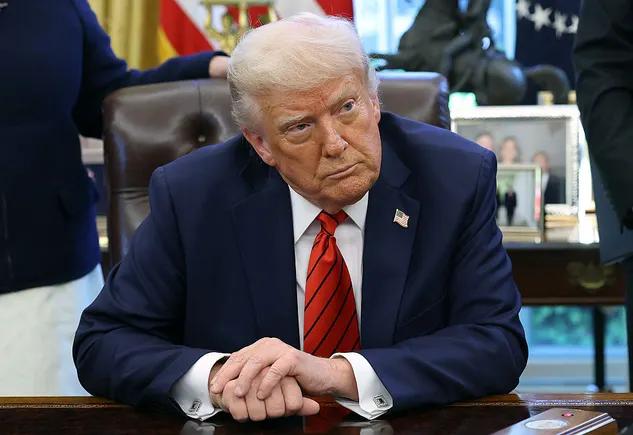
This audio is auto-generated. Please let us know if you have feedback.President Donald Trump on Friday delivered a federal budget that would slash more than $4.5 billion in K-12 funding for fiscal year 2026. In total, cuts to the Education Department would amount to $12 billion, or 15% of its current funding.
The deep cuts would hit programs meant to ensure equitable access to education for underserved students and to protect their civil rights. And though maintained at current funding levels, Title I and special education programs would be reorganized into separate single grants aimed at letting states spend the money as they see fit.
“The Budget continues the process of shutting down the Department of Education,” the White House’s funding request states.
Among the cuts:
- All $70 million for Teacher Quality Partnerships grant, often used to diversify the teacher workforce.
- All $7 million for Equity Assistance Centers, established as part of desegregation efforts.
- All $890 million for English Language Acquisition.
- A $49 million, or 35%, reduction for the Office for Civil Rights.
At the same time, Trump’s budget would boost funding for charter schools by $60 million.
Funding for Title I and Individuals with Disabilities Education Act programs — which public school advocates had worried would be cut — was preserved. Head Start, which was widely rumored to be on the chopping block, appears to have survived for now as it is not among the cuts listed in the budget document.
Cuts reflect administration’s anti-DEI priority
Many of the proposed cuts reflect Trump’s course reversal from the previous decades-long focus on equity in the education sector.
For instance, the budget would zero out Equity Assistance Centers, originally established under the Civil Rights Act of 1964 to level the playing field for students of color, and especially Black students, after decades of segregation and its long-standing impact on their achievement over generations. Friday’s White House budget request characterizes such efforts as “distractions” from focusing on core subjects like math, reading, science and history.
Another program that would be halted is the Teacher Quality Partnerships grant, which funds teacher pipeline programs and helped establish a master’s program for teachers of color. The budget document argues that the program centers “racism in their pedagogy” by including instruction for aspiring teachers on “social justice activism, ’anti-racism,’ and instruction on white privilege and white supremacy.” Professional development workshops funded by the grants have included topics such as “building cultural competence,” “dismantling racial bias,” and “centering equity in the classroom,” which the administration took issue with.
Also on the chopping block: The budget would eliminate the $890 million English Language Acquisition program, which the administration says “encourages bilingualism,” and “deemphasizes English primacy.”
The administration also proposed an end to the U.S. Health and Human Services Department’s Preschool Development Grants. In the budget overview, the White House cited efforts by the Minnesota Department of Education to use the money to implement “intersectionality” and “racial equity” in early childhood education programs and by Oregon to provide “quality care” for the state’s LGBTQIA+ families.
One of the few increases included in the proposal to K-12 program funding was an additional $60 million for charter schools, which it says “have a proven track record of improving students’ academic achievement” and will create more local school options while expanding parental choice.
Proposed cuts follow recent moves to gut Education Department
The president’s budget request “reflects funding levels for an agency that is responsibly winding down, shifting some responsibilities to the states, and thoughtfully preparing a plan to delegate other critical functions to more appropriate entities.” said U.S. Secretary of Education Linda McMahon.
The budget proposal “supports the President’s vision of expanding school choice and ensuring every American has access to an excellent education,” McMahon said in a statement on Friday.
Many of the proposed cuts reflect moves already made to pare down and eventually close the Education Department “to the maximum extent appropriate and permitted by law,” as Trump ordered in a March directive.
For example, as part of a massive reduction in force that eliminated half of the department’s employees, the ELA office was already entirely slashed.
The RIF also cut OCR’s workforce by half, shutting down half of the nation’s offices that were responsible for investigating thousands of school civil rights complaints. OCR operations under Trump have pivoted to focus on eliminating LGBTQ+-friendly policies, and much of its investigative responsibilities and all of its enforcement work has been shifted to the Department of Justice.
One of the first cuts made to the department, even prior to the mass layoffs, was the February cancellation of Teacher Quality Partnership grants, which the administration called “divisive.” Those grants, entirely eliminated in Friday’s proposed budget, were part of a $600 million cut that was challenged in court by Democratic attorneys general and temporarily reinstated in March, only for the Supreme Court to then allow the cuts to move forward.
Next steps in the budget process
While far from final, presidents’ budget proposals reflect their priorities for the nation and oftentimes hint at the road ahead. Though priorities shift between administrations, and particularly so when the party in power changes — but the shifts have been nothing short of dramatic and unprecedented from Biden to Trump.
Appropriations are ultimately set by Congress, which is now controlled by Republicans who espouse many of Trump’s priorities and seem sympathetic to the president’s K-12 priorities, including shutting down the Education Department. Long considered impossible, the agency’s total shutdown still seems like a longshot to many. But, it’s possible that many of the president’s funding proposals — which would eliminate or greatly reduce many of the department’s functions — will be pushed through.
“The President’s Budget Request is simply one step in the annual budget process,” said U.S. Sen. Susan Collins, R-Maine, chair of the Senate Appropriations Committee, in a statement Friday. Noting that the budget was submitted late and isn’t comprehensive, Collins said, “Ultimately, it is Congress that holds the power of the purse.”
The House and Senate Appropriations committees will hold hearings to learn more about the president’s proposal and then are to mark up their own bills to fund the federal government for the fiscal year that begins Oct. 1.
-
Test yourself on this week’s K-12 news
This audio is auto-generated. Please let us know if you have feedback.How well did you keep up with this week’s developments in K-12 education? To find out, take our five-question quiz below. Then, share your score by tagging us on social media with #K12DivePopQuiz.
-

State Guidance on the Use of Generative AI in K-12 Education
More than two years into the advent of generative artificial intelligence (AI) in K-12 schools, many state departments of education are issuing guidance or policies for responsible school and student use of AI. A helpful map from AI for Education shows that half of U.S. state departments of education have issued guidance on the use of generative AI in K-12 schools (and there has also been some at the district levels). The states whose departments of education have issued guidance include: Alabama, Arizona, California, Colorado, Connecticut, Delaware, Georgia, Hawai’i, Indiana, Kentucky, Louisiana, Minnesota, Mississippi, New Jersey, North Carolina, North Dakota, Ohio, Oklahoma, Oregon, Utah, Virginia, Washington, West Virginia, Wisconsin, and Wyoming.
A Good Start: What Recent Guidance Says About Data Privacy
All twenty-five states mentioned (or provided resources that included mention of) data privacy or data privacy principles in their guidance. For a detailed analysis, see FPF’s resource – Summary of State AI Guidance for Schools listing the language used by each state for a closer look). Multiple states mention data privacy and the guidance typically falls into the following areas:
- Compliance with Federal and/or State Laws: about 20 states reference regulations such as FERPA (Family Educational Rights and Privacy Act), COPPA (Children’s Online Privacy Protection Act), CIPA (Children’s Internet Protection Act), IDEA (Individuals with Disabilities Education Act), and/or other local laws as the baseline for acceptable data handling and privacy practices.
- Data Minimization Principles: about 12 states stress the importance of avoiding inputting PII (Personally Identifiable Information) into AI systems.
- Data Collection and Retention: about 16 states mention or address data collection, use, sharing, and/or storage practices, with an emphasis on limiting data retention and ensuring data is only collected for specific educational purposes.
- Data Security: about 21 states list data security concerns as a focus, with some calling for AI systems to adhere to security best practices, including encryption, authentication, and authorization to prevent unauthorized access.
- Transparency and Parental Consent: about 10 states mention the need for transparency surrounding AI policies: both vendor transparency and school administrators’ transparency with parents and students in how AI tools used at school collect and use data.
- Vendor Contracts and Third-Party Tools: about 9 states stress the importance of vetting AI vendors and ensuring that contracts with third-party AI providers are aligned with data privacy standards, with some including model language.
- AI-Specific Bias Risks and/or Ethical Considerations: about 13 states mention ethical concerns associated with data privacy and AI, particularly around the potential misuse of data and the creation of biased algorithms.
- Professional Development and Guidance: about 8 states highlight the need for (or provide resources for) professional development, support, or training for educators on the responsible use of AI tools, including protecting student data privacy.
- Accountability and Regular Review: about 3 states emphasize the importance of ongoing reviews of policies and agreements given the evolving nature of AI.
Next Steps: Tips for Policymakers for Increasing Guidance Effectiveness
The data privacy principles listed above are integral to responsible, safe, and ethical data privacy practices, and state education departments’ inclusion of them in their guidance on the use of generative AI in K-12 schools is an encouraging start. Even more can and should be done to increase the effectiveness of state guidance when it comes to data privacy considerations. Whether bolstering existing guidance or shaping new guidance, policymakers can provide school leaders more helpful and substantive direction by keeping in mind that the best guidance is:
- Specific. The most effective guidance is seamless and clear for school leaders to understand and implement. An overwhelming majority of the existing guidance surrounding data privacy related to AI use in K-12 schools is superficial, with many states saying little more than perfunctory statements about the importance or risks of data privacy associated with AI and/or the necessity of following existing privacy laws. If state guidance is to highlight, for example, the need for things such as “establishing strong safeguards” or “keeping student privacy as a primary consideration,” detailing what those strong safeguards should be or how to uphold student data privacy as a primary consideration would dramatically increase guidance utility for school leaders. States that provided slightly stronger guidance included more specific directives to assist schools with taking the next step. These included details such as language for contractual requirements with AI vendors, data handling protocols, training programs, and clear policies on data collection, retention, and security. Even further specificity would be more beneficial to schools and districts.
- Actionable. School leaders need actionable guidance that gives a concrete roadmap for the use of generative AIt. While reviewing or drafting guidance, policymakers should ask: what would it mean in practice if school administrators were to do as the guidance suggested? For example, imagine if the guidance indicated that “student personally identifiable information should be protected when using generative AI tools.” To implement this guidance in their schools, school leaders would need to know how to protect that information, they would need to have a policy on it, they would need to train and educate staff and students on that policy, the staff and students would have to adhere to that policy, and the school would have to enforce it. Actionable guidance that details a roadmap or implementation instructions helps school leaders minimize guesswork and provide clear steps they can take.
- In Context. The most effective guidance will provide direction in the context of generative AI. Many aspects of student data privacy have been considered for over a decade with the use of education technology (“edtech”) products in schools, and many state and federal laws already regulate the use of student data in the age of edtech and the internet. Guidance that is the most helpful to school leaders will go beyond repeating data privacy principles that have already been stressed in the context of edtech and will provide meaningful direction in the context of AI.
Including student data privacy considerations in existing state guidance is an encouraging first step towards safeguarding student data privacy in the age of generative AI. By creating specific, actionable directives in the context of AI, policymakers can strengthen the effectiveness, utility, and helpfulness of their guidance on data privacy for generative AI use in K-12 schools. In doing so, they can make navigating the new and evolving reality of generative AI in schools less intimidating and more straightforward for school leaders.
Endnotes:
1 (AL AZ CA CO CT DE IN KY NC ND MN MI OH UT WA WV WY)
2 (AZ CA DE GA HI IN NC NJ OR UT WA WV)
3 (AL CA CO CT DE HI LA MN NC NJ OH OK UT WA WV WY)
4 (AL AZ CA CO DE GA IN KY LA NC ND NJ MN OH OK UT VA WA WV WY)
5 (AL CO DE GA LA NC OH OK WV WA)
6 (AL CO DE GA LA NC UT WA WY)
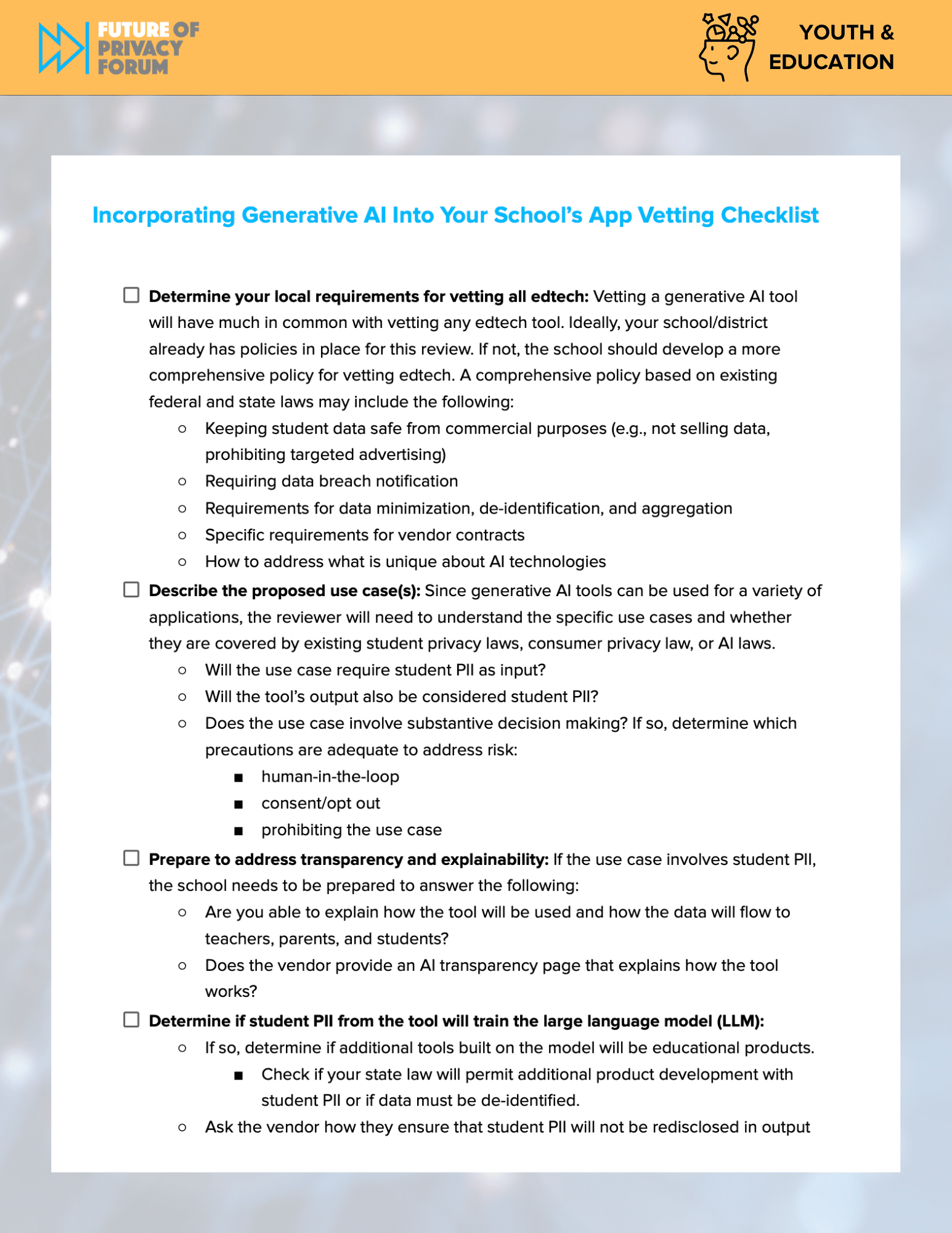
7 Take a look at FPF’s resource for Vetting Generative AI Tools for Use in Schools, including the checklist and accompanying policy brief.
8 (AL CO DE GA LA MN NJ OH UT VA WV WI WA)
9 (AL DE GA LA MI, NJ, OH WV)
10 (CO GA LA)
11 e.g. “Data privacy, security and content appropriateness should be primary considerations when adopting new technology.” Minnesota guidance.
12 e.g. “All AI application usage should adhere to state and federal privacy laws” Kentucky guidance -

Test yourself on this week’s K-12 news
This audio is auto-generated. Please let us know if you have feedback.How well did you keep up with this week’s developments in K-12 education? To find out, take our five-question quiz below. Then, share your score by tagging us on social media with #K12DivePopQuiz.
-

Data shows growing GenAI adoption in K-12
Key points:
- K-12 GenAI adoption rates have grown–but so have concerns
- A new era for teachers as AI disrupts instruction
- With AI coaching, a math platform helps students tackle tough concepts
- For more news on GenAI, visit eSN’s AI in Education hub
Almost 3 in 5 K-12 educators (55 percent) have positive perceptions about GenAI, despite concerns and perceived risks in its adoption, according to updated data from Cengage Group’s “AI in Education” research series, which regularly evaluates AI’s impact on education.
More News from eSchool News

Our school has built up its course offerings without having to add headcount. Along the way, we’ve also gained a reputation for having a wide selection of general and advanced courses for our growing student body.

When it comes to visual creativity, AI tools let students design posters, presentations, and digital artwork effortlessly. Students can turn their ideas into professional-quality visuals, sparking creativity and innovation.

Ensuring that girls feel supported and empowered in STEM from an early age can lead to more balanced workplaces, economic growth, and groundbreaking discoveries.

In my work with middle school students, I’ve seen how critical that period of development is to students’ future success. One area of focus in a middle schooler’s development is vocabulary acquisition.

For students, the mid-year stretch is a chance to assess their learning, refine their decision-making skills, and build momentum for the opportunities ahead.

Middle school marks the transition from late childhood to early adolescence. Developmental psychologist Erik Erikson describes the transition as a shift from the Industry vs. Inferiority stage into the Identity vs. Role Confusion stage.

Art has a unique power in the ESL classroom–a magic that bridges cultures, ignites imagination, and breathes life into language. For English Language Learners (ELLs), it’s more than an expressive outlet.

In the year 2025, no one should have to be convinced that protecting data privacy matters. For education institutions, it’s really that simple of a priority–and that complicated.

Teachers are superheroes. Every day, they rise to the challenge, pouring their hearts into shaping the future. They stay late to grade papers and show up early to tutor struggling students.
Want to share a great resource? Let us know at [email protected].