When children are unnecessarily removed from their homes, experts say the separation puts them at risk of chronic mental and physical ailments.
With that in mind, four Kentucky libraries are launching programs to keep families together, well resourced and educated, aided with $200,000 in grant money from the national nonprofit Youth Villages.
Libraries in Jackson, Johnson, Marshall and Spencer counties received around $45,000 each for a variety of programs to help parents meet their children’s needs.
Britany Binkowski, the executive director of the Youth Village initiative New Allies, said libraries are a “low stigma, high access point of contact for all communities” and make sense for grassroots outreach.
“They pretty consistently exist in most counties where they can be reached by lots of families, especially those in rural areas, and they’re (places) people trust to get information, to get access to resources,” she said. “They don’t carry the stigma, for example, of going to a child welfare department and asking for resources in a way that might feel very vulnerable.”
Among other things, the libraries are using the grant month to host trainings on growing food in an apartment setting, teaching parents how to deal with challenging behaviors and how to cook basic recipes, and connecting families to other community resources where they can get car seats and other necessities.
Libraries are also a more “natural” place to host visitations for parents who are working toward reunification, Binkowski said.
It’s “often not the case” that a child is removed from a home because the parents are outright bad, she said. Most of the time, parents lack the resources to properly feed, clothe or otherwise care for their children, she said. In fact, about 70% of all Child Protective Services allegations are related to neglect and poverty, the Lantern previously reported.
“We see substance use disorder and parents who are struggling with that as a significant driver of entries into foster care — not only in Kentucky, but across the country,” Binkowski said.
Other preventable issues contribute to removal, she said, like a parent not being able to buy a car seat or access safe child care.
“Things like that can cause safety issues that have to be resolved for a child to remain safe and stable,” Binkowski said.
‘Before there’s a problem, let’s fix it.’
Tammy Blackwell, an author and the director of the Marshall County Public Library, said libraries working in this space is just “logical.”
“Libraries are already reaching families and just doing a lot of good work giving families a place to be and form bonds,” she said.
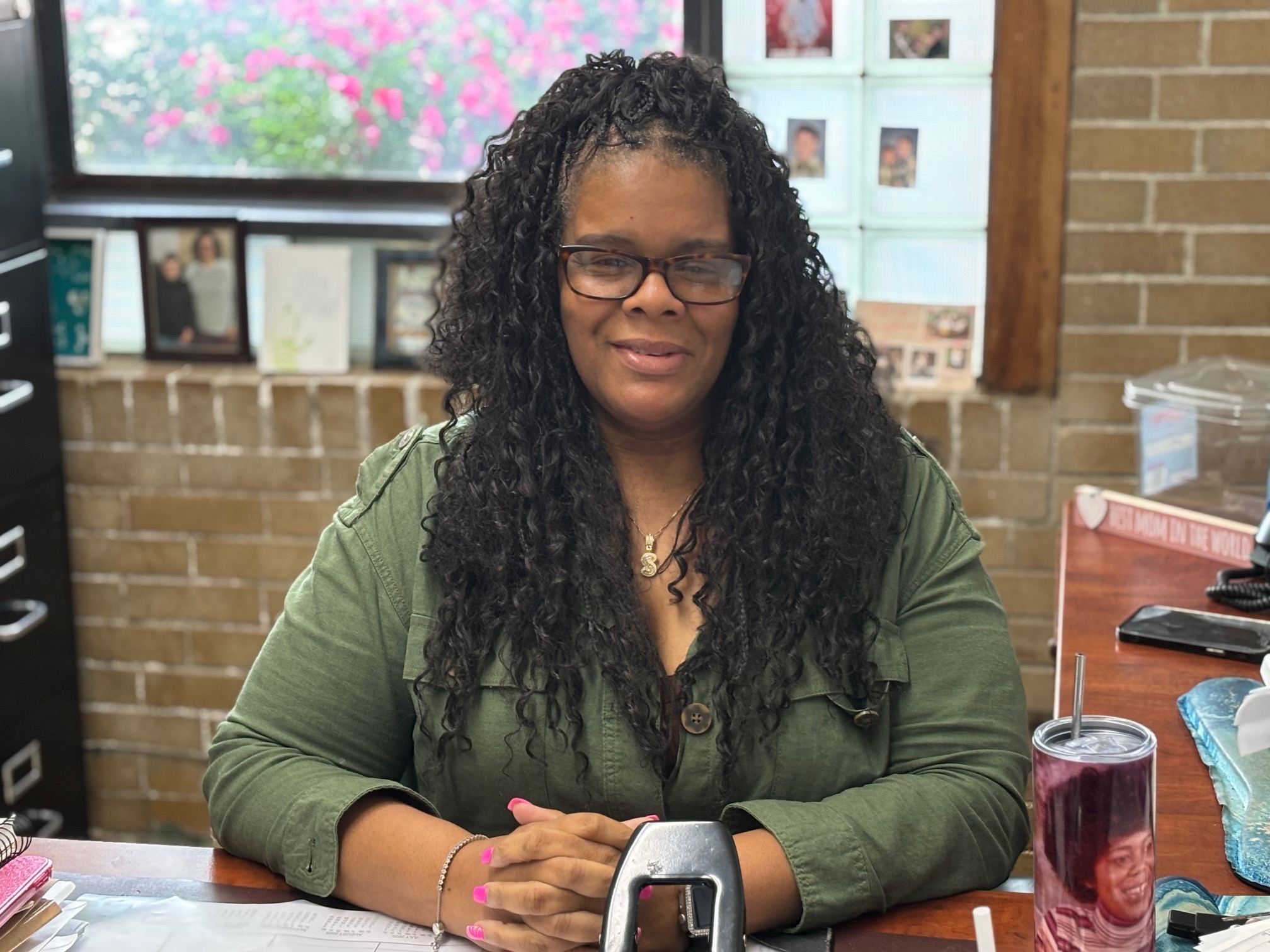
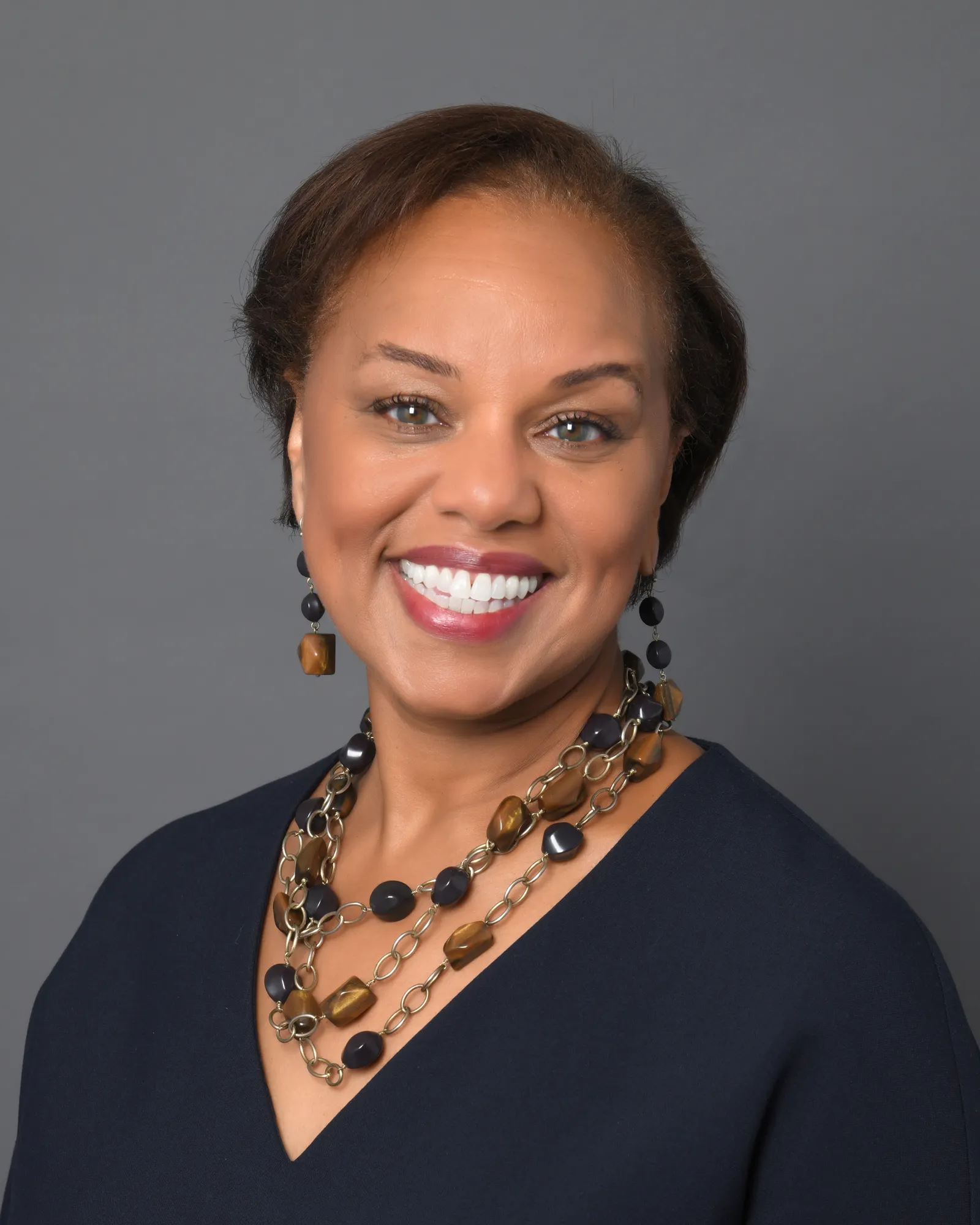
Tammy Blackwell is an author and the director of the Marshall County Public Library. (Photo provided)
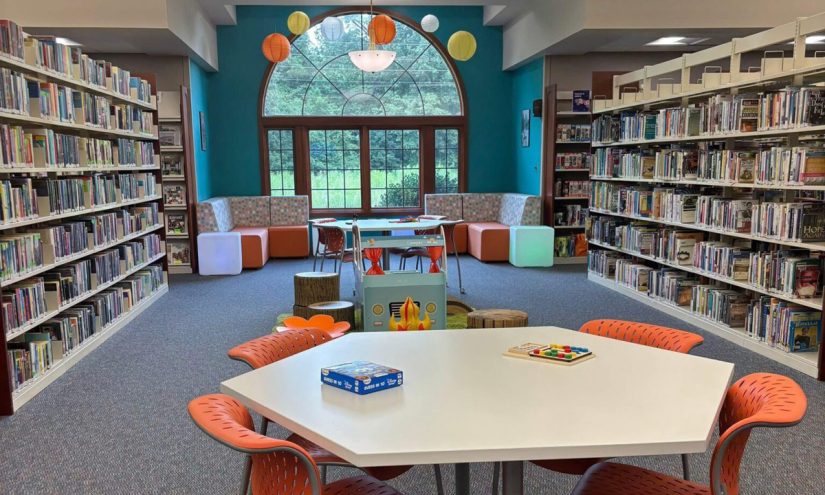
Marshall County’s grant supported a renovation of the Hardin branch to create a more child-friendly space and funded an eight-week program for mothers of young children called Mom’s Night Out.
During the Mom’s Night Out program, which will start the first week in September, mothers who are referred by Court Appointed Special Advocates will gather weekly and have a meal together. During the meal, representatives from the Marshall County Extension Office and the health department will lead discussions about stress management, home upkeep and how to cook recipes with staples handed out at food distribution centers like rice and beans.
The Mom’s Night Out discussions will be in a “very non-judgmental way, and not in a lecturing kind of way, but as a conversation and getting those families very comfortable in that space, very comfortable with library staff, comfortable with community partners who they may need to call on at some point,” Blackwell explained.
“We’re hoping that they build a bond with each other; other people with similar lived experiences, and to really give them a sense of community and resources in order to help the mothers thrive, so that the children may thrive,” she added. “I love that it’s ‘before there’s a problem, let’s fix it.’”
The first round of the program will only include mothers — Blackwell hopes between 12 to 15 — who have children of preschool to early elementary school age. Should it be successful and receive funding for a repeat, she’d like to expand it to fathers as well.
“There’s been some coverage of how many kids in Kentucky are in either foster or kinship care situations,” Blackwell said. “It’s a lot of kids, and that really impacts their ability to be successful in life. And anything that we can do to strengthen those families and give those kids, then we need to at least try. And I think libraries are in a perfect position to really make a difference.”
The 2024 Kids Count report, from Kentucky Youth Advocates and the Annie E. Casey Foundation, showed there were nearly 46,000 youth in foster care in the state from 2021-2023. In that same time period, the number of children leaving foster care and reunited with their families dropped to 32%. Pre-pandemic, from 2016-2018, it was 36%.
Additionally, in 2024 there were around 55,000 Kentucky children being raised with a relative in a kinship care arrangement.
The Department for Community Based Services came up with the idea to partner with libraries, Binkowski said. Lesa Dennis, the DCBS commissioner, wasn’t available for an interview but said in a statement that “by meeting families where they are, we’re building pathways to stability, resilience and well-being so no family has to face challenges alone.”
Removal is ‘traumatizing’
Binkowski, who previously worked as Assistant General Counsel for the Tennessee Department of Children’s Services, said that “a foster care intervention, even if necessary, is traumatizing to everyone involved.” It can damage bonds between parents and their children and upend daily routine and connections, she said.
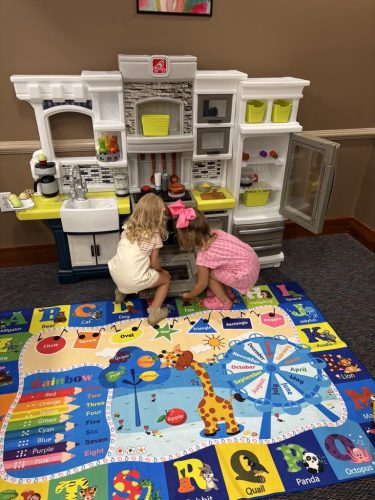
Children play in the Marshall County library’s Hardin branch. (Photo provided)
“We have a substantial body of evidence that tells us that children do best when they are with their families of origin — when it can be safe,” she said. “We know that connections to biological family, knowing where you came from, feeling like you belong — those are really critical emotional stabilization and safety factors that support children’s growth and development.”
Experiencing brokenness in the home, abuse or neglect are Adverse Childhood Experiences, which refers to traumas or stressors in a person’s life before their 18th birthday. They include, but are not limited to, parental divorce, abuse, parental incarceration, substance use issues in the home and more. The more such experiences a person has, the more likely they are to have poor health, lower education and economic hardships. Childhood trauma also cost Kentucky around $300 million a year.
“Enough stressors on a child at early ages without protective capacities to keep them from having negative outcomes can literally take years off of their lives,” Binkowski said. “So, while we don’t want children to experience abuse and neglect … we also don’t want them unnecessarily being removed from their home if the issues are not creating those kinds of negative impacts and we can stabilize a family without requiring removal.”
Kentucky Lantern is part of States Newsroom, a nonprofit news network supported by grants and a coalition of donors as a 501c(3) public charity. Kentucky Lantern maintains editorial independence. Contact Editor Jamie Lucke for questions: [email protected].
Forty percent of parents prefer their child attend a four-year college after high school.
Despite public skepticism about the value of a college degree, the majority of parents still want their kids to pursue more education after high school, according to a report from Gallup and the Lumina Foundation published today.
During the first two weeks of June, researchers surveyed more than 2,000 adults—including 554 parents of children under 18—about what they thought their own children or the children in their lives should do after high school. Though there was some variation depending on political party affiliation and level of educational attainment, three-quarters of parents over all say they want their children to continue their education.
“Even in this moment of skepticism around higher ed, the pull of college is still powerful for families,” Courtney Brown, Lumina’s vice president of impact and planning, told Inside Higher Ed. “The distinction is between their critiques of the system and their personal aspirations. They see there are some cracks in the system—that it’s not always affordable—and they want to make sure that if they’re going to pay for college that their child is going to see a return on investment.”
Parents had a clear preference for the type of institution their child should attend, with 40 percent of respondents indicating that their first choice would be a four-year university.
That aligns with robust data on the ROI of different degree types showing that people with bachelor’s degrees have far higher lifetime earnings and are half as likely to be unemployed than their peers with only a high school diploma.
However, not every family is convinced that a four-year degree is the best option for their child.
Another 19 percent of the parents surveyed by Gallup and Lumina said they’d prefer a two-year college and 16 percent a job training or certification program. Just 24 percent said they’d prefer their child forgo higher education altogether after high school and instead take a gap year (13 percent) join the military (5 percent) or immediately join the workforce (6 percent).
Differences in party affiliation also shaped which type of institution parents believe their kids should attend after high school. More than half (53 percent) of Democratic parents said they’d prefer their child go to a four-year college, while just a quarter of Republicans said the same; 21 percent of Republican parents said they’d prefer their child enroll at a two-year college after high school, and 22 percent said they’d prefer a job training or certificate program.
“Across the board, everyone believes you need more education after high school. But what we’re seeing now is Republicans wanting a quicker payoff for their education, and often a certification or a two-year degree leads directly to a job where they’re using those skills,” Brown said. “But that can be shortsighted when a job ends and a [worker] needs to get upskilled or reskilled.”
A four-year college education was also the preferred choice for parents with and without a college degree, though there was a considerable gap. While 58 percent of college graduates said a four-year program was their top choice for their child, only 30 percent of non–college graduates said the same.
“Parents still see that a four-year degree is the dream. It’s the degree that opens the most opportunity to getting paid more,” Brown said. “People that have gone to college see that it has paid off, whereas people who haven’t had that opportunity may feel closed out from and are uncertain that it’s going to lead to the money and jobs they’re looking for.”
The survey also asked adults without a child under 18 the same questions about what they would want a child they know—such as a nephew, niece, grandchild or family friend—to pursue after high school.
Similar to the parents surveyed, 32 percent of nonparents said they’d like to see the young people in their lives pursue a four-year degree, while 23 percent favored a two-year program and another 23 percent favored job training or a certificate program.
This story about children with disabilities was produced by The Hechinger Report, a nonprofit, independent news organization focused on inequality and innovation in education. Sign up for the Hechinger newsletter.
COLUMBUS, Ohio — When Selina Likely became director of the Edwards Creative Learning Center six years ago, she knew there was one longstanding practice that she wanted to change. For as long as she had taught at the thriving child care center, it had turned away many children with disabilities such as autism and Down syndrome. The practice was even encoded in the center’s handbook as policy.
Likely, the parent of a child with a disability, wanted to stop telling families no, but she knew that to do that she and her staff would need more support. “I said, ‘Let’s start getting training and see what we can do.’”
Not too long after, her effort received a big boost from a state-funded initiative in Ohio to strengthen child care teachers’ knowledge and confidence in working with young kids with disabilities and developmental delays. That program, Ohio PROMISE, offers free online training for child care workers in everything from the benefits of kids of all abilities learning and playing together to the kinds of classroom materials most helpful to have on hand. It also offers as-needed mentorship and support from trained coaches across the state.
Related: Young children have unique needs, and providing the right care can be a challenge. Our free early childhood education newsletter tracks the issues.
Child care providers across the country — including large, established centers and tiny home-based programs — struggle to meet the needs of children with disabilities, according to a 2024 report from the U.S. Government Accountability Office. More than a quarter of parents of children with disabilities said they had a lot of difficulty finding appropriate care for their kids. And even those who do find a spot regularly encounter challenges, like having their children excluded from extracurricular activities such as field trips and even academic instruction.
“It’s really hard to find child care for this population, we heard that loud and clear,” said Elizabeth Curda, a director on the GAO’s Education, Workforce and Income Security team and a coauthor of the report. Even the most well-resourced centers report that they struggle to meet the needs of children with disabilities, according to Curda.
There’s a lot of desire at the grassroots level to change that. Ohio PROMISE and a few other recent initiatives provide models for how to expand the capacity — and the will — of child care centers to serve the more than 2 million U.S. children age 5 or below who have a disability or developmental delay.
Cards on the walls at Edwards Creative Learning Center display the signs for different letters so students — whether nonverbal or not — can all learn sign language. Credit: Sarah Carr/The Hechinger Report
In Vermont, for instance, officials hope to soon unveil a free, on-demand training program aimed at helping child care teachers have more inclusive classrooms. And officials in Ohio’s Summit County, home to Akron, report growing interest from other counties in creating programs based on Summit’s more than decade-old model that provides in-person training for child care operators in inclusion of children with disabilities.
“We’re helping to create child care centers that feel they can handle whatever comes their way, especially when it comes to significant behavior concerns,” said Yolanda Mahoney, the early childhood center support supervisor for Summit County’s disabilities board.
The federal government until recently encouraged the creation of such models. In 2023, the federal Department of Education and Department of Health and Human Services issued a joint statement urging states to take steps to support inclusion in early childhood settings, including strengthening training and accountability.
Under the current president, federal momentum on the issue has largely stalled. While the administration of President Donald Trump hasn’t directly attacked inclusion in the context of special education, the president has criticized the term more broadly — especially when it comes to diversity, equity and inclusion. That can create uncertainty and a chilling effect on advocates of inclusion efforts of all kinds.
Funding for some inclusion efforts is also in jeopardy. States rely on Medicaid, which faces nearly $1 trillion in cuts over the next decade, to pay for early intervention programs for children birth to age 3 with developmental delays and disabilities. Trump has also proposed eliminating Preschool Development Grants, which states such as Vermont and Illinois have used to expand support of young children with disabilities.
That means over the next few years, progress on inclusion in child care settings could hinge largely on state and local investment. It helps that there’s a “real desire” among providers to enroll more children with disabilities, said Kristen Jones, an assistant director on the GAO’s education, workforce and income security team, who also worked on the report. “But there’s also a concern that currently they can’t do that in a safe way” because of a lack of training and resources.
In Ohio, the idea for Ohio PROMISE came after an appeal in 2022 from Republican Gov. Mike DeWine. He reported that families were coming to him saying they couldn’t find child care for their kids with disabilities.
“He said, ‘Come to me with ideas to solve that problem,’” recalled Wendy Grove, a senior adviser in the Ohio Department of Children and Youth who spearheaded development of the program.
Grove and her colleagues had already been working on a related effort. In 2020, Ohio won a federal grant that included help exploring how well — or not — children with disabilities were being included in child care and early education settings. DeWine liked the idea Grove’s team presented of morphing that work into a state-led effort to strengthen training and support for child care teachers. They also proposed more direct support to families, including the extension of child care vouchers to families with incomes above the poverty level, with a higher reimbursement rate for children with disabilities.
The training, which debuted about two years ago, is provided in three levels. Jada Cutchall, a preschool teacher at Imaginative Beginnings, an early learning center just outside of Toledo, recently completed the third tier, which for her included customized coaching. Cutchall’s coach helped her create communication tools for a largely nonverbal student, she said, including a board with pictures children can point to if, for example, they want to go to the bathroom or try a different playground activity.
As a result, Cutchall said, she has watched kids with disabilities, including those with speech impairments and autism, engage much more directly with their classmates. “They have the courage to ask their peers to play with them — or at least not distance themselves as much as they usually would,” she said. All of the children in the classroom have benefited, she added, noting that kids without disabilities have taken an interest in learning sign language, strengthening their own communication skills and fostering empathy.
Child care programs where one teacher and one administrator have completed some of the training earn a special designation from the state, which may eventually be tied to the opportunity to get extra funding to serve children with disabilities. In Ohio PROMISE’s first year, 1,001 child care centers — about 10 percent of the total number in Ohio — earned that designation, according to Grove.
For the last six years, Selina Likely has overseen the Edwards Creative Learning Center, where she’s steadily tried to enroll more children with disabilities and developmental delays. Credit: Sarah Carr/The Hechinger Report
The effort costs a little over $1 million in state dollars each year, with most of that paying for several regional support personnel who work directly with centers as mentors and advisers. Over the last two years, Ohio has seen a 38 percent increase in the number of children in publicly funded centers who qualify for the higher voucher reimbursement rate for children with disabilities, which can be double the size of the standard voucher.
Grove hopes that ultimately the effort plays a role in narrowing a critical and stubborn gap in the state: about 27 percent of children without disabilities show readiness on state standards for kindergarten; only 14 percent of children with disabilities do. Since so few disabilities exhibited at that age are related to intellectual or cognitive functioning, “we shouldn’t see that gap,” said Grove. “There’s no real reason.”
One goal of the new efforts is to reduce the number of young children with disabilities who are expelled from or pushed out of care. Those children are frequently asked to leave for behaviors related to their disability, the GAO report found.
Several years ago, a child care center in Columbus expelled Meagan Severance’s 18-month-old son for biting a staff member. The boy has several special needs, including some related to attention deficit hyperactivity disorder. Severance brought him to Edwards Creative Learning Center, where not too long after Selina Likely shifted into the role of director. The boy also bit a staff member there — not uncommon behavior for toddlers, especially those with sensory sensitivities and communication challenges.
Likely was determined to work with the child, not expel him. “They put in time and effort,” said Severance. “The response wasn’t, ‘He bit someone, he’s gone.’”
Likely empathized. Decades earlier, her own daughter had been expelled from a child care center in her hometown of Mansfield, Ohio, for biting.
“I was so angry and mad at the time — how are you going to kick out a 1-year-old?” she said. The center director didn’t think at all about how to help her child, Likely recalled, instead asking Likely what might be happening at home to make the child want to bite. She said she got no notice or grace period to find a new placement. “That left me in a disheartened place,” she said. “I was like, ‘I still have to go to work.”
Seventeen years old at the time, she was inspired by the injustice of the situation to quit her job in a factory and apply to be an assistant in a child care program. She’s been in the industry ever since, gradually trying to make more space for children like her daughter, who was later diagnosed with autism.
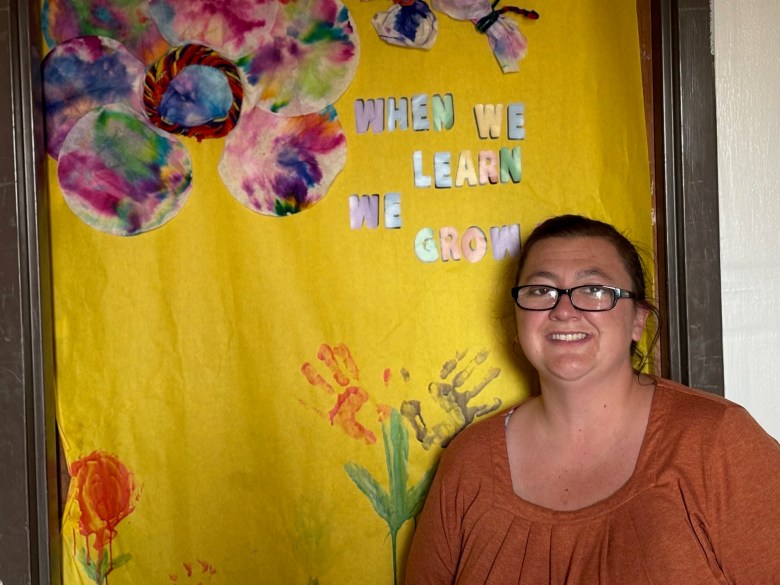
Meagan Severance, a parent and teacher at the Edwards center, has worked in recent years to make her classroom more inclusive for children with all different abilities. Credit: Sarah Carr/The Hechinger Report
As director, Likely displays the nameplate “chaos coordinator” on her desk. And she’s taken the stance that the center should at least try to work with every kid. She and some of her teachers have completed the first two tiers of the Ohio PROMISE training, as well as some related sessions available from the state. Likely estimates that about 10 percent of the children in her center have a diagnosed disability or developmental delay.
Liasun Meadows, whose son has Down syndrome, chose Edwards several years ago for her then 1-year-old over another program better known for its work with children with disabilities. She has not been disappointed.
Parents of kids with disabilities watch their children like a hawk, she said. “There are certain things you notice that you don’t expect others to notice, but they do at Edwards. They’ve been growing and learning alongside him.”
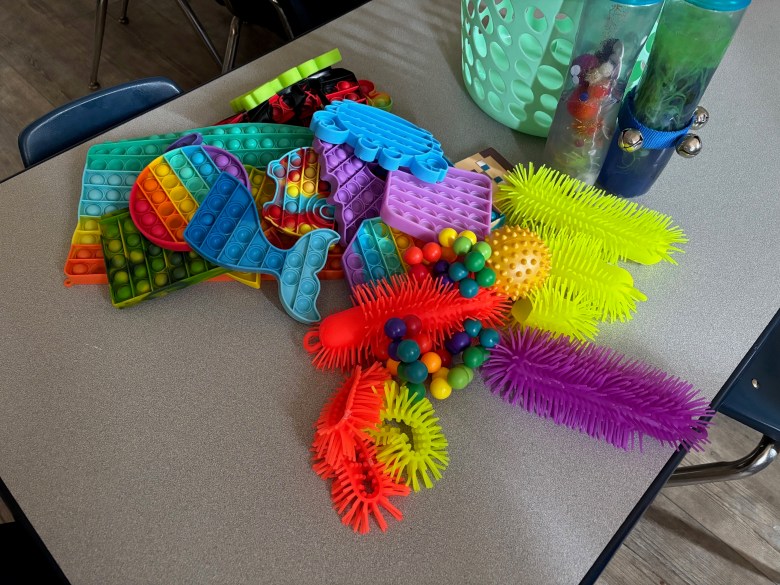
Severance, whose son is now 8, works at the center these days, leading the 3-year-old room, which includes two children who are largely nonverbal. She’s made the classroom more inclusive, adding fidget toys for children with sensory issues, rearranging the classroom to create calming areas, providing communication books to nonverbal children so they can more easily express needs and wants, and teaching everyone some sign language.
“For a while there was segregation in the classroom” between the kids with disabilities and those without, Severance said. But that’s lessened with the changes. “Inclusion has been good for the kids who are verbal — and nonverbal,” she said.
As in Ohio, state officials in Vermont turned to online training to help ensure young children with disabilities aren’t denied quality care. The state should soon debut the first parts of a new training program, focusing on outreach to child care administrators and support for neurodivergent children. The state wanted to focus on center leaders first because “directors that are comfortable with inclusion lead programs that are comfortable with inclusion,” said Dawn Rouse, the director of statewide systems in Vermont’s Child Development Division.
One tool for supporting and calming children with sensory issues is keeping a healthy supply of fidget toys and Pop-Its on hand. Credit: Sarah Carr/The Hechinger Report
Vermont also pumped millions of dollars into a separate program, known as the Special Accommodations Grant, that supports young children with disabilities. Since 2009 the state has set aside $300,000 a year that child care centers can tap to provide services for individual children with disabilities. It might help buy specialized equipment for a child with cerebral palsy, for instance, or be used to hire a full- or part-time aide.
The $300,000 has been maxed out every year, Rouse said. And after the pandemic, the need — and the number of applications — surged.
As a result, the state allocated some federal American Rescue Plan and Preschool Development Grant dollars to increase spending on the program by about sevenfold — to between $2 million and $2.5 million annually — an amount Rouse still describes as a “Band-Aid.” Without access to the grants, “we see a lot of children being asked to leave programs,” Rouse said. “That’s not good for any child, but for children with specialized developmental needs it’s particularly bad.”
Over time, Likely hopes, her Ohio center can play a small role in reducing that instability, although the center hasn’t yet been able to work with all such children it wants to. Likely recalls one toddler with a severe disability who climbed up anything he could. There wasn’t enough money to pay for what the child really needed: a full-time aide. “It’s hard when you know you’ve tried but still have to say no,” she said. “That breaks my heart more than anything.”
On one June morning, the center’s teachers acknowledged and celebrated several milestones in its work on inclusion, big and small. One child in the 3-year-old classroom with fine and gross motor challenges was drinking independently from a bottle. The preschool classroom held its first graduation ceremony, translated partly into sign language. All of the kids, no matter their challenges, were set to go on field trips to Dairy Queen and the zoo.
Likely dreams of someday running a center where about half of the children have a disability or delay. It may be years off, she said, but as with the milestones she sees scores of children at the center reach every day, “There’s a way — if there’s a will.”
Sarah Carr is a fellow at New America, focused on reporting on early childhood issues.
The Hechinger Report provides in-depth, fact-based, unbiased reporting on education that is free to all readers. But that doesn’t mean it’s free to produce. Our work keeps educators and the public informed about pressing issues at schools and on campuses throughout the country. We tell the whole story, even when the details are inconvenient. Help us keep doing that.
School (in)Security is our biweekly briefing on the latest school safety news, vetted by Mark Keierleber. Subscribe here.
In a battle over undocumented students’ access to public schooling — and, frankly, their futures — the Trump administration agreed this week to pause new federal rules designed to bar immigrants from Head Start and other education programs.
My colleague Jo Napolitano reports the reprieve, through Sept. 3, applies in 20 states and Washington, D.C., after state attorneys general sued to stop new rules designed to give undocumented preschoolers and other immigrant students the boot.
Health and Human Services Secretary Robert. F. Kennedy Jr. visits a Head Start program on May 21 to promote healthy eating. On July 10, he issued a directive barring undocumented students from the federally funded early education program. (Facebook/HeadStart.gov)
Those regulations could end up restricting educational opportunities for the youngest learners. But as Jo explains in her newest analysis, it’s just one part of a multifaceted approach to bar undocumented students from learning from cradle to career.
Read Jo’s full analysis — and learn how the changes could undercut the chance immigrant youth get for a better life.
In the news
More on Trump’s immigration crackdown: In Arizona, unaccompanied minors are facing immigration judges alone — without help from lawyers — after the administration cut off access to funding for their defense. A court order has restored the money temporarily through September. | Arizona Republic
The Trump administration instructed federal agents to give detained migrant teenagers the option of voluntarily returning to their home countries instead of being confined in government-overseen shelters. | CBS News
Attorneys for immigrant children say youth and families are being detained in “prison-like” facilities even as the administration seeks to terminate rules that mandate basic safety and sanitary conditions for children. | CBS News
The Denver school district says fear of federal immigration enforcement led to a surge in student absences. A review of attendance data by The Denver Gazette suggests a more nuanced picture. | The Denver Gazette
Undocumented students who attended K-12 schools in the U.S. last year before getting deported share their stories. | USA Today
Sign-up for the School (in)Security newsletter.
Get the most critical news and information about students’ rights, safety and well-being delivered straight to your inbox.
Penny Schwinn, who was in line to be the Education Department’s second in command, has dropped out of consideration following critiques of her conservative bona fides, including for past support of campus equity initiatives. | The 74
‘Trampling upon women’s rights’: The Oregon Department of Education is the latest agency to come under federal investigation over allegations the state allows transgender students to compete in women’s sports. | Oregon Public Broadcasting
New Education Department guidance encourages the use of federal money to expand artificial intelligence in classrooms, which the agency said has “the potential to revolutionize” schools. | Education Week
The Trump administration’s “AI Action Plan” comes after the Senate failed to pass rules in the “big, beautiful” tax-and-spending bill designed to prevent states from regulating AI. Instead, Trump’s guidance directs the Federal Communications Commission to evaluate state regulations and block any “AI-related federal funding” to any states with rules deemed “burdensome.” | The White House
How a 45-second TikTok video portraying a campus shooting — created by middle school cheerleaders — led to criminal charges. | ProPublica
A phishing campaign has taken advantage of mass layoffs at the Education Department by mimicking a portal maintained by the agency to manage grants and federal education funding. | DarkReading
Drones are being pitched as the next big thing to thwart school shootings — but district leaders are balking at the million-dollar price tag. | WCTV
‘Critical gaps’: An inspector general report in Washington, D.C., uncovered flaws in the city school system’s gun violence prevention efforts, including a backlog on repairs to security equipment. | The Washington Post
Wisconsin schools are installing controversial license plate readers that have been used by law enforcement to track down undocumented immigrants. | Milwaukee Journal Sentinel
This audio is auto-generated. Please let us know if you have feedback.
Autumn Adkins Graves is head of school of St. Anne’s-Belfield School, an age 2 through grade 12 independent school in Charlottesville, Va.
We adults have lost our way.
We need to figure out how to right the ship for our children — the sooner, the better.
As an educator and independent school leader, I can speculate about how we got here, but that doesn’t matter as much as how we collectively fix the broken infrastructure.
One place to start is by teaching students how to be exemplary citizens — the kind of people who focus on making the world a better place, not just on their own self-interests.
Autumn Adkins Graves
Permission granted by Autumn Adkins Graves
Of course, this raises a chicken-egg conundrum. To raise outstanding citizens, do we begin by rethinking how we teach important subjects and lessons? Or is it more important to challenge students to think holistically, apply their lessons in a broader context, and envision a world — one they can help shape — beyond the year 2025?
The answer is both.
The task is enormous. After all, we have to teach students how to thrive in an ever-changing world, a society that we may not completely understand ourselves.
On another level, basic civics lessons can — and should be — woven more explicitly into curricula.
On a fundamental level, that means teaching students how to work together in teams — whether academic, athletic or performing arts.
Selflessness should be in, while selfishness should be on the way out. We’ve become a society of “me,” not “we.” We are now a country of people who value the highlight dunk reel over passing up a shot for a teammate, and we are indirectly teaching that “me first” mindset to our students.
True leadership isn’t always about being in charge or being credited as No. 1. Sometimes, it’s about supporting a team, pushing a shared vision forward, and finding contentment in playing a small but vital role in a team effort.
There’s real value in contributing to something bigger than oneself, even without the title or limelight. If we can shift that mindset and rethink that paradigm, we’ll be making positive strides.
At a larger level, it also means educating students about how decisions and laws are established, not just in the three branches of the federal government but also at the state and local levels.
A student needs to realize why it matters to stay abreast of current events and the importance of participating in democracy.
Nearly 64% of people voted in the last presidential election, but far fewer voted in off-year or local elections. Yet those are the elections that impact people and communities the most.
Moreover, because so many people avoid voting, too many young people don’t know how the government works in America or feel apathetic to the incremental changes that occur at the local level.
Rather than seeing elected officials as public servants, they identify officeholders as political figures or, even worse, career politicians or celebrities — people who are only interested in making decisions to ensure victory in their reelection campaign rather than determining what is best for their constituents in the short or long run.
Also, it is time to tweak the way we teach media literacy: Too many students accept TikTok and Instagram posts at face value without considering the source or weighing the credibility of the content creator.
Moreover, schools can empower students to solve issues instead of getting stuck on identifying problems.
Too frequently, we fixate on what’s broken instead of creating a better way. Rather than pointing fingers, shifting the focus can make a difference. When students learn to be solution-makers, not just problem-identifiers, they lower their toxic anxiety levels and instead setthemselves up to succeed in tomorrow’s world.
As educators, shaping students to think like exemplary citizens means adjusting our approaches so we enable students to build confidence in their abilities to apply their understanding in a “real-world” context.
Things won’t change today, this month, this year or even this decade. But by beginning with the end in mind — with a resolve that society canbe full of exemplary citizens — we can start on the right path.
Seventeen years after Suzanne Collins first introduced us to The Hunger Games, the world is still captivated by Panem. The latest installment, Sunrise on the Reaping, dives into Haymitch’s backstory and has been called a “propulsive and heart-wrenching addition” to the series by The New York Times. For many of us, books like these aren’t just stories–they’re cultural moments.
I remember reading the original trilogy on my iPad while training for a half-marathon. Katniss’ fight against the Capitol powered me through some of my longest runs. That’s the magic of books: They meet us where we are and carry us somewhere else entirely. They become part of our personal history, woven into our memories and milestones.
But the power of books goes far beyond personal nostalgia. When a major title drops, it’s not just a release date–it’s a shared experience. Readers rush to get their hands on it. Social media lights up with reactions. Libraries field waitlists. These moments remind us why books matter. They connect us, challenge us, and inspire us.
This fall, we’re about to experience two more of these moments. On October 21, Diary of a Wimpy Kid: Partypooper hits shelves. Jeff Kinney’s beloved series has become a rite of passage for young readers, and this latest installment–centered around Greg Heffley’s attempt to throw himself the ultimate birthday bash–is already generating buzz. It’s funny, relatable, and perfectly timed for a generation that’s grown up with Greg’s awkward, hilarious adventures.
Just a few weeks later, on November 11, Dog Man: Big Jim Believes arrives. Dav Pilkey’s Dog Man series has redefined what it means to be a children’s book phenomenon. With its blend of humor, heart, and comic-style storytelling, Dog Man has helped countless kids fall in love with reading. This new title promises to be no different, offering a story about belief, friendship, and finding strength within.
These books aren’t just for kids–they’re cultural touchstones. They bring generations together. Parents read them with their children. Teachers use them to spark classroom discussions. Librarians build displays around them. And kids? They devour them and talk about them with the kind of passion usually reserved for blockbuster movies or viral games.
And yes, there’s a business side to books. Pricing, distribution, marketing strategies–they all matter. Behind every book on a shelf is a network of people working to make that moment possible. Publishers, authors, illustrators, binders, warehouse teams, sales reps, marketers, and more. It’s easy to forget that when you’re holding a finished book, but every title is the result of countless decisions, collaborations, and passions.
In a world dominated by screens, short-form content, and constant notifications, books offer something different. They ask us to slow down. To focus. To imagine. To empathize. And that’s more important than ever.
Literacy isn’t just about reading words on a page–it’s about understanding the world. It’s about critical thinking, emotional intelligence, and the ability to engage with complex ideas. Books help build those skills. They give kids the tools to navigate life, not just school.
Because in a world that’s constantly changing, books remain one of our most powerful tools for understanding it–and each other. The world needs stories. And stories need us.
A fifth-generation family member, Britten Follett is CEO at Follett Content Solutions, which has long been the No. 1 provider of content and technology solutions to school libraries at more than 70,000 schools and school districts. She has led Follett’s PreK-12 business since September 2019 and is responsible for providing leadership, strategic direction, and business development. In September 2020, Publishers Weekly named her a “PW Star Watch” honoree, one of 40 professionals singled out from the North American publishing industry.
This summer, Washington, D.C., parents were notified that they’d no longer be able to hold their child back from starting kindergarten if the student turned 5 years old before Sept. 30. Previously, the decision on so-called redshirting had been left up to families, with advice from pediatricians and child psychologists.
In New York City, America’s largest school district, the birthday cut-off is even later: Dec. 31. One-third of children are required to begin kindergarten prior to turning 5. This is a cause of concern for many families.
The city Department of Education doesn’t see it as a problem. In an email, a spokesperson told me its official stance is, “We work to provide all families access to a world-class education, and we work closely with families to ensure students’ placements are academically and developmentally appropriate, in alignment with state guidelines. Our policies allow for flexibility, our kindergarten curriculum is responsive to the needs of our younger learners, and our dedicated educators are prepared to support every student.”
Not all are appeased.
“I have a 4-year-old who will start kindergarten this fall but doesn’t turn 5 until after Thanksgiving,” worried mom CK told me. “I think it’s a big disservice to these kids. The amount of sitting isn’t developmentally appropriate, and the lack of free play is concerning.”
Parents are justified in their concerns. As the Child Mind Institute summarized in June:
Several studies have concluded that kids who are youngest in their class are disproportionately diagnosed with ADHD. A Michigan study found that kindergartners who are the youngest in their grade are 60% more likely to be diagnosed with ADHD than the oldest in their grade. And it doesn’t affect just kindergarteners: A North Carolina study found that in fifth and eighth grade, the youngest children were almost twice as likely as the oldest to be prescribed medication for ADHD.
The research didn’t sit well with some teachers. One blasted my social media inquiry seeking views on redshirting by writing, “ADHD is a very serious IEP (Individualized Education Plan) and we don’t hand them out like candy.”
Others, however, agreed.
“My daughter was one of the youngest in her class,” wrote an anonymous mother. “The teacher and school counselor mislabeled her with psychological disorders that both NY special education testing and private neurological tests did not support.”
“More of my students with an IEP have a birthday in the second half of the calendar year,” confirmed Mary C., who has been a special ed teacher for 12 years. “I understand where an incoming K parent would be concerned that their December baby is much younger than a June baby.”
That was the case with Upper West Side parent KE’s son. “He is the youngest and smallest boy in the grade,” she wrote. “He started kindergarten at 4 years old, still sucking his thumb. The physical, emotional, social, psychological and other developmental differences between a 5-year-old born in January and a 4-year-old born in December impacts everything from holding a pencil to kicking a ball, to the length of time one can sit and concentrate. It was too early, too soon and too young, but we literally had no choice in the matter in order to enroll him.”
Pree Kaur lamented that her daughter “is always the younger one and is not as mentally developed as her peers, so she always feels as if something is wrong with her.”
The Riverdale dad of a son born in November wrote, “He had some difficulty following his teacher’s instructions in first grade, and his teacher repeatedly pointed out that he has difficulty sitting still, staying focused, etc. We had him evaluated by a pediatric developmental specialist and he was diagnosed with ADHD. I really struggle with the whole situation, as I believe if we were able to get him to go to school a year later, matters may have been different.”
“My daughter attended a citywide gifted program. She was doing great, but it came with a price,” confessed Annie Tate. “She was high-functioning until high school, where she was overwhelmed and was diagnosed with ADHD, a diagnosis I believe she wouldn’t have received if I didn’t send her to school at 4 years, 8 months. She would have matured emotionally and physically to be a healthier, happier child.”
Pediatric occupational therapist KJL sees this situation frequently: “Children with ADHD have a 30% delay in executive function compared to their peers. Combine that with young ages, and these children are set up to fail.”
When I posed the question of allowing parents to hold back their children on my mailing list, the most frequent response I received was, “SOMEONE has to be the youngest.”
That’s true. But the situation can still be ameliorated.
Grades with multiple classes can be broken up into three- or four-month bands, so students are learning with a narrower-aged peer group.
Repeating a year should be a more acceptable option, unlike the situation faced by mom Heather Hooks: “My son was very behind academically in first grade. The school refused to hold him back and cited studies on ‘retention’ being not good for kids in the long run. I found these didn’t take into consideration that this was not straight retention, but redshirting an ADHD kid. Other studies were significantly different, and suggested these kids have better outcomes and are less likely to be medicated.”
Another mom was told her daughter “wasn’t behind enough,” despite the child’s pleas that “it’s too much for my head.”
Any steps taken to help New York City’s youngest learners would provide the largest experimental sample size in the country, making those results potentially beneficial for students across America.
Based on what happens in NYC, the educational system can stop treating children as developmentally identical and schools as one-size-fits-all, giving families more options.
As Maureen Yusuf-Morales, who has worked at public, charter and independent schools, suggests, “Parents with children born after September should be allowed choice with guidance based on developmental milestones, as opposed to birthdays being the only hard-and-fast rule.”
Atlanta, Georgia,(GLOBE NEWSWIRE) — Savvy Cyber Kids, a 501(c)(3) non-profit organization, appointed new members to the Board of Directors starting July, 1, 2025.
Joining the Board of Directors for Savvy Cyber Kids are James Azar, Anne-Marie Brockwell, Jason Cenamor, Nelson Soares, and Dr. Jasyn Voshell.
Savvy Cyber Kids enables youth, families and school communities empowerment through technology by providing age-appropriate cyber safety, cyber ethics and digital parenting resources and education starting at three years old.
———-
“As a father, cybersecurity practitioner, and advocate for creating a safer digital environment for all children, I was compelled to join the board of Savvy Cyber Kids,” states James Azar, CISO and Host, CyberHub Podcast. “The organization’s mission, under the leadership of Ben Halpert, deeply resonates with me. Promoting responsible internet use begins at home, and Savvy Cyber Kids equips parents with the guidance and talking points they need to raise digitally aware and cyber-safe children.”
James Azar is a dedicated cybersecurity practitioner and CISO in industries like FinTech, Banking, Energy and Oil and Gas with over 20 years of experience. He has a passion for aligning security and business goals, believing that innovation and creative thinking are key to solving today’s security challenges. As the host of the CyberHub Podcast, James enjoys sharing insights and fostering conversations around cybersecurity, technology, and business. He’s had the privilege of speaking at industry-leading events like RSA and CyberTech Israel and contributing to well-known publications. When not immersed in security, James enjoys espresso, good food, and a fine whiskey.
———-
“I’m thrilled to join the board of Savvy Cyber Kids, where I can further my commitment to empowering families, educators, and students with the knowledge to navigate the digital world safely and responsibly,” states Anne-Marie Brockwell, Account Executive, Microsoft. “Through my advocacy for proactive digital learning and community engagement, I aim to expand awareness and foster a more inclusive, ethical online future. I look forward to using my network to amplify this vital mission.”
Anne-Marie Brockwell is a seasoned Account Executive and strategic education leader with a deep commitment to empowering learners and advancing digital citizenship. At Microsoft, she leads partnerships with premier higher education institutions across New England, helping them accelerate AI innovation, modernize infrastructure, transform data strategies, and strengthen cybersecurity postures—all in service of their ultimate stakeholders: the students. With over a decade of experience spanning education technology and enterprise sectors, Anne-Marie brings a global, cross-industry perspective shaped by leadership roles at Rosetta Stone, Sanofi/Genzyme, Imagine Learning, and Deloitte. Her career has consistently focused on consulting selling, strategic partnerships, and operational excellence, underpinned by a passion for equity, access, and innovation in education.
———-
“As technology becomes increasingly more prominent in our everyday lives, so does the need for increased education around cybersecurity,” states Jason Cenamor, Founder, Confide Group and The CISO Society. “Like all important things, cybersecurity education starts at the grassroots, and organizations like Savvy Cyber Kids will ensure cyber safety becomes as natural as looking both ways before you cross the road. Witnessing so many people fall victim to bad actors every day, I could not be more passionate about ensuring the next generation is prepared to navigate the new world equipped with the knowledge and tools to avoid the same fate.”
Jason is the Founder and CEO of Confide Group – a cybersecurity advisory firm, and the Founder and Chief Community Officer of The CISO Society – a private community where members collaborate and share expertise on security strategy, project roadmaps, technology partners, CISO jobs, talent acquisition, industry news, and more. As a community figurehead and advocate, Jason possesses a passion for relationship building, networking, events, and providing an environment for security leaders to connect and learn from one another.
———-
“As a father, cybersecurity advocate, and entrepreneur passionate about digital education, I’m honored to join the Board of Directors at Savvy Cyber Kids,” states Nelson Soares, Founder & CEO, C-Vision International and CEO, NS Advisory Group Inc. “Today’s children are growing up in a world shaped by rapid technological change—one that demands both awareness and resilience. I’ve spent my career helping organizations navigate innovation responsibly, and I believe there’s no greater mission than empowering our youth to do the same. I look forward to contributing to this critical cause and supporting Savvy Cyber Kids in building a safer digital future for families everywhere.”
Nelson Soares is a dynamic entrepreneur and executive with deep expertise in leadership, consulting, and go-to-market strategy. As the Founder & CEO of C-Vision International, he has played a pivotal role in producing global thought leadership experiences for C-suite executives. He is also the CEO of NS Advisory Group Inc., where he advises startups and enterprise technology providers on scale, sales, and strategic growth. Nelson’s work bridges innovation and executive influence, particularly in cybersecurity and enterprise software, and his network spans the U.S., EMEA, LATAM, and APAC. He also serves on the board of Pocket Security, a nonprofit. A proud husband and father of two daughters, Nelson brings a personal and professional commitment to helping the next generation thrive in the digital age.
———-
“I’ve had the privilege of knowing and working with Ben Halpert for over 20 years, including some of his earliest projects in cybersecurity education,” states Dr. Jasyn Voshell, Senior Director, Products and Solutions Security, Zebra Technologies. “Joining the Savvy Cyber Kids Board is especially meaningful to me as an uncle to nieces and nephews who are growing up in a world where digital technology is ever-present. Being part of an organization that empowers families to navigate the online world safely and confidently is both a personal passion and professional commitment I hold close to my heart.”
Dr. Jasyn Voshell is the Senior Director of Products and Solutions Security at Zebra Technologies, where he leads the global Product & Solutions Security Program. He is responsible for the strategy, planning, and execution of Zebra’s enterprise-wide security initiatives across all products and solutions. Jasyn works closely with engineering and business teams to ensure security is embedded throughout the product lifecycle—secure by design, secure in use, and secure through trust. Jasyn was instrumental in establishing the Product Security Organization at Zebra, significantly reducing risk exposure while reinforcing customer trust in Zebra’s solutions. Under his leadership, the organization has delivered measurable improvements in secure software development practices, vulnerability management, and risk governance across the product portfolio. He holds bachelor’s degrees in Mathematics and Physics, a master’s degree in Applied Mathematics and Computer Information Systems, and a doctorate in Civil Law and Cybersecurity. Jasyn also maintains numerous industry-recognized certifications in cybersecurity and audit.
———-
“Our children are frontline warriors pitted against threats delivered by today’s latest technology they can’t even comprehend,” states Ben Halpert, Founder, Savvy Cyber Kids. “Parents and schools unwittingly place the children they are responsible for up against harms they are not equipped to triumph over in their daily battles, both physically and mentally.”
Making meaningful, long term, generational change for the world’s most vulnerable population which is young children, takes dedication. “In today’s reality of youth sextortion related suicide, AI suicide encouragement, 24/7 cyberbullying, and the realization of harms against our children delivered through technology, educating young children starting at age three is paramount,” said Ben Halpert.
“Most people want to believe quick fixes will work; when it comes to shaping human behaviors to build individual resilience, that is not the case. Our dedicated team looks forward to expanding our reach for the benefit of the world’s children,” said Ben Halpert.
Savvy Cyber Kids is grateful for the ongoing support of its sponsors: CISO Horizon, C-Vision International, VIPRE Security Group, PWC US, Yass Partners, Jodi Fink Halpert Berkshire Hathaway HomeServices Georgia Properties, Vercel,and SecurityScorecard.
About Savvy Cyber Kids
Savvy Cyber Kids (SCK), a 501(c)(3) nonprofit organization whose mission is to enable youth, families, and school communities to be empowered by technology, recognizes that children may be Digital Natives but are also “Digital Naives”, who, without intervention, completely lack understanding of the implications of their digital actions. Founded in 2007 by noted speaker and author Ben Halpert, Savvy Cyber Kids resources are used in 50 states and 54 countries around the world to help parents and teachers educate today’s youth on cyber safety and cyber ethics topics of cyberbullying, digital reputation, technology and screen-time balance, mental health, body and self-image, physical safety, sexting, privacy, gaming, child sexual predators, and more starting at 3 years old.
eSchool Media staff cover education technology in all its aspects–from legislation and litigation, to best practices, to lessons learned and new products. First published in March of 1998 as a monthly print and digital newspaper, eSchool Media provides the news and information necessary to help K-20 decision-makers successfully use technology and innovation to transform schools and colleges and achieve their educational goals.
Then-treasurer Peter Costello with new born babies at Royal Women’s Hospital in 2005. Picture: David Caird
University commencement numbers have hit a record high, excluding the Covid-19 pandemic years, Department of Education data released on Wednesday shows.
Please login below to view content or subscribe now.