Tag: kids

  • America’s kids are still behind in reading and math. These schools are defying the trend

    America’s kids are still behind in reading and math. These schools are defying the trend

    This story was produced by the Associated Press and reprinted with permission.

    Math is the subject sixth grader Harmoni Knight finds hardest, but that’s changing.

    In-class tutors and “data chats” at her middle school in Compton, California, have made a dramatic difference, the 11-year-old said. She proudly pulled up a performance tracker at a tutoring session last week, displaying a column of perfect 100 percent scores on all her weekly quizzes from January.

    Since the pandemic first shuttered American classrooms, schools have poured federal and local relief money into interventions like the ones in Harmoni’s classroom, hoping to help students catch up academically following COVID-19 disruptions.

    But a new analysis of state and national test scores shows the average student remains half a grade level behind pre-pandemic achievement in both reading and math. In reading, especially, students are even further behind than they were in 2022, the analysis shows.

    Compton is an outlier, making some of the biggest two-year gains in both subjects among large districts. And there are other bright spots, along with evidence that interventions like tutoring and summer programs are working.

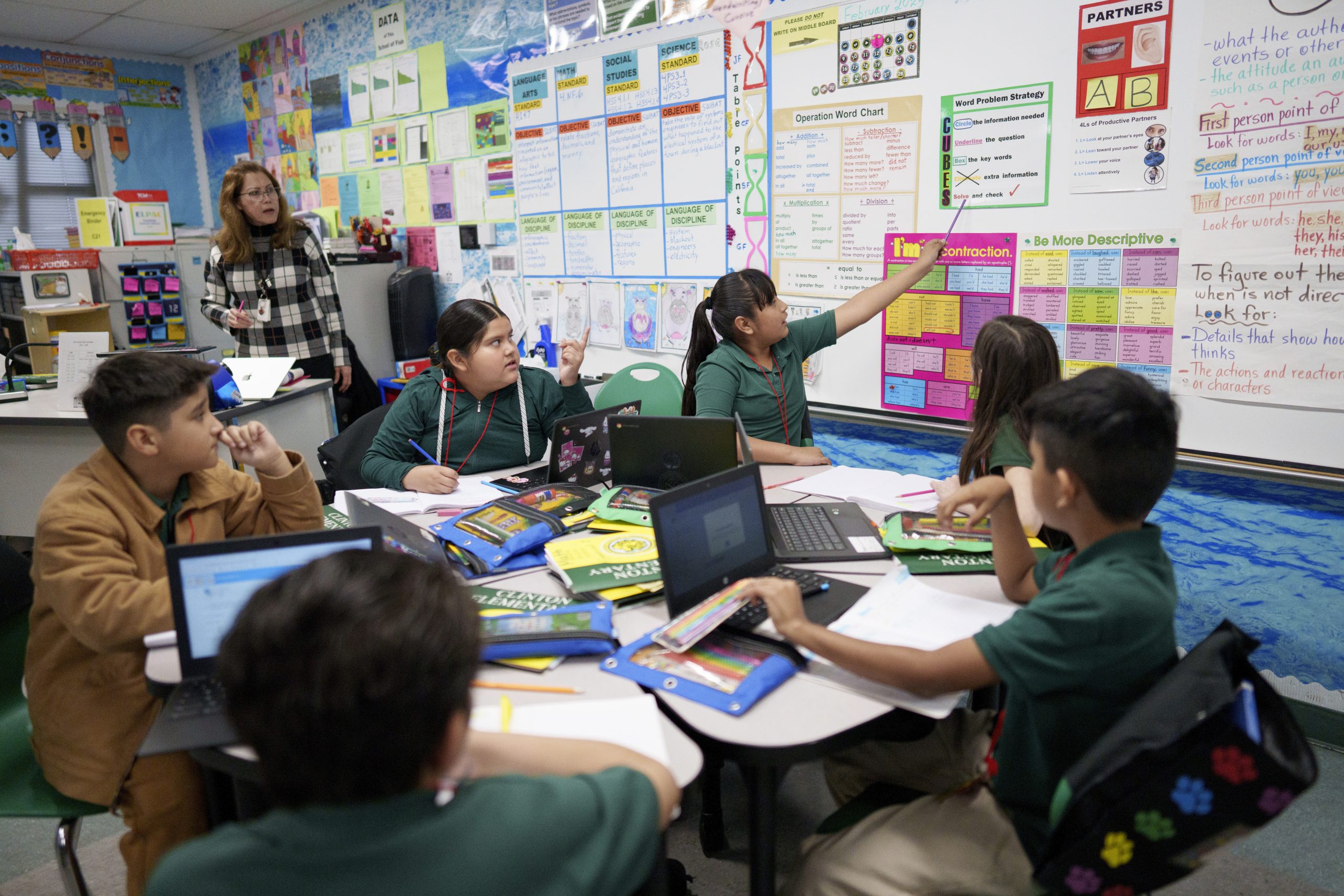
    Students interact in a fourth grade classroom at William Jefferson Clinton Elementary in Compton, Calif., Thursday, Feb. 6, 2025. Credit: Eric Thayer/Associated Press

    The Education Recovery Scorecard analysis by researchers at Harvard, Stanford and Dartmouth allows year-to-year comparisons across states and districts, providing the most comprehensive picture yet of how American students are performing since COVID-19 first disrupted learning.

    The most recent data is based on tests taken by students in spring 2024. By then, the worst of the pandemic was long past, but schools were dealing still with a mental health crisis and high rates of absenteeism — not to mention students who’d had crucial learning disrupted.  

    “The losses are not just due to what happened during the 2020 to 2021 school year, but the aftershocks that have hit schools in the years since the pandemic,” said Tom Kane, a Harvard economist who worked on the scorecard.

    In some cases, the analysis shows school districts are struggling when their students may have posted decent results on their state tests. That’s because each state adopts its own assessments, and those aren’t comparable to each other. Those differences can make it impossible to tell whether students are performing better because of their progress, or whether those shifts are because the tests themselves are changing, or the state has lowered its standards for proficiency.

    The Scorecard accounts for differing state tests and provides one national standard.

    Higher-income districts have made significantly more progress than lower-income districts, with the top 10 percent of high-income districts four times more likely to have recovered in both math and reading compared with the poorest 10 percent. And recovery within districts remains divided by race and class, especially in math scores. Test score gaps grew by both race and income.
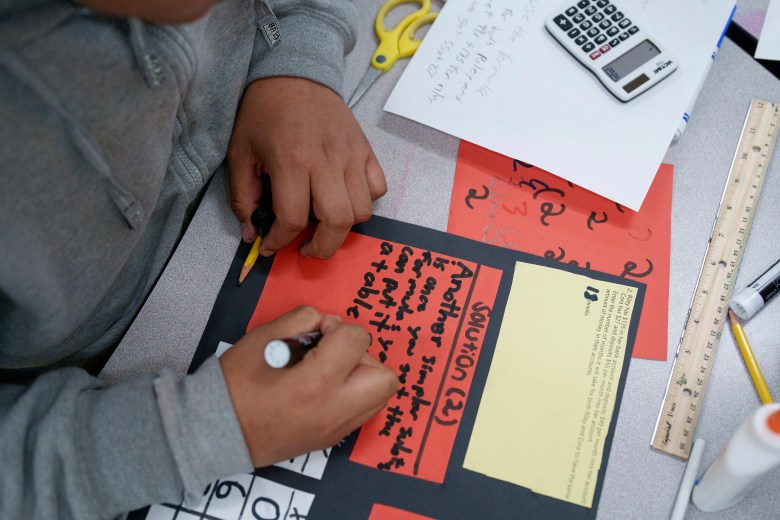
    A student works in a classroom at Benjamin O. Davis Middle School in Compton, Calif., Thursday, Feb. 6, 2025. Credit: Eric Thayer/Associated Press

    “The pandemic has not only driven test scores down, but that decline masks a pernicious inequality that has grown during the pandemic,” said Sean Reardon, a Stanford sociologist who worked on the scorecard. “Not only are districts serving more Black and Hispanic students falling further behind, but even within those districts, Black and Hispanic students are falling further behind their white district mates.”

    Still, many of the districts that outperformed the country serve predominantly low-income students or students of color, and their interventions offer best practices for other districts.

    Related: Become a lifelong learner. Subscribe to our free weekly newsletter featuring the most important stories in education.

    In Compton, the district responded to the pandemic by hiring over 250 tutors that specialize in math, reading and students learning English. Certain classes are staffed with multiple tutors to assist teachers. And schools offer tutoring before, during and after school, plus “Saturday School” and summer programs for the district’s 17,000 students, said Superintendent Darin Brawley.

    To identify younger students needing targeted support, the district now conducts dyslexia screenings in all elementary schools.

    The low-income school district near downtown Los Angeles, with a student body that is 84 percent Latino and 14 percent Black, now has a graduation rate of 93 percent, compared with 58 percent when Brawley took the job in 2012.

    Harmoni, the sixth-grader, said that one-on-one tutoring has helped her grasp concepts and given her more confidence in math. She gets separate “data chats” with her math specialist that are part performance review, part pep talk.

    “Looking at my data, it kind of disappoints me” when the numbers are low, said Harmoni. “But it makes me realize I can do better in the future, and also now.”

    Brawley said he’s proud of the district’s latest test scores, but not content.

    “Truth be told, I wasn’t happy,” he said. “Even though we gained, and we celebrate the gains, at the end of the day we all know that we can do better.”
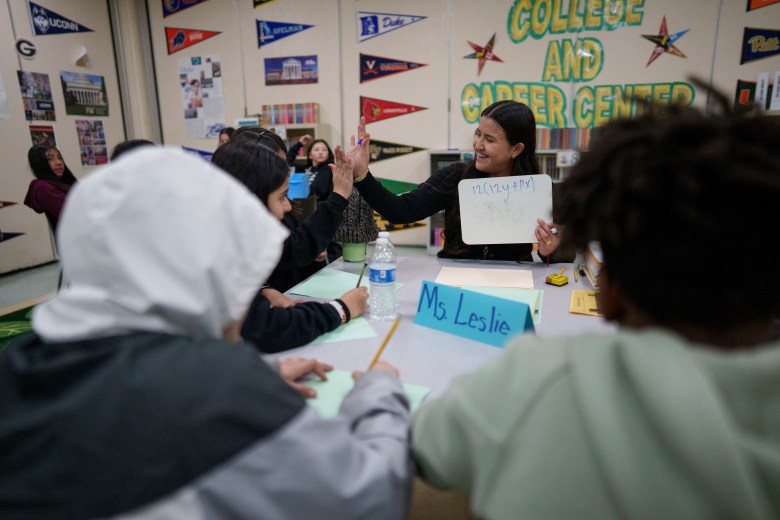
    A tutor helps students at Benjamin O. Davis Middle School in Compton, Calif., Thursday, Feb. 6, 2025. Credit: Eric Thayer/Associated Press

    As federal pandemic relief money for schools winds down, states and school districts will have limited resources and must prioritize interventions that worked. Districts that spent federal money on increased instructional time, either through tutoring or summer school, saw a return on that investment.

    Reading levels have continued to decline, despite a movement in many states to emphasize phonics and the “science of reading.” So Reardon and Kane called for an evaluation of the mixed results for insights into the best ways to teach kids to read.

    Related: Why are kids struggling in school four years after the pandemic?

    The researchers emphasized the need to extend state and local money to support pandemic recovery programs that showed strong academic results. Schools also must engage parents and tell them when their kids are behind, the researchers said.

    And schools must continue to work with community groups to improve students’ attendance. The scorecard identified a relationship between high absenteeism and learning struggles.

    In the District of Columbia, an intensive tutoring program helped with both academics and attendance, said D.C. Public Schools Chancellor Lewis Ferebee. In the scorecard analysis, the District of Columbia ranked first among states for gains in both math and reading between 2022 and 2024, after its math recovery had fallen toward the bottom of the list.

    Pandemic-relief money funded the tutoring, along with a system of identifying and targeting support at students in greatest need. The district also hired program managers who helped maximize time for tutoring within the school day, Ferebee said.

    Students who received tutoring were more likely to be engaged with school, Ferebee said, both from increased confidence over the subject matter and because they had a relationship with another trusted adult.

    Related: Some of the $190 billion in pandemic money for schools actually paid off

    Students expressed that “I’m more confident in math because I’m being validated by another adult,” Ferebee said. “That validation goes a long way, not only with attendance, but a student feeling like they are ready to learn and are capable, and as a result, they show up differently.”

    Federal pandemic relief money has ended, but Ferebee said many of the investments the district made will have lasting impact, including the money spent on teacher training and curriculum development in literacy.
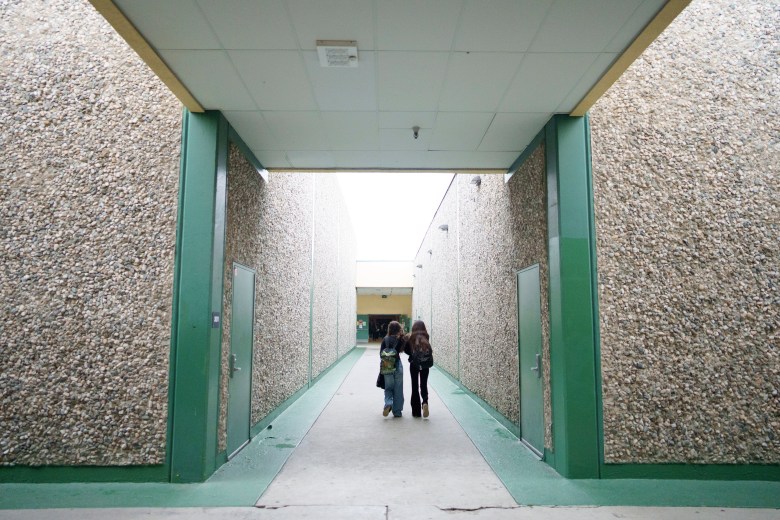
    Students walk through a hallway at Benjamin O. Davis Middle School in Compton, Calif., Thursday, Feb. 6, 2025. Credit: Eric Thayer/Associated Press

    Christina Grant, who served as the District of Columbia’s state superintendent of education until 2024, said she’s hopeful to see the evidence emerging on what’s made a difference in student achievement.

    “We cannot afford to not have hope. These are our students. They did not cause the pandemic,” Grant said. “The growing concern is ensuring that we can … see ourselves to the other side.”

    The Associated Press’ education coverage receives financial support from multiple private foundations. AP is solely responsible for all content. Find AP’s standards for working with philanthropies, a list of supporters and funded coverage areas at AP.org.

    The Hechinger Report provides in-depth, fact-based, unbiased reporting on education that is free to all readers. But that doesn’t mean it’s free to produce. Our work keeps educators and the public informed about pressing issues at schools and on campuses throughout the country. We tell the whole story, even when the details are inconvenient. Help us keep doing that.

    Join us today.

    Source link

  • How Spokane Public Schools is helping kids engage in real life

    How Spokane Public Schools is helping kids engage in real life

    Key points:

    Social media has connected kids like never before, but what they get in likes and shares, they lose in real, meaningful engagement with their peers and classmates. Lunch hours are spent hunched over smartphones, and after-school time means less sports and more Snapchat.

    The adverse effects of this excessive screen time have significantly impacted students’ social- emotional health. Forty-one percent of teens with the highest social media usage struggle with mental health issues, and between 2010 and 2020, anxiety among adolescents skyrocketed by 106 percent.

    At Spokane Public Schools (SPS), educators and administrators are reversing the side effects of social media by re-connecting with students through school-based extracurricular activities. Through its transformative Engage IRL (Engage in Real Life) initiative, the district is encouraging kids to get off their devices and onto the pickleball court, into the swimming pool, and outside in the fresh air. With more than 300 clubs and sports to choose from, SPS students are happier, healthier, and less likely to reach for their smartphones.

    An innovative approach to student engagement

    Even before the pandemic, SPS saw levels of engagement plummet among the student population, especially in school attendance rates, due in part to an increase in mental health issues caused by social media. Rebuilding classroom connections in the era of phone-based childhoods would require district leaders to think big.

    “The question was not ‘How do we get kids off their phones?’ but ‘How do we get them engaged with each other more often?’” said Ryan Lancaster, executive director of communications for SPS. “Our intent was to get every kid, every day, involved in something positive outside the school day and extend that community learning past the classroom.” 

    To meet the district’s goal of creating a caring and connected community, in 2022, school leaders formed a workgroup of parents, community members, coaches, and teachers to take inventory of current extracurriculars at all district schools and identify gaps in meeting students’ diverse interests and hobbies.

    Engaging with students was a top priority for workgroup members. “The students were excited to be heard,” explained Nikki Otero Lockwood, SPS board president. “A lot of them wanted an art club. They wanted to play board games and learn to knit. No matter their interests, what they really wanted was to be at school and be connected to others.”

    Working with community partners and LaunchNW, an Innovia Foundation initiative focused on helping every child feel a sense of belonging, SPS launched Engage IRL–an ambitious push to turn students’ ideas for fun and fulfillment into real-life, engaging activities.

    Over the past two years, Engage IRL has been the catalyst for increasing access and opportunities for K-12 students to participate in clubs, sports, arts activities, and other community events. From the Math is Cool Club and creative writing classes to wrestling and advanced martial arts, kids can find a full range of activities to join through the Elite IRL website. In addition, five engagement navigators in the district help connect families and students to engagement opportunities through individual IRL Plans and work with local organizations to expand programming.

    “All day, every day, our navigators are working to break down barriers and tackle challenges to make sure nothing gets in the way of what kids want to be involved in and engaged in,” said Stephanie Splater, executive director of athletics and activities for SPS. “For example, when we didn’t have a coach for one of the schools in our middle school football program, our navigators mobilized for really good candidates in a short amount of time just from their personal outreach.”

    In only two years, student engagement in extracurriculars has nearly doubled. Furthermore, according to Lancaster, since the Engage IRL launch, SPS hasn’t experienced a day where it dipped below 90 percent attendance. 

    “That’s an outlier in the past few years for us, for sure, and we think it’s because kids want to be at school. They want to be engaged and be part of all the cool things we’re doing. We’ve had a really great start to the 2024-2025 school year, and Engage IRL has played a huge role.”

    Engage IRL also helped SPS weather student blowback when the district launched a new cell phone policy this year. The policy prohibits cell phone use in elementary and middle school and limits it to lunch and periods between classes for high school students. Because students were already building personal connections with classmates and teachers through Engage IRL, many easily handled social media withdrawal.

    Creating opportunities for all kids

    Key to Engage IRL’s success was ensuring partnerships and programs were centered in equity, allowing every child to participate regardless of ability, financial or transportation constraints, or language barriers.

    Establishing a no-cut policy in athletics by creating additional JV and C teams ensured kids with a passion for sports, but not college-level skills, continued to compete on the court or field. Partnering with Special Olympics also helped SPS build new unified sports programs that gave children with disabilities a chance to play. And engagement navigators are assisting English language learners and their families in finding activities that help them connect with kids in their new country.

    For Otero Lockwood, getting her daughter with autism connected to clubs after years of struggling to find school activities has been life-changing.

    “There are barriers to finding community for some kids,” she shared. “We know kids with disabilities are more likely to be underemployed as adults and not as connected to the community. This is something we have the power to do that will have a lasting impact on the children we serve.”

    Through Engage IRL, SPS has redefined student engagement by expanding access and opportunity to 6,000 students across 58 schools. In just two short years, the district has seen attendance increase, student wellness improve, and dependence on smartphones diminish. By continuing to listen to the needs of students and rallying the community to partner on out-of-school activities, Spokane Public Schools is successfully fostering the face-to-face connections every child needs to thrive.

    Latest posts by eSchool Media Contributors (see all)

    Source link

  • How AI Has Gone To The Dogs

    How AI Has Gone To The Dogs

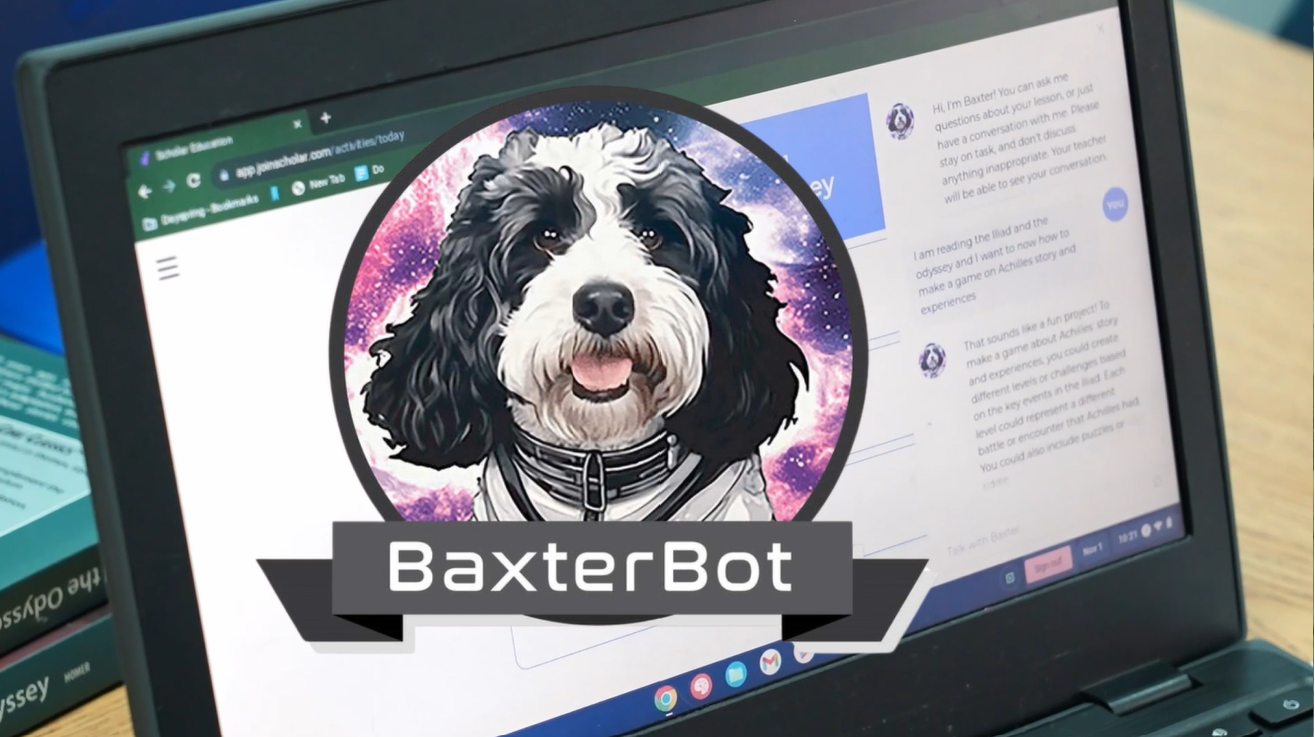
    One highlight from FETC’s Startup Pavilion is Florida-based Scholar Education, which uses AI chatbot dogs to help tutor students and give feedback to teachers. How it works: A friendly AI-powered classroom assistant provides academic guidance and encourages engagement. The AI dogs will deliver daily reports to parents so they can see feedback on their kids’ learning, creating a direct line of communication between home and school. See it in action for yourself:

    Kevin Hogan
    Latest posts by Kevin Hogan (see all)

    Want to share a great resource? Let us know at [email protected].

    Source link