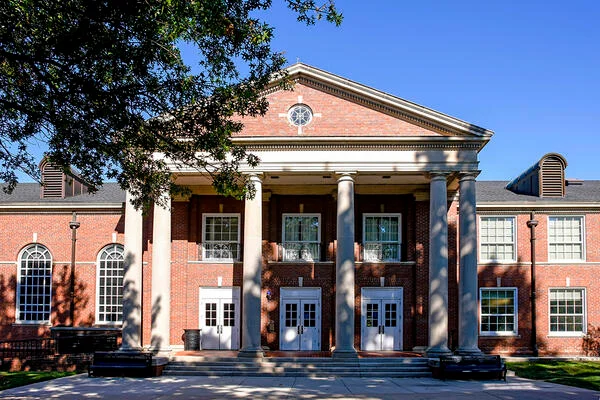
Bregy will resign from his position at Clemson on May 15, 2026, according to the settlement agreement.
sbrogan/E+/Getty Images
Clemson University has agreed to rescind the termination of Joshua Bregy, an assistant professor in the department of environmental engineering and earth sciences, nearly four months after dismissing him for resharing a post on his personal Facebook page that criticized the late conservative commentator Charlie Kirk.
Bregy sued after he was terminated on Sept. 26, claiming that his firing violated his First Amendment rights. As part of the settlement, Bregy will receive pay and benefits “throughout the original term of his employment,” the ACLU of South Carolina, which represented Bregy, said in a news release. In addition, Clemson provost Robert Jones agreed to “provide positive letters of recommendation to potential employers based on Dr. Bregy’s classroom teaching.” For Bregy’s part, he agreed to drop his lawsuit and resign from his position at Clemson effective May 15, 2026. He will not have any teaching, research or other faculty obligations through the spring semester, according to the release.
Bregy was among the dozens of faculty members targeted by right-wing politicians and online commentators for making or sharing critical posts about Kirk after his death. The post Bregy shared said, in part: “I’ll never advocate for violence in any form, but it sounds to me like karma is sometimes swift and ironic. As Kirk said, ‘play certain games, win certain prizes.’”
“We were honored to represent Dr. Bregy and to reach an agreement that restores his employment, allows him to continue to pursue research funding, and deters the university from violating the First Amendment rights of its faculty in the future,” Allen Chaney, legal director at the ACLU of South Carolina, said in a statement. “Politicians and university administrators come and go, but years from now we will still be here. So will the U.S. Constitution.”
Michael was terminated by Austin Peay State University in September.
csfotoimages/iStock/Getty Images
Nearly four months after he was terminated for reposting a news headline that quoted the late conservative commentator Charlie Kirk’s position on gun rights, Darren Michael has been reinstated as a professor of theater at Austin Peay State University, Clarksville Now reported.
Michael returned to the classroom in late December. The university will also pay him $500,000 and reimburse therapeutic counseling services as part of the settlement.
“APSU agrees to issue a statement acknowledging regret for not following the tenure termination process in connection with the Dispute,” the settlement agreement reads in part. “The statement will be distributed via email through APSU’s reasonable communication channels to faculty, staff, and students.”
Shortly after Kirk was shot and killed at a campus event in September, Michael shared a screenshot of a 2023 Newsweek headline on his personal social media account that read, “Charlie Kirk Says Gun Deaths ‘Unfortunately’ Worth it to Keep 2nd Amendment.” His repost was picked up by conservative social media accounts, and his personally identifying information was distributed. It also caught the attention of Tennessee Sen. Marsha Blackburn, who shared Michael’s post alongside his headshot and bio with the line “What do you say, @austinpeay?” Michael was terminated Sept. 12.
Michael did not respond to a request for comment Wednesday. A spokesperson for Austin Peay State declined to comment.
Undaunted by the murder of Turning Point USA founder Charlie Kirk, students are fighting to keep the light shining on truth and freedom on college campuses all across the country.
In the month that followed Kirk’s death, TPUSA reported receiving more than 62,000 requests to start or join a chapter.
Since then, some students have faced death threats, and others battles with administrators and student governments. But the September tragedy stirred up courage in many young adults – and with it came new hope for the future.
The College Fix has covered many of these efforts. Here are a few of the highlights:
Welcoming debate
This essay by Benjamin Ellis, a student at University of North Carolina Asheville and a Democrat, captured wide-spread attention after Ellis described his surprise at finding the campus TPUSA club was more welcoming of him than the College Democrats.
Battling death threats
TPUSA chapter president Jacob York, a sophomore at Olivet Nazarene University, received graphic death threats linked to his attempts to get his chapter officially recognized. York told The College Fix that those who stand for truth should expect persecution, and he is not backing down.
If at first you don’t succeed: TPUSA students at Fort Lewis College in Colorado refused to take “no” for an answer when the student government rejected their request for official recognition. After the situation garnered attention online, including from state lawmakers, the student government quickly reversed course and granted the chapter’s request.
Finding strength in community
Madailein McDonough, president of University of Mary Washington’s newly formed TPUSA chapter, told The College Fix that her ultimate goal is to be “confident in our beliefs, respectful in our approach, and fearless in defending free speech.”
“When you join TPUSA, you’re not standing alone; you’re joining a network of students nationwide who have your back. Our chapter prioritizes safety, respect, and support, and we believe that strength comes from standing together peacefully and proudly,” she said.
Denied but not defeated
Meanwhile, students at private institutions like Seton Hall, Vanguard, and Point Loma Nazarene universities have faced obstacles from administrators and student government leaders. Their requests for official recognition have been denied, but TPUSA students at those schools continue to make their voices heard.
While TPUSA was the name that dominated, other students and conservative organizations also served as beacons of light on their campuses, dedicating their efforts to liberty, faith, family, and our Constitutional rights.
Consider the thriving Catholic campus ministry at Arizona State University and the revival spreading through a Bible study that University of Pittsburgh athletes started earlier this year.
There are the young pro-life women who started a scholarship for parenting moms at Queens College, and the Massachusetts college student who has given out 15,000 pro-life bumper stickers to spread the word about unborn babies’ human rights.
Others fought administrators, including a Young Americans for Freedom chapter that succeeded in lobbying the University of Alabama to grant a waiver to omit gender ideology language from the club’s organizational constitution.
And there are the bold, lone voices of the de-transitioners – students who share their heartbreaking personal stories about transgenderism in an effort to help their peers avoid the same painful mistakes.
These young adults are exhibiting strength in difficult times. They are refusing to compromise or deny their beliefs even in the face of a very real danger.
And they give us another reason to hope this season.
The September 2025 assassination of conservative activist Charlie Kirk sent shockwaves through the political and academic worlds. It also ignited a public feud between two figures whose influence stretches across campus activism and national media: Candace Owens, a former Turning Point USA (TPUSA) strategist turned media provocateur, and Erika Kirk, the widow of Charlie Kirk and newly appointed leader of TPUSA. The conflict exposes not only the personal and political stakes involved but also the broader dynamics of media influence, ideological factionalism, and the politics of grief in contemporary higher education.
Charlie Kirk: Architect of Campus Controversy
Charlie Kirk built his public persona on provocation and confrontation. He staged highly orchestrated debates on college campuses, often targeting liberal-leaning students with “Prove Me Wrong” events that were designed to go viral. Turning Point USA’s social media strategy amplified these conflicts, rewarding spectacle over substantive discussion. Kirk also courted controversy through statements on race and opportunity, claiming in interviews that a Black woman had “taken his slot” at West Point, and through his unabashed support of fossil fuels, rejecting many climate mitigation policies.
Under Kirk’s leadership, TPUSA expanded its influence with aggressive initiatives. The Professor Watchlist cataloged faculty allegedly promoting leftist propaganda, drawing condemnation from academic freedom advocates who argued it chilled open debate and exposed professors to harassment. In 2019, TPUSA, through its affiliated nonprofit Turning Point Action, acquired Students for Trump, integrating campus organizing with national political campaigns. These moves cemented Kirk’s reputation as a strategist who thrived on conflict, spectacle, and the orchestration of young conservative voices, setting the stage for the posthumous clashes between Owens and Erika Kirk.
Candace Owens leveraged her experience as a TPUSA strategist into a national media presence. Her commentary is known for being provocative, frequently conspiratorial, and sometimes antisemitic. After Kirk’s death, Owens publicly questioned the official narrative, hinting that TPUSA leadership may have failed Kirk or been complicit. She amplified unverified reports, including accounts of suspicious aircraft near the crime scene, drawing criticism for exploiting tragedy for attention. Owens’ stature as a former insider gave her claims credibility in some circles, but her approach exemplifies the hazards of insider knowledge weaponized against organizations and individuals in moments of vulnerability.
Erika Kirk: Navigating Grief and Ideological Contradiction
Erika Kirk’s public response has been markedly different. As TPUSA’s new CEO and widow of its co-founder, she emphasized factual communication, transparency, and respect for grieving families. Yet her messaging presents a striking tension. She has publicly urged women to “stay at home and have children,” even as she leads a major national organization herself. This contradiction highlights the challenges faced by leaders whose personal actions do not neatly align with ideological prescriptions, especially within high-profile, media-saturated contexts.
Erika Kirk’s stance against conspiracy and misinformation underscores the responsibilities of institutional leadership in politically charged environments. By rejecting Owens’ speculation and emphasizing ethical communication, she models crisis management that prioritizes credibility and accountability, even as ideological tensions complicate her public image.
The Groypers: External Pressure on Campus Politics
The feud did not remain internal. The Groypers, a far-right network led by Nick Fuentes, inserted themselves into the controversy, criticizing TPUSA for insufficient ideological purity and aligning with Owens’ confrontational rhetoric. Their intervention escalated tensions, highlighting how external actors can exploit internal disputes to influence narratives, polarize supporters, and pressure campus organizations. The Groypers’ involvement illustrates the precarious environment student-focused organizations face, where internal conflict can quickly become a battleground for external ideological agendas.
Media, Campus Power, and Ethical Considerations
The Owens–Kirk conflict exemplifies the challenges inherent in politically engaged campus organizations. Insider knowledge can confer authority, but it can also be leveraged in ways that destabilize institutions. Personal grief and tragedy can be amplified in the media, creating narratives that are part advocacy, part spectacle. Organizations like TPUSA, with expansive networks, high-profile donors, and initiatives such as the Professor Watchlist and Students for Trump, are uniquely vulnerable to reputational damage and internal discord. Kirk’s legacy of confrontation and spectacle created fertile ground for sensationalism, factionalism, and opportunistic interventions by groups such as the Groypers.
Toward Responsible Leadership
The feud offers a cautionary lesson for student-focused political organizations and higher education at large. While former insiders may provide valuable insight, amplification of unverified claims can destabilize leadership, undermine institutional credibility, and warp student engagement. Erika Kirk’s insistence on restraint, transparency, and fact-based discourse demonstrates the importance of ethical leadership, media literacy, and principled decision-making in sustaining credible campus organizations.
Entangled Worlds as Spectacle
The conflict between Candace Owens and Erika Kirk is more than a personal dispute. It reflects the entangled worlds of media influence, ideological factionalism, and institutional accountability in higher education. For observers, the episode offers a vivid study of how grief, ideology, and spectacle collide, and how effective leadership must navigate these pressures with clarity, ethical judgment, and a steady commitment to institutional integrity.
The months since Charlie Kirk’s murder on Utah Valley University’s campus in September have seen a deluge of firings and suspensions of teachers, faculty, and staff across the country for celebrating the assassination, or just for being insufficiently mournful. As the dust settles and court cases proceed, more details are emerging about the political pressures universities faced to punish protected political expression.
In Iowa, lawmakers were so incensed by one Iowa State University staff member’s speech about the shooting that they outright dismissed the possibility of a lawsuit. Public records obtained by FIRE through a Freedom of Information Act request show state lawmakers exchanging messages inviting the possibility of First Amendment lawsuits for the sake of punishing speech they found offensive. “It’s worth the risk of lawsuits,” one lawmaker texted.
In other words, censorship is worth lawsuits. Iowa taxpayers: that’s your free speech rights — and your money — they’re putting at risk.
On Sept. 23, less than two weeks after the shooting, Iowa State University fired Caitlyn Spencer, a financial aid advisor at the university. Spencer had posted that she believed Kirk “got what was coming” to him and wrote that she was “happy he’s rotting in hell now.” The prominent X account Libs of TikTok picked up Spencer’s post, prompting social media outrage.
That outrage did not stay confined to the internet. Behind the scenes, Iowa lawmakers urged university officials to take action. The records obtained by FIRE show text messages from state lawmakers to Board of Regents State Relations Officer Jillian Carlson. State Rep. Carter Nordman sent Carlson a screenshot of Spencer’s post, asking, “Will she be put on leave today?” Rep. Taylor Collins added that Spencer “better be” put on leave.
After Carlson responded that the university was investigating all complaints they were receiving about social media activity, Collins responded, “There’s no way this is allowed under the Univeristy [sic] code of conduct.” He added: “It is worth the risk of lawsuits.”
Nordman then expressed frustration at a potential lawsuit, writing, “I am so sick of us scurrying around a law suit. Let them sue.” He added that he and two other individuals were “just fine with [Carlson] telling [ISU] President Wintersteen that’s coming from the House Higher Ed & Budget Chairman’s [sic].”
It’s bad enough that lawmakers publicly called for punishment of faculty and staff for their speech about Kirk, including Collins, who was both publicly pushing punishments and sending messages behind the scenes. But Nordman’s mention of the Iowa House Higher Education Committee invoked the power of the committee that controls the funding ISU receives, unsubtly implying that lawmakers were ready to cut budgets if administrators did not comply with their demands to punish speech. And given their talk about lawsuits, it’s clear that they had doubts about whether punishing the speech would violate the First Amendment.
FIRE has seen this sort of attitude before. For example, when FIRE was poised to file a lawsuit against Kirkwood Community College in 2020 after it moved to terminate a professor for describing himself as “Antifa,” Kirkwood president Lori Sundberg told a media outlet there was “no evidence” the professor had espoused his controversial views in the classroom. The president remarked, “at the end of the day for me, if I’m found legally wrong on this, I can live with that.”
The college eventually settled with the professor for $25,000. Similarly, in 2013, a federal jury held the former president of a public college in Georgia personally liable for violating the rights of a student who protested against the building of two parking garages on campus. There, the student and the university reached a $900,000 settlement after a lengthy court battle, as the court ruled that the president had ignored the student’s “clearly established constitutional right to notice and a hearing before being removed from VSU.”
Those fired over protected comments about Kirk’s assassination could be looking at similar payouts, courtesy of the tax- and tuition-payers of Iowa.
While Kirk’s murder has divided Americans across the board, one thing should unite them all: Iowans — and Americans more broadly — shouldn’t be on the hook for public officials’ decisions to ignore the First Amendment.
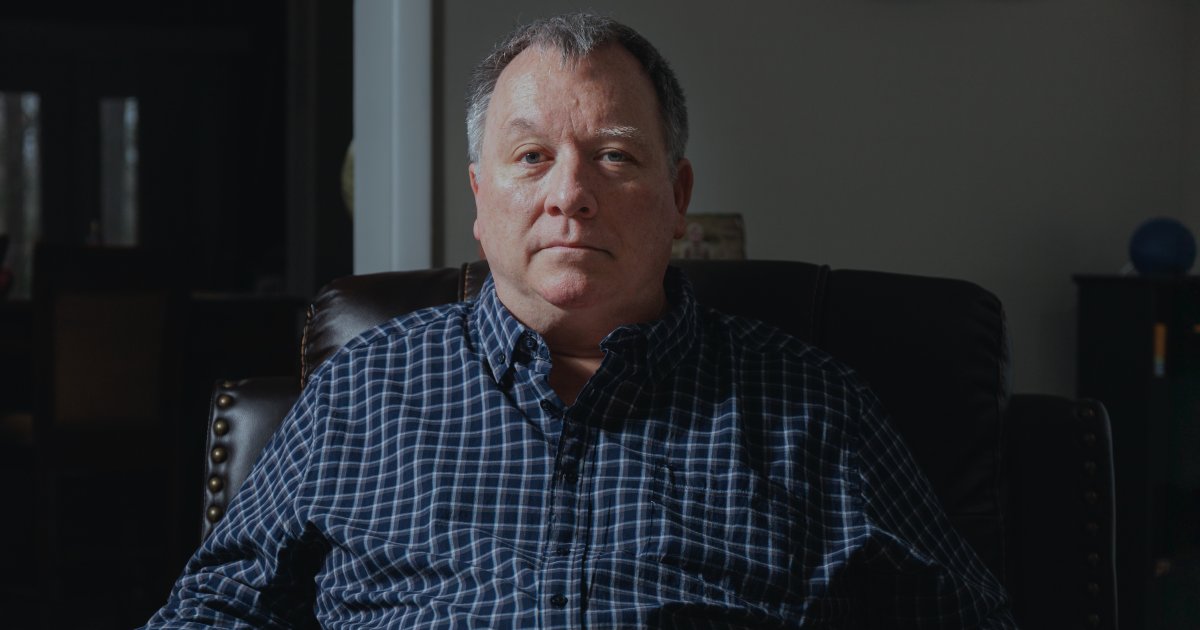
NASHVILLE, Dec. 17, 2025 — On Sept. 21, the police came for Larry Bushart. They handcuffed him and hauled him away in the dead of night. He spent 37 days in jail while held on a $2 million bond — an amount the retired police officer could not afford.
It’s the sort of treatment one expects for accused murderers and thieves. But Larry’s only “crime”? In the aftermath of Charlie Kirk’s assassination, he posted a meme on Facebook quoting President Trump’s remarks about a different shooting a year earlier and in a different state.
“I spent over three decades in law enforcement, and have the utmost respect for the law,” said Larry. “But I also know my rights, and I was arrested for nothing more than refusing to be bullied into censorship.”
Today, with the help of the Foundation for Individual Rights and Expression, Larry filed a federal civil rights lawsuit against Sheriff Nick Weems and Perry County, Tennessee, for violating his constitutional rights in retaliation for his protected speech.
The meme that Larry Bushart shared on Facebook.
“If police can come to your door in the middle of the night and put you behind bars based on nothing more than an entirely false and contrived interpretation of a Facebook post, no one’s First Amendment rights are safe,” said FIRE senior attorney Adam Steinbaugh.
Larry’s ordeal began when he commented on a Facebook post for a Kirk vigil in Perry County. The meme — which Larry did not create — used a picture of Donald Trump, quoted him saying “We have to get over it” following the January 2024 school shooting at Perry High School in Iowa, and included the commentary, “This seems relevant today…”
Weems concocted the pretext that because the meme referenced the 2024 shooting at Perry High School in Iowa, it could be interpreted as a threat against Perry County High School in Tennessee. At his request, the local police first visited Larry’s home around 8 p.m. to inform him the sheriff’s office might be in contact with him.
Bodycam footage indicates the officer was just as confused as Larry was. “So I’m going to be completely honest with you, I have really no idea what they’re talking about,” he said. “He just called me and said there were some concerning posts that were made… I don’t know, I just know they said something was insinuating violence.”
“No it wasn’t,” Larry responded. “I’m not going to take it down.”
Hours later, Perry County issued a warrant for his arrest, and local police returned after 11 p.m. to arrest him for “threatening mass violence at a school.” Again, bodycam footage indicates local police were just as perplexed about why they were taking him into custody. “I threatened no one . . .” Larry told them. “I may have been an asshole, but . . .”
“. . . that’s not illegal,” the officer finished for him.
Based on Weems’ flimsy justification alone, Larry was locked up for over a month. He lost his job and missed his wedding anniversary as well as the birth of his grandchild. Amazingly, Weems admitted in a later interview that he knew at the time of the arrest that Larry’s post used a pre-existing meme and was not threatening a local high school. But law enforcement left out that extremely important context from their warrant application.
Larry went free only after a media firestorm and widespread backlash. Weems still insisted he was justified in having Larry arrested because the post caused “mass hysteria” in the community. But none of the Facebook responses to Larry interpreted his post as a threat, the Perry County school district has no records of any complaints about Larry’s post, and Perry County and Weems have refused to respond to multiple public records requests requesting evidence of this “mass hysteria.”
With FIRE’s help, Larry is suing Perry County and Weems in the U.S. District Court for the Western District of Tennessee for violating his First Amendment right to free speech and his Fourth Amendment right against unlawful seizure. Larry is also suing Investigator Jason Morrow who, on Weems’ orders, helped procure the misleading arrest warrant. And because Weems and Morrow knew their actions were egregiously unconstitutional, FIRE is suing them in their personal capacities, meaning they would be on the hook for monetary damages. Rounding out Larry’s legal team is Phillips and Phillips, PLLC, in Lexington, TN, which also defended Larry in criminal court.
“This lawsuit goes beyond Larry,” said FIRE attorney David Rubin. “It’s about making sure police everywhere understand that they cannot punish or intimidate people for sharing controversial opinions online. Law enforcement across the country should be on notice: Respect the First Amendment, or prepare to face the consequences.”
The Foundation for Individual Rights and Expression (FIRE) is a nonpartisan, nonprofit organization dedicated to defending and sustaining the individual rights of all Americans to free speech and free thought — the most essential qualities of liberty. FIRE educates Americans about the importance of these inalienable rights, promotes a culture of respect for these rights, and provides the means to preserve them.
CONTACT:
Alex Griswold, Communications Campaign Manager, FIRE: 215-717-3473; [email protected]
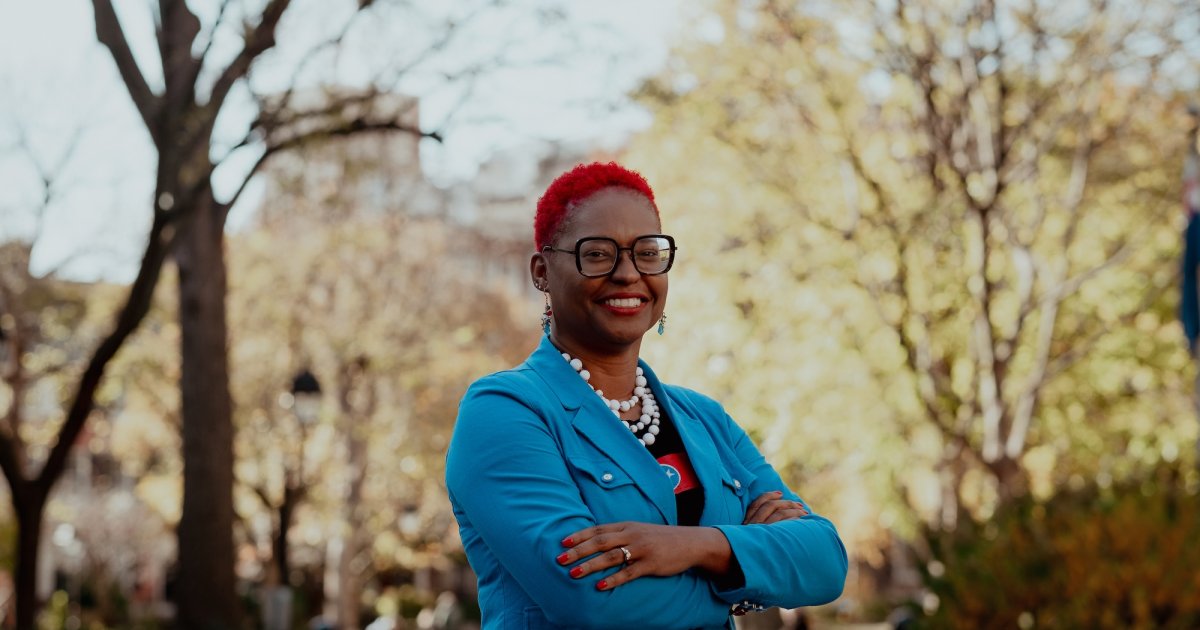
Monica Meeks is a combat veteran and lifelong public servant fired for criticizing Charlie Kirk from her personal Facebook shortly after his assassination.
Under the First Amendment, public employers can’t fire people simply because the government doesn’t approve of their off-duty speech.
FIRE is suing the Tennessee Commissioner of Commerce and Insurance on Monica’s behalf, seeking reinstatement and damages.
NASHVILLE, Dec. 10, 2025 — The Foundation for Individual Rights and Expression filed a federal lawsuit today on behalf of Monica Meeks, a Tennessee public employee unlawfully fired from her state government job solely for criticizing Charlie Kirk in a Facebook comment after his assassination.
“Our democracy suffers when public employees fear to voice what they are free to think,” said FIRE senior attorney Greg Greubel. “There are more than 23 million government employees across the country — and they can’t be fired simply because their boss or folks online don’t like the opinions they share off the clock.”
After serving 20 years in the U.S. Army, including a tour of duty in Iraq, Monica joined the Tennessee Department of Commerce and Insurance in 2016. Since joining the department, Monica has received stellar performance reviews and regular raises.
“I’ve never backed down from a fight in my life, and I don’t plan to start now,” said Monica. “I took an oath to defend the Constitution. Now, it’s time to stand up for it again.”
In her private life, Monica is politically engaged and even ran for the Tennessee House of Representatives in 2022 as an independent candidate. In her free time, she enjoys joking around and trading hot takes with her old Army “battle buddies” on Facebook. After the assassination of conservative activist Charlie Kirk, Monica responded to a friend’s post about Kirk with the remark, “The way you tap dance for White Supremacist should be studied!”
Monica’s post was never intended to go further than two friends amiably sparring over politics — as millions of Americans do every day. But the post escaped her personal circle, and she quickly became swept up in the wave of cancellation attempts that followed the Kirk assassination.
Only 15 or so X accounts called for Monica to be fired in response to an unrelated post by the Department on the afternoon of September 12. That includes comments marked as “probable spam,” and posts from anonymous accounts like “Bonerville Asskicker” and “NonGMOKaren.” But Tennessee Department of Commerce and Insurance Commissioner Carter Lawrence publicly announced her firing mere hours later, and sent a termination letter to Monica’s inbox. Lawrence’s letter mentioned no other performance issues whatsoever, nor any disruption to department operations, and made clear he was firing Monica solely for her lone “inflammatory and insulting comment” on Facebook.
“You may disagree with Monica’s take on Charlie Kirk. But letting a few angry individuals get a public employee fired for off-the-clock speech, even when it has no impact on the workplace, will inevitably boomerang back on people with views you do support,” said FIRE staff attorney Cary Davis. “When public employees are forced into silence for fear of offending someone on the internet, we all lose.”
Lawrence’s rush to fire Monica violated Supreme Court precedent, which established a three-prong test to determine when a government employee’s speech is constitutionally protected and cannot be punished by the state. First, the employee must speak “as a citizen” rather than as an employee. Second, the speech must involve “a matter of public concern.” Third, the employee’s interest in exercising their right to free expression must outweigh the state’s interest in ensuring effective government operations.
Monica’s post easily clears all three hurdles:
Monica clearly went to great lengths to establish that she was speaking as a private citizen. Her Facebook had a disclaimer that her views were hers and hers alone, and her profile didn’t even mention that she worked for the department.
Monica’s post obviously involved a matter of public concern. The fact that others might vehemently disagree with her view of Kirk doesn’t change the fact that it was a major news story with political reverberations across the country.
There is no evidence Monica’s post had any disruptive effect on the department or her work for it. Lawrence’s letter cited complaints about the post by members of the public, but there’s no evidence any coworkers complained, or that her opinions on Kirk would in any way impede her ability to investigate financial services fraud. It was hostility to Monica’s politics that drove the decision — not any legitimate government concern.
FIRE is asking the U.S. District Court for the Middle District of Tennessee to find that Lawrence retaliated against Monica for exercising her clearly established First Amendment rights, and to award her damages and reinstate her to her position. And because Lawrence clearly disregarded her constitutional rights, FIRE is also seeking punitive damages for Monica. Melody Fowler-Green of Yezbak Law Offices is serving as local counsel in the case.
The Foundation for Individual Rights and Expression (FIRE) is a nonpartisan, nonprofit organization dedicated to defending and sustaining the individual rights of all Americans to free speech and free thought — the most essential qualities of liberty. FIRE educates Americans about the importance of these inalienable rights, promotes a culture of respect for these rights, and provides the means to preserve them.
CONTACT:
Alex Griswold, Communications Campaign Manager, FIRE: 215-717-3473; [email protected]
Nine out of ten undergrads believe that “words can be violence”
Differences in views becoming more stark between liberal and conservative students
PHILADELPHIA, Dec. 2, 2025 — Ninety one percent of undergraduate students believe that words can be violence, according to a new poll by the Foundation for Individual Rights and Expression and College Pulse.
The survey’s findings are especially startling coming in the wake of Charlie Kirk’s assassination — an extreme and tragic example of the sharp difference between words and violence.
“When people start thinking that words can be violence, violence becomes an acceptable response to words,” said FIRE Chief Research Advisor Sean Stevens. “Even after the murder of Charlie Kirk at a speaking event, college students think that someone’s words can be a threat. This is antithetical to a free and open society, where words are the best alternative to political violence.”
The new 21-question poll, conducted between Oct. 3-31 by FIRE and College Pulse, assessed free speech on campus in the wake of Kirk’s assassination at Utah Valley University on Sept. 10 and asked undergraduates about their comfort level with a number of controversial topics. The survey of 2,028 undergrads included an oversample of 204 students at Utah Valley, and has a margin of error of +/- 2%.
Half of students surveyed say that because of what happened to Kirk, they are now less comfortable attending or hosting controversial public events on their campus, and one in five say they are less comfortable attending class.
Other findings show stark differences between students at Utah Valley and other schools, as well as widening rifts between liberal and conservative students:
When asked whether the country is headed in the right or wrong direction for people’s ability to freely express their views, 84% of Utah Valley students said “wrong direction,” significantly higher than the 73% reported by students at other schools.
Moderate and conservative students across the country became significantly less likely to say that shouting down a speaker, blocking entry to an event, or using violence to stop a campus speech are acceptable actions. In contrast, liberal students’ support for these tactics held steady, or even increased slightly.
Among moderate and conservative students, opposition to controversial speakers generally declined. Opposition among liberal students, on the other hand, either held steady or increased for all of the controversial speakers compared to the spring.
The gaps between conservative and liberal students may be widening, but some concerns transcend politics. A majority of students of all persuasions (53%) say that political violence is a problem among all groups, considerably more than the 35% of Americans who recently said this in FIRE’s October National Speech Index.
“Students want to feel safe, and the killing of Charlie Kirk naturally eroded their sense of safety,” said Stevens. “What we want students to recognize is that the safest environment is one in which people can speak their minds without fear of censorship or violence.”
The Foundation for Individual Rights and Expression (FIRE) is a nonpartisan, nonprofit organization dedicated to defending and sustaining the individual rights of all Americans to free speech and free thought — the most essential qualities of liberty. FIRE educates Americans about the importance of these inalienable rights, promotes a culture of respect for these rights, and provides the means to preserve them.
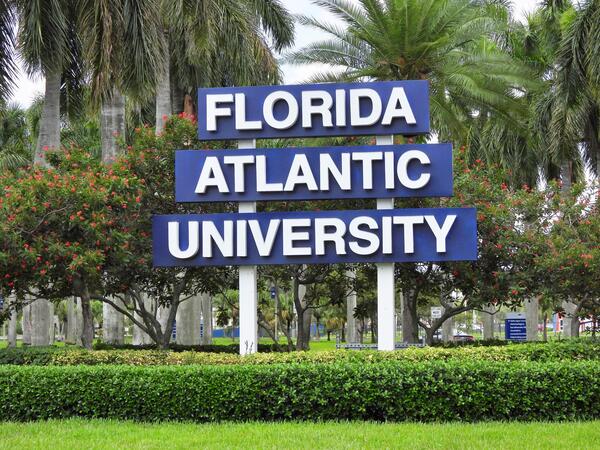
Two professors at Florida Atlantic University are back at work after the university placed them on administrative leave for making comments related to Charlie Kirk’s death, The South Florida Sun Sentinel reported Wednesday.
After the right-wing activist was shot and killed Sept. 10 during an event at Utah Valley University, President Donald Trump and his allies sought to punish anyone who made public comments about Kirk that could be perceived as critical. Numerous universities fired or suspended professors, including three at FAU: Karen Leader, an associate professor of art history; Kate Polak, an English professor; and Rebel Cole, a finance professor.
While Leader’s and Polak’s comments criticized Kirk, Cole’s comments were directed at Kirk’s opponents. “We are going to hunt you down. We are going to identify you,” he wrote on social media, according to the Sun Sentinel. “Then we are going to make you radioactive to polite society. And we will make you both unemployed and unemployable.”
While the three professors were on administrative leave, the university hired Alan Lawson, a former Florida Supreme Court justice, to investigate their comments. Lawson has since concluded that Cole’s and Leader’s comments were protected by the First Amendment and recommended they both be reinstated.
“The findings reflect that each professor’s social-media statements, though provocative to varying degrees, were authored in a personal capacity on matters of public concern,” Lawson wrote. Although both the FAU Faculty Senate and Cole himself objected to the investigation—Cole sued the university over an alleged First Amendment violation—Lawson’s report said the university “preserved constitutional rights while upholding its responsibility to ensure professionalism, civility, and safety within its academic community.”
Polak remains on leave while Lawson continues to investigate her comments.
Charlie Kirk: Hero of ‘Civil Discourse’ or Fount of Division?
Ryan Quinn
Mon, 09/29/2025 – 03:00 AM
Pointing to the slain activist’s inflammatory statements about minority groups, some are pushing back—at their own peril—against the right’s framing of him as an emblem of quality discourse.