With national attention already focused on campus free speech, the assassination of Charlie Kirk at Utah Valley University has intensified a fractious moment for higher education. Voices on the right have blamed colleges for Kirk’s death, calling them “indoctrination camps” and comparing them to “madrassas that radicalize jihadis.”
Though the suspect is not a student, Kirk’s killing has intersected with concerns that students are increasingly unable or unwilling to engage with dissenting views. Critics have cited the most recent FIRE College Free Speech Rankings survey, which shows that one in three students thinks it’s acceptable to use violence to stop a speaker.
Colleges did not cause Kirk’s death, but leaders cannot ignore the finding that a third of students support using violence against a speaker. Though most students will never resort to violence, the possibility forces colleges to reassess campus security. UVU’s police chief admitted more than half his force of 15 officers wasn’t able to secure the crowd of 3,000 people at the Kirk event. Security experts noted that stopping a shooting from the top of a building hundreds of feet away requires Secret Service–style sweeps. The incident raises questions about bringing outside speakers to campuses. With so many budget problems in higher ed, who will cover the costs of keeping them safe?
Yet on the ground at UVU, life on campus looked far different from critics’ portrayals. In the hours after the shooting, the student newspaper, The UVU Review, reported that professors reached out to students to offer resources and reprieves from coursework. Students called everyone in their phone to tell them they were safe. Strangers hugged each other and students offered a ride home to anyone who needed it. They put aside their differences to grieve together. “It feels like life stopped for us,” said one student. “But it kept going for everyone else. I’m ready for life to start again, no matter how changed it’ll be.”
Given Kirk’s prominence, students across the country will feel like this incident has changed their lives, too. With more than 850 campus chapters, Turning Point USA is an organization where conservative students have found community. And even for students who disagreed with Kirk he inspired them to engage with political issues and debate their ideas.
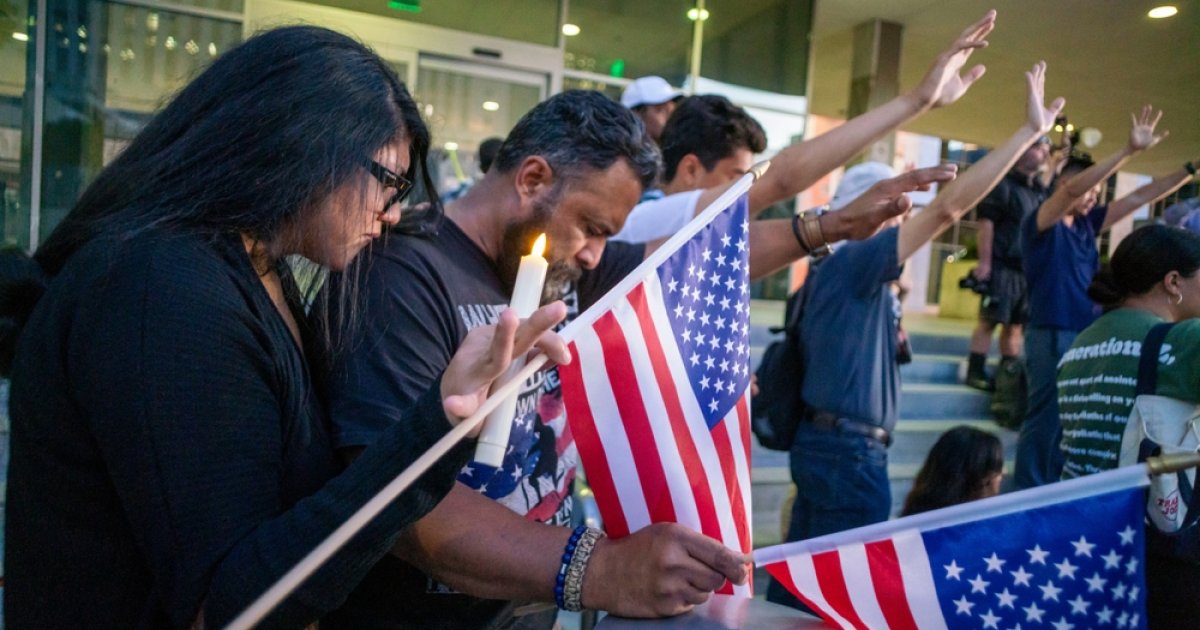
But the reactions to Kirk’s death reveal that the ideological fissures on campus have only deepened. At least 15 faculty and staff members have been fired for appearing to condone the shooting on social media, many after online campaigns called for their dismissal. Meanwhile, at a candlelit vigil at the University of North Carolina at Chapel Hill—a campus that has faced its own tragedy—student Walt Wilson told The Daily Tarheel he was mourning Kirk even though he disagreed with him. “Getting killed over debate and fostering free speech, especially in a place like a university where that is supposed to prosper, is a real tragedy and shows an issue of communication and reconciliation,” he said.
Free speech survives only if protected in practice. This moment will test higher education’s resolve: Will political pressure drive colleges to retreat, or will they recommit to free expression as a path through turmoil?
Far from diminishing conservative student mobilization, Kirk’s death appears to have amplified it—at least in the short term. Randall Collins’ sociology of interaction ritual chains and Eric Hoffer’s classic analysis of mass movements provide a useful lens for understanding both the surge and the likely limits of this moment.
Collins’ Emotional Energy Framework Applied to Kirk’s Death
Collins identifies four outcomes of successful ritual gatherings: group solidarity, emotional energy, sacred symbols, and moral righteousness. In the wake of Kirk’s assassination, conservative students and evangelical leaders have experienced all four in compressed, amplified form.
Pastors quickly declared Kirk a “Christian martyr.” Rob McCoy invoked biblical precedent, while Jackson Lahmeyer described the murder as “spiritual in nature and an attack on the very institution of the church.” This religious framing elevates Kirk from activist to sacred symbol.
The immediate response has been extraordinary. Turning Point USA claims more than 32,000 requests for new chapters in the 48 hours following his death. Collins would interpret this as emotional energy seeking new ritual outlets. In this sense, Kirk’s martyrdom has become not just a grievance but a generator of collective action.
The memorial scheduled for September 21 at State Farm Stadium—with capacity for more than 60,000 and featuring Donald Trump—is set to be the largest ritual gathering in the history of conservative student politics. Collins would predict this to be a high-intensity moment of “collective effervescence,” the kind of event that extends emotional energy for months if not years.
Hoffer’s Mass Movement Dynamics and Conservative Student Mobilization
Hoffer’s The True Believer provides a complementary angle. He argued that mass movements thrive on frustration, doctrine, and the presence of either a leader or a transcendent cause. Kirk’s assassination intensified frustration while transforming him into a more powerful symbolic figure than he was in life.
Student conservatives now have all three: grievance (left-wing violence), a sacred cause (free speech framed as religious duty), and a heroic narrative (following a martyred leader). In Hoffer’s words, martyrdom provides both “grievance and transcendent meaning.”
The shift from Kirk as a living leader to Kirk as martyr reflects Hoffer’s principle of substitutability. Loyalty has already migrated from the man himself to the mythology of his sacrifice. College Republicans chairman William Donahue compared the killing to Martin Luther King Jr.’s assassination, framing it as a watershed for the movement.
Sustainability and the Ritual Problem
The paradox is that Kirk’s most important contribution—the high-energy confrontational rituals of his “Prove Me Wrong” campus debates—cannot be replicated without him. These events generated viral spectacle, solidified conservative identity, and created sacred moments of confrontation. They were, in Collins’ terms, engines of emotional energy.
The September 21 memorial may provide a one-time boost, but Collins emphasizes that emotional energy must be renewed through repeated rituals. Without Kirk’s charisma and willingness to create confrontational spaces, conservative students risk energy dissipation. Already some students report greater enthusiasm for activism, while others express fear of being targeted themselves.
The dilemma is clear: the rituals that generated the most energy (public confrontations) are the very ones most likely to invite violence. This tension may limit the sustainability of the movement’s current surge.
The Profit Motive: Martyrdom as Marketplace
Beyond the sociology of solidarity lies a material reality: martyrdom is also a business model. Conservative organizations are already converting Kirk’s death into a revenue stream. Within hours of the assassination, Turning Point USA launched fundraising appeals invoking Kirk’s “sacrifice,” while conservative merchandisers began selling commemorative t-shirts, hats, and wristbands emblazoned with slogans like “Martyr for Freedom” and “Charlie Lives.”
Publishing houses are reportedly fast-tracking hagiographic biographies, while streaming platforms are negotiating for documentaries. Memorial events, livestreams, and “Martyrdom Tours” are being packaged as both spiritual rituals and ticketed spectacles. Kirk’s death, in other words, is generating not only emotional energy but also financial capital.
This profit motive raises questions about the sincerity of the rhetoric surrounding Kirk’s martyrdom. While Collins and Hoffer help explain the emotional pull, the commodification of grief ensures that the “sacred symbol” is also a lucrative brand. Conservative student organizing may thus be sustained less by spontaneous devotion than by a well-financed industry of grievance, merchandise, and media spectacle.
Indicators to Watch
Several markers will reveal whether Kirk’s martyrdom produces lasting transformation or burns out in ritual dissipation:
Memorial impact: Attendance and intensity at the September 21 gathering will test whether Kirk’s death can generate lasting solidarity.
Chapter formation: The real test of Turning Point USA’s 32,000 claims will be functioning chapters in six months.
Leadership succession: Hoffer reminds us that movements need charismatic leaders. At present, Trump appears to be monopolizing the emotional energy, raising doubts about the rise of new student leaders.
Counter-mobilization: Collins’ conflict theory suggests left-wing backlash could shape whether conservative students double down or retreat.
The Probable Trajectory
For the next 6–18 months, conservative student mobilization is likely to grow. The movement now has the grievance, sacred symbolism, and transcendent narrative that both Collins and Hoffer identify as powerful motivators.
But sustaining this surge will be difficult without Kirk’s unique talent for generating high-energy campus rituals. Unless new leaders emerge who can replicate or reimagine those ritual forms, the emotional energy of martyrdom may eventually dissipate.
At the same time, the financial infrastructure now growing around Kirk’s death suggests the movement has a fallback strategy: keep the martyrdom alive as long as it remains profitable. In this way, Kirk’s assassination may prove to be not just a sociological event but also a business opportunity—one that reveals the convergence of politics, religion, and profit in contemporary conservative student life.
Appropriately, we can expect colleges and universities to place even greater emphasis on safety and security ahead of outside speakers arriving on campus moving forward. They have a moral and legal obligation to redouble their efforts to protect free speech as well as their campus community. However, administrators must not pass those security costs along to speakers or use security concerns as pretext to cancel a speaker’s appearance. Rewarding threats of violence by taxing speech or silencing speakers will only invite more threats and more violence.
Just as there is undeniable risk in hosting controversial speakers, there is infinite risk in surrendering the marketplace of ideas to the heckler’s veto.
In Forsyth County v. Nationalist Movement (1992), the Supreme Court determined that government actors — like public college or university administrators — may not lawfully impose security fees based on their own subjective judgments about “the amount of hostility likely to be created by the speech based on its content.” Such fees amount to a tax on speech an administrator subjectively dislikes, or subjectively believes is likely to cause disruption or violence.
“Speech cannot be financially burdened, any more than it can be punished or banned, simply because it might offend a hostile mob,” the Forsyth Court wrote, noting that “[t]hose wishing to express views unpopular with bottle throwers, for example, may have to pay more for their permit.”
America must be an open society where we feel safe to share our ideas in the public square, not just from behind bulletproof glass and bulletproof vests.
Imposing exorbitant security fees due to the controversial nature of an event effectuates a heckler’s veto, as it allows an audience’s reaction to dictate the price a student group must pay to hold an event. This means that a student group could be priced out of holding a controversial event if the audience reaction is anticipated to be too disruptive. Just as there is undeniable risk in hosting controversial speakers, there is infinite risk in surrendering the marketplace of ideas to the heckler’s veto.
So what should colleges do in the face of this challenge?
First, they need to adopt and publish viewpoint- and content-neutral regulations on events. As we wrote in a 2022 letter to Pennsylvania State University, “Any administrative imposition of security fees on a student group must be guided by narrowly drawn, viewpoint- and content-neutral, reasonable, definite, and clearly communicated standards in order to comply with [the university’s]…obligations under the First Amendment.” FIRE’s Model Speech Policies for College Campuses include a security fee policy that other colleges can emulate to set themselves up for success.
When universities silence controversy they silence opportunity — the opportunity to test ideas, sharpen arguments, and confront uncomfortable topics.
Second, colleges must apply those regulations to make decisions about security measures on the basis of verified, specific safety concerns, rather than speculative assumptions on the basis of the speaker’s message or experiences at past events. And every effort should be made to ensure events that do present concerns are able to continue. Such strategies as increasing security, using metal detectors, and moving events online should be applied before cancellation.
Third, colleges need to train staff to apply these standards properly to meet their dual obligations to ensure safety of attendees and the speaker during the event, and to uphold the ability of attendees to hear the speaker’s message. FIRE’s First Amendment Lessons for College Administrators can be a useful starting point for this work.
Student acceptance of violence in response to speech hits a record high
In 2020, just 1 in 5 students said it was acceptable to use violence to stop a speaker. Now it’s 1 in 3 — a nearly 80% jump in five years.
At the same time, colleges should educate students on freedom of speech: both its limits and its importance in our democracy. FIRE encourages colleges to begin this education on day one at orientation, guided by our Free Speech at Freshman Orientation programming. These lessons should provide students with better options for responding to disfavored speech than shoutdowns or violence. They should also reinforce why we’ve chosen in America to meet speech with which we disagree with more speech.
When universities silence controversy they silence opportunity — the opportunity to test ideas, sharpen arguments, and confront uncomfortable topics. They must meet this challenging moment not with censorship but with empowerment of free expression.
Right-wing social media accounts have embarked on a widespread name-and-shame campaign to out any college employees who have celebrated or spoken insensitively about Kirk’s death.
Photo illustration by Justin Morrison/Inside Higher Ed | skynesher/E+/Getty Images
Two administrators are now out of a job and a graduate student lost an internship after making comments online that downplayed or celebrated the death of Charlie Kirk, the influential conservative founder of the campus-focused Turning Point USA.
In the 36 hours since Kirk was shot and killed during an event at Utah Valley University, right-wing social media accounts have screenshotted and circulated several social media posts, likes and reposts from college faculty and staff members related to Kirk’s death. In addition to the firings, the campaign to name and shame these individuals has led to death threats, Wired reported.
Late Wednesday, a student affairs administrator at Middle Tennessee State University was fired after posting “insensitive” remarks on Facebook in response to Kirk’s death. “We take great pride in the professionalism of our staff; in my long tenure with this university I’ve never before had to dismiss someone for so carelessly undermining the work and mission of this fine institution,” Middle Tennessee State president Sidney McPhee wrote in a statement Thursday. A university spokesperson confirmed the employee was Laura Sosh-Lightsy, an associate dean of student care and conduct who had worked at the university since 2005.
“Looks like ol’ Charlie spoke his fate into existence. Hate begets hate. ZERO sympathy,” Sosh-Lightsy wrote in a Facebook post that has been circulated widely by right-wing accounts on social media. A university spokesperson did not confirm whether or not that specific post led to her firing but noted that “her termination was related to her insensitive social media posts related to the horrific death of Mr. Kirk.” Tennessee senator Marsha Blackburn, a Republican, called for Sosh-Lightsy’s firing on X, writing that she “should be ashamed of her post.” Sosh-Lightsy did not respond to Inside Higher Ed’s request for comment.
On Thursday afternoon, University of Mississippi chancellor Glenn Boyce confirmed the firing of an unnamed staff member who he said “re-shared hurtful, insensitive comments on social media regarding the tragic murder of Charlie Kirk.”
Boyce didn’t provide specifics but noted that “these comments run completely counter to our institutional values of civility, fairness and respecting the dignity of each person.”
At Baylor University, officials distanced the university from a graduate student who wrote “this made me giggle” in response to a social media post sharing the news of Kirk’s death.
“We are aware and greatly disappointed by a social media comment from a Baylor graduate student regarding the fatal shooting of Charlie Kirk. To make light of the death of a fellow human being is completely inappropriate and completely counter to Baylor’s Christian mission. Baylor strives to be a community in which every individual is treated with respect—in life and in death,” a university statement said.
The graduate student—whose online username includes “coach”—is not a member of the faculty nor a part of the athletics program, the statement clarified. Midway Middle School, where the graduate student was student teaching, also removed him from teaching there, KWTX reported.
The Foundation for Individual Rights and Expression is monitoring which universities are censoring employee speech, said Lindsie Rank, director of campus rights advocacy at FIRE. “It may not be moral to speak ill of the dead, but it is protected by the First Amendment so we’re going to be keeping our eyes open for those situations,” she said.
Conservative commentator Charlie Kirk recently made headlines by calling for a full military occupation of American cities following what he terms the “liberation” of Washington, D.C. Speaking on a national platform, Kirk advocated deploying U.S. military forces to urban centers such as Chicago, New York, Boston, Philadelphia, Portland, and San Francisco to restore order amid rising crime and social unrest. He emphasized that a sustained military presence was necessary until these cities were “safe,” drawing comparisons to the low-crime, tightly controlled environments of Tokyo and Singapore.
Kirk’s call is not merely rhetorical; it reflects a growing faction within right-wing politics that endorses the federalization of local law enforcement issues, invoking military force as a tool for domestic order. He also proposed federalizing Washington, D.C., with military oversight — a step he deems essential to restoring law and order in the nation’s capital.
This stance has sparked significant debate over the balance between public safety and civil liberties. Critics warn that deploying military forces in civilian settings risks authoritarian overreach and undermines democratic norms. Supporters, meanwhile, argue that urgent and decisive action is needed in cities they see as suffering from governance failures. The implications of such a military occupation extend beyond crime statistics to the very fabric of American democracy, raising concerns about militarization, racial justice, and the erosion of local governance.
Background on Charlie Kirk and Turning Point USA
Charlie Kirk is the founder and president of Turning Point USA (TPUSA), a conservative nonprofit organization established in 2012. Founded when Kirk was just 18, TPUSA has grown into a powerful network dedicated to promoting free markets, limited government, and conservative values among youth. Financially backed by donors including the late Foster Friess and Home Depot co-founder Bernie Marcus, TPUSA reported revenues exceeding $55 million in 2022.
The organization’s stated mission is to “identify, educate, train, and organize students to promote freedom.” However, its campus activities have drawn criticism for compiling “watchlists” targeting left-leaning faculty and spreading misinformation. The Higher Education Inquirer has closely documented TPUSA’s growth, spotlighting its alliances with conservative student chapters, the appearances of controversial figures on its platforms, and its alignment with Trump administration policies. Beyond campuses, TPUSA has expanded through initiatives like TPUSA Faith, TPUSA Live, and the AmericaFest conference series, which have featured speakers such as Donald Trump Jr., Candace Owens, Tucker Carlson, and Marjorie Taylor Greene.
Fox News and the Epstein Fallout: Kirk’s Rising Media Profile
Amid Fox News’ ongoing tensions with Rupert Murdoch’s Wall Street Journal over the Jeffrey Epstein investigative files, Charlie Kirk has been tapped to guest host Fox & Friends Weekend. His upcoming appearances on July 27–28, 2025, alongside Rachel Campos-Duffy and Charlie Hurt, signal a strategic move by Fox News to bolster its conservative youth appeal and MAGA alignment amid internal pressures.
This development follows the Wall Street Journal’s July 2025 investigative report detailing Donald Trump’s past ties with Jeffrey Epstein, including allegations about a hand-drawn birthday card sent to Epstein. Trump has vehemently denied the claims and sued the Journal and Rupert Murdoch for $10 billion, labeling the report defamatory. Fox News, however, has noticeably limited its coverage of the Epstein files and the lawsuit, unlike other right-leaning outlets such as Newsmax and Real America’s Voice.
Kirk has vocally attacked the Journal’s reporting, calling it “fake” and “a hit job” on Trump. He praised Trump’s lawsuit on his podcast and social media platforms, framing the allegations as baseless attempts to tarnish the former president’s reputation. Despite initial criticism of Attorney General Pam Bondi over a DOJ memo regarding the Epstein investigation, Kirk later shifted his position, urging trust in government officials — a reversal that drew attention to the strategic recalibrations within MAGA circles.
Institutional Expansion and Political Influence
TPUSA’s influence extends well beyond college campuses. Through Turning Point Academy, it reaches high schools, while TPUSA Faith engages religious communities. Its political arm, Turning Point Action, spent over $7 million in the 2022 midterms, reflecting significant investment in electoral politics. TPUSA’s 2023 annual report highlights its presence in more than 2,500 schools and training of over 12,000 student activists.
Kirk’s upcoming role on Fox News underscores the merging of youth-oriented conservative political branding with legacy cable television platforms. This integration comes as Fox News attempts to balance the demands of its MAGA base against legal and reputational challenges linked to its corporate ownership. Kirk’s rising profile represents the normalization and institutionalization of organizations like TPUSA within mainstream conservative media.
Charlie Kirk’s calls for military occupation of American cities, coupled with his increasing prominence within conservative media, highlight the evolving landscape of political influence, youth activism, and media power in the United States. As debates intensify over public safety, civil liberties, and the militarization of law enforcement, it is crucial to scrutinize the intersection of political ideology and institutional authority. The implications extend far beyond partisan disputes — touching the core of democratic governance and social cohesion in a deeply divided nation.
Sources:
Axios (July 2025): “Charlie Kirk to co-host Fox & Friends Weekend”
Wall Street Journal (July 2025): “Trump’s Epstein Birthday Card”
IRS Form 990 Filings (TPUSA 2021–2023)
Media Matters: “Fox News Epstein Coverage Analysis”
FEC.gov: Turning Point Action Political Expenditures
Rolling Stone, Puck News (July 2025): Trump’s calls to allies over Epstein story
TPUSA 2023 Annual Report
Higher Education Inquirer Archive (2016–2025): Reports on TPUSA campus activity
Conservative commentator Charlie Kirk has repeatedly asserted that men are most fulfilled when they marry and have children. This idea, rooted in a traditionalist worldview, has gained traction among some segments of the population, particularly those seeking a return to what they perceive as the moral and social stability of the past. But does the scientific evidence support this claim? A closer look at research from sociology, psychology, and economics suggests a more complex and less ideologically convenient reality.
Marriage and Happiness: The Nuanced Evidence
It is true that some studies show a correlation between marriage and higher reported levels of happiness and well-being. For example, a 2002 study published in the Journal of Marriage and Family found that married individuals reported higher happiness levels than their unmarried counterparts. However, the effect size was relatively modest, and subsequent research has nuanced these findings.
A 2012 meta-analysis by Lucas and Dyrenforth in Personality and Social Psychology Bulletin suggested that the happiness boost associated with marriage is temporary. On average, individuals experience a honeymoon period after marriage, followed by a return to baseline happiness levels within a few years. This phenomenon, known as hedonic adaptation, undermines the idea that marriage itself produces sustained happiness.
Moreover, the benefits of marriage appear to be highly contingent on the quality of the relationship. A study published in Journal of Family Psychology (Carr et al., 2014) found that people in high-conflict marriages reported significantly lower well-being than unmarried individuals. Men in unhappy marriages often experience increased psychological distress, which may lead to health problems, substance abuse, and even premature death (Whisman et al., 2006).
Children and Male Well-being: A Complicated Relationship
Kirk’s view also hinges on the assumption that fatherhood enhances male happiness. While parenthood is often meaningful and rewarding, the scientific literature offers mixed findings regarding its impact on overall well-being.
A major study by Nelson et al. (2014) in Psychological Bulletin found that the association between parenthood and well-being is neither universally positive nor negative. The effects depend heavily on contextual factors like marital status, socioeconomic resources, and the age of the children. Fathers in stable, supportive relationships often report satisfaction from parenting, but those facing financial stress, lack of social support, or conflict with a co-parent frequently experience declines in mental health.
Another longitudinal study by Herbst and Ifcher (2016) found that fathers experience both gains and losses in subjective well-being. While they may report a greater sense of purpose and life meaning, they also experience declines in leisure time, sleep quality, and perceived freedom—all factors associated with lower happiness levels. Notably, single fathers and those in contentious co-parenting arrangements report lower life satisfaction than child-free men.
The Importance of Autonomy and Purpose
Perhaps most revealing are studies showing that autonomy and life purpose are stronger predictors of long-term happiness than marital or parental status alone. Deci and Ryan’s Self-Determination Theory, which has been widely validated across cultures, suggests that autonomy, competence, and relatedness are the key psychological needs for well-being. Marriage and children can contribute to these needs, but they can also undermine them, especially if the roles are imposed or filled with conflict.
Research from the Pew Research Center and Gallup also shows that life satisfaction is more closely tied to financial security, meaningful work, physical health, and strong social networks than to marital or parental status alone. Men who are engaged in purposeful careers, maintain close friendships, and have control over their time report higher levels of happiness—even if they are single or child-free.
The Rise of Alternative Lifestyles
Recent demographic trends reflect changing attitudes about what constitutes a fulfilling life. Census data show that marriage rates among men have declined steadily over the past 50 years. Meanwhile, increasing numbers of men are choosing to remain child-free or delay fatherhood. A 2021 Pew Research Center report found that 44% of men under 50 without children expected to remain child-free, a marked increase from previous decades.
While some conservatives view these changes as signs of cultural decline, others interpret them as evidence that men are exercising greater personal agency in crafting their lives outside traditional expectations. Men who reject marriage and fatherhood are not necessarily unhappy or aimless. For many, this path allows greater freedom to travel, pursue creative or intellectual goals, contribute to their communities, or engage in activism and caregiving in non-familial forms.
What About Mental Health?
Importantly, mental health outcomes among men do not uniformly improve with marriage and children. According to the National Institute of Mental Health, men in high-conflict or financially strained marriages report elevated rates of depression, anxiety, and substance abuse. Fatherhood under conditions of instability or poverty can exacerbate stress levels. Conversely, single men who cultivate strong support systems and engage in regular exercise, therapy, or meaningful social activities often show comparable or better mental health outcomes than married peers.
Beyond Simplistic Narratives
Charlie Kirk’s assertion that men are “happiest” when married with children oversimplifies a set of deeply personal and variable life experiences. While marriage and fatherhood can be sources of joy, meaning, and fulfillment, they are not universal prescriptions for happiness. The scientific consensus indicates that well-being is shaped by a complex interplay of autonomy, relationship quality, health, socioeconomic status, and personal values.
Higher education—particularly in the social sciences—has a role to play in challenging ideological assumptions with empirical research. In a pluralistic society, young men deserve the freedom to critically examine diverse paths to meaning and well-being, without being pressured into a one-size-fits-all model of masculinity. If anything, the data reveal that the happiest men are not necessarily husbands and fathers, but those who are allowed to define their own lives on their own terms.
Sources:
Lucas, R. E., & Dyrenforth, P. S. (2012). Does the honeymoon last? Personality and Social Psychology Bulletin.
Carr, D., Freedman, V. A., Cornman, J. C., & Schwarz, N. (2014). Happy marriage, happy life? Journal of Family Psychology.
Nelson, S. K., Kushlev, K., & Lyubomirsky, S. (2014). Is parenthood associated with well-being? Psychological Bulletin.
Whisman, M. A., Uebelacker, L. A., & Weinstock, L. M. (2006). Marital distress and mental health. Journal of Consulting and Clinical Psychology.
Deci, E. L., & Ryan, R. M. (2000). The “what” and “why” of goal pursuits: Human needs and the self-determination of behavior. Psychological Inquiry.
Pew Research Center. (2021). More Americans say they are unlikely to have children.
Herbst, C. M., & Ifcher, J. (2016). The increasing happiness of U.S. parents. Review of Economics of the Household.
National Institute of Mental Health. (2023). Mental Health and Marriage.