Tag: L.A

  • Publishing Advice From “Public Scholar,” “L.A. Times” Editor

    Publishing Advice From “Public Scholar,” “L.A. Times” Editor

    In the latest episode of The Key, Inside Higher Ed’s news and analysis podcast, Philip Gray, op-ed editor at the Los Angeles Times, and Susan D’Agostino, mathematician turned writer and columnist behind “The Public Scholar” at Inside Higher Ed, join IHE editor in chief Sara Custer to give insider tips on getting published and advocate for public scholarship—even when it feels risky in a polarized society. 

    Gray shares his top three tips when submitting an op-ed and D’Agostino walks listeners through her journey from tenured math professor to published author and freelance writer—including the humbling moment when her first op-ed landed in the local press instead of The New York Times, and why that was exactly where it needed to be.

    Source link

  • L.A. County’s Failure to Educate Incarcerated Youth is ‘Systemic – The 74

    L.A. County’s Failure to Educate Incarcerated Youth is ‘Systemic – The 74


    Get stories like this delivered straight to your inbox. Sign up for The 74 Newsletter

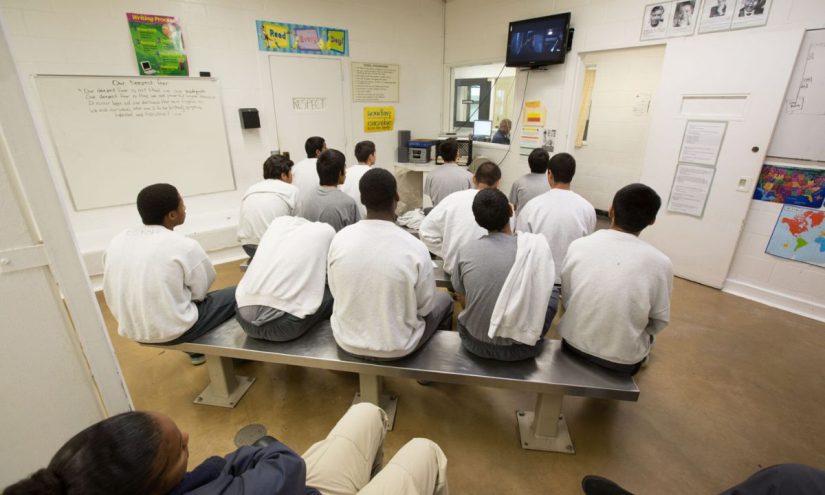
    Local government agencies in charge of youth violated the educational and civil rights of students in Los Angeles County’s juvenile justice facilities for decades by punting responsibility and inaction, according to a report released Wednesday.

    Who has the power? Chronicling Los Angeles County’s systemic failures to educate incarcerated youth” blames the disconnected, vast network of local and state agencies — from the board of supervisors to the local probation department to the county office of education and more — that play one role or another in managing the county’s juvenile legal system, for the disruption in the care and education of youth in one of the nation’s largest systems.

    “This broken system perpetuates a harmful cycle of ‘finger-pointing,’ often between Probation and Los Angeles County Office of Education, which hinders the resolution of issues that significantly affect the education of incarcerated youth,” wrote the Education Justice Coalition, authors of the report.

    The coalition includes representatives from Children’s Defense Fund-California, ACLU of Southern California, Arts for Healing and Justice Network, Disability Rights California, Youth Justice Education Clinic at Loyola Law School, and Public Counsel.

    The authors listed three demands for the board of supervisors, including reducing youth incarceration by way of implementing the previously approved Youth Justice Reimagined plan, providing access to high-quality education, and adopting transparency and accountability measures.

    Decades of documented rights violations

    A timeline outlines repeated student rights violations, some of which have resulted in class-action lawsuits and settlements requiring the county to be monitored by the federal and state departments of justice for years at a time.

    Since 2000, the timeline notes that Los Angeles County has faced:

    • A civil grand jury report calling on the board of supervisors to “improve collaboration” between the probation and education departments in order to address unmet educational needs
    • An investigation by the federal Department of Justice — and subsequent settlements — found significant teacher shortages, lack of consistency in daily instruction, and issues with support for students with special needs
    • A class action lawsuit against the county office of education and the probation department
    • An investigation by the state Department of Justice, followed by settlements, found excessive use of force and inadequate services
    • Multiple findings by a state agency of L.A. County juvenile facilities being “unsuitable for the confinement of minors”

    Most recently, the state attorney general has requested receivership, which would mean full state ownership of the county’s juvenile halls.

    The Los Angeles Board of Supervisors, the probation department, and the Office of Education did not immediately respond to a request for comment.

    The lasting impact of academic disruptions

    Dovontray Farmer experienced the mismanaged system when he entered Los Padrinos Juvenile Hall a second time as a 10th grader. Now 24 and serving as a youth mentor with the Youth Justice Coalition, Farmer said that his time in L.A. County facilities “played a major role in not being able to get properly educated — I felt betrayed, honestly.”

    Returning to school after being released was difficult, he said, because he quickly realized he was several grade levels below his classmates at his local high school.

    He’d also been part of his school’s football team before his detention at Los Padrinos when he was 17, and said he tried returning to the team once released but wasn’t allowed back.

    He said the disruption to his education and participation on the football team, which he saw as a positive influence, affected how he viewed his life.

    “There was nothing I really could do, so I was really giving up,” he said. “Like, everything that I really cared for was already gone.”

    The environment at the juvenile facilities didn’t help matters. 

    Los Padrinos recently came under fire after a video published by the Los Angeles Times showed probation officers standing idle as detained youths fought. Thirty officers have been indicted on criminal charges for encouraging or organizing gladiator-style fights among youths.

    Farmer said he was put through those same types of fights when he was at Los Padrinos as a teenager.

    “A lot of the coverage recently has been about the recent gladiator fights in 2023, but clearly this is a very systemic issue that even when a problem is resolved in the short term, we’re uncovering that it’s really indicative of a larger systemic problem,” said Vivian Wong, an education attorney and director of the Youth Justice Education Clinic at Loyola Law School, whose recent clients have included Los Padrinos students.

    Education data across several years backs Farmer’s experiences while detained.

    The most recent state data available when Farmer was detained at Los Padrinos is from 2018, when 39% of students were chronically absent, less than 43% graduated, and 12% were suspended at least once.

    That same year, the state’s average was 9% for chronic absenteeism, 83.5% for graduation, and 3.5% for suspension.

    Ongoing education concerns

    The report’s authors note that students across several facilities have lost thousands of instructional minutes, with a “lack of transparency and concrete planning to ensure that the missed services are adequately made up for, leaving students at risk of falling further behind educationally.”

    While compensatory education has typically been used to resolve instructional minutes owed, “I am not sure that’s the most realistic way to remedy the injustice that young people face, because they have endured so much abuse in these facilities,” said Wong. “It’s much more than just a loss of instruction.”

    A more appropriate response to the loss of instructional time would be a consistent investment in avoiding detention and keeping young people in their communities to maintain school stability, she added.

    Past attempts at reform have often been “done without community input or leadership, both in the design and in the implementation of those reforms,” Wong said.

    The new report, she added, is meant to be a tool toward implementing Youth Justice Reimagined, or YJR, a model against punitive measures that was largely developed with input from community organizations to restructure the local juvenile legal system.

    Three demands

    Youth Justice Reimagined, approved by the Los Angeles County Board of Supervisors in November 2020 to reform the local juvenile legal system, would move the county away from punitive approaches, such as detention, and toward rehabilitative support through counseling, family and vocational programming, small residential home placements, and more.

    Youth detention results in “severe disconnection from and disruption to their education trajectory,” wrote the report’s authors, as they urged the board to address abysmal educational access and achievement by fully funding and implementing YJR.

    The disconnect, they added, is exacerbated by delayed school enrollment when detained and upon release, the constant presence of probation officers, and turnover of educators and classmates.

    These common experiences are particularly difficult for students with learning disabilities or a history of trauma, they wrote.

    “After more than a decade of incremental reform, it is time for the County to truly reimagine youth justice,” wrote Supervisors Sheila Kuehl and Mark Ridley-Thomas in their November 2020 motion to approve YJR. “In the same way that the Board has embraced a care first, jail last approach to the criminal justice system, it is incumbent upon the Board to embrace a care first youth development approach to youth justice.”

    Despite the approval, a report published in August 2024 by the state auditor found that less than half of the YJR recommendations had been implemented by mid-2024.

    To address the high rates of chronic absenteeism, poor testing results and instructional minutes owed, the Education Justice Coalition’s second demand is to adapt educational opportunities “to address the unique and significant needs of the court school population.”

    They listed 18 actions the county probation and education departments should work together on, including:

    • Appropriate education support for students with disabilities 
    • Access to A-G approved courses for every student in a juvenile facility
    • Classrooms led by educators, rather than probation officers
    • Appropriately credentialed and culturally competent educators
    • Education access that is not disrupted due to probation staffing issues

    The coalition’s third demand centered on transparency and accountability measures by providing families with access to education planning for their children and establishing work groups that include community members.

    This story was originally published on EdSource.


    Get stories like these delivered straight to your inbox. Sign up for The 74 Newsletter

    Source link

  • L.A. Schools Telehealth Vendor Waited 8 Months to Report Breach – The 74

    L.A. Schools Telehealth Vendor Waited 8 Months to Report Breach – The 74

    School (in)Security is our biweekly briefing on the latest school safety news, vetted by Mark KeierleberSubscribe here.

    It’s another hot summer Friday and another day with news about a data breach — this one jeopardizing both student health and campus safety data.

    And once again, the development is unfolding in the country’s second-largest school district.

    Kokomo Solutions, which the Los Angeles district contracts with to provide telehealth services to students during the school day and to track campus safety threats, disclosed a data breach after it discovered an “unauthorized third party” on its computer network. The discovery happened in December 2024, but the notice to the California attorney general’s office wasn’t made until Aug. 5.  

    It’s the latest in a series of data privacy incidents affecting L.A. schools, including a high-profile 2022 ransomware attack exposing students’ sensitive mental health records and last year’s collapse of a much-lauded $6 million artificial intelligence chatbot project. 


    In the news

    Students at the center of Trump’s D.C. police takeover: In an unprecedented federal power grab, the Trump administration’s seizure of the D.C. police department and National Guard deployment is designed to target several vulnerable groups — including kids. | NPR

    • The move comes at a time when crime in the nation’s capital is on the decline. But a deep-dive from June explores how the district’s failure to prevent student absences has contributed to “the biggest youth crime surge in a generation.” | The Washington Post
    • Here’s what young people have to say about Trump’s D.C. takeover. | NBC 4
    • City police will roll out a youth-specific curfew Friday in the Navy Yard neighborhood. | Fox 5

    A new Ohio law requires school districts to implement basic cybersecurity measures in response to heightened cyberattacks. What the law doesn’t do, however, is provide any money to carry out the new mandate. | WBNS 

    News in Trump’s immigration crackdown: A federal judge in Minnesota has released from immigration detention a nursing 25-year-old mother, allowing her to return to her children as her case works its way through the court. | The Minnesota Star Tribune 

    • The Trump administration has revived one of its most controversial immigration policies from the president’s first term: Separating families. | The New York Times
    • Federal immigration officials quizzed an Idaho school resource officer about an unaccompanied migrant student, part of a broader national effort to conduct “welfare checks” on immigrant youth who came to the U.S. without their parents. | InvestigateWest
    • Leading Oklahoma Republican lawmakers have partnered with the Trump administration in a lawsuit challenging a state law allowing undocumented students to receive in-state college tuition. | InsideHigherEd
    • Los Angeles community members have organized to create protective perimeters around the city’s campuses after immigration agents reportedly drew their guns on a student outside a high school. | Los Angeles Times
      • The district announced new bus routes designed to improve student safety while commuting to school during heightened immigration enforcement. | NBC 4
    • The nonprofit Southwest Key, which for years has been the federal government’s largest provider of shelters for unaccompanied migrant children, has laid off thousands in Texas and Arizona after losing federal grants. The Trump administration dropped a lawsuit in March over allegations the nonprofit subjected migrant children to widespread sexual abuse. | ABC 15
    • A Texas court blocked the state attorney general’s request to depose and question a nun who leads Catholic Charities of the Rio Grande Valley, one of the largest migrant aid groups in the region. | The Texas Tribune
    Sign-up for the School (in)Security newsletter.

    Get the most critical news and information about students’ rights, safety and well-being delivered straight to your inbox.

    Microphone-equipped sensors installed in school bathrooms to crack down on student vaping could be hacked, researchers revealed, and turned into secret listening devices. | Wired

    ‘These are innocent children, sir’: New video of the delayed police response to the 2022 mass school shooting in Uvalde, Texas, shows the campus police chief attempting to negotiate with the gunman for more than 30 minutes. | The New York Times

    Kansas schools have become the latest target in the Trump administration’s campaign against districts that permit transgender students to participate in school athletics. | KCTV

    • The Loudoun County, Virginia, school board has refused to comply with an Education Department order to end a policy allowing transgender students to use restroom facilities that match their gender identity. | LoudounNow 
    • The Education Department’s Office for Civil Rights has opened an investigation into allegations the Baltimore school district ignored antisemetic harassment by students and educators. | The Baltimore Banner

    Lots of drills — little evidence: A congressionally mandated report finds that active shooter drills vary widely across the country — making it difficult to understand their effect on mental and emotional health. | National Academies of Sciences, Engineering, and Medicine

    A federal judge has blocked a new Arkansas law requiring that public schools display the Ten Commandments in all classrooms. It’s the second state Ten Commandments law to be halted this year. | Axios 

    ICYMI: I did a deep-dive into the far-right Christian nationalists behind more than two dozen state Ten Commandments-in-schools bills nationally — each of which are inherently identical. | The 74

    Is Texas up next? Civil rights groups will ask a judge on Friday to prevent a similar law from going into effect. | Houston Chronicle


    ICYMI @The74

    Despite Court Order, Education Department’s Civil Rights Staff Still On Leave

    ‘So Many Threats to Kids’: ICE Fear Grips Los Angeles at Start of New School Year


    Emotional Support

    Don’t sleep on this Bloomberg feature into “Doodlemania” — the billion-dollar industry for hypoallergenic (and floofy!) designer pups.


    Get stories like these delivered straight to your inbox. Sign up for The 74 Newsletter

    Source link

  • L.A. Community Colleges, CSUs Partner on Nursing Initiative

    L.A. Community Colleges, CSUs Partner on Nursing Initiative

    After tussling over proposed legislation to allow community colleges to offer a bachelor’s of nursing degree, Los Angeles County’s 19 community colleges and the California State University system are working together to tackle local nursing shortages. The partnership, spearheaded by Compton College, may signal a new phase of cooperation between the two systems.

    The Nursing 2035 Initiative aims to foster collaboration between community colleges, the CSU system and other stakeholders; conduct research; and devise strategies to graduate more registered nurses in the region over the next decade. The project also includes the Los Angeles Economic Development Corporation, the Department of Economic Opportunity with the County of Los Angeles and California Competes, an organization focused on higher ed and workforce development in the state.

    Keith Curry, president of Compton College, said the need for more nurses in the region is dire. Lightcast, a labor market analytics firm, projected 6,454 job openings for registered nurses in Los Angeles County annually through 2035, but degree-completion data from 2023 shows local colleges only produced 5,363 graduates with relevant degrees that year.

    Curry described a nearby medical clinic’s emergency room as “flooded” with patients at the same time aspiring nurses face barriers to entering the profession, such as vying for limited spots in nursing programs. Programs, meanwhile, struggle to grow because of challenges with retaining nursing faculty, who can find better wages working in hospitals, and competition for scarce clinical placements.

    The goal is “really trying to address health disparities in the community I’m from, and nursing is just another one of those issues that we have to address,” Curry said.

    Teamwork After Tensions

    The move comes after Gov. Gavin Newsom encouraged more CSU–community college partnerships on nursing last year after he vetoed two bills that would have allowed some community colleges to offer B.S.N. programs as part of a pilot program.

    At the time, community college leaders argued that expanding their nursing offerings beyond associate degrees would make nursing education more affordable and combat nurse shortages in the state. But CSU leaders opposed the legislation, countering that the new programs would be duplicative and force the CSU’s existing programs to compete for resources, like clinical placements. (The two systems have also cyclically battled over community college baccalaureate degrees since the state allowed them a decade ago.)

    Newsom came down on the CSUs’ side.

    “All segments of higher education should continue to focus on building these programs together,” he wrote in one of his veto messages, “and I am concerned this bill could inadvertently undermine that collaboration.”

    The initiative is an attempt to do just that, Curry said.

    “It’s not us versus them,” he said. “It’s about how can we partner together to solve a problem. So, I felt that CSU has to be the table.”

    Jose Fierro, president of Cerritos College and co-chair of the Los Angeles Regional Consortium, a coalition of L.A. County’s 19 colleges, said he and other community college leaders were “disappointed” by Newsom’s rejection of community college B.S.N. degrees because he felt like they would help his place-bound students. He said his campus is nine miles on average from local universities.

    Students “may not be within driving distance because they would have to uproot their families, or because of the high cost of housing, they wouldn’t be able to move to a different city to be able to access these programs,” he said.

    At the same time, he believes the collaborative approach will benefit students.

    “We are bringing county representatives, hospital representatives, state officials, California State and community colleges to look at our programs and our shortage of nurses in a comprehensive manner,” to think about “how can we work together to meet the needs of the community?”

    An Example for Others

    Some nursing partnerships between community colleges and CSUs already exist. For example, California State University, Northridge, has an A.D.N.-B.S.N. Community College Collaborative Program, which allows students earning nursing associate degrees at partnering community colleges to earn a B.S.N. on an accelerated timeline. A program at Cal State Long Beach also allows nursing associate degree students to take B.S.N. classes while in community college.

    Nathan Evans, deputy vice chancellor for academic and student affairs and chief academic officer at the CSU Office of the Chancellor, believes the Nursing 2035 Initiative can serve as an example of how community college and CSU leaders can strategically confront local nursing shortages together.

    “The boundaries of our institutions don’t have to be what they were in the past,” he said. “Our hope is that this is a model of what collaboration looks like between our segments and there’s a lot less friction in terms of the student experience, that there are clear road maps for students, particularly in the nursing field.”

    As a first step, the group plans to research the region’s nursing education and workforce and release a report in the fall with policy and budget recommendations on how to expand nursing programs in the area. The goal is to work on the recommendations through 2035.

    Evans said the initiative is “using data to really drive a needs assessment and then allow that to lead us to, what are the ways we collectively can respond?”

    The hope is that process leads to new, innovative partnerships, said Fierro. For example, he can imagine CSUs offering B.S.N. programs on community college campuses, or partnering with community colleges on collaborative programs, so that students who struggle to commute to universities because of work or family obligations have more options.

    “To me, the main objective is to ensure that we bring that value to the local communities,” he said, “regardless of whose name is issuing the diploma.”

    Source link