Tag: Labor

  • How Can Unions Defend Worker Power Under Trump 2.0? (Labor Notes)

    How Can Unions Defend Worker Power Under Trump 2.0? (Labor Notes)

    In the December issue: 

    New York’s Working Class Elects a Movement Mayor, by Luis Feliz Leon
    Zohran Kwame Mamdani, a Democratic Socialist and the Democratic nominee, will be New York City’s next mayor, after trouncing former Governor Andrew Cuomo in a primary and general election double whammy. Volunteers were galvanized by Mamdani’s relentless focus on the affordability crisis and principled stand against Israel’s unfolding genocide in Gaza.

    Canadian Postal Workers Strike Again, by Danielle Smith
    Canadian postal workers are back on strike—again—as they fight to save a vital public service. “By staying on the job and continuing to wait for demoralizing offers, we show that we accept this, we’re not going to fight. So we decided we’re going out,” said Nova Scotia letter carrier Basia Sokal. 

    Indiana Casino Dealers Are Bringing Back the Recognition Strike, by Alexandra Bradbury
    There are no clocks in a casino, so the dealers all set their phone alarms for noon. Everyone was a bundle of nerves. Before work, a couple of people threw up.

    But when the cacophony of alarms sounded, everyone lifted their hands in the air, slammed down the lids on their games of baccarat, blackjack, craps, and roulette, and announced they were on strike. “It was more powerful than anything I’ve ever felt in my life,” said dealer Tera Arnold. “I had goosebumps head to toe.”

    PLUS: Articles published so far in our Roundtable Series: How Can Unions Defend Worker Power Under Trump 2.0?, a Stewards’ Corner on welcoming immigrant members into the union, and more! 

    Source link

  • Higher Education Labor United ("HELU") November 2025 Report

    Higher Education Labor United ("HELU") November 2025 Report


    November 2025 HELU Chair’s Message

    Billionaires and the ultra-wealthy have no place in setting the future agenda for higher ed. We – the students, community members, workers that actually make the campus work – do. 


    Upcoming Events:


    From the Blog:

    In Michigan, the MI HELU coalition decided that we wanted to get ahead of the curve by providing candidates with a forum that focused exclusively on Higher Education and the challenges we are facing.

    Together, we’re fighting back against the demonization of higher ed and we won’t cave to governmental bullying to water down our education system with the goal of elimination. Our students deserve better, and so do we.

    Founded in 2020 during the initial phase of the COVID-19 pandemic, Scholars for a New Deal for Higher Education (SNDHE) is a group of teachers and researchers committed to rebuilding our colleges and universities so that they can be a true public resource for everyone.

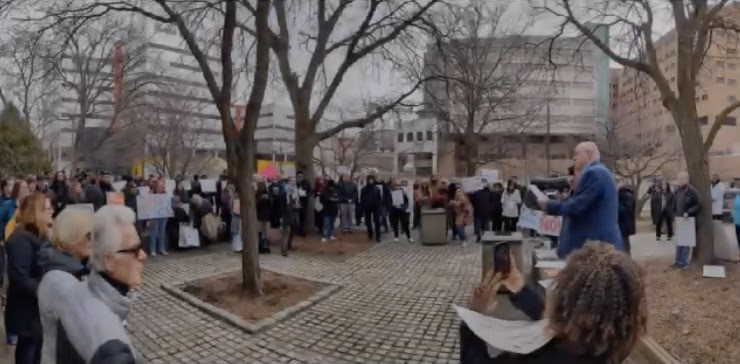
    And now [New York is] being punished by a federal government that sees organized labor, public education, and social investment as threats instead of strengths.

    Public protest and influencing public opinion is keeping UCW (CWA Local 3821) busy. Members have been fighting fiercely to Defend Remote Work at their state institutions.


    Want to support our work? Make a contribution.

    We invite you to support HELU’s work by making a direct financial contribution. While HELU’s main source of income is solidarity pledges from member organizations, these funds from individuals help us to grow capacity as we work to align the higher ed labor movement.

    Source link

  • “The New Mayor of New York CIty” on Zoom (CUNY School of Labor and Urban Studies)

    “The New Mayor of New York CIty” on Zoom (CUNY School of Labor and Urban Studies)

    The New Mayor of New York City:

    A Post-Election Debrief

    A City Works Media Roundtable moderated by Laura Flanders


    Thursday, November 13

    1:00pm – 2:30pm

    Virtual-only via Zoom. Free and open to all.


    Click here to register.

    Please register to access virtual event info and reminders. 

    (slucuny.swoogo.com/13November2025/register)


    Guest Speakers:

    Claudia Irizarry Aponte – Labor and Work Reporter, THE CITY; Faculty, CUNY Newmark School of Journalism

    Liza Featherstone – Columnist, Jacobin and The New Republic; Contributing Writer, The Nation

    Amir Khafagy – Senior Labor Reporter, Documented

    Maya King – Politics Reporter, The New York Times

    Moderator:

    Laura Flanders – Host, Laura Flanders & Friends; Host, City Works

    Source link

  • College students hedge their bets in a chaotic labor market by double-majoring

    College students hedge their bets in a chaotic labor market by double-majoring

    by Jon Marcus, The Hechinger Report
    November 5, 2025

    After he graduates from the University of Wisconsin-Madison, Drew Wesson hopes to begin a career in strategic communication, a field with higher-than-average job growth and earnings.

    One year into his time at the university, Wesson became more strategic about this goal. Like nearly 1 in 3 of his classmates, he declared a second major to better stand out in an unpredictable labor market.

    It’s part of a trend that’s spreading nationwide, according to a Hechinger Report analysis of federal data, as students fret about getting jobs in an economy that some fear is shifting faster than a traditional college education can keep up.

    “There’s kind of a fear of graduating and going out into the job market,” said Wesson, a sophomore from Minneapolis who is double-majoring in international security and journalism. “And having more skills and more knowledge and more majors gives you a competitive edge.”

    The number of students at UW-Madison who double-major has grown by 25 percent over the last decade, the data show. But double-majoring is also on the rise at private, nonprofit colleges across the country, and at other public institutions, including the University of California, San Diego, and the University of North Carolina at Chapel Hill. 

    Nearly 5.4 million credentials — degrees or certificates — were earned by the 4.8 million college and university graduates in 2023-24, the most recent year for which the figure is available. That means about 12 percent left school with more than one, compared to 6 percent ten years earlier. Academic minors don’t count as a credential and aren’t tracked..

    Related: Interested in innovations in higher education? Subscribe to our free biweekly higher education newsletter.

    “Students are feeling a sort of spiraling lack of control in a very dynamic labor market,” said Rachel Slama, associate director of Cornell University’s Future of Learning Lab, which studies how technology and other innovations are changing education. “They’re probably clinging to the one thing that’s in their control, which is the majors they choose. And they think that more is more.”

    They may be right, according to one of the few studies of this topic, by scholars at St. Lawrence University and Vanderbilt Law School. Students who have one major in business and a second in science, technology, engineering or math, it found, earn more than if they majored in only one of those disciplines, the 2016 study found. 

    Graduates who double-major are also 56 percent less likely to be laid off, have their pay cut or suffer other negative effects in economic downturns, according to another study, released last year by researchers at Ohio State and four other universities. These outcomes show “the importance of diverse skill sets,” the researchers concluded. If there’s a drop in demand for the skills associated with one major, “a double major can pursue a job related to the unaffected major.” 

    At Wisconsin, nearly 6 in 10 students in computer science who pick a second major choose the lucrative discipline of data science; the number of jobs in data science is projected by the Bureau of Labor Statistics to increase 34 percent over about the next 10 years, at salaries that are nearly twice the national average.

    The unemployment rate among new bachelor’s degree recipients is now higher than for workers overall, and at its highest level since 2014, not including the pandemic years, according to the Federal Reserve Bank of St. Louis. That’s partly because artificial intelligence and other factors are transforming what employers need. 

    Nearly half of recent graduates feel underqualified to apply for even entry-level jobs, a survey by the education technology company Cengage Group finds. Only 30 percent say they have full-time jobs related to the fields that they studied.

    Meanwhile, colleges and universities — traditionally slow to transform what and how they teach — are encouraging students to combine majors as a faster way to keep up with changes in the labor market, said Taylor Odle, an assistant professor at UW-Madison who studies the economics of education and the value of credentials in the workforce.

    “Institutions are thinking strategically about how to align their degree programs with industry, and it might be by pairing two things they already have,” Odle said.

    There are other reasons for the rising popularity of double majors. At UW-Madison, for example, one factor propelling the growth is that there are no minors, noted Taylor Odle, an assistant professor there who studies the economics of education and the value of credentials in the workforce.. 

    Double-majoring isn’t easy. It typically means earning more than the usual minimum number of credits required to graduate, on top of extracurricular and other obligations. Wesson, at UW-Madison, for instance, is an officer of student government, a reporter and photographer for the campus newspaper and an honors student.

    Some separate majors have overlapping requirements. Even if they don’t, most universities and colleges charge the same tuition per semester no matter how many courses undergraduates take. So unless a second major extends the number of semesters a student needs to complete required courses, or forces him or her to take additional classes in the summers, double-majoring doesn’t typically cost more or take longer.

    Meanwhile, more students are arriving at college having already knocked off credits by taking dual-enrollment and Advanced Placement classes in high school. 

    About 2.5 million high school students participate in dual enrollment, according to an analysis of federal data by the Community College Research Center at Teachers College, Columbia University. (The Hechinger Report, which produced this story, is an independent unit of Teachers College.)

    This means they have room in their schedules in college for second majors, said Kelle Parsons, who focuses on higher education as a principal researcher at the American Institutes for Research.

    Related: After years of quietly falling, college tuition is on the rise again

    For some students, double-majoring makes more sense than changing majors altogether. About 30 percent of students change their majors at least once, and 10 percent two or more times, according to the U.S. Department of Education. Adding a second major is less drastic than dropping a first one and starting again from scratch, said Patrick Denice, an associate professor of sociology at the University of Western Ontario.

    “If you add a [second] major, you hedge your bets against a changing labor market without losing those credits and that coursework you’ve already earned” toward the first one, said Denice, who has studied why students at U.S. universities pick and change their majors.

    There’s yet another reason students are increasingly double-majoring. Even as they crowd into specialties associated with career opportunities, such as business and health-related disciplines — which together now account for nearly 1 in 3 undergraduate fields of study — some are adding second majors for which they simply have a passion.

    Related: Students can’t get into basic college courses, dragging out their time in school

    “They’re trying to satisfy their parents, who want them to be employed,” said J. Wesley Null, vice provost for undergraduate education and academic affairs at Baylor University, where there were more than twice as many double majors last year than there were in 2014. “But they’re also interested in a lot of interdisciplinary kinds of things. They’ll combine biology with Sanskrit or Chinese. These really bright students have a lot of diverse interests.”

    At the University of Chicago, where the number of double majors has also more than doubled, “I see students committing to one career but wanting to have more breadth,” said Melina Hale, dean of the college. “They’re going and exploring all of these other majors and finding one they love.”

    Double-majoring is also “a great way for students to demonstrate that they know how to think in different ways,” said Hale, herself a biologist who has collaborated with engineers. “If you’re going into a job in finance and have a deep background in history, you’re bringing different ways of approaching problems.”

    Related: To fill seats, more colleges offer credit for life experience

    This way of thinking is pushing still another trend: More students nationwide are earning certificates, which they can get in a matter of months and alongside their degrees, in subjects such as business management. Seventeen percent of bachelor’s degree recipients also finished college with at least one certificate in 2023-24, the National Student Clearinghouse Research Center reports.

    Known as “stackable credentials,” these kinds of certificates “have been talked about for a long time,” said Ryan Lufkin, vice president of global academic strategy at the educational technology company Instructure. “And now there’s really demand for them.” 

    That’s because — like double-majoring and minoring — they make applicants stand out to employers, said Odle, at UW-Madison. 

    Students, he said, “are trying to emphasize their attractiveness in the labor market. They’re trying to cover their bases.”

    Contact writer Jon Marcus at 212-678-7556, [email protected] or jpm.82 on Signal.

    This story about double majors was produced by The Hechinger Report, a nonprofit, independent news organization focused on inequality and innovation in education.

    Data analysis by Marina Villeneuve.

    Sign up for our higher education newsletter. Listen to our higher education podcast.

    This <a target=”_blank” href=”https://hechingerreport.org/students-worried-about-getting-jobs-extra-majors/”>article</a> first appeared on <a target=”_blank” href=”https://hechingerreport.org”>The Hechinger Report</a> and is republished here under a <a target=”_blank” href=”https://creativecommons.org/licenses/by-nc-nd/4.0/”>Creative Commons Attribution-NonCommercial-NoDerivatives 4.0 International License</a>.<img src=”https://i0.wp.com/hechingerreport.org/wp-content/uploads/2018/06/cropped-favicon.jpg?fit=150%2C150&amp;ssl=1″ style=”width:1em;height:1em;margin-left:10px;”>

    <img id=”republication-tracker-tool-source” src=”https://hechingerreport.org/?republication-pixel=true&post=113148&amp;ga4=G-03KPHXDF3H” style=”width:1px;height:1px;”><script> PARSELY = { autotrack: false, onload: function() { PARSELY.beacon.trackPageView({ url: “https://hechingerreport.org/students-worried-about-getting-jobs-extra-majors/”, urlref: window.location.href }); } } </script> <script id=”parsely-cfg” src=”//cdn.parsely.com/keys/hechingerreport.org/p.js”></script>

    Source link

  • In “Rocky” Labor Market, Your College Major Matters

    In “Rocky” Labor Market, Your College Major Matters

    Nuthawut Somsuk/Getty Images

    Despite mounting public skepticism about the value of a college degree, the data is still clear: Over all, college graduates have much higher earning potential than their peers without a bachelor’s degree. But the limits of those boosted earnings are often decided by a student’s major.

    American workers with a four-year degree ages 25 to 54 earn a median annual salary of $81,000—70 percent more than their peers with a high school diploma alone, according to a new report that Georgetown University’s Center on Education and the Workforce published Thursday. However, the salary range for workers with a bachelor’s degree can span anywhere from $45,000 a year for graduates of education and public service to $141,000 for STEM majors.

    And even within those fields, salary levels have a big range. Humanities majors in the prime of their careers earn between $48,000 and $105,000 a year, with a median salary of $69,000. Meanwhile, business and communications majors earn between $58,000 and $129,000 a year, with a median salary of $86,000.

    “Choosing a major has long been one of the most consequential decisions that college students make—and this is particularly true now, when recent college graduates are facing an unusually rocky labor market,” said Catherine Morris, senior editor and writer at CEW and lead author of the report, “The Major Payoff: Evaluating Earnings and Employment Outcomes Across Bachelor’s Degrees.”

    “Students need to weigh their options carefully.”

    The report, which analyzed earnings and unemployment data collected by the U.S. Census Bureau’s American Community Survey from 2009 to 2023, also documented rising unemployment for recent college graduates. In 2008, recent graduates had lower unemployment rates relative to all workers (6.8 percent versus 9.8 percent). But that gap has narrowed over the past 15 years; since 2022, recent college graduates have faced higher levels of unemployment relative to all workers.

    Morris attributed rising unemployment for recent college graduates to a mix of factors, including increased layoffs in white-collar fields, the rise of artificial intelligence and general economic uncertainty. At the same time, climbing tuition prices and the student debt crisis have heightened consumer concern about a degree’s return on investment.

    “Over the past 15 years, there’s been more and more of a shift toward students wanting to get degrees in majors that they perceive as lucrative or high-paying,” Morris, who noted that STEM degrees, especially computer science, have become increasingly popular. Meanwhile, the popularity of humanities degrees has declined.

    But just because a degree has higher earning potential doesn’t mean it’s immune to job instability. In 2022, 6.8 percent of recent graduates with computer science degrees were unemployed, while just 2.2 percent of education majors—who typically earn some of the lowest salaries—were unemployed.

    “The more specific the major, the more sensitive it is to sectoral shocks,” said Jeff Strohl, director of the center at Georgetown. “More general majors actually have a lot more flexibility in the labor market. I would expect to see some of the softer majors that start with higher unemployment than the STEM majors be a little more stable.”

    And earning a graduate degree can also substantially boost earnings for workers with a bachelor’s degree in a more general field, such as multidisciplinary studies, social sciences or education and public service. Meanwhile, the graduate earnings premium for more career-specific fields isn’t as high.

    “About 25 percent of bachelor of arts majors don’t by themselves have a positive return on investment,” Strohl said. “But we need to look at the graduate earnings premium, because many B.A. majors don’t stand by themselves.”

    Although salaries for college graduates are one metric that can help college students decide on a major, Morris said it shouldn’t be the only consideration.

    “Don’t just chase the money,” she said. “The job market can be very unpredictable. Students need to be aware of their own intrinsic interests and find ways to differentiate themselves.”

    Source link

  • What Missouri Can Teach Trump About Merging ED and Labor

    What Missouri Can Teach Trump About Merging ED and Labor

    In a recent statement and a series of fireside chats, Education Secretary Linda McMahon repeatedly drew attention to her efforts to move all career, technical and adult education programs from the Department of Education to the Department of Labor and consolidate some as part of the Trump administration’s quest to eliminate waste, fraud and abuse.

    “I can’t think of a more inefficient system than to have duplication and just one side not knowing what the other is doing,” she said at one conservative policy summit last week. “So let’s consolidate them all in the Department of Labor, where I think they should be. And if we show that this is an incredibly efficient and effective way to manage these programs, it is my hope that Congress will look at that and approve these moves.”

    According to ED, many staff members from the Office of Career, Technical and Adult Education are already working under the supervision of the DOL, though the funding for the programs they oversee is still managed by McMahon. Moving that money, which was appropriated by Congress to the Education Department, would require legislative approval. But symbolically, the integration process is under way.

    The Trump administration is not the first government body to propose or execute such a merger, however. A handful of states have combined their departments of higher education and workforce development agencies in the hopes of better aligning state budgets, curriculum and grant allocation with the needs of local employers. Missouri, for example, has been working since 2018 to integrate what was the Department of Higher Education and the Division of Workforce Development into a new Department of Higher Education and Workforce Development.

    Inside Higher Ed spoke with the newly fused department’s commissioner, Bennett Boggs, and deputy commissioner, Leroy Wade, to understand how it came to be, what challenges they faced in the process and the benefits they’ve seen as a result.

    The conversation has been edited for length and clarity.

    Q: Take me back and tell me a little bit about what sparked this merger for Missouri.

    Wade: There was a realization that we weren’t being as effective as we could be as a state in terms of our economic development. And so Governor Parson, at that point, put together a group called Talent for Tomorrow that looked at what direction do we need to go and what kinds of things do we need to focus on? And then there was an ancillary piece called Best in the Midwest that looked around at our surrounding states to decide, from an economic development, from a workforce perspective, how are we doing?

    Unfortunately, what we found was that we weren’t doing really very well. We were toward the bottom in almost everything that we looked at. And so out of that process and a listening tour all around the state to hear what folks wanted and what their perspective was, came two things. One was to try and streamline our Department of Economic Development. The other piece was to look at, how do we change our pipeline system? And that’s what brought the Division of Workforce Development to merge with the Department of Higher Education

    Q: How did the process of merging these two institutions work? Was it all led by the governor and the state executive branch, or did it require any legislative backing?

    Wade: The governor has the authority to reorganize state government, if you will, at least to a certain extent. So the process started with an executive order laying out what that reorganization would look like. Now, the Legislature has a role in that process. They can’t make changes to it, but they can either vote to accept it or not. But it went through; there was no legislative opposition.

    There was some existing statutory language that talked about the Department of Higher Ed, and so there had to be some language changes to adopt the new name of the organization and to reflect some of the structural changes that took place. But it was really all driven by that executive order.

    Q: One of the core justifications we’ve heard from the Trump administration for merging the CTE operations at a federal level is to eliminate what they say are duplicate programs. When Missouri combined its agencies, was that one of your motivations as well, and did you find any duplicates to consolidate?

    Boggs: What we have found here in Missouri is not so much duplication as an opportunity for coordination. A large part of it was about combining functions that have similar end goals but are not exactly the same program. It’s about asking, how can they be coordinated to be more effective together?

    Commissioner Bennett Boggs

    One of the answers to that is leveraging broader expertise. If you bring people and programs together and help broaden the perspective of the work that they’re doing, it allows the organization to move from silos to strategic partnerships.

    For example, Missouri is very strong in registered apprenticeships. But it’s not just in the trades. We’ve also developed some really effective programs in education and health care and some other professional industries. Part of that is because we’ve been able now to coordinate with local workforce boards, local regional employers and then the two- and four-year institutions, particularly regional ones. Before, these three groups may have been unintentionally competing because they weren’t that aware of each other, but now by working together they can be a funding stream. They can bring resources together to help strengthen and accelerate workforce development that would not have happened if they kept operating separately.

    It also just strengthens our communications and helps us as a department talk about higher education in terms of, how does this make life better for Missourians? And that’s a better, healthier conversation to be having.

    Q: Despite the shared end goal, there had to be times where there was internal conflict in trying to streamline things. For example, if both an apprenticeship program and a health-care school are training hospital technicians, I can imagine they’re each trying to fill their own seats. So what were some of the challenges you faced in the merger process and how did you overcome them?

    Boggs: We know in Missouri, 65 percent of all jobs currently require education or training past high school, and that number is only expected to grow. Of that, 35 percent would be an associate degree or some certification, and 30 percent would be a bachelor’s degree and above. So this is a statewide effort to create pathways for all Missourians—so this is not either-or, it’s yes-and.

    Why can’t a student have an internship or a work-based learning experience while in a postsecondary institution? And so part of those regional partnerships is that they help us think about things like that. They’re not only preparing students for the current job but asking, how do we get them on a pathway to be ready for the next one?

    One of the challenges in this is understanding that different sections of our department work in different time frames. For example, we run 21 job centers in the state, and when folks come in the door there, they need a job to pay the rent next week. We also have different parts of the department that are approving academic programs in a way that might not really take off for three to five years. It’s not only a difference in pace but also culture and lingo. We just have to be aware of each other and learn.

    The other challenge is potential for misalignment related to policies, data and physical infrastructure. This really hits home in terms of our planning and budget folks. We now have an array of state and federal programs that support Missourians in paying for education, whether that’s state-funded financial aid or federal [Workforce Innovation and Opportunity Act] funds. These separate funding streams have different requirements, different reporting structures and eligibility criteria, so our staff then has to be able to think quickly, know about and pivot between multiple particular funding streams.

    Q: We’ve also heard critics of the merger at the federal level suggest that there may be barriers in statute that make it difficult to merge or consolidate various programs and grants. Did you experience any difficulties legally when merging your two agencies?

    Boggs: We didn’t encounter any legal hurdles, but as I was mentioning earlier, understanding the differences in the federal and state funding streams and the requirements and the structures and the eligibility requirements, those kinds of things had to get worked through.

    Q: So would you say it was less about trying to change the existing rules and regulations for various programs and more trying to understand those stipulations in order to use the funding in a more strategic, collaborative way?

    Boggs: I think that’s pretty accurate. It’s about keeping the similar end goal in mind, and then asking, what funds can be used to help advance to that shared goal?

    Q: All challenges aside, over all, has this merger positively affected Missouri’s higher ed and workforce development landscape? And, if so, how?

    Boggs: Absolutely. It’s changed the tone and the conversation statewide in terms of postsecondary education being part of economic and community development. It has pulled in strategic partners, from job centers, regional workforce boards, chambers of commerce and regional universities to have really interesting gatherings and talk about where they need to grow. And it makes for a better conversation about the cutting-edge research our flagship institution does. Over all, it helps us as a state have a better, more comprehensive conversation about learning and workforce development.

    Q: Has the Trump administration reached out to you in an effort to learn from Missouri’s experiences in merging these two departments?

    Boggs: No, but if they wanted to contact us, we’d be happy to assist however we could.

    Q: Do you think there’s an opportunity for the federal government to learn from both the challenges and the successes that you have experienced at the state level?

    Boggs: You know there’s a famous quote from Louis Brandeis that says, “States are the laboratories of democracy.”

    I wouldn’t pretend to know what the federal government can take away from Missouri. They are operating at a much more complicated level, with many more components in play. But certainly in Missouri, we’ve had a good experience doing this, and we’re still discovering new areas for improvement all the time.

    In fact, we’ve got a technical cleanup bill we’re proposing this upcoming legislative session of just small bits and pieces in the state statutes from before the merger that still need to be addressed. Part of what helped us out, though, is data—the integrating of some of the disparate data systems into now a more comprehensive data group, and that’s helping us statewide with better policymaking.

    Source link

  • Every Day Should Be Labor Day

    Every Day Should Be Labor Day

    As Americans celebrate Labor Day, the traditional holiday honoring workers, it is worth asking a blunt question: why do we set aside only one day to recognize the people who keep this country running? For the majority of working-class Americans, labor is not a seasonal event—it is a daily struggle. And yet, political and economic systems continue to undervalue, underpay, and exploit the very workforce that sustains them.

    The numbers are stark. The U.S. Department of Labor reports that over 100 million Americans are part of the labor force. Yet median wages have barely budged in decades, while the top 1% of earners have seen their wealth multiply. In higher education, adjunct professors often earn less than $30,000 a year while carrying the teaching load of full-time faculty, and the majority of college graduates leave school with over $30,000 in student loan debt, only to find themselves in jobs that fail to utilize their skills or provide financial security.

    The “gig economy” promised flexibility and empowerment, but in reality it has created precarious work with no benefits, no sick leave, and few protections. Companies like Amazon, Uber, and DoorDash rely on a workforce that bears nearly all the risk while executives reap outsized rewards. The same dynamic extends to knowledge industries: research assistants, graduate students, and postdocs often perform essential labor for universities without fair compensation, health care, or job security.

    Labor Day should not simply celebrate the ideal of work—it should spotlight injustice. It should remind policymakers, university administrators, and corporate leaders that the human cost of economic growth is real and rising. Childcare costs, rent, healthcare premiums, and student debt are not abstract numbers—they are barriers that prevent workers from achieving economic stability or pursuing meaningful lives outside of work.

    Across the country, workers are pushing back. Teachers strike to demand fair pay and better conditions. Nurses, long on the frontlines of a pandemic, advocate for safer staffing levels and respect. Fast-food workers, warehouse employees, and adjunct faculty organize for recognition and dignity. These struggles reveal a truth that is too often ignored: every worker deserves more than symbolic recognition; they deserve economic justice, security, and respect every single day of the year.

    For policymakers, higher education leaders, and business executives, the lesson is clear: labor should not be celebrated just once a year. Fair wages, comprehensive benefits, and meaningful protections should be the baseline for every workplace. The fight for workers’ rights is ongoing, and the consequences of ignoring it are profound—not just for individual families, but for the health of the American economy itself.

    This Labor Day, Americans should reflect on a simple truth: the nation thrives not because of CEOs, venture capitalists, or administrators, but because millions of people show up to work every day under conditions that are far from ideal. If respect for labor is genuine, it cannot be confined to a single Monday in September. Every day should be Labor Day.


    Sources:

    • U.S. Department of Labor, Labor Force Statistics

    • Federal Reserve, Report on the Economic Well-Being of U.S. Households

    • National Center for Education Statistics, Adjunct Faculty Data

    • Economic Policy Institute, The State of American Wages

    • Brookings Institution, Gig Economy and Worker Precarity

    Source link

  • 100 Ways the Trump Administration Has Undermined the Environment, Human Rights, World and Domestic Peace, Labor, and Knowledge

    100 Ways the Trump Administration Has Undermined the Environment, Human Rights, World and Domestic Peace, Labor, and Knowledge

    The Trump administration, since returning to power in 2025, has escalated attacks on the foundations of democracy, the environment, world peace, human rights, and intellectual inquiry. While the administration has marketed itself as “America First,” its policies have more often meant profits for the ultra-wealthy, repression for the working majority, and escalating dangers for the planet.

    Below is a running list of 100 of the most dangerous actions and policies—a record of how quickly a government can dismantle hard-won protections for people, peace, and the planet.


    I. Attacks on the Environment

    1. Withdrawing from the Paris Climate Agreement—again.

    2. Dismantling the EPA’s authority to regulate greenhouse gases.

    3. Opening federal lands and national parks to oil, gas, and mining leases.

    4. Gutting protections for endangered species.

    5. Allowing coal companies to dump mining waste in rivers and streams.

    6. Rolling back vehicle fuel efficiency standards.

    7. Subsidizing fossil fuel companies while defunding renewable energy programs.

    8. Suppressing climate science at federal agencies.

    9. Greenlighting pipelines that threaten Indigenous lands and water supplies.

    10. Promoting offshore drilling in fragile ecosystems.

    11. Weakening Clean Water Act enforcement.

    12. Dismantling environmental justice programs that protect poor communities.

    13. Politicizing NOAA and censoring weather/climate warnings.

    14. Undermining international climate cooperation at the UN.

    15. Allowing pesticides banned in Europe to return to U.S. farms.


    II. Undermining World Peace and Global Stability

    1. Threatening military action against Iran, Venezuela, and North Korea.

    2. Expanding the nuclear arsenal instead of pursuing arms control.

    3. Cutting funding for diplomacy and the State Department.

    4. Withdrawing from the World Health Organization (WHO).

    5. Weakening NATO alliances with inflammatory rhetoric.

    6. Escalating drone strikes and loosening rules of engagement.

    7. Providing cover for authoritarian leaders worldwide.

    8. Walking away from peace negotiations in the Middle East.

    9. Blocking humanitarian aid to Gaza, Yemen, and other war-torn areas.

    10. Expanding weapons sales to Saudi Arabia despite human rights abuses.

    11. Using tariffs and sanctions as blunt instruments against allies.

    12. Politicizing intelligence briefings to justify military adventurism.

    13. Abandoning refugee protections and asylum agreements.

    14. Treating climate refugees as security threats.

    15. Reducing U.S. participation in the United Nations.


    III. Attacks on Human Rights and the Rule of Law

    1. Expanding family separation policies at the border.

    2. Targeting asylum seekers for indefinite detention.

    3. Militarizing immigration enforcement with National Guard troops.

    4. Attacking reproductive rights and defunding women’s health programs.

    5. Rolling back LGBTQ+ protections in schools and workplaces.

    6. Reinstating bans on transgender service members in the military.

    7. Undermining voting rights through purges and voter ID laws.

    8. Packing the courts with extremist judges hostile to civil rights.

    9. Weaponizing the Justice Department against political opponents.

    10. Expanding surveillance powers with little oversight.

    11. Encouraging police crackdowns on protests.

    12. Expanding use of federal troops in U.S. cities.

    13. Weakening consent decrees against abusive police departments.

    14. Refusing to investigate hate crimes tied to far-right violence.

    15. Deporting long-term immigrants with no criminal record.


    IV. Attacks on Domestic Peace and Tranquility

    1. Encouraging militias and extremist groups with dog whistles.

    2. Using inflammatory rhetoric that stokes racial and religious hatred.

    3. Equating journalists with “enemies of the people.”

    4. Cutting funds for community-based violence prevention.

    5. Politicizing natural disaster relief.

    6. Treating peaceful protests as national security threats.

    7. Expanding federal use of facial recognition surveillance.

    8. Undermining local control with federal overreach.

    9. Stigmatizing entire religious and ethnic groups.

    10. Promoting conspiracy theories from the presidential podium.

    11. Encouraging violent crackdowns on labor strikes.

    12. Undermining pandemic preparedness and response.

    13. Allowing corporations to sidestep workplace safety rules.

    14. Shutting down diversity and inclusion training across agencies.

    15. Promoting vigilante violence through online platforms.


    V. Attacks on Labor Rights and the Working Class

    1. Weakening the Department of Labor’s enforcement of wage theft.

    2. Blocking attempts to raise the federal minimum wage.

    3. Undermining collective bargaining rights for federal workers.

    4. Supporting right-to-work laws across states.

    5. Allowing employers to misclassify gig workers as “independent contractors.”

    6. Blocking new OSHA safety standards.

    7. Expanding exemptions for overtime pay.

    8. Weakening rules on child labor in agriculture.

    9. Cutting unemployment benefits during economic downturns.

    10. Favoring union-busting corporations in federal contracts.

    11. Rolling back protections for striking workers.

    12. Encouraging outsourcing of jobs overseas.

    13. Weakening enforcement of anti-discrimination laws in workplaces.

    14. Cutting funding for worker retraining programs.

    15. Promoting unpaid internships as a “pathway” to jobs.


    VI. Attacks on Intellectualism and Knowledge

    1. Defunding the Department of Education in favor of privatization.

    2. Attacking public universities as “woke indoctrination centers.”

    3. Promoting for-profit colleges with predatory practices.

    4. Restricting student loan forgiveness programs.

    5. Undermining Title IX protections for sexual harassment.

    6. Defunding libraries and public broadcasting.

    7. Politicizing scientific research grants.

    8. Firing federal scientists who contradict administration narratives.

    9. Suppressing research on gun violence.

    10. Censoring federal climate and environmental data.

    11. Promoting creationism and Christian nationalism in schools.

    12. Expanding surveillance of student activists.

    13. Encouraging book bans in schools and libraries.

    14. Undermining accreditation standards for higher education.

    15. Attacking historians who challenge nationalist myths.

    16. Cutting humanities funding in favor of military research.

    17. Encouraging political litmus tests for professors.

    18. Treating journalists as combatants in a “culture war.”

    19. Promoting AI-driven “robocolleges” with no faculty oversight.

    20. Gutting federal student aid programs.

    21. Allowing corporate donors to dictate university policy.

    22. Discouraging international students from studying in the U.S.

    23. Criminalizing whistleblowers who reveal government misconduct.

    24. Promoting conspiracy theories over peer-reviewed science.

    25. Normalizing ignorance as a political strategy.        

    Source link

  • Two upcoming HELU events (Higher Ed Labor United)

    Two upcoming HELU events (Higher Ed Labor United)

    Who’s Afraid of the Big Bad Bill? Higher Ed Fights Back!
    Monday, August 18 at 7:30 PM ET / 6:30 CT / 5:30 MT / 4:30 PT

    Join HELU leaders and organizers for our upcoming webinar “Who’s Afraid of the Big Bad Bill: Higher Ed Fights Back” on Monday, August 18th at 7:30 PM ET / 6:30 CT / 5:30 MT / 4:30 PT. We’ll be joined by Sara Garcia, a policy analyst for Senator Bernie Sanders on the Health, Education, Labor and Pensions Committee (HELP). Sara will walk us through the parts of the bill that will affect higher education and discuss what’s possible in terms of pushing back. Thomas Gokey of the Debt Collective will discuss how the myriad changes to student lending will affect student borrowers and we will end with discussion and call to act in the fall with our colleagues across the country and fight back against the attacks on higher education in the United States.

    Higher ed workers – staff, faculty, university healthcare workers, facilities & maintenance workers, research assistants, academic advisors, students; in short, anyone who works on a campus – must come together as a united front to defend higher education as a public good. Higher ed must be fully-funded, with living wages and job security for everyone working on campus. We must look into the next four years with courage, determination, solidarity, and long-term strategy. Register for the August 18 webinar here.

    This event is closed to the press.

    Source link

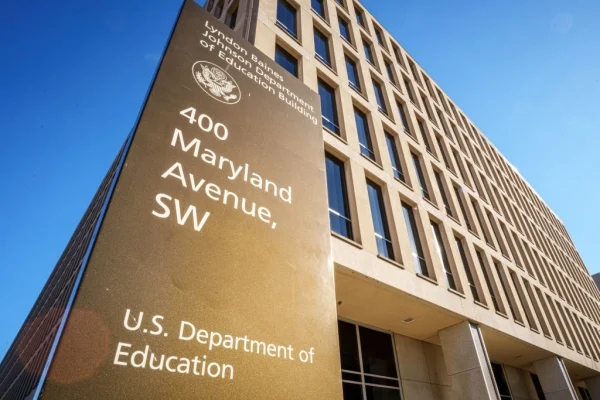
  • Labor Department to take on day-to-day management of CTE programs

    Labor Department to take on day-to-day management of CTE programs

    This audio is auto-generated. Please let us know if you have feedback.

    Dive Brief:

    • Management of key federal workforce development programs will begin shifting from the U.S. Department of Education to the U.S. Department of Labor under an interagency agreement signed in May, according to a joint announcement by the agencies Tuesday.
    • Adult education and family literacy programs under Title II of the Workforce Innovation and Opportunity Act and career and technical education programs under the Carl D. Perkins Career and Technical Education Act will be managed by the Labor Department alongside Education Department staff, according to the agencies.
    • Tuesday’s announcement comes just one day after the U.S. Supreme Court stayed an injunction in McMahon v. New York, granting the Education Department the ability to move forward with a sweeping reduction in force. That decision meant the workforce development interagency agreement with the Labor Department could go forward.

    Dive Insight:

    Under the May 21 interagency agreement behind the workforce development partnership, the Labor Department will take on daily administration of the programs. The Education Department will continue statutory responsibilities, policy authority and program oversight.

    While the interagency agreement was stalled in court, leading organizations for CTE directors and professionals raised concerns over the contract. Advance CTE and the Association for Career and Technical Education predicted “far-reaching negative impacts on CTE programs and learners across the country” in a June 11 joint statement, adding that the agreement “directly circumvents existing statutory requirements” under the Perkins Act.

    These programs, the organizations said, “are not merely job training programs; these programs are comprehensive educational and career preparation programs that prepare secondary and postsecondary learners for lifelong success by connecting academic and technical learning with the real world skills that learners need to thrive.”

    The agreement, however, is in line with President Donald Trump’s April executive order, “Preparing Americans for High-Paying Skilled Trade Jobs of the Future. That order called, in part, for the secretaries of labor, commerce and education to find opportunities to integrate systems and realign resources to address critical workforce needs and in-demand skills in emerging industries, identify ineffective federal workforce development and education programs, and streamline information collection.

    “The current structure with various federal agencies each managing pieces of the federal workforce portfolio is inefficient and duplicative. Support from the Department of Labor in administering the Department of Education’s workforce programs is a commonsense step in streamlining these programs to better serve students, families, and educators,” said U.S. Education Secretary Linda McMahon in a Tuesday statement.

    Source link