Tag: Landmark

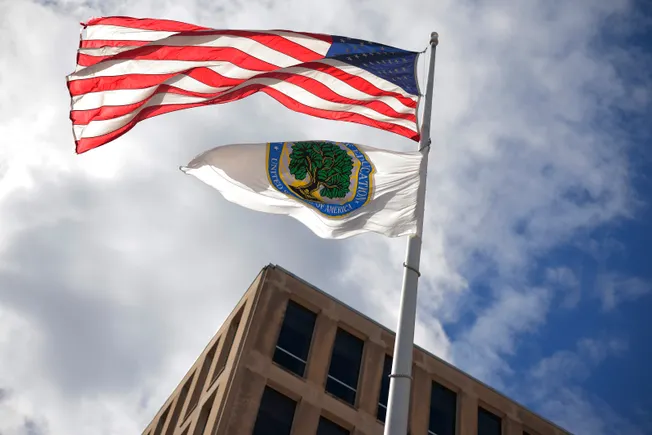
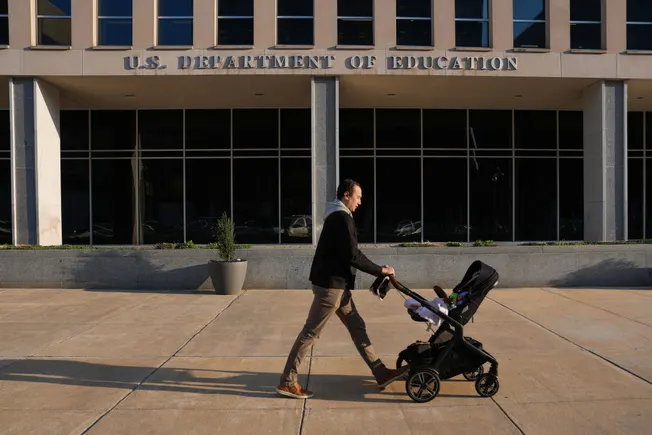
  • Education Department seeks delay in landmark borrower defense settlement

    Education Department seeks delay in landmark borrower defense settlement

    This audio is auto-generated. Please let us know if you have feedback.

    Dive Brief: 

    • The U.S. Department of Education is asking a federal judge for an 18-month extension to decide borrower defense claims from students who were promised decisions by January — or automatic relief if their cases aren’t resolved by then. 
    • The nearly 200,000 borrowers still awaiting decisions are covered by a landmark 2022 settlement that promised automatic debt relief or timely decisions based on when borrowers filed claims and what institutions they attended.
    • The Project on Predatory Student Lending, a nonprofit legal firm representing the borrowers, urged the judge overseeing the case to reject the Education Department’s request for an extension. “It is time for the Department to hold to its commitments and move this Settlement to its final phase,” the group said in a Nov. 21 court filing

    Dive Insight: 

    The settlement in the Sweet v. McMahon case stems from a class-action lawsuit filed during the first Trump administration that accused the Education Department of stonewalling decisions on applications for borrower defense to repayment, a federal program that provides debt relief to students defrauded by their colleges. 

    The settlement divided borrowers into three groups. 

    It granted automatic relief to the first group, which was composed of roughly 200,000 borrowers who attended one of the 151 colleges listed by the department. The list was dominated by for-profit institutions, including both large chains that had shuttered and still-operating colleges. 

    The second group was promised timely decisions, or automatic relief if the Education Department didn’t meet certain deadlines. The agency told the court earlier this year it had resolved many of those cases, and will provide another update in December. 

    And the last group — which is now facing a potential delay — is composed of the 207,000 people who filed over 251,000 borrower defense claims after the settlement had been struck but before it received final court approval. 

    The Biden administration’s Education Department promised to make timely decisions on their cases — or else provide automatic relief to them by Jan. 28 of next year. Now, the department under President Donald Trump is requesting to move that deadline back to July 2027. 

    In a Nov. 6 court filing, the agency said it lacked the resources to quickly issue decisions on such a large pool of applications. 

    “The Department has not received the resources that are needed to adjudicate post-class applications — Congress repeatedly ignored requests for funding to increase staffing to the levels the Department deemed necessary to fully implement the settlement,” the agency said, adding that its Federal Student Aid office “has instead seen staffing dwindle at the time when resources for postclass adjudication are most needed.”

    Trump signed an order to close the Education Department to the “maximum extent appropriate and permitted by law” and has asked Congress to reduce its funding.  

    The Education Department has cut its staff roughly in half under Trump and moved to outsource its programs to other federal agencies without first seeking congressional approval — a move some say could be a violation of the law

    The department said it is now adjudicating about 1,500 borrower defense applications each month for the final settlement group. As of Oct. 31, it had issued decisions on almost 54,000 of the final group’s applications. 

    It projected that roughly 193,000 borrower defense applications covered by the settlement would still lack decisions by the January deadline. Those borrowers’ outstanding loan balances total $11.8 billion, the Education Department said in court documents. It also said about half of the group’s borrower defense claims have so far been denied. 

    In a statement Wednesday, Under Secretary of Education Nicholas Kent the Trump administration is requesting more time so taxpayers aren’t “burdened with discharges for ineligible borrowers.”

    “Although the Department has complied with the Court’s deadlines in good faith, the upcoming January deadline is unreasonable,” Kent said. “Without adequate time to review each outstanding borrower defense case, taxpayers could be forced to shoulder $6 billion in windfall discharges for ineligible borrowers, based on the Department’s current adjudication patterns.” 

    In response to the Education Department’s request, lawyers for the borrowers slammed the department’s request. 

    “Less than 12 weeks before the deadline, the Department reveals that not only is it behind schedule to meet that deadline, it never had a prayer of meeting the deadline,” they said. “Out of more than 251,000 Post-Class applications, it has adjudicated fewer than 54,000 — barely one-fifth.”

    Source link

  • Landmark free preschool program reaches too few kids

    Landmark free preschool program reaches too few kids

    In the 1980s, a public interest law group sued the state of New Jersey, saying that the way it funded education left its low-income, urban school districts at a disadvantage compared to wealthier, suburban districts.

    The lawsuit, Abbott v. Burke, yielded a number of different decisions, including a requirement that the state offer free, full-day, high-quality preschool for children ages 3 and 4 in 31 school districts.

    This new school year marks the 26th since the program was created. Researchers have found that children who attend the preschool program are better prepared for school later on, but enrollment has been dwindling. And with New Jersey leaders now focused on bringing preschool to all districts, supporters worry that the early learning program focused on children in low-income areas may not get the attention it needs.

    Park perk for kids

    Did you know every fourth grader and their family can get free admission to national parks, monuments and forests? The Sierra Club’s Outdoors for All program launched in 2015 and offers free passes each school year. Vouchers for students can be downloaded through the program’s official website. 

    This story about free preschool was produced by The Hechinger Report, a nonprofit, independent news organization focused on inequality and innovation in education. Sign up for the early childhood  newsletter.

    The Hechinger Report provides in-depth, fact-based, unbiased reporting on education that is free to all readers. But that doesn’t mean it’s free to produce. Our work keeps educators and the public informed about pressing issues at schools and on campuses throughout the country. We tell the whole story, even when the details are inconvenient. Help us keep doing that.

    Join us today.

    Source link

  • Military Academies Agree to End Race-Based Admissions in Landmark Settlement

    Military Academies Agree to End Race-Based Admissions in Landmark Settlement

    United States Military Academy at West Point Students for Fair Admissions (SFFA) announced this week that it has reached a settlement agreement with the U.S. Department of Justice that will permanently end the consideration of race and ethnicity in admissions at the United States Military Academy at West Point and the United States Air Force Academy.

    The agreement, approved at the highest levels of the Department of Defense, establishes four key requirements for both academies: applying no consideration of race or ethnicity in admissions decisions, maintaining no race-based goals or quotas, shielding race and ethnicity information from admissions personnel, and training staff to adhere to merit-only standards.

    The policies will take effect immediately and apply to all future admissions cycles, according to the settlement terms.

    The settlement represents a significant policy reversal from the Biden administration’s previous position defending race-conscious admissions at military service academies. Earlier this year, under President Trump’s Executive Order 14185, the Department of Defense determined that race-based admissions at military academies are not justified by military necessity and do not advance national security, cohesion, or readiness.

    The Department formally abandoned its earlier position that a “compelling national security interest in a diverse officer corps” justified race-based policies, marking a sharp departure from decades of military diversity initiatives.

    The agreement follows SFFA’s earlier litigation against the U.S. Naval Academy, where the organization successfully challenged similar race-conscious admissions practices.

    Under the settlement terms, litigation against West Point and the Air Force Academy will be dismissed with prejudice, with each side bearing its own legal costs. The agreement preserves SFFA’s right to challenge any future changes to these policies.

    “This is an historic day for the principle of equal treatment under the law at our nation’s military academies,” said Edward Blum, president of SFFA. “Together with the Naval Academy case earlier this year, this agreement ensures that America’s critically important military service academies will admit future officers based solely on merit, not skin color or ancestry.”

    The settlement comes amid ongoing national debates over affirmative action policies following the Supreme Court’s 2023 decision in Students for Fair Admissions v. Harvard, which effectively ended race-conscious admissions at civilian colleges and universities.

    Military service academies had previously been considered potentially exempt from that ruling due to national security considerations and the unique mission of training military officers. However, the Trump administration’s policy shift has eliminated that distinction.

    The agreement affects two of the nation’s most prestigious military institutions. West Point, founded in 1802, and the Air Force Academy, established in 1954, collectively graduate approximately 2,000 new military officers annually.


    Source link

  • Landmark New Mexico Education Equity Case Heads Back to Court Next Week – The 74

    Landmark New Mexico Education Equity Case Heads Back to Court Next Week – The 74


    Get stories like this delivered straight to your inbox. Sign up for The 74 Newsletter

    The parties in the long-running Yazzie-Martinez lawsuit over educational equity in New Mexico will meet in court next week to discuss a motion alleging the state has not complied with previous court orders, along with the plaintiffs’ request for a “remedial plan.”

    The case, originally filed in 2014, led to a finding in 2018 by the late First Judicial District Court Judge Sarah Singleton, who found that the state was not providing equitable educational opportunities to Native students, English language learners, low-income students and students with disabilities. She ordered the state to take steps to address the needs of these at-risk students and ensure schools have the resources to provide them with the education they deserve.

    Attorneys representing Louise Martinez and Wilhelmina Yazzie filed a joint motion of non-compliance in September 2024, arguing that the state has not made significant progress in addressing the needs of at-risk students. Specifically, in their motion, plaintiffs point to ongoing poor student performance; high turnover within the New Mexico Public Education Department; high teacher vacancy rates; and a lack of targeted funding for at-risk students.

    Since Singleton’s decision, the state has increased funding for public education, but students are still being overlooked, Melissa Candelaria, education director for the NM Center on Law and Poverty, which represents the plaintiffs, told Source NM.

    The motion hearing is scheduled for 9 a.m. Tuesday, April 29.

    “We believe the court’s ruling should have been a wakeup call,” Candelaria said. “Our students can’t afford more bureaucratic churn and empty promises from PED. And we believe, the plaintiffs believe, the court must step in to enforce a real community-driven plan that reflects the urgency and the gravity to improve the overall state education system.”

    Candelaria noted that the joint motion was not opposed by New Mexico Attorney General Raúl Torrez, who represents the state in the case. Court documents state that Torrez “agrees” that there has been “insufficient compliance.” However, private counsel for the PED did oppose the motion, particularly the plaintiff’s proposed remedial plan.

    PED had not responded to a request from Source NM for comment prior to publication.

    That plan, as detailed in court documents, includes nine components or goals, including: establishing a multicultural and multilingual educational framework; building an education workforce; increasing access to technology; developing methods of accountability; and strengthening the capacity of the PED.

    “There’s no longer a debate that a statewide education plan is necessary. Now, the decision is who leads that development,” Candelaria said.

    Candelaria also told Source the plaintiffs propose the Legislative Education Study Committee take the lead in developing the remedial plan because the department’s staff have knowledge and expertise in the area of education and have access to data. The department also has a director and permanent staff, as opposed to the PED, which has had multiple cabinet secretaries lead the department in the nearly seven years since Singleton’s decision, she noted.

    “Without a plan, the efforts by the Legislature will still be piecemeal and scattershot and it’s not going to result in what we want to see in a transformed education system that’s equitable and that builds on the strengths and provides for the needs of the four student groups in the case,” Candelaria said.

    The PED opposes the motion on this point, according to court documents, and argues the education department should take the lead in developing the plan. The department also says more time is needed to create and then implement the plan. Plaintiffs suggest that the five-year plan should be developed within six months of this month’s hearing.

    Wilhelmina Yazzie, one of the original plaintiffs, told Source she feels “very optimistic” ahead of the motion hearing and that she hopes the judge agrees a plan is necessary. She added that the inequities in public education were emphasized during the COVID-19 pandemic.

    “Especially our tribal communities who are really deeply impacted by that, and they still continue to suffer to the present time right now and just by the state not taking the action that we need them to take,” Yazzie said.

    Yazzie’s son, Xavier Nez, 22, was in third grade when the lawsuit started. He is now in his third year studying at the University of New Mexico. Candelaria pointed out that since the 2018 court decision, multiple classes of students have made their way through the state’s educational system and failed to receive a comprehensive education. Yazzie’s youngest child, Kimimila Black Moon, is currently in third grade but attends private school.

    “She’s not in the public school because I still haven’t seen changes,” she said.

    Yazzie told Source that another goal of hers is to get out into communities throughout the state and speak with families because many parents are still unaware of the lawsuit and “they’re the ones that firsthand know what their children need, what they’re lacking, how they’re doing in school.”

    Source New Mexico is part of States Newsroom, a nonprofit news network supported by grants and a coalition of donors as a 501c(3) public charity. Source New Mexico maintains editorial independence. Contact Editor Julia Goldberg for questions: [email protected].


    Get stories like these delivered straight to your inbox. Sign up for The 74 Newsletter

    Source link